The Thieves (도둑들) – ★★★☆☆

The Thieves (도둑들)

The Thieves (도둑들)

Following a spectacularly daring art heist, criminal Popie (Lee Jeong-jae (이정재) and his band of thieves – Yenicall (Jeon Ji-hyeon (전지현), Jampano (Kim Soo-hyeon (김수현) and Chewing Gum (Kim Hae-sook (김해숙) – have too much heat on them to operate in Korea for the foreseeable future. Yet as luck would have it, a job offer in Macau arises from master thief and former associate Macao Park (Kim Yoon-seok (김윤석). Joined by safecracker Pepsee (Kim Hye-soo (김혜수), the gang join forces with a team of Chinese bandits to steal a $20 million diamond named  ‘The Tear of the Sun.’ Yet Macao’s plans to sell the diamond back to owner and ruthless mobster Wei Hong, as well as the alternative agendas of everyone within the team, results in a crime caper that goes anything but smoothly.
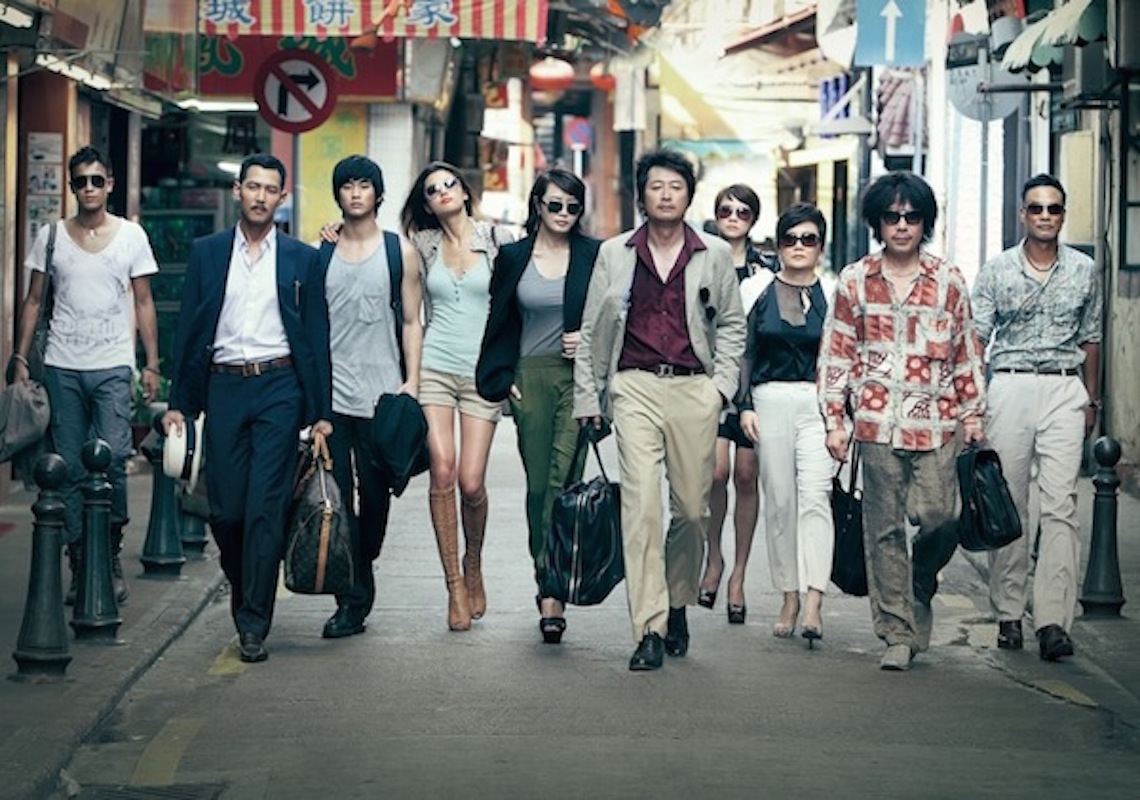
The team gathers to prepare for their latest heist - to steal 'The Tear of the Sun' from a mob boss

The team gathers to prepare for their latest heist – to steal ‘The Tear of the Sun’ from a mob boss

When The Thieves was released back in the summer of 2012, it rapidly became a cinematic phenomenon. Within its opening weekend the film had grossed over 2 million admissions; on its ninth day, The Thieves became the most attended Korean film of the 2012 before beating that record four days later by becoming the top selling film of the year. 22 days after release the crime caper joined the elite ’10 million admissions’ club, before passing 12 million 11 days later. At the end of its theatrical run The Thieves had taken almost $83 million at the Korean box office, as well as becoming the second most attended film in Korean history at the time. The success and popularity were unprecedented, yet that aside, is it any good?

The Thieves is a noble effort at producing an entertaining all-star international crime caper. Writer/director Choi Dong-hoon has established himself as a success within the genre for quite some time with The Big Swindle and Tazza: The High Rollers, however The Thieves marks an altogether different, more Hollywood-esque, approach for the filmmaker and it’s one that has paid enormous dividends to his career. The pleasure of witnessing some of the Korean industry’s biggest stars interacting and attempting to outwit each other in exotic locations is particularly enjoyable, often – and especially the case for 12 million domestic viewers – taking attention away from the frustratingly convoluted narrative. Juggling such an inordinate amount of actors is an impressive feat and director Choi does his very best to give every character a history and motivation, some of which works well amongst an array of superfluous tangents, and while occasionally entertaining it also serves to create periods where precious little actually occurs as well as to make The Thieves acutely overly long.

Safecracker Pepse and thief Popie make a play for the diamond

Safecracker Pepse and thief Popie make a play for the diamond

One of the reasons attributed to the success of The Thieves is the presence of Jeon Ji-hyeon and her flirtatious relationship with heartthrob Kim Soo-hyeon (indeed, their chemistry together later translated into incredibly lucrative TV drama You Came From the Stars). While the crime caper is a great comeback vehicle for Jeon, who has clearly been selected to bring sex appeal both on and off screen, her and Kim Soo-hyeon appear rather sporadically throughout. Instead, it is Kim Hye-soo who steals the limelight in terms of both beauty and allure as well as in forming the emotional centre of the film. Her appearances within the film are magnetic and amongst all the betrayals and double-dealings that arise, her steadfast character provides a stabilising core that is sorely needed. Ultimately however the simply excessive amount of characters weighs the story down, and The Thieves would have benefited from jettisoning several of them – particularly the Chinese criminals, who bring little to the story – and developing the core team instead.

Yet The Thieves really hits its stride in the wonderfully kinetic final act, where all the various parties involved in the diamond heist collide with extreme effect. The acrobatic wire-work battles and blazing stand-offs with criminals brandishing automatic weapons are impressive, and are consistently highly entertaining, silly, fun. It’s pure popcorn cinema, and director Choi does an excellent job in constructing an enjoyable finale while still keeping to the spirit of Korean crime caper.

Flexible wire work thief Yenicall brings deceptive sex appeal

Flexible wire work thief Yenicall brings deceptive sex appeal

Verdict:

The Thieves is an entertaining crime caper, and a real pleasure to witness some of the best stars in Korea go head-to-head in ‘winner take all’ race to the finish. Director Choi Dong-hoon juggles the excessive cast well throughout the convoluted narrative, yet tedium does occasionally appear during the overly long running time. The Thieves is pure popcorn cinema, and consistently entertaining, silly, fun.

★★★☆☆

Reviews

Jeonju Int. Film Festival Announces ‘Korean Competition’ Finalists

The 16th Jeonju Int. Film Festival

The 16th Jeonju Int. Film Festival

Jeonju International Film Festival (JIFF) has announced the ten films that will form the ‘Korean Competition’ category.

The finalists were chosen from an incredible 118 submissions, and all of which are world premieres. In terms of genre, nine of the selected films are fiction while one is a documentary. Interestingly, three of the finalists come from the Korean Academy of Film Arts (KAFA) and Dangook University’s Graduate School of Cinematic Content, with the remaining seven arriving from independent film distribution companies.

The ten finalists will compete for the Grand Prize, CGV Arthouse Award Distribution Support, and the CGV Arthouse Award Upcoming Project Support, respectively.

For the full line-up of Korean feature films within the category, as well as select stills that have been released, please see below.

Alice In Earnestland

Alice In Earnestland

1. Unconfessional (Director Choi Ingyu) [87min | color]

2. The Romance Of A Mediocre Actress And A Short Bald Man (Directors Park Youngim and KimJoung Min-woo) [74min | b&w]

3. Waiting For The Snow (Director Jang Heechul) [99min | color]

Island

Island

4. Alice In Earnestland (Director Ahn Goocjin) [87min | color]

5. To Be Sixteen (Director Kim Hyunseung) [115min | color]

Warmer Than Expected

Warmer Than Expected

6. Island (Director Park Jinseong) [105min | color]

7. Stay With Me (Director Lee Jinwoo) [98min | color]

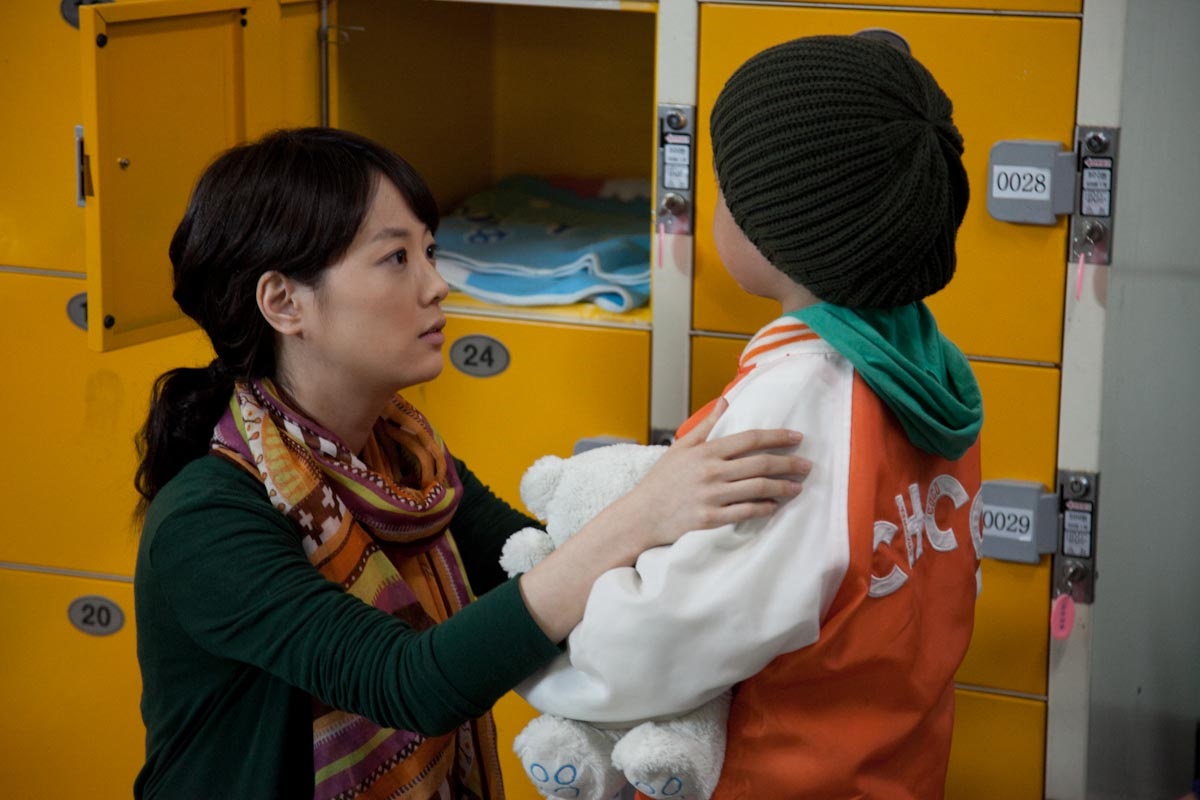
Coinlocker

Coinlocker

8. Warmer Than Expected (Director Lee Sangmin) [98min | color]

9. With Or Without You (Director Park Hyeokji) [92min | color]

10. Coinlocker (Director Kim Tea-kyung) [95min | color]

The 16th Jeonju International Film Festival will take place from April 30th ~ May 9th.

16th Jeonju International Film Festival (제16회 전주국제영화제) Festival News Korean Film Festivals 2015

Kang Je-gyu’s ‘Salute D’amour’ gets English Subtitled Trailer

Salut D'amour (장수상회)

Salute D’amour (장수상회)

The trailer for director Kang Je-gyu‘s latest film Salute D’amour (장수상회) – also known as Long Lives – has been released with English subtitles.

Salute D’Amour tells the story of elderly Sung-chil, a grumpy convenience store clerk who becomes besotted with nearby flower shop owner Geum-nim. Unskilled in the art of romance, Sung-chil asks advice from boss Jang-soo on how to woo his lady love, and as their relationship develops Sung-chil finds himself changing in unexpected ways. Challenges arise however in the form of Geum-nim unapproving daughter.

The romantic comedy is focused on a middle-aged and older audience demographic, continuing what has now become quite a trend in the Korean film industry, and appears much more light-hearted in tone than previous offerings such as C’est Si Bon.

Judging from the trailer Salute D’Amour is quite a stylistic departure for director Kang Je-gyu, who holds a strong reputation for being an initial part of the Korean wave with taut thriller Shiri and for his epic scale as displayed in war films Taegukgi, My Way. More recently director Kang indicated his new aesthetic through short film Awaiting, about a couple separated by the events of the Korean war.

Salute D’Amour boasts a stellar cast including acclaimed veteran actress Yoon Yeo-jeong (Hill of Freedom), as well as hot stars Jo Jin-woong (A Hard Day) and Han Ji-min (The Fatal Encounter).

Salute D’Amour will be released this April.

Film News

Jeonju Int. Film Festival Unveils ‘Korean Short Film Competition’ Finalists

The 16th Jeonju Int. Film Festival

The 16th Jeonju Int. Film Festival

The 16th edition of the Jeonju International Film Festival (JIFF) has unveiled the finalists for the ‘Korean Competition for Shorts.’

The 20 films have been selected from a staggering 609 entries, with a focus on originality, experimentalism, and controversial themes. The finalists will compete against each other for a selection of prizes, including the Grand Prize, Best Director Award, and Special Jury Award, respectively.

JIFF’s ‘competition for shorts’ program serves as a launching pad for new talent, with films often finding success on the international stage. Director Na Young-kil’s Hosanna, which premiered at JIFF last year, went on to receive the Golden Bear for Short Film at the 2015 Berlin International Film Festival. Premiering at JIFF 2013, director Han Eun-young’s Breathe Me later appeared at the Cannes Film Festival – Critics Week in the same year.

For the full line-up of short films within the competition, as well as select stills that have been released, please see below.

1) The Emotional Society on Stage (Directors Kim Sookhyun, Jo Hyejeong) [2014 / 23min]

2) A Lonely Bird (Director Seojeong Shinwoo) [2015 / 18min]

3) Mind Control (Director Lee Nakyung) [2015 / 16min]

4) The Messenger (Director Son Kyungsoo) [2014 / 13min]

Heels over Head

Heels over Head

5) Heels over Head (Director Shim Hyejeong) [2015 / 26min]

6) Uninvited Guest (Director Kang Minseok) [2014 / 31min]

7) Super-critical Flow (Directors Shin Booyeon, Yoon Sangjeong) [2015 / 28min]

Ah Ah Ah

Ah Ah Ah

8) STAY! (Director Shin Jemin) [2015 / 15min]

9) Mirror in Mind (Director Kim Seunghee) [2014 / 2min]

10) Ah Ah Ah (Director Noh Youngmi) [2015 / 15min]

11) The Haze of Summer (Director Park Jiyoon) [2015 / 25min]

Summer's Tale

Summer’s Tale

12) Summer‘s Tale (Directors Kwak Saemi, Park Yongjae) [2015 / 39min]

13) Open Society and Its Enemies (Director Kwon Hyukjoon) [2014 / 33min]

14) Beneath the Wheel (Director Kwak Eun-mi) [2015 / 21min]

Beneath the Wheel

Beneath the Wheel

15) This Planet What We Chose (Director Kim Jeongeun) [2014 / 27min]

16) The Fruits of the Earth (Director Kim Hwara) [2015 / 15min]

17) Emergency Leave (Director Kang Jinyeop) [2014 / 15min]

18) The Exploration (Director Park Yongseok) [2014 / 11min]

19) Blossom (Director Han In-mi) [2015 / 27min]

20) A Crevice of Violence (Director Lim Chul) [2015 / 27min]

The 16th Jeonju International Film Festival runs from April 30th to May 9th.

16th Jeonju International Film Festival (제16회 전주국제영화제) Festival News Korean Film Festivals 2015

Korean Film Biz Podcast – Upcoming Korean Films of 2015

Korean Cinema Today

Korean Cinema Today

Continuing on from our discussion of the Korean independent film industry, the fine people at Kobiz and I turned our attention to more commercial fare by deliberating over the upcoming Korean films of 2015.

To listen to our conversation, where we discuss the assortment of big names making their return to the silver screen and the challenge represented by Hollywood’s big blockbusters, please see below.

Film News

Korean Film Biz Podcast – The Korean Independent Scene

Korean Cinema Today

Korean Cinema Today

For the March 2015 edition of Korean Cinema Today’s podcast series, I was very fortunate to be invited for a discussion about the Korean independent film industry by the lovely people over at KoBiz.

To listen to our conversation, in which we debate the strengths and frustrations within the indie scene  as well as exciting new talent that has recently emerged, please see below.

Film News

10 Minutes (10분) – ★★★★☆

10 Minutes (10분)

10 Minutes (10분)

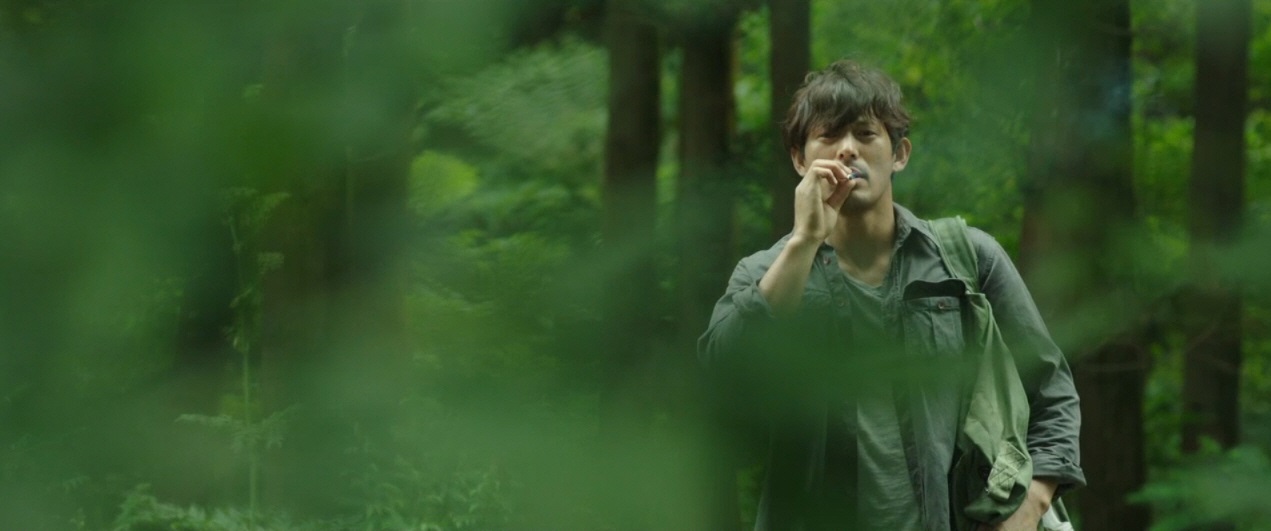
Although working hard to achieve his dream of becoming a TV producer, Kang Ho-chan (Baek Jong-hwan (백종환) takes an intern position at a company to help alleviate his family’s difficult financial situation. With his retired father refusing to work and with mounting debts threatening to leave his family homeless, Ho-chan works diligently at the company quickly becoming well-liked, and it’s not long before he’s offered a full-time position at the government-run organisation. Struggling between choosing his dream or filial responsibility, Ho-chan makes the ultimate sacrifice yet is shocked to discover the position he was promised has been given to someone else.

Ho-chan joins the rat race, despite his dream of becoming a PD

Ho-chan joins the rat race, despite his dream of becoming a PD

10 Minutes (10분) is a fascinating exploration of the contemporary Korean workplace, highlighting many of the incredibly frustrating issues that employees are forced to endure in order to secure a stable livelihood. Capably helmed by director Lee Yong-seung who focuses on constructing realism with skill, it is screenwriter Kim Da-hyeon’s insightful script that is simply excellent in bringing office politics to life, drawing attention to problems both big and small in gradually building Ho-chan’s angst to a palpably tense crescendo.

While 10 Minutes begins rather slowly, the often ridiculous nature of company work is captured superbly ranging from the director’s displeasure at the quality of cakes (rather than the content of the presentation) and the conflicting tasks Ho-chan is required to undertake, through to more serious fare of lies and slander, denial of responsibility, and corruption. Yet Kim also impressively manages to balance such workplace ire with an examination of family poverty in Seoul, and the reliance on loans as a form of paradoxical debt relief. Just as tension in the office grows so to does it develop in the household, as the burden placed on Ho-chan’s shoulders as the eldest in the family to save them from destitution becomes intolerable. The narrative consistently and boldly challenges the problems young adults face as the product of patriarchal entitlement and, underscored with Ho-chan’s dilemma between following his dream or committing to the life of a salaryman, provocatively addresses the fundamental causes behind the disillusionment and frustration of contemporary youth. With 10 Minutes, Kim Da-hyeon emerges as an exciting new talent to watch.

Office politics become increasingly tense from issues both big and small

Office politics become increasingly tense from issues both big and small

Such a well-balanced narrative would be of little consequence were it not ably performed, and in that sense 10 Minutes also does not disappoint. As Ho-chan, actor Baek Jong-hwan is particularly impressive. For much of the initial running time Beak’s stoicism belies his talent, yet as stress increasingly generates in both his professional and private life his silent internalised fury is captivating, as if a powder keg waiting to explode, and is genuinely suspenseful. Actress Lee Si-won is a joy to hate in her supporting role as Song Eun-hye, exacerbating Ho-chan’s anger with wry smiles and snide acts of kindness that are anything but. She wonderfully conveys a snarky superiority through gestures, tone and ‘aegyo’ (performance of cuteness) and, combined with her ability to manipulate the office, embodies many of things that makes Korean workplaces so difficult to navigate.

With 10 Minutes so focused on the problems created by patriarchy, it’s a great relief to say that the actors involved deftly rise to the occasion. As the director of the company Kim Jong-goo is delightfully cowardly, bowing to the whims of his superior and berating his subordinates even while aware of the truth, making his faux smiles and promises ever more frustrating. Yet it is Jeong Hee-tae as the head of the labor union who steals the show. Jeong’s turn as the friendly yet deceptive union leader is brilliant and a real highlight of the film, perfectly encapsulating the issues of entitlement and selfishness so often ascribed to middle aged men.

Ho-chan's fury at his situation leads him down a lonely path

Ho-chan’s fury at his situation leads him down a lonely path

Verdict:

10 Minutes is an impressive indie film exploring the frustrations involved in the contemporary Korean workplace. Director Lee Yeong-song helms the events well, yet it is Kim Da-hyeon’s insightful script that steals the spotlight and presents her as a talent to watch. With penetrative awareness of office culture, family dynamics and disillusioned youth, 10 Minutes is a refreshingly frank and timely drama.

★★★★☆

Reviews

Chronicle of a Blood Merchant (허삼관) – ★★☆☆☆

Chronicle of a Blood Merchant (허삼관)

Chronicle of a Blood Merchant (허삼관)

In 1953, Gongju City is in the process of rebuilding following the devastating war. Resting for lunch with his fellow workers, Sam-gwan (Ha Jeong-woo (하정우) is ridiculed for his status as a bachelor. Yet upon seeing beautiful Ok-ran (Ha Ji-won (하지원) he becomes instantly smitten and determined to marry her and, after acquiring money through selling his blood and striking a deal with her father, Sam-gwan and Ok-ran are wed. 11 years later, the couple live in relative harmony with their three sons, until a rumour spreads through the village that their eldest boy Il-rak (Nam Da-reum (남다름) actually belongs to Ok-ran’s ex-suitor. As the household is thrown into turmoil by the news, Sam-gwan again finds himself selling blood as the family are forced to redefine their relationships.

Sam-gwan falls for the most beautiful girl in the village, Ok-ran

Sam-gwan falls for the most beautiful girl in the village, Ok-ran

Based on Yu Hua’s 1995 novel, Chronicle of a Blood Merchant is Ha Jeong-woo’s second attempt at writing and directing duties following Fasten Your Seatbelt and, while generally competently helmed and produced, the comedy-drama features truly abysmal and outrageous sexual politics, plot holes galore, and an intensely dislikable ‘hero’ in the form of Ha’s Sam-gwan.

The premise of Blood Merchant is centered around raising an illegitimate child, and the narrative consistently attempts and fails to generate comedy from the situation. After hearing the rumours regarding eldest son Il-rak’s parentage, Sam-gwan confronts his wife demanding answers and as Ok-ran reluctantly explains how an ex-suitor forced himself upon her, the film has the gall to focus on Sam-gwan’s suffering as a man who didn’t marry a virgin as well as raise a boy biologically not his own. The narrative intends to generate humour by inferring Sam-gwan is a victim of humiliation rather than focusing on Ok-ran’s suffering from the legacy of sexual assault, a strategy which is completely appalling particularly as a source of entertainment. The fact that Sam-gwan then spends the rest of the film punishing Ok-ran for being raped by sulking as well as virtually disowning Il-rak makes the character particularly despicable and impossible to empathise with. It’s a creative decision from which Blood Merchant never recovers and, following on from Sam-gwan’s almost literal ‘purchase’ of Ok-ran in the first act, the comedy-drama is anything but enlightened.

Sam-gwan and eldest boy Il-rak attempt to redefine their relationship

Sam-gwan and eldest boy Il-rak attempt to redefine their relationship

Things change in the finale however as Blood Merchant opts for the oft-used cliche of poor health in order to bring the family together once more. As both writer and director Ha works hard to generate sentiment though the use of melodramatic conventions which work well, yet as Sam-gwan has behaved so dreadfully leading up to the resolution it is especially difficult to invest in his journey, let alone consider him the hero and saviour of the family. Furthermore the gaps in logic are particularly puzzling, for if any man were to undertake the tasks Sam-gwan does, death would be an absolute certainty.

In terms of star power, both Ha Jeong-woo and Ha Ji-won perform capably. Unfortunately they lack any sort of onscreen chemistry and the narrative doesn’t really create opportunities for it to arise, yet individually they do well despite the lack of characterisation. Their presence in Blood Merchant should guarantee that the film will be a greater success than Fasten Your Seatbelt, though ironically the film isn’t really theirs but young actor Nam Da-reum’s. Nam is the heart and soul of the film and it’s his performance as eldest son Il-rak that makes Blood Merchant watchable and entertaining.

The sale of blood helps the family through tough times

The sale of blood helps the family through tough times

Verdict:

Chronicle of a Blood Merchant is Ha Jeong-woo’s second foray as writer/director, and while he competently helms the comedy drama the shameful sexual politics within the film results in an intensely dislikable lead protagonist. It’s an issue from which the comedy-drama never recovers despite the inclusion of traditional melodramatic conventions in the final act, yet luckily the film is made watchable through the performance of young actor Nam Da-reum.

★★☆☆☆

Reviews

The Royal Tailor (상의원) – ★★★☆☆

The Royal Tailor (상의원)

The Royal Tailor (상의원)

Three years have passed since the death of the king, and with the mourning period now officially over the new monarch (Yoo Yeon-seok (유연석) commissions a special new dragon robe from royal tailor Jo Dol-seok (Han Seok-Kyu (한석규). Having crafted royal attire for 30 years, commoner Dol-seok is on the verge of becoming a nobleman, the reward for a lifetime of service. Yet the abrupt arrival of new and highly sought after tailor Gong-jin (Ko Soo (고수), with his fancy contemporary designs and custom-made fittings, place Dol-seok’s position in jeopardy. Animosity between the two arises when the queen (Park Shin-hye (박신혜) announces her need for a tailor and Gong-jin is presented with the task, however the young upstarts disregard for the Confucian rules of the time may well spell trouble.

Dol-seok has crafted royal attire for 30 years and is finally on the verge of nobility

Dol-seok has crafted royal attire for 30 years and is finally on the verge of nobility

The Royal Tailor is a vibrant and unique addition to the Korean period drama canon, one that is consistently visually stimulating and bustling with ideas yet one which is also often directionless.

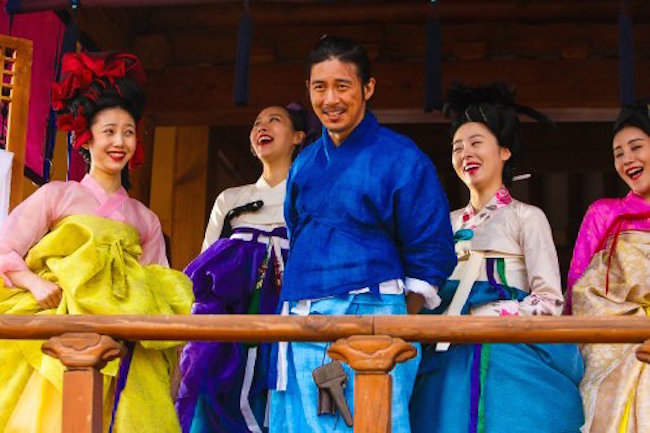
Director Lee Won-seok (이원석) and cinematographer Kim Ji-young deserve praise for crafting such a distinctive and striking film. The beautiful assortments of colour that permeate scenes featuring tailory are truly gorgeous, often combining with a keen sense of symmetry that makes The Royal Tailor a real treat for the eyes. The variation of such impressive colours and designs applied to hanbok also make the drama a fitting tribute to the traditional attire, revering it both as iconic as well as a symbol of cultural elegance.

One of the great strengths of The Royal Tailor, and one that makes it so entertaining, is the progressive attitude laced throughout the narrative which is often expressed through hanbok itself. Through the distinctly Korean conflict between traditionalist Dol-seok and the actions of rebellious contemporary Gong-jin, the period tale seeks to poke fun at the Confucian ideals of the era, employing fashion and feminist issues to push the boundaries of oppression. Rather controversially for a film set in such an era, director Lee provocatively conveys that strict adherence to tradition halts development even at the most basic level – a scene in which actor Ma Dong-seok parades like a peacock in his latest hanbok while his sleeves are too long to pour and consume beverages is frankly hilarious – and conveys the playfully nature in which he mocks and scrutinises the rigidity of the time.

Through colourful stylish hanbok, rebellious tailor Gong-jin pushes Confucian boundaries

Through colourful stylish hanbok, rebellious tailor Gong-jin pushes Confucian boundaries

Director Lee infuses The Royal Tailor with an energetic flamboyance reminiscent of his excellent prior rom-com How To Use Guys With Secret Tips, yet perhaps due to Secret Tips‘ modest returns and/or the conventions of the period film, he appears to lack the confidence to fully commit to his whimsically comedic vision here. Instead he injects his unique flair through a handful of select scenes which are hit-and-miss, as the film flits between typical genre fare and more surrealist postmodern sensibilities, resulting in a film which has something of an identity crisis. This is a quite unfortunate as director Lee is one of the more unique talents to emerge from the industry in recent years, and seeing his aesthetics restrained is a real shame.

The drama also suffers in a narrative sense due to the lack of characterisation and the absence of a strong trajectory. The protagonists, and the story, tends to meander and while the situations and debates that arise are entertaining, the film feels directionless and in need of a more defined central plot. As such the actors are under-utilised, particularly Park Shin-hye who suffers the most in this regard as there is little for her to do other than appear sad and pretty.

Yet The Royal Tailor ends with a surprisingly potent finale, one which directly challenges the very concept of history and leaves a particularly lasting impression. In forcing audiences to question the very foundations of their national and cultural identity, director Lee makes a bold statement that the past and the truth are not always the same.

In the conflict between traditional and progressive, how is history created?

In the conflict between traditional and progressive, how is history created?

Verdict:

The Royal Tailor is a unique and vibrant period drama by director Lee Won-Seok who comedically uses the fashion of the era to mock and push the oppressive boundaries of Confucian norms. While the use of colour is a visual treat and the film is infused with a handful of wonderfully whimsical scenes, The Royal Tailor is often directionless due to issues with the narrative and characterisation. Yet the drama ends on a high note that examines the concept of history and as such The Royal Tailor leaves a lasting impression.

★★★☆☆
Reviews

C’est Si Bon (쎄시봉) – ★★☆☆☆

C'est si bon (쎄시봉)

C’est si bon (쎄시봉)

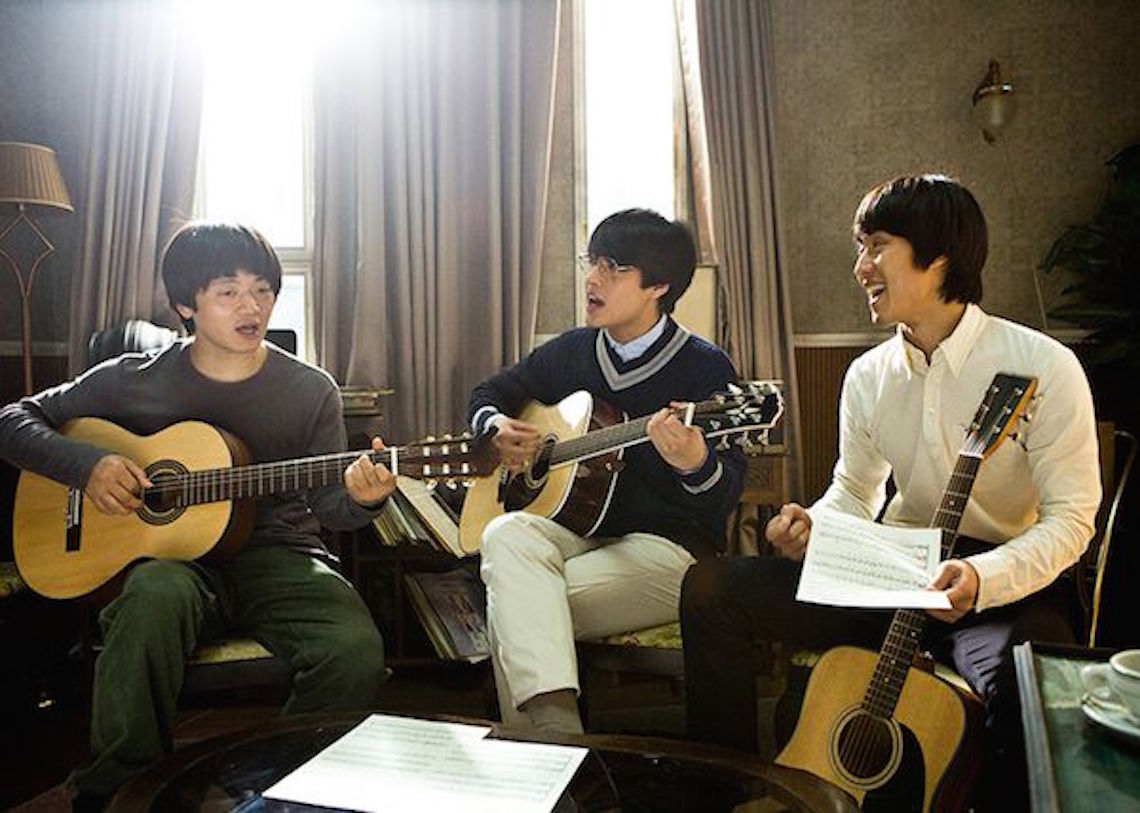
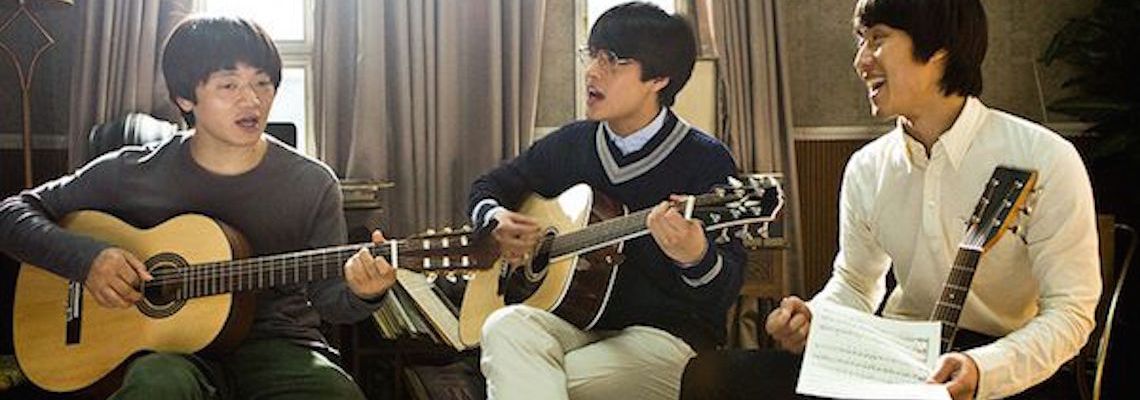
Twin Folio, the legendary ’60s duo that emerged from Seoul music cafe C’est Si Bon, is due to be the subject of a television show. Yet when music producer Lee Jang-hee, the man responsible for their creation, is quizzed about the rumour of an original third member, he begins to reminisce about the era. Back in the ’60s, C’est Si Bon was the hottest place in the city to listen to folk song competitions. With his silky voice Yun Hyeong-ju (Kang Ha-neul (강하늘) was the star of the cafe, until newcomer Song Chang-sik (Jo Bok-rae (조복래) instigates a rivalry. With their clashing egos a duo would be impossible, and as such Jang-hee (Jin Goo (진구) enlists talented country boy Oh Gun-tae (Jeong Woo (정우) to make a trio. Their inability to work together changes when beautiful aspiring actress Min Ja-yeong (Han Hyo-joo (한효주) enters the club, inspiring them to collaborate and become one of the most successful bands of the era.

The original trio learn to collaberate due to their muse Ja-yeong

The original trio learn to collaberate due to their muse Ja-yeong

C’est Si Bon is something of a love letter to the vibrant music scene of 1960s/70s Seoul, one that attempts to capture the spirit of the era through the story of the renowned cafe. Generally it succeeds, particularly in the opening act as there is much enjoyment to be had in witnessing the titular music arena being introduced, the band coming together and egos clashing. The C’est Si Bon cafe is a wonderfully charismatic and dynamic place due to some quite lovely set and costume design, helmed competently by director Kim Hyeon-Seok (김현석) who is likely hoping for the same success as his prior romantic endeavour Cyrano Agency.

Yet following an enjoyable 30 minutes, the film eschews the fun and vitality of the music scene to descend into a cliched romantic tale. As the members of the band all fall in love with Ja-yeong and attempt to out-perform each other to win her affection, the story moves away from the enjoyment of the band’s origins to become a standard rom-com. To be fair to Han Hyo-joo, she is absolutely stunning throughout and has rarely looked better, however due to the focus applied to her as the muse of so many admirers, C’est Si Bon consistently feels like a vanity project for the actress. Ironically however, as Ja-yeong tends to use and manipulate the men in her life as they constantly try to impress her, the result is an attractive but not a particularly likeable lead female protagonist which significantly lessens the romantic appeal.

Ja-yeong is the muse of seemingly everyone at music cafe C'est Si Bon

Ja-yeong is the muse of seemingly everyone at music cafe C’est Si Bon

Recently in Korean cinema a greater number of films are being produced with older audiences in mind which is welcome news for diversity, and C’est Si Bon fits neatly within the paradigm. Yet the film also perpetuates the disturbing trend of romanticising Korea’s totalitarian past. Curfews, police brutality and authoritarianism, and even scenes of intimidation reminiscent of prelude to torture, feature within the narrative. However due to the romantic-comedy contrivances of the film such issues are presented as nostalgia, alarmingly either employed for humour or simply glossed over.

Things change from bad to worse for C’est Si Bon in the final act through the inclusion of scenes set in America, years after the rise and fall of the famous cafe. Apart from feeling acutely tacked on and frankly dull, the sequences are unintentionally, and quite literally, laughable. For instance, during highly emotional scenes between veteran actors Kim Hee-ae and Kim Yoon-seok are some incredibly poorly timed interludes by bad American actors that simply destroy all tension and instead generate laughter. As such, C’est Si Bon ends on a sour note, despite the initial enjoyment and promise displayed in the first act.

Years after the rise and fall of the cafe, Geun-tae performs in America

Years after the rise and fall of the cafe, Geun-tae performs in America

Verdict:

C’est Si Bon is a love letter to the vibrant music scene that existed in Korea in the 1960s, with a particularly enjoyable first act that introduces the styles and catchy music of the era, as well as the formation of the band Twin Folio. Yet director Kim Hyeon-seok’s film oddly eschews such promise by later descending into bland rom-com cliches and romanticising Korea’s totalitarian past, before ending with an unintentionally funny and quite poor finale.

★★☆☆☆

Reviews