The 15th Jeonju International Film Festival

JIFF 2014: Korean Competition

The 15th Jeonju International Film Festival

The 15th Jeonju International Film Festival

The Korean Competition at the Jeonju International Film Festival (JIFF) always contains a selection of rare gems of independent cinema.

Last year the big winner of the competition was December which was honoured with the Grand Prize, while Dear Dolphin and Lebanon Emotion won the CGV Movie Collage Awards, respectively. The Audience Critics Prize went to documentary My Place. Interestingly, out of all of the winning films the most successful were Lebanon Emotion – which earned Jung Young-heon the Best Director prize at the Moscow International Film Festival as well as appearing in Vancouver and London – and My Place, which has earned several domestic accolades including the Jury Prize at the Seoul International Film Festival and was invited to the Hot Docs Canadian International Documentary Film Festival.

At JIFF 2014 there are eleven films vying for the coveted Grand Prize. Among the eight features and three documentaries are nine world premieres, which is certainly an impressive lineup. Below is the Korean Competition trailer which features highlights from all the entrants, before more detailed profiles of each film in the program.

Korean Competition

A Dream of Iron (철의 꿈)

Director Park (Kelvin) Kyung Kun (박경근)
A Dream of Iron

A Dream of Iron

A Dream of Iron

A Dream of Iron

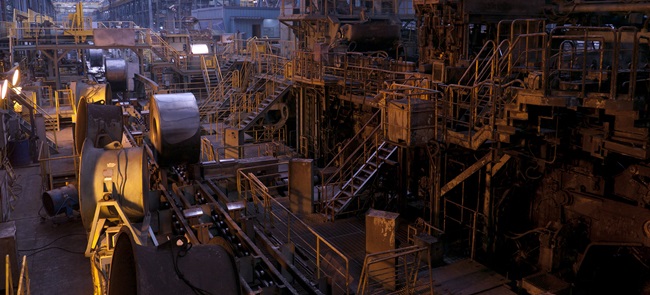
Documentary A Dream of Iron arrives as the most celebrated film in the category following a premiere at Berlinale and being awarded the NETPAC prize (alongside Non-Fiction Diary). Unable to understand his partner’s decision to become a Buddhist monk, director Park begins searching for something tangible and awe-inspiring, leading him to Korea’s POSCO steelworks. Contrasting differing ideas of religion and majesty, A Dream of Iron contains stunning cinematography of the country’s struggle with modernity.

A Fresh Start (새출발)

Director Jang Woo-jin (장우진)

A Fresh Start

A Fresh Start

A Fresh Start

A Fresh Start

A Fresh Start marks director Jang Woo-jin’s  feature debut. The film depicts youngsters Ji-yeon and Hye-rin, two lonely individuals who meet regularly at a literature club. When their relationship unexpectedly turns sexual, everything is fine…until Hye-rin discovers that she is pregnant. With both of them already suffering from family-related problems, school issues and the all-too-common depression that afflicts Korean youth, Hye-rin and Ji-yeon struggle with what they should do in such a difficult situation. Furthermore their unsure feelings towards each other are forced into the spotlight as they struggle to find a solution.

Highway Stars (악사들)

Director Kim Ji-gon (김지곤)
Highway Stars

Highway Stars

Highway Stars

Highway Stars

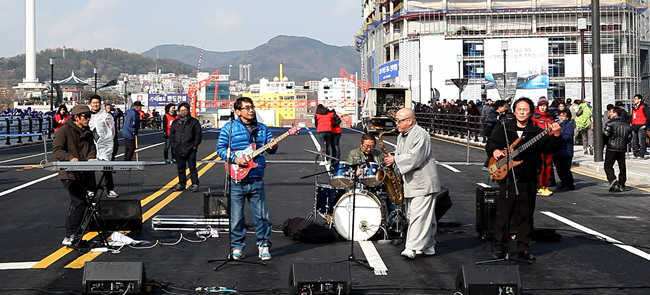
Highway Stars is another documentary entry in the competition, following the life and times of Band Udambara. The ensemble are a fascinating group consisting of former nightclub performers and a Buddhist monk, and the film explores how they make a living by taking night gigs. Nightclubs, it should be noted, are different from clubs in Korea as they are extremely male orientated and often are fronts for illegal activity. Director Kim Ji-gon, whose documentary Grandma Cement-Garden appeared at JIFF last year, returns to explore more individuals forced to the margins of society.

Miss the Train (미성년)

Director Lee Kyung-sub (이경섭)

Miss the Train

Miss the Train

Miss the Train

Miss the Train

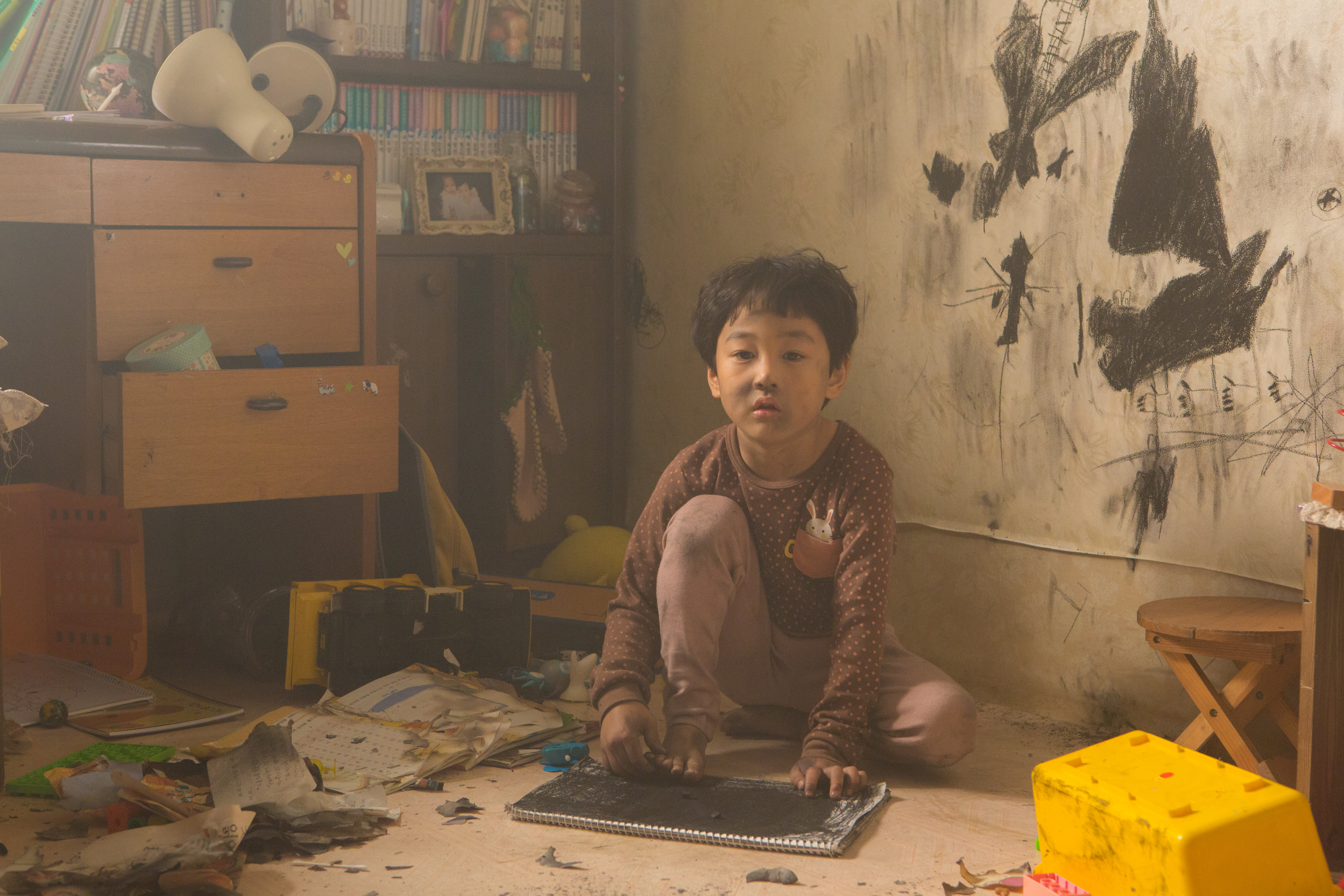
Director Lee Kyung-sub has previously helmed a number of short films including last year’s JIFF Cinemascape entry Mr. Vertigo, starring Oh Dal-su. With Miss the Train director Lee upgrades to feature length in depicting the story of So-jin, who grieves the death of her mother, a former shaman. When a strange man forces So-jin to help him find his missing child as he believes she is part of a prophecy, she desperately seeks an escape from the pressures in her life. Yet when she runs away to lie low in a warehouse, she encounters another odd man, and her grasp on reality becomes evermore tenuous as spirits seem to appear before her.

Monkeys (몽키즈)

Director Jung Byeong-sik (정병식)

Monkeys

Monkeys

Monkeys

Monkeys

Monkeys is Jung Byeong-sik’s directorial debut, after working on other films including 2012’s A Confession of Murder and Action Boys in 2006. Monkeys revolves around Gong-hyeok, a man who once had future ambitions of becoming renowned in the music and film industry. Yet now in his late twenties and in dire need to support his family, Gong-hyeok is still no closer to achieving his dreams. Yet when he reconnects with an old friend who has just debuted as a film director, Gong-hyeok cannot help himself and old quarrels suddenly start to reappear and drive a wedge between them. The film is in both colour and black and white.

One For All, All For One (60만번의 트라이)

Director s Park Sa-yu (박사유), Park Don-sa (박돈사)

One For All, All For One

One For All, All For One

One For All, All For One

One For All, All For One

Issues of discrimination are of paramount concern in rugby drama One For All, All For One. The sporting film depicts a Korean rugby team in Osaka who are very successful despite encountering prejudice from society at large. However their indomitable spirits and strong sense of camaraderie help them to overcome any discrimination that comes their way. Sporting dramas are often quite successful in Korea especially as they typically involve national pride, particularly when the opponents are Japanese. Director Park Don-sa is a third generation Korean living in Osaka, while director Park Sa-yu has focused on discrimination against Koreans in Japan in her previous work.

Pohang Harbor (포항)

Director Mo Hyun-shin (모현신)

Pohang Harbor
Pohang Harbor

Pohang Harbor

Pohang Harbor

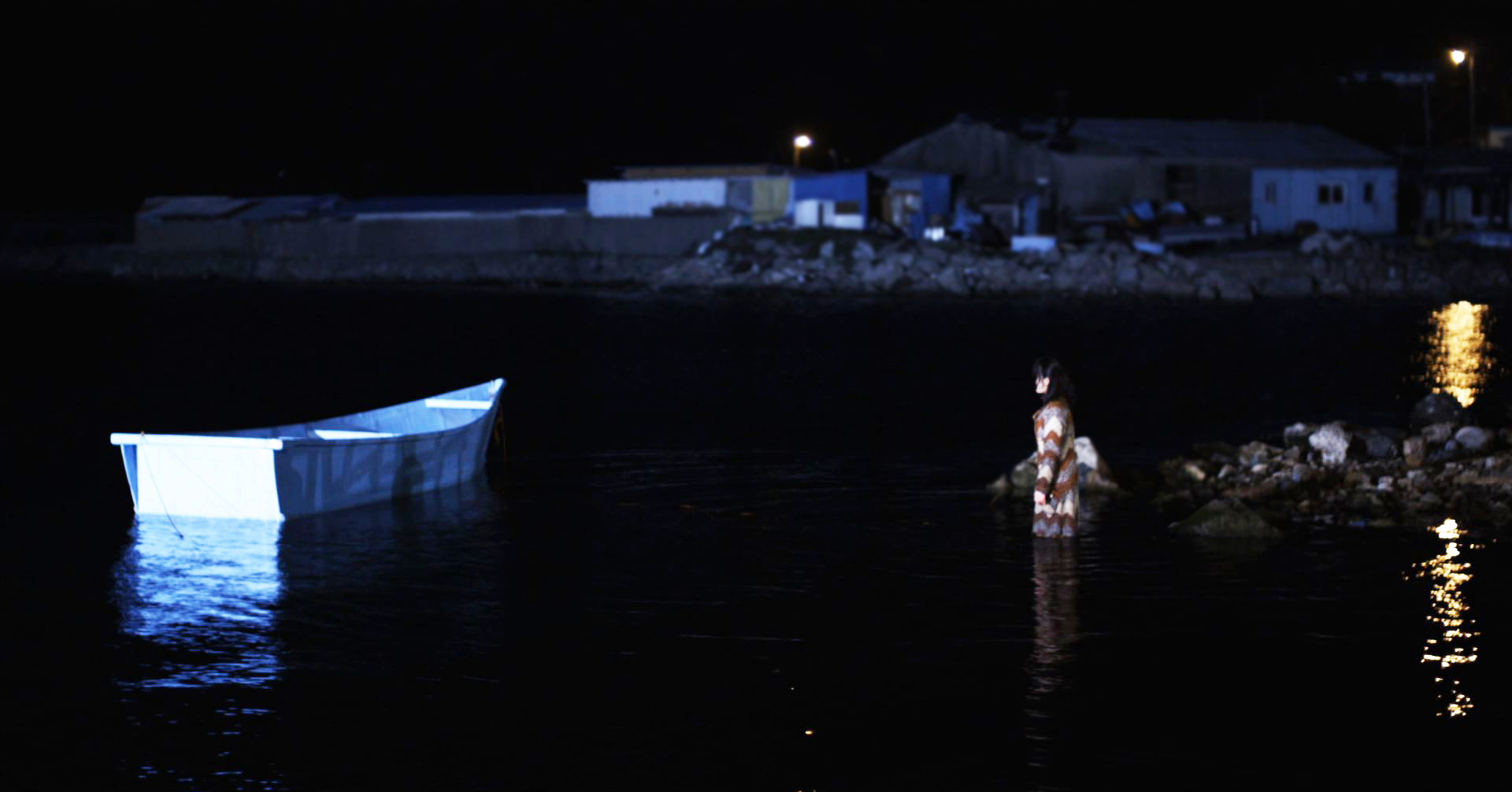
Drama Pochang Harbor explores the notions of life and death, in conjunction with human development and behaviour, in what looks set to be the most experimental offering in the category. When his father mysteriously goes missing, a man returns to his hometown in order to find him. Yet the man also has alternative reasons for coming home. Following years of working dead-end labour jobs and not settling any roots, the man is searching for something more than the life he has forged. In her feature debut director Mo Hyun-shin employs a host of long shots and keen cinematography to examine the human condition.

Sookhee (숙희)

Director Yang Ji-eun (양지은)

Sookhee
Sookhee

Sookhee

Sookhee

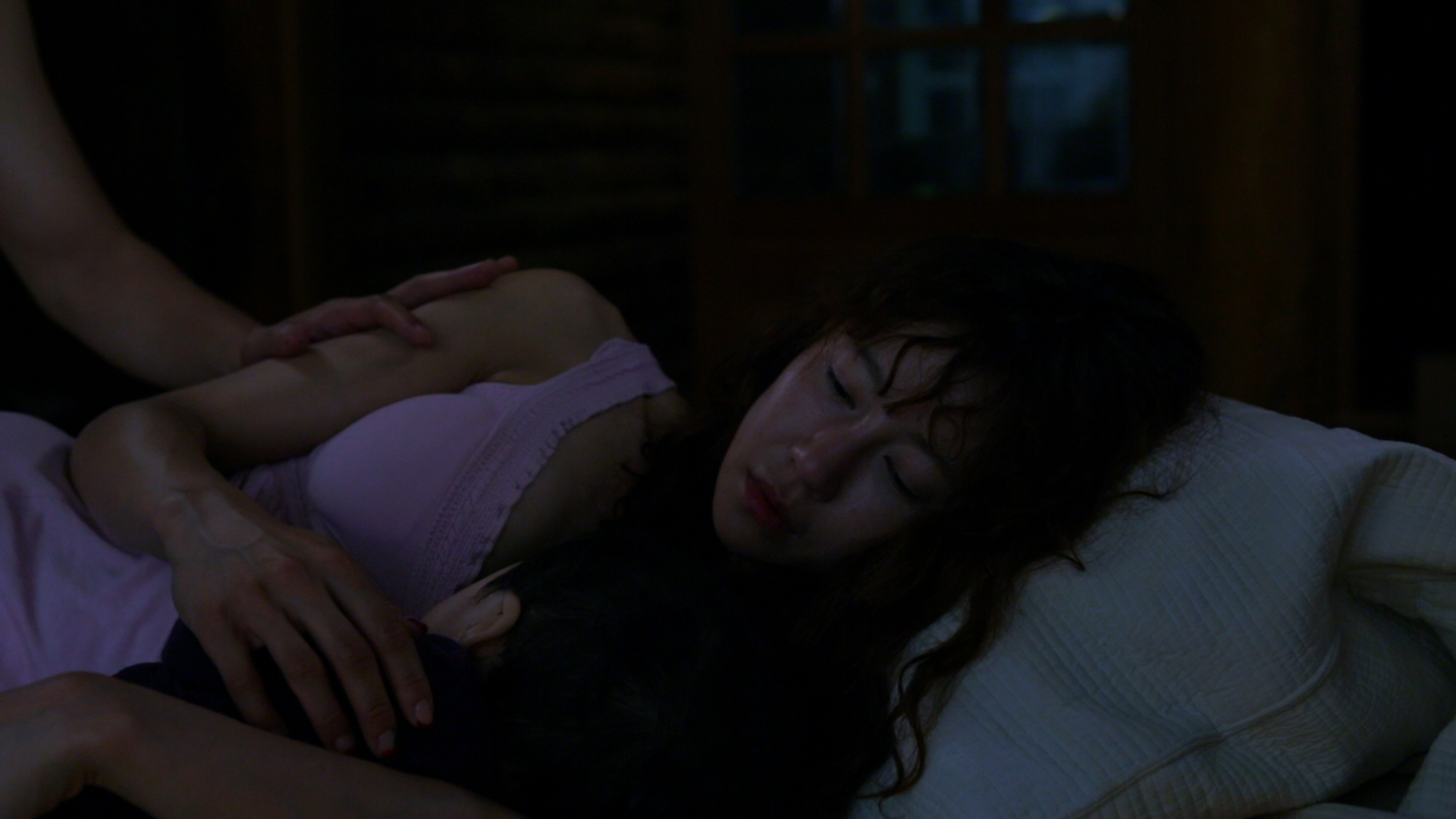
Sookhee tells the story of a conservative, workaholic philosophy professor named Yoon. Unable to take the stress any longer Yoon suffers a stroke and, as his wife is unable to cope, a free-spirited caregiver named Sookhee nurses him to health. Yet her treatments are far from orthodox as she employs a mixture of kindness, fear, and sexual excitement to force Yoon on the road to recovery. Furthermore, the maternal instincts she employs enact a dramatic reversal of traditional gender roles, provoking extreme reactions from the once uptight philosophy professor. Sookhee is director Yang Ji-eun’s first feature film and due to the exploration of sexual issues is described as a ‘daring debut.’

The Wicked (마녀)

Director Yoo Young-seon (유영선)

The Wicked
The Wicked

The Wicked

The Wicked

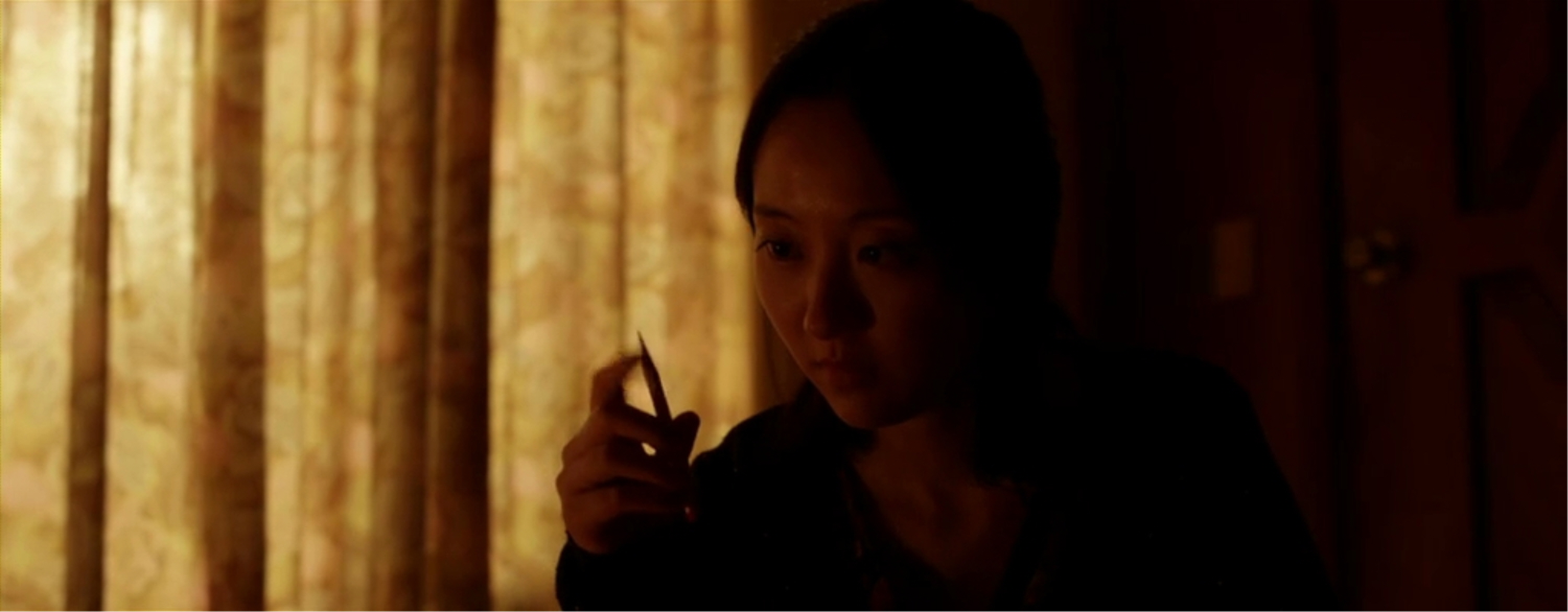
The competition would be lacking without a new thriller, and luckily director Yoo Young-soon’s debut The Wicked fulfills the criteria. When Se-yeong begins working at a company, her senior I-seon quickly becomes concerned. Se-yeong’s threatening behaviour, as well as her fascination for sharp objects ranging from scissors to small knives, frightens I-seon…particularly as she learns more about her new colleagues unsavory past. Could Se-yeong truly be as wicked as she seems?

The Youth (레디 액션 청춘)

Directors Kim Jin-moo (김진무), Park Ga-hee (박가희), Ju Seong-su (주성수), Jung Won-sik (정원식)

The Youth - Wonderwall

The Youth – Wonderwall

The Youth - Play Girl

The Youth – Play Girl

The Youth is an omnibus of four short stories, each one exploring the lives of Korean youths. The segments are entitled The Rumor, Wonderwall, Enemies All Around, and Playgirl. Within each short film the directors examine the worlds of Korean youngsters as they struggle to discover their identities as well as retain their innocence and hope, even when facing external issues including violence and peer pressure. Director Kim Jin-moo is a hot property after the release of Apostle, a film based on North Korean human rights issues. The film was even selected for overseas screenings at the UN. Furthermore directors Park Ga-hee and Jung Won-sik all have a history in helming shorts, while Ju Seong-su has previously worked in the production departments of several features.

You Are My Vampire (그댄 나의 뱀파이어)

Director Lee Won-hoi (이원회)

You Are My Vampire

You Are My Vampire

You Are My Vampire

You Are My Vampire

Quirky romantic-comedy-drama You Are My Vampire seeks to capitalise on supernatural relationships that are so popular in contemporary culture. Director Lee Won-hoi employs a playful and energetic style in depicting the story of struggling screenwriter Gyu-jeong, who encounters a mysterious black-clad figure who bears an uncanny resemble to a vampire…or he could just be the strangest man she’s ever met. The film features an eclectic supporting cast who, to Gyu-jeong’s dismay, also begin behaving strangely after the arrival of the pale-skinned man.

Festival News Jeonju International Film Festival (제15회 전주국제영화제) Korean Festivals 2014
The 15th Jeonju International Film Festival

The 15th Jeonju International Film Festival

The 15th Jeonju International Film Festival

The 15th Jeonju International Film Festival

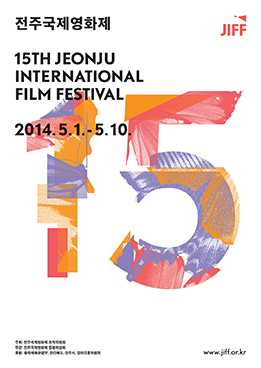
The 2014 Jeonju International Film Festival (JIFF) is due to commence from May the 1st through to the 10th.

Now in its 15th installment, JIFF has long been the festival for showcasing up and coming Korean independent talent as well as serving as a platform for international indies to receive attention. This year is of course no exception, as new features have added and programs extended in conjunction with the traditional core categories.

Last year, JIFF provided the launchpad for several notable Korean indie films that later went on to become successful on the international circuit. Family documentary My Place (마이 플레이스) and drama-thriller Lebanon Emotion (레바논 감정) were the most prominent, enjoying lengthy festival runs and scooping several awards domestically and internationally while other productions including Dear Dolphin (환상속의 그대)Cheer Up Mr. Lee (힘내세요, 병헌씨)Talking Architecture, City: Hall (말하는 건축, 시티:홀), and controversial documentary Project Cheonan Ship (천안함프로젝트) also performed well. Breathe Me (울게 하소서) was the most celebrated short film to emerge from the festival, later appearing in Cannes in the prestigious Critics Week category.

This year however sees not only an array of new Korean filmmakers but also some of the most renowned and reputable names in the independent film industry screening their latest work. Furthermore, the festival design is clearly emphasising JIFF as a celebration of elegance and subtle sincerity, as can be viewed in the trailer below.

The big change at JIFF 2014 lies in the greater focus on Korean films. Korea Cinemascape has now become a distinct program in its own right, and while previously more mainstream Korean films were integrated within, the focus has now shifted to more independent and low-budget productions. As such, there are some big names in indie cinema within Korea Cinemascape this year, including Lee Song Hee-il (White Night), Lee Sang-woo (Barbie) and Kim Kyung-mook (Stateless Things), as well as a greater number of world premieres which further cement JIFF’s reputation for discovering new talent.

In addition, two of JIFF’s staple programs – Jeonju Digital Project and Short! Short! Short! – have been amalgamated in order to enhance the overall quality of the productions as well as elevating the films into features. This year, two of of the three films are helmed by Korean directors.

The festival is also now separated into two distinct parts – from May 1st~7th JIFF will operate is normal, while May 8th~10th will focus more on the films in the International Competition. The Closing film has been abolished, and instead the Grand Prize winning film from the International Competition will screen instead.

Opening Film

MAD SAD BAD (신촌좀비만화) 

Directors Ryoo Seung-wan (류승완), Han Ji-seung (한지승), Kim Tae-yong (김태용)

Ghost (유령)

Ghost (유령)

I Saw You (너를 봤어)

I Saw You (너를 봤어)

Picnic (피크닉)

Picnic (피크닉)

MAD SAD BAD is a fascinating and exciting departure from traditional opening films. The 3D omnibus is helmed by three of Korea’s extremely talented directors. In Ghost, director Ryoo Seung-wan (The Berlin File) explores the life of a high school student who retreats from the world and instead finds purpose talking with a girl on SNS. The segment stars red hot indie star Lee David (Pluto, Poetry), Kwak Do-wan (The Attorney, National Security) and model Son Soo-hyeon in her acting debut, while the film itself is based on a true story. In futuristic zombie film I Saw You, director Han Ji-seung (Papa) plays with a variety of genres as he portrays the undead as factory workers. Featuring Park Ki-woong (Secretly Greatly) and kpop star See Ya’s Nam Gyoo-ri (Death Bell), the romantic musical horror will certainly be an attractive affair. Rounding out the omnibus is Picnic by director Kim Tae-yong (You Are More Than Beautiful). When a young girl loses her autistic brother on a picnic trip, her frantic search calls forth the realms of her imagination inspired from her beloved comic books. Child actress Kim Soo-an (Hide and Seek) stars.

Please see below for the MAD SAD BAD trailer.

Festival News Jeonju International Film Festival (제15회 전주국제영화제) Korean Festivals 2014
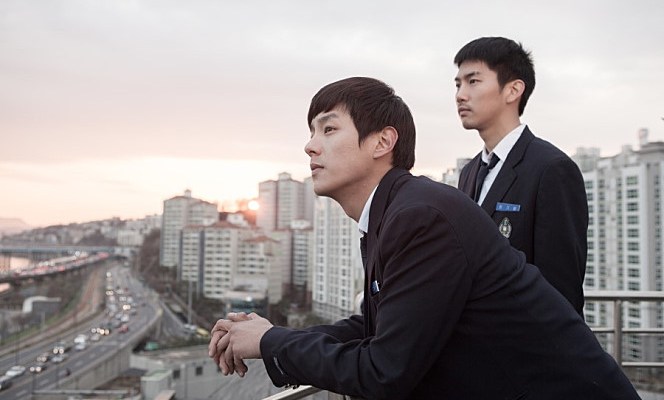
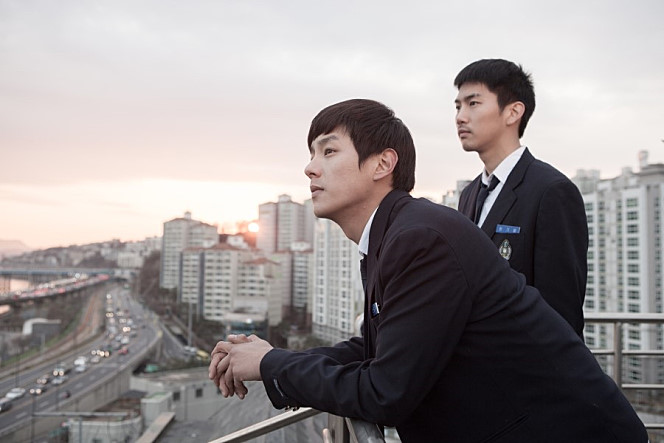
Yong-ju and Gi-woong contemplate their lives atop Night Flight

Night Flight (야간비행) – ★★★★☆

Night Flight (야간비행)

Night Flight (야간비행)

Premiering to high praise at the 2014 Berlinale, director Lee Song Hee-il’s (이송희일) insightful and thought-provoking drama Night Flight (야간비행) continues to build upon themes explored in his previous work. Homosexuality in contemporary Korea and the resultant alienation are joined by explorations of the country’s notoriously harsh education system as well as social injustice, making the coming-of-age film arguably the director’s most fully formed work to date. With Night Flight, director Lee Song is rapidly cementing his position as Korea’s most prominent and influential queer filmmaker.

Like most teenagers in Korea, high school students and best friends Yong-ju (Kwak Si-yang (곽시양) and Gi-taek (Choi Jun-ha (최준하)  struggle with an overwhelming amount of study and the pressure to attend a top university. Yet the duo’s lives are further complicated as Gi-taek is relentlessly bullied and beaten by the school’s ‘elite’ while Yong-ju, raised by his single-parent mother, is gay and unable to express his sexuality for fear of repercussions. Yong-ju has long harbored a crush on violent head-bully and low-level gangster Gi-woong (Lee Jae-joon (이재준) since middle school, who also attempts to cope with an extremely troubled life. When Yong-ju decides to make a pass at Go-woong, events are then set in motion that forces them all into a powerful confrontation.

Yong-ju harbors a secret crush on fellow student Gi-woong

Yong-ju harbors a secret crush on fellow student Gi-woong

Director Lee Song Hee-il’s films are always absorbing explorations of the alienation gay men experience within contemporary Korea, and Night Flight certainly doesn’t disappoint. Within the film director Lee Song has focused on an area he has previous only briefly touched upon in his short Suddenly, Last Summer – the fraught experiences of gay teenagers. Night Flight is made up of a collection of real life stories the director has acquired over a number of years from the media and word of mouth, and it’s to his credit that they are collated into a convincing, compelling whole. Yet what sets Night Flight apart from director Lee Song’s prior films is that while homosexuality is a central theme it is not the sole focus of the story. A great number of social issues that Korean teenagers experience, including the enormous pressures of the education system, single-parent families, the class divide, and social injustice all feature within the narrative and are insightfully explored throughout. By featuring issues found in other acclaimed teenage indie dramas such as Pluto and Bleak Night, director Lee Song naturalises homosexuality as another facet of identity that youths struggle with as opposed to a constant sense of ‘otherness’, which is a welcome change indeed.

Night Flight is also yet another showcase for director Lee Song’s incredible vision for landscapes and composition. The cinematography is quite striking throughout the film, with the decrepit and poverty stricken environments portrayed with a great sense of foreboding, of a society crumbling under its own archaic issues. The fences and bars that appear throughout the district, so often wonderfully foregrounded, imply the prison within which these long-suffering teens occupy and are unable to escape.

Yong-ju and Gi-woong contemplate their lives atop Night Flight

Yong-ju and Gi-woong contemplate their lives atop Night Flight

Yet the film is not all grim landscapes as director Lee Song allows his characters occasional reprieves in the form of glorious sunsets, particularly atop former gay hotspot bar ‘Night Flight.’ This private arena, situated at the top of a dilapidated building, not only provides a great metaphorical resonance of escapism from the confines of a rigid society but also allows the troubled teens freedom of expression, with the conversations containing penetrating insight into the issues confronting them.

Night Flight is also an interesting variation for director Lee Song as not all of the principal characters are gay. Central protagonist Yong-ju is the only distinct homosexual voice with the film, while his friend Gi-taek exposes the bullying within Korean culture and ambiguous love interest Gi-woong personifies social injustice. All the cast give competent performances in their roles, although their rather obvious older-than-high school ages tends to be a distraction. As the narrative caters for a variety of perceptions and experiences that effect Korean teenagers Night Flight eloquently fits within the canon of provocative films about Korean youth. While the story is a little over-ambitious in attempting to contain so many social issues, Night Flight is well constructed and many of the disparate problems that feature are seen through to their respective conclusions.

The troubled teenagers dream of escape from the confines of a crumbling society

The troubled teenagers dream of escape from the confines of a crumbling society

Night Flight is an insightful and provocative teenage drama by Korea’s most notable queer filmmaker, director Lee Song Hee-il. In exploring homosexual themes of alienation in conjunction with an array of other youth and social issues such as education and the class system, director Lee Song has crafted a powerful coming of age story of identity and the desire for escape. Night Flight is a welcome addition to not only queer but also youth film, and is arguably the director’s most fully formed film to date.

★★★★☆

Jeonju International Film Festival (제15회 전주국제영화제) Korean Festivals 2014 Reviews
Gong-ju's trauma apears on the internet for all to see

Han Gong-ju (한공주) – ★★★★★

Han Gong-ju (한공주)

Han Gong-ju (한공주)

Han Gong-ju (한공주) is undoubtedly the best Korean film of 2013. Bold, unflinching, insightful and powerful, director Lee Su-jin (이수진) has crafted an exceptional film about serious social issues that exist within contemporary Korea. What makes the film such an exemplary piece of cinema is the manner in which such issues are conveyed. Through the experiences of traumatised teenage protagonist Gong-ju, her world opens to reveal a broad array of socio-cultural problems ranging from absentee parents to corrupt institutions, from high school bullying to mid-life crises, as she simultaneously attempts to reconcile with her own tragic past. Employing an impassioned sense of social injustice in conjunction with a skillfully balanced narrative structure, director Lee Su-jin evokes the spirit of a raw Lee Chang-dong which is mighty praise indeed.

Gong-ju attempts to start her life over, yet keeps everyone at a distance

Gong-ju attempts to start her life over, yet keeps everyone at a distance

For reasons unknown, high school student Gong-ju is sent to a new school far from her hometown. The extremely quiet yet polite student is constantly treated as a burden by teachers, parents, as well as her new carer – her teacher’s lonely single mother. As Gong-ju attempts to rebuild her life in new surroundings by learning to swim and taking on a part-time job, new friends emerge and discover her beautifully melancholy singing ability. Yet in revealing her talent, Gong-ju’s horrifying past catches up to her with disastrous results.

Treated as little more than a burden, Gong-ju attempts to start her life anew

Treated as little more than a burden, Gong-ju attempts to start her life anew

Han Gong-ju is a rare gem and a stunning debut feature from director Lee, whose previous shorts Papa (2004) and Enemy’s Apple (2007) were both award recipients. The social issues that are explored throughout the film are not new in neither mainstream nor independent Korean cinema, but nonetheless are incredibly powerful and emotive due to the strength of the central protagonist alongside a gripping flashback structure. As the heart of the film, Gong-ju is a very complex character; melancholy yet passionate, distant yet likable, her tragic story is one of shocking trauma and inspirational strength. Indeed, it is Gong-ju’s courage that forces confrontation with further injustices – including a runaway mother and corrupt authority figures – that serve to make her an increasingly endearing and admirable young woman. Director Lee wisely employs editing to accentuate audience empathy, gradually revealing tidbits of information into Gong-ju’s elusive past until neither she, nor the audience, can hide from the truth any longer. In doing so director Lee not only conveys his skill as a storyteller, but also potently exposes the contentious role of parents in crime and punishment.

As Gong-ju, actress Cheon Woo-hee (천우희) gives an incredible performance. The role itself is subtle and nuanced, and she delivers wonderfully. Simultaneously innocent yet worldly-wise, Cheon Woo-hee conveys the agony of the troubled teenager mixed with a sense of hope and inner-strength that is staggering to behold. In lesser hands Gong-ju would be either cold and unlikable or overly pitiable, yet Cheon balances both realms effortlessly.

Gong-ju attempts to let people into her world, with disastrous results

Gong-ju attempts to let people into her world, with disastrous results

Verdict:

Undoubtedly the best Korean film of 2013, Han Gong-ju is a rare gem of independent cinema. Director Lee Su-jin has crafted an extraordinary tale of a girl struggling to reconcile with a traumatic past, who courageously confronts further social injustices in her attempt to do so. Beautifully performed by Cheon Woo-hee, the actress balances the inner strength and turmoil of the character to produce one of the most emotive and powerful cinematic experiences of the year. Bold, insightful and heart-wrenching, Han Gong-ju is the must-see film of the year.

★★★★★

Busan International Film Festival (제18회 부산국제영화제) Reviews
Seoul Independent Film Festival (서울독립영화제)

SIFF 2013: The 39th Seoul Independent Film Festival 2013

Seoul Independent Film Festival (서울독립영화제)

Seoul Independent Film Festival (서울독립영화제)

Independent film lovers rejoice, for the Seoul Independent Film Festival will commence from Thursday the 28th of November, running through to the 6th of December.

Now in its 39th edition, SIFF 2013 will celebrate Korea’s independent film industry by showcasing the best examples from the year, and will primarily be held at the CGV theater in Apgujeong although screenings will also take place at Indiespace located in Gwanghwamun.

Film fans will also undoubtedly be interested to learn that many of the films due to be screened were previously shown at other big festivals including Jeonju, Busan, and the DMZ Docs film festivals respectively. As such SIFF 2013 presents a great opportunity to catch the years independent offerings before the end of the year.

Within the Competition – Features category are some great award winning indie films, that deftly  tackle contemporary social issues in Korea. Highlights include director Park Moon-chil’s documentary  My Place (마이 플레이스) which explores gender inequality and family issues; Han Gong Ju (한공주), a film concerned with teenage trauma; Non Fiction Diary, a documentary examining pivotal criminal events in the 1990s; and Shuttlecock (셔틀콕), a road trip drama concerned with teenage angst, greed, and (ir)responsibility.

Special Invitation – Features also contains some of the years best indie films. The plight of foreign brides in the countryside is examined in drama Thuy (안녕, 투이)Busan closing film The Dinner (만찬) depicts family and elderly concerns; documentary Tour of Duty (거미의 땅) explores the trauma of being a sexual slave during the Korean War; National Human Rights production If You Were Me 6 (어떤 시선) is concerned with citizens on the fringes of Korean society; and Busan award winner Pascha (파스카)which tackles age-related relationship issues.

For more details, including the screening schedule, please visit the official SIFF 2013 website here.

Festival News Korean Festivals 2013
The 5th DMZ Docs Film Festival

DMZ Docs: The 5th DMZ Korean International Documentary Film Festival

The 5th DMZ Docs Film Festival

The 5th DMZ Docs Film Festival

The 5th DMZ Korean International Documentary Film Festival – or DMZ Docs for short – is due to commence this Thursday the 17th of October and will run through to Wednesday the 23rd.

While the opening ceremony will take place at the DMZ as usual, the rest of the festival has been moved to Lotte Cinema in La Festa, next to Jeongbalsan Station, Ilsan.

DMZ Docs will feature 119 films from 38 countries during its run, all of which are divided within various programs bringing focus to social issues from around the world. There are three competition categories – International, Korean, and Youth – while the non-competition arena includes sections such as Global Vision, Docs For All! and Masters respectively.

Opening the 2013 installment of DMZ Docs will be Manshin: Ten Thousand Spirits (만신) by director Park Chan-kyong (박찬경), who has made quite a reputation for himself helming films such as Night Fishing (파란만장) and Day Trip (청출어람) alongside his brother Park Chan-wook.

For the official DMZ Docs festival trailer, as well as information on opening film Manshin, please see below.

Opening Film

Manshin: Ten Thousand Spirits (만신)

Manshin: Ten Thousand Spirits (만신)

Manshin: Ten Thousand Spirits (만신)

Director Park Chan-kyong explores the life of shaman Kim Geun-hwa in Manshin: Ten Thousand Spirits (만신). Ever since the end of the Korean War, Korean culture has had a tumultuous relationship with the past and the present. In order to develop and establish the country as an economic powerhouse,  traditions have often been swept aside in the ferocious adoption of capitalist ideology – shamanism included. Despite such oppression, shaman Kim has established herself as one of the country’s leading figures in the arena, earning the title of National Shaman. The film stars actresses Kim Sae-ron, Ryoo Hyoun-Kyoung, and Moon So-ri in the role of shaman Kim as the autobiographical story presents her complex and traumatic life.

For the full listing of all the programs and films due to take place at DMZ Docs, please visit the official website here.

Festival News Korean Festivals 2013
Tensions build as Tae-sik and Won-joon clash in the bid for superiority

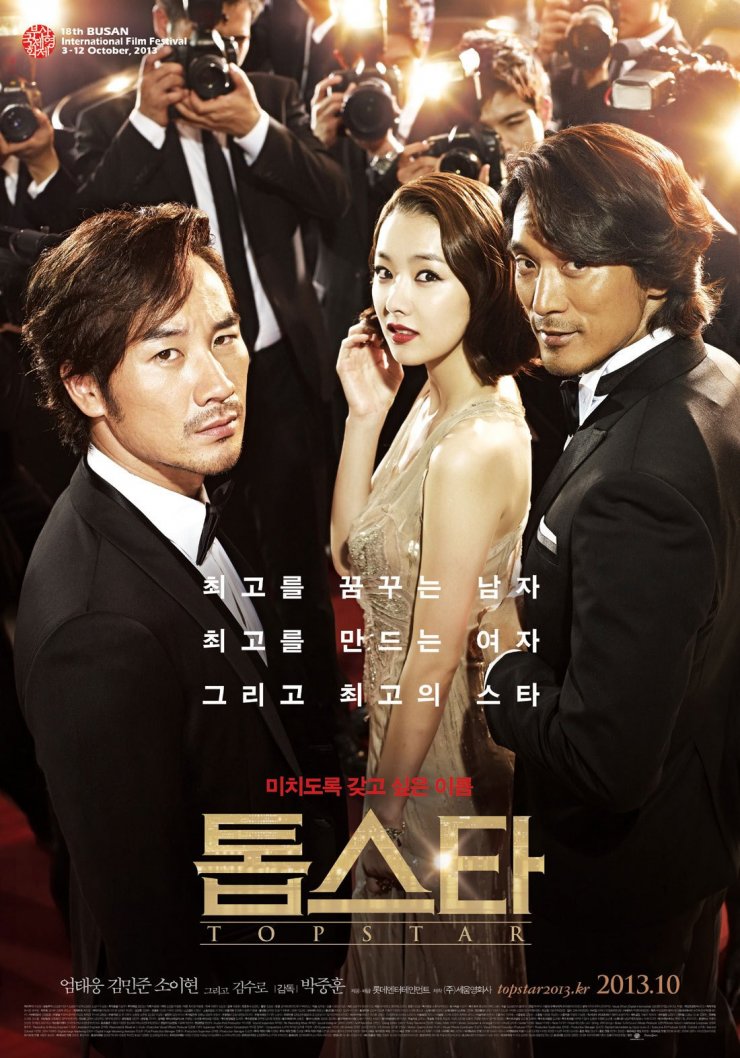
Top Star (톱스타) – ★★☆☆☆

Top Star (톱스타)

Top Star (톱스타)

Actor-turned-director Park Joong-hoon (박중훈) has crafted a highly polished and glitzy directorial debut with Top Star (톱스타).

The heavyweight actor – who has hit films including Haeundae (해운대)Radio Star (라디오 스타) and Nowhere To Hide (인정사정 볼 것 없다) in his back catalogue – has clearly exercised his connections within the industry as Top Star features an assortment of high profile names from Korean cinema.

Unfortunately however, while there is enjoyment to be had in watching the beautiful faces, lavish lifestyles and celebrity scandals, there is precious little substance beneath the glamour. Director Park has clearly aimed his debut at a broad audience and in doing so he has produced a competent, though unremarkable, film about the nature of stardom.

Diligent manager Tae-sik helps superstar Won-joon at every turn

Diligent manager Tae-sik helps superstar Won-joon at every turn

Superstar Won-joon (Kim Min-joon (김민준) has it all – good looks, a career in film and television, an expensive lifestyle, and a beautiful girlfriend named Mi-na (So I-hyeon (소이현). Yet behind all the glitz and glamour, Won-joon is taken care of by an agency, particularly by diligent manager Tae-sik (Eom Tae-woong (엄태웅). Tae-sik’s adoration of Won-joon leads him to help cover up scandals and, in helping in one case of some magnitude, Tae-sik suffers great personal distress. Stunned by his selflessness, Won-joon grants Tae-sik a sizeable role in his latest television series and is happy to see his ambitions of becoming an actor finally materialize. Yet in discovering fame, Tae-sik begins to change, leading him into a rivalry with Won-joon.

One of the great benefits of having a veteran actor step behind the camera for Top Star is that the portrayal of the world of celebrity is convincing. The conversations and behind-the-glamour events clearly come from a person of experience, from discussions in limousines and public-relations meetings to relaxation at home portrayed with insight. Director Park does well in balancing the realms of stardom and downtime, conveying the former as merely attractive but shallow superficiality and working to build character in the latter. It generally works well, although the script routinely employs cliches and contrivances that have been utilised better before, as in 200 Pounds Beauty (미녀는 괴로워). Foregrounded, however, is the rivalry that develops between Tae-sik and Won-joon that occurs in both worlds, which is also where the more interesting events transpire.

Tensions build as Tae-sik and Won-joon clash in the bid for superiority

Tensions build as Tae-sik and Won-joon clash in the bid for superiority

The initial friendship between Tae-sik and Won-joon is articulated well, as the manager idolises his talent by helping to cover up scandals with no questions asked. Yet the story does become somewhat absurd as Tae-sik suffers a great personal burden in order to provide an alibi for one particular scandal, one that stretches believability almost too far. As Top Star is clearly marketed towards family audiences, director Park omits psychological exploration of Tae-sik’s adoration, yet while it is arguably ‘dark’ material it is depth that is sorely required as the film is so concerned with his unstable personality. Still, sequences in which Won-joon advises Tae-sik on the merits of acting are enjoyable and humourous as their camaraderie deepens on the set of their TV show. Yet just as the story begins to get interesting the film jumps years into the future, bypassing all the fascinating moments that have transpired to trouble their relationship and instead placing audiences in the distressed middle period.

As such Top Star loses all momentum, and the film is forced to reestablish itself once more by reintroducing characters and their new situations. It’s an event from which the story never fully recovers and as the film once more sets up events and attempts to take a belated darker tone, they lack the potency they would otherwise have contained. Additionally the (again belated) inclusion of melodrama amongst all the protagonists is horribly cliched and detracts from the viewing experience. One of the major benefits of Top Star‘s second half however is the greater screen time afforded to actress So I-hyeon as TV producer Mi-na. The role is wafer thin and one-dimensional with So I-hyeon very much required to be just a pretty face, although the actress stretches the material as much as she can and is quite charismatic. Yet undermining everything is the manner in which the story wraps up, as it is far too neat and with little – if any – ramifications despite all the wrongdoing. Top Star is great in representing the glitz and glamour of the movie business but, try as it might to explore the nature of celebrity, the film crucially lacks any depth to do so.

Tae-sik's longing for Mi-na and Won-joon's life in general clouds his judgement

Tae-sik’s longing for Mi-na and Won-joon’s life in general clouds his judgement

Top Star (톱스타) is a highly polished and glamourous directorial debut from veteran actor Park Joong-hoon (박중훈). The film attempts to explore the nature of celebrity as a talent manager turned actor desperately works to retain his fame, even creating a rivalry with his idol. As director Park aims Top Star squarely at family audiences however, he doesn’t delve into the psychology of his protagonists resulting in a film that is wonderfully glitzy, but lacking in any real depth.

★★☆☆☆

Busan International Film Festival (제18회 부산국제영화제) Festival News Korean Festivals 2013 Reviews
With a killer on the loose, the inhabitants must do whatever it takes to survive

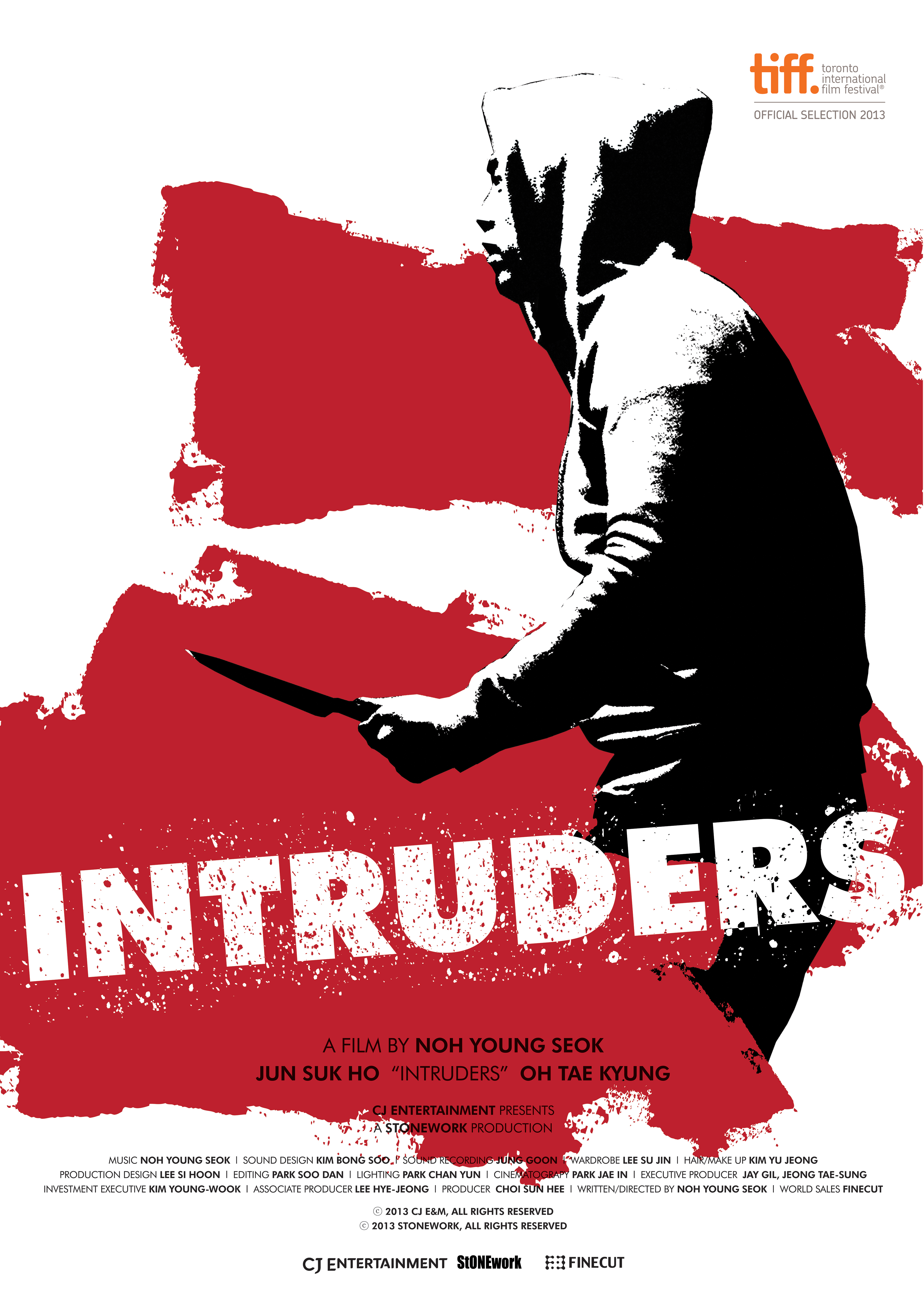
Intruders (조난자들) – ★★★☆☆

Intruders (조난자들)

Intruders (조난자들)

Suspense-filled and gorgeously picturesque, quirky thriller Intruders (조난자들) is director Noh Young-seok’s (노영석) second feature film following his critically acclaimed Daytime Drinking (낮술).

Appearing within the ‘Korean Cinema Today – Vision’ category at BIFF 2013 following a world premiere at Toronto, Intruders has been likened to Pekinpah’s Straw Dogs due to the similar themes of disquieting locals and a house under siege.

While it never reaches those heights, director Noh’s film is indeed a refreshing change of pace. The foreboding dark alleys of Seoul have been replaced with stunning winter landscapes, while the isolation and bizarre behaviour of everyone involved provides a vastly different form of thriller. However, with its uneven pacing and unsatisfactory third act, Intruders never quite manages to fulfill its potential and as such is an entertaining rather than genre redefining entry.

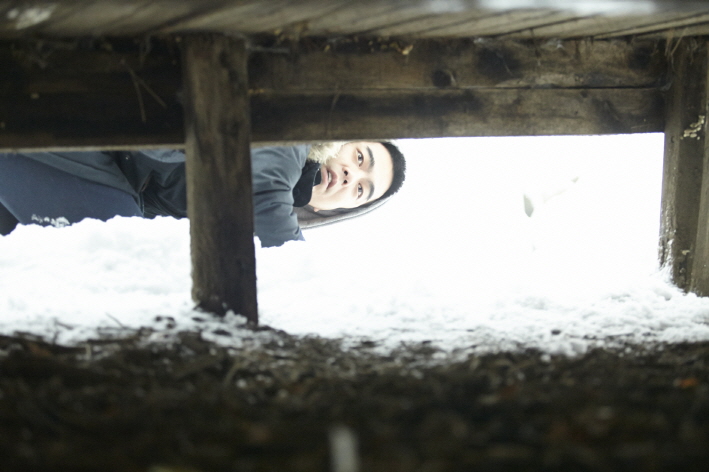
Screenwriter Sang-jin inspects his cabin the wintry countryside

Screenwriter Sang-jin inspects his cabin in the wintry countryside

In order to complete his screenplay undisturbed, writer Sang-jin (Jun Suk-ho (전석호) journeys into the remote countryside to stay at his boss’ cabin alone. Surrounded by snow-covered mountains and with the nearest town 30 minutes away, Sang-jin is certain he will finish his work before the deadline. Yet on the way he reluctantly befriends odd ex-con Hak-soo (Oh Tae-kyung (오태경) who is determined to form a relationship, while the arrival of young ski enthusiasts at the adjacent cabin complicate his plans further. More disturbing however are the hunters who stalk the surrounding area, creating a deep sense of unease. When Sang-jin discovers one of the young skiers has been murdered, a shocking chain of events are set in motion.

First and foremost, Intruders is an extremely attractive film. Director Noh frames each scene to make the most out the stunning country landscapes and the blanket white snow that engulfs it, and as such the film is consistently visually impressive. Locations also wonderfully evolve according to the context in which Sang-jin finds himself, as beautiful scenes suddenly become uncomfortable when awkward situations arise. It is remarkable how the isolated cabin changes from being a romanticised place of work to a source of terror, yet director Noh’s framing techniques and pacing succeed in slowly building a sense of foreboding that completely changes the atmosphere within the film. This is in no small part due to the quirky and downright weird characters that are introduced throughout the story, with the suspense and tension generated by their actions reaching palpable levels.

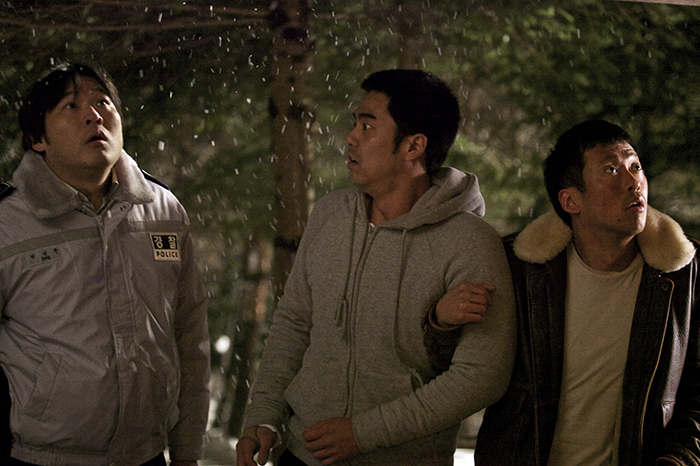
The arrival of local law enforcement only serves to complicate matters further

The arrival of local law enforcement only serves to complicate matters further

The assortment of characters within Intruders makes the film equal parts scary and darkly comic, as their unpredictable behaviour is constantly fascinating to watch unfold. Oh Tae-kyung is great as odd ex-con Hak-soo, genuinely leaving the audience wondering about his motivations through his ability to switch from overly-friendly to threatening in a heartbeat. Also within the mix are young and crude male skiers, a cop with a twisted sense of justice, and rugged hillbilly hunters whose disheveled appearance – coupled with their random gun shots in the wilderness – place everyone ill at ease. Only one character, that of the bitchy lone female skier, tends to ruin the story as she is so one-dimensional it’s continually frustrating. Her constant complaints and moans are initially amusing, but as the only woman in the script director Noh really should have elaborated her role further. Luckily however actor Jun Suk-ho is brilliant to watch as everyman Sang-jin. His reactions to the bizarre happenings and weird people around him are always compelling and entertaining, leading the audience through the minefield of weirdness as well as providing the story with central focus.

Yet for all the suspense and enjoyment, Intruders doesn’t quite manage to elevate itself into the realms it should. Director Noh has done remarkably well in constructing the premise but all too often he lingers on moments for too long rather than move to the next event. This is wonderful in terms of creating tension, yet these and earlier scenes could (or perhaps should) have been trimmed in editing to allow later events time to advance. Furthermore while plenty of clues and red herrings are subtly laced within the story, certain features really come out of left field that are simultaneously laughable and shocking. All these issues culminate in a finale that is quite underwhelming and lacking in satisfaction, a shame as for the most part Intruders is a thoroughly engaging and enjoyable film.

With a killer on the loose, the inhabitants must do whatever it takes to survive

With a killer on the loose, the inhabitants must do whatever it takes to survive

Verdict:

Intruders is a wonderfully quirky tale of a screenwriter who ventures into the countryside yet gets more than he bargained for with the odd locals. Director Noh Young-seok’s second film is beautifully picturesque and consistently laced with dark humour throughout, with the bizarre situations the writer finds himself in compelling and entertaining. While the film never manages to capitalise on the great premise, for the most part Intruders is a fun, engaging and refreshing thriller.

★★★☆☆

Busan International Film Festival (제18회 부산국제영화제) Festival News Korean Festivals 2013 Reviews
A priest telling lies or a devil telling the truth - The Fake examines the nature of religion

The Fake (사이비) – ★★★★☆

The Fake (사이비)

The Fake (사이비)

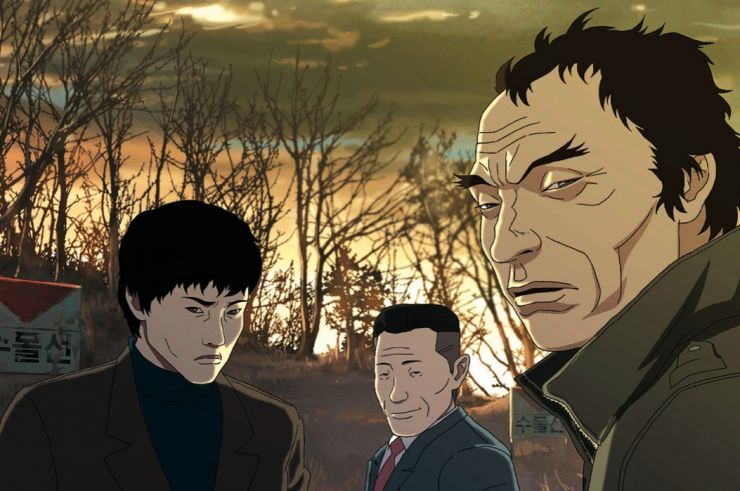
The Fake (사이비) is a brutal and intense viewing experience, with the shocking and visceral manner in which depicts a community under siege quite brilliantly executed. Director Yeon Sang-ho (연상호) has taken the dark themes he explored so wonderfully in King of Pigs (돼지의 왕) and expanded them into a wider sociological framework, and the result is a darkly explosive and constantly compelling social commentary.

A small village deep in the countryside is under threat from the construction of a new reservoir, which will submerge the whole community. With few options, the villagers turn to the newly formed church and its young priest for salvation, with their faith strengthened ever further by witnessing ‘miracles’. As their religious fervour becomes increasingly fanatical, a violent and abusive man returns to the village and, horrified by what he sees, attempts to reveal the machinations behind the church’s intent. Yet who should the country-folk believe – a man of God, or the devil himself?

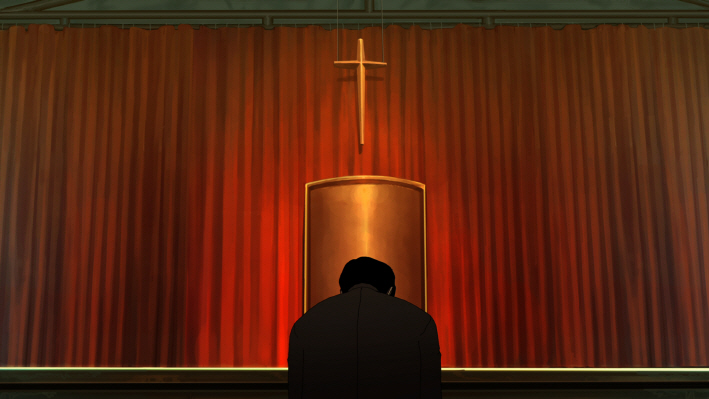
The Fake adopts many of the conventions from the western genre as a lone ‘anti-hero’ returns from the wilderness to a corrupt civilisation. Director Yeon takes such motifs and intelligently plays with them in deconstructing Korean society, religion, and morality in ways both overt and nuanced, balancing them all incredibly well. Such a penetrating examination is conducted through the outsider character, who is far more devil than saint as he steals, drinks and beats women for his own selfish gain. Yet his status as an outsider also grants him the freedom of perception. With the threat of the reservoir – a wonderfully symbolic biblical flood – approaching, a con man and his young sidekick priest all too easily manipulate the villagers into doing their bidding by appealing to their base fears and desires. As the outsider attempts to reveal the scam and help them, the story explores just how illogical and frightening society can become when an ideology built on false promises is introduced and adhered to.

Religious fervour becomes increasingly fanatical as perceived threats loom on the horizon

Religious fervour becomes increasingly fanatical as perceived threats loom on the horizon

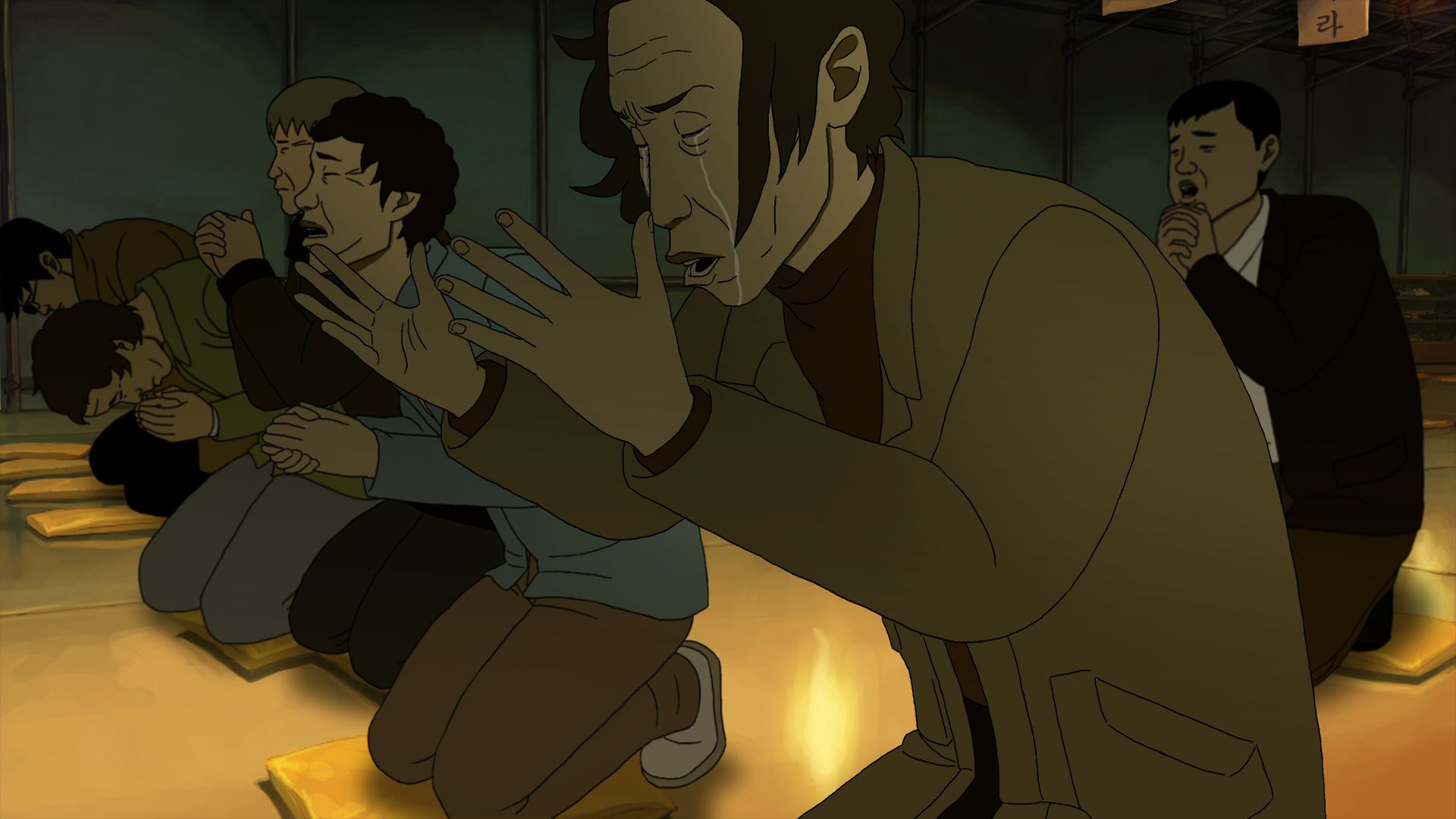
The examples of fanaticism that increase throughout the film are wholly believable, as the country-folk are continually duped by false miracles and promises set up by the clergy and his financial backer. As sick people refuse medicine in favour of ‘holy water’, women become prostitutes, as well as villagers selling property in order to donate to the church, The Fake is exemplary in depicting not only the seemingly inherent corruption within religious institutions but also the sheer ignorance of society as a whole, especially when under threat. There are no conventional ‘good’ characters to be found within the world of The Fake and as such the atmosphere generated is deeply intense and disturbing, and as the community continues to descend further into a moral abyss the film is consistently riveting.

It is also wonderfully ironic that the ‘saviour’ of the village is akin to the devil personified. At times even wielding a forked weapon and using fire, the outsider is an appalling brute who destroys everyone in his path and is routinely expelled from the community as the spawn of satan. His evil ways while speaking the truth are counter-balanced with the priest who behaves saintly while telling lies, and their interactions and conflicts are intelligent as well as explosive. The violence that occurs due to their personal war is ferociously bloodthirsty, with the fluidity of the animation a remarkable evolution for director Yeon. Indeed, with the exception of one rather ‘blocky’ church dancing scene, The Fake sports impressive visuals throughout whilst retaining director Yeon’s distinct style, with his use of colour and shadow adding tremendous weight to the intensity of the story.

A priest telling lies or a devil telling the truth - The Fake examines the nature of religion

A priest telling lies or a devil telling the truth – The Fake examines the nature of religion

Verdict:

The Fake, director Yeon Sang-ho’s second film, is a brutal, dark, and intense viewing experience that examines a rural community manipulated by a religious institution. Employing genre conventions from the western, director Yeon intelligently explores Korean social issues through the increasing conflict between con artists, duped villagers and evil men. The Fake is a genuine evolution of style for the director, and is a continually riveting and explosive social commentary on the nature of morality.

★★★★☆

Busan International Film Festival (제18회 부산국제영화제) Festival News Korean Festivals 2013 Reviews
Haewon meets Seong-joon, the married professor with whom she has an on-and-off affair

Nobody’s Daughter Haewon (누구의 딸도 아닌 해원) – ★★★★☆

Nobody's Daughter Haewon (누구의 딸도 아닌 해원)

Nobody’s Daughter Haewon (누구의 딸도 아닌 해원)

Director Hong Sang-soo’s (홍상수) 14th feature film Nobody’s Daughter Haewon (누구의 딸도 아닌 해원) is a wonderfully charming and beautifully endearing tale. The film received it’s world premiere at Berlin before invitations to festivals throughout Europe, the Americas, Asia and Oceania, which are a testament to not only director Hong’s popularity but also for the seemingly effortless sincerity captured within the story.

Fans and newcomers alike will find much to enjoy from Nobody’s Daughter Haewon. Director Hong has infused the film with his trademark nuanced style, employing a subtle and understated method that belies the depth and symbolism within, while also referencing previous works. Yet the film is also notably given heart and soul by the quite lovely performance of Jeong Eun-chae (정은채) as Haewon, a young woman struggling to reconcile her identity and place in the world.

Haewon meets Seong-joon, the married professor with whom she has an on-and-off affair

Haewon meets Seong-joon, the married professor with whom she has an on-and-off affair

Haewon (Jeong Eun-chae (정은채) is a lonely film and acting university student who, due to her attractiveness and strength of character, is often set apart from her classmates. When her mother announces that she intends to live in Canada, Haewon’s loneliness increases dramatically leading to a reunion with married professor Seong-joon (Lee Seon-gyoon (이선균), with whom she has an on-and-off affair. As the couple begin to rekindle their feelings for each other through dates at a traditional park and an old hiking trail, their interactions become increasingly fraught.

Director Hong’s seemingly effortless, almost meandering style perfectly captures the inner turmoil of his lead protagonist. His deceptively simple camera movements and mise-en-scene may appear whimsical at first glance, which is indeed part of the film’s charm, yet there is also symbolic depth within every frame. The empty – and previously restricted – park, the uphill struggles of hiking, the overbearing statues and so forth all emphasise Haewon’s evolving psychology following the departure of her mother and rekindling of a self-destructive relationship. Director Hong employs such aesthetics in conjunction with his trademark ‘repetition with difference’ sequences, and as such each time an interaction is conducted the subtle changes produce alternative meanings and endings that are fascinating to watch unfold. In constructing such repetition seamlessly within the story, each ‘chapter’ – or rather reenactment – is a product of Haewon’s diary entries or dreams adding further allure as she is very much in control of the unfolding events, further accentuated through her occasional narration.

Haewon's dreams and diary entries mark different 'chapters', or rather renactments, within the film

Haewon’s dreams and diary entries mark different ‘chapters’, or rather reenactments, within the film

This would of course mean very little if Haewon was unlikeable, however actress Jeong Eun-chae is wonderfully charismatic throughout. In what is arguably her breakout role, Jeong Eun-chae infuses her character with strengths and flaws in equal measure, conveying a nuanced complexity that is mesmerizing. It’s not so much that her performance is perfect, but that when over-acting or stoicism appears it is wholly natural within the context of the scene. When Haewon meets actress Jane Birkin in the early stages of the film, for example, the awkwardness and slightly cringeworthy moments express not only being star-struck but also Haewon’s desire for a mother-figure to admire and be valued by. Jeong Eun-chae is also great at adapting Haewon as a slightly different person for each repetitive sequence, also symbolised by her striking red and autumnal coloured clothing. The subtle changes, as well as the criticisms and compliments that come her way, are all indicative of a young woman attempting to establish her identity through dreams and diary recollections, and are consistently lovely to watch unfold.

That said, Nobody’s Daughter Haewon will not be for everyone. Critics of director Hong’s style will undoubtedly find the same issues within this film as they have in his previous works. The story does indeed meander; the plot doesn’t progress particularly far due to the repetitive nature of scenes; the intellectual male characters are all indicative of contemporary masculine immaturity. Ultimately it will be down to individual viewers tastes whether such themes are a source of charm or frustration. Yet for fans and audiences interested in non-cliched representations of modern relationships, Nobody’s Daughter Haewon will be a refreshing delight.

Haewon and Seong-joon awkwardly meet another couple in a similar situation at Namhan Fortress

Haewon and Seong-joon awkwardly meet another couple in a similar situation at Namhan Fortress

Verdict:

Nobody’s Daughter Haewon is an incredibly charming and quite lovely film by director Hong San-soo. In depicting lonely film and acting student Haewon as she rekindles an affair with her married professor, a deceptively simple and subtlety nuanced film about identity and direction is constructed, employed through the director’s trademark aesthetics. Jeong Eun-chae is wonderfully charismatic and gives a career best as Haewon. While the story does meander and the male characters are quite immature, Nobody’s Daughter Haewon is a delightful and refreshing tale of modern relationships.

★★★★☆

Busan International Film Festival (제18회 부산국제영화제) Festival News Korean Festivals 2013 Reviews