The 18th Puchon International Fantastic Film Festival

The 18th Puchon International Fantastic Film Festival

The 18th Puchon International Fantastic Film Festival

The 18th Puchon International Fantastic Film Festival

The 18th Puchon International Fantastic Film Festival (PiFan) is due to commence from July 17th through to the 27th. The festival takes place in Buchon City, although has retained the spelling ‘Puchon’ from its inception.

As the title suggests, PiFan is orientated towards celebrating genre films during its run, and over the past 17 years has carved a reputation as the place to experience some of the most imaginative films from around the world.

PiFan 2014 looks set to be no exception. Fantasy and adventure have been prolific genres of late and are wonderfully reflected in the official poster (right) and trailer (below), with the blurring between reality and fiction the focus of this year’s festivities. That said, there are still plenty of horrors and thrillers to satisfy audiences seeking an adrenaline rush, particularly through the special programs on offer.

The Great Kaiju, GODZILLA 60 Years

The Great Kaiju, GODZILLA 60 Years

In addition to returning favorite categories such as Puchon Choice (which features 12 films highlighting the evolution of modern genre filmmaking), World Fantastic Cinema (showcasing 44 productions that blur fantasy and reality), and Vision Express (emphasising films that push the conventions of genre storytelling), there are special programs dedicated to the history of popular genre films. The Great Kaiju, GODZILLA 60 Years will undoubtedly be one of the more popular categories at PiFan 2014, featuring the original 1954 classic as well as some of his greatest battles, all to celebrate the 60th anniversary of the iconic character. Blood Window to Latin America showcases some of the best emerging talents in genre filmmaking from the region, while PiFan Classic includes Tobe Hopper’s acclaimed The Texas Chainsaw Massacre (1974) and Poltergeist (1982).

Shim Eun-kyoung is the 2014 PiFan Lady

Shim Eun-kyoung is the 2014 PiFan Lady

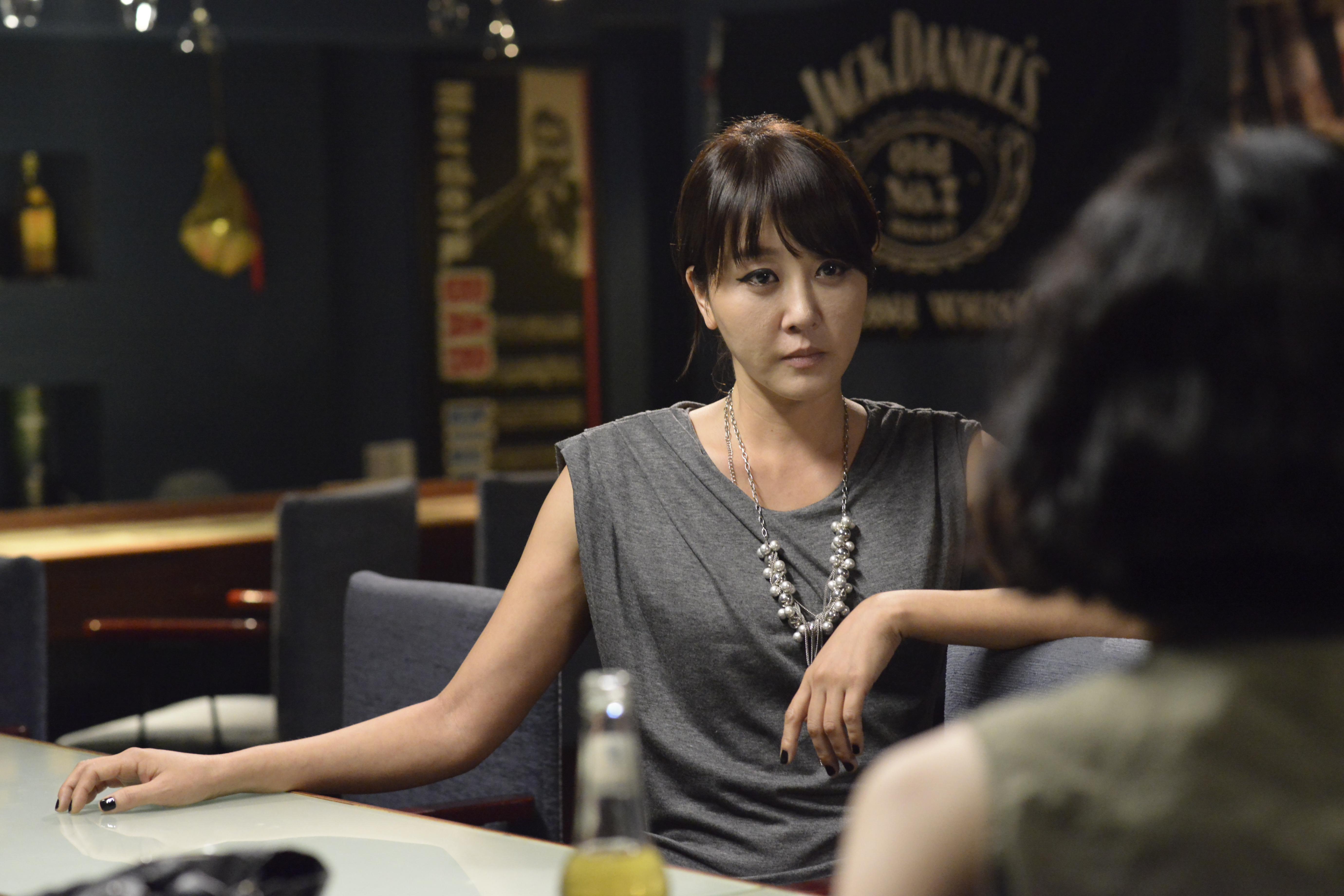
Each year PiFan selects a PiFan Lady, an actress whose filmography represents the identity and values of the festival. For this installment actress Shim Eun-kyoung (Miss Granny (2014), Masquerade (2012), Sunny (2011)) will be the face of the festival, a selection that will certainly will increase awareness following her win for ‘Best Actress’ at the PaekSang Arts Awards last May.

To visit PiFan and get the most out of the festivities, please refer to the map below.

PiFan 2014 Map

PiFan 2014 Map

For more information, please visit the official PiFan 2014 website here.
Festival News Korean Festivals 2014 Puchon International Fantastic Film Festival (제 18회 부천국제판타스틱영화제)
The mystery surrounding Jeong-seok's wife is explored via flashback

The Avian Kind (조류 인간) – ★★★★☆

The Avian Kind (조류 인간)

The Avian Kind (조류 인간)

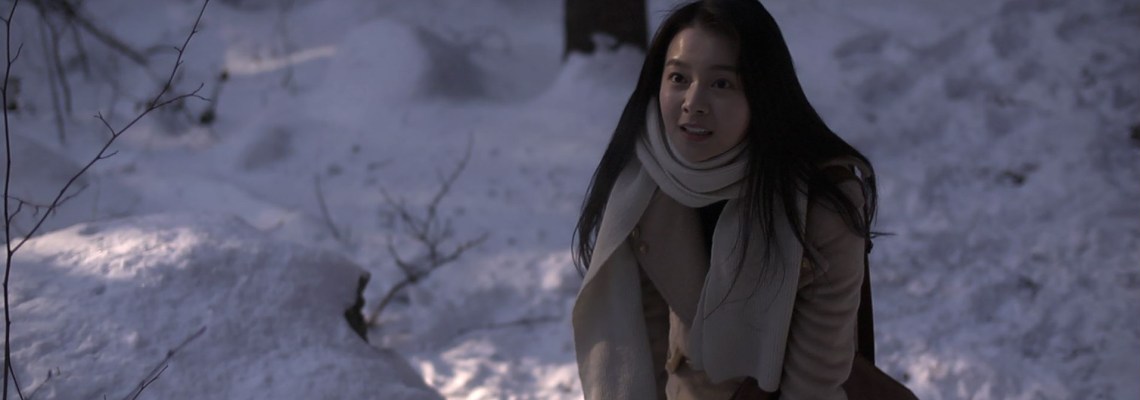
For fifteen years, celebrated author Kim Jeong-seok (Kim Jeong-seok (김정석) has been searching for his missing wife (Jung Han-bi (정한비) following her sudden disappearance. Refusing to admit defeat, the mean-spirited and poor father-figure continues to travel throughout the Korean countryside looking for his long lost spouse, until novel-fan and executive Kim Soy (Kim Soy (소이) offers help to track her down. As the duo embark on the case, a cabal of wealthy individuals demand Jeong-seok’s help, for they too have missing relatives who vanished in a similar manner. As Jeong-seok and Soy follow the clues across the wilderness, the mystery begins to unravel in a way none could have imagined.

The Avian Kind (조류 인간)

Author Jeong-seok teams with fan Soy to track down his wife

The Avian Kind (조류 인간) is one of those films where audiences will quickly find themselves polarized. For some, the breathtaking cinematography and existential narrative will prove to be a captivating experience; others, meanwhile, will likely find the art-house sensibilities to be too opaque and the story impenetrable. As such, director Shin Youn-shik’s (신연식) fifth film is likely to have limited exposure which is a great shame, as The Avian Kind is a rare breed in the Korean industry.

From the outset, The Avian Kind constructs an enchanting world in which Jeong-seok’s quest occurs. Cinematographer Choi Yong-jin displays incredible prowess throughout, capturing the natural beauty of the Korean countryside in a manner that greatly strengthens the mysterious, supernatural-esque, nature of the story. In conjunction with Mowg’s melodically unnerving musical score, the film exudes a potently eerie sensibility that is both captivating and haunting.

The mystery surrounding Jeong-seok's wife is explored via flashback

The mystery surrounding Jeong-seok’s wife is explored via flashback

The enigmatic nature of the film is further heightened by director Shin’s use of editing between time periods. While Jeong-seok’s investigation transpires in the present, the tale leading up to his wife’s disappearance fifteen years prior is explored via flashback. In employing the narrative structure in this way the story becomes as compelling as it is cryptic, posing possible answers while generating more questions. Yet rather than being stagnant there is always a sense of momentum to each journey that will ultimately provide answers the mysterious disappearances.

However as The Avian Kind embodies mostly art-house aesthetics, the abstract nature of the story may well be a source of frustration for many. The existential philosophies underpinning the narrative are alluded to yet offer no concrete answers, and audiences expecting otherwise will be in for a disappointment. That is not to say the issues with the film lay solely with the audience; characterisation is a problematic area within the story, as are the generic devices used to propel the story into a finale. Typically in an adventure or road film the protagonists develop and grow on the journey, yet none of the central cast do so. The later attempts to inject tension into the film through incorporating chase sequences akin to the thriller genre is also a misstep, dispelling the impressive atmosphere in what seems to be a bid to satisfy mainstream audiences.

Jeong-seok is summoned by a cabal of wealthy socialites, yet their motivations are dubious

Jeong-seok is summoned by a cabal of wealthy socialites, yet their motivations are dubious

Verdict:

The Avian Kind is a beautifully realised existentialist road film, and due to the art-house aesthetics within the film is likely to polarize audiences. Director Shin Youn-shik has crafted a compelling tale of a man searching for his long lost wife, featuring stunning cinematography of Korea’s natural countryside alongside a melodically unnerving score that serve to generate an enchanting experience. While not for everyone, The Avian Kind is a rare breed of film in the Korean cinema industry and an absorbing exploration on the nature of contemporary identity.

★★★★☆

Festival News Jeonju International Film Festival (제15회 전주국제영화제) Korean Festivals 2014 Reviews
Abortion has become a controversial issue in recent times, but when can women's voices be heard?

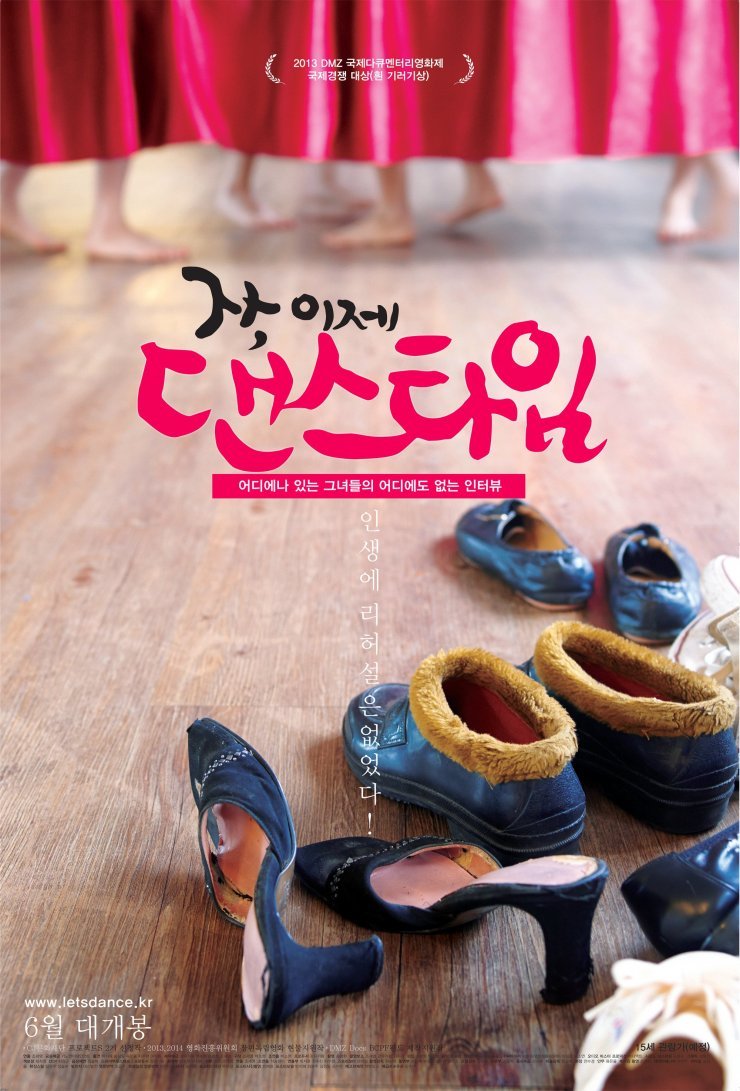
Let’s Dance (자, 이제 댄스타임) – ★★★★☆

Let's Dance (자, 이제 댄스타임)

Let’s Dance (자, 이제 댄스타임)

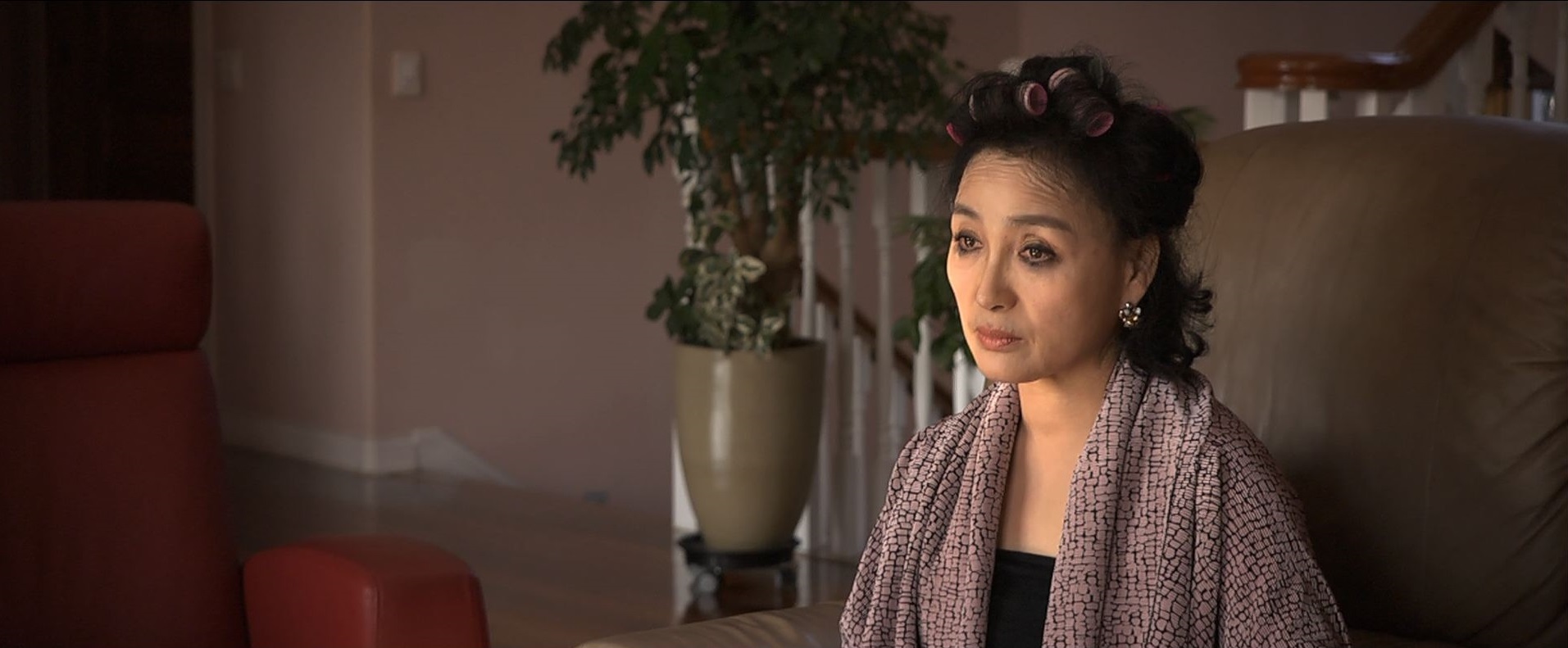
Although abortion has long been illegal in Korea, women who have required the procedure typically had few problems locating a surgery willing to help them. While the law is quite clear on the issue, given Korea’s fraught recent history – Japanese occupation, the Korean War, IMF crisis, and so forth – abortion has been, generally speaking, considered an unfortunate yet uncontroversial societal practice, allegedly supported by the state-run population policy. Yet in 2009 a hospital was accused of performing abortions, catapulting the issue into the mainstream spotlight as a source of controversy. Amongst all the debates that have taken place, ironically the women involved have been largely ignored. In documentary Let’s Dance (자, 이제 댄스타임), director Jo Se-young (조세영) provides a platform for women who have undergone the procedure to give their personal accounts, and for their voices to be heard.

Abortion has become a controversial issue in recent times, but when can women's voices be heard?

Abortion has become a controversial issue in recent times, but when can women’s voices be heard?

Let’s Dance is a wonderful documentary and a tribute to women everywhere who have ever considered or undergone an abortion. The beauty of the film lies in the unbiased perspective, as director Jo expertly removes the veil of anonymity and simply allows her subjects to speak about their experiences without fear of judgment. Such a description may imply Let’s Dance is a melancholy affair yet this is far from the case, as the diverse range of women interviewed informally discuss the reasons that led to the decision, generating a context that the black-and-white word of law doesn’t provide. Each interviewee gives a sincere, poignant, and comprehensive account of their respective situation at the time that never fails to create empathy, while the surprising amount of humour – one woman shyly laughs as she describes how her then-boyfriend claimed he simply wanted to fall asleep whilst holding hands – add ever more layers of affinity and insight.

Encounters discussed by the interviewees are recreated by actors, often with humourous results

Encounters discussed by the interviewees are recreated by actors, often with humourous results

Throughout Let’s Dance, director Jo also wisely includes reenactments of scenes discussed in interviews, which serve to add further understanding as well as comedy. It is intriguing to watch the actors struggle to understand and portray the complex emotions of the situations, which often swing between powerfully moving and funny in the absurdity. Chiefly the comedy is derived from the silliness of the male partners in their attempts to have unprotected sex, while ironically they are also the source of disappointment when it comes to making the difficult decision of abortion. Wonderfully, director Jo never represents the women as victims in the reconstructions, but as women claiming ownership over their bodies, candidly conveying their strength and fortitude.

The documentary also makes a point to discuss the social judgement and stigmatization applied towards women who have had abortions. Such vilification typically comes from religious groups, law makers, and men, and the film does a great job of highlighting the ignorance of such groups in an effective manner. Scenes from a genuine abortion debate in a courtroom are equal parts frustrating and comedic, as the mostly male lawmakers discuss the issue without any real notion of women’s human rights or even biology – one particular male representative hilariously doesn’t know how long pregnancy lasts – with such scenes emphasizing how women’s voices and rights have been pushed to the margins.

Women's rights and voices regarding abortion are controlled by men, yet Let's Dance provides the freedom to speak without judgement

Let’s Dance provides the freedom to speak without judgement about abortion

Let’s Dance (자, 이제 댄스타임) is a wonderfully frank, moving and surprisingly funny documentary about abortion. Through interviewing a diverse range of women about their experiences with the procedure, director Jo Se-young (조세영) provides a platform for them to informally discuss their respective situations with the resulting stories never failing to generate empathy and insight. Due to director Jo’s unbiased approach, and in conjunction with humourous reenactments by actors, Let’s Dance is powerful testament to women who have ever considered or undergone an abortion.

★★★★☆

Festival News International Women's Film Festival in Seoul (제16회 서울국제여성영화제) Korean Festivals 2014

The 16th International Women’s Film Festival in Seoul

The 16th International Women’s Film Festival in Seoul (WFFIS) will begin from May the 29th, running through to June the 5th.

Featuring the tagline, “see the world through women’s eyes,” the festival employs programming that focuses on women’s issues and cinematic trends, as well as work from a variety of female filmmakers, in order to explore and debate the role of women in cinema. While WFFIS features international productions, greater focus on the role of Asian women in cinema is reflected through the programming.

In addition to familiar favourite categories including contemporary trend explorations in New Currents, the lesbian and bi-sexual focused Queer Rainbow, and the Asian Short Film and Video Competition, other exciting programming has also been announced. Asian Spectrum: Camera is my Heart! is dedicated to female Chinese documentary filmmakers, while Polemics: To Love Hot or Die Hard examines issues of love and romance in conjunction with economic and consumerist debates. Director Byun Young-joo’s trilogy committed to the struggles plaguing ‘comfort women’ is presented in Special Screening: The Murmuring – Resolving History While Still Breathing. Meanwhile, the life of Japanese actress Kagawa Kyoko is celebrated through A Life in Front of the Camera: Actress in Re/Action, KAGAWA Kyoko, which features an impressive line-up of 8 films from her career.

For the official WFFIS trailer, please see below:

Opening Film

For Those Who Can Tell No Tales

Director Jasmila Zbanic

For Those Who Can Tell No Tales

For Those Who Can Tell No Tales

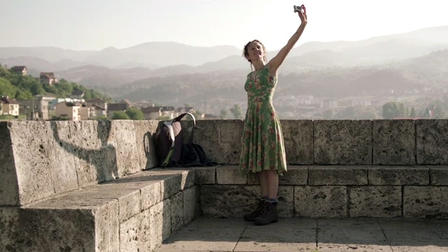
Opening WFFIS 2014 will be Bosnia-Herzegovinan film For Those Who Can Tell No Tales by director Jasmila Zbanic. Award-winning director Zbanic has explored the issues effecting women in her home country, such as sexual war crimes by Serbian troops in Grbvica (2006) and religious discourses in Na putu (2010), throughout her career. In For Those Who Can Tell No Tales, an Australian tourist visits Bosnia for a holiday and throughout her travels slowly learns the traumatic history of the country, fundamentally changing her forever.

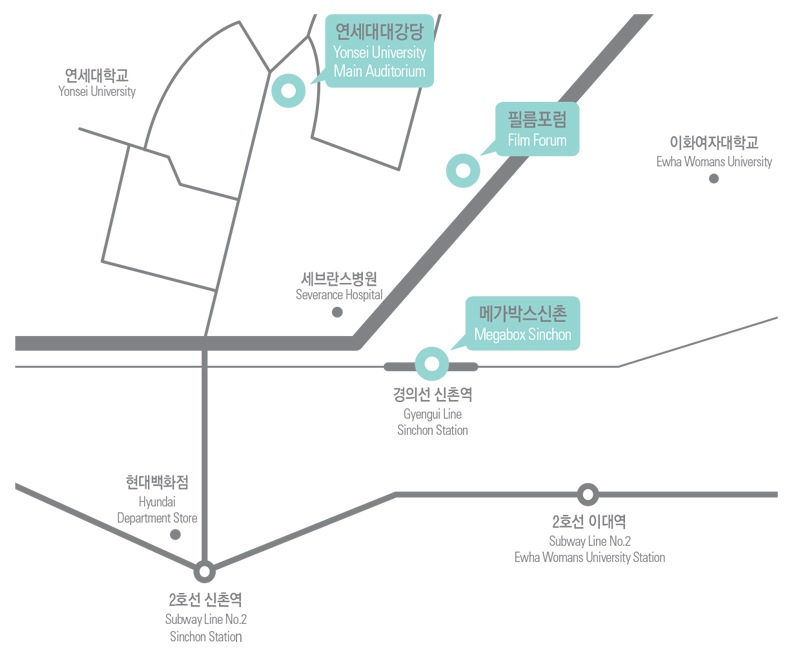
WFFIS 2014 will take place entirely at the Megabox on the 5th floor at the Migliore building, Sinchon. Please see below for the map and transportation information.

WFFIS 2014 Map

WFFIS 2014 Map

For the full list of programmes and screenings, please click on the link to be taken to the official WFFIS website.

Festival News Korean Festivals 2014
The 11th Seoul International Agape Film Festival

The 11th Seoul International Agape Film Festival

The 11th Seoul International Agape Film Festival

The 11th Seoul International Agape Film Festival

The 11th Seoul International Agape Film Festival (SIAFF) will take place from the 22nd to the 31st of May, in Sinchon, Seoul.

The festival, which has a Christian slant, selects films that reflect themes of love within its programming.

The Agape Choice category is due to screen productions that explore overcoming discrimination and adversity. Three Korean films – documentary My Place, social issue omnibus If You Were Me 6, and drama Compassion – feature in the line-up, alongside international films including basketball documentary Linsanity and acclaimed Indian comedy/drama English Vinglish.

Mission Choice comprises of films that share and explore Christian values. God’s Eye View, which premiered at Busan Film Festival last year, as well as documentaries Love is Stronger Than Death and Hope in Baseco, are Korea’s entries within the program.

Inner View contains films that explore the inner consciousness of the audience. My Boy is the only Korean film to feature, alongside Denzel Washington starring Flight amongst others.

The festival will take place in the Sinchon area at Megabox and FilmForum Please see the map below for directions, as well as the official SIAFF 2014 trailer.

SIAFF cinema directions

SIAFF cinema directions

For the full list of programs and screenings, please click here to be taken to the official SIAFF website.

Festival News Korean Festivals 2014
Director Hwang's son befriends a piglet while learning how to farm

An Omnivorous Family’s Dilemma (잡식가족의 딜레마) – ★★★☆☆

The Omnivorous Family (잡식가족의 딜레마)

An Omnivorous Family’s Dilemma (잡식가족의 딜레마)

After years of making documentaries, filmmaker and animal lover Hwang Yun (황윤) hung up her camera in order to get married and start a family. Yet not long after the birth of her son, the foot-and-mouth disease epidemic spread across Korea resulting in the culling of thousands of pigs alongside other farmyard animals. Having previously had little concern for pigs, director Hwang suddenly found herself preoccupied with their plight. The questions swirling in her mind prompted the director to contact farms in order to film the arising situations and, after finally obtaining permission, she gathers her camera and embarks on documenting the life of pigs.

The Omnivorous Family (잡식가족의 딜레마)

The manner in which pigs are raised is the central issue for the documentary

An Omnivorous Family’s Dilemma (잡식가족의 딜레마) is a charming and heartfelt family documentary, as well as a highly enjoyable and educational experience. The approach that director Hwang takes in exploring the life of pigs is key to what the film so endearing. She is not simply an animal activist but a concerned mother and Korean citizen, and in employing this perspective an ‘everyperson’ quality is informed that makes the documentary highly accessible and compelling. As such the issues director Hwang encounters appear wholly natural, as she has no definitive agenda as such but simply lets her curiosity guide her. Ironically however this also holds the documentary back from being more powerful and thought-provoking, as the inclusion of greater investigative journalism would have undoubtedly bolstered her arguments regarding pig farming.

After several rejections, director Hwang finds a free range farmer willing to let her film

After several rejections, director Hwang finds a free range farmer willing to let her film

Director Hwang is initially motivated out of concern for the foot-and-mouth epidemic that swept Korea, which ultimately informs her debate between factory and free range farming. Scenes from the factory farms she visits are as abominable as they are powerful, depicting pigs confined to grotesque, tiny cages in which they eat, sleep, are artificially inseminated, rear young, and ultimately die. The imagery frequently calls forth comparisons with concentration camps, yet the most horrific scenes occur during the mass culls in which hundreds of live, squealing pigs are crushed and buried alive. Director Hwang’s vision pertinently captures a strong indictment of not of the barbarism of factory farming, but also the demand for meat in society at any cost.

Yet the factory farm scenes are generally kept to a minimum in order to explore the living conditions of free range pigs. It is during such scenes that director Hwang employs a strong focus on family, by bringing her young son to educate him whilst simultaneously forming relationships with a farrow of piglets. The benefits of free range farming, as well as her son’s development, are wonderfully captured and are ultimately why An Omnivorous Family’s Dilemma is so entertaining. Watching director Hwang and her son learn the basics of pig farming and then later struggling with pork in their diet is humourous take on the moral dilemma, and watching the conflicts that arise within the family are amusing and thought-provoking throughout.

Director Hwang's son befriends a piglet while learning how to farm

Director Hwang’s son befriends a piglet while learning how to farm

Verdict:

An Omnivorous Family’s Dilemma is a charismatic and enjoyable documentary about pig farming in Korea. This is chiefly due to the perspective director Hwang Yun employs, who approaches the issues not only as an animal rights activist but also as a wife and mother. The contrasts between factory and free range farming are powerful and thought-provoking, yet it is the development of director Hwang’s son and their dietary dilemmas regarding pork that form the core entertainment. While An Omnivorous Family’s Dilemma would undoubtedly benefit from greater investigative journalism, the documentary is a gentle and heartfelt viewing experience.

★★★☆☆

Festival News Jeonju International Film Festival (제15회 전주국제영화제) Korean Festivals 2014 Reviews The Green Film Festival in Seoul (제 11회 서울환경영화제)
Mizo's intentions remain quite an enigma throughout the film

Mizo (미조) – ★★☆☆☆

Mizo (미조)

Mizo (미조)

In a seedy, crime-ridden city a young woman named Mizo (Lee Hyo (이효) forms a strange sexual relationship with brutal low-life thug Woo-sang (Yoon Dong-hwan (윤동환). As their love/hate affair develops, Mizo discovers that the extremely violent Woo-sang was a former detective, turning his back on the law following a shocking scandal with a bar-girl (Sin So-mi (신소미). Much to the chagrin of Woo-sang, his old girlfriend is now living with a small-time local gangster (Lee Jeong-yong (이정용), and the men clash over both her and Mizo. Yet the enigmatic Mizo is harboring a secret and an overpowering desire for revenge that could bring about the ruination of them all.

Mizo and Woo-sang have a violently sexual relatonship

Mizo and Woo-sang have a violently sexual relatonship

Mizo is a film of excess in almost every respect, but then perhaps that’s to be expected from director Nam Gi-woong (남기웅), who previously helmed Teenage Hooker Became a Killing Machine in 2009. It is probably also unsurprising that the film is laced with misogyny. Indeed, shortly after the film begins Mizo is located within a motel instigating, as well as simultaneously enjoying and being a victim of, violent sexual intercourse with a man twice her age. This would be fine, of course, if the film were exploring the fraught life of a young prostitute yet no efforts are made to do so as director Nam appears more interested in shocking spectacle rather than introspection.

To his credit, director Nam does employ plenty of such displays through using taboo subjects, and fans of such stylisation will undoubtedly find much to be entertain by. The world that he has constructed is a dark and vice-filled underworld of sex and violence, and the altercations that arise between characters are often quite visceral and barbaric. Typically the motivations behind the violent confrontation involve Mizo and/or Woo-sang’s ex-girlfriend, with the men on either side fighting for ownership over one or both of them. Enlightened it is not.

Mizo faces her nemesis and rival for Woo-sang's affections

Mizo faces her nemesis and rival for Woo-sang’s affections

Either way, it is extremely difficult to care who wins any conflict due to the woeful characterisation and absurdity of events. Two-dimension stereotypes are employed throughout the entirety of the film to the point of genuine annoyance. Woo-sang is a lumbering Neanderthal with zero redeeming qualities; Woo-sang’s rival, the small-time crook who ‘stole’ his ex, merely shouts and swears at every opportunity; and the bar madam is simply a victim waiting to be saved. As the titular protagonist Mizo escapes such treatment somewhat, but usually because she flits from one stereotype to the next creating an aura of unpredictability.

As Mizo, newbie actress Lee Hyo performs well. While the role itself is limited, Lee Hyo conveys a strong sense of melancholy in conjunction with quirks pertaining to being psychologically unbalanced. Her performance is ultimately what holds the entire film together as while the narrative itself is quite predictable, she is anything but. For much of the running time Lee Hyo is required to be aloof and unbalanced, yet when she has the opportunity to delve deeper into emotional material she does so in a melodramatic, but competent fashion.

Mizo's intentions remain quite an enigma throughout the film

Mizo’s intentions remain quite an enigma throughout the film

Verdict:

Mizo is a drama of sexual and violent excess, but then perhaps that’s to be expected from director Nam Gi-woong, who was previously responsible for Teenage Hooker Was A Killing Machine. For fans of such spectacle, Mizo will quite likely be entertained and to his credit director Nam constructs a believable environment within which it occurs. However the film is blighted by a poor script and terrible characterisation, while the narrative is ultimately quite absurd. Newbie actress Lee Hyo holds the drama together well with a lofty, unpredictable aura yet introspective Mizo certainly is not.

★★☆☆☆

Festival News Jeonju International Film Festival (제15회 전주국제영화제) Korean Festivals 2014 Reviews
Director's CUT (디렉터스 컷)

Director’s CUT (디렉터스 컷) – ★★☆☆☆

Director's CUT (디렉터스 컷)

Director’s CUT (디렉터스 컷)

Independent filmmaker Hae-gang (Park Jung-pyo (박중표) has worked hard for years, helming several notable productions that have earned him a respectable reputation. However his latest endeavour is proving more difficult than most, largely due to his uncompromising, aggressive, and occasionally downright rude attitude on set. Worse still, his inability to distance himself from the stresses of production generate conflict with his long-suffering girlfriend, creating distance between them. With both time and money running out, and crew and companions turning away from him, Hae-gang is forced to make tough choices that could ultimately challenge his director’s cut.

Director's CUT (디렉터스 컷)

The director struggles to get the perfect shot

Director’s CUT (디렉터스 컷) is a welcome addition in portraying the difficulties afflicting filmmakers. The great strength of the drama lies in the portrayal of such struggles with a great sense of realism, from minor conflicts on set of changing camera shots to larger challenges of creative control with external agencies. Writer/director Park Joon-bum (박준범) has done a remarkable job of exploring a multitude of facets related to the independent industry, even extending beyond production based problems to highlight the corruption within film festivals, a potent and brave move indeed. Also of note is the manner in which Hae-gang is conveyed as his own worst enemy. The frustrated filmmaker is so utterly devoted to his art that he unwittingly destroys relationships with those closest to him, and director Park constructs his protagonist well as passionate yet flawed perfectionist desperate for creative control.

Hae-gang's intense passion for filmmaking creates conflict in his professional and private life

Hae-gang’s intense passion for filmmaking creates conflict in his professional and private life

However that said, Hae-gang is also a quite unlikable protagonist throughout the entirety of Director’s CUT. Fighting to retain his creative vision is one thing, yet the filmmaker constantly creates unnecessary conflict amongst his peers for little reason, stubbornly arguing over ridiculous matters in the name of pride and ambition. Worse still, Hae-gang’s treatment of his sweet and caring girlfriend is frankly awful, and it’s a little puzzling why she endures such hurtful conduct. This would be fine if Hae-gang evolved as a character during the course of the narrative, yet such enlightenment never dawns on him even when it is quite obvious that he needs to change. As such it’s particularly difficult to feel empathy with his plight for Hae-gang is, for the majority of the running time, a contemptible jerk.

It’s acutely ironic that while Hae-gang is responsible for impairing his film, Director’s CUT also suffers due to similar reasons. Hae-gang’s instance for control of the final cut seems to mirror that of director Park; within the film Hae-gang is determined to employ somewhat superfluous scenes much to the annoyance of his editor, while director Park does the same in Director’s CUT much to the frustration of the audience. A scene in which the camera operator forgets the correct equipment could have easily been conveyed through a few failed attempts, for example, yet by the sixth error tedium sets in as well as the desire for a more scrupulous editor.

Hae-gang comes into conflict with a producer over certain scenes and the final cut

Hae-gang comes into conflict with a producer over certain scenes and the final cut

Verdict:

Director’s CUT is an interesting drama exploring the difficulties of working as an independent filmmaker. The sense of realism and the far-reaching industry issues explored by writer/director Park Joon-bum form the core strength of the film, yet it is greatly impaired by a central protagonist who is wholly inconsiderate, rude and very difficult to empathise with. Lack of character arc notwithstanding, Director’s CUT is also ironically hampered by the need for more stringent editing, resulting in a film that is interesting rather than compelling.

★★☆☆☆

Festival News Jeonju International Film Festival (제15회 전주국제영화제) Korean Festivals 2014 Reviews
Miss The Train (미성년)

Miss The Train (미성년) – ★★☆☆☆

Miss The Train (미성년)

Miss The Train (미성년)

So-jin (Park Joo-hee (박주희) lives a relatively humble life in the countryside with her mother, a shaman. When her mother dies, instead of embracing the role of the local shaman So-jin decides to leave everything behind and start afresh in Seoul. Yet she is stopped by a man whose son has gone missing, and demands her help in locating the youngster. Worse still, So-jin’s mother had promised the man that she knows the whereabouts of his son and would help, and becomes angry when she states otherwise. Desperate the flee the violent people of the village and catch the train, So-jin slowly begins to understand that destiny isn’t always of her choosing.

Miss the Train (미성년) is a highly atmospheric offering from director Lee Kyung-sub (이경섭). The drama is a slow-burning and occasionally poetic film due to the muted colour palette, which works well in conjunction with the cinematography to capture the sense of hopelessness in a dilapidated rural village. Miss the Train is quite a departure from director Lee’s previous short Mr. Vertigodisplaying a genuine stylistic and aesthetic evolution.

Problems arise however through the extremely muddled and oft-confusing story. Director Lee and screenwriter Kim Ja-ryung have attempted to craft an intriguing and mysterious coming-of-age tale, yet they continually seem to get caught up within their own narrative and as such events become increasingly more puzzling and often don’t make a lot of sense.

So-jin meets mysterious strangers on her quest to escape the village

So-jin meets mysterious strangers on her quest to escape the village

Miss The Train features not only multiple characters but realms as well, with the crossover between them a continual source of confusion. The intent is clearly to build layers of mystery and arouse curiosity, but the narratives devices employed to do so fail to generate suspense and are generally trite. Furthermore the plot is so full of holes that they tend to draw audiences out of the film, while the central story is fundamentally quite silly. The narrative certainly has potential, however it becomes clear rather quickly that the ideas within require further development.

Actress Park Joo-hee gives a competent performance throughout Miss The Train and tries her best to hold the film together, however her role is generally to draw audience focus during the mystery and as such she isn’t particularly stretched. She does well in conveying a mixture of strength and vulnerability, as well as building empathy, yet is often quite limited by the story itself. It will be interesting to see how Park Joo-hee fares in a more demanding role, as she displays potential throughout Miss The Train that is never fully explored.

So-jin contemplates her destiny

So-jin contemplates her destiny

Miss the Train (미성년) is an atmospheric indie drama by director Lee Kyung-sub (이경섭), who displays a genuine evolution in style from his previous work through his melancholy cinematography. Yet even so, the muddled and puzzling story is a continual source of frustration as the attempt to generate mystery and intrigue becomes lost within itself. Actress Park Joo-hee competently holds the film together, but even she cannot compensate for the various plot holes and contrivances that occur.

★★☆☆☆

Festival News Jeonju International Film Festival (제15회 전주국제영화제) Korean Festivals 2014
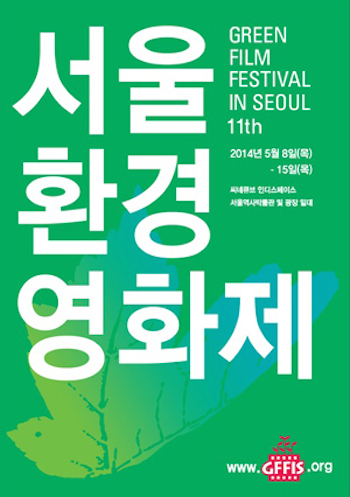
The 11th Green Film Festival in Seoul

GFFIS 2014: Green Competition and Green Panorama – Eco Thriller

The 11th Green Film Festival in Seoul

The 11th Green Film Festival in Seoul

With the Green Film Festival in Korea (GFFIS) opening on May 8th, now is a good time to see what Korean films are present within the programs.

The main category, Green Competition, boasts an impressive prize fund:

Best Feature Film – 10,000,000 won

Best Short Film – 5,000,000 won

Special Jury Award – 3,000,000 won

Audience Award – 1,000,000 won

There are three Korean films within the Green Competition, and interestingly all of them are documentaries. The Korean entries are profiled below, as well as the only Korean entry within the Green Panorama – Eco Thriller category.

Green Competition

A Dream of Iron (철의 꿈)

Director Park (Kelvin) Kyung Kun (박경근)

A Dream of Iron

A Dream of Iron

A Dream of Iron

A Dream of Iron

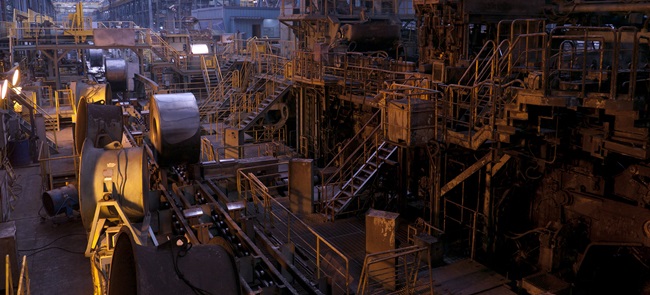
Documentary A Dream of Iron arrives as the most celebrated Korean film in the category following a premiere at Berlinale and being awarded the NETPAC prize (alongside Non-Fiction Diary). Unable to understand his partner’s decision to become a Buddhist monk, director Park begins searching for something tangible and awe-inspiring, leading him to Korea’s POSCO steelworks. Contrasting differing ideas of religion and majesty, A Dream of Iron contains stunning cinematography of the country’s struggle with modernity. Please click here for the review.

Upo, People in Wetland (우포늪의 사람들)

Director Shin Seong-yong (신성용)

Upo, People in Wetland

Upo, People in Wetland

Upo, People in Wetland

Upo, People in Wetland

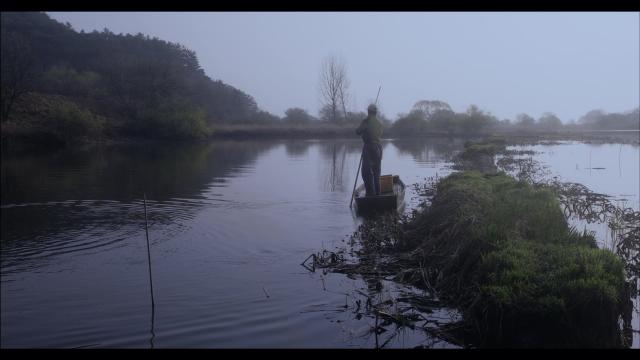
Running at 54 minutes, documentary Upo, People in Wetland explores the ramifications of turning the region into a protected conservation area. With the wetland ecosystem designated as such, the government works hard to uphold the law by disallowing people to enter the area in order to preserve it, which angers local residents. Upo, People in Wetland explores the relationship between the local people and the wetlands, and asks questions about how best to maintain the natural beauty of the conservation as well as coexisting with Upo citizens. The documentary features breathtaking cinematography of Korea’s natural landscapes.

Watchtower (망대)

Director Moon Seung-wook (문승욱)

Watchtower

Watchtower

Watchtower

Watchtower

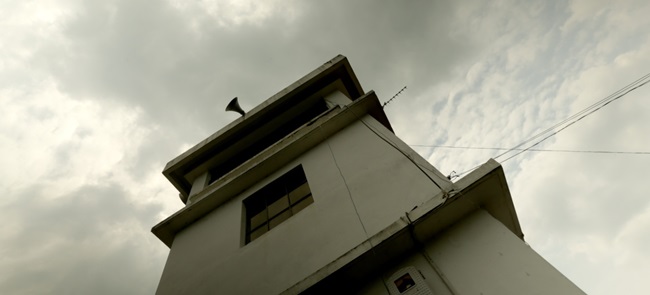
Following a world premiere at Jeonju International Film Festival, director Moon Seung-wook’s Watchtower heads into competition at GFFIS. The 63 minute film blends documentary and fictional footage, as time-travellers from the year 2030 in Chuncheon journey to the past to recapture past memories. Of particular importance to the time-travellers is the Chuncheon watchtower, a building that survived the Korean War to become one of the oldest monuments in the city. Yet in 2013 there are plans to tear the watchtower down, plans the time-travellers desperately seek to stop.

Green Panorama – Eco Thriller

Cat (고양이)

 Director Yoon Seo-hyun (윤서현)

Cat

Cat

This 30 minute entry by director Yoon follows lonely youngster Ji-woong, whose only source of happiness is his pet cat. With his father working long hours to pay for his sick mother’s medication, Ji-woong hears that cat meat is good for reviving health…and shortly thereafter discovers his pet has gone missing.

To see the full listing of all the films in the Green Competition, please click here.

To see the full listing of all the films in the Green Panorama – Eco Thriller, please click here.

Festival News Korean Festivals 2014 The Green Film Festival in Seoul (제 11회 서울환경영화제)