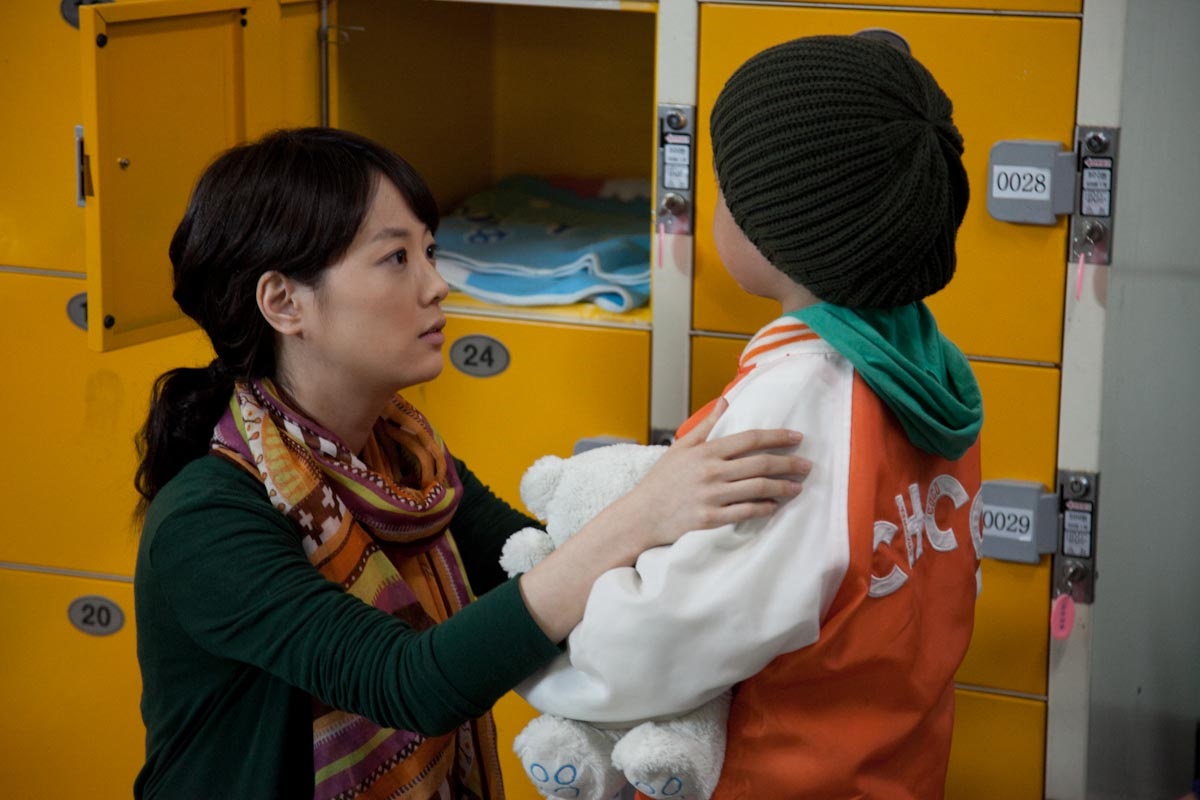
Waiting for the Snow (눈이라도 내렸으면) – ★☆☆☆☆

Waiting for the Snow (눈이라도 내렸으면)

Waiting for the Snow (눈이라도 내렸으면)

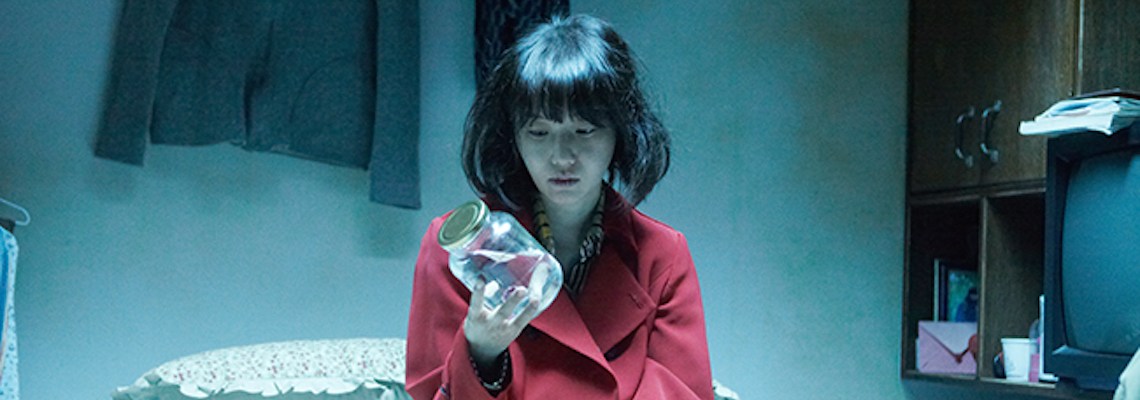
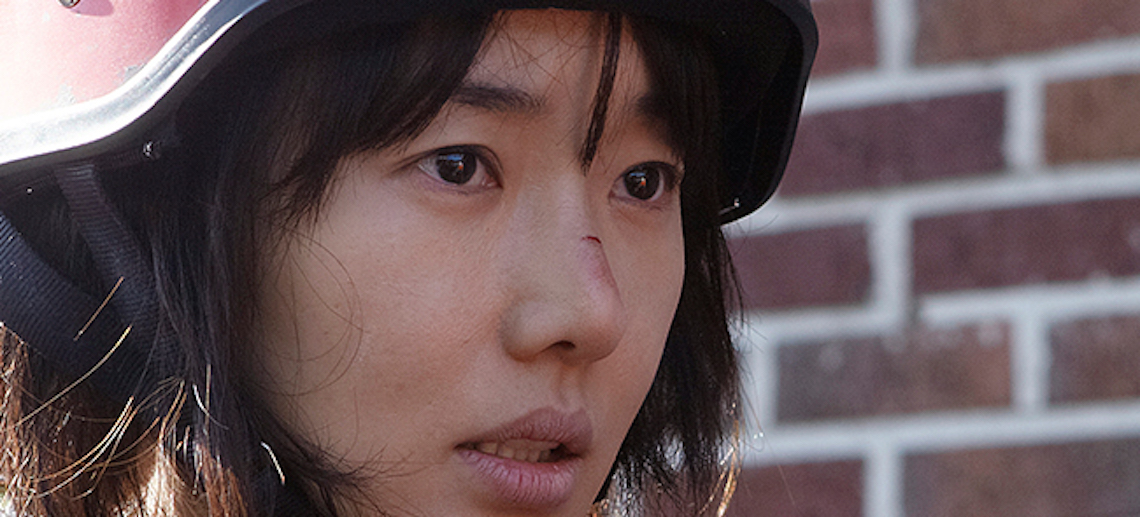
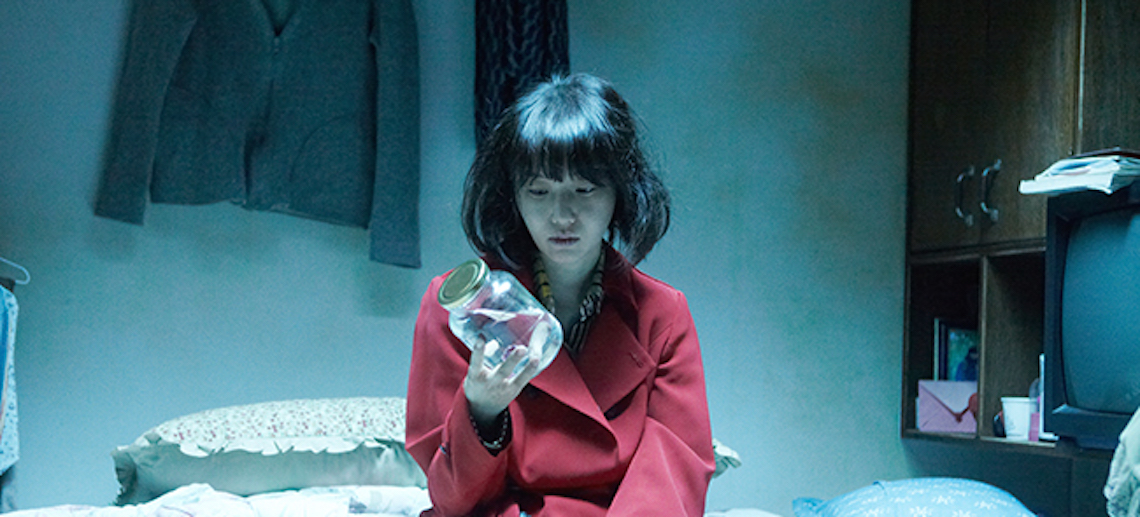
In a rundown village, cerebral palsy sufferer Seong-gook (Kang Seong-gook (강성국) runs a small news stand in the local subway station. Largely ignored or mistreated by the various inhabitants, Seong-gook dreams of becoming a dancer and spends his evenings drinking soju and dancing in the rain. Also residing in the village is high school student Seon-woo (Yeo Hyo-rim (여효림) who, with little future prospects, joins the workforce only to quickly learn of the hardships that entails. On one particular night Seong-sook and Seon-woo cross paths, and find inspiration.

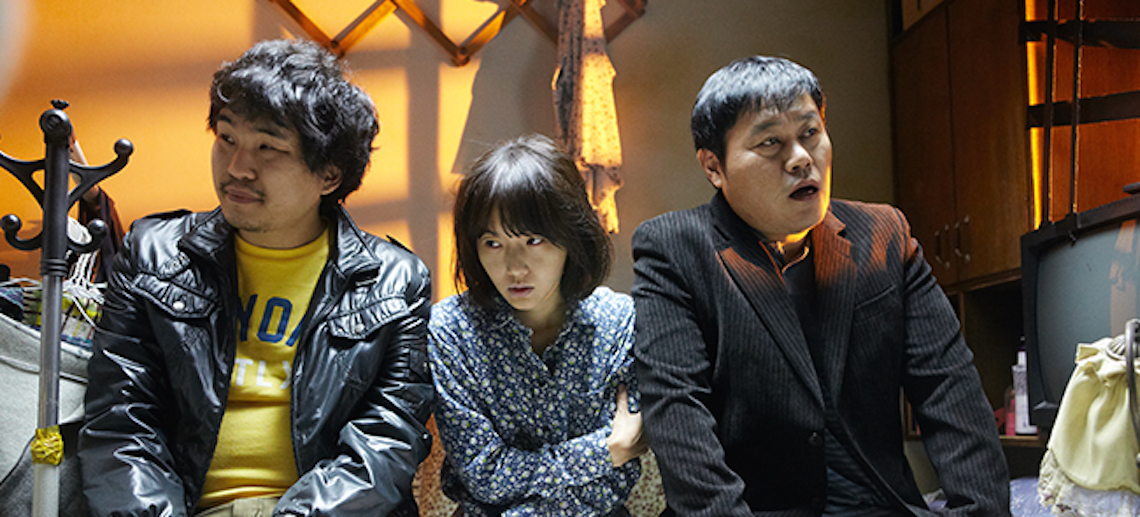
Waiting for the Snow is one of the more bizarre offerings within the Korean Film Competition at JIFF 2015, in that the film is constructed so haphazardly it is difficult to know exactly what is going on or what director Jang Hee-chul (장희철) is trying to achieve. For the majority of Waiting for the Snow‘s running time, the narrative aimlessly jumps between disparate characters and events which are confusing and often entirely superfluous, resulting in a story that is extremely difficult to engage with or invest in. Random tangents, such as Seong-gook’s friends and an attractive girl receiving perverse attention on the subway, continually enter and exit the narrative and serve merely as distractions, adding precious little to the erratic mix. The film only truly finds direction in the final act as Seong-gook and Seon-woo coincidently meet and stroll through the village together, yet their fleeting encounter leads to a rather farcical, and somewhat cringeworthy, finale that dissolves a lot of the prior chemistry.
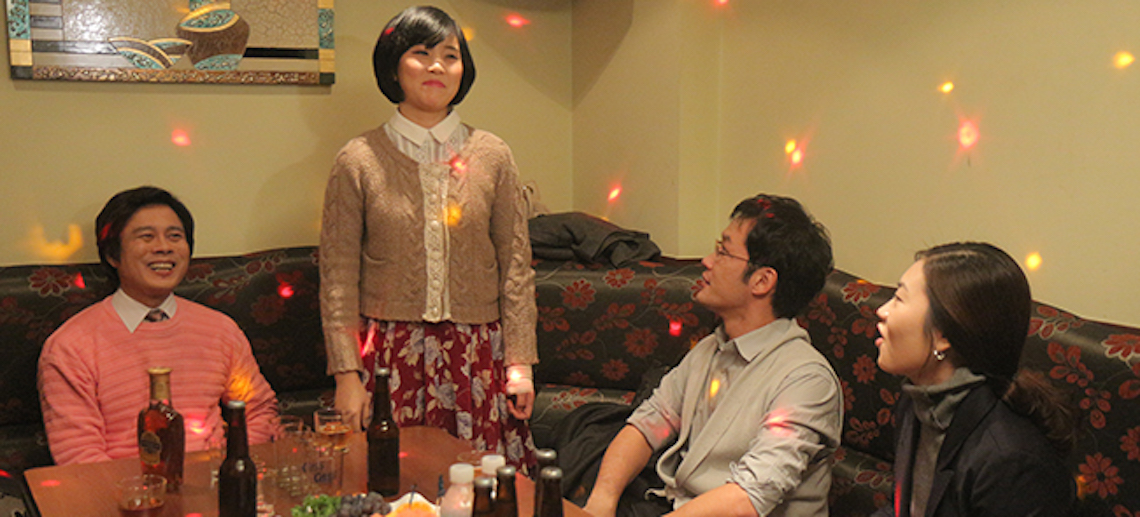
Seon-woo finds the work place to be a challenging environment

Seon-woo finds the work place to be a challenging environment

In conjunction with the disorganised script, aside from a few scenes of attractive cinematography, Waiting for the Snow is also technically found wanting. The direction is competent yet lifeless, the editing is poor, and the soundtrack is particularly incompatible with what’s occurring onscreen. Director Jang attempts to infuse the film with whimsical, surreal moments as Seong-gook attempts to fulfil his dream of dancing, however these scenes are so at odds with the predominantly social-realist aesthetic of the film that they don’t mesh well with the rest of his vision.

With the exception of charismatic Seung-gook, who oddly disappears for much of the central act, poor casting and acting also serve as distractions throughout the film. As teenager Seon-woo, actress Yeo Hyo-rim is rather schizophrenic in that her characterisation veers from too-cool-for-school bad girl, to shy worker, to rage fuelled victim, to innocent youngster. Her clearly older age is also an issue, although it’s nothing compared to her school friends who appear middle-aged, in conjunction with some truly horrible acting. Seung-gook’s shrieking ‘ajumma’ subway friends are a further annoyance. With precious few protagonists to invest in, Waiting for the Snow is very much a laborious viewing experience.

Seung-gook dreams of becoming an elegant dancer

Seung-gook dreams of becoming an elegant dancer

Verdict:

Waiting for the Snow is a frustrating endeavour. Featuring an erratic narrative structure alongside technical issues and poor acting, director Jang Hee-chul’s film is especially difficult to engage with and invest in. The film only truly finds direction in the final act, yet it is too little too late to save audiences from what is ultimately a laborious viewing experience.

★☆☆☆☆

16th Jeonju International Film Festival (제16회 전주국제영화제) Festival News Korean Film Festivals 2015 Reviews

Stay With Me (울보) – ★★☆☆☆
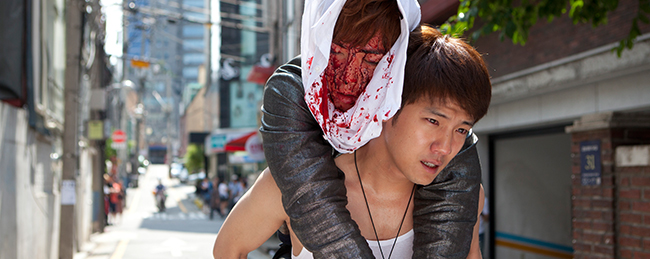
Stay With Me (울보)

Stay With Me (울보)

Moving to a small suburban city with his father, academically gifted student E-seop (Jang Yoo-sang (장유상) begins attending the local high school where he quickly earns a reputation for his intelligence. While at school E-seop becomes entranced by fellow student Ha-yun (Ha Yoon-gyeong (하윤경) as well as her far from admirable attitude towards studying. Through the unlikely friendship that blossoms between them E-seop is introduced to local criminal Gil-su (Lee Seo-joon (이서준), and as the three disaffected, abandoned youths attempt to carve out an existence they are confronted with the dangers of society.

Stay With Me is a compelling and interesting exploration of the ways in which young people from different economic backgrounds are forsaken in contemporary society. Director Rhee Jin-woo (이진우) effectively employs three quite diverse and highly symbolic protagonists to interrogate the sense of alienation and abandonment teens are susceptible to, with the sense of melancholy permeating the narrative heightened by his impressive colour-draining visual aesthetic.

The manner in which director Rhee unifies such disparate youths is potent. Wealthy and intelligent E-seop may appear to be a model student with a bright future, yet his life is devoid of both a mother and emotional connection. His pressurising father, in conjunction with an extremely clinical and sparse homestead, expresses E-seop’s loneliness well. Meanwhile independent and strong-willed Ha-yun is also isolated through her mother’s hospitalisation and a care worker who, ironically, doesn’t particularly care. Gil-su lives alone, living on the profits of petty crime and taking leadership of other youths who have also been disowned and have nowhere to go. The unlikely trio are attracted to each other through their shared sense of desertion and unspoken depression, and director Rhee does a great job in articulating the complexity of their characters without judging them or the decisions that lead them astray.

Ha-yun's alienation is due to circumstances beyond her control

Ha-yun’s alienation is due to circumstances beyond her control

Yet while Stay With Me is an interesting exploration, it generally feels slight in its examination of youth issues as the narrative focuses primarily on the actions of the present without delving into the psychological trauma of their respective pasts. While it is clear that all the protagonists are burdened with neurosis stemming from years prior, the story doesn’t take the time to reveal or reflect on how such experiences inform their current actions or, perhaps more importantly, why audiences should engage with them. Gil-su suffers the most in this respect and as such becomes little more than a one-dimensional thug, and while E-seop fairs better his characterisation goes little beyond being a well-meaning yet overly sensitive kid with a crush.

Ironically, the most powerful and emotionally resonating story belongs to the character mostly relegated to a supporting role – Ha-yun. Just as with fellow K-competition film To Be Sixteen, the heart of Stay With Me belongs to the strong-willed female protagonist often forced to the sidelines in favour of the male counterparts. While the narrative takes an inordinate amount of time to get there, once the story shifts to hinting at Ha-yun’s abusive past the film becomes ever more compelling, although the manner in which director Rhee employs an increasing amount of violent sexual assault scenarios to allude to her history leaves a lot to be desired. Unfortunately such impetus comes too late in the running time, leading to a somewhat unsatisfying finale for the disaffected youths and audience alike.

Abandoned by parents and society, the youths often find themselves in dangerous situations

Abandoned by parents and society, the youths often find themselves in dangerous situations

Verdict:

Stay With Me is an interesting examination of how teenagers from diverse backgrounds are unified in their sense of alienation and abandonment in modern society. Director Rhee Jin-woo expresses their loneliness well, however the lack of depth applied to the central protagonists results in an examination that feels slight. Fortunately the film finds a heart through the character of Ha-yun yet it arrives too late, making Stay With Me a well-made but slender expose on a timely issue.

★★☆☆☆

16th Jeonju International Film Festival (제16회 전주국제영화제) Festival News Korean Film Festivals 2015 Reviews

To Be Sixteen (소년) – ★★☆☆☆

To Be Sixteen (소년)

To Be Sixteen (소년)

With his mother admitted to hospital and unable to communicate well with his layabout father, shy teenager Se-jun (Kim Joo-yeop (김주엽) is adrift in the countryside town in which he resides. His only friend is local bad-boy Jin-young (Jo Ha-seong (조하성), who tends to exploit him more than a genuine pal would. Yet while Se-jun endures the rather one-sided friendship, he also harbours a crush on Jin-young’s girlfriend Su-kyeong (Lee Joo-woo (이주우), presenting her with gifts and kindness she otherwise wouldn’t receive. As the disaffected teens roam the rural area smoking, drinking and enjoying their newly acquired freedom, Su-kyeong confides an intimate secret to Se-jun that threatens to drive them all apart.

To Be Sixteen is a slow-burning yet insightful drama of disaffected teens living on the fringes of society. Director Kim Hyeon-seung (김현승) constructs the isolation and loneliness experienced by contemporary youths extremely well, depicting the angst and frustrations that come with the age through the character of Se-jun, an introverted yet kind-hearted youngster, and the turbulent relationships he has with friends and family that cause immense stress. As a shy teen, rather than confront the injustices he perceives Se-jun instead internalises the negativity they generate. Whether due his mother’s illness or father’s stock market gambling, or the friends that abuse his good nature, Se-jun’s suffering is conveyed through his longing gaze, the washed-out tones and the melancholia that permeates the film.

Se-jun's crush on Su-kyeong leads to sharing a highly personal  story

Se-jun’s crush on Su-kyeong leads to sharing a highly personal story

Unfortunately however, Se-jun simply isn’t an interesting enough protagonist to place at the centre of the narrative. While his personal problems are challenging they are not particularly compelling, whilst the manner in which Se-jun tends to deal with conflict is to remain silent and appear sullen. This results in an inordinate number of dramatic pauses that occur so frequently that the tension generated from them is ultimately diluted, and becomes a source of frustration.

Instead, it is Su-kyeong who is by far the most interesting character within To Be Sixteen, and it’s a shame she is relegated to supporting status when her trajectory is much more engaging. Wonderfully portrayed as equal parts vulnerable and stubbornly independent by actress Lee Joo-woo, Su-kyeong’s story resonates emotionally as well as touching on multiple societal issues within contemporary Korea that open teenage debates far greater than the sources of Se-jun’s angst. As with other K-competition film Stay With Me, it falls to the supporting female role to provide the heart and soul of the film, and it is unfortunate that director Kim didn’t place Su-kyeong as the main protagonist.

To Be Sixteen also contains further issues due to excess. Several scenes and cutaway shots are superfluous and add very little to the proceedings – particularly the finale, of which there seem to be three – while the supporting cast are of such a number that their contributions to the narrative become diminished as they are not explored in greater detail. In this respect bad-boy Jin-young arguably suffers the most, largely disappearing from the film altogether aside from bookending Se-jun’s tale of loneliness, and as such the emotional core of the shy, introverted teen’s story is interesting yet uninspiring.

Se-jun has a great many sources of angst and isolation

Se-jun has a great many sources of angst and isolation

Verdict:

To Be Sixteen is a slow-burning yet insightful drama of disaffected teens, expressed through the angst-fuelled story of Se-jun and his strained relationships. Director Kim Hyeon-seung does well in constructing the sense of isolation yet Se-jun’s challenges aren’t especially compelling, especially compared to those of supporting protagonist Su-kyeong. As such, To Be Sixteen is a well-made and interesting yet diluted tale of teenage melancholy.

★★☆☆☆

16th Jeonju International Film Festival (제16회 전주국제영화제) Festival News Korean Film Festivals 2015 Reviews

With or Without You (춘희막이) – ★★★☆☆

With or Without You (춘희막이)

With or Without You (춘희막이)

“Up until the 1960s in Korea, if a woman could not bear a son, it was fairly common to bring in a surrogate mother. Most of the time, after the surrogates birthed a son, they returned home. But sometimes, they did not.” – preface, With or Without You

Exploring the fascinating and oft-ignored facet of surrogacy within Korean history and culture, With or Without You is a highly impressive documentary from director Park Hyuck-jee (박혁지) and is certainly one of the better discoveries in the K-Competition program. As the only documentary within the category there could arguably be a sense of pressure, yet from the moment With or Without You opens the cinematic quality of the film is clearly apparent, and continues to become increasingly compelling throughout the entirety of its running time.

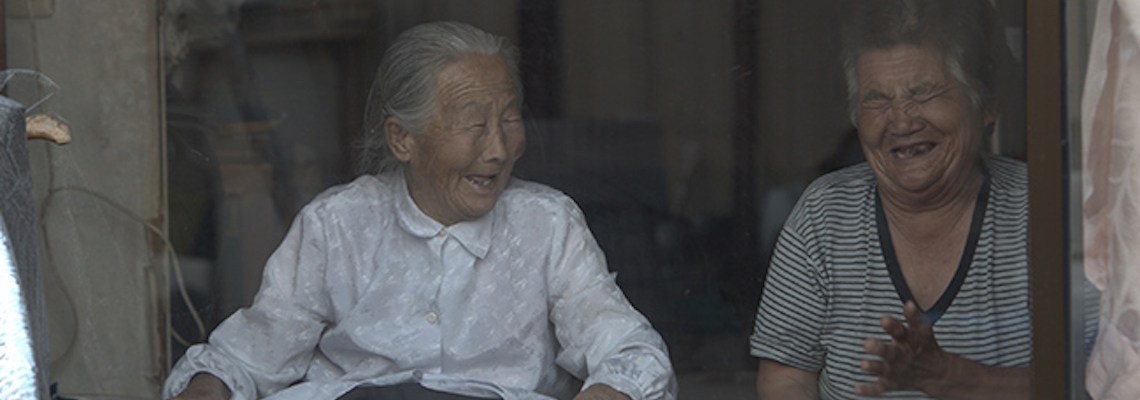
Despite incredibly odd circumstances, the two are inseparable

Despite incredibly odd circumstances, the two are inseparable

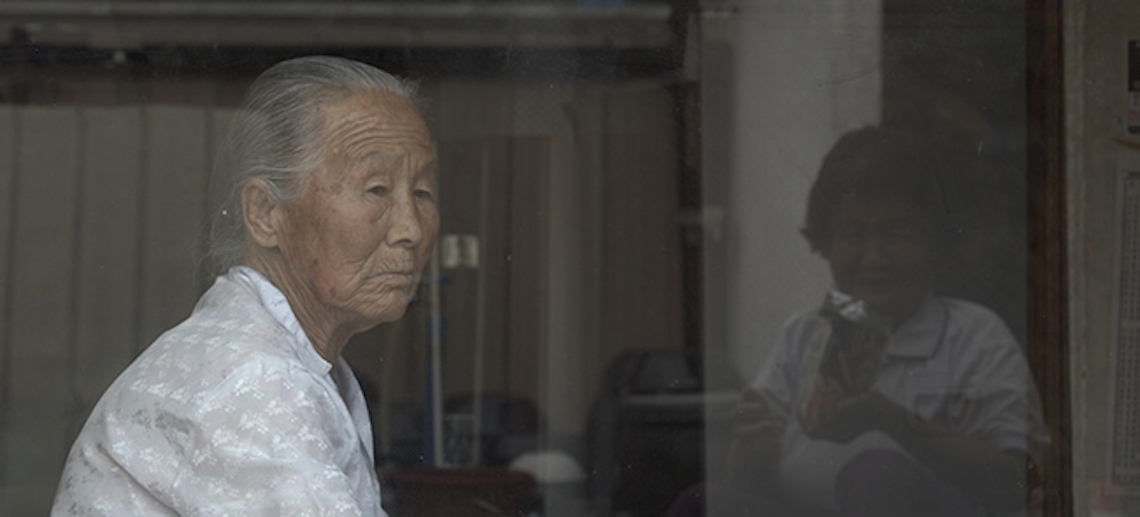
The film documents the lives of elderly widows Maggi (막이) and Chun-hee (춘희) as they toil in the sweltering heat of the Korean countryside planting and harvesting crops. Their physicality is continually arresting, as their backs are quite literally bent at right angles from decades of farming and their gnarled, labourers fingers still work the soil, a stark contrast with the beautiful landscapes in which they reside. Director Park produces some absolutely exquisite cinematography during the course of the film that wonderfully captures the elegance of the rural area in conjunction with the abject poverty of the local populace, combining to create an array of conflicting emotions that is never anything less than utterly absorbing.

The real power of With or Without You lies in the complex history shared by Maggi and Chun-hee. Maggi – a wonderfully stubborn and cynical, yet kind-hearted woman – explains that in her youth she gave birth to an incredible amount of children in order to continue her husband’s family name, yet through history and circumstance, the male children all died. During that era a family would panic if there were no sons to continue the bloodline, and as such Chun-hee was literally ‘bought’ in order to provide heirs. Yet after giving birth Chun-hee stayed at Maggi’s request, and 46 years later the duo continue to take care of each other. Their history, and the details that gradually emerge over the course of the running time, are powerful insights into a seemingly forgotten cultural practice and resonate poignantly with every revelation.

Widow Maggi still harbors mixed emotions towards younger Chun-hee

Widow Maggi still harbors mixed emotions towards younger Chun-hee

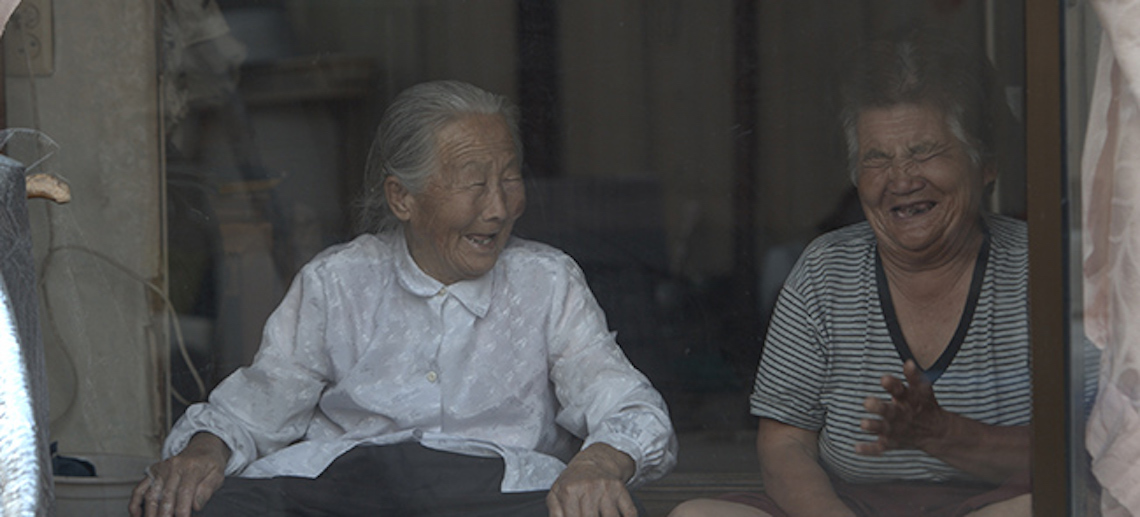
Director Kim wisely depicts the great sense of friendship between the women through key scenes, yet isn’t afraid to also employ bizarre comedy of their situation to add levity. Scenes involving Maggi attempting to teach Chun-hee, who has learning difficulties, how to count money are as touching as they are humorous. When they visit a hospital for Chun-hee’s health check and Maggi describes their relationship to the doctor, his facial expression is priceless. With the inclusion of scenes involving their children, director Kim manages to touch on the potent social issue of the uninterested in caring for elderly relatives, a reality that ironically forces both ladies closer and making their interactions even more heart-warming and astute.

Yet With or Without You is not without faults. Just as with last year’s hit documentary My Love, Don’t Cross That River, the film doesn’t delve further into the incredible history of both the central protagonists and the era in which they met, which are missed opportunities, while the issues involving children would benefit from greater exploration. That said however, With or Without You is a charming and poignant documentary, and one which exposes a largely forgotten yet pivotal role women played in the continuation of Korean bloodlines.

The bond shared between Maggi and Chun-hee is as heart-warming as it is unbreakable

The bond shared between Maggi and Chun-hee is as heart-warming as it is unbreakable

Verdict:

With or Without You is a fascinating and absorbing documentary regarding the role of surrogacy in Korean history. Director Park Hyuck-jee employs exquisite cinematography in depicting the lives of elderly farmers Maggi and Chun-hee, two charismatic and resolute women whose complicated history is continually poignant. While the film occasionally misses opportunities to explore said history in further detail, With or Without You is still certainly one of the better discoveries at JIFF 2015.

★★★☆☆

16th Jeonju International Film Festival (제16회 전주국제영화제) Festival News Korean Film Festivals 2015 Reviews

Alice in Earnestland (성실한 나라의 앨리스) – ★★☆☆☆

Alice in Earnestland (성실한 나라의 앨리스)

Alice in Earnestland (성실한 나라의 앨리스)

Full of high hopes and ambitions for the future, Soo-nam’s (Lee Jung-hyun (이정현) expectations are rapidly shattered in quick succession after graduating high school. Armed with already-outdated skills, Soo-nam is forced to work in accounting at a factory where ironic misfortune leads to meeting her future husband, while even greater calamities that ensue take them both on downward spiral. Yet despite all odds there is a glimmer of hope. A redevelopment proposal offers the solution to all Soo-nam’s woes…but how far is she willing to go to ensure its success?

Desperate, Soo-nam takes drastic action

Desperate, Soo-nam takes drastic action

From the moment the film opens, director Ahn Gooc-jin (안국진) establishes Alice in Earnestland as a wonderfully quirky and uniquely surreal dark comedy of a desperate woman on the edge. Divided into chapters while relaying Soo-nam’s tragi-comic life via a series of flashbacks, the film is – as the Jeonju Film Festival describes it – something of “a cruel fairytale,” depicting the humorously twisted fate that befalls the optimistic heroine as she endeavours to create a life of dignity. Director Ahn initially infuses the story with enthusiastic kineticism through rapid camerawork and editing that serve to generate a lot of fun and intrigue to the tale, while Soo-min’s perseverance – and her delightfully charismatic innocence aptly conveyed by actress Lee Jung-hyun – in the face of such terrible irony is particularly endearing.

Soo-nam remains optimistic even in the face of darkly comic irony

Soo-nam remains optimistic even in the face of darkly comic irony

While at first Alice in Earnestland entertains through a quirky balance of melancholy humour and visual dynamism, the story loses its way towards the conclusion of chapter one by delving too deeply into the dark terrain with which it flirts, and as a result  struggles for the remainder of the film to achieve the comedy buoyancy that initially made it so promising. The film rapidly eschews the eccentricities that made it so appealing to become mired down in local politics and enter particularly dark territory, as the jovial tone spirals into scenes of physical assault, torture, and other forms of abuse, and while director Ahn consistently attempts to inject black comedy into the narrative to lighten the mood, the macabre events ultimately outweigh them.

The final two chapters are of merit however as the darkly morbid situations allow director Ahn to take comical jabs at pertinent issues in Korean society, particularly in regards to issues of finance, health care and redevelopment. The narrative sets up the obstacles challenging Soo-nam as people who prioritise wealth and power, and the film works well as an underdog story as she independently takes on all challenges armed with nothing but an optimistic smile and a drive to succeed. It is largely due to Soo-nam’s endearing qualities that the final act, which flounders somewhat laboriously in a redevelopment scandal, is compelling enough to keep audiences interested until the credits roll.

Redevelopment of the area sees Soo-nam's story enter darker territory

Redevelopment of the area sees Soo-nam’s story enter darker territory

Verdict:

Alice in Earnestland begins as a quirky and surreal dark comedy by director Ahn Gooc-jin, who initially infuses the film with an infectious vibrancy before the narrative tone spirals into darker, more macabre territory and spends the resulting running time struggling to capture the promising comic buoyancy of the opening. Yet actress Lee Jung-hyun’s charismatic performance as optimistic heroine Soo-nam is delightful, and is enough to keep audiences engaged until the credits roll.

★★☆☆☆

16th Jeonju International Film Festival (제16회 전주국제영화제) Festival News Korean Film Festivals 2015 Reviews

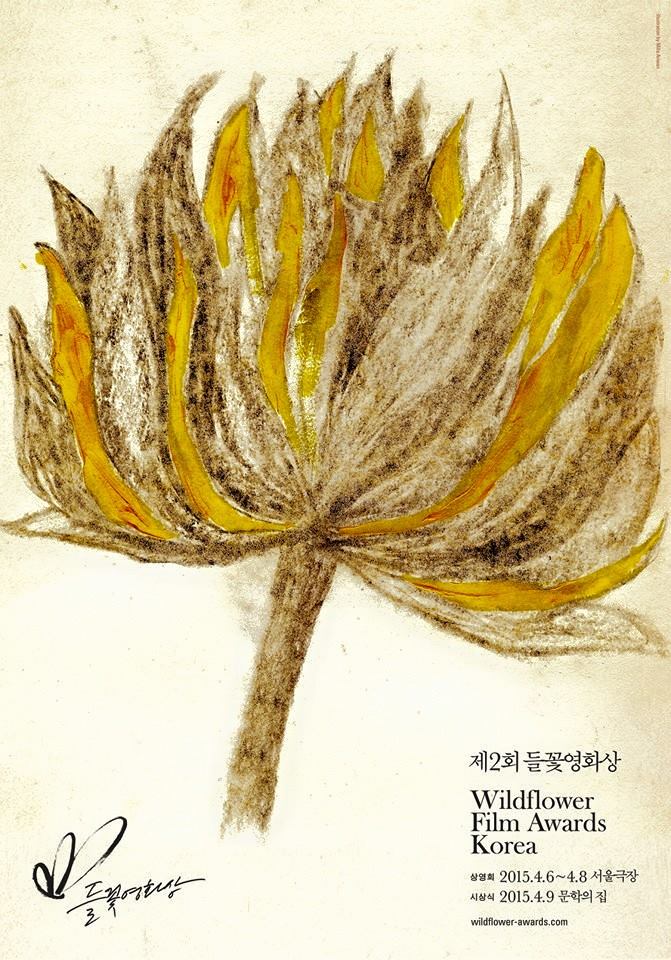
The 2nd Wildflower Film Awards Unveils Victors

The 2nd Wildflower Film Awards

The 2nd Wildflower Film Awards

The 2nd Wildflower Film Awards, a prestigious event honouring the very best of Korean independent film from the past year, was held at Seoul’s Literature House in the district of Chungmuro.

An array of film talent turned up to the celebration of indie cinema, including movie stars Park Hae-il (War of the Arrows, The Host) and Chun Woo-hee (Thread of Lies, Sunny).

The prizes were quite evenly spread throughout the pool of films released during the past 12 months, with director Lee Su-jin’s Han Gong-ju adding yet another two trophies to the already staggering number of awards  received.

Best Actress Chun Woo-hee and Best Actor Ahn Jae-hong

Best Actress Chun Woo-hee and Best Actor Ahn Jae-hong

On a special note the Appreciation Award went to Jung Sang-jin of AtNineFilm, who has consistently supported Korean independent cinema for years through both the production wing of his company as well as in terms of distribution through his art house cinema Art Nine in Isu.

For the full list of winners, please see below.

Grand Prize – Han Gong-ju, dir. Lee Su-jin
Best Director: Narrative Film – Hong Sangsoo, Hill of Freedom
Best Director: Documentary – Park Chan-kyong, Manshin
Best Actor – Ahn Jae-hong, The King of Jokgu
Best Actress – Chun Woo-hee, Han Gong-ju
Best Screenplay – July Jung, A Girl at My Door
Best Cinematography – Kelvin Kyung Kun Park & Stone Kim, A Dream of Iron
Best New Director – Lee Yong-seung, 10 Minutes
Best New Actor – Choi Woo-shik, Set Me Free
Best New Actress – Kim Su-an, Mad Sad Bad – Picnic

Appreciation Award: Jung Sang-jin, atninefilm
Special Jury Award: Actress Shin Min-a, Gyeongju

The 2nd Wildflower Awards winners take to the stage

The 2nd Wildflower Awards winners take to the stage

To visit the official Wildflower Film Facebook page and see photos from the night, please follow the link here.

Festival News Korean Film Festivals 2015

Seoul Int. Women’s Film Fest Announces Short Film Line-up

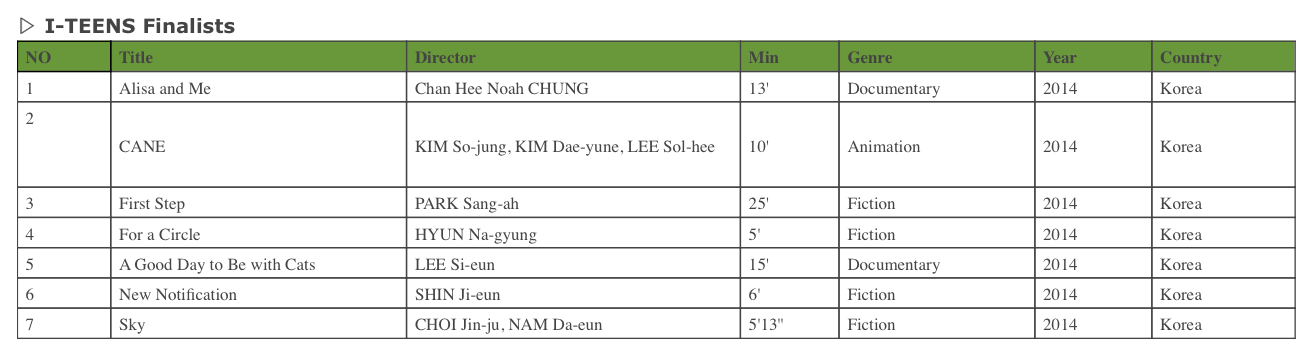
SIWFF LOGOThe 17th Seoul International Women’s Film Festival (SIWFF) has unveiled the finalists for the Asian Short Film and Video Competition, as well as the ‘I-TEENS’ program.

3 Year 3 Month Retreat

3 Year 3 Month Retreat

According to festival officials SIWFF 2015 received more submissions than at any point their history for the competition, eventually selecting the final 21 films – 13 Korean and 8 non-Korean – from 415 entries from over 20 Asian nations.

Oh Lucy!

Oh Lucy!

Of the finalists, four will be selected for prizes. The Sungjoo Grand Prize (alongside $9,000 cash) will be awarded to the best film, while two Sungjoo First Prizes (as well as $4,500 each) will be bestowed upon the runners up. Through audience ballots conducted throughout the festival, a film will also be chosen for an Audience Award.

That Day of the Month

That Day of the Month

Meanwhile the I-TEENS category, now in its second year, will screen seven films produced by Korean teenage females.

SIWFF will run from May 27th to June 3rd at Megabox in Sinchon.

For the full list of finalists, please see below.

SWIFF Asian Shorts

SWIFF I-TEENS

Festival News Korean Film Festivals 2015 Seoul International Women's Film Festival (제 17회 서울국제여성영화제)

Jeonju Int. Film Festival 2015 – Hot Picks

The 16th Jeonju Int. Film Festival

The 16th Jeonju Int. Film Festival

The 16th Jeonju International Film Festival, which will run from April 30th through to May 9th, has unveiled the full lineup of Korean and foreign films to be screened.

In terms of Korean cinema, in addition to the already previously announced Korean Competition and Korean Competition for Shorts that features new and emerging talent, films from the peninsula will feature within Korean Cinemascape and Korean Cinemascape for Shorts, as well as in other select programs.

With so many independent productions from which to choose, selecting quality films can be somewhat of a daunting task. As such, here are Hanguk Yeonghwa’s Hot Picks for the upcoming festival.

Jeonju Digital Project 2015

Samnye (삼례) – Director Lee Hyun-jung (이현정)

Samnye

Samnye

Director Lee’s previous JIFF film, Echo of Dragon, appeared in the 2013 Korean Competition and proved her art-house sensibilities. Samnye tells the story of a struggling screenwriter, who meets a charming yet strange girl. Art cinema fans should definitely take a look.

Snow Paths (설행 눈길을 걷다) – Director Kim Hee-jung (김희정)

Snow Paths

Snow Paths

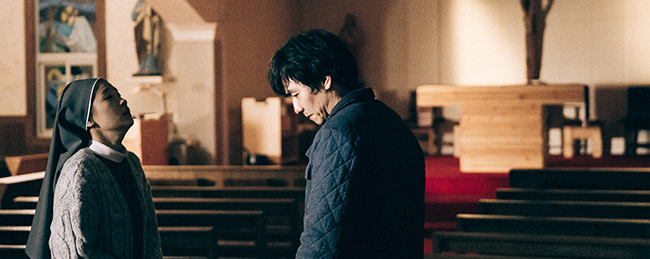
Described by JIFF Head Programmer KIM Young-jin as, “undervalued in the Korean film industry,” director Kim (Grape Candy) returns with Snow Paths, a film exploring the life of an alcoholic seeking solace in the mountains who befriends a nun.

Korea Cinemascape

Black Stone (블랙스톤) – Director Roh Gyeong-tae (노경태)

Black Stone

Black Stone

Black Stone premiered at Rotterdam earlier this year. A Korean/French co-production, the film depicts highly controversial issues in contemporary Korea, involving inter-racial families and abuses within the Korean military.

Death in Desert (붉은 낙타) – Director No Zin-soo (노진수)

Death In Desert

Death In Desert

Director No has been busy recently with Total Messed Family (JIFF 2013), The Suffered (JIFF 2014), and The Maidroid (Yubari Fantastic Festival 2015). With Death in Desert, he explores an obsessive relationship between a couple who just can’t let go of each other.

Made in China (메이드 인 차이나) – Director Kim Dong-hoo (김동후)

Made In China

Made In China

There’s been plenty of buzz around the Kim Ki-duk produced Made in China, which premiered at Tokyo in 2014. Featuring stars Park Ki-woong and Han Chae-ah, the story involves a Chinese eel farmer and a cold-hearted Korean food inspector.

Speed (스피드) – Director Lee Sang-woo (이상우)

Speed

Speed

Director Lee is notorious for tackling controversial subject matter within his films, as exemplified by Mother is a Whore, Barbie, and Fire in Hell. Following short film Exit at JIFF 2013, he returns with Speed, a tale of four friends whose lives are intertwined.

Trap (덫, 치명적인 유혹) – Director Bong Man-dae (봉만대)

Trap

Trap

Director Bong’s Han River premiered at Busan 2014 to praise for exploring suicide with dark comedy. With Trap, a miserable screenwriter travels to an inn to finish a script, yet falls for the charms of a seductive teenage girl with increasingly dark ambitions.

Korea Cinemascape for Shorts

The Running Actress (여배우는 오늘도) – Director Moon So-ri (문소리)

The Running Actress

The Running Actress

Legendary actress Moon So-ri steps behind the camera for The Running Actress, a 24 minute short film. In it, Moon plays a woman trying to balance domestic life and hardships while attempting to forge a career on screen.

Outdoor Screening

Like a French Movie (프랑스 영화처럼) – Director Shin Yeon-shik (신연식)

Like a French Movie

Like a French Movie

Director Shin has a rare ability to helm films both mainstream (Rough Play) and artistic (The Avian Kind, The Russian Novel). In Like a French Movie, which seems to be one of the director’s artistic endeavours, the protagonists all embody the traits of characters within a French film.

For more information of the films playing at Jeonju International Film Festival, please follow the link here.

16th Jeonju International Film Festival (제16회 전주국제영화제) Festival News Korean Film Festivals 2015

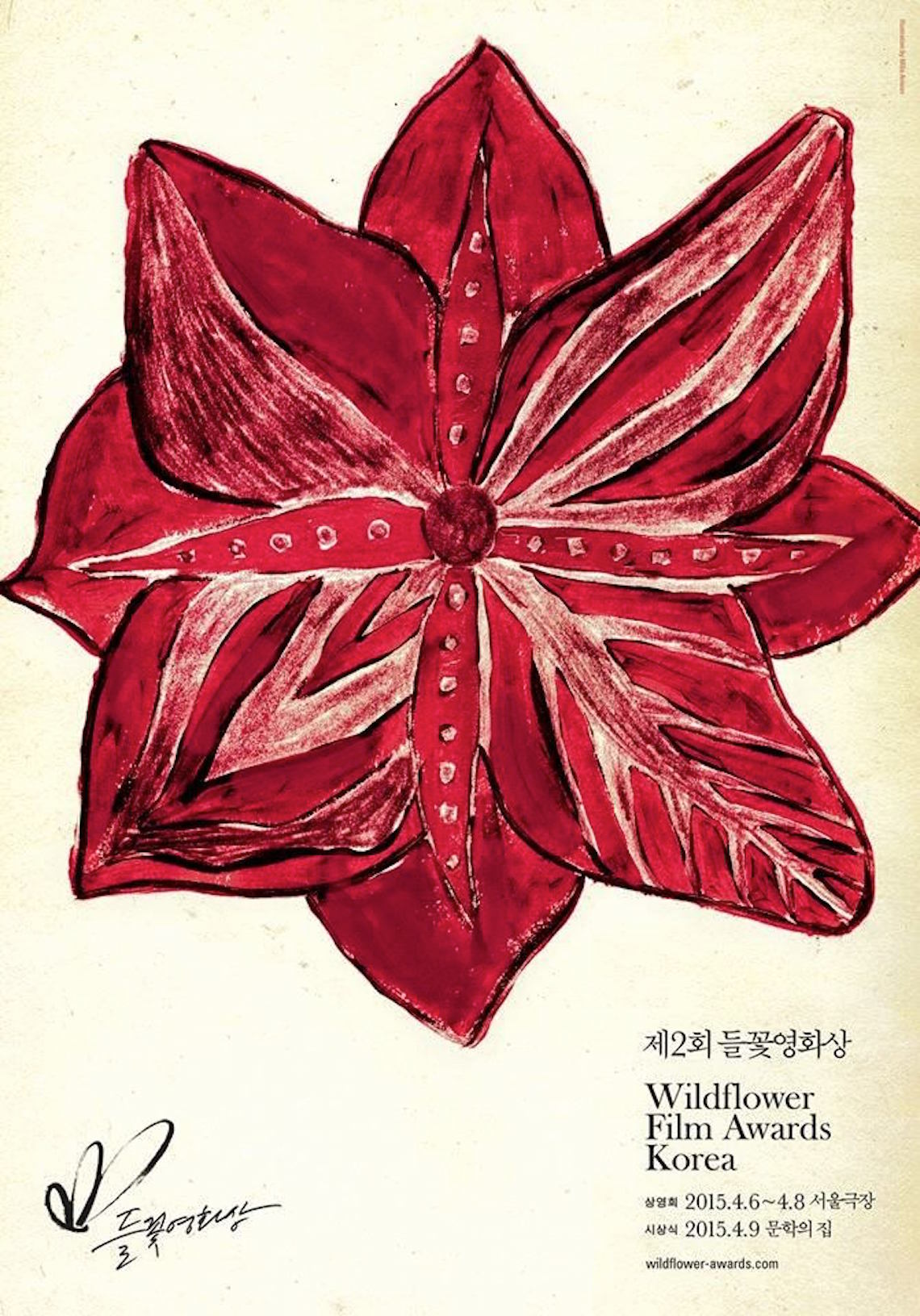
The 2nd Wildflower Film Awards Announces Nominations

The 2nd Wildflower Film Awards

The 2nd Wildflower Film Awards

The Wildflower Film Awards has unveiled the nominations for its second edition, with the prizes to be bestowed at a ceremony on April 9th in central Seoul.

The organisation is dedicated to celebrating the achievements of Korean independent cinema, as well as films that have a budget of less than 1 billion won. With the vertically-integrated nature of the commercial industry in Korea such films often have an arduous production and a battle to secure distribution, despite the incredible creativity and insight contained within.

The nominations were selected by a panel of film professionals and cineastes, headed by Korean cinema specialist director Darcy Paquet, a figure renowned for his contributions in promoting films from the region. The committee – which Hanguk Yeonghwa is proud to be a part of – chose the finalists from over 60 features and almost 30 documentaries released throughout 2014.

Out of the 21 films nominated July Jung’s A Girl at My Door leads with seven nods, while Lee Su-jin’s Han Gong-ju and Woo Moon-gi’s The King of Jokgu have five. Lee Yong-seung’s 10 MinutesZhang Lu’s Gyeongju, and Hong Sang-soo’s Hill of Freedom have four nominations each, respectively.

In the build-up to the awards ceremony, from April 6th~9th screenings of six of the nominees will occur at Seoul Theater, accompanied by Q&A sessions with the filmmakers involved.

Wildflower Screenings copy

For the full list of nominees, please see below:

Best Director – Narrative Films

Leesong Hee-il, Night Flight

Woo Moon-gi, The King of Jokgu

Zhang Lu, Gyeongju

July Jung, A Girl at My Door

Lee Su-jin, Han Gong-ju

Lee Yong-seung, 10 Minutes

Hong Sangsoo, Hill of Freedom

Best Director – Documentaries

Kelvin Kyung Kun Park, A Dream of Iron

Park Moon-chil, My Place

Park Chan-kyong, Manshin

Lee Sang-ho & Ahn Hae-ryong, The Truth Shall Not Sink With Sewol

Lee Chang-jae, The Hospice

Jung Yoonsuk, Non-fiction Diary

Hong Jae-hui, My Father’s Emails

Best Actor

Park Hae-il, Gyeongju

Song Sae-byuk, A Girl at My Door

Ahn Jae-hong, The King of Jokgu

Jung Eui-gap, The Dinner

Kase Ryo, Hill of Freedom

Best Actress

Kim Saeron, A Girl at My Door

Moon Sori, Hill of Freedom

Bae Doona, A Girl at My Door

Shin Min-a, Gyeongju

Chun Woo-hee, Han Gong-ju

Best Screenplay

Kim Tae-gon, The King of Jokgu

Kim Da-hyun, 10 Minutes

Lee Su-jin, Han Gong-ju

July Jung, A Girl at My Door

Hong Sangsoo, Hill of Freedom

Best Cinematography

Kim Hyunseok, A Girl at My Door

Kelvin Kyung Kun Park & Stone Kim, A Dream of Iron

Cho Young-jik, Gyeongju

Jee Yune-jeong, Lee Sun-young, Yoo Ji-sun, Manshin

Hong Jae-sik, Han Gong-ju

Best New Director

Park Chan-kyong, Manshin

Woo Moon-gi, The King of Jokgu

Lee Su-jin, Han Gong-ju

Lee Yong-seung, 10 Minutes

July Jung, A Girl at My Door

Best New Actor

Kwak Siyang, Night Flight

Baek Jong-hwan, 10 Minutes

Byun Yo-han, Tinker Ticker

Lee Jeajoon, Night Flight

Choi Woo-shik, Set Me Free

Best New Actress

Kong Ye-ji, Shuttlecock

Kim Su-an, Mad Sad Bad – Picnic

Park Joohee, The Wicked

Lee Yoo-young, Late Spring

Hwang Seung-un, The King of Jokgu

To visit the official Wildflower Film Awards website, please click here.

Festival News Korean Film Festivals 2015

Jeonju Int. Film Festival Announces ‘Korean Competition’ Finalists

The 16th Jeonju Int. Film Festival

The 16th Jeonju Int. Film Festival

Jeonju International Film Festival (JIFF) has announced the ten films that will form the ‘Korean Competition’ category.

The finalists were chosen from an incredible 118 submissions, and all of which are world premieres. In terms of genre, nine of the selected films are fiction while one is a documentary. Interestingly, three of the finalists come from the Korean Academy of Film Arts (KAFA) and Dangook University’s Graduate School of Cinematic Content, with the remaining seven arriving from independent film distribution companies.

The ten finalists will compete for the Grand Prize, CGV Arthouse Award Distribution Support, and the CGV Arthouse Award Upcoming Project Support, respectively.

For the full line-up of Korean feature films within the category, as well as select stills that have been released, please see below.

Alice In Earnestland

Alice In Earnestland

1. Unconfessional (Director Choi Ingyu) [87min | color]

2. The Romance Of A Mediocre Actress And A Short Bald Man (Directors Park Youngim and KimJoung Min-woo) [74min | b&w]

3. Waiting For The Snow (Director Jang Heechul) [99min | color]

Island

Island

4. Alice In Earnestland (Director Ahn Goocjin) [87min | color]

5. To Be Sixteen (Director Kim Hyunseung) [115min | color]

Warmer Than Expected

Warmer Than Expected

6. Island (Director Park Jinseong) [105min | color]

7. Stay With Me (Director Lee Jinwoo) [98min | color]

Coinlocker

Coinlocker

8. Warmer Than Expected (Director Lee Sangmin) [98min | color]

9. With Or Without You (Director Park Hyeokji) [92min | color]

10. Coinlocker (Director Kim Tea-kyung) [95min | color]

The 16th Jeonju International Film Festival will take place from April 30th ~ May 9th.

16th Jeonju International Film Festival (제16회 전주국제영화제) Festival News Korean Film Festivals 2015