The 18th Busan International Film Festival

BIFF 2013: The 18th Busan International Film Festival

The 18th Busan International Film Festival

The 18th Busan International Film Festival

Preparations are well underway for the 18th Busan International Film Festival  (BIFF), which is due to take place from the 3rd to the 12th of October.

BIFF 2013 will feature a staggering 300 films from 70 countries, with 136 of those world and/or international premieres.

Amongst returning categories including ‘Gala Presentation‘, ‘New Currents‘, ‘Korean Cinema Today‘, and so forth, are a number of special programs for cineastes.

Fly High, Run Far: The Making of Korean Master Im Kwon-taek‘ is an incredible retrospective for the filmmaking giant. Director Im has helmed an unbelievable 101 films during his career, and to celebrate his contribution to the film industry BIFF 2013 will screen a whopping 71 of his films as well as conduct a hand-printing ceremony in his honour. To accommodate so many films, and in an unprecedented move, the retrospective will begin 10 days early as well as feature a host of guest speakers ranging from film professionals to academics at the screenings.

Meanwhile ‘Park Chul-soo Special Commemoration: Eternal Movie Youth‘ is a celebration of the films of director Park who tragically died earlier this year. Five of the director’s films are due to be screened, including the world premiere of Green Chair 2013 – Love Conceptually (녹색의자2013-러브 컨셉츄얼리), the posthumous release of his last production.

Additionally, ‘Rogues, Rebels and Romantics: A Season of Irish Cinema‘ is a recognition of the filmic output from the Emerald Isle, which also sees director Jim Sheridan get the hand-printing treatment alongside the screening of two of his most famous films. A little closer to home, ‘The Unknown New Wave of Central Asian Cinema‘ champions eight forgotten masterpieces from Kazakhstan, Uzbekistan, Tajikistan, and Kyrgyzstan.

Please see below for the serene BIFF 2013 trailer.

BIFF 2013 will also open the festival with Bhutanese drama Vara: A Blessing by director/Buddhist monk Khyentse Norbu – the first film hailing from outside of Korea or China to do so in the festival’s history. BIFF 2013 will close with Korean film The Dinner (만찬) by director Kim Dong-hyun (김동현), his third film and his latest since 2005’s A Shark (상어).

Opening Film

Vara: A Blessing (Bhutan)
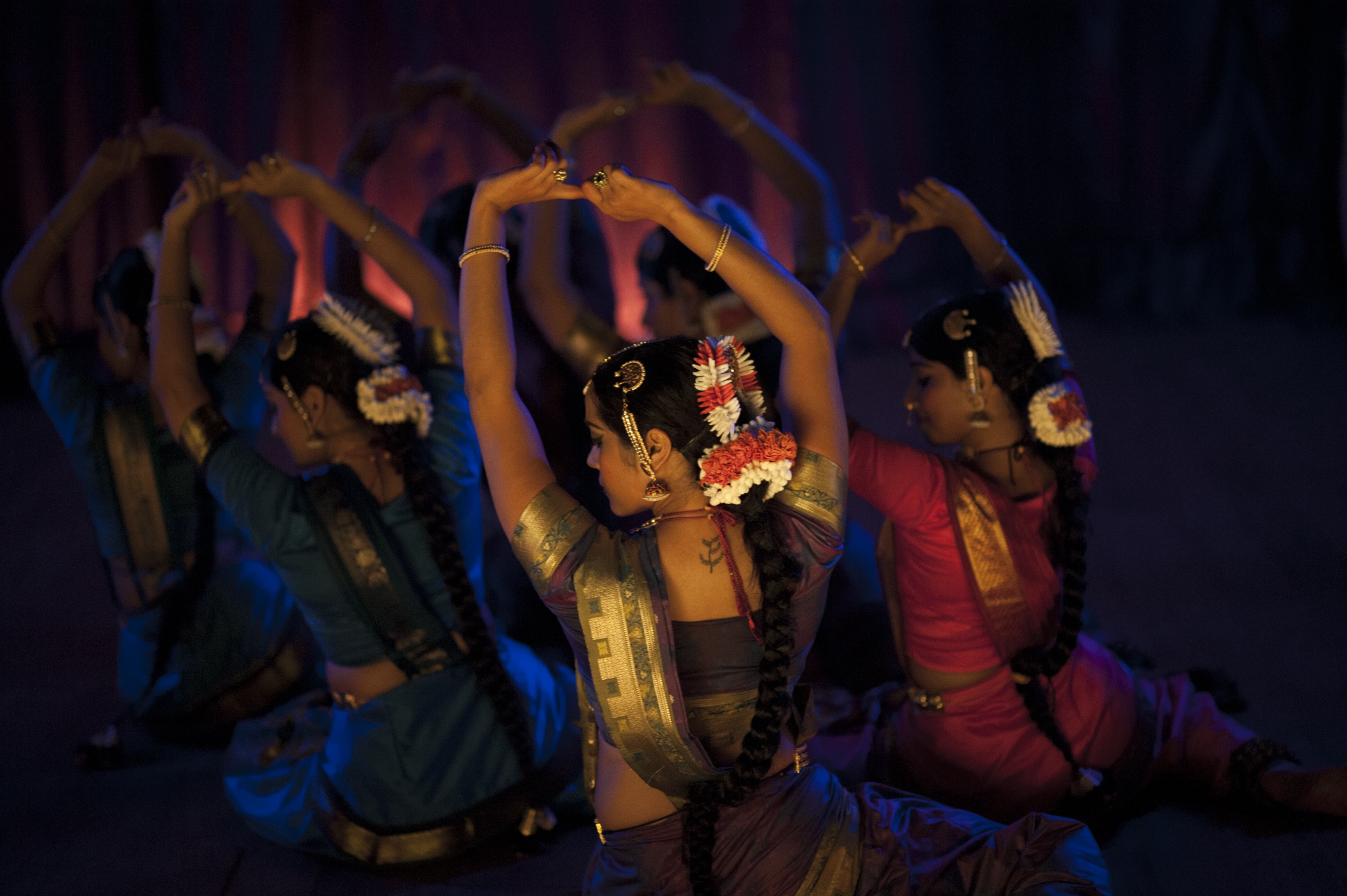
Vara: A Blessing

Vara: A Blessing

Vara: A Blessing is director/Buddhist monk Khyentse Norbu’s third film, adapted from the Indian short story ‘Rakta Aar Kanna’ (Blood and Tears) by Sunil Gangopadhyay. The film interprets the Indian dance Bharatanatyam through a forbidden love between a young couple. Featuring Buddhist themes of truth-seeking and the path to enlightenment, Vara depicts the story of Lila, a young woman learning the traditional dance from her mother, who falls in love with poor sculptor Shyam. While Shyam worships Lila as a goddess and she in turn imagines him as Lord Krishna, their relationship becomes extremely problematic when Subha, the village leader, objects to their union.

Closing Film

The Dinner (만찬) (Korea)
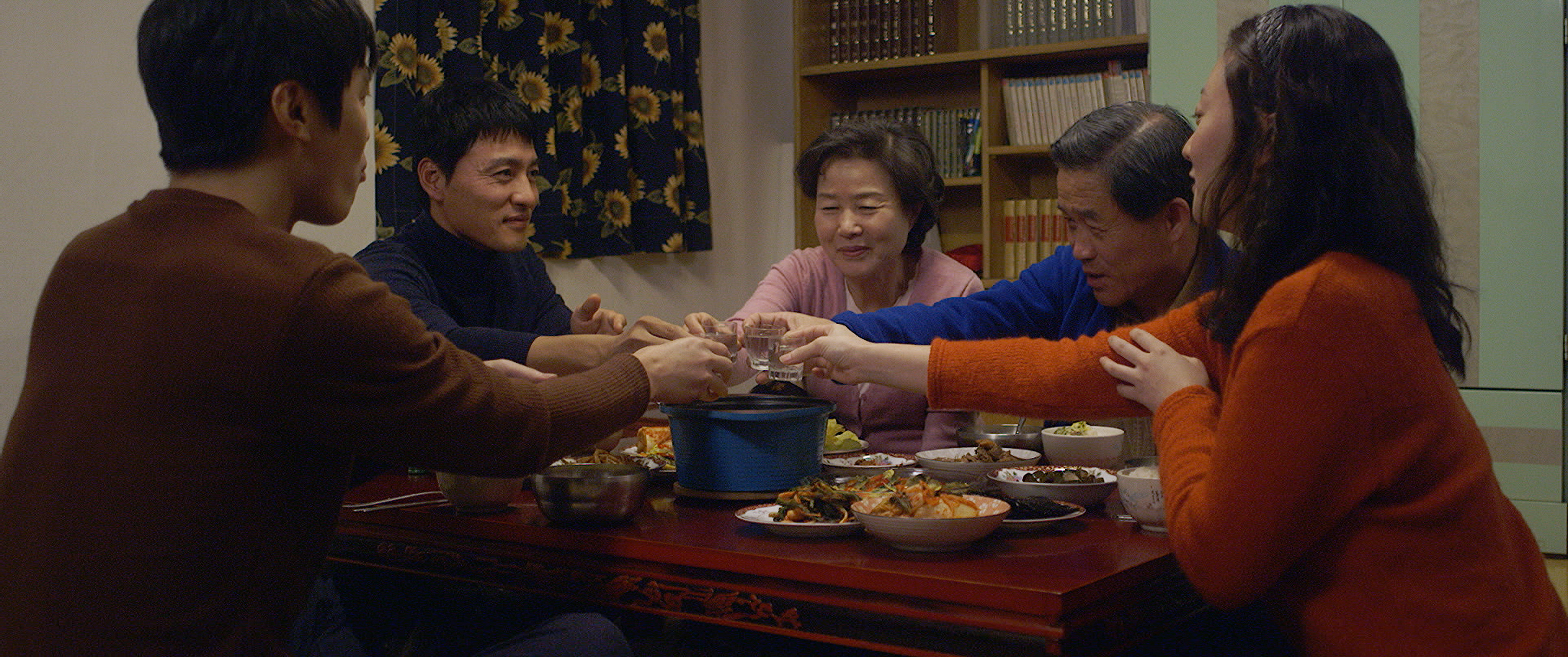
The Dinner (만찬)

The Dinner (만찬)

Director Kim Dong-hyun explores the modern Korean family in his latest film. Each member of the family struggles with various burdens involving work and family, yet financial concerns are the chief cause of stress for them all. Despite such hardships, the elderly father wishes to treat his wife with a meal of hamburgers for her birthday, something she has never tried before. Yet as the day wears on it becomes increasingly apparent that none of their three children have either remembered nor planned anything for their mother’s special day, as they are so caught up in their own circumstances. When even greater tragedy threatens them, they must learn to cope with their burdens as a family.

For more information from the official BIFF 2013 website, please click here.

Busan International Film Festival (제18회 부산국제영화제) Festival News Korean Festivals 2013
Fasten Your Seatbelt (롤러코스터)

Ha Jeong-woo’s Directorial Debut ‘Fasten Your Seatbelt’ gets Trailer and BIFF Premiere

Fasten Your Seatbelt (롤러코스터)

Fasten Your Seatbelt (롤러코스터)

Superstar Ha Jeong-woo (하정우) has decided to take a step behind the camera as both writer and director for his latest project, with his debut arriving in the form of comedy Fasten Your Seatbelt (롤러코스터).

The film follows a group of misfits on a flight from Tokyo to Gimpo Airport and the comedic events that occur when the plane enters the path of a typhoon. The mismatched characters – including a hallyu pop star, a monk, a photographer, as well as other passengers and crew – must all try to work together despite their certainty that the flight will end in disaster.

Fasten Your Seatbelt is due to premiere at the 2013 18th Busan International Film Festival under the ‘Korean Cinema Today – Panorama’ category. Please see below for the trailer.

Film News
Rough Play (배우는 배우다)

Rough Play (배우는 배우다) to Receive World Premiere at Busan

Rough Play (배우는 배우다)

Rough Play (배우는 배우다)

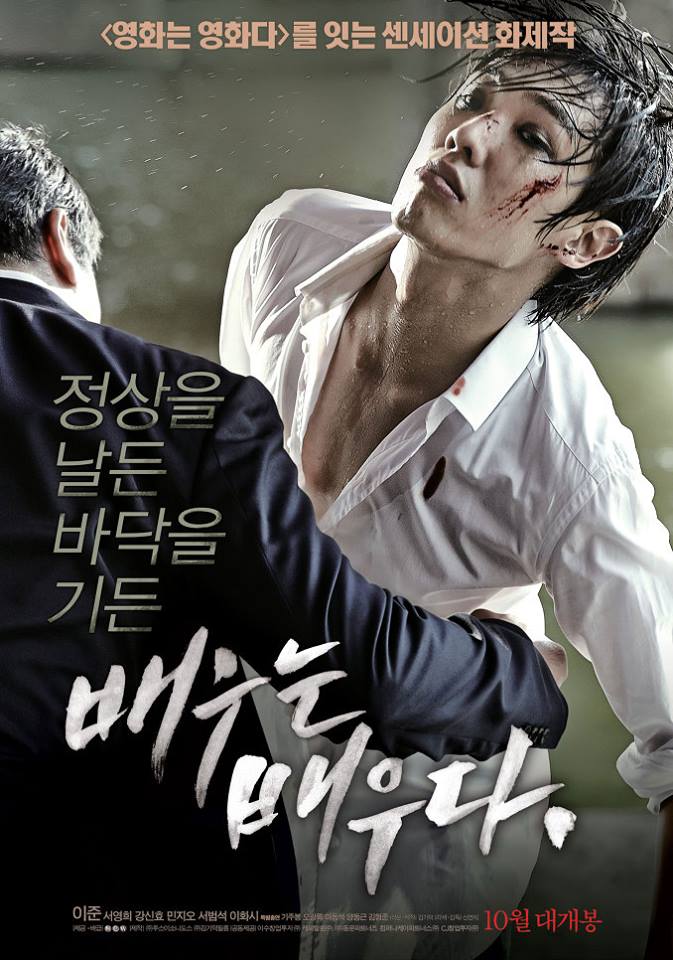
Rough Play (배우는 배우다), the latest film by director Shin Yeon-shick, is due to receive its world premiere at the 8th Busan International Film Festival in October.

The drama is based on an idea by renowned director Kim Ki-duk, and acts as a companion piece or sequel of sorts to Jang Hoon’s Rough Cut (영화는 영화다), also from the mind of director Kim. Whereas Rough Cut blurred the lines between the film world and the real world, Rough Play looks set to focus more on the actors and the psychological disturbances that occur due to life in the spotlight.

Rough Play is also notable or casting Kpop idol Lee Joon from MBLAQ in the lead role. Director Kim and his proteges are no strangers to employing young and popular stars in demanding roles, and Lee Joon’s status will undoubtedly help in procuring a wider audience.

Furthermore, Rough Play is not only director Shin’s fourth film but also his fourth invitation to BIFF following A Great Actor (좋은 배우) (2005), A Fair Love (페어 러브) (2009), and The Russian Novel (러시안 소설) (2012), a quite remarkable achievement.

Please see below for the trailer.

Film News
Tae-hee dreams of exploring the world beyond the trappings of her existence

Take Care of My Cat (고양이를 부탁해) – ★★★★☆

Take Care of My Cat (고양이를 부탁해)

Take Care of My Cat (고양이를 부탁해)

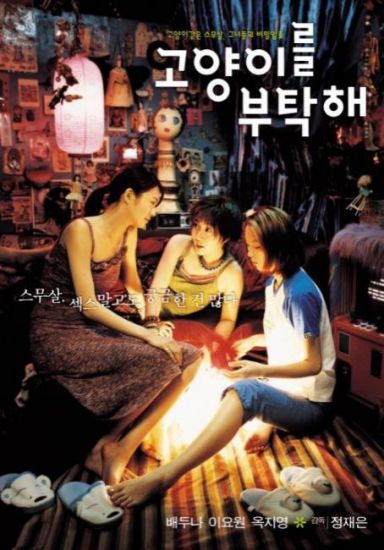
The voices of young women are often ignored in mainstream cinema. Those that do appear tend to focus on frivolity, particularly consumerism where the characters purchase the latest fashions often in the attempt to catch the attention of a love interest. Such latent sexism is wonderfully rejected in director Jeong Jae-eun’s (정재은) indie drama Take Care of My Cat (고양이를 부탁해), a refreshing drama about five friends who increasingly grow apart after high school. The film had a very successful festival run following its debut at the 2001 Busan International Film Festival, appearing at Berlin and Rotterdam amongst others, and launched the careers of the principal cast, notably Bae Doo-na who went on to star in several high profile productions such as Sympathy for Mr. Vengeance and Hollywood movie Cloud Atlas.

Following graduation from high school, five friends from the port city of Incheon who were previously extremely close begin to drift apart. Shin Hae-joo (Lee Yo-won (이요원) lives in Seoul working hard to achieve a career, becoming driven by appearance and success. Yoo Tae-hee (Bae Doo-na (배두나) works for her father’s business for free, struggling to find her own identity and ambitions. Seo Ji-young (Ok Ji-yeong (옥지영) is an aspiring textile artist, yet her poverty-stricken lifestyle has left her with little prospects. Finally, twins On-jo (Lee Eun-Ju (이은주) and Bi-ryu (Lee Eun-Sil (이은실) simply attempt to get by, making cheap jewelry to be sold at market. As Tae-hee works hard to keep the bonds of friendship strong, events occur that profoundly change the young women and take them all in different directions resulting in the passing of a pet cat between them.

The friends reunite for Hae-joo's 20th birthday

The friends reunite for Hae-joo’s 20th birthday

Take Care of My Cat is an intelligent character-driven film, one that eschews the trappings of melodramatic story-lines so often ascribed to women’s roles in cinema. Director Jeong, who also takes writing duties, instead opts for more realism, conveying the struggles of young women fresh from high school, struggling to succeed in the highly competitive society. With each protagonist director Jeong highlights and interrogates particular features of Korean culture, balancing the social critique between them while simultaneously conveying how such forces shape them into different women. Hae-joo – wonderfully brought to life by actress Lee Yo-won – must contend with the extreme diligence of the employment sector in Seoul, constantly striving to be ‘better’ and prompting an arrogance and selfishness her friends are unaccustomed to. Meanwhile Tae-hee is forced to endure the misogyny within Korean culture as exemplified by her father who passes tips on how to be a ‘real man’ to his son. With Ji-young, her poverty forces limitations on her creativity and forces her outside the margins of society. In each case, director Jeong explores the notions of female identity and its construction with skill and insight, organically debating them within the narrative as the quintet of friends observe the change the personalities and the distance generated amongst them.

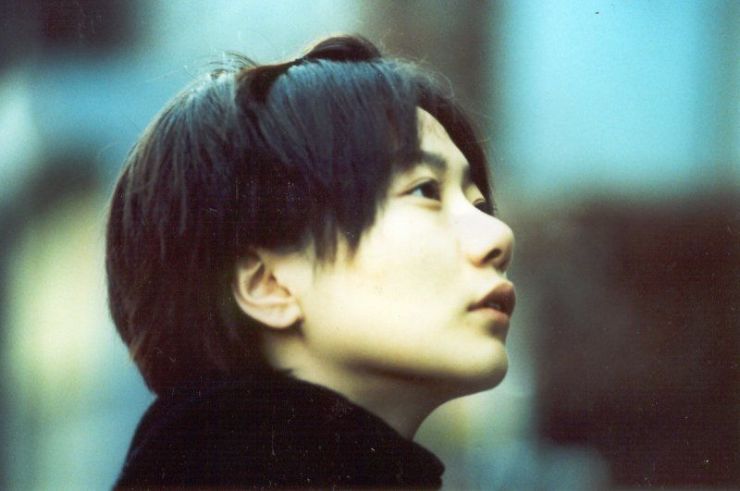
In this regard it is Tae-hee who, as the central figure who arranges meetings, becomes the heart of the film and the window through whom the audience identifies most. As Tae-hee attempts to bring the group closer it becomes clear she’s fighting an uphill battle, and her observances reflect the audience’s own. Bae Doona brings a wonderful and nature grace to the role, both endearing and sincere, conveying a young woman yearning for identity and ambition that always seem just out of reach. She is the person with whom young people can relate the most, someone who wants independence and individuality yet is trapped by the culture that surrounds her.

Tae-hee dreams of exploring the world beyond the trappings of her existence

Tae-hee dreams of exploring the world beyond the trappings of her existence

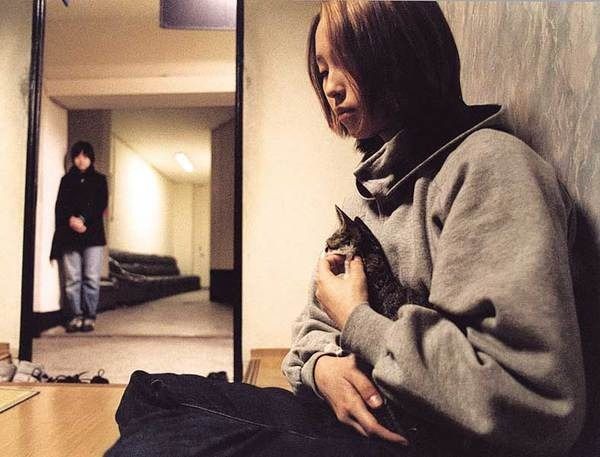
The titular cat also functions as pertinent and insightful metaphor for female identity. As director Jeong has often stated in interviews, cats are fussy and independent, don’t listen, and leave home whenever they wish. As the cat is passed between the friends it becomes symbolic in inspiring the owner to yearn for more, to become increasingly frustrated with her existence as it stands. As Koreans are traditionally uneasy with cats, the director seems to be suggesting that Korean culture struggles with the notion of female identity and independence. Director Jeong emphasises such traits through each of the protagonists, especially Tae-hee and Ji-young by exploring their unhappiness and desire for change. The narrative is quite unbalanced in regards to twins On-jo and Bi-ryu however, and their inclusion is underdeveloped and arguably unnecessary. They serve little function throughout, except to sell cheap home-made accessories to other women, again tying into the debate of physical attractiveness women are expected to partake in.

Yet Take Care of My Cat is not all deep metaphor and social debate, as the film makes effective use of lighting techniques, an otherworldly electronic soundtrack, and text messaging/typing graphics to give the film a distinctly ‘cool’ edge. These features combine incredibly well and lend the film something of a ‘cult’ vibe, and has clearly served as an inspiration to later films who have employed such techniques.

Ji-young's poverty-stricken life is difficult to endure

Ji-young’s poverty-stricken life is difficult to endure

Verdict:

Take Care of My Cat is a wonderfully charismatic film that provides young women with a voice that’s sorely lacking in contemporary cinema. By eschewing notions of consumerism and melodrama, writer/director Jeong Jae-eun instead focuses on female identity and its construction with skill and insight. Furthermore the electronic soundtrack, amongst other techniques, make it something of a cult film, as well as an intelligent, profound offering in the debate of womanhood in modern Korean society.

★★★★☆

Reviews
Jiseul (지슬)

Jiseul (지슬) – ★★★★★

Jiseul (지슬)

Jiseul (지슬)

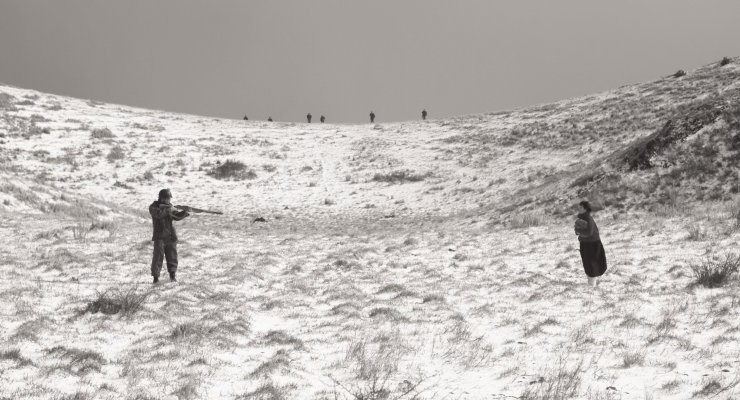
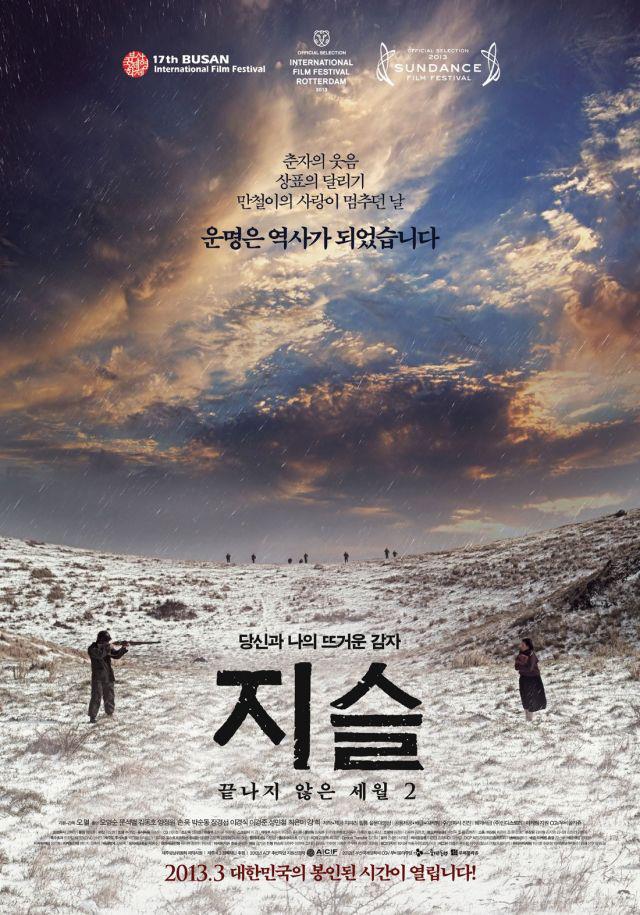
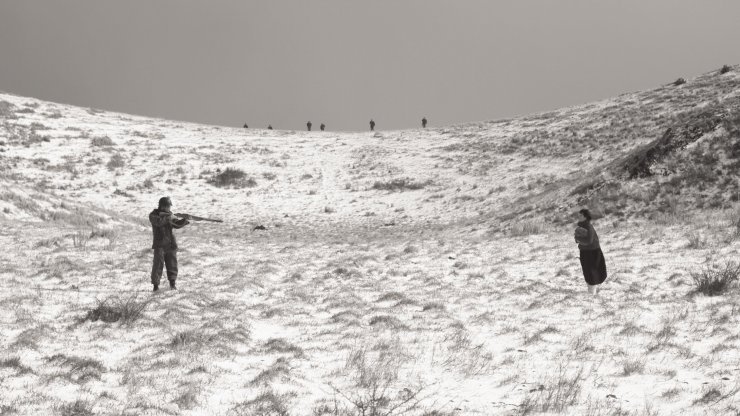
Director O Muel’s (오멸) Jiseul (지슬) quickly became known as one of the most interesting and exemplary screenings upon its debut at the 2012 Busan International Film Festival. The monochrome film depicts the little-known events of the 1948 Jeju Island Uprising – or rather, massacre – in which the Korean military brutally suppressed and killed up to a fifth of the entire population. For fifty years after, even mentioning what transpired was a crime punishable by torture and incarceration. Yet with his fourth feature director O Muel, a Jeju Islander himself, presents the atrocities that were committed with stark and uncompromising realism, simultaneously portraying the horrifying events alongside the indomitable spirit of the Jeju villagers. While Jiseul suffers due to lack of context and scope, the film is poignant and harrowing in its account of the tragedy, with the five awards won at BIFF, and an invitation to the 2013 Sundance Film Festival and International Film Festival Rotterdam, testament to its raw cinematic power.

Jiseul (지슬)

Jiseul (지슬)

Throughout Jiseul director O Meul employs stunning directorial flair in capturing the range of experiences brought about by the Uprising. Of particular note are the astonishing long takes that are utterly absorbing, drawing the audience into such awful events as exploring a homestead following a raid, and an all-out assault on a village. In addition to the monochrome colours, such long takes are highly effective in conveying stark, chilling realism and as such are powerfully emotive. It’s impossible not to feel horror as farmers and the elderly are mercilessly stabbed and brutalized during such sequences. The incredible cinematography by Yang Jung-Hoon also adds potency as the snow covered landscapes and farming villages are attractive yet foreboding, and the tension as these arenas are traversed is often palpable.

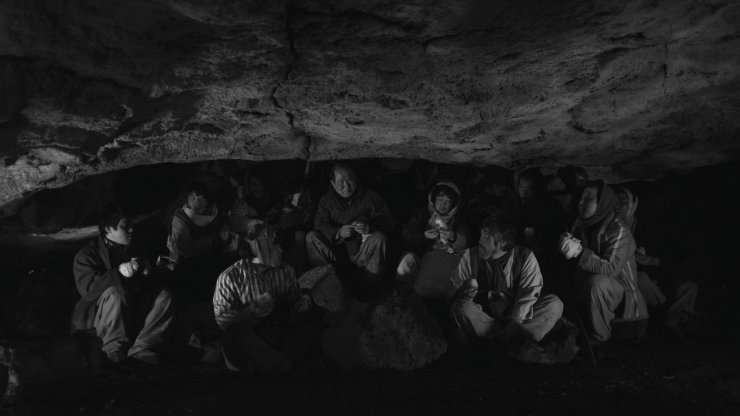
The residents of the town seek shelter and safety in a cave

The residents of the town seek shelter and safety in a cave

Yet the heart of Jiseul is undoubtedly the assortment of colourful characters that populate the film, particularly the Islanders who flee to the safety of the caves. O Muel displays his talents as a scriptwriter with their dialogue as the Islanders laugh, bicker, and discuss the farming lifestyle amongst themselves, all of which are highly amusing. While there are too many figures to delve into serious character development, the conversations are unfailing in creating empathy with their plight. Initially, due to the lack of context, it seems as if the Islanders are running from a threat that doesn’t exist. Yet as the narrative progresses, and the terrible physical and sexual assaults perpetrated by the soldiers are portrayed, the threat becomes ever more real. In Korean cinema such atrocities are most commonly aligned with an external threat – typically Japanese imperial forces – and O Muel deserves credit for challenging this ideological form and locating the threat internally. The director also wisely moves beyond mere stereotypes of evil in depicting factions of soldiers breaking away from the main Korean army, holding true to historical accounts.

It is in this historical regard that Jiseul suffers the most, as anyone unfamiliar with the Jeju Uprising will find precious little context given. Aside from a few sentences that bookend the film, it is difficult to achieve a sense of appreciation as to why the events are occurring, and what led to this point. Hints are occasionally given as to the wider conflict ongoing around the island, yet as there is little sense of scale it is difficult to determine. Yet in place of scale, Jiseul contains potent symbolism through the use of iconography and other facets of the mise-en-scene that not only convey the tragic loss of life, but also the attempts to conceal the truth. As such the power of the film lies in its intimate, raw visual aesthetics and makes Jiseul one of the most intriguing, and important, Korean films of 2012.

The monochrome palette and symbolism are highly effective

The monochrome palette and symbolism are highly effective

Verdict:

Jiseul is a powerful and harrowing account of the 1948 Jeju Uprising, with director O Muel’s monochrome palette and intense visual style adding incredible potency and realism to the true-life events. Accompanied by some wonderful cinematography by Yang Jung-Hoon, director O Muel deserves credit for challenging dominant ideology by not only attempting to create awareness of the massacre, but also for locating the source of horror internally with the Korean military. While the film suffers from lack of context for those ignorant of the Uprising, Jiseul is an exemplary independent production and one of the most important releases of 2012.

★★★★★

Reviews
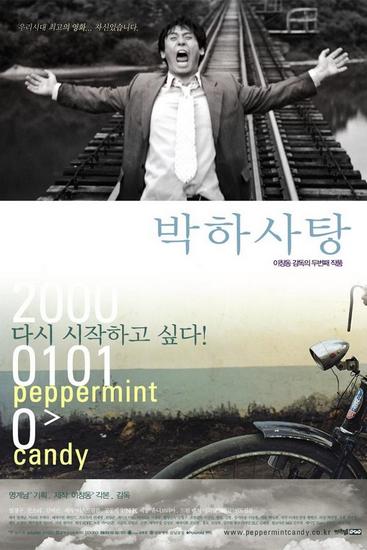
Kim Yeong-ho climbs atop the rail tracks, ready for death

Peppermint Candy (박하사탕) – ★★★★★

Peppermint Candy (박하사탕)

Peppermint Candy (박하사탕)

Peppermint Candy (박하사탕) is an exceptional piece of cinema. Opening the Busan International Film Festival in 1999, it must have been uncomfortably ironic for the audience that such a prestigious Asian festival would feature such a poetically raw dissemination of Korean culture. Directed by auteur Lee Chang-dong (이창동), the film critically examines a twenty year period of Korean history, revisiting pivotal moments through the main protagonist while also psychoanalytically deconstructing his – and by extension, Korean -masculinity. Peppermint Candy is a simply breathtaking exploration of how a person’s life is forged through culture and trauma and, featuring a staggering performance from Seol Kyeong-gu (설경구), is one of great examples of the vibrant socio-cultural power of Korean filmmaking.

In 1999, a man named Kim Yeong-ho (Seol Kyeong-gu) emerges by a riverside where a group of middle aged people are having a picnic. Interestingly, members of the group recognise Yeong-ho and invite him to join them but his erratic behaviour proves too much to bear. Leaving the picnic, Yeong-ho climbs onto train tracks with the intention of suicide, yet just before the train collides he screams, “I want to go back!” Suddenly Yeong-ho begins to revisit key moments from his life – and Korean history – that forged him into the person he has become, including meeting his estranged wife Yang Hong-ja (Kim Yeo-jin (김여진), his career as a police officer, and his first love Yoon Soon-im (Moon So-ri (문소리).

Kim Yeong-ho climbs atop the rail tracks, ready for death

Kim Yeong-ho climbs atop the rail tracks, ready for death

Director Lee Chang-dong has crafted an incredible journey through exploring the life of Yeong-ho, conveying his personal development as inherently tied to the development of Korea over a twenty year period. Initially, Yeong-ho is supremely dislikable and downright weird as he crashes the riverside picnic, behaving terribly towards people who are simply attempting to welcome him. Yet from the moment Yeon-ho steps onto the train tracks, it becomes clear there is a depth to his madness. Over the course of Peppermint Candy director Lee Chang-dong peels back layer upon layer of Yeong-ho’s psychosis in a highly poetic, subtle and symbolic manner, examining how a person’s innocence is twisted by culture and forces beyond control. The train track, for example, is much more than a place for suicide as it comes to represent his path of destiny. As the train moves back in time to revisit Yeong-ho’s past it becomes his timeline, stopping at pivotal moments until the symbolic sound of the train horn conveys that it is time to move on. As such the train and track are ethereal, spiritual beings within Peppermint Candy and are beautifully poignant narrative devices.

 As the train gently takes the audience deeper into Yeong-ho’s history, a great deal of empathy is aroused as his very character is stripped bare. From the initial quick judgement that Yeong-ho is an odd fool, each turning point in his life delicately alters the rash perception to the point where genuine sympathy is evoked from his personal tragedies. When his business suffers as a result of the Asian financial crisis, when his marriage begins to fall apart, when he loses his first love; all have penetrating emotional and psychological impact on Yeong-ho, and it is utterly enthralling to behold the events that molded him into his suicidal state. Director Lee Chang-dong also masterfully ties Yeong-ho’s increasingly fractured state as inherently Korean. As well as the aforementioned financial crisis, Yeong-ho’s career in the police force during the infamous brutality of the 1980s is portrayed, in addition to his role in the 1981 Gwangju Uprising (or rather, massacre).

Yeong-ho revisits his military past, in which he took part in the Gwangju massacre

Yeong-ho revisits his military past, in which he took part in the Gwangju massacre

In each instance, the director examines not only the manner in which Korean people were brutally oppressed during the era but also how men such as Yeong-ho, who is an analogy of all Korean men during this period, were fundamentally changed into abhorrent examples of humanity. Issues such as violence and patriarchal order are interrogated in compelling fashion and conveyed not as features of masculinity, but as cultural constructs that warp the innocence of young males.

Yeong-ho’s journey into the past is also enthralling due to the phenomenal performance of Seol Kyeong-gu. Throughout the entirety of Peppermint Candy the actor is superb in articulating the emotional and psychological state of Yeong-ho with incredible sincerity. From his unhinged suicidal behaviour through to his bitter and violent 30s, from his attempts to rebuild his life following military service through to his innocence as as student, Seol Kyeong-gu is simply amazing. His performance is keenly heartfelt at every stage of Yeong-ho’s life, so much so that his journey of self-discovery lingers long after the film has come to an end. His victories at the Grand Bell Awards and Blue Dragon Awards in 2000 attest to his prowess, and are completely deserved.

Yeong-ho and his first love Soon-im share a tender moment

Yeong-ho and his first love Soon-im share a tender moment

Verdict:

Peppermint Candy is undoubtedly one of the modern classics of Korean cinema, and is an exceptional entry by director Lee Chang-dong. The story is equal parts poetic and subtle as well as raw and compelling, as the emotional and psychological layers of main protagonist Yeong-ho are gradually peeled away. In doing so the director intricately examines the notions of contemporary Korean masculinity, yet it is made even more enthralling through the link with defining moments in Korean history. As such, Peppermint Candy is a journey both personal and national, and coupled with the phenomenal performance of Seol Kyeong-gu, is an absolute must-see.

★★★★★

Reviews
Sistar performed some of their hits and dance routines to an adoring crowd

The 17th Busan International Film Festival

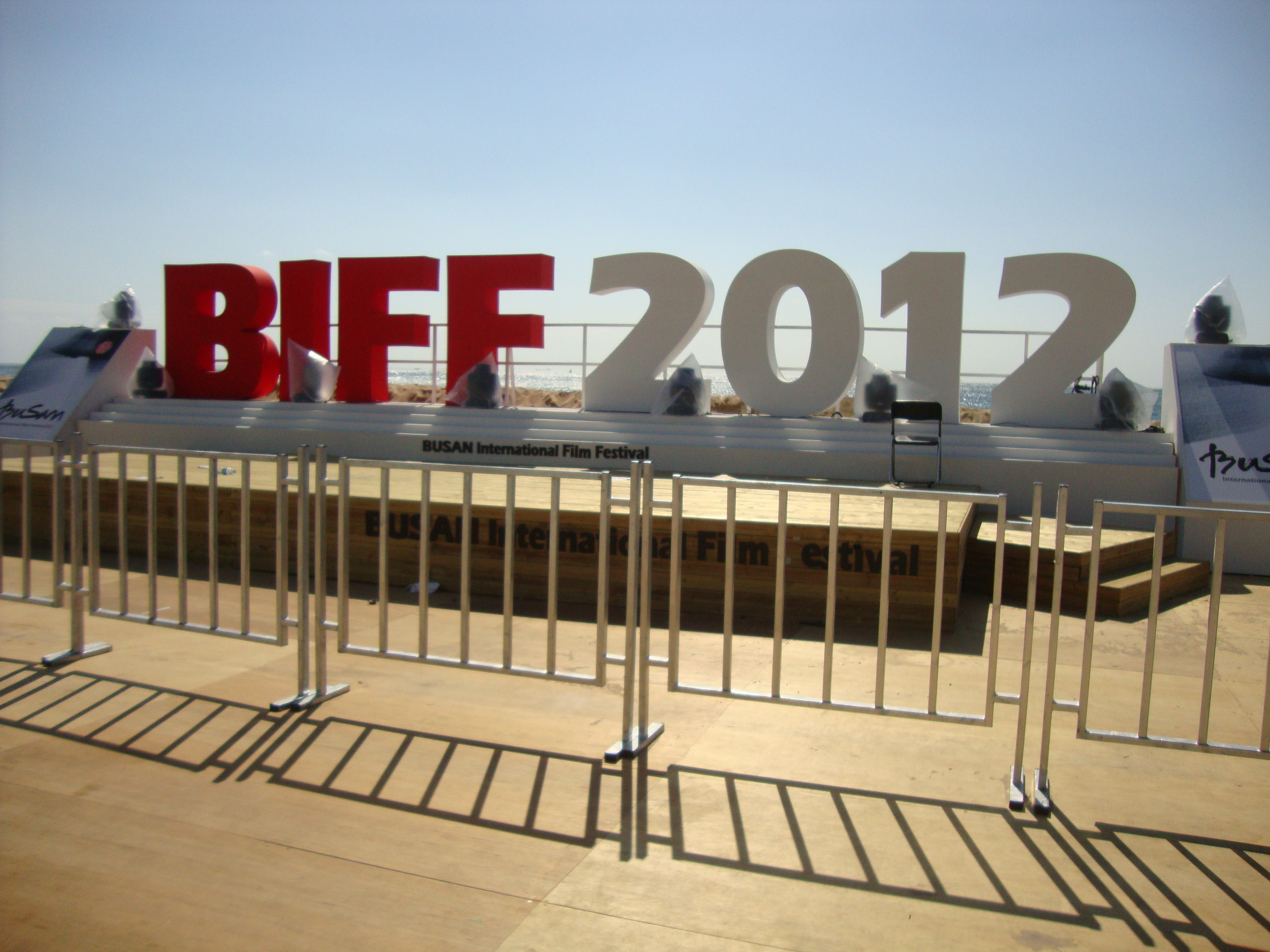
BIFF 2012 at Haeundae (해운대) Beach

BIFF 2012 at Haeundae (해운대) Beach

While most film festivals promote themselves as bigger and better every year, the 17th installment of the Busan International Film Festival is certainly living up to the hype. With the first non-Korean hosting the opening ceremony in the form of Chinese actress Tang Wei, with the festival spread out across 10 days (as opposed to 9 in 2011), and with 132 world and international premieres, BIFF 2012 has done an incredible job in cementing itself as one of the key film festivals throughout Asia. The popularity of this years installment is acutely visible, as online tickets sold out rapidly whilst the 20% allocation at the event disappeared by mid-morning.

There were a lot of events to be had during the opening weekend of BIFF 2012. While Haeundae Beach was the host for several interviews and performances, the screenings themselves also often sported Q & A sessions with directors, producers and/or the stars themselves to an unprecedented degree in BIFF’s history. It was also common to walk into or past coffee shops and see film-makers meeting and conversing, creating a very relaxed atmosphere with their approachable demeanor.

On Friday the 5th, a private party was held for those that work within the film industry as well as journalists, while the cast of Kim Ki-duk‘s latest feature, the incredibly successful Pieta (피에타), were also in attendance.

Actress Jo Yeo-jeong co-hosts the Lotte Red Secret Party

Actress Jo Yeo-jeong co-hosts the Lotte Red Secret Party

Saturday the 6th saw two events take place. The Lotte Night Party – Red Secret was hosted by The Servant (방자전) actress Jo Yeo-Jeong and gave awards to those who had contributed significantly over the past year. Among those receiving awards were notable screenwriters and actors, including host Jo Yeo-Jeong and A Muse (은교) actress Kim Go-eun (김고은). Also in attendance were actor/director Yoo Ji-tae (유지태) and his wife, as well as Ahn Seong-gi (안성기), and former BIFF director Kim Dong-ho (김동호). Yet the most memorable event at the Red Secret party was the arrival of now-global-megastar Psy, who performed several of his hits as well as the groundbreaking Gangnam Style to a rapturous crowd.

Psy performs for the emphatic crowd

Psy performs for the emphatic crowd

The second party of the night was held by CJ Entertainment, and the style was markedly different.

Sistar performed some of their hits and dance routines to an adoring crowd

Sistar performed some of their hits and dance routines to an adoring crowd

In terms of performers parody group The Wonderboys were amazing fun as well as providing some great music to warm up the crowd for the main act – Kpop superstars Sistar. The quartet sang some of their most famous hits accompanied by their signature dance moves that had the crowd chanting their names. In attendance were a variety of people involved in the film industry including REALies president Kim Ho-seong and renowned editor Lee Sang-min. There were also a whole host of film and television stars, including the cast of period drama-comedy Masquerade (광해, 왕이 된 남자) – Lee Byeong-heon (이병헌), Ryoo Seung-ryong (류승룡) and Jang Gwang (장광) – as well as TV star Kim Min-jong (김민종) and As One (코리아 ) actor Lee Jong-suk (이종석).

Actress Go A-ra was a delight

Actress Go A-ra was a delight

However a genuine highlight of the night was actress Go Ah-ra (고아라) (star of Pacemaker (페이스메이커) and Papa (파파)), who was incredibly kind, courteous and humble, giving genuine insight into the differences in working in the Korean film and television industries.

Sunday night saw the Korean Film Council (KOFIC) event, which saw fellow The Good, The Bad, The Weird (좋은 놈, 나쁜 놈, 이상한 놈) actors Song Kang-ho (송강호) and Jeong Woo-seong (정우성) attending, in addition to a myriad of other stars and members of the film industry.

And so ended the first weekend of the 2012 Busan International Film Festival. With the incredible selection of films, variety of events in which the public could have access to members of the film industry, and unprecedented popularity, it is difficult to imagine how BIFF will grow and improve in with future installments but one thing is for certain – the BIFF team will undoubtedly find a way.

Festival News Festivals 2012

Busan International Film Festival 2011

It would be incredibly appropriate for the first entry into a blog about Korean film would focus on a celebration of the industry – and that’s exactly what we have here, with a report from the Busan International Film Festival  (BIFF) 2011.

Busan, for those unaware, is the second largest city in Korea and has hosted the festival for the last 16 years. During that time it has grown considerably, initially using available cinema screens in the Nampo-dong (남포동) area to later broadening out to the famous tourist destination of Haeundae (해운대).

Running from the 6th to the 14th of October, and showcasing over 300 films, this year also saw a number of ‘firsts.’ The first time the festival was held without founder/coordinator Kim Dong Ho (김동호) since his retirement; the first time ‘Pusan/PIFF’ was changed to ‘Busan/BIFF’ in a long-overdue Romanisation change; and the first unveiling of the exclusive Busan Cinema Centre, that had been under construction since 2008. The centre was also used for the opening red carpet ceremony and opening film ‘Always’ (오직 그대만), tickets for which sold out with 7 seconds.

The founder of BIFF, Kim Dong Ho (김동호)

However BIFF operates a great service for cineastes. While 80% of tickets can be bought online, 20% are available on the day at the ticket office. Also worth mentioning are the price of the tickets; ₩6,000 (£3.28/$5.12) for a regular ticket and ₩8,000 (£4.38/$6.82) for a 3D feature. Compared with the London Film Festival (£6-20/₩11,010-36,703/$9.46-31.52), and the New York Film Festival ($8-50/₩9,316-58,225/£5.07-31.72), the tickets at Busan are a real bargain.

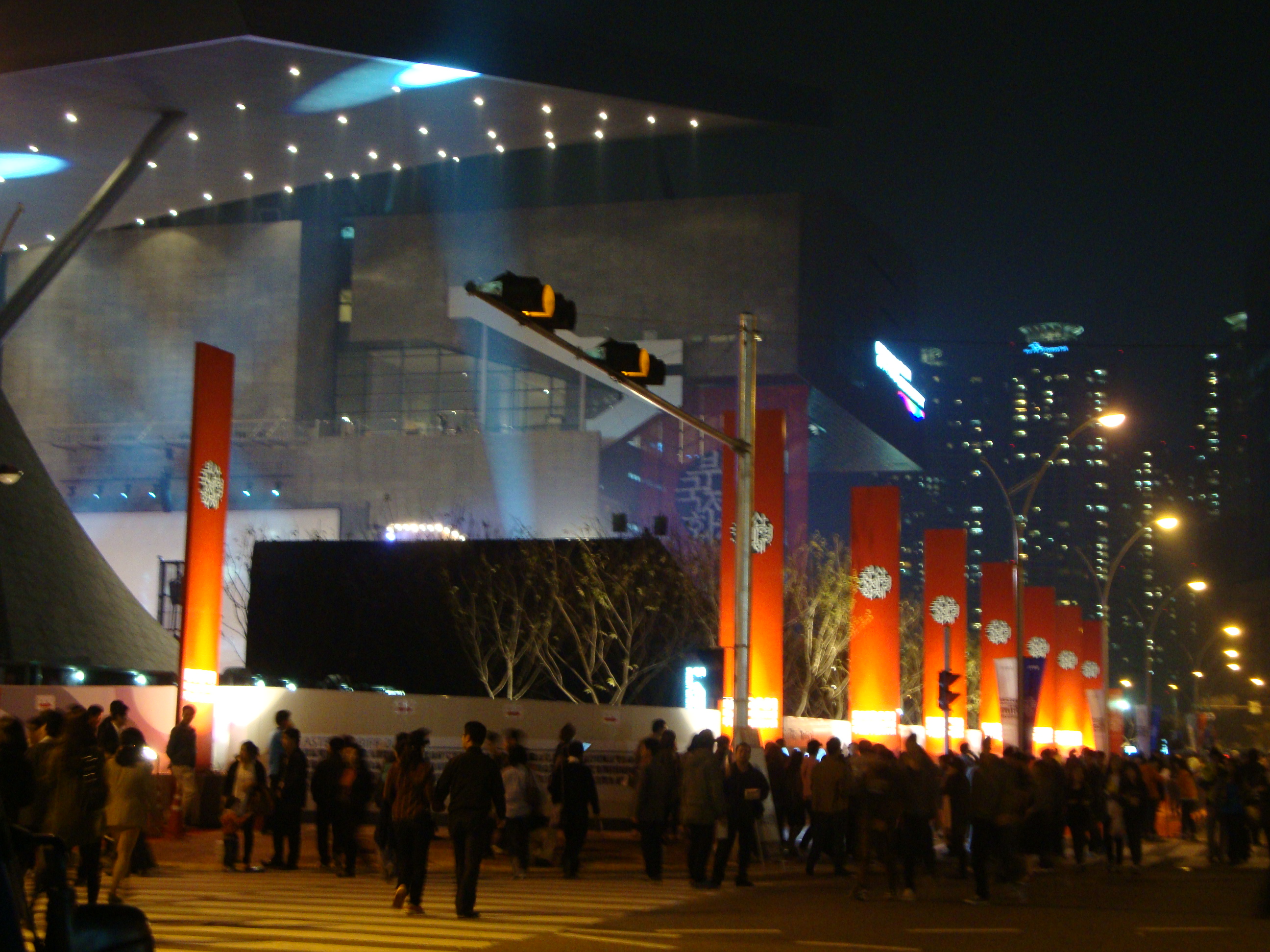
With a few days spare, I visited the area early only to find that the cinema centre was still under construction. But Korean builders are nothing if not diligent, and the centre was (for the most part) completed on time. It’s certainly an impressive building, with 4 indoor screens and 1 outdoor that seats 4000 people. In the basement is the Korean Film Archive, which focuses on Korean film history with the option to buy old films and memorabilia. Designed by Austrian architect Coop Himmelblau, the Cinema Centre cost ₩160 billion ($136 million) and it shows – it really is an astounding and stylish building. It’s also nice to see a country invest and develop the infrastructure of their film industry when others countries – notably England – are withdrawing funding and closing institutions designed to support new productions.

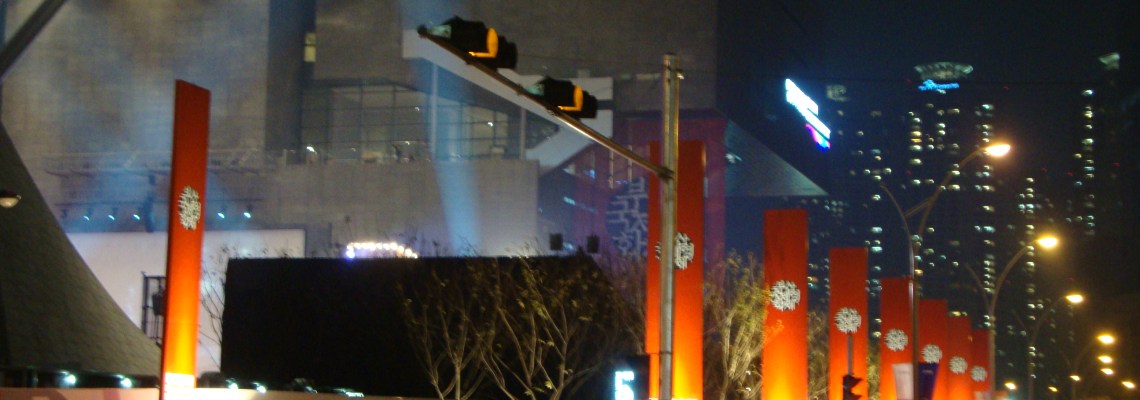
The new Busan Cinema Centre

Before the special red carpet opening of the festival, there was a pre-opening event on Haeundae (해운대) beach. Actors and actresses from different countries were present, fireworks were lit, and prayers of good luck (complete with incense and pig’s head) were conducted. It was a relatively calm and intimate affair, unlike the spectacular ceremony the following day.

The bright lights of the red carpet opening event

Despite the 8pm opening time, I decided to explore the venue at 1.30pm…which turned out to be too late. Crowds of people were already in lines at the ticket office in an attempt to score last minute invites to the ceremony. Flocks of teenage girls were crammed along the railings next to the red carpet, and their hysteria made it virtually impossible to get a glimpse of the stars as they made their way along the carpet. In spite of this, the event was incredible and lasted hours, followed by the screening of ‘Always’ (오직 그대만), and the entire event was reported by a large number of media outlets.

The pre-opening ‘good luck’ ceremony

Sporting a pre-booked ticket, the next morning I visited the cinema centre once more to watch ‘Hara Kiri: The Death of Samurai’ (3D) by Takeshi Miike. The interior of the building is futuristic in the style of ‘Minority Report’, despite not being entirely finished. Armed with a ticket, a bottle of vitamin water and some peanut butter squid, I ventured into the theater itself, which proved to be a very comfortable viewing experience.

After the film, I intended to explore the rest of the building including the Korean Archive, yet due to the continuing construction work it still hadn’t been finished. Worse still, the Archive didn’t have a kiosk at BIFF Village on the beach, unlike last year. Instead, more commercial firms were present that had little to do with film, which was a shame.

Time constraints meant that unfortunately I couldn’t stay to enjoy the entire festival, yet the opening few days were easily the biggest and most impressive in its 16 year history. It will certainly be interesting to see how the event manages to improve further next year after setting the standard so high.

Festival News Festivals 2011