A Girl at My Door (도희야) – ★★★★☆

A Girl at My Door (도희야)

A Girl at My Door (도희야)

Forced to relocate in the countryside due to an undisclosed issue in the city, police officer Yeong-nam (Bae Doo-na (배두나) prepares herself for a year of exile. Despite being one of the youngest adults in the city Yeong-nam is appointed chief of police, and in getting to know her new surroundings she is quickly exposed to the middle-aged, laid back way of life, as well as the migrant workers who help keep the town alive through manual labour. Yet no sooner as she attempts to settle, Yeong-nam is confronted with horrific child abuse against her young neighbour Do-hee (Kim Sae-ron (김새론) by her father Yong-ha (Song Sae-byeok (송새벽) and grandmother (Kim Jin-goo (김진구). To protect Do-hee from further domestic abuse Yeong-nam takes the child under her care, just as her past begins to catch up with her.
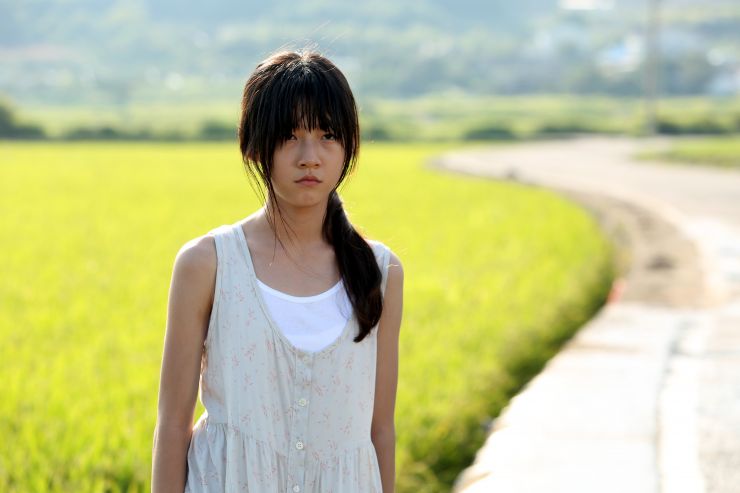
Do-hee is a victim of terrible domestic abuse in the country town

A victim of terrible abuse, Do-hee is a social outcast in need of protection

A Girl at My Door (도희야) is a simply phenomenal debut by writer/director July Jung (Jeong Joo-ri (정주리). Director Jung’s film is a powerful and intelligent exploration of discrimination and violence in Korean culture with a uniquely feminist spin that is all too rare in the industry. The approach taken in exploring such social issues is reminiscent of cinema legend Lee Chang-dong‘s work, particularly Poetry, which more than likely explains his decision to take a producer credit on the film. A Girl at My Door differentiates itself from director Lee’s work however in that director Jung’s layered script not only employs a multitude of perspectives in interrogating discrimination, but also in that she keenly conveys the ironies of Korean culture, particularly in regard to pretense. Central protagonist Yeong-nam projects a strong and stoic image as the chief of police, concealing her fraught complexity in regards to her history, emotional state, and very identity. Her dependancy on soju, which she conceals in water bottles, adds potent irony to an already paradoxical situation as she hides her addiction from those around her in a bid to remain a socially acceptable image. Director Jung captures moments such as these with incredible prowess conveying them in ways both subtle and obvious, balancing her character study with a skill belying her experience.

Yet where director Jung truly excels is through the relationship that develops between Yeong-nam and abuse victim Doo-hee. This is in no small part due to the astounding performances of both Bae Doo-na and, particularly, Kim Sae-ron. Bae Doo-na is constantly captivating as the police chief as she wrestles her internal conflicts, conveying a cold stoicism when in the presence of others yet a subtle fragility when alone. Yet it is youngster Kim Sae-ron who steals the limelight with her astonishing turn as social outcast Do-hee. Her range throughout A Girl at My Door is staggeringly impressive as an abuse victim desperate for love, with her unpredictability compelling to the utmost degree. Despite having two radically different characters director Jung crafts their relationship with a natural sincerity that never fails to be engaging. From small moments at meal times to more intimate scenes as they become closer, director Jung captures Do-hee’s reverence and Yeong-nam’s responsibility-turned-devotion with palpable affection.

Yeong-nam invites Doo-hee to stay with her for a summer, where their relationship considerably develops

Yeong-nam invites Do-hee to stay with her for a summer, where their relationship considerably develops

Through the central relationship as well as Yeong-nam’s position as law enforcement, A Girl at My Door explores discrimination within Korean society through the microcosm of a small countryside town. Director Jung interrogates the issue from a variety of perspectives, chiefly the sexism, homophobia and ageism that is so openly expressed by those in society. Despite her position as chief of police Yeong-nam is still subjected to gender and age discrimination by those she protects and works with, while her status as someone from the city also adds to the prejudice received. Do-hee is subjected to abuse which is justified due to her social status as a young orphan of sorts. The narrative impressively examines how such discrimination has become normalised within culture at both societal and governmental levels, with the frustration of innocents attempting to fight against it a source of inspiration and empowerment. Racism also arises through the incorporation of migrant workers within the story, adding a further perspective on the issue as they are forced to endure manual labour. Through her sense of irony director Jung astutely conveys how contemporary society is willing to accept such prejudice as long as their quality of life is assured, and their terrible reaction when it is challenged even in the name of the law.
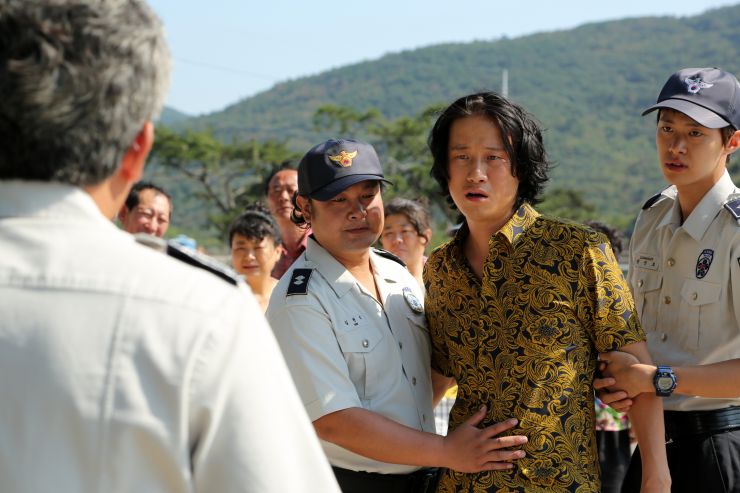
The stakes are raised when Do-hee's father Yong-ha is arrested for assaulting his workers

The stakes are raised when Do-hee’s father Yong-ha is arrested for assaulting his workers

Verdict:

A Girl at My Door is a phenomenal debut by director July Jung, who examines issues of discrimination in contemporary Korea through the microcosm of  small countryside town. Featuring beautiful cinematography and an intelligent, irony-laced script, A Girl at My Door also boasts two exceptional performances from Bae Doo-na and in particular from rising star Kim Sae-ron. Not to be missed.

★★★★☆

Busan International Film Festival (제19회 부산국제영화제) Festival News Korean Festivals 2014 Reviews

BIFF 2014 – Gala Presentation, Open Cinema, New Currents, and Documentary Showcase

The 19th Busan International Film Festival

The 19th Busan International Film Festival

It’s almost time for the Busan International Film Festival (BIFF) to begin, and as such it’s a great time to check out the Korean productions due to be screened.

While programs such as Korean Cinema Today – Panorama/Vision and Korean Cinema Retrospective: Reminiscing the Timeless Filmmaker, Jung Jin-woo conveniently brings together films from the peninsula for fans to browse, there are also other categories within which Korean films appear, and are well worth seeking out.

Below are some of the exciting new projects from Korean filmmakers being screened at BIFF 2014, handily gathered together for your convenience.

Gala Presentation

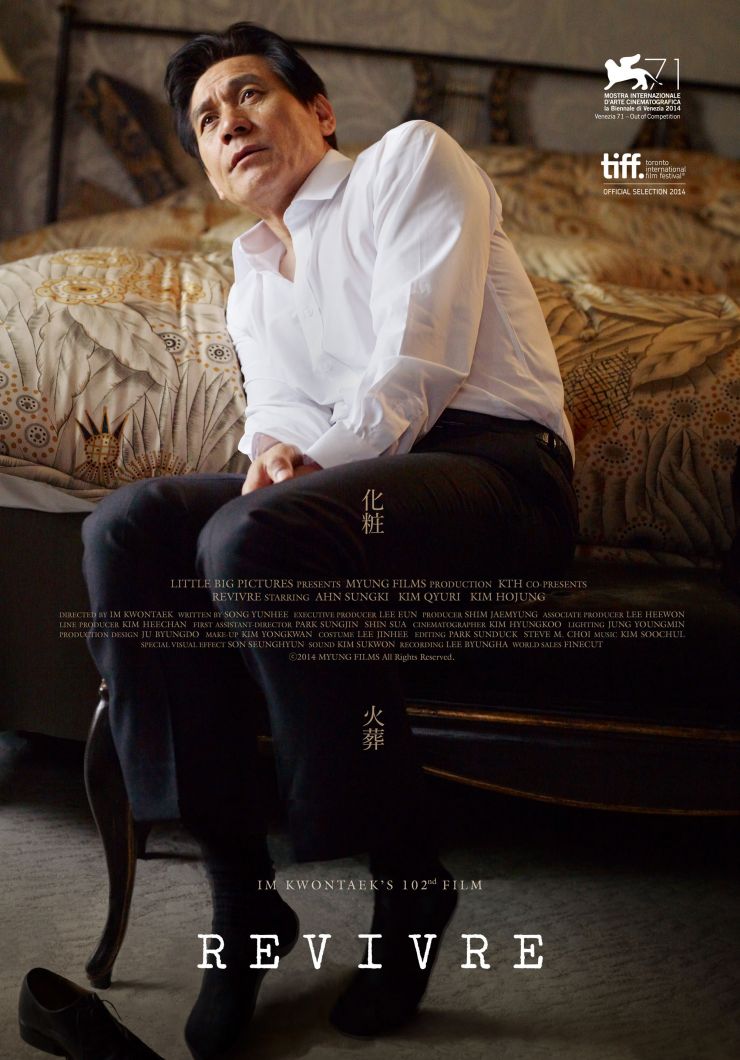
Revivre (화장) – director Im Kwon-taek (임권택)

Revivre (화장)

Revivre (화장)

After a 4 year hiatus, film maestro Im Kwon-taek returns with Revivre, his 102nd feature film. The film received very positive responses following its premiere at Toronto, with many critics praising not only a return to form for director Im but also lauding screen legend Ahn Seong-gi for his powerful performance.

Revivre explores the life of senior salaryman (Ahn) whose wife (Kim Ho-jeong) is dying of cancer. However the arrival of a beautiful young new office worker (Kim Gyoo-ri) in his department challenges him for his affections, causing a huge strain on his personal life.

Open Cinema

Cart (카트) – director Boo Ji-young (부지영)

Cart (카트)

Cart (카트)

Cart is the second feature by director Boo Ji-young, and is a timely examination of corporate abuse and the power of protest in contemporary Korea. Featuring an incredible cast including Yeom Jeong-ah, Moon Jeong-hee, Cheon Woo-hee and Kpop star Do Kyeong-soo, Cart was also widely praised at its Toronto premiere for its unflinching take on exploitation and sexism in the Korean workplace.

Mother of two Sun-hee works alongside single mum Hae-mee as cashiers, and are friends with janitor Soon-rae and manager Dong-joon, the only only male representative for the union. When a series of lay-offs begin, the friends band together with the other workers and fight the unfair dismissals.

New Currents

We Will Be Ok (그들이 죽었다) – director Baek Jae-ho (백재호)

We Will Be Ok (그들이 죽었다)

We Will Be Ok (그들이 죽었다)

We Will Be Ok is an independent film following the lives of wannabe filmmakers as they attempt to fulfill their ambitions. It will be interesting to see how director Baek Jae-ho differentiates his film from the other recent examples that have emerged, such as Director’s CUT at JIFF, that also explore the problems of indie filmmaking.

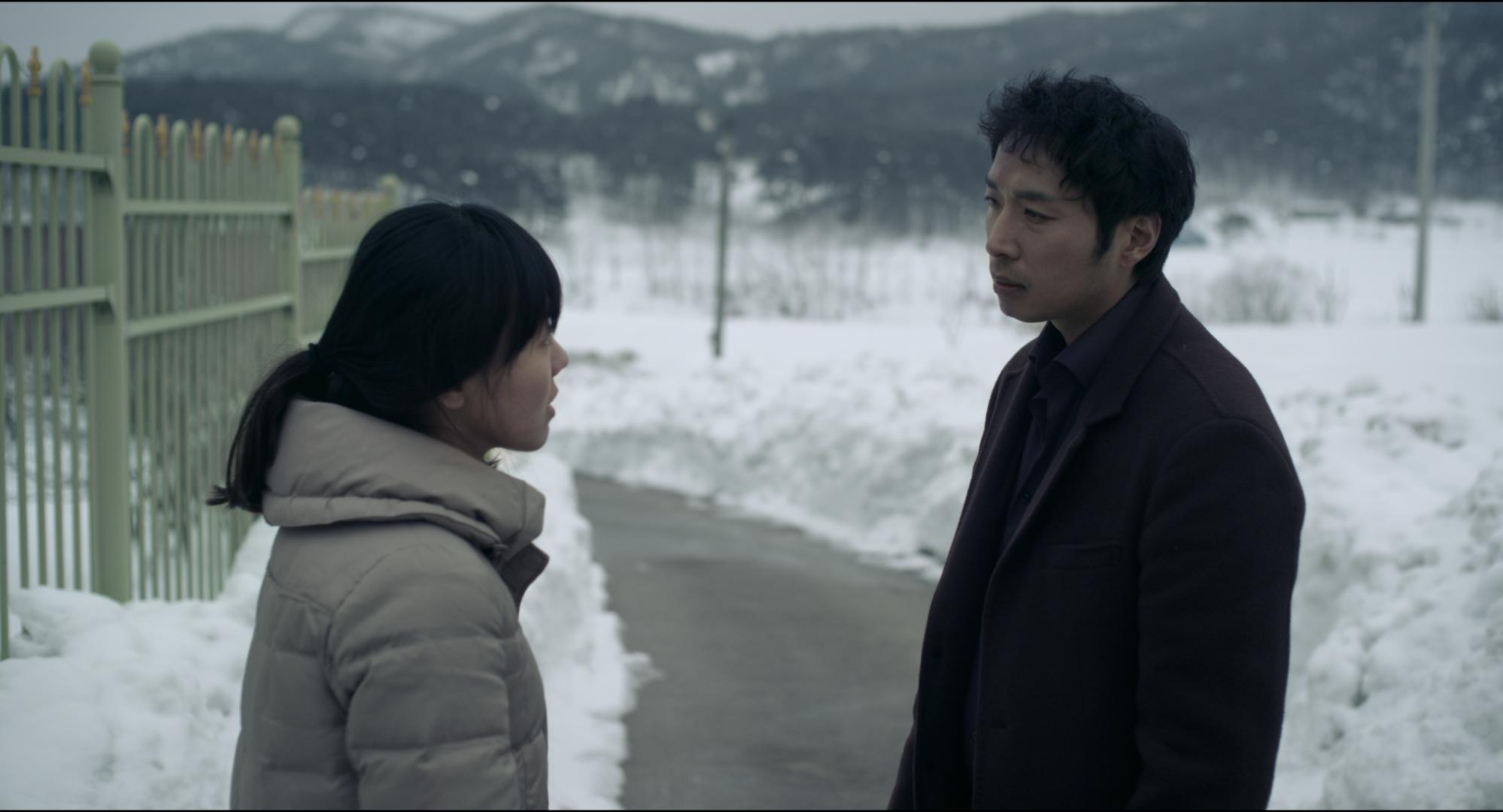
End of Winter (철원기행) – director Kim Dae-hwan (김대환)

End of Winter (철원기행)

End of Winter (철원기행)

Director Kim Dae-hwan’s family drama explores the tensions that exist between relatives following the shock announcement that the father, who is retiring, wants to divorce his wife. Due to heavy snowfall the family must stay together for a few days, and despite all the negative feelings are forced to confront the issues that beset them.

Documentary Showcase

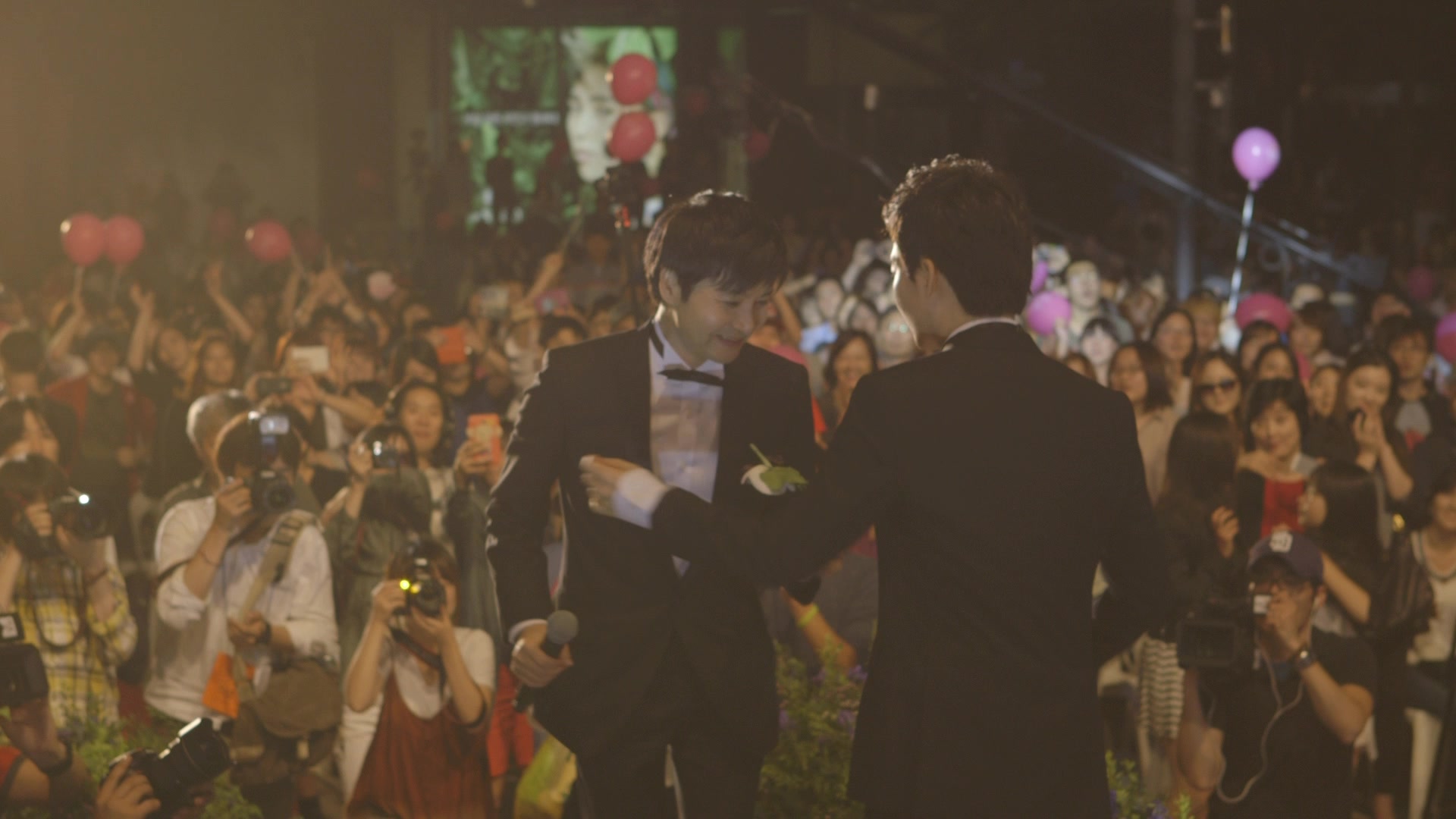
My Fair Wedding (마이 페어 웨딩) – director Jang Hee-seon (장희선)

My Fair Wedding (마이 페어 웨딩)

My Fair Wedding (마이 페어 웨딩)

With gay issues unfortunately still very much taboo in Korea, the wedding of two prominent CEO’s caused plenty of controversy when they tied the knot in 2013. In her third documentary director Jang follows the celebrations and conflicts, as well as the very vocal discrimination, that arise from having a gay wedding in contemporary Korea.

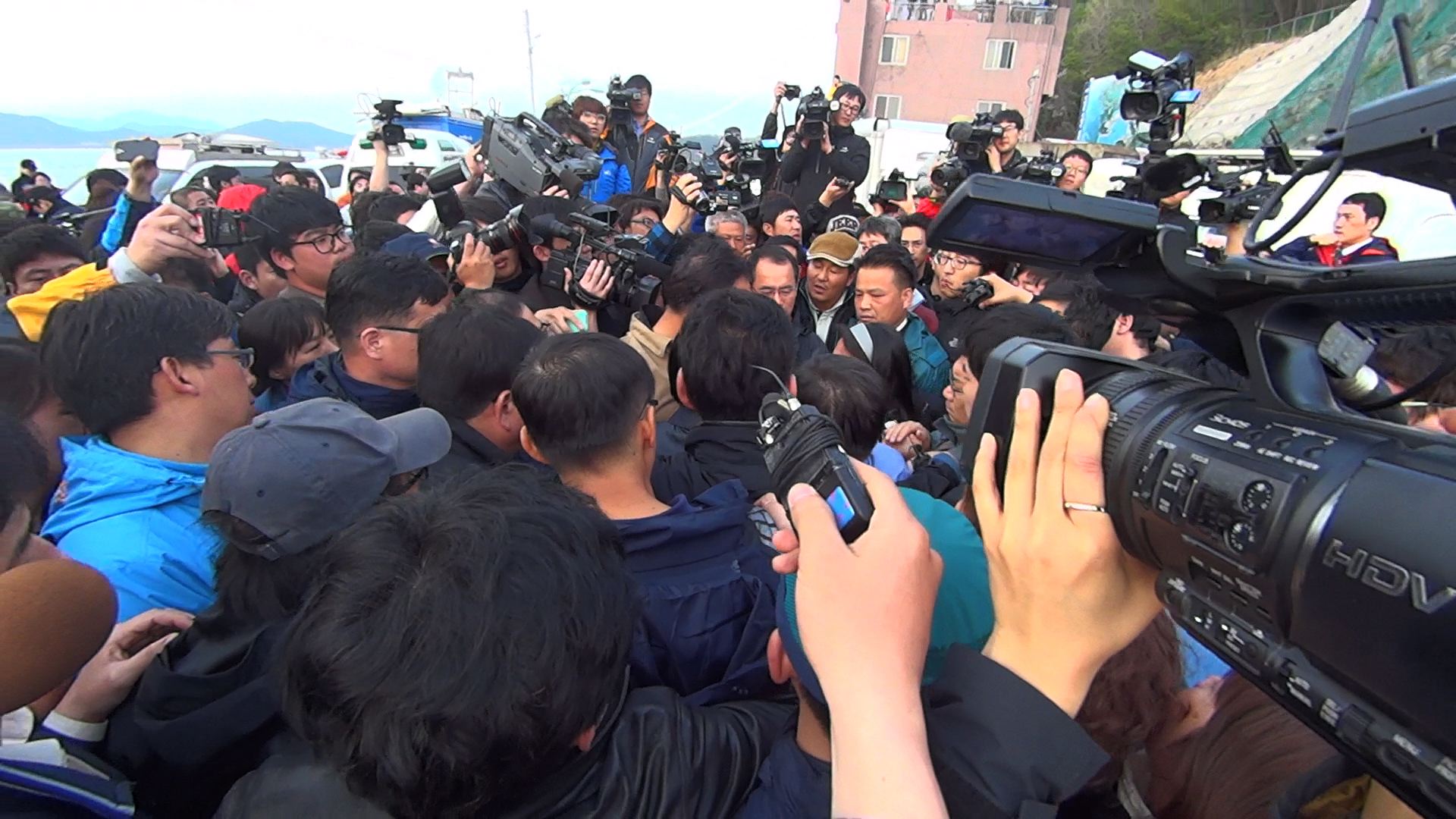
The Truth Shall Not Sink With Sewol (다이빙벨) – directors Lee Sang-ho (이상호) and Ahn Hye-ryong (안해령)

The Truth Shall Not Sink With Sewol (다이빙벨)

The Truth Shall Not Sink With Sewol (다이빙벨)

Aka Diving Bell, the film explores the largely failed recovery effort involved in the Sewol tragedy. Co-directed by journalist Lee and documentary filmmaker Ahn, they approach the controversies in an interrogative manner, and are particularly brave to do so given the clamp down on information and prosecution of those who attempt to uncover the truth.

Little Pond in Main Street (거리 속 작은 연못) – director Lee Kang-gil (이강길)

Little Pond in Main Street (거리 속 작은 연못)

Little Pond in Main Street (거리 속 작은 연못)

Street vendors in Korea are almost like a national institution, they are so widespread and relied upon. In Little Pond in Main Street a group of vendors band together to create a community radio station but come into conflict with other groups,as well as the government trying to shut them down.

Parallel (우리는 썰먜를 탄다) – director Kim Kay (김경만)

Parallel (우리는 썰먜를 탄다)

Parallel (우리는 썰먜를 탄다)

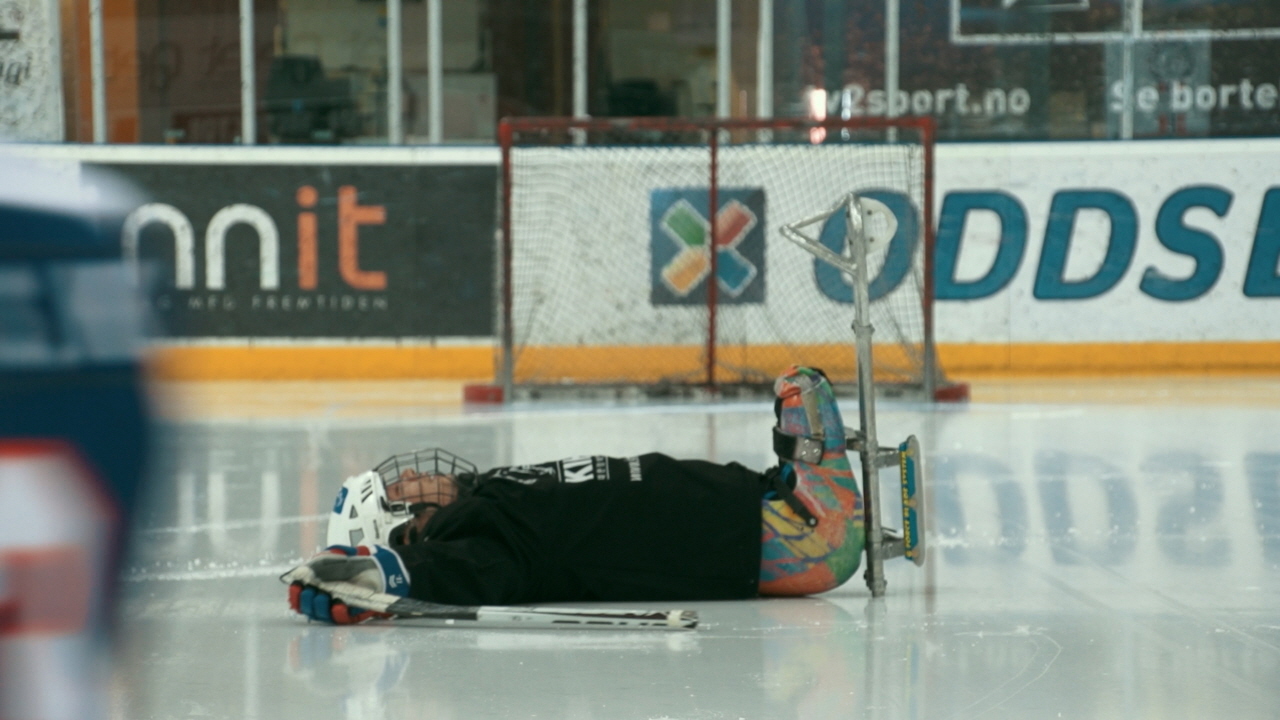
In production for 3 years, Parallel explores the lives of the Korean Paralympic ice hockey team. Despite the country having very little awareness that the team even exists, the athletes continue to train, work hard, and compete against other sporting nations. The film follows their turbulent lives as they strive to live their dreams.

Busan International Film Festival (제19회 부산국제영화제) Festival News Korean Festivals 2014

The 19th Busan International Film Festival Announces Line-up

The 19th Busan International Film Festival

The 19th Busan International Film Festival

The 19th Busan International Film Festival (BIFF), which runs from October 2nd (Thu) ~ 11th (Sat), has unveiled the line-up for its 2014 edition.

An impressive 314 films from 79 different countries will be screened during the event. Boasting an array of features from around the world, BIFF will also cast a spotlight on countries such as Iraq, Bangladesh and Lebanon, who have, in a cinematic sense, been somewhat overlooked in the past.

BIFF 2014 will also play host to some of Asia’s biggest films of the year. Chinese auteur Zhang Yimou once again teams up with actress Gong Li for Coming Home, which screened in Cannes earlier this year, in the Gala Presentation. Ann Hui’s highly anticipated period drama The Golden Era, starring Tang Wei, will also feature in the category, while director Hui herself will also be honored with a hand printing ceremony for her contributions to cinema. Meanwhile, A Window on Asian Cinema contains Diao Yinan’s Berlin Golden Bear winner Black Coal, Thin Ice, and the latest work from renowned directors including Takashi Miike’s Over Your Dead Body, Johnnie To’s Don’t Go Breaking My Heart 2, Peter Chan’s Dearest, and Sion Sono’s Tokyo Tribe, respectively.

The World Cinema program also features critically acclaimed work from prolific filmmakers not from Asia, such as David Cronenberg’s Maps to the Stars, Richard Linklater’s  highly championed 12 year project Boyhood, drama Two Days and One Night which had critics raving due to Marion Cotillard’s performance, Asia Argento’s Misunderstood, and UK directors are represented by Michael Winterbottom’s Face of an Angel and Ken Loach’s Jimmy’s Hall, amongst others.

Special Programs in Focus also serves to highlight the attention to diversity. The Power of Georgian Women Filmmakers includes the 1930 film A Story of Mountainous Racha (which was banned until 2013) alongside a host of contemporary offerings, as well as New Turkish Cinema: Faces of the 21st Century, in order to coincide with and celebrate the 100th anniversary of Turkish cinema.

Im Kwon-taek's 'Revivre'

Im Kwon-taek’s ‘Revivre’

Yet what of Korean film? BIFF 2014 features a quite staggering array of Korean film for the 19th installment, arguably more so than last year. Director Im Kwon-taek‘s 102nd film Revivre, featuring acting legend Ahn Sung-ki, appears in the Gala Presentation section, while in the Open Cinema category (which screens a movie in an outdoor cinema) drama Cart, about women who go on strike in a after receiving unfair dismissal, will be exhibited. The greatest surprise however lies in the Korean Cinema Today – Panorama program. All the big summer hits – Kundo: Age of the Rampant, The Admiral: Roaring Currents, Haemoo (Sea Fog) and The Pirates – all feature alongside July Jung’s acclaimed Cannes hit A Girl at my Door and the latest from auteurs Hong Sang-soo (Hill of Freedom) and Kim Ki-duk (One on One).

Classic Korean films will be celebrated through Korean Cinema Retrospective: Reminiscing the Timeless Filmmaker, Jung Jin-woo. The prolific director, who helmed over 50 films and produced around 110, will have 8 of his of his most famous works screened as well as being honoured with a hand-printing ceremony.

Opening Film

Paradise in Service

Paradise in Service

Paradise in Service

Taiwanese director Doze Chen-Zer Niu’s film is a wartime drama with a romantic/erotic twist. In 1969 a young conscript named Pao is sent to complete his military duties on the island of Kinmen, a notoriously dangerous place due to its proximity to China. Assigned to grueling physical training, Pao’s lack of ability leads to his superiors bestowing a new mission for the youngster, placing him in charge at Unit 831. Yet Unit 831 is actually military code for the brothels situated on the frontline of the war, used against China should they decide to attack. As Pao witnesses human rights abuses within the oppressive military system he struggles to retain his sanity, yet as he forms a relationship with Nini, one of the women who work at the brothel, his resolve to save his virginity for his girlfriend back home becomes tested.

Starring Ethan Juan and Wan Qian in the romantic lead roles, Paradise in Service is also produced by celebrated director/producer Hou Hsiao-Hsien. See below for the trailer.

For more information about the 19th Busan International Film Festival, including the full line-up of films to be screened, please click here to visit the official website.

Busan International Film Festival (제19회 부산국제영화제) Festival News Korean Festivals 2014