The Jechon International Music and Film Festival (제천국제음악영화제)
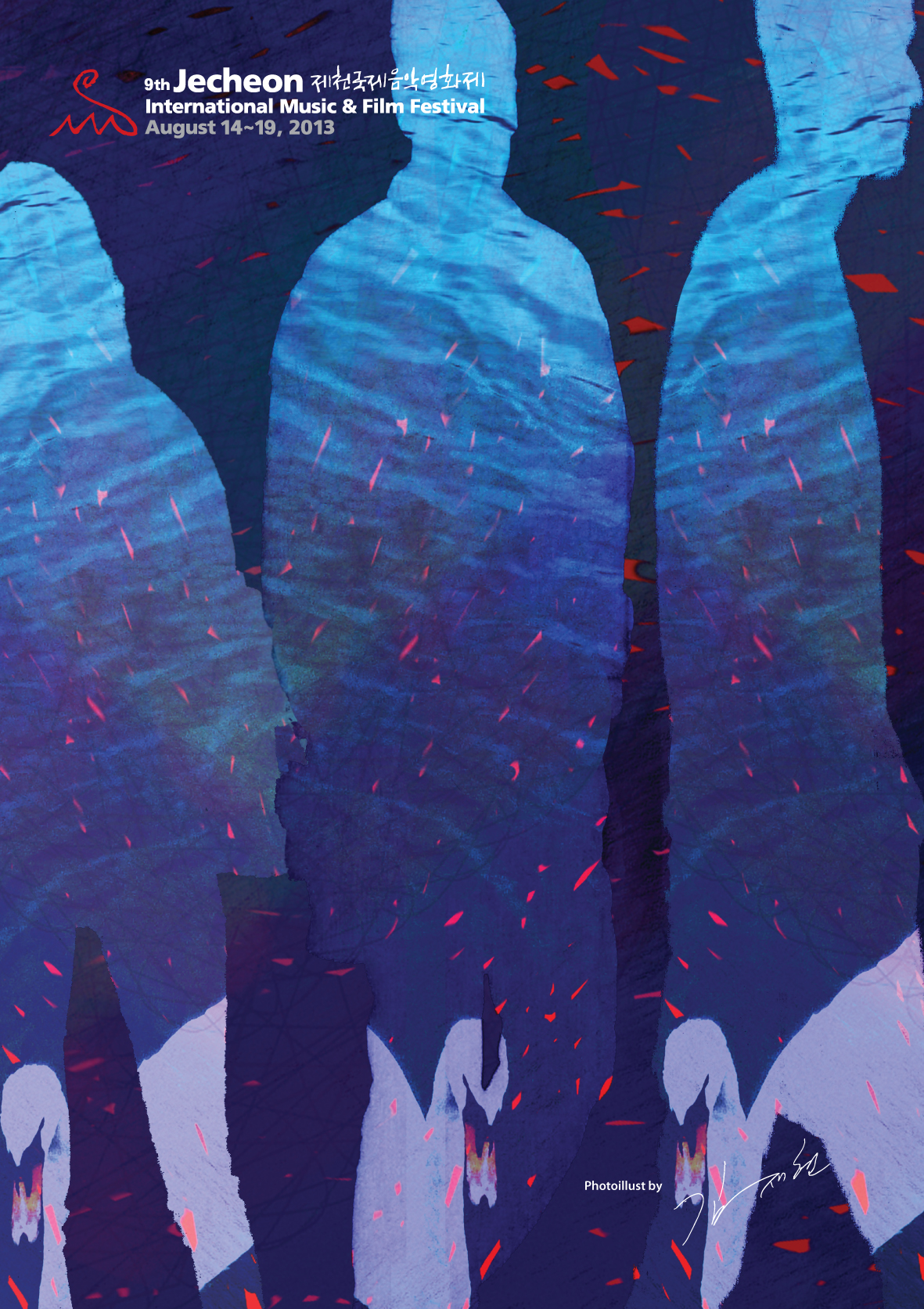
The Jechon International Music and Film Festival (제천국제음악영화제) is gearing up for its 9th installment, commencing on Wednesday the 14th of August and running through until Monday the 19th.
The city is famous for the picturesque Cheongpung Lake, which will host an outdoor theater as well as live musical performances on its shores.
Opening the festival at the Lakeside Stage will be French drama Pop Redemption by director Martin Le Gall. The film depicts the lives of four childhood friends who for the last eighteen years have been a part of metal band Dead Macabes. However as they approach their thirties life begins pulling them in different directions and their interest begins to wane. As a last ditch effort to save the band, member Alex signs them up for metal event ‘Hellfest’ but fate seems to transpire against them. Please see below for the trailer:
World Music Film Today
The international competition at JIMFF 2013 is entitled ‘World Music Film Today’ which features nine films from around the globe. The jury will consist of Korean director Lee Hwan-gyeong (이환경) (Miracle in Cell No.7), director/actress Koo Hye-seon (구혜선) (The Peach Tree), president of Zip Cinema Lee Yoo-jin, Japanese company Amuse Group chairman Yokichi Osato, and Polish festival director Krzysztof Gierat. (Source: The Chosun Ilbo)
Black Gospel (블랙가스펠)
Within the competition there is one Korean film, documentary Black Gospel (블랙가스펠) directed by hisMT Ministry (히즈엠티 선교회). The film follows the members of Korea’s only gospel choir as they travel to Harlem, New York to study music. But they quickly learn that they will have to raise their singing prowess to a whole new level if they want to compete at the gospel concert.
Director Bong Joon-ho‘s (봉준호) highly anticipated science-fiction epic Snowpiercer (설국열차) has been in some form of development since 2004 and, nearly a decade on and sporting a $40 million price tag, finally gets a release. Currently the most expensive Korean film ever produced, featuring an international cast, and with around 80% of the dialogue in English, the film represents quite a risk for CJ Entertainment. They need not worry however, as the futuristic thriller is a darkly brilliant and enthralling experience.
Based on the French comic book series Le Transperceneige, director Bong’s adaptation is a keen and intellectual exploration of humanity and the class system set within the confines of a train. Yet it is also a violent and visceral action thriller, as tensions boil over among the last vestiges of humanity with shocking brutality. While not perfect, as the lack of character development, often predictable twists, and unrefined CGI let the film down somewhat, Snowpiercer is still a veritable thrill ride and certainly one of the best films released so far this year – by Korea or Hollywood.
The class system on the train is kept in check by sinister matriach Mason
In the near-future, global warming has become such an issue that the governments of the world convene and agree to release a cooling agent into the atmosphere. The experiment is a colossal failure, as the attempt plunges the world into another ice age, killing all life on the planet. The last vestiges of humanity live onboard the perpetually moving train ‘Snowpiercer’, with the passengers designated by class; the affluent live in privilege in the front carriages, while the poverty-stricken live in the rear. Angry at the unfairness and squalid living conditions, Curtis (Chris Evans) – along with protege Edgar (Jamie Bell) and mentor Gilliam (John Hurt) – lead a revolution against sinister matriarch Mason (Tilda Swinton) in order to control the engine invented by Wilford (Ed Harris). Yet to do so they will need the help of security specialist Namgoong Minsu (Song Kang-ho (송강호) and daughter Yona (Ko Ah-seong (고아성) to unlock the gates.
Snowpiercer, arguably more than any of his prior films, reflects director Bong’s incredible visual and spatial prowess. Throwing the audience immediately into a period of revolution, director Bong conveys a world of dirt, squalor and confinement to wondrous effect. The dystopian arena is intensely claustrophobic and acutely portrayed as the camera weaves around the environment introducing the suppressed population, while the darkness removes any sense of hope. Such powerful atmospherics generate palpable tension as the corruption and hypocrisy of the class system are exposed, recalling classics such as Lang’s Metropolis (1927) as well as the contemporary economic situations in the west, which resonate deeply. Yet the real masterstroke of the clearly Marxist-inspired story lies in the journey to the engine. Each carriage door opened unveils a startling new layer of the hierarchy that leaves the revolutionaries – and audience – dumbfounded, and each is a triumph of design. Director Bong and production designer Ondrej Nekvasil have crafted unique and spectacularly bizarre worlds within each arena, from the sugary-sweet Disnified classroom through to a hellish costume party, each a stunning visual indictment of the social elite.
Each carriage within the train is stunningly realised and reveals a new level of the society
In bringing the worlds within Snowpiercer to life, the ensemble cast are terrific and perfectly suited for their allotted roles. Tilda Swinton stands out as she superbly channels Margaret Thatcher-esque conservatism into the character of Mason, while Alison Pill’s fanatical school teacher is great despite short screen time. On the Korean front Song Kang-ho is highly entertaining as junkie engineer Minsu, and is given some of the best in-jokes within the film particularly regarding untranslatable Korean curse words. Ko Ah-seong fares well as Minsu’s daughter Yona, although the story involving her character isn’t really given a chance to develop. Ultimately with so many quality performers within Snowpiercer there is little room for any character save Chris Evans’ Curtis to grow, however his subplot is predictable while speeches about the past would have provided greater impetus had they been shown and not told. As several narrative tangents are left unanswered, a director’s cut of the film would be a blessing indeed.
Yet this underdevelopment is primarily due to the breakneck speed in which the film advances. The whirlwind pace of Snowpiercer is simply incredible from start to finish as the revolutionaries battle to reach the front of the train, attempting to overcome the onslaught of obstacles and hostile environments they encounter as rapidly as possible. When things do slow down it is often detrimental to characters, forcing the audience to will them on further and as such the film is constantly engaging and compelling. Occasionally to reinforce the sense of speed, the train itself is portrayed speeding through the snow covered landscapes. While such scenes are wonderful in depicting urgency and momentum as well as global warming anxieties, they also highlight some quite unrefined computer imagery which detracts from their purpose.
However the sheer pace of Snowpiercer is astounding and, alongside the visually stunning and intellectual themes featured within, the sci-fi epic is a heart-pounding experience.
Snowpiercer plows through the snow covered landscapes
Verdict:
Based on the French comic book seriesLe Transperceneige, director Bong Joon-ho’sSnowpiercer is an enthralling viewing experience. The science-fiction epic about the last vestiges of humanity is a brilliant exploration of the unfairness of the class system, conveyed with stunning visual and spatial prowess throughout. The all-star international cast are perfectly suited for their roles, with Song Kang-ho and Ko Ah-seong also performing ably. The breakneck pace of the film results in little character development, yet when the themes, tensions and violence are so constantly riveting it is difficult to care. Simply put, Snowpiercer is a fantastic Korean sci-fi film.
Let Me Out (렛 미 아웃), an independent film about a precocious film student, is due to be released on August the 15th.
The filmmaking comedy received its debut at last year’s Puchon Fantastic Film Festival before appearing at Dallas, Hawaii, and other international film festivals respectively.
Written and directed by film teachers Kim Chang-rae (김창래) and So Jae-yeong (소재영), the story follows opinionated film student Mu-yeong (Kwon Hyeon-sang (권현상) who routinely criticizes the work of others but has yet to make any impact himself. Mu-yeong crosses the line however when he chides guest visitor and celebrated director Yang Ik-june for his films. Throwing down the gauntlet, director Yang bestows a cash prize upon the student forcing him to prove himself. Mu-yeong decides to film his zombie melodrama Let Me Out, but as he begins gathering his cast and crew including producer/best friend Yong-woon (Han Geun-sup (한근섭) and actress and love interest Ah-yeong (Park Hee-bon (박희본), he quickly discovers that making a film is far from easy.
Let Me Out will also be the first independent Korean film to be released simultaneously in Korea and the US, with Variety’s Richard Kuipers describing it as, “a highly entertaining comedy […] with an infectious let’s-put-on-a-show spirit.” (Variety)
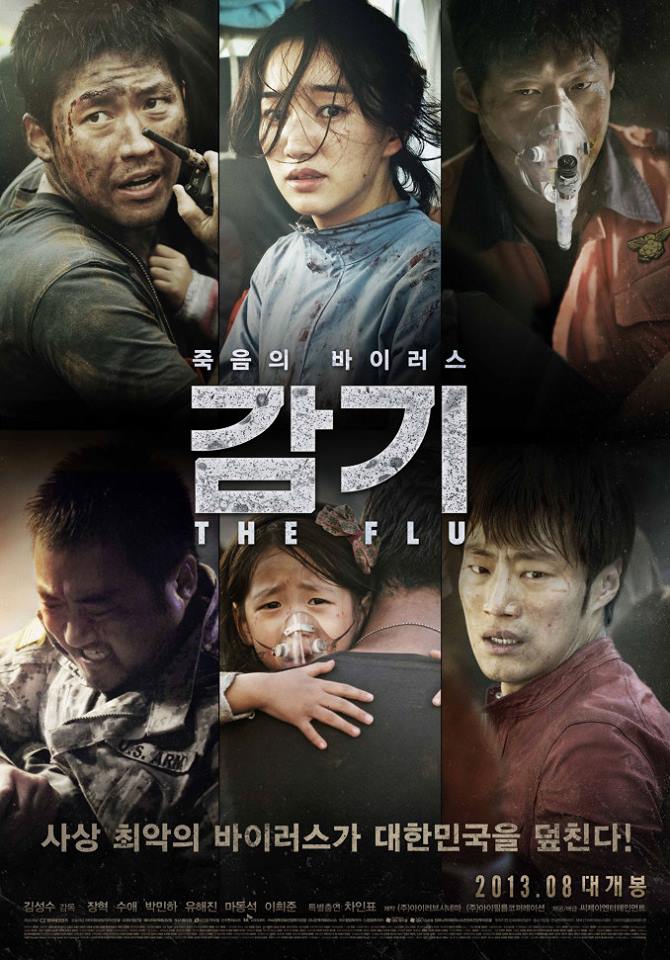
Due to be released on August the 15th, promotion for epidemic film The Flu (감기) is heating up.
When an unknown virus hits a city in Korea, the impact is disastrous. With an infection rate of 3.4 persons per second, the disease initially manifests as a skin rash before fatality occurs within 36 hours. Left with little choice the city is locked down and cordoned off, with the inhabitants placed into quarantine camps. Dr. Kim In-hae (Soo-ae (수애) desperately searches for a cure to halt the outbreak, especially as her daughter Mir (Park Min-ha (박민하), and the youngster’s guardian Kang Ji-goo (Jang Hyeok (장혁) are in danger of becoming infected.
The Flu appears to be a much more serious take on the subject than last year’s enjoyable B-movie Deranged (연가시), while the inclusion of quality actors certainly makes the film one to watch out for.
Please see below for the trailer (with English subtitles).
Also, please see below for a trailer introducing the characters within the film. There aren’t any English subtitles, but it features some great scenes from the film and it’s easy to distinguish the roles of the cast.
When it was released on February the 14th, How to Use Guys with Secret Tips (남자사용설명서) had the unenviable – and quite unfortunate – task of competing with several enormously popular films at the box office, in the form of Miracle in Room Number 7 and The Berlin File, which earned over 12 million and 7 million admissions respectively. A week later, gangster epic New World appeared in cinemas, hauling over 4 million admissions. Despite positive reviews from critics and audiences alike, the romantic-comedy just couldn’t compete.
This is a genuine shame as How to Use Guys with Secret Tips is an incredibly energetic, entertaining, and fresh rom-com. Director Lee Won-seok (이원석) infuses the film with a wacky and colourful sensibility, whilst simultaneously probing the sexism that exists within the workplace and, by extension, Korean culture. While the film turns to formulaic predictability in the final act to tie up all the loose ends, How to Use Guys with Secret Tips is visually enjoyable and great fun, marking director Lee as a talent to watch.
Choi Bo-na is constantly undervalued and overworked – until she finds the video
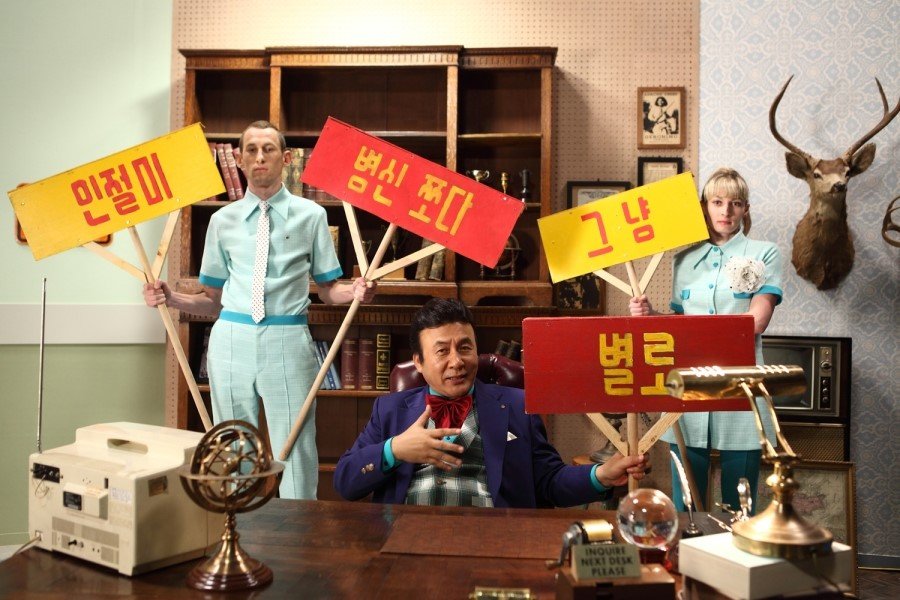
Assistant director Choi Bo-na (Lee Si-yeong (이시영) has worked for years in a TV commercial company, endlessly slaving away on other productions while waiting for her big break…which never arrives. Moreover, Bo-na is very aware that her gender is an issue within the workplace as it holds her back from progressing within the sexist industry. When a new commercial for the company is shot on a beach, lead actor Lee Seung-jae (Oh Jeong-se (오정세) complains about everything, and Bo-na’s frustrated attempts to chastise the arrogant star results in more disapproval. So much so in fact that when the commercial has finished shooting, the entire team leave the sleeping AD on the beach. Wandering alone at night, Bo-na spies the colourful Dr. Swalski (Park Yeong-gyoo (박영규) selling instructional videos. Reluctantly agreeing to buy How to Use Guys with Secret Tips, Bo-na starts putting the tips into practice and suddenly her life begins to turn around with hilarious results.
While the story of a woman struggling in both her professional and personal life is nothing new in the rom-com arena, director Lee infuses the film with such a whimsical visual and musical vitality that it’s impossible not to be won over. From the outset the director’s keen sense of mise-en-scene and flamboyantly playful use of text and image techniques are apparent, yet it is the introduction of charismatic Dr. Swalski that allows him to fully display his zany aesthetics. The doctor – brilliantly performed by Park Yeong-gyoo – is a guardian angel of sorts who bestows advice on how to manipulate men through the video. The cheesy and camp sensibilities of such ’70s style infomercials are lovingly recreated to hilarious effect, from the costumes and props through to the mistakes and bad editing. What makes Dr. Swalski special however is that he is not confined to the TV set. Director Lee constantly plays with and breaks the barriers between the three realities – the video, Bo-na’s life, and the audience – which makes the film incredibly charismatic.
Colourful Dr. Swalski provides the tips Bo-na needs to move ahead, to great comedic effect
The comedy hijinks that ensue as Bo-na uses the tips are fantastically entertaining as they feature elements of truth, in that director Lee is probing real gender issues that exist within contemporary Korean culture. Bo-na is a great and talented director, yet her gender halts her progress. Her attempts to conceal her femininity with hoodies and to be treated equally merely results in hiding her attractiveness, which stops men making allowances for her. However when Bo-na begins employing Dr, Swalski’s advice, the story spins into poking fun at modern masculinity to great effect. From simple eye contact through to massaging the male ego, Bo-na learns the simplicity of the opposite sex and rapidly rises through the ranks. This is articulated the most through her relationship with arrogant actor Lee Seung-jae who, despite his initial snobbery, finds himself in very comical situations in attempting to prove his worth.
Yet How to Use Guys with Secret Tips unfortunately flounders in the final act. With so many funny plot threads to tie up, the story falls back on the predictable cliches found in the genre to do so. The absence of director Lee’s playfulness is keenly apparent during the resolution which is a real shame, as the build up to that point is wonderfully entertaining. Still, while the finale is somewhat lacking, the film is certainly one of the most visually energetic and inventive romantic comedies to appear from Korea in recent memory, and a great debut from director Lee.
Can Bo-na find true love and success without using the tips?
Verdict:
How to Use Guys with Secret Tips is a wonderfully wacky and colourful romantic comedy, full of visual and musical vitality. Director Lee Won-seok is brilliantly inventive as he plays with genre and cinematic conventions, infusing the film with a seemingly boundless energy and enthusiasm. The laughs come thick and fast as they are based in truth, including sexism in the workplace and the fragility of the male ego, which are explored to highly comical effect. While the final act falls back on cliche and predictability, How to Use Guys with Secret Tips is a very entertaining and fun rom-com.
Secretly, Greatly (은밀하게 위대하게) is responsible for breaking several notable records in Korean cinematic history upon release. The film surpassed all expectations to earn the biggest opening day for a domestic film with 497,560 admissions; the following day another benchmark was set as it scored a whopping 919,035 admissions, the largest haul in a single day for a Korean film. With such an impressive start, it’s perhaps unsurprising that Secretly, Greatly took only 36 hours to pass the coveted one million admissions milestone, the fastest Korean film to do so. And to cap it all off, the film won the Citizen’s Choice Award at the 2013 Puchon International Film Festival.
With such incredible success it would be reasonable to assume that Secretly, Greatly must therefore be an outstanding piece of cinema, but unfortunately that is far from the truth. While it begins confidently, the film quickly becomes submerged beneath pointless supporting characters and melodrama, with the belated action sequences and nationalist agenda bland and uninspiring. Competently directed by Jang Cheol-soo (장철수) yet lacking in substance, Secretly, Greatly is ultimately only for fans of the original webcomic and the extremely handsome lead actors.
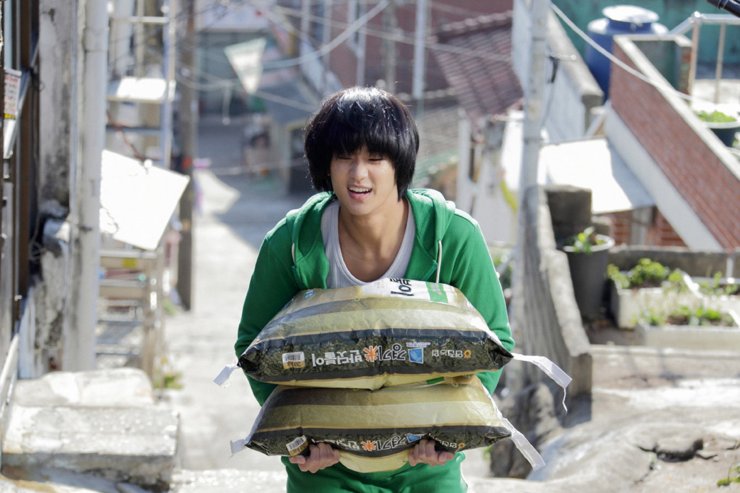
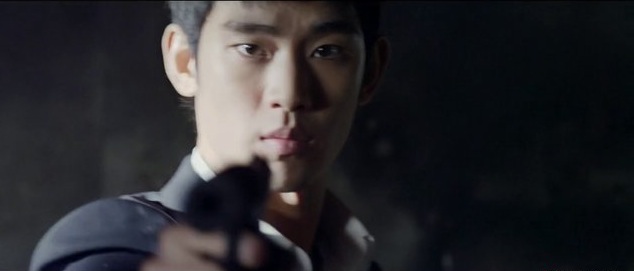
North Korean spy Ryu-hwan disguises himself as village idiot Dong-gu
North Korean soldier Won Ryu-hwan (Kim Soo-hyeon (김수현) has trained relentlessly to be the best in his unit, and his efforts have not gone unnoticed. His superiors give Ryu-hwan a mission – to infiltrate South Korea under the cover identity of Dong-gu, the mentally ill fool of a shanty town, and to await further instructions. Taking to his new identity with patriotism and verve, Ryu-hwan slowly becomes disillusioned as time passes and with no word from his homeland. Yet one day out of the blue rival Northern soldier Ri Hae-rang (Park Ki-woong (박기웅) shows up in the neighbourhood, sporting a wannabe rocker identity. Adding further distress, junior soldier Ri Hae-jin (Lee Hyun-woo (이현우) also appears as a high school student. Yet just as the former rivals begin to form a brotherhood, their country calls them into action but their hearts and minds pull them in different directions.
Secretly, Greatly begins well, as Ryu-hwan is given orders by a scarred and scary general on a dark and snowy desolate beach. The foreboding sense of danger is wonderfully and skillfully undermined as the film then cuts to his new identity as Dong-gu, and the harassment and ridicule he experiences from the local townspeople. The editing is superb during these scenes as everything Dong-gu does, from falling over to sneezing, is all meticulously planned but results in physical comedy, and is highly entertaining to watch. The humour derived from the great contrast is amusing, especially in watching Dong-gu being humiliated despite his impressive skill set.
Ryu-hwan is joined by two other top spies, who form an uneasy fraternity
Yet once the opening has passed, the film very quickly becomes incredibly tedious. In the attempt to show Ryu-hwan’s life is far removed from the glory he imagined, he is inundated with bland, everyday problems. Often these problems are not even his, but those of the local community. The variety of inhabitants that are introduced into the story are completely one-dimensional and serve no purpose other than to provide momentary distractions for Ryu-hwan. Cliches and stereotypes abound, featuring the struggling single mother, the high school bully, the sexy girl with a heart of gold, and so on. None of them are developed into interesting characters, and the sheer number of them halts any development of the main protagonists themselves. Rather, their inclusion instigates a number of short stories that offer brief instances of comedy and/or drama, before being completely forgettable.
Likewise, the addition of wannabe rocker Hae-rang is a wholly wasted opportunity to initiate rivalry and bring some kind of direction to the wandering narrative. Hae-jin fares much better upon entry to the community, instigating mystery and action which is welcome. Yet that too quickly disintegrates as the three forge an unlikely kinship at a community picnic, such is the excitement within the shanty town for the spies.
The aimless story finally shifts gears in the final act as a North Korean general begins a special protocol, forcing Secretly, Greatly back into becoming an action film. Yet for three supposedly top agents the action is very dull and lacking in thrills, while the additional melodrama doesn’t carry any weight. In attempting to please all factions of the audience with elements from all genres, Secretly, Greatly manages to ultimately satisfy no-one.
Finally employing his lethal skills, Ryu-hwan fights for justice
Verdict:
Secretly, Greatly is a record breaking film, although unfortunately that doesn’t mean that it’s of high quality. While competently directed by Jang Cheol-soo and with a fun opening, things quickly become tedious due to an array of one dimensional stereotypes that flit throughout the aimless narrative, while the drama and action are bland and uninspired. Secretly, Greatly’ssuccesses seems to be based on fans of the original comic strip stories and of handsome actors Kim Soo-hyeon, Park Ki-woong and Lee Hyun-woo, as there is little else to recommend.
Director Hong Sang-soo’s (홍상수) latest film Our Sunhi (우리 순희) has been invited to Switzerland’s prestigious Locarno International Film Festival, which is due to commence on the 7th of August.
The film tells the story of Sunhi (Jeong Yu-mi (정유미) who, after graduating with a degree in film, returns to university seeking a letter of recommendation from a professor in order to continue her studies in America. Yet Professor Choi (Kim Sang-joong (김상중) is not simply content to give the letter as he likes her, and attempts to give advice for Sunhi’s future. Complicating matters further, Sunhi meets two other men from her past – film director Moon-soo (Lee Seon-gyoon (이선균) and veteran filmmaker Jae-hak (Jeong Jae-yeong (정재영). As they enter her life once more all three men seemingly can’t control their liking of the young woman, and continue to hang around her acting as mentors.
Our Sunhi is director Hong’s 15th film, and will feature within the ‘Concorso Internazionale’ program of the festival, where it will also receive its world premiere. Please see below for the trailer, which also has English subtitles.
The Terror Live (더 테러 라이브) is a rare breed of Korean thriller. Featuring superstar Ha Jeong-woo (하정우), the film takes place almost entirely within a single room rather than racing against time around a city. As such it shares several tropes with Joel Schumacher’s Phone Booth, ramping up tension through the claustrophobic setting while simultaneously exposing the lead protagonist for past bad deeds.
Within the highly restrictive setting director Kim Byeong-woo (김병우) does an excellent job in generating suspense, while the critique of the highly competitive – and corrupt – world of the newsroom makes the thriller a surprisingly deep cultural examination. However, the film is let down by a lack of characterisation in regards to the central roles while the tension is often undermined by arguably unintentional comedy. Despite such shortcomings The Terror Live is a unique and interesting addition to the genre, and one which leaves audiences wondering about the villains in society after the credits have finished rolling.
Yeong-hwa is apathetic in his role as a radio show host
Recently divorced and demoted to a radio show host, Yoon Yeong-hwa (Ha Jeong-woo) couldn’t care less about his new role as he repeatedly offends callers with his brusque manner. However when one caller phones in and claims to have primed bombs on Mapo Bridge located near the station, Yeong-hwa scoffs – and moments later the bridge is in ruins. Seeing this as his chance to return to the spotlight as a TV news anchor, Yeong-hwa teams up with former manager Cha Dae-eun (Lee Kyeong-yeong (이경영), quickly setting up a newsroom and broadcasting the terrorists demands instead of reporting to the police. As the ratings skyrocket and other news agencies struggle to catch up, it quickly becomes apparent to Yeong-hwa that something is very, very wrong as the terrorist becomes increasingly fixated on him personally, intent on exposing his checkered past.
One of the great strengths of The Terror Live is in conveying the cutthroat manner executed by those in power and in the media. The thriller is one of the few films to tackle the issue of real news and the mediated news presented to society, capturing the seemingly inherent corruption and societal risks taken in the war for ratings. Within this framework Yeong-hwa – whose name literally means ‘movie’ – is very much at home and director Kim does a superb job in slowly drip-feeding character information throughout the narrative. From the outset Yeong-hwa is certainly in-keeping with other thriller anti-heroes as he thrives in the grey areas of morality, only coming to reconsider his position due to the threat of exposure. As such the anchorman must not only acquire, filter, and present the news to Korean society and outwit a terrorist on live television, but also fend off a damaging character assassination attempt and please his management. Juggling so many plot threads is consistently riveting viewing, as new dimensions to the case constantly challenge everything Yeong-hwa and the audience have come to learn, driving up suspense for a thrilling viewing experience.
Exploiting the opportunity to become a news anchor, Yeong-hwa begins to regret his decision
Ironically however the inclusion of so many plot threads is also one of The Terror Live‘s key flaws, as there is so much going on that character development is sacrificed. Ha Jeong-woo is a gifted actor and performs very competently, yet he is given little to work with as Yeong-hwa other than being a shrewd and morally ambiguous news anchor. The same criticism also applies to the terrorist, who clearly has strong motivation for his attacks but is a rather two-dimensional antagonist. Luckily director Kim’s highly kinetic camerawork keeps such issues at bay featuring a variety of techniques including crash-zooms and realism-inducing camera shaking as well as more traditional fare, while the rapid editing helps to ramp up the tension without ever becoming nauseating.
The suspense generated within the confines of the newsroom is very impressive, yet bizarrely there are often instances of unwarranted comedy that serve to completely undermine the tension. It is difficult to know if such moments are intentional or not. When Yeong-hwa struggles with a situation and begins swearing at his oppressors it is incredibly funny, although the straight faces within the film suggest otherwise. Once the comedy has passed however it’s back to business and the dramatics increase further, leading to a daring finale and a potent commentary on Korean politics and the media.
The conflict between the bid for ratings or stopping the terrorist put the team at odds
Verdict:
The Terror Live is a rare and highly interesting thriller. Within the confines of a newsroom director Kim Byeong-woo does an excellent job in escalating tension by featuring a variety of camerawork techniques, while the story regarding corruption within both Korean media and the government is a potent socio-cultural critique. While the lack of characterisation and (arguably unintentional) comedy undermines the suspense, there is more than enough on offer to provide an entertaining thrill-ride from start to finish.
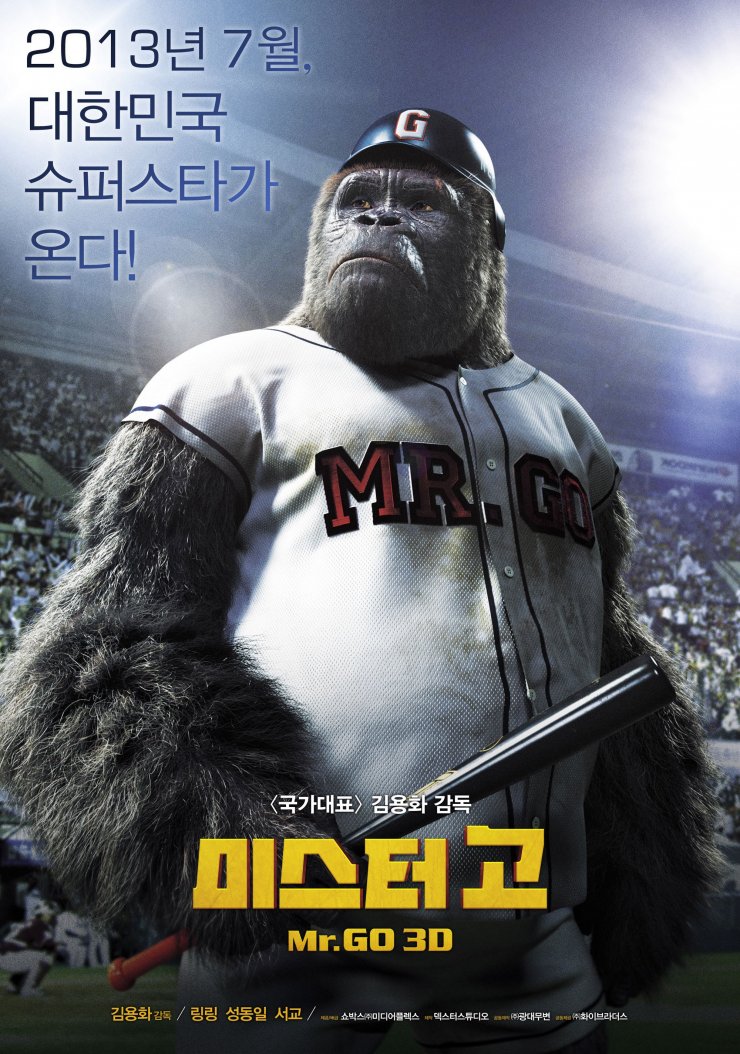
Much has been reported regarding Mr. Go‘s (미스터 고) production credentials. The $25 million film is jointly financed by Korea’s Showbox/Mediaplex alongside China’s Huayi Bros. Corporation, who invested around $6 million – quite a landmark in terms of scale. Furthermore Korean VFX team Dexter Digital – set up by writer/director Kim Yong-hwa (김용화) especially for the film – had the unenviable task of creating the titular gorilla onscreen, employing some 150 staff to painstakingly use their expertise for over 1000 shots. So with such an incredible production history, is Mr. Go worth the wait?
Visually speaking, very much so. Dexter Digital are to be congratulated for producing such incredible computer-generated imagery, which is certainly on par with recent Hollywood fare. Yet the family film stutters from beginning to end with an underwhelming narrative, one that fails to entertain both adults and children, and is crucially lacking in fun.
Gorilla Ling Ling and trainer Weiwei form a loving bond in the circus
Based on the popular ’80s comic The 7th Team by Heo Young-man, Mr. Go tells the story of a poor but happy circus family in China. The ringmaster is a keen baseball fan and terrible gambler, and as such teaches circus gorilla Ling Ling to play the sport whilst simultaneously accruing enormous debts with local gangsters. Yet Ling Ling is a gentle soul, and upon being introduced to baby Weiwei, the two grow up together developing an unspeakable bond. Disaster strikes during an earthquake however, as the ringmaster dies leaving his responsibilities – and his sizable debt – to 15 year old Weiwei (Jiao Xu). To pay off the gangsters, Weiwei and Ling Ling take up the offer of Korean sports agent Seong Choong-soo (Seong Dong-il (성동일) to play baseball for the ailing Doosan Bears in Seoul.
Mr. Go is very much a landmark in Korean cinema due to visual effects team, who have done a superb job in creating the fully computer-generated gorilla on the big screen. It was always something of an odd choice given Peter Jackson’s King Kong and Rupert Wyatt’s Rise of the Planet of the Apes are still in recent memory, yet Dexter Digital are to be congratulated for their work as they go toe-to-toe with Hollywood and emerge very respectably. There are even nods to such trains of thought as characters within the film mock each other with quips – a CEO chastises a helicopter team with, “Are they trying to make King Kong 2?” – playing to audience knowledge. While some of the body movements are atypical of big apes, it is wholly acceptable given that Ling Ling is playing baseball. Likewise the 3D is quite impressive as baseballs fly out of the screen while Ling Ling’s acrobatics are given extra potency, yet director Kim doesn’t include enough scenes to really justify the medium.
Ling Ling – now named ‘Mr. Go’ – becomes a baseball sensation in Korea
Yet while the visuals consistently impress, the story is incredibly bland. Ling Ling and Weiwei’s history is China is glossed over in a quick montage which is a real missed opportunity, in order to make way for the baseball scenes. However when the duo arrive in Korea, the baseball scenes themselves also succumb to the montage treatment which, while easily the highlight of the entire film, is another key area of development that is not explored. Instead the narrative focuses on the board room meetings and backstage politics of sports agents, managers and moneymen, which is incredibly dull. Such scenes also open up the problematic area in representing Korean, Chinese, and Japanese characters which has become an issue due to the highly complex histories and relationships. While the representatives of each nation are mocked somewhat equally, there is still a hierarchical structure on display – when a Chinese gangster interrupts a post-game meeting, the Korean CEO asks, “Did anyone order Chinese food?” – which has displeased audiences.
The focus also relegates Weiwei and Ling Ling to the background, and their absence is keenly felt. Yet ironically whenever they are on screen, they are often used merely as interesting visual devices rather than characters in their own right. Instead it’s only really Korean sports agent Seong Choong-soo who undergoes a transformation from shrewd businessman to kindly father-figure, force-fed through the inclusion of belated melodrama rather than genuine development.
That said, director Kim is a very competent filmmaker, and his direction throughout Mr. Go does nothing to change his reputation. Mr. Go is a solid effort, but one in which the story fails to live to visual magic.
Sports agent Seong Choong-soo changes from shrewd to kind thanks to Ling Ling and Weiwei
Verdict:
Mr. Gois a visual delight, and Dexter Digital have proven they can match Hollywood productions with their superb computer-generated expertise. Director Kim Yong-hwa captures the events as competently as ever, achieving the sense of awe that goes along with watching a gorilla play baseball. It’s a shame then that the story doesn’t match the visual prowess, bizarrely skipping over character development – particularly that of gorilla Ling Ling and trainer Weiwei – to focus on backstage baseball politics, which is a real bore. Visually impressive yet light on entertainment, Mr. Go is an unfortunate misfire.
The second in a series of quick-fire reviews from the 17th Puchon International Fantastic Film Festival:
The Act of Killing
The Act of Killing – 8/10
Unbelievably powerful, director Joshua Oppenheimer’s documentary follows the lives of a group of Indonesian gangsters who are wholly unrepentant about their role in the mass murders from the 1960s onwards. Oppenheimer does a superb job of combining the history and politics of Indonesia with the psychology of his subjects, in order to fully convey the attempts to justify the genocide and rape of those perceived to be ‘anti-communist.’ So resolute are the gangsters in their convictions that they attempt to make a movie about their past ‘heroism’, re-enacting the torture and murders from their youth. Yet as time passes the men, now elderly, slowly come to consider that perhaps their actions may not have been so patriotic after all. The documentary is a stunning and poignant character study which, while overly long, is an incredible achievement in showcasing the recent history of the country. Recommended.
Secretly, Greatly (은밀하게 위대하게)
Secretly, Greatly (은밀하게 위대하게) – 4/10
The achievements of director Jang Cheol-soo’s Secretly Greatly have long been publicized, as it broke several records in the opening few days. The reason for such success must surely be due to the fans of the original webtoon and the extremely handsome lead actors, for the film is not particularly good at all. Secretly Greatly does start well however with a enjoyable contrast between action and comedy conventions and continues through in introducing agent Dong-gu’s role in the community, yet from there it quickly slides into bland territory. While competently directed, the film suffers from a problem that effects a large number of Korean productions – in attempting to please everyone by including different genres and a host of characters, it ultimately satisfies no-one. However the huge financial success of the film should guarantee director Jang’s future projects, which will hopefully be more like his prior Bedevilled.
There is Light
There is Light – 7/10
Japanese director Toda Yukihiro shines a spotlight on the the plight of the disabled in There is Light. He does so in an interesting manner, as prostitute Saori visits and services a variety of disabled clients who rarely leave home, forming relationships with them as she hears their stories. Indeed, the tales of their disabilities are potent and moving as is the cultural attitude towards those with physical limitations. Yet Saori, despite her beauty, is also disabled in a different, more emotional way making the relationships that develop natural and sincere as well as a commentary on prostitution. The main issue with There is Light is that Saori’s character isn’t developed well as the audience learns precious little about her and as such is merely a device linking the disparate disabled protagonists, which is unfortunate and a missed opportunity. However the film is still an eye-opener on the difficulties of being disabled in Japan, and he insular lives that so many Japanese lead.
















 hangukyeonghwa.com