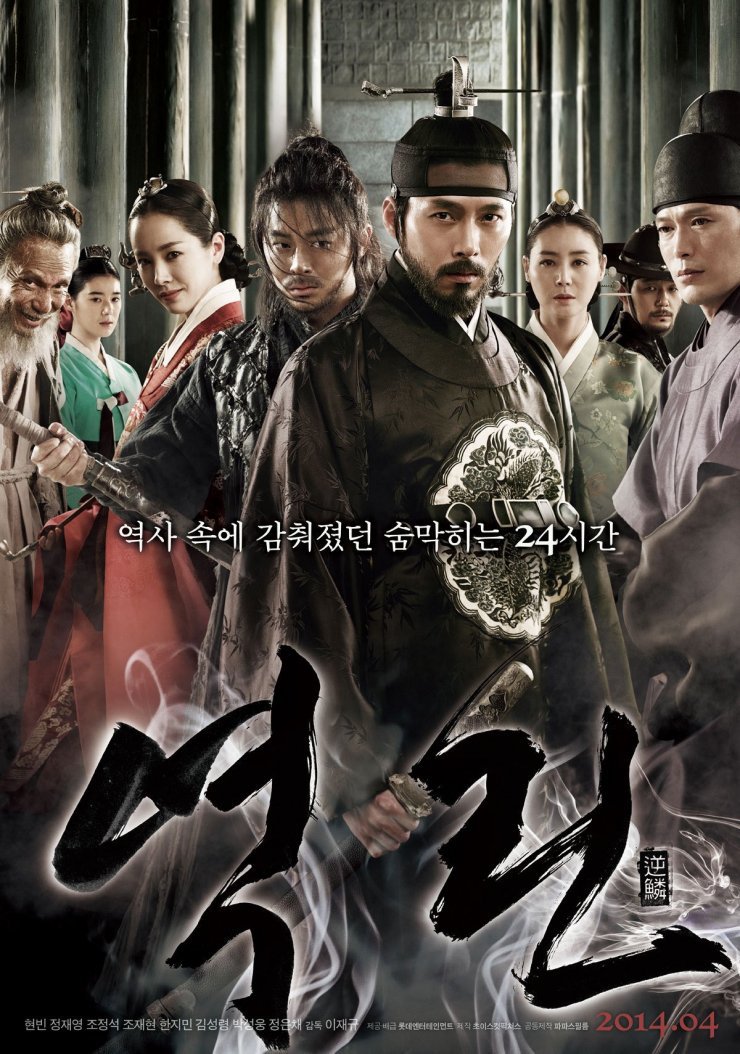
The Fatal Encounter (역린) – ★★★☆☆

The Fatal Encounter (역린)

The Fatal Encounter (역린)

The year is 1777. King Jeongjo (Hyeon Bin (현빈) has only been in power for a year yet has survived numerous assassination attempts, while the political machinations within the kingdom due to conflict with the rival Noron group has resulted in a tenuous grip on power. Paranoid and afraid, King Jeongjo retreats to a small study to protect himself and to find a resolution to the crisis, trusting only his eunuch servant Kap-soo (Jeong Jae-yeong (정재영). Unbeknownst to King Jeongjo, another attempt on his life will soon be made by a collusion between his young grandmother Queen Jeongsun (Han Ji-min (한지민) and Noron military General Goo Seon-bok (Song Yeong-chang (송영창). Yet the conspirators have also enlisted the services of an assassins guild led by Gwang-baek (Jo Jae-hyeon (조재현), who orders his best killer Eul-soo (Jo Jeong-seok (조정석) to carry out the task lest his girlfriend Wol-hye (Jeong Eun-chae (정은채) be killed instead. In the final 24 hours leading up to the attack, King Jeongjo must use every means at his disposal to save himself, his mother Lady Hyegyeong (Kim Seong-ryeong(김성령), and the very kingdom itself from the sinister coup.
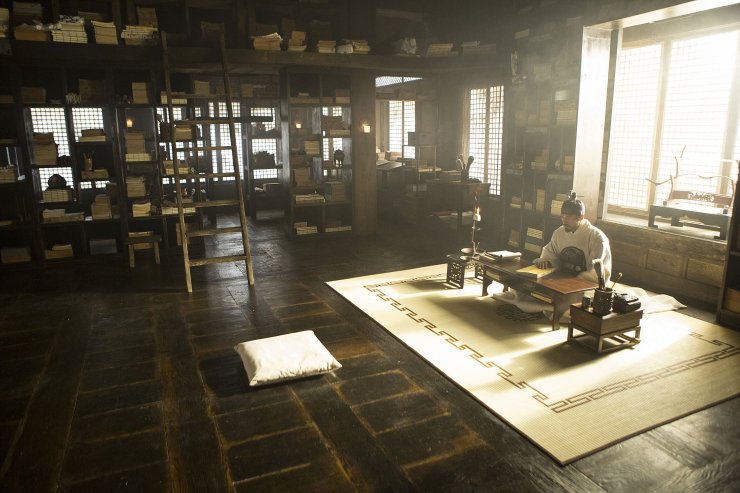
The paranoid King retreats to his secuded study to avoid assassination and to find a resolution for the internal political crisis

The paranoid King retreats to his secluded study to avoid assassination

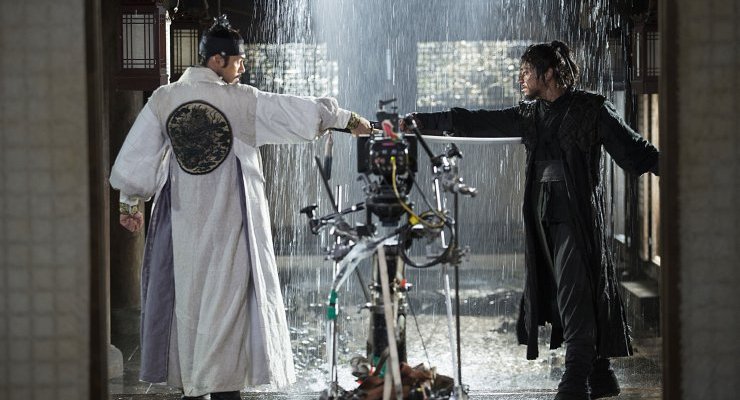
The Fatal Encounter (역린), also known as The King’s Wrath, is a visually impressive feature debut by director Lee Jae-gyoo (이재규), whose previous credits have largely applied to television dramas. Director Lee makes to leap to film with incredible confidence and fortitude, expertly constructing the ominous tone leading to the assassination attempt with beautifully realised composition and quite lovely cinematography. His prowess is often astonishing, ranging from scenes depicting a dark foreboding rain-soaked palace at night to stunningly colourful scenes in which the King’s clothes are dyed and worshipped; from ethereal shots on a lake during clandestine meetings to tense and sexually-charged confrontations between the King and his young grandmother. From beginning to end, The Fatal Encounter is a gorgeously attractive film.

Yet while the film is consistently visually engaging, unfortunately the same cannot be said for Choi Seong-hyeon’s (최성현) script which, while competently written, becomes weakened due to the overly-ambitious narrative juggling act and the vast number of characters within. Set in the 24 hours leading up to an assassination attempt, the narrative attempts to fill in the gaps of certain complex relationships and historical events by employing flashback sequences. This is itself is an effective storytelling device, however the great number of flashbacks utilised within the narrative structure proves a great distraction from the main tale of King Jeongjo’s efforts at securing stability within the kingdom, becoming subsumed beneath the weight of so much excess. With far too many protagonists and antagonists to cover, it’s difficult to invest in the King’s struggles, or to care that this could potentially be his final day on earth.
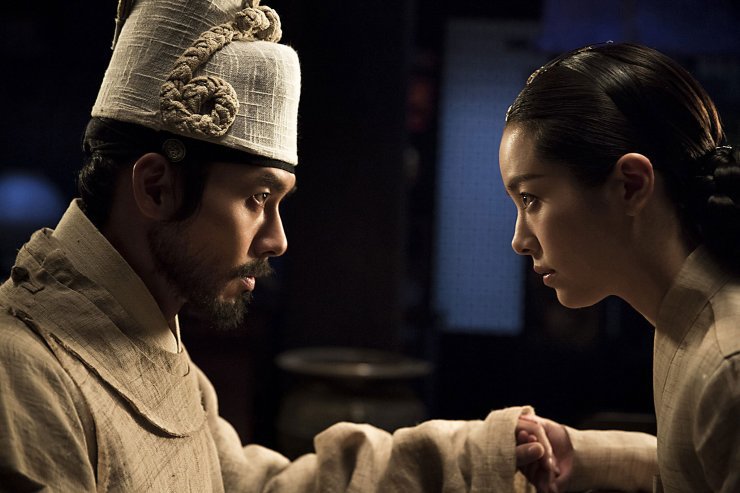
Scenes in which King Jeongjo confronts his grandmother are intense

Scenes in which King Jeongjo confronts his grandmother are intense

The Fatal Encounter features a stellar cast, headlined by superstar Hyeon Bin as the King. The actor is an imposing presence as the royal leader, conveying a restrained strength and stoicism that is expected of such a role. The stoicism does however occasionally veer towards blankness, while the absence of subtlety suggesting paranoia is something of a missed opportunity. Interestingly it is Jeong Jae-yeong who steals the limelight as devoted eunuch Kap-soo, as he impressively balances his unquestionable loyalty to the King with nuances suggesting disquiet as well as a range of emotional angst. The best moments of the film come from the interplay between the King and Kap-soo as their relationship is explored and develops into new territory.

For the myriad of other talents within The Fatal Encounter, their characters tend to be limited to one-dimensional stereotypes, yet the cast all perform competently. Han Ji-min is particularly impressive as femme fatale grandmother Queen Jeongsun, conveying an intense sexual energy in her scenes with King Jeongjo which she has clearly perfected from her similar characterisation in Detective K.

The abundant cast results in so many narrative strands and sub-plots, in multiple time streams no less, that The Fatal Encounter loses the sense of urgency required in making the countdown to assassination compelling. While director Lee excels in crafting a visually striking film, and in executing a kinetic action-filled finale well, the overly-ambitious narrative structure ultimately combines to make The Fatal Encounter a mediocre period piece.

The Fatal Encounter is consistently visually impressive

The Fatal Encounter is consistently visually impressive

Verdict:

The Fatal Encounter is a visually arresting feature film debut by Lee Jae-gyoo, who confidently and impressively constructs beautifully realised compositions of the ominous 1777 era. Yet the film loses agency due to the combination of an overly ambitious narrative structure in conjunction with an over abundance of characters, resulting in a very attractive period film that is difficult to invest in.

★★★☆☆

Busan International Film Festival (제19회 부산국제영화제) Festival News Korean Festivals 2014 Reviews

One on One (일대일) – ★★★☆☆

One on One (일대일)

One on One (일대일)

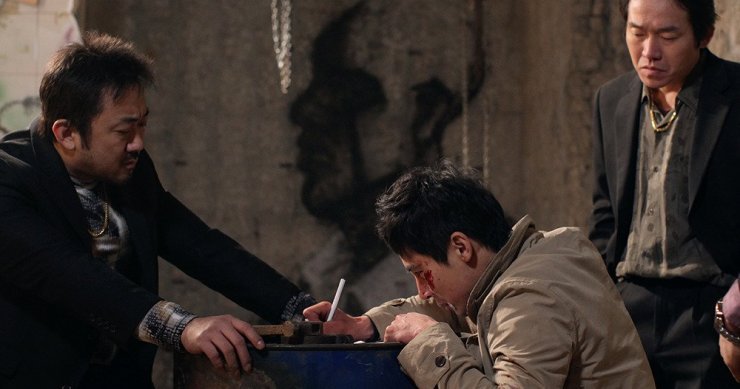
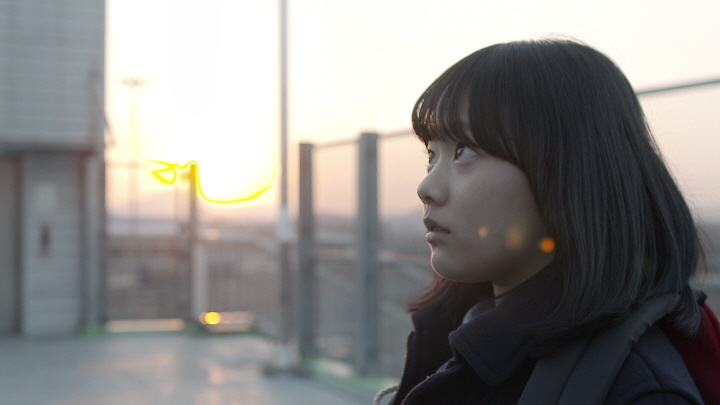
While walking home one night from school, a young girl is chased through the streets by a team of men and is brutally murdered. One year later, a mysterious team known as ‘the shadows’ arises. Led by a powerful leader (Ma Dong-seok (마동석) and his deputy (Ahn Ji-hye (안지혜), the shadows begin abducting seemingly random and successful men, demanding a written confession. If the abductees are unwilling, then various forms of torture soon remedy the situation. Yet when Oh Hyeon (Kim Yeong-min (김영민), the first victim to receive punishment from the shadows, begins trailing them, he is alarmed by what he uncovers.

The murder of a school girl begins a chain of torturous events

The murder of a school girl begins a chain of torturous events

One on One (일대일) is quite a refreshing change of pace for director Kim Ki-duk. His past few films, such as Moebius and Pieta, have arguably tended to focus more on excess and shock value rather than storytelling which, as a marketing tactic, has done wonders for his career and international exposure – awards. With One on One director Kim has returned to more traditional filmmaking fare by incorporating a linear narrative framework, while the story itself deals with individuals in the back alleys of Seoul who have fallen through the cracks of contemporary Korean society. Coupled with camera techniques reminiscent of his early works, director Kim has seemingly returned to his roots through this ‘raw’ tale of the circular nature of revenge.

Director Kim has always been a particularly divisive director, yet within his films his consistent desire to explore the social problems in Korea are always present and interesting. For many audiences it’s the manner in which he conveys such issues that raises alarm, however One on One is a much more toned-down affair than his previous efforts, less violent (both psychically and sexually) as well as less gratuitous, although it still contains his indelible stamp. Instead, director Kim allows his characters to express his societal concerns through the dialogue, quite a change of pace considering his tendency to focus his critiques through physicality.

The shadow group abduct and torture men for their criminal past

The shadow group abduct and torture men for their criminal past

Within One on One, the primary issue explored is one particularly unique to Korea – that in order to be successful, a junior must do whatever a senior demands, regardless of the ethics involved. Director Kim examines the socio-cultural phenomenon in an interesting, and ironic, fashion, as ‘the shadows’ simultaneously attempt to take revenge against those who were carrying out orders, yet following those of their leader in order to do so. The narrative impressively links all the characters together through their sense of ‘Han’ (suffering), depicting them all as victims of a cultural system that demands success at any cost, regardless of their wealth and social status. For the shadows, each member has been wronged in a manner that has forced them into poverty, whether by greedy landowners, oppressive spouses, or even the Korean education system. In regards to those comprising the social elite, their very souls have been tainted by what they have undertaken, turning them into fascistic monsters.

However while the film explores some very complex social features – issues that have risen to prominence following the Sewol ferry disaster – the narrative is incredibly overambitious. In scrutinizing such a vast array of issues the result is a rather superficial examination of each area, whereby the suffering of each shadow member is only glimpsed. As such it’s difficult to become wholeheartedly invested in their plight as well as the moral quandary arising from taking revenge. Also contributing significantly to the lack of empathy is the poor dialogue, which at times is quite naïve and simplistic, especially during the scenes spoken in English. Similarly, while Ma Dong-seok provides a powerful performance, and to a lesser extent (boy and girl), the supporting cast range from mediocre to poor which adds to the apathy.

The confessions procured reveal the nature of obeying orders at any cost

The confessions procured reveal the nature of obeying orders at any cost

Verdict:

One on One is something of a refreshing film by director Kim Ki-duk. In focusing on social issues through a traditional narrative framework, and in conjunction with rather ‘raw’ camera techniques, director Kim has crafted an interesting examination that removes the excess of his prior films. However as One on One is overly ambitious as well as containing poor dialogue, the film is difficult to fully invest in, and as such is an intriguing yet flawed addition to his filmography.

★★★☆☆
Busan International Film Festival (제19회 부산국제영화제) Festival News Korean Festivals 2014 Reviews

Thread of Lies (우아한 거짓말) – ★★★★☆

Thread of Lies (우아한 거짓말)

Thread of Lies (우아한 거짓말)

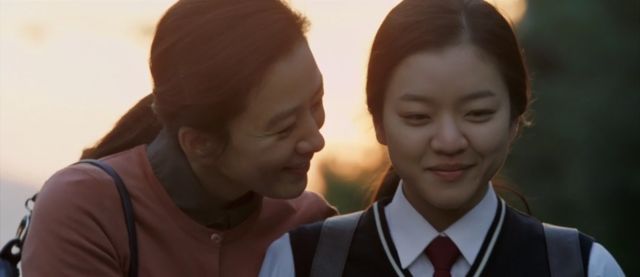
Life is good for single mother Hyeon-sook (Kim Hee-ae (김희애) and her two teenage daughters Man-ji (Ko Ah-seong (고아성) and Cheon-ji (Kim Hyang-ki (김향기). Despite the financial hardships of living in a single parent household, the three are like any other typical family. That is, until the day Cheon-ji commits suicide. Devastated by the loss, Hyeon-sook and Man-ji move to a new home and attempt to start afresh. Yet as Man-ji begins to think more and more about her younger sister’s death, as well as the lack of a suicide note, she becomes driven to find the cause behind Cheon-ji’s suffering. As she  questions those close to Cheon-ji, including best friends Hwa-yeon (Kim Yoo-jeong (김유정) and Mi-ran (Yoo Yeon-mi (유연미), Man-ji starts to unravel the elegant lies involved and begins to understand that she may not have known her younger sister as well as she previously thought.

The family are devastated from Cheon-ji (center) commits suicide

The family are devastated from Cheon-ji (center) commits suicide

Thread of Lies (우아한 거짓말) – or directly translated as ‘Elegant Lies’ – is a powerfully compelling and tender family drama by director Lee Han (이한) and screenwriter Lee Sook-yeon (이숙연). It is a well-documented fact that the suicide rate in Korea is the highest amongst the countries in the OECD – and in particular it’s the leading cause of death amid the younger generations – yet while several films have explored the issue from the perspective of those suffering from depression, Thread of Lies approaches the topic quite differently. By exploring the situation from the view of a family struggling to come to terms with loss, the film effectively captures not only the trauma and guilt generated by losing a loved one to suicide but notably how it’s possible to live with someone and not truly know who they are. Director Lee beautifully conveys the complexity of emotions and relationships in the aftermath of loss with acute sincerity, while also subtly intertwining a critique on the notion of pretense in Korean society. Falsity is presented through a heartbreaking scene in which Cheon-ji arrives late to a birthday party and is bullied on kakao messenger service, within her view and by people claiming to be her friends, and is superbly contrasted with a scene depicting her mother being forced to practice customer service and etiquette at a supermarket. Thread of Lies examines the various ways in which people in contemporary Korea are forced to subsume their true emotions for socially acceptable ones, yet director Lee also superbly manages to balance such weighty material with tasteful light-hearted comedy, infusing the story with positivity and hope as well as tender poignancy .

Cheon-ji is bullied by her entire class, yet keeps her suffering to herself

Outcast Cheon-ji is bullied by her entire class, yet keeps her suffering to herself

Thread of Lies is in many ways an examination of guilt, and the lies told in order to assuage it. Older sister Man-ji is cool to the point of arrogant, yet in her quest to discover Cheon-ji’s motivations she uncovers a web of depression, pain, and half-truths that fundamentally change her, and as such her development into a more mature and aware young woman is a deeply affecting journey. The conversations Man-ji has with Cheon-ji’s classmates Hwa-yeon and Mi-ran are incredibly illuminating, as the young girls reveal a history of bullying and psychological abuse yet desperately remove any notion of their role in the lead up to the suicide. Their interactions are brilliantly contrasted with the truth via flashback scenes depicting the events as they occurred, revealing the full impact of wrongdoing on the young and sensitive Cheon-ji. Director Lee effectively employs such moments to reveal that blame lies not with one singular person, but with a large number of people who are all culpable in the build-up to suicide as they thoughtlessly mistreat those around them. As such, Thread of Lies is a socially-conscious, poignant and sincere examination of a timely issue, and is an exemplary piece of filmmaking.

Man-ji and her mother learn to cope with the loss after discovering the truth

Man-ji and her mother learn to cope with the loss after discovering the truth

Verdict:

Thread of Lies is a powerful and compelling family drama that deals with the aftermath of suicide. Director Lee Han captures the complex emotional and relationship issues within Lee Sook-yeon’s script with sincerity and tenderness, as Man-ji attempts to understand her younger sister’s death. Featuring an exemplary examination of the guilt and lies associated with suicide, and cultural existence of pretense within contemporary Korean society, Thread of Lies is a fascinating and empowering exploration of a timely issue.

★★★★☆

Busan International Film Festival (제19회 부산국제영화제) Festival News Korean Festivals 2014 Reviews

A Matter of Interpretation (꿈보다 해몽) – ★★★☆☆

A Matter of Interpretation (꿈보다 해몽)

A Matter of Interpretation (꿈보다 해몽)

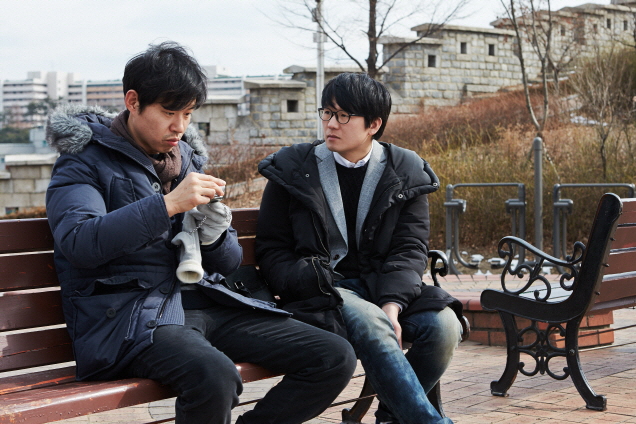
Frustrated that her acting career isn’t progressing in the manner she hoped, Yeon-shin (Shin Dong-mi (신동미) decides to quit the profession and walks out on her director. Her anger is such that she fights with old friends and in a moment of unbridled immaturity, breaks up with long term boyfriend Woo-yeon (Kim Kang-hyeon (김강현). Time passes and Yeon-shin, feeling sorry for herself, visits a hilltop to gather her thoughts where she encounters an unorthodox detective (Yu Joon-sang (유준상) with a talent for interpreting dreams.

A Matter of Interpretation (꿈보다 해몽)

Seeking solace, actress Yeon-shin comes across an odd but charismatic dream interpreter

A Matter of Interpretation (꿈보다 해몽) is perhaps best described as a quirky, surreal comedy-drama with Hong Sang-soo-esque stylisation, which makes sense considering writer/director Lee Kwang-kuk (이광국) worked with the auteur as an assistant director on several of his films. Through the incorporation of witty conversations and humourous encounters however director Lee has made A Matter of Interpretation arguably more accessible for audiences, which should appease critics of Hong’s work.

His second feature following the acclaimed Romance Joe, director Lee’s A Matter of Interpretation is a highly enjoyable affair and one that rewards repeated viewings due to the nature of the narrative. The story chronicles the fraught lives and relationships of the central characters yet focuses primarily on how such issues present themselves through dreams, and watching the reenactments unfold is a consistently surreal and entertaining experience. Yet rather than a Freudian analysis, director Lee attempts to interrogate the notions of life and happiness within contemporary Korea through symbolism, touching on a range of social issues with wit and ingenuity in the dream-like spaces within the film.

The enigmatic detective attempts to interpret Woo-yeon's dream

The enigmatic detective attempts to interpret Woo-yeon’s dream

Central to the enjoyment are the fascinating assortment of characters, particularly the wonderful acting and comedic timing by lead actress Shin Dong-mi. Shin is superb as sassy frustrated performer Yeon-shin, with her sharp-tongued insults and bad-temper consistently funny as well revealing her own subconscious issues. She portrays Yeon-shin’s trajectory extremely well, which along with that of her boyfriend, form a genuine and insightful examination of couples who reach a certain period in their lives. Meanwhile frequent Hong Sang-soo collaborator Yu Joon-sang brings expert timing and a charismatic aloofness to the film as the detective. His delivery of dialogue, notably his dream interpretations, are engaging and humourous yet he also manages to convey a sense of tragedy to the character, adding complexity to a role that could have been bland in lesser hands.

Yet for all of the enjoyable and interesting moments throughout A Matter of Interpretation, the film suffers from an inconsistent tone and fragmented narrative that ultimately leads to a story that fades in and out of being compelling. Such issues arise when focus is directed away from Yeon-shin towards the detective’s and, to a lesser extent, Woo-yeon’s dreams and backstories. From the very beginning it is Yeon-shin who is the fascinating central character who has huge potential for growth, such is Shin Dong-mi’s performance, and in ascribing time to those around her Yeon-shin’s development becomes subsumed. That’s not to say that the cast are dull as they are consistently entertaining, however the fragmentation between the characters, the stories, and between reality and dreams itself results in a film that, while very enjoyable, lacks the potency it would have had through more engagement with Yeon-shin.

Yeon-shin achieves a moment of clarity following the interpretation of her dream

Yeon-shin achieves a moment of clarity following the interpretation of her dream

Verdict:

A Matter of Interpretation is a wonderfully quirky and highly enjoyable second feature from writer/director Lee Kwang-kuk. The influences from his mentor Hong Sang-soo are clearly apparent yet Lee infuses his film with an alternative sense of biting wit alongside comedic – and often somewhat surreal – socio-cultural insight. Actress Shin Dong-mi shines as central protagonist Yeon-shin, while Yu Joon-sang is wonderfully charismatic as the odd detective. The film does suffer due to the fragmented narrative and inconsistent tone, yet A Matter of Interpretation is an entertaining take on modern happiness.

★★★☆☆

Busan International Film Festival (제19회 부산국제영화제) Festival News Korean Festivals 2014 Reviews

Daughter (다우더) – ★★★☆☆
Daughter (다우더)

Daughter (다우더)

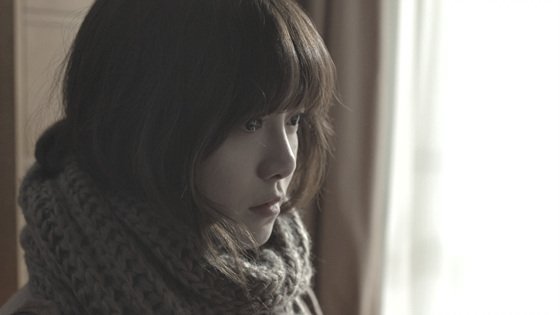
When San-e (Koo Hye-seon (구혜선) discovers that she is pregnant, what should be happy news sends her into a serious emotional breakdown despite her boyfriend Jin-woo’s (Lee Hae-woo (이해우) best efforts to comfort her. San-e’s newfound pregnancy forces her to revisit the trauma of her past, of living with an extremely strict, highly religious mother (Shim Hye-jin (심혜진) who controlled every facet of her young life and who violently punished her if she disobeyed the rules. As San-e remembers the emotional and physical anguish she endured as a young girl (Hyeon Seung-min (현승민) she also attempts to reconcile her issues in the present, for the sake of her unborn child and her own sanity.

San-e's pregnancy sparks a resurgence of long-repressed psychological trauma

San-e’s pregnancy sparks a resurgence of long-repressed psychological trauma

Daughter (다우더) is a powerful and emotionally charged drama of child abuse by writer/director/actress Koo Hye-seon, one that is acutely timely given the prominence of the issue in contemporary Korean society and media. Daughter is a particularly impressive outing for director Koo who effectively juggles the non-linear narrative between San-e as she suffers horrific physical and emotion trauma as a youngster, with that of her as an adult coping with the psychological afflictions later in life, with both stories evolving with a palpable sincerity. Each area poignantly explores trauma from multiple angles, whether it be young San-e’s physical punishments for failing to be perfect on a test through to the psychological and emotional abuse she endures on a daily basis, while the ramifications of such an ordeal are more subtly conveyed through adult San-e’s fashion and demeanor. Director Koo also employs particularly effective use of colour, focus and lighting in portraying San-e’s complex psychological states that add a tragic beauty to her story, depicting a potent portrayal of a vulnerable yet strong young woman scared of motherhood.

As a youngster San-e experiences aborrent phsyical, emotional and psychological abuse from her mother

As a youngster San-e experiences aborrent phsyical, emotional and psychological abuse from her mother

Yet Daughter is also a keen examination of the complex emotions involved in having an overbearing mother. While the devoutly religious mother is controlling, abusive, and vicious – as well as clearly psychologically deranged – there is the constant sense that she is misguidedly attempting to perform her motherly duties in the best manner she can. Indeed, the film is bookended by a poem that simultaneously declares the love/hate relationship felt with mothers in that there is an appreciation for her sacrifices and an emotional need for her love, yet it is one plagued by frustration and anger. Such sensibilities are acutely Korean in nature, and are transposed on screen as adult San-e reluctantly attempts to achieve a reconciliation that she knows will never come. Such scenes however are puzzlingly fleeting, as at a rather short 84 minutes long the film would certainly have benefitted from greater exploration of this key issue.

Ultimately, such a criticism also leads to the film’s greatest flaw. While Daughter is a poignant and effective drama, the short running time focuses more on the dramatic events in young San-e’s life at the expense of more subtle, character-driven moments, and as such audiences empathise with her situation more through pity than anything else. This also applies with adult San-e, as while her character is conveyed well through the mise-en-scene key moments in her evolution as a victim of abuse and as a pregnant woman are curiously absent. With the quite brief running time of 84 minutes there is certainly more room for such character examinations and development which, if included, would have undoubtedly elevated Daughter into the upper echelons of the genre.

As time passes, young San-e begins to realise a better life awaits her

As time passes, young San-e begins to realise a better life awaits her

Verdict:

Daughter is an impressive and emotionally charged drama by writer/director/actress Koo Hye-seon. In focusing on the timely issues of child abuse through a non-linear narrative, director Koo explores the physical, psychological and emotional trauma from multiple angles with poignant sincerity, as well as examining the love/hate relationship with strict, overbearing mothers. At a brief running time of 84 minutes the film would have benefitted from more subtle, character driven moments, yet Daughter is nevertheless a powerful tribute to victims of domestic abuse.

★★★☆☆
Busan International Film Festival (제19회 부산국제영화제) Festival News Korean Festivals 2014 Reviews

Venus Talk (관능의 법칙) – ★★★☆☆
Venus Talk (관능의 법칙)

Venus Talk (관능의 법칙)

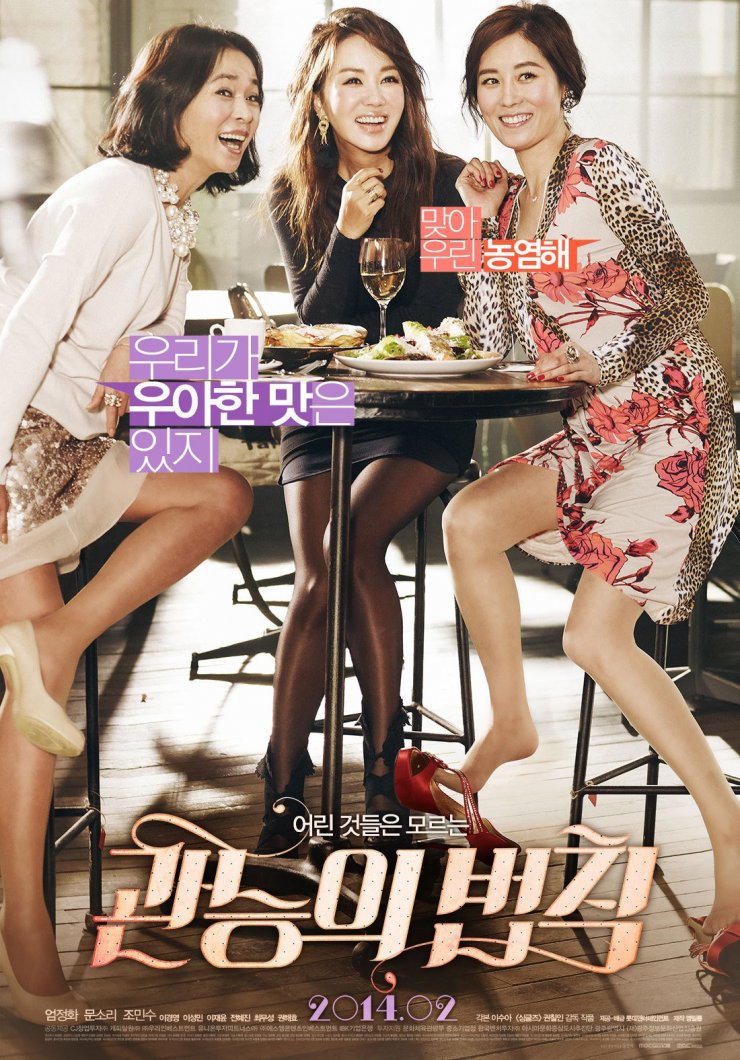
Three successful best friends explore love, life and sex in the city in Venus Talk (관능의 법칙). Glamorous TV producer Sin-hye (Uhm Jung-hwa (엄정화), dumped by her cheating boyfriend, begins a relationship with young 20-something intern Hyeon-seung (Lee Jae-yoon (이재윤). Housewife Mi-yeon (Moon So-ri (문소리) has an incredibly high libido and loves to play sexual games with her husband Jae-ho (Lee Sung-min (이성민), yet unbeknownst to her he is secretly taking viagra to keep up with her demands. Bakery store owner and single mother Hae-yong (Jo Min-soo (조민수) is dating local carpenter Seong-jae (Lee Kyeong-yeong (이경영) who is reluctant to commit to a serious relationship. The three women talk, laugh and support each other through the minefield of dating as middle-aged women, strengthening their bonds of friendship with their frank discussions of love and sex.

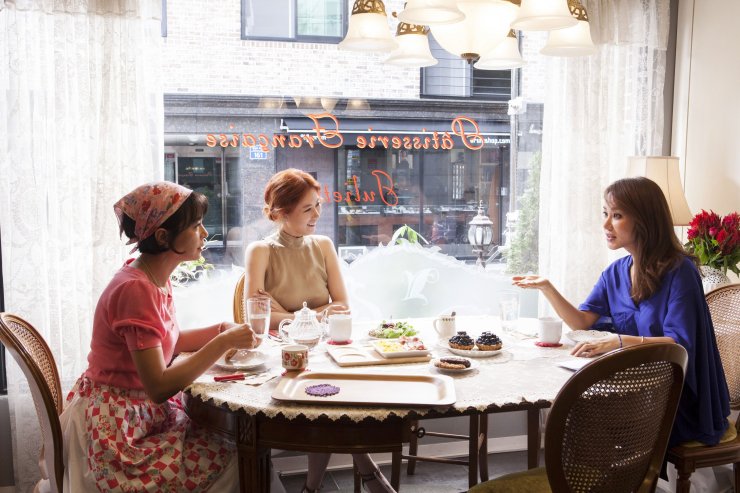
Hae-yeong, Mi-yeon and Sin-hye regularly have frank conversations about their love and sex life

Hae-yeong, Mi-yeon and Sin-hye regularly have funny and frank conversations about their love and sex life

Venus Talk sells itself as the Korean answer to Sex and the City, and for the opening 20~30 minutes that is very much true. The forthright manner in which sex and relationships are explored is an extremely refreshing and welcome change from the filmic roles typically ascribed to Korean women, with the comedy derived from their open discussions genuinely engaging as well as entertaining. Writer Lee Soo-ah’s (이수아) script is great in capturing the spirit of three independent and empowered women who do not function solely as love interests, but who have aspirations, responsibilities and desires, the kind of women who tend to rarely enjoy screentime in mainstream Korean cinema. Single TV producer Sin-hye is a career savvy, hard working women of particular repute, and her dilemmas regarding her relationship with a 20-something junior are consistently funny as well as exposing the ageism that exists within Korean culture. Meanwhile single mother Hae-yeong contends with dating, motherhood and running a business, and highly sexed Mi-yeon strives to introduce exciting sex games to keep the passion alive in her marriage. Often such characters are reduced to stereotypes and/or ‘contained’ by the narrative, yet in the opening 20~30 minutes of Venus Talk the women express their desires, sexual or otherwise, freely to each and without fear of judgement, with the depictions of their sexual antics both funny and endearing.

The sexual antics of the three friends are funny and endearing

The sexual antics of the three friends are funny and endearing

Unfortunately after such an invigorating opening Venus Talk, seemingly unable to continue the momentum of portraying the lives of empowered women, descends into standard K-drama tropes. After some quite funny moments of sexual liberation as Mi-yeon prepares erotic toys, Sin-hye has an affair with a young colleague, and Hae-young acts like a teenager with her lover, the narrative jettisons it all to focus on bland, tried-and-tested arcs that seek to almost ‘punish’ the women for their transgressions. Each protagonist comes close to loosing everything they hold dear typically due to their own actions. All three are blamed, harassed and scolded simply for being women who fall outside of socially acceptable roles in Korean society, which comes as a saddening surprise given the empowered opening. Mi-yeon, for example, is treated terribly by her husband and is later attacked by a criminal; yet when she reports the assault she is chastised for being a woman ‘of a certain age’ and is told, even by her friends, that she should forgive her husband. The turnaround from feminist to embracing traditional stereotypes is quite extraordinary.

Director Kwon Chil-in (권칠인) competently helms the film yet he occasionally seems to forget his target audience, notably during a quite graphic sex scene in which he focuses primarily on Uhm Jeong-hwa’s body. He has however made excellent choices with his cast, employing actresses who are not only extremely talented but who also have sexy screen personas – Uhm Jeong-hwa (Marriage Is a Crazy Thing), Moon So-ri (A Good Lawyer’s Wife), Jo Min-soo (Pieta) – with each actress performing their respective roles well. The narrative tends to focus primarily on Uhm’s character, and she conveys her frustrations as a businesswoman being victimized by gossip particularly well. Moon So-ri displays impressive comedic skills throughout the film, particularly in regards to scenes with her long-suffering husband. It is Jo Min-soo who shines the brightest in Venus Talk, displaying prowess as a strong single mother yet one who is also vulnerable and longing for love. The scenes in which she is reunited with her boyfriend following surgery are stunningly performed by Jo, and while it’s a great shame that the narrative does’t explore the tangent further, the power expressed through such a short amount of screentime is palpable.

The women are seemingly 'punished' for their transgressions

The women are seemingly ‘punished’ for their transgressions

Verdict:

Venus Talk is Korea’s attempt at crafting a Sex and the City style, and for the opening 20~30 minutes director Kwon Chil-in and screenwriter Lee Soo-ah do well in portraying three empowered and sexually liberated friends as they discuss life, love, and sex. Yet the film later takes a turn into typical K-drama fare, and worst still, seemingly attempts to ‘punish’ the the central protagonists for being modern feminists. Yet with a great cast and funny moments, Venus Talk is an enjoyable effort.

★★★☆☆

Busan International Film Festival (제19회 부산국제영화제) Festival News Korean Festivals 2014 Reviews

A Girl at My Door (도희야) – ★★★★☆

A Girl at My Door (도희야)

A Girl at My Door (도희야)

Forced to relocate in the countryside due to an undisclosed issue in the city, police officer Yeong-nam (Bae Doo-na (배두나) prepares herself for a year of exile. Despite being one of the youngest adults in the city Yeong-nam is appointed chief of police, and in getting to know her new surroundings she is quickly exposed to the middle-aged, laid back way of life, as well as the migrant workers who help keep the town alive through manual labour. Yet no sooner as she attempts to settle, Yeong-nam is confronted with horrific child abuse against her young neighbour Do-hee (Kim Sae-ron (김새론) by her father Yong-ha (Song Sae-byeok (송새벽) and grandmother (Kim Jin-goo (김진구). To protect Do-hee from further domestic abuse Yeong-nam takes the child under her care, just as her past begins to catch up with her.

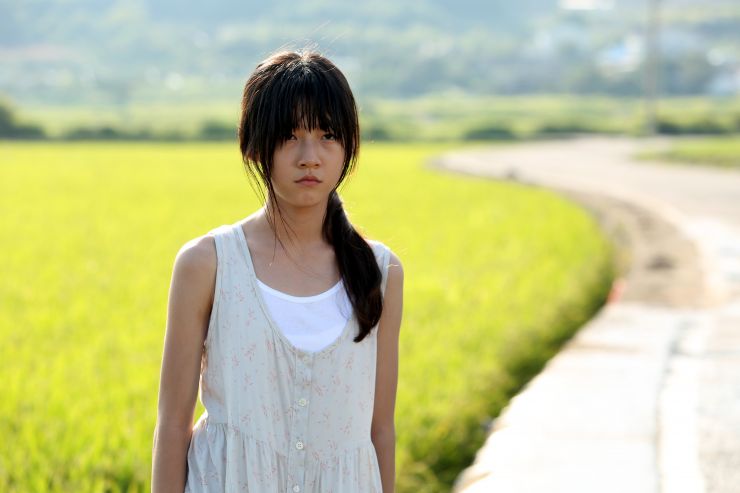
Do-hee is a victim of terrible domestic abuse in the country town

A victim of terrible abuse, Do-hee is a social outcast in need of protection

A Girl at My Door (도희야) is a simply phenomenal debut by writer/director July Jung (Jeong Joo-ri (정주리). Director Jung’s film is a powerful and intelligent exploration of discrimination and violence in Korean culture with a uniquely feminist spin that is all too rare in the industry. The approach taken in exploring such social issues is reminiscent of cinema legend Lee Chang-dong‘s work, particularly Poetry, which more than likely explains his decision to take a producer credit on the film. A Girl at My Door differentiates itself from director Lee’s work however in that director Jung’s layered script not only employs a multitude of perspectives in interrogating discrimination, but also in that she keenly conveys the ironies of Korean culture, particularly in regard to pretense. Central protagonist Yeong-nam projects a strong and stoic image as the chief of police, concealing her fraught complexity in regards to her history, emotional state, and very identity. Her dependancy on soju, which she conceals in water bottles, adds potent irony to an already paradoxical situation as she hides her addiction from those around her in a bid to remain a socially acceptable image. Director Jung captures moments such as these with incredible prowess conveying them in ways both subtle and obvious, balancing her character study with a skill belying her experience.

Yet where director Jung truly excels is through the relationship that develops between Yeong-nam and abuse victim Doo-hee. This is in no small part due to the astounding performances of both Bae Doo-na and, particularly, Kim Sae-ron. Bae Doo-na is constantly captivating as the police chief as she wrestles her internal conflicts, conveying a cold stoicism when in the presence of others yet a subtle fragility when alone. Yet it is youngster Kim Sae-ron who steals the limelight with her astonishing turn as social outcast Do-hee. Her range throughout A Girl at My Door is staggeringly impressive as an abuse victim desperate for love, with her unpredictability compelling to the utmost degree. Despite having two radically different characters director Jung crafts their relationship with a natural sincerity that never fails to be engaging. From small moments at meal times to more intimate scenes as they become closer, director Jung captures Do-hee’s reverence and Yeong-nam’s responsibility-turned-devotion with palpable affection.

Yeong-nam invites Doo-hee to stay with her for a summer, where their relationship considerably develops

Yeong-nam invites Do-hee to stay with her for a summer, where their relationship considerably develops

Through the central relationship as well as Yeong-nam’s position as law enforcement, A Girl at My Door explores discrimination within Korean society through the microcosm of a small countryside town. Director Jung interrogates the issue from a variety of perspectives, chiefly the sexism, homophobia and ageism that is so openly expressed by those in society. Despite her position as chief of police Yeong-nam is still subjected to gender and age discrimination by those she protects and works with, while her status as someone from the city also adds to the prejudice received. Do-hee is subjected to abuse which is justified due to her social status as a young orphan of sorts. The narrative impressively examines how such discrimination has become normalised within culture at both societal and governmental levels, with the frustration of innocents attempting to fight against it a source of inspiration and empowerment. Racism also arises through the incorporation of migrant workers within the story, adding a further perspective on the issue as they are forced to endure manual labour. Through her sense of irony director Jung astutely conveys how contemporary society is willing to accept such prejudice as long as their quality of life is assured, and their terrible reaction when it is challenged even in the name of the law.

The stakes are raised when Do-hee's father Yong-ha is arrested for assaulting his workers

The stakes are raised when Do-hee’s father Yong-ha is arrested for assaulting his workers

Verdict:

A Girl at My Door is a phenomenal debut by director July Jung, who examines issues of discrimination in contemporary Korea through the microcosm of  small countryside town. Featuring beautiful cinematography and an intelligent, irony-laced script, A Girl at My Door also boasts two exceptional performances from Bae Doo-na and in particular from rising star Kim Sae-ron. Not to be missed.

★★★★☆

Busan International Film Festival (제19회 부산국제영화제) Festival News Korean Festivals 2014 Reviews

BIFF 2014 – Gala Presentation, Open Cinema, New Currents, and Documentary Showcase

The 19th Busan International Film Festival

The 19th Busan International Film Festival

It’s almost time for the Busan International Film Festival (BIFF) to begin, and as such it’s a great time to check out the Korean productions due to be screened.

While programs such as Korean Cinema Today – Panorama/Vision and Korean Cinema Retrospective: Reminiscing the Timeless Filmmaker, Jung Jin-woo conveniently brings together films from the peninsula for fans to browse, there are also other categories within which Korean films appear, and are well worth seeking out.

Below are some of the exciting new projects from Korean filmmakers being screened at BIFF 2014, handily gathered together for your convenience.

Gala Presentation

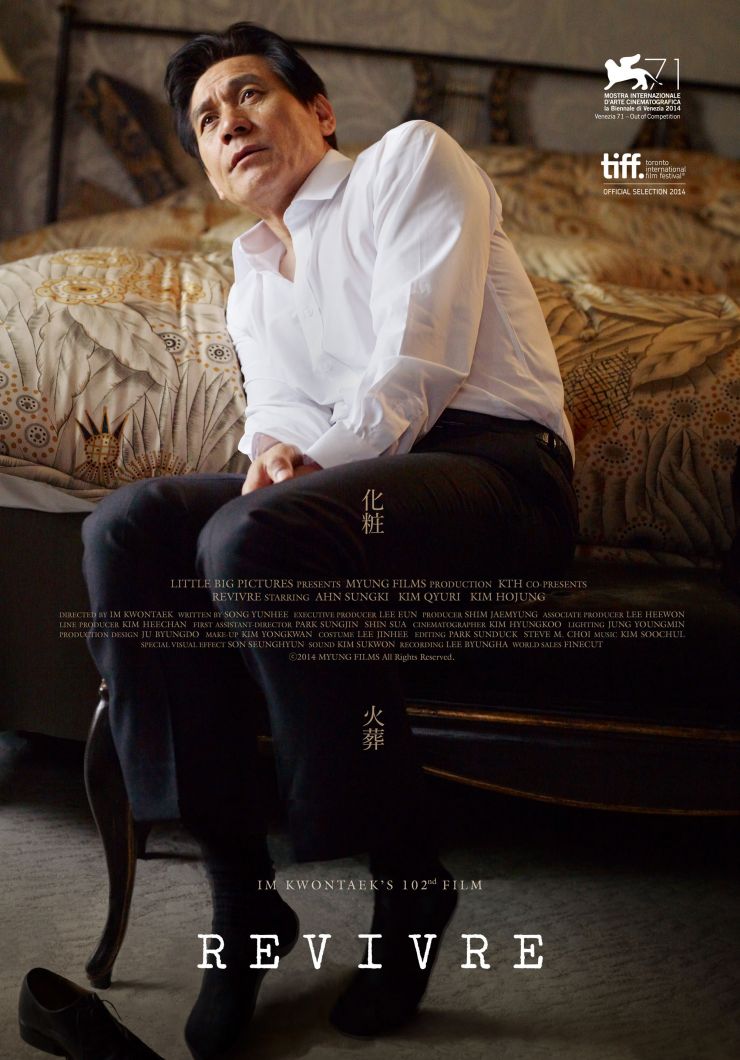
Revivre (화장) – director Im Kwon-taek (임권택)

Revivre (화장)

Revivre (화장)

After a 4 year hiatus, film maestro Im Kwon-taek returns with Revivre, his 102nd feature film. The film received very positive responses following its premiere at Toronto, with many critics praising not only a return to form for director Im but also lauding screen legend Ahn Seong-gi for his powerful performance.

Revivre explores the life of senior salaryman (Ahn) whose wife (Kim Ho-jeong) is dying of cancer. However the arrival of a beautiful young new office worker (Kim Gyoo-ri) in his department challenges him for his affections, causing a huge strain on his personal life.

Open Cinema

Cart (카트) – director Boo Ji-young (부지영)

Cart (카트)

Cart (카트)

Cart is the second feature by director Boo Ji-young, and is a timely examination of corporate abuse and the power of protest in contemporary Korea. Featuring an incredible cast including Yeom Jeong-ah, Moon Jeong-hee, Cheon Woo-hee and Kpop star Do Kyeong-soo, Cart was also widely praised at its Toronto premiere for its unflinching take on exploitation and sexism in the Korean workplace.

Mother of two Sun-hee works alongside single mum Hae-mee as cashiers, and are friends with janitor Soon-rae and manager Dong-joon, the only only male representative for the union. When a series of lay-offs begin, the friends band together with the other workers and fight the unfair dismissals.

New Currents

We Will Be Ok (그들이 죽었다) – director Baek Jae-ho (백재호)

We Will Be Ok (그들이 죽었다)

We Will Be Ok (그들이 죽었다)

We Will Be Ok is an independent film following the lives of wannabe filmmakers as they attempt to fulfill their ambitions. It will be interesting to see how director Baek Jae-ho differentiates his film from the other recent examples that have emerged, such as Director’s CUT at JIFF, that also explore the problems of indie filmmaking.

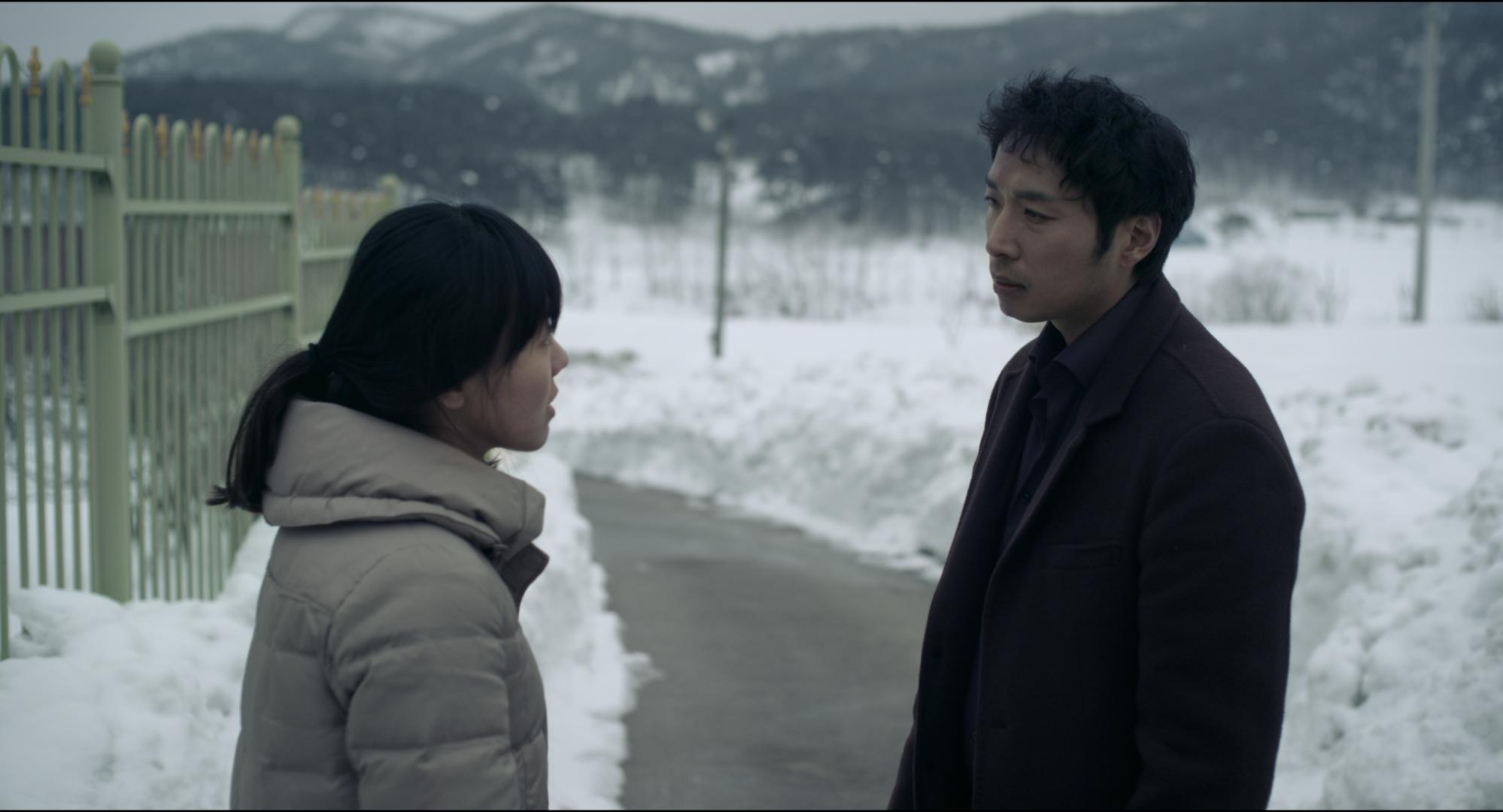
End of Winter (철원기행) – director Kim Dae-hwan (김대환)

End of Winter (철원기행)

End of Winter (철원기행)

Director Kim Dae-hwan’s family drama explores the tensions that exist between relatives following the shock announcement that the father, who is retiring, wants to divorce his wife. Due to heavy snowfall the family must stay together for a few days, and despite all the negative feelings are forced to confront the issues that beset them.

Documentary Showcase

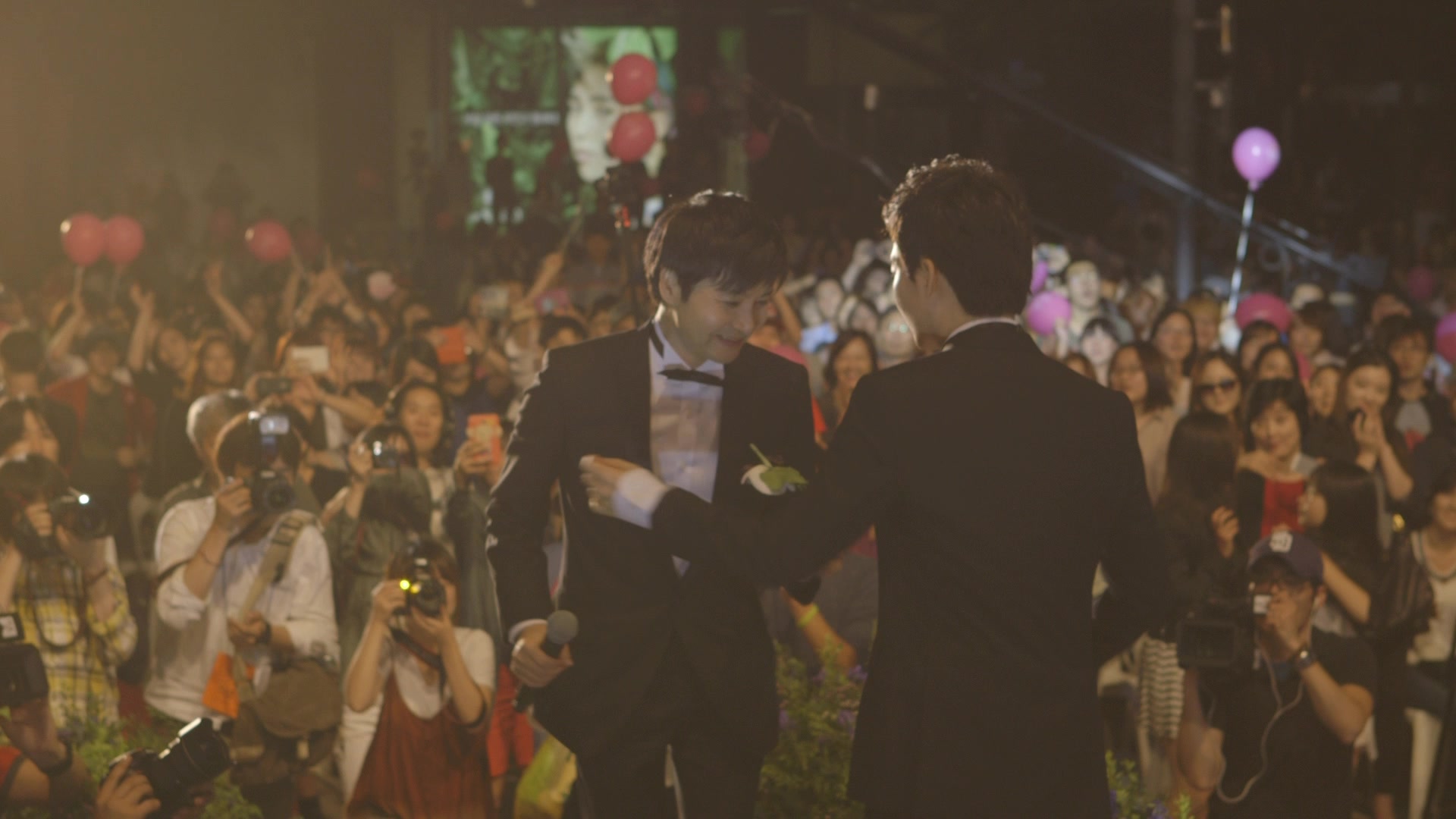
My Fair Wedding (마이 페어 웨딩) – director Jang Hee-seon (장희선)

My Fair Wedding (마이 페어 웨딩)

My Fair Wedding (마이 페어 웨딩)

With gay issues unfortunately still very much taboo in Korea, the wedding of two prominent CEO’s caused plenty of controversy when they tied the knot in 2013. In her third documentary director Jang follows the celebrations and conflicts, as well as the very vocal discrimination, that arise from having a gay wedding in contemporary Korea.

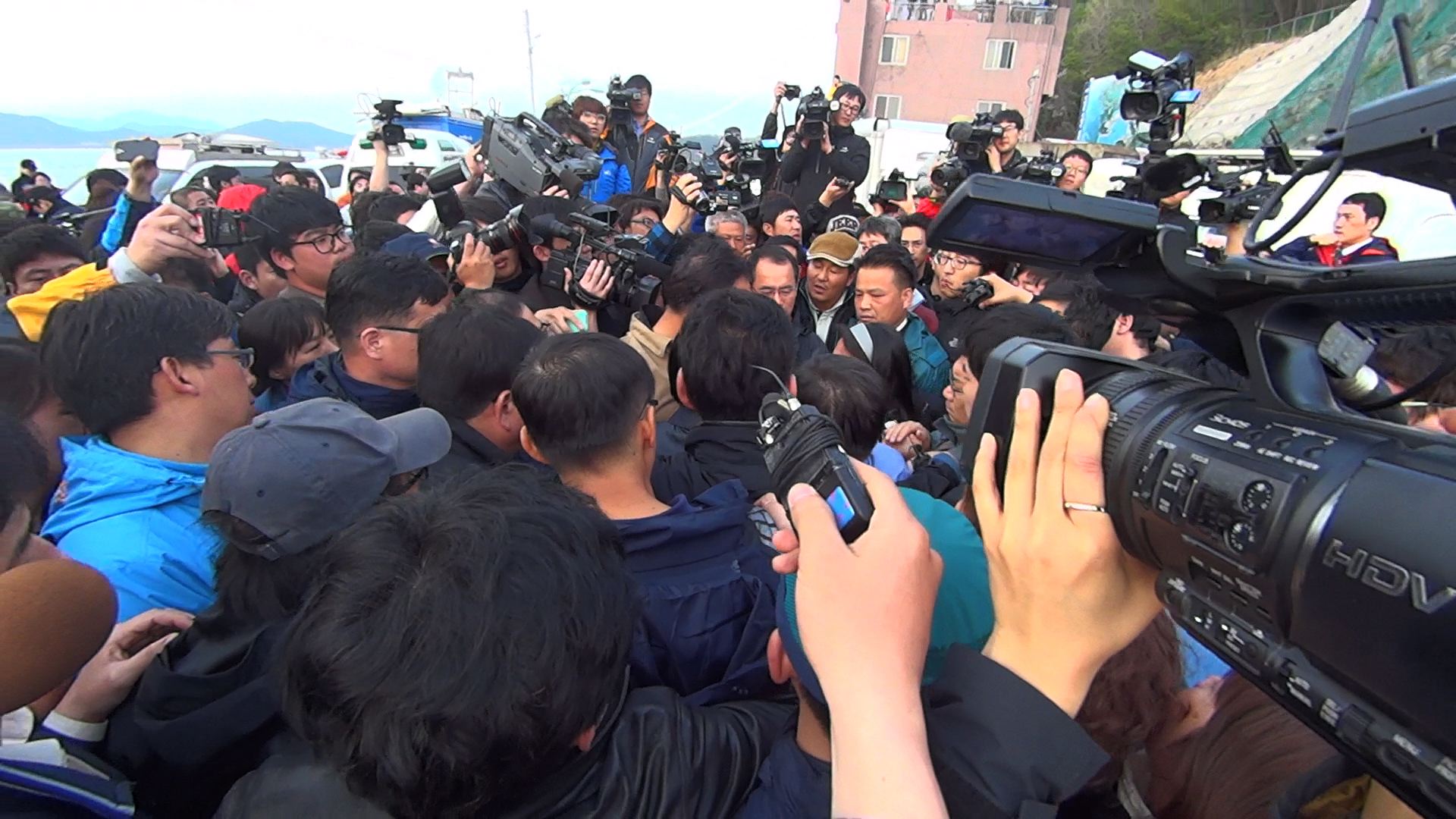
The Truth Shall Not Sink With Sewol (다이빙벨) – directors Lee Sang-ho (이상호) and Ahn Hye-ryong (안해령)

The Truth Shall Not Sink With Sewol (다이빙벨)

The Truth Shall Not Sink With Sewol (다이빙벨)

Aka Diving Bell, the film explores the largely failed recovery effort involved in the Sewol tragedy. Co-directed by journalist Lee and documentary filmmaker Ahn, they approach the controversies in an interrogative manner, and are particularly brave to do so given the clamp down on information and prosecution of those who attempt to uncover the truth.

Little Pond in Main Street (거리 속 작은 연못) – director Lee Kang-gil (이강길)

Little Pond in Main Street (거리 속 작은 연못)

Little Pond in Main Street (거리 속 작은 연못)

Street vendors in Korea are almost like a national institution, they are so widespread and relied upon. In Little Pond in Main Street a group of vendors band together to create a community radio station but come into conflict with other groups,as well as the government trying to shut them down.

Parallel (우리는 썰먜를 탄다) – director Kim Kay (김경만)

Parallel (우리는 썰먜를 탄다)

Parallel (우리는 썰먜를 탄다)

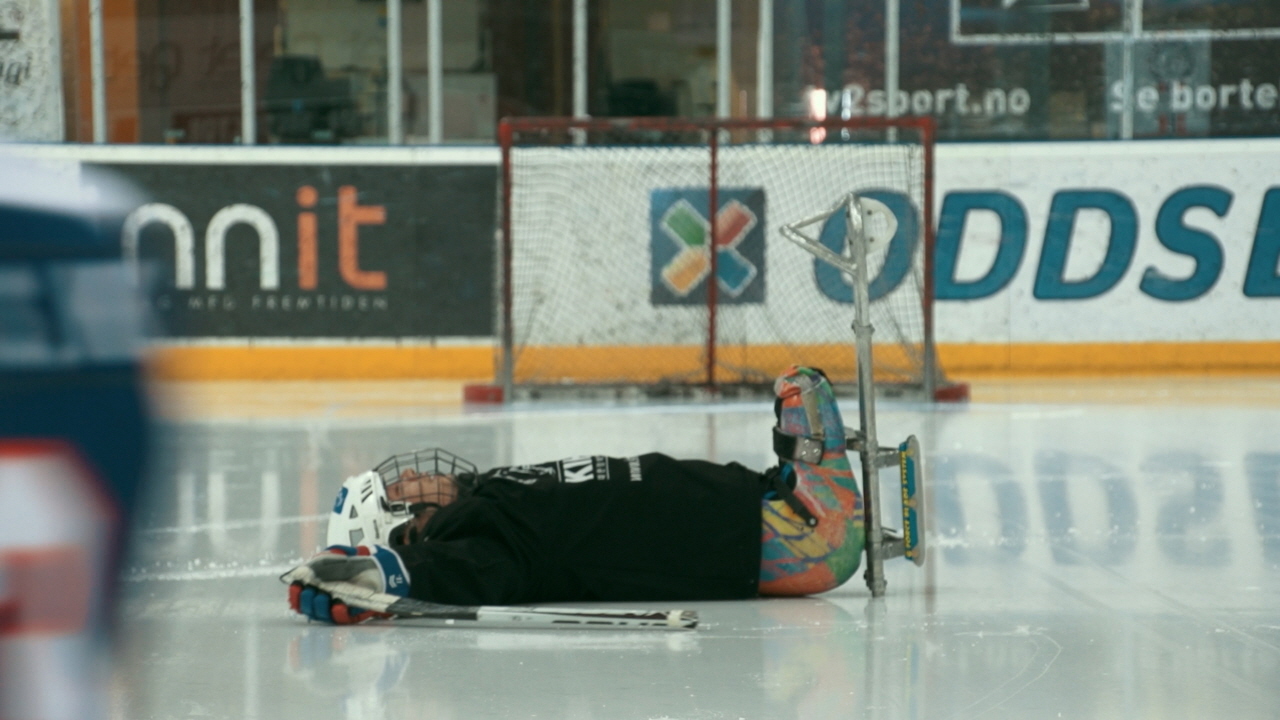
In production for 3 years, Parallel explores the lives of the Korean Paralympic ice hockey team. Despite the country having very little awareness that the team even exists, the athletes continue to train, work hard, and compete against other sporting nations. The film follows their turbulent lives as they strive to live their dreams.

Busan International Film Festival (제19회 부산국제영화제) Festival News Korean Festivals 2014

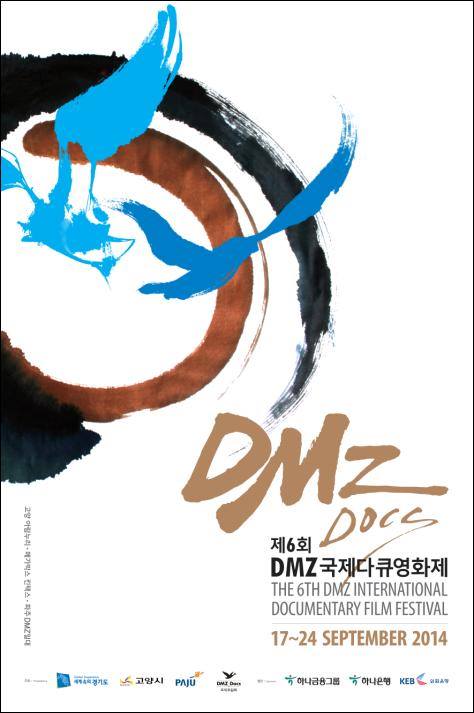
The 6th DMZ Documentary Film Festival to Take Place in Ilsan

The 6th DMZ Docs Film Festival

The 6th DMZ Docs Film Festival

The 6th DMZ Documentary Film Festival is due to commence from September 17th (Wed) until 24th (Wed) in the suburban city of Ilsan, Gyeonggi Province.

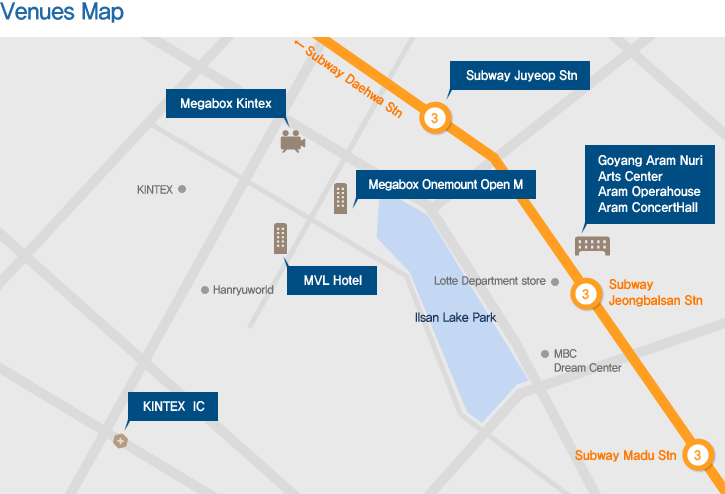
This is the second consecutive year that the festival has operated in Ilsan following the move from the DMZ/Paju region. The films will be screened at the Kintex Megabox Cinema, located nearby Juyeop and Daehwa subway stations on line number 3 (see map below).

111 documentaries from 30 countries comprise the 6th edition, which focuses on the themes of peace, communication and life. The festival will open with director E Il-ha’s (이일하) Crying Boxers (울보 권투부).

In the International Competition program are 12 films that explore an array of human rights, historical and socio-cultural issues from around the world. The winning film will receive a trophy and ₩15 million, as well as the honour of ending the festival as the closing film. Meanwhile the Korean Competition features 9 documentaries that examines a variety of issues related to the peninsula, with the victor set to gain a ₩10 million prize plus a trophy.

For the official DMZ Docs trailer, please see below.

The non-competition category holds notable exciting entries. In Global Vision, exciting works outside of Asia will be screened, including Robert Greene’s Actress which depicts a woman attempting to reclaim her life as a performer, and Andre Singer’s Night Will Fall, exploring the horrors of the Nazi concentration camps. Within Asian Perspective, key productions from filmmakers throughout the region appear, such as Adjani Arumpac’s War is a Tender Thing chronicling the effect of war in The Philippines.

Korean Docs Showcase features a mixture of new films as well as a selection that have appeared at prior festivals. The poetic industrial film A Dream of Iron by Kelvin Kyung Kun Park and Hwang Yun’s examination of pig farming practices in The Omnivorous Family are to be screened, alongside sex industry exploration Grace Period, musical docs Hurry Up, Slowly! and Highway Stars, and multi-racial lesbian issues in First Dance.

Opening Film

Crying Boxers (울보 권투부)

Director E Il-ha (이일하)

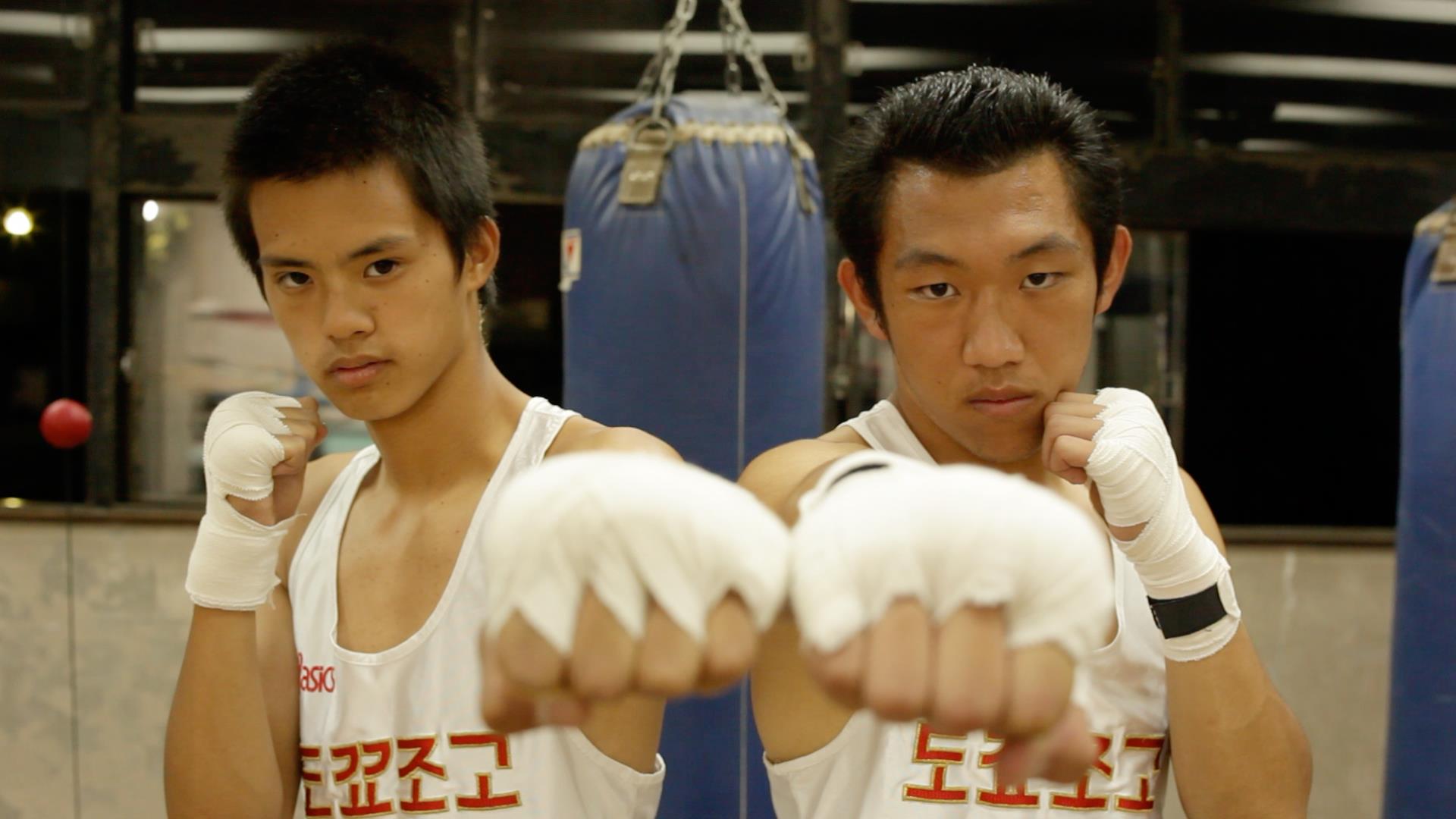
Crying Boxers

Crying Boxers

Crying Boxers explores the life of Korean high school students in Japan. While right-wing extremists protest at their existence within Japanese society, the students attempt to study with some taking up boxing lessons after school. With an awareness of the discrimination around them, the students prepare themselves for a boxing tournament as well as for life after high school.

Please see below for the screening venues.

DMZ Docs venue map

DMZ Docs venue map

To visit the official website of the 6th DMZ Documentary Film Festival, please click here.

Festival News Korean Festivals 2014

The 19th Busan International Film Festival Announces Line-up

The 19th Busan International Film Festival

The 19th Busan International Film Festival

The 19th Busan International Film Festival (BIFF), which runs from October 2nd (Thu) ~ 11th (Sat), has unveiled the line-up for its 2014 edition.

An impressive 314 films from 79 different countries will be screened during the event. Boasting an array of features from around the world, BIFF will also cast a spotlight on countries such as Iraq, Bangladesh and Lebanon, who have, in a cinematic sense, been somewhat overlooked in the past.

BIFF 2014 will also play host to some of Asia’s biggest films of the year. Chinese auteur Zhang Yimou once again teams up with actress Gong Li for Coming Home, which screened in Cannes earlier this year, in the Gala Presentation. Ann Hui’s highly anticipated period drama The Golden Era, starring Tang Wei, will also feature in the category, while director Hui herself will also be honored with a hand printing ceremony for her contributions to cinema. Meanwhile, A Window on Asian Cinema contains Diao Yinan’s Berlin Golden Bear winner Black Coal, Thin Ice, and the latest work from renowned directors including Takashi Miike’s Over Your Dead Body, Johnnie To’s Don’t Go Breaking My Heart 2, Peter Chan’s Dearest, and Sion Sono’s Tokyo Tribe, respectively.

The World Cinema program also features critically acclaimed work from prolific filmmakers not from Asia, such as David Cronenberg’s Maps to the Stars, Richard Linklater’s  highly championed 12 year project Boyhood, drama Two Days and One Night which had critics raving due to Marion Cotillard’s performance, Asia Argento’s Misunderstood, and UK directors are represented by Michael Winterbottom’s Face of an Angel and Ken Loach’s Jimmy’s Hall, amongst others.

Special Programs in Focus also serves to highlight the attention to diversity. The Power of Georgian Women Filmmakers includes the 1930 film A Story of Mountainous Racha (which was banned until 2013) alongside a host of contemporary offerings, as well as New Turkish Cinema: Faces of the 21st Century, in order to coincide with and celebrate the 100th anniversary of Turkish cinema.

Im Kwon-taek's 'Revivre'

Im Kwon-taek’s ‘Revivre’

Yet what of Korean film? BIFF 2014 features a quite staggering array of Korean film for the 19th installment, arguably more so than last year. Director Im Kwon-taek‘s 102nd film Revivre, featuring acting legend Ahn Sung-ki, appears in the Gala Presentation section, while in the Open Cinema category (which screens a movie in an outdoor cinema) drama Cart, about women who go on strike in a after receiving unfair dismissal, will be exhibited. The greatest surprise however lies in the Korean Cinema Today – Panorama program. All the big summer hits – Kundo: Age of the Rampant, The Admiral: Roaring Currents, Haemoo (Sea Fog) and The Pirates – all feature alongside July Jung’s acclaimed Cannes hit A Girl at my Door and the latest from auteurs Hong Sang-soo (Hill of Freedom) and Kim Ki-duk (One on One).

Classic Korean films will be celebrated through Korean Cinema Retrospective: Reminiscing the Timeless Filmmaker, Jung Jin-woo. The prolific director, who helmed over 50 films and produced around 110, will have 8 of his of his most famous works screened as well as being honoured with a hand-printing ceremony.

Opening Film

Paradise in Service

Paradise in Service

Paradise in Service

Taiwanese director Doze Chen-Zer Niu’s film is a wartime drama with a romantic/erotic twist. In 1969 a young conscript named Pao is sent to complete his military duties on the island of Kinmen, a notoriously dangerous place due to its proximity to China. Assigned to grueling physical training, Pao’s lack of ability leads to his superiors bestowing a new mission for the youngster, placing him in charge at Unit 831. Yet Unit 831 is actually military code for the brothels situated on the frontline of the war, used against China should they decide to attack. As Pao witnesses human rights abuses within the oppressive military system he struggles to retain his sanity, yet as he forms a relationship with Nini, one of the women who work at the brothel, his resolve to save his virginity for his girlfriend back home becomes tested.

Starring Ethan Juan and Wan Qian in the romantic lead roles, Paradise in Service is also produced by celebrated director/producer Hou Hsiao-Hsien. See below for the trailer.

For more information about the 19th Busan International Film Festival, including the full line-up of films to be screened, please click here to visit the official website.

Busan International Film Festival (제19회 부산국제영화제) Festival News Korean Festivals 2014