The 10th Green Film Festival in Seoul

GFFIS 2013: Opening Ceremony and Promised Land screening

The 10th Green Film Festival in Seoul

The 10th Green Film Festival in Seoul

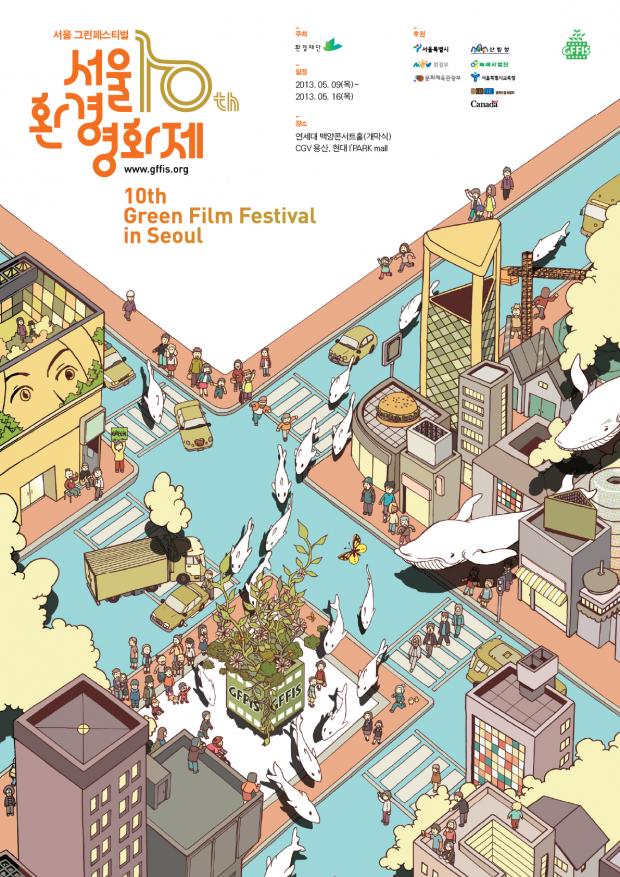
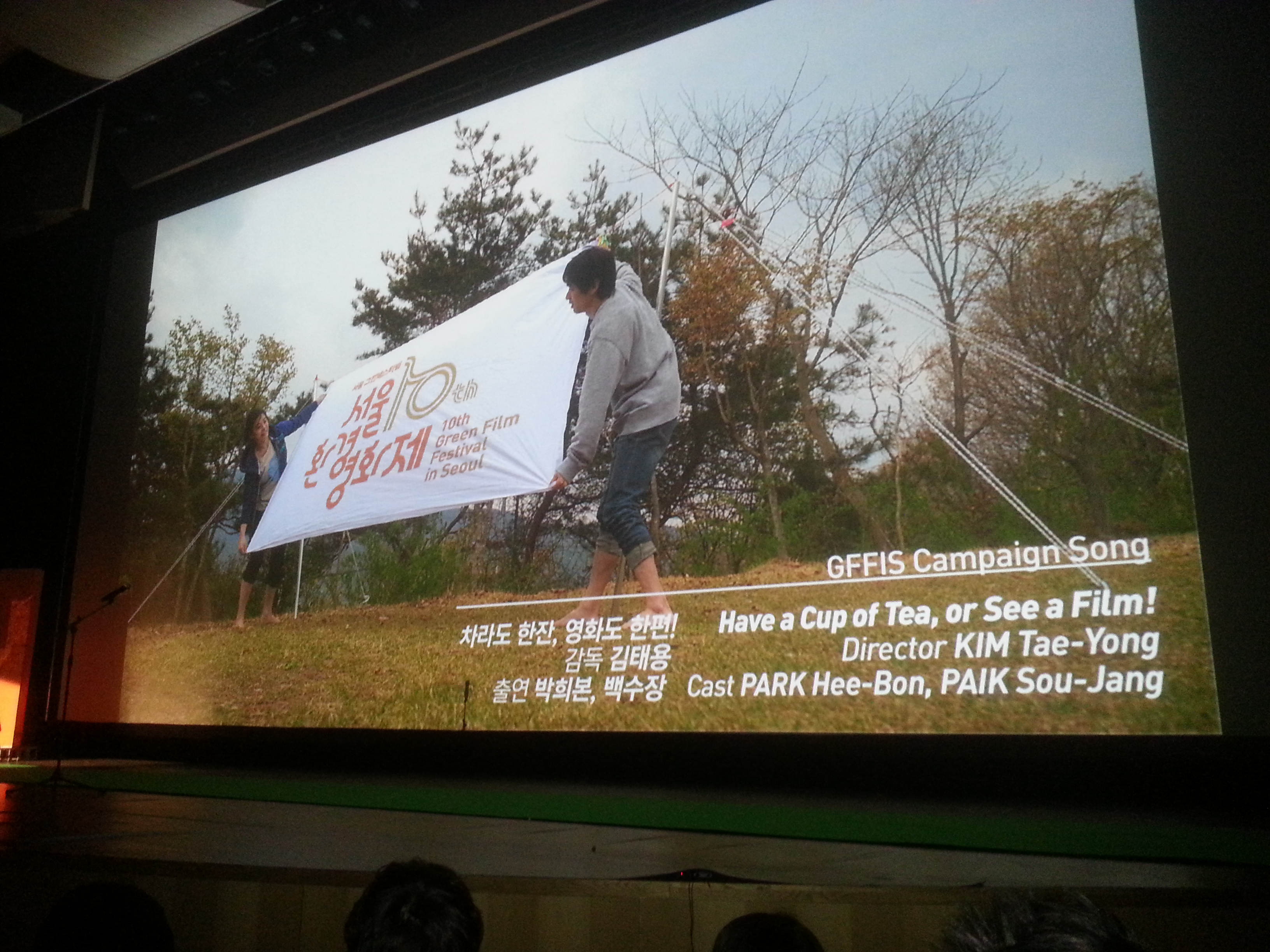
On a rainy Thursday the 9th of May, the 10th Green Film Festival in Seoul (GFFIS)  got underway with an opening ceremony at Yonsei University’s Baeyang Concert Hall in Sinchon, Seoul. Hosted by duo Kim Tae-Hun (김태훈) and actress Park Hee-bon (박희본), the event sported several videos celebrating the festival’s now decade long run – including a quite sweet musical video called Have a Cup of Tea, or See a Film! (차라도 한잔, 영화도 한편!) helmed by renowned director Kim Tae-yong (김태용).

Important politicians and policy makers, including Mr. Park Jae-dong, Mr. Yoon Seong-gyu from the Ministry of Environment, and Chairman of the Board of the Korea Green Foundation Mr Lee Se-jung all gave welcoming speeches regarding the importance of the festival and of ecological awareness in general, and their comments were warmly greeted. This was followed by an opening declaration by Mr. Kim Won, the Chairman of the Organizing Committee, who then brought actor Ji Jin-hee on stage to present him with a small plant as part of his acceptance in becoming the latest eco-friend of the festival.

Yonsei University's Baeyang Concert Hall

Yonsei University’s Baeyang Concert Hall hosted the opening ceremony
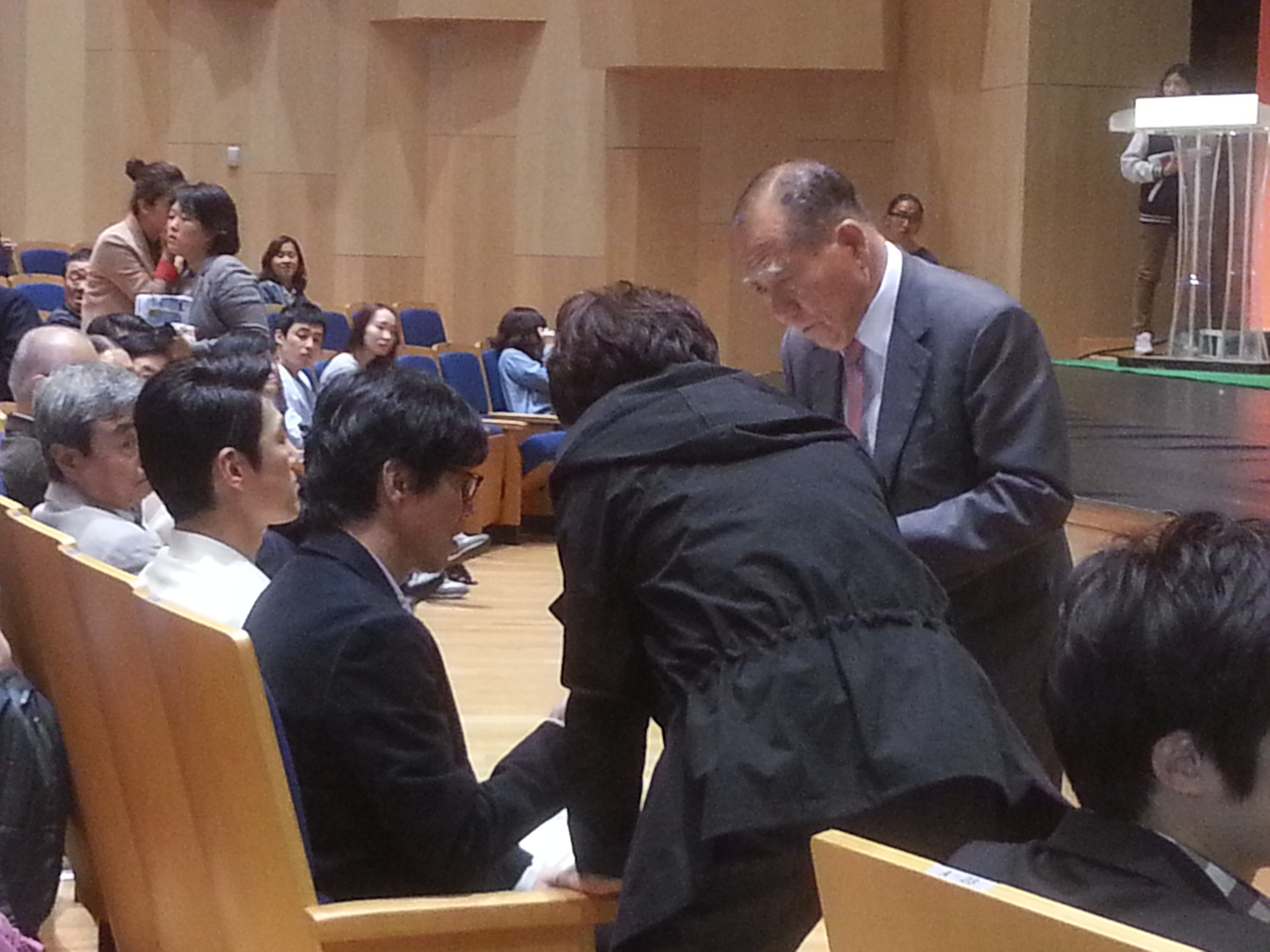
Legendary festival programmer Kim Dong-won was in attendance

Legendary festival programmer Kim Dong-won was in attendance

The hosts begin the ceremony

The hosts begin the ceremony

Actor Ji Jin-hee accepts his award as an eco-friend
Actor Ji Jin-hee accepts his award as an eco-friend

Director Kim Tae-yong's short film was a fun opening to the festival

Director Kim Tae-yong’s short film was a fun opening to the festival

The hosts and director Kim discuss the film and the festival

The hosts and director Kim discuss the film and the festival

After a short interval, everyone was again seated for the opening film. Gus Van Sant’s Promised Land , which re-teams the director with star Matt Damon after the critically acclaimed Good Will Hunting, sees a duo from an energy company attempt to buy land in the country in order to harvest the natural gas beneath. Yet the residents become concerned due to the process of ‘fracking’, in which chemicals are pumped into the Earth to get the resource, making the prospect a tough sell. The film was very well-received by the audience, and the film itself is a very apt opening due to the debates involving nature, community, big industry, and money. Please see below for the review.

Opening Film
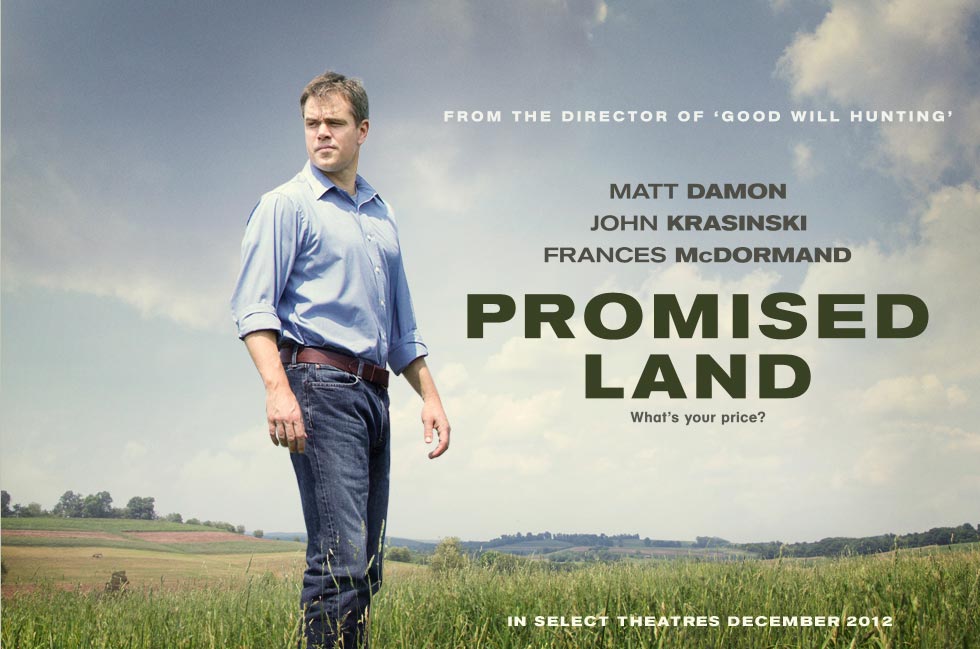
Promised Land

Promised Land

Promised Land – 6/10

Promised Land is, in many ways, a great film to open the festival with. The story sees Steve (Matt Damon) and Sue (Frances McDormand) as workers for Global, a giant energy conglomerate who wish to obtain the natural gas residing under a farming community in Pennsylvania. Few actors do ‘everyman’ as well as Matt Damon, and that charm is present throughout the film as he is simply a good guy trying to do the best job he can. Unfortunately that job is to buy the land out from under the people, and his naivety  in this regard is perplexing as it’s quite obvious what the ramifications are from the start. To reinforce the point director Gu Van Sant features plenty of establishing shots of the countryside to emphasize what’s at stake, making Promised Land a very attractive film throughout. Despite the quite serious subject matter the narrative is often comedic, featuring some real laugh-out-loud moments as Steve and Sue continually face obstacles ranging from school teachers to the weather. Steve’s journey is an interesting one as he is torn between being a man with working class roots and his desire for (financial) success, although his reasoning isn’t explored nearly enough. Furthermore the narrative is far too ambitious as it attempts to cover too much in the running time, and in doing so lacks any real heart or emotional power. The inclusion of a love interest for Steve tries to address the issue, but she is often jettisoned in favor of returning to the environmental debate. Promised Land is a good, solid film and certainly one of the better dramas to deal with environmental issues, yet the curious lack of heart make the film a thought-provoking, but somewhat emotionless, endeavour.
Festival News Green Film Festival in Seoul (제10회 서울환경영화제) Korean Festivals 2013
The 15th International Women's Film Festival in Seoul

WFFIS 2013: Muse With A Movie Camera and Queer Rainbow

The 15th International Women's Film Festival in Seoul

The 15th International Women’s Film Festival in Seoul

With a focus on exploring female issues through cinema, the Women’s Film Festival in Seoul has constructed several different categories in which to emphasise the concerns women face in contemporary society. Previously the New Currents, as well as The Coming of Age in Asian Women Filmmaking and Violence Against Women have been discussed, yet within this feature three different areas are explored. Actress, Muse With A Movie Camera is, as the title suggests, regarding women who have chosen to go behind the camera and direct. The 3 Korean films within this area feature quite diverse work, from high-budget thriller to low-budget short. Queer cinema is acknowledged in Queer Rainbow: Queer x Feminism, although unfortunately there’s only one Korean film exploring such gender and sexuality issues. Finally, Open Cinema is concerned with male directors who explore or represent women’s rights or interests, expanding the representation of women on screen. While there’s just one Korean film in this category, it’s a sublime documentary and one that eloquently fits the goal of broadening women’s issues in cinema.

Actress, Muse With A Movie Camera

The Knitting (뜨개질)

The Knitting (뜨개질)

The Knitting (뜨개질)

Director: Yoon Eun-hye (윤은혜)

Synopsis: Superstar actress Yoon Eun-hye helms short film The Knitting, a drama about a woman struggling to cope following a break-up. Seeking solace through knitting, the memories of the past love prove hard to erase.

The Peach Tree (복숭아 나무)

The Peach Tree (복숭아 나무)

The Peach Tree (복숭아 나무)

Director: Ku Hye-sun (구혜선)

Synopsis: Released in 2012 after receiving its premiere at the Busan Film Festival in 2011, The Peach Tree tells the story of two twin brothers who fall in love with the same woman. While it might initially sound cliched, the narrative takes on a new twist as the twins were born conjoined, sharing the same body, yet have quite different personalities. With lots of symbolism involving the nature of family and the titular peach tree, the romantic drama resonates strongly. See below for the trailer:

Perfect Number (용의자 X)

Perfect Number (용의자 X)

Perfect Number (용의자 X)

Director: Pang Eun-jin (방은진)

Synopsis: Based on Japanese author Keigo Higashino’s novel The Devotion of Suspect X, Perfect Number is the second film by actress-turned-director Pang Eun-jin following Princess Aurora. The thriller depicts a woman who kills her ex-husband following a violent assault, and the gifted mathematician living next door who helps her conceal the crime from the authorities. The film was quite successful when released last year. See below for the trailer:

Queer Rainbow: Queer x Feminism

To Become 1 (2의 증명)

To Become 2 (2의 증명)

To Become 2 (2의 증명)

Directors: Sui (스이), Kay (케이)

Synopsis: The only queer entry in the category explores the life of a middle-aged woman preparing to undergo gender correction treatment. Yet she continually faces obstacles by those around her.

Open Cinema

My Place (마이 플레이스)

My Place (마이 플레이스)

My Place (마이 플레이스)

Director: Emmanuel Moonchil Park (박문칠)

Synopsis:  Winning the Audience Award at the 2013 Jeonju Film Festival, My Place is a wonderful documentary that explores notions of family and women’s rights. Director Park has crafted a loving film based around his sister’s pregnancy. Recommended.

You Are More Than Beautiful (그녀의 연기)

You Are More Than Beautiful (그녀의 연기)

You Are More Than Beautiful (그녀의 연기)

Director: Kim Tae-yong (김태용)

Synopsis: This Korean/Hong Kong co-production by director Kim Tae-yong involves a mysterious meeting.

Festival News International Women's Film Festival in Seoul (서울국제여성영화제) Korean Festivals 2013
December (디셈버)

JIFF 2013: Quick Fire Reviews 5

Additional quick-fire reviews from the 14th Jeonju International Film Festival:

December (디셈버)

December (디셈버)

December (디셈버) – 6/10

The big winner at JIFF 2013 scoring the Grand Prize in the Korean Film Competition, December is a charming and raw exploration of the building of relationships. Structured in accordance with the months of the year, director Park Jeong-hoon (박정훈) uses the time frame to convey the burgeoning relationship between a female high school student and a male convenience store clerk, and how small moments are built into something more. The protagonists are highly compelling, particularly as the girl manipulates situations into bringing the two closer together such as buying sanitary towels in order to prove her ‘womanhood’. Yet December is also crucially missing an emotional core that stops empathy from evolving between the characters and the audience, something which greater character development would easily remedy. A compelling and interesting, although emotionally lacking, film.

My Place (마이 플레이스)

My Place (마이 플레이스)

My Place (마이 플레이스) – 9/10

My Place is everything a great documentary should be. The film is a wonderful and heart-filled love letter to family, one that takes an uncompromising look at wounds past and present in the forging of a person’s personality. Perhaps more surprisingly is that such a raw exploration is based on director Park Moon-chil’s (박문칠) own family, which lends further credibility and sincerity. As the documentary unfolds everyone – including director Park – changes and comes to understand each other with greater depth. The inclusion of the cultural, generational and gendered differences that have effected the family is brilliant, yet the real masterstroke comes from places the director’s sister Peace at the center of the film. As a single mum challenging every ideological form in her path, it is her character that makes for such compelling viewing. A must-watch film, recommended.

Remiges

Remiges

Remiges – 8/10

Japanese film Remiges, by writer/director Ozawa Masato, is a deeply poignant examination of youths who suffer from abusive parents. The fragile psychology of central protagonist Sayako is slowly conveyed throughout the course of the film, moving from simply being a bad kid to a complex, abused victim. While the teenager initially appears to be selfish and irresponsible, her actions are the ramifications of years of awful parenting. Director Masato employs non-linear editing in order to portray the torment Sayako suffered as a young child, and is far from contrived as each scene lends further information and empathy to her situation, giving credence to her anti-social behaviour. Symbolism is also used well throughout Remiges, including a parrot horrifically having it’s wings clipped, while Sayako’s plight is mirrored amongst the other characters she comes into contact with. A powerful and insightful film about youth.
Trunk (트렁크)

Trunk (트렁크)

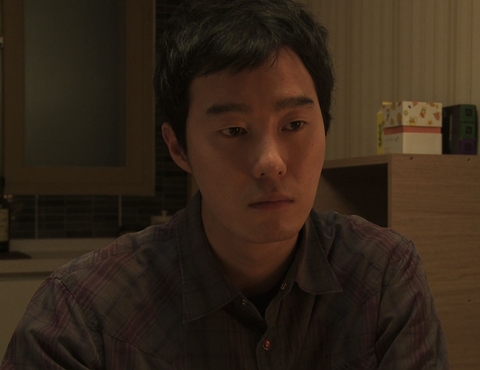
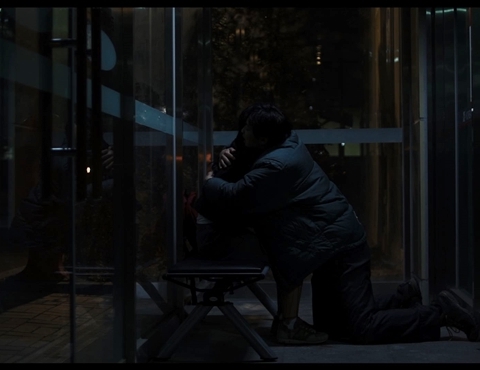
Trunk (트렁크) – 5/10

Trunk is best thought of as a showcase for director Kim Hyeon-cheol’s (김현철) talents rather than a great piece of filmmaking. That’s not to say that it’s a bad film at all, as what is on display is a very competent approach to both the horror and thriller genres. Director Kim employs a host of stereotypical conventions in portraying the story of a woman whose curiosity gets the better of her when she spies an open trunk. To say more would involve spoilers, but tension is constructed well as the story progresses. Howver, the attempt to add an original spin doesn’t really work and comes off as silly, undermining the suspense generated prior. Trunk is a competent showcase, and it will be interesting to see what director Kim does next.
Festival News Jeonju International Film Festival (제14회 전주국제영화제) Korean Festivals 2013
The 15th International Women's Film Festival in Seoul

WFFIS 2013: Coming of Age and Violence Against Women

The 15th International Women's Film Festival in Seoul

The 15th International Women’s Film Festival in Seoul

In the previous feature on the upcoming 15th Women’s Film Festival in Seoul, the films in the ‘New Currents’ category were discussed and profiled. The films display the festival’s desire to tackle a range of issues related to women from documentaries about pivotal figures, animations involving sexual relations, and more traditional dramatic fare concerning relationships and peer/societal pressure.

Yet other areas of the program also emphasize WFFIS’s ability to give women filmmakers a platform in which to share their perspective on society, and to ‘see the world through women’s eyes.’ In this article two such categories are covered. The ‘Asian Spectrum: The Coming of Age in Asian Women Filmmaking’ focuses on young female visionaries who portray the issues young Asian women face. Meanwhile, ‘Polemics: The Constellation of the Violence Against Women’ explores the different forms of pressure and assaults that women are threatened with and/or experience, and examinations the structures of (gendered) power so often inherent in such debates.

Asian Spectrum: The Coming of Age in Asian Women Filmmaking

Give Me Back My Cat (고양이를 돌려줘)

Give Me Back My Cat (고양이를 돌려줘)

Give Me Back My Cat (고양이를 돌려줘)

Director: Jung Jae-eun (정재은)

Synopsis: When a couple are forced to give their cat Kuma up for adoption,  they are devastated. Luckily their friend is Kuma’s new owner, yet when she refuses to hand the feline back drama ensues.

Polemics: The Constellation of the Violence Against Women

Bad Scene (배드신)

Bad Scene (배드신)

Bad Scene (배드신)

Director: Jeon Go-woon (전고운)

Synopsis: The 18 minute short depicts an unknown actress who lands a role in a film. The catch is that a bed scene is required, and the aspiring performer is conflicted over playing the part well.

Deviation (도착)

Deviation (도착)

Deviation (도착)

Director: Lee Min-beh (이민배)

Synopsis: On the subway Su-jin overhears a celebrity scandal involving a sex-tape. Yet she is also surprised to see her boyfriend being arrested and decides to follow him.

My, No Mercy Home (잔인한 나의, 홈)

My, No Mercy Home (잔인한 나의, 홈)

My, No Mercy Home (잔인한 나의, 홈)

Director: Aori (아오리)

Synopsis: The documentary explores the life of a woman who was sexually abused by her father. When no-one believed her, she ran away and sued him to spare her siblings, with shocking results.

Festival News International Women's Film Festival in Seoul (서울국제여성영화제) Korean Festivals 2013

Dear Dolphin (환상속의 그대) – ★★★☆☆

Dear Dolphin (환상속의 그대)

Dear Dolphin (환상속의 그대)

Dear Dolphin (환상속의 그대) was one of the big winners at the 14th Jeonju International Film Festival, scoring the CGV Movie COLLAGE Prize which includes 2 weeks of commercial release, a great boon for any independent film. The reasons for the victory are quite clear, as director Kang Jina (강진아) employs some truly lovely visual aesthetics in her exploration life, love and grief while utilising more traditional melodramatic conventions. Interestingly director Kang never lets the film become too ‘dark’ despite such weighty material, and as such it’s popularity with Korean audiences is entirely understandable. Yet Dear Dolphin is not perfect, featuring a haphazard narrative structure that creates distance between the audience and the central protagonists, while the creation of subplots that are later dropped is a source of frustration. However the story does well in examining the illogical sense of grief following the death of a loved one, and is a thought-provoking, attractive film.

Unable to come to terms with the death of his girlfriend Cha-kyeong (Han Ye-ri (한예리), physiotherapist Hyeok-geun (Lee Hee-joon (이희준) develops insomnia. Unable to work or function properly his life begins to fall apart, while his mental stability becomes strained due to hallucinations.  His grief and sense of guilt are also shared by Gi-ok (Lee Yeong-jin (이영진), Cha-kyeong’s best friend, who simultaneously hates herself for her involvement in the accident and also for secretly coveting Hyeok-geun. As their grief becomes ever greater, and reality and fantasy become difficult to separate, Gi-ok and Hyeok-geun must learn to overcome their emotional trauma lest it consumes them.

Hyeok-geun' begins to hallucinate due to his uncontrollable grief and insomnia

Hyeok-geun begins to hallucinate due to his uncontrollable grief and insomnia

Dear Dolphin excels when dealing with the subject matter of grief, and the variety of forms which it takes. The emotion is a problematic one to portray, yet director Kang succeeds in capturing the different complexity of each protagonist. Hyeok-geun’s internal strife is articulated through his continual self admonishment and his self-imposed alienation, while the insomnia inspired hallucinations of Cha-kyeong reveal his inability to accept her death. Gi-ok meanwhile cannot cope with the loneliness of her best friend’s passing, heightened by her guilt over desiring Hyeok-geun. Both characters blame themselves for not doing something – anything – to change the past, while Cha-kyeong’s family resent them for much the same reason. The emotional complexity of everyone involved is compelling throughout, as each person commits irrational acts without fully understanding why.

To stop the film from sinking beneath the increasingly fraught emotional tension, director Kang employs a non-linear structure that harks back to when the threesome were happy. The technique certainly brings levity to the story, as well as further conveying the sense of loss through the contrast between the past and present. Indeed, the director utilises her wonderful sense of colour and composition during the flashback sequences that feature vibrant warm reds and yellows, in complete opposition to the washed-out palette following Cha-kyeong’s death. Yet it also serves to usurp the character development in the here and now, as plot threads that took time to establish are often dumped only to later reappear, or to never return at all. The confusion that arises as a result of narrative jumping through time frames results in a distancing between the characters and the audience as it becomes difficult to fully engage and empathise with their respective situations. This is ultimately Dear Dolphin‘s downfall, as in a bid to keep the film ‘light’ with traditional melodramatic conventions, the powerful emotional resonance of each character becomes lost.

Beautiful, cherished memories of the threesome become like poison

Beautiful, cherished memories of the threesome become like poison

As empathy becomes increasingly diluted, it therefore falls to the actors to keep the emotional intensity sharp in the present. In this respect it is Lee Yeong-jin who gives the standout performance as Gi-ok, as the actress appears evermore fraught with guilt, stress and grief. The anguish on Gi-ok’s face as she reaches out to Hyeok-geun for emotional and physical support is sincere, while the continual rejection of her advances become heartbreaking as she sinks lower and lower. Lee Hee-joon and Han Ye-ri give competent performances as Hyeok-geun and Cha-kyeong, but they are lacking the chemistry and passion that are sorely required when exploring the death of a loved one. As such the film quickly becomes Gi-ok’s story as it is her emotional distress that is the most fully developed, and is her resolution rather than Hyeok-geun’s fragile mental state that takes precedence.

Luckily director Kang also injects the film with some stunning cinematography in relation to scenes involving Cha-kyeong and Hyeok-geun, particularly when employing the water symbolism that is so inherent to the narrative. The scenes are absolutely gorgeous and appear more like a painting than a film. Ironically the surreal and otherworldly sequences further complicate the narrative, but when scenes are this beautiful it’s hard to complain. Often accompanied by an ethereal soundtrack, the conveyance of water as a source of life, death, and even purgatory are lovely to behold, and it is these scenes that resonate long after the film and provide thought-provoking moments on the nature of loss.

The potent water symbolism runs throughout the film

The potent water symbolism runs throughout the film

Verdict:

One of the big winners at JIFF 2013, Dear Dolphin is a very attractive film that deals with the issues of love, loss, and grief. Director Kang Jina explores such weighty topics well by constructing the fragility of each protagonist as unique according to their psychology, but the decision to employ non-linear techniques dilutes the emotional intensity of the story. Yet with a great performance by Lee Yeong-jin, as well as some truly beautiful sequences involving potent water symbolism, Dear Dolphin is a thought-provoking film on the nature of life, death, and spirituality.

★★★☆☆

Jeonju International Film Festival (제14회 전주국제영화제) Reviews
The 15th International Women's Film Festival in Seoul

WFFIS 2013: The 15th International Women’s Film Festival in Seoul – New Currents

The 15th International Women's Film Festival in Seoul

The 15th International Women’s Film Festival in Seoul

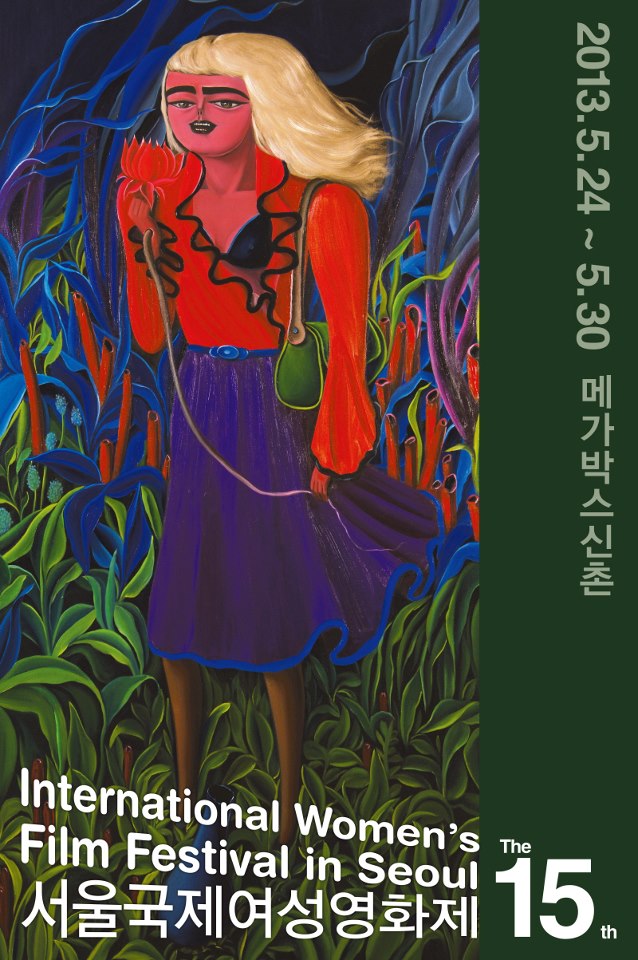
The 15th installment of the International Women’s Film Festival in Seoul (WFFIS) is due to commence from May the 24th to the 30th, in the trendy Sinchon district of the capital. With the catchphrase, “see the world through women’s eyes!”, the festival celebrates the achievements of female filmmakers throughout the world by screening an eclectic selection of films that focus on women’s issues.

The festival will launch with American director Sally Potter’s Ginger and Rosa, a film that explores the early days of feminism in 1960s London through the experiences of two teenage girls. From there, films from around the world will be shown that will promote and explore a variety of discourses.

For the full list of films you can visit the official website here, but for an in-depth look specifically at the Korean films in the festival – as well as the official WFFIS trailer – please see below.

New Currents Category

Grape Candy (청포도 사탕: 17년 전의 약속)

Grape Candy (청포도 사탕: 17년 전의 약속)

Grape Candy (청포도 사탕: 17년 전의 약속)

Director: Kim Hee-jung (김희정)

Synopsis: Released in 2012, director Kim Hee-jung’s independent drama Grape Candy explores the life of Sun-joo who is busy making preparations for her upcoming wedding. When her fiance is involved in an accident, she bumps into estranged middle school friend So-ra at the hospital and discovers the two are due to embark on a business trip together. Filled with jealousy, Sun-joo joins the trip but in doing so suppressed memories from the past begin to surface. See below for the trailer:

Love Games (연애놀이)

Love Games (연애놀이)

Love Games (연애놀이)

Director: Joung Yu-mi (정유미)

Synopsis: This animated 16 minute short film portrays the different kinds of games that couples play to bring them closer together, from mundane picnic events to more exciting endeavours.

Modern Family (가족시네마 )

Modern Family (가족시네마 )

Modern Family (가족시네마 )

Directors: Shin Su-won (신수원), Lee Soo-yeon (이수연), Kim Seong-ho (김성호), Hong Ji-young (홍지영)

Synopsis: Omnibus film Modern Family is comprised of 4 shorts that examine the family unit. In Circle Line, director Shin Su-won depicts the life of an unemployed middle-aged man. Director Lee Soo-yeon depicts the possible future of motherhood in E.D.571, involving a woman in 2030 who sold her eggs to repay student loans. In Good Company is about pregnant women in the workplace by director Kim Seong-ho. Finally director Hong Ji-young explores family trauma in Star-shaped Stain.

Circle Line (순환선)

Circle Line (순환선)

E.D.571

E.D.571

In Good Company (인 굿 컴퍼니 )

In Good Company (인 굿 컴퍼니 )

Star-shaped Stain (별 모양의 얼룩)

Star-shaped Stain (별 모양의 얼룩)


My Father's Emails (아버지의 이메일)

My Father’s Emails (아버지의 이메일)

 My Father’s Emails (아버지의 이메일)

Director: Hong Jae-hee (홍재희)

Synopsis: My Father’s Emails is an autobiographical documentary based on the life of director Hong’s father, who wrote an email detailing his experiences through periods of Korean history.

Nora Noh (노라노)

Nora Noh (노라노)

Nora Noh (노라노)

Director: Kim Sung-hee (김성희)

Synopsis: Fashion designer Nora Noh is the subject of this documentary. Her importance in the world of fashion as the first person in Korea to hold a fashion show, as well as her other contributions, are explored and profiled.

Pluto (명왕성)

Pluto (명왕성)

Pluto (명왕성)

Director: Shin Su-won (신수원)

Synopsis: Festival favourite Pluto has garnered a lot of positive critical response since its premiere at the Busan Film Festival in 2012. The film explores the incredible pressure and bullying that transpires in Korean high schools, as well as the power wielded – and abused – by elite students. While several films have tackled the challenging subject matter, Pluto‘s originality and powerful resonance has led to invitations to international festivals including Hong Kong and Berlin. See the trailer below:

Tour of Duty (거미의 땅)

Tour of Duty (거미의 땅)

Tour of Duty (거미의 땅)

Director: Kim Dong-ryung (김동령), Park Kyoung-tae (박경태)

Synopsis: Documentary Tour of Duty examines a dilapidated camp town that once hosted the US military. Directors Kim and Park follow 3 women, and reveal their secrets and memories.

You Were So Precious (너무 소중했던, 당신)

You Were So Precious (너무 소중했던, 당신)

You Were So Precious (너무 소중했던, 당신)

Director: Baek Mi-young (백미영)

Synopsis: This animated co-production with France portrays an underground world where forgotten things dwell. When a child monk decides to return one to its owner, events are set in motion.

Festival News International Women's Film Festival in Seoul (서울국제여성영화제) Korean Festivals 2013
The otherworldly landscapes are beautifully realised

Lebanon Emotion (레바논 감정) – ★★★★☆

Lebanon Emotion (레바논 감정)

Lebanon Emotion (레바논 감정)

Receiving its world premiere at the 2013 14th Jeonju International Film Festival, Lebanon Emotion (레바논 감정) quickly began to earn praise amongst audiences and critics alike. Director Jung Young-heon’s (정영헌) poignant tale of a man unable to come to terms with his mother’s death and a woman on the run is a wonderful dramatic thriller, featuring sincere and moving performances as the complex lives of the characters within become evermore intertwined. The director’s history as a cinematographer is also readily apparent throughout as the film contains some genuinely gorgeous visuals, which also serve to be deeply symbolic of the main protagonists. While a few plot holes and structural imbalances stop it from being a perfect film, with Lebanon Emotion director Jung has established himself as a Korean filmmaker to watch.

The central protagonist attempts to accept his mother's death

The central protagonist attempts to accept his mother’s death

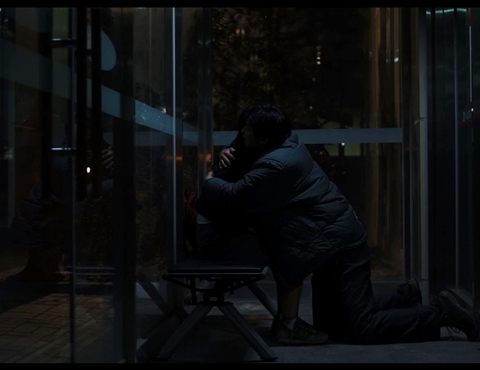
Seeking solace at a friend’s country home, a man plans his suicide due to his inability to cope with his mother’s death. Yet while taking a stroll in the mountains he hears the scream of a woman who has stepped on a deer trap, and takes her home to nurse her back to health. As they become more acquainted the unlikely couple start to realize they share several things in common, while the kindness they experience from each other is unprecedented. Yet little do either of them know that the woman’s past is catching up to them in the form of her brutal gangster ex-boyfriend, and he is far from happy.

One of the great strengths of Lebanon Emotion are the themes that it explores through the central protagonists. The grief inhabited by the man is palpable, with his depression and insular mannerisms acutely alluding to his turmoil. His reconstruction of his mother’s death is heartbreakingly poignant, as are his breakdowns when faced with the reality of the situation. Similarly issues of survival are inherent to the woman’s struggle. Fresh out of prison and with nowhere to go, the strength and resilience that she employs are wonderfully conveyed without ever becoming cliche. The contrast between the characters is also a delightful reversal of traditional gendered roles, where the emotional/homestead and physical/drifter realms are exchanged. Such work could be so easily undermined when placing the two characters together, but luckily contrivances are rejected and in its place a complex relationship develops through the slow and natural discovery of each other’s personalities.

The arrival of the woman begins a chain of unexpected events

The arrival of the woman begins a chain of unexpected events

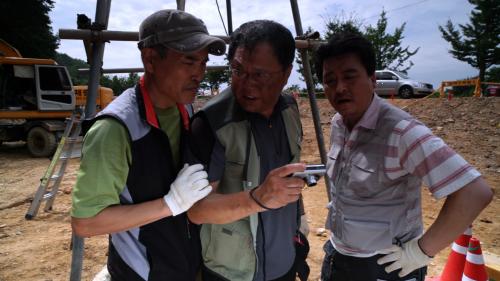
The otherworldly landscapes further serve as potent symbolism for the man and woman. The winter environments are stunning and drained of colour, and director Jung makes effective use of locations in regard to each character. While the lack of colour heightens the depression and emotional distress of the man, the snow covered land becomes a challenge for survival for the woman. The area surrounding the country home is a construction site, a place that initially embodies the dismantling of a life yet through the relationship that develops comes to convey the construction of one. Director Jung wisely makes use of each area, adding further surrealism with the inclusion of dream sequences that add even greater insight to not only the protagonists, but also as a comment on the meaning of life.

Yet Lebanon Emotion is not solely concerned with deep, existential issues. The inclusion of the woman’s ex-boyfriend adds incredible tension to the proceedings as he gets ever closer to discovering her location, placing her relationship with the man on a timer. The suspense and tension generated whenever the gangster is on screen is quite chilling, while the brutality that occurs is highly effective due to the threat rather than the action. The danger and impact of such violence on the lives of those involved makes the story continually compelling and engaging, and acts as an interesting debate on the nature of masculinity.

The otherworldly landscapes are beautifully realised

The otherworldly landscapes are beautifully realised

Verdict:

Lebanon Emotion is certainly one of the best films to emerge from the 2013 Jeonju International Film Festival. With an engrossing story involving the nature of grief, the challenges of survival, and the threat of external violence, the film never ceases to be compelling as two seemingly disparate people come together through suffering. Director Jung Young-heon’s keen visual sensibilities are stunningly realised through the lovely cinematography, making for an attractive and insightful film.

★★★★☆

Jeonju International Film Festival (제14회 전주국제영화제) Korean Festivals 2013 Reviews
Breathe Me (울게 하소서)

JIFF 2013: Quick Fire Reviews 4

Further quick fire reviews from the 14th Jeonju International Film Festival.

Breathe Me (울게 하소서)

Breathe Me (울게 하소서)

Breathe Me (울게 하소서) – ★★★★☆

Far too often, scandalous headlines of teen pregnancy and mothers abandoning their children in horrific ways fill Korean media. It’s therefore quite brave of director Han Eun-young (한은영) to produce a film about both issues in this 20 minute short, particularly as it is staged from the perspective of the teens themselves. The result is an incredibly engaging and compelling film, one that is so enthralling that it feels more like 5 minutes than the actual running time. As high school girl A-young has her baby in secret, director Han effectively uses the dim lighting and locations very well in constructing the loneliness and isolation of the situation, contrasted well with the panic and adrenaline-induced scenes of her boyfriend as he attempts to find her. Rather than provide excuses, director Han conveys how the fear of the situation leads the teens to make illogical choices that jeopardize them all. While more information about the central protagonists, and a longer running time, would have made Breathe Me a stronger short, the film is a powerful piece and one that is timely.

Dear Dolphin (환상속의 그대)

Dear Dolphin (환상속의 그대)

Dear Dolphin (환상속의 그대) – ★★★☆☆

Director Kang Ji-na’s (강진아) Dear Dolphin examines the grief, and the illogical sense of guilt, that follows the death of a loved one. Such weighty subject matter is given a sense of surrealism with the inclusion of water symbolism and hallucinations brought on by insomnia, as the narrative conveys how loving memories and emotions can become poison through the refusal of acceptance. For the most part director Kang succeeds in capturing the psychological devastation and the difficulty in moving on, yet the narrative structure is also responsible for lessening the poignancy of the message. As the story often jumps between time frames without much notice, as well as the stylistic changes and the picking up and dropping of subplots at whim, it becomes difficult to fully connect with the central protagonists and to feel their trauma. Perhaps this is intentional in order to keep the film ‘light’ despite the complex subject matter, but the result is one that distances audiences from the raw emotional power that the film attempts yet never fully manages to conceive. A thought-provoking film.

Festival News Jeonju International Film Festival (제14회 전주국제영화제) Korean Festivals 2013
The 10th Green Film Festival in Seoul

GFFIS 2013: The 10th Green Film Festival in Seoul

The 10th Green Film Festival in Seoul

The 10th Green Film Festival in Seoul

Kicking off on the 9th of May and running through until the 16th, the 10th Green Film Festival in Seoul (GFFIS) will take place at CGV cinemas in Yongsan. The festival screens films that highlight environmental matters from all over the world, ranging from GMO foods to corporate corruption, animal welfare to government protesting, and that great variety continues to be present within the 2013 edition.

Opening with the Matt Damon starring Promised Land, directed by Gus Van Sant, the festival boasts an impressive array of international screenings. For the full list of films please visit the official website here (in Korean), however featured below are the Korean entries that will emphasize the environmental issues occurring within the country.

But first, be sure to check out the official trailer for the festival:

Korean Films

International Environmental Film Category

Forest Dancing (춤추는 숲)

Forest Dancing (춤추는 숲)

Forest Dancing (춤추는 숲)

Director: Kang Seok-pil (강석필)

Synopsis: The documentary follows the residents of a small village community in Seoul, who protest against a building project that will raze part of a mountain to make way for a private academy.

Korean Environment Category:

Boiler (남양주는 모른다)

Boiler (남양주는 모른다)

Boiler (남양주는 모른다)

Director: Lee Hyun-Ji (이현지)

Synopsis: Fictional film Boiler explores the lives of a handful of binge drinking tunnel laborers. Their mundane existence is changed however when they discover something underground while working.

Cats and Dogs (그 강아지 그 고양이)

Cats and Dogs (그 강아지 그 고양이)

Cats and Dogs (그 강아지 그 고양이)

Director: Min Byung-Woo (민병우)

Synopsis: The first film to be shot entirely using the iphone 4s, this romantic-comedy depicts the lives of two pet owners and their relationships.

Cats in the Pool (수영장의 고양이들)

Cats in the Pool (수영장의 고양이들)

Cats in the Pool (수영장의 고양이들)

Director: Kim Bo-Kyoung (김보경)

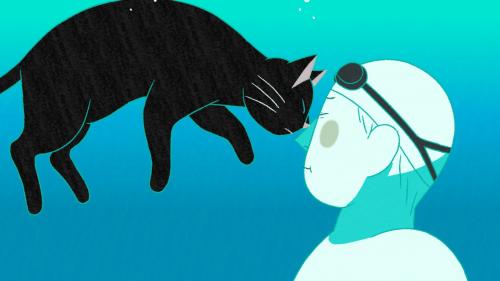
Synopsis: In this animated short, a man hits a cat while driving. The guilt of the event causes him to hallucinate the cat – and other felines – wherever he goes.

Cement Town Tragedy (투구꽃 그 마을)

Cement Town Tragedy (투구꽃 그 마을)

Cement Town Tragedy (투구꽃 그 마을)

Director: Oh Kyu-Ik (오규익)

Synopsis: The documentary examines a small town and the impact of a cement plant built 50 years ago, and the fallout of hazardous materials on the health of the community.

Cruel Inheritance - Heredity (잔인한 내림 – 遺傳)

Cruel Inheritance – Heredity (잔인한 내림 – 遺傳)

Cruel Inheritance – Heredity (잔인한 내림 – 遺傳)

Director: Kim Hwan-Tae (김환태)

Synopsis: Cruel Inheritance is a documentary concerned with the ramifications of the atomic energy and bombs, from Hiroshima in 1945 through to Fukushima in 2011.

Fog and Smoke (안개와 연기)

Fog and Smoke (안개와 연기)

Fog and Smoke (안개와 연기)

Director: Cha Jea-Min (차재민)

Synopsis: Experimental film Fog and Smoke explores the complicated and intense emotions involved in the development of a city in the port of Incheon., including issues related to the financial crisis.

Green Slime (녹색물질)

Green Slime (녹색물질)

Green Slime (녹색물질)

Director: Kwon Oh-Kwang (권오광)

Synopsis: This 12 minute short fiction film portrays a group of friends who reunite in a bar, and recount their childhood story involving a ‘green monster’.

The Hours of Tree (나무의 시간)

The Hours of Tree (나무의 시간)

The Hours of Tree (나무의 시간)

Director: Jeong Da-Hee (정다희)

Synopsis: Exploring the life of trees across seasons and beyond, this animated short is concerned with the way life unfolds and develops for vegetation, and the very meaning of existence.

KBS Environment Special; Experiment Excrement (KBS 환경스페셜: 똥을 실험하다)

KBS Environment Special; Experiment Excrement (KBS 환경스페셜: 똥을 실험하다)

KBS Environment Special; Experiment Excrement (KBS 환경스페셜: 똥을 실험하다)

Director: Shin Dong-Man (신동만)

Synopsis: The environmental impact of human waste is examined in this KBS documentary, portraying the thoughtless consumption of materials every time a person flushes the toilet.

A Monster in the Reservoir (저수지의 괴물)

A Monster in the Reservoir (저수지의 괴물)

A Monster in the Reservoir (저수지의 괴물)

Director: Lee Sung-Gang (이성강)

Synopsis: The life of a monster who dwells in a reservoir is portrayed in this animated short. When human development approaches, the monster’s home is threatened.

Paldang (팔당 사람들)

Paldang (팔당 사람들)

Paldang (팔당 사람들)

Director: Kauh Eun-Jin (고은진)

Synopsis: Paldang examines the issues involved in farming in contemporary Korea, from government subsidies to organic farming and wind power, and the conflicts that arise.

Souvenir Animation

Souvenir Animation

Souvenir Animation

Director: Kang Min-ji (강민지)

Synopsis: This 11 minute animated film explores the keepsakes and mementos that are obtained over time through traveling. The photos and ornaments from trips in different times state the importance of travel.

Sweet Temptation (잘 먹고 잘 사는 법)

Sweet Temptation (잘 먹고 잘 사는 법)

Sweet Temptation (잘 먹고 잘 사는 법)

Director: Jeong Han-Jin (정한진)

Synopsis: A young boy who had previously only consumed organic foods is suddenly introduced to chocolate, and begins to question his lifestyle.

Talking Architecture, City:Hall (말하는 건축, 시티:홀)

Talking Architecture, City:Hall (말하는 건축, 시티:홀)

Talking Architecture, City:Hall (말하는 건축, 시티:홀)

Director: Jeong Jae-eun (정재은)

Synopsis: The difficulties of the new city hall project in Seoul are captured in this documentary, exemplifying the struggle of old versus new.

Who Made It? (누가 만들었을까?)

Who Made It? (누가 만들었을까?)

Who Made It? (누가 만들었을까?)

Director: Ji Tae-kyoung (지태경)

Synopsis: The beautiful landscapes of Jeju Island are the focus of this documentary. The people of Jeju and their relationship to the surroundings are also featured, alongside Jeju musicians.

Festival News Green Film Festival in Seoul (제10회 서울환경영화제) Korean Festivals 2013
Shibata and Nagao (시바타와 나가오)

JIFF 2013: Quick Fire Reviews 3

More quick fire reviews from the 14th Jeonju International Film Festival.

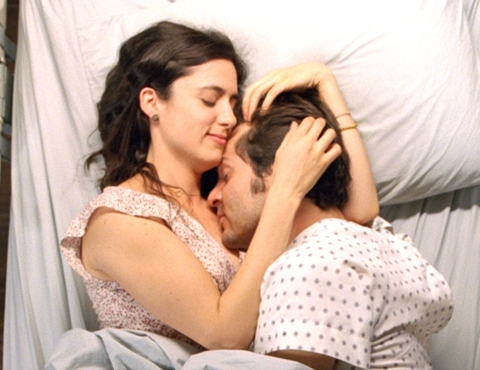
Inertia

Inertia

Inertia – 6/10

This Mexican hospital drama has an extremely heartfelt script, as the nature of love and sacrifice are explored. Central protagonist Lucia accidently runs into her ex-boyfriend Felipe who, thanks to failing kidneys, has momentary lapses in coherence. As she decides to take care of him the two discover feelings that they thought were long gone, yet Felipe’s increasingly volatile state causes further heartache. Director Isabel Munoz Cota competently helms the drama, yet there is always a distance between the audience and the characters, a critical issue for such an emotional story. Similarly the acting is also adequate, but the roles demand much more skill and nuance than what is provided. Inertia is a well-made film that doesn’t quite manage to fulfill the potential of the script.

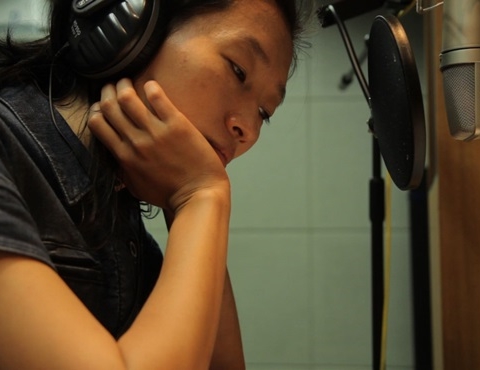
Burn, Release, Explode, The Invincible (연소, 석방, 폭발, 대적할 이가 없는)

Burn, Release, Explode, The Invincible (연소, 석방, 폭발, 대적할 이가 없는)

Burn, Release, Explode, The Invincible (연소, 석방, 폭발, 대적할 이가 없는) – 4/10

Director Kim Su-hyun  (김수현) blends a variety of generic conventions within Burn, Release, Explode, The Invincible, merging drama, documentary, and experimental forms. The result is an odd tale about a woman with an androgynistic voice, who is in high demand for voice over work due to her authoritative yet soft vocal style. Her gift is also her curse however as the pressures surrounding her impact her mental stability. In terms of technique it’s a well-made film, yet the story is difficult to follow and the central protagonist hard to empathize with given the disparate conventions and non-linear storytelling. The finale is also quite odd as traditional Korean performances are introduced to express freedom. An interesting film, but also one that’s difficult to become immersed in.

Shibata and Nagao (시바타와 나가오)

Shibata and Nagao (시바타와 나가오)

Shibata and Nagao (시바타와 나가오) – 6/10

While his last film Breathless was a mesmerizing exploration of social class and the nature of violence, director Yang Ik-june (양익준) opts for a very different approach with romantic drama Shibata and Nagao. Filmed in Japanese, the film explores ex-lovers who meet again following a later break-up. Director Yang’s style is soft and tender as he examines the feelings that still exist between them, but it is also frustratingly slow-paced as very little information about them is revealed. There are some lovely moments that arise, as well as comedic – they discuss if a loud, violent couple are Korean – and it is thought-provoking in regards to unresolved/unrequited emotions. There’s a sense that there is a larger story not shown which is a shame. A lovely, yet slow-paced film.

Festival News Jeonju International Film Festival (제14회 전주국제영화제) Korean Festivals 2013 Reviews