Colourful Dr. Swalski provides the tips Bo-na needs to move ahead, to great comedic effect

How to Use Guys with Secret Tips (남자사용설명서) – ★★★★☆

How to Use Guys with Secret Tips (남자사용설명서)

How to Use Guys with Secret Tips (남자사용설명서)

When it was released on February the 14th, How to Use Guys with Secret Tips (남자사용설명서) had the unenviable – and quite unfortunate – task of competing with several enormously popular films at the box office, in the form of Miracle in Room Number 7 and The Berlin File, which earned over 12 million and 7 million admissions respectively. A week later, gangster epic New World appeared in cinemas, hauling over 4 million admissions. Despite positive reviews from critics and audiences alike, the romantic-comedy just couldn’t compete.

This is a genuine shame as How to Use Guys with Secret Tips is an incredibly energetic, entertaining, and fresh rom-com. Director Lee Won-seok (이원석) infuses the film with a wacky and colourful sensibility, whilst simultaneously probing the sexism that exists within the workplace and, by extension, Korean culture. While the film turns to formulaic predictability in the final act to tie up all the loose ends, How to Use Guys with Secret Tips is visually enjoyable and great fun, marking director Lee as a talent to watch.

Choi Bo-na is constantly undervalued and overworked - until she finds the video

Choi Bo-na is constantly undervalued and overworked – until she finds the video

Assistant director Choi Bo-na (Lee Si-yeong (이시영) has worked for years in a TV commercial company, endlessly slaving away on other productions while waiting for her big break…which never arrives. Moreover, Bo-na is very aware that her gender is an issue within the workplace as it holds her back from progressing within the sexist industry. When a new commercial for the company is shot on a beach, lead actor Lee Seung-jae (Oh Jeong-se (오정세) complains about everything, and Bo-na’s frustrated attempts to chastise the arrogant star results in more disapproval. So much so in fact that when the commercial has finished shooting, the entire team leave the sleeping AD on the beach. Wandering alone at night, Bo-na spies the colourful Dr. Swalski (Park Yeong-gyoo (박영규) selling instructional videos. Reluctantly agreeing to buy How to Use Guys with Secret TipsBo-na starts putting the tips into practice and suddenly her life begins to turn around with hilarious results.

While the story of a woman struggling in both her professional and personal life is nothing new in the rom-com arena, director Lee infuses the film with such a whimsical visual and musical vitality that it’s impossible not to be won over. From the outset the director’s keen sense of mise-en-scene and flamboyantly playful use of text and image techniques are apparent, yet it is the introduction of charismatic Dr. Swalski that allows him to fully display his zany aesthetics. The doctor – brilliantly performed by Park Yeong-gyoo – is a guardian angel of sorts who bestows advice on how to manipulate men through the video. The cheesy and camp sensibilities of such ’70s style infomercials are lovingly recreated to hilarious effect, from the costumes and props through to the mistakes and bad editing. What makes Dr. Swalski special however is that he is not confined to the TV set. Director Lee constantly plays with and breaks the barriers between the three realities – the video, Bo-na’s life, and the audience – which makes the film incredibly charismatic.
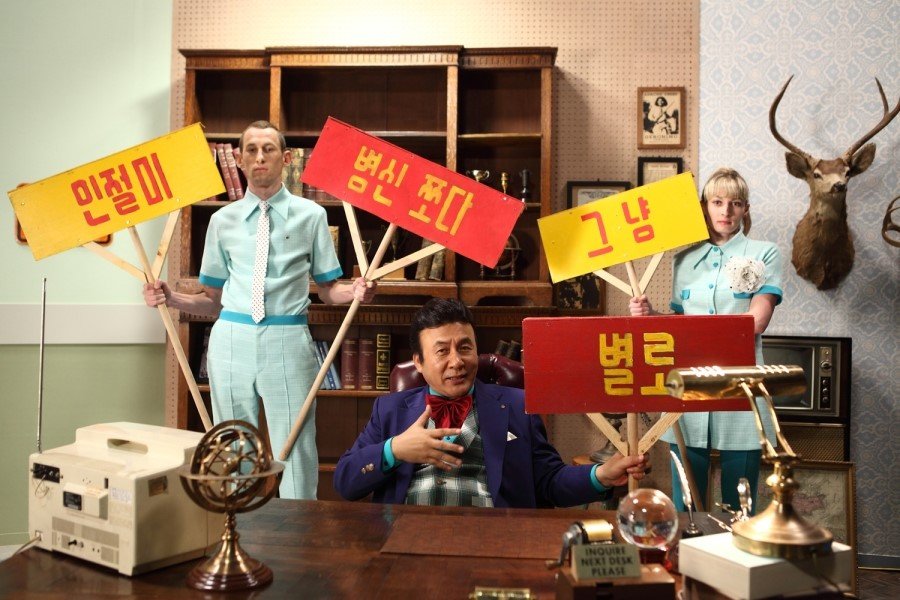
Colourful Dr. Swalski provides the tips Bo-na needs to move ahead, to great comedic effect

Colourful Dr. Swalski provides the tips Bo-na needs to move ahead, to great comedic effect

The comedy hijinks that ensue as Bo-na uses the tips are fantastically entertaining as they feature elements of truth, in that director Lee is probing real gender issues that exist within contemporary Korean culture. Bo-na is a great and talented director, yet her gender halts her progress. Her attempts to conceal her femininity with hoodies and to be treated equally merely results in hiding her attractiveness, which stops men making allowances for her. However when Bo-na begins employing Dr, Swalski’s advice, the story spins into poking fun at modern masculinity to great effect. From simple eye contact through to massaging the male ego, Bo-na learns the simplicity of the opposite sex and rapidly rises through the ranks. This is articulated the most through her relationship with arrogant actor Lee Seung-jae who, despite his initial snobbery, finds himself in very comical situations in attempting to prove his worth.

Yet How to Use Guys with Secret Tips unfortunately flounders in the final act. With so many funny plot threads to tie up, the story falls back on the predictable cliches found in the genre to do so. The absence of director Lee’s playfulness is keenly apparent during the resolution which is a real shame, as the build up to that point is wonderfully entertaining. Still, while the finale is somewhat lacking, the film is certainly one of the most visually energetic and inventive romantic comedies to appear from Korea in recent memory, and a great debut from director Lee.

Can Bo-na find true love and success without using the tips?

Can Bo-na find true love and success without using the tips?

Verdict:

How to Use Guys with Secret Tips is a wonderfully wacky and colourful romantic comedy, full of visual and musical vitality. Director Lee Won-seok is brilliantly inventive as he plays with genre and cinematic conventions, infusing the film with a seemingly boundless energy and enthusiasm. The laughs come thick and fast as they are based in truth, including sexism in the workplace and the fragility of the male ego, which are explored to highly comical effect. While the final act falls back on cliche and predictability, How to Use Guys with Secret Tips is a very entertaining and fun rom-com.

★★★★☆

Puchon International Fantastic Film Festival (제17회 부천국제판타스틱영화제) Reviews
North Korean spy Ryu-hwan disguises himself as village idiot Dong-gu

Secretly, Greatly (은밀하게 위대하게) – ★★☆☆☆

Secretly, Greatly (은밀하게 위대하게)

Secretly, Greatly (은밀하게 위대하게)

Secretly, Greatly (은밀하게 위대하게) is responsible for breaking several notable records in Korean cinematic history upon release. The film surpassed all expectations to earn the biggest opening day for a domestic film with 497,560 admissions; the following day another benchmark was set as it scored a whopping 919,035 admissions, the largest haul in a single day for a Korean film. With such an impressive start, it’s perhaps unsurprising that Secretly, Greatly took only 36 hours to pass the coveted one million admissions milestone, the fastest Korean film to do so. And to cap it all off, the film won the Citizen’s Choice Award at the 2013 Puchon International Film Festival.

With such incredible success it would be reasonable to assume that Secretly, Greatly must therefore be an outstanding piece of cinema, but unfortunately that is far from the truth. While it begins confidently, the film quickly becomes submerged beneath pointless supporting characters and melodrama, with the belated action sequences and nationalist agenda bland and uninspiring. Competently directed by Jang Cheol-soo (장철수) yet lacking in substance, Secretly, Greatly is ultimately only for fans of the original webcomic and the extremely handsome lead actors.

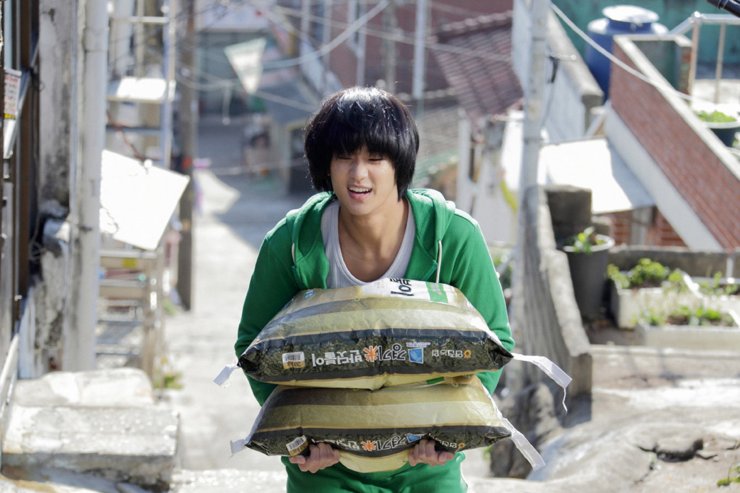
North Korean spy Ryu-hwan disguises himself as village idiot Dong-gu

North Korean spy Ryu-hwan disguises himself as village idiot Dong-gu

North Korean soldier Won Ryu-hwan (Kim Soo-hyeon (김수현) has trained relentlessly to be the best in his unit, and his efforts have not gone unnoticed. His superiors give Ryu-hwan a mission – to infiltrate South Korea under the cover identity of Dong-gu, the mentally ill fool of a shanty town, and to await further instructions. Taking to his new identity with patriotism and verve, Ryu-hwan slowly becomes disillusioned as time passes and with no word from his homeland. Yet one day out of the blue rival Northern soldier Ri Hae-rang (Park Ki-woong (박기웅) shows up in the neighbourhood, sporting a wannabe rocker identity. Adding further distress, junior soldier Ri Hae-jin (Lee Hyun-woo (이현우) also appears as a high school student. Yet just as the former rivals begin to form a brotherhood, their country calls them into action but their hearts and minds pull them in different directions.

Secretly, Greatly begins well, as Ryu-hwan is given orders by a scarred and scary general on a dark and snowy desolate beach. The foreboding sense of danger is wonderfully and skillfully undermined as the film then cuts to his new identity as Dong-gu, and the harassment and ridicule he experiences from the local townspeople. The editing is superb during these scenes as everything Dong-gu does, from falling over to sneezing, is all meticulously planned but results in physical comedy, and is highly entertaining to watch. The humour derived from the great contrast is amusing, especially in watching Dong-gu being humiliated despite his impressive skill set.

Ryu-hwan is joined by two other top spies, who form an uneasy fraternity

Ryu-hwan is joined by two other top spies, who form an uneasy fraternity

Yet once the opening has passed, the film very quickly becomes incredibly tedious. In the attempt to show Ryu-hwan’s life is far removed from the glory he imagined, he is inundated with bland, everyday problems. Often these problems are not even his, but those of the local community. The variety of inhabitants that are introduced into the story are completely one-dimensional and serve no purpose other than to provide momentary distractions for Ryu-hwan. Cliches and stereotypes abound, featuring the struggling single mother, the high school bully, the sexy girl with a heart of gold, and so on. None of them are developed into interesting characters, and the sheer number of them halts any development of the main protagonists themselves. Rather, their inclusion instigates a number of short stories that offer brief instances of comedy and/or drama, before being completely forgettable.

Likewise, the addition of wannabe rocker Hae-rang is a wholly wasted opportunity to initiate rivalry and bring some kind of direction to the wandering narrative. Hae-jin fares much better upon entry to the community, instigating mystery and action which is welcome. Yet that too quickly disintegrates as the three forge an unlikely kinship at a community picnic, such is the excitement within the shanty town for the spies.

The aimless story finally shifts gears in the final act as a North Korean general begins a special protocol, forcing Secretly, Greatly back into becoming an action film. Yet for three supposedly top agents the action is very dull and lacking in thrills, while the additional melodrama doesn’t carry any weight. In attempting to please all factions of the audience with elements from all genres, Secretly, Greatly manages to ultimately satisfy no-one.

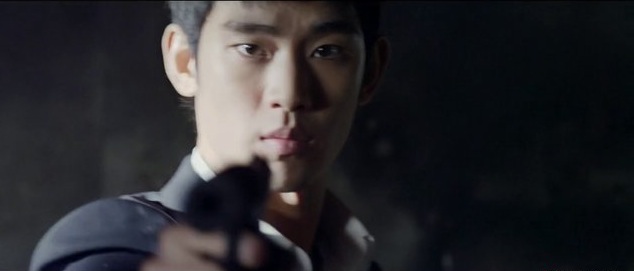
Finally employing his lethal skills, Ryu-hwan fights for justice

Finally employing his lethal skills, Ryu-hwan fights for justice

Verdict:

Secretly, Greatly is a record breaking film, although unfortunately that doesn’t mean that it’s of high quality. While competently directed by Jang Cheol-soo and with a fun opening, things quickly become tedious due to an array of one dimensional stereotypes that flit throughout the aimless narrative, while the drama and action are bland and uninspired. Secretly, Greatly’s successes seems to be based on fans of the original comic strip stories and of handsome actors Kim Soo-hyeon, Park Ki-woong and Lee Hyun-woo, as there is little else to recommend.

★★☆☆☆

Puchon International Fantastic Film Festival (제17회 부천국제판타스틱영화제) Reviews
Our Sunhi (우리 선희)

‘Our Sunhi’ (우리 순희) gets a Trailer and Invitation to Locarno Film Festival

Our Sunhi (우리 순희)

Our Sunhi (우리 순희)

Director Hong Sang-soo’s (홍상수) latest film Our Sunhi (우리 순희) has been invited to Switzerland’s prestigious Locarno International Film Festival, which is due to commence on the 7th of August.

The film tells the story of Sunhi (Jeong Yu-mi (정유미) who, after graduating with a degree in film, returns to university seeking a letter of recommendation from a professor in order to continue her studies in America. Yet Professor Choi (Kim Sang-joong (김상중) is not simply content to give the letter as he likes her, and attempts to give advice for Sunhi’s future. Complicating matters further, Sunhi meets two other men from her past – film director Moon-soo (Lee Seon-gyoon (이선균) and veteran filmmaker Jae-hak (Jeong Jae-yeong (정재영). As they enter her life once more all three men seemingly can’t control their liking of the young woman, and continue to hang around her acting as mentors.

Our Sunhi  is director Hong’s 15th film, and will feature within the ‘Concorso Internazionale’ program of the festival, where it will also receive its world premiere. Please see below for the trailer, which also has English subtitles.

Film News
Exploiting the opportunity to become a news anchor, Yeong-hwa begins to regret his decision

The Terror Live (더 테러 라이브) – ★★★★☆

The Terror Live (더 테러 라이브)

The Terror Live (더 테러 라이브)

The Terror Live (더 테러 라이브) is a rare breed of Korean thriller. Featuring superstar Ha Jeong-woo (하정우), the film takes place almost entirely within a single room rather than racing against time around a city. As such it shares several tropes with Joel Schumacher’s Phone Booth, ramping up tension through the claustrophobic setting while simultaneously exposing the lead protagonist for past bad deeds.

Within the highly restrictive setting director Kim Byeong-woo (김병우) does an excellent job in generating suspense, while the critique of the highly competitive – and corrupt – world of the newsroom makes the thriller a surprisingly deep cultural examination. However, the film is let down by a lack of characterisation in regards to the central roles while the tension is often undermined by arguably unintentional comedy. Despite such shortcomings The Terror Live is a unique and interesting addition to the genre, and one which leaves audiences wondering about the villains in society after the credits have finished rolling.

Yeong-hwa is apathetic in his role as a radio show host

Yeong-hwa is apathetic in his role as a radio show host

Recently divorced and demoted to a radio show host, Yoon Yeong-hwa (Ha Jeong-woo) couldn’t care less about his new role as he repeatedly offends callers with his brusque manner. However when one caller phones in and claims to have primed bombs on Mapo Bridge located near the station, Yeong-hwa scoffs – and moments later the bridge is in ruins. Seeing this as his chance to return to the spotlight as a TV news anchor, Yeong-hwa teams up with former manager Cha Dae-eun (Lee Kyeong-yeong (이경영), quickly setting up a newsroom and broadcasting the terrorists demands instead of reporting to the police.  As the ratings skyrocket and other news agencies struggle to catch up, it quickly becomes apparent to Yeong-hwa that something is very, very wrong as the terrorist becomes increasingly fixated on him personally, intent on exposing his checkered past.

One of the great strengths of The Terror Live is in conveying the cutthroat manner executed by those in power and in the media.  The thriller is one of the few films to tackle the issue of real news and the mediated news presented to society, capturing the seemingly inherent corruption and societal risks taken in the war for ratings.  Within this framework Yeong-hwa – whose name literally means ‘movie’ – is very much at home and director Kim does a superb job in slowly drip-feeding character information throughout the narrative. From the outset Yeong-hwa is certainly in-keeping with other thriller anti-heroes as he thrives in the grey areas of morality, only coming to reconsider his position due to the threat of exposure. As such the anchorman must not only acquire, filter, and present the news to Korean society and outwit a terrorist on live television, but also fend off a damaging character assassination attempt and please his management. Juggling so many plot threads is consistently riveting viewing, as new dimensions to the case constantly challenge everything Yeong-hwa and the audience have come to learn, driving up suspense for a thrilling viewing experience.

Exploiting the opportunity to become a news anchor, Yeong-hwa begins to regret his decision

Exploiting the opportunity to become a news anchor, Yeong-hwa begins to regret his decision

Ironically however the inclusion of so many plot threads is also one of The Terror Live‘s key flaws, as there is so much going on that character development is sacrificed. Ha Jeong-woo is a gifted actor and performs very competently, yet he is given little to work with as Yeong-hwa other than being a shrewd and morally ambiguous news anchor. The same criticism also applies to the terrorist, who clearly has strong motivation for his attacks but is a rather two-dimensional antagonist. Luckily director Kim’s highly kinetic camerawork keeps such issues at bay featuring a variety of techniques including crash-zooms and realism-inducing camera shaking as well as more traditional fare, while the rapid editing helps to ramp up the tension without ever becoming nauseating.

The suspense generated within the confines of the newsroom is very impressive, yet bizarrely there are often instances of unwarranted comedy that serve to completely undermine the tension. It is difficult to know if such moments are intentional or not. When Yeong-hwa struggles with a situation and begins swearing at his oppressors it is incredibly funny, although the straight faces within the film suggest otherwise. Once the comedy has passed however it’s back to business and the dramatics increase further, leading to a daring finale and a potent commentary on Korean politics and the media.

The conflict between the bid for ratings or stopping the terrorist put the team at odds

The conflict between the bid for ratings or stopping the terrorist put the team at odds

Verdict:

The Terror Live is a rare and highly interesting thriller. Within the confines of a newsroom director Kim Byeong-woo does an excellent job in escalating tension by featuring a variety of camerawork techniques, while the story regarding corruption within both Korean media and the government is a potent socio-cultural critique. While the lack of characterisation and (arguably unintentional) comedy undermines the suspense, there is more than enough on offer to provide an entertaining thrill-ride from start to finish.

★★★★☆

Reviews
Ling Ling - now named 'Mr. Go' - becomes a baseball sensation in Korea

Mr. Go (미스터 고) – ★★☆☆☆

Mr. Go (미스터 고)

Mr. Go (미스터 고)

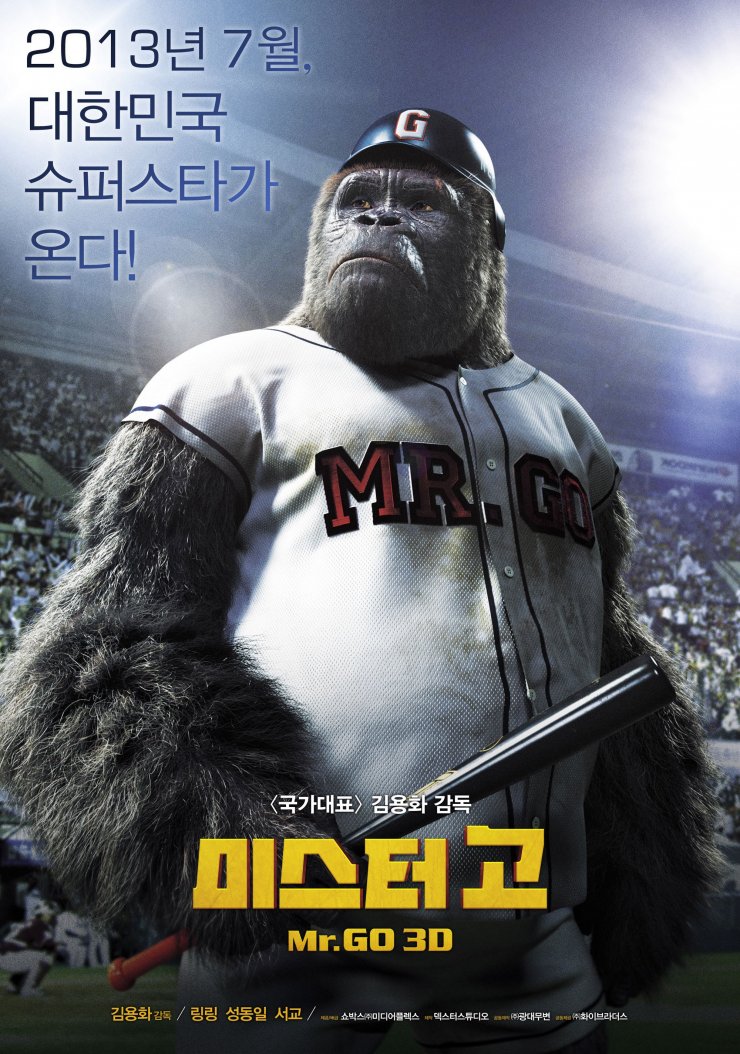
Much has been reported regarding Mr. Go‘s (미스터 고) production credentials. The $25 million film is jointly financed by Korea’s Showbox/Mediaplex alongside China’s Huayi Bros. Corporation, who invested around $6 million – quite a landmark in terms of scale.  Furthermore Korean VFX team Dexter Digital – set up by writer/director Kim Yong-hwa (김용화) especially for the film – had the unenviable task of creating the titular gorilla onscreen, employing some 150 staff to painstakingly use their expertise for over 1000 shots. So with such an incredible production history, is Mr. Go worth the wait?

Visually speaking, very much so. Dexter Digital are to be congratulated for producing such incredible computer-generated imagery, which is certainly on par with recent Hollywood fare. Yet the family film stutters from beginning to end with an underwhelming narrative, one that fails to entertain both adults and children, and is crucially lacking in fun.

Gorilla Ling Ling and trainer Wei-wei form an loving bond in the circus

Gorilla Ling Ling and trainer Weiwei form a loving bond in the circus

Based on the popular ’80s comic The 7th Team by Heo Young-man, Mr. Go tells the story of a poor but happy circus family in China. The ringmaster is a keen baseball fan and terrible gambler, and as such teaches circus gorilla Ling Ling to play the sport whilst simultaneously accruing enormous debts with local gangsters. Yet Ling Ling is a gentle soul, and upon being introduced to baby Weiwei, the two grow up together developing an unspeakable bond. Disaster strikes during an earthquake however, as the ringmaster dies leaving his responsibilities – and his sizable debt – to 15 year old Weiwei (Jiao Xu). To pay off the gangsters, Weiwei and Ling Ling take up the offer of Korean sports agent Seong Choong-soo (Seong Dong-il (성동일) to play baseball for the ailing Doosan Bears in Seoul.

Mr. Go is very much a landmark in Korean cinema due to visual effects team, who have done a superb job in creating the fully computer-generated gorilla on the big screen. It was always something of an odd choice given Peter Jackson’s King Kong and Rupert Wyatt’s Rise of the Planet of the Apes are still in recent memory, yet Dexter Digital are to be congratulated for their work as they go toe-to-toe with Hollywood and emerge very respectably. There are even nods to such trains of thought as characters within the film mock each other with quips – a CEO chastises a helicopter team with, “Are they trying to make King Kong 2?” – playing to audience knowledge. While some of the body movements are atypical of big apes, it is wholly acceptable given that Ling Ling is playing baseball. Likewise the 3D is quite impressive as baseballs fly out of the screen while Ling Ling’s acrobatics are given extra potency, yet director Kim doesn’t include enough scenes to really justify the medium.

Ling Ling - now named 'Mr. Go' - becomes a baseball sensation in Korea

Ling Ling – now named ‘Mr. Go’ – becomes a baseball sensation in Korea

Yet while the visuals consistently impress, the story is incredibly bland. Ling Ling and Weiwei’s history is China is glossed over in a quick montage which is a real missed opportunity, in order to make way for the baseball scenes. However when the duo arrive in Korea, the baseball scenes themselves also succumb to the montage treatment which, while easily the highlight of the entire film, is another key area of development that is not explored. Instead the narrative focuses on the board room meetings and backstage politics of sports agents, managers and moneymen, which is incredibly dull. Such scenes also open up the problematic area in representing Korean, Chinese, and Japanese characters which has become an issue due to the highly complex histories and relationships. While the representatives of each nation are mocked somewhat equally, there is still a hierarchical structure on display – when a Chinese gangster interrupts a post-game meeting, the Korean CEO asks, “Did anyone order Chinese food?” – which has displeased audiences.

The focus also relegates Weiwei and Ling Ling to the background, and their absence is keenly felt. Yet ironically whenever they are on screen, they are often used merely as interesting visual devices rather than characters in their own right. Instead it’s only really Korean sports agent Seong Choong-soo who undergoes a transformation from shrewd businessman to kindly father-figure, force-fed through the inclusion of belated melodrama rather than genuine development.

That said, director Kim is a very competent filmmaker, and his direction throughout Mr. Go does nothing to change his reputation. Mr. Go is a solid effort, but one in which the story fails to live to visual magic.

Sports agent Seong Choong-soo changes from shrewd to kind thanks to Ling Ling and Weiwei

Sports agent Seong Choong-soo changes from shrewd to kind thanks to Ling Ling and Weiwei

Verdict:

Mr. Go is a visual delight, and Dexter Digital have proven they can match Hollywood productions with their superb computer-generated expertise. Director Kim Yong-hwa captures the events as competently as ever, achieving the sense of awe that goes along with watching a gorilla play baseball. It’s a shame then that the story doesn’t match the visual prowess, bizarrely skipping over character development – particularly that of gorilla Ling Ling and trainer Weiwei – to focus on backstage baseball politics, which is a real bore. Visually impressive yet light on entertainment, Mr. Go is an unfortunate misfire.

★★☆☆☆

Reviews
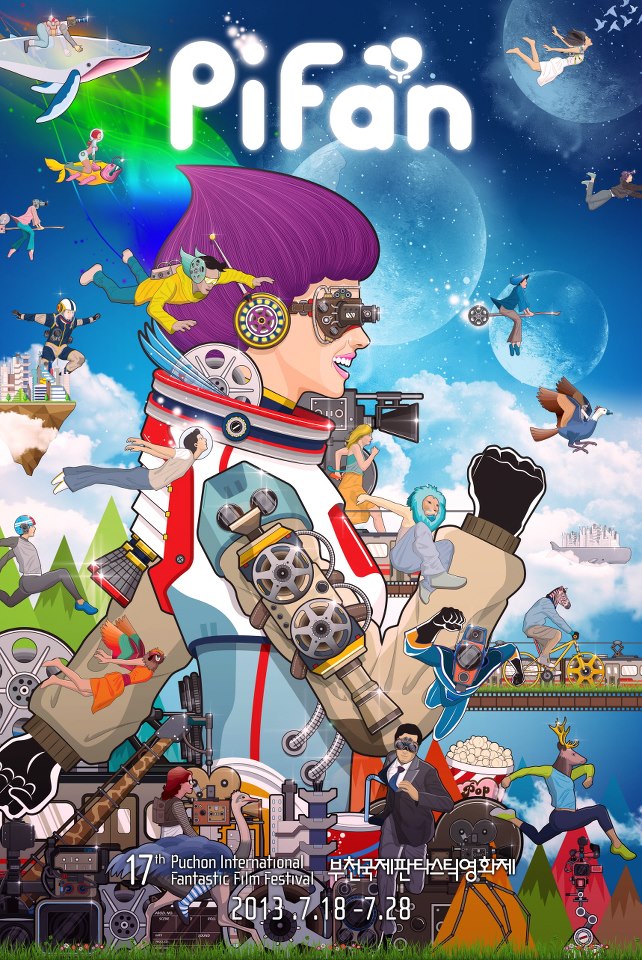
The 17th Puchon International Fantastic Film Festival

PiFan 2013: Red Carpet, Opening Ceremony and ‘The Congress’ Screening

The 17th Puchon International Fantastic Film Festival

The 17th Buchon International Fantastic Film Festival

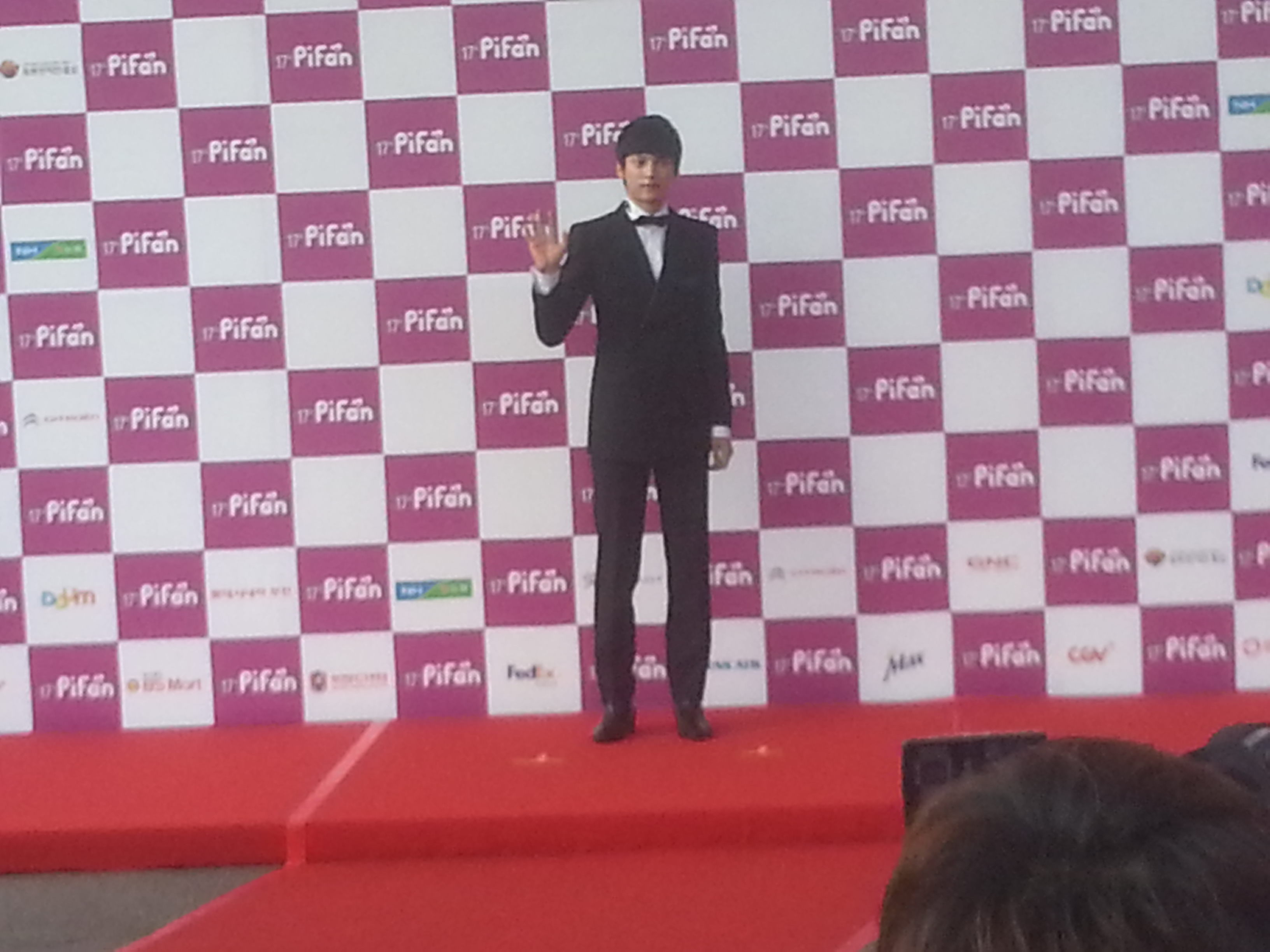
On a swelteringly hot Thursday the 18th of July, the opening ceremony of the 17th Buchon International Fantastic Film Festival began with a wonderful red carpet event.

Film stars, directors and programmers from a variety of countries all traversed the carpet to the screams of gathered fans. Hosts Shin Hyeon-joon and Choi Soo-young from Girls’ Generation were among the first to walk down followed by PiFan lady and guy Fuji Mina and Lee Hyun-woo, before several notable and internationally acclaimed film stars including Yeo Min-jeong, Son Se-bin, Kim Yoon-hye, Lee Soo-hyeok, Lee Chae-young, Park Ji-soo, Jeong Han-bi, Ahn Seung-gi, and directors Im Kwon-taek and Kim Dong-ho.

Once everyone was seated the opening ceremony began, kicked off with a performance from Kpop star – and former Buchon resident – Lee Hi, who sang her hit ‘Rose’. Shortly thereafter the PiFan awards ceremony took place, celebrating some the most popular contemporary Korean film stars. Ma Dong-seok walked away with the IT Star Award, while Kim Soo-hyun and Park Shin-hye were the recipients of the Fantasia Awards, as voted by Buchon citizens. Superstars Lee Byeong-heon and Jeon Ji-hyeon were awarded the Producers’ Choice Awards, respectively.

Red carpet event gears up

Red carpet event gears up

Fans wait to see their idols

Fans wait to see their idols

Programmers are interviewed

Programmers are interviewed

The hosts arrive

The hosts arrive

Soo-young and pose for the cameras

Soo-young and Shin Hyeon-joon pose for the cameras

PiFan guy and lady

PiFan guy and lady

Handsome actors were cheered

Handsome actors were cheered

Actresses wore stunning dresses

Actresses wore stunning dresses

dress caused a stir

Yeo Min-jeong’s dress caused a stir

Japanese filmmakers walked the carpet

Japanese filmmakers wore traditional clothes

Rising stars also made an appearance

Rising stars also made an appearance

Director Im Kwon-taek traverses the red carpet with Ahn Seung-gi and Kim Dong-ho

Director Im Kwon-taek traverses the red carpet with Ahn Seung-gi and Kim Dong-ho

Once all the festivities had settled down, it was time for the opening film The Congress to begin.

Opening Film

The Congress

The Congress

The Congress – 6/10

Directed by Israeli Ari Folman (Waltz with Bashir), The Congress tells the story of Robin Wright (playing herself), an actress who has burnt all her bridges in Hollywood and is given one final option – to sell her very ‘image’ for ‘computer artists’ to use as they please. Left with little alternative, Robin goes through with the procedure and her image makes a fortune for the studio, appearing in projects the real Robin would never do. Yet with the rapid evolution of entertainment the lines between fantasy and reality become blurred, and Robin must attempt to rediscover her identity and return to reality. As such the film is an interesting exploration of the very concepts of identity and entertainment, as well as a scathing portrayal of the manner in which women are exploited in the Hollywood system. Initially The Congress is somewhat of a pseudo-documentary, as Robin’s life is almost uncomfortably laid bare for the audience to witness and pass judgement. Such scenes often succumb to needless repetition however, as Robin is repeatedly attacked for her history of bad choices over and over again, although it does allow Folman to convey how the actress is used and abused in various relationships. The best scene in the film comes during these scenes as Harvey Keitel performs a gripping personal monologue, which the competent directing doesn’t really capitalize on. Yet as the narrative jumps twenty years into the future The Congress becomes an animated fantasy which, while gorgeously retro, is continuously frustrating. This is chiefly due to fact that it’s difficult to ascertain what exactly Robin’s impetus is in this whacky world. While it articulates how people often wish to escape themselves in old-school animated form, the film really loses a lot of the drive during this particular area of the narrative. The Congress is an interesting film that articulates a lot of important debates surrounding identity and the future of entertainment, yet it’s also a frustrating endeavour.

Festival News Korean Festivals 2013 Puchon International Fantastic Film Festival (제17회 부천국제판타스틱영화제)
Original director Lee Myeong-se and the cast of The Spy:Mr. K

Action/comedy ‘The Spy’ (스파이) gets a trailer

Original director Lee Myeong-se and the cast of The Spy:Mr. K

Original director Lee Myeong-se and the cast of The Spy/Mr. K

Superstars Seol Kyeong-gu (설경구) and Moon So-ri (문소리) are again teaming up for the big screen, this time with Daniel Henney (다니엘 헤니) for an action/comedy tentatively titled The Spy: Undercover Operation (스파이/협상종결자). 

The film – initially called Mr. K – has been in development for quite some time and has been surrounded in controversy, chiefly due to the very public disagreements between original director Lee Myeong-se (이명세) and the production team, whose visions for the blockbuster apparently differed wildly. Director Lee, whose credits include M (엠) and Duelist (형사), is an excellent filmmaker and one of the few genuine auteurs working within the Korean film industry today, however it was always something of an odd choice to have such an artistically-minded person at the helm of a big summer film. With director Lee’s departure, new director Lee Seung-joon (이승준), who was the assistant director on action film Quick (퀵) was brought on board, and now finally a trailer has arrived.

The Spy: Undercover Operation sees top Korean spy Kim Cheol-su (Seol Kyeong-gu) on a mission to solve a terrorist attack that occurs in Seoul, with the investigation taking him to Thailand. Yet being the best has meant neglecting his flight attendant wife Young-hee (Moon So-ri), putting a strain on the relationship. However while undercover in Bangkok, Cheol-su spots his wife with handsome rival Ryan (Daniel Henney) and begins to go against orders to discover what his wife is up to.

It’s quite a departure for the Seol/Moon team-up that brought audiences powerhouse performances in Oasis (오아시스) and Peppermint Candy (박하사탕). Let us know your thoughts in the comments below.

Film News
Spike Lee's Oldboy

Oldboy vs. Oldboy – Spike Lee’s (red band) Trailer Hits the Web

Spike Lee's Oldboy

Spike Lee’s Oldboy

When it was announced several years ago that Park Chan-wook‘s classic revenge thriller Oldboy was getting the American remake treatment, the number one question on the lips of Asian cinema fans was, “Why?” However as it languished in development hell as directors and actors came and went, it seemed – thankfully – that director Park’s film would remain untouched.

That is until Spike Lee came on board to helm the remake, with Josh Brolin in the role so wonderfully inhabited by Choi Min-sik in the original. The collective sighs and repeated, “Not again,” where almost audible over the internet, while the uninspired poster (see right) did little to assuage fan anxiety.

However, with the release of the red band trailer – which features plenty of violence, gore, and sexual nudity – the film doesn’t appear to be the terrible mess most feared. While it obviously lacks originality and Park Chan-wook’s incredible stylisation, Spike Lee’s version appears to be a well-made and solid effort, with certain sequences appearing more of an homage than as a direct rip-off. Check out the trailer below to see for yourself, and if you have an opinion sound off in the comments section below.

And just for good measure, here’s the trailer for the 2003 original.

Film News
The 17th Puchon International Fantastic Film Festival

PiFan 2013: Vision Express

The 17th Puchon International Fantastic Film Festival

The 17th Puchon International Fantastic Film Festival

With the 17th Puchon International Fantastic Film Festival gearing up to start on July 18th, one of the more interesting categories within the program arrives in the form of ‘Vision Express’.

‘Vision Express’ highlights some of the new emerging talent from around the world, and as such features documentaries and fiction films that are more independent in nature compared to other offerings in the program. If there’s one category that has the potential to hold some surprising new creativity, then ‘Vision Express’ certainly fits the bill.

There are four Korean films with ‘Vision Express’, featuring the work of seven directors, all of which are profiled below.

For the listings of Korean films within the Opening/Closing ceremonies, Puchon Choice, and World Fantastic Cinema, please click on the links.

Love Scene (러브씬)

Love Scene (러브씬)

Love Scene (러브씬)

Director: Lee Jeong-won (이정원), Kim Du-heon (김두헌), Moon In-dae (문인대)

Synopsis: In this 88 minute fiction, several short stories explore romantic and sexual relationships with supernatural/mystical elements.

Sunshine Love (썬샤인 러브)

Sunshine Love (썬샤인 러브)

Sunshine Love (썬샤인 러브)

Director: Jo Eun-seong (조은성)

Synopsis: A more traditional romantic tale of a couple brought together and separated by fate is offered by director Jo, as the lovers fight the odds to be reunited.

Young Artists (젊은 예술가들)

Young Artists (젊은 예술가들)

Young Artists (젊은 예술가들)

Directors: Kang Tae-woo (강태우)

Synopsis: Young Artists depicts the lives of  students at Konkuk Art High School as they prepare for  big graduation performance at Christmas. Yet with their unique styles, will they be able to work as a team?

Incomplete Life: Prequel (미생 프리퀄)

Incomplete Life: Prequel (미생 프리퀄)

Incomplete Life: Prequel (미생 프리퀄)

Director: Son Tae-gyum (손태겸), Kim Tae-hui (김태희)

Synopsis: The lives and histories of six quite different characters are explored in this 60 minute film, examining the events and psychological traumas  of the past and how they manifest in the present.

For the full list of films playing in the ‘Vision Express’ category, please check out the official PiFan site by clicking on this link.

Festival News Korean Festivals 2013 Puchon International Fantastic Film Festival (제17회 부천국제판타스틱영화제)
Actress Gong Hyo-jin is wonderfully charismatic as Yeong-hee

You Are More Than Beautiful (그녀의 연기) – ★★★★☆

You Are More Than Beautiful (그녀의 연기)

You Are More Than Beautiful (그녀의 연기)

Kim Tae-yong (김태용) is one of the few directors working in the Korean film industry who actively gives women a ‘voice’.  Rather than define female protagonists through relationships or position them as objects/commodities, director Kim’s films are consistently compelling through the articulation of fully-formed women’s roles.

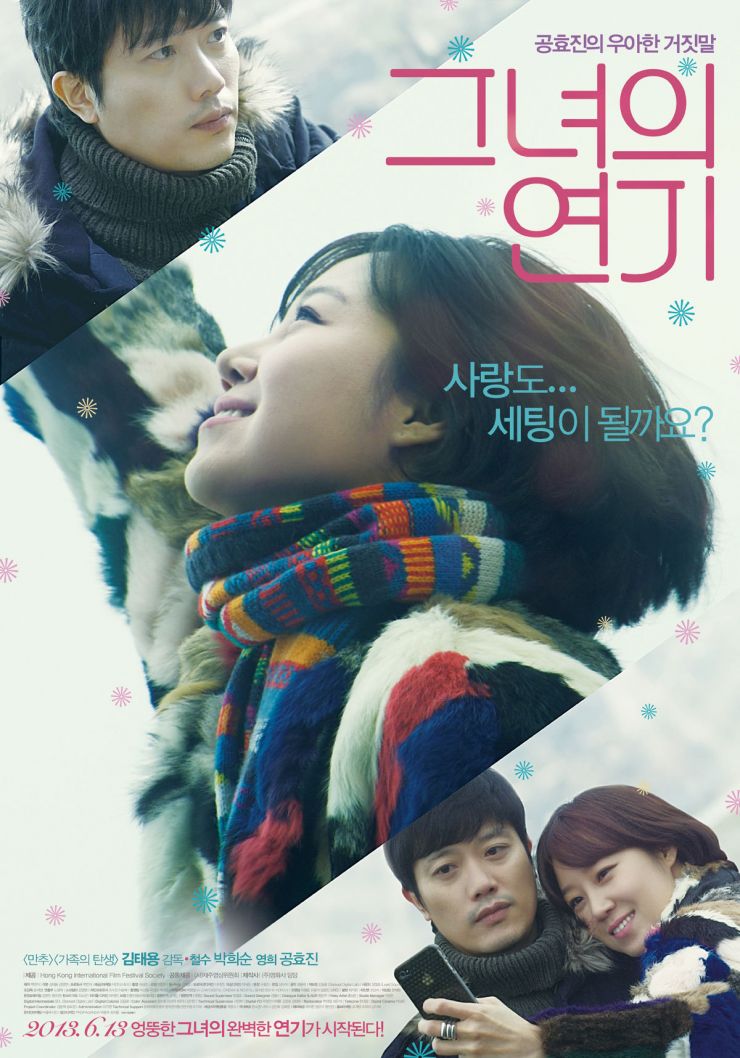
You Are More Than Beautiful (그녀의 연기) fits very much within such a framework. Indeed, the Korean titles literally translates as ‘Her Performance‘, an ironic title referring to both the director’s sensibilties as well as Gong Hyo-jin’s (공효진) outstanding acting talent. The 25 minute Hong Kong co-production is a highly charismatic short film, and despite the limited time frame manages to portray a lovingly nuanced and very entertaining romantic tale.

Upon learning of his terminally ill father’s condition, Jeju Islander Cheol-su (Park Hee-soon (박희순) must quickly return to his hometown to say a final farewell. However, wishing to show his father that he will be taken care of, Cheol-su hires an actress, Yeong-hee (Gong Hyo-jin), to act as his fiancee. Upon meeting the actress at the airport, Cheol-su quickly discovers Yeong-hee’s incredible positivity and charisma as she tries her utmost to fulfill her role.

Yeong-hee and Cheol-su meet at the airport, ready for their roles

Yeong-hee and Cheol-su meet at the airport, ready for their roles

First and foremost, the reason You Are More Than Beautiful is such a lovely short film is due to the superb performance of Gong Hyo-jin. From the moment she enters the film at the airport through to the final credits, the actress is constantly charismatic and it’s impossible not to be won over by her positivity. The title is particularly apt as Gong Hyo-jin is indeed very attractive, yet that is not what defines her character. It is Yeong-hee’s indomitable spirit and her cheeky-yet-playful personality that makes her so compelling to watch. Whether taking pictures in the countryside to reinforce the charade, or simply having a conversation to discover Cheol-su’s personality, Yeong-hee is a beautiful person both inside and out. Yet where the protagonist really shines in in meeting her fake fiancé’s terminally ill father. Her rendition of traditional Korean opera, as well as her interactions with the elderly gentleman, are a joy to behold due to the poignancy and heartwarming comedy embodied by the actress.

Actor Park Hee-soon also provides a great foil as stoic and sombre Cheol-su. The reason for his melancholy seems to go beyond his father’s illness, with the washed out colour palette conveying his depression well. Watching Cheol-su’s reluctance to engage with Yeong-hee’s positivity is wonderfully entertaining, as her zest for life slows chips away at his cold exterior yet he still attempts to keep her at a distance. The mismatched couple convey more heart and emotional connection than most films manage in three times the length, which is an incredible feat.

To flesh out the facade, the couple discover each other's traits

To flesh out the facade, the couple discover each other’s traits

Director Kim has stated that prior to filming You Are More Than Beautiful, all he prepared were the camera and the cast. This is quite surprising as the cinematography is very attractive throughout the film, particularly the manner in which the natural beauty of Jeju Island is captured. The roads and paths, as well as the horse farm, highlight the unspoiled nature of the island and as such conveys the romanticism with which Jeju has become renowned. Similarly, while the great outdoors looks gorgeous, director Kim employs some wonderful symmetrical shots to emphasis different stages of the evolving relationship between Yeong-hee and Cheol-su to great effect.

Yet despite such praise, the film isn’t quite perfect. It’s a credit to director Kim and the actors involved that although a lot of events occur during the 25 minute running time, there is still a desire for more. This certainly could have been achieved with more development ascribed to Cheol-su, whose character isn’t as fully-formed as Yeong-hee. Yet with Gong Hyo-jin on such amazing form it is entirely understandable, as her enthralling charisma and grace make the film so compelling.

Actress Gong Hyo-jin is wonderfully charismatic as Yeong-hee

Actress Gong Hyo-jin is wonderfully charismatic as Yeong-hee

Verdict:

You Are More Than Beautiful is a delightful short film by director Kim Tae-yong. As one of the few directors in the Korean film industry creating fully-developed female roles his films are always interesting, and actress Gong Hyo-jin takes full advantage of the opportunity to perform her acting talent. Throughout the film she is utterly compelling and wonderfully charismatic, living up to the title as her passion for life and positivity make her more than an attractive women. A lovely short film.

★★★★☆


International Women's Film Festival in Seoul (서울국제여성영화제) Reviews