On Thursday the 26th of January, the Korean Culture Centre in London held the first of twelve planned Q+A film nights with legendary Korean directors.
A month dedicated to director Lee Myeong-se (이명세)
For January’s edition the director in question was Lee Myeong-se (이명세) in conjunction with his 2005 film ‘Duelist’ (형사). Presiding over the event was Dr. Daniel Martin who introduced both the film and the director, giving the history and context to Lee Myeong-se’s (이명세) illustrious career and auteuristic sensibilities.
The film was very well-received by the audience, and during the following Q+A Lee Myeong-se (이명세) was in good humour throughout and very entertaining.
Dr. Daniel Martin began the Q+A with some questions about Lee Myeong-se’s (이명세) career, and particularly the actors that he has worked with. The director replied that he wanted to work with Ahn Seong-gi (안성기) as the actor had a very strong image as a good man in Korean cinema, and that his roles were limited due to typecasting. Director Lee wanted to change that and play with such preconceptions and cast him in Nowhere to Hide. In addition, Director Lee also cast his own mentor in a comedic role, as he had always had ambitions to be an actor; yet his mentor later revealed the role reversal, where Director Lee had to give instruction, had made him rather uncomfortable. In regards to using younger actors, Director Lee said he was impressed with Ha Ji-won’s (하지원) TV drama work and Kang Dong-won (강동원) had acted well in a prior film and had the ‘look’ he wanted.
For his next project, Director Lee stated he is planning an action film titled ‘Mr. K’ and jokingly claimed that it will surpass the James Bond films.
Dr. Daniel Martin, director Lee Myeong-se, and the very talented translator
When asked about why he is concerned with the artificiality of cinema rather than attempting to achieve realism, Director Lee answered that he didn’t watch films when he was young which he is now grateful for as he wasn’t exposed to the conventions of cinema. Instead he is inspired by poetry and other creative works in discovering ‘what makes a film’.
In regards to the wide variety of music from other cultures and eras within ‘Duelist’ (형사), Lee Myeong-se (이명세) replied that if he likes music and it fits with his vision within a film, then he will use it regardless of faithfulness to an era.
Quizzed about his own martial arts prowess, Director Lee explained that he, like all Korean men who have undertaken military service, is a black belt in Taekwondo. However if he were to give a display, it would be highly comedic.
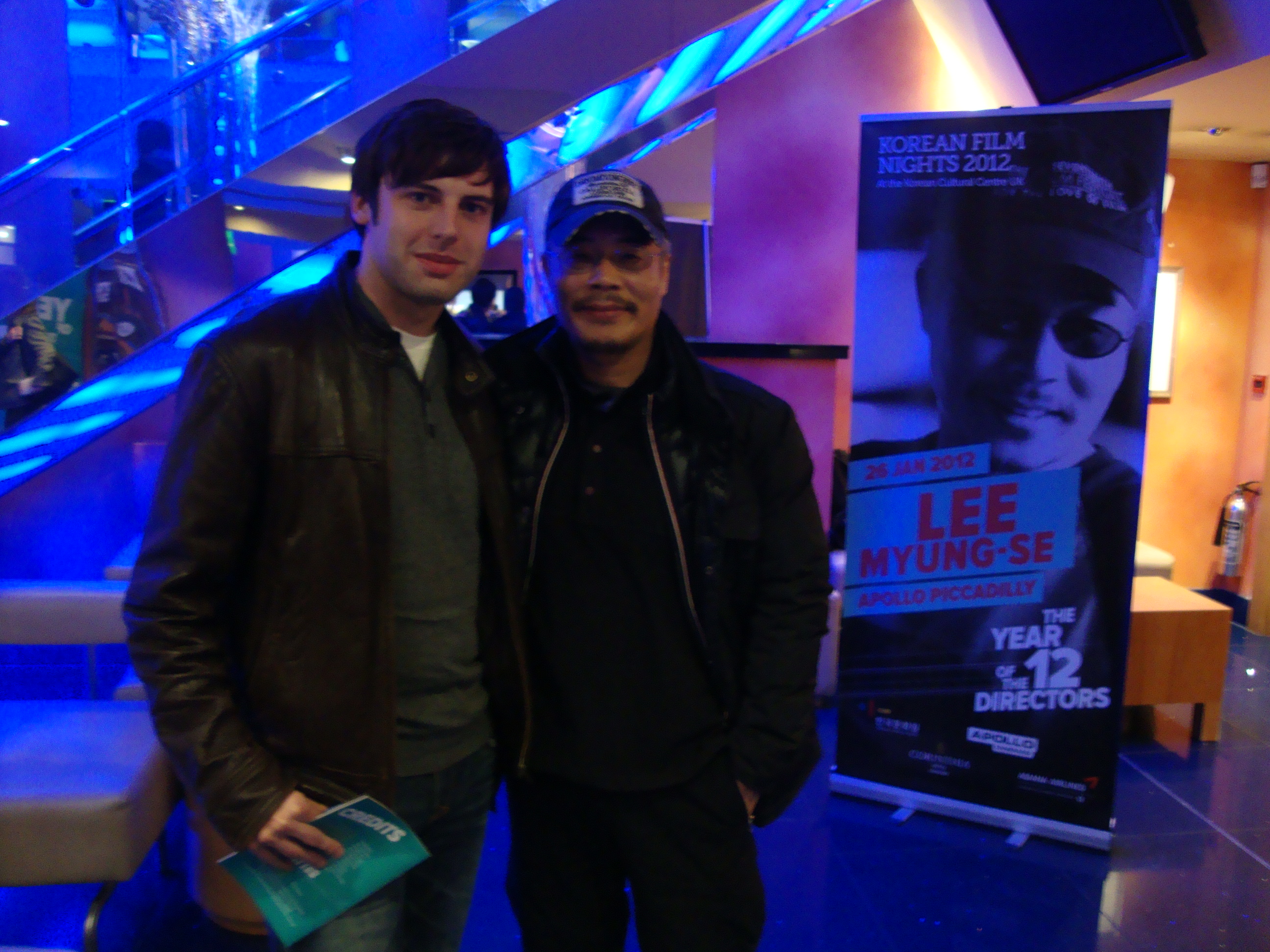
Following this, the director very kindly gave autographs and pictures to those who attended – including me!
Me with director Lee Myeong-se!
Next month, the Korean Cultural Centre will be dedicated to director E J-yong with the Q+A to be held on February the 23rd alongside the screening of his 2009 film Actresses (여배우들).
Identity and memory are complicated postmodern concepts to convey cinematically. Michel Gondry’s sublime Eternal Sunshine of the Spotless Mind (2004) is perhaps the most renowned mainstream production to interrogate such abstract subject matter, conveying the importance of love, loss and memory as fundamental in the creation and evolution of identity. Without them, Gondry posits, a person will forever be trapped in an identity loop where choices and mistakes are destined to be repeated.
M (M (엠)) also explores such abstract themes and, thanks to artistic auteur Lee Myeong-se (이명세), in a postmodern art-house style. The result is one that instantly polarizes audiences between those with expectations of mainstream conventions and those with an appreciation of art cinema; the former will dislike the absence of structured storytelling and unconventional visualization, while the latter will find enjoyment in the colours, mise-en-scene, and technical innovation.
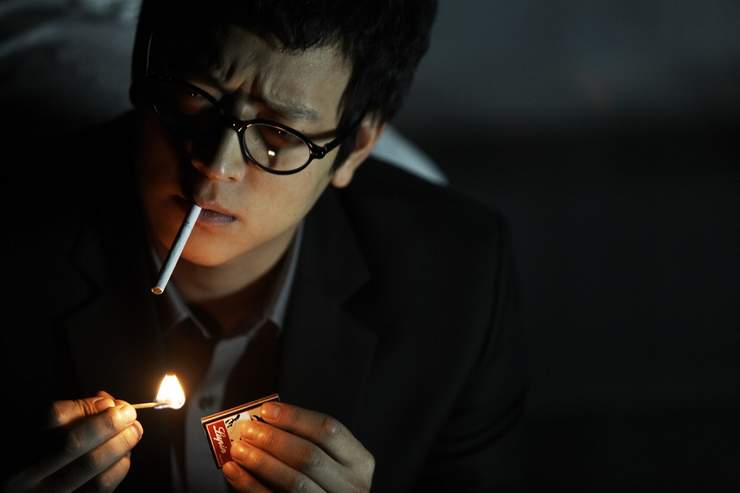
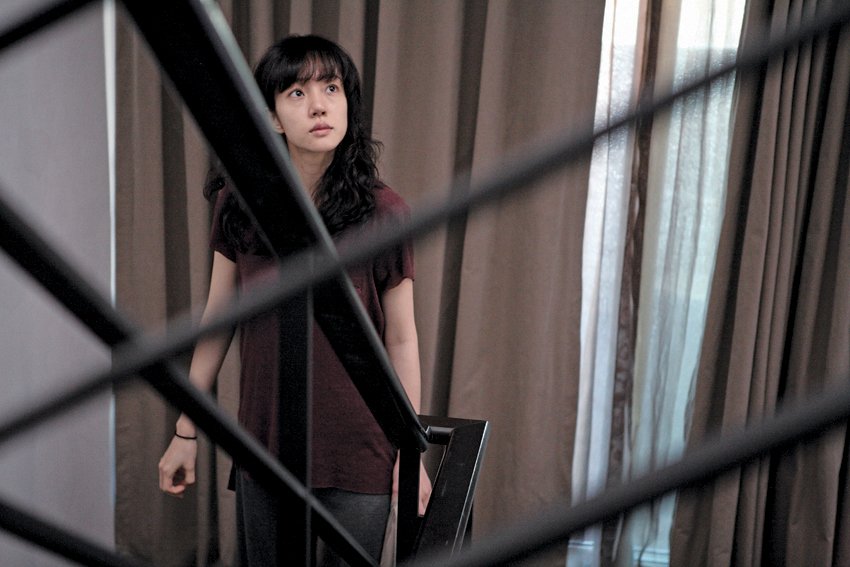
Min-woo (Kang Dong-won (강동원) is a successful novelist, struggling to write the amazing idea locked within his brain that he can’t fully recall. Plagued by insomnia, Min-woo suffers from hallucinations and stress – when he does sleep, he is hounded by nightmarish dreams. The boundaries between reality and his subconscious blur constantly as Min-woo is confronted by images and scenarios both new and vaguely familiar, all the while stalked by love-stricken Mi-mi (Lee Yeon-hee (이연희). Finally confronting each other in a bar, Min-woo tells Mi-mi his idea but awakes in his apartment with no recollection. Pushing away his faithful wife Eun-hye (Kong Hyo-jin (공효진) with his erratic behaviour, Min-woo attempts to track down the mysterious Mi-mi within the surreal landscape in order to unlock the story seemingly trapped within his subconscious.
Min-woo is a successful author with an idea he can’t conceptualize
The visuals within M are astounding and a testament to the creative flair of Lee Myeong-se, who constructs and frames locations with phenomenal artistic skill. Each venue is masterfully created to portray the wildly different emotions within the subconscious of Min-woo. A street scene, which serves as something of a nexus point within the film, is constructed akin to a Parisian boulevard with the placement of sunlight and the camera filters working in conjunction to convey a beautifully romantic setting, emphasizing the purity of the love Mi-mi exudes despite her stalking. Conversely the employment of shadows and darkness adds genuine horror to scenes within Min-woo’s apartment as insomnia and nightmares take hold, while the alley leading to Lupin’s bar is reminiscent of Ridley Scott’s dystopian Bladerunner (1982).
Similarly the technical prowess within M virtually demands recognition for the innovations displayed. Camera angles and movements allow the audience to experience the disorientation felt by Min-woo, resulting in both having difficulty in perceiving dreams from reality. When Min-woo meets Mi-mi in Lupin’s bar their conversation alternates between moving and still images that capture the moments they share, as if being monitored as well as emulating photographs from a date. The meeting between Min-woo and his agent and later his father-in-law are absorbing as the camera zooms into a painting that emulates the restaurant itself; the painting-within-a-painting becomes a painting-within-a-film-within-a-painting becoming a wonderful visual device that expresses Min-woo’s confused perception.
The visual devices within M are highly innovative
The focus on artistic and technical merit results in lack of attention on the narrative itself, with the trajectory often not strong enough to link scenes and propel the film forward, instead relying on the suspense and mystery of the visuals to connect scenes. This is unfortunate as the narrative is highly compelling when given attention yet this occurs randomly and infrequently, detracting from the drive for resolution.
This criticism can also be applied to the performances of the central cast, often employed as a focus for the mise-en-scene rather than their acting ability. This particularly applies to Kang Dong-won as Min-woo, as his character is constantly a conundrum due to the various extremes of emotions that he portrays. As such it is problematic to form an empathic bond with him, made more difficult during moments of over-acting. Lee Yeon-hee however is incredibly endearing as Mi-mi, exuding innocence and demure femininity with confidence. Her stalking is cute rather than creepy through her wonderful mannerisms, and her battle with the shadows is full of suspense and horror. Despite the small screen-time given to Kong Hyo-jin, as Min-woo’s wife Eun-hye, she competently portrays an ignored housewife.
The street ‘nexus’ is highly romantic while Mi-mi’s stalking is sweet natured
Verdict:
M will undoubtedly not appeal to fans of structured mainstream films, with its abstract exploration of memory, loss and identity. For those interested in more artistic and experimental filmmaking, M is a visual tour-de-force with incredible expression of colour and technical confidence. The poignancy of Min-woo’s journey through his subconscious is acute, and serves as a wonderfully thrilling and romantic addition to auteur Lee Myeong-se’s filmography.
Gangsters attempting to retire from a life of organised crime is an oft-explored subject within the gangster genre. Leaving the syndicate prompts an array of scenarios. Is it possible to live a ‘normal’ non-violent life? Can the vacuum of power be fulfilled without anarchy? Perhaps most importantly, can the organisation allow the risk of a member, who is privy to countless illegal activities, to live?
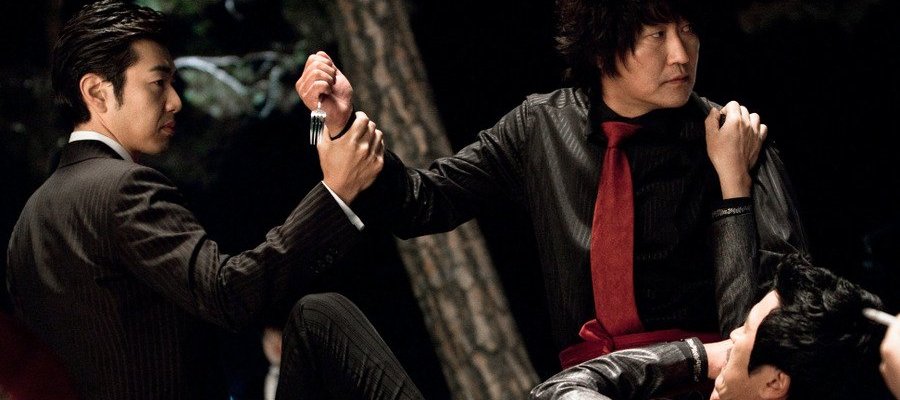
Hindsight (푸른 소금) attempts to address such hypothetical questions as second-in-command Doo-heon (Song Kang-ho (송강호) retires from the syndicate he co-founded to open a restaurant. While the premise has potential and action sequences convey directorial flair, the cliches, absence of identity and lack of narrative cohesion make Hindsight quite a disappointment.
Doo-heon (Song Kang-ho) lives in the laid-back port city of Busan, studying the culinary arts in order to open his own restaurant. He retired from a Seoul criminal syndicate he co-founded years earlier, turning his back on his former violent lifestyle yet is still friendly with members of the organisation. Doo-heon’s new carefree life has led to forging a friendship with a fellow student in his cooking class, a young and feisty woman named Se-bin (Sin Se-kyeong (신세경), who often jokingly chastises him for his poor abilities in the kitchen. However things change when word of his best friend, and head of the criminal empire, dies in an accident. As the former second-in-command Doo-heon can lead the syndicate, yet other mob bosses have other ideas and order their mole – Se-bin – to kill Doo-heon.
Doo-heon and Se-bin become close during their culinary class
Hindsight‘s real title ‘푸른 소금’ directly translates as ‘blue salt’, both of which are continually referenced through the film. Blue filters and metallic mise-en-scene are often employed by director Lee Hyeon-seung (이현승), conveying the cold and harsh, yet futuristic and stylish, lifestyle of gangster Doo-yeon and his associates. It is through such scenes that Lee Hyeon-seung excels, conveying the isolated sophistication with confidence and the action sequences with real skill. His vision in the final confrontation is also of note, employing blue filters to a stand-off in a field of rice paddies that is visually impressive.
Where Hindsight falters is through ‘salt’, a device so overused that it quickly becomes tiresome and is symbolic of the abundance of cliches and narrative shortcomings. Salt is constantly employed in an unsubtle fashion in order to develop the relationship between Doo-heon and Se-bin, but the references are often inorganic and highlight the artificiality of the plot device. When Se-bin constructs ‘salt bullets’ for her targets the predictability becomes painfully clear while a leap in the suspension of disbelief is required for the narrative to remain logical and enjoyable. This unfortunately also applies to the narrative as a whole which contains vast plot holes, thoughtless characterization, and a lack of synergy between the disparate parts. While the amalgamation of different genres is one of the highly entertaining features of Korean cinema, in Hindsight it serves to remove any sense of identity and narrative cohesion. When the gangsters search for Doo-hyeon – an easy task considering he stays within his apartment – any sense of threat posed by the assassins is destroyed by the overly-long focus on his relationship with Se-bin. When Se-bin’s dual identity is revealed, a bizarre MTV style montage of her dancing with a friend appears rendering the drama moot. Director/screenwriter Lee Hyeon-seung seemingly can’t decide if Hindsight is a gangster film or a love story, with the rigid narrative framework and lack of editing between the two worlds also largely responsible for halting the suture between them.
Doo-heon is drawn back to the syndicate through his best friend’s death
Characterization and performance are further issues within Hindsight. Much has been said regarding Sin Se-kyeong’s acting skills, with critics claiming she ‘holds her own’ against screen legend Song Kang-ho. While she certainly gives a competent performance, Hindsight is very far from Song Kang-ho at his best. His character schizophrenically flits from overly kind middle-aged man to psychotic maniac, further adding to the lack of cohesion between the romantic and gangster genres within. To his credit Song Kang-ho is charismatic in both capacities, which unfortunately emphasizes the wasted potential of the premise. Sin Se-kyeong has similar problems portraying Se-bin, a cliched female protagonist who is stereotypically beautiful-yet-damaged, one minute stone-cold killer and the next sweet and innocent. Despite this, she performs the role ably.
The same cannot be said for the array of gangsters, all of whom are woefully underdeveloped. In addition to the overabundance of criminals, they are also subjected to a disproportionate amount of screen time compared to Doo-heon and Se-bin equating to a severe absence of threat and drama with the various betrayals and murders that ensue.
Se-bin is ordered to kill Doo-heon
Verdict:
Hindsight (푸른 소금) is a problematic entry into the gangster genre due to the lack of cohesion between the disparate genres in conjunction with simplified and underdeveloped characterization. As such the film’s identity and the narrative direction are often highly ambiguous, despite the competent direction particularly in regard to the action sequences, that makeHindsight an occasionally stimulating but rather flawed addition.
Postmodern representations of action narratives and violence are big business. Arnold Swarzenegger’s films in the late ’80s wisely parodied his hyper-masculinity for comedic effect, while Quentin Tarantino virtually single-handedly made such depictions popular within the gangster genre in the ’90s. More recently, director’s such as Stephen Chow (Kung Fu Hustle, 2004) and duo Mark Neveldine and Brian Taylor (Crank, 2006) have capitalized on the eccentricities of the genre, exaggerating them to insane levels for innovative and entertaining set-pieces.
Ryoo Seung-wan (류승완) has built a solid reputation and loyal fan-base through his own reverential-yet-playful productions, representing the oft-explored areas of brotherhood, the gangster/police officer dichotomy, and ultra-violence. All his auteuristic traits are present within The City of Violence (짝패), a film that initially starts slowly but becomes a riveting action-thriller in the final act.
When prolific gangster Wang-jae (Ahn Kil-kang (안길강) is murdered by a group of young local thugs, his oldest and dearest friends reunite for the funeral, including Seoul detective Tae-su (Jeong Doo-hong (정두홍) and hot-headed gangster Seok-hwan (Ryoo Seung-wan (류승완). Alongside crime kingpin Pil-ho (Lee Beom-soo (이범수) and math teacher Dong-hwan (Jeong Seok-yong (정석용), the group reminisce about their childhood and lament the loss of their old friend. Yet something about the attack feels wrong to Tae-su, and he begins an investigation into his friend’s murder but encounters more questions than answers. Joined by Seok-hwan, the pair punch and kick their way through an army of miscreants to finally get the truth.
Tae-su suspects foul play, and investigates his friend’s death
The narrative of The City of Violence is far from original, depicting the gathering of a group of friends that have drifted apart since their inseparable childhood. Tae-su also fits within the archetypal mode of the outsider-hero, returning to his former home to instill justice within the populace. In portraying such overly familiar themes director Ryoo Seung-wan is highly reverential, conveying confidence and a measure of comfort through the postmodern nostalgia value. This approach is also detrimental however as the lack of parody equates to a level of seriousness that detracts from the enjoyment, while the distinct absence of inspiration and ingenuity produces a rather bland and predictable plot. Considering the immense success of Friend in 2001 which explored similar themes in incredible depth, the choice to focus so reliantly upon stereotypical protagonists without self-parody is puzzling. The first and second acts are quite dull due to the often plodding predictability, although conversely pleasure is often derived in this fashion through conventions such as the hard-boiled cop, the flamboyant kingpin, the hot-headed sidekick, and so forth.
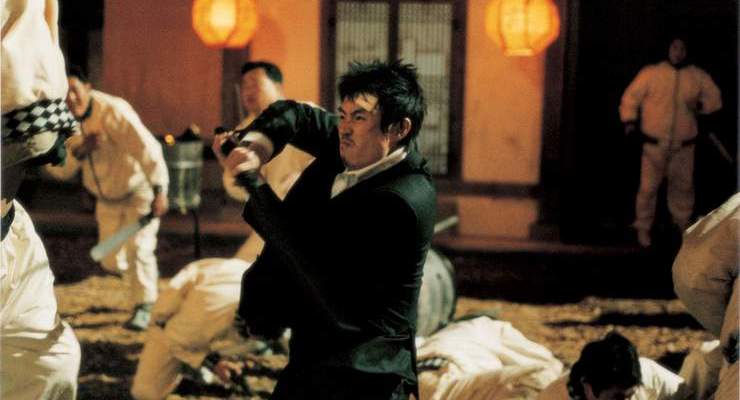
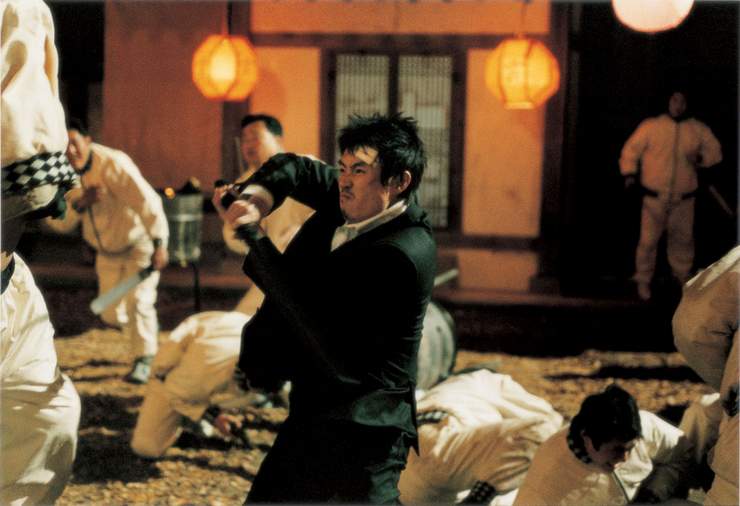
Where Ryoo Seung-wan’s directing skills shine are in the tremendous final act, in which Tae-su and Seok-hwan fight a veritable army of gangsters. The extreme-violence is beautifully choreographed and almost balletic, while on a technical note the camera-work, framing and editing are sublime. The reverence to the action films of Bruce Lee and Jackie Chan are clear as the duo battle an assortment of foot-soldiers wearing clothing associated with a particular gang – baseball players, chefs, b-boys and so on – crafting action sequences akin to the old 1990s computer game era. This motif is further reinforced as Tae-su and Seok-hwan must fight ever more challenging opponents that lead to a showdown with the big boss, similar in nature to the martial arts tournaments as in Enter The Dragon (1973). Ryoo Seung-wan’s wisely injects tongue-in-cheek humour throughout the proceedings as the duo, tired and beaten, must continue to soldier on producing some wonderfully comical moments.
Pil-ho is the local kingpin vying for power
In addition to directing Ryoo Seung-wan also performs as Seok-hwan. While his role is generally quite limited, he nonetheless conveys the hot-tempered protagonist well and is responsible for some astounding action and his skill is impossible not to commend. Similarly Jeong Doo-hong as Tae-su is incredibly gifted in his physical prowess, performing highly entertaining displays of martial arts. The stoic nature of his character is also conveyed competently through his no-nonsense attitude and dark clothing, archetypal but enjoyable for that very reason. The most grandiose archetype is bestowed upon Lee Beom-soo as crime boss Pil-ho, conveying his vicious nature and lust for power with conviction. His wonderfully tailored suits express his need for approval and acceptance just as much as his cowering to bosses from Seoul, making Pil-ho the most compelling and three-dimensional protagonist within the film. The bloodthirsty motivations, in conjunction with the camp facade and troupe of bodyguards, are a testament to classic Bond villains and make Pil-ho a protagonist that’s easy to love to hate.
Seok-hwan cuts a swathe through gangsters to uncover the truth
Verdict:
The City of Violence is an unapologetic homage to classic action films and while there is a certain level of nostalgia and enjoyment to be had, the film suffers from predictable, bland and uninspiring first and second acts. The final act is where the skills of the director and cast shine however, crafting an incredibly entertaining and postmodern finale that finishes on a high note and will have action fans wondering why the entire film doesn’t convey the same passion and finesse.
The perils of dating have long been a feature of the romantic-comedy, perhaps portrayed more than any other area of the relationship status-quo due to the high probability of farcical foolishness that will ensue. Attempting to appear suave, beautiful, intellectual, sophisticated, rich, cultured – the possibilities are endless for misunderstandings and comedic confrontations. The Will Smith starring Hitch (2005) took an alternative approach to the tried-and-tested formula, featuring a ‘date doctor’ to help fumbling men stop self-sabotaging their amorous advances.
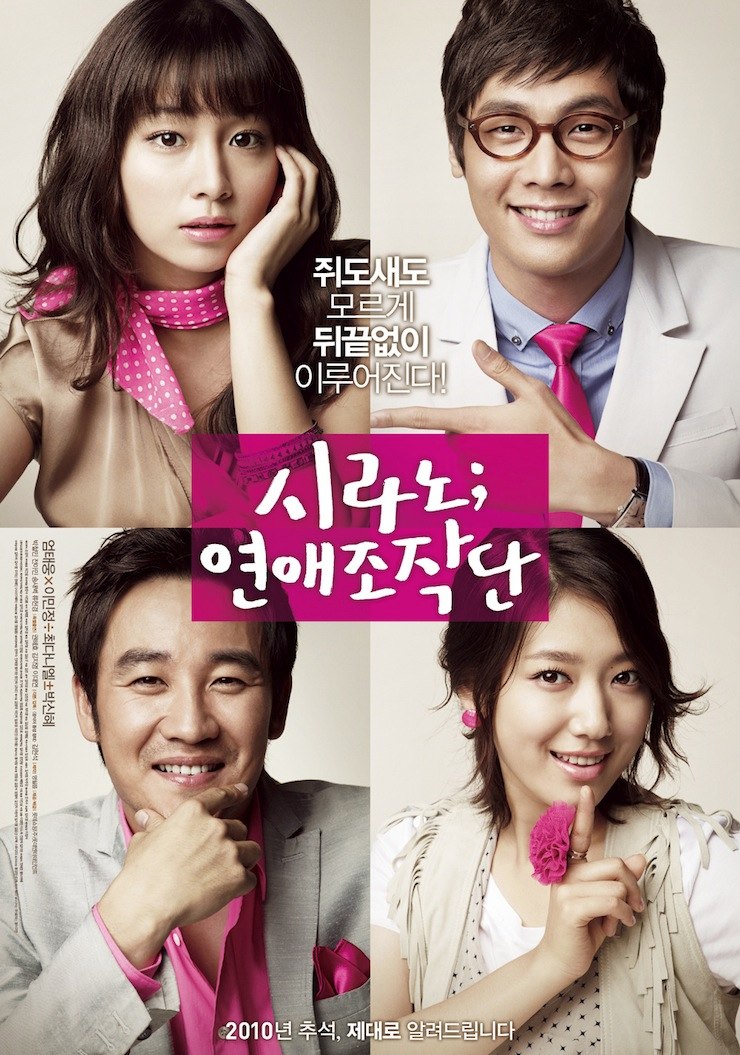
In Cyrano Agency (시라노;연애조작단) this premise is expanded from a solitary ‘date doctor’ to a troupe of actors, who study and research the targets of smitten clients and prepare scenarios, rehearse lines of script, and employ every romantic cliche at their disposal for a successful matchmaking service. The name is, of course, taken from the famous play Cyrano de Bergerac, and while the idea of displaced romance is present and the film is quite charming, it suffers from misplaced melodrama, lack of depth and a finale that is incredibly bitter-sweet.
Byeong-hoon (Eom Tae-woong (엄태웅) is the head of a failed acting troupe consisting of feisty female advisor Min-yeong (Park Sin-hye (박신혜), researcher Jae-pil (Jeon Ah-min (전아민) and chameleonic Cheol-bin (Park Cheol-min (박철민). In order to generate money for theatre productions they create the Cyrano Agency, an organization where the actors use their talents to help lovelorn men match with the women they desire, with an impressive 99% success rate. Yet complications arise when Sang-yong (Choi Daniel (최 다니엘) arrives asking for assistance in wooing the beautiful rebellious Hee-joong (Lee Min-jeong (이민정) – the former girlfriend of Agency boss Byeong-hoon. Will Byeong-hoon put his personal feelings aside and complete the contract, or steal Hee-joong for himself?
Min-yeoung and boss Byeong-hoon observe their latest scenario
One of the strengths of Cyrano Agency lies in the highly charismatic opening sequence, in which the acting troupe help to woo a barista for a client. The team train their love-stricken patron to act cool and aloof akin to romantic actors, and stage an array of cliched devices – making the the target jealous, playing soundtracks, and even employing a ‘rain machine’ for a melodramatic finale – offering a wonderfully postmodern and comedic portrayal of love. The directing and editing are highly competent during this sequence with both parties fully aware of the conventions of the romance genre, simultaneously revering the material through dramatic framing and parodying through overt melodrama. Unfortunately, after such a strong opening, Cyrano Agency falters. The whimsical tongue-in-cheek nature initially conveyed is jettisoned in favour of genuine melodrama, and the change in tone detracts from the overall enjoyment as the comedy quickly deteriorates. The premise certainly has potential, as next target Hee-joong is also the former girlfriend of boss Byeong-hoon, with his subconscious sabotage of scenarios initially humourous but quickly becoming petty. Bizarrely, the relationship – both past and present – between Byeon-hoon and Hee-joong is foreground, emphasising their intertwined destiny as they continually encounter each other and in doing so reveal the love they both still clearly share. As such, client Sang-yong is somewhat of a footnote in the proceedings and the notion that Byeong-hoon would continue to help match him with together with Hee-jong is odd at best.
Hee-joong’s role is incredibly underdeveloped and passive, merely serving to be pretty and to act as the prize in the relationship tug-of-war. Such a misogynistic representation is exacerbated by the insincerity of Sang-yong as he has fallen in love with her image, rather than her personality. This is ultimately the major failing point of Cyrano Agency, as while the narrative portrays the facade of love it never truly explores it, despite given ample opportunity when the team encounter heart-broken former clients. This leads to an incredibly bitter-sweet finale as Hee-joong, finally with knowledge of the agency and Byeong-hoon and Sang-yong’s role, makes her choice.
Hee-joong becomes the next target/prize
The shift in focus on the love triangle from the earlier team dynamic further alters the pace and tone, relegating members of the team to almost cameo sized roles rather than supporting ones, an unfortunate choice considering their impact in the early stages. Despite this, the actors perform their roles well particularly Park Sin-hye as Min-yeong, conveying strength and passion in each scene. As Cyrano Agency becomes an unrequited love triangle, acting duties generally fall to three core performers. Eom Tae-woong is the most notable conveying his internal conflict between his own desire and his job well. Lee Min-jeong is competent as Hee-joong, although the limiting role is responsible for her restrained performance. Choi Daniel unfortunately suffers the most due to the somewhat schizophrenic nature of protagonist Sang-yong. Sang-yong flits between moment of grandiose kindness to liar, from sensitive romantic to criminal, even causing one of the team members from the Agency to comment that something is amiss with their client. The distrust and insincerity conveyed again undermine the notion that Byeong-hoon would attempt to pair Sang-yong with the woman he is seemingly destined for.
Byeong-hoon rehearses the script with client Sang-yong
Verdict:
Cyrano Agency is an enjoyable take on the romantic-comedy genre, particularly the wonderful opening sequence that plays with notions of romance in a postmodernist fashion. The decision to deviate from such a winning formula is puzzling, as the focus on a love triangle and the insincerity of the love portrayed albeit not explored, detract from the pace, tone, and promise offered in the first fifteen minutes. That said, fans of the genre will no doubt be appeased by what Cyrano Agency offers, although many will be perplexed by the bitter-sweet nature of the finale.
Vengeance and violence are a seemingly masculine arena cinematically, with narratives propelled by testosterone-fueled actions by those who have suffered injustices. Such passionate reactionary violence is often ascribed to traditional patriarchal roles of ‘the father’ and ‘the lover’, identities which become destabilized through loss and demand retribution. Yet women, who have just as equal a stake in such gendered roles, are often marginalized.
With Sympathy for Lady Vengeance (친절한 금자씨) auteur Park Chan-wook (박찬욱) finishes his celebrated Vengeance trilogy in incredible style, featuring a woman as the central protagonist to create an altogether different approach to the concept of revenge. The result is a fascinating and riveting film that depicts a more calculating and intelligent form of vengeance than displayed by Dong-jin in Sympathy for Mr. Vengeance (복수는 나의 것) or Dae-su in Old Boy (올드보이), constructing a unique and magnificent character in the form of Lady Vengeance herself Geum-ja (Lee Young-ae (이영애).
20 year old Lee Geum-ja is arrested and sentenced for the kidnap and murder of a young boy, shocking the nation due to her tender age as well as for her unparalleled beauty. Yet unknown to the public is that while Geum-ja was an accomplice in the kidnapping, she was forced to take the blame for the murder otherwise her own daughter would be killed by the real criminal – Baek Han-sang (Choi Min-sik (최민식). During her 13 year jail term Geum-ja plots her revenge, forging connections with other prisoners and garnering a reputation for her unbelievable kindness achieved through acts of underhanded treachery. Finally released, Geum-ja begins her preparations in earnest and, joined by her estranged daughter Jenny (Kwon Ye-yeong (권예영), tracks down the man responsible for their separation in order to exact their vengeance.
Geum-ja has become cold and calculating during her incarceration
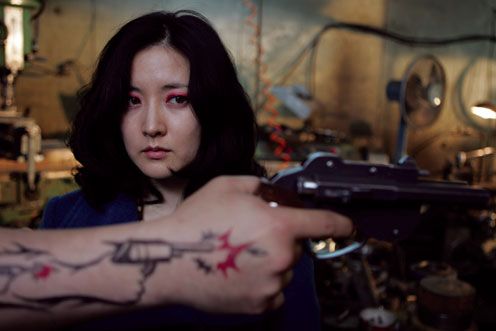
Park Chan-wook displays a more artistic and surreal depiction of revenge in his third installment, producing stunning imagery of Geum-ja’s quest that emphasizes her beautiful image in conjunction with her lethal internal motivations. Crucially the director never shies away from employing such cinematic playfulness with feminist discourses, overtly conveying Geum-ja’s intelligence in regards to patriarchy and image. Once released from prison Geum-ja purposely applies red eyeshadow and dons dark and seductive clothing, consciously aware that her natural image promotes innocence and purity, features she does not want nor feels she deserves. As such she challenges cultural stereotypes of attraction, subverting patriarchal notions of ‘virginal beauty’ as Geum-ja’s intelligence and violent desires are foregrounded. She is an expert at manipulation in this regard earning the trust and respect of men and women through her subversion of image, allies whom she acknowledges with indifference once they are indebted as her single-minded lust for vengeance is absolute. In achieving revenge Geum-ja is keenly aware of the power necessary, and her methods lead to acquiring a ‘pretty double-phallus’ in the shape of an incredible firearm that is two guns merged into one handle. Park Chan-wook’s wonderful visual style continually yet subtly conveys his lead protagonist as a powerful, intelligent, and highly efficient woman making Geum-ja an acutely compelling character.
That is not to say Geum-ja is lacking in emotion – far from it. She is constantly aware of her role in the murder of a young boy, willing to do anything for forgiveness that can never come. The burden of guilt portrays Geum-ja is a tragically flawed character as she seeks to dehumanize herself and reject intimacy due to her self-hatred. The brilliantly comical reappearance of Geum-ja’s estranged daughter Jenny forms a wonderful partnership in which to explore their neuroses of guilt and abandonment, and the roles of parent and child.
The pieces of Geum-ja’s plan assemble with incredible imagery
The responsibilities of a parent toward their child are intriguingly explored throughout Sympathy for Lady Vengeance, as Park Chan-wook poses a supremely difficult question – what actions would a parent take if they confronted their child’s murderer? The director expertly conveys the poignant moral conundrum that brilliantly evolves Geum-ja’s personal desire for justice into a communal one, a desire for vengeance that is consciously wrong legally and morally, yet desired all the same. As has become a feature of his, Park Chan-wook depicts such incredibly serious subject matter with a sharply dark-humoured edge that makes the events that unfold all the more captivating, and thrilling, to experience. Despite simultaneously conveying the evolution of revenge as well as narratively veering in an alternate direction, the director never loses focus of Geum-ja’s role as strong methodical woman desperate for retribution and forgiveness, attributes she alone – despite (rejected) offers from patriarchy and religion – must achieve. As such, Geum-ja is one of the most enthralling and compelling representations of women to appear on celluloid.
Lee Young-ae is absolutely superb as Geum-ja, inhabiting the role so completely it is impossible to imagine another actress in her place. The extremely broad range of emotions that are required are wonderfully performed, from moments of quiet manipulation and rage-fueled violence, to tender moments of reconciliation and forgiveness, and fully deserves the various awards for Best Actress bestowed upon her. Choi Min-sik is given a marginal role as the malicious Baek Han-sang, yet during his short screen-time he conveys the depravity, and the sheer terror, required. Other supporting performances are generally fleeting, however it is highly enjoyable when cameo roles featuring actors from Sympathy for Mr. Vengeance and Old Boy appear.
Geum-ja prepares to take her revenge
Verdict:
Sympathy for Lady Vengeance is an incredible final installment to the Vengeance trilogy, presenting an entirely different notion of revenge through one of the most compelling female protagonists in cinematic history. Park Chan-wook’s beautifully creative vision, as well as Lee Young-ae’s captivating performance, make Sympathy for Lady Vengeance an enthralling exploration of vengeance and feminism that demands repeated viewing.
Conspiracy theory films, and the inherent shadowy figures that operate within and/or behind the government, are a fun and exhilarating sub-genre that express audience distrust of institutions as well as emphasizing their impotency. They also have an uncanny knack for tapping into social anxieties. With the Bourne series (2002-2007) the post-9/11 ‘Patriot Act’ was vehemently scrutinized, as the shadow operatives abused the use of satellites and phones in targeting alleged terrorists. Similarly Enemy of the State (1998) portrayed senior members of the NSA murdering senators and civilians alike to expand their power base and withhold information.
Moby Dick (모비딕) is concerned with the conspiracy theories that plague the South Korean government, a premise with huge potential due to the often tumultuous relationship with the North. However, due to the bland and uneven narrative and direction, central protagonists that lack charisma or intelligence, and most importantly the distinct lack of threat posed by the shadow organisation, Moby Dick largely fails.
Lee Bang-woo (Hwang Jeong-min (황정민) is a newspaper reporter constantly waiting for the next big scoop in order to become renowned. When a bridge explodes and the government quickly blames the incident on North Korean spies, Bang-woo decides to visit the scene and bribes his informant for extra details. Shortly thereafter Bang-woo is visited by his young friend Yoon Hyeok (Jin Goo (진구), on the run for desertion, carrying a bag full of official documents and disks. Examining the paraphernalia Bang-woo realises there’s much more to the explosion, and other mysterious events, then previously thought and puts together a team of reporters – polite rival Son Jin-gi (Kim Sang-ho (김상호) and code cracker Seong Hyo-gwan (Kim Min-hee (김민희) – to uncover the secrets of the shadow government organisation whose symbol is ‘Moby Dick’.
Bang-woo begins to understand that other forces are at work
Moby Dick is directed by Park In-je (박인제) competently, and the potential of the notion of a shadow government has incredible potential for a thrilling, gritty tale of political espionage. However the narrative is often in complete disarray and lacking in focus that any sense of compulsion, and worse still immediacy, are completely lost. The opening shot of Moby Dick is the televisual image displayed from a CCTV camera as a bridge explodes; this in itself forces audience detachment from the severity of the cataclysmic event as the impact and ramifications are unseen, and considering it is the catalyst for the entire film is a rather odd form of representation. What follows is a supremely dull first act as protagonists are introduced sporadically and lacking in motivation. Bang-woo is a woefully underdeveloped protagonist who routinely displays naivety and idiocy, and aside from curiosity and selfish desire has little motivation for investigating either the explosion or the conspiracy. He is utterly inept at investigation and continually places himself and his colleagues in danger needlessly, yet his impotency is dwarfed by the unbelievable inefficiency of the covert group signified by the white whale. The syndicate are effectively reduced to hired thugs rather than efficient spies, who even display street signs highlighting that they are in residence – in crowded public areas no-less. Supervising the group is a mysterious man in a suit who, bizarrely, sits at a desk in an empty room the size of an entire floor in a building. Such a cliche again adds nothing to the threat apparently posed by the covert operatives who consistently appear unsure of their next move, from the illogical indecision to not ‘eliminate’ the reporters to seemingly random discussions regarding exploding planes and nuclear armament.
Rival Jin-gi joins the team using his own informants
In terms of character Moby Dick has a highly skilled assortment of actors that are unfortunately never given adequate screen-time or dramatic scenes in which to display their skill. Hwang Jeong-min is noteworthy in this respect as he has little opportunity to perform his talents, as Bang-woo is a shockingly ignorant protagonist who is also very rude and unlikeable. Quite how he isn’t killed by the organisation immediately after emerging as a threat requires genuine suspension of disbelief, although the incompetency of the covert operatives helps in this regard. Instead the violence seems reserved purely for Kim Sang-ho as Son Jin-gi who is beaten and tortured, which appears to be his only function in the narrative. Furthermore Kim Min-hee is incredibly underutilized as Hyo-gwan, conveniently appearing when the screenwriters are in need of someone or something to propel the stalled narrative forward. The same criticism also applies to Jin Goo as Yoon Hyeok who could have functioned as a Jason Bourne figure, yet after his initial purpose of providing classified documents he strangely fades into the background. All the actors do the best they can in such limiting roles, yet the absence of character development and the lack of cohesion between them is detrimental to them all.
Bang-woo and Hyo-gwan attempts to crack the codes
Verdict:
Moby Dick is a squandered opportunity, with talented actors and a fantastic premise that are let down through a narrative that lacks direction and focus. While it is generally competently directed, there is unfortunately no escaping the narrative inconsistencies, absence of character development, or lack of threat posed by the shadow operatives, all of which require a real leap in the suspension of disbelief in order for Moby Dick to remain plausible – or, for that matter, enjoyable.
Director Kim Ki-duk (김기덕) has, like Alfred Hitchcock before him, a reputation for misogyny and misogynistic violence. And, again as with Hitchcock, Kim Ki-duk locates such archaic principles within patriarchal figures and psychologically disturbed men, simultaneously presenting and critiquing the gender inequality within a socio-cultural context. For feminist film critics the submersion of violent sexism within such protagonists serves to absolve the directors of the ‘pleasures’ derived through representations of violence against women, displacing their desires and naturalising sex and violence as one and the same. Accusations such as these aimed at Kim Ki-duk are largely founded due to the release of The Isle (섬).
The Isle is an art house film that, due to the nature of violence, sex and animal cruelty within, has been the subject of controversy ever since its inception and the resultant vomiting and fainting of foreign critics. As such The Isle joined – or rather, was a founder of – the list of films unfortunately promoted as ‘extreme’ Asian filmmaking. For his part, Kim Ki-duk claimed that the film is simply another representation of his obsession with ‘han’ – the feeling of oppression, isolation, and injustice – and the love that can blossom under such circumstances.
Hee-jin (Seo Jeong (서정) is the patron of a fishing resort deep in the Korean countryside, owning several floating huts on a portion of a river. As a mute, she silently ferries customers from the shore to the huts and takes care of any requests ranging from snacks to coffee, and even sex. This service is also supplied by the ‘coffee girls’ from the local brothel whom she also reluctantly ferries, and Hee-jin’s life of servitude continues in this monotonous fashion. Her interest is piqued however when murderer-on-the-run Hyeon-sik (Kim Yoo-seok (김유석) arrives to rent a hut, in need of solitude to lay low while police officers attempt to track him down. Tormented by his past deeds Hyeon-sik attempts suicide yet is stopped by Hee-jin and the pair begin to develop a relationship, one that becomes incredibly intense and obsessive through the bizarre games they play, and actions from which threaten to engulf them both.
The cinematography in The Isle emulates traditional paintings
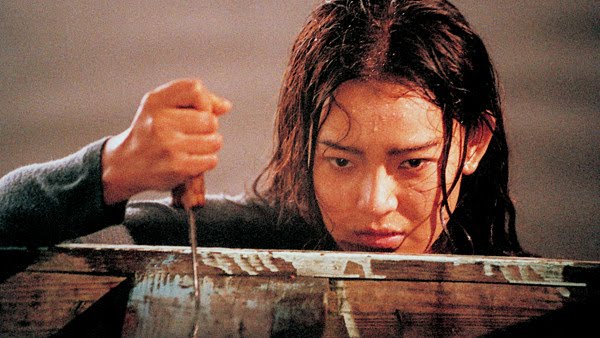
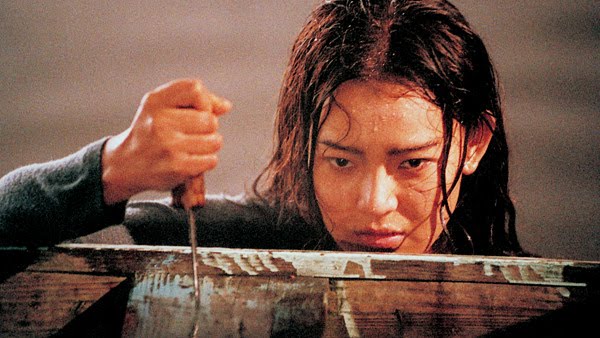
The Isle is best viewed as an art house film, as the symbolism and cinematography are sumptuous throughout. The composition of shots, particularly of the landscape, are quite beautiful and exemplify Kim Ki-duk’s former calling as an artist. The incredible scenery is matched by the isolation conveyed by the fishing huts and Hee-jin’s meagre existence, while the surreal other-worldly weather instills sadness and longing. Within this framework are Hee-jin and Hyeon-sik, two protagonists akin to wandering lost souls in the ethereal landscape that lack purpose or direction, giving the lake a purgatorial sensibility. As with other Kim Ki-duk protagonists, Hee-jin is mute and utilises her physicality to convey her psychological state which publicly tends to represent that of a stereotypical meek woman in patriarchal culture; she serves patrons snacks, coffee and sex without question, acting as ‘servant’ and ‘whore’, an apparent victim of the indomitable phallus. Yet Hee-jin’s genuine character is revealed when abused, as when her earnings from sleeping with a customer are thrown into the water, she calculatingly stabs him in the dark of the night with her own, arguably much more dangerous, penetrative device. Interestingly, Hee-jin’s employs her ‘detachable phallus’ in order to save Hyeon-sik as she startles him during a suicide attempt, an act he repays in making models from wire. The Isle is ultimately concerned with the articulation of archaic notions of gendered ‘power’, and a relationship that develops between a man and a woman in such an unequal vacuum; when Hee-jin expresses kindness and innocence Hyeon-sik responds through attempted rape.
The infamous fish hook scenes also exemplify gendered notions of power. Afraid of being arrested by police and with no other utensils available, Hyeon-sik swallows fishing hooks and pulls sharply. In doing so Hyeon-sik self-mutilates his orifice of power – his commanding, masculine voice, which ironically had been somewhat castrated by his (coded-feminine) sensitivity. Concurrently, when Hee-jin is threatened by Hyeon-sik’s departure, she places the hooks within her vagina and pulls sharply, self-mutilating her orifice of power – her ability to engage in sex, intimacy, or procreation. Both protagonists are subconsciously aware of their gendered abilities, and employ them for selfish results. The self-mutilation also allows for striking imagery as they are reeled in by the fishing rod, symbolically drawn to each other through pleasure and pain. Viewed in this symbolic art-house context, The Isle is an interesting exploration of the inequalities of gender in Korean society, and hardly necessitates the vomiting and fainting that so afflicted foreign critics.
The relationship between Hee-jin and Hyeon-sik becomes obsessive
In terms of performance The Isle conveys an array of emotional and neurotic states through the physicality of the actors, while verbal exchanges tend to be fraught with lies, pain and cursing. Seo Jeong is incredibly intense as Hee-jin, with facial expressions full of rage, jealousy, angst and heartache all portrayed with vehemence. However Hee-jin’s actions are often perplexing at times with motivations that are difficult to comprehend, which adds to the assumption that she may well be mentally ill or suffering from a prior trauma. Kim Yoo-seok as Hyeon-sik also exhibits such a difficulty in suspending disbelief, as he initially is kind and sweet-natured yet later becomes an abhorrent example of misogyny and chauvinism. Despite this, Kim Yoo-seok’s performance is competent in portraying the murderer whose morals dissipate. Both protagonists are flawed and psychologically unbalanced, yet still attempt to create the idealised perception of a couple in establishing a relationship and moving into a house (fishing hut) in the countryside.
The animal cruelty has been a source of controversy which are difficult to disagree with, yet such scenes are loaded with symbolism that convey the emotional distress of the protagonists. Frustrations are expressed through the chopping of live fish; the desire to change identity is conveyed through skinning a frog alive; and the reluctance to continue living the same existence is depicted through the stubbornness of a dog forcibly dragged onto a boat despite being petrified of water.
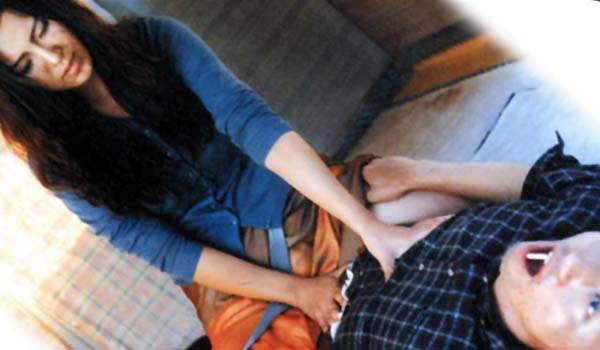
Hee-jin and Hyeon-sik’s relationship is both sadomasochistic and erotic
Verdict:
The Isle is an intense art-house film that explores – and graphically presents – misogynistic violence, sadomasochism, and animal cruelty in the foundation of a couple’s relationship where such savage acts and severe gender inequality is considered normal. The controversy it has courted is warranted, more so if not approached with symbolism in mind, yet despite this the social issues presented with stark realism by Kim Ki-duk are damning regarding patriarchy and the treatment of women and as such further instigates an important area of debate. The Isle will certainly not be to everyone’s taste, but if scrutinized for the artistic content and social debates within – rather than the fabricated notion of ‘extreme’ Asian filmmaking – The Isle offers a unique viewing experience.
The break-up of a relationship is an oft explored area in television, yet in film the realism of such events tends to be eschewed in favor of either a dramatic arena of affairs and/or substance abuse, or the catalyst for comical shenanigans in an attempt to cope with the loss. The financial motivations behind such decisions are understandable, given that their success is dependent on the detachment from reality and the predictable pleasures they provide. Yet, what of the relationships where the love and passion simply dissipate?
Come Rain Come Shine (사랑한다, 사랑하지 않는다), literally translated as ‘I Love You, I Don’t Love You’, is a mediation on the breakdown of a couple and is a slow, thought-provoking film that poignantly conveys the emotional turmoil they experience during their final day together. The film was (rather unfairly) criticised upon release for the slow paced narrative and the lack of events therein, yet in the attempt to convey realism director Lee Yoon-ki (이윤기) has produced a calm and moderated exploration that deviates from typical audience expectations.
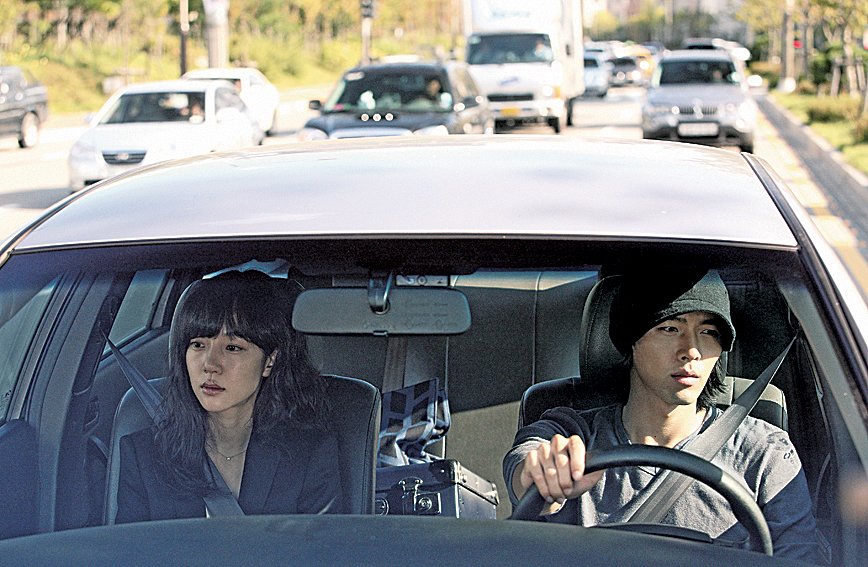
Driving his wife Yeong-shin (Im Soo-jeong (임수정) to Gimpo Airport, Ji-seok (Hyeon Bin (현빈) engages in small talk despite the strangely tense atmosphere between them. After the conversation runs dry, Yeong-shin announces that she is leaving him and will be shortly moving out of their home. Worse still is that she has been seeing another man, a fact she accuses Ji-seok of knowing but ignoring. Bizarrely, Ji-seok appears quiet but unfazed. Days later, Yeong-shin is packing her belongings at home while Ji-seok attempts to make the dissolution of their marriage easier by making coffee, preparing dinner, and helping with the packing. As they awkwardly converse and reminisce over items, Yeong-shin and Ji-seok discover the emotional distress and difficulty in the finality of their marriage.
Yeong-shin announces she will leave Ji-seok
The themes of alienation and loneliness are conveyed by director Lee Yoon-ki (이윤기) with incredible sensitivity and confidence throughout Come Rain Come Shine, as he allows the tense atmosphere created by the mise-en-scene to portray the hardship the couple endure rather than relying on melodrama. This focus on realism is enhanced further by his continual use of long takes which makes the tension between the central protagonists palpable. The opening scene in which Ji-seok drives Yeong-shin to the airport is a long take approximately eight minutes in length, conveying the search for small talk and the awkward silences as features of their relationship which now lacks intimacy and spontaneity. The realism conveyed through the voyeuristic gaze makes for slightly uncomfortable viewing due to their lack of communication and the resulting tension, playing upon the audience’s expectations that a confrontation must occur to disrupt the calm yet strained atmosphere. However as the take is so long, Lee Yoon-ki lulls audience into a false sense of stability which then serves to enhance the shock of Yeong-shin’s announcement she will leave her husband for another man.
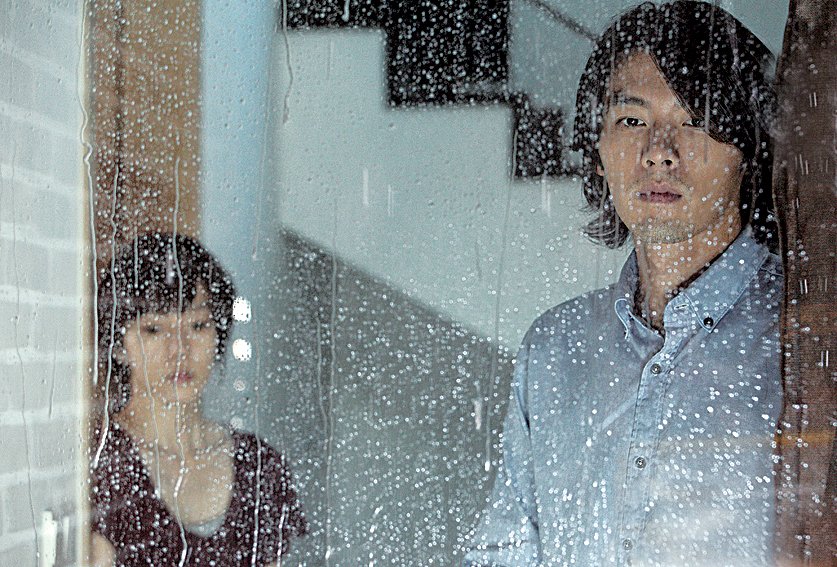
Later at the house, Yeong-shin packs her belongings ready to vacate and leave Ji-seok. The house itself is an incredible element of the mise-en-scene due the various floors that are present, with Lee Yoon-ki utilizing it to convey how the couple are exist on different levels, drift apart, and come together. Each floor, and each room, is unique in portraying the internal conflict within both protagonists, such as Yeong-shin’s isolated higher-tiered office compared with the basement which contains memories over which they reminisce, functioning as the foundation for the house as well as their relationship. The lighting within the house is incredible as the muted tones and lack of colour drain the emotion and passion from the environment, painstakingly exemplifying the numbness within Ji-seok and Yeong-shin. In addition the torrential downpour of rain throughout conveys the sadness both within the protagonists and of the event itself, which ironically forces the couple to communicate and spend more time together as nature seemingly desires the pair try once more – a feature that Lee Yoon-ki respects audiences, whether optimistic or pessimistic, to decide for themselves.
The weather mirrors the emotionally fraught couple
The performances of Im Soo-jeong as Yeong-sin and Hyeon Bin as Ji-seok came under scrutiny upon the release of Come Rain Come Shine which, when taken into consideration that melodrama is enormous popular in Korea, is understandable yet unfair. Both high-profile actors are incredibly talented with a catalogue of successful films and dramas, yet Come Rain Come Shine is a drastic departure from the roles – and expectations – of their previous work. The subtlety contained within their facial expressions and mannerisms conveys the abundance of emotional turmoil contained within. Im Soo-jeong initially projects a cold and heartless persona, yet her desire for passion and love from her highly reserved husband and her reluctance to leave tenderly present themselves as the finality of their situation becomes more apparent. Hyeon Bin is also charismatic in his role as while his quiet and humble nature is continually present, the moments in which he is alone reveal the overwhelming sadness that threatens to engulf him. Despite this he feels incapable of changing the situation yet his chivalry and kindness indicate his desperation to resolve the conflict.
The multiple levels within the house are symbolic of the relationship
Verdict:
Come Rain Come Shine is a tender, thought-provoking, and sensitive portrayal of the final moments in the break-down of a marriage. Due to the slow-paced and meditative filmic style of director Lee Yoon-ki, the film will not satisfy audiences with expectations of melodrama and comedy, or an amalgamation thereof. However, the realism conveyed through the masterful use of mise-en-scene and long takes, in conjunction with the subtle and highly poignant performances, make Come Rain Come Shine a powerful film about the tenderness of loss.
Truth is, as the saying goes, stranger than fiction. Perhaps the cliche is best served when applied to the criminal classes, as events that would seemingly belong in the pages of Sir Arthur Conan Doyle or the films of Martin Scorcese are violently brought into ‘the real’, adding an incomparable shock value with the knowledge that criminal empires were actually built, and that victims genuinely suffered. More specifically, the notion of the serial killer has endeared itself amongst fans of the crime genre for the thrilling cat-and-mouse games played by the detective and murderer, but more so in attempting to piece together the depraved psychosis of the unhinged individual before another innocent succumbs to such unbalanced desires.
Memories of Murder (살인의 추억), director Bong Joon-ho’s (봉준호) incredible second film, is based on the true story of Korea’s first known serial killer who raped and murdered ten women between 1986 and 1991 – a case that is still unresolved. Memories of Murder is one of the most successful and prolific films to emerge from Korea and rightfully so, with superb direction from one of the country’s leading auteurs and an exceptional performance from lead actor Song Kang-ho (송강호).
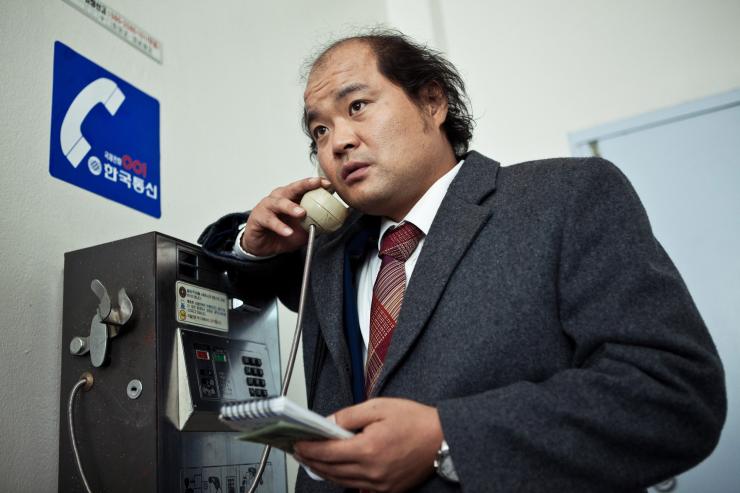
In a small rural town surrounded by farmland, the naked and bound body of a young woman is found in an irrigation tunnel. Detective Park Doo-man (Song Kang-ho) is called to the scene, but all traces of evidence have been destroyed by the locals. Shortly thereafter, the body of another young woman is found, raped and murdered in the same fashion. With no leads, Doo-man and his aggressive partner Detective Cho Yong-koo (Kim Roi-ha (김뢰하) are tasked with finding the culprit, beating and torturing any suspects who visually conform to their idea of a serial killer. Their theories and methods of interrogation are rejected by intellectual Seoulite Detective Seo Tae-Yoon (Kim Sang-kyeong (김상경) who joins the search, but as the three detectives squabble and desperately cling to the loosest of hunches, and with the government too busy quelling the various uprisings throughout the country, the number of murdered young women continues to rise.
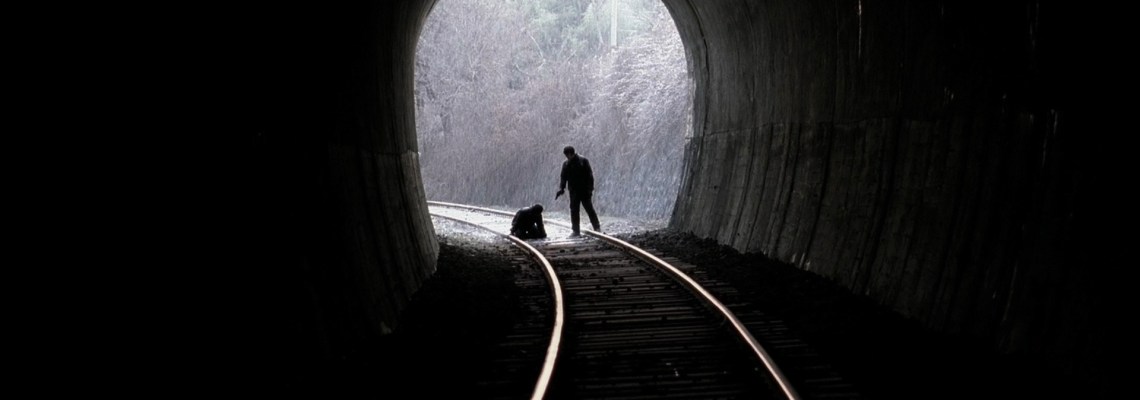
Detective Park Doo-man discovers the first victim
There is a tendency with crime-thrillers to reveal the bloodied and mutilated corpses of the victims for shock value, a tendency from which Bong Joon-ho wisely refrains and instead allows the horrifying true story to be at the forefront of the film. His vision in presenting the narrative is enthralling as he simultaneously conveys beauty and the macabre seamlessly – when Detective Park Doo-man visits the broad, expansive golden farmland in the initial establishing shot, mere moments later he is confronted with a corpse in a darkened, claustrophobic tunnel. The interplay between such oppositions, which have marked Bong Joon-ho as an auteur, continually explore the duality of the situation as light conflicts with darkness, the truth struggles against the veneer, and the lines between morality and immorality are blurred. As such, Memories of Murder contains some incredibly dark humour, such as the ramifications in fabricating evidence and the bizarre perversity that is unlocked in certain members of the populace when news of the murders spreads, adding a comedic edge that stops the film from becoming bleak but also conveys the turmoil and frustrations in attempting to catch a serial killer.
In addition to his interest in duality, Bong Joon-ho’s recurrent social exploration is rather blatantly laid bare and few are portrayed positively. The military government is too busy extinguishing public protests to provide resources; the public are too ignorant to understand they are destroying evidence; media outlets compound the situation further; and men are chauvinistic and sexist. By far the most damning indictments are reserved for the police force, as corruption and violence are commonplace. Detectives Park Doo-man and Cho Yong-koo have received very little education and their logic-defying hunches are simultaneously comedic yet disturbing, as Doo-man rehearses confessional speeches with suspects after Yong-koo has tortured them into submission. Both men humiliate the police force and make them a national embarrassment with their actions, as Bong Joon-ho initially portrays them as simpletons in need of a scapegoat. Intellectual detective Seo Tae-yoon fairs much better having received an education and training in Seoul, yet even he succumbs to the moral abyss due to the frustration with his peers and the lack of resources at his disposal. Bong Joon-ho creates a powerfully damning portrait of the era, yet the dark humour and the often unbelievably surreal events that transpire make the protagonists somehow likable as they themselves are attempt to create order within a society in chaos.
The detectives target anyone who fits their idea of a serial killer
Song Kang-ho, as Detective Park Doo-man, is superb and utterly deserving of his Grand Bell Best Actor Award for the role. Park Doo-man is a bullying fraudster, a corrupt tyrant, yet amazingly is a compelling and charismatic protagonist. His rudimentary upbringing and attitude convey him as an underdog who routinely makes mistakes, and as such resorts to fabricating evidence regardless. Yet when his actions bring the police into disrepute, Doo-man’s evolution is incredible as he begins to emulate Detective Seo-Tae-yoon and commit to serious police work, making Memories of Murder as much about his maturation as about finding the serial killer.
Detective Cho Yong-koo is ultimately a proletariat figure with a penchant for violence, and Kim Roi-ha performs the role well. Bong Joon-ho uses the protagonist of Yong-koo to express the base dissatisfaction with the institution, and as such is more akin to a criminal as he abuses suspects, drinks alcohol, fights with locals, and more importantly sexually assaults a girl in a karaoke room – right next to his oblivious fellow officers.
Kim Sang-kyeong also conveys a highly competent performance as pretentious Seoulite Detective Seo Tae-yoon. As his modern style of police work inspires Park Doo-man, the corruption conversely leads to the devolution of Tae-yoon as his frustrations engulf his sense of reason. Yet while Doo-man’s character arc is compelling, Tae-yoon’s is less so due to his reserved and conceited portrayal.
Searching for the killer leads all the detectives into a moral vacuum
Verdict:
Memories of Murder is a fantastic example of a crime-thriller that does not rely on gore in producing an enthralling film about serial murders. While artistic license has undoubtedly been applied in certain areas, the fact it is based on a real-life unresolved case provides authenticity and a mixture of genuine fascination and horror that such events could transpire in recent history. As such it justifiably deserves its status as being not only one of the most prolific films to originate from Korea, but also in cementing Bong Joon-ho’s reputation as a respected auteur, making Memories of Murder one of the most noteworthy examples of the genre.






















 hangukyeonghwa.com