REALIES Pictures (리얼라이즈 픽쳐스)

Interview with President Kim Ho-sung (김호성), CEO of REALIES Pictures

On Friday the 11th of January, President Kim Ho-sung (김호성), the CEO of REALIES Pictures, very kindly agreed to have an interview. The young production company has been behind some impressive hit films, including box office smash Masquerade (광해, 왕이 된 남자) and romantic comedy 200 Pounds Beauty (미녀는 괴로워). For a profile of the company, please click here.

Ever gracious, President Kim Ho-sung gave a great deal of insight into REALIES Pictures

Ever gracious, President Kim Ho-sung gave a great deal of insight into REALIES Pictures

Question: 2012 was an incredible year for REALIES Pictures, with Masquerade (광해, 왕이 된 남자) performing exceptionally well. What were the highlights of the year for you?

President Kim: Well, so many things happened last year. We started production (on Masquerade) last February, and then we had almost five months of production, and then three months of post-production. Then we released the movie in the middle of September. We had success at the box office and we won a lot of awards at the Korean Film Academy, the Daejong Awards, but that doesn’t really matter to me. Actually the highlight was the production I guess. We had a really great time with the actors, and the crew, and the director, and all the staff we worked with. So that was my highlight. We really really had the same kind of feeling when we finished the shoot. We were satisfied with the scenes and we talked with the director, “this is good, this is bad,” then if we try one more time then that’s the whole production process. It’s really good. I have made 5 or 6 movies before and this was the first experience to have that kind of feeling in the production process. I can say this is my highlight of the year. Getting the awards and people watching the movie is the result, because of our highlight.

Question: What about the London Korean Film Festival? Masquerade finished the festival in quite spectacular fashion. What did you think about that?

 President Kim: Yeah we went there, we were invited as the closing movie of the film festival. We were surprised because so many people were there and they already knew about our movie. And another additional thing is that so many movie stars like Bruce Willis, Helen Mirren, John Malcovich and additionally the great producer Lorenzo di Bonaventura were there. They enjoyed the movie just like a normal audience, and they approached me and cheered me up saying, “you did a good job!” So I was so happy about that, so I had a lot of conversations with the ‘big cheese’. And fortunately di Bonaventura talked to me and said, if you have a good project we can work together sometime. So that’s my prize. So it was really good, we had a really good time with the director and actors. Byeong-heon Lee was there too, and Ryoo Seung-ryeong was there. And a Lady invited us to her house. Actually she was Lady Rothermere, the wife of Lord Rothermere, and we had a really good time at her house. Personally it was a really happy time. And at the same time, the audience really enjoyed the movie. And they understand Korean culture quite well. I was surprised because there were so many foreign members of the audience there. I expected about 90% of the audience to be Korean, or Japanese, but I think half of the audience were foreigners, so that was a shock to me.

One of the many Golden Bell (Daejong) awards for Masquerade

One of the many Golden Bell (Daejong) awards for Masquerade

Question: You mentioned the Daejong Awards. Masquerade was incredible, it had the distinction of winning 15 awards. Every category it was nominated for, it won. Congratulations. However, some critics felt this was controversial. What are your feelings about the ceremony?

President Kim: Yes, err, that’s not my problem. That’s the Daejong Award’s problem, because they changed their politics. Before, they gave their awards by if one movie has got a lot of awards, they only give half of them, and give the other half to another movie. Make them equal, kind of thing. The critics always said, “that’s not a true award.” If one good movie is there, then all the awards should be for them, just like the Academy Awards where some movies won 12 awards, there are so many movies like that. So they changed their selection process, and their committee people, and included normal people, and then they voted. They concealed it, and then at the last minute they opened it and gave the award. They changed it. And it all went to Masquerade, and we won 15 awards. So the critics changed to the opposite of last year, complaining “How can one movie get 15 awards?” So I don’t understand, they changed their policy but unfortunately for them we won everything and that was the problem. Critics are always critics. Something happens, and they always talk about it. So I don’t care about that. So I’m watching next year to see what happens, are they going to change their policy or keep doing it like this past year? But after that, there was another Korean awards ceremony, the Blue Dragon Awards, and we won only one because of the Daejong Awards. That’s ridiculous. Movies are movies. Just like the Golden Globes and the Academy Awards, if a movie is given a lot of wards in the Golden Globes then there’s a possibility it’ll get one in the Academy Awards. I don’t get it.

Question: I’d like to talk about your past, if that’s ok. You studied at Hanyang University. When you were studying there, where did you develop your passion for movies? How did you develop it?

President Kim: Actually it goes back to my middle school years. It’s kind of a personal secret, but I can tell it now. One day I found an envelope in my mother’s box. So I found it and opened it, and I read it, and it was from my father. It was from the time they were dating. It was a kind of movie review, not a love letter. My father saw a movie and got an impression and wrote a letter to my mom. It was The Sound of Music. There were 16 pages of letters. So he wrote the entire story from beginning to end. I read the letters and I realized I wanted to see the movie. It was around the end of the 1960s. And 15 years later I saw the movie, finally! When I read the letters, the young me wanted to see the movie, and then I guess from that moment in my mind, movies were there. In Korea, there is a very tough exam system for entering university. I wasn’t a very academic guy, just a normal guy, and my test results were not really good. There are a few schools I could get into and I went there fortunately. After that, the seed in my mind grew.

The offices of REALIES Pictures, located in Chungmuro

The offices of REALIES Pictures, located in Chungmuro

Question: So then you went to Hanyang University. Did you start script writing? Directing?

President Kim: No, I studied dramas and plays. I did all the crew jobs, floor director and that kind of thing. Finally in the last year of my school days I translated two scripts. One was Hedda Gabbler by Henrik Ibsen. It’s a feminist play. And the other was The Green Bay Tree. That’s a British play, it’s a gay drama. It was very radical compared to Korean culture. Gay stories were very rare. I was too advanced. So I translated two plays and I produced the plays and put them on stage. After that I quit that kind of thing because they weren’t successful. So I lost interest. So I moved into the advertising industry.

Question: How long did you work in advertising?

President Kim: More than 15 years.

Question: What experiences did you learn through advertising?

President Kim: Many. That’s where I learned the basic concepts as a producer from that period. Fortunately I joined a foreign advertising agency called McCann-Erickson. That was the first foreign advertising agency in Korea. That year, 1991, the Korean government opened the advertising market to foreign agencies, and that was the first foreign agency to come to Korea. Because I could speak a little English, I could fortunately join the company and I worked as a producer there for 6 years. I produced some really good and interesting productions and everybody was jealous of them, because my products were really good like Coca-cola, Levis, Nike and Nestle. There were so many good products that I produced TV commercials for because in Korea there was only one foreign agency, and all the good products came to that agency. We were the agents for all those companies. I handled all the good products, and did more than 20 commercials a year. That was good experience for me. I learned all the basic skills and concepts as a producer, it was so lucky for me.

Question: You produced so many advertisements over those years. How did you move from advertising into movies?

Siren (싸이렌), President Kim's first foray in film production

Siren (싸이렌), President Kim’s first foray in film production

President Kim: I really enjoyed my time, for 10 years, doing TV commercials. But then suddenly I felt sick and tired of it. Not because it was boring, but because they were not mine. I put in all my effort and worked really hard. My wife calls this the lost 10 years between a husband a wife. I always went home around 2 am, stuff like that. I devoted myself into that area. I went to the Cannes Advertising Festival and we won awards but I didn’t go up the stage – my client went up the stage. It wasn’t mine. It’s true, because all the advertisements were for the clients, it’s theirs. I was just a serviceman. So there was no credit. I’m not disappointed about getting awards, they’re nothing, just that it wasn’t mine. Yeah I can earn money for living, that’s ok. But I’m a creator, so I wanted to do something myself, something that’s mine and that I can put my name on. Because of that I changed my mind and produced a movie. Luckily at the time I had a good script, and I had an investor because I worked really hard as a TV commercial producer. Some people wanted a new approach with a TV commercial producer, with special effects and everything. That was lucky for me. So I produced one movie while I worked at Seon-woo Productions the biggest TV commercial company in Korea. So I actually begged the president to do this movie and he accepted it because I worked very hard, it was my reward. So I produced the movie Siren (싸이렌), it was my first movie. It was very lucky. But it ended up that we were ruined. I was ruined. It had a bad box office result. Because of that movie I learned so many things. It’s a totally different approach to TV commercials. TV commercials are like a 100 meter race, but movies are like a marathon. We need different muscles. I realized that. That was the first time I experienced failure in 15 years. After quitting the plays and working in advertising, developing myself to be successful, this was the first experience of failure in my life.

Question: Then after Siren did you decided to create REALIES Pictures?

President Kim: No, I went back to TV commercials. I built my own production company called Ink Spot. I worked with director Park Kwang-hyeon (박광현) who directed Welcome to Dongmakgol (웰컴 투 동막골). He was also a TV commercial producer for a foreign advertising agency. He had the same kind of mind as me, so I asked him to join me and we worked together and we built the company together. We did a lot of good commercials together. That was in 2002, 10 years ago. We did a really good TV commercial, we won so many awards. As we are both from advertising we understood each other – he wanted to direct a movie and I wanted to produce a movie. So we developed a lot of stories. One of them was Welcome to Dongmakgol. He picked up the story from a play. We developed the story together, then I rented director Park to producer Jang Jin (장진), who is like a genius, and it was successful. And then when director Park came back we tried to produce and direct another movie but things changed. He was a big director, I was just a TV commercial company president. The industry needs just directors, not producers like me because there are so many. So we separated. I was desperate at the time, so I really thought about what I was going to do next. I wasn’t interested in producing TV commercials anymore. I made a phone call to Mr. Won Dong-yeon (원동연) because I hired him as a producer of the movie Siren and after that failure he kept doing his movie business and made two movies, and I went back to TV commercials. 5 years later, in 2006, I called Mr. Won and told him what I wanted and he accepted me and said let’s do it together again. At the time he was developing the movie 200 Pound Beauty (미녀는 괴로워). So I joined that production.
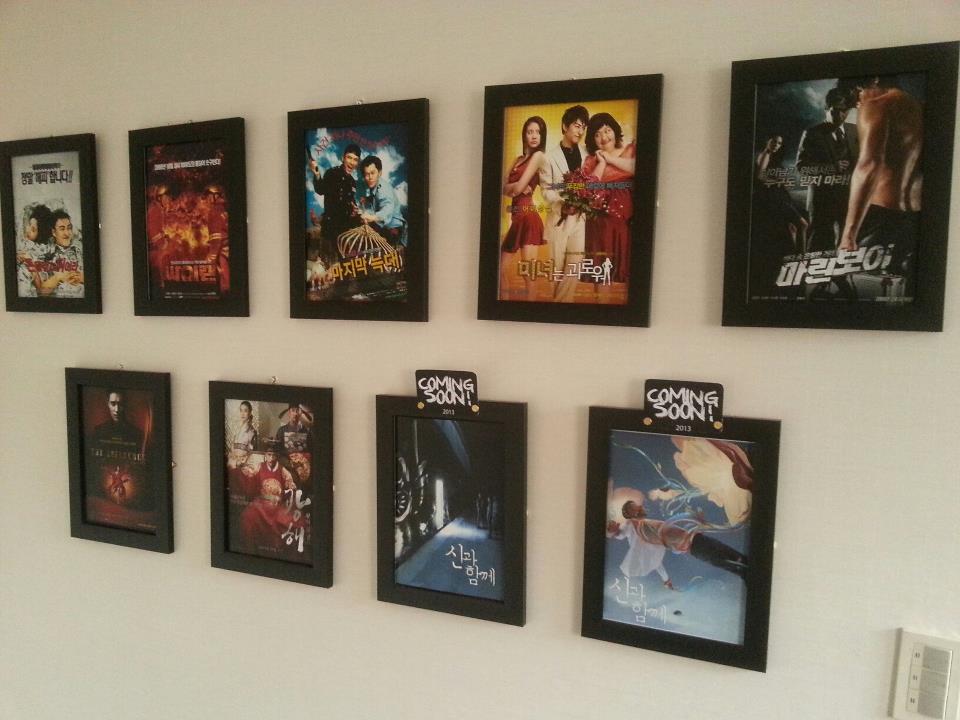
Posters of the films produced by REALIES Pictures adorn the walls

Posters of the films produced by REALIES Pictures adorn the walls

Question: So in 2006 you joined together and you created REALIES Pictures. Then 200 Pounds Beauty was released and it achieved almost 7 million admissions. How did such success affect the company? Did it give you any new experiences?

President Kim: Yes. Because we had a big failure 7 years before with Sirens, we both grew up and got a better understanding of the industry and stories, producers, directors, actors, everything. Mr. Won and I always tried to do better, to understand better. We tried really hard. When I did the first movie Siren, I didn’t understand people, it wasn’t my concern. Just as a producer I gave people money to do something, and they did it, that was the attitude. A TV commercial attitude. But I totally changed. I tried to understand my crew, I tried to understand my director. That was the huge differentiation between the two movies. I realized that making and producing a movie is not manufacturing something, it’s understanding people and the story. That is the first step in producing a movie.

Question: Did you always think 200 Pounds Beauty would be successful?

President Kim: No. No, because I had a kind of trauma with Sirens. I never removed that feeling from my heart. I was nervous. But I didn’t say to anyone about it, but we shared that kind of feeling together. We were very happy when we released the movie in theaters. When we waited outside the door of the theater we just found people were really happy when they were going out, so we were relieved. This is it, we did it! It’s kind of our habit now, we put a movie in the theater and then we wait outside the door, then look at the first expression of the audience. Then we can imagine, “yes, this is good” “this is bad.”

Question: In 2008 you released Marine Boy (마린보이), which was similar to a Hollywood blockbuster with a story involving drug trafficking and ambitious action sequences. Yet for some reason the film didn’t resonate strongly with audiences. Why do you think this was?

President Kim: I can say that it was too advanced, I guess. I think Marine Boy is a well made movie, the picture is good, everything is good, but story-wise it’s different from Korean movies. The Korean audience wants to have an emotional achievement when they watch a movie. This movie is so cool, like a Hollywood movie. So they were not moved. They were not touched. “It’s a cool movie, but I don’t like it” – that kind of attitude. I was too advanced. I wanted to make a Hollywood movie after 200 Pounds Beauty, so I learned another thing. Producing movies, I always learn something. A big success or big failure doesn’t matter, I always learn something.

The Influence (인플루언스)

The Influence (인플루언스)

Question: After that, in 2010, your next production was The Influence. The film is really interesting as it blends a variety of genres and is visually stunning. How did REALIES Pictures become involved in the project?

President Kim: I already mentioned about my resume, doing advertisements. I always did that kind of thing. I was sick and tired of making 15 second TV commercials, they always push that the product is really good with exaggerations and stuff like that. Throughout my years, my attitude for treating that kind of advertisement changed. In 2006 when I created Ink Spot, during that period my TV commercials totally changed. I put some story and emotional things into the commercial. Before that period I always tried to make them look good, just very visually good. I wondered how to touch the people, and I developed. I had an article from a magazine, and there’s a good reference to something BMW did called Hero. They hired 8 good directors and they made short stories, focused on BMW driving, it was really good. So I got a hint from that. I suggested it to an agency and a client. The product was Windsor Whiskey, a Scotch whisky from Diageo. It was really hard to put something like that in advertising because there are so many restrictions. All they can do is a billboard. They wanted to contact people from different areas and use the internet. So we made the product into a story. This is the first time we tried it, and we called it ‘branded entertainment.’ So we made 20 minutes – 4 stories – into a series, with director Lee Jae-gyoo (이재규). We worked together. And Lee Byeong-heon was there as a model for the commercial, and we used him holding a whiskey cup and he was very vivid and lively. From now, we produce a movie at the same time as doing branded entertainment. I planned and developed the iphone 4 film festival, that was the same level of branded entertainment. I suggested it to KT when the iphone 4 was newly launched in Korea so we had to make brand awareness. So I said let’s make a movie with iphone 4. I had a good director and cinematographer. We hired 5 directors and 5 cinematographers and they made 5 6 minute short films We put it in the Busan Film Festival. There’s a section for the iphone film festival. So that’s also branded entertainment, just a different form.
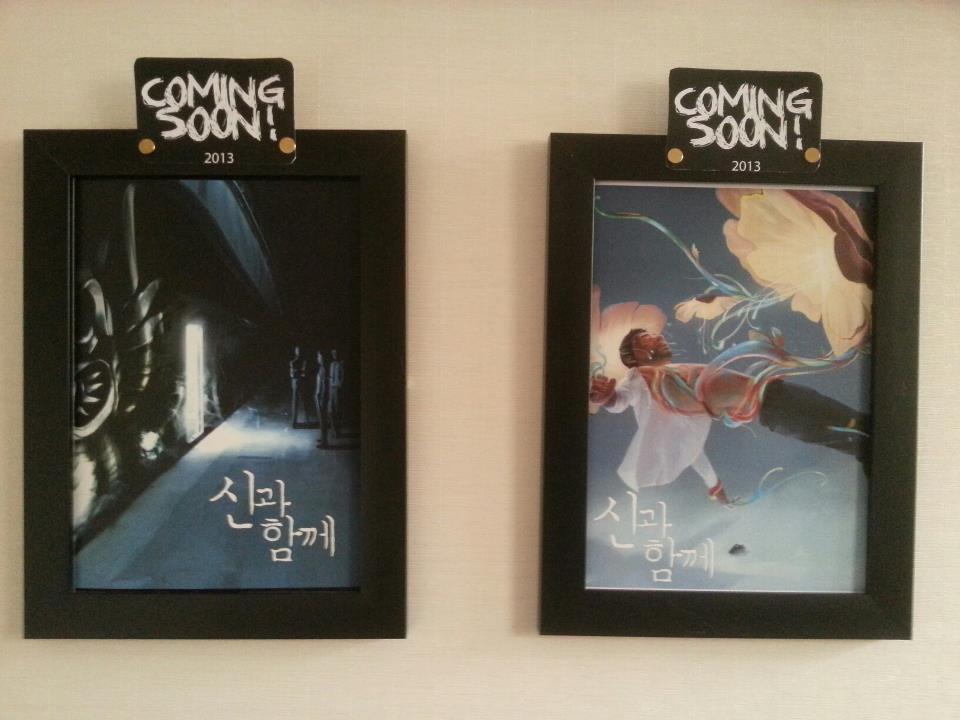
Along With The Gods: A Visit From A Stranger (신과함께: 낯선이의방문) is to be released in 2014

Along With The Gods: A Visit From A Stranger (신과함께: 낯선이의방문) is to be released in 2014

Question: Bringing us back to the present, your next production is going to be Along With the Gods: A Visit From A Stranger (신과함께: 낯선이의방문). Can you tell us about the movie?

President Kim: Yes, it’s a movie about the afterlife. I picked it up from the webtoon, it was a really big success 2 years ago. It has 3 different stories. There is Heaven and Hell, Earth, and mythology – 3 parts. So we contacted the writer and bought the copyright to make a movie. The reviews were really good, people really loved the story. The story is about a man after he died. Heaven and Hell are just like the normal world, there is a ‘Hellbucks’, just like Starbucks, there’s a coffee shop and a court. The man who died goes to the afterlife and he meets a guy who is holding a panel with his name on it. The man asks, “who are you?” and the reply is, “your lawyer.” That is the start of the movie. What? Is there a lawyer in Heaven? That concept is really cute and amazing, so I picked up the story. It’s the journey of a man who died, for 49 days. You know in Korea, in the traditional funeral ritual people always do 49 days of praying for the person who died. The relatives who live in the real world are praying for the dead person to go to a good place. That period of 49 days is the dead man’s journey, and his life is judged in all areas. Being a dad, stealing, violence, these things are judged from what he did in the real world. But he also has a lawyer, it’s a really interesting concept in the story. It’s going to be very fun.

Question: When will it be released?

President Kim: I guess we are aiming for a release around July 2014. It’s going to be a huge production.

I would like to sincerely thank President Kim for taking time out from his busy schedule to conduct the interview.

Interviews/Q&As Producers
Kim Yeong-ho climbs atop the rail tracks, ready for death

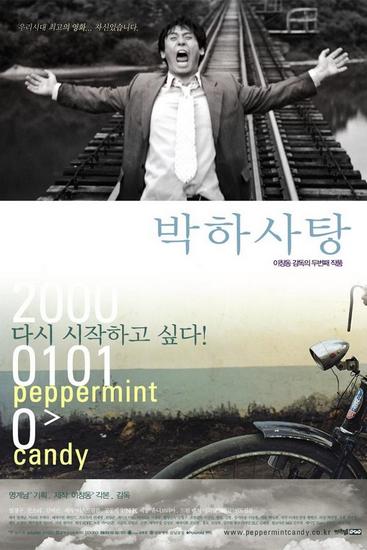
Peppermint Candy (박하사탕) – ★★★★★

Peppermint Candy (박하사탕)

Peppermint Candy (박하사탕)

Peppermint Candy (박하사탕) is an exceptional piece of cinema. Opening the Busan International Film Festival in 1999, it must have been uncomfortably ironic for the audience that such a prestigious Asian festival would feature such a poetically raw dissemination of Korean culture. Directed by auteur Lee Chang-dong (이창동), the film critically examines a twenty year period of Korean history, revisiting pivotal moments through the main protagonist while also psychoanalytically deconstructing his – and by extension, Korean -masculinity. Peppermint Candy is a simply breathtaking exploration of how a person’s life is forged through culture and trauma and, featuring a staggering performance from Seol Kyeong-gu (설경구), is one of great examples of the vibrant socio-cultural power of Korean filmmaking.

In 1999, a man named Kim Yeong-ho (Seol Kyeong-gu) emerges by a riverside where a group of middle aged people are having a picnic. Interestingly, members of the group recognise Yeong-ho and invite him to join them but his erratic behaviour proves too much to bear. Leaving the picnic, Yeong-ho climbs onto train tracks with the intention of suicide, yet just before the train collides he screams, “I want to go back!” Suddenly Yeong-ho begins to revisit key moments from his life – and Korean history – that forged him into the person he has become, including meeting his estranged wife Yang Hong-ja (Kim Yeo-jin (김여진), his career as a police officer, and his first love Yoon Soon-im (Moon So-ri (문소리).

Kim Yeong-ho climbs atop the rail tracks, ready for death

Kim Yeong-ho climbs atop the rail tracks, ready for death

Director Lee Chang-dong has crafted an incredible journey through exploring the life of Yeong-ho, conveying his personal development as inherently tied to the development of Korea over a twenty year period. Initially, Yeong-ho is supremely dislikable and downright weird as he crashes the riverside picnic, behaving terribly towards people who are simply attempting to welcome him. Yet from the moment Yeon-ho steps onto the train tracks, it becomes clear there is a depth to his madness. Over the course of Peppermint Candy director Lee Chang-dong peels back layer upon layer of Yeong-ho’s psychosis in a highly poetic, subtle and symbolic manner, examining how a person’s innocence is twisted by culture and forces beyond control. The train track, for example, is much more than a place for suicide as it comes to represent his path of destiny. As the train moves back in time to revisit Yeong-ho’s past it becomes his timeline, stopping at pivotal moments until the symbolic sound of the train horn conveys that it is time to move on. As such the train and track are ethereal, spiritual beings within Peppermint Candy and are beautifully poignant narrative devices.

 As the train gently takes the audience deeper into Yeong-ho’s history, a great deal of empathy is aroused as his very character is stripped bare. From the initial quick judgement that Yeong-ho is an odd fool, each turning point in his life delicately alters the rash perception to the point where genuine sympathy is evoked from his personal tragedies. When his business suffers as a result of the Asian financial crisis, when his marriage begins to fall apart, when he loses his first love; all have penetrating emotional and psychological impact on Yeong-ho, and it is utterly enthralling to behold the events that molded him into his suicidal state. Director Lee Chang-dong also masterfully ties Yeong-ho’s increasingly fractured state as inherently Korean. As well as the aforementioned financial crisis, Yeong-ho’s career in the police force during the infamous brutality of the 1980s is portrayed, in addition to his role in the 1981 Gwangju Uprising (or rather, massacre).

Yeong-ho revisits his military past, in which he took part in the Gwangju massacre

Yeong-ho revisits his military past, in which he took part in the Gwangju massacre

In each instance, the director examines not only the manner in which Korean people were brutally oppressed during the era but also how men such as Yeong-ho, who is an analogy of all Korean men during this period, were fundamentally changed into abhorrent examples of humanity. Issues such as violence and patriarchal order are interrogated in compelling fashion and conveyed not as features of masculinity, but as cultural constructs that warp the innocence of young males.

Yeong-ho’s journey into the past is also enthralling due to the phenomenal performance of Seol Kyeong-gu. Throughout the entirety of Peppermint Candy the actor is superb in articulating the emotional and psychological state of Yeong-ho with incredible sincerity. From his unhinged suicidal behaviour through to his bitter and violent 30s, from his attempts to rebuild his life following military service through to his innocence as as student, Seol Kyeong-gu is simply amazing. His performance is keenly heartfelt at every stage of Yeong-ho’s life, so much so that his journey of self-discovery lingers long after the film has come to an end. His victories at the Grand Bell Awards and Blue Dragon Awards in 2000 attest to his prowess, and are completely deserved.

Yeong-ho and his first love Soon-im share a tender moment

Yeong-ho and his first love Soon-im share a tender moment

Verdict:

Peppermint Candy is undoubtedly one of the modern classics of Korean cinema, and is an exceptional entry by director Lee Chang-dong. The story is equal parts poetic and subtle as well as raw and compelling, as the emotional and psychological layers of main protagonist Yeong-ho are gradually peeled away. In doing so the director intricately examines the notions of contemporary Korean masculinity, yet it is made even more enthralling through the link with defining moments in Korean history. As such, Peppermint Candy is a journey both personal and national, and coupled with the phenomenal performance of Seol Kyeong-gu, is an absolute must-see.

★★★★★

Reviews
The students begin their road trip full of optimism

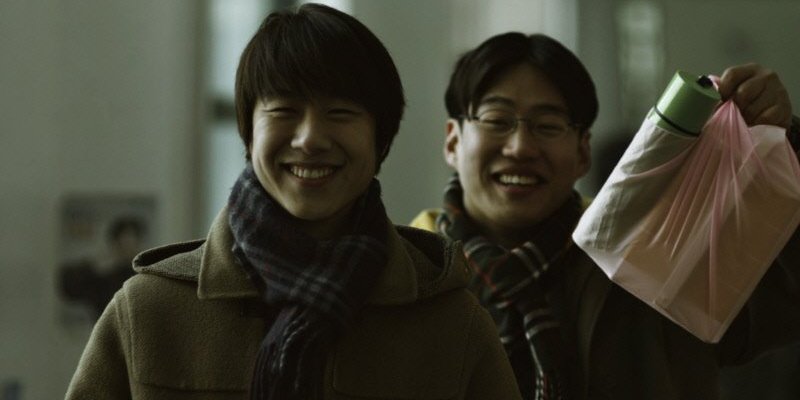
Sunshine Boys (1999, 면회) – ★★★☆☆

Sunshine Boys (1999, 면회)

Sunshine Boys (1999, 면회)

Debuting at the 2012 Busan International Film Festival, and invited to the 2013 Rotterdam International Film Festival for its international premiere, independent drama Sunshine Boys (1999, 면회) has already garnered noteworthy attention and acclaim. Helmed by director Kim Tae-gon (김태곤), the story follows Sang-won (Shim Hee-seop (심희섭) and Seung-joon (Ahn Jae-hong (안재홍) as they embark on a road trip to visit pal Min-wook (Kim Chang-hwan (김창환), who is currently serving  mandatory military service in Busan. As the three reunite for the first time since high school, they discover that events have changed them into quite different people than they remember. Learning about each other once more, the friends meet pretty tea house worker Mi-yeon (Kim Kkobbi (김꽃비) and the night unfolds in a different way than they planned.

The students begin their road trip full of optimism

The students begin their road trip full of optimism

Director Kim Tae-gon, who also co-wrote the screenplay with Jeon Go-woon, employs a social-realist aesthetic throughout the film that makes the encounters full of genuine tension and irony-fueled exchanges. The awkwardness between Sang-won and Seung-joon as they drive together is a mixture of comical and poignant as they attempt to rediscover each other, yet can only use their past as a basis. Similarly when Min-wook is reprimanded by a superior officer only slightly older than him, the results are uncomfortable yet humorous in the attempt to assert dominate masculinity amongst young men. Throughout, the director also employs filters that drain the color from the images, creating a bleak atmosphere that connotes the stage in which the threesome find themselves; victims of the Asian financial crisis of the late ’90s, all three friends are attempting to cope with their current situations that stand in stark contrast to the bright future promised from their days in high school.

Sang-won, Min-wook and Seung-joon learn about each other once again

Sang-won, Min-wook and Seung-joon learn about each other once again

As the emphasis is squarely placed on realism, it takes quite some time for the narrative to get moving, and for much of the opening Sunshine Boys is filled with awkward character moments rather than impetus. A catalyst does however arrive in the form of a letter from Min-wook’s girlfriend Esther stating her desire to break up, and who has charged Seung-joon with its delivery. Initially outraged, Sang-won and Seung-joon continually debate on whether they should hand over the letter and much of the story revolves around their indecision. Yet the film is very much Sang-won’s story as a shy and moderately gloomy university student who is forever changed by the events of the trip. The sullen young man hints at his problems without stating them outright, resulting in an often unemotional central protagonist but one that is easily relatable.

The real test for Sang-won arrives in the form of pretty tea house worker Mi-yeon, who invites him and his pals for a drink at her workplace. Director Kim Tae-gon does a great job of making the establishment foreboding with great use of lighting, isolating the tea house as disreputable, emphasizing the naivety of the young men who enter despite the warning signs. As they drink alcohol the protagonists loosen and they start to reveal more about their issues, granting greater insight into their insecurities and motivations. Yet it is Mi-yeon,wonderfully performed by Kim Kkobbi, that steals the limelight within Sunshine Boys as it is her character that provides compulsion for all involved with her suggestive smiles, probing questions and provocative body language. Mi-yeon is an intriguing character who is simultaneously innocent yet worldly-wise, attractive yet dangerous, and it is largely due to her that the film is so compelling.

The three friends meet pretty tea house worker Mi-yeon

The three friends meet pretty tea house worker Mi-yeon

Verdict:

Sunshine Boys is a highly interesting independent drama about three friends attempting to discover each other once again, after their lives have taken unexpected courses. Director Kim Tae-gon does a great job in featuring awkward, ironic moments in the lives of young men, which are granted extra potency with the application of social-realist aesthetics and drained color palette. The story does however take a very long time in establishing itself and as such the general sense of impetus suffers. Yet the wonderfully understated performance by Kim Kkobbi as Mi-yeon puts Sunshine Boys back on track, making the film an interesting journey of maturation.

★★★☆☆

Reviews
Firefighter captain Kang Yeong-gi races to battle the blaze

The Tower (타워) – ★★★☆☆

The Tower (타워)

The Tower (타워)

Director Kim Ji-hoon (김지훈) has a lot riding on disaster film The Tower (타워). His last film, sci-fi monster movie Sector 7, was reviled by critics and audiences alike and became one of the worst flops in Korean cinematic history (although it went on to secure the highest gross for a Korean film in neighbouring China). As such, questions involving his next project The Tower lingered. Had director Kim Ji-hoon managed to develop his visual aesthetics, and more complex characters and plots, into a more convincing, compelling film? The answer is, perhaps unsurprisingly, yes and no.

The Tower undoubtedly boasts some of the most impressive visual effects work ever produce within a Korean film, to the extent that it’s comparable with Hollywood productions. The sets and the stunt work are genuinely enthralling, combining to produce edge-of-the-seat sequences that are incredibly engaging and convey a palpable sense of realism and danger. That said, the movie only contains an emotional core due to the performance of Seol Kyeong-gu (설경구) as firefighter captain Kang Yeong-gi as the vast majority of protagonists are one-dimensional stereotypes, while the actors that portray them overact to an almost ludicrous degree.

It’s Christmas Eve in Seoul, and that means only one thing for the luxurious Sky Tower buildings – an exclusive Christmas party amongst the social elite of the country. Overseeing the operations are operations manager Lee Dae-ho (Kim Sang-kyeong (김상경), and the object of his affections catering manager Seo Yoon-hee (Son Ye-jin (손예진), who become closer as the deadline approaches. As the party grows nearer safety concerns begin to amount, yet are disregarded with plans forced through by the rich and powerful. When helicopters begin to circle the buildings creating a snow effect, the high winds force one of the choppers into a tower causing a fiery explosion and cutting off all exits for the patrons. Springing into action, firefighter Captain Kang Yeong-gi (Seol Kyeong-gu (설경구) leads his men, including joker Byeong-man (Kim In-kwon (김인권) and rookie Lee Seon-woo (Do Ji-han (도지한), into the building to hunt for survivors.

One of the towers is set ablaze from a heicopter crash

One of the towers is set ablaze from a helicopter crash

Taking huge reference from 1974’s The Towering Inferno as well as the 9/11 twin tower attacks, director Kim Ji-hoon’s The Tower is an exciting and exhilarating experience. Post-production on the disaster film has taken around two years to complete and it shows; the explosions, destruction, and stunts are convincing throughout as fires rage and people die in tragic and horrifying fashion. The film undoubtedly sets a new standard of quality in Korean cinema for special effects prowess, as helicopters collide, concrete fractures underfoot, and fire engulfs everything in its path. Interestingly, the cause of the disaster is akin to Titanic in that the sheer arrogance of those who dwell in Tower Sky, continually referring to their location as ‘heaven’ and close to God, are conveyed as the symbolic perpetrators of the destruction, adding something of a morality play to the devastation.

Yet the visual aesthetics are nothing without an emotional core, and in this respect The Tower somewhat succeeds. The introduction of the various protagonists working and dwelling within Tower Sky is a highly mixed affair, generally featuring stereotypes. Interesting members such as operations manager Lee Dae-ho and daughter Ha-na, and catering manager Lee Yoon-hee, are compelling but receive little character development due to unimportant tertiary characters entering the narrative that have no real impact. Also, the extreme overacting by most of the cast is an enormous irritation, notably Kim Seong-oh (김성오) as chef In-geon who is intended as comic relief but is infuriating throughout. The saving grace of The Tower comes in the form of firefighter Captain Kang Yeong-ri, who provides much needed heart and soul to the rescue attempt as he gallantly battles blazes, disintegrating floors, and corrupt officials in his single-minded quest to get the survivors to safety. Wonderfully performed by actor Seol Kyeong-gu, the captain’s mission is the driving force of the film and is genuinely enthralling to watch, with his sense of duty and responsibility simultaneously sincere and poignant.

Firefighter captain Kang Yeong-gi races to battle the blaze

Firefighter captain Kang Yeong-gi races to battle the blaze

Captain Kang Yeong-ri is also joined by the humorous Byeong-man and newbie Lee Seon-woo in the search for survivors. Byeong-man provides comic relief, generally in the form of silly frivolity, which is mildly amusing in breaking up serious scenes. Lee Seon-woo however is one of the more intriguing characters, as he undergoes a transformation from reluctant rookie to employing skills learnt from Captain Kang, and his development is highly enjoyable. The three fire fighters routinely feature in very impressive stunt work throughout the film, and their successes and failures do not fail to induce an adrenaline rush.

Operations manager Lee Dae-ho also partakes in stunts, as the ‘everyman’ forced to find courage to protect his makeshift family. Such scenes are also entertaining, although they often push the suspense of disbelief to its limits, yet are engaging nonetheless. Unfortunately due to the vast number of supporting roles, Lee Dae-ho’s burgeoning relationship with Seo Yoon-hee is largely overlooked, begging the question why such talented big name stars as Kim Sang-kyeong and Son Ye-jin receive so little screen time. However, despite being underdeveloped their relationship does provide impetus to certain scenes as well as some tender moments.

Those remaining desperately fight for survival

Those remaining desperately fight for survival

Verdict:

The Tower is an extremely visually impressive disaster film, and a return to form for director Kim Ji-hoon. The special effects and stunt work are some of the best ever produced within a Korean film, and certainly on par with Hollywood films of a similar ilk, conveying a genuine sense of danger throughout. That said, the vast number of stereotypical supporting roles bog the story down resulting in an overall lack of character development and audience investment. Lucky then that Seol Kyeong-gu enters the fray as Captain Kang Yeong-ri, who single-handedly lifts the film into a compelling and emotional story, making The Tower an enjoyable entry into the genre.

★★★☆☆

Reviews
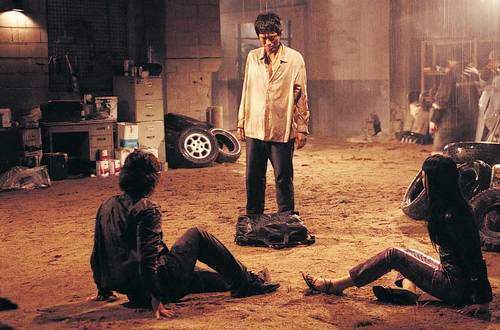
Gyeong-sun and Su-jin attempt to flee from Dok-bul

No Blood No Tears (피도 눈물도 없이) – ★★★☆☆

No Blood No Tears (피도 눈물도 없이)

No Blood No Tears (피도 눈물도 없이)

It goes without saying that the films of Quentin Tarantino have left an indelible impression on the cinematic landscape. This is especially the case with Pulp Fiction, whereby the amalgamation of extreme violence, pop culture, and variety of narrative threads have invited a host of admirers and homages. Director Ryoo Seung-wan (류승완) fits both areas, consistently expressing similar themes throughout his body of work albeit with his own Korean flair. Indeed, his nickname as ‘the Korean Tarantino’ is not entirely undeserved.

No Blood No Tears (피도 눈물도 없이), director Ryoo Seung-wan’s second feature, has clearly taken gangster films such as Pulp Fiction and Snatch as huge sources of inspiration, featuring a multi-strand narrative with an assortment of colorful low lives and gangsters seeking the perfect score. Being a Korean production, there is also a great deal of Confucian ideals and martial arts added to the mix for good measure. It’s a largely enjoyable ensemble piece featuring some wonderful character actors, yet the disparate narratives never coalesce convincingly, in addition to the vast number of protagonists, tonal imbalances, and blatant misogyny that permeates throughout the story.

Gyung-sun (Lee Hye-yeong, 이혜영), a down-on-her-luck taxi driver, is continually harassed by loan sharks seeking debt collection and the police for her criminal past. While attempting to forge a life for herself despite awful passengers, her taxi is hit by Su-jin (Jeon Do-yeon, 전도연) who is on the run from her violent boyfriend Dok-bul (Jeong Jae-yeong, 정재영). A former boxing champion, Dok-bul works for the aging local kingpin KGB, or Kim Geun-bok (Sin Goo, 신구) whose power base is unchallengeable particularly while flanked by martial arts master the Silent Man (Jeong Doo-hong, 정두홍). Unknown to KGB however, is that everyone around him is conspiring to steal his fortune, even local karaoke worker Chae Min-su (Ryoo Seung-beom, 류승범).

Gyeong-sun has trouble with loan sharks and the police

Gyeong-sun has trouble with loan sharks and the police

One of the great strengths of No Blood No Tears is the gritty, violence-fueled world of Incheon inhabited by the array of gangsters and charlatans. The aesthetics employed by director Ryoo Seung-wan, such as the wonderful use of low key lighting, convey an urban landscape fraught with danger and violence, while the dilapidated arenas in which confrontations occur lends a disturbing sense of realism to the proceedings. Within this world are a vast number of protagonists, each with their own foibles and agendas, all connected with one another through various relationships and each strand unfolds in a thoroughly entertaining manner. As such comparisons with Pulp Fiction are inevitable, particularly as director Ryoo Seung-wan uses similar non-linear editing techniques in which to orchestrate events, although he later succumbs to traditional linear storytelling. Unfortunately however, with so many characters the director doesn’t manage to balance the vast number of plot threads and therefore underdevelopment of key personnel is a profound issue throughout the film. This is acutely the case with indebted taxi driver Gyeong-sun and wannabe pop starlet Su-jin, who are the masterminds behind the heist but are forced to the sidelines while focus is granted to the male roles. The intention is clearly a Thelma and Louise style narrative whereby two unlikely women join forces to take on a male-dominated world, yet as well as lack of development the film contains some frankly awful misogyny as Gyeong-sun and Su-jin are repeatedly beaten to an absurd degree by the men around them.

Stylised violence is one of director Ryoo Seung-wan’s greatest assets, and when not used to abuse the female characters, it is a genuine delight. Of particular note is the confrontation between retired boxer Dok-bul and the Silent Man, which features some lightning fast and bone crunching moves made all the more powerful through utilizing the gritty realism of Incheon’s underworld. The blood, sweat, and deft use of light and shadow are exhilarating to behold as the men fight for their lives – and their stake of the money – within the battleground of a dog fighting cage, and is a testament to the director’s skill and flair for action sequences.

KGB gives orders to Dok-bul, while flanked by the Silent Man

KGB gives orders to Dok-bul, while flanked by the Silent Man

The violence is also accompanied by a healthy dose of black comedy through humorous use of bad language and bizarre confrontations between the eccentric characters. While not as sophisticated as the films which inspired it, the comedy within No Blood No Tears is still highly enjoyable. A large amount of humor is left to the director’s brother, Ryoo Seung-beom, as dim-witted karaoke worker Chae Min-su. Unfortunately this tends to be slapstick in nature, although there are laugh-out-loud moments to be had. Most of the comedy appears through the double-crosses and surprise encounters as everyone attempts to outsmart each other and disappear with the money, and the quick pace as events unfold is entertaining. It is, however, difficult to be fully invested in the antics as Gyeong-sun and Su-jin tend to have little involvement in the robbery despite their central roles in the film, while villainous thug Dok-bul seems to emerge as an anti-hero of sorts, only for things to later reverse in an attempt to wrap all the narrative threads up nicely. As such, while certainly enjoyable, the finale is lacking in compulsion making the film somewhat hollow and bittersweet as the credits begin to role.

Gyeong-sun and Su-ji attempt to flee from Dok-bul

Gyeong-sun and Su-jin attempt to flee from Dok-bul

Verdict:

No Blood No Tears is a gritty, urban tale of gangsters and charlatans in a Korea-meets-Pulp Fiction style. Director Ryoo Seung-wan has crafted a world of danger and violence with expert use of lighting and environments, while his trademark of stylized action is exhilarating to behold. Yet the unbalanced narrative and lack of character development due to the enormous cast results in a lack of investment, particularly with the central female roles, who suffer from awful misogynistic abuse throughout the film. No Blood No Tears is ultimately an enjoyable, though uneven, gangster romp.

★★★☆☆

Reviews
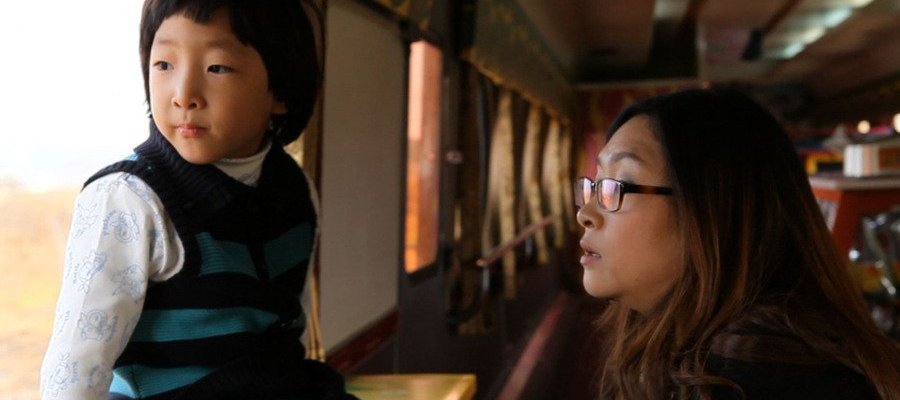
Jun-seo and Hyung-sook have an unspeakably strong bond as their overcome adversity

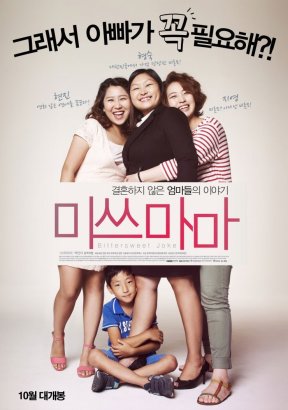
Bittersweet Joke (미쓰 마마) – ★★★★☆

Bittersweet Joke (미쓰 마마)

Bittersweet Joke (미쓰 마마)

The lives of single mothers are complex to say the least. In Korea, single mothers face more than the challenges of raising a child alone, potential paternity suits and holding down a job. Due to the incredibly conservative, and highly patriarchal culture, they must also contend with a society that continually treats them as ‘unethical’ and ‘fallen’ women. News agencies, for example, often blur faces and change voices when interviewing single mothers, the same measures applied when profiling criminals. The sad fact that many of the women ask for such identity protection highlights the prejudice that exists and the severe impact it has on their daily lives.

Director Paik Yeon-ah (백연아) addresses such discrimination in her documentary Bittersweet Joke. The directors intention is to convey a more developed perspective of the lives of single mothers – their happiness, their challenges, their strengths – and she wildly succeeds. Throughout the documentary director Paik Yeon-ah perfectly captures the positivity of her subjects, emphasising their hopes and dreams that co-exist with the role of mother. The subjects themselves are also incredible well chosen, simultaneously highly compelling and poignant. While deeper issues of accountability of absent fathers and social intolerance are unfortunately only briefly touched upon, Bittersweet Joke is a positively charged documentary that presents single mothers as highly capable women and is unfailing uplifting.

Single mothers discuss their hopes and raising children, and the difficult subject of men

Single mothers discuss their hopes and raising children, and the difficult subject of men

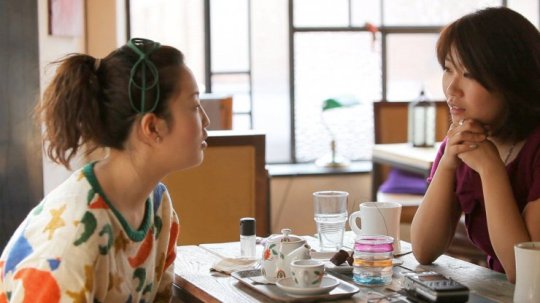
Bittersweet Joke moves between documenting the lives of two different single mothers, Hyun-jin and Hyung-sook, and discussions about the challenges that face them with other women, notably their friend Ji-young. This editing technique, as well as the directorial style displayed by Paik Yeon-ah, are exemplary in focusing on the issues affecting single mothers as they naturally enter their lives, as well as debating them in greater depth with friends in a similar position. For example, Hyun-jin desperately wants the father of her child to re-enter their lives yet is continually disappointed; this then moves on to a later discussion in a coffee shop where Hyun-jin and Ji-young dispute whether a man is necessary at all in child rearing. This method allows for brevity and lightheartedness, as while challenges appear poignantly they are often dealt with in a quick and humourous fashion, and discussed in hindsight with laughter. All the single mothers are represented in such a manner, as they overcome difficulties with sheer willpower and humour, finding comfort and solidarity in the sisterhood of other women in similar situations.

Director Paik Yeon-ah even explores the importance of language within Bittersweet Joke, as within Korean language ‘unwed mother’ and ‘single mother’ contain quite different connotations. ‘Unwed mother’ is an unflattering term that describes women who couldn’t get married, whereas ‘single mother’ connotes a woman who has chosen not to marry. Within Korean culture the institution of marriage is still highly regarded, and as such the term ‘unwed mother’ is much more commonly used within the media and society, regardless of the offensive meaning. Director Paik wisely uses her subjects to explore such cultural themes within their daily routines, as opposed to forcing the message, and allows the audience to witness the prejudice as it naturally unfolds in their lives. As such audience sympathy is strongly evoked as both mother and child are subjected to offenses they must routinely endure.

Jun-seo and Hyung-sook have an unspeakably strong bond as they overcome adversity

Jun-seo and Hyung-sook have an unspeakably strong bond as they overcome adversity

Bittersweet Joke would not be so interesting if not for the three women at the center of the film. All three are quite different in terms of personality, which makes how each situation is dealt with a fascinating character study in addition to conveying the lives of single mothers. This philosophy is also apparent in the debates that follow, as each mother approaches a challenge or future ambition from an alternative perspective, allowing for highly interesting discussions to occur.

Hyun-jin is a sweet natured romantic who wants the traditional notion of family for herself. She is prepared to forgive her ex-lover if he returns despite everything, and uses make-up and nice clothes to try and entice him back. Her daughter Tae-hee also exemplifies Hyun-jin’s desire for perfection, as her daughter’s name is the same as a beautiful actress. Meanwhile Hyung-sook is a strong-willed and active feminist, fighting for women’s rights and attempting to change cultural ignorance. Her intelligence has also produced cynicism, as while she fights for her son Jun-seo to have a relationship with his father she has generally given up on men. The contrast between such two different single mothers, and how they develop over the course of the documentary, is the genuine triumph of the film as the journey that each woman undertakes is compelling and nuanced. It’s also enjoyable to see Hyun-jin and Hyung-sook bounce ideas off of Ji-young and other friends, adding further perspectives to already complex areas. Yet often when such important features are introduced, due to director Paik’s need to keep light-hearted momentum, greater depth goes amiss as with the accountability of absent fathers. Otherwise, Bittersweet Joke is a wonderful exploration of the issues facing single mothers in contemporary Korea.

The prejudice children receive is also explored

The prejudice children receive is also explored

Verdict:

Bittersweet Joke is wonderful documentary about the challenges facing single mothers in Korea. Director Paik Yeon-ah has produced an informative and entertaining film, one with an important social message that is allowed to unfold naturally throughout the course of the mothers’ lives while also debating issues from alternative perspectives. The light-hearted momentum is enjoyable and, while greater depth would have been nice in certain areas, the compelling subjects and vitality in which the single mothers are presented is uplifting and life-affirming.

★★★★☆

Reviews
Soon-yeon looks after her sickly younger sibling

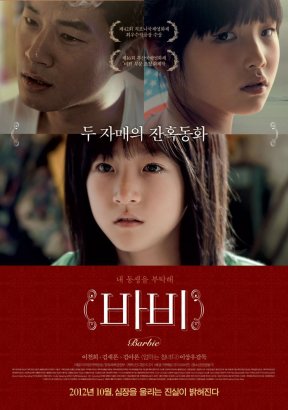
Barbie (바비) – ★★★★☆

Barbie (바비)

Barbie (바비)

Director Lee Sang-woo (이상우) has earned the moniker of the ‘ogre of independent cinema’, a title which he is interestingly in favor of. The titles in his filmography attest to his desire to explore controversial subjects, notably Mother is a Whore (엄마는 창녀다) (2009) and Father is a Dog (아버지는 개다) (2010), both of which scrutinize the Korean family unit. As such, the influential director’s films are fascinating insights into taboo subjects often ignored by mainstream cinema.

With Barbie, the topic of international adoption is broached yet throughout the narrative director Lee Sang-woo also examines the concept of the ‘American dream’, the materialism within Korean society, and the poverty and human rights abuses that impact those living on the fringes of contemporary society. The film is a fascinating perspective on such an array of controversial subjects and, while it does takes some time to establish the story, Barbie is an incredibly compelling and poignant production.

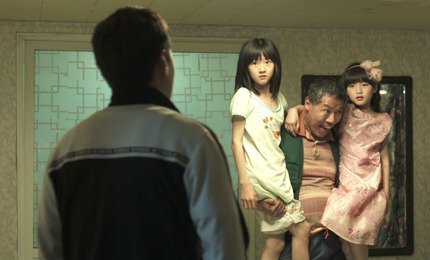
Soon-yeong  (Kim Sae-ron (김새론) and her sickly younger sister Soon-ja (Kim Ah-ron (김아론), live with their mentally ill father on the coast of Pohang city. Life is extremely difficult for the family, and while Soon-yeong diligently takes care of everyone her sister dreams of escape. Their uncle Mang-taek  (Lee Cheon-hee (이천희) exploits them all in running his coastal motel where drunks and vagrants frequent. Yet everything changes when Mang-taek’s associate, an American named Steve (Earl Jackson) arrives with his daughter Barbie (Cat Tebo) with an offer to take Soon-yeong back to the USA for ‘a better life’. With the family thrown into chaos, and Steve’s motivations becoming increasingly unclear, Soon-yeong and Soon-ja must make decisions that will change them forever.

Soon-yeon, Soon-ja and their father have their lives turned upside down by Mang-taek

Soon-yeon, Soon-ja and their father have their lives turned upside down by Mang-taek

The world of Barbie  – the coastal area of Pohang City – is expertly constructed as a nihilistic purgatory by director Lee Sang-woo. The bleakness of the surroundings and the poverty that afflicts Soon-yeon’s family is palpable, while the vagrants and sexual predators that move in and out of their lives bring a genuine sense of danger to their well-being. The director constantly challenges the family with the society and culture that surrounds them, allowing for a slow-paced yet highly interesting examination of those struggling to survive in contemporary Korea. With no mother and a mentally ill father, it’s down to Soon-yeon to take on the roles of mother for her sibling Soon-ja, as well as wife and bread-winner as she sells home-made accessories and prepares meals. Yet the real tragedy lies in the fact her efforts are never appreciated, as her father cannot articulate his affection while Soon-ja has grown to despise the life into which she has been born, fantasizing of an escape of make-up and pretty dresses. Such protagonists are complex and acutely difficult to portray, yet the casting of real-life sisters Kim Sae-ron and Kim Ah-ron is an absolute masterstroke. The two young actresses are simply wonderful in conveying not only their poverty-stricken lifestyle, but also how it has forged them into very different beings. Kim Sae-ron, who has honed her talent through films such as The Man From Nowhere and Neighbors, is startlingly poignant throughout Barbie as her indomitable spirit overcomes the heartache before her. Yet younger sister Kim Ah-ron continually threatens to steal the show with her vehement bitterness towards those around her and the desperate attempts to make her fantasy of becoming a princess a reality. However, Soon-ja’s poor health always brings her back to the homestead and Soon-yeon’s care, adding further layers of nuance in exploring the family unit.

Soon-yeon looks after her sickly younger sibling

Soon-yeon looks after her sickly younger sibling

The notion of escape is ultimately provided by uncle Mang-taek, and his associate Steve. Mang-taek is a shockingly awful parental figure due to his abusive language and the manner in which he treats the young girls, bullying and insulting them to get what he wants. His awareness of their plight, and his refusal to share the burden, adds further animosity to his untrustworthy nature. His relationship with Steve is complex to say the least, with the two secretive men disliking and reviling yet needing one another, allegorizing the nature of Korean and American ties. While Mang-taek curses Steve with racial slurs and offenses under his breath, Steve openly displays his detest of Korea in a similarly offensive fashion, highlighting their mutual dislike and lack of cultural understanding yet are forced to work together. Furthermore, director Lee Sang-woo continually emphasises the wealth gap between them through contrasting the luxurious arenas in which Steve and daughter Barbie inhabit, with the extreme poverty occupied by Soon-yeon’s family. Hope appears, however, through the burgeoning friendship between Soon-yeon and Barbie. While they cannot communicate there is an unspoken mutual respect which the director uses to explore the generational ideological differences.

The crux of Barbie’s narrative is the adoption of Soon-yeong by Steve, yet her friendship with his daughter angers him to an unreasonable degree. The plot takes an incredibly long time to explore why this is the case, yet when it finally arrives the film shines as one of the most compelling and poignant pieces of independent cinema of 2012. The contrast between Soon-yeon, who wishes to stay, and Soon-ja, who wishes to go, is central in exploring the concept of the Korean family as well as the dream of America as a land of opportunity and escape. The bittersweet nature of both philosophies are wonderfully conveyed by director Lee Sang-woo, and his approach leaves a lasting and indelible impression.

Soon-ja dreams of America as an escape from poverty

Soon-ja dreams of America as an escape from poverty

Verdict:

Barbie is a highly compelling and poignant drama from director Lee Sang-woo that explores an incredible array of social issues within contemporary Korea. As with the director’s previous work the focus is squarely on interrogating the family unit, yet the inclusion of international adoption allows for an expansion in highlighting a variety of socio-cultural themes and issues. While it takes the film quite some time to get going, Barbie serves as a powerful reminder of the issues facing those in poverty and leaves an indelible impression.

★★★★☆

Reviews
My P.S. Partner (AKA Whatcha' Wearin'?) (나의 P.S. 파트너)

My P.S. Partner (AKA Whatcha Wearin’?) (나의 P.S. 파트너) – ★★★☆☆

My P.S. Partner (AKA Whatcha' Wearin'?) (나의 P.S. 파트너)

My P.S. Partner (AKA Whatcha’ Wearin’?) (나의 P.S. 파트너)

Mainstream Korean romantic comedies are, generally speaking, quite innocent. Shy glances caused from an accidental meeting? Check. The embarrassment caused from accidental skin-to-skin contact? Check. The man carrying his injured loved one to safety whilst crying? Check, check, check.

Not so with My P.S. Partner (나의 P.S. 파트너). The film attempts to take a more contemporary, and certainly more open, approach to the highly cliched genre. While the film is squarely light-entertainment, it is also a surprisingly charming rom-com. My P.S. Partner – or the frankly awful English title Whatcha Wearin’? – strives for quirky originality through the incorporation of sexual language and events, and while it never fully achieves such heights director Byun Sung-Hyun (변성현), who co-wrote the screenplay with Kim Min-soo (김민수), has crafted an enjoyable tale of love.

Depressed and lonely, musician Hyeon-seung (Ji Seong (지성) struggles to come to terms with his break-up with long-time girlfriend So-yeon (Shin So-yul (신소율). Her new rich, handsome boyfriend only compounds his melancholy further, while his friends do little to help. Yet one evening Hyeon-seung receives a surprise phone call from a woman who initiates exciting phone sex. However the call was actually a mistake, as the woman – underwear designer Yoon-jeong (Kim Ah-joong (김아중) – intended to call her boyfriend yet misdialed. Later contacting each other through drunken anger, Hyeon-seung and Yoon-jeong begin to build a relationship over the phone, one that has the potential to develop into something special.

Lonely and depressed, Hyeon-seung consols himself with alcohol

Lonely and depressed, Hyeon-seung consols himself with alcohol

From the outset, My P.S. Partner conveys the deep desire to be bold and contemporary as a group of friends frankly, and quite explicitly, discuss sex and relationships. The writers are clearly aware of the conventions of the genre, and make their best efforts to avoid the same pitfalls through utilising more ‘adult’ content to usher in a greater sense of realism. The approach simultaneously succeeds and fails, as while the sexual conversations are more grounded in reality than the uber-conservative innocence, the tongue-in-cheek nature and the ‘performance’ of sexual dialogue is farcical. It is, however, quite amusing and feels fresh as the friends bounce sexual jokes back and forth over drinks. Wisely after such a set-up, Hyeon-seung’s plight as a singleton is quickly established yet due to the jovial nature of the film, the depth and sincerity of his sorrow is generally undermined.

The rapid and comical pacing of the opening means that it doesn’t take long for the introduction of Yoon-jeong into the narrative which, luckily, doesn’t feel especially contrived. Her sex-call is one of the highlights of the film as Director Byun Sung-Hyun plays with the notions of sex and relationships in a postmodern fashion, with cut scenes emphasising that they are both seeking something other than what the promise of sexual fulfillment offers. This, in turn, gives heart to My P.S. Partner. Rather than boy-meets-girl, Hyeon-seung and Yoon-jeong are both in pain from relationships in different ways, which is neatly explored as a critique of contemporary relationships within Korea. Yoon-jeong desperately desires to marry a man she knows is wrong for her in order to have the fairy-tale ‘wedded bliss.’ Hyeon-seung, meanwhile, is every bit the insecure and sensitive modern man, who wishes to be with someone to assuage his loneliness. Such notions are also examined through the supporting cast, each with his/her own relationship woes that adds depth to an otherwise light-hearted rom-com.

Hyeon-seung and Yoon-jeong finally decide to meet

Hyeon-seung and Yoon-jeong finally decide to meet

Despite such a fun and fresh beginning, the cliches suddenly start to appear thick and fast. The narrative problems are clearly visible, as writers Byun Sung-Hyun and Kim Min-soo begin by attempting a more original and contemporary approach, before including a multitude of cliches in the second act, only to realise their mistake in the third and attempt to pull it back to the original vision. While this doesn’t necessarily make My P.S. Partner a bad film, it’s shame that the potential wasn’t carried through the entirety of the running time. Troubles arise mainly due to Hyeon-seung and Yoon-jeong deciding to meet so early, as the initial development of their relationship over the phone is conveyed through montage. In meeting, the impetus of their journey of self-discovery is somewhat diminished although there are several quite charming moments as the two become closer. Yet for every scene where the couple develop deeper emotions, such as through music, is a scene that rings hollow such as Hyeon-seung’s attempt at chivalry due to Yoon-jeong’s vicious former-colleague. However, the jovial nature of the film is infectious and even despite being aware of such conventional silliness, they cannot help but raise a smile.

A large amount of this is due to the charisma of the lead actors. As underwear designer Yoon-jeong, Kim Ah-joong is great. She exhibits the hopes and desires of the character with energetic enthusiasm, overacting which would usually be a criticism yet in this instance highlight the vulnerability of a woman lying to herself. When Yoon-jeong’s dreams are dashed, the hurt expressed by Kim Ah-jeong is keen, although the actress works hard to keep the atmosphere upbeat throughout and often succeeds. As lovelorn musician Hyeon-seung, Ji Seong is capable and endearing. While he doesn’t have the same emotional presence as his love-interest, the actor has good comic-timing and his development is enjoyable to watch. His performance of the ‘panty song’ in the highly cliched finale is highly entertaining, as well as the jokes that unfold in yet another comical critique of Korean culture.

Hyeon-seung sings the 'panty song' for a fun yet cliched finale

Hyeon-seung sings the ‘panty song’ for a fun yet cliched finale

Verdict:

My P.S. Partner is an entertaining and enjoyable romantic-comedy, one that employs the use of sexual language and jokes to offer a fresh approach to the genre. While it succeeds slightly more than it fails, the film is also quite charismatic due to lead actors Kim Ah-jeong and Ji Seong as the unhappy lovers. Director Byun Sung-Hyun has crafted a light-hearted tale of romance that is humorous as well as containing the odd critique of contemporary relationships in Korea, making My P.S. Partner a fun mix of the current and the cliche.

★★★☆☆

Reviews
Director Paik Yeon-ah (right) shares her thoughts with the Indieplus translator

Bittersweet Joke (미쓰 마마) screening and Q&A with Director Paik Yeon-ah (백연아) and star Hyung-sook (형숙)

Bittersweet Joke (미쓰 마마)

Bittersweet Joke (미쓰 마마)

At the Indieplus theater (인디플러스) in Gangnam, on the 18th of December, was a special screening of documentary film Bittersweet Joke (미쓰 마마). Following the screening was a Q&A session with director Paik Yeon-ah (백연아) and one of the stars of the documentary, Hyung-sook (형숙), who both graciously answered the queries from the audience.

Bittersweet Joke is a documentary concerned with portraying the lives of single mothers in Korea. Mainstream media tends to portray such women in an extremely negative fashion, with their faces blurred and voices altered, similar to criminals. Additionally, they often ignore the mother’s wishes regarding what is contained within the features, highlighting instead the extreme hardships of their existence. With Bittersweet Joke, director Paik Yeon-ah attempts to convey a more fully formed perspective of single mothers in Korea, conveying that they are capable, intelligent women simply trying to live their lives and raise their children to the best of their ability. The director also emphasizes the social prejudice that single mothers are forced to endure within Korean culture, as well as the innate lack of responsibility displayed by the fathers.

Bittersweet Joke – also known as Miss Mama – is an incredibly well-crafted and heart-warming documentary. The directing and editing are excellent, while the single mothers themselves are wonderful subjects through which to explore such an important social issue, conveying their joy and determination as well as their vulnerabilities and hopes for the future. The film was very well received by the audience, and following the end credits the Q&A session began.

The Indieplus translator kindly facilitated the discussion with director Paik Yeon-ah (백연아) and star Hyung-sook (형숙)

The Indieplus translator kindly facilitated the discussion with director Paik Yeon-ah (백연아) and star Hyung-sook (형숙)

The translator thanked everyone for braving the cold weather to come to the screening, and introduced both Director Paik Yeon-ah and Hyung-sook. Before questions were received, some information about the guests were provided. Bittersweet Joke (미쓰 마마) is the second feature from director Paik following Lineage Of The Voice (소리 아이) (2008) about two talented boys who perform traditional Korean music and opera.

Translator question: How did you (Director Paik and Hyung-sook) meet?

Director Paik: Thank you for coming to see the film on such a cold day. It was a great opportunity to meet Hyung-sook. That was really the start of the documentary. Although she sometimes she thinks she’s not sure if it’s good luck that we met, maybe it was bad luck in a sense because our relationship lasted so long and it was made into a documentary. But whether it is good or bad, making a documentary is like making a family in a sense, so I think we have become a certain kind of family during the process of making the documentary. And just like families our relationship is a tough and lasting one, I appreciate that. During the process of filming, I really enjoyed every minute of it. And the start of the documentary came to me quite naturally when I was finishing my first documentary Lineage Of The Voice (소리 아이). It was about two children, and after finishing this documentary I myself experienced pregnancy and had a child. And then I was more interested in making a documentary about children and I wanted to look into children’s upbringing and the relationship of family, focusing on children. So that was my interest, and I of course I was more and more interested about bring up a child being a mum myself. And then I found out about Hyung-sook, who is actually a rare person who is ready to speak about these issues, single mum issues, which is not really an open issue in Korea in 2010 when we first met. As my interest was focused on children, I wanted to look at different children in various conditions and environments so in that process we met. During that time not many people were willing to talk about single mum issues, not in mainstream media or any type of media, so she was the only one I found although I had to persuade her to make the film but she was willing to do it. Even after I got her agreement, here’s an association of single mom’s and they had to go through several meetings whether she should be in the movie or not, whether the film should be made or not. Because they have a history of people portraying single mum’s in a really negative way, so they had concerns. But she had decided to be in the film with me, and after these meetings we could finally start the film. And I think maybe she believed that this media, this documentary, would have a different kind of approach to this issue. That trust was between us, and that was probably the reason why she choose to do the film with me, I think. And that was the start of this documentary. That different approach was to portray them a little bit more like a comedy, and a bit more in a funny and enjoyable way. Not like a victim.

Hyung-sook: I made a very  brave decision to be in the film. I was the only one who didn’t want to use mosaic (which covers the identity). And I had seen many cases in the media in which single mums are depicted in a negative way here in Korea, and when I heard about this project from Yeon-ah I suspected the different approach and liked the approach of comic touches and the very enjoyable way of presenting. But also at the time I was running a little shop, but people got to know I am a single mum and because of that I had to close the shop. I couldn’t run it anymore because people were treating me as if I was a sick person, or as if I’m a bad person, and people that I knew such as family members, as soon as they found out that I am a single mum they assumed I would call them more (for help). It was a really stressful situation and I wasn’t ready to receive it. Having a child and raising it, why is it a problem to them? What’s wrong with that? I thought that by making this film maybe something could change. I expected a big change from making this film, but not yet. That’s how I started this project. And also another reason why I wanted to be in this project was because it was a rare project as the director told me it would have no altering, and I would be there with my own voice and my own face, which is not how the mainstream media usually depicts single mums. Most of them are not willing to speak out. But  this was different.

Director Paik: I think it’s a rare opportunity, and special too, to have a screening with an audience with different backgrounds because in some of your countries the situation is much better, and this is quite a Korean situation. Why is the single mum issue such a difficult issue? This is the reality we have. So I’m interested to listen to your responses as well. Please feel free to ask or share your comments.

Jun-seo and Hyung-sook within Bittersweet Joke (미쓰 마마)

Jun-seo and Hyung-sook within Bittersweet Joke (미쓰 마마)

Question: I was wondering if Hyung-sook has ever confronted any of her friends for treating her that way when they found out she was an unmarried single mum?

Hyung-sook: There are many cases where I had to confront other people about the fact that I am a single mother, and raising a child by myself. But there were cases where people would directly confront me about this issue. But this whole life is like fighting against the world, I think. Living as a single mum feels like that most of the time. At first, when I had Jun-seo (her son), I think until he was four years old I was really occupied with making my life, working and raising him, so I didn’t realise it that much. But after he got a little older and when I had to meet mothers in kindergarten, (I realised) it’s not just about me but it’s also about him. I’m a grown-up, so I can cry or forget about it or say something like “damn!” to make myself feel better. But for him it’s much more difficult, so that’s why he’s getting therapy and psychiatric help these days. So we are living through the situation together. It’s not just about one person, the whole life of a single mother is like that.

Question: Congratulations on such a great documentary. Really well made, wonderful subjects.  I’m the son of a single mum too and I could really feel (the message), and I really admire what you’re doing as a single mum as it must be incredibly hard. My former school was in the countryside area and a lot of my students had been abandoned by one or both of their parents and they had then gone on to make a new family so a lot of my kids were a bit troubled. But then I moved into the inner cities and that didn’t exist, it was all the ‘perfect’ family unit. The single parent children had been pushed to the fringes of society. With your documentary are you hoping to change attitudes? What would you like to see change in Korean society now?

Director Paik: Thank you first for your comments. First, maybe I should explain a little bit about the difference between English and Korean about (the term) ‘single mum’. In English we usually say ‘single mum’, but as you can see in the film it is actually translated as ‘unwed mother’. Which sort of reveals the prejudice against single mums already. I think there is this kind of tendency in our society to specify people like that so we’re not saying ‘single mum’ which can include several cases such as maybe the father died ahead of the mother, or divorced, or not married. ‘Single mum’ can be all these kinds of cases. But in Korean we usually call them ‘unwed mother’. So by specifying people in this manner, it seems to me like dividing people into ‘normal’ and ‘not normal’ in a sense. So by using the words ‘unwed mother’ it kind of reveals the idea that it’s not normal to be a mother when you’re not married. And that is based on the tendency that people are not accepting difference. We don’t have this tolerance, in a sense, and I think people are intolerant about this difference. So that’s why I think we should be able to accept and embrace these kinds of differences. That’s part of the reason why I made this film. And it’s also the goal of single mums. I think everyone of us can have a case where I myself can become an object of these kinds of prejudices. So I think it’s really important to be free of these kinds of prejudice for all people in society. And do to that, I think the idea that a family should consist of a father, mother and son and daughter makes a ‘normal’ family, that kind of idea should be avoided now I think, because we live in a much more complicated society. And I think through making this film I want to depict that kind of controversy in Korea that we have. The reality that we have.

Single mothers gather to discuss their experiences

Single mothers gather to discuss their experiences

Question: (N.B. This question could be interpreted as quite offensive towards single mothers, although it could perhaps be due to poor English language ability). I want to know more about Korean culture. I want to know why these kinds of accidents happen. Why are the father’s parents are not doing anything? Are the relatives not pushing them to avoid such bad cases? What about society? What about religion or culture? Does society show any pressure to avoid those kinds of things? Is Korean culture and society strong enough to prevent those things happening? There should be culture or ethics in society to prevent [this issue].

Director Paik: I don’t really understand what you mean by ‘accident’. Do you mean becoming a single mother is an accident?

(The question was then rephrased into a question about the father’s responsibility).

Hyung-sook: In general in Korea, I think the society is much more generous to men about being not responsible. In our culture we are much more generous to men even though they are not being responsible.  And so you can sue them, and get some money every month for the child and  try to make him responsible, but most of us already know that it’s no use. You can try, but a lot of us single mums know that it’s not really working. So I think we need stronger legal restrictions, on certain kinds of irresponsibility. We don’t have it yet. So I think like in other countries, it’s possible to have money transferred as soon as the [ex-partner] received his salary, if I can get that legally, or if we had that kind of system it would be much easier. But up until now, it’s not possible so that’s a tricky part. Also in our society, it’s more usual to have pre-marital sex. But having a child is a different issue. If you are pregnant and not married yet, young women are told they should get married with (the partner) and make a family. So having a child out of marriage is still very difficult here in Korea. Not many people welcome you. So a lot of young woman have to think that if they are pregnant they have to get married. That’s how it works. It’s a very tricky situation for them. If you have a child before or out of marriage it seems in this society that the prejudice is that it’s the woman’s fault and it’s unethical, in a sense. So that kind of atmosphere is pressure for women in Korean society. But nowadays times are changing, and a lot of women don’t really want to get married. To quote many women, marriage is not the ultimate goal at all. But [they are] responsible for their actions and when they have a child, that’s why so many women are becoming single mums in Korea. And I think there will be more and more, and I think it’ll be ok if single mums in this society can be included as a mum, as a woman, as a person who works for their livelihood. Just to be received like that would be ok. But up to now we still have to fight a lot of prejudice. If single mums can be embraced by society like that, like a person who’s working hard and having a child, having that kind of change is what we need. It’s necessary to bring up my child well, because all the pressure is going to the child as well. To conclude, the man is the problem! I’m really really curious to know the mental structure of a Korean man, and what’s wrong with them. I really think they need to be fixed. Totally. Seriously!

 – the question then continued – What about the child’s father’s parents?

Hyung-sook: Well I basically asked the father of my child he should be a father, and to do all the roles that a dad should do. Because it could really hurt my son, I think, because they have a relationship already. If he one day just disappeared, that will really hurt my son. So I asked him to keep that relationship of father and son, and do what he should do. It’s quite important I think, especially because he’s a son and he needs a dad, in a sense. I think it’s not just about money, it’s about bringing up a child together. Not living together, or getting married, but bringing up a child together. So we agreed to that. But at first the parents asked us to get married because we have a child, but because of our agreement they gave up. But they asked me a lot of things, for example please change his family name to the father’s family name. It’s usually the father’s side that you get the family name, even in Western society, and in Korea too. They asked that a lot, but I never said yes to that request. In the end, they told me that I am really something, and they are not asking that anymore. But the relationship is good now, not that bad, I think it’s quite good. The relationship between the parents [of the father] and my son is now quite ok, because he’s not just my son, he’s the son of his father as well. I totally accept that. I want him to have a father as well.

The subject of men is debated - are they needed?

The subject of men is debated – are they needed?

Question: I just wanted to say I really loved your movie. I think everyone should watch this movie. Personally, I’m from Canada and I have a very good friend that’s a single mother, so I know through being friend’s with her about her struggles. I think documentaries like this show single mothers as everyday people, and that they’re not abnormal. I also personally volunteered at an orphanage here in Korea and it’s really heart breaking that these children are abandoned by their mothers. So this movie really touched me because I think children should have at least one parent. I really think a lot has to be done about this situation. I just wanted to know, because I’m a teacher, what I can do to better this situation. How can teachers better support mothers and [their] children? It’s heart-breaking to know one of your students can be an outcast for having a single mum. As a teacher, how can we better support them?

Director Paik: As you can see in the film, when there was a campaign for adoption, and I think until about ten years ago that was the atmosphere of our society, to encourage adoption to solve the problem of orphans, to find them parents. But nowadays I think it is slowly changing, to give more support for single parents. Not for adoption, but to enlarge the support for the single parent. So that’s slightly changing. And to support the original family, because a lot of single parents give up – especially single mothers – give up their child because they don’t have the courage or because it is too difficult to live as a single mum. But now I think it is changing a little bit. Even the government policies are changing towards that kind of policy, like to support single parents financially and to have a different kind of atmosphere in society by supporting them. I hope it will change more in that direction. So if single mothers and single fathers get the support they need and get the support to bring up their child, that will change a lot of things including adoption and orphanage problems as well. I think the change is going in a quite positive direction these days. And the question you asked, because you are teacher, you feel more responsible about these children who are from single parents, and I think the situation that you mentioned is similar to what Jun-seo is going through now, so I’m sure that Hyung-sook has a lot of things to say about that.

Hyung-sook: I stopped working – I quit my job – to spend more time with Jun-seo. Before the film I wasn’t really shy to talk about these issues even in other media, but after this film was released, more and more people got to know about my situation and it was known more to the people at school. And Jun-seo got more and more questions about his mother and he told me that everybody is asking. His friends are eight years old and they don’t understand what ‘unwed mother’ even means, and what it really means to have a child outside of the marriage system. But they are asking him, almost everyday, “Is your mother an unwed mother?” They kept asking that so he got really stressed about it. That’s why he’s undergoing a very hard time these days. And I realised that he is talking less and less to me, and he doesn’t want to have a conversation with me, and he eats too much, and that’s how I found out that he’s having a very difficult time. I told Jun-seo, “Jun-seo, I am a single mum, I am an unwed mother, you know that.” And he told me that he knows, and it’s not the fact that they are asking him ‘do you have an unwed mother?’ that bothers him, it’s that they keep asking everyday. That’s what bothers him. It’s ok to ask him once, but they ask all the time and that’s really stressful. And it’s so stressful that my eight year old son told me that maybe it’s better to die than live. It’s such a huge stress to him. And I talked to Jun-seo’s teacher, and the teacher told me that [he/she] will definitely say something to the children. But that was it. So I was just thinking maybe there are not many things that a teacher can do, because I didn’t get a lot of help for that situation. So I can only hope that the world will changes a little bit faster, and to become a better world for my son to live as a single mother’s child. I really hope the changes are coming faster. One thing I can hope for is for a certain kind of education about the situation of single mums in Korea, that will probably improve the situation a little bit more. If we have these opportunities for education for the children, because they are too young usually [to understand], but also for parents and for teachers who possibly have prejudice about single mothers and their children. So I think it’s really important to have the opportunity to have that education about different types of families. There was one case where I met Jun-seo’s friend and I told him, when he asking me, “Are you an unwed mother?”, I answered, “Yes, I am.” But I told him that his mother and me are the same, that’s what I explained. But I cannot do that every time. And recently Jun-seo had a little bruise from the ice, which was thrown by one of his schoolmates because he kept asking Jun-seo, “Do you have an unwed mother?” And Jun-seo got angry and said stop that, and that’s when the boy threw the ice. I really broke my heart. That’s why I hope the world should change. And as for teachers, I think it would help to tell the single parent child that they are not different, and I know other school mates are telling [you things], but it’s no big deal. You’re just like them. And to be there for them in that kind of situation, and maybe hug him. Just let him [or her] know that they are not different. In other countries children can have quite open conversations about these kinds of issues, but here it’s still quite rare.

Director Paik Yeon-ah (right) shares her thoughts with the Indieplus translator

Director Paik Yeon-ah (right) shares her thoughts with the Indieplus translator

Director Paik’s closing comments: It was really precious time for me to have this kind of time with you. As a filmmaker who made this film, I feel more and more responsible, not only about this film but to make a better world in a sense, because that was part of the reason I made this film. So I’m not sure how much I can contribute to the change of this world, but I hope I can. To do that I’d like to try community screenings as well, after all the screenings are over in the theater, so we are trying to organise community screenings. We are also trying to do that in a co-operative program with the association for single mothers. It’s an educational program to go and meet people in person, and to educate about the situation of single mothers life and their rights. So we are going to do that with the association, and we are going to try and arrange more community screenings. And Hyung-sook mentioned about having educational programs for parents, teachers and grown-ups as well. It would be really great to have more and more opportunities to watch this film and discuss these issues about single parents. Especially to have that kind of opportunity with parents would be really great and maybe that will contribute a little bit for change. I think it’s necessary. I feel really obliged that I should do this more actively, I should do more as the person who made this film. The people who are in the film – including Hyung-sook – they [found] the courage to come out and speak in this film, so I feel more responsible, that I should make the most out of it, and to contribute more to the change.

Thank you to Indieplus for hosting the screening, and thank you to Director Paik Yeon-ah and Hyung-sook for generously giving their time and answers.

Directors Interviews/Q&As

Red Maria (레드 마리아) – ★★★☆☆

Red Maria (레드 마리아)

Red Maria (레드 마리아)

The dilemmas facing women in South-East Asian countries are multitudinous. Despite the great variety of countries within the region, and regardless of the diverse cultures and heritage, each nation has one thing in common – the dominance of patriarchy. As such the role of women as wives, mothers and homemakers has been, and continues to be, difficult to shift even though increasing numbers of women have entered the workplace. Interestingly this in itself is problematic in defining the term ‘labor’ in regards to females. Traditionally the word refers to employment in exchange for money and/or trade goods, but as females occupy such diverse roles the definition is difficult to clarify.

Director Kyung Soon (경순) attempts to address the quandary through her documentary Red Maria (레드 마리아). During the course of the film, the director explores the concept of women’s labor within South Korea, Japan, and The Philippines documenting the lives of a number of females each with her own struggles. From unfairly dismissed employees and care workers, to women working in the sex trade and the homeless, director Kyung Soon seeks to convey that while each of the females within are not connected physically, the trials they endure and their strength of character unite them spiritually in the struggle against oppressive patriarchy. Such an objective is incredibly ambitious, and while this does allow for a highly interesting documentary the sheer number of participants makes the film overstretched and lacking an emotional core, while the editing and other post-production techniques also detract from the experience.

A care worker in Japan allows insight into her daily life

A care worker in Japan allows insight into her daily life

In attempting to convey the daily struggles of South-East Asian women, director Kyung Soon deserves praise indeed as it is rarely touched upon in mainstream cinema. The concept of women’s labor and it’s definition is certainly intriguing given the variety of cultures and statuses within the region. However, her desire to capture so much information is also her undoing as the documentary is, while very interesting, lacking in focus. The multitude of characters that inhabit the film also suffer the same fate as while each person is intriguing, they are given only brief segments of time before the audience is whisked off to another location and situation.

This particularly applies to the women from The Philippines. The Filipino women are far and away the greatest assets of Red Maria. Their stories are poignant and tender, and the sincerity of their emotions and their drive to continue on despite obstacles are the heart and soul of the film. The women profiled are those who have fallen outside the margins, those living in slums, working in the sex trade, and the elderly. Their stories are heart-breaking yet inspiring as they refuse to let the severity of their respective situations dampen their spirits. Scenes in which senior Filipino women describe the rape of an entire village decades before by Japanese soldiers cannot fail to shock, while the generations of women – within the same family – working in the sex trade is incredibly saddening. Likewise, the families living within the slums being forcefully evicted are compelling to say the least. Yet with each struggle there is hope due to the incredible resilience of the women involved, whether fighting for the truth and an apology, studying to change career, or even refusing to move, the Filipino women are inspiring in their strength and tenacity. These scenes also provide Red Maria with the greatest visuals throughout the film. Within the slums for example, a train passes mere inches from the abodes of those that reside there in comically stunning fashion. The senior women show the location of the mass rapes, a large red mansion in the country which is incredibly sinister and reminiscent of horror films. Their stories are the most compelling feature of Red Maria, and had director Kyung Soon continued to follow their development the documentary would be much stronger for it.

Senior Filippino women discuss past atrocities comitted by Japanese soldiers

Senior Filippino women discuss past atrocities comitted by Japanese soldiers

However, as South Korean and Japanese women are also profiled the tone of the documentary consistently changes and is quite jarring. Alternating between these locations also unfairly lessons the impact and seriousness of those in Korea and Japan. While women in The Philippines struggle to survive, the women from other countries are protesting against unfair dismissal, working as care workers or travel agents, or living in a tent in the woods. Their situations are interesting and important in emphasizing alternative forms of patriarchal oppression, but it is impossible not to compare and contrast with the more uncompromising situations faced by their counterparts.  It also doesn’t help that so little screen time is dedicated to them, nor that their innermost thoughts are not really revealed, making it difficult to empathize with the struggles they endure. There are also instances which beg for more insight that never appear, such as workers rights and governmental and police hostility towards demonstrators, the difficulties of living homeless, and being an immigrant bride. Such areas are never explored fully, to the detriment of empathizing with the plights the women face. Additionally some claims – such as South Korea not being ready to accept sex workers – are downright odd, considering the sheer number of Korean prostitutes that operate within the country.

Post-production is also an issue with Red Maria. Generally the editing is competent, yet there are several instances in which the documentary appears to be winding towards a finale only to pick up again and continue on. Scenes such as young Filipino women playing on the beach are inserted yet serve no purpose. The use of text highly detracts from the film as well, as the variety of different fonts, the occasional appearance of the director’s thoughts, and some flashy graphic work often serve to pull the audience out of the film. One of the interesting highlights of the film is the frequent recurrence of women’s stomachs which are symbolic of numerous attributes of the term ‘labor’, but oddly the text is never used to explain the director’s thoughts on this issue.

A recurring motif, a woman's stomach symbolises the diversity of the term 'labor'

A recurring motif, a woman’s stomach symbolises the diversity of the term ‘labor’

Verdict:

Red Maria is a highly interesting documentary, and director Kyung Soon deserves praise indeed for attempting to profile the subjugation of women under oppressive patriarchy in South-East Asia. Yet her desire to explore the concept of women’s labor proves to be far too broad in scope, resulting in a lack of character and debate development, as well as audience empathy. Yet it is the Filipino women who are the genuine highlight of the film, bringing incredible poignancy and inspiration to the discussion, and make Red Maria worth watching.

★★★☆☆

Reviews