Tae-hee dreams of exploring the world beyond the trappings of her existence

Take Care of My Cat (고양이를 부탁해) – ★★★★☆

Take Care of My Cat (고양이를 부탁해)

Take Care of My Cat (고양이를 부탁해)

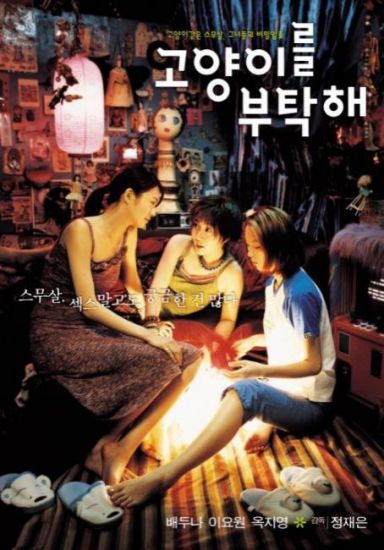
The voices of young women are often ignored in mainstream cinema. Those that do appear tend to focus on frivolity, particularly consumerism where the characters purchase the latest fashions often in the attempt to catch the attention of a love interest. Such latent sexism is wonderfully rejected in director Jeong Jae-eun’s (정재은) indie drama Take Care of My Cat (고양이를 부탁해), a refreshing drama about five friends who increasingly grow apart after high school. The film had a very successful festival run following its debut at the 2001 Busan International Film Festival, appearing at Berlin and Rotterdam amongst others, and launched the careers of the principal cast, notably Bae Doo-na who went on to star in several high profile productions such as Sympathy for Mr. Vengeance and Hollywood movie Cloud Atlas.

Following graduation from high school, five friends from the port city of Incheon who were previously extremely close begin to drift apart. Shin Hae-joo (Lee Yo-won (이요원) lives in Seoul working hard to achieve a career, becoming driven by appearance and success. Yoo Tae-hee (Bae Doo-na (배두나) works for her father’s business for free, struggling to find her own identity and ambitions. Seo Ji-young (Ok Ji-yeong (옥지영) is an aspiring textile artist, yet her poverty-stricken lifestyle has left her with little prospects. Finally, twins On-jo (Lee Eun-Ju (이은주) and Bi-ryu (Lee Eun-Sil (이은실) simply attempt to get by, making cheap jewelry to be sold at market. As Tae-hee works hard to keep the bonds of friendship strong, events occur that profoundly change the young women and take them all in different directions resulting in the passing of a pet cat between them.

The friends reunite for Hae-joo's 20th birthday

The friends reunite for Hae-joo’s 20th birthday

Take Care of My Cat is an intelligent character-driven film, one that eschews the trappings of melodramatic story-lines so often ascribed to women’s roles in cinema. Director Jeong, who also takes writing duties, instead opts for more realism, conveying the struggles of young women fresh from high school, struggling to succeed in the highly competitive society. With each protagonist director Jeong highlights and interrogates particular features of Korean culture, balancing the social critique between them while simultaneously conveying how such forces shape them into different women. Hae-joo – wonderfully brought to life by actress Lee Yo-won – must contend with the extreme diligence of the employment sector in Seoul, constantly striving to be ‘better’ and prompting an arrogance and selfishness her friends are unaccustomed to. Meanwhile Tae-hee is forced to endure the misogyny within Korean culture as exemplified by her father who passes tips on how to be a ‘real man’ to his son. With Ji-young, her poverty forces limitations on her creativity and forces her outside the margins of society. In each case, director Jeong explores the notions of female identity and its construction with skill and insight, organically debating them within the narrative as the quintet of friends observe the change the personalities and the distance generated amongst them.

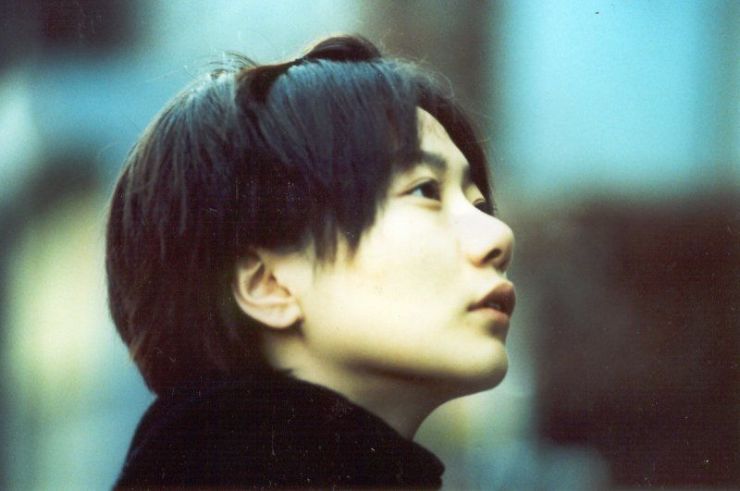
In this regard it is Tae-hee who, as the central figure who arranges meetings, becomes the heart of the film and the window through whom the audience identifies most. As Tae-hee attempts to bring the group closer it becomes clear she’s fighting an uphill battle, and her observances reflect the audience’s own. Bae Doona brings a wonderful and nature grace to the role, both endearing and sincere, conveying a young woman yearning for identity and ambition that always seem just out of reach. She is the person with whom young people can relate the most, someone who wants independence and individuality yet is trapped by the culture that surrounds her.

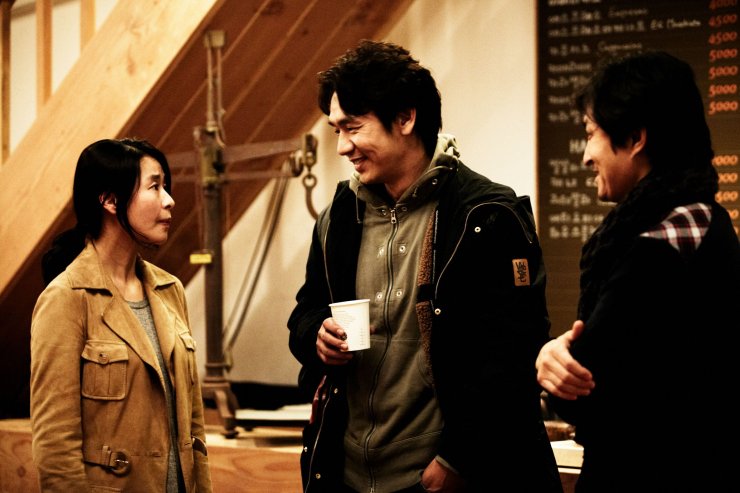
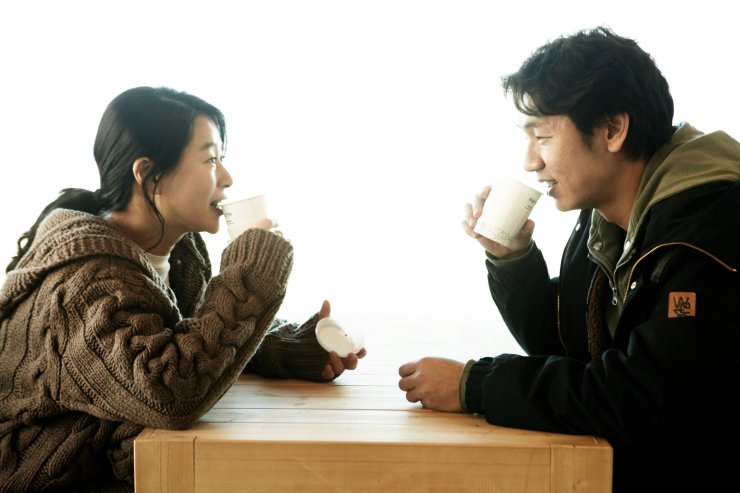
Tae-hee dreams of exploring the world beyond the trappings of her existence

Tae-hee dreams of exploring the world beyond the trappings of her existence

The titular cat also functions as pertinent and insightful metaphor for female identity. As director Jeong has often stated in interviews, cats are fussy and independent, don’t listen, and leave home whenever they wish. As the cat is passed between the friends it becomes symbolic in inspiring the owner to yearn for more, to become increasingly frustrated with her existence as it stands. As Koreans are traditionally uneasy with cats, the director seems to be suggesting that Korean culture struggles with the notion of female identity and independence. Director Jeong emphasises such traits through each of the protagonists, especially Tae-hee and Ji-young by exploring their unhappiness and desire for change. The narrative is quite unbalanced in regards to twins On-jo and Bi-ryu however, and their inclusion is underdeveloped and arguably unnecessary. They serve little function throughout, except to sell cheap home-made accessories to other women, again tying into the debate of physical attractiveness women are expected to partake in.

Yet Take Care of My Cat is not all deep metaphor and social debate, as the film makes effective use of lighting techniques, an otherworldly electronic soundtrack, and text messaging/typing graphics to give the film a distinctly ‘cool’ edge. These features combine incredibly well and lend the film something of a ‘cult’ vibe, and has clearly served as an inspiration to later films who have employed such techniques.

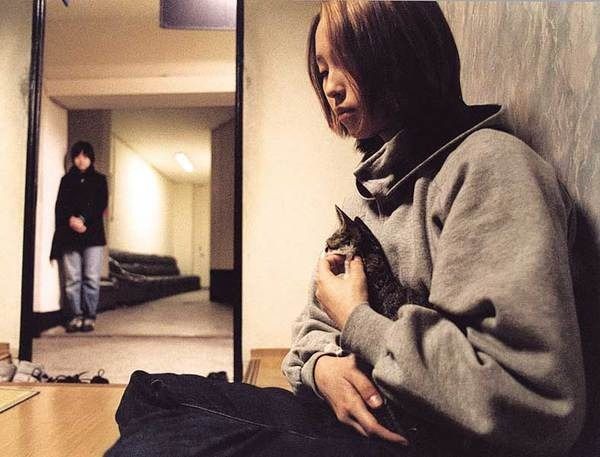
Ji-young's poverty-stricken life is difficult to endure

Ji-young’s poverty-stricken life is difficult to endure

Verdict:

Take Care of My Cat is a wonderfully charismatic film that provides young women with a voice that’s sorely lacking in contemporary cinema. By eschewing notions of consumerism and melodrama, writer/director Jeong Jae-eun instead focuses on female identity and its construction with skill and insight. Furthermore the electronic soundtrack, amongst other techniques, make it something of a cult film, as well as an intelligent, profound offering in the debate of womanhood in modern Korean society.

★★★★☆

Reviews
Courier Tae-jun sports an iconic orange jacket, revealing much about his character

White Night (백야) – ★★★★☆

White Night (백야)

White Night (백야)

Originally intended as part of a short film trilogy, Korea’s first openly gay director Lee Song Hee-il’s (이송희일) White Night (백야) evolved during the course of filming to become a short feature. Since its debut at the 2012 Jeonju International Film Festival, White Night has enjoyed a successful festival run resulting in a European premiere at the 2013 Berlin International Film Festival and featuring at the 2013 BFI London Lesbian and Gay Film Festival, respectively.

The film examines the single night in return of air steward Won-gyu, two years after a self-imposed exile following a homophobic assault. The altercation is based on a true event which occurred in Jongno, Seoul in 2011, and director Leesong explores the deep-rooted psychological trauma that continues to resonate long after the attack. Employing European aesthetics to do so, the director has crafted an attractive and interesting exploration, but one that ultimately fails to shake off its short story origins into something more.

(For the Q&A with director Leesong Hee-il regarding White Night, please follow this link.)

Returning to Seoul after an absence of two years, gay air steward Won-gyu (원규, Won Tae-hee (원태희) is distant and aloof. Rather than contact family, Won-gyu arranges to meet another man via the internet for a sexual encounter. Yet when courier Tae-jun (태준, Lee E-gyeong (이이경) arrives, Won-gyu’s barriers and distance prove too much to bear. For some inexplicable reason however Tae-jun can’t leave Won-gyu alone. As the night wears on, Won-gyu’s history as a victim of violence becomes clear and the twosome resolve to stay together until Won-gyu leaves the following morning.

Won-gyu is aloof and distant, expressing himself through subtle mannerisms

Won-gyu is aloof and distant, expressing himself through subtle mannerisms

Director Leesong Hee-il is clearly influenced by European cinema, with such aesthetic sensibilities shining through in each frame. While the film compromises of mostly street scenes, White Night is very attractive throughout and features some lovely cinematography that gives each area different characteristics. Such artistry is also present within the protagonists themselves. Won-gyu, for instance, doesn’t give away any information about himself directly, yet through his mannerisms it is clear he contains hidden depths. As the character continually plays with items in his hands, chews gum, and stares longing when smoking, it is left to the audience to wonder about the internal conflict that drives him and the reason for his stoicism. These clues are intelligently and subtly referenced throughout the film, and it is acutely refreshing to witness psychological trauma presented in such a manner without characters screaming about their strife. While intriguing at first, the lack of information does however become frustrating as Won-gyu refuses to provide any, often only smoking and staring into the distance. As such director Leesong flirts dangerously close with the pretentiousness so often associated with European art-house fare, yet thankfully the inclusion of Tae-jun propels the narrative forward so that such instances don’t linger for too long.

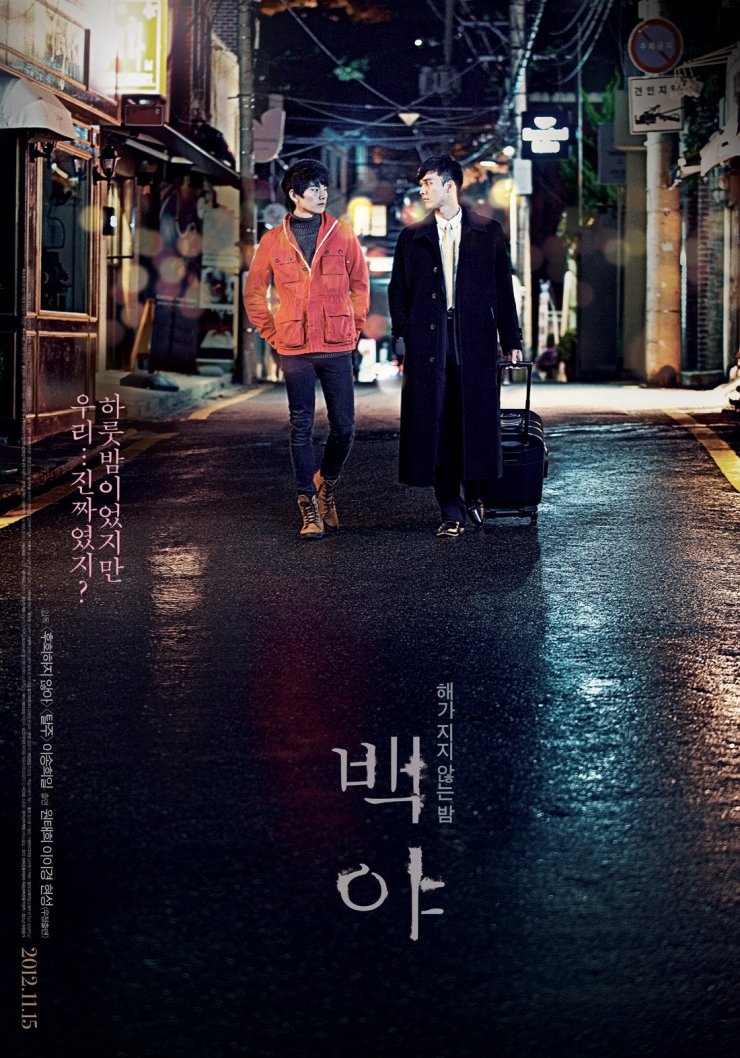
Tae-jun is an extremely compelling and likable young gay man, one who evokes the iconic spirit of James Dean in Rebel Without A Cause with his orange jacket and motorcycle. He is the antithesis of Won-gyu, someone who is open and articulate and as such quickly becomes the heart of White Night. His desires for freedom and to be noticed are conveyed well through his apparel, and he additionally provides the more comedic moments in the brief and fleeting relationship with Won-gyu. Tae-jun is also unfailingly kind. Yet his kindness highlights one of the more odd features of the narrative, as despite the rather abusive treatment he suffers due to Won-gyu for some reason Tae-jun refuses to leave. The motivations for such behaviour are curiously absent, stretching believability as to why a character with Tae-jun’s integrity would endure such annoyances.

Courier Tae-jun sports an iconic orange jacket, revealing much about his character

Courier Tae-jun sports an iconic orange jacket, revealing much about his character

White Night really comes into its own when referencing the homophobic assault that transpired in 2011. The revelation of Won-gyu’s involvement is understated and sincere, as the impetus underpinning the character’s frosty demeanor are revealed. The discussions involving the ramifications of the event and the subsequent media coverage are poignant, exploring not only homophobia within society and the homestead but also the psychological anguish that such violence creates. Tying the narrative into a true-life situation is a masterstroke in emphasizing the difficulties of being a gay man in contemporary Korea, and director Leesong does well in presenting such a timely issue.

However following such an integral and compelling plot point, the film struggles to find direction and to move beyond its short film sensibilities. Won-gyu’s psychology is not delved into further aside from a rather brief encounter with the theme of revenge, and the protagonist continues to display a coldness that halts the development of the relationship between him and Tae-jun. Additionally the film feels rather padded out with more unnecessary street scenes – possibly in order to make it a feature length presentation – which quickly become rather dull. Furthermore the love sequence between the couple seems somewhat forced, while the framing and character actions are far from romantic. White Night is therefore quite a mixed offering from director Leesong, one that perhaps would have worked better in its original short form rather than the elongated, and rather underdeveloped, feature length version that exists.

The cinematography of the street scenes are attractive and symbolic

The cinematography of the street scenes are attractive and symbolic

Verdict:

White Night is an interesting and attractive queer film from prominent gay director Leesong Hee-il. The European aesthetics are combined well with the psychological trauma exhibited by the main character, itself derived from a real homophobic assault in 2011. Yet the film never fully goes beyond its short story origins, featuring repetitive scenes in conjunction with some underdeveloped narrative moments. Despite this White Night is a thought-provoking film about anguish, and one of the better queer features in recent memory.

★★★★☆

Reviews
The relationship that develops between Jong-du and Gong-ju is beautifully poignant

Oasis (오아시스) – ★★★★★

Oasis (오아시스)

Oasis (오아시스)

Oasis (오아시스), the third film by auteur Lee Chang-dong (이창동), is an absolute masterpiece. Director Lee has built his career on exploring and critiquing Korean culture through artistic frameworks, and with Oasis he deftly examines the challenging subject matter of the plights endured by the mentally ill and disabled. In depicting the burgeoning romance between mildly mentally ill Hong Jong-du and cerebral palsy sufferer Han Gong-ju, director Lee also highlights the intolerance and hypocrisy of society and the resulting impact on their lives. The power of the film is such that it won several notable awards upon release – particularly at the Venice Film Festival – for the novelist-turned-director, as well as for the exceptional performances by lead actors Moon So-ri (문소리) and Seol Kyeong-gu (설경구).

During the middle of winter, mentally ill Hong Jong-du (Seol Kyeong-gu (설경구) is released from serving a two and half year prison sentence for a hit-and-run that resulted in a man’s death. Returning to society in his summer clothes, Jong-du discovers that his family has moved without letting him know though rejoins them again through another brush with the law. Attempting to fit in with society once more, Jong-du feels compelled to visit the family of the man who was killed and discovers his daughter, Han Gong-ju (Moon So-ri (문소리), who suffers with cerebral palsy. Immediately fascinated by her, Jong-du visits Gong-ju when she is alone and frightens her, yet as time passes the two form an incredible bond despite the pressure from family and society.

Jong-du is released from prison to find his family have moved without notifying him

Jong-du is released from prison to find his family have moved without notifying him

Oasis is an exceptionally poignant film. Director Lee employs a social-realist aesthetic in exploring the difficulties of the disabled, adding compelling realism to the trials they are forced to endure. The notion of family is notable in this regard and the film pulls no punches in articulating the selfish ambitions, hypocrisy and ignorance exhibited by the relatives. Such discourses begin immediately as Jong-du, who has the mental ability of a child, cannot find his family once released from prison and only reunites with them when he once again gets in trouble. The intolerance displayed by the family is indeed shocking throughout as they attempt to force Jong-du to become part of society despite his obvious limitations, reprimanding him with astonishing lack of compassion when he inevitably fails. Gong-ju is abused in a similar fashion as she is routinely exploited by her family when required but discarded almost immediately after. Director Lee portrays the suffering of the lead protagonists with incredible potency, never judging any of the characters or events with cinematic techniques but simply allowing the actors to convey the respective personalities, to which audiences can ascribe their own opinions. This lack of manipulation is executed superbly and deftly sidesteps the all-too-easy pitfalls of melodramatic conventions, and as such the palpable emotional weight within Oasis is the result of some of the finest acting in contemporary cinema.

It is impossible to discuss Oasis without referring to the simply exquisite performances conducted by Moon So-ri and Seol Kyeong-gu. Moon So-ri in particular is exceptional as cerebral palsy suffering Gong-ju, contorting her body and facial features with astounding skill to convey the protagonist with absolute sincerity. Gong-ju’s frustrations at her inability to move and speak freely are genuinely moving, yet it is her development from lonely wallflower to confident young woman that is a joy to behold. The love and companionship nurtured between her and Jong-du grows subtly and naturally, with the evolving happiness and dignity on display a constant source of compulsion. Within this development Seol Kyeong-gu is momentous as Jong-du, conveying the character’s mannerisms – including a constant cold – and infectious child-like behaviour with real skill. Director Lee continues his deconstruction of Korean masculinity through Jong-du, who initially loses control of his faculties and attempts – and fails – to rape Gong-ju, yet learns that compassion is more important than such base desires. It is a notion lost on the other male antagonists, who continue to view women as little more than commodities.

The relationship that develops between Jong-du and Gong-ju is beautifully poignant

The relationship that develops between Jong-du and Gong-ju is beautifully poignant

In addition to family, Oasis examines the society inhabited by Jong-du and Gong-ju, highlighting the terms of difference and exclusion in which it operates. Wherever the couple visit, and whatever events they attempt to partake in, they are shunned, rejected, and forced to the margins. Yet rather than focus on the negativity such incidents incur director Lee instead portrays how such marginalization brings the couple closer together as kindred spirits, reinforcing their spiritual connection through their mutual suffering.

Given the social-realist aesthetic it is surprising that the director occasionally injects fantasy sequences within the narrative, but far from detracting from the development they serve to enrich it. The moments in which Gong-ju’s deepest desires achieve fruition are tender and sweet, allowing her to express freely what her taut frame otherwise doesn’t allow. Within this realm lies the true potency of the film’s title, at once expressing Gong-ju’s fear of the darkness encroaching on her life but simultaneously providing a secret space for her and Jong-du to truly express their devotion without judgement. Such scenes are moving, artistic, and beautiful in their construction, capturing the depth of their understated love in the most compelling and sincere fashion.

The 'oasis', the dream in which they can live a life free from the ignorance of others

The ‘oasis’, the dream in which they can live a life free from the ignorance of others

Verdict:

Oasis is an exceptional masterpiece. The social-realist aesthetic applied in depicting the burgeoning relationship between the lead couple is executed magnificently by auteur Lee Chang-dong, who deftly sidesteps melodrama in conveying the development of love between mentally ill and cerebral palsy individuals. Moon So-ri and Seol Kyeong-gu are simply exquisite in the lead roles and are utterly captivating throughout, articulating acute sincerity ad poignancy within their respective performances. Oasis is an absolute must-see film.

★★★★★

Reviews
Courier Tae-jun sports an iconic orange jacket, revealing much about his character

White Night (백야) screening and Q&A with director Leesong Hee-il (이송희일)

Director Leesong Hee-il (이송희일)

Director Leesong Hee-il (이송희일)

At the Indieplus Q&A special event on February 19th, director Lee Song Hee-il’s (이송희일) latest film White Night (백야) was screened followed by the director graciously fielding questions posed by the audience. White Night has been a mainstay on the festival circuit since its premiere at the 2012 Jeonju International Film Festival, appearing in Vancouver and more recently featuring as part of the ‘Panorama’ programme at the prestigious 2013 Berlinale Film Festival.

The film, which was originally intended to be screened as part of a trilogy of short films, is based on the real-life event of a homophobic assault in Jongno, Seoul. White Night follows the victim of the attack, air steward Won-gyu who is visiting Korea for the first time in two years since the terrible ordeal. As he spends the night retracing the steps of the assault, he is joined by handsome courier Tae-jun who, for a reason he can’t explain, is reluctant to leave Won-gyu’s side. As the two men accompany each other throughout the night, they discover alternate experiences of being a gay man in contemporary Seoul.

Following the screening, film producer Hwang Hye-rim (황혜림) translated the queries posed by the audience. Before beginning, producer Hwang gave an insight into director Leesong’s history as a film maker.

Producer Hwang: Since his (director Leesong’s) first short film, which was made in 1998, up to his third feature White Night, his main concern was social prejudice in society. It’s a special opportunity to chat with him, as we (Korea) don’t really have a gay cinema, or films about sexual minorities or these kinds of issues. It’s not just about their struggles, but also about the melodramatic setting and that’s one  of the interesting things about his films too. How did the project start?

White Night (백야)

White Night (백야)

Director Leesong: As I said about 50 times in Q&A sessions, but just to give you a brief idea about the film, this film started as a shorter film. Actually there were 3 films released last year in 2012 in November, which were White Night, Suddenly, Last Summer (지난여름, 갑자기), and Going South (남쪽으로 간다). Before that I made No Regret (후회하지 않아) which was shown in Berlin which was also a queer movie, and Breakaway (탈주). I was preparing a feature film but while waiting to make that, because that film wasn’t in winter season, I had some time and some funding form a cultural organization to make a short film, which became Suddenly, Last Summer. It was like a part-time job for me in the beginning, it was short-term work. So I finished it in one month. And I decided to make another 2 films which became White Night and Going South. The original plan was to release the 3 films together as 1 feature, but they all became longer than I had expected so altogether it’s around 2 hours and 40 minutes which was almost not acceptable in cinemas. So it was changed into 2 films. Because I started with Suddenly, Last Summer which is about 2 men who take a walk through different kinds of ‘space’ during 6 hours. That was the basic concept that runs through all the films. So they are about the relationship between 2 men during a 6 hour period. [The film is based on a homophobic assault in Jongno, Seoul]. The incident took place in 2011 and the film was released in 2012, so it was a recent incident. I was preparing a scenario when it happened and the basic idea was based on a short story of Dostoevsky the Russian writer which is also in the title White Night. But while I was trying to write the script I didn’t really like the draft I had at the time. Then I hear the news of the assault and it was really surprising even to me. I’ve been a activist for gay rights, and I thought I’d seen everything, but even for me it was very shocking that it happened in 2011, when I thought that Korean society had become much better. It wasn’t what I expected. These kinds of incidents are like what happened in the late ’60s and ’70s in western and European society, but it happened here, now, and it was really alarming. Recently I had been focusing more on my film work, but the event changed that. I wanted to give the main character Won-gyu a feeling of a refugee, or of being in exile, so I took the incident as part of the inspiration for the film.

Question: Who is watching this film? By that I mean is it Korean women, men, foreigners, who is his audience? And how are Korean people reacting to this film and what kind of feedback is he getting? When he’s making these movies, what kind of audience does he usually get? Who is responding, and how is he expecting people to respond? Is tonight’s audience representative of people who generally watching his movies?

No Regret (후회하지 않아)

No Regret (후회하지 않아)

Producer Hwang: Maybe I should mention that his previous film which was made in 2006 called No Regret was the biggest hit of the independent film scene at the time, with an audience of 60,000 people. But he has been making films for over a decade, so let’s ask him.

Director Leesong: I’m not that old, it’s not that long! I think it’s quite a complicated, but very important question. I think there has been a remarkable change since I made my previous queer film No Regret. At the time it was a huge issue because it was the first feature film made by a gay director who had come out of the closet, and that in itself was quite an issue at the time. The film was quite popular and drew a lot of 20-something female audiences, they were like 90% of the audience, and they formed the fandom of this film. But it’s been 6 years since No Regret and remarkable changes have been seen in queer cinema and the market for queer cinema. Before it was mostly 20-something female audiences who were interested, and I think it’s an Asian phenomenon so it was quite popular among young women in Japan, Taiwan and Korea. In Europe and America there is a big gay audience, but in Asia 90% of the audience, at least in the case of No Regret, were young females. Also some women in their 30s, and mothers in the 40s and 50s who came with their daughters were there, but it was mostly women in their 20s rather than men. But when I released this film, I realized the audiences numbers were more reduced than before. I think the reason is that these kinds of issues are not rare anymore, you can see much more of them in TV dramas and other kinds of media which deal with gay issues, or using them as a subject. So queer film is not a rare item anymore. The second reason is that 6 years ago, not many gay people would come to the cinema because they were afraid that by watching the film, they may reveal their sexual identity. So many gay people were afraid of that. But I think probably from last year, because there were many gay films like Miracle on Jongno Street (종로의 기적) and Two Weddings and a Funeral (두 번의 결혼식과 한 번의 장례식). You could see more gay audiences coming to the cinema, which indicates there has been changes in the Korean cinema and queer market. Personally I don’t want to focus on films for gay audiences only, like camp films in America. I don’t want to focus on films that are only consumed by gay audiences, or be confined to that specific area or issue. I want to focus more on universal stories and feelings that appeal to other audiences as well. That’s why I tried to make a story like White Night, that focuses more on their emotional sides that can appeal to a broader audience. I think I’d like to continue like that. I’m thankful if gay audiences like my films, but I’d also like to have a non-gay audience as well.

Courier Tae-jun wears an iconic orange jacket

Courier Tae-jun wears an iconic orange jacket

Question: Can you tell us about the character of Tae-jun? With his orange jacket he’s similar to James Dean in Rebel Without A Cause, so I just wondered if that was what you were going for, like a rebellious gay character who is out and proud?

Director Leesong: That’s a question I’ve never had during my Q&A sessions with the audience, and it’s a very accurate question. Personally I really like Nicholas Ray’s films. I saw Rebel Without A Cause a lot too, and I think it’s not just me but it’s also noted that certain bi-sexual elements are shown in Nicholas Ray’s films. I really like the colour and the tone of the movie. I saw this film shortly before I made White Night, and because the film is quite a low budget film we had to shot almost all of the film at night and we couldn’t spend much on lighting. So I had to figure out how I should show the difference between these two characters, light and darkness. Not just for the atmosphere and environment, but in their personalities. That’s why I thought that I should use the orange jacket, to show his character a little bit. My team tried hard to find an orange jacket that I would like, for almost a month, but the jacket you can see in the film is not the one that I like 100% but I had to compromise, it’s the restrictive environment of film making. The jacket was sold in an auction. It was really refreshing question, thank you.

Question: I saw the character of Won-gyu is chewing gum all the time. I was wondering if there was any specific meaning to that action?

Director Leesong: This is a popular question during the past 50 Q&A sessions. I really liked Bernardo Bertolucci’s Last Tango In Paris and I wanted to shoot the scene where the character takes the gum out of his mouth and puts it on the wall of the toilet. When I saw that film a long time ago, I decided I wanted to have that in my film as well, and I finally did it. And then I thought, why the gum? Basically the character of Won-gyu came back to Korea and is recalling his memories of the incident, and is going back to the past, and as I have shown through other techniques such as when the character gets the zippo lighter, and when he smokes twice, it indicates that Won-gyu might have been a heavy smoker when he was younger. And he might feel the urge to smoke when he comes back to Korea, so he chews gum to stop himself smoking. Also in my other film Going South one of the main characters eats medicine for headaches habitually, which indicates that he is depressed.
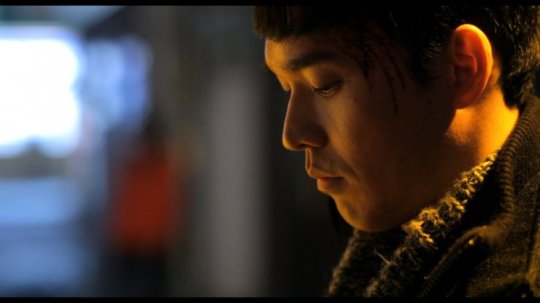
Won-gyu expresses himself through gestures and mannerisms, rather than dialogue

Won-gyu expresses himself through gestures and mannerisms, rather than dialogue

Question: You were talking about your films, and I was curious to known if the queer scene in Korea and Asia was primarily based in gay cinema, or if there was any lesbian cinema?

Director Leesong: It’s kind of a complicated question to answer, but I have to say that in Korea not many lesbian films are made – or almost no films made, up to now. Because there are no lesbian directors who have come out. I know there are many lesbian directors, but they have never said, ok, I’m a lesbian. It’s part of the reason why lesbian cinema isn’t prolific in Korea. I sometimes get requests that I should make films about lesbians too, but it’s quite tricky for me because even if I make films about lesbians it will probably make it more difficult for female directors to make films about lesbians. The second reason is that I’m kind of a loner, so I don’t really know about gay communities in Korea – I do know well, but I don’t know very well. As for lesbian communities, I don’t have any idea about them. They are the two reasons why I haven’t made any lesbian films so far. I think it is also based on the structure of Asian society, which is based on patriarchy, so I guess it’s an Asian phenomenon that lesbian films are difficult to make. It’s much more difficult for a woman to come out of the closet and say that she is gay than a man, because if you are a man and if you are economically independent then you have less social disadvantages than a woman. It’s kind of trickier for Asian women to come out and say openly that she is lesbian. So it’s difficult for them to make films about lesbians. There are not many lesbian film makers in Asia, maybe some in China and Taiwan I know, but almost none in Japan or Korea who act openly as lesbian film makers. Another reason is that gay films can be consumed by female audiences, so women come to the cinema to see gay films but men don’t go to the cinema to watch lesbian films, I think, in general. Of course, pornographic films that feature two women can be consumed by male audiences as well, but it’s totally different when a lesbian film is made by a lesbian director who is the main force behind the film, it’s about her identity, then I think male audiences become less interested, or not interested at all. That’s the basic reality we have here in Asia.

Question: Why does Won-gyu always hesitate before he speaks? He’s always playing with things in his hands, like opening and closing the lighter, before he speaks.

Director Leesong: I didn’t want to give lines to the character of Won-gyu. Actually the actor who played Won-gyu, Won Tae-hee, he is quite a talkative and lively character. So I thought that if I didn’t give him any lines, that situation would already create a conflict within himself. We can see in a lot of dramas that the main character who has been hurt is saying they are in pain, asking people to recognize their pain, so we are kind of used to that, characters that speak about their situation loudly. That’s not the style I like, I don’t want to show it so obviously. I think in the films it’s much more appealing if you show these kinds of feelings in silence, sometimes. That’s why I choose to give him less lines. Tae-jun, the other character, is kind of the opposite, he speaks out at the moment about what he feels, that’s the contrast between the two characters. I also wanted to show Won-gyu’s little habits, like everyone has, for example I rip paper into little pieces when I meet people, and for Won-gyu he opens and closes things. This is how he shows his feelings, that’s how I chose to express his feelings.

Sincere thanks to director Leesong Hee-il for taking the time to answer the questions, and to Producer Hwang and Indieplus Cinema for translating and hosting the event.

Directors Interviews/Q&As
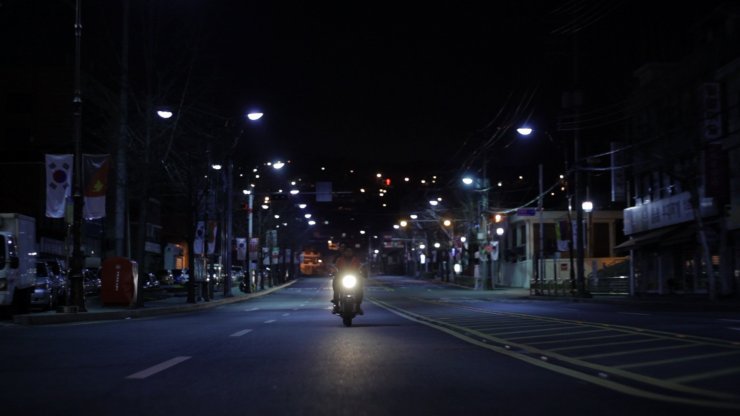
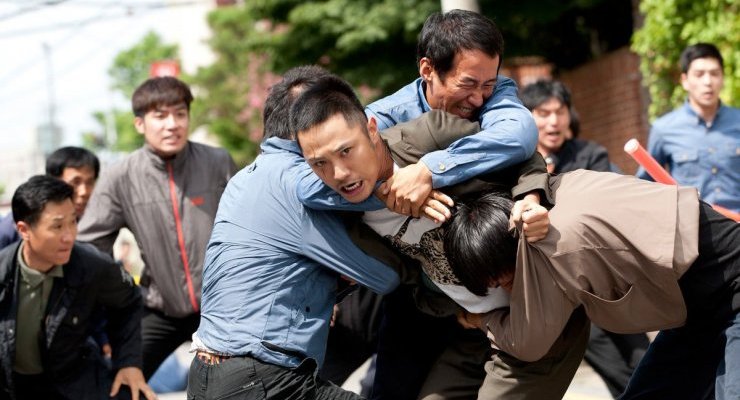
Jin-bae attempts to penetrate the security surrounding 'The Man's' residence

26 Years (26년) – ★★★★☆

26 Years (26년)

26 Years (26년)

The production history of 26 Years (26년) is an incredible tale. Based on the popular web-comic by Kang Full (강풀), the film adaptation has languished in development for years as companies refused to finance the film due to the politically sensitive story – with some claiming the conservative government were the source of pressure. Frustrated, producer Choi Yong-bae went an alternative route to secure funding through crowd-sourcing, attracting donations from over 15,000 people which in turn garnered larger sums from celebrities such as musician Lee Seung-hwan and TV personality Kim Je-dong.

As with the 2012’s other controversial film National Security (남영동 1985)26 Years was timed to coincide with the presidential election and held particular relevance. The revenge story is based on the May 1980 Gwangju massacre, where Korean troops brutally suppressed the democratic protests killing up to 2000 people. The man responsible – dictator Chun Doo-hwan – was sentenced to death but later pardoned, currently living in seclusion at taxpayers expense. With prior dictator Park Chun-hee’s daughter, Park Geun-hye, running for the 2012 presidency, 26 Years was a not-so-subtle attempt at reminding the public of her legacy. The result is an incredibly exciting thriller with a poignant emotional core, one that occasionally requires leaps in disbelief and sometimes stumbles in generating tension, but a film that nonetheless serves as a potent reminder of the raw, unresolved wound that for many continues to be a source of pain within the nation.

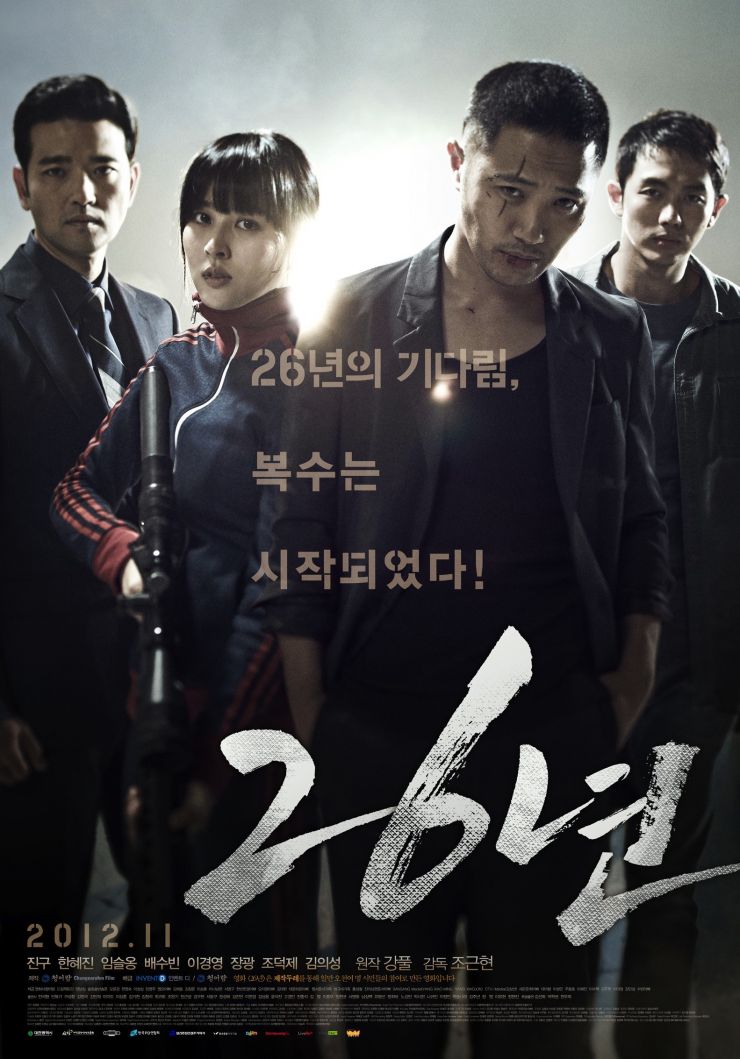
During the May 1980 Gwangju massacre, families were torn apart and forever scarred as loved ones were murdered before their eyes. 26 years later, the youths of the time have become adults and sought their way in life, yet the psychological scars that they carry from the time are still readily apparent. Kwak Jin-bae (Jin Goo (진구), who lost his father in the incident while his mother succumbed to psychological illness, has become a gangster at a nightclub. Sim Mi-jin (Han Hye-jin (한혜진) has become an Olympic marksman despite the death of her mother and father’s subsequent alcoholism. Police officer Kwon Jeong-hyeok (Seulong (임슬옹), whose sister was horrifically killed in front of him, is insulted further when tasked with helping the man responsible arrive home safely by changing traffic lights. When a former soldier who took part in the event called Kim Gap-se (Lee Kyeong-yeong (이경영) gathers the three together, they formulate a plan to finally kill ‘The Man’ (Jang Gwang, 장광) once and for all.
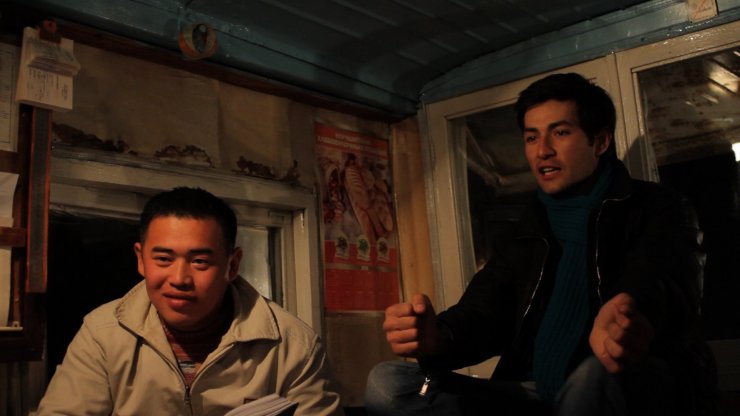
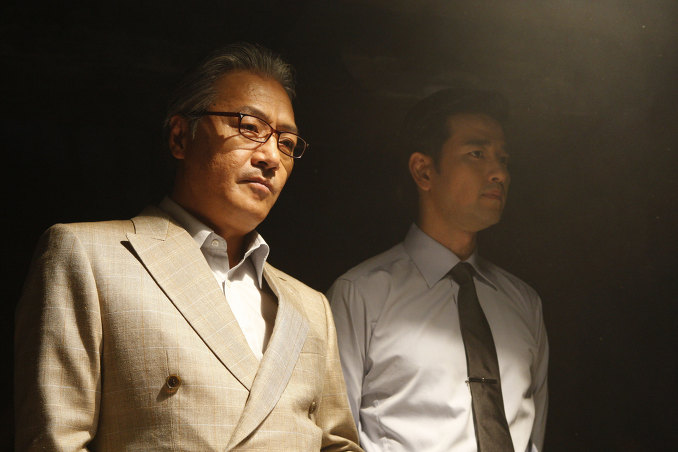
The team is recruited by former soldier Kim Gap-se and second-in-command Kim Joo-an

The team is recruited by former soldier Kim Gap-se and second-in-command Kim Joo-an

Director Jo Geun-hyeon (조근현) does an incredible job of conveying the pain and suffering endured by the events of the Gwangju massacre. In a truly stunning animated sequence the history of the tragedy is presented, as well as the specific horrors that the individuals – who later form the revenge squad – experience. While such an approach could easily be melodramatic and even insulting to the victims of the conflict, director Jo deftly sidesteps such concerns by conveying the stark, unadulterated terror that was inflicted upon the people. Blood, psychological breakdowns, rotting corpses and disembowelment all feature in frightening detail, not only exploring the abject brutality of the atrocity but also providing powerful impetus for the those effected.

The psychological scars brought about by the event are not ignored, and screenwriter Lee Hae-young deserves credit for their inclusion and elevating the narrative beyond a standard revenge thriller. Each protagonist has their own distinct neuroses, from Jin-bae’s outbursts of violence to Mi-jin’s cold and unemotional demeanor, and each serves a valuable purpose in the mission. Writer Lee also manages to include some wonderful moments, such as the oft-stated argument that dictator Chun was good for the country due to economic policies and the Olympic Games, a debate that is quietened simply through Jin-bae’s glare. In another, a police officer likens helping Chun arrive home safely to feeling ‘like being raped.’ These minor asides help to form a sense of Korean unity against corruption, and lend further legitimacy to the resentment against Chun and the assassination attempt.

Chun, however, is never mentioned directly and is simply referred to as ‘The Man’ throughout the film, although it’s quite clear who is the villain. As the former dictator, actor Jang Gwang gives a highly effective performance conveying the stubborn, unremorseful antagonist with skill despite appearing in relatively few scenes. Jang seems to be adept in playing nefarious roles, as exhibited as a true-life child molester in Silenced (도가니)and his performance in 26 Years is certainly one of the highlights of his career to date.

Jin-bae attempts to penetrate the security surrounding 'The Man's' residence

Jin-bae attempts to penetrate the security surrounding ‘The Man’s’ residence

The rest of the cast also fare well, however due to the quite ambitious task of including so many individuals and narrative facets their character development, as well as that of their mission, is somewhat stunted. Of them all, Jin Goo as violent gangster Jin-bae receives the most amount of screen-time as he gradually changes from thug to team leader. Jin Goo brings an intensity to the role and conveys the required physicality well, quickly becoming the central hero of the film and his presence is always engaging and entertaining. His relationship with Olympic sharpshooter Mi-jin however is quite convoluted and unnecessary, particularly as there are precious few moments that explore the team dynamics or the relationships between each member prior to the forced romance. Han Hye-jin has stated that she wanted to role of Mi-jin as she wanted an acting role (rather than simply one for her appearance) although she never really attempts to go beyond cold stoicism. Police officer Jeong-hyeok, played by Seulong, suffers the most in terms of focus and is often a whiny irritation. This is a shame considering his backstory is one of the most poignant, yet his motivations are never really explored. Lee Kyeong-yeong, who also starred in the aforementioned National Security, provides a unique perspective as a soldier forced to take part in the Gwangju massacre and performs well with the material he is provided, but again the great many facets within the narrative don’t allow further room to explore his guilt.

Despite the fairly brief character development once the team forms, their combined efforts during the assassination attempts are thrilling and adrenaline-inducing. Even though it is fictional, it is genuinely exciting, even cathartic, to see the man responsible for the Gwangju massacre in the crosshairs of a victim he created and as such brings a fresh perspective on the old debate between revenge and justice. The lines between ‘good’ and ‘bad’ are continually blurred as a result, with the police and security officers set up as opposition but are themselves conflicted by their roles. While the attempts to kill ‘The Man’ occasionally require the odd leap of disbelief and are overly long, the audience investment generated throughout makes the action and tension incredibly engaging.

Mi-jin takes aim, ready to serve justice on the unrepentant dictator

Mi-jin takes aim, ready to serve justice on the unrepentant dictator

Verdict:

With an fraught production history finally culminating in crowd-sourcing, 26 Years is a great cinematic adaptation of Kang Full’s webcomic. With its politically sensitive story involving the 1980 Gwangju massacre and the subsequent pardoning of the dictator responsible, the film strikes an emotional chord despite the fictional revenge tale. Director Jo Geun-hyeon and writer Lee Hae-young have produced a highly engaging thriller and is a poignant reminder of the legacy of Chun Doo-hwan’s regime.

★★★★☆

Reviews
The central couple share intimate moments

Sleepless Night (잠 못 드는 밤) – ★★★★☆

Sleepless Night (잠 못 드는 밤)

Sleepless Night (잠 못 드는 밤)

Since its premiere at the 2012 Jeonju International Film Festival, Sleepless Night (잠 못 드는 밤) has gone on to feature in several high profile festivals on a number of continents, garnering awards both at home and abroad. Director Jang Kun-jae’s (장건재) film, about a couple who explore the possibility of  starting a family two years into their marriage, thoroughly deserves such accolades as he has produced an incredibly charming and heartwarming drama. The no-frills approach employed in director Jang’s insightful exploration conveys palpable realism, while the performances by Kim Su-hyeon (김수현) and Kim Joo-ryeong (김주령) as husband and wife Hyeon-soo and Joo-hee are beautifully sincere and poignant. The editing, as well as lack of a traditional sense of resolution, detract from the impact of the film somewhat yet despite this Sleepless Night is a truly touching independent feature and a highly refreshing viewing experience.
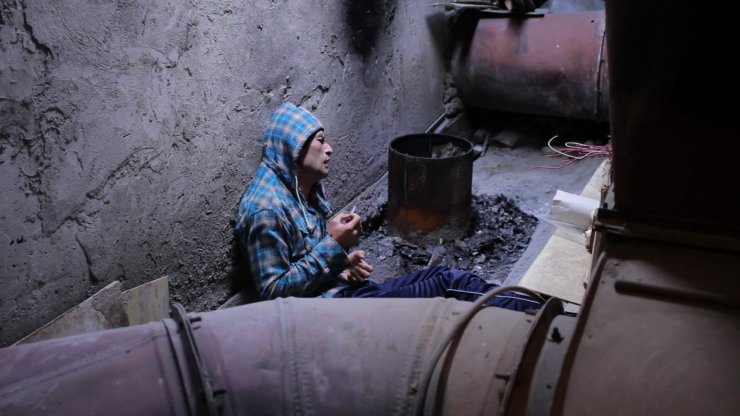
The central couple share intimate moments

The central couple share intimate moments

Married for two years, Hyeon-soo and Joo-hee are still deeply in love. Their devotion to each other is conveyed through small, subtle actions like riding waiting for each other after work, washing one another in the shower, and longing stares while sleeping. The love between them is wonderfully profound and uplifting, and conveyed with stunning sincerity by the lead actors who never for an instant appear lacking in commitment. Director Jang examines their thoughts regarding starting a family through the couples daily routines and activities, portraying their evolving feelings on the subject as born naturally through the confrontations that transpire, promoting the believability of the situation. Financial and employment worries as the couple struggle to make ends meet, as well as pressure from parents and discussions with friends, also factor into the decision making process that lend credibility to their anxieties despite their clear love for each other.
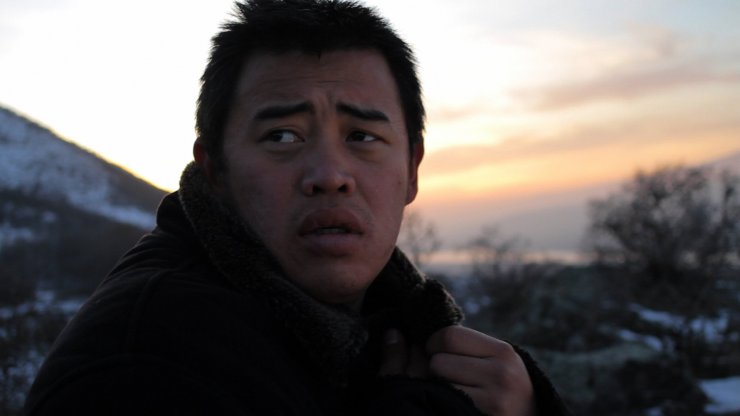
Hyeon-soo and Joo-hee consider trying to start a family

Hyeon-soo and Joo-hee consider trying to start a family

The apprehension and worry that such encounters generate leads to the titular ‘sleepless night’, whereby Hyeon-soo and Joo-hee experience their worst fears through bad dreams. Director Jang does a wonderful job of seamlessly placing the deep-rooted psychological fears within the narrative, as well as insightfully portraying how each has interpreted different concerns over their prospective future. In fact, due to the rather unrefined editing within Sleepless Night, it is initially difficult to ascertain that such scenes were dreams at all, with the confusion created an unwelcome distraction from otherwise interesting sequences.

Due to the inherent realism and the nature of the narrative, the notion of a traditional ‘arc’ has been rejected. This method is particularly refreshing, as contrivances and ill-fitting events don’t makes their presences known and the film is all the stronger for it. The development of the protagonists is subtle and gentle, and therein lies the charisma as the personal issues are allowed to shine and develop naturally. However, perhaps due to conditioning from prior dramas, the lack of some form of resolution to their situation is a little unsatisfactory. Yet the superb acting by both Kim Joo-ryeong and Kim Su-hyeon is so compelling and alluring throughout that Sleepless Night is, despite the absence of resolution, an uplifting and illuminating experience.

Still very much in love, the couple do everything together

Still very much in love, the couple do everything together

Verdict:

Sleepless Night is a beautifully understated, wonderfully compelling independent drama about a couple discussing the daunting subject of starting a family. Director Jang Kun-jae has produced an insightful exploration of the issue, while his no-frills approach conveys palpable realism and sincerity. Lead actors Kim Joo-ryeong and Kim Su-hyeon provide superb, heartfelt performances throughout. While the editing is somewhat unrefined, Sleepless Night is a charismatic film deserving of its accolades.

★★★★☆

Reviews
Jong-tae is tortured with electricity by Lee Doo-han, known as 'The Undertaker'

National Security (남영동 1985) – ★★★★☆

National Security (남영동1985)

National Security (남영동1985)

National Security (남영동 1985), based on the true story of the illegal imprisonment and torture of activist Kim Jong-tae (김종태), is a difficult and thought-provoking viewing experience. The second feature after director Chung Ji-young’s (정지영) 13 year hiatus from film making – after popular courtroom drama Unbowed (부러진 화살)also based on a true story – National Security is stark and uncompromising in portraying the abject humiliation and pain inflicted upon an innocent man. Such boldness was also reflected in the timing of the film. Turning heads and garnering strong reviews during the premiere at the 2012 Busan International Film Festival, National Security was distributed nationally at the end of November, coinciding with the run up to the presidential elections.

While the film didn’t achieve the implied intention of halting conservative candidate – and dictator Park Chung-hee’s daughter – Park Geun-hye from winning the election, National Security is nonetheless a powerful film about the human rights abuses conducted at the notorious Namyeong-dong detention facility during the 1980s. While it occasionally suffers from repetition and lack of focus on the central protagonist, National Security is a highly compelling and captivating drama, and another great example of the politicization of contemporary mainstream Korean cinema.

In September 1985, senior ranking democracy activist Kim Jong-tae (Park Won-sang (박원상) is abducted and taken to the infamous Namyeong-dong prison, where torture and false confessions are commonplace occurrences. Through intimidation and bullying, the jailers force information from Jong-tae about his past with the Youth Federation for Democracy and his role in the movement against the military dictatorship of fascist Chun Do-hwan. When his answers aren’t what they want, the next 22 days are spent humiliating and abusing Jong-tae through beatings, water-boarding, and electricity, led by Lee Doo-han (Lee Kyeong-yeong, 이경영), also known as ‘The Undertaker’.

Jong-tae is stripped naked and humiliated as preparations for torture begin

Jong-tae is stripped naked and humiliated as preparations for torture begin

Director Chung’s minimalist style is incredible in capturing Jong-tae’s predicament. The stark, washed-out tones coupled with the bare, dirty ‘interrogation’ room in which most of the film takes place, perfectly convey the hopelessness of the situation and the sheer lack of anything humane in Jong-tae’s environment. The director, who also co-wrote the script with three other writers, takes his time in building tension by slowly pacing the torture and humiliations that the central protagonist experiences making for compelling, and occasionally difficult to watch, scenes. Indeed, when Jong-tae first enters the detention room and is forced to strip naked and deprived of sleep and food, the tension is palpable and the emotional resonance disturbing. Yet as physical punishments are initiated and become more and more severe, the pressure is heightened and empathy deepened to the extreme. The torture techniques themselves, gathered from Kim Jong-tae’s memoirs and other prisoner accounts, are portrayed with frightening realism as water-boarding and electric shock methods are enacted, with the consequences quite horrifying. Yet while disturbing and powerful, such scenes of torture become quite repetitive over time as similar acts are enacted again and again, diluting their potency and causing the second act to stall for a period of time.

The laissez-faire attitude towards torture by the guards is also one of the striking features of National Security. Director Chung does an admirable job in providing each of the jailers distinct personalities, conveying them not as evil but as men with few prospects. The relationships that build between Jong-tae and the guards are the source of ironic dark humour, as problems are shared and advice given before the humiliations begin once again. The most fascinating characterization is bestowed upon Lee Doo-han, also known as ‘The Undertaker’. Actor Lee Kyeong-yeong performs the role effectively, conveying the clinical precision and arrogant professionalism of the torture specialist. Whenever he appears on screen, the subtle charisma commands respect while his arrival signifies further pain for Jong-tae, making Doo-han a genuine love-to-hate antagonist.

Jong-tae is tortured with electricity by Lee Doo-han, known as 'The Undertaker'

Jong-tae is tortured with electricity by Lee Doo-han, known as ‘The Undertaker’

While great effort has been taken to provide characterization for Doo-han and the guards, oddly the same cannot be said for Jong-tae himself. In spending so much interest in secondary characters, director Chung appears to have forgotten about the most central one, an issue that also applied with his prior film Unbowed. Aside from a few fantasy sequences and a welcome although belated flashback, director Chung doesn’t really provide Jong-tae with enough history and information to create strong empathy with audiences, relying instead on audience awareness, and the shock of scenes of torture, to do so instead. Despite this, actor Park Won-sang is incredible in the role and performs with sincerity throughout, from moments of abject hunger and tiredness through to horrifying moments of torture. Yet the actor always manages to convey a sense of quiet dignity, even when his actions suggest otherwise.

In a fascinating turnaround, National Security ends with Jong-tae’s career in politics in 2004, working within Korea’s fledgling democratic system to bring the events at Namyeong-dong to light and to halt such abuses from occurring again. Such scenes are powerful reminders of how recent such events were, and that many who were abused, as well as those who committed atrocities, are still alive. It is a fitting finale for such a poignant film, and serves well to instill a sense of modest victory amongst audiences, particularly those from Korea itself, although insinuates that there is still work to be done.

A prominent politician in 2004, Jong-tae works to ensure such atrocities never happen again

A prominent politician in 2004, Jong-tae works to ensure such atrocities never happen again

Verdict:

National Security is a powerful, disturbing film about the human rights abuses suffered by democratic rights campaigner Kim Jong-tae at Namyeong-dong detention center in 1985. Director Chung Ji-young employs his minimalist style highly effectively in depicting scenes of humiliation and torture, allowing for the horror of the acts to speak for themselves. As the central protagonist actor Park Won-sang performs with incredible sincerity, while he characterization of the guards, and of ‘The Undertaker’ Lee Doo-han in particular, are developed, love-to-hate antagonists. National Security is a poignant reminder of the importance of human rights, and is a welcome addition in the politicization of contemporary Korean cinema.

★★★★☆

Reviews
Stas attempts to rid himself of heroin addiction through nature

Hanaan (하나안) – ★★★☆☆

Hanaan (하나안)

Hanaan (하나안)

The experiences of Korean immigrants abroad are not an oft-featured theme within mainstream Korean cinema. This is surprising considering the sheer number of the populace that make the transition to foreign soil every year, as well as the historical relevance of the scores of people who fled the country due to Japanese colonization and the Korean War itself.

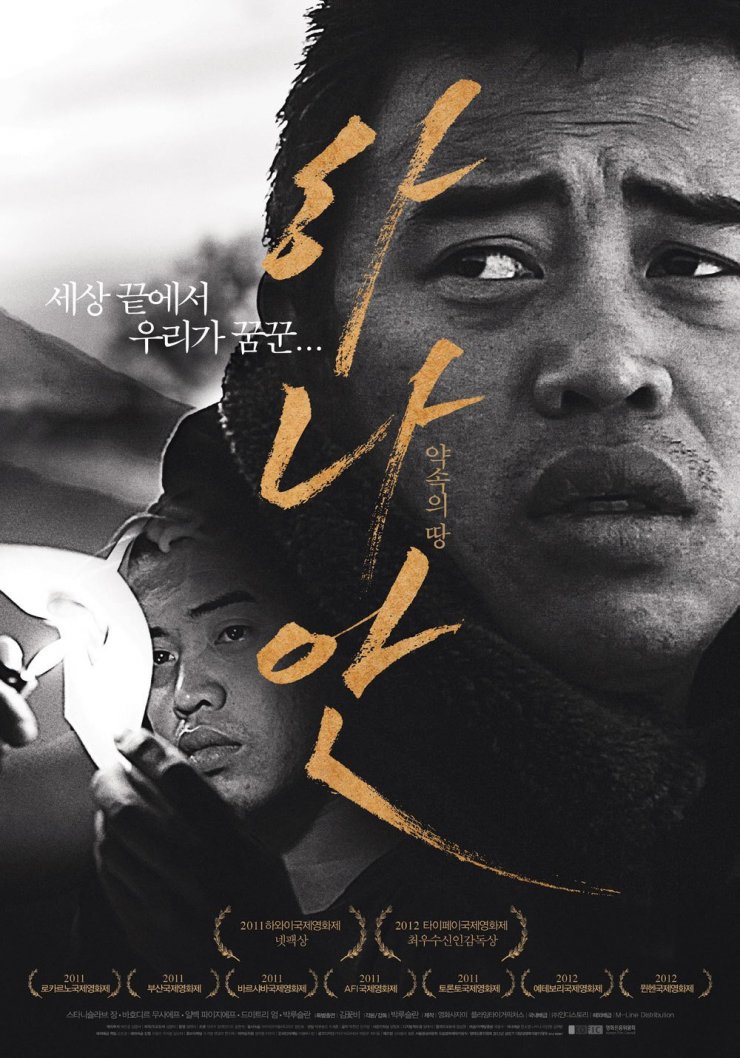
Independent drama Hanaan (하나안), a co-production between  Korea and Uzbekistan, explores the lives of third-generation Korean descendants of ancestors deported from the Soviet Union by Stalin. Written and directed by Pak Ruslan (박루슬란), the urban cop-drama is a gritty and raw examination of the difficulties of cultural assimilation, and the all-too-easy fall from grace into crime and addiction. The story is rather unoriginal, yet director Pak’s use of locations and dissection of cultural themes makes for an intriguing foray into the lives of Korean-Uzbeks.

Stas (Stanislav Tyan (스타니슬라브 티안) is a third generation Korean living in Uzbekistan, studying to be a cop and to make a difference. Yet his studies are frequently uninterrupted by his friends Kahoy (Dmitry Eum (드미트리 엄), Maha (Bahodir Musaev (바호디르 무사에프) and Said (IIlbek Faiziev (일벡 파이지에프), who are often involved in criminal activity including habitual heroin use. When Kahoy’s brother is attacked by thugs the group set out for revenge, yet the plan drastically backfires when Kahoy is killed. 6 years later, Stas is finally a cop but is overburdened by the sheer abundance of criminality both within society and the police force itself. In a moment of desperate frustration Stas gives in to the temptation of heroin, and must try to claw his way back and find his personal ‘Hanaan’, the land of promise.

Stas enjoys hanging out with friends as he studies to become a cop

Stas enjoys hanging out with friends as he studies to become a cop

One of the great strengths of Hanaan is the manner in which director Pak employs locations to emphasize the plight of his protagonists. The street scenes of Uzbekistan are dilapidated and foreboding, conveying a sense of purgatory and depression that the characters are trapped within. Such a stark atmosphere of disillusionment lends credence to the habitual use of heroin Stas and co. partake in, yet in becoming junkies the landscapes alter to highlight their isolation, which are often dank, claustrophobic, revoltingly grimy arenas. The use of syringes in such locations – often public bathrooms – adds potency to such scenes, as the friends experience a sense of faux-euphoria in such squalid places, while further tragedy is incurred through the use of shared needles and the continual downward spiral of their lives. However, aside from the locations the depth of heroin abuse is not conveyed emotionally nor given the necessary weight for the addiction to be a serious issue, which could have been solved with greater character development but which is curiously absent.

Director Pak does well in exploring the cultural difficulties of the region through Stas. As the film opens, his daughter asks for a fairy tale and in response Stas tells the story of the persecution against Koreans by Stalin. The historical story not only emphasizes that Korean immigrants have never forgotten the abuse they suffered by handing it down through the generations, but also that from a young age their descendants must mature quickly to survive in the new harsh environment.

The locations within Hanaan convey the hopelessness of existence

The locations within Hanaan convey the hopelessness of existence

Yet Stas is not alone in feeling victimized by history. In an entertaining scene during a stakeout, Stas and a fellow cop argue and tease each other about their origins as well as how well they have assimilated Uzbeki and/or Russian culture, using racist language in an attempt to emerge as the more legitimate immigrant. The use of handheld camerawork to such scenes adds realism and articulates the gritty urban sensibilities of the characters, a technique which is also particularly effective during action and chase scenes.

While such features combine to give Hanaan a fresh approach in examining the notion of ‘Korean-ness’ and the immigrant experience, the main narrative arc of the film is far from original. Treading familiar territory is in itself no bad thing, yet director Pak doesn’t really offer anything new and engaging in his tale of drug abuse and corruption. The police operation to catch drug suppliers is almost ridiculously easy for Stas and his colleagues and as such holds no real tension, while the subsequent corruption that arises within the force itself is glazed over with brief office scenes. The lack of an emotional core within Hanaan also highlights the limitations of the actors who, while competent, don’t exude the gravitas required for the story to be a poignant and compelling exploration of drug abuse and the rocky path to redemption.

Stas attempts to rid himself of heroin addiction through nature

Stas attempts to rid himself of heroin addiction through nature

Verdict:

Hanaan deserves credit for exploring the oft-ignored plight of Korean immigrants abroad, and highlighting their historical struggles of cultural assimilation. Director Pak Ruslan employs effective use of stark, purgatorial landscapes to emphasize inner turmoil, while the handheld camerawork conveys realism to the proceedings. However, the story is hampered by a rather unoriginal premise, underdeveloped characters and absence of an emotional core, making the Korean-Uzbek co-production an intriguing, but lacking, crime drama.

★★★☆☆

Reviews
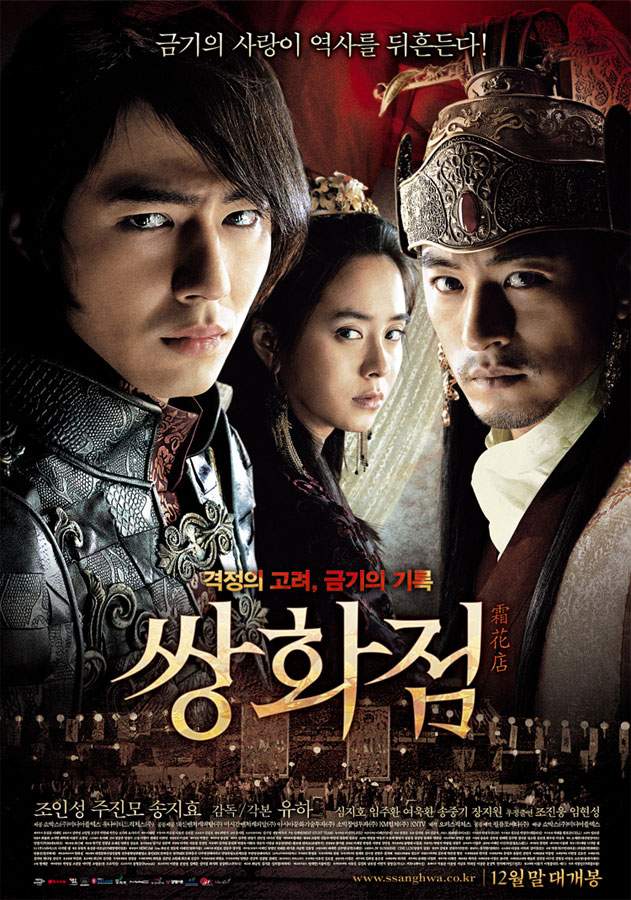
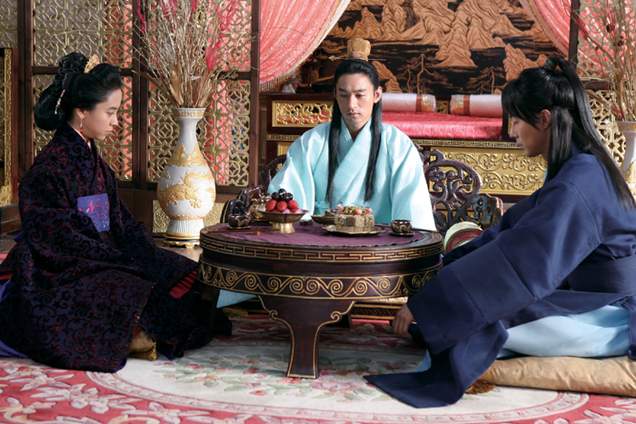
As the meetings between the Queen and Hong-rim increase, so does their love

A Frozen Flower (쌍화점) – ★★★☆☆

A Frozen Flower (쌍화점)

A Frozen Flower (쌍화점)

The dynasties within Korean history are captivating periods for epic, romantic storytelling. As well as the threat of war from without and the corruption seemingly endemic within, the beautiful clothing and rigid social hierarchy allow for wonderfully passionate tales of forbidden love and scandal, of desperate lovers defying duty for intense moments of lust.

A Frozen Flower, written and directed by Yoo Ha, fits such a mold perfectly. With issues ranging from coerced tributes to foreign lands to the lack of a royal heir, the drama attempts to provide a grand, sweeping story of love and intrigue during the Goryeo period. The inclusion of gay lovers – in the form of the King and his bodyguard – is somewhat of an extension of the themes present within the prior The King and the Clown, yet the relationship takes on new life due to the love triangle with the Queen and the explicit sexual scenes that occur. As such the film is wonderfully passionate tale of love and jealousy in old Korea, but one that ultimately feels like a high-budgeted TV drama.

At a young age, the King of Goryeo (Joo Jin-mo (주진모) initiated training for a select group of boys who would grow to become his elite bodyguards. Such soldiers are desperately required given the assassination attempts on his life by outsiders and corrupt officials. Yet in adulthood, the King has taken the chief of the elite force, Hong-rim (Jo In-Seong (조인성) as his lover. The relationship is something of an open secret within the court, which only serves to compound an important issue – the lack of an heir. Despite his marriage to a princess of neigbouring Yuan, the country threatens to remove the King’s power should an heir not be produced. Unable to bring himself to bed the Queen (Song Ji-hyo (송지효), the King orders Hong-rim to impregnate her on his behalf as he’s the only person that can be trusted. Yet in complying with the King’s demands, a chain of events begin to unfold that none could foresee.

The relationship between the King of Goryeo and chief Hong-rim is an open secret

The relationship between the King of Goryeo and chief Hong-rim is an open secret

A Frozen Flower ticks many of the boxes that make Korean period dramas so attractive and romantic. Director Yoo Ha captures the beauty of the era well as the actors gracefully go about their lives at court, whether through ornate ceremonies or simply resting at the palace and indulging in traditional Korean pastimes. The most prominent feature of the film are the relationships between the central protagonists, and the director wastes no time in establishing the connection that exists between the King and Hong-rim. The affection and love expressed is palpable, as Hong-rim’s concern over the King’s health is wonderfully conveyed through actions and mannerisms, while the King refuses to leave his lovers side even when faced with mortal danger. Director Yoo plays with the notion of gender incredibly well with all the cast but especially in regards to the King and Hong-rim, emphasizing their feminine attributes through colour, costume and particularly hair. The passionate sex scene between them is skillfully framed and conveys their gender as meaningless, as both men embody masculine and feminine qualities through their performance so that only their passion and devotion is of importance. Such androgyny is also ascribed to the Queen who is conveyed as the most stoic and ‘masculine’ of the three. In each case, the actors wonderfully express the fluid notion of gender and sexuality that they embody, making the concept of gender one of the more fascinating aspects of the film.

The sexual scenes between the Queen and Hong-rim are arguably the most renowned feature of A Frozen Flower, and director Yoo captures the raw passion of their physical encounters with effective close ups and vibrant red tones. Yet the repetition of such scenes are undoubtedly a rather cynical attempt to offset the gay context that exists within the narrative, whilst the male fantasy of justified sexual exploitation makes for rather uncomfortable viewing initially. Both Song Ji-hyo and Jo In-seong perform the sex scenes with incredible intensity and sincerity, although the idea that the couple could fall in love purely through sexual encounters is one of the weaker aspects of the story, especially when the cold stoicism of Song Ji-hyo’s performance suggests manipulation and desperation rather than love.

The King orders Hong-rim and the Queen to produce an heir

The King orders Hong-rim and the Queen to produce an heir

Due to the great focus on the evolving relationships between the central protagonists, the political sub-plot of corruption in the court is rather superfluous. The inclusion of such issues are generally an excuse to include action within the narrative, yet this in turn highlights the TV drama quality that perpetuates the film. The choreography is bland and uninspired, while surface wounds seem to cause instantaneous death to miscellaneous enemies that don’t really serve any purpose. Action is also director Yoo’s weakest area as he often steps back from the confrontations, and as such tension and danger don’t really build effectively. The camerawork throughout A Frozen Flower further contributes to the TV drama sensibilities as there is little flair on display that evokes the sweeping romantic epic that the film intends to be. Additionally the mise-en-scene, while featuring attractive decor and props, don’t contain the beauty and vibrancy that has come to be expected from such period dramas.

However despite such criticisms, A Frozen Flower is very much a film centered on the love and lust of the three central figures and in this regard is captivating and enthralling. The exploration of sexuality, gender, lust and love are executed wonderfully giving the film a potent emotional core, while the passion and vibrancy conveyed through the sexual scenes, particularly between the Queen and Hong-rim, are beautifully produced.

As the meetings between the Queen and Hong-rim increase, so does their love

As the meetings between the Queen and Hong-rim increase, so does their love

Verdict:

A Frozen Flower is a wonderfully sexy tale of love and lust during the Goryeo dynasty. Through skilled use of costume, colour and appearance, director Yoo Ha plays with the notion of gender while exploring the relationships between the King, Queen and Chief bodyguard which are central to the film, conveying palpable passion through confrontational and sexual scenes. Yet the limited scale of the directing, as well as the uninspired action and court scenes, exude a TV drama sensibility throughout the running time. Despite this,  A Frozen Flower is a highly enjoyable and racy story of debauchery.

★★★☆☆

Reviews
The story ends just as the relationship begins

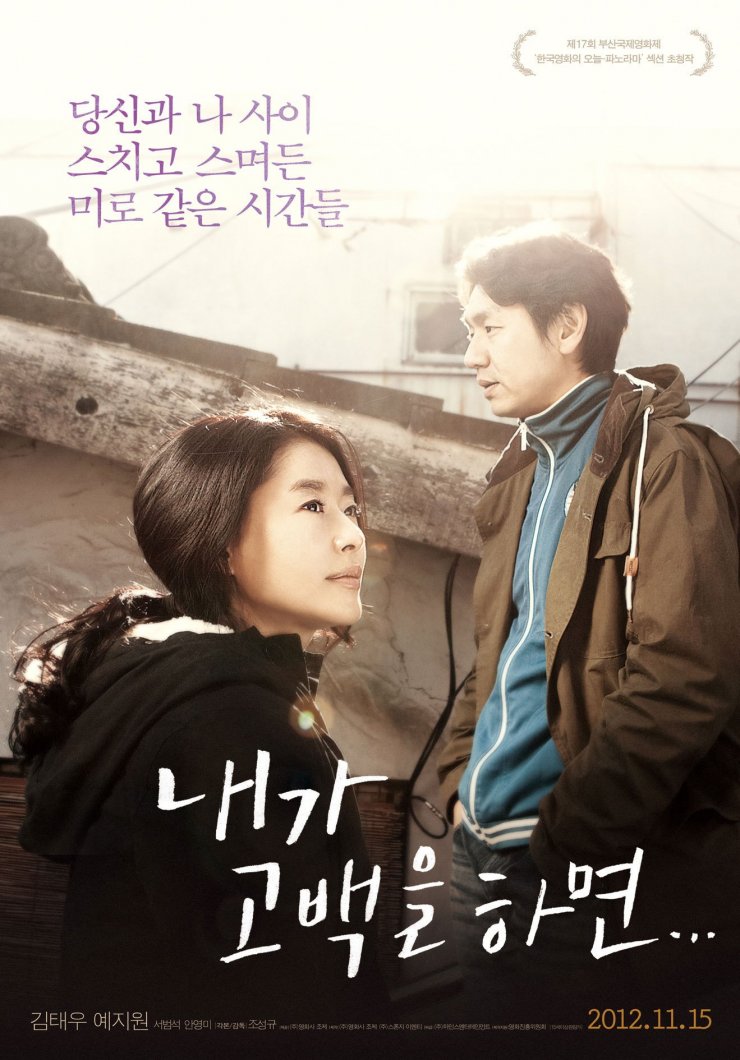
The Winter of the Year was Warm (내가 고백을 하면) – ★★★☆☆

The Winter of the Year was Warm (내가 고백을 하면)

The Winter of the Year was Warm (내가 고백을 하면)

All too often, cinematic representations of love employ a host of cliches and happenstance in order for lovelorn individuals to meet. While the predictability of such narrative devices are relished by some and despised by others, the sense of realism is more often than not shunned in favor of more crowd-pleasing moments that bring the couple closer.

The Winter of the Year was Warm (내가 고백을 하면) soundly rejects such notions. Director David Cho (조성규) has constructed a story whereby the blossoming romance that features is very much a natural development born out of the drama that occurs, and as such is a refreshing and quite charming tale. Ironically therein also lies the main issue with the film, in that director Cho spends so much time establishing the lives of the central couple and the origins of the burgeoning romance that there is little payoff.

Operating as a theater owner and film director, Seoulite In-seong (Kim Tae-woo (김태우) loves nothing more than to visit the coastal city of Gangneung at the weekends to rest and enjoy the local cuisine. However, Gangneung resident nurse Yoo-jeong (Ye Ji-won (예지원) travels to Seoul every weekend to escape daily stress and experience the culture of the capital city. As the two meet by chance and become increasingly more acquainted, In-seong and Yoo-jeong agree to swap apartments at weekends to make their travels more convenient. In doing so, they discover more about each other and realise they have more in common than they first believed.

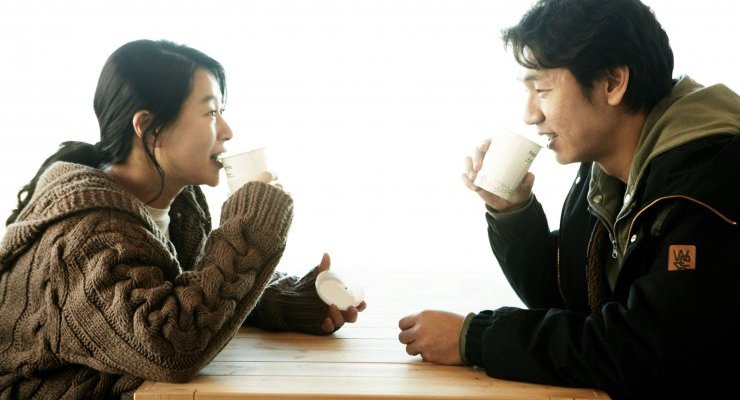
Initially reluctant, nurse Yoo-jeong agrees to swap homes with film maker In-seong at weekends

Initially reluctant, nurse Yoo-jeong agrees to swap homes with film maker In-seong at weekends

Director Cho, who has produced an incredible amount of films over the past few years, uses his knowledge of the film industry well in conveying In-seong’s frustrations at working in the business. The variety of meetings with odd film professionals and his continual begging for funds are humourous to watch, more so for those familiar with the industry. The comedy throughout The Winter of the Year was Warm is not of the laugh-out-loud variety, but of the ironies and quirky moments that occur in life that subtly gesture in new avenues and experiences. Such comic social realism is also ascribed with Yoo-jeong. Due to the selfishness of her Seoulite friend, Yoo-jeong is forced to sleep at a motel and listen to the amourous moans of neighbouring couples, a funny event that forces her to consider finding a home in Seoul. Through the gentle pacing and delicate characterisation, it becomes clear that both Yoo-jeong and In-seong seek an escape from the stresses in their lives, running to different cities in a bid to alleviate tension yet, ironically, tend to encounter more.

Through a chance meeting at a coffee shop in Gangneung, which serves as the ‘hub’ of the film, In-seong and Yoo-jeong become acquainted. The awkwardness of the first meeting is conveyed well by the actors who perform with a natural sincerity that is quite charming, while the long-takes used by the director imply a level of realism that makes their meeting wholly believable. In a more contrived romantic-drama the couple would immediately discuss the option of exchanges homes for the weekend and agree, but it’s to the films credit that Yoo-jeong refuses. Her hesitation on the matter is logically sound given that they are unfamiliar, and it’s a decision that allows the narrative to explore their gradual development and burgeoning relationship.

After a trip to the karaoke room, In-seong and Yoo-jeong become closer

After a trip to the karaoke room, In-seong and Yoo-jeong become closer

While such a sensitive portrayal of their fledgling relationship is refreshing and lends credibility, it is during this time that the narrative becomes stuck. The establishment of Yoo-jeong’s life as a nurse and relationship woes are portrayed well and serve as a great counterpoint to In-seong, yet most other scenes are often superfluous and add little impetus to the main story. This is undoubtedly director Cho’s intention, to capture the smaller, more trivial moments of life, but it becomes bland rather quickly. In fact, there are a great many scenes which could easily be edited out without affecting the overall story, as much of the second act is spent attempting to expand characterization without really providing much in the way of new, or interesting, information.

The Winter of the Year was Warm does thankfully pickup however once the home exchange has been agreed. It is through these scenes that the film finds its originality as the two explore each others tastes in films and music, and are forced to communicate as they break house rules due to bad habits. The swap also instigates some of most humourous scenes in the entire film, and it’s a real shame this area wasn’t expanded upon further as they are genuinely enjoyable and propel the relationship forward. Such irony even strikes the finale of the romantic-drama, as the relationship just starts blossom into romance as the film ends, leaving the audience to surmise how the couple become even closer.

The story ends just as the relationship begins

The story ends just as the relationship begins

Verdict:

By employing a greater focus on gentle social realism and irony, The Winter of the Year was Warm is a refreshing take on the romantic-drama. Director David Cho has created a quite charming tale of two middle-aged singletons attempting to escape their daily lives yet finding something more, employing subtle development and humourous satire to enjoyable effect. While the second act goes on for too long, the film picks up once their homes have been exchanged and they discover more about each other, serving to make the film a quite charming exploration of the origins of romance.

★★★☆☆

Reviews