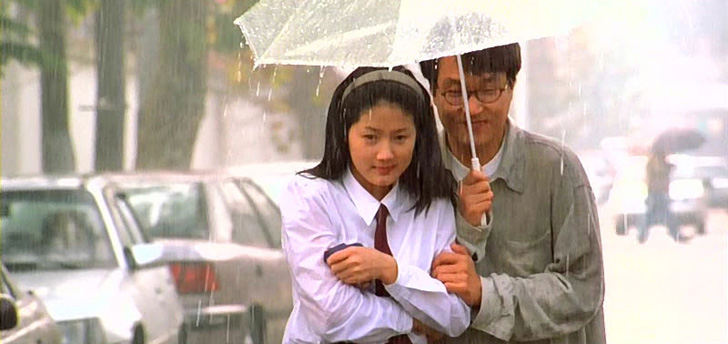
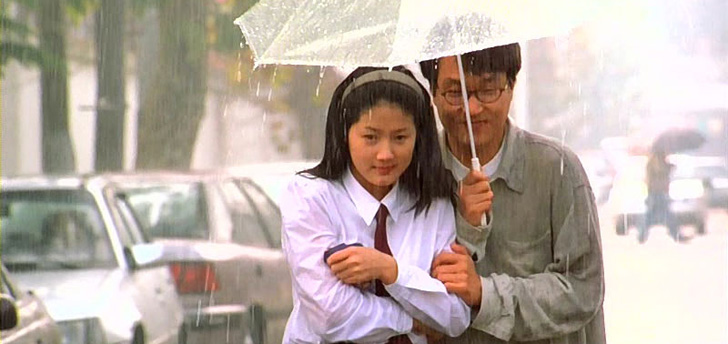
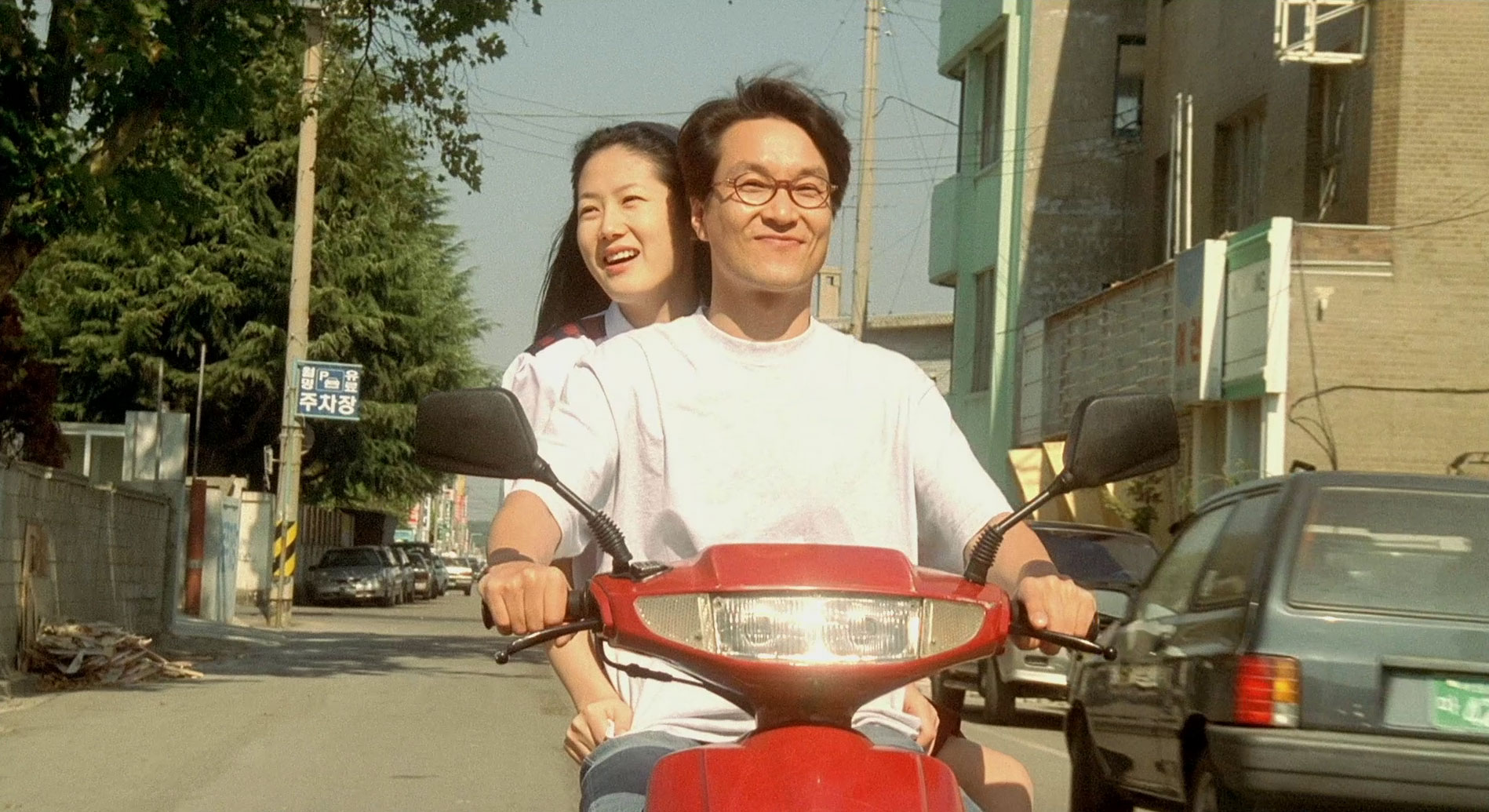
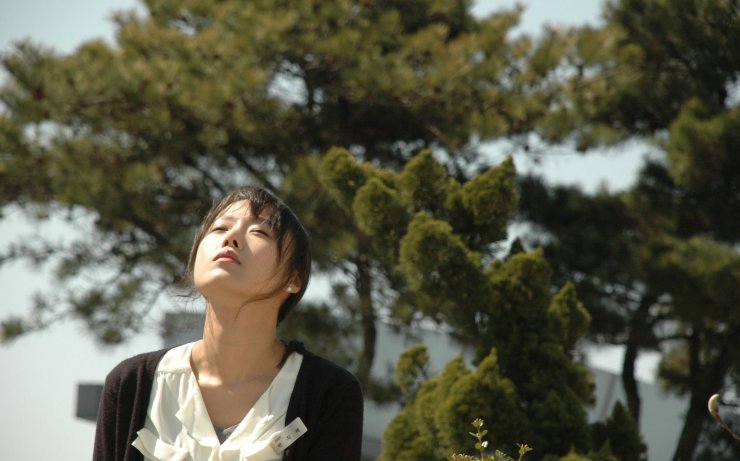
Mild-mannered Jung-won (Han Seok-Kyu (한석규) owns a small photography store in a quiet country town, whiling away his days developing pictures for the locals and spending time with his family. Yet Jung-won is also suffering from a terminal illness that he attempts to deal with in his own quietly introvert manner. His simple lifestyle changes however when attractive parking attendant Da-rim (Shim Eun-ha (심은하) visits his studio in need of urgent service, and the two strike up a subtle relationship. As they gradually begin to cross paths more and more, Jung-won and Da-rim grow ever closer to develop an intimate tale of romance in the scorching heat of summertime.
One hot afternoon, Da-rim enters mild-mannered Jung-won’s life
Christmas in August is a beautifully gentle and sincere romantic drama by director Heo Jin-ho (허진호). Acclaimed as something of a modern classic in Korean cinema, the film manages to skillfully sidestep the melodramatic pitfalls that so often afflict other examples of the genre to produce a wonderfully modest yet insightful tale depicting the origins of love. With Christmas in August, overblown, grandiose gestures are thoroughly rejected and replaced with smaller, more subtle moments that express so much more affection. Scenes involving Jung-won and Da-rim as they share ice creams, converse in the photography studio, and have brief encounters in the village contain a palpable authenticity that is a genuine delight to watch, as their relationship gently develops and deepens. Such instances are heavily reliant upon nuanced performances, and in this regard Han Seok-kyu and Shim Eun-ha, who were at the height of Hallyu stardom at the time, deliver wonderfully. The glances, the exchanges, the body language – all perfectly convey the fragile tenderness of adolescent romance, and as such it’s little wonder that the couple are so iconic in Korean cinema.
Jung-won and Da-rim become closer in tender and subtle ways
The likability of the couple is also due to the fascinating characterisation ascribed to each, with Jung-won as a sensitive, creative introvert and Da-rim as a headstrong, independent and feisty. Although they are quite different the attraction and intrigue that draws them together is particularly charming. Director Heo makes the wise decision not to exploit Jung-won’s illness within their burgeoning relationship for the sake of melodrama and romance. While the undisclosed illness underpins much of the events that transpire, the story isn’t subsumed by it and it’s to director Heo’s credit that he keeps scales back the drama in favour of character.
Jung-won’s occupation at the photography studio is also an effective metaphor in director Heo’s exploration of love, loss and time. The different situations in which he takes pictures or edits the images for customers is consistently touching as it gives his life purpose and meaning in the quiet country town. The creation of something that will endure beyond his time on Earth conveys his poetic nature, even though he is aware that ultimately everything fades.
In the hot summer months, Da-rim and Jung-won enjoy special moments
Verdict:
Christmas in August is considered a classic of modern Korean cinema, and for good reason. DirectorHeo Jin-ho explores the origins of love with incredible sincerity, never allowing the story to delve into melodramatic cliches and prizing characterisation and subtle, tender moments over excess. With charming and nuanced performances by Shim Eun-ha and Han Seok-kyu, Christmas in August is a lovely tale of love, loss and time.
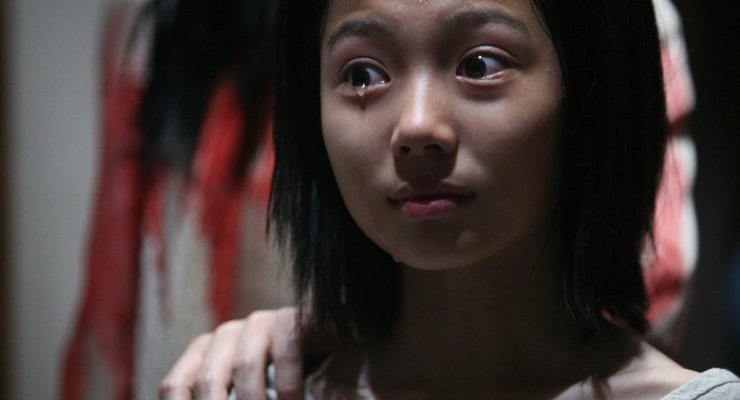
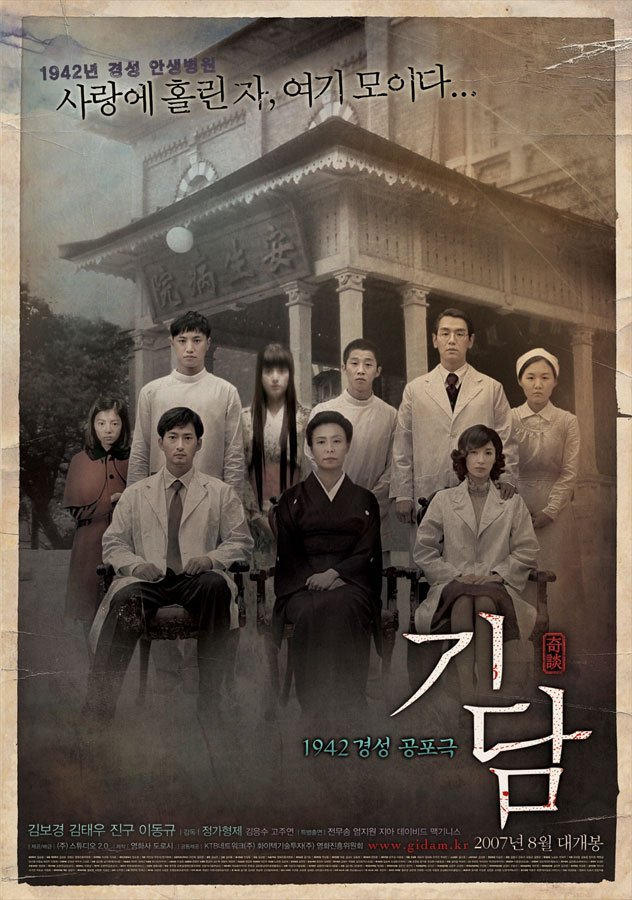
In 1979, aging professor Park Jeong-nam is made aware that Ansaeng Hospital, the institution in which he began to forge his career, is due to be demolished. At home, the professor opens an old photo album featuring pictures from his days as an intern there, and begins to reminisce about an awful four day period that occurred in 1942, back when Korea was under Japanese colonial rule. He recalls how as a young man (Jin Goo (진구) he developed an attraction with the corpse of a beautiful young girl; how a car crash survivor named Asako (Ko Joo-yeon (고주연) was haunted by the ghosts of the tragic event; and of brilliant neurosurgeon Dr. Kim Dong-won (Kim Tae-woo (김태우) and the troubled relationship with his wife Dr. Kim In-yeong (Kim Bo-kyeong (김보경).
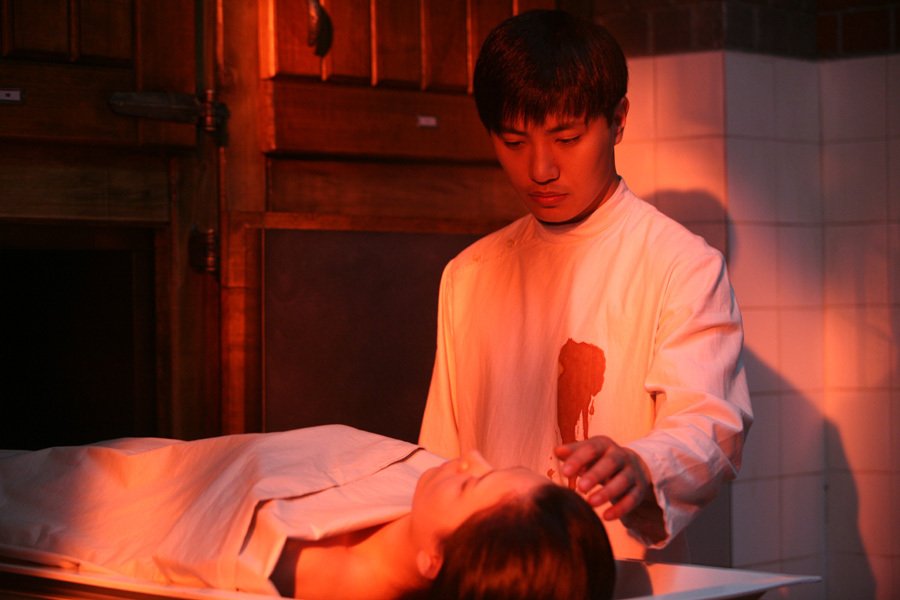
Jeong-nam becomes intrigued by the beauty of a young corpse
Epitaph is an attractive and unsettling horror film, one which is in actuality an omnibus of short supernatural stories loosely tied together so as to masquerade as a feature. This particular narrative structure is one that directors Jeong Beom-sik (정범식) and Jeong Sik (정식) – more commonly known as the Jeong Brothers – returned to in both Horror Stories and its sequel, yet Epitaph manages to marry the disparate events more successfully than their later attempts.
The narrative within Epitaph features three short horror tales set within the confines of the Ansaeng (safe life) Hospital, bookended by scenes of the now-elderly Jeong-nam as he recollects events from his past. As the film jumps between stories and across timelines, the narrative, though entertaining, ultimately becomes a convoluted mess that is often frustrating to endure, and is in desperate need of a re-edit. Yet that said, the three episodes themselves are competently portrayed and engaging. Initially Epitaph focuses on young Jeong-nam as an intern struggling with the gory specifics involved in conducting autopsies, whose attention is captivated by the beauty of a young corpse. The potential of the premise isn’t capitalised upon however as any sense of growing obsession is curiously absent, and as such is primarily used to help set the stage for the other two shorts. The notable highlight of the film comes in the form of the second story involving traffic accident survivor Asako. Attempts are made to combine both a psychological drama with traditional scares and the tale somewhat succeeds. Lastly, a doctor becomes suspicious of his wife as a vicious serial killer is on the loose. In each case, the directors simply capture the events that transpire without managing to generate the required tension and suspense, resulting in a horror film that, aside from a few unsettling moments, is crucially lacking in scares.
Youngster Asako is haunted by the ghosts of a car accident
Epitaph is additionally guilty of not only employing a wide range of cliches, but also rather blatant replications from superior horrors that often border on plagiarism. It’s a shame the Jeong Brothers have opted for such an approach as the set-up, and particularly the time period, lends itself well to the creation of a uniquely Korean horror film. Yet through the incorporation of techniques found better elsewhere, Epitaph never moves beyond being simply entertaining and into the realm of genuinely frightening.
Ultimately the real power of the film lies onscreen within the compositions and shots, which are consistently impressive throughout. At the 2007 Blue Dragon Awards, such prowess was recognised as Yun Nam-ju was presented with the Best Cinematography award, while Best Art Direction went to Kim Yu-jeong and Lee Min-bok. Each location is wonderfully constructed to convey the 1942 era credibly, with the aesthetics of each tale generating a unique, yet interconnected, atmosphere. The hospital interiors including the hallways and the mortuary are of particularly of note in the first tale, which bridge seamlessly into the second and third stories as youngster Asako receives treatment while the married doctors conduct their work. Furthermore, Asako’s nightmares allow the artistic direction to move into more surrealist territory as well as incorporate some wonderfully composed exterior shots, which links well to the otherworldly Japanese-esque arenas in the final story. In each instance the designers manage to simultaneously articulate the mood and sensibilities of each tale while linking it within the context of the whole, making Epitaph quite the visual treat.
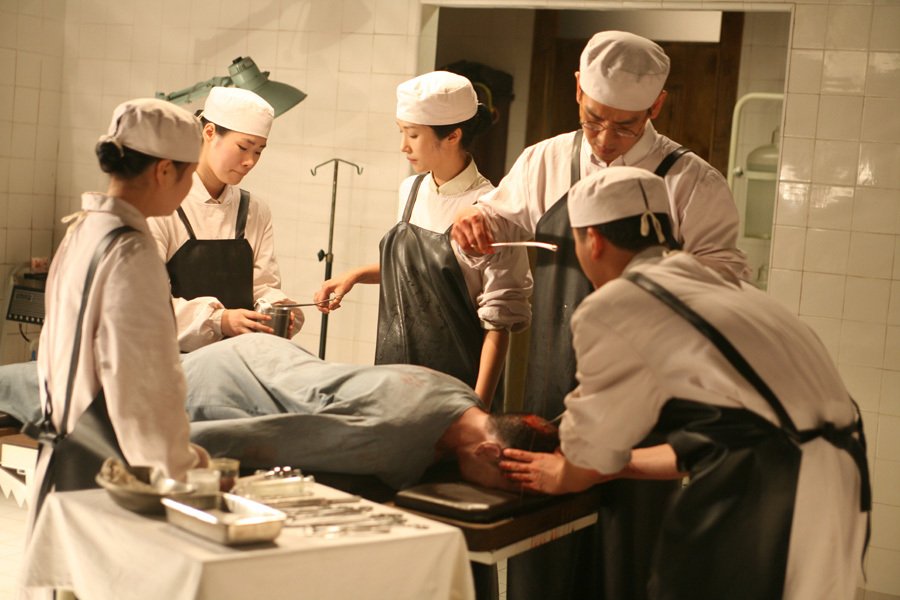
Dangerous neurosurgery is conducted at the institution
Verdict:
Epitaph is a competent and visually attractive horror film by directors Jeong Beom-sik and Jeong Sik, better known as the Jeong brothers. The omnibus film features three tales that are generally unsettling rather than frightening, largely due to the haphazard narrative structure and employment of cliched tropes from superior examples of the genre. Epitaph is a solid, though unremarkable, addition to the K-horror canon.
One of the great joys of Korean cinema are the unexpectedly fascinating twists and turns of plots; of startlingly powerful scenes examining issues of ‘han’ juxtaposed with quiet, intimate ones; of characters who endure the most difficult of circumstances in Korean society yet refuse to falter.
Here we celebrate 10 of the most memorable moments of Korean cinema from 2014.
The scenes discussed are featured in alphabetical order of the films they featured in, and mark the most emotionally resonating, the funniest, and most shocking moments of the year
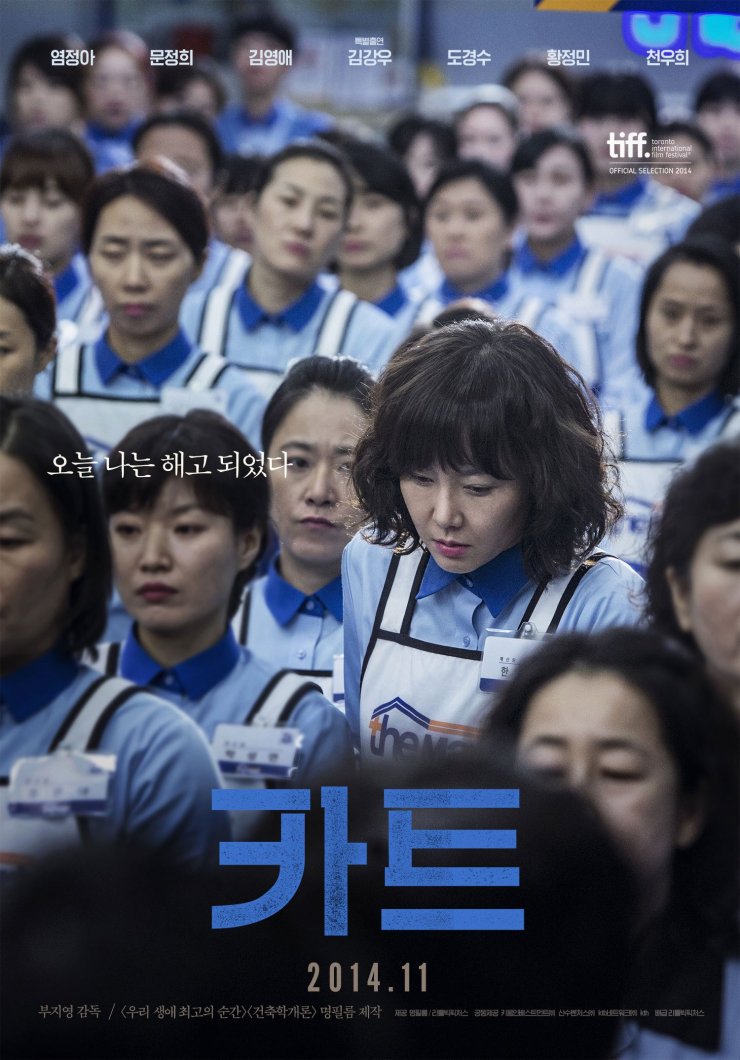
Following a minor conflict with customers at the supermarket, Hye-mi ends her shift and prepares to leave…until those customers, headed by management, descend upon her demanding an unwarranted apology. However a mere apology isn’t enough for the spiteful patrons. In an unbearably humiliating scene, Hye-mi is forced to get on her knees and beg forgiveness for something that wasn’t her fault, with director Bo Ji-young impressively building the indignity and shame to anger-inducing levels. Actress Moon Jeong-hee is incredible throughout the scene, wonderfully conveying the soul-swallowing, abject shame she is forced to endure in order to keep her job.
Such economic arrogance certainly strikes a chord with Korean audiences as, ironically, only a couple of months after Cart‘s release, the Korean Air ‘nut rage’ scandal enraged the country and calls forth the exact same issues dealt with in the film.
The Fatal Encounter was certainly one of the most attractive Korean films released in 2014 and is a stunning debut showcase of director Lee Jae-gyoo’s prowess.
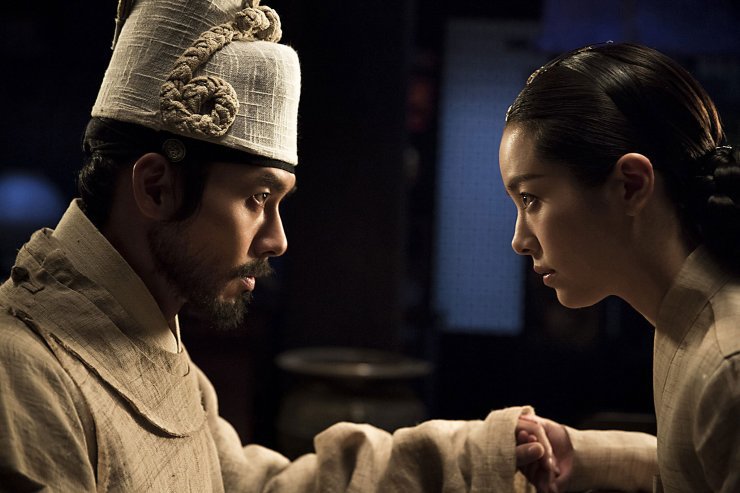
In one of the most intense scenes, King Jeongjo plans to visit his grandmother…yet rather than an old woman, he is confronted with stunningly beautiful actress Han Ji-min. During the encounter the sexual tension and danger of the situation is palpable, as the two engage in a battle of wits while the ‘grandmother’ seductively bares her perfect skin to the young king.
The scene wonderfully captures the danger and eroticism of the period with incredible tension, highlighting not only director Lee’s skill but also the acting abilities of Han Ji-min and Hyeon-bin.
When police officer Yeong-nam decides to act as guardian for troubled youth and domestic violence victim Doo-hee over the summer, neither of them could ever expect the end result. Incarcerated due to her sexuality, Yeong-nam’s life is effectively over, until Doo-hee takes matters into her own hands.
Plying her father with alcohol until he passes out, Doo-hee undresses and crawls into his bed before calling the police and, while the line is connected, shockingly fakes sexual abuse at his hands, incriminating him as the perpetrator of a horrific crime while also exonerating the innocent Yeong-nam.
Actress Kim Sae-ron is simply excellent throughout the disturbing sequence, conveying Doo-hee as vulnerable yet frighteningly manipulative.
When the immigration plans go awry, the cutting begins
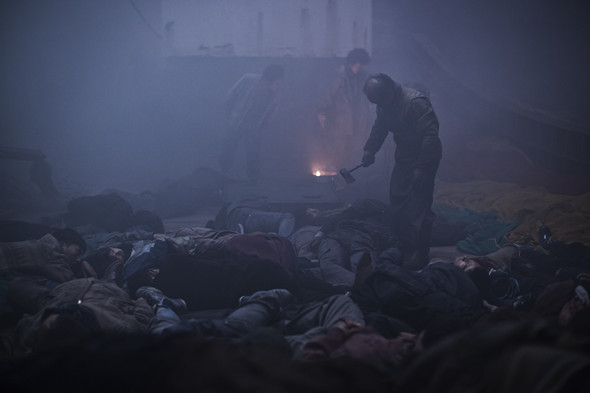
Agreeing to take illegal Chinese immigrants into Korea, captain Cheol-joo becomes increasingly nervous…particularly when the coastguard comes for a surprise inspection. The crew hurriedly force the newly acquired passengers into a special room in the hull until danger has passed, yet when they reopen the hatch they are horrified to discover the immigrants are all dead.
Not knowing what to do, the ruthless captain orders his men to grab a tool and begin cutting up the bodies and to throw the limbs overboard. As the crew horrifically hack and slash their way through the innocent travelers the deck literally turns red with blood.
Director Sim Seong-bo brilliantly stages the terrifying scene with wonderfully composed shots and the dense, lingering fog within which the brutality takes place.
Detective Go genuinely has one of the most difficult days in his career. His mother has died. He is under investigation by internal affairs. And he kills a man in a shocking hit and run accident.
Desperate to get rid of the body, Go does the unthinkable and decides to put the body in the same coffin as his dead mother. Yet in order to do so, he must position his car perfectly, use his daughter’s toy to drag the body through an air vent, unscrew the nails in the coffin and replace the lid – all while avoiding CCTV cameras as well as the funeral parlour workers. Amazingly Go manages to succeed in his frantic quest and begins to relax….until the man’s cellphone begins ringing from inside the coffin.
Easily one of the most exciting, darkly hilarious moments of the year.
One of the most powerful stories is the forced termination
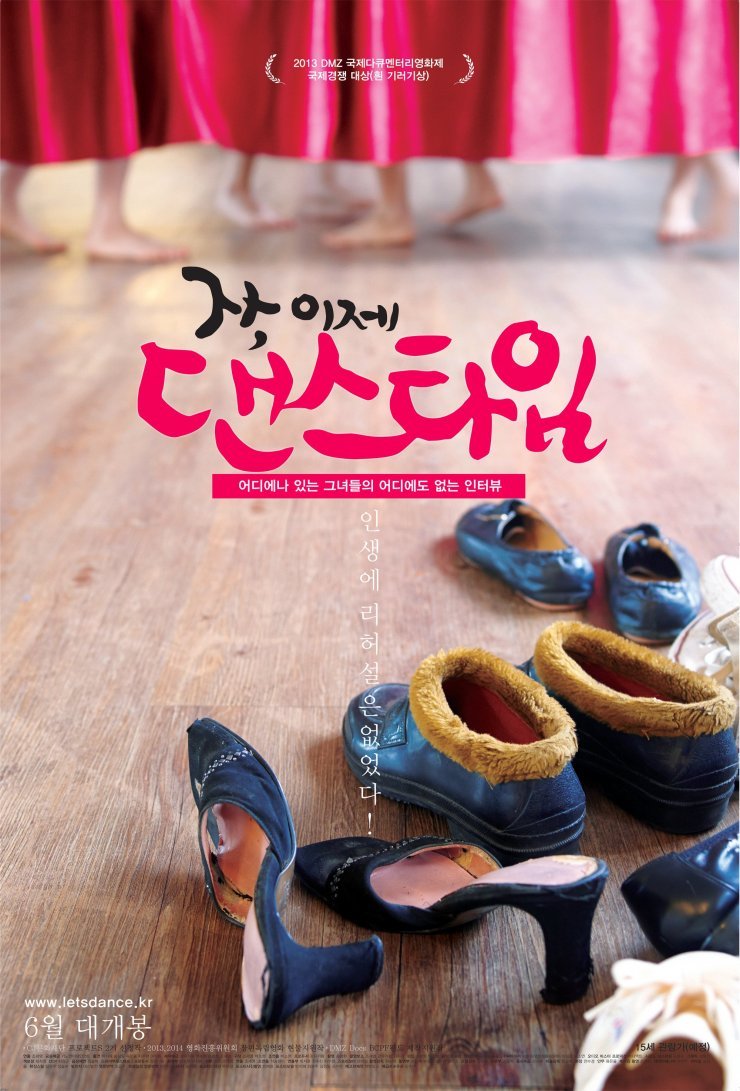
Let’s Dance is a moving, insightful documentary on the topic of abortion in Korea. Director Jo Se-young expertly interviews a variety of women who have undergone the procedure – some who actively wanted it, some who were in a difficult situation and needed it, and one who was forced.
Listening to the woman’s story is heartbreaking as she describes her relationship with a selfish, manipulative boyfriend who refused any part of the situation and forced her to deal with it alone. As she explains her trepidation surrounding the issue and the resultant lateness in having the abortion, it’s impossible not to be deeply, fundamentally moved. The descriptions of her situation and psychologically at that time are incredibly powerful as well as illuminating, and poignantly highlight the need for support for women in challenging relationships and situations.
In the film’s final moments, Mr. Park reveals his younger self
For much of the running time, Miss Granny is simply a mild-mannered comedy, one that induces the occasional giggle rather than laughter.
That all changes however during the film’s final few minutes as elderly Mr. Park, who had desperately tried to woo Mal-soon (and supported her younger self, Doo-ri), visits the same magical photography studio. He then visits the bus stop to meet Mal-soon, approaches her, and takes his helmet off to reveal…Kim Soo-hyeon.
Through this genius cameo, cinemas exploded as viewers screamed and whooped at Kim’s presence, and guaranteed that cinemagoers would leave the theater excited and spread positive word of mouth about the film. You can see Kim’s big reveal in the video below.
In an extremely emotional scene, Sang-mo washes his wife
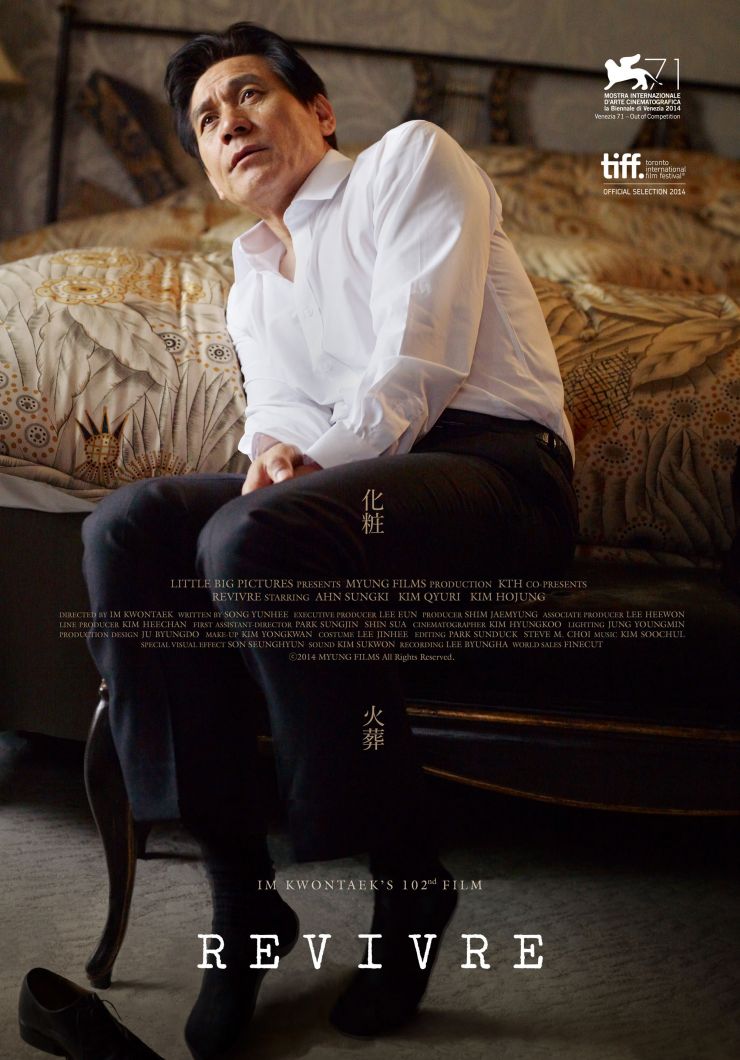
Revivre is a highly emotional film, largely due to the phenomenal acting prowess of Ahn Sung-gi.
In the film’s most powerful scene, Sang-mo’s (Ahn) terminally ill wife loses control of her bowel and soils herself, and as a dutiful husband he takes his wife to the bathroom and washes her. Yet the abject humiliation is too much to bear and she emotionally breaks down in tears, while Sang-mo tries to support her and remain strong. However what makes the scene so poignant is its depth. Sang-mo’s love for his wife has faded and he is merely being a responsible husband, which his wife is all too aware of. As such the intensity of her embarrassment and the emotional resonance of the situation are heightened beyond words.
A masterclass in acting ability by Ahn Sung-gi and Kim Ho-jeong.
As Korean unfortunately has one of the highest rates of suicide in the OECD, and one which is especially high amongst teenagers, naturally filmic narratives have sought to portray the issues youths face on a daily basis. Most films tend to focus on the teen suffering from abuse, yet Thread of Lies instead explores the lives of those effected by Cheon-ji’s suicide with flashbacks revealing her decent into depression and those responsible for it.
Modern bullying is distressingly articulated through the birthday party scene, in which Cheon-ji arrives at the event late after being told the wrong time. When she does enter, all the girls at the party begin using a social messenger application to spitefully criticise the distraught young girl right in front of her. Her loneliness and isolation are poignantly captured in this powerful scene, conveying that everyone in Cheon-ji’s life contributed to her depression and are accountable for her suicide.
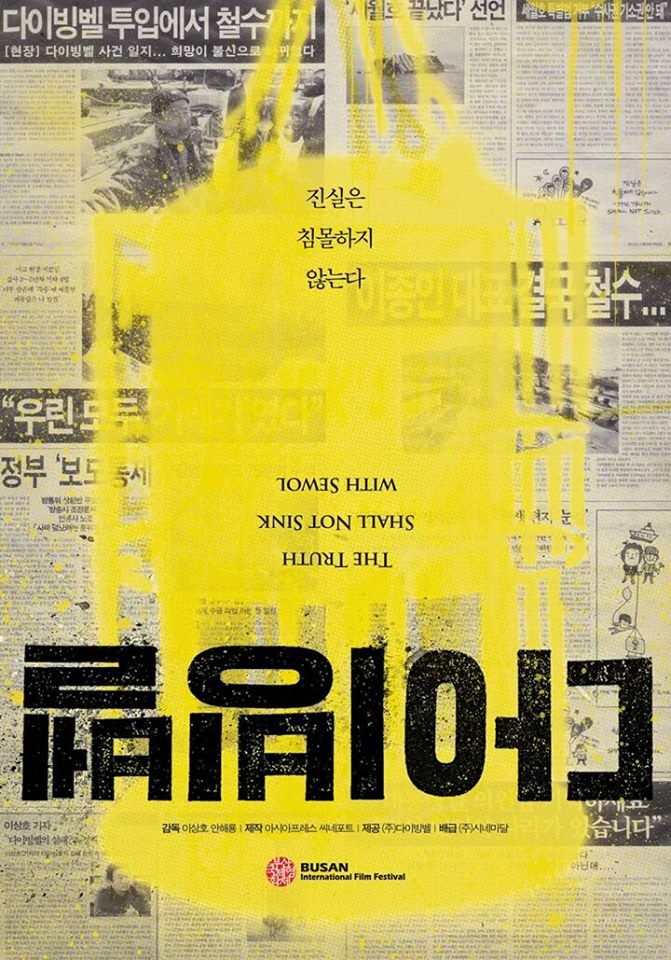
Easily the most controversial film of the year, The Truth Shall Not Sink With Sewol examines the inept response following the disaster, with the investigative journalist style elevating the documentary heads and shoulders above other releases.
Yet the most emotionally harrowing scene comes in the film’s last few minutes, as director/journalist Lee Sang-ho joins a protest march as parents of the deceased demand action from the government. Asking a father about his feelings and regrets, the grieving man sobs as he states how he wishes he’d told his child to not listen to the officials, how he wished he’d said to run and escape, how his child is not alive today because of his poor advice. Director Lee desperately attempts to console the father despite his own free flowing tears…and audiences were right along with them.
With the end of the year almost upon us, it’s time to revisit the films released over the past 12 months in order to discern the best offerings from the Korean film industry for 2014.
First, however, a quick review of the year is in order to chart the highs and lows from the peninsula, as it was a tumultuous time for Korean cinema indeed.
For those who cannot wait, please scroll down to find the top ten of 2014.
2014 – In Review
2014 was, by all accounts, a rather lacklustre year for Korean cinema.
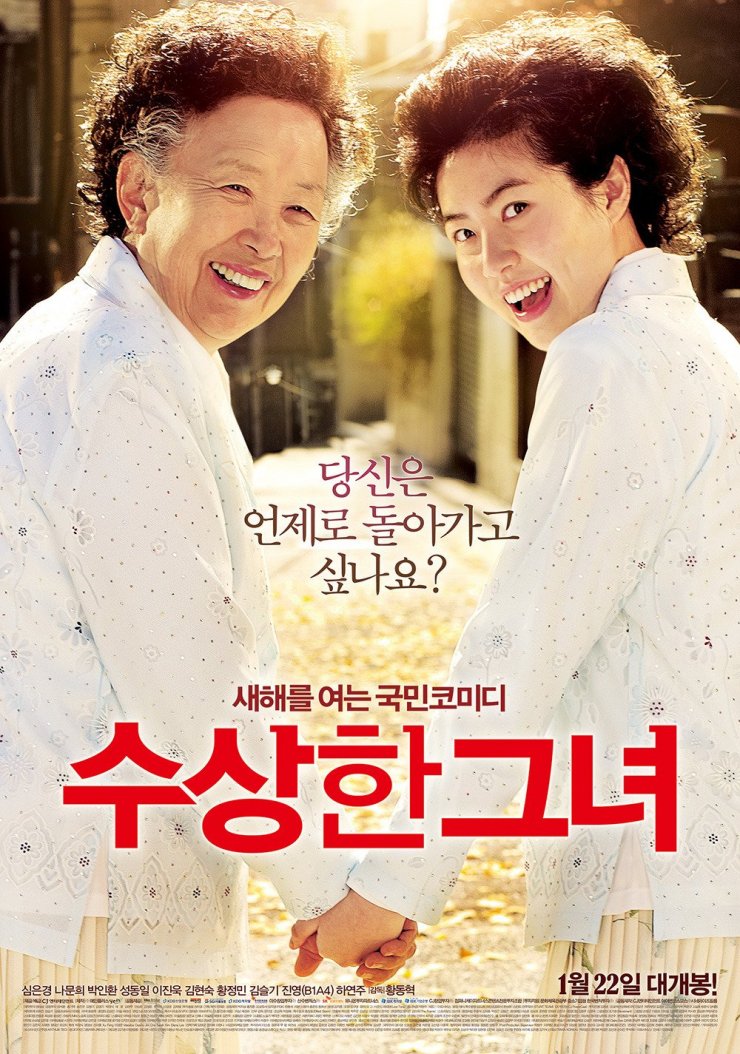
Miss Granny (수상한 그녀)
The beginning of the year was undoubtedly dominated by Hollywood. While the release of several high profile Korean films including Plan Man, Man in Love, Hot Young Bloods and Venus Talk occurred, none of them performed particularly well, especially when faced with the gargantuan success of Disney’s Frozen. Things changed at the end of January with the release of Miss Granny, thanks largely to positive word of mouth. Starring Shim Eun-kyeong as an elderly woman transformed into twenties, the mild-mannered comedy was a fairly big success scoring over 8.6 million admissions. Controversial independent film Another Promise also performed impressively. Concerned with people stricken with cancer after working at a Samsung factory, the film was all but rejected from multiplexes causing outrage from critics as well as accusations of insider suppression, even prompting an article from UK outlet The Guardian.
For the next few months, Korean cinema continued to stagnate until things went from bad to worse in the wake of the tragic Sewol Ferry disaster on the 16th of April. With the entire nation reeling from the loss of so many lives – mostly high school students – cinemas, understandably, largely remained empty. For the next few months, with the population still in a collective state of mourning, attendance and revenue was considerably down compared to the year prior, with audiences also tending to stay away from violent films such as No Tears For The Dead and Man On High Heels.
Indie success came in the form of Han Gong-ju. Released in April, the film scored over 60,000 admissions during its first four days, and eventually surpassed 160,000 during its box office run to become one of the most successful independent films in the history of Korean cinema. Han Gong-ju was also an enormous hit on the international film festival circuit, achieving several top honours as well as acclaim from cinema maestro Martin Scorsese.
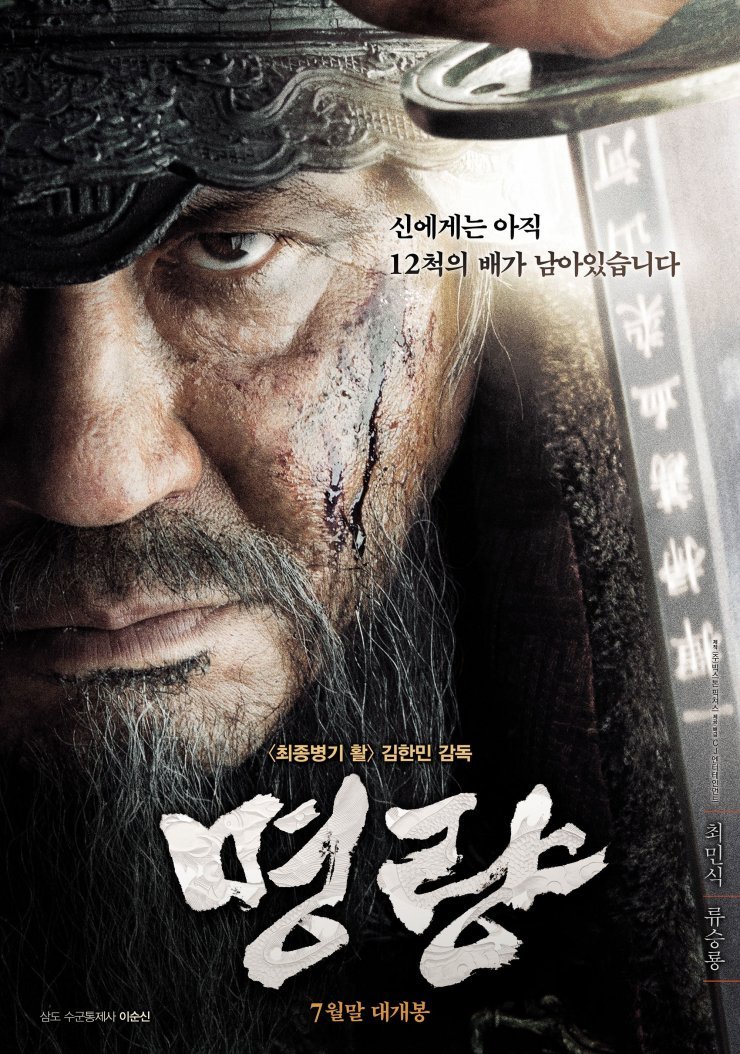
Things turned around considerably in late July. Upon release, KUNDO: Age of the Rampantbroke the record for opening day admissions and helped to breath new life into the industry…until that record, and virtually every achievement in Korean cinema, was decimated by historical naval epic The Admiral: Roaring Currents. Shortly thereafter the final two tentpole summer films – The Pirates and Haemoo – also graced screens to moderate success. Fears that the blockbusters would fail due to narratives that contain deaths at sea, and thus touching on the still sensitive issue of the Sewol tragedy, luckily proved to be unfounded.
The next big news to hit the industry came in the form of controversial documentary The Truth Shall Not Sink With Sewol. Premiering at the Busan International Film Festival, Sewol depicted the ineptitude of the government in failing to save so many lives during the disaster. Park Geun-hye’s administration responded by demanding the withdrawal of the film from the festival, as well as threats of funding cuts. BIFF refused, and it remains to be seen what ramifications the decision will have on subsequent festivals.
The year ended on a high note, particularly for independent cinema, as positive word of mouth led to documentary My Love, Don’t Cross That River (님아, 그 강을 건너지 마오) attracting over 1 million viewers and knocking Hollywood films Interstellar and Exodus from the top spots at the box office. It currently stands as the second most successful documentary in Korean cinema history.
Before beginning the top ten countdown, it would be impossible to exclude any discussion of Han Gong-ju. Rated in joint first place in last year’s ratings (due to its premiere at BIFF), director Lee Su-jin’s directorial debut is bold, powerful, and emotionally resonating. Featuring an outstanding performance by Chun Woo-hee – who won Best Actress at the Blue Dragon Film Awards – Han Gong-ju is based on the true story of a high school girl who is forced to relocate to a new area following an horrific event. As she attempts to rebuild her life, Gong-ju discovers that she cannot outrun her past however much she tries. Appearing at over 15 international film festivals and receiving acclaim from Martin Scorsese himself, Hang Gong-ju is not to be missed.
Manshin: Ten Thousand Spirits is a beautifully stylised, wonderfully constructed documentary that is emblematic of the new artistic approach being employed to genre. Directed by artist/filmmaker Park Chan-kyong, Manshin presents the life and times of renowned shaman Kim Keum-hwa through a startling array of storytelling devices, all in the aesthetic of traditional Korean culture. Periods from shaman Kim’s life are gorgeously reconstructed featuring three prominent actresses – Kim Sae-ron, Ryoo Hyeon-kyeong and Moon So-ri – which, while interesting in itself, is also a story that explores the cultural identity of Korea in the rapid transition from one of the poorest nations in Asia to the economic powerhouse it is today.
Amalgamating several real life stories that have transpired over the years, Korea’s most prominent queer director, Lee Song Hee-il, released arguably his most compelling film to date in the form of Night Flight. Poignantly depicting the relationship of two teenage gay Seoulites and their desire to escape their oppressive environment, director Lee Song goes beyond focusing primarily on the romance by profoundly developing the world they inhabit. The harsh education system, the class divide, single parent families and social injustice all feature, and as such homosexuality is naturalized as simply another facet of identity that youths struggle with, resulting in an insightful and compelling drama.
Documentary Let’s Dance is concerned with the topic of abortion in Korea. Director Jo Se-young brilliantly interviews a variety a women who have undergone the procedure, inquiring about their thoughts, reasons and feelings about the controversial subject matter. Yet the film is far from bleak; in fact it’s quite the opposite. During the refreshingly frank conversations the women laugh, joke and cry about their experiences, while dramatic recreations of comical events are interlaced within, making the documentary a genuinely funny, enlightening, and empowering film. The film also hilariously pokes fun at male ignorance on the subject, including lack of awareness regarding contraception and even the length of pregnancy. Inspirational viewing.
Director Boo Ji-young’s insightful second feature film Cart premiered at the Toronto International Film Festival to great acclaim, and for good reason. Based on the true story of unfairly dismissed supermarket employees who began strike action to be reinstated, Cart is a consistently impressive exploration of worker’s rights, women’s issues, and single parent families in contemporary Korea. The provocative drama explores each facet from several distinct perspectives and never fails to be engaging. It also has the distinction of being almost entirely female-centered to great effect, with acting duties from a host of incredibly talented actresses of all ages, combining to produce a moving, courageous and provocative socially-conscious drama.
South Korea has the unfortunate distinction of having one of the highest suicide rates in the OECD. Thread of Lies tackles such difficult subject matter by exploring the lives of those effected in the aftermath of a young girl’s suicide, and is a powerfully provocative film in that the story not only depicts bullying and depression, but also delves into the problematic realm of accountability. Driven by the need for answers, Man-ji begins investigating her younger sister’s suicide, with the conclusions proving to be a painful experience. Thread of Lies is also notable for having a stellar all-female cast, a real rarity these days, with the array of talent combining to produce an understated yet deeply resonating examination of an important social issue.
Easily the most controversial Korean film of the year, documentary The Truth Shall Not Sink With Sewol premiered at the Busan International Film Festival to uproar. Under pressure from government officials and the mayor of Busan/Festival Chairman Seo Byung-soo himself to remove it from the schedule, BIFF ultimately refused and screened it anyway to reveal a highly emotional and courageously critical exploration of the administration’s disastrous rescue efforts following the Sewol tragedy. Through the investigative approach of director Ahn Hye-ryong and journalist/director Lee Sang-ho, the documentary is a powerful tribute to not only the victims of the event but also the ongoing debate of accountability, and the collusion between the state and mass media.
If there’s one genre synonymous with Korea cinema, it’s the thriller. Yet over recent years thriller films have tended to fall a little flat, a result of over-saturation combined with a lack of ingenuity. Not so with director Kim Seong-hoon’s A Hard Day. Premiering at Cannes Film Festival, the action extravaganza is perpetually riveting entertainment and a wonderful example of great popcorn cinema, so much so that the 2 hour 30 minute running time simply flies by. Featuring an exciting array of set pieces throughout, A Hard Day is a constant mix of excitement and tension that serves to keep the audience guessing – due in no small part to the phenomenal editing – while the ironic dark humour laced within the story always hits the mark.
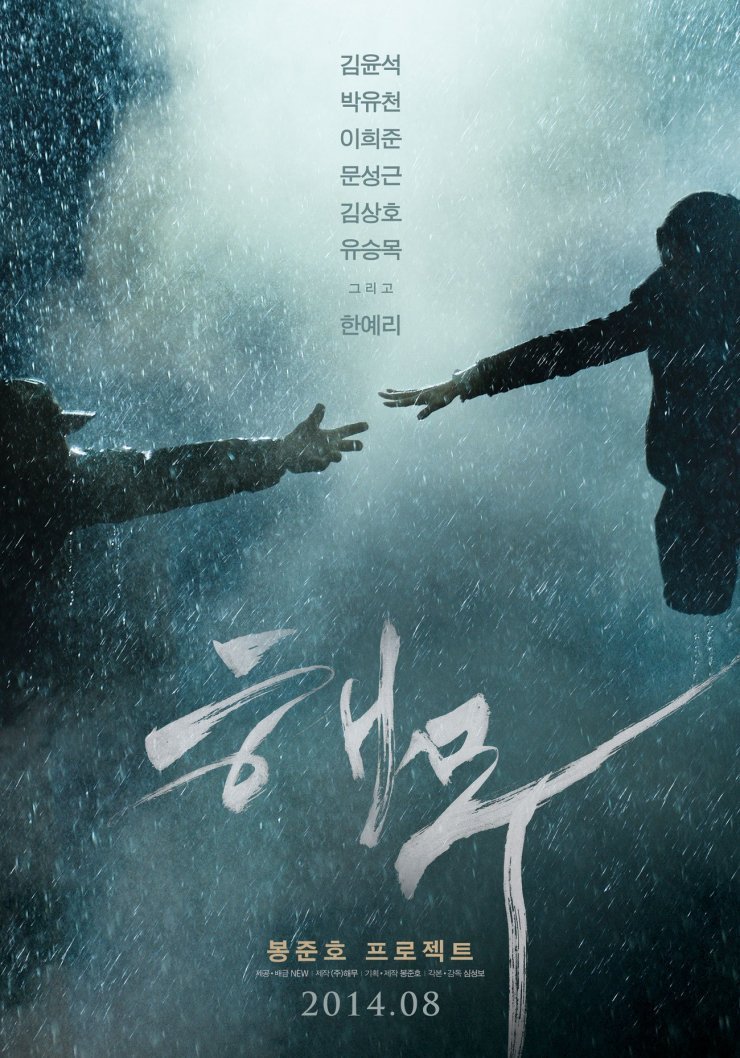
Nominated as Korea’s official entry for the Academy Awards, Haemoo – or Sea Fog – is based on the horrific true story of illegal immigration gone wrong. Director Shim Seong-bo’s directorial debut is a thrilling visual tour de force, expertly capturing the fraught claustrophobia of life on a small fishing vessel and the abject horrors that occur. Produced by Bong Joon-ho and featuring cinematography from Hong Kyeong-pyo (Snowpiercer), the drama expresses a profound and distinctive aesthetic throughout, as well as great performances from the stellar cast and particularly from up-and-comers Han Ye-ri and Kpop star Park Yoochun. As such, Haemoo is certainly one of the best Korean thrillers in recent years.
After seemingly years of performing authoritarian cameo-esque roles, Ahn Sung-gi once again revealed why he’s considered one of the best in the business with an outstanding return to form in Revivre. Veteran director Im Kwon-taek‘s 102nd film, Revivre explores the life of a middle-aged vice president whose wife is stricken by a terminal illness, yet while he struggles to balance his responsibilities a beautiful new deputy manager begins working in the office who captivates him. What could easily be yet another typical male fantasy is given extraordinary emotional depth due to director Im’s and Ahn Sung-gi’s seasoned hands, both of whom combine to depict a man torn between duty and desire with striking sincerity.
Director July Jung’s directorial debut A Girl At My Door premiered to a standing ovation at the Cannes Film Festival, which in itself states the incredible power of the film. Produced by famed brothers Lee Chang-dong and Lee Jun-dong, the drama beautifully explores the themes of alienation and discrimination in contemporary Korea, featuring phenomenally understated performances by Bae Doo-na and Kim Sae-ron, as well as accompanied by some of the most exquisite cinematography seen all year. The sensitive and poignant story wonderfully captures the issues faced by those on the fringes of Korean society with incredible sincerity, and as such occupies the top spot in the list. Highly recommended and essential viewing.
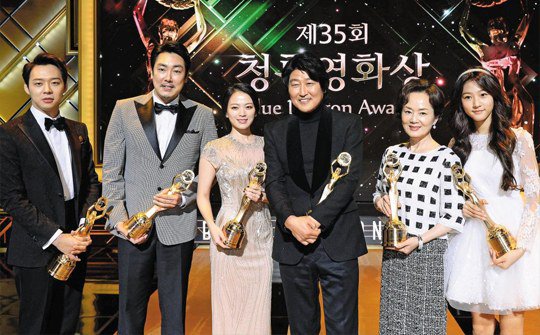
Best Film was awarded to politically charged drama The Attorney which also saw Song Kang-ho win for Best Actor and Kim Hee-ae for Best Supporting Actress.
Best Actress went to Chun Woo-hee for her performance in independent drama Han Gong-ju and appeared genuinely surprised by her victory, so much so that she cried upon receiving the award. Her tearful acceptance speech can be seen below. Han Gong-ju also picked up another award, this time for Lee Su-jin for Best New Director.
The award for Best Director went to Kim Han-min for helming The Admiral: Roaring Currents, which also scooped the Audience Award for Most Popular Film.
Meanwhile action thriller A Hard Day scored Best Supporting Actor for Cho Jin-woong, Best Screenplay for Kim Seong-hoon, and Best Editing for Kim Chang-joo.
Best New Actress went to Kim Sae-ron for her role in A Girl At My Door, while Park Yoo-chun scored his 4th Best New Actor victory for Haemoo.
The winners of the best actor and actress categories from the night
Due to a scandalous issue at university, literature professor Hak-gyu (Jeong Woo-seong (정우성) is forced to relocate to the countryside while an investigation transpires. Arriving at a small village, he begins reluctantly teaching the elderly residents, and in becoming acquainted with his new surroundings Hak-gyu meets young and innocent fairground operator Deokee (Esom (이솜). Although married and a father, Hak-gyu begins a steamy, passionate affair with Deokee, yet when a surprise phone call alerts him that the scandal has ended he returns home, abandoning his new mistress. Years later, as his sight begins to dissipate, the ramifications of Hak-gyu’s selfish past deeds come back to haunt him.
While in exile, literature professor Hak-gyu meets innocent Deokee
Scarlet Innocence is a reimagining of the classic Korean folk fable Shim-cheong, in which a daughter sacrifices herself at sea in order for her blind father to regain his sight. Director Lim Pil-seong (임필성) and screenwriter Jang Yoon-mi (장윤미) update the tragic filial piety story into a modern tale of lust and revenge, spurred by questions about how the motivations of the original characters developed. The revised story, with the addition of sexual promiscuity, themes of revenge and the gangster underworld, bares little more than a passing metaphoric resemblance to the original tale to the point where it’s surprising Shim-cheong is referenced as inspiration at all. Yet that aside, while Scarlet Innocence is competently produced and sports fine performances from leads Jeong Woo-seong and Esom, the erotic thrillerconsistently feels rushed and unfinished both narratively and directorially.
The film opens with Hak-gyu journeying to the countryside to endure his time in exile. The cinematography is a visual treat through the recurring motif of blooming cherry blossom trees and quaint rural landscapes, yet rather than employing additional cinematic cues to convey the professor’s angst a voice-over is incorporated to explain the premise. The unnecessary device is utilised at several junctures throughout the film to clarify certain situations yet rather than illuminate, it serves merely to draw audiences out of the story. Scarlet Innocence improves greatly however upon Hak-gyu’s arrival, where his frustrations and dispute with the university are articulate well through tantalizing hints that allude to his precarious situation. The development of Hak-gyu’s relationship with Deokee also begins well, largely due to Esom’s wonderfully charismatic performance as an innocent girl enamored with an older sophisticated gentleman. A scene in which she is almost hypnotised by Hak-gyu’s hand as it moves over a desk is impressively constructed, conveying intense, palpable sexual desire.
Hak-gyu and Deokee begin a passionate affair, arousing gossip in the village
Unfortunately however the development from such moments to explicit sexual scenes lacks the impetus to make the affair compelling, as the relationship jumps from a stolen kiss to impersonal sex on a ferris wheel, and beyond. Much has been made of the intimate sequences, so much so that the film has rather unfairly acquired a reputation for it, yet the erotic moments, while featuring plenty of exposure, contain a shortage of both sincerity and passion particularly when contrasted with the year’s other erotic drama Obsessed. This is not so much due to the actors, both of whom are impressive in conveying their psychology through their bodies, but rather the need for greater prior development and intensity between them which another script rewrite would ultimately correct. That said, the issues that later lead to Hak-gyu and Deokee’s separation are dramatic and effective, culminating in an absorbing climax.
Yet from such engaging material the narrative jumps eight years into the future, not only undermining the previous tension but also generating the sense that Scarlet Innocence is actually two shorter films tenuously stitched together. This is achieved through the focus on Hak-gyu’s descent into drink, gambling and debauchery, as well as the return of Deokee as a cliched femme fatale and her highly implausible plans to exact revenge. The inclusion of Hak-gyu’s daughter Cheong-ee (Park So-yeong (박소영) to the proceedings is also a misstep due to her woeful underdevelopment, despite the original fable primarily based on her character. The sexual politics are also frankly awful throughout, notably the fixation on high heels as empowering yet inherently evil, while the inclusion of the criminal underworld is at odds with everything that came before. As such Scarlet Innocence evolves from a mild-mannered erotic drama to a cliched crime thriller, resulting in a film that, despite its potential, is entertaining yet quite underwhelming.
Years after their affair, Deokee returns to exact a unique brand of revenge
Verdict:
Based loosely on the classic fable Shim-cheong, Scarlet Innocence is an updated version featuring erotically charged scenes and themes of revenge. Director Lim Pil-seong competently helms the drama, particularly in the early stages, while actors Jeong Woo-seong and Esom provide fine performances. Yet the film consistently feels rushed and unfinished both narratively and directorially while the second half of the drama descends into implausible cliched territory. As such Scarlet Innocence is entertaining, yet quite underwhelming.
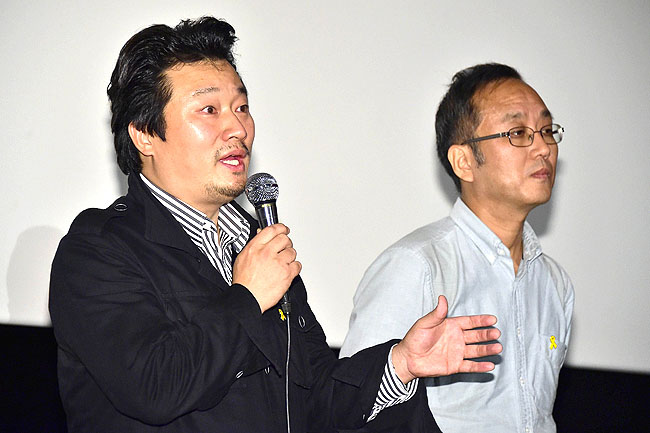
Directors Lee Sang-ho (left) and Ahn Hye-ryong (right) field questions from the audience at the BIFF premiere – AFP
N.B. The following Q&A took place at the premiere of The Truth Shall Not Sink With Sewol (다이빙벨) at the 19th Busan Film Festival (BIFF), on October 6th, 2014.
Please note – the opinions expressed in this article belong solely to the people articulating them. What follows has been transcribed from the translation given by the BIFF translator at the event.
Translator: “the festival people are tense because the mayor threatened to cut off funding if the festival shows this film, and of course the people who made this documentary are also tense because there might be ultra-conservative people who would come and try to mess up this conference.”
The directors come on to the stage to applause.
The Truth Shall Not Sink With Sewol (다이빙벨)
Moderator: “How do you feel about your film being screened here at the Busan Film Festival?”
Director Lee: “There was a lot of controversy over this case, so I will answer frankly and honestly to any questions you might have. Because of the time constraints, I was not able to make the film as ‘complete’ as I had wanted. It’s only God who can take us back to April 16th, the day of the tragedy, but the least we can do is to go back and investigate and find the facts surrounding the incident. I hope that as many people as possible can get to see this film, and I hope that this interest in this film will translate to continued interest in the Sewol tragedy.”
Question: “I’d like to ask, when did you start planning this film? There are some cuts of news footage, so when you were covering this incident, was that when you started planning this film? Or maybe after the uproar had died down? Is that when you started planning this film?”
Director Lee: “Simply put, just like all of you, I was there at Paengmok Harbor and it was there that I realised that the truth was sinking with the ferry and with the children. Most of the mainstream media, whatever they were reporting, was not true, they were lies. And behind the scenes were the power, those in power who wanted to cover up their mistakes, cover their ass. So for three or four days it was a very critical time when the truth was in danger of being covered up forever, so that’s why we kept as much footage as possible, and we tried to film everything. We concentrated back then on the diving bell because we thought the diving bell would be critical in revealing the lies that the government was telling through the coast guard. And there was this sense of urgency because it seemed that people were starting to forget, trying to put the tragedy behind them already, when nothing had been found and discovered. So that’s why we wanted to make this film, in order to keep the memory alive. And we wanted to get it screened at the Busan International Film Festival where there would be a lot of global attention as well, so we were pressed for time, so we were running up against a very tight deadline in making this film.”
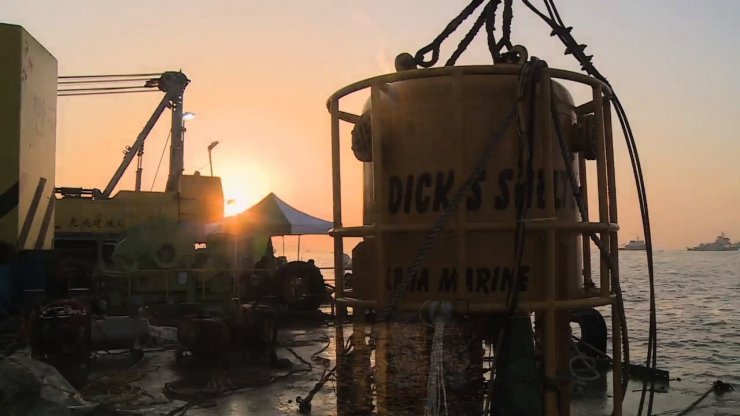
Lee Jong-in (left) is at the center of the diving bell controversy
Question: “You’re here not as a journalist, but as a director. If you have anything that you were not able to say through this film, would you like to share that with us? And Mr Lee Jong-in, the owner of the diving bell, was there a message that he wants to convey? As a member of the audience and as a Korean citizen, I would like to send my encouragement and support for all the people who made this film possible.”
Director Lee: “I’d like to answer both questions. Mr Lee Jong-in, CEO of the diving technology, he did not have a lot of deep thoughts, he was of the same heart and mind as the rest of the citizens. He didn’t make any calculations, he just rushed to the scene because he thought that he could help, because he did have the technology, and he had technology and equipment that the coast guard and the navy did not have and so he offered his help. But during the time when the film was being made, he realised that he was up against something that he could not overcome. And he knew that once the film was made he would be at the center of another controversy yet again, so there were people who asked him to lie low, but he cooperated with the film making because he wanted the truth to be uncovered. I’m a little nervous, so I forgot the other question. Oh yes, as a journalist. I’ve been working as a journalist for 20 years. I was there on the scene as a journalist but as a filmmaker, what disheartened me the most, what broke my heart the most, was leaving out footage that I thought was appropriate for the film. For example, Lee Jong-in was kicked out after the first attempt, and then the journalists found out that the coast guard and the rescue team from the government had attempted to put in a diving bell, their own diving bell, which was a fake diving bell. And that was not in the film. And as you know, there was a lot of online manipulation of public opinion during the presidential elections, and that kind of public opinion manipulation went on during and surrounding the Sewol tragedy, and I was unable to touch on that during the film. So I found that quite regretful. And what really broke my heart was that this diving bell, that was cutting edge technology, there was huge potential for it to save lives, and it had been in operation for 2 hours, compared to the few minutes of the other divers, but then we were threatened, there was even a murder attempt on us, and they were cubing the press. And so I found [not including] that most regretful. We even have legal charges being pressed against us right now.”
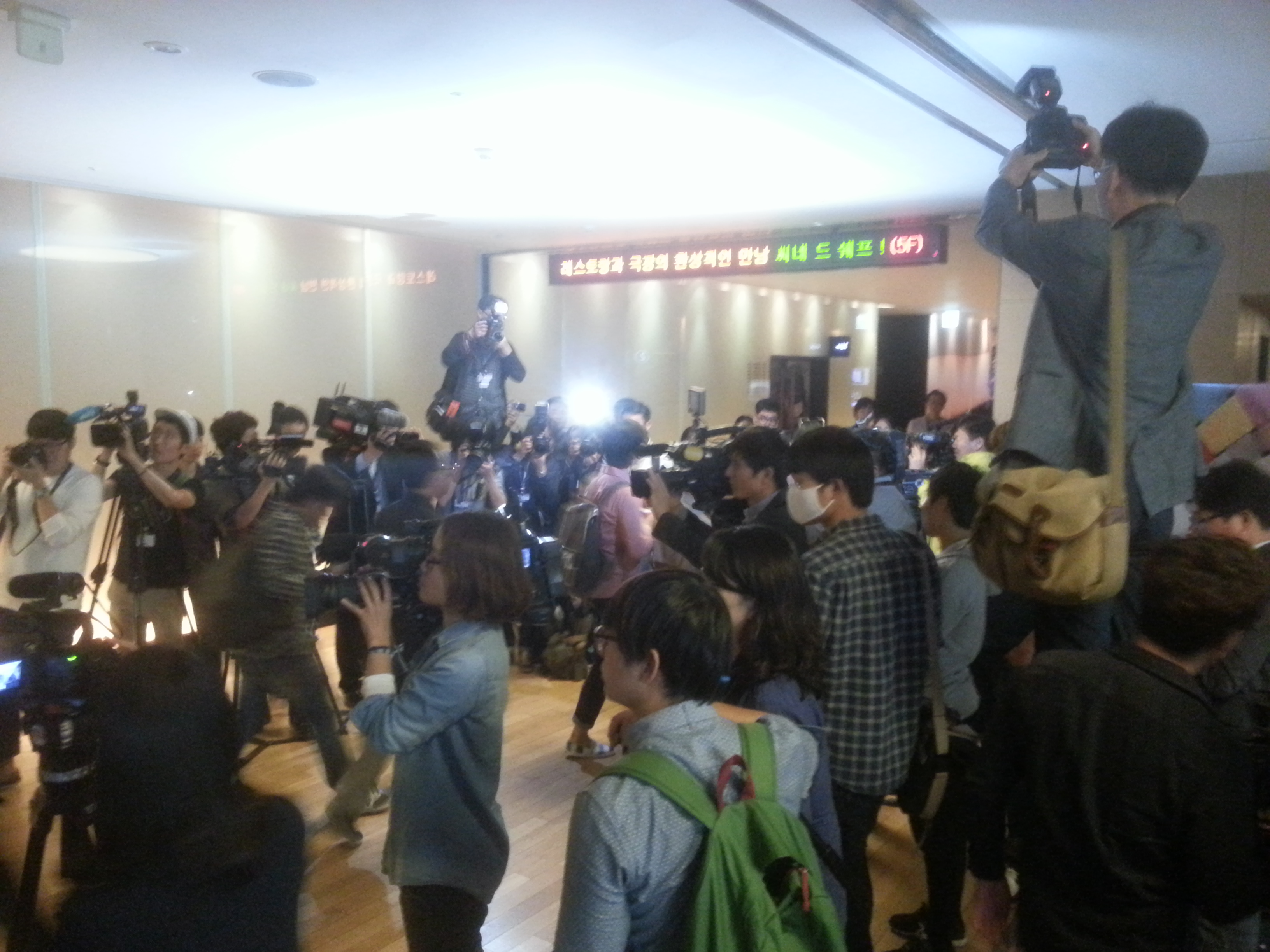
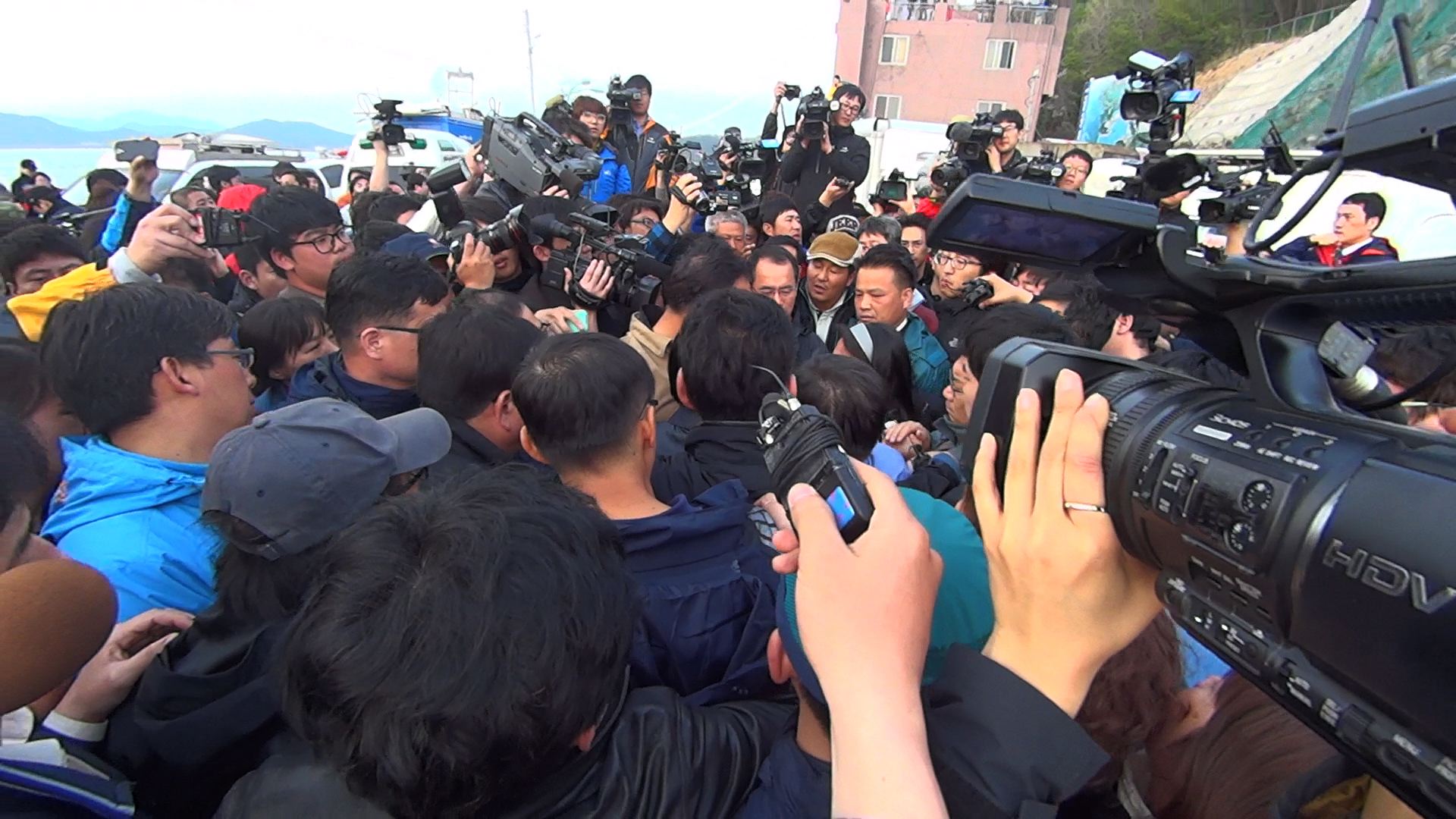
There were chaotic scenes at the BIFF premiere
Question: “There’s controversy over whether this film will eventually be shown or not, so I’m quite taken aback by this press attention. I think it’s this press attention and media attention that gathered so many people here today. And personally I think there are a lot of people in Korea who are starting to forget, they’re trying to erase this whole tragedy from their memories, and so I’m worried about that because we’ve not achieved anything and there’s 10 people who are still missing, and the families of these missing people as well as those who have passed away, they’re all still grieving and in great suffering. Do you have a message for the Korean public?”
Director Lee: “I believed in fair journalism, and that’s why I was working as a reporter for a television station, but I got kicked out, I was dismissed, but I want to continue to try to pursue the truth now this time through film, and I’d like to thank all of you for coming. As you know there was a New York Times article today that after the Sewol tragedy, right afterwards the public was one, they were united in praying for the safe rescue, but then they’ve become divided these days. The bereaved families, they’re getting stoned in public on the streets. I hope that we can go back to, at least mentally and emotionally, to right after the incident and become one again in pursuing the truth. And I hope that through this film [I] will contribute in whatever way to protecting this film as well as protecting the bereaved families.”
Question: “As a college student I really wanted to check out this film and one of the messages is that there was some force, some hidden forces, that were interfering with the diving bell rescue operation. Who do you think would be the people behind it?”
Director Lee claims unanswered questions still remain regarding the rescue efforts
Director Lee: “I will give it to you simply. Since April 16th, what I wanted to know was, why did the children have to die? Why weren’t they rescued? Why didn’t the state protect these children? And as you saw through this diving bell fiasco, survivors who were 30-40 meters underwater, if you just drag them up out of the water, they will die anyway. As you saw in the film, if you go down 75 meters and you dive for a few minutes you still have to decompress for about 30 minutes. So these kids, they were in the ship, and they were trapped inside for a few days, so they have to come up above the water very very slowly, or else they’ll die anyway. But not having such measures at hand, and not coming up with a concrete plan for rescuing them is murder. It’s just murder. The coast guard, not even once, they have never been trained for underwater rescue at all. All they did was float around and circle around the capsized [ship]. And then there was the navy, who were trained. They attempted to go into the scene and start rescue work twice, but they were refused. So it would be the coast guard, the navy and everyone else. Who controls the coast guard as well as the navy? Who has the power? It’s just the president. The president is the only one who can control everyone, or give commands to everyone who was involved in the rescue.”
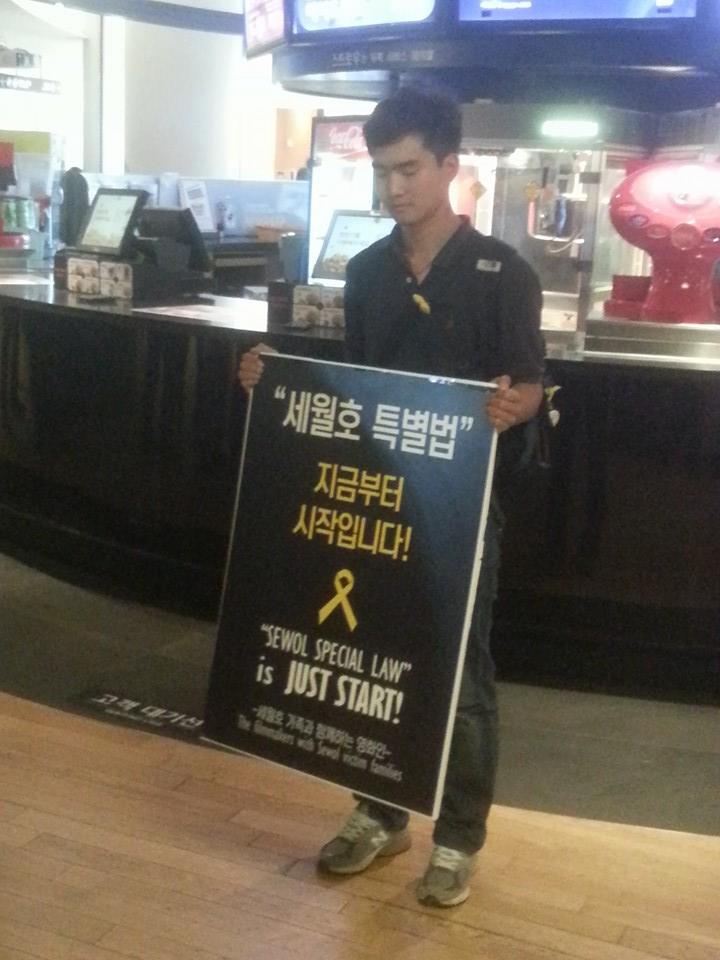
A young man protests in regard to the special Sewol law outside of the screening
Question: “It was very difficult for me to get a ticket to come to see this film and I was shocked. I was not there at the scene, and the only thing I got was the media reports about the diving bell, so I myself thought that it was a failure. And now that I’ve seen this film, I’m truly shocked. And [there’s] so much unfairness. Lee Jong-in is also a victim and I think that everyone in Korea should see this film and I was in tears most of the time. [Audience member begins crying] There’s a limit to how many people can see this film here at the festival, we only have journalists and film festival goers, so I’m lucky that I was able to be one of the few to see this film, and I hope this film will be shown to the wider public in the future. There are people here, and also a lot of journalists so I hope that we will all work together to get this film shown to many people. So my question is, do you think that would be a possibility? Will you be making that effort to get this film shown to more people? And if you have the citizen’s support, the public’s support, I’m sure that this will be released in theaters so that more people can get to see it, more people from the ordinary public. Are you making that effort? Do you have such plans?”
Director Lee: “Well thank you for being moved to tears, first of all. I think getting this shown in public, public screenings for this film will be very very difficult, it will be tough. Facing the uncomfortable truth, in a theater like this, in a public setting like this, this may be the last chance. But we are making that attempt to get this released in theaters and we are working with a deadline of the end of October, so we are making such efforts. I hope that you will all work together to protect this film.”
Question by Oscar-nominated director Joshua Oppenheimer (Act of Killing, The Look of Silence): “We see in your film this incredibly incompetent…or [rather] a rescue effort that’s undertaken in bad faith. And I guess I have two questions. First of all, is it merely incompetence or do you believe that there’s something more going on? And secondly, can you talk a little bit about why the media in Korea, and I don’t think Korea’s alone in this, but why do the feel the media and the mainstream media is so…appears to be so uncritical, so they are placed [into a] terrible stenographers function?”
Footage of the media frenzy at the site convey the chaos and demand for answers
Director Lee: “There was the Indonesian version of The Killing Fields recently where there were ordinary and innocent citizens killed [referring to director Oppenheimer’s work] and I’d like to thank you [director Oppenheimer] for deliberately coming to watch this film. Ineptitude or incompetence is the government’s excuse, it’s their main excuse. And yes the government right now is so incompetent that they want to get rid of their incompetent officials, but then they don’t have substitutes, because everyone else is also incompetent. When such a huge tragedy happened, the government did not have in place a system to deal with this tragedy. It means that the state was absent in this case. If the coast guard was incompetent, then they should be taken away and should be replaced by someone more competent, but such decisions, such common sense decisions were not made. It shows how lacking the government is right now in communication skills, and this lack of communication skills has led to this tragedy, led to expanding this tragedy, and I hope that this film will contribute to revealing the incompetence of the government. And the media, the Korean media in this case, they were not just serving the state, but the current government. The media has a say in the government, they are part of the government, and have a stake in the current government. That is why the media are the people who are the most afraid of the president being criticized, because this will reflect on them as well, because they are on the same side. That is why they sent out garbage instead of the truth and this is proof that they are stake holders in this current government. They are not just stenographers, they are stake holders in this government.”
Question: “On the internet I heard yesterday that some members of the grieving families were opposed to this film being shown and of course the Busan city government is saying that they don’t want this film to be screened. So have any of the bereaved families watched this film? And if so, what was their response? And what are your values as a journalist? You must have some value system that you adhere to as a journalist, but in the process of reporting [the incident] the journalists in action went overboard in interviewing students who had just come up, just been rescued.”
Scenes outside of cinema also drew attention
Director Lee: “I think I’m the journalist who was most critised after the tragedy, because on the scene I was an actor in this whole incident, not just a journalist [with an] objective point of view. Didn’t the president say, before she was president, she critised the then president Roh Moo-hyun saying that if you can’t rescue just one person from Iraq, then you don’t deserve to be called a government. But now that she is in office, there were more than three hundred passengers, young passengers, on board the ship and they were left there, trapped there, for days, and not a single one of them was rescued. And in this kind of situation, objectivity is not the value that I should be pursuing, in this kind of case. For example, I clung to the diving bell in trying to attach it to the weight, so yes I was intervening, I was in the scene, but I would continue to do that even if I were to do it again. And the bereaved families, unfortunately they are not diving experts. What I’m saying when I say that the state was absent on the scene, is that there was no control tower. There were many demands made by the grieving families, of course, and it’s only natural. But then the rescue work, and the pursuit of truth right now, it’s all being led by the bereaved families despite their lack of expertise, and the state is not helping them out at all. And the few who were rescued, were rescued by civilian fishermen who just happened to be passing by. And of course it’s only natural that the families don’t have any knowledge about rescue work. And as you saw they hated the journalists, they hated the press, they had to lean on the press and whatever pieces of information that the press gave them, they would cling onto that. In that kind of situation, where was the state in marshaling this confusion?”
The controversial diving bell technology still divides public opinion
Question: “I see this film as kind of a defense for Mr. Lee Jong-in. So in this whole tragedy, what position does this diving bell have? And do you really think that the rescue attempt using diving bell technology was not a failure?”
Director Lee: “Thank you for those short questions. We are all sinners because we were not able to rescue a single person. I came here dressed in black. And the completeness of the film, I don’t have any pride in the quality of the film itself, but it’s the only film that has come out now that deals head on with the Sewol tragedy, and I hope that there will be many more films to follow that can shed more light and maintain interest in this incident.”
Moderator: “Unfortunately we don’t have enough time [for more questions]. Actually I spent a sleepless night, last night. I’ve been with the festival for about 10 years now, working as a moderator whenever the festival has come, and I’ve never stepped on to the red carpet myself. Whenever I moderate for these GVs in the Wide Angle [category] I get to meet so many faces, dark faces and gloomy faces of Korean society from hospices, from women workers in the labour movement, and environment[al] issues. Documentaries are a means of holding on to things we should not forget in order for society to progress. So I hope that these kinds of documentaries will continue to be made in the future, for the benefit of Korean society.”
When internal affairs unexpectedly show up at the precinct and begin to investigate, corrupt detective Go Geun-soo (Lee Seon-gyoon (이선균) is forced to make excuses at his late mother’s funeral and race back to prevent his guilt from being unearthed. Driving fast and stressed from his predicament, Go accidently hits and kills a passerby. Secretly disposing of the body and cunningly destroying evidence of his involvement, Go believes he’s in the clear…until he receives an anonymous phone call from a witness (Jo Jin-woong (조진웅) threatening to reveal his sordid crime. Unless Go complies with the demands his world will be over, beginning a frantic game of suspense as they battle to emerge victorious and unscathed.
Already under investigation, detective Go accidently kills a pedestrian and must hide his involvement
From the moment it begins, A Hard Day is an exciting, captivating, and down right thrilling cinematic joyride. Writer/director Kim Seong-hoon (김성훈) has crafted an enthralling and suspense fuelled tale that constantly keeps the audience guessing, through the incorporation of a variety of inspired set-pieces that takes staples of the genre yet reinvents them enough to keep them fresh and appealing. Whether it be the initial hit-and-run incident, the disposal of the body, car chases or physical combat, director Kim builds tension brilliantly to consistently excite and entertain. Alongside editor Kim Chang-ju, who sutures the scenes to incredible effect, the duo have combined to create some of the most gratifying and well made action-thriller sequences in recent memory. Yet despite all the conflict and terrifying situations that arise, the film is never morbid due to the dark ironic humour laced throughout that adds genuine laugh-out-loud moments to the proceedings, a real rarity that serves to both inspire and rejuvenate a genre that has, of late, become quite stagnant. As such the 2 hour and 30 minute running time simply flies by, making A Hard Day one of the most entertaining filmic experiences of the year, and well deserving of its premiere at the Cannes Film Festival.
Detective Go confronts his nemesis to surprising results
Central to the enjoyment of A Hard Day are the wonderfully charismatic performances of Lee Seon-gyoon and Jo Jin-woong. Lee is great as corrupt detective Go, effectively conveying the anti-hero as selfish and unethical but also quite likable and ultimately sympathetic given the fraught circumstances that arise. Lee has an ‘everyman’ quality that he employs effortlessly throughout the film that generates an acute connection with the audience, so much so that it’s entirely possible to forgive Go for his dishonesty and actually root for him as the underdog victim. Jo, meanwhile, appears to absolutely relish the opportunity portraying the villainous blackmailer, to the point where despite his supporting actor status, he threatens to steal the film every time he appears on screen. He is a hulking pillar of evil, yet his comic timing and delivery are so comically entertaining that he’s impossible to dislike, adding a wonderfully fresh dimension to the relationship between the antagonists that is consistently fascinating to watch unfold.
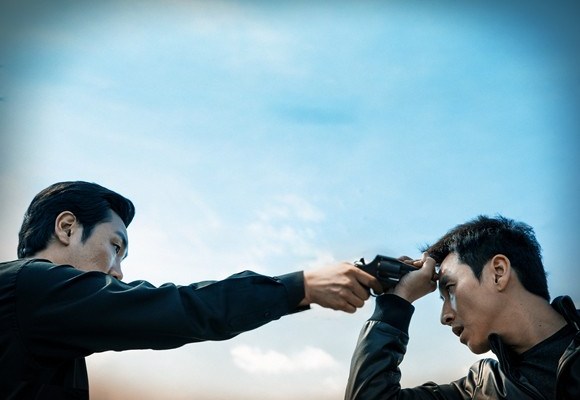
The situation reaches breaking point as the two clash
Verdict:
A Hard Day is one of the most exciting and entertaining action-thrillers of the year. Director Kim Seong-hoon has crafted a thoroughly engaging, suspenseful and darkly humourous tale of corruption that consistently feels fresh through the reinvention of genre traits. Featuring highly charismatic performances from leads Lee Seon-gyoon and Jo Jin-woong, A Hard Day is a thrilling cinematic joyride from start to finish.
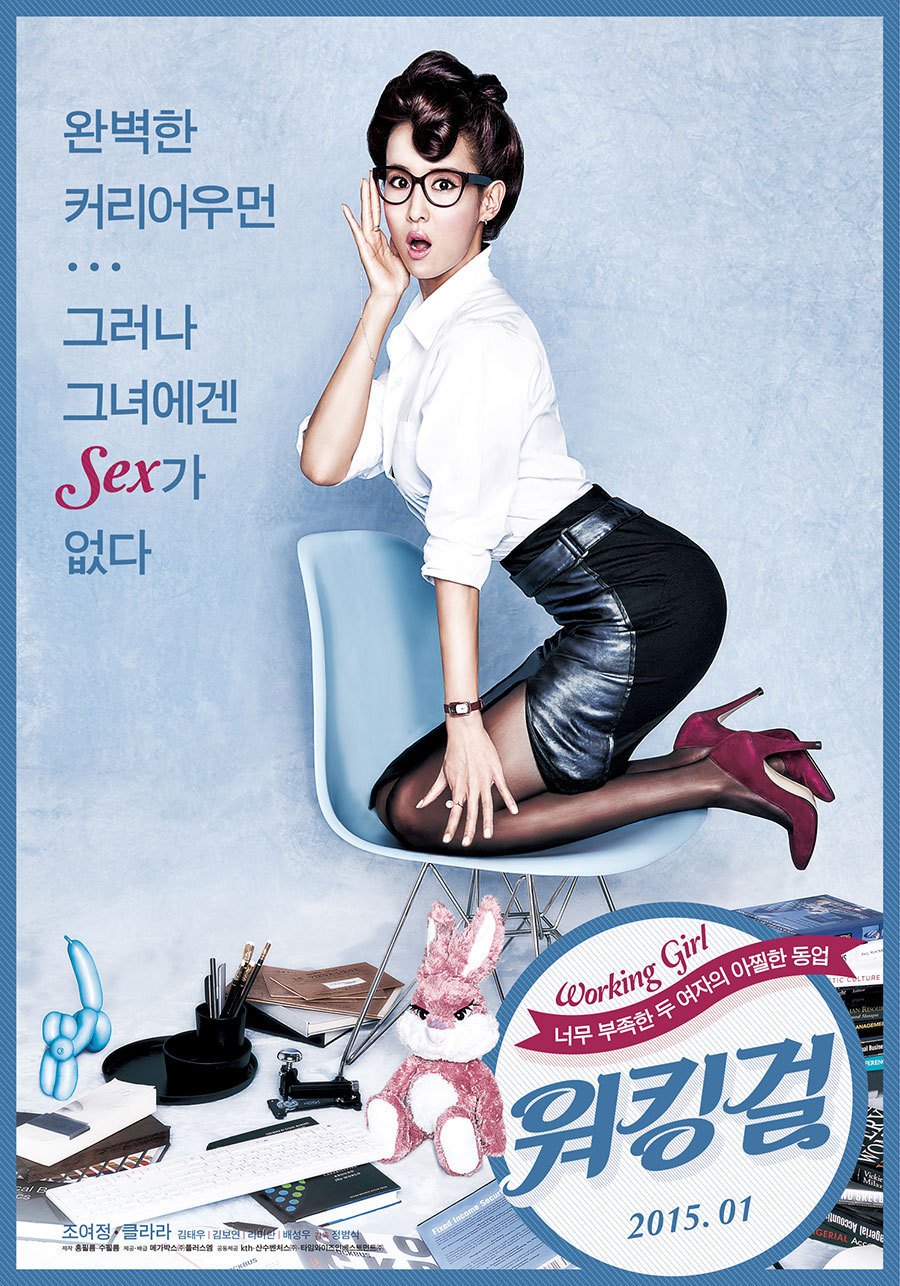
Working Girl – also known as Casa Amor: Exclusive for Ladies – has released a series of promotional posters and a trailer.
The sexy comedy stars Jo Yeo-jeong who, following a mistake in the work place, joins forces with neighbour Clara to open a store that sells adult toys and other paraphernalia exclusively for women.
Jo Yeo-jeong is no stranger to films with sexual content, baring all in erotic period dramas The Servant and The Concubine. Model Clara, meanwhile, has acted largely in cameos yet captured the attention of the Korean public following a baseball pitch wearing skin tight clothing, and has since gone on maintain a presence in the spotlight.
Check out the trailer, character trailer and posters below:
While the film looks to be a light-hearted sexy comedy, it remains to be seen whether Working Girl will be an empowering film about female sexuality, or simply exploitative. 2014 has not been a particular good year for Korean actresses due to the predominately male-centered narratives, with many female performers ultimately forced to occupy explicit sexual roles. Due to the incredibly limited roles for women, even up and coming actresses Lim Ji-yeon (Obsessed), Lee Tae-im (For the Emperor) and Esom (Scarlet Innocence), despite being considered rookies in the industry, have all performed in graphic sexual scenes, scenes which often border on rape.
Hopefully director Jeong Beom-sik – who has previously helmed mostly horror fare including Horror Stories 1 and 2, as well as Epitaph – will construct a comedy where the heroines of the story take charge of their sexuality, and will usher in a brighter and more diversified year for Korean actresses.
Working Girl will hit Korean cinemas on January 8th, 2015.
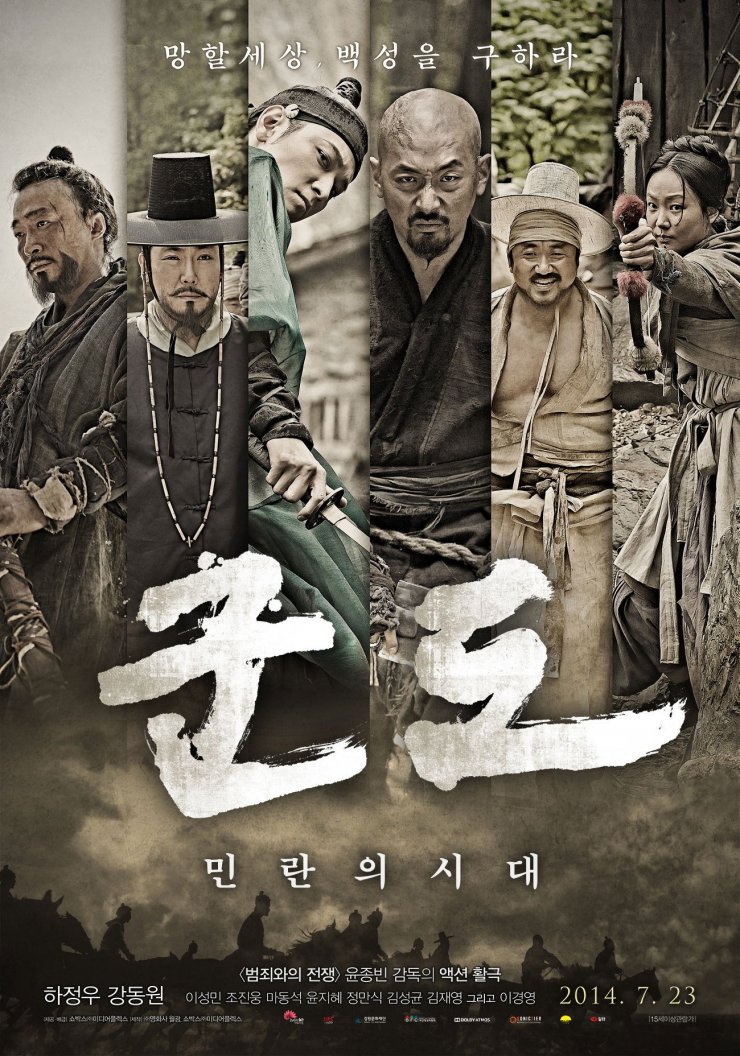
Upon release, summer blockbuster KUNDO: Age of the Rampant (군도:민란의 시대) broke the record for opening day admissions and helped to breath new life into what was a flagging year for Korean cinema…until it was soundly beaten a week later by maritime epic The Admiral: Roaring Currents.
It’s particularly ironic that both tentpole films achieved such a feat, given that they contain such strikingly oppositional philosophies and content. While The Admiral focused on generating hyper-nationalism to achieve success, KUNDO opted for an anti-establishment sensibility, as a group of Robin Hood-esque outlaws band together to fight against the tyrannical Prince.
Curiously, while the ideological leanings of each film differ, both suffer from a similar set of issues. KUNDO, while boasting impressive production values, competent directing and an array of popular stars, ultimately feels rushed and unfinished due to the poorly structured and conceived narrative.
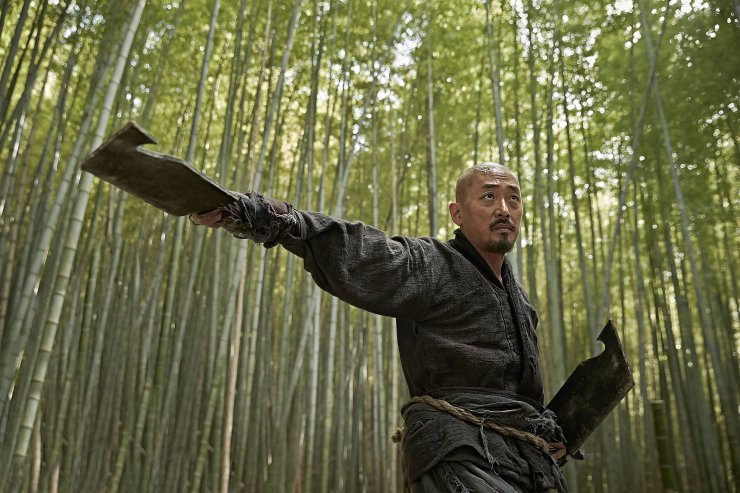
A band of outlaws band together to fight against the vicious prince Jo
Centuries ago, Korea was a land in turmoil. With starvation and death commonplace, corruption in society was rampant, particularly amongst the ruling classes. In the face of so much injustice a group of working class heroes band together to rob from the rich and give to the poor, attempting to appease the suffering of the people. Yet in a nearby city, a greater villainy is brewing. Born to a nobleman and courtesan, Prince Jo (Kang Dong-won (강동원) seeks to usurp his father and reign over the land. Only one challenge to his rule remains – his sister-in-law and her son, the rightful heir. Butcher Dochi (Ha Jeong-woo (하정우) is hired to kill the pair, yet when he cannot, he is viciously betrayed and punished. Furious, Dochi finds a place with the band of thieves and begin their revenge as they plan to halt the Prince’s machinations.
From the moment KUNDO opens, it’s clear that the production values are some of the highest in recent memory and are particularly outstanding. Director Yoon Jong-bin (윤종빈) and his team have noticeably worked hard to put striking visual detail in every shot, from the incredible costumes of the cast through to the great variety of landscapes and arenas in which the action takes place. The attention to detail generates a sense of sincerity and wonder, and is in itself an phenomenal achievement. In regards to each member of the cast, their histories and occupations are wonderfully captured in their costumes whether it be a Buddhist monk, a butcher, or a wealthy prince and significantly contributes to the power of the film, an acute attention to detail that earned designer Jo Sang-gyeong the award for Best Costume Design at the 51st Daejong Film Awards.
The prodction values in KUNDO are outstanding
Yet where KUNDO falters is in the narrative structure, which is consistently haphazard. The story jumps between time lines and characters to confusing effect, and to compensate a random and quite sporadic voice-over attempts to help allay by filling in back stories and histories yet serves to provide only a further sense of disorganization. The poor structure is impossible to miss and insinuates even to the casual cinema-goer that several more drafts of the screenplay were needed before cameras started rolling.
Screenwriter Jeon Cheol-bin is further hampered by an overly – and insanely – large cast which is a huge challenge for any scribe to make each character relevant. While Jeon has clearly worked hard to do so, the sheer amount of protagonists weighs down the film due to the attempt at giving everyone screen time, resulting in a story that lacks conviction or indeed compulsion, and one that is particularly hard to invest in.
Such issues also afflict the actors. As KUNDO focuses primarily on Prince Jo-yoon and butcher Dochi, Kang Dong-won and Ha Jeong-woo have the greater chances to shine. Ha Jeong-woo in particular seems to be having a great time as the butcher-turned-criminal with his cocky and self-assured performance certainly the most enjoyable aspect of the film. Kang Dong-won – in his first film role since completing mandatory military service – also appears to relish portraying the villainous prince. Yet for them and the rest of the enormous supporting cast, the lack of screen time results in highly capable actors providing competent performances, making KUNDO an entertaining but not especially compelling viewing experience.
The villainous prince battles against the uprising
Verdict:
KUNDO: Age of the Rampant is a record-breaking tentpole film of 2014 by director Yoon Jong-bin. Boasting hugely impressive production and costume design as well as a host of capable actors including Ha Jeong-woo and Kang Dong-won, KUNDO is ultimately let down by a haphazard narrative structure, an insane amount of supporting characters, and a story that is hard to invest in. As a result KUNDO is an enjoyable, though unchallenging, viewing experience.






























 hangukyeonghwa.com