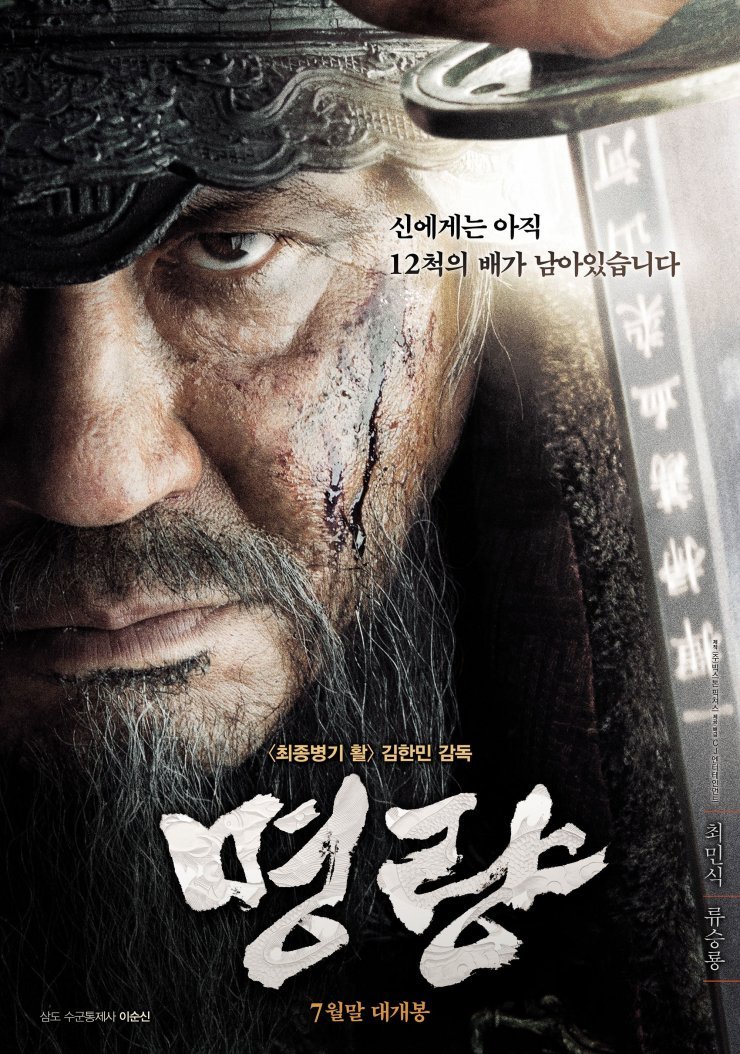
The Admiral: Roaring Currents (명량) – ★★★☆☆

The Admiral: Roaring Currents (명량)

The Admiral: Roaring Currents (명량)

It would be remiss for any discussion of The Admiral: Roaring Currents (명량) not to examine the colossal achievements the period film has made. Director Kim Han-min’s (김한민) film has broken seemingly every Korean cinematic record the country has – the fastest film to gain over 10 million viewers (12 days); the most viewers on an opening day (682,797); the biggest opening weekend ($25.94 million); and the first film to attract over 1 million viewers and 10 billion won in a single day, amongst other similar milestones (source: KoBiz). To call The Admiral: Roaring Currents a success is an understatement of the highest order.

Yet the accomplishments have not come without marked criticism. Of the 2,584 cinema screens in South Korea, The Admiral: Roaring Currents initially occupied over 1,500, during a time of school vacations and oppressive summer heat. Bolstered by a 3 billion won marketing strategy by the country’s largest distributor CJ Entertainment, which combines with the biggest cinema chain CGV to form the conglomerate CJ-CGV, debates concerning the monopolization of the industry by chaebols have again risen (sources: VarietyThe Hankyoreh).

With all the success and criticism aside, the question remains – does The Admiral: Roaring Currents live up to the hype? The answer is, perhaps unsurprisingly, a resounding no. While it’s a well-made historical yarn, the simplistic script, weak characterisation and insanely – and often comically – overt nationalism detract from the film, making it less of a war epic and more of an entertaining matinee.
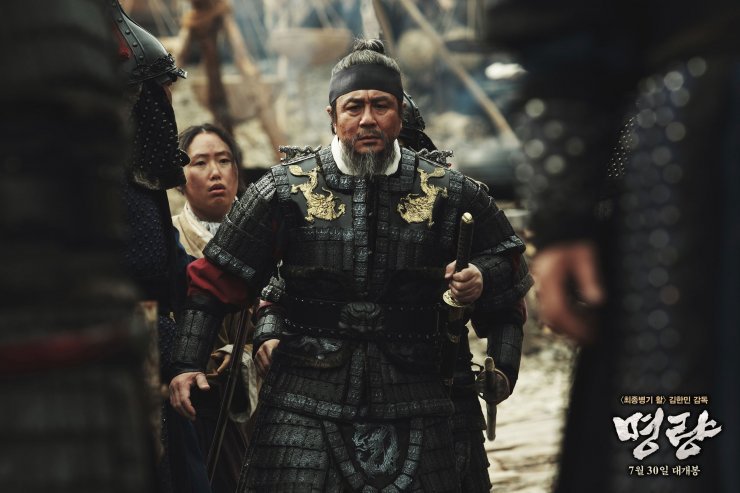
Admiral Yi Sun-shin returns from incarceration and toture to fight the Japanese invaders

Admiral Yi Sun-shin returns from incarceration and toture to fight the Japanese invaders

The year is 1597. Admiral Yi Sun-shin (Choi Min-sik (최민식), the most fearsome – and unbeaten – naval commander in the history of Joseon (Korea), who has been imprisoned and tortured by the very country he fought for, is finally acquitted and released. His task is not small. With only 12 ships at his command, Admiral Yi must fend off the impending invasion of  330 battleships belonging to the Japanese navy, led by pirate Kurujima (Ryoo Seung-ryong (류승룡) and General Wakizaka (Jo Jin-woong (조진웅). Against all odds, Admiral Yi must not only engage his enemy but also overcome the fear gripping his men, to defend Joseon from colonization in the famous Battle of Myeong-ryang.

The great strength of The Admiral: Roaring Currents lies in director Kim Han-min’s vision and incredible ability in capturing adrenaline-fueled scenes of carnage. Director Kim has already proved his kinetic prowess on the fun action-adventure War of the Arrows, yet with the larger budget and scale of The Admiral he surpasses himself to display a genuine evolution in style. Given that the Battle of Myeong-ryang itself takes roughly half of the film’s running time this is a particularly impressive feat, as director Kim uses every means at his disposal to make the conflict as thrilling, compelling, and downright entertaining as possible – and it works. Warfare is dramatically captured through a variety of techniques, from establishing shots conveying the scale of the battle and the horrifying size of the invasion, to smaller intimate scenes of bloody hand-to-hand combat and exciting quick changes in strategy. In one exhilarating long take the camera moves around the deck of Admiral Yi’s ship as he and his men clash violently with their foe. Plus, in a moment of inspired genius, The Admiral features Buddhist warrior monks cleaving Japanese forces in two, which never fails to raise a smile.

Japanese pirate-turned-general Kurujima leads the invasion...in thick make-up

Japanese pirate-turned-general Kurujima leads the invasion…in thick make-up

Unfortunately such sensibilities haven’t been extended to the script, which is generally really poor. The complexity of the period is constantly simplified and subsumed beneath incredibly overt nationalism, which is a real source of frustration. Whether it be the blinked-and-missed-it scenes of Admiral Yi’s torture at the hands of the country he defended, or the shambles of a navy that he inherits upon release, the lack of exploration of such issues really halts any audience investment in the historical figures/characters themselves. There is an attempt to add empathy by conveying Admiral Yi’s post-traumatic stress from torture as well as the relationship with his son, but again, they really are fleeting and add very little to the overall story. Instead, the film consistently strives to deify Admiral Yi, presenting him as an omnipotent saviour figure. This gives actor Choi Min-sik, who is undisputedly a phenomenal talent, very little material to work with, largely requiring him to look determined and to adopt the statuesque posture for which he is renowned.

The most obvious heavy-handed nationalism unsurprisingly appears in regards to the Japanese invaders. Visually, their costume design and make-up is frankly awful, which combines to convey them as one-dimensional drag acts sent from hell. This is acutely the case for Ryoo Seung-ryong as pirate-turned-general Kurujima, whose devil-esque costume and thick black eye-liner are laughable. The most comical moments however are reserved for the dialogue as Ryoo, on multiple occasions, is required to snarl and exclaim, “YI SUN-SHIN!” whenever the Admiral does well, inducing sniggers. The Japanese forces are undoubtedly the villains of this historical event, yet portraying them in such a simplified shallow manner undermines Admiral Yi’s achievements both in the past and on celluloid.
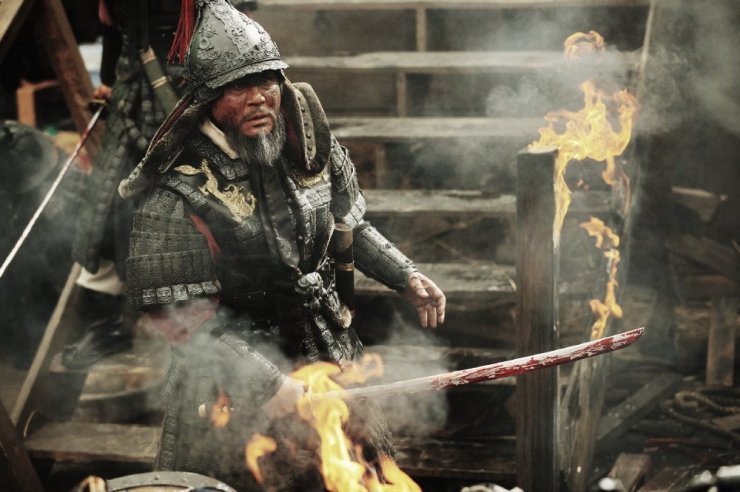
Admiral Yi prepares to engage in close combat

Admiral Yi engages in close combat

The Admiral: Roaring Currents is arguably the most financially successful Korean film of all time, shattering a multitude of box office records during its phenomenal cinematic run. Director Kim Han-min’s war-drama featuring revered Admiral Yi Sun-shin is nothing short of a filmic sensation. The film itself however, while a well-made historical actioner and displaying a genuine stylistic evolution by director Kim, suffers from a poor script, weak characterisation and over-zealous nationalism, combining to make The Admiral: Roaring Currents less of a war epic and more of an entertaining matinee.

★★★☆☆

Reviews

Haemoo (AKA Sea Fog) (해무) – ★★★★☆

Sea Fog (해무)

Sea Fog (해무)

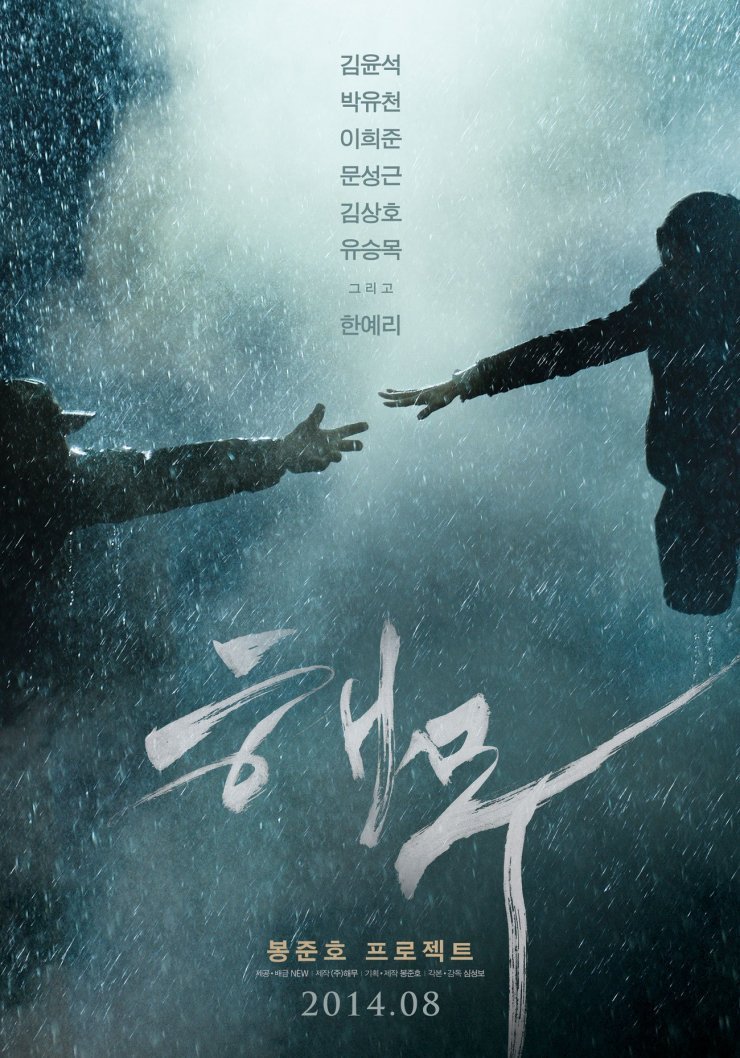
Haemoo (aka Sea Fog) (해무) is an exquisitely shot, beautifully melancholic tour de force and a welcome return to form for Korean thrillers by director Sim Seong-bo, here making his feature debut. Co-written by director Shim and film maestro Bong Joon-ho – who also takes a producer credit – Haemoo is a riveting account of a sea expedition gone wrong, and the depths to which humanity can sink when faced with calamity. While the story is a compelling drama for the most part, Haemoo wobbles in the final stages by slipping into traditional genre fare, with the tying up of loose narrative ends feeling somewhat tacked on. That said, Haemoo is still one of the most provocative and gripping films of 2014 so far.

What remains to be seen is how Korean audiences will react to the film. With the Sewol ferry tragedy still very much a sensitive issue within the social consciousness, Haemoo – with its story about macabre events at sea – may very well turn cinema-goers off which is understandable, although a great shame indeed. Foreign audiences will undoubtedly embrace the film however, particularly with the hype it’s receiving for its international premiere at the Toronto Film Festival.

The crew work hard in fraught conditions, but camaraderie prevails

The crew work hard in fraught conditions, but camaraderie prevails

After a long and laborious expedition at sea, the crew of a small fishing vessel return to port with a frustratingly meagre haul. As the men take a well deserved rest on land, Captain Cheol-joo (Kim Yoon-seok (김윤석) is provided with an opportunity to make some serious cash – by transporting illegal immigrants from China into Korea. Hastily agreeing, Captain Cheol-joo gathers his crew, including young deck-hand Dong-sik (Park Yoochun (박유천), and set sail for open waters once more where they dock with a ship to acquire their human cargo. Following a near-death experience with pretty migrant Hong-mae (Han Ye-ri (한예리), the vessel begins the voyage home yet weather and the authorities seem to conspire against them, leading to a tragic event that sees their very humanity tested.

Haemoo opens with a wonderful montage featuring the crew toiling at sea, capturing the backbreaking labour and arduous conditions of life on the waves with tremendous vision. The attention to detail is absolutely superb – from the grimy, rundown equipment and rusting, dilapidated boat to the tattered old clothes and sweaty brows of the crew – as each scene conveys the daily routine of a fishing boat with confident authenticity.

The same deft technical precision is applied within the ship. The mise-en-scene in each location is constructed with such meticulous consideration that each arena becomes akin to a different realm, whether it be the hellish steampunk engine room or the cluttered yet cosy sleeping quarters, providing distinct interiors within which the action takes place.

Cinematographer Hong Kyeong-pyo (who previously worked on Bong Joon-ho’s Snowpiercer) exploits the opportunities afforded by such locations with absolute relish, with his compositions continually stunning and one of the great highlights of Haemoo. Space would initially seem to be an issue with a film largely set in the confines of a small fishing vessel, yet his uncanny ability to capture arenas in alternative fashions never ceases to be visually striking.

The composition within Haemoo is continually striking, both within the ship and without

The composition within Haemoo is continually striking, both within the ship and without

While it may sound bleak, the camaraderie between the crew quickly makes for endearing viewing as they smile and tease while undertaking their grinding tasks, portraying the rugged ensemble as an unlikely family of sorts. That is, until tragic events occur that serve to generate incredible tension between them replacing the humorous juvenile antics with well-paced suspense that builds into abject terror. The cast are excellent in conveying the range of emotions required by the harrowing story and understandably so as Haemoo contains some of Korea’s most experienced supporting actors in the form of Moon Seong-geun (National Security), Kim Sang-ho (Moss), Yoo Seung-mok (Han Gong-ju) and Kim Yeong-woong (How To Use Guys With Secret Tips). Acting powerhouse Kim Yoon-seok (The Thieves, Chaser) headlines the talent on display and gives a respectable, competent performance although as he has been playing these kinds of roles for quite some time, Kim is never really pushed into new territory. Haemoo notably serves as a great showcase for new talent in the form of Han Ye-ri (Dear Dolphin) and Park Yoochun (Kpop’s JYJ). The duo, particularly Han, are remarkable in capturing the awkward relationship that arises between them and form the emotional center of the film, which is an impressive achievement considering the wealth of talent on display.

Where Haemoo falters however is in the final act. After a wonderful set-up followed by a compelling crisis, the story descends into standard genre territory in order to wrap up all the narrative loose ends. That is not to say that Haemoo’s finale isn’t exciting as director Sim displays great prowess in creating an effective thriller, but given the quality of what’s gone before, it’s something of a disappointment. This is particularly the case with the epilogue scenes which feel tacked on and offer very little to the story. Yet even with such criticism, Haemoo is still head and shoulders above other Korean thrillers released this year, and is very much recommended viewing.

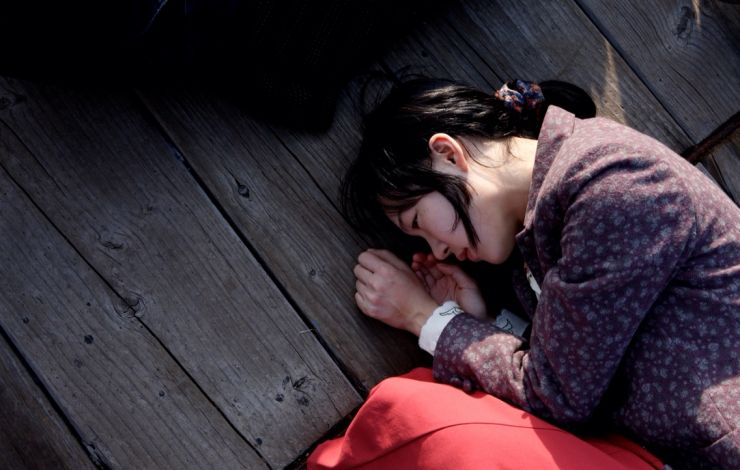
Han Ye-ri is the break out star as migrant Hong-mae, and forms the emotional heart of the film

Han Ye-ri is the break out star as migrant Hong-mae, forming the emotional heart of the film

Haemoo is a beautifully shot, extremely compelling film by first time director Sim Seong-bo, and is a welcome return to form for Korean thrillers. Based on a tragic true story, the film is a powerfully provocative exploration of morality pushed to the extreme, with the tense situations performed superbly by the experienced all star cast. Coupled with the gifted vision of cinematographer Hong Kyeong-pyo the story is consistently visually striking, and while it falters during the final act, Haemoo is undoubtedly one of the most gripping films of the year.

★★★★☆

Reviews

Mourning Grave (소녀괴담) – ★★★☆☆

Mourning Grave (소녀괴담)

Mourning Grave (소녀괴담)

Ever since he was young, high school student In-su (Kang Ha-neul (강하늘) has had the ability to see ghosts. Following a traumatic incident In-su moved to Seoul, only to find that his ‘gifts’ developed further, and apparitions appeared ever more frequently. Finally deciding to give up city life In-su returns to his countryside hometown, reuniting with his agoraphobic shaman uncle Seon-il (Kim Jeong-tae (김정태). Yet almost immediately upon his arrival a mysterious girl ghost (Kim So-eun (김소은) begins following him, and a relationship begins to blossom. Meanwhile, at In-su’s new high school, students begin disappearing one by one as a masked, vengeful spirit patrols the hallways.

A masked, vengeful ghost stalks the hallways of In-su's new school

A masked, vengeful ghost stalks the hallways of In-su’s new school

Mourning Grave (소녀괴담) is marketed primarily as a horror film, yet in truth director Oh In-cheon’s (오인천) feature debut actually amalgamates an array of genres to become a teenage romantic-comedy-drama with a macabre twist. The mix of generic features works surprisingly well as Mourning Grave is consistently an entertaining and quite enjoyable addition to the K-horror canon, one which contains an infectious appeal due to the light-hearted tone throughout.

Ironically, the jovial nature of the film, in conjunction with a narrative structure told through a series of vignettes rather than an overarching whole, is competent yet also halts the story from being particularly effective. This is perhaps understandable given director Oh’s history as an acclaimed director of short films, however the approach results in the originality of the screenplay, as well as the serious social issues within, lacking in resonance. Bullying is of central concern within Mourning Grave and the film is noteworthy for emphasising the role of the teachers, students, and even society in the creation of, and ignorance towards, the abuses endured by students. Yet as it features within an episodic sequence rather than as an underlying theme throughout, the portrayal is provoking albeit fleeting, which is a genuine shame.

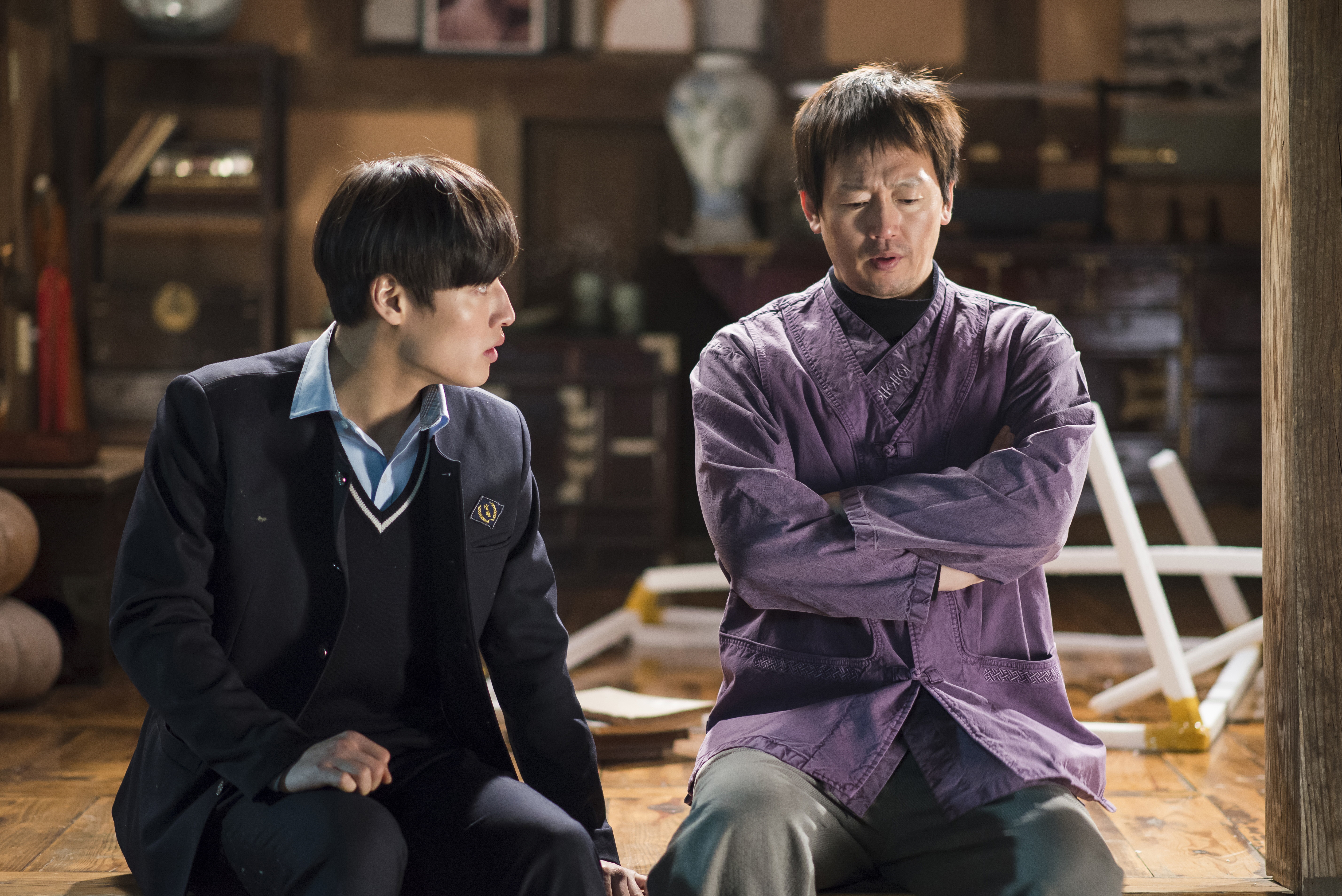
Kim Jeong-tae steals the show with his turn as agoraphobic shaman Seon-il

Kim Jeong-tae steals the show with his turn as agoraphobic shaman Seon-il

As central couple In-su and ‘girl ghost’, both Kang Ha-neul and Kim So-eun are delightful. The development of their friendship and burgeoning romance is conveyed with sincerity and is lovely to watch unfold. Unfortunately due to the vignette style of the narrative the screen-time Kang and Kim share is infrequent, yet when they appear together the film embodies the qualities of innocent first love, propelling Mourning Grave into a compellingly sweet love story. However both they, as well as the other actors who fill the high school roles, are clearly too old to be playing students and serve as a distraction from the story. Luckily veteran actor Kim Jeong-tae helps to allay such issues by stealing the show as uncle Seon-il. As the agoraphobic shaman Kim is incredibly funny, employing all sorts of trickery to stop ghosts from bothering him, with his comedic timing never failing to hit the mark.

Due to the gentle nature that permeates the film, Mourning Grave is quite a predictable affair. Hints that are laced throughout the story are particularly easy to ascertain, although it is still enjoyable to see the results achieve fruition, while even the various comedic, romantic, and dramatic cliches employed are entertaining enough to raise a smile. The ever-present horror epilogue sequence, which attempts to bond the characters through a shared history and destiny, also features within Mourning Grave and while such scenes are frustratingly commonplace, director Oh has crafted an endearing finale that is poignant and heartfelt.

Central couple In-su and his ghostly companion form an endearing romance

Central couple In-su and his ghostly companion form an endearing romance

Verdict:

Mourning Grave is billed as a horror film, yet in truth director Oh In-cheon’s directorial debut actually encompasses an array of generic conventions, underpinned with a ghostly mystery. Due to the light-hearted tone the film is consistently entertaining, and the approach to serious social issues such as bullying is refreshing. Unfortunately such themes aren’t explored fully thanks to the vignette storytelling style, yet the endearing central couple, and a show stealing performance by Kim Jeong-tae as an agoraphobic shaman, make Mourning Grave an enjoyable addition to the K-horror canon.

★★★☆☆

Korean Festivals 2014 Puchon International Fantastic Film Festival (제 18회 부천국제판타스틱영화제) Reviews
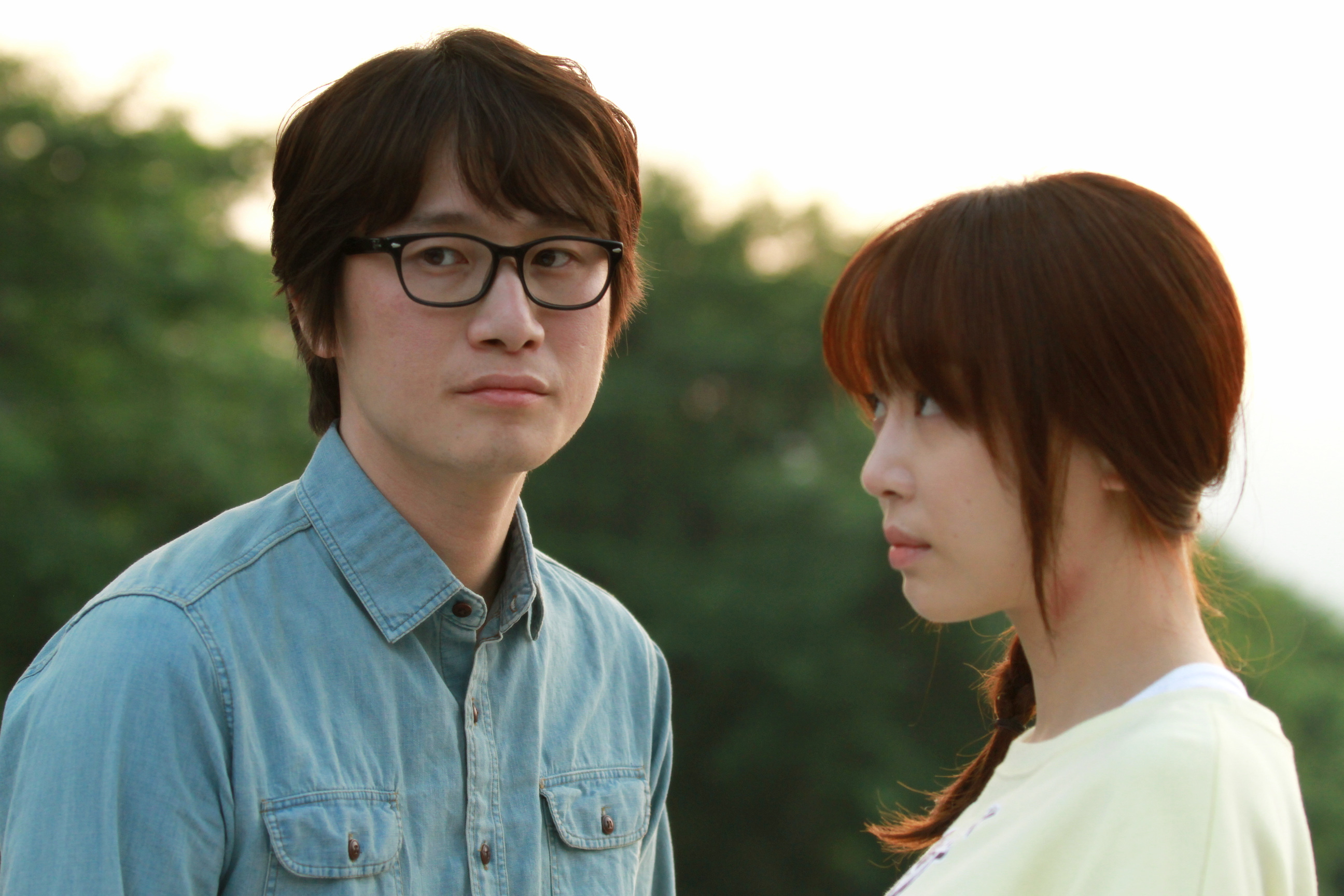
Eun-jin and Hyeon-seok plan their future together, until a text message threatens to destroy their relationship

My Ordinary Love Story (내 연애의 기억) – ★★★☆☆

My Ordinary Love Story (내 연애의 기억)

My Ordinary Love Story (내 연애의 기억)

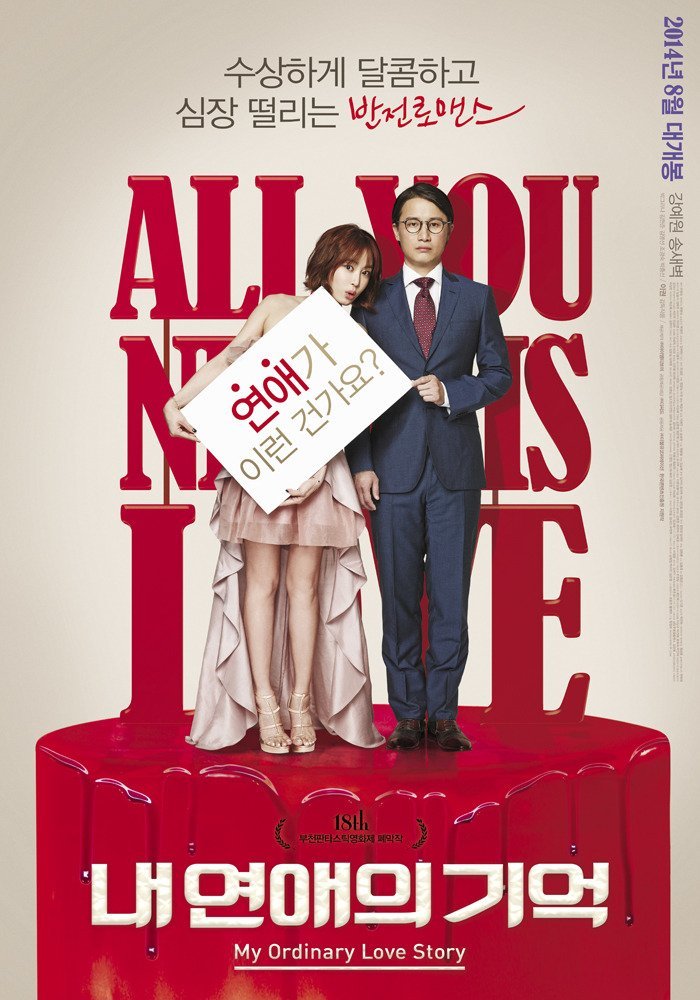
Following a series of bad relationships, pretty 29 year old Eun-jin (Kang Ye-won (강예원) again finds herself on the receiving end of heartache. Dumped by her boyfriend, Eun-jin gets horribly drunk and, unable to pay for a taxi home, shares a ride home with geeky Hyeon-seok (Song Sae-byeok (송새벽). Despite being very different people Eun-jin and Hyeon-seok feel the spark of romance and begin dating, with the relationship going so well that they eventually begin to talk of marriage. However as they pick to choose furniture for their future together, curiosity gets the better of Eun-jin and she checks her lover’s phone…only to find a message from another woman. Filled with anger and jealousy Eun-jin starts investigating Hyeon-seok to prove he’s the same as every other bad guy. Yet as she digs deeper, nothing could prepare Eun-jin for the dark secret of Hyeon-seok’s identity.

The closing film for the 2014 Bucheon Fantastic Film Festival, My Ordinary Love Story (내 연애의 기억) is an enjoyable and quite refreshing romantic-comedy from director Lee Kwon (이권), who is more recently known for the 2012 TV drama Shut Up: Flower Boy Band (닥치고 꽃미남밴드). Initially My Ordinary Love Story is a formulaic rom-com yet in true Korean style the story comes to embrace a multitude of genres, with the blend elevating the film out of mediocrity to be a surprisingly effective viewing experience.

Eun-jin and Hyeon-seok plan their future together, until a text message threatens to destroy their relationship

Eun-jin and Hyeon-seok plan their future together, until a text message threatens to destroy their relationship

My Ordinary Love Story is very much Kang Ye-won’s film, with her performance the central reason why the story is so endearing. Kang captures Eun-jin’s selfish, jealous and nagging personality well yet never makes the character unlikeable, largely due to Eun-jin’s terrible dating history and potential as a victim of cheating, but also thanks to Kang’s unique overacting style which suits the role – and filmic style – agreeably. As the film is, for the most part, a generic rom-com the sexual politics are particularly unenlightened – the desperation for a woman to be married before 30, for example – however as Eun-jin takes agency and launches an investigation to prove Hyeon-seok’s guilt, a sense of empowerment also pervades and promotes Eun-jin as a character to root for.

Director Lee Kwon attempts to infuse various strands of quirkiness within the film in order to generate a sense of identity, seemingly inspired by the remarkably fun How to Use Guys With Secret Tips. He somewhat succeeds, yet the lack of consistency ultimately undermines his attempts as onscreen text, animation and voice-overs appear and disappear randomly, creating a sense of stylistic incohesion. Luckily such issues don’t impact the entertainment too deeply as the flighty stylisation, coupled with the enjoyably silly supporting characters and jokes, still serve to entertain.

The unique nature of My Ordinary Love Story comes from merging typically disparate genres to become one of the more memorable recent rom-coms. In steering the generic romance into macabre territory director Lee takes a big gamble yet it’s one that works, adding new layers of enjoyment to an otherwise predictable narrative. The change in direction unfortunately comes a tad too late in the story as the compelling nature of such scenes, and Hyeon-seok himself, lack sufficient exploration to be effective, yet as the story is largely a light-hearted comedy it’s perhaps understandable and is enjoyable regardless.

Hyeon-seok and Eun-jin attempt to overcome their hidden truths

Hyeon-seok and Eun-jin attempt to overcome their hidden truths

My Ordinary Love Story is an enjoyable genre-bending outing by director Lee Kwon. The film elevates itself out of mediocrity by beginning as a generic rom-com before delving into darker territory, carried ably by the charismatic performance of Kang Ye-won. While there are pacing and technical issues within, My Ordinary Love Story is an entertaining feature and is one of the more refreshing examples of the genre.

★★★☆☆

Korean Festivals 2014 Puchon International Fantastic Film Festival (제 18회 부천국제판타스틱영화제) Reviews
The mystery surrounding Jeong-seok's wife is explored via flashback

The Avian Kind (조류 인간) – ★★★★☆

The Avian Kind (조류 인간)

The Avian Kind (조류 인간)

For fifteen years, celebrated author Kim Jeong-seok (Kim Jeong-seok (김정석) has been searching for his missing wife (Jung Han-bi (정한비) following her sudden disappearance. Refusing to admit defeat, the mean-spirited and poor father-figure continues to travel throughout the Korean countryside looking for his long lost spouse, until novel-fan and executive Kim Soy (Kim Soy (소이) offers help to track her down. As the duo embark on the case, a cabal of wealthy individuals demand Jeong-seok’s help, for they too have missing relatives who vanished in a similar manner. As Jeong-seok and Soy follow the clues across the wilderness, the mystery begins to unravel in a way none could have imagined.

The Avian Kind (조류 인간)

Author Jeong-seok teams with fan Soy to track down his wife

The Avian Kind (조류 인간) is one of those films where audiences will quickly find themselves polarized. For some, the breathtaking cinematography and existential narrative will prove to be a captivating experience; others, meanwhile, will likely find the art-house sensibilities to be too opaque and the story impenetrable. As such, director Shin Youn-shik’s (신연식) fifth film is likely to have limited exposure which is a great shame, as The Avian Kind is a rare breed in the Korean industry.

From the outset, The Avian Kind constructs an enchanting world in which Jeong-seok’s quest occurs. Cinematographer Choi Yong-jin displays incredible prowess throughout, capturing the natural beauty of the Korean countryside in a manner that greatly strengthens the mysterious, supernatural-esque, nature of the story. In conjunction with Mowg’s melodically unnerving musical score, the film exudes a potently eerie sensibility that is both captivating and haunting.

The mystery surrounding Jeong-seok's wife is explored via flashback

The mystery surrounding Jeong-seok’s wife is explored via flashback

The enigmatic nature of the film is further heightened by director Shin’s use of editing between time periods. While Jeong-seok’s investigation transpires in the present, the tale leading up to his wife’s disappearance fifteen years prior is explored via flashback. In employing the narrative structure in this way the story becomes as compelling as it is cryptic, posing possible answers while generating more questions. Yet rather than being stagnant there is always a sense of momentum to each journey that will ultimately provide answers the mysterious disappearances.

However as The Avian Kind embodies mostly art-house aesthetics, the abstract nature of the story may well be a source of frustration for many. The existential philosophies underpinning the narrative are alluded to yet offer no concrete answers, and audiences expecting otherwise will be in for a disappointment. That is not to say the issues with the film lay solely with the audience; characterisation is a problematic area within the story, as are the generic devices used to propel the story into a finale. Typically in an adventure or road film the protagonists develop and grow on the journey, yet none of the central cast do so. The later attempts to inject tension into the film through incorporating chase sequences akin to the thriller genre is also a misstep, dispelling the impressive atmosphere in what seems to be a bid to satisfy mainstream audiences.

Jeong-seok is summoned by a cabal of wealthy socialites, yet their motivations are dubious

Jeong-seok is summoned by a cabal of wealthy socialites, yet their motivations are dubious

Verdict:

The Avian Kind is a beautifully realised existentialist road film, and due to the art-house aesthetics within the film is likely to polarize audiences. Director Shin Youn-shik has crafted a compelling tale of a man searching for his long lost wife, featuring stunning cinematography of Korea’s natural countryside alongside a melodically unnerving score that serve to generate an enchanting experience. While not for everyone, The Avian Kind is a rare breed of film in the Korean cinema industry and an absorbing exploration on the nature of contemporary identity.

★★★★☆

Festival News Jeonju International Film Festival (제15회 전주국제영화제) Korean Festivals 2014 Reviews
Ga-heun and Jin-pyeong begin their steamy affair in secret

Obsessed (인간중독) – ★★★☆☆

Obsessed (인간중독)

Obsessed (인간중독)

Erotic drama Obsessed (인간중독) is the latest tale of sexual seduction by director Kim Dae-woo (김대우). Upon release in Korean cinemas, audience expectation for a lustful period drama – chiefly due to director Kim’s resume as director on The Servant and Forbidden Quest, as well as screenwriting duties on Untold Scandal and An Affair, and furthered by a marketing strategy emphasising sexual content – propelled Obsessed into the number one spot at the box office in its opening week.

Yet, with the exception of the notably lavish production design as well as moments of gorgeous cinematography, Obsessed is one of the director’s weaker films. The story is bland and uninspired while most importantly the romance itself is particularly contrived. Audiences hopeful for racy erotic scenes will also find themselves disappointed, as aside from two attractive leads the encounters are clumsy and sparse. Obsessed is an entertaining erotic drama, although one with little depth.

Jin-pyeong helps Ga-heun wear an earring after he saves her from a life-threatening incident

Jin-pyeong helps Ga-heun wear an earring after he saves her from a life-threatening incident

The year is 1969. Commander Kim Jin-pyeong (Song Seung-heon (송승헌) is a respected Vietnam War veteran at the military base he now resides, making great effort to hide his dependence on anxiety medication due to past trauma. Life is generally quite agreeable, except for Jin-pyeong and his wife’s (Jo Yeo-jeong (조여정) struggles to become pregnant. When a subordinate (On Joo-wan (온주완) arrives on base with his Chinese wife Jong Ga-heun (Lim Ji-yeon (임지연), Jin-pyeong feels an immediate, uncontrollable attraction…one is equally reciprocated. As he and Ga-heun begin their passionate affair, their desires threaten to destroy everything around them as well as their very sanity.

From the outset, it becomes very clear that director Kim is attempting to emulate Ang Lee’s masterful Lust, Caution mixed with classic American melodrama. He moderately succeeds yet mostly in terms of production design, as the sets, mise-en-scene and costumes are truly impressive and are wonderful in creating the world in which the affair takes place. The care and detail applied to each scene, whether in the homestead, hospital, or local dance bar, is consistently remarkable and does wonders in drawing the audience into the narrative, and the production team deserve to be congratulated. That said, Obsessed feels more skin to an American production as aside from the actors, there is very little evidence of Korean culture on screen. Interestingly efforts are made to convey ’50s era American housewives through hierarchy and gossiping, and to authenticate Ga-heun’s Chinese nationality through the crude inclusion of bird cages, yet surprisingly, other than the language, there’s little to suggest the film is Korean.

Ga-heun and Jin-pyeong begin their steamy affair in secret

Ga-heun and Jin-pyeong begin their steamy affair in secret

Despite the strength of the production values, it’s not enough to distract from the poor script and mediocre acting. The power of a film of this nature lies primarily on the build of passion and the chemistry between the lead actors, and in this respect Obsessed is lacking. The event at the hospital that initially draws Ga-heun and Jin-pyeong together is silly at best, conveying the commander as inept rather than a strong military leader, with later confrontations equally as contrived. The quiet stoicism both actors exude, particularly Lim Ji-yeon, makes such cliches stand out all the more meaning that when the couple declare their love it feels more like a leap in logic rather than a natural and sincere build of emotion.

Perhaps unsurprisingly, such impassive traits lead to erotic moments that are lacking in passion. The scenes are perfectly serviceable, yet are crucially lacking the raw intensity intended. Luckily director Kim avoids the rape-esque scenes of The Servant to present more equal sexual encounters in Obsessed, but bizarrely in eschewing such latent misogyny the choreography sufferers. Sex between Jin-pyeong and Ga-heun is indeed erotic but clumsily so, akin to inexperienced teenagers rather than two lovers addicted to each other.

Despite such criticisms, Obsessed is entertaining for the most part. Fans of the genre will undoubtedly enjoy the story and derive pleasure from witnessing such cliches play out, while others will find the drama to be a watchable experience. Obsessed is generally a competent film though one of little depth, leading to a final act where the narrative jumps head-first into the pitfall of attempting to melodramatically wrap up all the narrative threads, yet as the film is generally dispassionate such scenes have little emotional impact.

Jin-pyeong suffers a crisis of morality, and must come to terms with his actions

Jin-pyeong suffers a crisis of morality, and must come to terms with his actions

Obsessed (인간중독) is a competent erotic drama from director Kim Dae-woo, the filmmaker responsible for several noteworthy racy period films. While the production design in Obsessed is lovingly crafted and wonderfully absorbing, the lacklustre story and stoic acting from the leads make the film a mediocre affair, and as such the intensity and passion is lacking throughout. In conjunction with some clumsily choreographed sexual scenes, Obsessed is a mildly entertaining romp that never fulfills the promise insinuated in the title.

★★★☆☆
Reviews
Director Hwang's son befriends a piglet while learning how to farm

An Omnivorous Family’s Dilemma (잡식가족의 딜레마) – ★★★☆☆

The Omnivorous Family (잡식가족의 딜레마)

An Omnivorous Family’s Dilemma (잡식가족의 딜레마)

After years of making documentaries, filmmaker and animal lover Hwang Yun (황윤) hung up her camera in order to get married and start a family. Yet not long after the birth of her son, the foot-and-mouth disease epidemic spread across Korea resulting in the culling of thousands of pigs alongside other farmyard animals. Having previously had little concern for pigs, director Hwang suddenly found herself preoccupied with their plight. The questions swirling in her mind prompted the director to contact farms in order to film the arising situations and, after finally obtaining permission, she gathers her camera and embarks on documenting the life of pigs.

The Omnivorous Family (잡식가족의 딜레마)

The manner in which pigs are raised is the central issue for the documentary

An Omnivorous Family’s Dilemma (잡식가족의 딜레마) is a charming and heartfelt family documentary, as well as a highly enjoyable and educational experience. The approach that director Hwang takes in exploring the life of pigs is key to what the film so endearing. She is not simply an animal activist but a concerned mother and Korean citizen, and in employing this perspective an ‘everyperson’ quality is informed that makes the documentary highly accessible and compelling. As such the issues director Hwang encounters appear wholly natural, as she has no definitive agenda as such but simply lets her curiosity guide her. Ironically however this also holds the documentary back from being more powerful and thought-provoking, as the inclusion of greater investigative journalism would have undoubtedly bolstered her arguments regarding pig farming.

After several rejections, director Hwang finds a free range farmer willing to let her film

After several rejections, director Hwang finds a free range farmer willing to let her film

Director Hwang is initially motivated out of concern for the foot-and-mouth epidemic that swept Korea, which ultimately informs her debate between factory and free range farming. Scenes from the factory farms she visits are as abominable as they are powerful, depicting pigs confined to grotesque, tiny cages in which they eat, sleep, are artificially inseminated, rear young, and ultimately die. The imagery frequently calls forth comparisons with concentration camps, yet the most horrific scenes occur during the mass culls in which hundreds of live, squealing pigs are crushed and buried alive. Director Hwang’s vision pertinently captures a strong indictment of not of the barbarism of factory farming, but also the demand for meat in society at any cost.

Yet the factory farm scenes are generally kept to a minimum in order to explore the living conditions of free range pigs. It is during such scenes that director Hwang employs a strong focus on family, by bringing her young son to educate him whilst simultaneously forming relationships with a farrow of piglets. The benefits of free range farming, as well as her son’s development, are wonderfully captured and are ultimately why An Omnivorous Family’s Dilemma is so entertaining. Watching director Hwang and her son learn the basics of pig farming and then later struggling with pork in their diet is humourous take on the moral dilemma, and watching the conflicts that arise within the family are amusing and thought-provoking throughout.

Director Hwang's son befriends a piglet while learning how to farm

Director Hwang’s son befriends a piglet while learning how to farm

Verdict:

An Omnivorous Family’s Dilemma is a charismatic and enjoyable documentary about pig farming in Korea. This is chiefly due to the perspective director Hwang Yun employs, who approaches the issues not only as an animal rights activist but also as a wife and mother. The contrasts between factory and free range farming are powerful and thought-provoking, yet it is the development of director Hwang’s son and their dietary dilemmas regarding pork that form the core entertainment. While An Omnivorous Family’s Dilemma would undoubtedly benefit from greater investigative journalism, the documentary is a gentle and heartfelt viewing experience.

★★★☆☆

Festival News Jeonju International Film Festival (제15회 전주국제영화제) Korean Festivals 2014 Reviews The Green Film Festival in Seoul (제 11회 서울환경영화제)
Mizo's intentions remain quite an enigma throughout the film

Mizo (미조) – ★★☆☆☆

Mizo (미조)

Mizo (미조)

In a seedy, crime-ridden city a young woman named Mizo (Lee Hyo (이효) forms a strange sexual relationship with brutal low-life thug Woo-sang (Yoon Dong-hwan (윤동환). As their love/hate affair develops, Mizo discovers that the extremely violent Woo-sang was a former detective, turning his back on the law following a shocking scandal with a bar-girl (Sin So-mi (신소미). Much to the chagrin of Woo-sang, his old girlfriend is now living with a small-time local gangster (Lee Jeong-yong (이정용), and the men clash over both her and Mizo. Yet the enigmatic Mizo is harboring a secret and an overpowering desire for revenge that could bring about the ruination of them all.

Mizo and Woo-sang have a violently sexual relatonship

Mizo and Woo-sang have a violently sexual relatonship

Mizo is a film of excess in almost every respect, but then perhaps that’s to be expected from director Nam Gi-woong (남기웅), who previously helmed Teenage Hooker Became a Killing Machine in 2009. It is probably also unsurprising that the film is laced with misogyny. Indeed, shortly after the film begins Mizo is located within a motel instigating, as well as simultaneously enjoying and being a victim of, violent sexual intercourse with a man twice her age. This would be fine, of course, if the film were exploring the fraught life of a young prostitute yet no efforts are made to do so as director Nam appears more interested in shocking spectacle rather than introspection.

To his credit, director Nam does employ plenty of such displays through using taboo subjects, and fans of such stylisation will undoubtedly find much to be entertain by. The world that he has constructed is a dark and vice-filled underworld of sex and violence, and the altercations that arise between characters are often quite visceral and barbaric. Typically the motivations behind the violent confrontation involve Mizo and/or Woo-sang’s ex-girlfriend, with the men on either side fighting for ownership over one or both of them. Enlightened it is not.

Mizo faces her nemesis and rival for Woo-sang's affections

Mizo faces her nemesis and rival for Woo-sang’s affections

Either way, it is extremely difficult to care who wins any conflict due to the woeful characterisation and absurdity of events. Two-dimension stereotypes are employed throughout the entirety of the film to the point of genuine annoyance. Woo-sang is a lumbering Neanderthal with zero redeeming qualities; Woo-sang’s rival, the small-time crook who ‘stole’ his ex, merely shouts and swears at every opportunity; and the bar madam is simply a victim waiting to be saved. As the titular protagonist Mizo escapes such treatment somewhat, but usually because she flits from one stereotype to the next creating an aura of unpredictability.

As Mizo, newbie actress Lee Hyo performs well. While the role itself is limited, Lee Hyo conveys a strong sense of melancholy in conjunction with quirks pertaining to being psychologically unbalanced. Her performance is ultimately what holds the entire film together as while the narrative itself is quite predictable, she is anything but. For much of the running time Lee Hyo is required to be aloof and unbalanced, yet when she has the opportunity to delve deeper into emotional material she does so in a melodramatic, but competent fashion.

Mizo's intentions remain quite an enigma throughout the film

Mizo’s intentions remain quite an enigma throughout the film

Verdict:

Mizo is a drama of sexual and violent excess, but then perhaps that’s to be expected from director Nam Gi-woong, who was previously responsible for Teenage Hooker Was A Killing Machine. For fans of such spectacle, Mizo will quite likely be entertained and to his credit director Nam constructs a believable environment within which it occurs. However the film is blighted by a poor script and terrible characterisation, while the narrative is ultimately quite absurd. Newbie actress Lee Hyo holds the drama together well with a lofty, unpredictable aura yet introspective Mizo certainly is not.

★★☆☆☆

Festival News Jeonju International Film Festival (제15회 전주국제영화제) Korean Festivals 2014 Reviews
Director's CUT (디렉터스 컷)

Director’s CUT (디렉터스 컷) – ★★☆☆☆

Director's CUT (디렉터스 컷)

Director’s CUT (디렉터스 컷)

Independent filmmaker Hae-gang (Park Jung-pyo (박중표) has worked hard for years, helming several notable productions that have earned him a respectable reputation. However his latest endeavour is proving more difficult than most, largely due to his uncompromising, aggressive, and occasionally downright rude attitude on set. Worse still, his inability to distance himself from the stresses of production generate conflict with his long-suffering girlfriend, creating distance between them. With both time and money running out, and crew and companions turning away from him, Hae-gang is forced to make tough choices that could ultimately challenge his director’s cut.

Director's CUT (디렉터스 컷)

The director struggles to get the perfect shot

Director’s CUT (디렉터스 컷) is a welcome addition in portraying the difficulties afflicting filmmakers. The great strength of the drama lies in the portrayal of such struggles with a great sense of realism, from minor conflicts on set of changing camera shots to larger challenges of creative control with external agencies. Writer/director Park Joon-bum (박준범) has done a remarkable job of exploring a multitude of facets related to the independent industry, even extending beyond production based problems to highlight the corruption within film festivals, a potent and brave move indeed. Also of note is the manner in which Hae-gang is conveyed as his own worst enemy. The frustrated filmmaker is so utterly devoted to his art that he unwittingly destroys relationships with those closest to him, and director Park constructs his protagonist well as passionate yet flawed perfectionist desperate for creative control.

Hae-gang's intense passion for filmmaking creates conflict in his professional and private life

Hae-gang’s intense passion for filmmaking creates conflict in his professional and private life

However that said, Hae-gang is also a quite unlikable protagonist throughout the entirety of Director’s CUT. Fighting to retain his creative vision is one thing, yet the filmmaker constantly creates unnecessary conflict amongst his peers for little reason, stubbornly arguing over ridiculous matters in the name of pride and ambition. Worse still, Hae-gang’s treatment of his sweet and caring girlfriend is frankly awful, and it’s a little puzzling why she endures such hurtful conduct. This would be fine if Hae-gang evolved as a character during the course of the narrative, yet such enlightenment never dawns on him even when it is quite obvious that he needs to change. As such it’s particularly difficult to feel empathy with his plight for Hae-gang is, for the majority of the running time, a contemptible jerk.

It’s acutely ironic that while Hae-gang is responsible for impairing his film, Director’s CUT also suffers due to similar reasons. Hae-gang’s instance for control of the final cut seems to mirror that of director Park; within the film Hae-gang is determined to employ somewhat superfluous scenes much to the annoyance of his editor, while director Park does the same in Director’s CUT much to the frustration of the audience. A scene in which the camera operator forgets the correct equipment could have easily been conveyed through a few failed attempts, for example, yet by the sixth error tedium sets in as well as the desire for a more scrupulous editor.

Hae-gang comes into conflict with a producer over certain scenes and the final cut

Hae-gang comes into conflict with a producer over certain scenes and the final cut

Verdict:

Director’s CUT is an interesting drama exploring the difficulties of working as an independent filmmaker. The sense of realism and the far-reaching industry issues explored by writer/director Park Joon-bum form the core strength of the film, yet it is greatly impaired by a central protagonist who is wholly inconsiderate, rude and very difficult to empathise with. Lack of character arc notwithstanding, Director’s CUT is also ironically hampered by the need for more stringent editing, resulting in a film that is interesting rather than compelling.

★★☆☆☆

Festival News Jeonju International Film Festival (제15회 전주국제영화제) Korean Festivals 2014 Reviews
I Saw You (너를 봤어)

MAD SAD BAD (신촌좀비만화) – ★★★☆☆

MAD SAD BAD (신촌좀비만화)

MAD SAD BAD (신촌좀비만화)

Omnibus film MAD SAD BAD (신촌좀비만화) has the notable distinction of featuring not only three of Korea’s top name directors in the form of Ryoo Seung-wan (류승완), Han Ji-seung (한지승) and Kim Tae-yong (김태용), but also for serving as the opening film for the 15th Jeonju International Film Festival. The collective work is quite a landmark for an opening film due to the use of 3D, which is, in part, used to emphasis the new vision and production role of KAFA+ (The Korean Academy of Film Arts).

The three segments are each designed to explore human relationships through a connection to a form of popular culture. Director Ryoo Seung-wan helms the first short titled Ghost (유령), about a boy who is addicted to his cell phone; director Han Ji-seung is responsible for I Saw You (너를 봤어), which is concerned with a futuristic zombie apocalypse; and finally director Kim Tae-yong explores the life of a young girl with an autistic brother in Picnic (피크닉).

In the interest of fairness, each short within the omnibus has been reviewed individually, in the order in which they appear onscreen.

Ghost (유령)

Ghost (유령)

Ghost (유령) –  ★★★☆☆

Ghost depicts teenager Seung-ho (Lee David (이다윗) who is more concerned with the digital world of chat rooms, sms, and computer games rather than reality. When Woo-bi (Son Soo-hyeon (손수현), a girl from his chatroom, claims she is in danger from an abusive boyfriend, Seung-ho teams with Bi-jen (Park Jeong-min (박정민) to help her.

Based on a true story, Ghost is quite a departure from director Ryoo Seung-wan’s typically action-orientated projects, and he ably handles the focus on low-key personal drama. Scenes featuring Seung-ho’s bedroom are expertly filmed and wonderfully convey his fractured relationship with reality, while the social pressures from his school and father are competently expressed. However the tension that a film such as Ghost requires is curiously absent, particularly when Seung-ho and Bi-jen attempt to help Woo-bi. The use of 3D is also quite unnecessary  as the drama rarely features it effectively.

Luckily the ever-reliable Lee David holds everything together well, with his likeable ‘everyman’ charm again forcing audiences to empathise with his plight. That said, the actor is never pushed into new territory and as such his performance doesn’t contain the intensity of his prior work, yet Lee David does what he can with the material on offer. It’s Park Jeong-min, however, who gives a wonderful performance as the socially inept Bi-jen. Complete with thick-rimmed glasses, protruding jaw and nervous ticks, Park’s characterisation is a radical departure from his previous roles conveying angst and social-dislocation with aplomb.

I Saw You (너를 봤어)

I Saw You (너를 봤어)

I Saw You (너를 봤어) – ★★☆☆☆

In the not-too-distant future, zombies have emerged causing catastrophe in their wake. Yet the arrival of a cure for the affliction has allowed the undead to rejoin society. Factory manager Yeo-wool (Park Ki-woong (박기웅) presides over zombie laborers, pushing them to work harder and harder. When a zombie named Si-wa (Nam Gyoo-ri (남규리) attempts to communicate with him, Yeo-wool begins to understand their connection.

Director Han Ji-seung’s I Saw You is certainly the weakest within the omnibus. Poorly scripted, badly acted, and featuring precious little depth, the superficial rom-com-zom is a hollow experience. Director Han’s ambition is clearly bigger than his budget, yet instead of scaling down the film into a more focused piece he has constructed a poor imitation of a large production, one where the narrative veers wildly resulting in a lack of interest in the central couple. There is an attempt to emphasise the importance of memory as with Eternal Sunshine of the Spotless Mind, yet it becomes lost amongst the various narrative tangents and oddities.

Bizarrely, I Saw You also fails to use the 3D technology effectively. This is the one production within the omnibus where the genre lends itself to fun 3D antics, however the potential isn’t capitalised on, resulting in a rather bland offering.

Picnic (피크닉)

Picnic (피크닉)

Picnic (피크닉) – ★★★★☆

Su-min (Kim Su-an (김수안) lives a humble life with her seamstress mother (Park Mi-hyeon (박미현) and autistic younger brother. Despite her young age Su-min is often forced to take responsibility for her sibling, and her only respite is to lose herself with the ages of a romantic comic book.

Picnic is a beautifully told, wonderfully charming story of youth and innocence, and is undoubtedly the most accomplished segment with the entirety of MAD SAD BAD. Screenwriter Min Ye-ji has constructed a poignant, sensitive and compelling story regarding those who live on the fringes of society, one which is elegantly depicted by director Kim Tae-yong. Director Kim ‘s uncanny ability to deeply understand and convey his characters motivations is once again apparent as he portrays a frustrated, overburdened young girl with an acute sense of subtly and artistry. Director Kim is also the only director in the omnibus to employ 3D effectively. Picnic features some truly sumptuous cinematography which the 3D technology vibrantly brings to life, particularly scenes of nature as with a pier at sunset and a mysterious forest.

The compulsion of the film rests on young actress Kim Su-an’s shoulders, and she delivers wonderfully. Her performance is continually captivating and displays a quality that belies her youth, proving that her prior films, including Berlinale winner Sprout, were no fluke. Kim’s charismatic performance conveys an adult sense of responsibility and independence alongside a youthful innocence and vitality, generating a deep sense of empathy and that never fails to entertain.

★★★☆☆

Festival News Jeonju International Film Festival (제15회 전주국제영화제) Korean Festivals 2014 Reviews