A Hard Day (끝까지 간다) – ★★★★☆

A Hard Day (끝까지 간다)

A Hard Day (끝까지 간다)

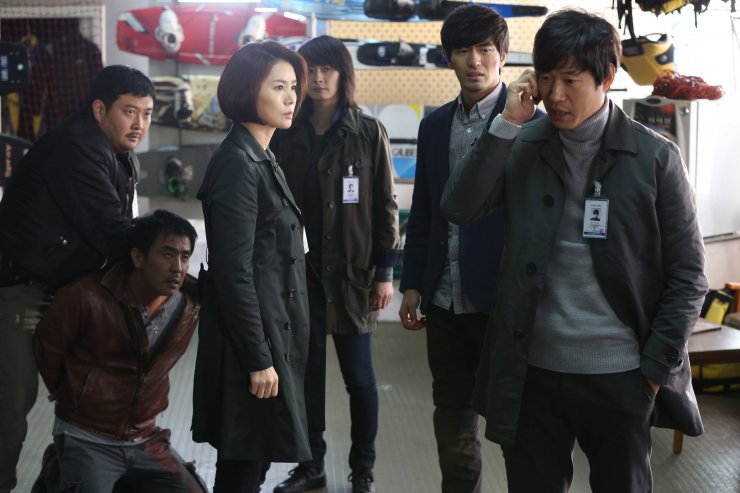
When internal affairs unexpectedly show up at the precinct and begin to investigate, corrupt detective Go Geun-soo (Lee Seon-gyoon (이선균) is forced to make excuses at his late mother’s funeral and race back to prevent his guilt from being unearthed. Driving fast and stressed from his predicament, Go accidently hits and kills a passerby. Secretly disposing of the body and cunningly destroying evidence of his involvement, Go believes he’s in the clear…until he receives an anonymous phone call from a witness (Jo Jin-woong (조진웅) threatening to reveal his sordid crime. Unless Go complies with the demands his world will be over, beginning a frantic game of suspense as they battle to emerge victorious and unscathed.

Already under investigation, detective Go accidently kills a pedestrian and must hide his involvement

Already under investigation, detective Go accidently kills a pedestrian and must hide his involvement

From the moment it begins, A Hard Day is an exciting, captivating, and down right thrilling cinematic joyride. Writer/director Kim Seong-hoon (김성훈) has crafted an enthralling and suspense fuelled tale that constantly keeps the audience guessing, through the incorporation of a variety of inspired set-pieces that takes staples of the genre yet reinvents them enough to keep them fresh and appealing. Whether it be the initial hit-and-run incident, the disposal of the body, car chases or physical combat, director Kim builds tension brilliantly to consistently excite and entertain. Alongside editor Kim Chang-ju, who sutures the scenes to incredible effect, the duo have combined to create some of the most gratifying and well made action-thriller sequences in recent memory. Yet despite all the conflict and terrifying situations that arise, the film is never morbid due to the dark ironic humour laced throughout that adds genuine laugh-out-loud moments to the proceedings, a real rarity that serves to both inspire and rejuvenate a genre that has, of late, become quite stagnant. As such the 2 hour and 30 minute running time simply flies by, making A Hard Day one of the most entertaining filmic experiences of the year, and well deserving of its premiere at the Cannes Film Festival.

Detective Go confronts his nemesis to surprising results

Detective Go confronts his nemesis to surprising results

Central to the enjoyment of A Hard Day are the wonderfully charismatic performances of Lee Seon-gyoon and Jo Jin-woong. Lee is great as corrupt detective Go, effectively conveying the anti-hero as selfish and unethical but also quite likable and ultimately sympathetic given the fraught circumstances that arise. Lee has an ‘everyman’ quality that he employs effortlessly throughout the film that generates an acute connection with the audience, so much so that it’s entirely possible to forgive Go for his dishonesty and actually root for him as the underdog victim. Jo, meanwhile, appears to absolutely relish the opportunity portraying the villainous blackmailer, to the point where despite his supporting actor status, he threatens to steal the film every time he appears on screen. He is a hulking pillar of evil, yet his comic timing and delivery are so comically entertaining that he’s impossible to dislike, adding a wonderfully fresh dimension to the relationship between the antagonists that is consistently fascinating to watch unfold.

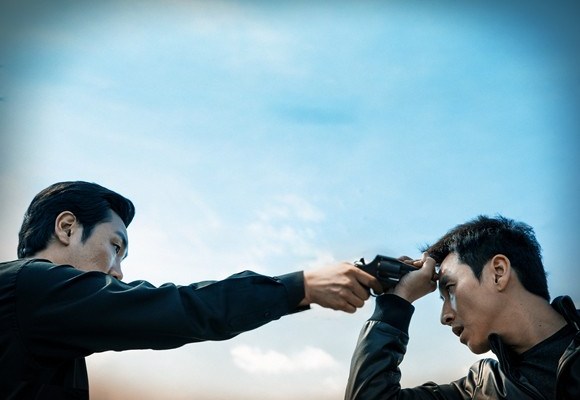
The situation reaches breaking point as the two clash

The situation reaches breaking point as the two clash

Verdict:

A Hard Day is one of the most exciting and entertaining action-thrillers of the year. Director Kim Seong-hoon has crafted a thoroughly engaging, suspenseful and darkly humourous tale of corruption that consistently feels fresh through the reinvention of genre traits. Featuring highly charismatic performances from leads Lee Seon-gyoon and Jo Jin-woong, A Hard Day is a thrilling cinematic joyride from start to finish.

★★★★☆

Busan International Film Festival (제19회 부산국제영화제) Festival News Korean Festivals 2014 Reviews

KUNDO: Age of the Rampant (군도:민란의 시대) – ★★★☆☆

KUNDO: Age of the Rampant (군도:민란의 시대)

KUNDO: Age of the Rampant (군도:민란의 시대)

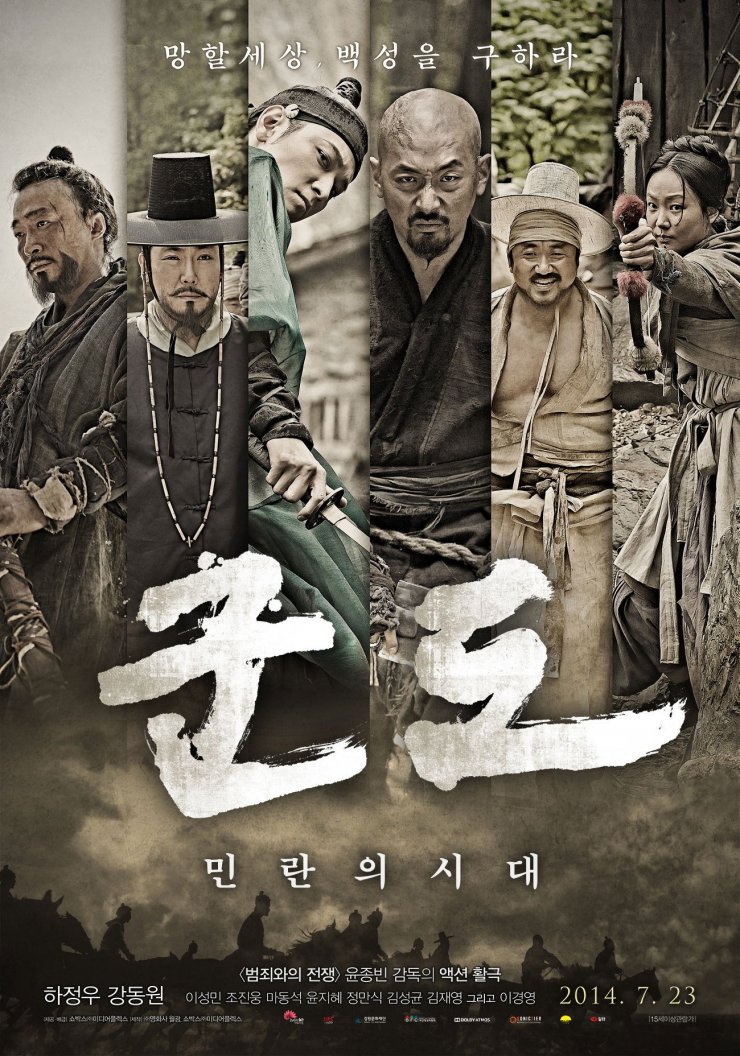
Upon release, summer blockbuster KUNDO: Age of the Rampant (군도:민란의 시대) broke the record for opening day admissions and helped to breath new life into what was a flagging year for Korean cinema…until it was soundly beaten a week later by maritime epic The Admiral: Roaring Currents.

It’s particularly ironic that both tentpole films achieved such a feat, given that they contain such strikingly oppositional philosophies and content. While The Admiral focused on generating hyper-nationalism to achieve success, KUNDO opted for an anti-establishment sensibility, as a group of Robin Hood-esque outlaws band together to fight against the tyrannical Prince.

Curiously, while the ideological leanings of each film differ, both suffer from a similar set of issues. KUNDO, while boasting impressive production values, competent directing and an array of popular stars, ultimately feels rushed and unfinished due to the poorly structured and conceived narrative.

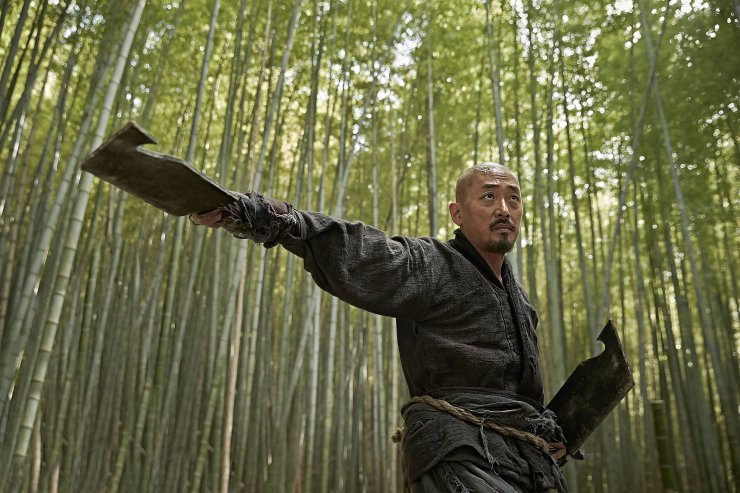
A band of outlaws band together to fight against the vicious prince Jo

A band of outlaws band together to fight against the vicious prince Jo

Centuries ago, Korea was a land in turmoil. With starvation and death commonplace, corruption in society was rampant, particularly amongst the ruling classes. In the face of so much injustice a group of working class heroes band together to rob from the rich and give to the poor, attempting to appease the suffering of the people.  Yet in a nearby city, a greater villainy is brewing. Born to a nobleman and courtesan, Prince Jo (Kang Dong-won (강동원) seeks to usurp his father and reign over the land. Only one challenge to his rule remains – his sister-in-law and her son, the rightful heir. Butcher Dochi (Ha Jeong-woo (하정우) is hired to kill the pair, yet when he cannot, he is viciously betrayed and punished. Furious, Dochi finds a place with the band of thieves and begin their revenge as they plan to halt the Prince’s machinations.

From the moment KUNDO opens, it’s clear that the production values are some of the highest in recent memory and are particularly outstanding. Director Yoon Jong-bin (윤종빈) and his team have noticeably worked hard to put striking visual detail in every shot, from the incredible costumes of the cast through to the great variety of landscapes and arenas in which the action takes place. The attention to detail generates a sense of sincerity and wonder, and is in itself an phenomenal achievement. In regards to each member of the cast, their histories and occupations are wonderfully captured in their costumes whether it be a Buddhist monk, a butcher, or a wealthy prince and significantly contributes to the power of the film, an acute attention to detail that earned designer Jo Sang-gyeong the award for Best Costume Design at the 51st Daejong Film Awards.

The prodction values in KUNDO are outstanding

The prodction values in KUNDO are outstanding

Yet where KUNDO falters is in the narrative structure, which is consistently haphazard. The story jumps between time lines and characters to confusing effect, and to compensate a random and quite sporadic voice-over attempts to help allay by filling in back stories and histories yet serves to provide only a further sense of disorganization. The poor structure is impossible to miss and insinuates even to the casual cinema-goer that several more drafts of the screenplay were needed before cameras started rolling.

Screenwriter Jeon Cheol-bin is further hampered by an overly – and insanely – large cast which is a huge challenge for any scribe to make each character relevant. While Jeon has clearly worked hard to do so, the sheer amount of protagonists weighs down the film due to the attempt at giving everyone screen time, resulting in a story that lacks conviction or indeed compulsion, and one that is particularly hard to invest in.

Such issues also afflict the actors. As KUNDO focuses primarily on Prince Jo-yoon and butcher Dochi, Kang Dong-won and Ha Jeong-woo have the greater chances to shine. Ha Jeong-woo in particular seems to be having a great time as the butcher-turned-criminal with his cocky and self-assured performance certainly the most enjoyable aspect of the film. Kang Dong-won – in his first film role since completing mandatory military service – also appears to relish portraying the villainous prince. Yet for them and the rest of the enormous supporting cast, the lack of screen time results in highly capable actors providing competent performances, making KUNDO an entertaining but not especially compelling viewing experience.

The villainous prince battles against the uprising

The villainous prince battles against the uprising

Verdict:

KUNDO: Age of the Rampant is a record-breaking tentpole film of 2014 by director Yoon Jong-bin. Boasting hugely impressive production and costume design as well as a host of capable actors including Ha Jeong-woo and Kang Dong-won, KUNDO is ultimately let down by a haphazard narrative structure, an insane amount of supporting characters, and a story that is hard to invest in. As a result KUNDO is an enjoyable, though unchallenging, viewing experience.

★★★☆☆

Busan International Film Festival (제19회 부산국제영화제) Korean Festivals 2014 Reviews

The Satellite Girl and Milk Cow (우리별 일호와 얼룩소) – ★★★☆☆

The Satellite Girl and Milk Cow (우리별 일호와 얼룩소)

The Satellite Girl and Milk Cow (우리별 일호와 얼룩소)

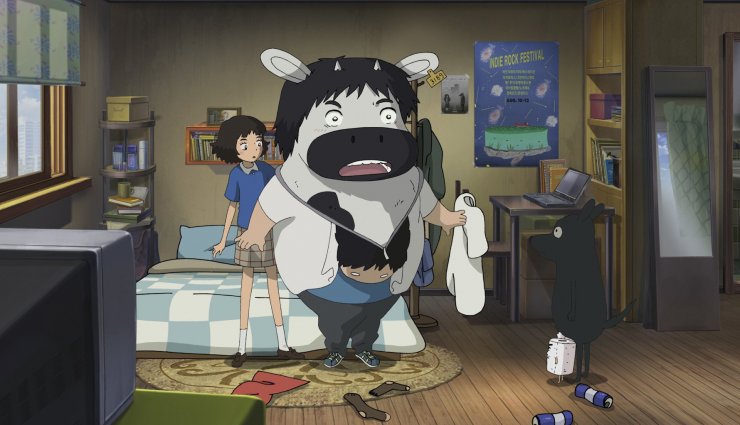
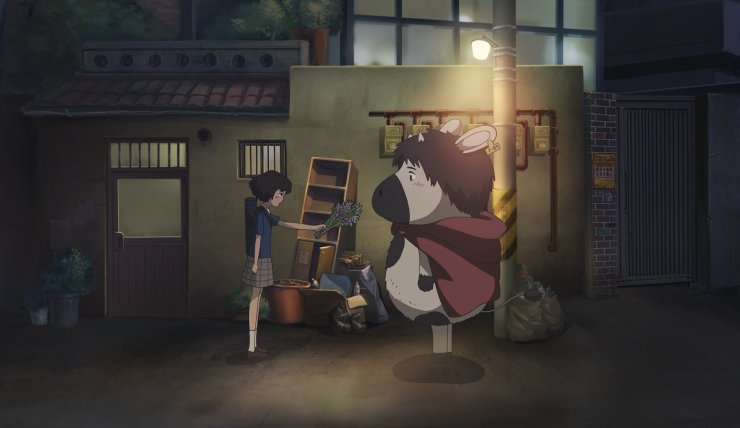
After circling the Earth for years transmitting data, satellite Il-ho (Jeong Yu-mi (정유미) intercepts the sound of a beautiful song. Nearly at the end of its lifespan, Il-ho decides to return home and find the source of the song before its power is drained completely. Upon arriving however, Il-ho discovers a walking, talking milk cow being pursued by a giant incinerator, and upon impact with the metal creature Il-ho is transformed into the form of a girl. With the help of magical toilet paper Merlin the wizard, they discover that the milk cow is actually musician Kyeong-cheon (Yoo Ah-in (유아인), and the group try to set him free of the curse while fighting against those who would steal his liver.

Satellitle Il-ho learns that musician Kyeong-cheon has been transformed into a milk cow

Satellitle Il-ho learns that musician Kyeong-cheon has been transformed into a milk cow

Upon release, The Satellite Girl and Milk Cow (우리별 일호와 얼룩소) had certain critics comparing it with Japanese animation maestro Hayao Miyazaki’s Studio Ghibli output, which is both huge praise as well as a disservice. Writer/director Jang Hyeong-yoon’s (장형윤) feature length is a charming animation that features wonderfully quirky and lovable characters who traverse different realms, which is undoubtedly the source of such comparisons, yet the film is also a uniquely Korean blend of sci-fi and fantasy that ultimately lacks the grace and polish of Miyazaki’s work.

The Satellite Girl and Milk Cow is certainly one of the most entertaining and wacky family-orientated Korean animations in quite some time. Director Jang has impressively combined the conventions of science-fiction with magical fantasy and the results are consistently enjoyable and fun, particularly due to the wonderfully eccentric cast of characters. Kyeong-cheon is front and center in this regard as the visually comedic milk cow, with the obstacles he endures to become human forming the crux of the narrative. The gags often come at his expense and are often really enjoyable, especially scenes in which he has difficulties with his human ‘suit’ made of toilet paper and his attempts to continue living as he did before his transformation. Other jokes tend to come out of left field, such as literally being milked in order to pay the rent, which are quite odd yet are still amusing. Kyeong-cheon’s melodramatic character works well when playing off robotic satellite girl Il-ho and bizarre tissue magician Merlin. Their conversations and conflicts are by far the most entertaining and engaging feature of the film and drive the story forward.

The conflicts that arise between Il-ho and Kyeong-cheon are charming and fun

The conflicts that arise between Il-ho and Kyeong-cheon are charming and fun

Yet while the animation is fluid and the characters charming, The Satellite Girl and Milk Cow comes undone due to the haphazard narrative. The screenplay really requires several more rewrites as the film is mostly comprised of a series of sketches rather than an overarching story, and while such vignettes are enjoyable there really isn’t a sense of a greater story being told.  As Kyeong-cheon attempts to continue his life as a milk cow and Il-ho seeks to understand her purpose of existence, a variety of tangents enter the fray that stop both of them from exploring such desires, serving as fun yet distracting moments from the greater quests at hand. Such events rarely contribute to the story and often create a greater number of sub-stories that never achieve fruition.

As the story tends to jump between various events further supporting characters are also introduced, including an old witch in the form of a boar as well as a shadow organisation that harvests the livers of citizens-turned-animals. Each inception holds a new and interesting concept yet they are never explored or capitalised on, and have very little impact on the overall story. A prime example is the giant incinerator, which exists solely as a central threat in the film without rhyme or reason, appearing when the story has no other place to maneuver and needs a sense of urgency. There are so many unresolved elements within the film that, combined with the unfocused central story, serve to make The Satellite Girl and Milk Cow an enjoyable but not particularly magical viewing experience.

Il-ho and Kyeong-cheon develop feelings for each other against the odds

Il-ho and Kyeong-cheon develop feelings for each other

Verdict:

The Satellite Girl and Milk Cow is one of the most entertaining family-orientated animations to come from Korea in quite some time. It’s a charming effort by writer/director Jang Hyeong-yoon who blends the worlds of magic and sci-fi well, but it’s let down by a haphazard script and too many characters and tangents that go unresolved, making the film an enjoyable experience rather than a magical one.

★★★☆☆

Reviews

Awaiting (민우씨 오는 날) – ★★★☆☆

Awaiting (민우씨 오는 날)

Awaiting (민우씨 오는 날)

Awaiting (민우씨 오는 날) – or rather, The Day Min-woo Arrives – is part of an omnibus entitled Beautiful 2014, a series of films that explores moments of beauty helmed by some of the most talented filmmakers throughout Asia. Director Kang Je-gyu (강제규), famous for his action/war films including Taegukgi and My Way, is a surprising choice to step up to the microphone for intimate drama Awaiting, yet he has proven himself more than worthy as Awaiting is a beautifully touching and quite lovely short film.

Yoon-hee (Moon Chae-won (문채원) lives alone in Seoul, waiting for her husband Min-woo (Ko Soo (고수) to return home. Every day she is awoken by a phone conversation from Sarah in America, and fills her day with cleaning, shopping, trips to the community center, and making food. Yet Yoon-hee’s memory is slowly beginning to fade, and of late she has taken to writing notes to help get through the day. One day, two people arrive at her home and inform Yoon-hee of some interesting news regarding Min-woo’s whereabouts.

Yeon-hee and Min-woo are a loving couple

Yoon-hee and Min-woo are a loving couple

Awaiting is a wonderfully moving and distinctly Korean examination on the nature of love and loss. Director Kang Je-gyu has impressively evolved during the four years since his last film, wisely moving away from the sweeping epic sensibilities of his prior films to focus on the intimate nature of the story. Yet his indelible vision is still clearly present throughout as he explores the division of the peninsula from a refreshing perspective, while his stunning visual sensibilities and unique sense of melodrama remain in tact, accompanied by a tender musical score.

The drama is also a deviation for director Kang in that Awaiting is female-centered, and he expresses Yoon-hee’s story with a quiet sensitivity. Moon Chae-won provides a restrained yet poignant performance as the lonely woman waiting for her husband’s return, an while she isn’t especially challenged in the role  the actress is quite charismatic and endearing. Yoon-hee’s emotional story is a heartbreaking tale, and one which is elegantly, compassionately, told.

Awaiting 1

Yoon-hee waits for her husband Min-woo to return

Verdict:

Awaiting is a beautifully moving and quite lovely short film by director Kang Je-gyu, who has impressively altered his epic sensibilities to portray the touching story of a woman waiting for her husband’s return. Compassionate, intimate and distinctly Korean, Awaiting is a poignant and endearing tale of love and loss.

★★★☆☆

Busan International Film Festival (제19회 부산국제영화제) Festival News Korean Festivals 2014 Reviews

Whistle Blower (제보자) – ★★★☆☆

Whistle Blower (제보자)

Whistle Blower (제보자)

In 2004, Korean doctor Hwang Woo-suk published that he, along with his team of researchers, had successfully cloned a human embryo and were able to remove stem cells from it. The revelation rocked the scientific community as the breakthrough was the first of its kind, yet it was surpassed only a year later when Hwang claimed to have created 11 human embryonic stem cells. As such, Hwang and his team had the ability to work on remedies for diseases previously believed to be incurable, catapulting the doctor into the limelight as a national hero and a savior of the Korean economy. Except that, as an investigation in 2006 by MBC reporters revealed, it was all a lie. Despite the evidence however, many Koreans still believe that doctor Hwang is the ‘pride of Korea’, and that to question his work is unpatriotic.

Whistle Blower (제보자), by director Lim Soon-rye (임순례) and screenwriter Lee Choon-hyeong (이춘형), is based on the scandalous affair that caused international embarrassment for the Korean scientific community. The thriller focuses on investigative journalist Min-cheol (Park Hae-il (박해일) as he is tipped off about the stem cell hoax by whistle blower Min-ho (Yoo Yeon-seok (유연석). Joining forces with intrepid young reporter I-seul (Song Ha-yoon (송하윤), the duo begin digging into the claims of Doctor Lee Jang-hwan (Lee Kyeong-yeong (이경영), and uncover a series of shocking revelations while also contending with angry Korean citizens.

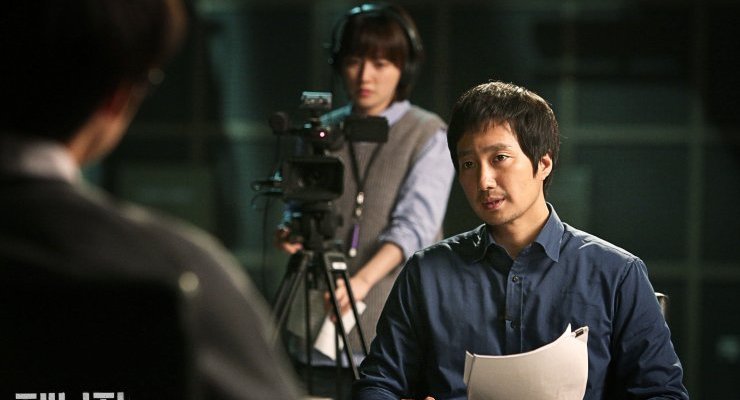
Producer Min-cheol interviews whistle blower Min-ho, who claims to have knowledge of a  national scandal

Producer Min-cheol interviews whistle blower Min-ho, who claims to have knowledge of a national scandal

Given the electrifying and scandalous subject material, the potential for a explosive and culturally resonating conspiracy thriller was high. Yet with Whistle Blower director Lim and screenwriter Lee have crafted a standard effort, one that is competent and ticks all the boxes of the genre yet is uninspired and barely scratches the surface of the core issues with which the film is concerned.

The true-life crime features not only a hoax on an international scale, but the collusion of the then-government and media in both propelling the fraud into the national consciousness as well as stifling the investigation into it, while the zealous nationalistic fervor of the populace offers potent introspective exploration. Such issues are depicted in a very limited capacity or completely omitted altogether which is more than a little disappointing, and while watching Whistle Blower the sense that the filmmakers were censored as much as the characters within the film adds an acute sense of irony.

Where Whistle Blower succeeds is through the journey of producer Min-cheol, as he attempts to uncover evidence to support his case against Dr. Lee. Director Lim does well in representing the variety of obstacles in his path and paces the story well, resulting in a thriller that moves along briskly and is rarely dull. The various tip offs continually spur interest while the back room politics within the station add an additional threat of urgency, as well as hinting at the larger scale corruption of Korean conglomerates.

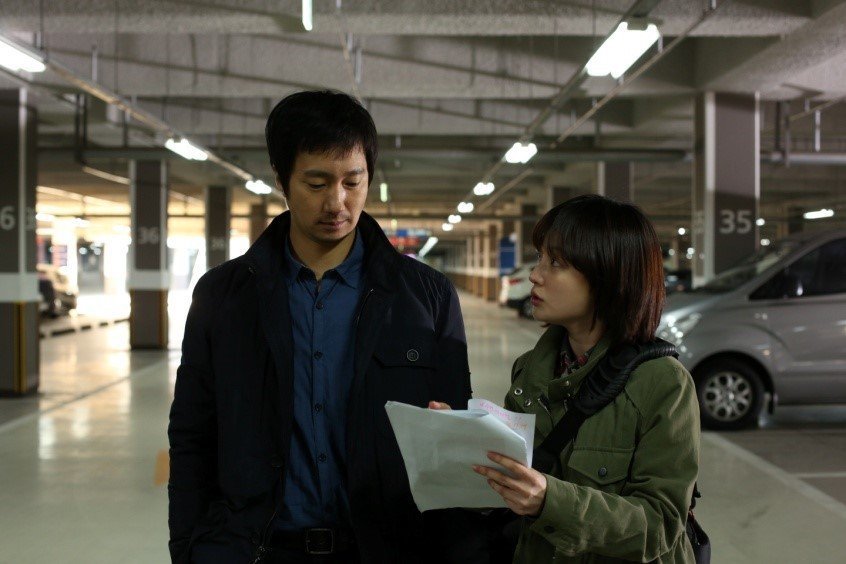
Producer Min-cheol and intrepid assisstant I-seul uncover the evidence

Producer Min-cheol and intrepid assistant I-seul uncover the evidence

Park Hae-il is in typically good form as the investigative producer, though as there is little in the way of character development the role is far from demanding. He works best when playing off of the supportive cast, particularly his intrepid assistant I-seul and team leader Seong-ho, played by Song Ha-yoon and Park Won-sang (박원상) respectively. Despite their limited presence throughout the film both Song and Park are highly charismatic, endearing protagonists, giving impressive performances and often steal the show whenever they are on screen.

Ironically whistle blower Min-ho is given very little screen-time and development that mostly requires actor Yoo to walk around appearing pitiful, with the narrative largely focusing – repetitively – on his and wife Mi-hyeon’s (Ryoo Hyeon-kyeong (류현경) sick child. This is a great shame and a missed opportunity given that that real whistleblower is still considered something of a traitor by many in contemporary Korea. Luckily however, actress Ryoo provides the best performance in the film despite her extremely limited presence, making the situation one possible to invest in.

Interestingly, the filmmakers have opted to represent the fraudulent Dr. Lee in a rather positive, sympathetic light. The narrative seeks to portray the doctor less as a criminal, and more of a man whose ambition to help both the sick and Korea at large got the better of him. There are occasional hints at his manipulative genius, yet the story doesn’t delve deeper into the illegalities outside of the fabricated stem cell research, which is truly bizarre and a waste of potential.

The reporters must contend with rampant nationalism in their quest to expose the truth

The reporters must contend with rampant nationalism in their quest to expose the truth

Verdict:

Given the scandalous true story on which the film is based, Whistle Blower had the potential to be an explosive thriller and a keen exploration of a variety of facets in contemporary Korean culture. Yet director Lim Soon-rye and screenwriter Lee Choon-hyeong have produced a standard, uninspired example of the genre, one which fulfills the criteria but never delves deeply into the issues of the time. Whistle Blower is competent yet disappointing, and is a real missed opportunity.

★★★☆☆

Reviews

My Love, My Bride (나의 사랑 나의 신부) – ★★★☆☆

My Love, My Bride (나의 사랑 나의 신부)

My Love, My Bride (나의 사랑 나의 신부)

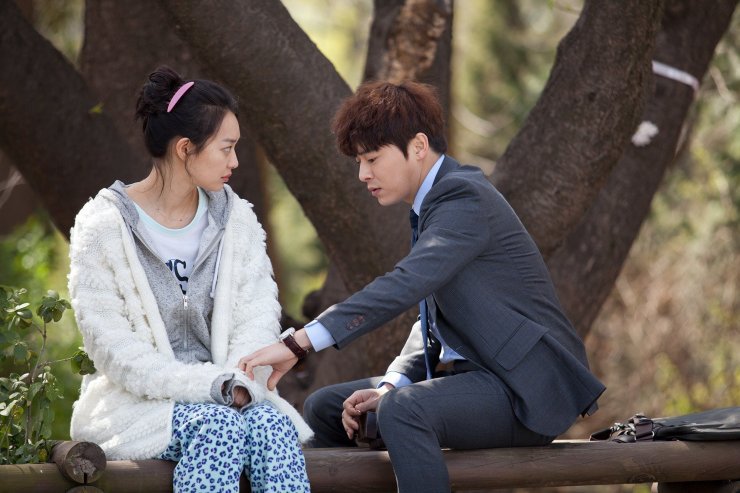
After four years of dating, Yeong-min (Jo Jeong-seok (조정석) decides it’s finally time for him to propose to girlfriend Mi-yeong (Shin Min-ah (신민아). Despite their constant arguing, Mi-yeong accepts the proposal and for a while the two live in wedded bliss, much to the chagrin of their friends. Yet soon the realities of living with each other sink in and the newlyweds begin to fight with fresh vigor, creating an enormous amount of stress, as well as comical moments, between them. As their relationship becomes increasingly fraught both Mi-yeong and Yeong-min begin to develop their hobbies and lives independently, until issues arise that force them to reconcile their differences.

My Love, My Bride (나의 사랑 나의 신부) is a remake of director Lee Myeong-se’s (이명세) 1990 classic, updated to reflect contemporary relationships by director Lim Chan-sang (임찬상) and screenwriter Kim Ji-hye (김지혜). The result is a romantic-comedy which is very much lighthearted entertainment, one that attempts to derive comedy from the real-life situations newlywed couples face and moderately succeeds, yet is lacking in sufficient depth to make it more than mildly enjoyable.

For a time, married life is blissful for the newlyweds

For a time, married life is blissful for the newlyweds

As the poster and trailer suggest, My Love, My Bride is a fun take on the silly and trivial matters that afflict newlyweds, and the stressful situations that arise from them. From the moment the film begins the playful approach to marriage is quite enjoyable, as the lively text message conversation between Yeong-min and his friends debates the pros and cons of getting hitched, through to the rampant sex life the couple relish in following their nuptials. Director Lim does a great job in conveying frivolity through such sequences, with effective scenes impressively edited to keep the jokes coming. As the pace slows the story begins to become more concerned with the realities of marriage and the fights that arise, seeking to find humour in such moments. It’s a largely hit and miss affair, with scenes such as Yeong-min’s wandering eyes and jealousy at his wife’s interaction with another man comically executed, while others – that are mostly concerned with Mi-yeong’s life – are less effective.

This is primarily due to the fact that My Love, My Bride is a mostly male-centered narrative, which is unfair given the nature of the relationship. Director Lim attempts to generate sympathy for Yeong-min as something of a struggling artist with a nagging wife, but in reality he is quite the man-child. Mi-yeong’s complaints about urinating on the toilet seat and general lack of hygiene are wholly justified, while foreign audiences will certainly take issue with Mi-yeong’s almost slave status as she takes care of her husband dutifully while he merely barks orders. Luckily the film does attempt to address such issues, but due to the nature of the comedy it is not given sufficient depth. Similarly, the contrast between the couple as they start to consider other potential partners suffers from the same fate. Yeong-min’s thought-process and encounters are quite believable and funny, while Mi-yeong’s are far from it, lacking the sincerity of a woman’s true perspective and the realistic examination the film proclaims.

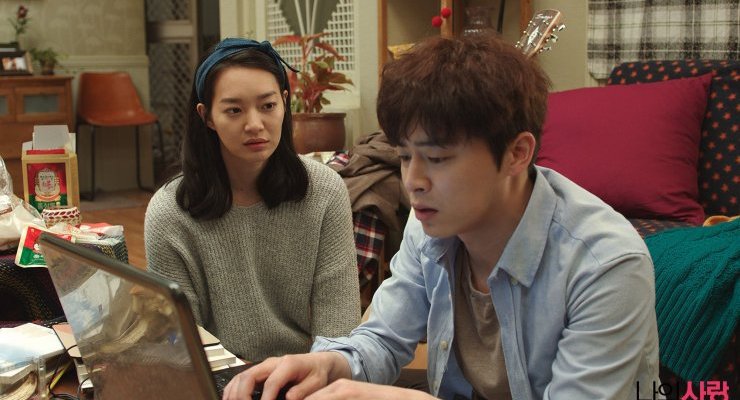
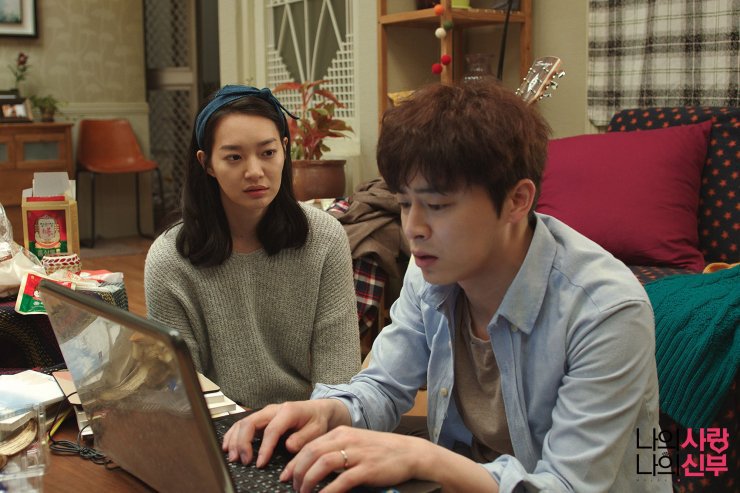
Mi-yeong becomes increasingly frustrated with Yeong-min's selfish, man-child ways

Mi-yeong becomes increasingly frustrated with Yeong-min’s selfish, man-child ways

My Love, My Bride interestingly explores how both Mi-yeong and Yeong-min have subsumed creative aspects of themselves in the relationship by incorporating their hobbies within the story. Again, the device is more apparent and developed for Yeong-min, as his focus on poetry becomes another stressful element in the marriage. His writing has the potential for a deeper perspective on the relationship but it is never explored, again forcing Mi-yeon to suffer in silence. The few scenes in which Mi-yeon’s artistic ability appear are also wasted opportunities to further examine her character, as aside from fleeting moments, her painting has little impact on the story.

In a bid to wrap up all the narrative strands and bring the couple closer, My Love, My Bride unfortunately falls into the same trap as many other Korean rom-coms by employing unnecessary hospital melodrama. Similar to this year’s earlier comedy Venus Talk, the inclusion of the melodramatic device – as well as sickly-sweet flashbacks – comes out of left field and is quite contrived, though has the desired effect of creating nice closure.

Flashbacks to earlier stages in their relationship remind the couple of the importance of their love

Flashbacks to earlier stages in their relationship remind the couple of the importance of their love

Verdict:

A remake of the 1990 classic, the updated version of My Love, My Bride by director Lim Chan-sang and screenwriter Kim Ji-hye is lighthearted and enjoyable fare. The story is largely hit-and-miss on deriving comedy from the realities of newlywed couples, mostly due to the unfair male-centered focus, particularly as the husband in question is quite immature. Yet there are enough fun moments to be had to make the film an entertaining viewing experience.

★★★☆☆

Reviews

Gyeongju (경주) – ★★★☆☆

Gyeongju (경주)

Gyeongju (경주)

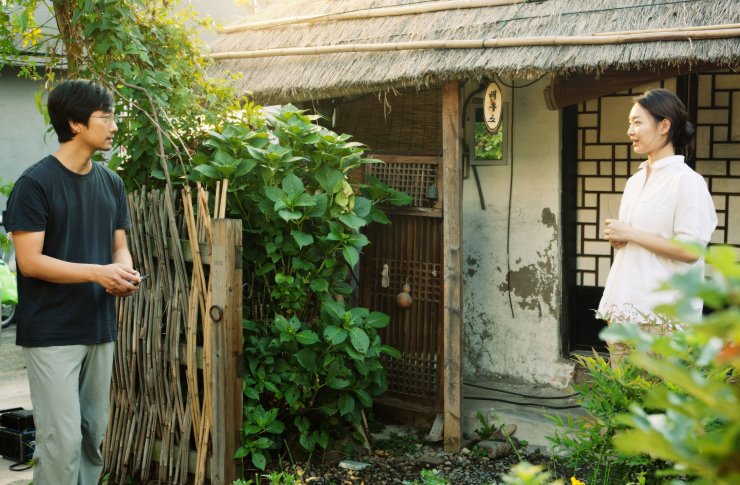
When his childhood friend tragically dies, Professor Choi Hyeon (Park Hae-il (박해일), having spent the past several years working at Beijing University, returns to Korea for the funeral. Hyeon however seems less concerned with reconnecting with old friends than he is rediscovering his roots, and to that end he visits Gyeongju, the former capital of the ancient Silla kingdom full of historical landmarks. Rather than sightseeing, Hyeon is strangely motivated to find an old pornographic painting he and his friends encountered on a trip there years prior. Upon locating the teahouse Hyeon is greeted by the new owner Yoon-hee (Sin Min-ah (신민아) and the two form an intriguing relationship.

Hyeon locates the teahouse from his past, and meets owner Yoon-hee

Hyeon locates the teahouse from his past, and meets owner Yoon-hee

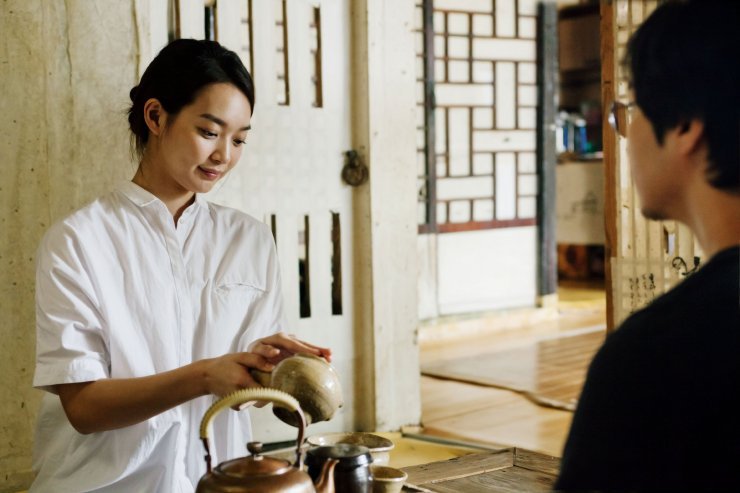
Gyeongju is a poetic, meditative exploration of history and relationships by director Zhang Lu (장률). That may come as a surprise considering the film has been marketed as something of a romantic-drama (see the trailer below), yet director Lu’s film is far removed from typical genre fare as from the moment it begins it is clear he has crafted an artistically conscious, rather than commercially minded, examination of relationships. The approach subtly inhabits every sentence and every frame as Hyeon attempts to explore and understand his complex connection with history, and how the relationships of his past inform his present. As the story is so introspective director Lu relies heavily on visual aesthetics, skillfully composing highly attractive shots of Hyeon, particularly in relation to his surroundings and with other people, to convey a wealth of powerful yet understated meaning. Many of the shots within Gyeongju certainly wouldn’t look out of place in a filmmaking textbook such is the director’s prowess, notably in the manner in which he employs space and distance. The meticulously constructed, elegant shots at Yoon-hee’s Arisol Teahouse, for example, are emblematic of his penetrating insight into the psychological state of the characters within.

The composition and framing within the teahouse subtly reveals a wealth of meaning

The composition and framing within the teahouse subtly reveals a wealth of meaning

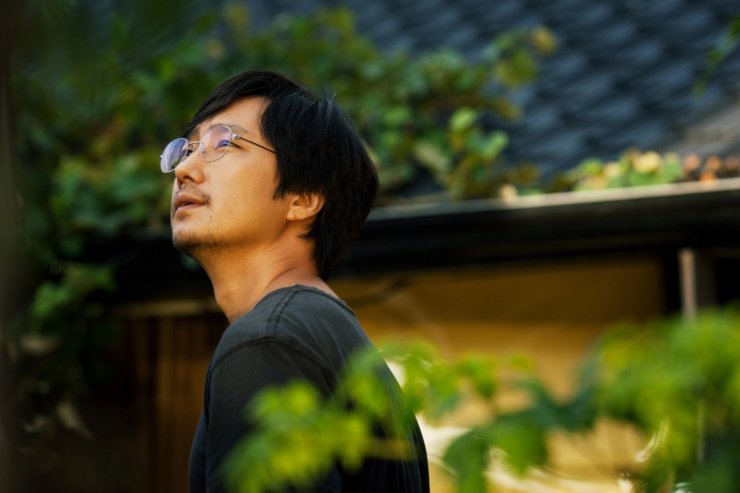
As Hyeon walks around the old capital contemplating the landmarks and the people he encounters, it becomes increasingly clear that the film is also highly concerned with the notion of identity and belonging. As a Korean living in China and married with a Chinese woman, Hyeon lost his connections with not only his friends but also his country, history, and sense of identity. As such Gyeongju serves not only as a place for quiet contemplation but also an arena in which he attempts to trace his roots, which proves increasingly difficult the longer Hyeon stays there. His troubled psychological state finds a companion in Yoon-hee, who is also unsure of her place in the world. Their connection is not so much romantic as it is motivated by a desire to belong, and as the two are surrounded by history and death (in the form of tombs), the film puts forth interesting debates about the nature of relationships.

At 2 hours and 20 minutes however, to say that Gyeongju is overly long is quite an understatement. As the film is so introspective Gyeongju is an incredibly slow-paced affair, and while for the first hour the story is compelling enough for it not to be an issue, when the film begins to meander viewing becomes somewhat laborious. Primarily this occurs during the scenes at night, when Hyeon and Yoon-hee develop their relationship further which feels not only contrived but also unnecessarily long, despite great performances from Park Hae-il and Shin Min-ah. Bizarrely, after 2 hours of controlled and moderated pacing, Gyeongju suddenly becomes in a big hurry to end, which results in an unsatisfying finale to an otherwise deep and insightful film.

Hyeon contemplates his identity and existence in Korea's picturesque former capital

Hyeon contemplates his identity and existence in Korea’s picturesque former capital

Verdict:

Gyeongju is a poetic, introspective exploration of history, identity and relationships by director Zhang Lu. The film is very much artistically focused rather than commercially orientated, and as such it benefits from wonderfully composed shots and framing devices, as well as a controlled meditative pace, that subtly convey a wealth of meaning over exposition. Yet at 2 hours and 20 minutes Gyeongju is also incredibly overly long and feels particularly laborious after the halfway mark, while the artistic sensibilities won’t be for everyone.

★★★☆☆

Busan International Film Festival (제19회 부산국제영화제) Festival News Korean Festivals 2014 Reviews

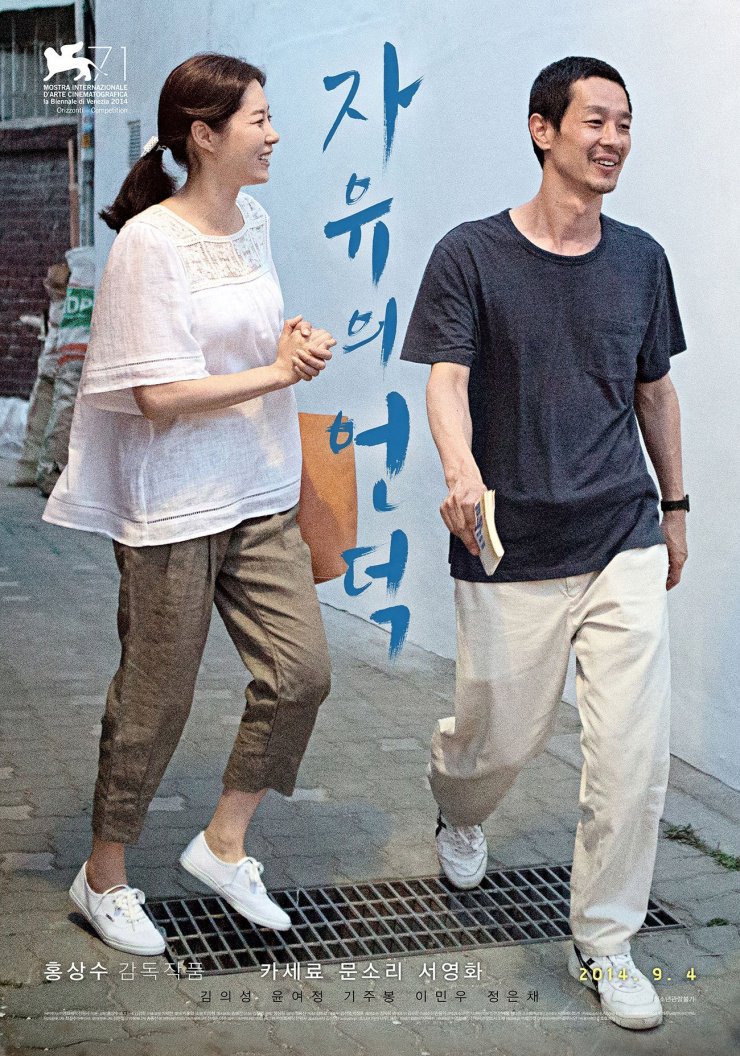
Hill of Freedom (자유의 언덕) – ★★★☆☆

Hill of Freedom (자유의 언덕)

Hill of Freedom (자유의 언덕)

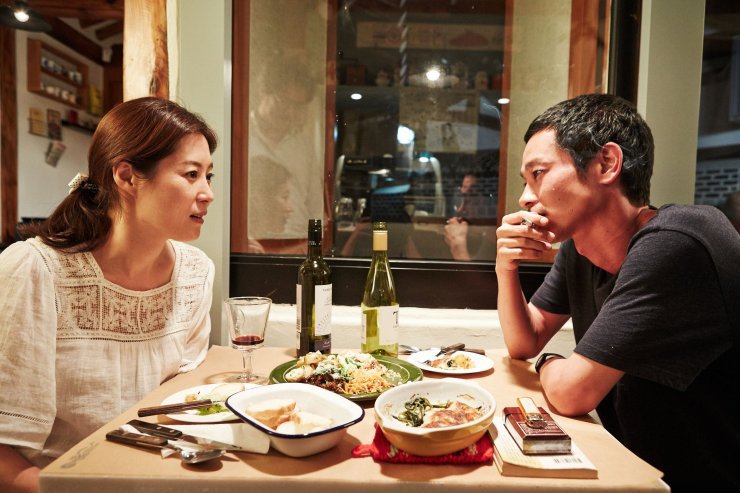
When sickly language teacher Kwon (Seo Young-hwa (서영화) returns from a trip to the mountains to cure her ailments, she is surprised to discover a hand-written letter by Japanese ex-boyfriend Mori (Ryo Kase) waiting for her. Settling in the local coffee shop, Kwon begins to read the passionate account of how Mori has travelled to Korea in order to find and be with her, and his encounters with pretty barista Yeong-seon (Moon So-ri (문소리) as well as his friendly guest house owners (Yoon Yeo-jeong (윤여정) and Kim Ee-seong (김의성).

Mori begins his quest to find ex-girlfriend Kwon

Mori begins his quest to find ex-girlfriend Kwon

Hill of Freedom (자유의 언덕) is director Hong Sang-soo’s (홍상수) 16th feature and as with much of his recent output the film has proved a hit on the festival circuit, screening at Venice, Toronto, Vancouver, Busan, and London, respectively. The film is also a notable return to a male-orientated narrative following a highly successful run of female-centered films (Nobody’s Daughter Haewon, Our Sunhi).

Fans of director Hong will find much to enjoy in Hill of Freedom, as his trademark sense of humour, focus on naturalised locations and mise-en-scene, as well as his often whimsical and charming filmmaking techniques, are all present and correct. The manner in which the narrative unfolds is one of the film’s highlights as Kwon, having received Mori’s letter, drops the pages in a stairwell and in her haste to collect them puts them back together in the incorrect order as well as – crucially – leaving a page behind. When Kwon later reads the letter and Mori’s story transpires, the events are presented in a non-linear manner, as with the pages themselves. The concept is quite endearing, particularly with Mori’s quest to find and declare his affections to Kwon presented through an emotional gamut of highs and lows rather than a progressive state, adding an interesting and unpredictable spin to the story as well as to the genre as a whole.

Mori befriends attractive barista Yeong-seon

Mori befriends attractive barista Yeong-seon

Yet Hill of Freedom is not without issues. Director Hong has made awkward encounters amongst his protagonists part of his modus operandi as an auteur, and the results are often alluring character moments that reveal a great deal about the psychological status at hand. In Hill of Freedom however such confrontations are often either cringeworthy viewing experiences or unintentionally comedic – and occasionally, both at the same time. Chiefly this is due to the dialogue which is mostly in the English language, and despite the wealth of acting talent on display it is a feature that no-one seems to be particularly comfortable with, except veteran actress Yoon Yeo-jeong who provides the best performance within the film as the kind guest house owner. While the awkward use of English may very well be an attempt to convey the naturally clumsy chance meetings between people through language, it is often quite over-exaggerated to the point where tension and development are diffused.

English is also a problem simply as dialogue. It is impressive that director Hong can write a script in a different language, yet the discussions that occur are delightfully naive, particularly during the scenes in which Mori discusses politics, is drunk and/or attempting to philosophically discuss time as a concept. As such the conversations that develop and evolve lack the sincerity of director Hong’s earlier films, and as a result Hill of Freedom is an enjoyable yet flawed addition to his filmography.

Mori encounters a variety of people while waiting for Kwon, often with awkwardly funny results

Mori encounters a variety of people while waiting for Kwon, often with awkwardly funny results

Verdict:

Hill of Freedom is return to male-centered narratives for writer/director Hong Sang-soo, which follows Mori on a quest to find ex-girlfriend Kwon and declare his love. All the staple features of director Hong’s films are apparent throughout the film and there is much to be enjoyed through the charming narrative style and camera techniques. However, chiefly due to the mostly English script, the dialogue is often naive while the delivery is uncomfortable for most of the actors involved. Hill of Freedom is an enjoyable yet flawed addition to director Hong’s body of work.

★★★☆☆

Busan International Film Festival (제19회 부산국제영화제) Festival News Korean Festivals 2014 Reviews

The Target (표적) – ★★★☆☆

The Target (표적)

The Target (표적)

On a dark and rainy night, a shoot-out transpires in the back streets of Seoul. As a mysterious man is chased through the streets he is shot, and hit by a car. Taken to hospital, doctor Lee Tae-joon (Lee Jin-wook (이진욱) treats the man who police identify as ex-military man Baek Yeo-hoon (Ryoo Seung-ryong (류승룡), wanted in connection with murder. However Tae-joon’s problems are just beginning, as later that night his pregnant wife Hee-joo (Jo Yeo-jeong (조여정) is abducted, with the kidnapper demanding  Yeo-hoon in exchange for her safe return. Yet as Tae-joon attempts to hand over the fugitive, a special task force lead by Chief Song (Yoo Joon-sang (유준상) are called in, and a deadly game of cat-and-mouse begins.

Yeo-hoon is on the run, but from what and from whom are a mystery

Yeo-hoon is on the run, but from what and from whom are a mystery

The Target (표적) is a remake of critically acclaimed French thriller Point Blank (2010), which clearly must have impressed the French for the film premiered in the Midnight Screening section at the Cannes Film Festival. Quite why, however, is something of a mystery as Director Chang’s version is an extremely mediocre action film, taking the basis of the superior original and altering it to make a very competent, solid, and enjoyable action romp yet one that fades from memory with ease.

The Target begins well, setting a dark ominous tone in which the violence is located as well as for the mysteries to originate. The impressive tension continues through to the hospital scenes, where the introduction (and indeed, inclusion) of no-nonsense female detective Jeong Yeong-joo (Kim Seong-ryeong (김성령) and deputy Soo-jin (Jo Eun-ji (조은지) are a refreshingly welcome addition in a genre that is often overly-masculine, with their stern, efficient attempts to uncover Yeo-hoon’s identity and his role in the murder case one of the highlights of the thriller. Yet following a hospital breakout sequence, the tone of the film never stays consistent as director Chang attempts to juggle the abundance of characters and their respective narrative arcs, and as such the excitement begins to wane. Ironically however as the pace is generally handled well the film never becomes stale, resulting in a film that is difficult to fully invest in but entertaining nonetheless.

The situation gets complicated when Detective Jeong clashes with Chief Song

The situation gets complicated when Detective Jeong clashes with Chief Song

A similar accusation can also be aimed at the action sequences within The Target. While there are plenty of physical confrontations to enjoy, the sequences are always rudimentary and uninspired, failing to capitalise on the premise or even simply to make the film stand out from the vast number of action-thrillers that already exist. Yeo-hoon, for example, is supposedly an ex-military man with a decade of experience yet his fighting prowess rarely extends beyond that of an average man with basic training. There are fleeting moments however when director Chang is seemingly attempting to enter The Berlin File territory yet never quite manages to achieve it, and as such the action scenes are enjoyable while they last but don’t linger in the memory.

Another pivotal reason why The Target is entertaining yet tough to fully engage with is due to the large number of protagonists and supporting characters, which ultimately distracts attention away from the central story of fugitive Yeo-hoon and doctor Tae-joon. As the film continually focuses on peripheral characters and narrative tangents the main story becomes subsumed, making Yeo-hoon and Tae-joon’s uneasy alliance, as well as their quest to solve the mystery and save pregnant Hee-joo, moderately compelling and more of a backdrop to the carnage. Actors Ryu Seung-ryong and Lee Jin-wook perform their roles capably despite relatively weak character arcs, as does Jo Yeo-jeong as the damsel-in-distress, however it is Jin-goo as Tourette syndrome sufferer Sung-hoon and Kim Seong-ryeong as detective Jeong that provide the most interesting performances. Ultimately, with so many characters on screen, The Target is an amusing viewing experience, but one with little depth.

Yeo-hoon and Tae-joon must form an uneasy alliance to save pregnant Hee-joo

Yeo-hoon and Tae-joon must form an uneasy alliance to save pregnant Hee-joo

Verdict:

The Target is a remake of French thriller Point Blank by director Chang, and while he has constructed an entertaining action-thriller it’s one that fades from memory relatively easily. With competent yet uninspired action sequences, and an abundance of quality actors that serve to distract from the central story with their respective narrative arcs, The Target is an enjoyable action romp yet when that misses the mark.

★★★☆☆

Busan International Film Festival (제19회 부산국제영화제) Festival News Korean Festivals 2014 Reviews

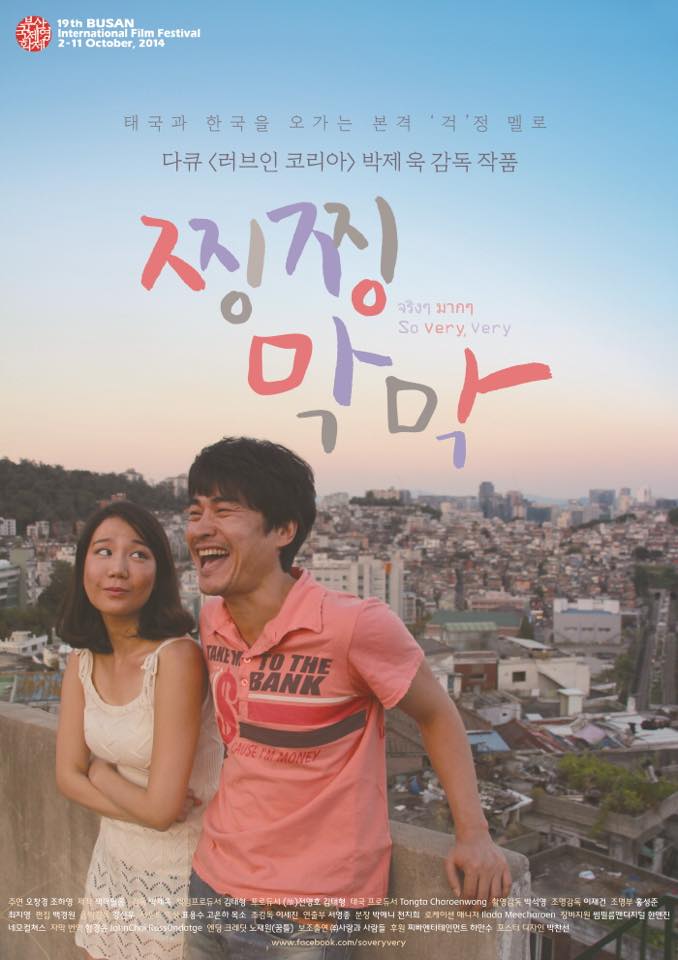
So Very Very (찡찡 막막) – ★★★☆☆

So Very Very (찡찡 막막)

So Very Very (찡찡 막막)

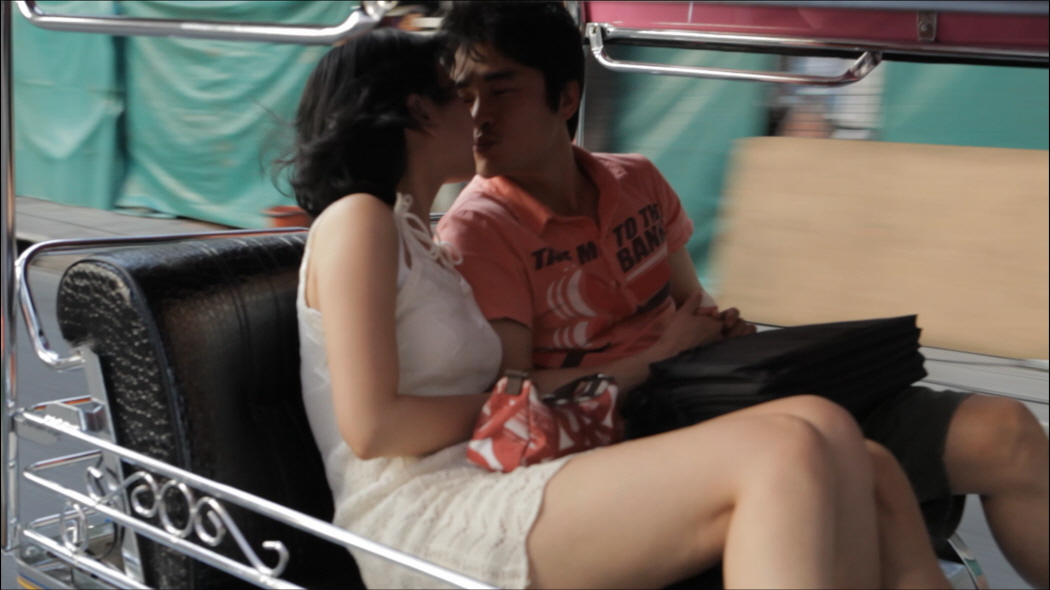
Now in his 40s, Sung-hoon (Oh Chang-kyung (오창경) still desperately fights to achieve his dream of being a film director. Yet success constantly eludes him, forcing him to take menial jobs while suffering from abject poverty as he bids to get his projects made. Such a lifestyle would not be so bad, if not for Sung-hoon’s recent marriage to younger Thai woman Pan (Cho Ha-young (조하영). As Pan diligently studies Korean and the couple strive to better communicate with each other, the economic strain soon puts their relationship in jeopardy. Fighting hopelessness and attempting to stay strong in the face of financial hardship, Pan soon becomes frustrated with Sung-hoon’s selfish ways and begins to dream of returning to Bangkok.

Sung-hoon and Pan are romantic newlyweds until economic hardships cause tension

Sung-hoon and Pan are romantic newlyweds until economic hardships cause tension

So Very Very (찡찡 막막) is an interesting perspective on interracial couples in contemporary Korea by director Park Jae-wook (박제욱). Typically, such representations involve a woman from a less economically developed nation seeking a more affluent, stable life through a union with a man from a stronger one. However, as with last years BIFF entry ThuySo Very Very reverses such portrayals and as such is an empowering film for foreign brides.

Pan is very much the heart and soul of the film as she works hard studying the Korean language and to adjust to life in the country, while her husband selfishly forces them deeper into poverty through his stubborn refusal to get a job. Problematically, director Park attempts to generate a sense of sympathy for Sung-hoon by aligning the narrative with his perspective, however it is Pan’s frustrations that push the story into new and interesting territory. Pan’s development from bored foreign housewife to empowered, independent woman is compelling and the driving force of the film.

Ironically while Pan’s growth sets So Very Very apart from other films of its ilk, the casting of Korean actress Cho Ha-young as a Thai woman is a distraction, diluting the sincerity of the relationship as well as her own journey. While Cho performs the role competently, her obviously Korean appearance becomes evermore of an issue as she interacts with genuine foreigners from her language academy, and particularly during scenes with locals filmed in Thailand.

One if the interesting features of So Very Very is the manner in which Sung-hoon and Pan communicate, through an amalgamation of Korean, English and Thai. The representation is quite unique, offering a refreshing perspective on the difficulties of communication between newlywed interracial couples. Again however casting is an issue, as for actor Oh Chang-kyung his pronunciation and intonation during the interplay between languages is natural and instinctive, whereas for Cho Ha-young she is forced to engage in a ‘Thai performance’ of sorts, that ultimately detracts from the events that transpire.

Frustrated with her selfish husband, Pan begins to dream of returning to Thailand

Frustrated with her selfish husband, Pan begins to dream of returning to Thailand

Verdict:

So Very Very is an interesting perspective on interracial marriages in contemporary Korea. Director Park Je-wook reverses the typical trend of such films by crafting an empowering journey of development for the foreign bride, rather than merely portraying her as a victim of circumstance. However the attempt to make the selfish husband as a sympathetic protagonist, as well as casting and language issues, distract from the wife’s journey, resulting in an agreeable film.

★★★☆☆

Busan International Film Festival (제19회 부산국제영화제) Festival News Korean Festivals 2014 Reviews