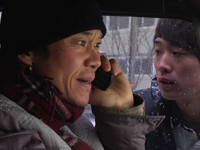
Negligence of Duty/Social Service Agent (복무태만) is a short story about a man who has delayed his military service. At 32 years old he has left his duty rather late, and instead of real military training he is given the task of a social service agent at a care centre. The man has no direction, no ambition, and creates conflict in his life in order to make it interesting. Unfortunately, despite the best efforts of director Kim Tae-yong (김태영), it is not.
The ‘slacker’ sub-genre can be a humourous and/or insightful exploration of people without aspirations, such as the excellent Trainspotting (1996). Negligence of Duty/Social Service Agent however is lacking in every sense, as the main protagonist is utterly uncompelling. He is simply an irritation and his 26 minute narrative ‘journey’, which reveals how his arrogance destroys what little semblance of life he has obtained, is unimaginative and unconvincing.
The one moment of interest comes from an argument between the central protagonist and the delivery man, which is amusing to witness how lack of respect for age and one’s job can create conflict in contemporary Korea. Yet rather than continue to explore this area, Negligence of Duty/Social Service Agent opts instead to dismantle the social service agent’s ‘life.’ But as it’s a dull and uninteresting one that the audience are not invested in, the film ultimately fails in creating empathy.
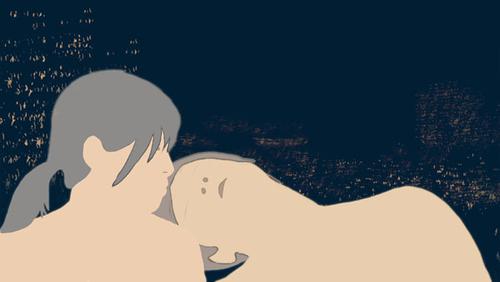
City (도시) posits an interesting question – what would life be like without boundaries? In this 7 minute animated short film, director Kim Young-geun (김영근) attempts to answer this conundrum by removing all traces of materialism including clothes, walls, buildings, subways and even the very floor itself. There is no narrative as such, merely viewing a day in which the animated characters continue their daily lives.
An average day without the boundaries of clothes
While this may initially seem akin to a peeping tom production, the animation is an interesting piece as it attempts to raise awareness of the proximity of those around each other once barriers have been removed. If the walls between apartments are gone, people would notice and be closer too their neighbours. If the floors and ceilings are gone, people would not feel alienated. This is especially the case as the City itself appears to be Seoul, a city in which millions of people inhabit but do not know each other.
Removing the boundaries of walls and streets, City conveys that everyone is interconnected
As intriguing an idea as City is, it quickly becomes tiresome as there is no character that introduces audiences to this world, no narrative arc in which audiences can invest. The animation itself (which omits bodily attributes) is also unimpressive. Scenes such as taking the subway are interesting, yet the static omniscient camerawork does nothing to enrich the film. City is a nobel attempt at revealing and deconstructing the man-made barriers that halt people from becoming friends and communities, and inviting the audience to see ‘the real’ in the postmodern society we all inhabit. However, without any protagonist or narrative to guide audiences through this brave new world, City is rather flat.
Promise (약속) explores the final moments of a difficult relationship
Promise (약속) is a short film that explores the final stages of a relationship between a husband and wife. However, their relationship is far from typical; the husband is comatose, and while his eyes may be open he has no physical functions whatsoever. His wife is also his carer, helping to wash, clean and dress her now incredibly sick partner. Promise is her story, played admirably by Kim Si-jeong (김시정), and her internal conflict between staying with the man she married or starting her life again.
The central protagonist takes care of her comatose husband
Director Yang Hyeon-ah (양현아) consistently frames his protagonist as alone and under pressure, as she must not only endure her husband’s illness but also the tenuous relationship with her bitter mother-in-law and her new boyfriend’s desperate attempts to start afresh together. Despite everything, she intends to be a devoted wife until the divorce is legally declared. Kim Si-jeong performs the role incredibly well as she changes from stoic to desperate, prepared to do anything to force a response from her spouse before it’s too late. Initially she appears uncaring, but her performance hides the many layers of the character until the final stages.
The central protagonist is constantly framed as isolated and under pressure
Promise is a poignant and compelling tale about the difficulties of separation. Ironically, what is perhaps most frustrating about the short film is that it is a short film. The short running time halts the more penetrative feature film that Promise should be. The narrative is a touching humanist story, one that deserves a longer running time and more probing analysis into the difficulties of ending this type of relationship in modern Korea. In its 25 minutes, Promise unfortunately cannot fulfill its potential. However, it is a truly captivating story that explores an emotional conundrum with maturity and dignity, and signals that director Yang Hyun-ah and actress Kim Si-jeong are talents to watch.
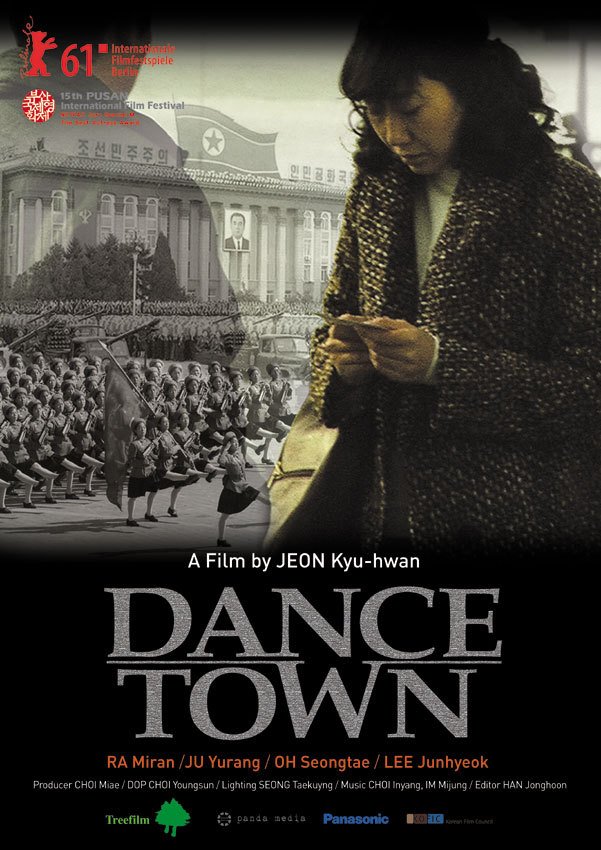
Dance Town (댄스 타운), the third installment in a trilogy preceded by Mozart Town (모차르트 타운, 2008) and Animal Town (애니멀 타운, 2009), is an exploration of life in a big city. Screenwriter/director Jeon Kyu-hwan (전규환) is indeed intrigued by the lives of ordinary folk and their daily lives, employing social-realist and humanist stylings akin to directors such as Mike Leigh. However, in his latest take on living in a metropolis, Jeon Kyu-hwan incorporates more political and ideological sensibilities as his central protagonist is a North Korean defector.
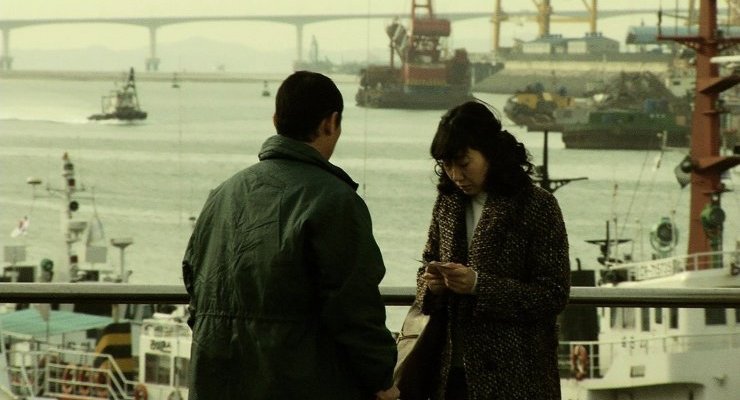
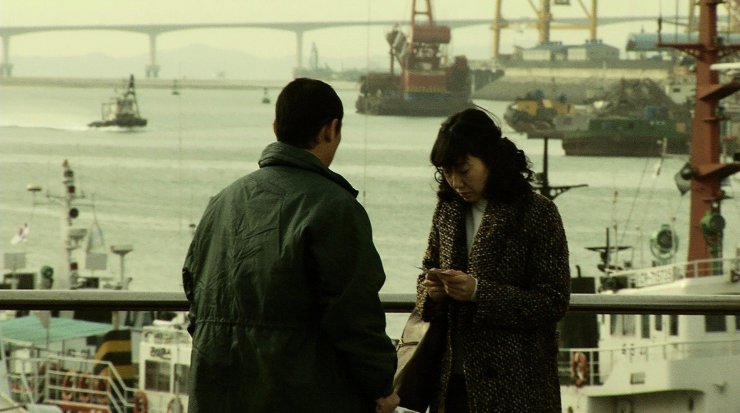
Lee Jung-rim (Ra Mi-ran 라미란) and her husband live in Pyongyang, North Korea. As a businessman, her husband regularly visits China and obtains ‘illegal’ items such as face creams and adult films from the south, which they enjoy together. That is, until a neighbour decides to report them to the authorities and the couple’s lives are plunged into danger. It has been arranged for Jung-rim to take a boat that will go to South Korea with her husband to follow shortly after, where they can live their lives afresh. Yet while Jung-rim arrives at the docks, her husband does not. Left with no other choice, she boards the vessel with hopes that her spouse will follow soon, waiting for word when they can be reunited.
Jung-rim must visit the docks to escape her country
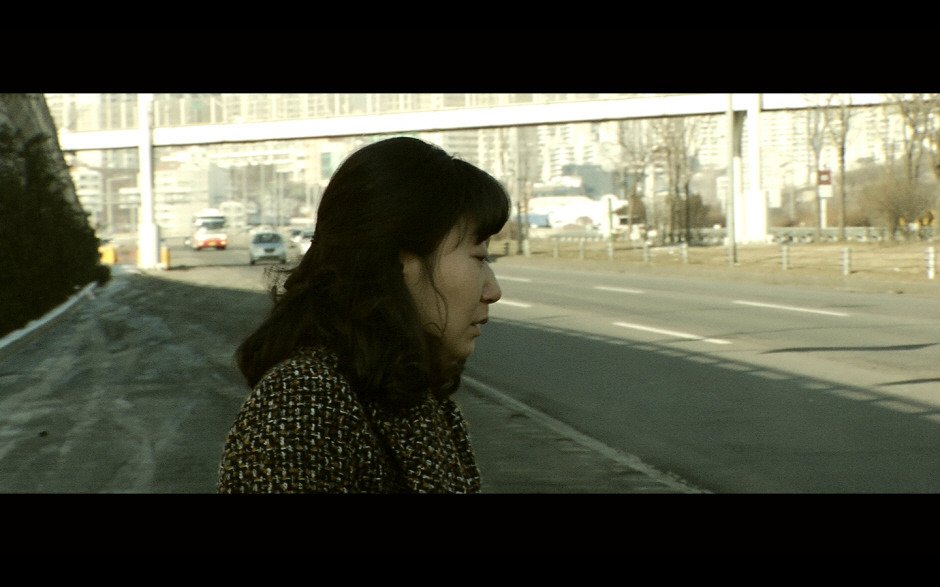
Jung-rim’s loneliness and isolation is expertly emphasised by the director, as he continually frames his central protagonist in doorways and large empty rooms that cannot help but draw audience empathy. Additionally, her clothes are incredibly well thought out as the colour often matches the walls which serves to convey her shyness and her chameleonic immigrant status as she blends into the backgrounds. When in the streets, Jung-rim wears a heavily padded ski jacket, her protection from the new environment in which she now resides. The mise-en-scene is vital in conveying and understanding Jung-rim’s character as her gentle nature and shyness is almost crippling, revealing little through dialogue. The one time that Jung-rim relaxes and sheds her (protective) clothing is the time that she is taken horrendous advantage of, and conveys Seoul as a relentless and unforgiving city.
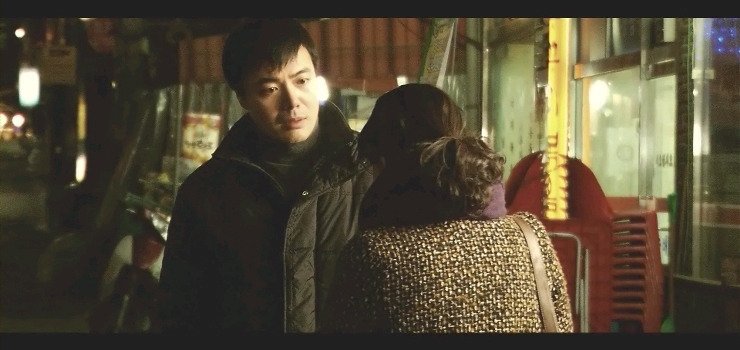
Jung-rim meets police officer Seong-tae
The representation of the metropolis, and the people within it, is bleak and damning. Jung-rim’s caretaker may seem nice and friendly, but she is secretly spying on her charge with CCTV cameras fitted throughout her apartment. At the community centre, Christians are intent on converting Jung-rim despite her clear reservations. As well as their attempts at manipulation, the Christian missionaries also coerce Jung-rim into charity work. This line of work serves to highlight the social injustices in Korean society, as the elderly and handicapped are unable to find accommodation, are divorced due to disability and forgotten. Worse still, police officer Oh Seong-tae (Oh Seong-tae 오성태) may initially seem to be a ‘comrade’, but hides a much darker, brutal side of his personality. While everyone is watching everyone else, the one true innocent of the film is left alone and vulnerable.
Director Jeon Kyu-hwan frames Jung-rim as alone and isolated
Verdict:
Dance Town is a bleak and disturbing character study, one that reveals city life as cruel and barbaric. Furthermore, the film is politically charged as Jung-rim’s life in Pyongyang is represented far better than the supposedly ‘great’ life offered by the capitalist South. However, the problem with Dance Town is that director Jeon Kyu-hwan tries to incorporate too much social commentary within and as such, certain themes that could have been probed further are given marginal fragments of screen time which ultimately detracts from the impact of the film. And yet, Dance Town is so raw, and Jung-rim’s journey so poignant, that the film will stay with audiences long after the finale and encourage those living in cities to ponder their own existence.
In the time of the Joseon Dynasty, corruption is rife; the funds needed for the people are being siphoned off and laundered by shady figures, and the conviction rate is low as the fearful citizens refuse to talk. The King, working hard to consolidate a power base from which to strengthen and unify the country, is in need of help. Enter Detective K (Kim Myeong-min (김명민), Joseon’s top investigator, charged by the King to find the scoundrels responsible and bring them to justice.
Detective K: Secret of a Virtuous Widow (조선명탐정: 각시투구꽃의 비밀), from the outset, firmly has its tongue in its cheek. Opening with an apparent suicide, K uses his keen intellect to prove its not the case. Yet he does so in a bizarre fashion, highlighting comedic features of the murder scene such as the incongruity of the faeces pattern, the physical disabilities of the servants that remove them as suspects, and the impairment that points to the real villain. K’s eccentric genius is equal only to his cowardliness and Charlie Chaplin-esque physicality, as he’s regularly involved in awkward situations from which he must flee. If this all sounds similar to Inspector Clouseau from the Pink Panther series, then you’d be correct as Detective K bungles his way from one crime scene to the next.
Detective K and his dog-thief partner evade the authorities
Acquitted by the King on false charges, K is sent to investigate the alleged suicide of a widow in a different province, as a cover for continuing his corruption investigation. Teaming up with dog thief Han Seo-pil (Oh Dal-soo (오달수), the duo must contend with poisonous flowers, quirky country folk, corrupt merchants, and assassins. During the course of the investigation, K meets the enigmatic femme fatale Han Gaek-joo (Han Ji-min (한지민), who may have more answers than she claims. Pulling strings from the sidelines is Minister Lim (Lee Jae-yong-I (이재용), but is he friend or foe? And how is this mystery intertwined with the suicide of an unrelated widow? Fumbling their way through each scene, K and Seo-pil are very entertaining and the recurring jokes are consistently amusing, such as K’s attempts to bribe everyone with an illustrated pornography book and constantly leaving his partner to take the blame in every situation. Similarly, the seductive Gaek-joo plays a wonderful role in making K even more ridiculously foolish, despite his best intentions.
Seductive temptress Gaek-joo creates a stir
However, what starts as a quirky and enjoyable romp through old Korea quickly becomes over-burdened with the array of narrative tangents offered. Rather than providing additional layers of mystery, or even silliness, the number of stories being presented serves to convolute the entire plot. For example, the addition of Christian persecution does not feel organic to the story, and the biased way in which the Christianity versus Confucianism debate is conveyed detracts from the enjoyment of the film. Luckily K – who reveals he was only baptized in order to receive a rubik’s cube – has the charm and swagger to recapture the tongue-in-cheek magic and keep the narrative flowing consistently.
K tries to use illustrated pornography to solve his predicament
Verdict:
Detective K is a charming and very amusing comedy, with enough wit and ingenuity to keep the narrative flowing well despite the convoluted plot threads. The recurring jokes and slapstick comedy routines make Detective K thoroughly enjoyable, thanks chiefly to the actors who all deeply understand the comedy style and perform accordingly. Hopefully, if a sequel does appear, the number of narrative devices will be scaled back to allow the true heart of the film – K and Seo-pil – to continue their whimsical and hilarious relationship.
Night Fishing (파란만장) cannot help but come with high expectations. It was directed by not one but two renowned auteurs, Park Chan-wook (박찬욱) and Park Chan-kyong (박찬경); at the 2011 Berlin Film Festival it won the coveted Golden Bear award for best short film; and it was filmed entirely using an iphone 4, adding curiosity to intrigue. And, even better, it doesn’t disappoint.
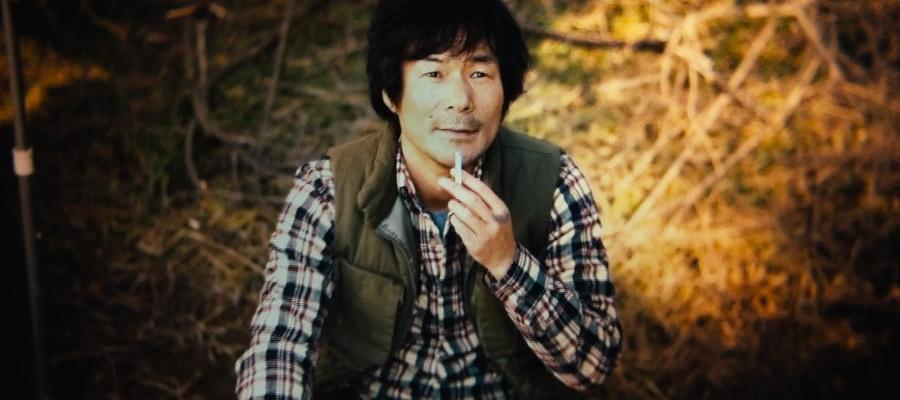
Beginning in a rather abstract/art house style, including a bizarre band playing on a country road, the camera eventually focuses on an unnamed man (Oh Kwang-rok 오광록) walking through a field. The man reaches a riverside, and begins to set up his fishing equipment, his camp site, and waits for the fish to bite. The style in which these scenes are framed and shot are surreal and ethereal, and combined with the ‘grainy’ low-quality texture of the camera, offer an otherworldly viewing experience. This is even more prevalent as night descends, with the low-level lighting adding a tense, Blair Witch-esque eerie atmosphere as the man continues to fish.
The man goes fishing in the ethereal atmosphere created by the iphone 4
As the night continues, the man is joined by a strange woman (Lee Jeong-hyeon 이정현) who may or may not have supernatural abilities, but her behaviour certainly does nothing to halt the sense of unease. Directors Park Chan-wook and Park Chan-kyong expand the mystery through exploring traditional Korea shamanism and how it provides hope and despair in equal measure. Their use of the iphone camera is incredibly sophisticated, employing a variety of filters and colours for different environments that continually infuse tension, bewilderment and shock.
At night, a bizarre and mysterious woman appears
Night Fishing is an incredible piece of filmmaking, even more so considering the technology and camera utilised. Equal parts thrilling, mysterious and intriguing, this short film of 33 minutes or so captures more intensity than productions 3 times its length. It also manages to tell a complete narrative story, while still leaving audiences with enough doubts and possibilities for it to lack closure. The cast are wonderful in their roles despite the short screen time, giving believable performances. Night Fishing is a premier example of taking a short, simple story and constructing a framework of mystery and intrigue around it, one that is wholly entertaining and fascinating to watch.
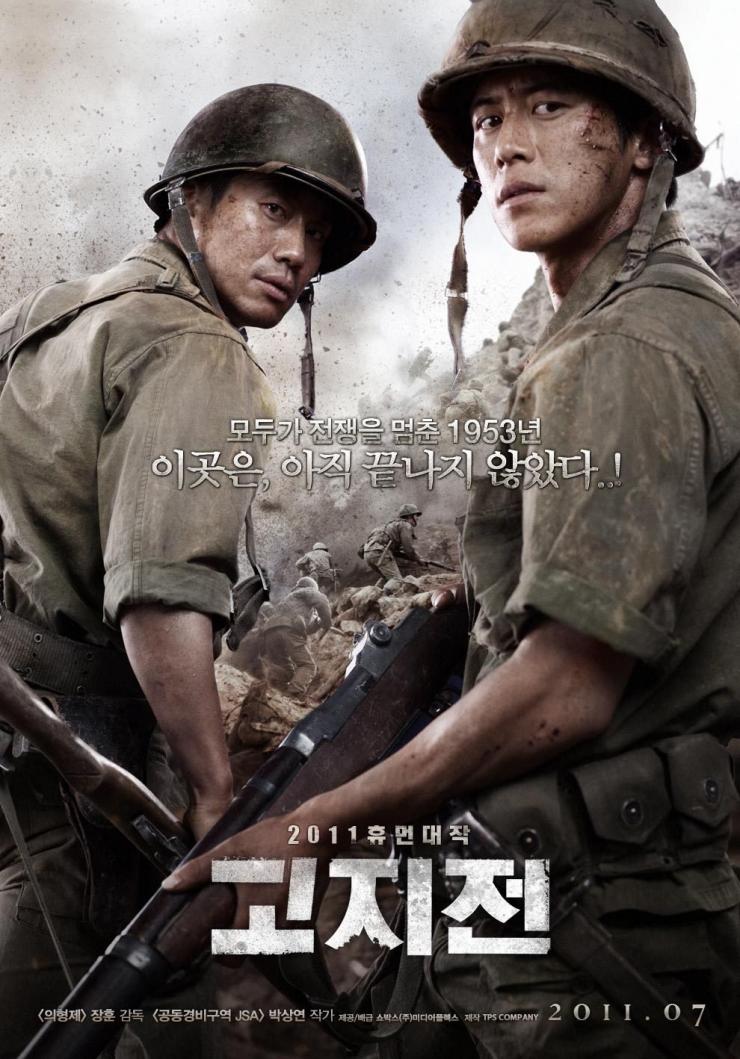
After years of intense fighting, the armies of the north and south have reached a stalemate along the 38th parallel. As the representatives of each country meet at Panmunjom to thrash out a treaty, there is one area where the war hasn’t ended; a solitary hill, which changes hands daily as each side pushes to extend their side of the border. This is the context within The Front Line (고지전), a stark and bleak narrative about the insanity of war, the stupidity of those in charge, and the lack of value that life has during conflict.
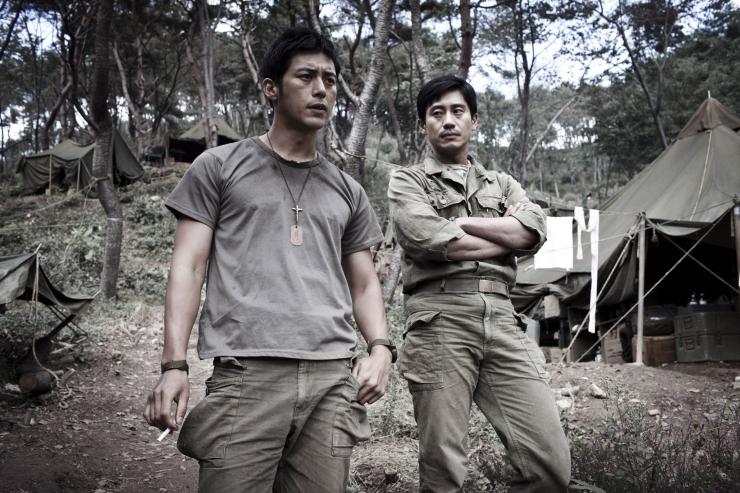
Kang Eun-pyo (Sin Ha-gyoon (신하균) is an officer with a rather comfortable job helping his seniors at Panmunjom. Frustrated with the lack of progress made, Eun-pyo openly criticises how inept his superiors are from both countries. Unfortunately his negative comments are overheard by a high-ranking official, and Eun-pyo is demoted to serve back on the front line. However, he has another task; a letter from the north was intercepted as it made its way through the southern postal system. Eun-pyo must find the mole at the camp, and uncover why the front line’s recently deceased general was killed by his own gun. Complicating matters further, Eun-pyo’s friend Kim Soo-hyeok (Ko Soo (고수) fights there, despite his status as ‘Missing In Action.’
Kang Eun-pyo (right) interrogates his friend Kim Soo-hyeok (left)
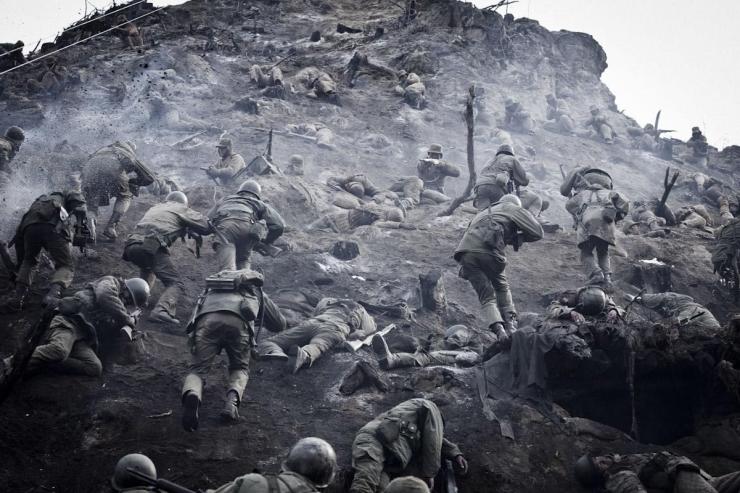
What follows is a classic case of ‘whodunit’ as Eun-pyo must find the culprit before it’s too late, yet he must also fulfill his military duties as a soldier and fight alongside the very group he is investigating, to reclaim the hill once and for all. Director Jang Hoon (장훈) and cinematographer Kim Woo-Hyung (김우형) must be congratulated for their amazing visual prowess as the battle scenes are incredible to behold. The beautiful but deadly vertical landscape is awash with mud, bodies and blood, but still the soldiers press on through trenches and jagged rocks. The sepia and washed out filters, combined with the hand-held camera movement places audiences in the center of the hike-and-fight confrontations, and drain any sense of hope and promise from the narrative. The techniques in which Jang Hoon films the hill connotes an unforgiving behemoth that can never be conquered, a barren wasteland build on the bodies of those who tried. Combined with the way the protagonists refer to it with personality traits, the hill becomes not only an insurmountable obstacle but also a discernible character in its own right.
The soldiers fight to reclaim the hill
The camaraderie between the soldiers is pivotal in The Front Line. Despite flaws, including morphine addiction and mental instability, the soldiers stick together as they have bonded through the horrors of warfare. When military leaders attempt to give orders, which are often ludicrous, the men tend to either ignore or refuse to follow them as they are keenly aware of the ramifications. In a country and institution so heavily reliant on obedience to superiors, the generals easily become figures of ridicule and stupidity. It is this camaraderie that makes Eun-pyo’s task so difficult, as his objectivity begins to waver as he is inaugurated into the brotherhood and the loyalty it provides. Even when representing the northern soldiers, director Jang Hoon shows the bonds between them as equally strong, yet are slightly different as senior officers such as Oh Gi-yeong (오기영) (Ryoo Seung-soo (류승수) are also involved, connoting perhaps the ideological differences. It is ultimately respect and survival instinct that enforces the ties between the soldiers, traits that the superior officers are connoted as lacking.
Camaraderie is a central theme within ‘The Front Line’
Yet, despite the beautiful cinematography and powerful notions of camaraderie, The Front Line is not without faults. The crux of the story – the insanity of fighting for a hill – becomes almost redundant under the weight of other convoluted narrative threads. This serves to lessen the intensity and futility of the situation(s) throughout the film, although in the final moments the impending sense of doom and the horror of war is thankfully revisited and enforced to poignant effect. The various narrative tangents also undermine Eun-pyo’s mission, the results of which are far from original and explored to greater effect in films such as JSA – Joint Security Area (공동경비구역 JSA). It’s a shame given the potential of the premise, for what could have been a powerful debate on the futility of war has resulted in a merely quite interesting one. However, The Front Line is certainly worth watching for the sumptuous art direction and heart-wrenching finale, and serves as another poignant reminder that ‘The Forgotten War’ is nothing of the sort.
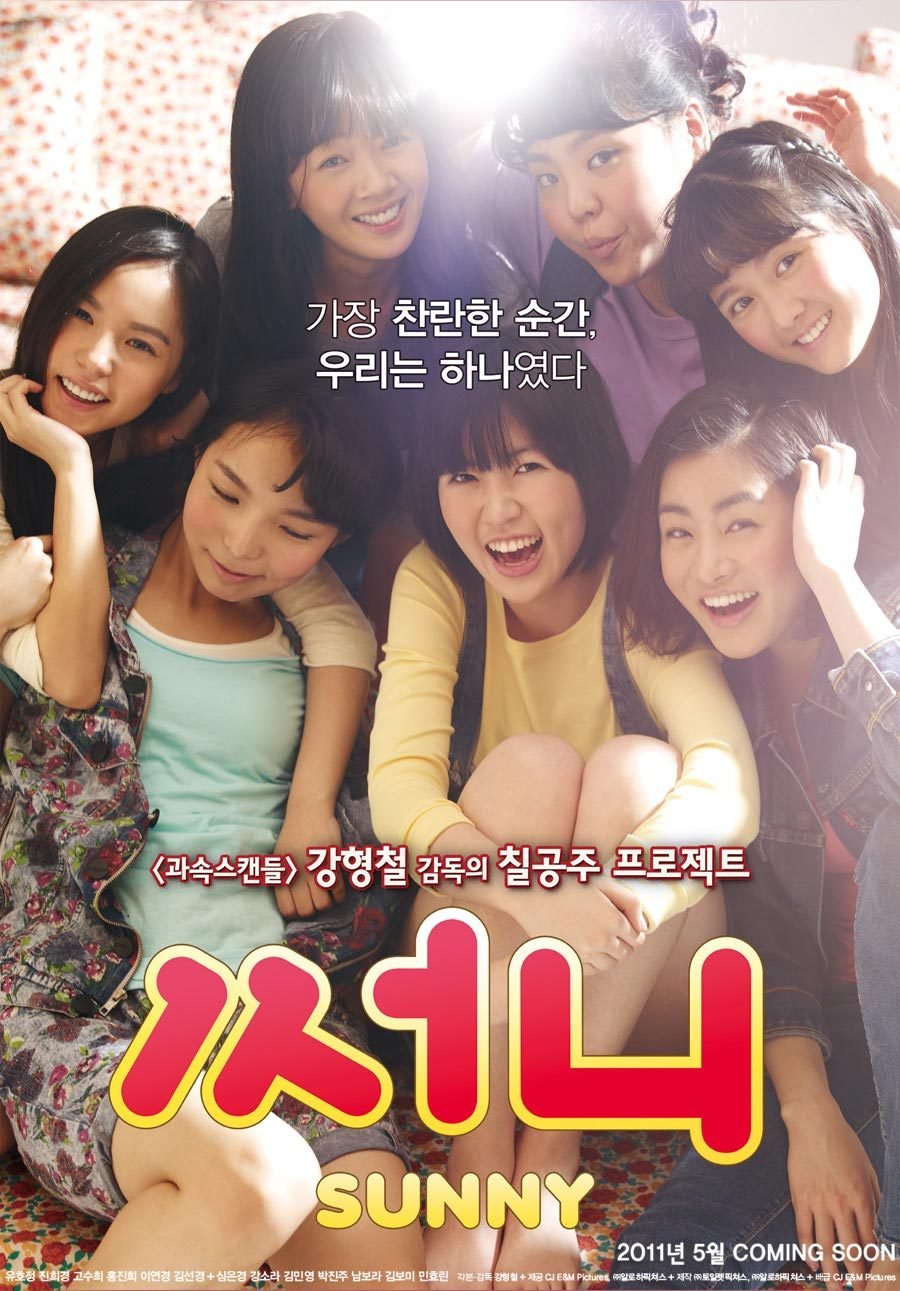
Sunny (써니) is labelled as a ‘coming of age’ film, which is slightly misleading; in actual fact, it’s a ‘coming of ages’ film, and one of the best examples of the subgenre.
Na-mi (Yoo Ho-jeong (유호정) is a 40-something housewife whose identity has become lost in the daily routines of domesticity. Her husband generally ignores her and shows no affection; her daughter is spoiled and doesn’t communicate. Na-mi’s life revolves around performing chores and familial duties within the sexist patriarchal framework to which she has become accustomed. What sounds like the basis for an intense drama is comedically interrogated by writer/director Kang Hyeong-cheol (강형철), who incessantly ridicules such archaic sensibilities in both overt and subtle ways.
As both her husband and daughter refuse to acknowledge their sick mother-in-law/grandmother, Na-mi visits the hospital alone. There the comedy begins, as the intricacies of relationships are picked apart. Na-mi’s husband receives all the credit for her hard work; star-crossed lovers on a TV drama are revealed as siblings; and Na-mi’s mother reminds her daughter that she was very difficult to raise.
Walking through the ward, Na-mi accidently meets old school friend Choon-hwa (Jin Hee-kyeong (진희경), who now suffers with cancer. As the two catch-up on old times, a plot is hatched – to reunite their group of friends before Choon-hwa’s time is up. Sunny then becomes a film of two stories; Na-mi as a child and the difficulties of starting school and making new friends, and adult Na-mi as she reunifies her friends after years of separation. Director Kang Hyeong-cheol (강형철) expertly handles each narrative and interlinks them so well that the film flows with ease. Just as young Na-mi meets friends and discovers her identity, so too does her adult counterpart whose identity must be rediscovered. This leads to some incredibly funny and touching moments, such as when young Na-mi’s lateness is contrasted with her adult-self constantly chastises her daughter for the same thing. Also young Na-mi complains she doesn’t have ‘cool’ clothes like her friends, while in adulthood she tries on her daughter’s school uniform only to be caught red-handed.
Na-mi must find her old friends, and in the process rediscover herself
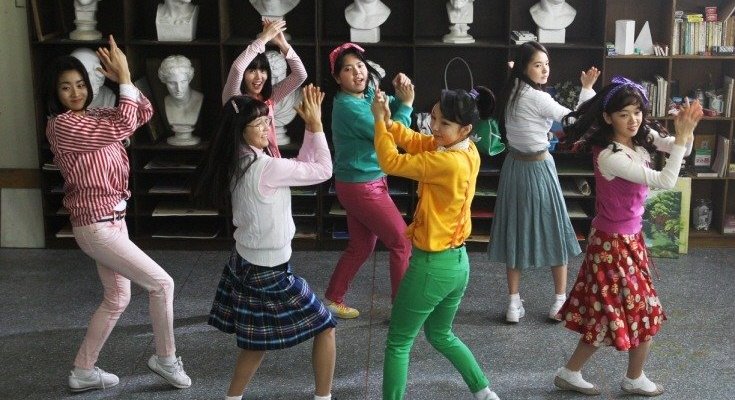
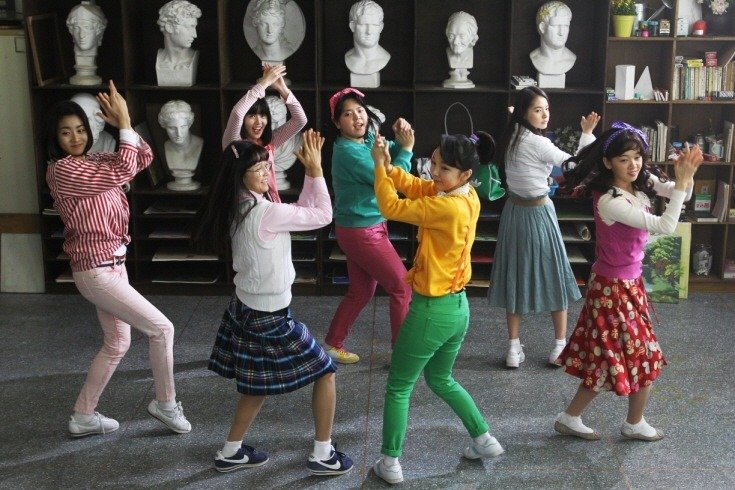
The journey of meeting new friends is joyous to see unfold. Young Jang-mi (Go Soo-hee (고수희) is a large girl desperate for surgery and loves fake eyelashes; young Jin-hee (Hong Jin-hee (홍진희) has the filthiest mouth in town; young Geum-ok (Nam Bo-ra (남보라) has dreams of becoming an author; young Bok-hee (Kim Bo-mi-I (김보미) plans to be the next Miss Korea; pretty Su-ji (Min Hyo-rin (민효린) is quiet and intense; and leader young Choon-hwa (Kang So-ra (강소라) is the powerful authority figure. The trials and tribulations that bring these characters together and bind them is a nostalgic love letter to the teenage years and to the 1960s. A political context is also comedically interrogated, as the group of girls (now called ‘Sunny’) face off against a rival group, as too do protestors and government forces in the same area. While the girls slap and pull hair, the moves are mirrored in the violent protest and pokes fun at power struggles at all levels. It’s also the music and dance of the era that brings the girls together, providing a great soundtrack to the coming-of-adolescent-age segment.
The girls become close friends through song, dance and school life
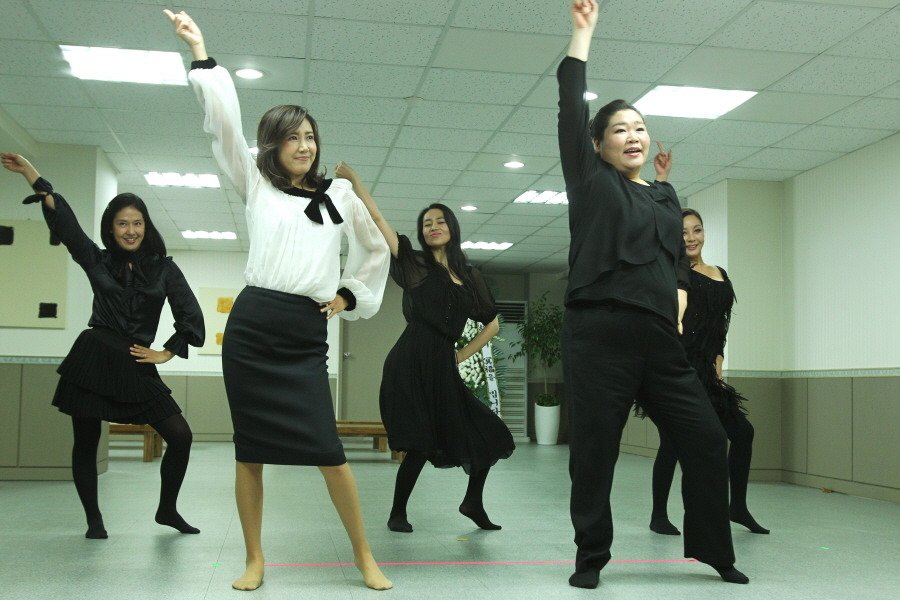
However, rediscovering Na-mi’s friends is equally as humorous and poignant. For some, life has been kind; for others, radically different from the plans they had as youths. For them all life is not what they had hoped for and their personalities changed accordingly, yet as they are gradually reunited they inspire each other to remember the hopes and dreams they once had. If that sounds sentimental, then that’s because it is as Sunny combines comedy and melodrama to great effect. The poignancy of rediscovering an old friend whose tumultuous life has resulted in hardship is intertwined with tongue-in-cheek humour that helps the protagonists to initiate change, and to remember the importance of friendship.
The women reunite and rediscover themselves
Verdict:
Sunny is certainly a ‘feel-good’ film that does a wonderful job of employing the nostalgia of the ’60s to help the characters grow in the present. It is also incredibly refreshing to see a film that portrays women so vibrantly. The tendency of portraying women as purely love interests or kick-ass chicks is completely jettisoned, allowing the actresses to simply be women in the contemporary world, which they clearly relish. In fact, there are very few male roles in the film and those that are are a far cry from the ideal man. This again helps to bolster the woman as they are not restricted by archaic notions of housewife/mother stereotypes, and can fully express themselves to the point that by the end of the film, they have all recaptured their true personalities. As Sunny is such a fun and sentimental film it cannot be as critical and insightful as other dramatic examples, such as Girl, Interrupted (1999), are. But then, Sunny doesn’t need to be as it’s such a funny, moving, uplifting and charming film in its own right.
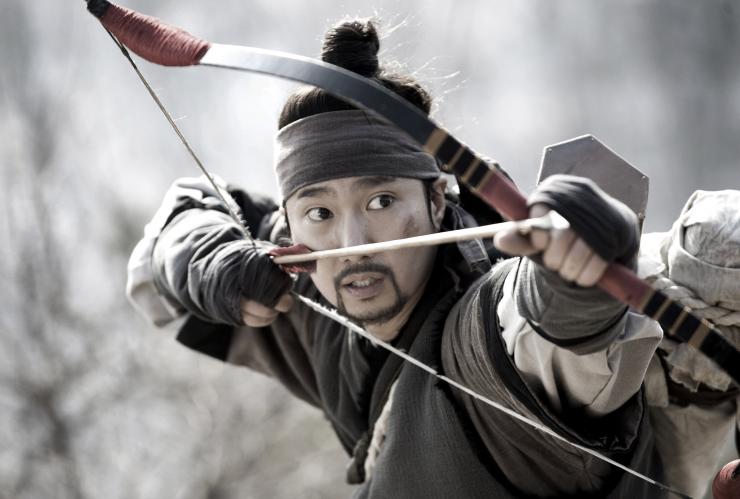
Set in 1636 during the second Manchurian invasion of Korea, Arrow, The Ultimate Weapon (AKA War of the Arrows) (최종병기 활) tells the story of Nam-e (Park Hae-il (박해일) and his sister Ja-in (Moon Chae-won (문채원). Forced to watch their minister father’s brutal assassination, the young Nam-e and Ja-in flee to a neighbouring settlement with their father’s prize weapon – a bow and set of arrows – as their only asset. As they become adults, both brother and sister are hardened to life, but Nam-e’s bitterness leads to the rejection of others. Ja-in on the other hand wishes to live a regular lifestyle, including marrying her sweetheart Seo-goon (Kim Moo-yeol (김무열).
On the day Ja-in and Seo-goon are to be wed, the settlement is attacked by a Manchurian battalion led by fearsome warrior Jyu Sinta (Ryoo Seung-ryong (류승룡). They slaughter any who resist and abduct the rest, forcing their captives to march north out of Korean territory – including Ja-in and Seo-goon.
Arrow is perhaps best described as Robin Hood meets Apocalypto (2006), as skilled archer Nam-e races against time to track down and save his sister and friends from the invaders. Screenwriter/director Kim Han-min (김한민) does a great job in establishing the characters through not only their childhood trauma, but also with a keen sense of comedy once in adulthood. The tension is palpable when the Manchurians attack during the wedding ceremony as the couple are ripped apart, villagers are butchered, babies are thrown down wells, and idyllic lifestyles are shattered. The first encounter between Nam-e and Jyu Sinta is also incredibly well introduced as the archer organically evolves from an annoyance to a threat.
Jyu Sinta and his warriors vow to kill Nam-e
In a film where chasing down the enemy is the focus of the story, Kim Han-min does a masterful job of making each scene as intense and thrilling as possible. The director employs a variety of techniques to this end, using various angles and styles to ramp up the tension to such a degree that the landscape becomes a character itself. As Nam-e comes close to completing his quest, and as the number of enemy soldiers decreases, the director puts a variety of obstacles in their paths that continually keeps the action thrilling and exhilarating.
Nam’e fights to save his sister and community
Unbeknownst to Nam-e, the group of abductees are split into two groups. As Nam-e follows the first group, Jyu Sinta’s battalion pursues Nam-e. The first, comprised mostly of males, is sent to a river crossing; the second, consisting mostly of young females, is sent to the Manchurian prince for his pleasure. A strong sense of nationalism arises in Arrow as the captives are tortured and humiliated. At the riverside, friends and allies are murdered for sport by the Manchurian forces. In a final moment of desperation, Seo-goon picks up a sword and fights for his people and proves his years of military service. Joined shortly after by Nam-e, they inspire a rebellion against their captors and destroy the dock, halting the forced immigration. Secondly, Ja-in is selected for the Prince’s pleasure. As he attempts to assault her, Ja-in picks up a sword and fights against her fate, cutting soldiers and the Prince alike. It’s incredibly refreshing to see such a strong female protagonist, as so often women are relegated to the role of ‘pretty-but-poor-and-needs-a-handsome-man.’ While Ja-in still requires saving, her character is established as a powerful woman who will fight to the last to protect her virtue, which by extension also serves as an allegory as the virtue of Korea. Nationalism is also invoked through the constant references to ‘tiger country’ and the presence of tigers as they are Korea’s national animal.
Ja-in fights for her (and Korea’s) virtue
Verdict:
Arrow is an incredibly enjoyable action/adventure film that rises above most other examples of the genre thanks to the ingenuity of director Kim Han-min, who offers refreshing takes on generic conventions. The addition of physical comedy also adds extra enjoyment to the viewing experience. However, Arrow doesn’t quite achieve the level of sophistication that premier examples of the genre, such as The Bourne Ultimatum (2007), provide. This is generally due to the fast paced nature of the film where the protagonists must go from A to B, which stifles character development. The cynical reviewer would no doubt call Arrow a ‘commercial’ film, a label that Kim Han-min openly detests, preferring instead ‘popular’ film. The director is correct – it is indeed popular (the highest grossing film of 2011) and fun, and is well worth watching.
When Saving Private Ryan (1998) was released, the style in which war battle scenes were filmed was forever changed. The intensity that accompanied the hand-held, debris-hitting-the-camera, point-of-view shot served to (almost) place audiences within the action and offered a more thrilling, and more compelling, viewing experience. This ‘raw’ method of filming battle sequences is arguably why the film received such universal praise, and why so many war films since have attempted to emulate the formula.
Brotherhood [Taegukgi] (태극기 휘날리며) employs the same techniques in depicting the Korean War, yet the structure is markedly different and all the better for it. While Spielberg unloaded the horrors of war in the opening 20 minutes (consequently resulting in the rest of the film to be rather dull by comparison), director Kang Je-gyu (강제규) wisely uses the style sparingly at first before building to a brutal finale.
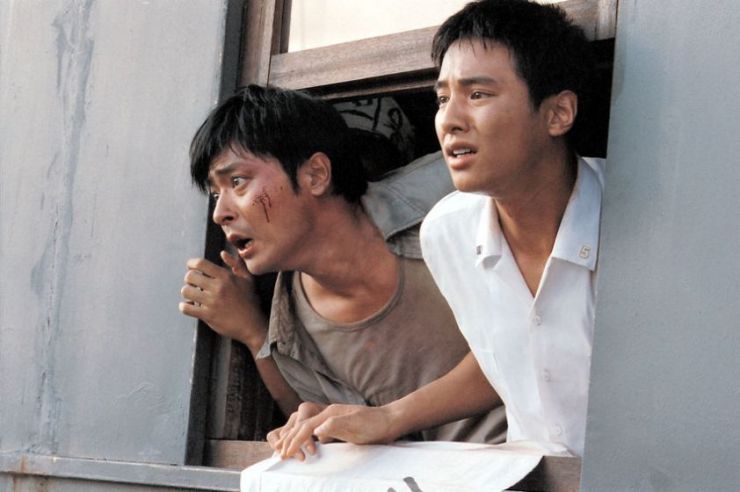
Brotherhood tells the story of two brothers, Jin Tae (Jang Dong Gun, 장동건) and Jin Seok (Won Bin, 원빈) who live a modest existence in central Seoul, 1950. Jin Tae, the eldest brother, is a street-smart shoe-shiner with ambitions to open his own shoe store. His younger 18 year old brother Jin Seok is a dedicated student, who carries the burden of the hopes of all the family. Jin Tae is soon to be married to Young Shin (Lee Eun Joo, 이은주), who co-owns a noodle restaurant with her future mother-in-law. The lifestyle of the makeshift family is humble but happy, and the cinematography is incredibly detailed in reinforcing the differences between the rich and poor, the city and country. When war inevitably breaks out, Jin Tae leads the family to the midland city of Daegu in an attempt to avoid the battle.
An incredible battle sequence in Brotherhood
Traditionally, war films present an ‘us vs. them’ framework in order to inspire patriotism and align the viewer with the central protagonist(s). Brotherhood refrains from such a simplistic dichotomy, as when the family reaches Daegu, Jin Tae and Jin Seok are forced into drafting for the military; when Jin Tae protests that his sibling has a heart condition, he is beaten for defiance. On the frontline, the enemy is berated by the South Korean soldiers for being ‘Communist’, but the definition, and the ideology, is lost beneath the torrent of inhumane behaviour by both sides. When the northern forces murder villagers, the south brutally dispatches them with flamethrowers; while the southern forces execute everyone who had signed up for Communist rallies, the north hangs women outside cities as a warning. The ‘enemy’ becomes interchangeable to the point where the enemy doesn’t exist, only who wronged who last, and how gravely.
Jin Tae and Jin Seok are forced into the military draft
At the front line, it becomes apparent that Jin Seok’s health condition is serious. As such, Jin Tae volunteers for every risky mission that arises in the hope of earning a medal, and thus the influence to be able to send his younger brother home. Faults with the plan quickly become clear, as Jin Tae becomes increasingly adept at his missions and begins to lose his compassion, while Jin Seok begs his older brother to stop and retain his humanity. The relationship is reminiscent of Sgt. Barnes and Sgt. Elias in Platoon (1986), however the duality represented in Brotherhood is intensified as the brothers fight for each other in their own unique way. Even more compelling is how Jin Tae begins to lose himself in the accolades and cheers of his fellow soldiers until atrocities become second nature, forcing Jin Seok to reject his brother and his noble intentions.
As the American soldiers land in Incheon, and the South Korean forces push north toward China, the brothers are locked in the emotional battle with each, the appalling situations they are pitted against, and history as the Chinese forces will inevitably counterattack. The acting by both leads is superb. Jang Dong Gun is incredible in his portrayal of shoe-shine boy turned psychotic soldier, and the rage in his eyes is genuinely terrifying. When he encounters the barbarity of war, his facial expressions of sorrow and anger convey more than words ever could. As the younger intellectual brother, Won Bin is equally tremendous as he continually gives an intense emotional performance whether suffering from health problems or fighting for his brothers conscience.
The aftermath of battle
Equally as profound is the musical score, which adds tangible intensity to the film. The incredible battle sequences, the tender emotional moments, and even the silences are all given extra poignancy thanks to the score, and the haunting orchestral soundtrack stays long after the final credits.
Critics of Brotherhood often cite that certain scenes and scenarios are rendered melodramatic, and detracted from the authenticity of the viewing experience. However, it’s this emotional intensity that makes Brotherhood such an incredible film. While war films traditionally tend to focus on the lack of humanity and portray ever-increasing scenes of violence – or ‘war pornography’ – Brotherhood veers away from that trend to focus on the emotional bonds between family, and emerges stronger for it.















![Brotherhood [Taegukgi]](https://hangukyeonghwa.com/wp-content/uploads/2011/11/photo5341.jpg "Brotherhood [Taegukgi]")


 hangukyeonghwa.com