Professor Kim Gyeong-ho fights for the truth using the law, which is being abused

Unbowed (부러진 화살) – ★★★★☆

Unbowed (부러진 화살)

Unbowed (부러진 화살)

Courtroom dramas are not a staple of Korean cinema, which is somewhat surprising given the tumultuous relationship between the social elite and corruption. And yet, in the past two years two prominent films based on real events have emerged – Silenced (AKA The Crucible) (도가니), about the sexual abuse of deaf children, and Unbowed (부러진 화살). Politically-charged, socio-cultural critiques are a huge reason why Korean cinema attracted such attention during the late ’90s, and while contemporary output has been much more commercially driven, it appears the industry could be moving back to what made Korean cinema so initially unique. If this is indeed a movement, then Unbowed is certainly part of it.

Unbowed, by director Chung Ji-young (정지영) who returned to the helm after a thirteen year absence, is based on the true story of a professor whose trial for unfair dismissal was rejected. Upset with the verdict, the professor challenged one the judges outside his home with a crossbow. The story, understandably, made headlines; but as time passed it became clear that the story reported in the press and the truth were markedly different. Director Chung Ji-young – who also co-wrote the screenplay with Han Hyeon-geun (한현근) – presents the tale of Professor Kim Gyeong-ho (Ahn Seong-gi (안성기) and his defence lawyer Park Joon (Park Won-sang (박원상) with a highly effective stark social realist aesthetic, much like the very logical, no-frills protagonists themselves. The result is a courtroom drama where the facts speak louder than any directorial style, and the infuriation when clear violations of the law are committed are palpable. However, the focus and development of the central two protagonists is stunted due to far too many characters and secondary narrative elements inhabiting the story, forcing the impact of scenes, and the film overall, to become lessoned.

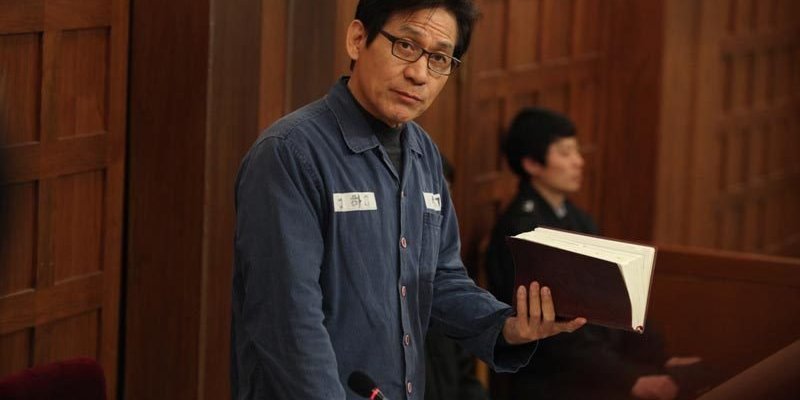
Professor Kim Kyeong-ho fights for the truth using the law, which is being abused

Professor Kim Gyeong-ho fights for the truth using the law, which is being abused

Interestingly, director Chung Ji-young opens Unbowed with the very event that made headlines as Professor Kim confronts the judge from his case with a crossbow. Yet rather than portray the entire confrontation from beginning to end, the professor’s subsequent incarceration is edited in as well as the journalism that appeared once the incident became public knowledge. While initially a tad frustrating, it becomes readily apparent that the filmmakers wish for the facts – rather than artistic license – to drive the narrative as well as the audience’s desire for more information. This is certainly a noble attempt, yet as the names of those involved as well as other features have been altered this is somewhat undermined. Luckily such a contradiction doesn’t detract from the overall narrative as from the outset the blatant disregard of the law by judges and lawmakers, the questionable evidence and Professor Kim’s charismatically stubborn refusal to submit continually shines through. Likewise the casting of Ahn Seong-gi as the professor is a masterstroke, who brings his incredible likability to the role yet also stretches himself into new territory conveying such a highly logical, intelligent, and occasionally cold protagonist with the utmost sincerity.

Unbowed largely succeeds due to the character of Professor Kim. Ahn Seong-gi portrays him as a humble yet highly intelligent man, a man of principals and ethics undaunted by the challenges before him. Scenes in the courtroom are wonderfully shocking and amusing as the Professor admonishes the judges for cutting him off during speeches, or for simply disregarding the law. An understanding of Korean culture, where seniority is incredibly important, makes such sequences all the more entertaining and are unfailing in creating a triumphant underdog narrative. Similarly the flashback scenes establishing the case, including the Professor’s time at university, prior court cases, and even family scenes, construct him as a genuinely likable and modest man, who simply wants nothing more than fairness for his students, his countrymen and women, and himself. However, the best examples of the courtroom  drama convey how the case fundamentally changes those involved and in this sense Unbowed stutters. From the outset Professor Kim is, despite his stubbornness, a great man which leaves little room for character development. There is only one instance where the film takes a decidedly dark tone for the protagonist, yet what occurs takes place off camera and the ramifications are only alluded to and not explored, which is a missed opportunity. Yet this lack of examination is also due to the great deal of focus bestowed upon defence lawyer Park Joon, who fights for the Professor’s freedom in his own unique manner.

Defence Lawyer Park Joon attempts to garner the support of the public using the media

Defence Lawyer Park Joon attempts to garner the support of the public using the media

Professor Kim’s relationship with defence lawyer Park Joon forms an integral part of the film and is executed well, with Park Won-sang highly competent in the role. The actors respond and play off of each other well, although they manage to form their alliance quite quickly and easily despite their protestations to the contrary. Oddly, the narrative often seems more concerned with Park Joon’s story as he must battle alcoholism, the bankruptcy of his company, the tug of war between his wife and an attractive journalist, and his disillusionment with the law due to a past mistake. If all this appears too much then you’d be correct, as there are so many narrative tangents that add precious little to the main arc that their inclusion is often quite redundant. It also comes at a price, as genuine character development is sacrificed in order to accommodate so many threads. The lawyer’s love interest, in the form of journalist Jang Eun-seo (played by Kim Ji-ho (김지호), is also critically underused as she offers little more than a female presence rather than a crucial figure in the development of the case. Additionally, Park Won-sang is unfortunately required to provide comedic relief, and despite these scenes acting as brief interludes they are generally a wholly unnecessary distraction from the Professor’s story. That said, as the trial begins to gather pace and focus is applied to the final verdict, Unbowed recaptures the verve and vitality that makes the story so compelling and enthralling.

The judges continually reject evidence and pleas that would clarify the truth

The judges continually reject evidence and pleas that would clarify the truth

Verdict:

Unbowed is a highly entertaining courtroom drama, filmed in a modest social realist aesthetic by director Chung Ji-young and featuring a charismatic and articulate performance by Ahn Seong-gi. Both of these features work wonderfully together in portraying the based-on-true-events narrative, adding realism, sincerity, and credibility to the plight of the Professor as well as highlighting corruption within the Korean legal system. While too many narrative threads involving defence lawyer Park Joon overburden the main arc, Unbowed is a great example of a Korean courtroom drama done right.

 ★★★★☆
Reviews
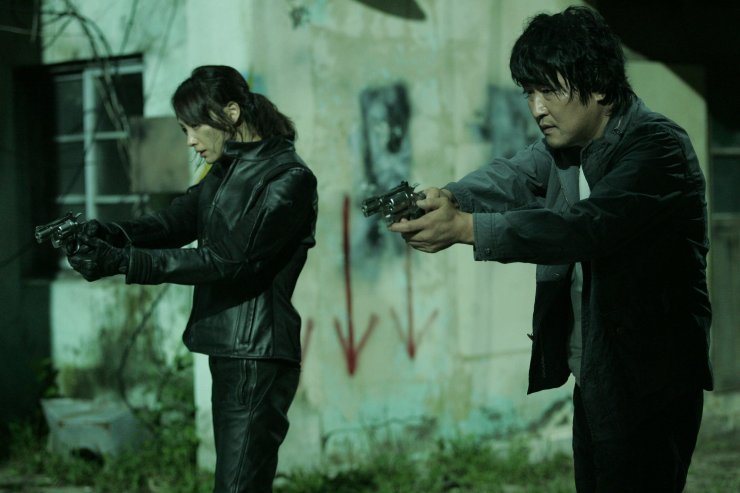
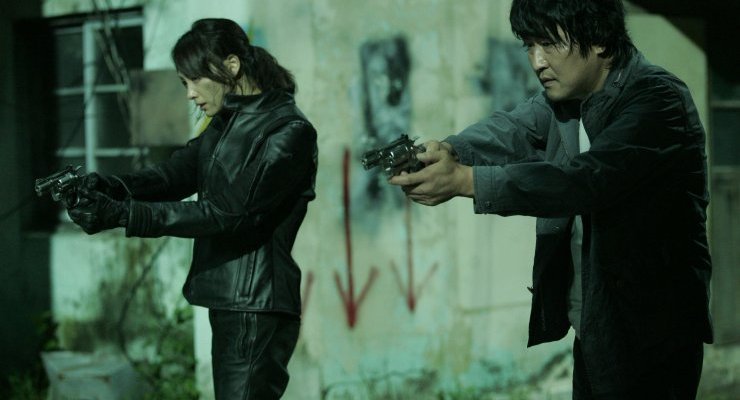
Eun-yeong and Sang-gil track down the perpetrator

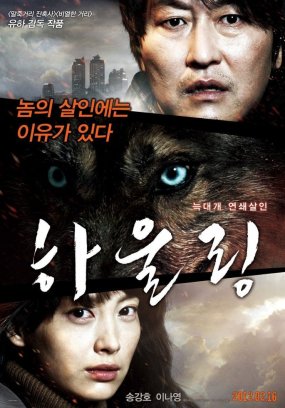
Howling (하울링) – ★★★☆☆

Howling (하울링)

Howling (하울링)

Feminism and misogyny are problematic concepts in Korean cinema. While contemporary output is slowly starting to reflect the complex roles inhabited by women in Korean society, the male-dominated industry often submerges female narrative arcs within the central hero’s quest. As such, women’s issues tend to be explored through art-house and independent films such as the works of Lee Chang-dong, Im Sang-soo and Kim Ki-duk, yet these productions can also be problematic either for portraying women’s issues from a male perspective, or for their limited domestic release. When a mainstream film attempts such endeavors, as with rom-com You’re My Pet (너는 펫), the results can be quite extreme.

Howling (하울링), from director Yoo Ha (유하), is promoted as a taut thriller involving the curious mix of spontaneous combustion and a killer wolf in a spate of homicides. Yet it is surprisingly primarily an examination of the difficulties faced – and endured – by women in the workplace. Yoo Ha is clearly more invested in this theme than the various disparate narrative strands, strands which never convincingly coalesce into a satisfactory whole making Howling an interesting yet disappointing thriller.

Jo Sang-gil (Song Kang-ho (송강호) is called to the scene of a bizarre crime in which the victim seemingly died from spontaneous combustion. However, the presence of a wolf, stated from the testimony of a nearby drunkard, adds a complicated twist to the  homicide. Reluctant to take the case yet desperate for promotion, Sang-gil begins to investigate with rookie cop Cha Eun-yeong  (Lee Na-young (이나영), a partner he makes clear he neither wants or needs thus forging an antagonistic relationship. However, as savagely mauled bodies begin to appear, it becomes apparent this is no simple investigation and the hunt for the wolf is on. Sang-gil’s selfish motivations threaten to jeopardize the entire case while Eun-yeong’s by-the-book professionalism may well be the key to unlocking it. While Sang-gil attempts to overcome domestic issues and Eun-yeong the rampant misogyny within the police force, the two cops must set aside their differences to solve the mystery of the wolf murders.

Sang-gil and rookie Eun-yeong reluctantly investigate together

Sang-gil and rookie Eun-yeong reluctantly investigate together

Howling opens as thoroughly standard fare with an unexplained death with hints of foul play, the rugged results-at-any-cost cop put on the case, and his forced partnership with an idealistic rookie which creates tension. However the film begins to excel when such American TV cop drama tropes are eschewed, and greater focus is bestowed upon the central pair and how they are forged within the Korea cultural system. For Sang-gil, as a single father of two attempting – and failing – to provide and take care of his family, his flaws are readily apparent. Continually passed over for promotion and mocked by co-workers, Sang-gil works hard on the case yet selfishly keeps the vital information to himself in an effort to obtain praise, and advance in the force. While the tough cop is very much to blame for the debacles that ensue, director Yoo Ha conveys him as a sympathetic protagonist while portraying the real enemy as the ‘points system’ in place within the police force as a means for establishing assessment. However, Howling is in fact Eun-yeong’s story. As an intelligent, ambitious, and diligent woman Eun-yeong possesses all the skills necessary to become a high-ranking detective. Yet from the outset her male colleagues think quite differently, ordering her to clean and arrange files, make crude jokes about her sexuality and relationships with others, as well as making sexual advances. The sequences in which Eun-yeong is forced to endure such torments are simultaneously chilling and infuriating, as the director meticulously composes tense, powerful scenes that emphasize her secondary status. As such, Howling is an incredible exploration of the role of women in the workplace in contemporary Korea.

The wolf goes on the prowl on the streets of Seoul

The wolf goes on the prowl on the streets of Seoul

Yet as Eun-yeong’s trials take center stage within the narrative, the importance of the murders themselves dissipates. The homicides are generally quite farcical, from a bizarre instance of spontaneous combustion to the killer wolf stalking the streets of Seoul for victims. This is unfortunate as while these devices are somewhat trite the motivations behind the deaths are quite striking and provide another instance of keen social commentary. The importance of the examination is lost, or rather subsumed, beneath the various sub-plots and red-herrings intended to add mystery to the narrative, while the unbalanced focus bestowed upon the misogyny within the police force also detracts from any shocks. Interestingly, scenes in which Eun-yeong endures tirades of abuse carry much more potency and impetus than the murders, highlighting the director’s clear area of investment. Director Yo Ha has simply attempted to achieve too much within the running time, and as such each narrative strand suffers and doesn’t manage to coalesce or wrap up threads convincingly. Ultimately it is Eun-yeong’s story, rather than the killer wolf, that takes priority and Lee Na-young performs the role incredibly well simultaneously conveying tenacity and victimization with skill. Song Kang-ho, meanwhile, gives a solid rendition of a faulty cop yet he is never really stretched as in his prior films. As such, Howling is very much a thriller about the abuse of women in contemporary Korea first, and a murder mystery second.

Eun-yeong and Sang-gil track down the perpetrator

Eun-yeong and Sang-gil track down the perpetrator

Verdict:

Howling is an interesting thriller, one that attempts to blend an array of socio-cultural critiques alongside traditional cop fare with spontaneous combustion and a killer wolf thrown in for good measure. Director Yo Ha never manages to converge all the disparate threads into a satisfactory whole, but he excels in conveying the misogyny endured by women in contemporary Korea, with some riveting scenes and a great performance by Lee Na-young.

★★★☆☆

Reviews
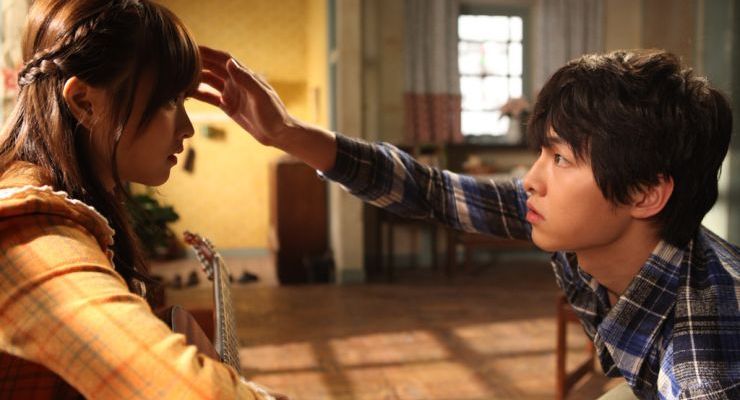
Su-ni and Cheol-su become closer

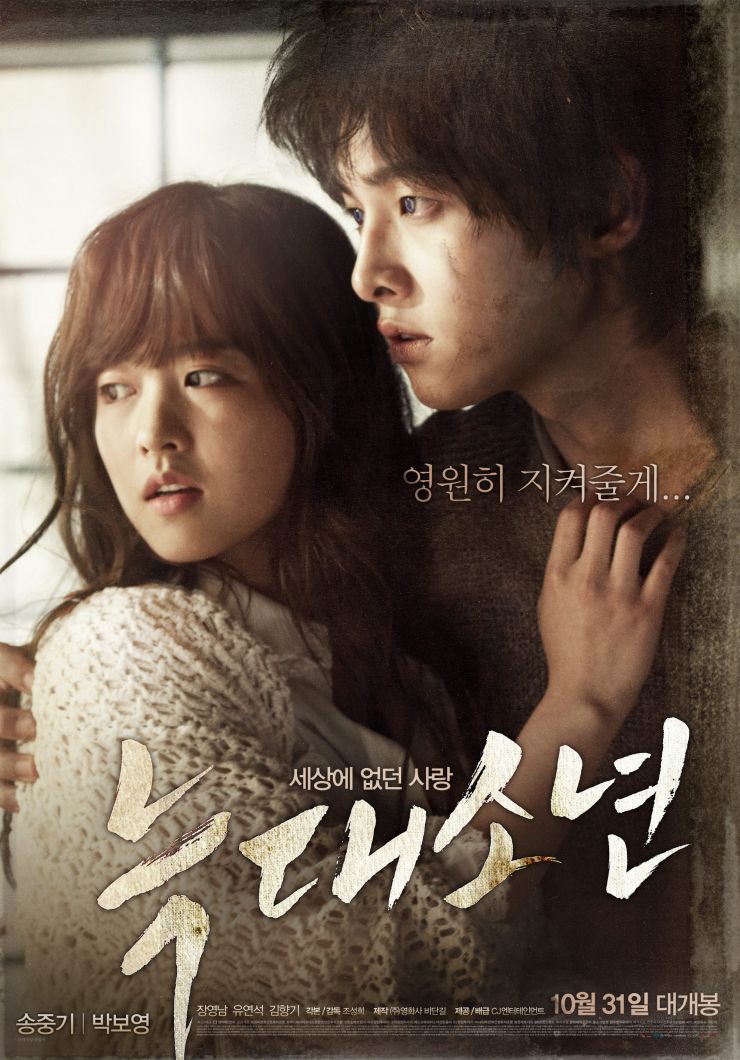
A Werewolf Boy (늑대소년) – ★★★☆☆

A Werewolf Boy (늑대소년)

A Werewolf Boy (늑대소년)

Fairy tales, when filmed by a director of vision, can be astounding cinematic endeavours. The universe(s) constructed in depicting such fables highlight the stylization, compositional competence, and sense of colour and light of the person at the helm. Yet what truly makes a classic cinematic fairy tale is the morality tale within, the vital life lessons that occur in the evolution of a child into an adult. The shattering of innocence by the harsh outside world and the often problematic romance of the central heroine/hero add layers of tragedy that ground the fantastical narrative into relatable, almost nostalgic, material for audiences. Tim Burton’s Edward Scissorhands, for example, deftly combines the fantasy worlds, socio-cultural critique, and pure romance within his stunning directorial style, a feat which he has never managed to replicate.

A Werewolf Boy (늑대소년) has a lot in common with Edward Scissorhands thematically, but is it’s own unique entity due to the phenomenal visual style of writer/director Jo Sung-hee (조성희). His compositional style, choice of camera shots and angles, and keen eye for colour and lighting make A Werewolf Boy a truly gorgeous visual experience that wonderfully serves to emphasize the mixture of surrealism, horror and romance within the story. That said, the development of certain characters – notably the werewolf boy himself – as well as pacing issues and ambiguous resolution(s) detract from an otherwise sumptuously romantic fairy tale.

As an old woman living in America, Su-ni receives a phone call about the sale of a countryside house her family own. Returning to Korea and visiting the abode with her granddaughter, Su-ni begins to reminisce about the events that occurred there in her youth. The young Su-ni (Park Bo-yeong (박보영) and her family move to the country manner due to her ill health, yet the young girl is also suffering from depression. During unpacking, Su-ni discovers a feral boy, hungry and dirty and in need of care. While waiting for a suitable place to send him, the family take him in and name him Cheol-su (Song Joong-ki (송중기). Initially hesitant, Su-ni begins to train Cheol-su like a dog, bringing the pair closer together. Yet her growing affection for the werewolf boy is noticed by spoilt rich-kid Ji-tae  (Yoo Yeon-seok (유연석) who desires Su-ni for himself, and begins to plot his rival’s downfall.

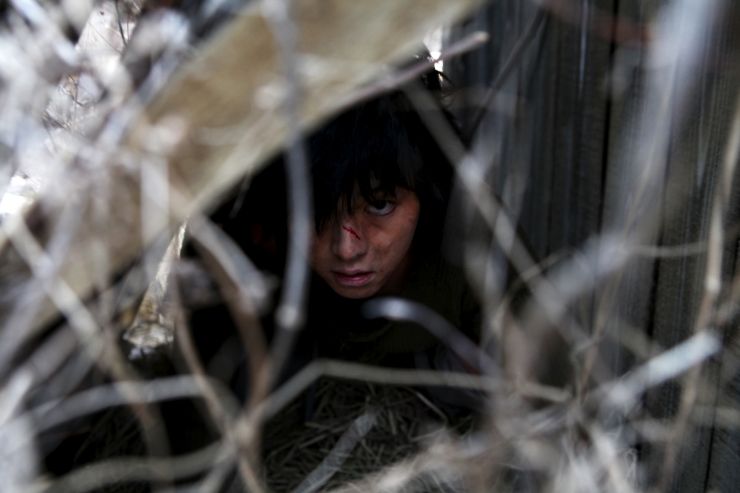
The werewolf boy Cheol-su is found stalking the grounds

The werewolf boy Cheol-su is found stalking the grounds

As per fairy tale requirements, A Werewolf Boy is bookended by scenes featuring Su-ni as an old woman reminiscing about the past and caught in the moral dilemma of putting that time behind her. Director Jo Sung-hee presents these sequences with a stark realism, draining the colour from the landscape and effectively conveying the area as decrepit and lacking. The juxtaposition between the bookends and the central nostalgic tale is enormous, with the warm colourful hues wonderfully conveying the happiness and magic of Su-ni’s childhood. Indeed, even the colours of the decor and costumes worn by the protagonists reflect the romanticism of the time, while the wondrous use of light breaking through clouds, windows and doors is often beautiful to behold. Combined with the excellent composition and keen sense of space, as well as intriguing camera shots, A Werewolf Boy often appears as if from a painting or illustrated novel, and is quite breathtaking. Scenes such as Su-ni’s discovery of Cheol-su’s dark, shadowy cage is presented in eerie symmetry adding genuine thrills and horror, contrasted with the romantic hues of the children playing football on a hilltop during sunset. A Werewolf Boy is an incredible showcase of the director’s visual style.

The narrative is in-keeping with the visuals through the whimsical romantic tale between Su-ni and Cheol-su, developing their innocent love naturally through an assortment of comical and emotional scenes.  There are also elements of fun silliness to the proceedings with Cheol-su as a half-man/half-wolf which are a natural fit within the sub-genre, but may turn some audiences off. Yet this conveys the sense that the film doesn’t take itself too seriously, adding a light-hearted approach amongst the variety of fairy tale attributes it contains. The fanciful nature does mean however that the impact of social critiques of the ignorance towards war orphans and governmental responsibility are somewhat undermined for the sake of brevity, with the farcical nature of officials belying their statuses as the real monsters within society.

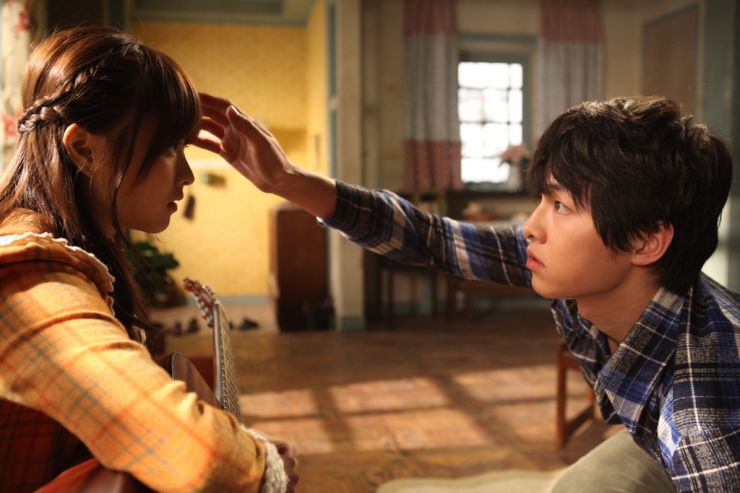
Su-ni and Cheol-su become closer

Su-ni and Cheol-su become closer

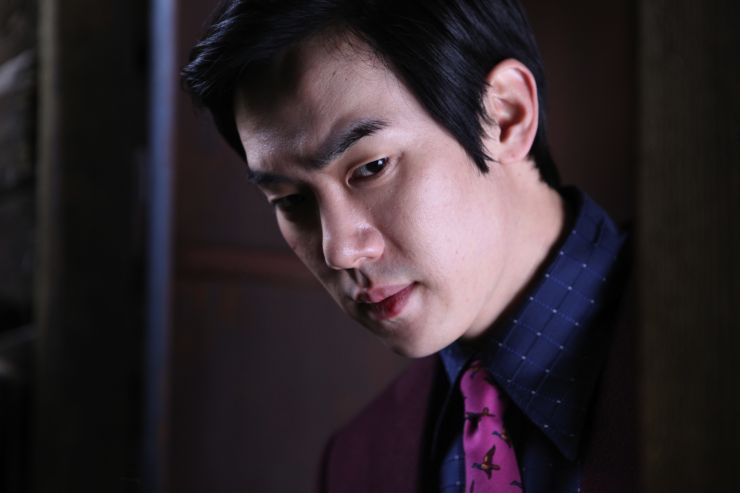
Yet the real ‘monster’ within A Werewolf Boy is spoilt wannabe tycoon Ji-tae, superbly performed by Yoo Yeon-seok. His interpretation of the villainy and arrogance of Ji-tae is incredibly compelling, while his dark clothes and over-zealous yuppie fashion style contribute greatly to the characterisation. Ji-tae’s lust for Su-ni and jealousy regarding Cheol-su forges the classic love triangle at the center of the narrative. Yet this area features one of the film’s biggest weaknesses, as while Su-ni and Ji-tae are developed well the same cannot be said for werewolf boy Cheol-su, perplexing given his status as the titular character. While Su-ni’s innocence and compassion – wonderfully conveyed by Park Bo-yeong – are tested and strengthened, and Ji-tae’s bitterness and resentment grow and fester, Cheol-su generally continues to growl and appear sorrowful. Song Joong-ki does well in expressing emotional distress without the aid of language, yet his role is highly limited within the narrative which is a source of frustration. This underdevelopment, which is also applicable to the (all-too-brief) government officials, results in a finale that is not as strong as it could have been in terms of both romanticism and symbolism. That said, it is during the resolution that Cheol-su finally takes center stage and attempts to fulfill his potential, yet the film is very much Su-ni’s and it is a delight to see a narrative structured around an interesting and fun female protagonist.

The villainous Ji-tae plots his rival's downfall

The villainous Ji-tae plots his rival’s downfall

Verdict:

A Werewolf Boy is a beautifully shot, visually stunning fairy tale and a genuine testament to writer/director Jo Sung-hee’s style. The use of colour, lighting and composition work harmoniously together in conveying a wondrous nostalgic tale of innocence and love, ably performed by the cast. While certain protagonists are a tad underdeveloped, A Werewolf Boy is an engaging, highly enjoyable and delightful fable.

★★★☆☆

Reviews
Choon-hyang falls for Bang-ja's charms, leading to erotically charged sequences

The Servant (방자전) – ★★★★☆

The Servant (방자전)

The Servant (방자전)

The ‘erotic period drama’ has almost become a sub-genre unto itself. In recent years narratives have become increasingly more concerned with the sexual scandals of the ruling elite of eras gone by, and the impact such affairs have on the governance on the region. Rather than the sexless morality consistently promoted by the aristocracy, records clearly indicate a swathe of sexual liaisons which contemporary filmmakers seem determined to commit to celluloid.

The Servant, written and directed by Kim Dae-woo, certainly fits well into the category and while sexual sequences are initially misogynistic they are highly erotically charged, adding passionate depth to the central couple. Yet it is the incredible performance by Jo Yeo-jeong as dutiful albeit entrapped feminist Choon-hyang that makes The Servant such a compelling period drama, providing a poignant humanistic grounding set against a background of betrayal and corruption during the Joseon era.

During the Joseon Dynasty, a renowned crime lord (Kim Joo-hyeok (김주혁) recounts his path into the underworld to a scribe, with the intent to publish the autobiographical story and reveal the truth behind his descent into crime. Surprisingly the gangster’s tale begins as a humble servant, or Bang-ja (방자), in service of ambitious aristocrat Lee Mong-ryong (Ryu Seung-beom (류승범). Upon hearing of the beauty of a local woman named Choon-hyang (Jo Yeo-jeong), the daughter of a ‘gisaeng house’ owner, Mong-ryong visits to see for himself. Choon-hyang’s beauty has not been exaggerated, and Mong-ryong insists on meeting her in private in an attempt to woo her. Yet Bang-ja is also captivated by Choon-hyang, and so begins a rivalry between the master and servant for her affections. Tutored in the art of seduction by infamous Lothario Mr. Ma (Oh Dal-soo (오달수), Bang-ja successfully wins Choon-hyang’s heart yet in doing so unleashes a wave of ramifications that leaves all of them irrevocably changed.

The crime lord recounts his history as a servant (Bang-ja) to a scribe

The crime lord recounts his history as a servant (Bang-ja) to a scribe

The Servant is a re-imagining of the classic ‘Choon-hyang’s Tale’, told from the perspective of the titular servant Bang-ja, and as such is a much more male-centered narrative. This is both a blessing and a curse as while the shift detracts from the feminist perspective, Choon-hyang’s strength and passion are idolized through Bang-ja allowing for more poignant, romantic storytelling. Writer/director Kim Dae-woo’s interpretation also expresses a highly interesting variation on the tale as he has chosen to forgo the themes of chastity in favor of scandalous sexual liaisons, yet still foregrounds the issues of social status, tyrannical government officials, and women’s rights to produce a refreshing and socially aware take on the subject.

Kim Dae-woo’s screenplay – as well as his directorial style – does a wonderful job in exploring such concepts with a sexual twist, as the motivation behind all conversations and undertakings involves discussions of sex and sexual power. The relationship between Bang-ja and Choon-hyang wonderfully explores such dynamics as despite the romantic gestures, passionate physicality and development of love, their relationship can never be accepted due to social status adding genuinely moving melodramatic fatalism to the proceedings. Juxtaposed with their situation are the laughable attempts to woo Choon-hyang by aristocrat Mong-ryong, which serve as comical highlights as well as a source of frustration as despite his awkward masculinity Mong-ryong is by far the better suitor. Choon-hyang, and most notably her body, is continually used as a bargaining chip by those around her as she precariously walks the fine line between dutiful daughter/love interest and independent woman. Actress Jo Yeo-jeong is absolutely enthralling in the role as she conveys the unapologetic resolve to her family with strength and dignity yet still emphasizes her own desire to escape the rigid social hierarchy with passion and verve. Such is Jo Yeo-jeong’s skill and prowess that it’s difficult to imagine any other actress in the role, as she embodies the plight of Choon-hyang wholly and with sincerity.

While Jo Yeo-jeong’s performance is pivotal in making The Servant such an enthralling film, unfortunately a large part of the advertising campaign – and indeed, word of mouth – focused more prominently on her sexual scenes. The sequences themselves are highly erotic, arguably the most erotic within mainstream Korean cinema, as Jo Yeo-jeong’s incredibly glamorous figure is fully on display as she and co-star Kim Joo-hyeok commit themselves fully in conveying the utmost passion. Such scenes are, at least initially, highly problematic however as the first liaison is highly misogynistic and certainly falls into the category of sexual assault – perhaps even rape – a stark contrast with Kim Dae-woo’s prior sexual sequence in Untold Scandal. Yet despite this the resulting sexual sequences are not employed merely for titillation, as they convey the unbreakable passion and love between the central protagonists and infuse the relationship with romance and enchantment.

Choon-hyang falls for Bang-ja's charms, leading to erotically charged sequences

Choon-hyang falls for Bang-ja’s charms, leading to erotically charged sequences

Yet despite the fascinating exploration of the role of sexual power, The Servant falters during the final act. In his bid to offer a fresh take on the classic tale and offer a narrative twist to surprise audiences familiar with the story, Kim Dae-woo’s finale feels forced and contrived as he attempts to resolve all the narrative strands. While his technique allows the protagonists to come full circle, the tone is markedly different from prior events and frustratingly reduces the status of heroine Choon-hyang. That said, the impact of such melodramatic scenes linger long after the credits.

In terms of performance, Jo Yeo-jeong largely makes the entire film her own due to her tremendous prowess and charisma, although she is ably supported by her co-stars.

As the titular servant, Kim Joo-hyeok is highly effective as a man fully aware of his dire social status yet cannot control his impulses. He conveys his unique brand of dualism very well as he gallantly strives to help Choon-hyang or simply to be noticed, yet scant seconds later is begging for forgiveness for overstepping his social boundaries. Special mention must also be given to his scenes with infamous Casanova Mr. Ma, played by legendary supporting actor Oh Dal-soo. As a master in the art of seduction Oh Dal-soo is on perfect form and is incredibly humorous and heart-warming, offering comical interludes to the melodramatic scenes. As the teacher to Kim Joo-hyeok’s student, the pair play off each other effectively, discussing not only the techniques of seduction but also the ramifications.

Ryu Seung-beom is wonderfully sadistic as scholar Lee Mong-ryong, oozing villainy and moral corruption throughout the film. Yet the actor also skillfully conveys the sensitivity and frailty of Mong-ryong, particularly in the first act – ably accompanied by ‘feminised’ clothing and mise-en-scene – that places him in contrast with Bang-ja’s rugged masculinity well. As such Ryu Seung-beom portrays a more tragic ne’er-do-well, one poisoned by bitterness and jealousy.

Bang-ja and Choon-hyang are punished for their transgressions

Bang-ja and Choon-hyang are punished for their transgressions

Verdict:

The Servant is a wonderfully scandalous Joseon era melodrama, and a highly engaging and compelling reinterpretation of the classic tale. The themes of social inequality, sexual liaisons and women’s rights are expertly intertwined by writer/director Kim Dae-woo, while it is Jo Yeo-jeong’s seminal performance that remarkably emphasizes the plight of Choon-hyang. While elements of misogyny and a slightly contrived final act are apparent, The Servant is a powerfully seductive film about the power of sex and love in a bygone era.

★★★★☆

Reviews
King Gwang-hae becomes increasingly paranoid as attempts against his life are made

Masquerade (광해, 왕이 된 남자) – ★★★★☆
Masquerade (광해, 왕이 된 남자)

Masquerade (광해, 왕이 된 남자)

Mark Twain’s seminal novel The Prince and the Pauper has long endured arguably for the manner in which it exposed the gulf between the upper and lower economic classes. The trials and tribulations that Prince Edward and Tom Canty undertake allow Twain to explore the vast lifestyle differences amongst the ‘haves’ and ‘have nots’, with each protagonist utilising their prior experiences to emphasise the hardships, and the unfairness, of both existences. In doing so the story has resonated with audiences of all socio-economic backgrounds, and in the contemporary financial climate, is perhaps even more relevant than ever.

With Masquerade, screenwriter Hwang Jo-yoon has adapted Twain’s novel to Joseon dynasty Korea, with the case of mistaken identity transferred between King Gwang-hae and a lowly comic actor. With a well-structured and highly entertaining script, incredibly competent directing from Choo Chang-min, and an enthralling set of performances from Lee Byeong-heon, Masquerade is without doubt one of the best films of the year and a testament to the quality of the period dramas Korea can produce.

King Gwang-hae (Lee Byeong-Heon (이병헌) is deeply unpopular in court, and as spies and threats surround him, becomes increasingly paranoid. Under a veil of secrecy, the King instructs his most loyal subjects to find a suitable surrogate who can impersonate him during the night should any assassination attempts be made against him. By chance, one such subject exists – a comic performer (Lee Byeong-Heon) who routinely mocks the King during his performances. Yet while the ruse works well initially, the King suddenly becomes critically ill and taken to a remote location to recover. Thus it falls to the actor, as well as the loyal Chief Advisor (Ryoo Seung-yong (류승룡) and Chief Eunuch (Jang Gwang (장광) to fool the members of the court until the true King can regain his health and return to secure his kingdom. However as time passes, the actor becomes increasingly aware of the unfairness and corruption inherent in the ruling elite and begins to introduce changes of his own.

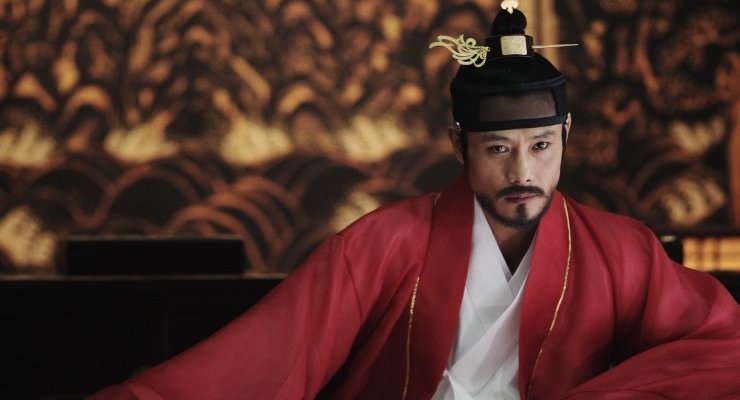
King Gwang-hae becomes increasingly paranoid as attempts against his life are made

King Gwang-hae becomes increasingly paranoid as attempts against his life are made

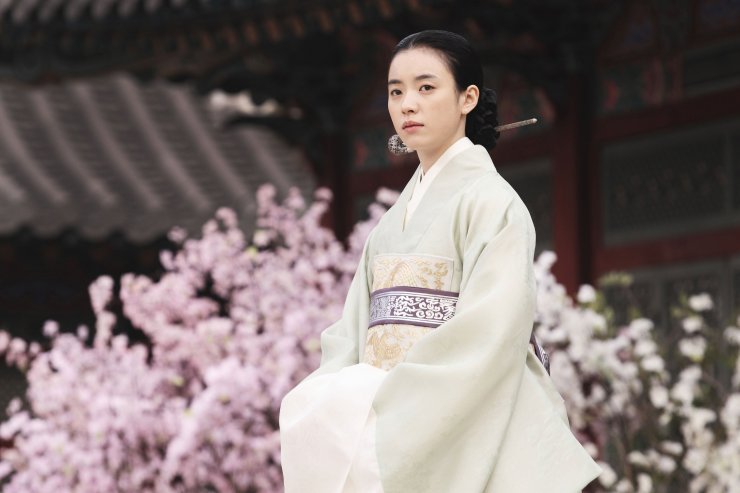
The aesthetics and cinematography within Masquerade are stunningly sumptuous, and are wonderfully realised by director Choo Chang-min. Indeed, the film opens with a montage emphasizing the extreme prestige of the royal lifestyle and the flamboyant colours inherent within, composed to convey the luxurious – and arrogant – nature of the ruling elite. The world of the Joseon dynasty is also recreated with incredible attention to detail ranging from the elegant clothing to crockery to the king’s lavish homestead, producing an enthrallingly convincing arena in which the exchanges and sedition take place. In setting up such narrative events screenwriter Hwang Jo-yoon borrows the catalyst from The King and the Clown as the King’s double receives unwanted attention through his critical portrayal of the King. There the similarities end however as once the King and the actor exchange places the discord in the court is explored through thoroughly different means, as the actor routinely, and naturally, comes face-to-face with issues that plague the kingdom yet have been ignored by the monarch. Surprisingly Masquerade also features an array of comical moments amongst the drama as the actor bumbles his way through the customs and etiquette of his new environment. Many of the jokes are crude and based on bodily humour, yet rather than a criticism this is actually an intriguing method of exploring the differences between the social classes and allows the audience to gain greater empathy with the actor who seemingly cannot perform the simplest of tasks without an entourage. In forging a greater alignment with the unwitting counterpart and his more middle/lower economic sensibilities, the various discussions on taxation, crime and punishment, and slavery achieve more prominent emotional resonance making the actor’s growing confidence and the enforcement of his own rulings to save the Joseon people – despite the awareness of his it could bring his demise – a source of great nationalistic inspiration and strength.

Instrumental in such a portrayal is the excellent performance from Lee Byeong-heon. He conveys the arrogance, stoicism and ruthlessness of King Gwang-hae incredibly well and stands in stark contrast to his astoundingly portrayal as the foolhardy yet well-meaning doppelganger actor. Lee Byeong-heon’s comic timing is impressive as he conveys the humorous moments within the narrative with deft skill and, with convincing clumsiness, faltering through all manner of routines that never fail to inspire laughter. Yet where Lee Byeong-heon’s performance really shines is through the evolution of the actor from an unwitting clown to a man of dignity and stature, the progression of which is wonderfully subtle and well-paced and never feeling in the least bit contrived. The manner in which the protagonist evolves is great, and the internal conflict that appears over his face when making decisions that will effect the court and the denizens of the entire kingdom, in the knowledge it will result in his eventual execution, is remarkable to behold. If there is criticism to laid, however, it’s in the protagonist’s relationship with the Queen, although this is no fault of either Lee Byeong-heon nor Han Hyo-joo (한효주). The Queen merely exists to provide the counterpart with a beautiful damsel in distress to save, and the Queen’s function in the narrative doesn’t extend beyond the stereotypical role. That said, the exchanges that occur between the Queen and the actor do not detract from the narrative and are enjoyable and well-performed.

The King and the imposter come face-to-face

The King and the impostor come face-to-face

As previously mentioned, Lee Byeong-heon is phenomenal in his dual roles as both the King and the impostor, and it would be difficult to imagine that he will not be honoured with – at the very least – an acting award nomination for his incredible performance.

Yet Lee Byeong-heon is also surrounded by an eclectic group of established actors who also conduct their roles with incredible skill.

Ryoo Seung-yong is simply wonderful as the stoically loyal Chief Advisor. The actor coveys the Chief Advisor’s commitment to the kingdom with the utmost competency and sincerity, yet is also adept in comic timing as his exchanges with the King’s counterpart are consistently laugh-out-loud moments that also simultaneously serve to highlight the change in attitude towards each other. As with other features of the narrative, the subtle manner in which their relationship alters is highly entertaining as the Advisor initially admonishes the clown for his foolishness only to come to admire his tenacity alongside the audience, and Ryoo Seung-yong does an incredible job of conveying the evolution.

Similarly the Chief Eunuch, played by Jang Gwang, also expresses the change in attitude yet also serves the role of ‘the helper’ in enlightening the King’s counterpart on the issues facing the kingdom. As the more maternal of the two advisors, Jang Gwang is excellent as the subservient member of the court and brings an understated emotional core to the film, particularly in the early stages.

As the Queen, Han Hyo-joo is competent throughout. Unfortunately for her the role is generally underdeveloped and stereotypical of a beautiful woman in need of saving, yet she performs with grace and dignity.

Also worthy of mention is the loyal Captain, performed by Kim In-kwon. Initially a somewhat overshadowed character, the Captain takes a prominent position in the final act with Kim In-kwon more than adequately portraying the loyalty of a devoted man with emotion and heart.

The long suffering Queen begins to notice the differences in the new 'King'

The long suffering Queen begins to notice the differences in the new ‘King’

Verdict:

Masquerade is a wonderfully realized and incredibly entertaining film, one that uses the basis of The Prince and the Pauper and rapidly makes it into a uniquely Korean period production. Alongside the very well-written, well-paced script is visually stunning direction and, while it somewhat lacks in scale, it conveys the colourful regal elegance with striking skill. Yet it is Lee Byeong-heon who gives the film heart with his exceptional dual performances that serve to emphasis the gulf between the classes in society and the injustices that, no-matter the era, plague the ruling elite. Masquerade is undoubtedly one of the best films of the year and is highly, highly recommended.

★★★★☆

Reviews
Are the corridors of the school haunted by a ghost?

Death Bell (고死: 피의 중간고사) – ★☆☆☆☆

Death Bell (고死: 피의 중간고사)

Death Bell (고死: 피의 중간고사)

The Korean education system is a brutal, arduous regime for students; in addition to the standard school hours they must attend, students also frequent numerous private academies of various subjects during the evening, slotting in further educational events whenever spare time allows. Understandably the stress and pressure imposed by the education culture – and more specifically, parents – often leads to depression and ill health, at best. Escalating matters further are the tales of corruption as parents attempt to secure the future of their offspring through bribery and ‘favors’ of teachers and officials.

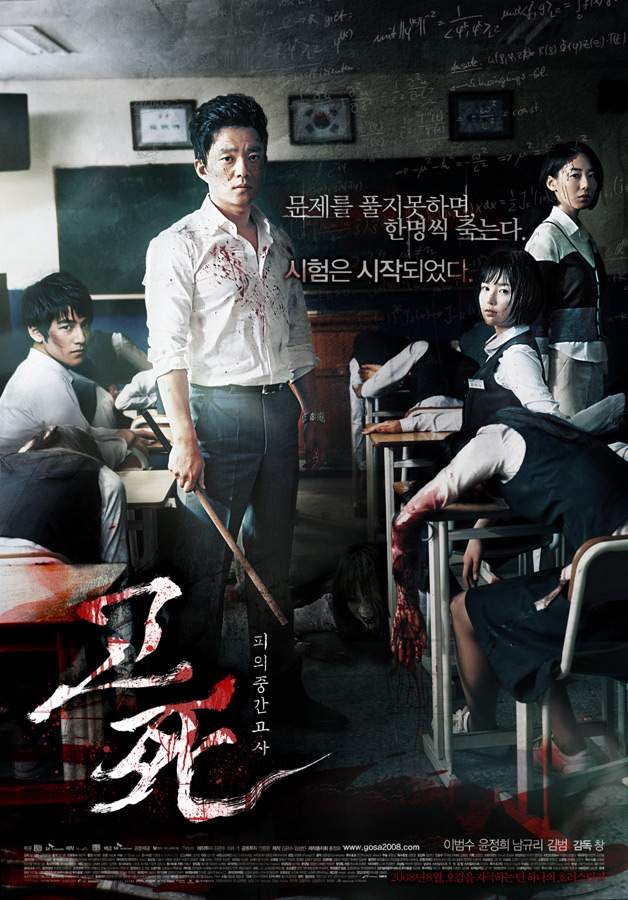
Death Bell (고死: 피의 중간고사) attempts to take the grueling education system as the basis for horror, as a mysterious killer/ghost slowly murders the students of a special class. While the social commentary underpinning the film is an interesting cultural examination, director Chang (real name Yoon Hong-seung (윤홍승) has crafted a vapid, uninspiring horror film that appeals to the lowest common denominator through its ‘torture’ porn aesthetic and hyper-editing over genuine chills.

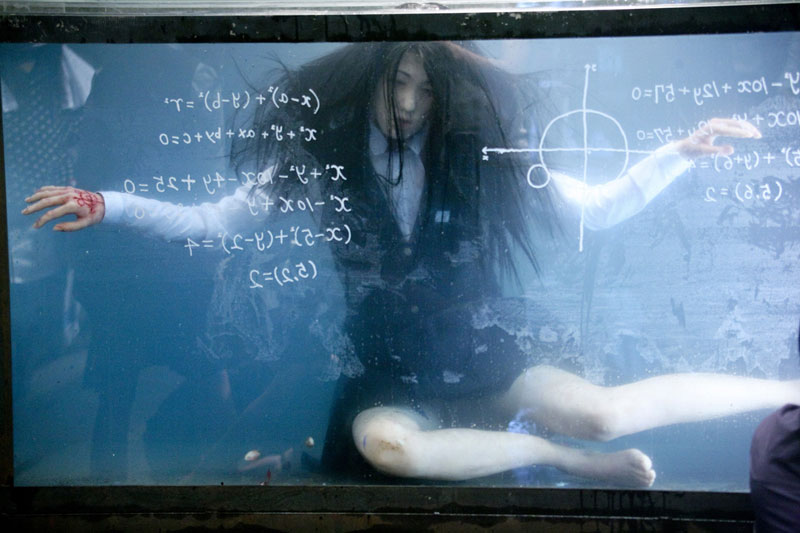
During the exam season, the students are frantically studying in an attempt to be the best in the school and secure a place in a good university. The pressure is intense and students begin to crack under the strain, yet kind teacher Hwang Chang-wook (Lee Beom-soo (이범수) tries to reassure his students; in his rival class, however, strict teacher Choi So-yeong (Yoon Jeong-hee 윤정희) pushes for the best. At the end of the exam season the relieved students prepare for vacation, yet the news of a ‘special class’ with a rival school forces the elite students to stay behind for further studies. However just as the session is due to begin, a missing student appears on TV in a death trap. The killer gives instructions that the students need to complete a series of challenges if they are to survive, and so begins a battle of wits as the students attempt to solve riddles and find the murderer before they are all killed.

The students must solve riddles to save their classmates

The students must solve riddles to save their classmates

While a large number of horror films require the audience to suspend their disbelief in logic, Death Bell ranks amongst the worst examples of the genre for pushing it to the limits. When murdered bodies appear, no-one looks in the direction it arrived; when voices and images are broadcast, no-one thinks to look for the source; in the search for the killer, teachers regularly leave students alone to fend for themselves. Additionally, in the attempt to be ‘Saw in a high school’, Death Bell features puzzles for students to solve in a bid to save their companions yet they and their solutions are generally pointless. The writers endeavour to add meaning to the riddles and to apply a time limit to create tension, but the execution is flat and the answers are quite ridiculous, especially as student I-na (Nam Gyoo-ri (남규리) almost immediately knows who the murders are related to.

Yet horror films aimed at a teenage audience often place chilling scenes above narrative logic, and in this regard Death Bell is also limp. Bizarrely the film features ‘torture porn’ scenes such as dripping hot candle wax on a victim, and in the oddly superfluous – and unsubtly symbolic – opening sequence featuring zombified students, horror and menstrual blood are misogynistically conveyed as one and the same. In one scene, a female student is hoisted by one leg exposing her panties for no particular reason before receiving a death not in-keeping with the other murders. The female students are routinely ‘punished’ for being intelligent and, as with American horrors from the 1970s/80s, for being curious about the opposite gender. In all cases, director Chang never builds tension effectively and instead relies on rapid camera movement and editing to provide thrills, yet as it is often difficult to see anything on screen the results are generally less than impressive.

Death Bell does become interesting in the final act however, as social commentary involving the Korean education system and the roles of parents and teachers are inserted and portrayed. This late but welcome addition depicts the extent to which high grades play in Korean culture, and the lengths to which all involved will go to secure them in the highly competitive system. Unfortunately as such themes are introduced so late the potential is never truly expanded, yet it does provide some much needed impetus to events as well as tying up narrative loose ends.

Teacher Hwang Chang-wook desperately tries to protect his students

Teacher Hwang Chang-wook desperately tries to protect his students

As teacher Hwang Chang-wook, Lee Beom-soo is the central protagonist of the film and does well to keep the pace of the film moving and involving. His role is highly limited due to awfully vapid narrative, forcing him to be a reactionary figure in moments that lack logic, yet the actor performs competently and genuinely works hard to make the the premise and his situation believable. He ultimately fails due to the nonsensical script, but his effort is commendable.

The films other two lead roles fall to Yoon Jeong-hee as strict teacher Choi So-yeong and Nam Gyoo-ri student I-na. Both roles are woefully underdeveloped and leave the actresses with little to do save to convey the stereotypes they are constructed as – Choi So-yeong as a stoic disciplinarian and I-na as a vulnerable schoolgirl interested in boys. Both roles add precious little to the narrative, but the actresses competently act the stereotypes ascribed to them.

Are the corridors of the school haunted by a ghost?

Are the corridors of the school haunted by a ghost?

Verdict:

Death Bell is a dull, vacuous horror film that attempts to be ‘Saw in a high school’ but is ultimately a bland excuse to depict torture porn on teenagers. Hindering the scares further are the kinetic camera movements and editing that continually frustrate. While Lee Beom-soo attempts to make the film compelling, and the late introduction of key cultural themes try to elevate the film, Death Bell is a hollow, soulless example of the genre and is for enthusiasts only.

★☆☆☆☆

Reviews
The aerial dogfights are thrilling as pilots battle over Seoul

R2B: Return to Base (R2B: 리턴투베이스) – ★★☆☆☆

R2B: Return to Base (R2B: 리턴투베이스)

R2B: Return to Base (R2B: 리턴투베이스)

When Top Gun was released in 1986, Tom Cruise and company presented aerial combat in thrilling fashion alongside a bombastic soundtrack. Despite the shallow story, the rapid high-octane action sequences, muscular homoerotic camaraderie, and zealous nationalism succinctly tapped in to the ’80s zeitgeist, resulting in an unprecedented level of applications for the American Air Force and rocketing sales of aviator sunglasses.

R2B: Return to Base (R2B: 리턴투베이스) has been marketed as ‘the Korean Top Gun‘ and rightly so as the film borders on plagiarism with scenes, characters and events almost directly ‘lifted’ from Tony Scott’s effort. Yet R2B: Return to Base has precious little of the charm of the original, only earning the title of ‘action movie’ in the final 20 minutes largely due to a reliance on TV drama-esque stereotypes and stock conflicts for much of the film. That said, the aerial sequences are indeed thrilling regardless of the logic – and physics – defying feats.

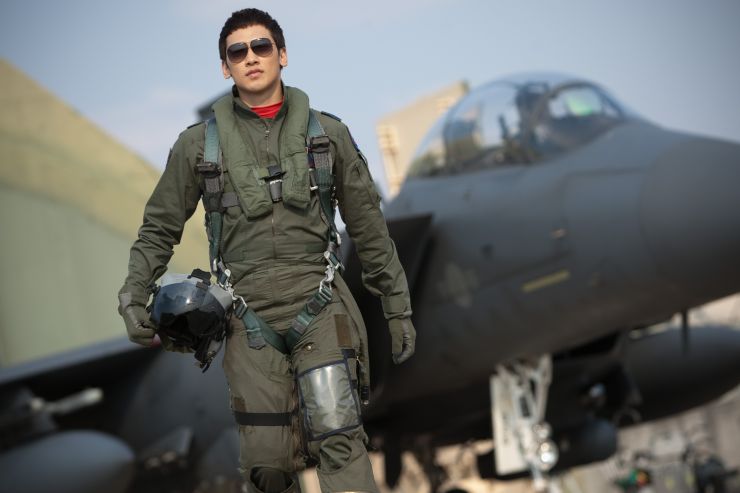
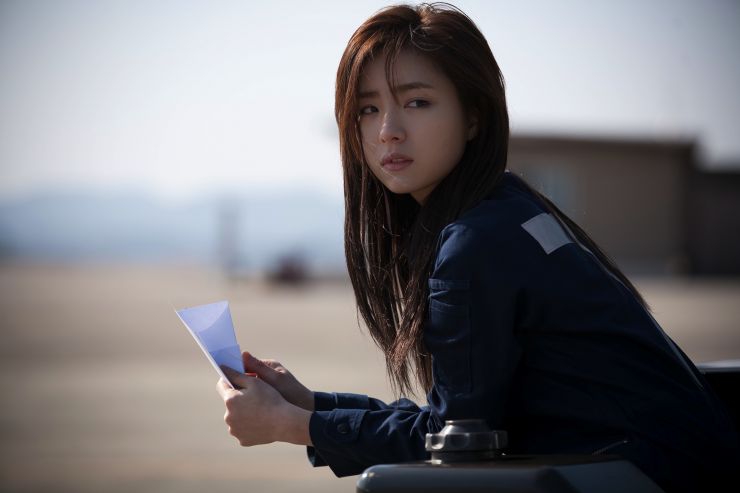
Cocky pilot Jeong Tae-hoon (Rain/Jung Ji-oon (비/정지훈) is unceremoniously kicked out of his squadron for performing dangerous aerial techniques in front of the public. Demoted into military ranks, Tae-hoon meets beautiful mechanic Yoo Se-yeong (Sin Se-kyeong (신세경) and new recruit Ji Seok-hyeon (Lee Jung-seok (이종석), as well as forming a rivalry with stoic Lee Cheol-hee (Yu Joon-sang (유준상). As friendships and camaraderie builds on base, a new threat presents itself in North Korea where a coup threatens to destabilize the peace between the nations. With tensions escalating, it’s up to Tae-hoon and Cheol-hee to set aside their grudges and work together to save South Korea from the machinations of a power-hungry Northern General and his pilots.

Tae-hoon is demoted due to his arrogance and inability to follow orders

Tae-hoon is demoted due to his arrogance and inability to follow orders

Surprisingly, for a film marketed on its action sequences, R2B: Return to Base features few sequences that excite. Aside from a fun opening that introduces hot-shot pilot Tae-hoon, the real action takes place only during the last 20 minutes during an exhilarating sequence where a rogue North Korean pilot descends on the Yeouido district in central Seoul and an aerial assault on a Northern base. Director Kim Dong-weon (김동원) clearly used the majority of the budget on such high-octane events, conveying the speed and danger of the dogfights convincingly and effectively. The aerial battle above Seoul is the genuine highlight of the film as bullets fly and windows shatter on iconic landmarks in wonderful use of slow-motion, producing an entertainingly horrifying attack on the capital city.

However for the vast majority of its running time  R2B: Return to Base plays out akin to a low-grade TV drama. All the stereotypes are present with frustrating clarity. The hero Tae-hoon has obviously been modeled on Tom Cruise’s Maverick, yet Rain/Jung Ji-hoon doesn’t have the same charisma to make the protagonist likable. Maverick’s arrogance and swagger fits perfectly with American cultural values; Tae-hoon is generally an insolent, selfish fool that defies orders for the sake of it. His love interest, in the form of Se-yeong, fares worse as she is reduced to yet another beautiful-yet-damaged female role, a woman in need of rescuing from herself despite her talents. Outside of the main two protagonists are an array of supporting cast members, so much so that precious little time is given to establish them as worthy of inclusion. Cheol-hee arguably receives the most screen-time as the rival, although his character development is stunted which dilutes the antagonism with Tae-hoon. Novice Seok-hyeon is present mainly for comedy value as he screams and faints during flights, providing entertainment. Comedy is also present in the form of two workmen fulfilling military service, but after featuring in a handful of quips they unceremoniously disappear altogether. Other co-pilots feature in the film such as Oh Yoo-jin (Lee Ha-na (이하나) and partner Jo Tae-bong (Jeong Kyung-ho (정경호), but again their inclusion is a limited attempt to add melodrama to the proceedings. All the of the characters are involved in stock narrative events that help to establish relationships but do little to propel the plot, which is conveyed as an afterthought.

Feisty Yoo Se-yeong is the most talented mechanic on the base

Feisty Yu Se-yeong is the most talented mechanic on the base

One of the amazing features of Korean cinema is the continual representation of North Korean adversaries in three-dimensional, semi-sympathetic roles. R2B: Return to Base opts for the American approach of ‘good vs. evil’, barely giving the Northern enemies faces let alone impetus. This would perhaps not be as bad – it was a feature of Top Gun – if not for their last minute inclusion within the narrative, as suddenly a rogue Northern general launches an unprovoked attack on Seoul seemingly from out of nowhere. The assault does allow for the inclusion of Korean nationalism and masculine bravado however as the American military attempts to dominate the retaliation to embarrassing effect, as well as providing Tae-hoon and Cheol-hee with something to do other than bicker.

In terms of performance, Sin Se-kyeong is arguably the most prominent as mechanic Se-yeong. The actress has little room to extend herself given the highly stereotyped nature of the role, yet she performs well. The chemistry between her and co-star Rain/Jung Ji-hoon however is entirely absent. Rain/Jung Ji-hoon competently performs the role of arrogant pilot Tae-hoon but unfortunately he is also hindered but the script which portrays him as an immature fool rather than overly confident, a feature which his charisma tries and fails to overcome.

The aerial dogfights are thrilling as pilots battle over Seoul

The aerial dogfights are thrilling as pilots battle over Seoul

Verdict:

R2B: Return to Base desperately wants to be ‘the Korean Top Gun‘, and succeeds in as much as containing some highly thrilling and entertaining aerial sequences that convey the speed and danger of aerial dogfights. Yet such sparse combat scenes cannot hide the vacuous, TV drama-esque narrative and stereotypes that dominate most of the running time, as well as the lack of threat featured by the caricatured North Korean adversaries. With the last minute inclusion of masculine bravado and nationalism, R2B: Return to Base rises out of its quagmire yet still fails to obtain its full potential.

★★☆☆☆

Reviews
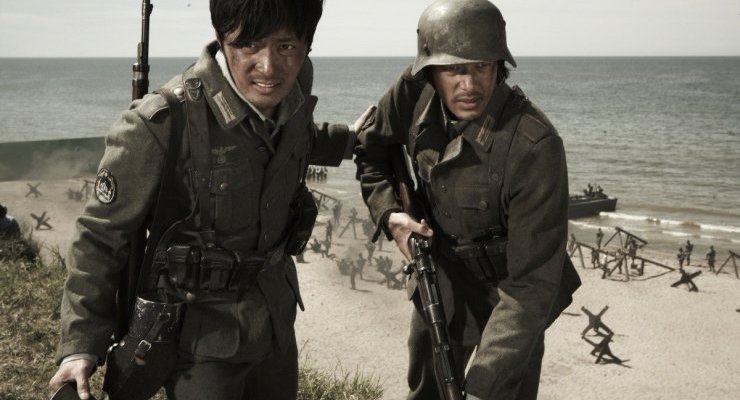
On the beaches of Normandy, Joon-sik and Tatsuo do all they can to survive

My Way (마이 웨이) – ★★★☆☆

My Way (마이 웨이)

My Way (마이 웨이)

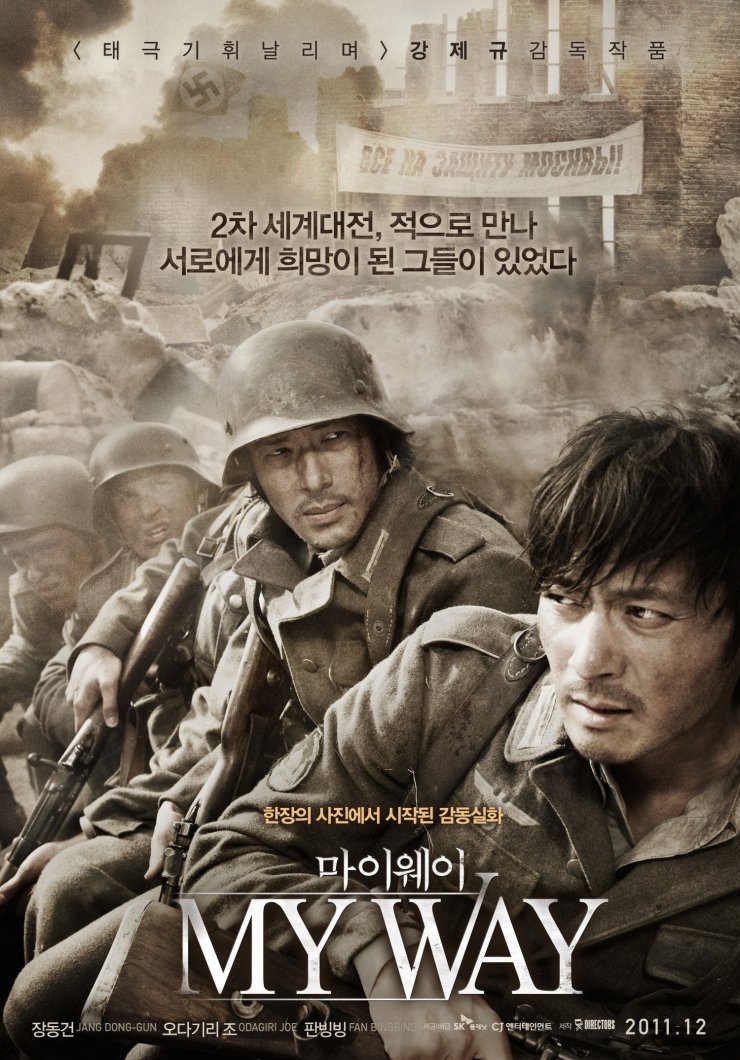
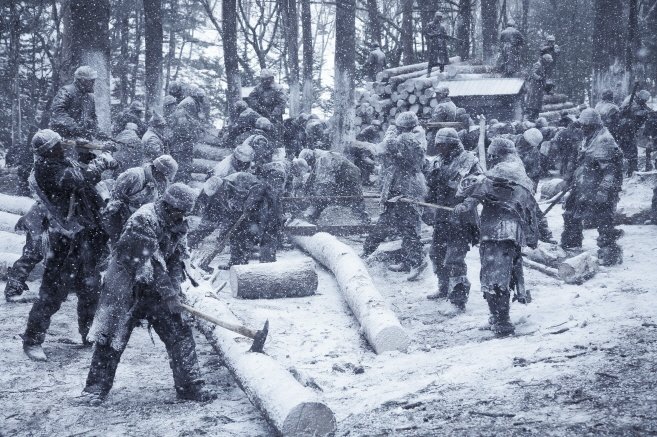
Expectations were always going to be impossibly high for director Kang Je-gyu’s (강제규) follow up to Taegukgi. The 2004 film was revolutionary at the time, combining kinetic war scenes, an orchestral score, and strong nationalistic sentiment through the (somewhat allegorical) story of two brothers divided by civil war. Yet after a seven year hiatus the director chose to return to the war genre, bolstered by an enormous 28 billion won budget and the return of Jang Dong-gun (장동건) alongside a cast of international stars. Furthermore, his project was to be based on the mysteriously true story of the discovery of a Korean soldier during the D-Day landings in Normandy, an event still unexplained to this day. Curiosity, and expectations, naturally increased.

My Way (마이 웨이) continues the themes that have become a staple of the genre, including the notion of brotherhood and the brutality of war, albeit this time on an international scale. The grand scope and focus on historical events results in a lack of character development for the entire cast, and as such became a disappointment at the box office in Korea. However My Way boasts some of the most gloriously horrifying war sequences from Kang Je-gyu, whose vision and stylization have notably evolved from his prior films. Yet despite the spectacle, the lack of characterization and emphasis on more personal, intimate conflicts amounts to an attractive but somewhat hollow war film.

During the occupation of Korea by Japanese forces in the 1920s and ’30s, tensions are high on both sides with riots and assassinations commonplace. Despite the crackdown on the freedom of native Koreans, a rivalry emerges between two talented marathon athletes; a poor Korean rickshaw driver named Joon-sik, and rich Japanese student Tatsuo (Joe Odagiri). After Joon-sik wins a competition intended to prove the superiority of the Japanese, a corrupt ruling disqualifies the Korean athlete and rioting ensues. For their crimes, all involved in the riot are forced to become conscripts in the Japanese military. Sent to the frontline, Joon-sik and Tatsuo experience the sheer brutality of war on a variety of continents and through numerous armies, allaying their rivalry and instead forging the bonds of brotherhood.

Following a riot after a corrupt marathon decision, Joon-sik and his friends are forced to become conscripts in the Japanese army

Following a riot after a corrupt marathon decision, Joon-sik and his friends are forced to become conscripts in the Japanese army

My Way is a stunningly realized film, recreating the landscape of 1930s Korea as well as Asian and European battlegrounds with incredible realism. The mise-en-scene is wondrous throughout the film and deeply absorbing, from scenes such as Joon-sik racing throughout the streets of Korea with a rickshaw, to a grueling winter imprisoned in a Russian concentration camp, to being caught in a crossfire involving the Nazis. The variety of events and landscapes are genuine highlights of My Way as Kang Je-gyu showcases his talent in recreating historical scenes with superb attention to detail, moving from one location to the next with impetus. The camerawork and frenetic action sequences are exquisitely brutal, genuinely conveying the horrific incidents soldiers were forced to endure and as the landscape and military units continually change such sequences never become tiresome or dull. Yet therein also lies the greatest difficulty of the film, as while great emphasis is placed on moving the protagonists from Korea to Normandy the characterization is an afterthought, making the harsh war scenes stunning but without an emotional core. Joon-sik is very much the centre of the film, and while likable, has little-to-no reason to want to return home other than to continue running competitively. His journey is thus undermined, although his Korean compatriots suffer far worse as they are barely given an introduction before they are ruthlessly dispatched by the enemy in trying to create dramatic tension. The narrative does deserve credit for broaching the subject of brotherhood between Korea and Japan through Joon-sik and Tetsuo, attempting to convey a form of reconciliation and alleviating tensions between the two nations. But again, the pace of the narrative allows precious little space for their brotherhood to develop, which is of acute importance given their mutual hatred at the start of the film. As such the intimacy between Joon-sik and Tetsuo is (quite romantically) melodramatic and uplifting, yet also contrived.

The narrative does however explore the interchangeability of bloodthirsty inhumanity during the course of the film, and the corruption that power seemingly inevitably brings. Given the tumultuous history between Korea, Japan and China, depicting scenes of Japanese brutality are certainly nothing new; however Kang Je-gyu portrays the forces not only as barbaric but downright fanatical as soldiers are ordered on suicide missions for the glory of the empire or shot upon retreat. What may seem like the stirring of Korean nationalistic sentiment is allayed by the contrasts with Russian and German troops, all of whom convey the same ideological stance during battles. My Way blurs the boundaries of nationality in conveying the merciless nature of warfare, portraying all parties as equally accountable. The representation of German troops is quite perplexing however, as the kind, relaxed and joyous soldiers stands in stark contrast to the annals of history.

Joon-sik and Tatsuo find themselves working in a Russian concentration camp

Joon-sik and Tatsuo find themselves working in a Russian concentration camp

As Korean marathon runner Joon-sik, Jang Dong-gun (장동건) gives a highly capable performance although he is never stretched in the role. The actor conveys all the necessary emotions during the horrors of war and attempts to provide a heart to the film despite the limitations of the script. He is highly likable and attempts to shine a light of humanity during scenes of war as the narrative intends, but Jang Dong-gun’s presence is generally to give focus to the impressive battle sequences that rage around him. While battles commence on land, sea and air in spectacular fashion, the actor is usually running through the middle of the conflict giving scale and someone to root for as he takes the audience into the midst of war.

Interestingly it is Japanese actor Joe Odagiri as student/marathon runner Tatsuo that has the greatest character arc in My Way. From angry student to fanatically patriotic military officer to brother, the actor gives a competent performance throughout although as with his co-star Joe Odagiri is not stretched in the role. The film is very much his story due to his character evolution, and provides an interesting counter-balance to those featuring Jang Dong-gun.

As for famed Chinese actress Fan Bing-bing, it is a wonder why she choose to be part of the film at all given her incredibly short time on camera as Chinese sniper Sirai. She performs admirably, although she is ultimately just a device to spur the narrative forward.

On the beaches of Normandy, Joon-sik and Tatsup do all they can to survive

On the beaches of Normandy, Joon-sik and Tatsuo do all they can to survive

Verdict:

My Way is an incredible spectacle of a war film, with continually stunning sequences of war and featuring breathtaking cinematography in a variety of landscapes. Director Kang Je-gyu has clearly used the enormous budget to produce some of the most effective scenes of battle in recent memory, with the scope and scale allowing his vision to evolve tremendously. That said, the focus on visuals results in a lack of characterization making the depiction of war rather deprived of an emotional core, and audience interest by extension. My Way is a visually impressive, although somewhat hollow, tour de force and a notable entry in the war genre.

★★★☆☆

Reviews
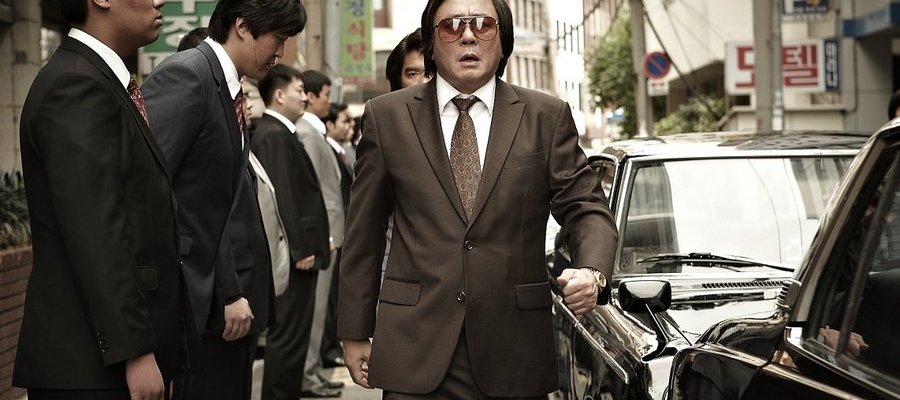
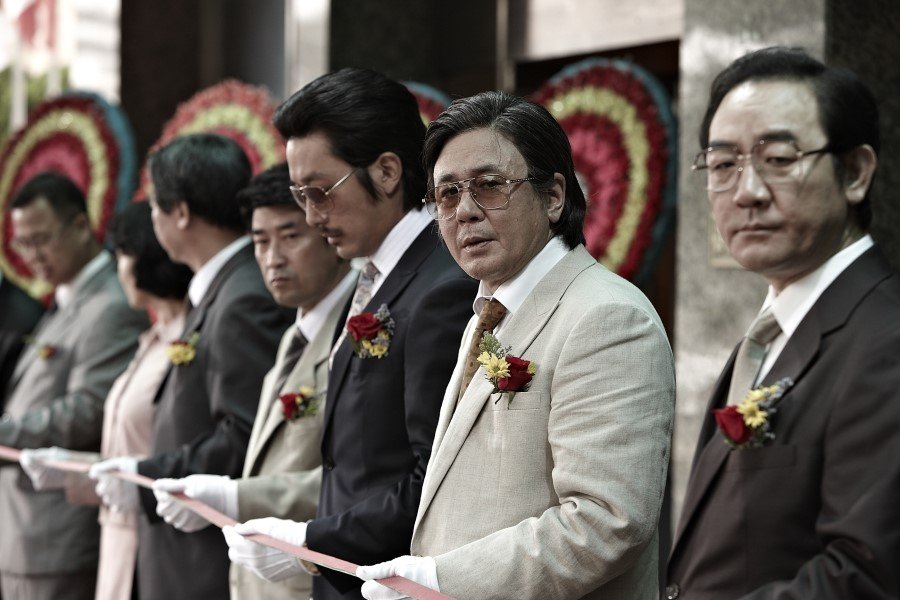
Ik-hyeon settles into his 'gangster' role with ease

Nameless Gangster (범죄와의 전쟁: 나쁜놈들 전성시대) – ★★★☆☆

Nameless Gangster (범죄와의 전쟁: 나쁜놈들 전성시대)

Nameless Gangster (범죄와의 전쟁: 나쁜놈들 전성시대)

Gangster ‘epics’ are not films that merely present bad men doing bad things; on the contrary, the ‘epicness’ of the films are due to the ways in which producers tell the story within the wider context of the socio-cultural period, conveying a national uniqueness alongside the themes of brotherhood, betrayal, and the escalation of violence. While there are numerous contemporary directors such as Guy Ritchie, Francis Ford Coppola and Michael Mann that fit this paradigm, the most notable figure in this regard is the legendary Martin Scorsese who besets his conflicted protagonists with problems from all sides, masterfully building tension to a poignant crescendo.

With Nameless Gangster (범죄와의 전쟁: 나쁜놈들 전성시대) writer/director Yoon Jong-bin (윤종빈) seemingly attempts to emulate Scorsese, featuring a similar rags-to-riches and fall-from-grace narrative structure. Yet there the comparisons end as while the story is distinctly Korean and multi-layered, and the directing competent, the lack of flair, tension and an over-abundance of secondary characters halt Nameless Gangster from achieving excellence. However, alongside the sumptuous costume and set design the film sports a fascinating perspective on the evolution of crime in Korea, and the struggle to combat corruption in contemporary society.

In the month of October, 1990, President Roh Tae-woo launches a crackdown on corruption and crime in South Korea, giving the police and prosecutors special powers to arrest those involved in the criminal underworld. For the port city of Busan this presents an acute problem, and as gangsters are forced to lie low the incarceration of infamous Choi Ik-hyeon (Choi Min-sik (최민식) is an enormous victory for prosecutor Jo Beom-seok (Kwak Byeong-gyoo (곽병규). Yet the criminal simply refuses to admit any wrongdoing despite overwhelming evidence to the contrary. In order to fully uncover the truth, the journey must begin back in 1982 when Ik-hyeon was a mere corrupt customs official, exploring the relationships that were forged – particularly with notorious criminal Choi Hyeong-bae (Ha Jeong-woo (하정우) – during the golden age of the gangster lifestyle in Korea.

Ik-hyeon settles into his 'gangster' role with ease

Ik-hyeon settles into his ‘gangster’ role with ease

Nameless Gangster is surprisingly less a film about gangsters and more a film about the evolution of corruption in Korean society, personified through smarmy central protagonist Ik-hyeon. Originating as a corrupt customs official, Ik-hyeon – and the entire customs department – are directly in the firing line of the government crackdown on crime, the penalty for which is placed squarely on Ik-hyeon’s shoulders. Yet despite being a dishonest and unscrupulous reprobate, Ik-hyeon is quite a charismatic and lovable rogue due to the performance of acting legend Choi Min-sik. Bizarrely Choi Min-sik exaggerates and overacts the character throughout the film but incredibly manages to convey this as part of Ik-hyeon’s personality, an appealingly silly man who constantly oversteps his boundaries to the chagrin of all involved. The subtly seductive performance blurs the lines between the gangster and comedy genres as Ik-hyeon simultaneously charms and smites those around him, juxtaposing laugh-out-loud moments with brutality, reminiscent of scenes within Scorsese’s Goodfellas from which the film borrows heavily. However these moments never quite achieve the shocking impact they should. Writer/director Yoon Jong-bin (윤종빈) writes the scenes incredibly well and has highly competent vision, yet somehow fails to capture the tension that such scenes demand, with the slow build of suspense and apprehension curiously absent. Violence, too, is also problematic within Nameless Gangster through the lack of escalation. While it would be absurd to expect Americanized gun crime within such a distinctly Korean gangster film the repetitive nature of the clashes, commonly involving baseball bats and glass bottles, quickly becomes bland and lessens the severity such confrontations should convey.

Violence enters the narrative through the introduction of Choi Hyeong-bae, a lifelong gangster with whom Ik-hyeon shares common ancestry. It is through their relationship that Nameless Gangster truly shines, as the bumbling Ik-hyeon forges ties with an incredible variety of powerful strangers due to mutual heritage – and seniority – in order to create a criminal empire, constructing a fascinating insight into the multifaceted nature of corruption in Korea. Director Yoon Jong-bin’s narrative strength lies in the comically awe-inspiring Ik-hyeon as he weasels his way into the good graces of politicians, law-makers and international crime syndicates, resulting in a meteoric rise from crooked customs official to one of the most dangerous gangsters in Busan. While Ik-hyeon provides the connections it is Hyeong-bae, wonderfully performed by Ha Jeong-woo, who commands the muscle. Hyeong-bae is stoic, authoritative and deadly, conveying restrained violence and potential danger with every movement and gesture, the true gangster of the partnership. The stark contrast between the two, as well as Ik-hyeon’s unerring manner for overstepping boundaries, provides the catalyst for the introduction of a third party in the form of rival gangster Kim Pan-ho (Jo Jin-woong (조진웅). In another nod to past gangster epics in the form of Scorsese-esque triumvirates, Pan-ho ultimately fails to be a convincing protagonist due to serious underdevelopment, undermining him as a credible threat both within the narrative and to consummate gangster Hyeong-bae.

Hyeong-bae is the consummate gangster - stoic, powerful, and deadly

Hyeong-bae is the consummate gangster – stoic, powerful, and deadly

With a strong narrative and competent direction, Nameless Gangster also benefits from having sumptuous costume and set design. The world of 1980s Busan is eloquently portrayed and wonderfully realized, absorbing the audience within the chic decor and lifestyle from humble homesteads to bars to casinos.

In terms of performance both Choi Min-sik and Ha Jeong-woo play off each other well, with the latter giving the stand-out portrayal as hard-boiled gangster Hyeong-bae. The stoicism of the character coupled with the restrained threat of violence is an absolute joy and contributes greatly in conveying tension, which is sadly underutilized within the narrative and direction. Choi Min-sik, on the other hand, is highly charismatic as Ik-hyeon despite being a tad overzealous throughout. The actor conveys the foolish nature of the man incredibly well, yet the scenes in which Ik-hyeon demands power and authority unbecoming to him that are the most revealing, conveying a man desperate for control in a universe which resolutely refuses him.

The rest of the cast are used in supportive roles and are either generally underdeveloped, such as gangster Pan-ho and prosecutor Jo Beom-seok, or simply redundant, such as club Manager Yeo (Kim Hye-eun (김혜은) or brother-in-law Seo-bang Kim  (Ma Dong-seok (마동석). This is unfortunate, as had the roles been greater (or jettisoned) the web of threat and deception would undoubtedly be much stronger as in Ryoo Seung-wan‘s The Unjust; as it stands, they are rather limp additions in an otherwise well-written screenplay about societal corruption.

Through creating links and contacts, Ik-hyeon helps expand the criminal empire

Through creating links and contacts, Ik-hyeon helps expand the criminal empire

Verdict:

Nameless Gangster is a compelling and fascinating film about the nature, and evolution, of crime and corruption in Korea. With an absorbing narrative, wonderful set and costume design, and entertaining performances, the film is generally let down by the lack of tension and suspense, as well as underdeveloped characters. That said, Nameless Gangster is an enjoyable yarn of power and social relationships in a country still struggling to shake off the ramifications of the war on crime.

★★★☆☆

Reviews
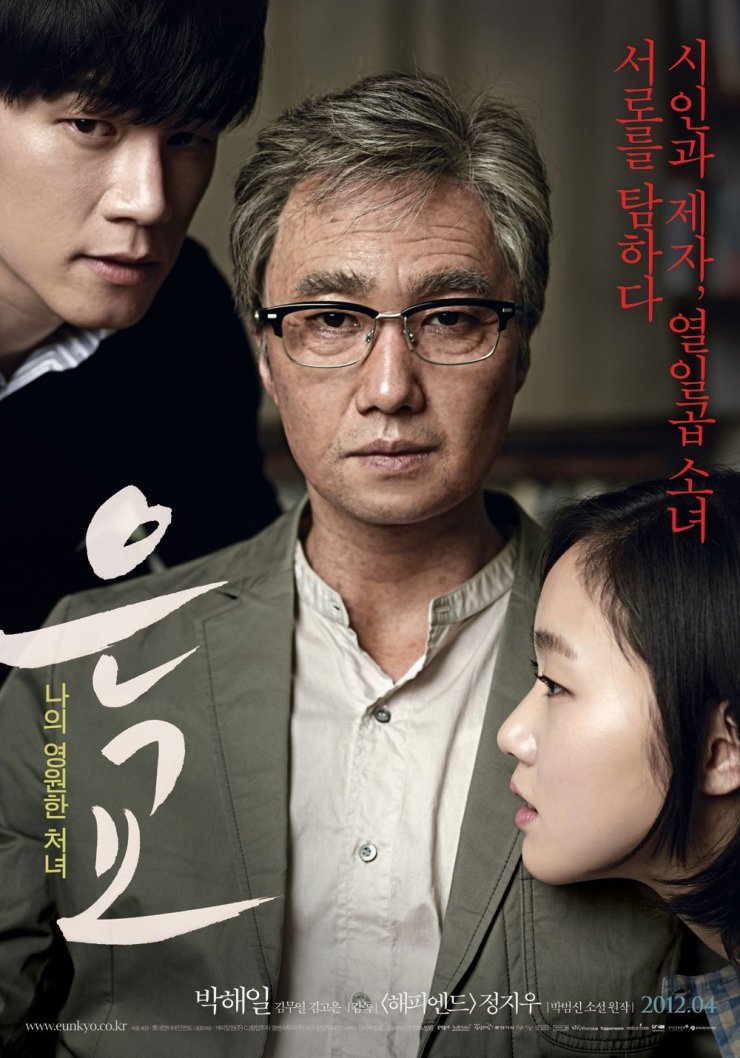
17 year old Eun-gyo is a naturally charismatic young woman

A Muse (은교) – ★★★☆☆

A Muse (은교)

A Muse (은교)

An age gap between lovers can make for incredible drama as the couple step outside preconceived notions of what is deemed socially acceptable in a relationship. The seminal film The Graduate (1967) is the most prominent in this regard which, while comical, also conveyed the ideological differences between generations. In Korea such themes have also played out, most notably in Kim Ki-young’s exemplary 1960 classic The Housemaid (하녀), while more contemporary offerings have arrived in the form of Kim Ki-duk’s The Bow (활) and Yang Ik-joon’s Breathless (똥파리). While each film approaches the subject differently they all exhibit the conflict that arises between youth and maturity, attraction and repulsion, desire versus social acceptance.

A Muse (은교), directed by Jeong Ji-woo (정지우), provides a gently poetic, emotionally fraught, and symbolic take on the romantic theme, in keeping with his back-catalogue. The exploration of the relationship between the three central protagonists contains poignant depth, bolstered through an interrogation regarding the nature of age and talent. However, the film is also somewhat hampered by the casting of Park Hae-il as an old man, while the constant fetishization of Eun-gyo’s body – rather than her mind and spirit – undermines the purity of their relationship.

As a poet and national icon, elderly Lee Jeok-yo (Park Hae-il (박해일) has enjoyed incredible success, even preparing for a museum to be constructed in his honor. Yet now is the time for his young apprentice Seo Ji-woo (Kim Moo-yeol (김무열) to shine as his new novel becomes an incredibly popular and rapid bestseller. However their lives, and their relationships, are drastically altered when a young girl named Han Eun-gyo (Kim Go-eun (김고은) visits their home, charming them both with her youthful vitality and curiosity.

17 year old Eun-gyo is a naturally charismatic young woman

17 year old Eun-gyo is a naturally charismatic young woman

While A Muse takes quite some time in establishing the life of poet Jeok-yo and that of his student Ji-woo, the inception of Eun-gyo – also the name of the original Korean title – distinctly elevates the film and gives it direction and purpose. Director Jeong Ji-woo does an incredible job of constructing Eun-gyo as an intoxicating protagonist, a young woman whose youth, energy and curiosity are infectious and spellbinding. However, the most prominent form in conveying such devotion is through the fetishization of her body, featuring close-ups of her skin and various body parts, sexualizing Eun-gyo to the point of worship. With the knowledge that Park Hae-il portrays the elderly poet, such scenes are (despite the misogyny) tender and romantically sexual, yet had an actor of the correct age performed the role perversity would undoubtedly enter critical debate. Luckily Jeong Ji-woo also emphasizes the emotional and spiritual connections between the two, and that Jeok-yo desires Eun-gyo’s youth, purity and innocence as much as her physique, as she is in turn attracted to his depth of character and devotion. Age may suggest otherwise but they are kindred spirits, and sequences in which they strengthen their bond are heartwarming and endearing, particularly during the soft-focus scenes where Jeok-yo imagines himself as a young man. Their relationship is in stark contrast to those involved with Ji-woo, who worships Jeok-yo as a respected surrogate father and idolizes Eun-gyo due to their similar ages and as someone who can heal his loneliness. The director is highly intelligent in constructing each relationship as distinctly different entities, evolving each subtly and with realism as jealousy and desire intermingle with love and affection. However as Ji-woo is certainly the less developed of the three he perhaps unfairly falls into a villainous category, rather than a conflicted young man.

Romance and personal connections inform the exploration of age within A Muse, which is arguably the central concern of the narrative. The depth, symbolism and subtlety are eloquently conveyed as each protagonist gradually reveals their shortcomings seemingly ascribed through age. Jeok-yo, having lost his youth, uses Ji-woo and Eun-gyo as agencies through which to live again, contrasted with Ji-woo’s competitive masculine nature  and Eun-gyo’s innocence and curiosity. What is fascinating throughout the narrative are the ways in which each protagonist views things differently and the ways in which they display emotion and respect, allowing audiences to genuinely understand them and their motivations. As such, when the film ends, the tragic fallacies and the impact of events linger and resonate long, long after the final credits.

Jeok-gyo and Eun-gyo share intimate moments

Jeok-yo and Eun-gyo share intimate moments

Kim Go-eun gives the stand out performance within A Muse as high schooler Eun-gyo and is enthralling. The actress inhabits the role completely, conveying innocence, curiosity and vitality with genuine charisma forcing audiences to adore her as much as the protagonists do. Kim Go-eun’s charismatic performance is such that it is easy to forget her age and occupation, drawing spectators in with her enthusiasm and smile whilst also sympathizing with her as the unwitting catalyst in a love triangle. Passionate scenes are also sincere, and while the constant fetishization of her body occasionally undermines her character Kim Go-eun utilizes her physicality to convey a range of emotions depending on who she is with.

As always Park Hae-il gives a highly competent performance as elderly poet Jeok-yo. His casting is odd but understandable given the sexual scenes and fetishization of his love interest’s body, but it is difficult not to think that an older actor would have lent more credibility to the role. There are certainly a lot of actors of this age group in Korea that are incredibly talented, as Lee Chang-dong’s sublime Poetry, and Choo Chang-min’s Late Blossom, highlighted. In any case, Park Hae-il portrays the stoicism and loneliness of Jeok-yo well, conveying the evolution of the character subtly and organically. However there are several occasions where the actor is clearly trying to act like a senior citizen to the detriment of the scene, distractions in an otherwise competent display.

Kim Moo-yeol, despite receiving the least amount of screen time, portrays the role of jealous young author Ji-woo competently. The driven and arrogant nature of the character is performed well, as is his complete lack of understanding in regards to the depth of both Jeok-yo and Eun-gyo. Ji-woo’s love/hate relationship with them both is also interesting to watch unfold and is never contrived, resulting in a slow build of tension just waiting to erupt.

Eun-gyo also attracts the attention of prodigy Ji-woo

Eun-gyo also attracts the attention of prodigy Ji-woo

Verdict:

A film of great depth and symbolism, A Muse is an eloquent exploration of the nature of age, love, and relationships. While the fetishization of Eun-gyo’s body tends to undermine the spiritual connection between her and Jeok-yo, with Park Hae-il’s casting simultaneously helping to alleviate the sexualization as well as being an oddity, the film succeeds on the strengths of a wonderfully character driven narrative  and a superb debut by actress Kim Go-eun. With the subtle, organic and romantic performances and directorial style, the themes explored within A Muse will undoubtedly resonate with audiences long after the finale.

★★★☆☆

Reviews