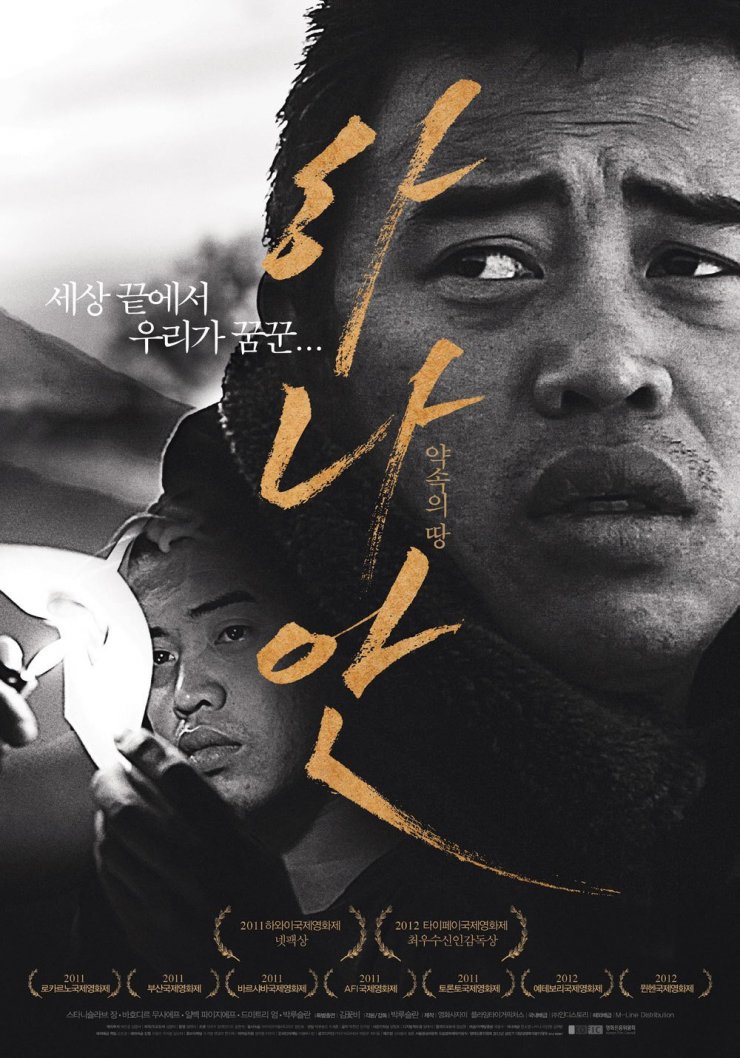
Stas attempts to rid himself of heroin addiction through nature

Hanaan (하나안) – ★★★☆☆

Hanaan (하나안)

Hanaan (하나안)

The experiences of Korean immigrants abroad are not an oft-featured theme within mainstream Korean cinema. This is surprising considering the sheer number of the populace that make the transition to foreign soil every year, as well as the historical relevance of the scores of people who fled the country due to Japanese colonization and the Korean War itself.

Independent drama Hanaan (하나안), a co-production between  Korea and Uzbekistan, explores the lives of third-generation Korean descendants of ancestors deported from the Soviet Union by Stalin. Written and directed by Pak Ruslan (박루슬란), the urban cop-drama is a gritty and raw examination of the difficulties of cultural assimilation, and the all-too-easy fall from grace into crime and addiction. The story is rather unoriginal, yet director Pak’s use of locations and dissection of cultural themes makes for an intriguing foray into the lives of Korean-Uzbeks.

Stas (Stanislav Tyan (스타니슬라브 티안) is a third generation Korean living in Uzbekistan, studying to be a cop and to make a difference. Yet his studies are frequently uninterrupted by his friends Kahoy (Dmitry Eum (드미트리 엄), Maha (Bahodir Musaev (바호디르 무사에프) and Said (IIlbek Faiziev (일벡 파이지에프), who are often involved in criminal activity including habitual heroin use. When Kahoy’s brother is attacked by thugs the group set out for revenge, yet the plan drastically backfires when Kahoy is killed. 6 years later, Stas is finally a cop but is overburdened by the sheer abundance of criminality both within society and the police force itself. In a moment of desperate frustration Stas gives in to the temptation of heroin, and must try to claw his way back and find his personal ‘Hanaan’, the land of promise.
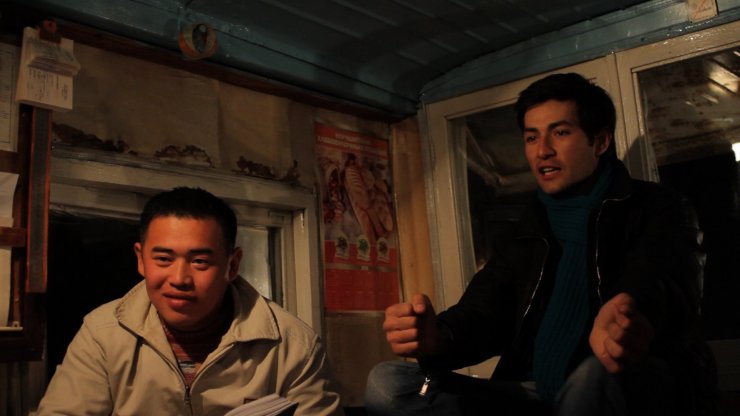
Stas enjoys hanging out with friends as he studies to become a cop

Stas enjoys hanging out with friends as he studies to become a cop

One of the great strengths of Hanaan is the manner in which director Pak employs locations to emphasize the plight of his protagonists. The street scenes of Uzbekistan are dilapidated and foreboding, conveying a sense of purgatory and depression that the characters are trapped within. Such a stark atmosphere of disillusionment lends credence to the habitual use of heroin Stas and co. partake in, yet in becoming junkies the landscapes alter to highlight their isolation, which are often dank, claustrophobic, revoltingly grimy arenas. The use of syringes in such locations – often public bathrooms – adds potency to such scenes, as the friends experience a sense of faux-euphoria in such squalid places, while further tragedy is incurred through the use of shared needles and the continual downward spiral of their lives. However, aside from the locations the depth of heroin abuse is not conveyed emotionally nor given the necessary weight for the addiction to be a serious issue, which could have been solved with greater character development but which is curiously absent.

Director Pak does well in exploring the cultural difficulties of the region through Stas. As the film opens, his daughter asks for a fairy tale and in response Stas tells the story of the persecution against Koreans by Stalin. The historical story not only emphasizes that Korean immigrants have never forgotten the abuse they suffered by handing it down through the generations, but also that from a young age their descendants must mature quickly to survive in the new harsh environment.
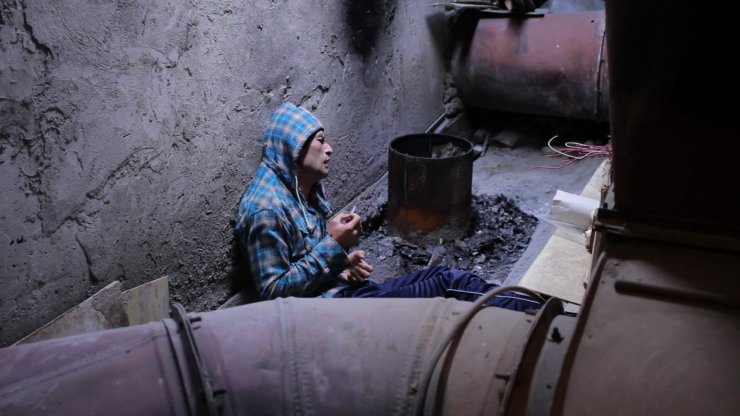
The locations within Hanaan convey the hopelessness of existence

The locations within Hanaan convey the hopelessness of existence

Yet Stas is not alone in feeling victimized by history. In an entertaining scene during a stakeout, Stas and a fellow cop argue and tease each other about their origins as well as how well they have assimilated Uzbeki and/or Russian culture, using racist language in an attempt to emerge as the more legitimate immigrant. The use of handheld camerawork to such scenes adds realism and articulates the gritty urban sensibilities of the characters, a technique which is also particularly effective during action and chase scenes.

While such features combine to give Hanaan a fresh approach in examining the notion of ‘Korean-ness’ and the immigrant experience, the main narrative arc of the film is far from original. Treading familiar territory is in itself no bad thing, yet director Pak doesn’t really offer anything new and engaging in his tale of drug abuse and corruption. The police operation to catch drug suppliers is almost ridiculously easy for Stas and his colleagues and as such holds no real tension, while the subsequent corruption that arises within the force itself is glazed over with brief office scenes. The lack of an emotional core within Hanaan also highlights the limitations of the actors who, while competent, don’t exude the gravitas required for the story to be a poignant and compelling exploration of drug abuse and the rocky path to redemption.
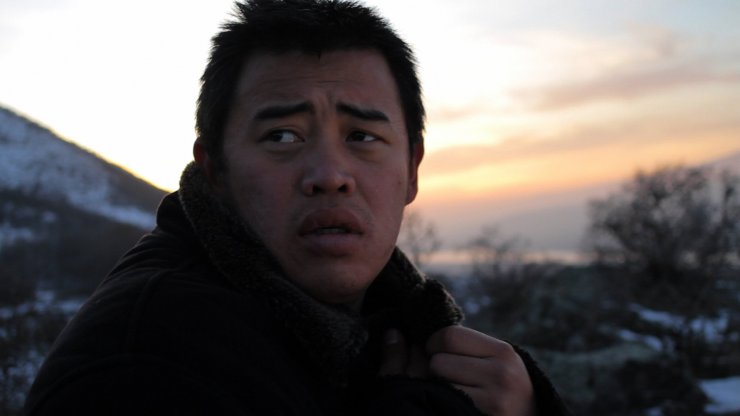
Stas attempts to rid himself of heroin addiction through nature

Stas attempts to rid himself of heroin addiction through nature

Verdict:

Hanaan deserves credit for exploring the oft-ignored plight of Korean immigrants abroad, and highlighting their historical struggles of cultural assimilation. Director Pak Ruslan employs effective use of stark, purgatorial landscapes to emphasize inner turmoil, while the handheld camerawork conveys realism to the proceedings. However, the story is hampered by a rather unoriginal premise, underdeveloped characters and absence of an emotional core, making the Korean-Uzbek co-production an intriguing, but lacking, crime drama.

★★★☆☆

Reviews
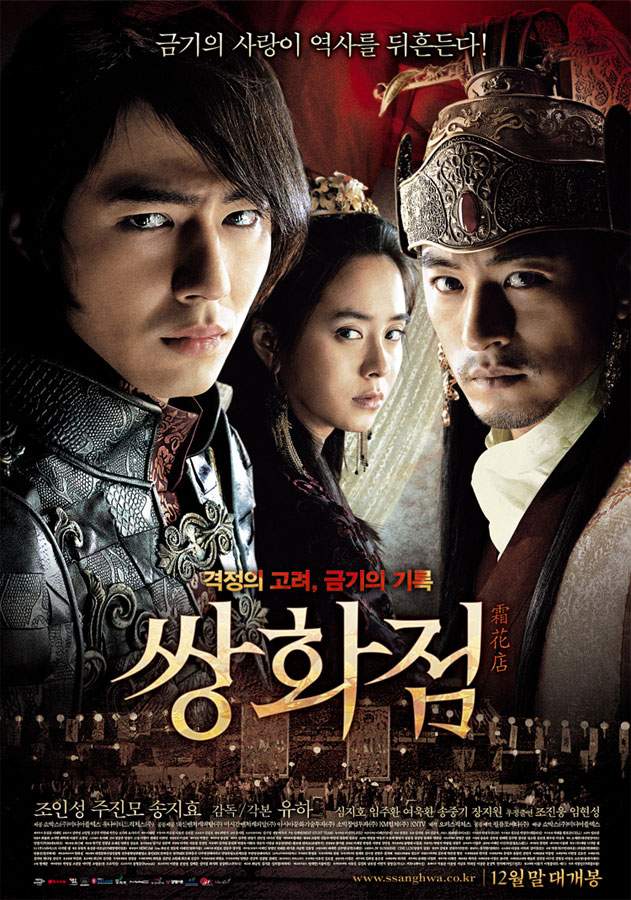
As the meetings between the Queen and Hong-rim increase, so does their love

A Frozen Flower (쌍화점) – ★★★☆☆

A Frozen Flower (쌍화점)

A Frozen Flower (쌍화점)

The dynasties within Korean history are captivating periods for epic, romantic storytelling. As well as the threat of war from without and the corruption seemingly endemic within, the beautiful clothing and rigid social hierarchy allow for wonderfully passionate tales of forbidden love and scandal, of desperate lovers defying duty for intense moments of lust.

A Frozen Flower, written and directed by Yoo Ha, fits such a mold perfectly. With issues ranging from coerced tributes to foreign lands to the lack of a royal heir, the drama attempts to provide a grand, sweeping story of love and intrigue during the Goryeo period. The inclusion of gay lovers – in the form of the King and his bodyguard – is somewhat of an extension of the themes present within the prior The King and the Clown, yet the relationship takes on new life due to the love triangle with the Queen and the explicit sexual scenes that occur. As such the film is wonderfully passionate tale of love and jealousy in old Korea, but one that ultimately feels like a high-budgeted TV drama.

At a young age, the King of Goryeo (Joo Jin-mo (주진모) initiated training for a select group of boys who would grow to become his elite bodyguards. Such soldiers are desperately required given the assassination attempts on his life by outsiders and corrupt officials. Yet in adulthood, the King has taken the chief of the elite force, Hong-rim (Jo In-Seong (조인성) as his lover. The relationship is something of an open secret within the court, which only serves to compound an important issue – the lack of an heir. Despite his marriage to a princess of neigbouring Yuan, the country threatens to remove the King’s power should an heir not be produced. Unable to bring himself to bed the Queen (Song Ji-hyo (송지효), the King orders Hong-rim to impregnate her on his behalf as he’s the only person that can be trusted. Yet in complying with the King’s demands, a chain of events begin to unfold that none could foresee.

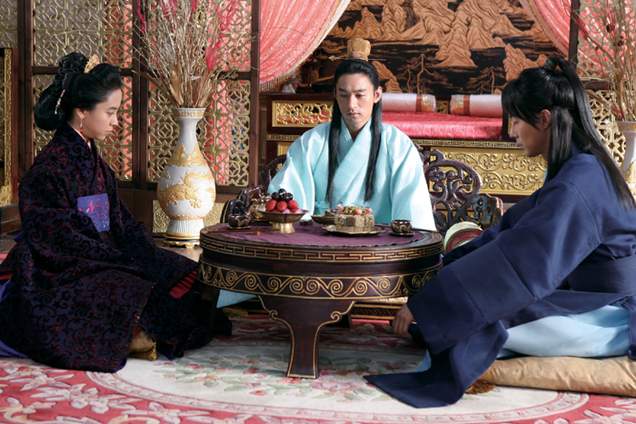
The relationship between the King of Goryeo and chief Hong-rim is an open secret

The relationship between the King of Goryeo and chief Hong-rim is an open secret

A Frozen Flower ticks many of the boxes that make Korean period dramas so attractive and romantic. Director Yoo Ha captures the beauty of the era well as the actors gracefully go about their lives at court, whether through ornate ceremonies or simply resting at the palace and indulging in traditional Korean pastimes. The most prominent feature of the film are the relationships between the central protagonists, and the director wastes no time in establishing the connection that exists between the King and Hong-rim. The affection and love expressed is palpable, as Hong-rim’s concern over the King’s health is wonderfully conveyed through actions and mannerisms, while the King refuses to leave his lovers side even when faced with mortal danger. Director Yoo plays with the notion of gender incredibly well with all the cast but especially in regards to the King and Hong-rim, emphasizing their feminine attributes through colour, costume and particularly hair. The passionate sex scene between them is skillfully framed and conveys their gender as meaningless, as both men embody masculine and feminine qualities through their performance so that only their passion and devotion is of importance. Such androgyny is also ascribed to the Queen who is conveyed as the most stoic and ‘masculine’ of the three. In each case, the actors wonderfully express the fluid notion of gender and sexuality that they embody, making the concept of gender one of the more fascinating aspects of the film.

The sexual scenes between the Queen and Hong-rim are arguably the most renowned feature of A Frozen Flower, and director Yoo captures the raw passion of their physical encounters with effective close ups and vibrant red tones. Yet the repetition of such scenes are undoubtedly a rather cynical attempt to offset the gay context that exists within the narrative, whilst the male fantasy of justified sexual exploitation makes for rather uncomfortable viewing initially. Both Song Ji-hyo and Jo In-seong perform the sex scenes with incredible intensity and sincerity, although the idea that the couple could fall in love purely through sexual encounters is one of the weaker aspects of the story, especially when the cold stoicism of Song Ji-hyo’s performance suggests manipulation and desperation rather than love.

The King orders Hong-rim and the Queen to produce an heir

The King orders Hong-rim and the Queen to produce an heir

Due to the great focus on the evolving relationships between the central protagonists, the political sub-plot of corruption in the court is rather superfluous. The inclusion of such issues are generally an excuse to include action within the narrative, yet this in turn highlights the TV drama quality that perpetuates the film. The choreography is bland and uninspired, while surface wounds seem to cause instantaneous death to miscellaneous enemies that don’t really serve any purpose. Action is also director Yoo’s weakest area as he often steps back from the confrontations, and as such tension and danger don’t really build effectively. The camerawork throughout A Frozen Flower further contributes to the TV drama sensibilities as there is little flair on display that evokes the sweeping romantic epic that the film intends to be. Additionally the mise-en-scene, while featuring attractive decor and props, don’t contain the beauty and vibrancy that has come to be expected from such period dramas.

However despite such criticisms, A Frozen Flower is very much a film centered on the love and lust of the three central figures and in this regard is captivating and enthralling. The exploration of sexuality, gender, lust and love are executed wonderfully giving the film a potent emotional core, while the passion and vibrancy conveyed through the sexual scenes, particularly between the Queen and Hong-rim, are beautifully produced.

As the meetings between the Queen and Hong-rim increase, so does their love

As the meetings between the Queen and Hong-rim increase, so does their love

Verdict:

A Frozen Flower is a wonderfully sexy tale of love and lust during the Goryeo dynasty. Through skilled use of costume, colour and appearance, director Yoo Ha plays with the notion of gender while exploring the relationships between the King, Queen and Chief bodyguard which are central to the film, conveying palpable passion through confrontational and sexual scenes. Yet the limited scale of the directing, as well as the uninspired action and court scenes, exude a TV drama sensibility throughout the running time. Despite this,  A Frozen Flower is a highly enjoyable and racy story of debauchery.

★★★☆☆
Reviews
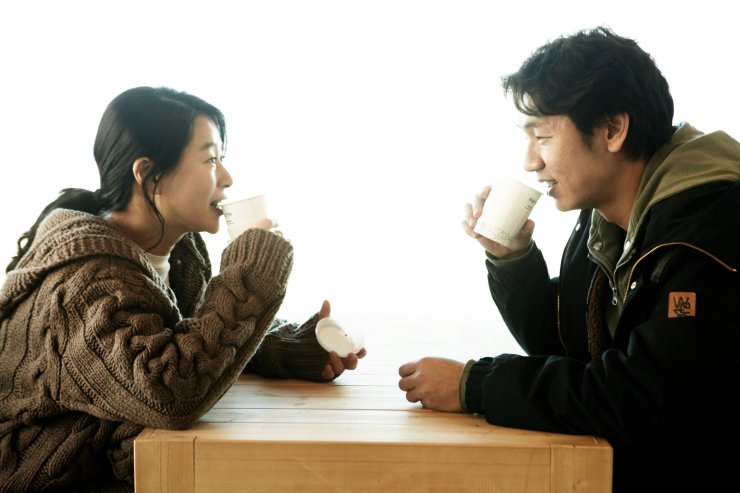
The story ends just as the relationship begins

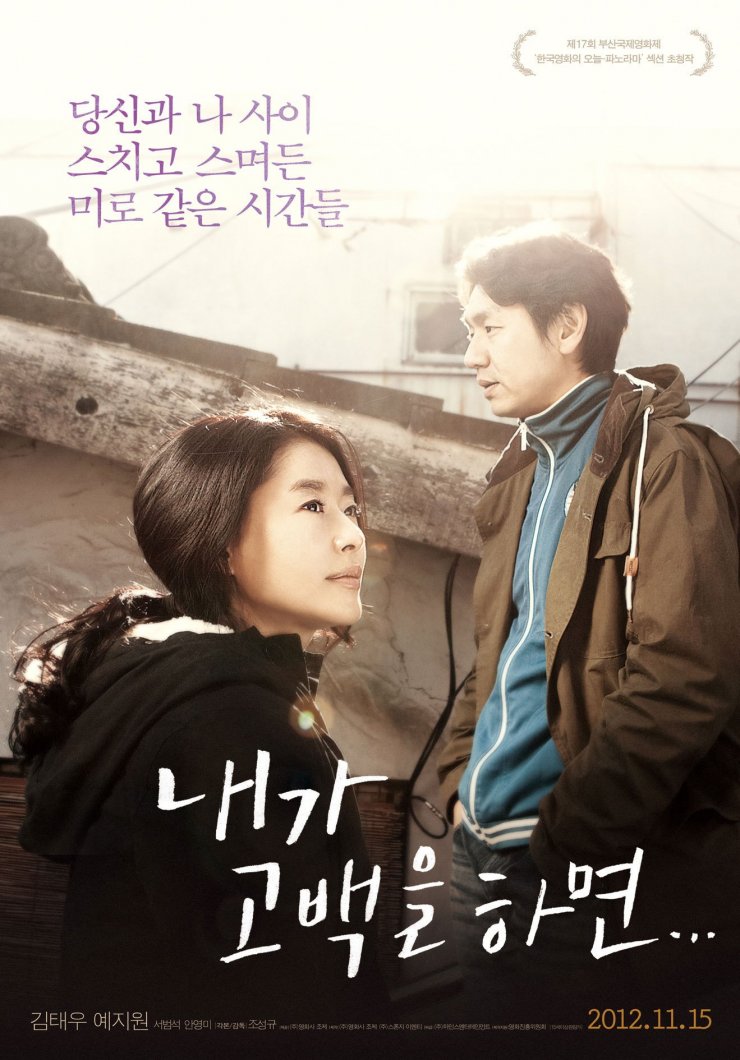
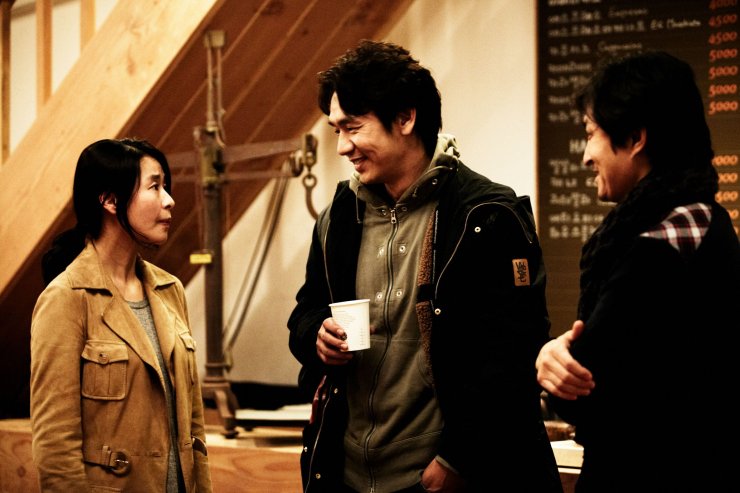
The Winter of the Year was Warm (내가 고백을 하면) – ★★★☆☆
The Winter of the Year was Warm (내가 고백을 하면)

The Winter of the Year was Warm (내가 고백을 하면)

All too often, cinematic representations of love employ a host of cliches and happenstance in order for lovelorn individuals to meet. While the predictability of such narrative devices are relished by some and despised by others, the sense of realism is more often than not shunned in favor of more crowd-pleasing moments that bring the couple closer.

The Winter of the Year was Warm (내가 고백을 하면) soundly rejects such notions. Director David Cho (조성규) has constructed a story whereby the blossoming romance that features is very much a natural development born out of the drama that occurs, and as such is a refreshing and quite charming tale. Ironically therein also lies the main issue with the film, in that director Cho spends so much time establishing the lives of the central couple and the origins of the burgeoning romance that there is little payoff.

Operating as a theater owner and film director, Seoulite In-seong (Kim Tae-woo (김태우) loves nothing more than to visit the coastal city of Gangneung at the weekends to rest and enjoy the local cuisine. However, Gangneung resident nurse Yoo-jeong (Ye Ji-won (예지원) travels to Seoul every weekend to escape daily stress and experience the culture of the capital city. As the two meet by chance and become increasingly more acquainted, In-seong and Yoo-jeong agree to swap apartments at weekends to make their travels more convenient. In doing so, they discover more about each other and realise they have more in common than they first believed.

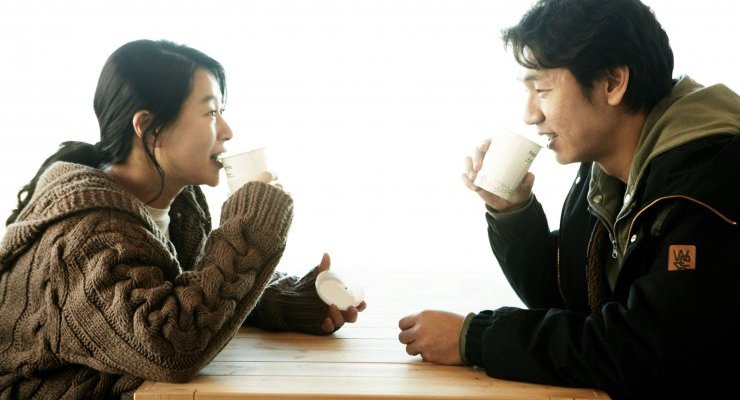
Initially reluctant, nurse Yoo-jeong agrees to swap homes with film maker In-seong at weekends

Initially reluctant, nurse Yoo-jeong agrees to swap homes with film maker In-seong at weekends

Director Cho, who has produced an incredible amount of films over the past few years, uses his knowledge of the film industry well in conveying In-seong’s frustrations at working in the business. The variety of meetings with odd film professionals and his continual begging for funds are humourous to watch, more so for those familiar with the industry. The comedy throughout The Winter of the Year was Warm is not of the laugh-out-loud variety, but of the ironies and quirky moments that occur in life that subtly gesture in new avenues and experiences. Such comic social realism is also ascribed with Yoo-jeong. Due to the selfishness of her Seoulite friend, Yoo-jeong is forced to sleep at a motel and listen to the amourous moans of neighbouring couples, a funny event that forces her to consider finding a home in Seoul. Through the gentle pacing and delicate characterisation, it becomes clear that both Yoo-jeong and In-seong seek an escape from the stresses in their lives, running to different cities in a bid to alleviate tension yet, ironically, tend to encounter more.

Through a chance meeting at a coffee shop in Gangneung, which serves as the ‘hub’ of the film, In-seong and Yoo-jeong become acquainted. The awkwardness of the first meeting is conveyed well by the actors who perform with a natural sincerity that is quite charming, while the long-takes used by the director imply a level of realism that makes their meeting wholly believable. In a more contrived romantic-drama the couple would immediately discuss the option of exchanges homes for the weekend and agree, but it’s to the films credit that Yoo-jeong refuses. Her hesitation on the matter is logically sound given that they are unfamiliar, and it’s a decision that allows the narrative to explore their gradual development and burgeoning relationship.

After a trip to the karaoke room, In-seong and Yoo-jeong become closer

After a trip to the karaoke room, In-seong and Yoo-jeong become closer

While such a sensitive portrayal of their fledgling relationship is refreshing and lends credibility, it is during this time that the narrative becomes stuck. The establishment of Yoo-jeong’s life as a nurse and relationship woes are portrayed well and serve as a great counterpoint to In-seong, yet most other scenes are often superfluous and add little impetus to the main story. This is undoubtedly director Cho’s intention, to capture the smaller, more trivial moments of life, but it becomes bland rather quickly. In fact, there are a great many scenes which could easily be edited out without affecting the overall story, as much of the second act is spent attempting to expand characterization without really providing much in the way of new, or interesting, information.

The Winter of the Year was Warm does thankfully pickup however once the home exchange has been agreed. It is through these scenes that the film finds its originality as the two explore each others tastes in films and music, and are forced to communicate as they break house rules due to bad habits. The swap also instigates some of most humourous scenes in the entire film, and it’s a real shame this area wasn’t expanded upon further as they are genuinely enjoyable and propel the relationship forward. Such irony even strikes the finale of the romantic-drama, as the relationship just starts blossom into romance as the film ends, leaving the audience to surmise how the couple become even closer.

The story ends just as the relationship begins

The story ends just as the relationship begins

Verdict:

By employing a greater focus on gentle social realism and irony, The Winter of the Year was Warm is a refreshing take on the romantic-drama. Director David Cho has created a quite charming tale of two middle-aged singletons attempting to escape their daily lives yet finding something more, employing subtle development and humourous satire to enjoyable effect. While the second act goes on for too long, the film picks up once their homes have been exchanged and they discover more about each other, serving to make the film a quite charming exploration of the origins of romance.

★★★☆☆

Reviews
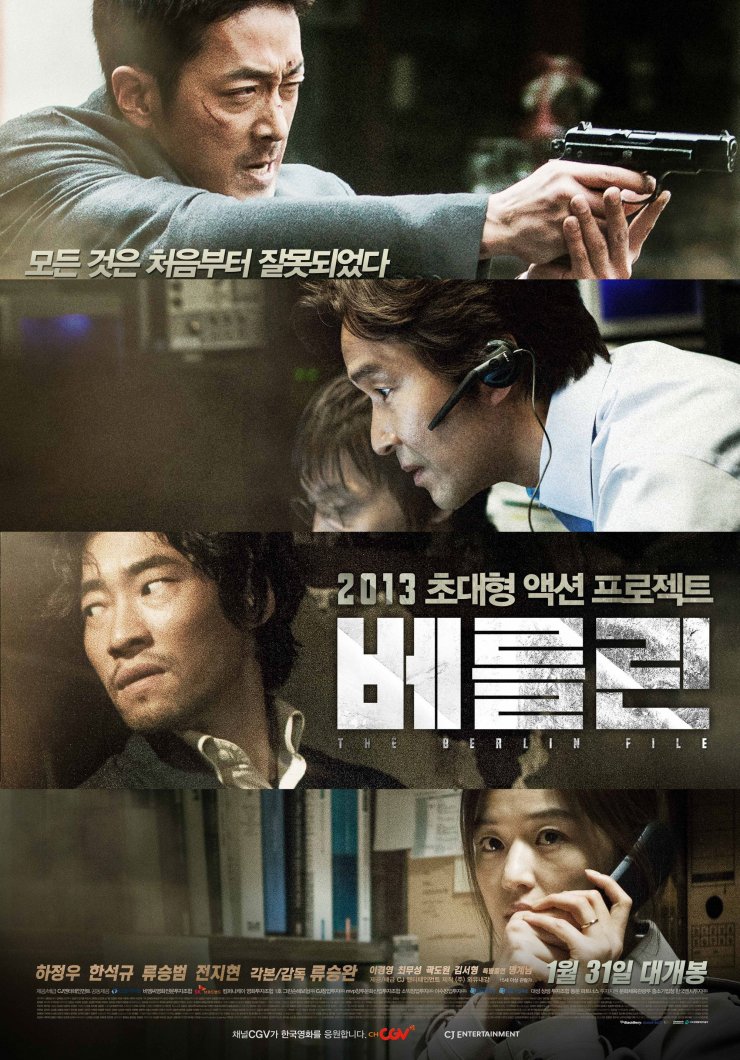
Ruthless Myeong-soo visits Berlin to find the mole, but gets more than he bargained for

The Berlin File (베를린) – ★★★★☆

The Berlin File (베를린)

The Berlin File (베를린)

The hype generated for writer/director Ryoo Seung-wan’s (류승완) latest action-thriller The Berlin File (베를린) has been fierce. Boasting a stellar line-up of acting talent, and with the director’s last film The Unjust (부당거래) proving popular with audiences and critics alike, curiosity has been fervent as to whether director Ryoo could take his trademark mix of multiple narratives and high-octane action to the next level.

The Berlin File features a genuine evolution in director Ryoo’s style, with some of the most adrenaline-inducing action sequences in recent memory and a huge leap up from his prior films. Yet as with his past filmography, The Berlin File is also stunted by far too many protagonists and a highly convoluted narrative, while his preoccupation with male characters relegates Jeon Ji-hyeon (전지현) to the sidelines. However, the director must be congratulated for the scale of the film, not only for filming in a foreign country with the inclusion of several languages, but also for featuring a North Korean spy as the hero of the film.

After a weapons deal in Berlin goes wrong, top North Korean agent Pyo Jong-seong (Ha Jeong-woo (하정우) attempts to flee the scene. Unbeknownst to him however are the South Korean agents on his tail, led by Jeong Jin-soo (Han Seok-Kyu (한석규). As the two men clash Jong-seong manages to escape back to his safe house and wife Ryeon Jeong-hee (Jeon Ji-hyeon (전지현), who works as a translator – and ‘entertainer’ – at the North Korean consulate. With the new Kim Jong-un government establishing themselves, suspicions arise that a traitor exists in the Berlin offices. Dispatching ruthless North Korean agent Dong Myeong-soo (Ryoo Seung-beom (류승범) to find the mole, all the evidence seemingly points to Jeong-hee. Yet Jong-seong and Myeong-soo come into conflict, tensions reach breaking point when the CIA, Mossad, Arabic forces and the South Korean agency all enter the fray, leading to a violent showdown.

Following a botched weapons deal, North Korean agent Jong-seong's life is in danger

Following a botched weapons deal, North Korean agent Jong-seong’s life is in danger

With The Berlin File, director Ryoo has eschewed the reverential martial arts fare of his prior films in favor of the brutal espionage style exhibited within The Bourne Supremacy/Ultimatum, and emerged all the stronger for it. Indeed, the director has adopted many of the features of Paul Greengrass’ spy classics by utilising a moving camera and rapid editing during the lighting-quick action sequences, producing some of best work of his career and representing a true evolution in his abilities. In addition to the exhilarating action and stunt work, the danger of the spy world is wonderfully conveyed. The various betrayals and secret dealings between the disparate agencies produce an intense atmosphere of uncertainty and distrust that continually keeps the audience guessing, harnessing the paranoia of the Cold War era in a contemporary context. By tapping into the fear of the transitioning North Korean government, the story achieves potency as the war for information and power takes on an all-too-real aspect that serves to heighten tension further. Similarly the choice of Berlin is a masterstroke given its history, and director Ryoo films the city as if it were a character itself. The distinctly European style coffee shops and restaurants, the lively streets and the shadowy alleyways all converge to portray the German capital as a hub of culture and intrigue, and one where danger lies at every turn.

Placing a North Korean agent as the ‘hero’ of The Berlin File is also an enthralling decision, representing a genuine shift in the relevance of protagonists from the country. Just as Shiri (쉬리) opened up a wave of storytelling regarding ‘brotherhood’ between the two nations, The Berlin File takes it a step further by emphasizing Jong-seong as more active than his South Korean counterpart Jin-soo, despite the corruption that blights them both. As the top spy of the communist country, Ha Jeong-woo gives a great performance and is highly convincing as the cold, detached secret agent. His lines in English and German are delivered with confidence and assuredness and are quite impressive throughout, while his composure during action sequences mark him out as a genuine action star. Ryoo Seung-beom also handles himself particularly well as ruthless agent Dong Myeong-soo, conveying an unsettling villainy with cocky self-assurance that serves as a great counterpoint to Jong-seong’s naivety. It is acutely fitting that Shiri star Han Seok-Kyu features within the film as older South Korean agent Jin-soo, almost forming as an angrier, more frustrated extension of the prior character. While he occasionally stumbles when performing in English the actor conveys the bitter frustration of his situation convincingly. Unfortunately, out of all the protagonists it’s Jeon Ji-hyeon who is short-changed as translator Jeong-hee. The actress performs the role with skill, however it simply isn’t developed enough for her to display her talent, and as such she functions as little more than a damsel in distress.

Jong-seong's wife, translator Jeong-hee, comes under suspicion as a traitor

Jong-seong’s wife, translator Jeong-hee, comes under suspicion as a traitor

The issues with Jeon Ji-hyeon’s underdeveloped role highlights the main, and rather large, issue within The Berlin File. There are just far too many characters within the narrative, each containing their own history and motivations for taking part in the proceedings, enacting scores of double-crosses with those around them to achieve their goals. Director Ryoo ambitiously attempts to give service to every faction and individual, yet in doing so he loses focus on the core protagonists and as a result their development suffers. The array of narrative tangents also bogs down the main impetus of Jong-seong’s mission which a great deal of time and effort was spent constructing, while the variety of betrayals and red herrings that occur make the plot a confusing, and somewhat frustrating, viewing experience.

Perhaps for this reason director Ryoo seems unsure how to finish his spy thriller, and as a result the finale boils down to something of a stereotypical stand-off seen in generic action films. To the directors credit, the final act is indeed exciting as gunfire hails from all directions while physical confrontations feature some vicious, wince-inducing moments. Yet despite the exhilarating fun of watching the good and bad guys duke it out in the high stakes battle, it’s difficult not to feel that it is mismatched with what came before, and that a less convoluted plot would have ultimately led to a more rewarding finale.

Ruthless Myeong-soo visits Berlin to find the mole, but gets more than he garbained for

Ruthless Myeong-soo visits Berlin to find the mole, but gets more than he bargained for

Verdict:

The Berlin File represents a stylistic evolution for director Ryoo Seung-wan, featuring some of the best action and stunt sequences in recent memory and arguably the best of his career. The director captures the paranoia of the spy world with confidence and skill, employing the city of Berlin incredibly well as the location of espionage. While the over-abundance of characters and narrative tangents bog down Jong-seong’s mission, director Ryoo deserves credit for going beyond the themes of ‘brotherhood’ by actually placing a North Korean agent as the ‘hero’ of the film, making The Berlin File an exhilarating, if somewhat convoluted, spy thriller.

★★★★☆

Reviews
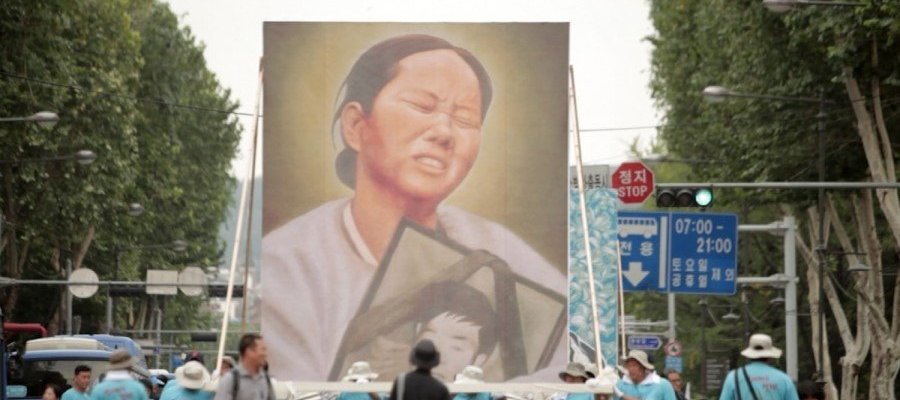
The tributes for Lee So-seon following her death are moving

Mother (어머니) – ★★★☆☆

Mother (어머니)

Mother (어머니)

The past 100 years of Korean history is fraught with tragedy. From occupations by neighbouring Japan and the resulting atrocities, through to several coups, the Park Chung-hee dictatorship, and the hard-fought struggle for democracy, the people of Korea have endured generations of adversity in a staggeringly short period.

With documentary feature Mother (어머니), director Tae Jun-seek (태준식) follows the final two years in the life of Lee So-seon (이소선), also known as ‘the Mother of Workers’. The mother of the iconic human rights campaigner Jeon Tae-il (전태일), Le So-seon has worked tirelessly since his death in 1970 protesting for workers rights and equality.

Yet with this documentary, director Tae sidesteps the past of his central figure and instead focuses on her present and the legacy that she created. As such, Mother is a very sweet and charming exploration into elderly Lee So-seon’s final years, yet the absence of information about her past achievements – which the audience are presumed to already be aware of – highly detracts from the impact of witnessing such a powerful historical figure live out her final years.

Lee So-seon continually displays dignity and strength of character

Lee So-seon continually displays dignity and strength of character

Mother is a lovely and fitting tribute to Lee So-seon, with director Tae capturing her dignity and strength of character effortlessly. Her good humour positively radiates as she cracks jokes and mocks those around her with a playfulness that belies her years. Similarly Lee So-seon’s ideology of equality and humanitarianism shines throughout the film, not only in answering probing questions but just as sincerely through her everyday activities. Her natural charisma draws people close, and the opening sequence of Mother– in which a host of different people help Lee So-seon to traverse up a hill path – perfectly conveys her status as a much loved and respected figure in the community. Director Tae’s style in filming Lee So-seon is gentle and unassuming, allowing for her mannerisms and anecdotes whilst undertaking daily routines to come to the fore, with the realism that this styles exudes subtly but effectively conveying her resilience and indomitable will.

Yet director Tae falls into the trap that so many Korean directors suffer from, in that he expects the audience to have full awareness of contemporary Korean history and by extension Lee So-seon’s, and her late son Jeon Tae-il’s, historical relevance and achievements. For those who are fully-reversed in modern Korean history Mother contains genuine poignancy in watching such a strong figure live out her final years with dignity, but for those ignorant – primarily young Korean and foreign audiences – the emotional impact of the documentary is lessened to a great degree. Director Tae clearly wishes to focus on this particular period of Lee So-seon’s life and the respect and tributes that are paid in her honour, yet without the prerequisite knowledge of her life it is left to the audience to guess, through piecing together the clues throughout the documentary, why she has earned them. The play of Lee So-seon’s life emphasizes this trend, as a Taiwanese director travels to Korea to help orchestrate the production, and it is only through watching the performance that the audience comes to understand some of the tragedy she had to endure.

Theater actors attempt to create a story about Lee So-seon's life

Theater actors attempt to create a story about Lee So-seon’s life

However director Tae does seem to be aware of this issue. While most of the running time is spent documenting Lee So-seon’s last movements with a scattering of hints alluding to her historical prominence, her death is the catalyst for an expansion on her achievements. The overwhelming tributes that occur and the marches that take place in her honour are simply incredible, and are edited with black and white scenes of Lee So-seon at demonstrations and rallies in support of workers rights. Such scenes are particularly effective in conveying her motivations and role in contemporary Korean history. While moving, such scenes are nevertheless too little too late as they provide context only after the final moments of her life. Indeed, had such context been present at the start of the documentary – and running throughout it – Lee So-seon’s remaining years would have conveyed much greater poignancy. Yet as it stands, Mother is – for the uninitiated at least – a sweetnatured documentary about a charming, kind, and strong-willed lady who meets her end with dignity.

The tributes for Lee So-seon following her death are moving

The tributes for Lee So-seon following her death are moving

Verdict:

Mother is a loving and gentle tribute documenting the final years of Lee So-seon,  a human rights campaigner who has worked tirelessly since the death of her son Jeon Tae-il in 1970. Director Tae Jun-seek captures her spirit in a highly reverential manner, with his gentle style allowing her charisma to shine through. Yet he also expects the audience to be fully aware of Lee So-son’s history and achievements and as such doesn’t provide context, meaning for the uninitiated that the film loses an enormous amount of poignancy.

★★★☆☆

Reviews
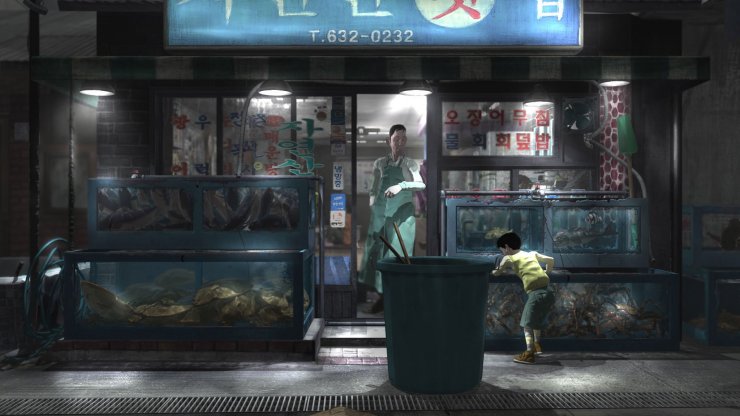
Padak attempts to flee the sushi restaurant

PADAK (파닥파닥) – ★★☆☆☆

PADAK (파닥파닥)

PADAK (파닥파닥)

Animated films have made several attempts to capture the world that exists in the ocean. Pixar’s Finding Nemo undoubtedly leads the pack, yet Help! I’m a Fish, Shark Tale and A Turtle’s Tale: Sammy’s Adventures all work hard to convey the vibrancy of life under the waves. Coupled with the great variety of species that dwell there, the animations offer some fascinating visual storytelling.

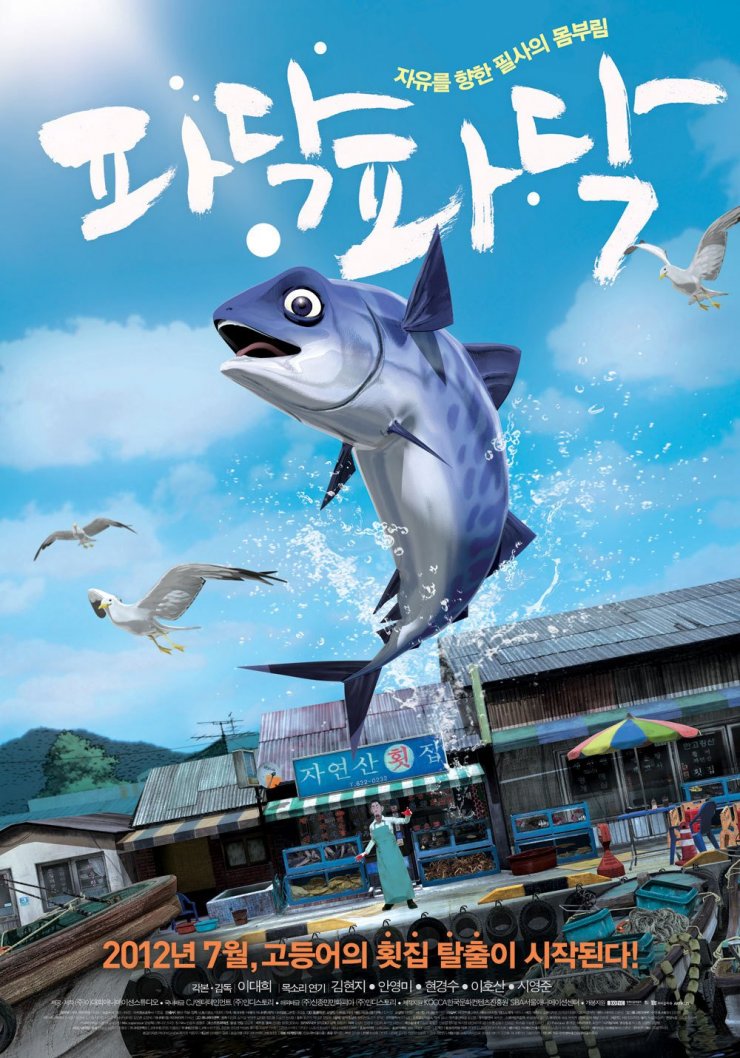
Given the bright and cheerful poster of PADAK (파닥파닥), parents could easily be forgiven for thinking that this feature by writer/director Lee Dae-hee (이대희) is of a similar ilk. Yet their children would be horrified to discover a dark story featuring cannibalism, torture, and characters being eaten alive. Such violence cannot help but overshadow the themes of freedom and identity that run throughout the narrative, while the crude animation does little to help matters.

Captured at sea, a mackerel (Kim Hyeon-ji (김현지) is taken to a sushi restaurant and placed in a tank ready for customers. There she encounters other species of fish trapped in the same predicament, yet as they are from a fish farm they can’t understand the mackerel’s desperate desire to return to the ocean. Her constant attempts to escape earn her the nickname ‘Padak’ due to the swishing of her fins, while the other fish teach her methods to survive. But before long Padak’s knowledge and persistence comes into conflict with Master Flatfish (Si Yeong-joon (시영준) an old halibut that holds an iron-fisted regime over the tank.

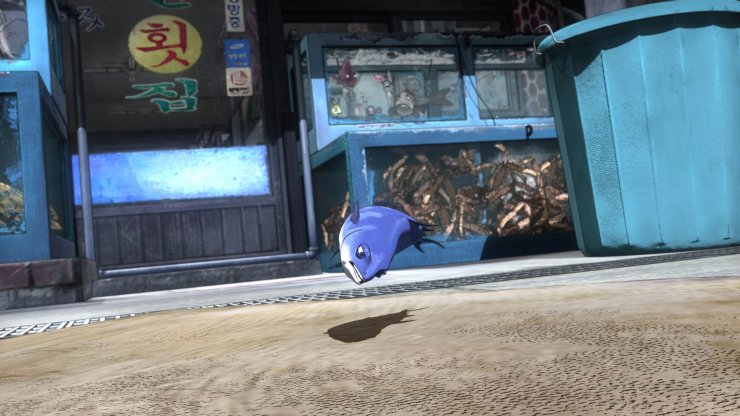
Padak attempts to flee the sushi restaurant

Padak attempts to flee the sushi restaurant

PADAK begins ominously during a depressingly overcast morning, where the fisherman haul their wares into large lorries ready for the local restaurants. The atmosphere generated by such scenes is bleak and foreboding, and director Lee Dae-hee does a great job in emphasizing the melancholy through the colour palette. Combined with utilizing Padak’s point-of-view, the confusion and stress that she endures is conveyed well.

Yet these early scenes immediately highlight one of the great animation problems of the film, as the people are so stiff and rigid it is distracting. The animation style is reminiscent of the old Sony Playstation/Sega Dreamcast era, where ‘cell-shading’ was employed to convey the 3-D features whilst also masking the limitations of the technology. This is perhaps an unfair criticism given that Padak is an independent film, but whenever a human appears it immediately draws the audience out of the story. However, when the story centers on the fish at the heart of the film the animation becomes much more bearable, and it is clear that a lot of time and energy went into their creation. Indeed, the details on the fish ‘skins’ are quite impressive, especially following conflict.

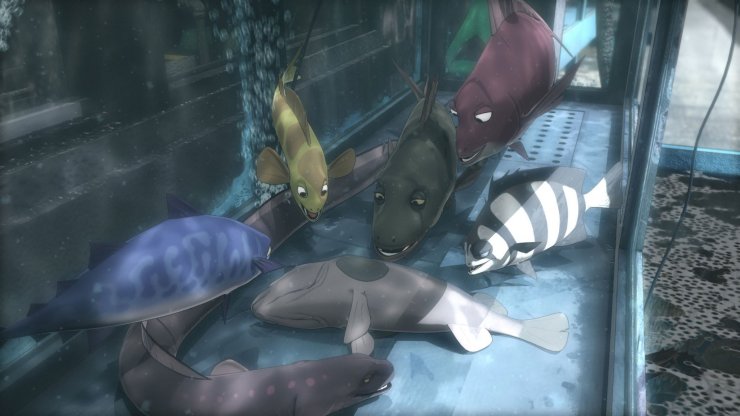
Such violence is an enormous issue within the film, and is often quite horrific. Characters that are the focus of the film are cruelly beaten, while others are shown being decapitated or boiled alive by the sushi chef, and even eaten alive by customers while the face of the fish is still moving and breathing. If the intention of director Lee Dae-hee is too scare people away from sushi restaurants, such sequences must be considered a success. The true horror however is reserved for the scenes depicting cannibalism, as the fish kill injured newbies and devour it in a mess of flesh and dissipating blood.

The fish resort to cannibalism to survive

The fish resort to cannibalism to survive

The terror such scenes convey also detract from the core themes of the film, which are concerned with freedom and identity. Old Master Flatfish has created a dictatorship inside the tank, forged through fear of death as well as the lack of education his subordinates exhibit. Padak, with her knowledge of the ocean and dreams of liberty, challenges the regime forcing a conflict between them. The debate between democracy and fascism is nothing new, yet the manner in which it is explored in the tank offers somewhat of a fresh approach to the concept. Yet as Padak slowly starts to win over the other fish with her desire to return to the sea, it is impossible not to reminisce about similar scenes from Finding Nemo which dealt with the same issues but in a more enjoyable – and less bloodthirsty – fashion.

Musical numbers are a surprising addition to Padak, and as they appear in the form of dream sequences director Lee uses the opportunity to experiment with alternatives forms of animation. The songs are not particularly uplifting or catchy, but the different animated styles are interesting and are used effectively as bridges between the dialogue in the tank and the hopes and dreams of the fish involved.

The sushi restaurant is a place of genuine horror

The sushi restaurant is a place of genuine horror

Verdict:

PADAK is a novel attempt at capturing the lives of fish, one that explores the predicament of living in fear of death due to containment in a sushi restaurant tank. Writer/director Lee Dae-hee competently conveys the issues of freedom and identity at the heart of the narrative, but they are subsumed by the awful violence and cannibalism that arises. While the animation of the fish is enjoyable the film staggers greatly when conceiving humans. As such PADAK an incredibly mixed, and rather dark, animation.

★★☆☆☆

Reviews
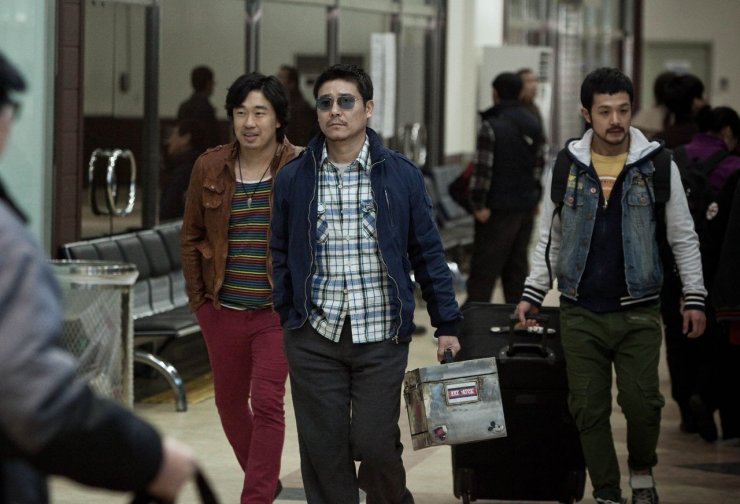
Yeong-gyoo and his team prepare for trafficking organs

The Traffickers (공모자들) – ★★★☆☆

The Traffickers (공모자들)

The Traffickers (공모자들)

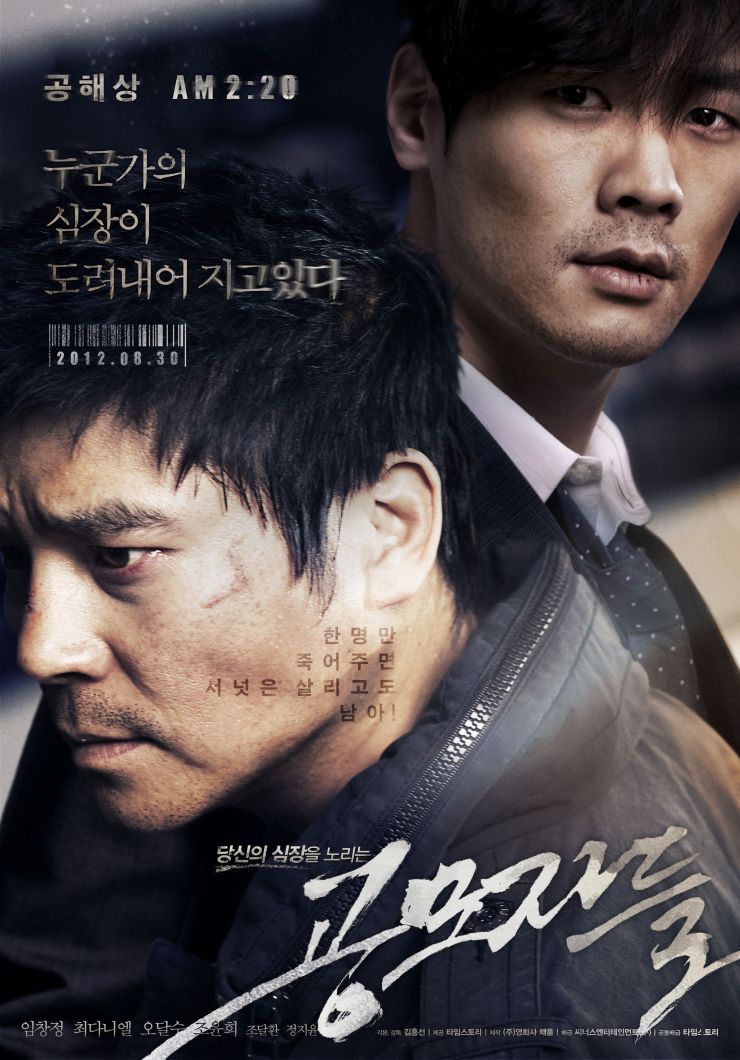
Exploring the black market organ trade between Korea and China, The Traffickers (공모자들) is the directorial debut from writer/director Kim Hong-seon (김홍선). The film, which is loosely based on the true story of Korean newlyweds who became embroiled in human organ trafficking, also earned director Kim the ‘Best New Director’ award at the 2012 Blue Dragon Film Awards.

The Traffickers is indeed a thrilling film, one that captures the horrifying reality of the trade and depths organ traffickers will go to in order to secure their product. The tension generated from such scenes is palpable, whilst the horror of those effected by trafficking is gut-wrenchingly poignant. Yet bizarrely, director Kim attempts to align the audience with the traffickers themselves, forcing them to care whether the mission is a success despite the criminals’ sinister machinations. The result is a thrilling yet odd story, and one that deserves credit for examining the very nature of such controversial subject matter.

Following a failed attempt at securing organs that cost the life of his best friend, trafficker Yeong-gyoo (Im Chang-jeong (임창정) and his team quit the business and become simple smugglers instead. Yet the meager sums generated from smuggling make it difficult to rise out of squalor and pay debts, and the team are in need of a big score. Simultaneously, Yu-ri (Jo Yoon-hee (조윤희), the woman of Yeong-gyoo’s affections, has a sick father in need of a transplant and visits black market dealers to secure an organ. For her sake, and for the team, Yeong-gyoo secretly agrees to perform one last job with the help of righthand man Joon-sik (Jo Dal-hwan (조달환) and alcoholic surgeon Kyeong-jae (Oh Dal-su (오달수). As everyone gathers on the boat to China, businessman Sang-ho (Choi Daniel (최 다니엘) and his disabled wife Chae-hee (Jeong Ji-yoon (정지윤) board the same vessel only to find themselves the targets of the traffickers.

Yeong-gyoo and his team prepare for trafficking organs

Yeong-gyoo and his team prepare for trafficking organs

The opening sequence of The Traffickers is the stuff of nightmares as a man, naked and wounded, stumbles through the hallways of a boat smearing his blood on the walls. Writer/director Kim Hong-seon captures the horror of the situation with skill and conveys a disturbingly compelling introduction into the world of the traffickers. Indeed, the director displays a keen eye for tension and violence throughout the film and is a seemingly perfect fit for the genre, building suspense-filled sequences until a release of blood soaked terror. The scenes in which Yeong-gyoo’s team abduct disabled Chae-hee and prepare to harvest her organs are horrifying yet engrossing, whilst the tension generated by her husbands frantic search of the claustrophobic and labyrinthian hallways of the boat is genuinely disconcerting. Similarly, the abuse Chae-hee suffers contains chilling realism as the traffickers take advantage of her predicament by abusing and cutting her, all voyeuristically captured on camera for their clients.

It is therefore quite odd that Yeong-gyoo and the traffickers are given such central, vital roles within the narrative. Korean cinema is no stranger to the concept of the anti-hero, with films such as The Chaser and The Thieves performing incredibly well, but The Traffickers really takes the notion to the next level. Criminals executing a high-stakes heist is one thing, but human organ traffickers that sexually abuse a drugged disabled woman is quite another. The perversity and violence that pervades whenever the traffickers are around is quite shocking, yet more is so that the audience are intended to root for them to succeed. In fact, all of the criminals have zero redeeming features with which to forge empathy, something director Kim seems to realise in the final act as a hasty back story is given to Yeong-gyoo through flashback scenes. This is particularly problematic as while the team appear to be winning, it just feels wrong.

After abducting disabled Chae-hee, the team get to work

After abducting disabled Chae-hee, the team get to work

With the exception of leader Yeong-gyoo, the characters themselves are generally stereotypes including the effeminate sleazy boss, the mentally challenged trafficker, and the drunken surgeon. Despite this the dialogue is well written and competently acted by all involved, and the world in which they inhabit and the stakes they face are conveyed with the appropriate danger. As the most developed protagonist, Yeong-gyoo is actually quite a complex, and disturbed, figure within the film. Wonderfully acted by Im Chang-jeong, Yeong-gyoo is a particularly nasty piece of work due to his penchant for violence and swearing, as well as the abuse he delivers to the middle aged women who smuggle goods for him. As he is quite unlikeable, director Kim attempts to provide Yeong-gyoo with a ray of hope in the form of love interest Yu-ri, but as she wants absolutely nothing to do with him, he appears to be something of a stalker. Yeong-gyoo’s motivations are therefore unclear. Does he intend to give money to Yu-ri for her father’s operation? Does he intend to give Chae-hee’s organs to Yu-ri? He is incredibly mysterious, but the fact that Yu-ri doesn’t even like him gives rise to the question why he bothers at all.

Director Kim appears to be aware of these issues however, and attempts to address them all for the finale. It’s too little too late of course, but by giving Yeong-gyoo a moral impetus and back story he finally becomes a figure audiences can root for, and hope to succeed. The action and suspense during the final act is frantic and exhilarating as the chase sequences and fighting scenes are tense and brutal as cars are smashed and eyes gouged. The Chinese hospital in particular stands out as a source of abject horror, as the camera moves past rooms filled with organ-less corpses. While the race against time is highly enjoyable, it is ultimately undermined by the silly coincidences and plot absurdities that transpire to transform Yeong-gyoo into the hero, which is a shame considering the action is so engaging.

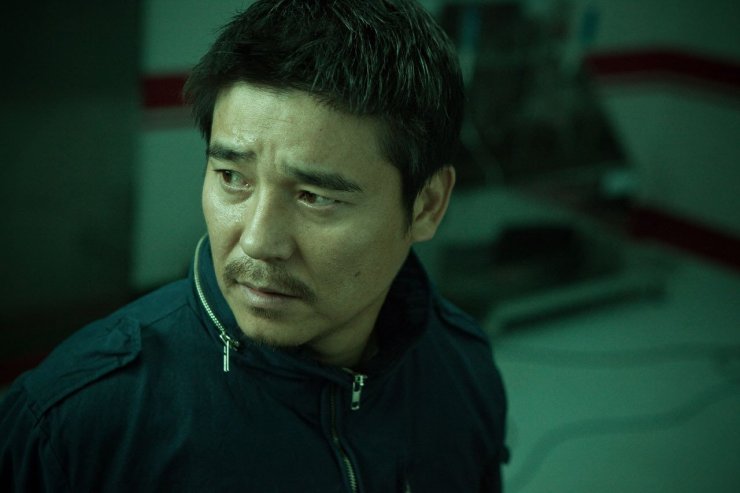
Yeong-goo must race against time to salvage the operation

Yeong-gyoo must race against time to salvage the operation

Verdict:

The Traffickers is a thrilling and violent film about the black market organ trade that exists between Korea and China. Director Kim Hong-seon captures the tension and action with skill in his debut feature, and the abject horror that arises throughout the film is palpable. Yet the film is hugely problematic as the central protagonists are the exploitative, perverse traffickers who sport zero redeeming features, but the audience are expected to will them to succeed. Combined with some quite absurd narrative occurrences in the final act, The Traffickers is an engaging albeit paradoxical thriller.

★★★☆☆

Reviews
When violence enters her life, Tae-yeon takes up arms

Bloody Fight In Iron-Rock Valley (철암계곡의 혈투) – ★★★☆☆

Bloody Fight in Iron-Rock Valley (철암계곡의 혈투)

Bloody Fight in Iron-Rock Valley (철암계곡의 혈투)

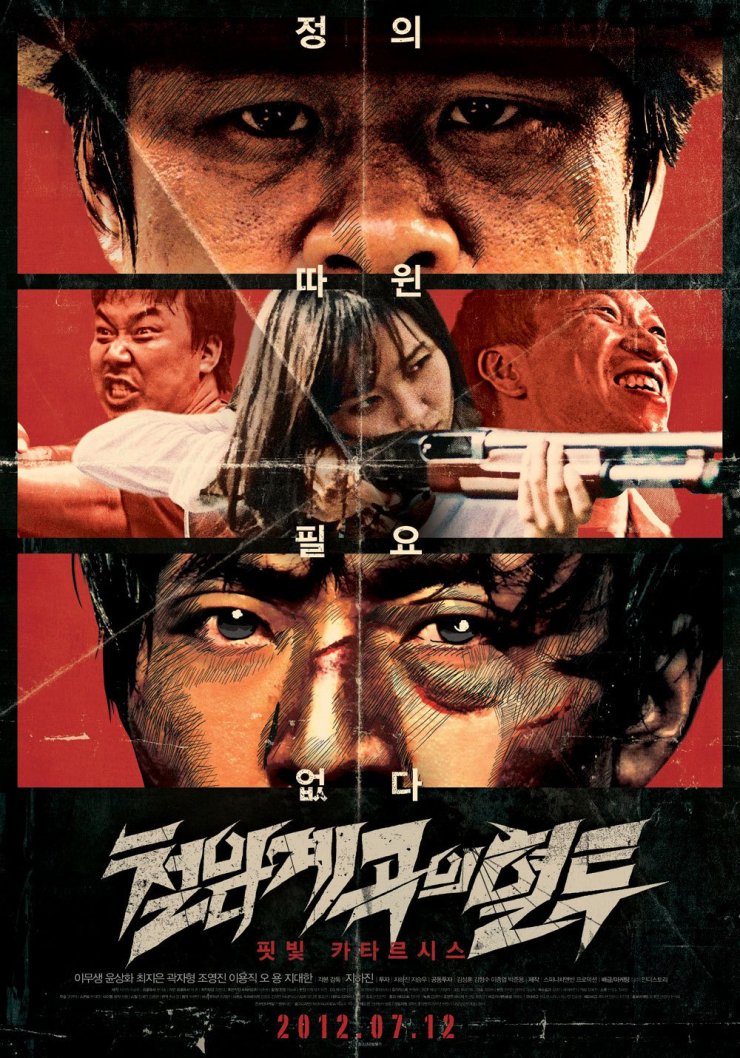
Premiering at the 2011 Puchon International Film Festival, director Ji Ha Jean’s (지하진) Bloody Fight in Iron-Rock Valley (철암계곡의 혈투) was particularly well received. Indeed, the low budget spaghetti western homage earned several awards during its run at PiFan including Best Korean Independent Film, European Fantastic Film Festival Asian Award as well as the Fujifilm Eterna Award.

It’s not hard to see why; the film is a genuine love letter to the classic westerns of Sergio Leone with the nameless outsider-redeemer hero, a town besieged by corruption, and a pretty prostitute with a heart of gold. The Morricone-esque soundtracks for the characters add even further reverence to the respectful homage, heightening the tension of the violent quest  immensely. While the budget limitations hinder the storytelling and certain areas require further development, Bloody Fight in Iron-Rock Valley is a thoroughly entertaining indie western.

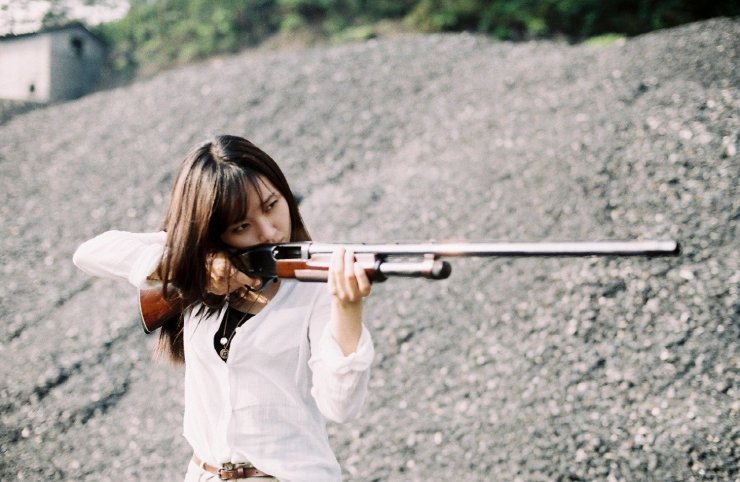
Finally released from serving a 12 year prison sentence, the man with no name (Lee Moo-saeng, 이무생) begins his quest for revenge. After dispatching a police officer and a gangster in brutal fashion, the man travels to a sleepy backwater town in Gangwan-do in pursuit of his final targets – Ghostface (Yoon Sang-hwa (윤상화) and Axe (Kwak Ja-hyeong (곽자형). Yet upon his arrival the man discovers the town is plagued with corruption due to gambling dens presided over by a crippled boss, causing destitution in its wake. As the nameless man violently brings justice to the town, he encounters prostitute Tae-yeon (Choi Ji-eun (최지은) and wild man Pan-ho (Ji Dae-han (지대한), who join forces for a bloody showdown in iron-rock valley.

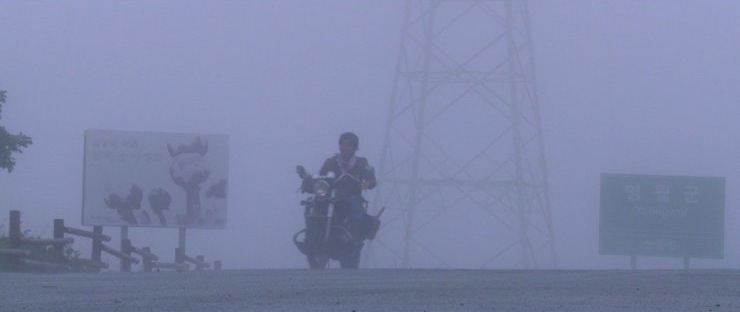
The man with no name rides into town

The man with no name rides into town

There is much to admire about Bloody Fight in Iron-Rock Valley. The film is a pure and sincere tribute to the western genre, and even film noir classics such as Chinatown, albeit with a Korean twist in the form of the violent revenge thriller. Writer/director Ji Ha Jean amalgamates the features of each incredibly well as the lone anti-hero pursues justice against the corrupt, eliminating them with appalling methods ranging from knives, beatings, and even flame throwers to the mouth. Yet Ji Ha Jeon never allows for the action to subsume the story, continually reinforcing the reasons for such violence through teasing flashback sequences and props a la Once Upon A Time In The West. The references to Leone’s westerns are hugely enjoyable, from the mysterious musical box that holds the key to the past, through to the nameless man dragged through the streets by his neck (via motorcycle), and identifying such sequences are a real thrill for fans of cinema. The villains, branded with pseudonyms rather than names, also hark back to the miscreants of the ol’ west as criminals that have ultimately been acquired by corporations intent on consolidating power.

In this respect Ji Ha Jeon also aligns the film with Korean cultural concerns. Just as the change from wilderness to civilization is a key theme in the western, the director relays this sensibility through Korea’s rapid urbanization. Such disparity is represented well, with wonderful cinematography of the natural misty landscapes from which the nameless man emerges, contrasted with the dilapidated houses and dark quarry pits of industry. The powerful corporation at the source of the transition, headed by a symbolically crippled boss, abuses the land, the community, and Korea’s religious and cultural heritage in the form of a Buddhist temple. The ongoing crimes of the syndicate pull other outsiders into the conflict, making for some engaging, and cathartic, violent confrontations.

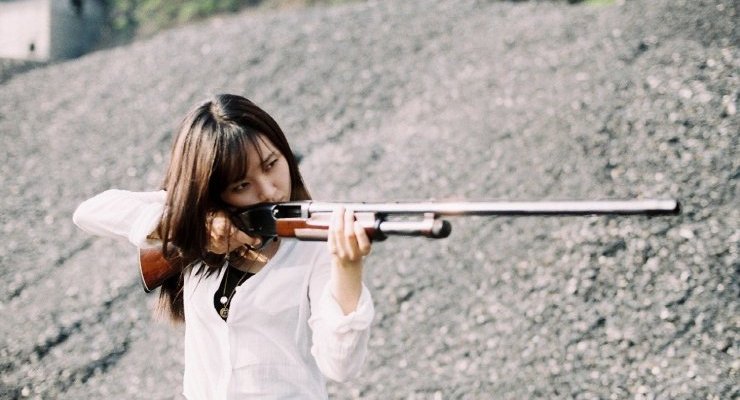
When violence enters her life, Tae-yeon takes up arms

When violence enters her life, Tae-yeon takes up arms

Yet aside from the genre pastiches and violence, the restrictions imposed by the shoe-string budget are quite clear. This is perhaps an unfair criticism as what director Ji Ha Jean has achieved with Bloody Fight in Iron-Rock Valley – which was filmed in a month – is remarkable, and the rough-around-the-edges sensibility actually adds a great deal of atmosphere to the film. However, the narrative is in general need of further development particularly in regards to villains and their machinations. Of all the bad guys, Ghostface stands out as the most ruthless and sinister, and his stoicism is competently performed by Yoon Sang-hwa. The other henchmen are merely stereotypical fodder for the nameless anti-hero to challenge and overcome, and in the case of the boss’ son, a general annoyance. The boss himself is woefully underwritten, and rather than a power hungry nefarious fascist he is something of a kindly old man which is frankly bizarre. The gravest underdevelopment however is reserved for the ultimate goal of achieving power in the area, a pivotal feature of the plot and of prior westerns, as the personal vendetta of the anti-hero becomes one that redeems the town. As this element of the narrative is rapidly passed by there is never the sense that the quest has saved a community, and is therefore lacking in compulsion.

Luckily however the finale of  Bloody Fight in Iron-Rock Valley features all the classic hallmarks of the western genre, and is downright disturbing as the tragedy of the man with no name is revealed. The confrontation between him and Ghostface in the quarry is full of tension, and is a fitting final tribute to the spaghetti westerns of yore.

The man with no name confronts his nemesis

The man with no name confronts his nemesis

Verdict:

Bloody Fight in Iron-Rock Valley is a genuine love letter to the classic spaghetti westerns of Sergio Leone. Featuring classic features of the genre, including a nameless outsider-redeemer anti-hero complete with Morricone-inspired score, the independent film provides a huge service for fans of cinema. Director Ji Ha Jean also combines Korean anxieties surrounding the rapid urbanization, making it a distinctly Korean production. The low budget and underdeveloped script hamper the film, but Bloody Fight in Iron-Rock Valley is otherwise an enjoyable, and entertaining, take on the modern western.

★★★☆☆

Reviews
'J' stands victorious over a beaten Detective Choi

Confession of Murder (내가 살인범이다) – ★★★☆☆

Confession of Murder (내가 살인범이다)

Confession of Murder (내가 살인범이다)

Opening with a surprising and riveting action sequence, Confession of Murder (내가 살인범이다) begins in earnest as tough Detective Choi Hyung-gu (Jeong Jae-yeong, 정재영) and serial killer ‘J’ (Jung Hae-Kyun, 정해균) brutally assault each other. Writer/director Jeong Byeong-gil (정병길), who previously released Action Boys (우린 액션배우다) in 2008, captures the kinetic ferocity and its intensity with skill as the two men beat, throw and chase until exhaustion. And then the story begins, and suddenly everything becomes incredibly problematic.

Requiring huge leaps in logic for the narrative to remain conceivable, Confession of Murder is best enjoyed as an action movie rather than a thriller. The story is, quite frankly, ludicrous while the tone of the film continually shifts dramatically. The stunt team however have created some highly entertaining and adrenline fueled sequences that are engaging. Unfortunately the plot just doesn’t match the action, progressively becoming worse until a final act which manages to undermine everything about the film.

Drinking alone, Detective Choi Hyung-gu is suddenly attacked by ‘J’, a serial killer of 10 women he has been attempting to locate. After a brutal confrontation J stands victorious and, slashing the Detective’s face, runs into the night. Fifteen years later, after the statute of limitations has expired, the murderer appears on television promoting a book which details all of the killings. Calling himself Lee Du-seok (Park Si-hoo (박시후), his book ‘I Am A Murderer‘ becomes an instant best-seller, while his boyish good looks earn Du-seok hordes of fans. His popularity does not sit well with the relatives of the victims, however, and while they launch plans Detective Choi investigates the validity of Du-seok’s claims.

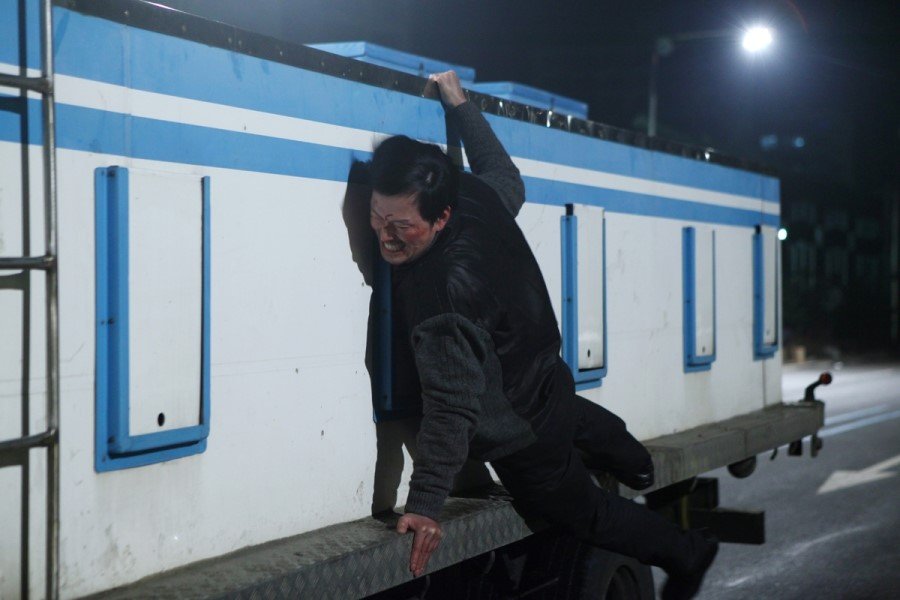
'J' stands victorious over a beaten Detective Choi

‘J’ stands victorious over a beaten Detective Choi

The stunt team behind Confession of Murder deserve considerable praise for their ingenuity and creativity. Their dynamic, and often quite aggressive, action sequences are the genuine highlight of the film and are thoroughly entertaining. The team also manage to shift the style of action in accordance with the narrative tone, as the sinister and ruthless opening stands in stark contrast to the mad-cap comedy of a later abduction sequence, which is quite a feat.

Yet such tonal changes are just one of the many problems that plague the story. Confession of Murder is never really sure what kind of film it wants to be, and by attempting to appease fans of several genres it manages to entertain but not satisfy any. The gritty urban landscapes of the opening are reminiscent of The Chaser, but are eschewed in favor of exploring the notion of celebrity, then later altered again into screwball comedy, before amalgamating them all. In attempting to juggle such disparate forms the depth required for each doesn’t materialise, and the narrative suffers for it. The release of Du-seok’s book ‘I Am A Murderer‘, and his subsequent rise to stardom due to his handsome appearance, provides the potential for biting social satire and criticism that is only ever hinted at. Similarly, the relatives of victims who transpire to capture and kill Du-seok for his crimes evokes themes from Sympathy for Lady Vengeance, but their pain is wholly undermined by their transformation into comical characters. The most glaring oversight is reserved for the manner in which the statute of limitations is explored. While certainly interesting for much of the running time – if disbelief can be suspended – it ultimately becomes quite farcical by the conclusion.

Appearing after the statute of limitations has expired, Lee Du-seok releases a book about the murders

Appearing after the statute of limitations has expired, Lee Du-seok releases a book about the murders

Despite such drawbacks, Confession of Murder is entertaining in places. The tension generated between Detective Choi and Du-seok is engaging and continually leaves audiences wondering which of the rivals will outsmart the other and emerge triumphant. As the hard-boiled detective, Jeong Jae-yeong delivers another highly competent performance albeit one that he has played several times before. The role never really stretches Jeong Jae-yeong, and as such he appears quite comfortable throughout rather than a desperate man. His counterpart, Park Si-hoo, is surprisingly effective as Du-seok. The actor has clearly been cast for his handsome features, yet he channels this into a smug arrogance convincingly well. The egotistical grin that adorns his face whenever confronting nemesis Detective Choi is wonderfully sleazy, ramping up the tension between them.

For any thriller to leave a lasting impression, however, a certain degree of psychology is required in understanding the motivations of those involved. Director Jeong Byeong-gil realises this far too late, and attempts to flesh out such a back story during the final twenty minutes. This is puzzling to the extreme, as had such scenes transpired during the first act as per tradition, Confession of Murder would have ultimately been a much more engaging film and given incredible impetus to Choi’s mission. Similarly, the murderer clearly sports a host of psychological issues which are barely acknowledged. Instead the finale hinges on masculine prowess, and the highly capable stunt team once again do not disappoint.

Detective Choi gives chase during a dramatic car chase

Detective Choi gives chase during a dramatic car chase

Verdict:

Confession of Murder is best enjoyed as an action film rather than a thriller due to the wonderfully orchestrated work by the stunt team. While exploring the statute of limitations and notion of celebrity has plenty of potential, writer/director Jeong Byeong-gil ultimately doesn’t assert the required depth – both in narrative and characterisation – due to his attempt to appease fans of multiple genres. An entertaining way to waste a couple of hours, Confession of Murder is a mediocre entry into the thriller canon best enjoyed by fans of the actors involved.

★★★☆☆

Reviews
Hyun lives a life of containment and isolation

Stateless Things (줄탁동시) – ★★★★☆

Stateless Things (줄탁동시)

Stateless Things (줄탁동시)

As an experimental queer art-house film, Stateless Things (줄탁동시) is a quite a rarity in Korean cinema. Director Kim Kyung-mook (김경묵) has crafted an incredibly unique production that explores the subjects of alienation and homosexuality within the metropolis of Seoul, employing a variety of cinematic techniques in emphasizing ostracization and identities in flux. Through the dual narratives that transpire, the protagonists are forcefully excluded from and contained within the confines of Seoul, allowing for an examination of the city not as a romanticized hub of commerce but as an overbearing arena where identity is subsumed. While the English title Stateless Things points to such themes, the Korean title offers more potent symbolism. ‘줄탁’ means pecking from inside and outside while ‘동시’ means at the same time, alluding to the relationship that exists between the ‘inner’ and ‘outer’ worlds, between senior and junior, and the realization of truth. While director Kim exhibits his fascinating trademark stylization throughout his frank exploration, he is also let down by his eccentricities that makes the story somewhat incoherent and certainly overly long.

Working in a gas station and handing out pamphlets in his spare time, North Korean immigrant Joon (준) lives on the edge of poverty. His manager continually attempts to take advantage of him and co-worker Soon-hee (순희), who is continually sexually harassed by the owner. Having taken enough abuse, Joon and Soon-hee run away together to discover Seoul and a new life. Simultaneously, on the other side of Seoul, a  young gay man known as Hyun (현) is facing a different set of problems. Confined to a luxury apartment, the former gay prostitute is comfortable yet lonely and isolated, and at the beck and call of his older businessman boyfriend. As events transpire against them, Joon and Hyun must make a decision that will change them forever.

Joon and Soon-hee traverse the unwelcoming Seoul landscape

Joon and Soon-hee traverse the unwelcoming Seoul landscape

Stateless Things is very much a film of two halves, which director Kim uses to contrast themes of alienation exceptionally well. For the first half of the film the narrative focuses on Joon and his poverty-stricken life. As an immigrant in Seoul, Joon is located on the fringes of society and is barely negligible as he pumps gas for customers and distributes unwanted leaflets. His existence is continually represented in terms of exclusion, shunned from the world he is trying to be a part of. The second half of the film explores the life of gay prostitute Hyun, who is confined within the luxurious capitalist trappings of an apartment in a rich neighborhood. Hyun is repeatedly framed as a caged being, watching the world outside from his window and unable to join the masses below. In each case, the framing, tones and landscapes are employed brilliantly to convey the senses of alienation and lack of identity that perplex the central characters. Seoul, and the culture within, are always just out of reach for Joon and Hyun; they can observe, but are not embraced by it and as such their statuses as the ‘other’ are the source of the poignant drama.

Homosexuality is also represented in such a manner. Director Kim deserves credit for interrogating the secretive gay culture that exists in contemporary Seoul, as multiple perspectives of homosexuality are represented from affluent middle-aged men through to young gigolos. Throughout Stateless Things sex is a commodity, often victimizing those outside of mainstream culture and serving to further ostracize them. For many of these scenes a handheld camera is used, adding a documentary-esque realism – and terrible danger – to the proceedings that emphasizes their ‘forgotten’ status within society. Similarly the editing techniques employed enhance the atmosphere of loneliness as Joon is continually passing through his story, while Hyun travels back through time to realize how he came to be in such a predicament.

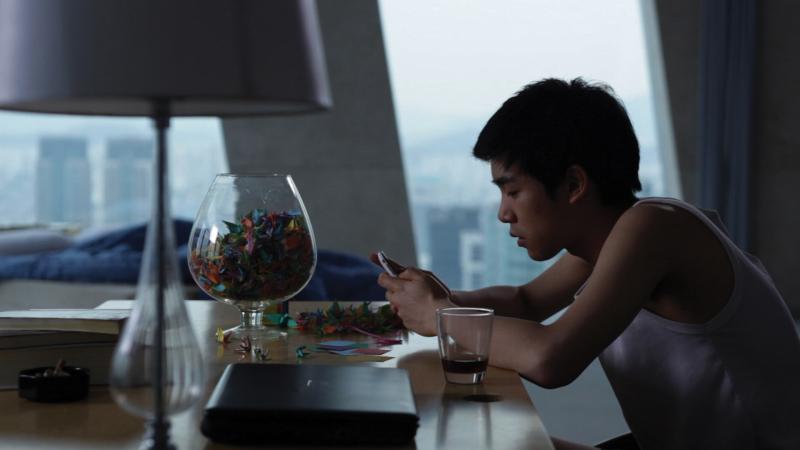
Hyun lives a life of containment and isolation

Hyun lives a life of containment and isolation

While most of director Kim’s technical flourishes serve the story well, there are moments when his experimental style detracts from the film. Chief among these is the character of Soon-hee. Throughout Joon’s story, director Kim works hard to convey Joon and Soon-hee’s delicate bond as outsiders in Seoul, hinting towards the possibility of a deepening relationship and helping each other overcome adversity. Yet Soon-hee is rather unceremoniously dropped from the film altogether, with only a few subtitles indicating what transpired between her and Joon. This, in turn, points to the larger issue that Stateless Things feels somewhat unfinished. This is ironic considering the roughly two hour running time, yet in addition to unresolved narrative bridges, certain scenes require serious editing. Notably, Joon walking down a street last for several minutes as does his and Soon-hee’s visits to tourist destinations, while Hyun’s appointment in a karoke bar lasts incredibly long.

Yet despite these issues, director Kim enhances the story greatly in other areas with such creative touches. This is acutely the case in the finale when Joon and Hyun finally meet and commit to each other, whilst the sexual sequence between Hyun and his older boyfriend is beautifully shot in long take, conveying tender realism as the two begin to fall in love.

The sexual scenes are tender and shot with realism

The sexual scenes are tender and shot with realism

Verdict:

Stateless Things is a real rarity in Korean cinema. Bold and unflinching in the examination of homosexuality and alienation within contemporary Seoul, director Kim Kyung-mook has produced a heartfelt film full of his trademark technical flourishes. While they don’t always work and the film is overly long, Stateless Things is an intriguing experimental film that explores ostracization and gay culture in a manner which others can only dream of, making the drama a pivotal entry in the Korean queer cinema canon.

★★★★☆

Reviews