Boomerang Family (고령화가족) – ★☆☆☆☆

Boomerang Family (고령화가족)

Boomerang Family (고령화가족)

As anyone familiar with Korean cinema is aware, comedy-dramas based around family are quite prolific. With the traditional family unit undergoing changes in recent years, the problems and dynamic appearing on screen has followed suit to reflect the evolving societal issues. Boomerang Family (고령화가족) is director Song Hae-seong’s (송해성) foray into the arena, and with previous films including Failan (파이란) and Maundy Thursday (우리들의 행복한 시간), the potential is certainly there for a penetrating examination of the contemporary family unit. Indeed, the trailer suggests a fun-filled look at at such dysfunctional characters. Except that it isn’t. Hitting someone over the head with a brick isn’t funny. Rape and sexual assault aren’t funny. Alongside spectacularly unlikable characters, cliched melodrama and the frankly bizarre last-minute inclusion of gangsters, the contrived and misogynistic screenplay is awful. While there are occasional moments of comedy and drama, and the idea of the close-knit family is debunked, there’s little else positive to say about Boomerang Family.

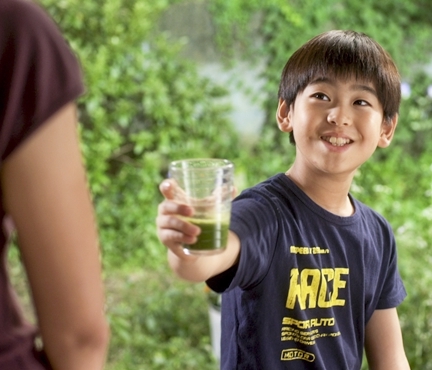
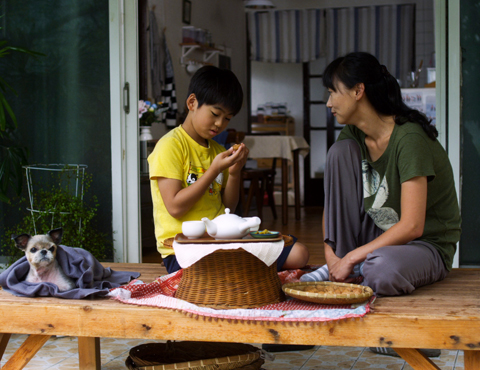
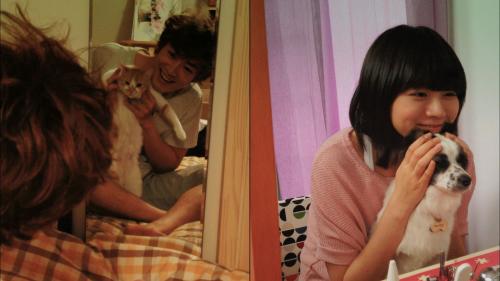
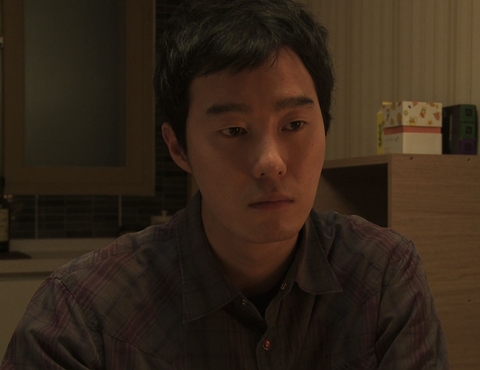
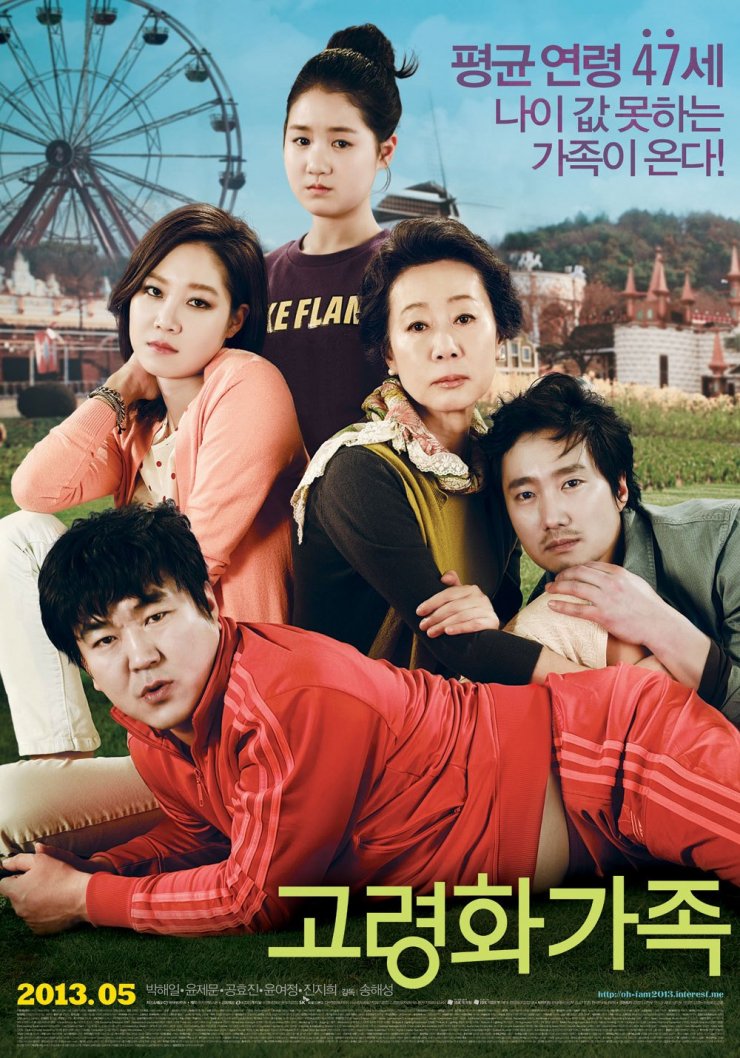
40 year old film director In-mo (Park Hae-il (박해일) is broke following the failure of his movie and separation from his wife, and decides to move back home with his mother (Yoon Yeo-jeong (윤여정). However older brother Han-mo (Yoon Je-moon (윤제문), a 44 year old ex-convict who still lives at home, is not happy about the move as he doesn’t wish to share. While trying to accept the new situation, they are joined by 35 year old sister Mi-yeon (Kong Hyo-jin (공효진) and her daughter Min-kyeong (Jin Ji-hee (진지희). As the family continually bicker and fight placing stress on their poor mother, Min-kyeong decides to run away from home which forces them all to unite.

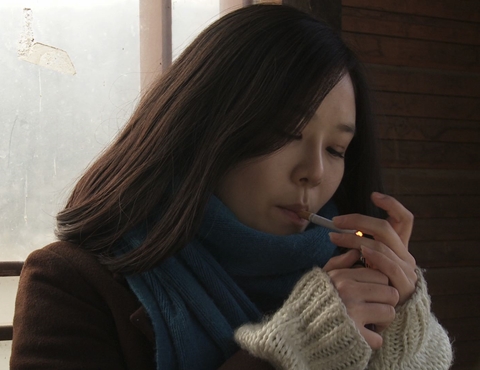
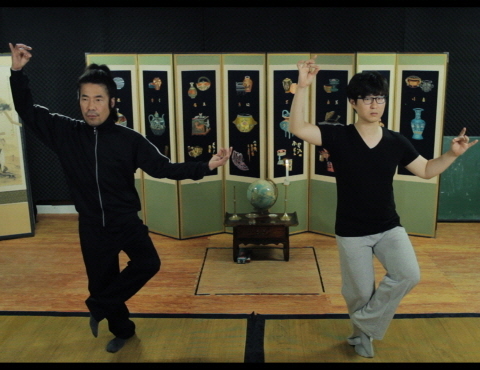
In-mo returns home to a beating from older brother Han-mo

In-mo returns home to a beating from older brother Han-mo

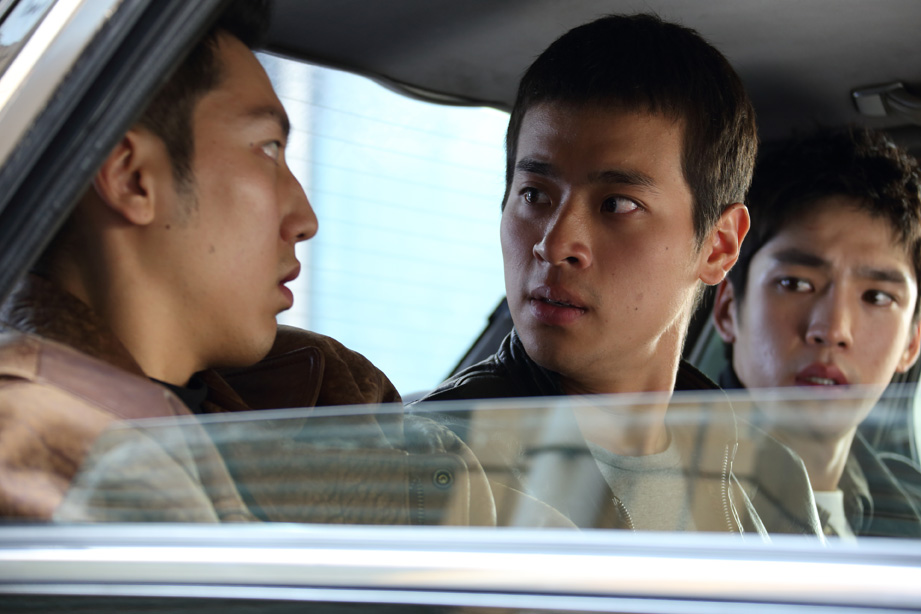
The opening of Boomerang Family adequately sets up the kind of comedy to be expected during the film. In-mo fights a man who slept with his wife, and as he begins to lose, In-mo clubs the man on the back of the head with a rock before kicking him while he’s down. Yet as the soundtrack is a light-hearted, French style ditty, these violent images are intended to be humourous. Bizarrely this becomes a running ‘gag’ throughout the film, as when difficult situations arise the respective character simply uses a brick to the head to resolve it. One such incident involves Han-mo who spies a woman in the process of being sexually assaulted and/or raped, and he becomes very excited at the prospect of watching it continue. It’s only when he realises the woman in question is his sister than Han-mo acts by beating the man to a pulp, yet Mi-yeon ends the confrontation by clubbing her own brother with a brick. The reason? The man is her boyfriend. Yet this is not the only incident of misogyny. Despite being the central protagonists In-mo also tries to sexually assault a hairdresser, in order to upset his brother. Luckily she fights him off, but then In-mo staggering admonishes her by stating that people their age can’t love, that only physical needs remain. Rape and perversion are apparently sources of comedy – and are forgivable – in the world of Boomerang Family.

Such incidents highlight the serious problem with the film, as none of the family members are actually likable save the mother and youngster Min-kyeong, both of whom are largely ignored within the family and by the script. When Mi-yeon returns home claiming she wants to divorce her husband, she is scolded by her brothers even after they have seen she is a victim of domestic violence. To resolve the problem In-mo and Han-mo drink with the husband and beg him to take her back, yet when he insults the family the brothers – surprise! – club him with a brick. When In-mo meets with his cheating spouse to discuss divorce she also offends the family, and he responds by nearly striking her in public. Meanwhile Han-mo masturbates by using his niece’s panties as stimulation. It is very difficult to align with any of the characters save the female protagonists, yet Mi-yeon and Min-kyeong are so stuck up and rude it’s not easy with them either. Ultimately what’s left to enjoy is the family interaction and squabbling.
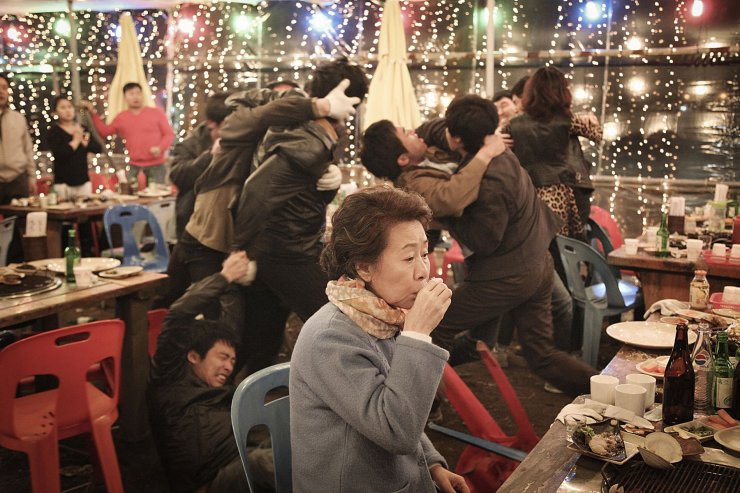
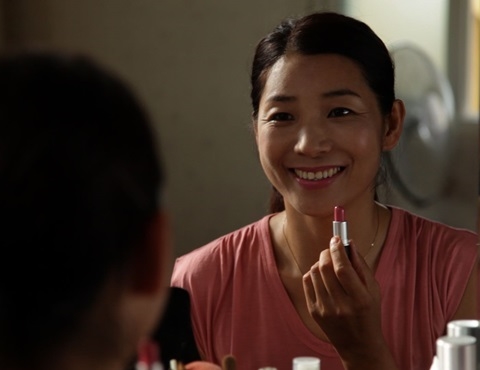
The mother must suffer the awful behaviour exhibited by her children

The mother must suffer the awful behaviour exhibited by her children

The in-fighting displayed by the family is certainly the most enjoyable aspect of Boomerang Family as they curse and hit each other in the manner expected of pre-school children. The immaturity is somewhat humourous, although the comedy is very hit-and-miss and there’s only so many times that kicks to the stomach and fart gags can be funny. For his part director Song Hae-seong competently helms the film although he is never really displays any flair or challenging material as he has done with his previous works. A similar criticism applies to all the acting talent involved, as they all give solid performances without doing much more. This is mostly due to the script which has precious little characterisation for them to work with, and as such audiences are forced to rely on knowledge of the actors star persona and receive enjoyment from them doing silly things.

The script is also responsible for writing the characters into a corner, and then struggling to get them out of it. The result is a family meeting whereby all the secrets they’ve been withholding are revealed, and clearly the attempt is for comedy as each secret becomes more shocking then the last. Yet these revelations are actually more dramatic and sad than funny, and despite the big shocks there isn’t any real exploration or impact. However, the screenwriters use this event as the catalyst for Min-kyeong to run away from home, and thus begins the contrite twist which so often plagues the Korean film industry. Gangsters suddenly emerge to threaten the family, shady business deals with huge amounts of money are made, criminals that abduct and rape teenagers appear, flashbacks to unseen melodrama feature, and so forth. One incident of extreme violence forces Park Hae-il to provide a glimpse of a performance he is capable of, but it’s fleeting.  However, the real question is, can everyone make it to Mi-yeon’s wedding – to the guy that previously tried to assault her – and have a happy ending? It’s very hard to overlook such flaws in order to accept such a finale.

Can the prospect of a new marriage bring peace to the family?

Can the prospect of a new marriage bring peace to the family?

Verdict:

Boomerang Family is a comedy-drama about bickering, immature siblings that crucially is neither funny nor dramatic. The violence of hitting someone with a brick to the head is not comedic, nor is the rampant misogyny featured throughout where rape and sexual assault are not only intended to be entertaining, but also forgivable. Director Song Hae-seong competently helms the film, while solid performances are provided by the actors involved, yet as their characters are so utterly unlikable it’s difficult to align with them let alone find enjoyment.

★☆☆☆☆
Reviews
Sweet Temptation (잘 먹고 잘 사는 법)

Sweet Temptation (잘 먹고 잘 사는 법) – ★★★★☆

Sweet Temptation (잘 먹고 잘 사는 법)

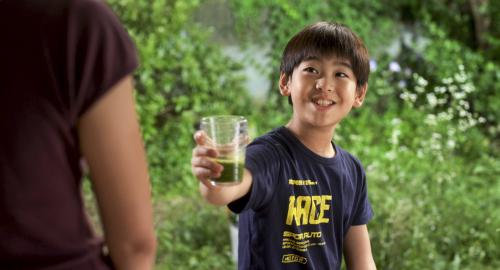
Jeong-ho enjoys his diet of raw foods

At the 2013 Jeonju International Film Festival, Sweet Temptation (잘 먹고 잘 사는 법) had the distinction of walking away with the Grand Prize in the Korean Short Film Competition. It’s highly likely that the film will continue to do well on the festival circuit as director Jeong Han-Jin (정한진) has crafted a lovely tale about the bond between mother and son, and the role of food in maintaining and developing the relationship. Combined with the charming character study involving a young boy’s loyalty, as well as some very attractive cinematography, Sweet Temptation is an endearing and memorable short film. Jeong-ho lives alone with his mother and their bond grows ever stronger as they cultivate fruits and vegetables together, before returning home to prepare them for meals. Their life is seemingly idyllic, until a girl at school tempts Jeong-ho with an offer of chocolate. Conflicted between loyalty and desire, he must make a choice to decide what kind of person he wants to be.

Director Jeong wonderfully conveys the lives of Jeong-ho and his mother as they work on the allotments for produce. The vibrancy of the countryside articulates the happiness and warmth they feel when together as well as the satisfaction of eating the fruits and vegetables they’ve spent all day harvesting, which themselves are full of colour. The bright red tomatoes, pale green cucumbers, electric orange carrots and so on all combine to portray a high-spirited, and very healthy, satisfaction with their efforts. After such a heartwarming opening director Jeong then begins to slowly and gently peel back the layers from the seemingly idyllic lifestyle revealing it to be anything but simple. This subtlety is easily one of the greatest strengths of the film as Jeong-ho, while happy, is not content.

Han-jin is conflicted between being a good son and his desire for more

Jeong-ho is conflicted between being a good son and his desire for more

Jeong-ho’s school life is where Sweet Temptation really becomes a compelling film. In running around with other children and comparing food during lunch time, the young boy is actually somewhat of an outsider. Recognising this, a girl in his class takes pity on him and as they begin to forge a relationship Jeong-ho becomes ever more conflicted, as his new friend represents temptations that lead away from the teachings of his mother. The symbolic and innocent relationship is genuinely lovely and sincere, particularly as they attempt to educate each other on food. As such the ‘sweet temptation’ comes to mean not only the chocolate and promise of tasty meals, but also the desire for someone’s affection other than his mother, and watching Jeong-ho’s internal conflict unfold is a real highlight. The young actor portraying the character does an excellent job in conveying torn loyalties, and when placed in compromising situations his deeply sad and frustrated reactions are often palpable.

If there is criticism to be had, it comes in the form of the running time. Sweet Temptation is a consistently compelling short film, and director Jeong weaves some really interesting plot threads within the narrative that are never fully realised or explored. This is a real shame as these hints at a wider world and family history would undoubtedly be as equally fascinating with the director’s gentle stylisation. However, despite such drawbacks Sweet Temptation is a charming and endearing film and certainly warms the heart for a good deal after the final credits.

The bond between Han-jin and his single mother is wonderfully conveyed

The bond between Han-jin and his single mother is wonderfully conveyed

Verdict:

Sweet Temptation won the Grand Prize at the 2013 Jeonju Film Festival in the Korean Short Film category, and not without good reason. Director Jeong Han-Jin has produced a lovely and endearing story about the bond between mother and son, and temptations that forge internal conflict in innocent minds. While plot threads are not capitalised on due to the short running time, Sweet Temptation remains a charming and heart-warming film.

★★★★☆

Festival News Green Film Festival in Seoul (제10회 서울환경영화제) Jeonju International Film Festival (제14회 전주국제영화제) Korean Festivals 2013 Reviews
Cats and Dogs (그 강아지 그 고양이)

Cats and Dogs (그 강아지 그 고양이) – ★★★☆☆

Cats and Dogs (그 강아지 그 고양이)

Cats and Dogs (그 강아지 그 고양이)

Proudly boasting to be Korea’s – and the world’s – first feature length film shot entirely with an iphone 4s, Cats and Dogs (그 강아지 그 고양이) could easily be a mere gimmick. Luckily however that’s not the case,  as the film is a quite charming, albeit raw and cliched, romantic comedy. Aimed squarely at mid-teens to early twenties audiences, director Min Byung-Woo (민병우) explores the highs and lows in the relationship of a young couple in a light-hearted manner. While in a park, webtoon artist Koh Bo-eun (Son Min-ji (손민지) is suffering from depression following a break-up. When her anti-depressants accidently fall from her pocket, a wandering dog eats them and becomes sick, resulting in a race to the veterinarian. Following the treatment however, Bo-eun is forced to adopt the animal lest it will be put down. Meanwhile, walking in a different area of the park, illustrator Kang Woo-joo (Shin Myeong-geun (신명근) finds a cat abandoned and tied to a bench, and decides to adopt it despite his intention to leave. Due to their new animal friends, Bo-eun and Woo-joo meet everyday and are surprised to learn that they have unintentionally named their pets after each other, which sparks the beginning of a relationship.

Cats and Dogs (그 강아지 그 고양이)

The juxtaposition between the characters is very cute

Cats and Dogs is surprisingly technically sophisticated given the limitations imposed by iphone cameras. While initially the visual quality is more akin to a student film, such thoughts dissipate with time as the framing, editing, soundtrack and other such cinematic devices are competently employed in the construction of the rom-com. Of course, constraints are noticeable particularly in regards to establishing shots and camera movement, yet their absence does little to harm the narrative. Director Min, who also wrote the screenplay, wisely opts for an unambitious story to keep everything simple and this approach certainly helps in conveying the romance. Yet there are several moments when the lead protagonists are written into a corner, and the director employs the use of animated web-toons to bridge any narrative gaps. As Bo-eun and Woo-joo are web artists the sequences slot nicely into the film as well as continuing the tongue-in-cheek sensibilities that run throughout the film, in a heightened, postmodern fashion.

Fun animations are used to bridge scenes, and are quite charming

Fun animations are used to bridge scenes, and are quite charming

Cats and Dogs is first and foremost a romantic-comedy, and exploits all the ridiculous cliches that go hand-in-hand with the genre. This is a blessing in the sense that it is fun to witness such silliness and how the couple will fall for each other, and a curse for the very same reasons as it is extremely predictable from start to finish. It’s understandable however, given the sole use of the iphone camera. Director Min also seems to be aware of this, and aims the film at a younger – and arguably more accepting – demographic yet cheekily throws in some sexual suggestions to keep it slightly adult. As such the film grows and becomes quite charming as a result. Interestingly the narrative is just as concerned with the nature of breaking up as it is with creating a relationship, sneaking up on audiences amongst all the sugar-coated notions of romance which also forms part of the charisma.

As perhaps is to be expected, the performances are all over-the-top although the characters do become quite likable, particularly when they are compared to the animals they take care of. Shin Myeong-geun is arguably the most charismatic due to his comical and laid back nature, while Son Min-ji is colder and more distant. This is intentional however, and it’s good to see a Korean romantic story with genuine personality conflicts, as well as how they adapt to them. The supporting cast, meanwhile, are frankly awful and serve to drag the film down whenever they are on screen. Thankfully their appearances don’t last long, but the film still suffers from their presence.

Bo-eun and Woo-joo learn that the course of love is rarely smooth

Bo-eun and Woo-joo learn that the course of love is rarely smooth

Verdict:

Cats and Dogs is Korea’s – and the world’s – first feature length film shot entirely with iphone 4s cameras. Surprisingly the romantic-comedy isn’t as gimmicky as such a feature would have you believe, as the film is quite charming throughout despite the over-abundance of cliches. Director Min Byung-Woo wisely keeps things simple, although does attempt to explore personality clashes which is particularly refreshing when compared to other Korean rom-coms. Cats and Dogs is a cliched and limited, yet fun and silly, addition to the genre.

★★★☆☆

Festival News Green Film Festival in Seoul (제10회 서울환경영화제) Korean Festivals 2013 Reviews

Dear Dolphin (환상속의 그대) – ★★★☆☆

Dear Dolphin (환상속의 그대)

Dear Dolphin (환상속의 그대)

Dear Dolphin (환상속의 그대) was one of the big winners at the 14th Jeonju International Film Festival, scoring the CGV Movie COLLAGE Prize which includes 2 weeks of commercial release, a great boon for any independent film. The reasons for the victory are quite clear, as director Kang Jina (강진아) employs some truly lovely visual aesthetics in her exploration life, love and grief while utilising more traditional melodramatic conventions. Interestingly director Kang never lets the film become too ‘dark’ despite such weighty material, and as such it’s popularity with Korean audiences is entirely understandable. Yet Dear Dolphin is not perfect, featuring a haphazard narrative structure that creates distance between the audience and the central protagonists, while the creation of subplots that are later dropped is a source of frustration. However the story does well in examining the illogical sense of grief following the death of a loved one, and is a thought-provoking, attractive film.

Unable to come to terms with the death of his girlfriend Cha-kyeong (Han Ye-ri (한예리), physiotherapist Hyeok-geun (Lee Hee-joon (이희준) develops insomnia. Unable to work or function properly his life begins to fall apart, while his mental stability becomes strained due to hallucinations.  His grief and sense of guilt are also shared by Gi-ok (Lee Yeong-jin (이영진), Cha-kyeong’s best friend, who simultaneously hates herself for her involvement in the accident and also for secretly coveting Hyeok-geun. As their grief becomes ever greater, and reality and fantasy become difficult to separate, Gi-ok and Hyeok-geun must learn to overcome their emotional trauma lest it consumes them.

Hyeok-geun' begins to hallucinate due to his uncontrollable grief and insomnia

Hyeok-geun begins to hallucinate due to his uncontrollable grief and insomnia

Dear Dolphin excels when dealing with the subject matter of grief, and the variety of forms which it takes. The emotion is a problematic one to portray, yet director Kang succeeds in capturing the different complexity of each protagonist. Hyeok-geun’s internal strife is articulated through his continual self admonishment and his self-imposed alienation, while the insomnia inspired hallucinations of Cha-kyeong reveal his inability to accept her death. Gi-ok meanwhile cannot cope with the loneliness of her best friend’s passing, heightened by her guilt over desiring Hyeok-geun. Both characters blame themselves for not doing something – anything – to change the past, while Cha-kyeong’s family resent them for much the same reason. The emotional complexity of everyone involved is compelling throughout, as each person commits irrational acts without fully understanding why.

To stop the film from sinking beneath the increasingly fraught emotional tension, director Kang employs a non-linear structure that harks back to when the threesome were happy. The technique certainly brings levity to the story, as well as further conveying the sense of loss through the contrast between the past and present. Indeed, the director utilises her wonderful sense of colour and composition during the flashback sequences that feature vibrant warm reds and yellows, in complete opposition to the washed-out palette following Cha-kyeong’s death. Yet it also serves to usurp the character development in the here and now, as plot threads that took time to establish are often dumped only to later reappear, or to never return at all. The confusion that arises as a result of narrative jumping through time frames results in a distancing between the characters and the audience as it becomes difficult to fully engage and empathise with their respective situations. This is ultimately Dear Dolphin‘s downfall, as in a bid to keep the film ‘light’ with traditional melodramatic conventions, the powerful emotional resonance of each character becomes lost.

Beautiful, cherished memories of the threesome become like poison

Beautiful, cherished memories of the threesome become like poison

As empathy becomes increasingly diluted, it therefore falls to the actors to keep the emotional intensity sharp in the present. In this respect it is Lee Yeong-jin who gives the standout performance as Gi-ok, as the actress appears evermore fraught with guilt, stress and grief. The anguish on Gi-ok’s face as she reaches out to Hyeok-geun for emotional and physical support is sincere, while the continual rejection of her advances become heartbreaking as she sinks lower and lower. Lee Hee-joon and Han Ye-ri give competent performances as Hyeok-geun and Cha-kyeong, but they are lacking the chemistry and passion that are sorely required when exploring the death of a loved one. As such the film quickly becomes Gi-ok’s story as it is her emotional distress that is the most fully developed, and is her resolution rather than Hyeok-geun’s fragile mental state that takes precedence.

Luckily director Kang also injects the film with some stunning cinematography in relation to scenes involving Cha-kyeong and Hyeok-geun, particularly when employing the water symbolism that is so inherent to the narrative. The scenes are absolutely gorgeous and appear more like a painting than a film. Ironically the surreal and otherworldly sequences further complicate the narrative, but when scenes are this beautiful it’s hard to complain. Often accompanied by an ethereal soundtrack, the conveyance of water as a source of life, death, and even purgatory are lovely to behold, and it is these scenes that resonate long after the film and provide thought-provoking moments on the nature of loss.

The potent water symbolism runs throughout the film

The potent water symbolism runs throughout the film

Verdict:

One of the big winners at JIFF 2013, Dear Dolphin is a very attractive film that deals with the issues of love, loss, and grief. Director Kang Jina explores such weighty topics well by constructing the fragility of each protagonist as unique according to their psychology, but the decision to employ non-linear techniques dilutes the emotional intensity of the story. Yet with a great performance by Lee Yeong-jin, as well as some truly beautiful sequences involving potent water symbolism, Dear Dolphin is a thought-provoking film on the nature of life, death, and spirituality.

★★★☆☆

Jeonju International Film Festival (제14회 전주국제영화제) Reviews
The otherworldly landscapes are beautifully realised

Lebanon Emotion (레바논 감정) – ★★★★☆

Lebanon Emotion (레바논 감정)

Lebanon Emotion (레바논 감정)

Receiving its world premiere at the 2013 14th Jeonju International Film Festival, Lebanon Emotion (레바논 감정) quickly began to earn praise amongst audiences and critics alike. Director Jung Young-heon’s (정영헌) poignant tale of a man unable to come to terms with his mother’s death and a woman on the run is a wonderful dramatic thriller, featuring sincere and moving performances as the complex lives of the characters within become evermore intertwined. The director’s history as a cinematographer is also readily apparent throughout as the film contains some genuinely gorgeous visuals, which also serve to be deeply symbolic of the main protagonists. While a few plot holes and structural imbalances stop it from being a perfect film, with Lebanon Emotion director Jung has established himself as a Korean filmmaker to watch.

The central protagonist attempts to accept his mother's death

The central protagonist attempts to accept his mother’s death

Seeking solace at a friend’s country home, a man plans his suicide due to his inability to cope with his mother’s death. Yet while taking a stroll in the mountains he hears the scream of a woman who has stepped on a deer trap, and takes her home to nurse her back to health. As they become more acquainted the unlikely couple start to realize they share several things in common, while the kindness they experience from each other is unprecedented. Yet little do either of them know that the woman’s past is catching up to them in the form of her brutal gangster ex-boyfriend, and he is far from happy.

One of the great strengths of Lebanon Emotion are the themes that it explores through the central protagonists. The grief inhabited by the man is palpable, with his depression and insular mannerisms acutely alluding to his turmoil. His reconstruction of his mother’s death is heartbreakingly poignant, as are his breakdowns when faced with the reality of the situation. Similarly issues of survival are inherent to the woman’s struggle. Fresh out of prison and with nowhere to go, the strength and resilience that she employs are wonderfully conveyed without ever becoming cliche. The contrast between the characters is also a delightful reversal of traditional gendered roles, where the emotional/homestead and physical/drifter realms are exchanged. Such work could be so easily undermined when placing the two characters together, but luckily contrivances are rejected and in its place a complex relationship develops through the slow and natural discovery of each other’s personalities.

The arrival of the woman begins a chain of unexpected events

The arrival of the woman begins a chain of unexpected events

The otherworldly landscapes further serve as potent symbolism for the man and woman. The winter environments are stunning and drained of colour, and director Jung makes effective use of locations in regard to each character. While the lack of colour heightens the depression and emotional distress of the man, the snow covered land becomes a challenge for survival for the woman. The area surrounding the country home is a construction site, a place that initially embodies the dismantling of a life yet through the relationship that develops comes to convey the construction of one. Director Jung wisely makes use of each area, adding further surrealism with the inclusion of dream sequences that add even greater insight to not only the protagonists, but also as a comment on the meaning of life.

Yet Lebanon Emotion is not solely concerned with deep, existential issues. The inclusion of the woman’s ex-boyfriend adds incredible tension to the proceedings as he gets ever closer to discovering her location, placing her relationship with the man on a timer. The suspense and tension generated whenever the gangster is on screen is quite chilling, while the brutality that occurs is highly effective due to the threat rather than the action. The danger and impact of such violence on the lives of those involved makes the story continually compelling and engaging, and acts as an interesting debate on the nature of masculinity.

The otherworldly landscapes are beautifully realised

The otherworldly landscapes are beautifully realised

Verdict:

Lebanon Emotion is certainly one of the best films to emerge from the 2013 Jeonju International Film Festival. With an engrossing story involving the nature of grief, the challenges of survival, and the threat of external violence, the film never ceases to be compelling as two seemingly disparate people come together through suffering. Director Jung Young-heon’s keen visual sensibilities are stunningly realised through the lovely cinematography, making for an attractive and insightful film.

★★★★☆

Jeonju International Film Festival (제14회 전주국제영화제) Korean Festivals 2013 Reviews
Shibata and Nagao (시바타와 나가오)

JIFF 2013: Quick Fire Reviews 3

More quick fire reviews from the 14th Jeonju International Film Festival.

Inertia

Inertia

Inertia – 6/10

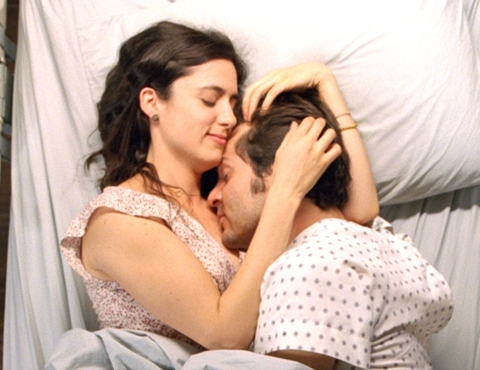
This Mexican hospital drama has an extremely heartfelt script, as the nature of love and sacrifice are explored. Central protagonist Lucia accidently runs into her ex-boyfriend Felipe who, thanks to failing kidneys, has momentary lapses in coherence. As she decides to take care of him the two discover feelings that they thought were long gone, yet Felipe’s increasingly volatile state causes further heartache. Director Isabel Munoz Cota competently helms the drama, yet there is always a distance between the audience and the characters, a critical issue for such an emotional story. Similarly the acting is also adequate, but the roles demand much more skill and nuance than what is provided. Inertia is a well-made film that doesn’t quite manage to fulfill the potential of the script.

Burn, Release, Explode, The Invincible (연소, 석방, 폭발, 대적할 이가 없는)

Burn, Release, Explode, The Invincible (연소, 석방, 폭발, 대적할 이가 없는)

Burn, Release, Explode, The Invincible (연소, 석방, 폭발, 대적할 이가 없는) – 4/10

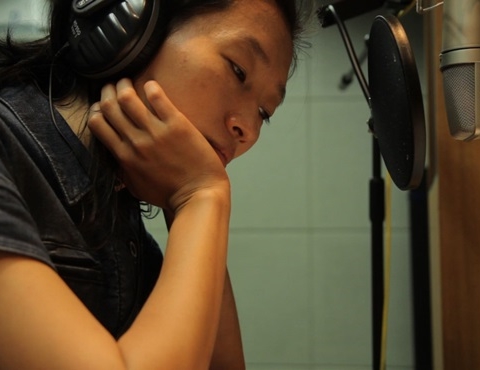
Director Kim Su-hyun  (김수현) blends a variety of generic conventions within Burn, Release, Explode, The Invincible, merging drama, documentary, and experimental forms. The result is an odd tale about a woman with an androgynistic voice, who is in high demand for voice over work due to her authoritative yet soft vocal style. Her gift is also her curse however as the pressures surrounding her impact her mental stability. In terms of technique it’s a well-made film, yet the story is difficult to follow and the central protagonist hard to empathize with given the disparate conventions and non-linear storytelling. The finale is also quite odd as traditional Korean performances are introduced to express freedom. An interesting film, but also one that’s difficult to become immersed in.

Shibata and Nagao (시바타와 나가오)

Shibata and Nagao (시바타와 나가오)

Shibata and Nagao (시바타와 나가오) – 6/10

While his last film Breathless was a mesmerizing exploration of social class and the nature of violence, director Yang Ik-june (양익준) opts for a very different approach with romantic drama Shibata and Nagao. Filmed in Japanese, the film explores ex-lovers who meet again following a later break-up. Director Yang’s style is soft and tender as he examines the feelings that still exist between them, but it is also frustratingly slow-paced as very little information about them is revealed. There are some lovely moments that arise, as well as comedic – they discuss if a loud, violent couple are Korean – and it is thought-provoking in regards to unresolved/unrequited emotions. There’s a sense that there is a larger story not shown which is a shame. A lovely, yet slow-paced film.

Festival News Jeonju International Film Festival (제14회 전주국제영화제) Korean Festivals 2013 Reviews
Mr. Vertigo (축지법과 비행술)

JIFF 2013: Quick Fire Reviews 2

Quick fire reviews from the 14th Jeonju International Film Festival.

Lebanon Emotion (레바논 감정)

Lebanon Emotion (레바논 감정)

Lebanon Emotion (레바논 감정) – 8/10

Lebanon Emotion is without a doubt one of the best films at the festival, and certainly a strong contender for best film in the Korean Film Competition category. Director Jung Young-heon (정영헌) has cemented his position as a film-making talent to watch, following his best director win for short film Hard Boiled Jesus at JIFF 2012. In Lebanon Emotion the director explores a great variety of themes throughout the drama/thriller narrative including suicide, guilt, survival, and purpose, against the backdrop of winter in the countryside. Director Jung’s prior history with cinematography is clearly apparent as the landscapes and settings are very attractive throughout. Yet what makes the film so powerful is the characterisation, and the wonderful performances given by the central cast who are continually poignant and compelling. Recommended viewing.

Mr. Vertigo (축지법과 비행술)

Mr. Vertigo (축지법과 비행술)

Mr. Vertigo (축지법과 비행술) – 5/10

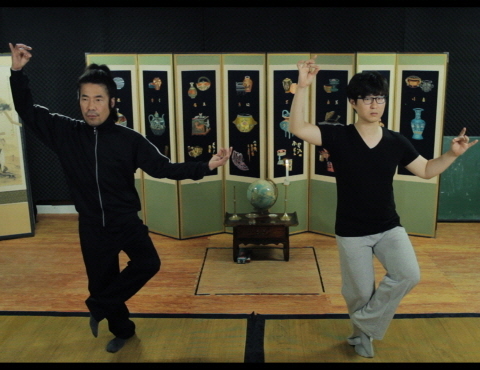
Mr. Vertigo promised to be one of the more quirky offerings at the festival, yet only partially succeeds. This is wholly due to actor Oh Dal-su who performs the role of a roguish ‘air-walking’ master who takes on a new student. Oh Dal-su has played plenty of similar characters in the past and while he tries to squeeze as much out of the master as he can, there isn’t really enough material for him to do so. The main protagonist is actually his disciple, a frustrated bookish young man who seeks something new and fulfilling. Again however, director Lee Kyung-sub (이경섭) doesn’t provide much information or fully convey his anxieties, resulting in a lack of engagement. A mildly entertaining film that doesn’t capitalize on its premise.

Timing (타이밍)

Timing (타이밍)

 Timing (타이밍) – 5/10

As the title implies, Timing features some of the ironic features of life that tend to occur at the most inconvenient of moments. The narrative conveys the frustrations of a career woman recently diagnosed with cancer, and the events that transpire as a result. She explodes at her boss in a business meeting; an ex-lover appears out of concern; financial and health issues, and so forth. The film becomes quite episodic due to this approach, and as such it’s difficult to really align with the protagonist and feel the anguish she endures. The character is also not particularly likable due to her initial selfishness. However director Kim Ji-Yeon (김지연) manages to cram an awful lot of material into the 21 minute running and is quite insightful at times, although she could have benefitted much more by making it a feature.

The Woman (그 여자)

The Woman (그 여자)

The Woman (그 여자) – 5/10

With the transsexual experience vastly underrepresented in Korean cinema, The Woman had the potential to shine a light on important issues yet only partially succeeds. The narrative follows Yoon-hee as she goes about her daily life, until her older brother pays a visit to inform her of their mother’s illness. Unfortunately director Jo Mee-hye (조미혜) takes nearly all the running time just to get to this point, generally meandering as Yoon-hee delivers milk on her rounds. There is a wealth of material within the film that is just never explored – Yoon-hee’s status as an outsider, her obviously fraught relationship with her husband, the extremely strained familial history – and as such only scrapes the surface of the potential on offer. The Woman is an interesting yet superficial film, and a missed opportunity.

Echo of Dragon (용문)

Echo of Dragon (용문)

Echo of Dragon (용문) – 3/10

Fans of experimental and art house cinema will find much to love with director Lee Hyun-jung’s (이현정) Echo of Dragon, due to the highly symbolic features that run rampant throughout. For everyone else, the film is pretentious, self-indulgent and utterly absurd. The film does feature moments of beautiful cinematography although they are often sporadic, while narrative elements are started and dropped without any warning. Ironically it is a different director, Lee Sang-woo, who steals the show in his performance as a possibly mentally unhinged drifter. He provides much-needed levity and focus to the film, and is genuinely funny yet also hints at a greater depth that goes unexplored. The film is highly symbolic, but also frustratingly bizarre.

Garibong (가리봉)

Garibong (가리봉)

Garibong (가리봉) – 5/10

Director Park Ki-yong (박기용) has produced a documentary in the very literal sense of the word with Garibong, as he ‘documents’ areas within the titular district in which Chinese immigrants reside. The cinematography is superb, capturing the sense of dislocation of the area from the surrounding Seoul districts and the squalid, dilapidated buildings convey palpable depression. Often, he film evokes scenes from sci-fi classic Blade Runner. Yet despite the attractive visual prowess, the film is quite dull as there are no people or stories to follow, and therefore no opportunity to become fully engaged within the world of Garibong. The static camera is both a blessing and a curse, as while it captures the alleys and lifestyle there is always a distance between it and the residents. Ultimately the documentary is visually attractive, but lacking compulsion.

Festival News Jeonju International Film Festival (제14회 전주국제영화제) Korean Festivals 2013 Reviews
Cheer Up Mr. Lee (힘내세요, 병헌씨)

JIFF 2013: Quick Fire Reviews 1

With such a great variety films to see at the 14th Jeonju International Film Festival, and precious little time to write full reviews, here is the first in a series of ‘Quick Fire Reviews’ from the festival.

Groggy Summer (그로기 썸머)

Groggy Summer (그로기 썸머)

Groggy Summer (그로기 썸머) ★★☆☆☆

Groggy Summer depicts the life of frustrated teenage poet Min-joon, whose poverty-stricken lifestyle leads him to despair. Misunderstood by his parents, the young man finds solace with his friends who are similarly displaced social outcasts. The story is a very interesting one, and director Yun Su-ik (윤수익) initially does well in conveying the difficulties of being a creative person in Korean society.  As the film continues Min-joon is constantly beaten down by the trappings of capitalist society, where money is the solution at every turn. Yet the film doesn’t really explore any of the features in great detail, instead seeking to add more and more different challenges to Min-joon’s life, which results in a loss of focus and invites predictability. There are also intriguing parallels to be had with his artistic father, which unfortunately are not capitalised on. The major issues with Groggy Summer are the camerawork and editing. While the mixture of close-ups and extreme close-ups creates intimacy and provides a penetrating exploration of emotion, it also makes for uncomfortable viewing as the world in which Min-joon inhabits is not fully portrayed. The intensity of this style helps to convey frustration, but when used in conjunction with highly kinetic hand-held camera movement the result is dizziness and nausea. The editing also detracts from the story as it noticeably jumps in several areas. The story has a lot of potential and shows promise, yet the filmmaking techniques detract from the experience.

Cheer Up Mr. Lee (힘내세요, 병헌씨)

Cheer Up Mr. Lee (힘내세요, 병헌씨)

Cheer Up Mr. Lee (힘내세요, 병헌씨) – ★★★☆☆
A mockumentary about an aspiring but lazy director, Cheer Up Mr. Lee is a very funny examination of Korean dramas and documentaries. Based on the life of the director, Lee Byeong-hun (이병헌), the film wonderfully pokes fun at the contrived cinematic conventions to be seen in Korean media in a variety of ways. The central protagonist and his friends are very amusing as they are all losers who berate each other for fun instead of working hard to achieve their dreams, while the frustrations of the documentary team as the follow them are comedic. This postmodern sensibility extends to the awareness of filmic conventions, as Byeong-hun berates the film crew for employing techniques such as music during crises. Yet while the film begins strongly the narrative and comedy aren’t consistent, and as such the film often flits between fun and dull points as the focus is repeatedly found then lost. The second act suffers acutely in this regard, especially as the team travel to Busan. Luckily the film picks up towards the end, where the director pokes fun at short film and art film conventions, as he makes his debut in a very comedic manner. A fun film that often loses focus, yet very entertaining.

Karaoke Girl

Karaoke Girl

Karaoke Girl – ★★★☆☆

Thai director Visra Vichit Vadakan has produced a fascinating insight into the life of young Thai women who find themselves working in the seedy bars of Bangkok. The film explores the life of Sa, a 22 year old woman who moved from the country to the capital in order to find work and money, yet did so at the expense of her happiness. Karaoke Girl is not a depressing effort however, as while Sa is treated terribly by her on-again-off-again boyfriend director Vadakan portrays the young woman as strong and passionate, and that she understands she deserves more than what life has provided for her. Sa’s spirit drives the film, and the actress is talented and engaging throughout. The director also wisely steers clear of any sexual content that could have so easily been included and instead focuses on Sa’s journey as she becomes stronger. Yet Karaoke Girl suffers from the mixture of drama and documentary techniques that occur throughout, never managing to fully blend them into a coherent whole which ultimately detracts from the viewing experience. The film jumps from following Sa’s life, which is utterly engaging, to interviewing her family in the countryside, and draws the audience out of the film. This is a genuine shame as Sa is an intriguing character/real life subject.

Juvenile Offender (범죄소년)

Juvenile Offender (범죄소년)

Juvenile Offender (범죄소년) – ★★★★☆

With a story concerned with the abandonment of youth, Juvenile Offender is a highly poignant and engaging drama. Director Kang Yi-kwan (강이관) explores several very important and timely social issues within Korean society, including teenage pregnancy, parental abandonment, poor social care, unfair legal system, and misunderstood youth. The film follows Jin-gu, a teenage who lives with his elderly grandfather. Falling into the wrong crowd and with anger problems, Jin-gu quickly earns a criminal record and finds himself in a detention center. When his mother, who was thought to be dead, surfaces to take him in, their relationship is explored as the two struggle to overcome their own strife as well as to forge a relationship. Director Kang deftly sidesteps any melodrama and the film emerges the stronger for it, while the powerful performances by both Seo Yeong-joo (서영주) as Jin-gu and Lee Jeong-hyeon (이정현) as his mother are captivating. While it feels unfair to comment negatively on appearance, Lee Jeong-hyeon’s quite obvious plastic surgery detracts from her role as a teenage mother with a criminal past. The youthfulness of her face appears similar to her son, which invites some oedipal anxieties at certain points. The film also somewhat loses track as it draws to a close, seemingly unsure how to wrap up so many issues and ends rather abruptly, yet it is also quite fitting. A powerful and timely film.

Jeonju International Film Festival (제14회 전주국제영화제) Korean Festivals 2013 Reviews
In the tournament, Deok-gyu gives his all in a bout with Mr. Turtle

Fists of Legend (전설의 주먹) – ★★★☆☆

Fist of Legend (전설의 주먹)

Fist of Legend (전설의 주먹)

Based on the popular web cartoon by Lee Jong-gyu and Lee Yoon-gyun, Fists of Legend (전설의 주먹) is the latest offering from prolific film-maker Kang Woo-seok (강우석). The premise is a simple one; three middle-aged men who were friends in high school find themselves down on their luck and, tempted by the prize money offered by a TV fighting show, find themselves reunited in the ring. As such the film evokes a Rocky Balboa/Warrior sensibility, with a dash of classic Korean gangster film Friend (친구) thrown in for good measure. Yet Fists of Legend never gets anywhere close to the quality of what inspired it, with a cliched and hackneyed narrative, awful TV drama-esque acting, and complete mis-use of the principal cast, while the overly-long running time adds further tedium. Luckily veteran actor Hwang Jeong-min (황정민) is on hand to elevate the film out of monotony, alongside the interesting flashback sequences. Yet there’s no escaping the fact that Fists of Legend is a big disappointment, and beneath all of the lead actors involved.

Tough, cynical producer Hong Gyu-min (Lee Yo-won (이요원) presides over a TV show which pits middle-aged men – who were ‘legendary fighters’ back in their youth – against each other in a mixed martial arts ring for entertainment. After receiving a tip-off, Gyu-min tracks down gentle noodle restaurant owner Im Deok-gyu (Hwang Jeong-min (황정민), who was known as a talented boxer in his youth. In need of money following an incident involving his daughter, Deok-gyu reluctantly agrees to fight and surprises everyone when he emerges victorious. However his winning streak starts a series of events that sees former friends and rivals in the form of salaryman Lee Sang-hoon (Yoo Jun-sang (유준상) and gangster Shin Jae-seok (Yoon Je-moon (윤제문) enter the tournament, while the unearthing of his checkered past brings difficulty for Deok-gyu and his family.

In need of money, widowed restaurant owner Deok-gyu accepts the producer's challenge

In need of money, widowed restaurant owner Deok-gyu accepts the producer’s challenge

Fists of Legend begins well as it gloriously parodies middle-aged masculinity, featuring high-octane action sequences of svelte teenage fighters who give way to their chubby older counterparts battling on TV. The subversion of the action genre is highly entertaining as the fighters, described as teenage legends, are publicly beaten and humiliated as they attempt to prove their manliness. The comedy derived from such sequences is a fun way to introduce the concept of the show, and sets up the narrative well for the introduction of the central protagonists. Yet the film falters almost immediately in doing so as Lee Yo-won ridiculously overacts as producer Hong Gyu-min, spouting clunky dialogue about her resilience and tenacity as well as what constitutes a ‘real man’ in the attempt to recruit Deok-gyu for the show. Deok-gyu is, for all intents and purposes, the Korean Rocky Balboa; not particularly bright yet kind-hearted, widowed, and with a precocious child, the aged fighter is down-on-his-luck in every respect. Actor Hwang Jeong-min injects real heart into the role, squeezing every nuance he can muster from the character to generate sincere charisma and likability. His quality is such that whenever he comes into contact with other characters the result is often cringe-inducing, as the overacting by the supporting cast – especially Lee Yo-won and Deok-gyu’s daughter – appears even worse next to Hwang’s calm and mediated approach. Indeed, it is largely due to Hwang that Fists of Legend is engaging at all, as the journey he undertakes in which he is forced to reevaluate his past is compelling as well as adding depth to Deok-gyu’s predicament.

In order to fully articulate such self-reflection, director Kang repeatedly whisks the audience back to Deok-gyu’s past to convey how he and his friends came together. The veteran director crafts the drama well, so much so that he appears to be more invested in the flashbacks than the current crises as so much of the running time is focused on the formative years that the impetus of the fighting tournament is almost lost. Experiencing the developing friendship between Deok-gyu and his friends, as well as their eventual parting of ways, are some of the genuine highlights of the film yet the sequences feel at odds with those in the present. It’s as if two screenplays are being forced to coalesce but only partly manage to do so, and the result is a film that is at least 30 minutes too long. Furthermore, as the pace in the modern era falters in the second act, contrived features are added to the past in the attempt to flesh out relationships and dramatic tension for the fights in the present, but ultimately feel tacked on.

As high school students, the friends are forced to make tough choices

As high school students, the friends are forced to make tough choices

With such a large focus on Deok-gyu, it’s easy to forget that his two former best friends are also in the tournament. The lack of characterisation – on the adult counterparts at least – is a genuine shame as actors Yoo Jun-sang and Yoon Je-moon are highly competent performers, yet they are given such slight material to work with that they barely register throughout the film. This also serves to remove any kind of dramatic tension for the battles between them which is disappointing given that the hype generated for the contest of champions is enormous, yet they ultimately have little legitimate reasoning for wanting to fight each other. The tournaments are anticlimactic for a number of reasons, notably for director Kang’s limitations when filming action. Aside from one shot, in which the camera rolls with the fighters during a takedown, the action is bland and uninspired while the notion that these middle-aged men could somehow become mixed martial arts specialists almost overnight is just silly. The cliches that enter the film during the fight sequences, such as rousing music when a character becomes angry, are reminiscent of 1980s action films yet without the self-reflexive tongue-in-cheek attitude to make them work, and become laughable as a result. The inclusion of Survivor’s ‘Eye of the Tiger’ compounds the film’s 80s sensibilities further but it just serves to remind the audience of the superior Rocky series of films instead. Yet despite such criticisms, Deok-gyu’s bouts are compelling due to Hwang’s performance, and there’s always something cathartic about an underdog rising up against insurmountable odds.

In the tournament, Deok-gyu gives his all in a bout with Mr. Turtle

In the tournament, Deok-gyu gives his all in a bout with Mr. Turtle

Verdict:

Fists of Legend, by veteran director Kang Woo-seok, is an odd action film that attempts to combine the themes within Rocky, Warrior and Korean classic Friend, in depicting a fighting tournament for middle-aged men. Yet with clunky dialogue, awful over-acting and an overly-long running time the film doesn’t achieve anything near the films from which it takes inspiration. Luckily Hwang Jeong-min’s performance is the saving grace of Fists of Legend, and his underdog story gives the film the compulsion it so sorely requires.

★★★☆☆

Reviews
Byeong-gu gets to work interrogating 'alien' Man-shik

Save the Green Planet (지구를 지켜라!) – ★★★★☆

Save the Green Planet (지구를 지켜라!)

Save the Green Planet (지구를 지켜라!)

Cult classic Save the Green Planet (지구를 지켜라!) is perhaps best described as Peppermint Candy (박하사탕) meets Sympathy for Mr. Vengeance (복수는 나의 것) through an amalgamation of dark comedy and disparate genres. While this might sound like an absurd concoction, writer/director Jang Jun-hwan (장준환) merges the assorted features into an incredibly  compelling and entertaining whole, one that moves seamlessly from the madcap to the profound in the creation of a unique celluloid gem. Unfortunately the cult status Save the Green Planet has acquired in foreign territories wasn’t replicated on Korean soil, where it took a nose-dive at the box office. This is a genuine shame as, while not perfect, Save the Green Planet highlights director Jang’s distinctive style and is a highly refreshing departure from other, more formulaic, productions.

Recluse Lee Byeong-gu (Shin Ha-kyun (신하균) becomes obsessed with the notion that Earth is under threat from aliens hailing from Andromeda. To save the green planet, Byeong-gu and his partner Su-ni (Hwang Jeong-min (황정민) kidnap the CEO of a large chemical conglomerate, Kang Man-shik (Baek Yoon-sik (백윤식), believed to be one of the most senior ranking aliens. Torturing the executive for answers, Byeong-gu attempts to discover the clandestine machinations of the race, as well as saving his mother who he also believes to be a victim of alien experimentation. Yet the kidnapping does not go unnoticed by the law, with the police force – as well as a renegade cop – following the trail.

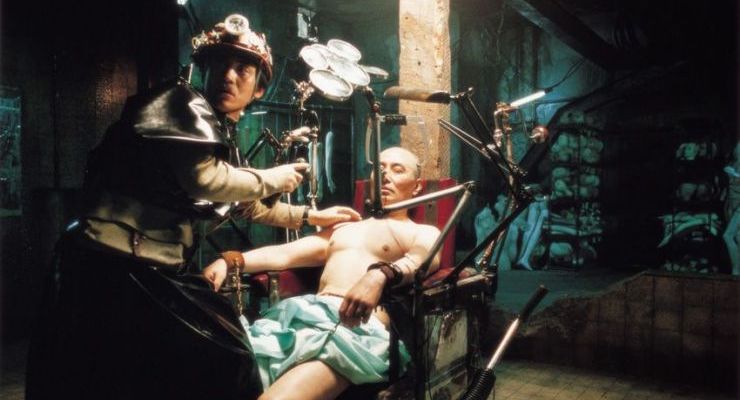
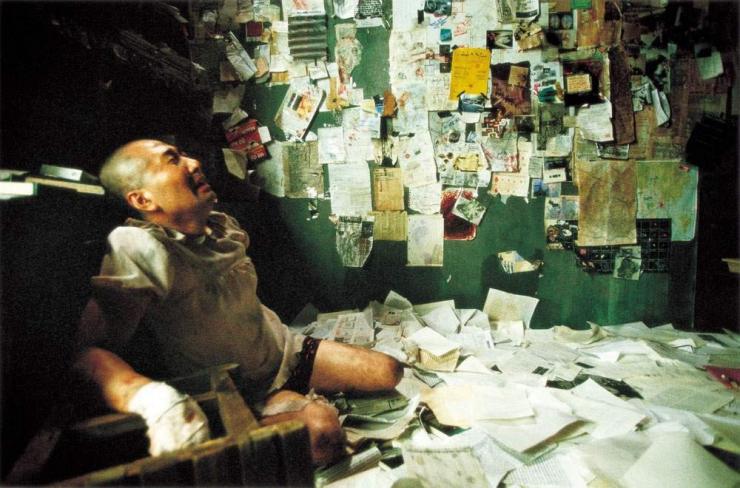
Is Byeong-gu mentally unstable, or does he hold the key to Earth's survival?

Is Byeong-gu mentally unstable, or does he hold the key to Earth’s survival?

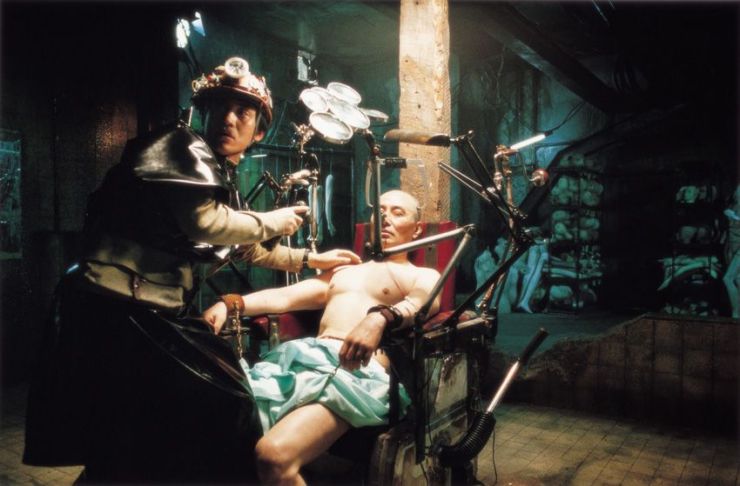
‘Madcap’ is a word often used to describe Save the Green Planet and that it is, although not in the haphazard manner the word implies. Director Jang Joon-hwan displays a keen understanding of the array of cinematic traits he employs, competently structuring them in order to provide the best possible use of generic conventions whilst also deriving dark-comedy from the source. Scenes featuring horror, thriller, and dramatic traits flow seamlessly, constructing dramatic tension yet often exhibiting a tongue-in-cheek sensibility as it does so. Torture sequences, for example, feature toe-curling moments but are also incredibly – and darkly – funny, as evil CEO Man-shik has antihistamine rubbed into wounds and is routinely degraded. Similarly, references to accomplished cinematic classics that arise throughout the film are genuine laugh-out-loud moments, and are enjoyable for cinephiles and occasional movie fans alike.

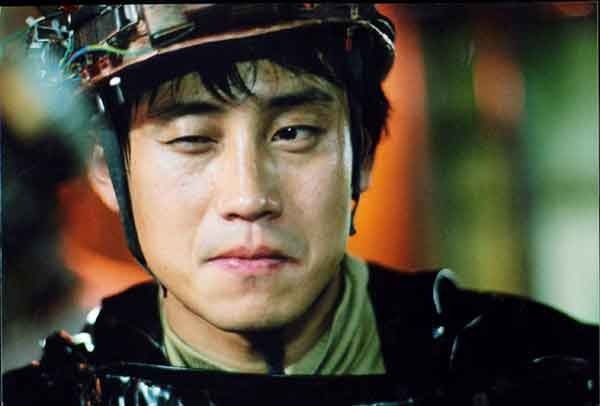
However, humour is just one of the many facets that make Save the Green Planet so entertaining. What truly makes the film so engaging are the underlying themes of the narrative and the psychological disposition of central protagonist Byeong-gu. From the outset, Byeong-gu is conveyed as seriously mentally ill. His theories regarding aliens from Andromeda is the stuff of B-movie science fiction material, while his attire and quirkiness belie the horrors that await in his private torture chamber. Yet his unique perspective on the world is an ironic one, as he uncovers scandals, corruption and amorality in attempting to prove the existence of aliens. Byeong-gu is indeed correct about the Earth being under threat, just not in the manner that his neurosis has constructed. It is in danger through the machinations of the rich and powerful, features which Byeong-gu strips away in order to reveal the ‘truth’ – and potentially atonement – making the unhinged young man something of an anti-hero.

Byeong-gu gets to work interrogating 'alien' Man-shik

Byeong-gu gets to work interrogating ‘alien’ Man-shik

As a result of all his eccentricities the film is a deeply psychological exploration of Byeong-gu’s paranoid mind, one that becomes more and more apparent through multiple viewings. As the unstable protagonist’s history is uncovered, director Jang crafts a biting social commentary regarding contemporary Korea, one that certainly would not be out of place in a Lee Chang-dong film. In doing so Byeong-gu’s cause – and indeed the film itself – is given incredible heartfelt merit, so much so that despite the atrocities he commits his status as an anti-hero is actually heightened. Director Jang intelligently articulates Byeong-gu’s psychosis through the mise-en-scene of the homestead, a multi-tiered countryside abode that features dimly-lit mannequins in the basement and bee hives in the garden, all symbolically linked to is unbalanced mind.

With such a wealth of character material, Shin Ha-kyun doesn’t disappoint. Arguably his career best, Shin is simply excellent in the role with his chameleonic ability to switch between manic highs and solemn lows incredibly impressive and, despite the often comical attributes, sincere. The protagonist could easily be another silly psycho but Shin gives Byeong-gu heart and conviction to make him truly sympathetic, and one of the most memorable characters in contemporary Korean cinema. Such focus unfortunately isn’t bestowed upon other members within the film, notably love interest Su-ni and the assortment of bumbling and renegade cops on the kidnapping trail, ultimately leading to plot threads that are never really mined for their potential. But as Byeong-gu is so charismatic and engaging such shortcomings are easily ignored, as it’s largely due to him that Save the Green Planet is such a compelling genre-bending film.

Battered and bruised, Man-shik attempts to discover Byeong-gu's secrets

Battered and bruised, Man-shik attempts to discover Byeong-gu’s secrets

Verdict:

Save the Green Planet is a thoroughly engaging and fun amalgamation of disparate generic features, all interwoven into a uniquely thrilling whole. Yet in addition to the madcap antics, director Jang Joon-hwan has crafted a biting social satire as well as a highly memorable, psychologically unbalanced anti-hero in the form of Byeong-gu. While the array of characters means that not all get a chance to shine, Byeong-gu’s heartfelt conviction overshadow such shortcomings. Save the Green Planet an incredibly enjoyable, strikingly powerful, and uniquely refreshing film.

★★★★☆

Reviews