Mal-soon embraces her youth as Doo-ri, and lots of body comedy ensues

Miss Granny (수상한 그녀) – ★★★☆☆

Miss Granny (수상한 그녀)

Miss Granny (수상한 그녀)

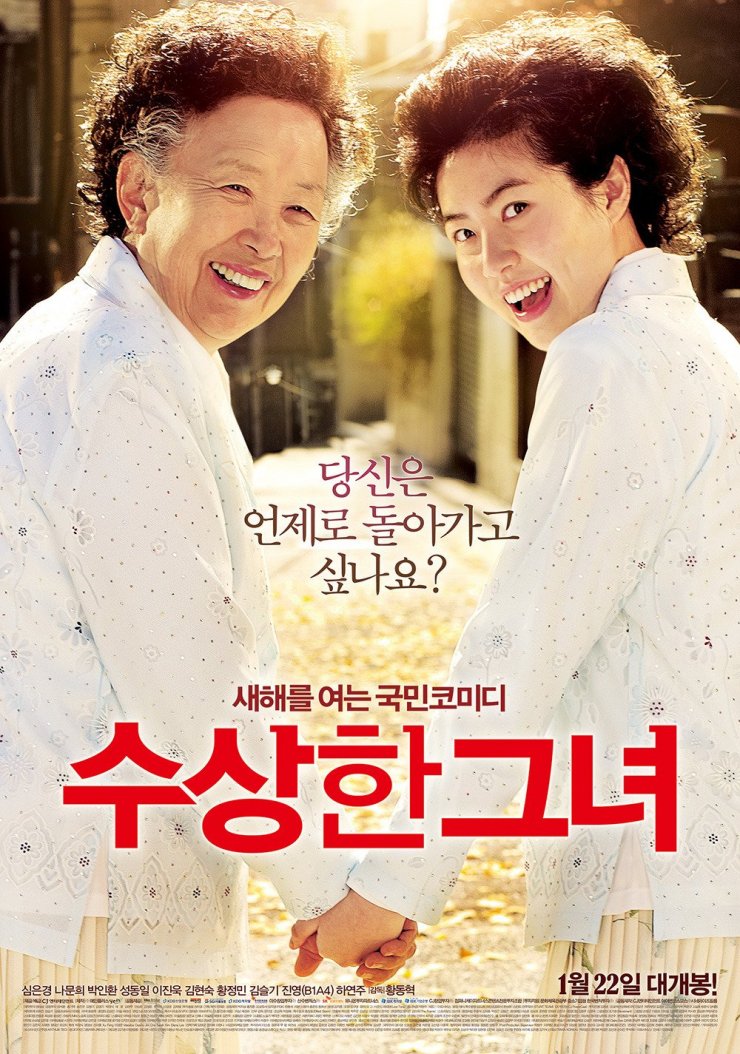
With the Lunar New Year approaching, comedy Miss Granny (수상한 그녀) attempts to take advantage of the holiday season by poking fun at the modern Korean family unit. Occasionally uplifting and humourous  yet very much by the numbers, Miss Granny attempts to appeal to the broadest possible audience and as such combines a host of genres and cliches throughout its predictable narrative. Surprisingly however it all gels together quite well and, thanks largely to actress Sim Eun-kyeong, Miss Granny is light-hearted and mildly entertaining throughout.

Cantankerous granny Oh Mal-soon (Nah Moon-hee (나문희)) is an extremely stubborn and strong-willed old lady, still managing to get involved in fights despite her age. Yet the stress Mal-soon invokes upon her family puts her long-suffering daughter-in-law in hospital, and discussions arise as to whether a care home would be the best course of action. Depressed, Mal-soon visits a photography studio in an attempt to feel younger, but upon leaving the store she discovers she has miraculously de-aged. Taking on the new name of Oh Doo-ri (Sim Eun-kyeong (심은경)), Mal-soon runs away from home and begins to establish herself as a singer while her family and friends frantically search for the missing pensioner.

Strong-willed Mal-soon works in a coffee shop where she still gets in trouble

Strong-willed Mal-soon works in a coffee shop where she still gets in trouble

Miss Granny has been written very much for Korean audiences, and the comedy derives from sending up stereotypes associated with the elderly within the country. As the jokes are so culturally specific, Koreans (arguably together with Chinese and Japanese audiences) as well as those familiar with Korean culture will find the jokes quite amusing, but for others the humour could well be lost on them as Mal-soon blusters her way through a variety of comical situations.

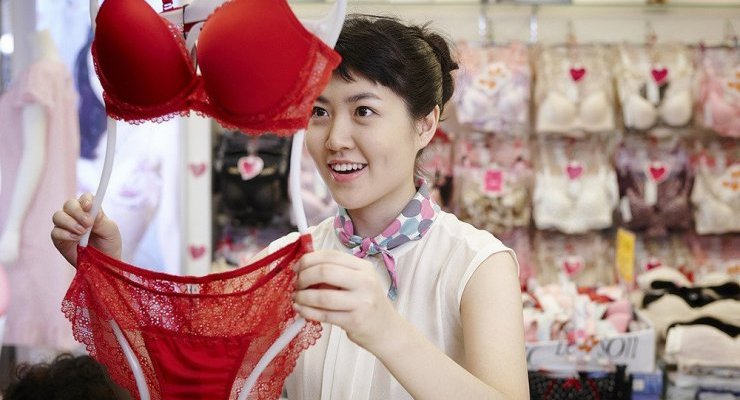
The strength of the film lies in the tongue-in-cheek fashion of poking fun of the elderly. Korean grandmothers are well-known for their incredibly strong characters and straight-talking approach and director Hwang Dong-hyeok (황동혁) does well in creating laughs without being detrimental towards his central characters. The real comedy comes after the transformation however, as the 20 year old Oh Doo-ri continues to use her dominating personality when, according to Korean culture, younger generations should be much more humble. Scenes in which Doo-ri scolds a mother for having poor breast milk and talks opening about sexual matters are entertaining as she boldly confronts modern life. As these examples indicate, Miss Granny fully embraces slapstick and body-comedy for laughs, and fans of this style will find much to enjoy.

Mal-soon embraces her youth as Doo-ri, and lots of body comedy ensues

Mal-soon embraces her youth as Doo-ri, and lots of body comedy ensues

 However, Miss Granny recycles everything audiences have seen dozens of times before. The film is incredibly similar to 200 Pounds Beauty – simply exchanging ‘obese’ with ‘elderly’ – with the cliches and predictability creating a simple and mild slice of entertainment. In doing so the story has mixed messages as it seeks to bypass elderly and female stereotypes yet wholly conforms to them, while the issues regarding what exactly is age-appropriate gets lost along the way. Furthermore, the use of the musical reality TV show as a way for the characters to achieve fame and find passion is ridiculously tiresome at this stage, and  doesn’t really add to the underlying theme as it did with 200 Pounds Beauty.

The attempt to keep the comedy rolling also highlights the haphazard structure within the film, as Miss Granny generally moves from set piece to set piece, most jarringly when everyone suddenly appears in a water park for no apparent reason. Indeed, so many set-pieces, locations and supporting characters are juggled to mine as much out of the fantastical situation that the running time reaches roughly two hours, which is far far too long. Ironically however the best laugh is saved until last, which film and TV fans will undoubtedly enjoy.

As is often the case with Korean comedies such as these, Miss Granny employs a healthy dose of melodrama in attempting to entice audiences of all ages. Interestingly it works quite well within the context of the story, as montages of Mal-soon’s extremely difficulty life conveys not only Korea’s troubled past but also explains why the elderly are often so cantankerous. These scenes are unfortunately fleeting but poignant while they last.
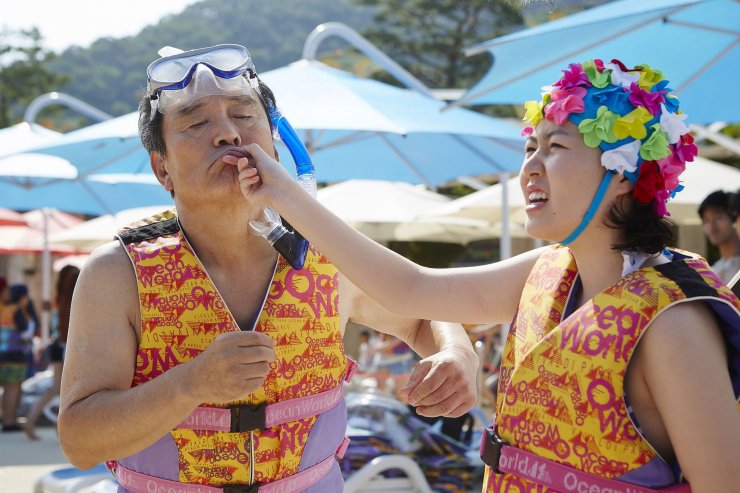
Set pieces, such as a visit to a water park, provide laughs

Set pieces, such as a visit to a water park, provide laughs

Miss Granny (수상한 그녀) is a light-hearted and mild family comedy, one which pokes fun at the elderly in Korea in a fun, tongue-in-cheek fashion. Ultimately enjoyment of the film will depend on audience knowledge and experience of the elderly in Korea, as the humour mainly derives from stereotypes, slapstick and body comedy. The story is incredibly cliched and predictable although it gels together well, while the additional melodrama is fleeting but poignant while it lasts. 

★★★☆☆
Reviews
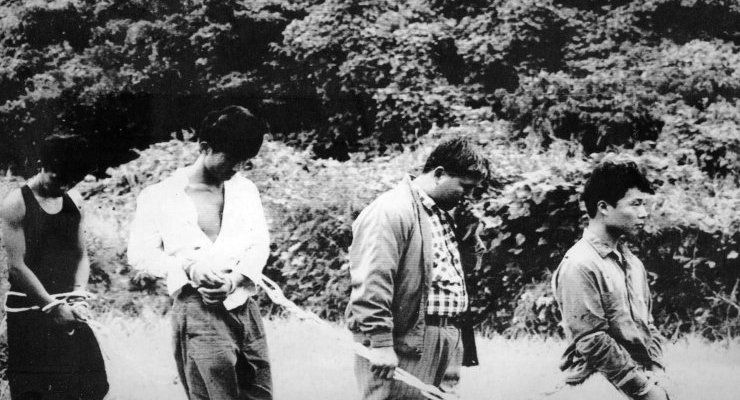
The Jijon-pa clan shcked the nation with their killing spree and lack of remorse

Non-Fiction Diary (논픽션 다이어리) – ★★★★☆

Non-Fiction Diary (논픽션 다이어리)

Non-Fiction Diary (논픽션 다이어리)

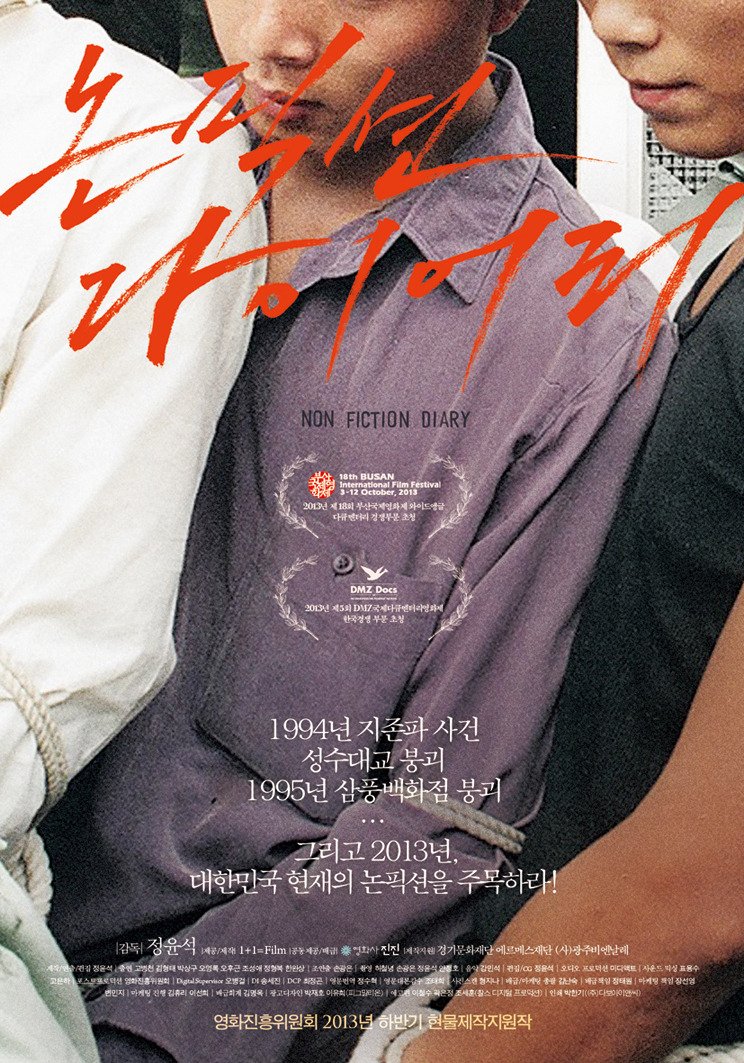
Director Jung Yoon-suk (정윤석) explores the terrible tragedies that occurred in Korea during the 1990s in his gripping and poignant documentary Non-Fiction Diary (논픽션 다이어리). Rather than a run-of-the-mill history film, director Jung has crafted an incredible exploration of the era that examines the role of crime and punishment in Korea, and the disturbing ironies that lie within.

His research takes the audience through some extremely controversial issues that range from the upper to the lower echelons of society, and it’s to Jung’s credit that he pulls no punches when exploring the roles of the politics, media and religion in doing so. In tying seemingly unrelated crimes together, Non-Fiction Diary is an insightful and inspiring documentary that alludes to the corruption in society without becoming a propaganda piece. As such the film is enlightening for both Korean and non-Korean audiences alike, and with receiving the Mecenat award at the Busan Film Festival and invitations to Berlinale amongst many others, Non-Fiction Diary is winning over audiences and critics with its powerful and provocative approach.

The Jijon-pa clan shcked the nation with their killing spree and lack of remorse

The Jijon-pa clan shcked the nation with their killing spree and lack of remorse

Non-Fiction Diary begins by exploring the case of the Jijon-pa clan in 1994, a group of countryside youths who were so frustrated and angry at Korea’s rapid embrace of neo-capitalism and the unbalanced affluence of citizens that they became serial killers. Their shocking crimes of kidnap, murder and cannibalism were compounded by their clear lack of remorse. The case itself initially appears relatively straightforward, yet director Jung instead chooses to focus on the national hysteria that gripped the nation. Simultaneously frightening, hilarious and absurd, the newsreels, talk shows and interviews that are compiled are incredibly revealing about 1990s Korean culture and the turbulent ideology of the era. Wisely steering clear of turning the documentary into a propaganda piece, the fascinating and provocative images and clips shown are genuine and convey the fear and paranoia towards young people at the time.

The real masterstroke of Non-Fiction Diary are the interviews with the police officers who worked on the case, as well as the prison warden who over-saw the clan’s incarceration. Their frank and honest discussions about the crime and resulting fallout are gripping throughout, adding an entirely new perspective on events that is continually illuminating. It is through them that the documentary takes an unexpected turn, one that moves from judgement into understanding, yet one with a solemn undercurrent with the knowledge that the clan face the death penalty. Exploring the death sentence also allows director Jung to delve into the role of religion, with the contradictions and hypocrisies providing even further depth to the investigation. The interviews are pivotal in grounding the events in reality and by conveying their conflicts – internal and otherwise – the film becomes ever-more insightful and compelling.

The collapse of the Sampoong Department Store highlighted corruption within the upper echelons of society

The collapse of the Sampoong Department Store highlighted corruption within the upper echelons of society

Non-Fiction Diary is also brilliant through examining other disastrous incidents of the era – the collapse of the Seongsu Bridge, and the devastation of the Sampoong Department Store collapse. The documentary takes a wonderfully activist stance in doing so, as after exploring the horrific events and the shocking loss of life, the issue of accountability again rises and makes a great counterpoint to the Jijon-pa clan’s punishment. In emphasising the contradictions, and outright corruption, within the law in regards to the rich and poor director Jung continually makes the case of the unfairness of society and the amorality that seemingly accompanied the embrace of capitalism, and the conclusions he reaches never stop being enlightening.

More controversially, perhaps, is the manner in which director Jung ties the events of the 1990s with the past and present. The decade saw the arrest of former presidents Chun Doo-hwan and Roh Tae-woo for their roles in the 1980 Gwangju Massacre, as well as key figures of the era involved in contemporary scandals. The manner in which such material is presented is consistently disquieting and infuriating, which ironically makes the documentary even more powerful.

Chun Doo-hwan (right) and Roh Tae-woo are arrested (and later pardoned) for their role in the Gwangju Massacre

Chun Doo-hwan (right) and Roh Tae-woo are arrested (and later pardoned) for their role in the Gwangju Massacre

Non-Fiction Diary (논픽션 다이어리) is a consistently provocative, insightful and gripping documentary. Director Jung Yoon-suk explores the role of crime and punishment in 1990s Korea with incredible vision, exploring the tumultuous events of the era through a great selection of TV footage and interviews that never stops being compelling. Yet the film’s real strength lies in the manner in which director Jung ties the events together and examines the disturbing ironies within, to produce a shocking yet enlightening dissection of Korean history.

★★★★☆

Reviews
Gong-ju's trauma apears on the internet for all to see

Han Gong-ju (한공주) – ★★★★★

Han Gong-ju (한공주)

Han Gong-ju (한공주)

Han Gong-ju (한공주) is undoubtedly the best Korean film of 2013. Bold, unflinching, insightful and powerful, director Lee Su-jin (이수진) has crafted an exceptional film about serious social issues that exist within contemporary Korea. What makes the film such an exemplary piece of cinema is the manner in which such issues are conveyed. Through the experiences of traumatised teenage protagonist Gong-ju, her world opens to reveal a broad array of socio-cultural problems ranging from absentee parents to corrupt institutions, from high school bullying to mid-life crises, as she simultaneously attempts to reconcile with her own tragic past. Employing an impassioned sense of social injustice in conjunction with a skillfully balanced narrative structure, director Lee Su-jin evokes the spirit of a raw Lee Chang-dong which is mighty praise indeed.

Gong-ju attempts to start her life over, yet keeps everyone at a distance

Gong-ju attempts to start her life over, yet keeps everyone at a distance

For reasons unknown, high school student Gong-ju is sent to a new school far from her hometown. The extremely quiet yet polite student is constantly treated as a burden by teachers, parents, as well as her new carer – her teacher’s lonely single mother. As Gong-ju attempts to rebuild her life in new surroundings by learning to swim and taking on a part-time job, new friends emerge and discover her beautifully melancholy singing ability. Yet in revealing her talent, Gong-ju’s horrifying past catches up to her with disastrous results.

Treated as little more than a burden, Gong-ju attempts to start her life anew

Treated as little more than a burden, Gong-ju attempts to start her life anew

Han Gong-ju is a rare gem and a stunning debut feature from director Lee, whose previous shorts Papa (2004) and Enemy’s Apple (2007) were both award recipients. The social issues that are explored throughout the film are not new in neither mainstream nor independent Korean cinema, but nonetheless are incredibly powerful and emotive due to the strength of the central protagonist alongside a gripping flashback structure. As the heart of the film, Gong-ju is a very complex character; melancholy yet passionate, distant yet likable, her tragic story is one of shocking trauma and inspirational strength. Indeed, it is Gong-ju’s courage that forces confrontation with further injustices – including a runaway mother and corrupt authority figures – that serve to make her an increasingly endearing and admirable young woman. Director Lee wisely employs editing to accentuate audience empathy, gradually revealing tidbits of information into Gong-ju’s elusive past until neither she, nor the audience, can hide from the truth any longer. In doing so director Lee not only conveys his skill as a storyteller, but also potently exposes the contentious role of parents in crime and punishment.

As Gong-ju, actress Cheon Woo-hee (천우희) gives an incredible performance. The role itself is subtle and nuanced, and she delivers wonderfully. Simultaneously innocent yet worldly-wise, Cheon Woo-hee conveys the agony of the troubled teenager mixed with a sense of hope and inner-strength that is staggering to behold. In lesser hands Gong-ju would be either cold and unlikable or overly pitiable, yet Cheon balances both realms effortlessly.

Gong-ju attempts to let people into her world, with disastrous results

Gong-ju attempts to let people into her world, with disastrous results

Verdict:

Undoubtedly the best Korean film of 2013, Han Gong-ju is a rare gem of independent cinema. Director Lee Su-jin has crafted an extraordinary tale of a girl struggling to reconcile with a traumatic past, who courageously confronts further social injustices in her attempt to do so. Beautifully performed by Cheon Woo-hee, the actress balances the inner strength and turmoil of the character to produce one of the most emotive and powerful cinematic experiences of the year. Bold, insightful and heart-wrenching, Han Gong-ju is the must-see film of the year.

★★★★★

Busan International Film Festival (제18회 부산국제영화제) Reviews
Tensions build as Tae-sik and Won-joon clash in the bid for superiority

Top Star (톱스타) – ★★☆☆☆

Top Star (톱스타)

Top Star (톱스타)

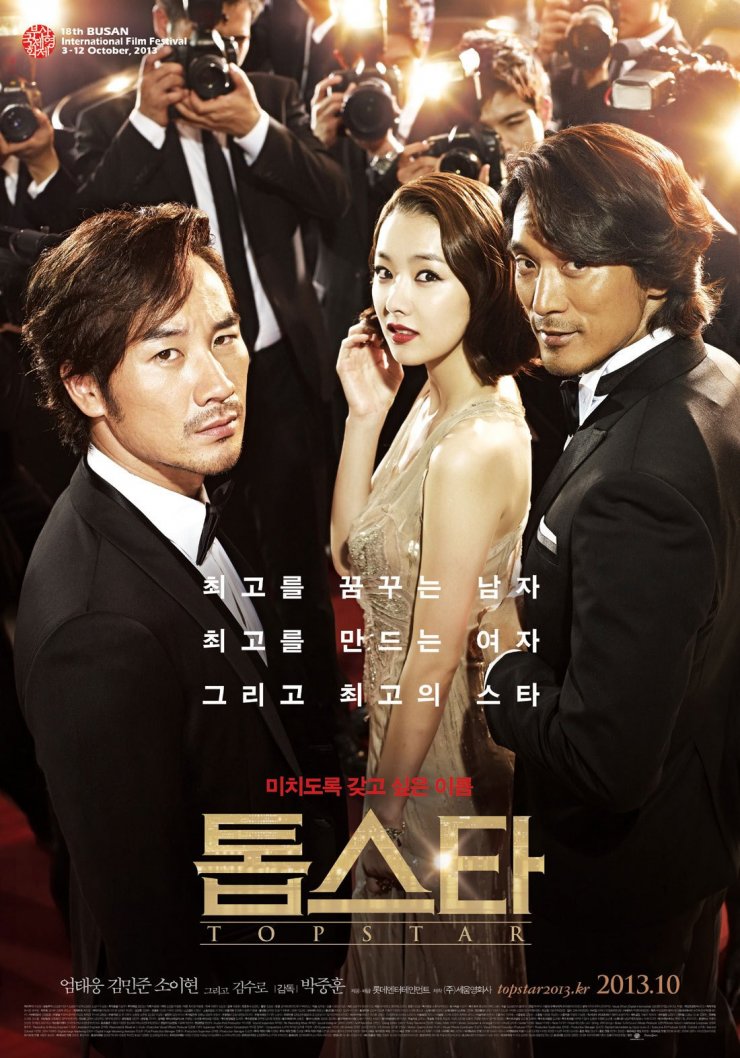
Actor-turned-director Park Joong-hoon (박중훈) has crafted a highly polished and glitzy directorial debut with Top Star (톱스타).

The heavyweight actor – who has hit films including Haeundae (해운대)Radio Star (라디오 스타) and Nowhere To Hide (인정사정 볼 것 없다) in his back catalogue – has clearly exercised his connections within the industry as Top Star features an assortment of high profile names from Korean cinema.

Unfortunately however, while there is enjoyment to be had in watching the beautiful faces, lavish lifestyles and celebrity scandals, there is precious little substance beneath the glamour. Director Park has clearly aimed his debut at a broad audience and in doing so he has produced a competent, though unremarkable, film about the nature of stardom.

Diligent manager Tae-sik helps superstar Won-joon at every turn

Diligent manager Tae-sik helps superstar Won-joon at every turn

Superstar Won-joon (Kim Min-joon (김민준) has it all – good looks, a career in film and television, an expensive lifestyle, and a beautiful girlfriend named Mi-na (So I-hyeon (소이현). Yet behind all the glitz and glamour, Won-joon is taken care of by an agency, particularly by diligent manager Tae-sik (Eom Tae-woong (엄태웅). Tae-sik’s adoration of Won-joon leads him to help cover up scandals and, in helping in one case of some magnitude, Tae-sik suffers great personal distress. Stunned by his selflessness, Won-joon grants Tae-sik a sizeable role in his latest television series and is happy to see his ambitions of becoming an actor finally materialize. Yet in discovering fame, Tae-sik begins to change, leading him into a rivalry with Won-joon.

One of the great benefits of having a veteran actor step behind the camera for Top Star is that the portrayal of the world of celebrity is convincing. The conversations and behind-the-glamour events clearly come from a person of experience, from discussions in limousines and public-relations meetings to relaxation at home portrayed with insight. Director Park does well in balancing the realms of stardom and downtime, conveying the former as merely attractive but shallow superficiality and working to build character in the latter. It generally works well, although the script routinely employs cliches and contrivances that have been utilised better before, as in 200 Pounds Beauty (미녀는 괴로워). Foregrounded, however, is the rivalry that develops between Tae-sik and Won-joon that occurs in both worlds, which is also where the more interesting events transpire.

Tensions build as Tae-sik and Won-joon clash in the bid for superiority

Tensions build as Tae-sik and Won-joon clash in the bid for superiority

The initial friendship between Tae-sik and Won-joon is articulated well, as the manager idolises his talent by helping to cover up scandals with no questions asked. Yet the story does become somewhat absurd as Tae-sik suffers a great personal burden in order to provide an alibi for one particular scandal, one that stretches believability almost too far. As Top Star is clearly marketed towards family audiences, director Park omits psychological exploration of Tae-sik’s adoration, yet while it is arguably ‘dark’ material it is depth that is sorely required as the film is so concerned with his unstable personality. Still, sequences in which Won-joon advises Tae-sik on the merits of acting are enjoyable and humourous as their camaraderie deepens on the set of their TV show. Yet just as the story begins to get interesting the film jumps years into the future, bypassing all the fascinating moments that have transpired to trouble their relationship and instead placing audiences in the distressed middle period.

As such Top Star loses all momentum, and the film is forced to reestablish itself once more by reintroducing characters and their new situations. It’s an event from which the story never fully recovers and as the film once more sets up events and attempts to take a belated darker tone, they lack the potency they would otherwise have contained. Additionally the (again belated) inclusion of melodrama amongst all the protagonists is horribly cliched and detracts from the viewing experience. One of the major benefits of Top Star‘s second half however is the greater screen time afforded to actress So I-hyeon as TV producer Mi-na. The role is wafer thin and one-dimensional with So I-hyeon very much required to be just a pretty face, although the actress stretches the material as much as she can and is quite charismatic. Yet undermining everything is the manner in which the story wraps up, as it is far too neat and with little – if any – ramifications despite all the wrongdoing. Top Star is great in representing the glitz and glamour of the movie business but, try as it might to explore the nature of celebrity, the film crucially lacks any depth to do so.

Tae-sik's longing for Mi-na and Won-joon's life in general clouds his judgement

Tae-sik’s longing for Mi-na and Won-joon’s life in general clouds his judgement

Top Star (톱스타) is a highly polished and glamourous directorial debut from veteran actor Park Joong-hoon (박중훈). The film attempts to explore the nature of celebrity as a talent manager turned actor desperately works to retain his fame, even creating a rivalry with his idol. As director Park aims Top Star squarely at family audiences however, he doesn’t delve into the psychology of his protagonists resulting in a film that is wonderfully glitzy, but lacking in any real depth.

★★☆☆☆

Busan International Film Festival (제18회 부산국제영화제) Festival News Korean Festivals 2013 Reviews
With a killer on the loose, the inhabitants must do whatever it takes to survive

Intruders (조난자들) – ★★★☆☆

Intruders (조난자들)

Intruders (조난자들)

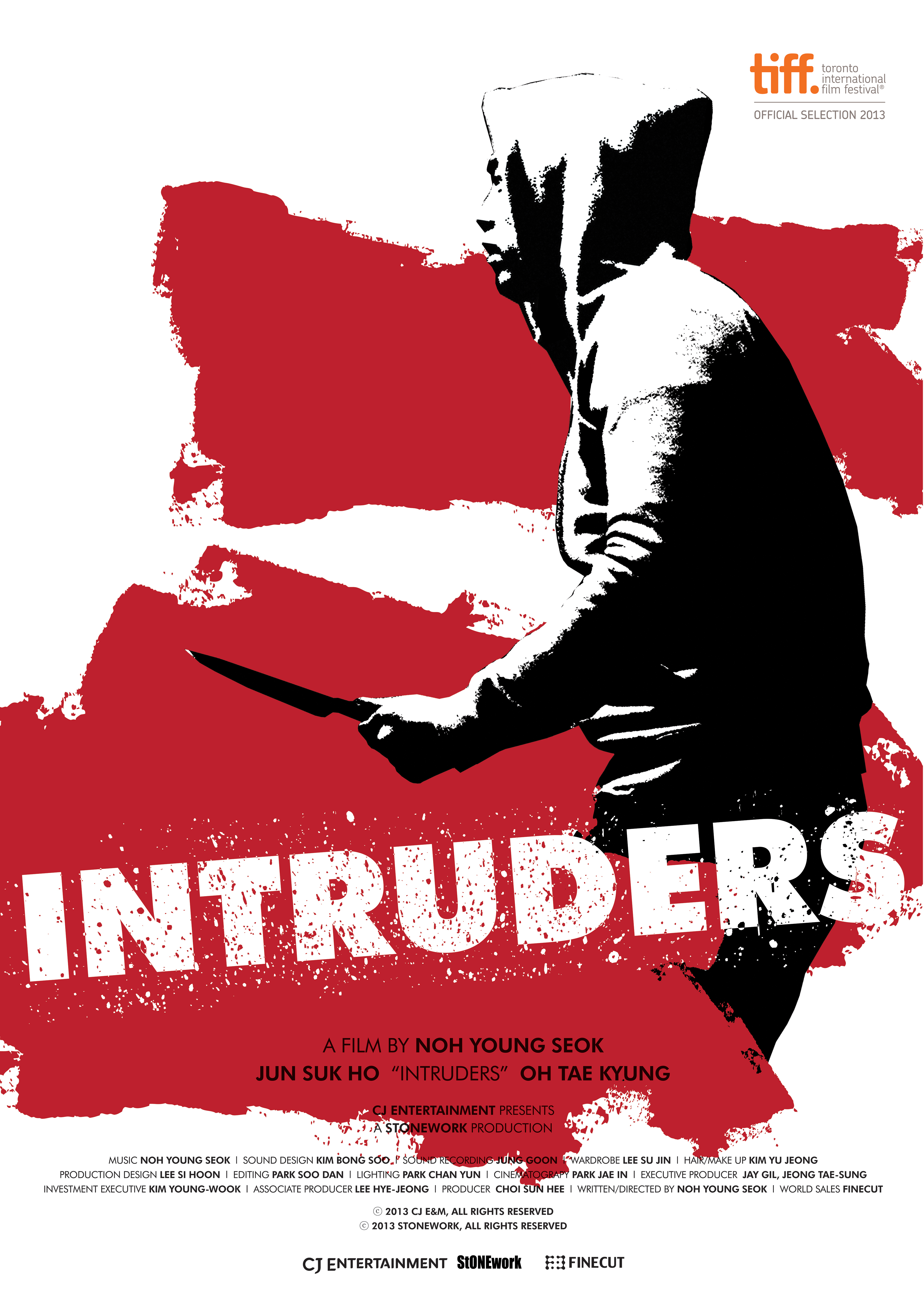
Suspense-filled and gorgeously picturesque, quirky thriller Intruders (조난자들) is director Noh Young-seok’s (노영석) second feature film following his critically acclaimed Daytime Drinking (낮술).

Appearing within the ‘Korean Cinema Today – Vision’ category at BIFF 2013 following a world premiere at Toronto, Intruders has been likened to Pekinpah’s Straw Dogs due to the similar themes of disquieting locals and a house under siege.

While it never reaches those heights, director Noh’s film is indeed a refreshing change of pace. The foreboding dark alleys of Seoul have been replaced with stunning winter landscapes, while the isolation and bizarre behaviour of everyone involved provides a vastly different form of thriller. However, with its uneven pacing and unsatisfactory third act, Intruders never quite manages to fulfill its potential and as such is an entertaining rather than genre redefining entry.

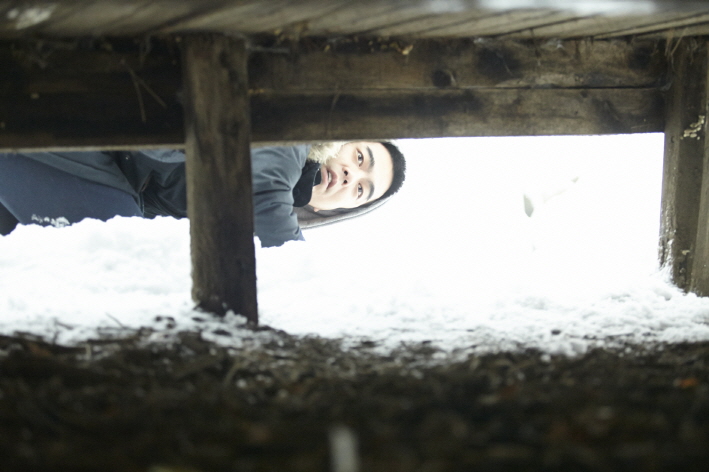
Screenwriter Sang-jin inspects his cabin the wintry countryside

Screenwriter Sang-jin inspects his cabin in the wintry countryside

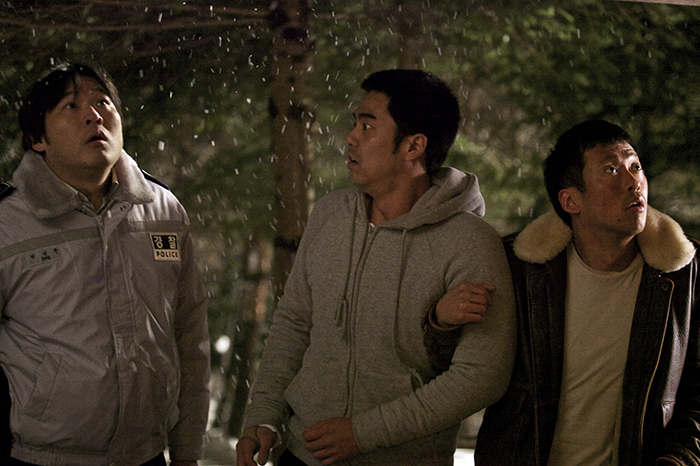
In order to complete his screenplay undisturbed, writer Sang-jin (Jun Suk-ho (전석호) journeys into the remote countryside to stay at his boss’ cabin alone. Surrounded by snow-covered mountains and with the nearest town 30 minutes away, Sang-jin is certain he will finish his work before the deadline. Yet on the way he reluctantly befriends odd ex-con Hak-soo (Oh Tae-kyung (오태경) who is determined to form a relationship, while the arrival of young ski enthusiasts at the adjacent cabin complicate his plans further. More disturbing however are the hunters who stalk the surrounding area, creating a deep sense of unease. When Sang-jin discovers one of the young skiers has been murdered, a shocking chain of events are set in motion.

First and foremost, Intruders is an extremely attractive film. Director Noh frames each scene to make the most out the stunning country landscapes and the blanket white snow that engulfs it, and as such the film is consistently visually impressive. Locations also wonderfully evolve according to the context in which Sang-jin finds himself, as beautiful scenes suddenly become uncomfortable when awkward situations arise. It is remarkable how the isolated cabin changes from being a romanticised place of work to a source of terror, yet director Noh’s framing techniques and pacing succeed in slowly building a sense of foreboding that completely changes the atmosphere within the film. This is in no small part due to the quirky and downright weird characters that are introduced throughout the story, with the suspense and tension generated by their actions reaching palpable levels.

The arrival of local law enforcement only serves to complicate matters further

The arrival of local law enforcement only serves to complicate matters further

The assortment of characters within Intruders makes the film equal parts scary and darkly comic, as their unpredictable behaviour is constantly fascinating to watch unfold. Oh Tae-kyung is great as odd ex-con Hak-soo, genuinely leaving the audience wondering about his motivations through his ability to switch from overly-friendly to threatening in a heartbeat. Also within the mix are young and crude male skiers, a cop with a twisted sense of justice, and rugged hillbilly hunters whose disheveled appearance – coupled with their random gun shots in the wilderness – place everyone ill at ease. Only one character, that of the bitchy lone female skier, tends to ruin the story as she is so one-dimensional it’s continually frustrating. Her constant complaints and moans are initially amusing, but as the only woman in the script director Noh really should have elaborated her role further. Luckily however actor Jun Suk-ho is brilliant to watch as everyman Sang-jin. His reactions to the bizarre happenings and weird people around him are always compelling and entertaining, leading the audience through the minefield of weirdness as well as providing the story with central focus.

Yet for all the suspense and enjoyment, Intruders doesn’t quite manage to elevate itself into the realms it should. Director Noh has done remarkably well in constructing the premise but all too often he lingers on moments for too long rather than move to the next event. This is wonderful in terms of creating tension, yet these and earlier scenes could (or perhaps should) have been trimmed in editing to allow later events time to advance. Furthermore while plenty of clues and red herrings are subtly laced within the story, certain features really come out of left field that are simultaneously laughable and shocking. All these issues culminate in a finale that is quite underwhelming and lacking in satisfaction, a shame as for the most part Intruders is a thoroughly engaging and enjoyable film.

With a killer on the loose, the inhabitants must do whatever it takes to survive

With a killer on the loose, the inhabitants must do whatever it takes to survive

Verdict:

Intruders is a wonderfully quirky tale of a screenwriter who ventures into the countryside yet gets more than he bargained for with the odd locals. Director Noh Young-seok’s second film is beautifully picturesque and consistently laced with dark humour throughout, with the bizarre situations the writer finds himself in compelling and entertaining. While the film never manages to capitalise on the great premise, for the most part Intruders is a fun, engaging and refreshing thriller.

★★★☆☆

Busan International Film Festival (제18회 부산국제영화제) Festival News Korean Festivals 2013 Reviews
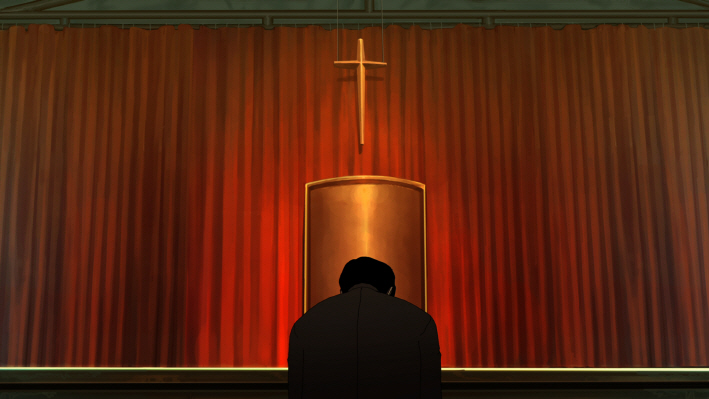
A priest telling lies or a devil telling the truth - The Fake examines the nature of religion

The Fake (사이비) – ★★★★☆

The Fake (사이비)

The Fake (사이비)

The Fake (사이비) is a brutal and intense viewing experience, with the shocking and visceral manner in which depicts a community under siege quite brilliantly executed. Director Yeon Sang-ho (연상호) has taken the dark themes he explored so wonderfully in King of Pigs (돼지의 왕) and expanded them into a wider sociological framework, and the result is a darkly explosive and constantly compelling social commentary.

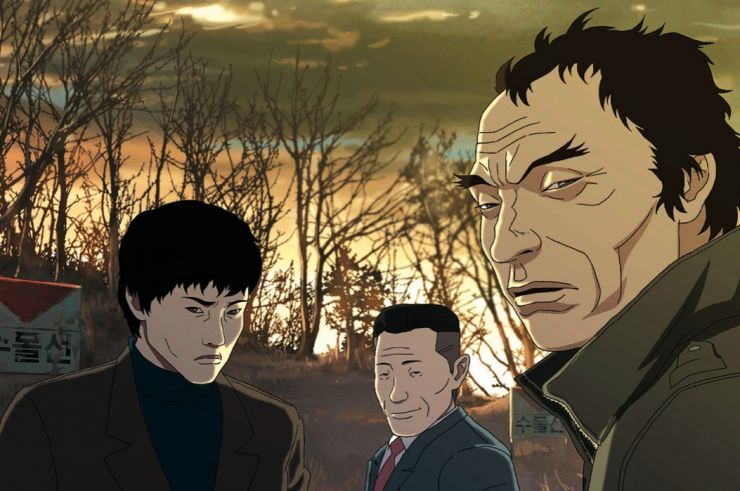
A small village deep in the countryside is under threat from the construction of a new reservoir, which will submerge the whole community. With few options, the villagers turn to the newly formed church and its young priest for salvation, with their faith strengthened ever further by witnessing ‘miracles’. As their religious fervour becomes increasingly fanatical, a violent and abusive man returns to the village and, horrified by what he sees, attempts to reveal the machinations behind the church’s intent. Yet who should the country-folk believe – a man of God, or the devil himself?

The Fake adopts many of the conventions from the western genre as a lone ‘anti-hero’ returns from the wilderness to a corrupt civilisation. Director Yeon takes such motifs and intelligently plays with them in deconstructing Korean society, religion, and morality in ways both overt and nuanced, balancing them all incredibly well. Such a penetrating examination is conducted through the outsider character, who is far more devil than saint as he steals, drinks and beats women for his own selfish gain. Yet his status as an outsider also grants him the freedom of perception. With the threat of the reservoir – a wonderfully symbolic biblical flood – approaching, a con man and his young sidekick priest all too easily manipulate the villagers into doing their bidding by appealing to their base fears and desires. As the outsider attempts to reveal the scam and help them, the story explores just how illogical and frightening society can become when an ideology built on false promises is introduced and adhered to.

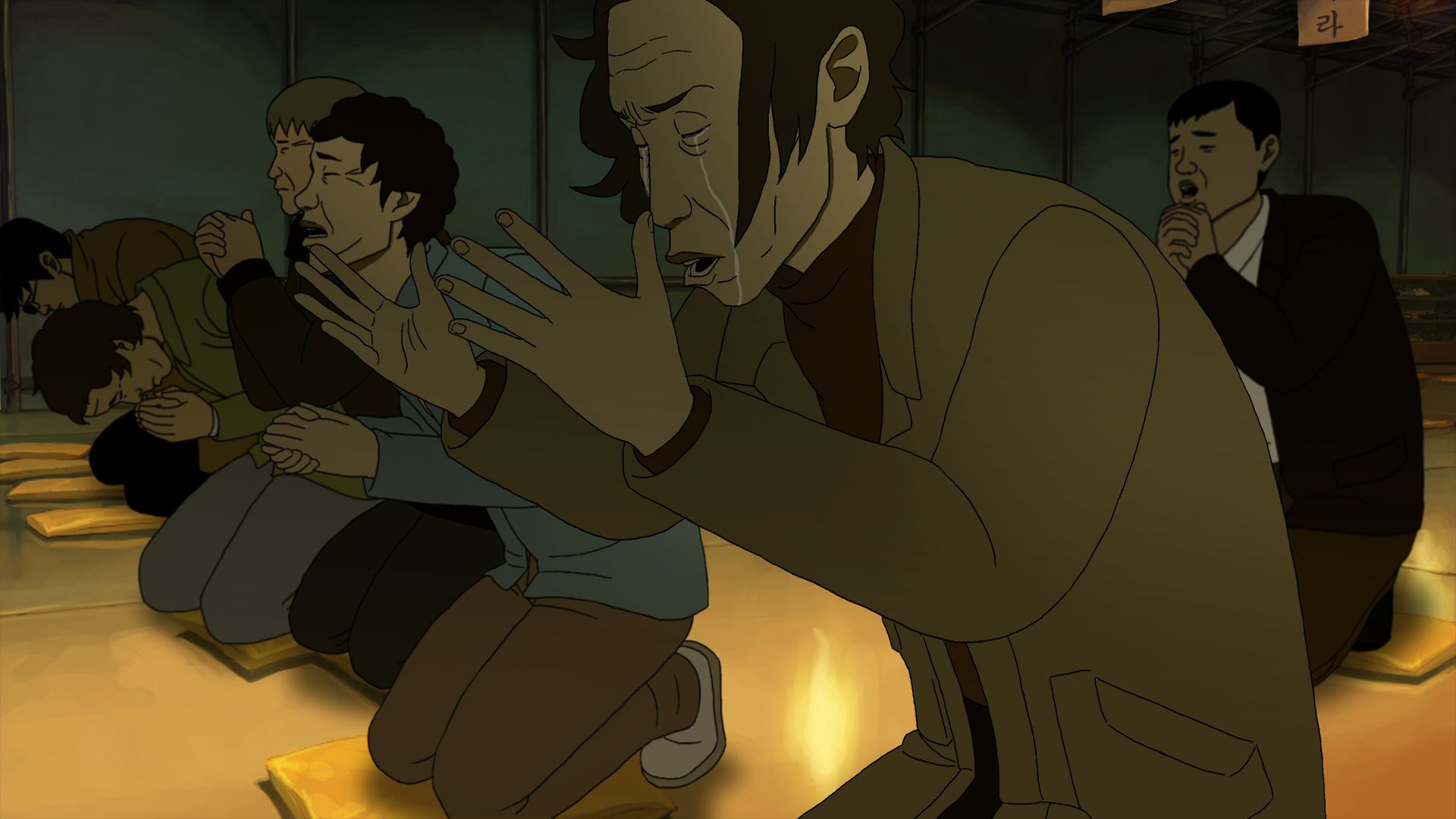
Religious fervour becomes increasingly fanatical as perceived threats loom on the horizon

Religious fervour becomes increasingly fanatical as perceived threats loom on the horizon

The examples of fanaticism that increase throughout the film are wholly believable, as the country-folk are continually duped by false miracles and promises set up by the clergy and his financial backer. As sick people refuse medicine in favour of ‘holy water’, women become prostitutes, as well as villagers selling property in order to donate to the church, The Fake is exemplary in depicting not only the seemingly inherent corruption within religious institutions but also the sheer ignorance of society as a whole, especially when under threat. There are no conventional ‘good’ characters to be found within the world of The Fake and as such the atmosphere generated is deeply intense and disturbing, and as the community continues to descend further into a moral abyss the film is consistently riveting.

It is also wonderfully ironic that the ‘saviour’ of the village is akin to the devil personified. At times even wielding a forked weapon and using fire, the outsider is an appalling brute who destroys everyone in his path and is routinely expelled from the community as the spawn of satan. His evil ways while speaking the truth are counter-balanced with the priest who behaves saintly while telling lies, and their interactions and conflicts are intelligent as well as explosive. The violence that occurs due to their personal war is ferociously bloodthirsty, with the fluidity of the animation a remarkable evolution for director Yeon. Indeed, with the exception of one rather ‘blocky’ church dancing scene, The Fake sports impressive visuals throughout whilst retaining director Yeon’s distinct style, with his use of colour and shadow adding tremendous weight to the intensity of the story.

A priest telling lies or a devil telling the truth - The Fake examines the nature of religion

A priest telling lies or a devil telling the truth – The Fake examines the nature of religion

Verdict:

The Fake, director Yeon Sang-ho’s second film, is a brutal, dark, and intense viewing experience that examines a rural community manipulated by a religious institution. Employing genre conventions from the western, director Yeon intelligently explores Korean social issues through the increasing conflict between con artists, duped villagers and evil men. The Fake is a genuine evolution of style for the director, and is a continually riveting and explosive social commentary on the nature of morality.

★★★★☆

Busan International Film Festival (제18회 부산국제영화제) Festival News Korean Festivals 2013 Reviews
Haewon meets Seong-joon, the married professor with whom she has an on-and-off affair

Nobody’s Daughter Haewon (누구의 딸도 아닌 해원) – ★★★★☆

Nobody's Daughter Haewon (누구의 딸도 아닌 해원)

Nobody’s Daughter Haewon (누구의 딸도 아닌 해원)

Director Hong Sang-soo’s (홍상수) 14th feature film Nobody’s Daughter Haewon (누구의 딸도 아닌 해원) is a wonderfully charming and beautifully endearing tale. The film received it’s world premiere at Berlin before invitations to festivals throughout Europe, the Americas, Asia and Oceania, which are a testament to not only director Hong’s popularity but also for the seemingly effortless sincerity captured within the story.

Fans and newcomers alike will find much to enjoy from Nobody’s Daughter Haewon. Director Hong has infused the film with his trademark nuanced style, employing a subtle and understated method that belies the depth and symbolism within, while also referencing previous works. Yet the film is also notably given heart and soul by the quite lovely performance of Jeong Eun-chae (정은채) as Haewon, a young woman struggling to reconcile her identity and place in the world.

Haewon meets Seong-joon, the married professor with whom she has an on-and-off affair

Haewon meets Seong-joon, the married professor with whom she has an on-and-off affair

Haewon (Jeong Eun-chae (정은채) is a lonely film and acting university student who, due to her attractiveness and strength of character, is often set apart from her classmates. When her mother announces that she intends to live in Canada, Haewon’s loneliness increases dramatically leading to a reunion with married professor Seong-joon (Lee Seon-gyoon (이선균), with whom she has an on-and-off affair. As the couple begin to rekindle their feelings for each other through dates at a traditional park and an old hiking trail, their interactions become increasingly fraught.

Director Hong’s seemingly effortless, almost meandering style perfectly captures the inner turmoil of his lead protagonist. His deceptively simple camera movements and mise-en-scene may appear whimsical at first glance, which is indeed part of the film’s charm, yet there is also symbolic depth within every frame. The empty – and previously restricted – park, the uphill struggles of hiking, the overbearing statues and so forth all emphasise Haewon’s evolving psychology following the departure of her mother and rekindling of a self-destructive relationship. Director Hong employs such aesthetics in conjunction with his trademark ‘repetition with difference’ sequences, and as such each time an interaction is conducted the subtle changes produce alternative meanings and endings that are fascinating to watch unfold. In constructing such repetition seamlessly within the story, each ‘chapter’ – or rather reenactment – is a product of Haewon’s diary entries or dreams adding further allure as she is very much in control of the unfolding events, further accentuated through her occasional narration.

Haewon's dreams and diary entries mark different 'chapters', or rather renactments, within the film

Haewon’s dreams and diary entries mark different ‘chapters’, or rather reenactments, within the film

This would of course mean very little if Haewon was unlikeable, however actress Jeong Eun-chae is wonderfully charismatic throughout. In what is arguably her breakout role, Jeong Eun-chae infuses her character with strengths and flaws in equal measure, conveying a nuanced complexity that is mesmerizing. It’s not so much that her performance is perfect, but that when over-acting or stoicism appears it is wholly natural within the context of the scene. When Haewon meets actress Jane Birkin in the early stages of the film, for example, the awkwardness and slightly cringeworthy moments express not only being star-struck but also Haewon’s desire for a mother-figure to admire and be valued by. Jeong Eun-chae is also great at adapting Haewon as a slightly different person for each repetitive sequence, also symbolised by her striking red and autumnal coloured clothing. The subtle changes, as well as the criticisms and compliments that come her way, are all indicative of a young woman attempting to establish her identity through dreams and diary recollections, and are consistently lovely to watch unfold.

That said, Nobody’s Daughter Haewon will not be for everyone. Critics of director Hong’s style will undoubtedly find the same issues within this film as they have in his previous works. The story does indeed meander; the plot doesn’t progress particularly far due to the repetitive nature of scenes; the intellectual male characters are all indicative of contemporary masculine immaturity. Ultimately it will be down to individual viewers tastes whether such themes are a source of charm or frustration. Yet for fans and audiences interested in non-cliched representations of modern relationships, Nobody’s Daughter Haewon will be a refreshing delight.

Haewon and Seong-joon awkwardly meet another couple in a similar situation at Namhan Fortress

Haewon and Seong-joon awkwardly meet another couple in a similar situation at Namhan Fortress

Verdict:

Nobody’s Daughter Haewon is an incredibly charming and quite lovely film by director Hong San-soo. In depicting lonely film and acting student Haewon as she rekindles an affair with her married professor, a deceptively simple and subtlety nuanced film about identity and direction is constructed, employed through the director’s trademark aesthetics. Jeong Eun-chae is wonderfully charismatic and gives a career best as Haewon. While the story does meander and the male characters are quite immature, Nobody’s Daughter Haewon is a delightful and refreshing tale of modern relationships.

★★★★☆

Busan International Film Festival (제18회 부산국제영화제) Festival News Korean Festivals 2013 Reviews
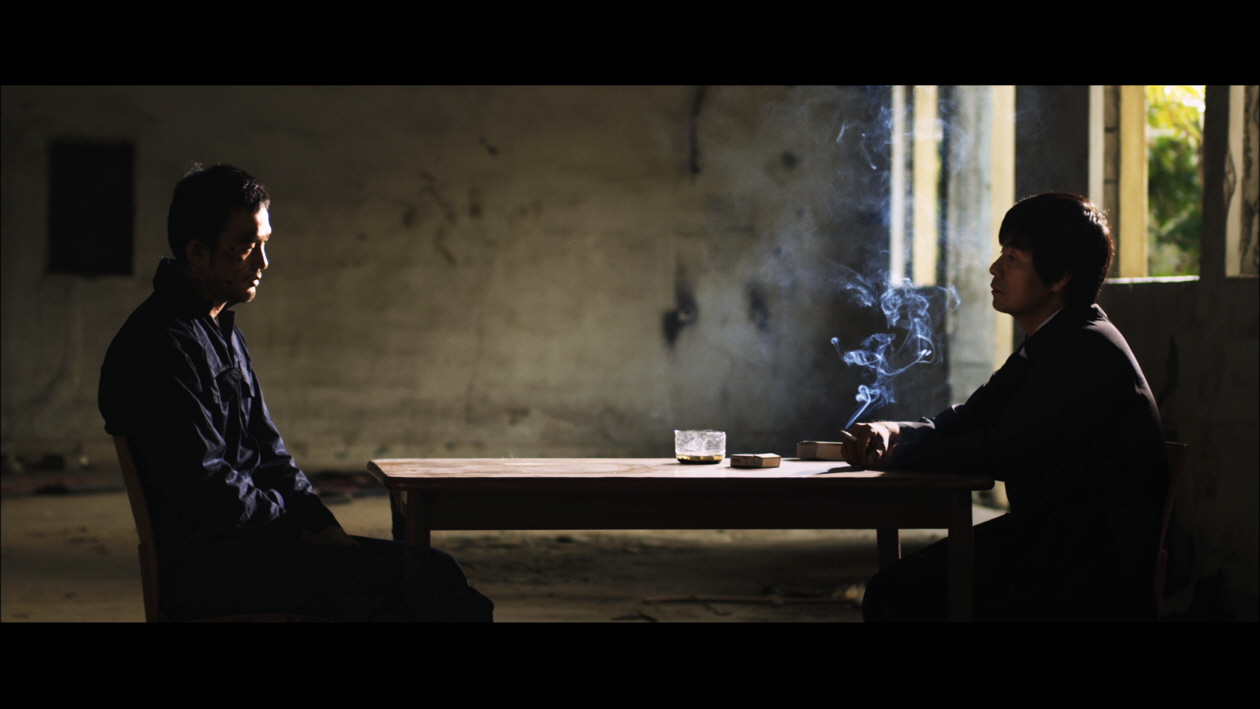
Min-su and the mob boss form a relationship through the gentleman's game of baduk

The Stone (스톤) – ★★☆☆☆
The Stone (스톤)

The Stone (스톤)

Despite his young age, Min-su (Jo Dong-in (조동인) is an extremely intelligent and talented baduk (Go) player. To make ends meet and with few prospects, Min-su uses his skills to hustle other players, forming friendships with small-time crooks as well as making several enemies in the criminal underworld. Yet when a local mob boss (Kim Roe-ha (김뢰하) unwittingly challenges Min-su to a duel and loses with significant embarrassment, the gangster hires Min-su as his baduk teacher and the two become close, changing them both irrevocably.

The gentlemen's game of baduk turns violent in the criminal underworld

The gentlemen’s game of baduk turns violent in the criminal underworld

First and foremost, The Stone (스톤) is a palpable love letter to the game of baduk, often referred to as ‘Go.’ Director Cho Se-rae (조세래) uses the game as a form in which to emphasise a person’s personality through their technique, as well as to express the evolving relationships between players.  Baduk is continually conveyed as something of a gentleman’s game, requiring a cool demeanor and keen intellect to truly master. As such the unlikely bond that forms between hustler Min-su and the gang boss is quite believable, as they converse about increasingly personal stories during their friendly matches. Their tournaments also allow them to gain insight into each other’s lives. The gangster recognises his own tormented youth in Min-su, while Min-su dislikes the path the boss has chosen yet sees it before himself, and as their bond increases they attempt to guide each other while playing.

Min-su and the mob boss form a relationship through the gentleman's game of baduk

Min-su and the mob boss form a relationship through the gentleman’s game of baduk

However at nearly two hours in length The Stone is far too long, as the story continually expands to add further menial sub-plots that are quite unnecessary. It is also acutely ironic that with such an excessive running time that the character development is also quite minimal. Despite the fact that Min-su and the gangster are the central protagonists, surprisingly little depth is ascribed to either. Hints are alluded to, such as Min-su’s unrepentant mother who suffers from a gambling addiction, yet there are precious few moments that help to define the characters in any detail, nor give any reason why the audience should care about them. As such the film becomes a series of vignettes about baduk in the criminal underworld, rather than a character-driven study.

Luckily Park Won-sang (박원상) is on hand to provide a wonderfully charismatic and humourous performance as the mob’s second-in-command. The actor has risen to prominence in recent years following his roles in Unbowed (부러진 화살) and National Security (남영동 1985), and as a foolish gangster who constantly oversteps his bounds he brings a sense of genuine enjoyment to The Stone. Whenever Park Won-sang appears on screen he overshadows everyone with his performance, yet he is no mere comedic foil as he infuses the character with a deep such of integrity and loyalty, as well as danger, that makes him extremely likable. It is often due to his appearances within the vignette-style storytelling that The Stone becomes an entertaining film.

The mob boss uses baduk as respite from his violent world

The mob boss uses baduk as respite from his violent world

Verdict:

The Stone is an interesting drama about the game of baduk (Go). Conveyed as a gentleman’s game, director Cho Se-rae uses it as a way for characters to develop relationships, as well as a window into the gambling habits of the criminal underworld. Yet the overly long running time and lack of character development, in conjunction with the vignette-style storytelling, stops the film from being a deep and compelling exploration. Actor Park Won-sang makes the film entertaining whenever he appears, yet even with his significant performance The Stone is a rather standard affair.

★★☆☆☆

Busan International Film Festival (제18회 부산국제영화제) Festival News Korean Festivals 2013 Reviews
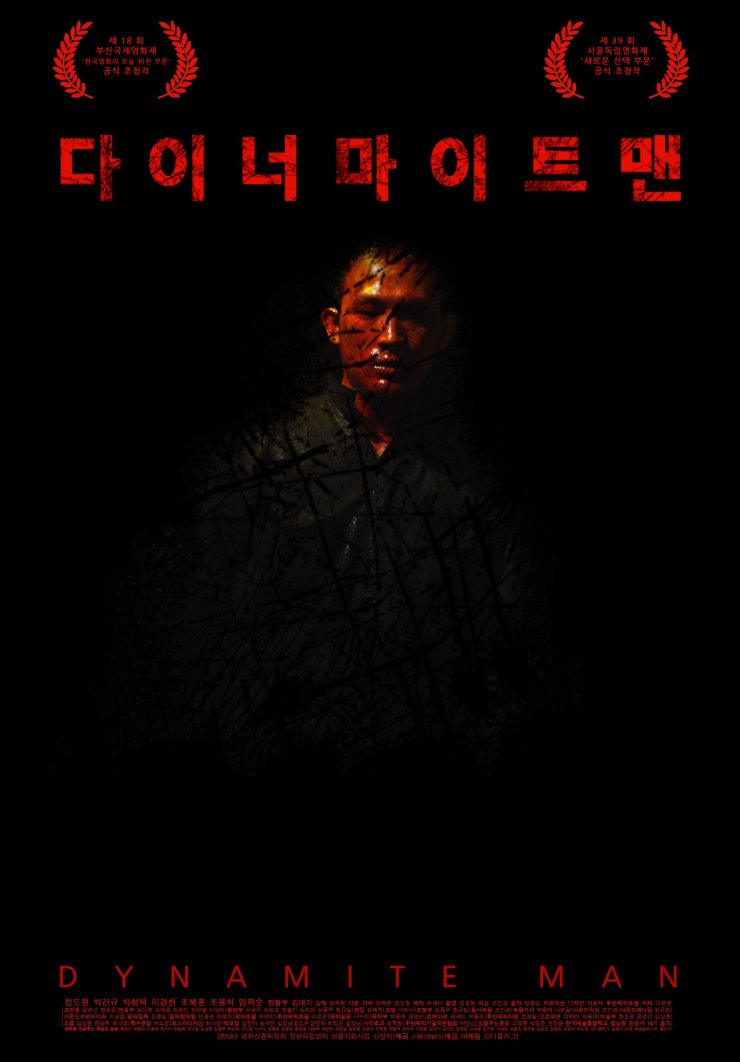
Dynamite Man (다이너마이트맨)

Dynamite Man (다이너마이트맨) – ★☆☆☆☆

Dynamite Man (다이너마이트맨)

Dynamite Man (다이너마이트맨)

When brothers Jeok-san (Jeong Do-won (정도원) and Heuk-san (Park Geon-gyu (박건규) are caught betraying the mob, the gangsters seek bloody retribution. After beating the brothers to a pulp, the bloodthirsty enforcers decide to gouge out Heuk-san’s eyes before setting him on fire. What the gangsters don’t count on however, is older brother Jeok-san’s insatiable desire for revenge. Stealing an inordinate amount of dynamite Jeok-san targets everyone within the mob, saving those immediately responsible for his brother’s death for last.

Dynamite Man (다이너마이트맨)

Dynamite Man is a noir-esque tale

A title such as Dynamite Man (다이너마이트맨) conjures images of an entertaining grindhouse B-movie, a chance to exploit some of the more silly genre excesses in a fun, postmodern fashion. Unfortunately however, Dynamite Man is simply an awful, awful film. The revenge thriller is a woefully dull and plodding affair, bizarrely not even fulfilling the basic criteria of the genre by offering inventive scenes of violent catharsis. This is particularly odd given that Jeok-san’s modus operandi is to tie dynamite to the body of his target – begging the questions how, where and why he obtained it – yet rarely is it set off, depriving the audience of even that small spectacle. It is difficult to blame director  Jeong Hyuk-won (정혁원) for such an issue considering Dynamite Man clearly has an ultra-low budget, yet that being the case perhaps an alternative choice would have been more suitable as scenes of revenge are far from satisfactory, while the terrible characterisation make it extremely difficult to care either way.

Jeok-san consults his priest...for an incredibly inordinate amount of time

Jeok-san consults his priest…for an incredibly inordinate amount of time

What are in abundance however are talking heads scenes that go on for excruciating length. One such scene involves Jeok-san talking with his priest for over 20 minutes. With no change in camera shot. Worse still, the dialogue is appalling and laughably cliched. The conversation includes a ridiculously elementary discussion on the ‘light’ and ‘dark’ within a person’s soul as well as childhood memories, one of which involving swimming at a beach, that reduces Jeok-san – the cold-hard serial killer – to tears. Amazingly such sleep-inducing techniques are again employed when Jeok-san visits his brother in the hospital – again for over 20 minutes – as they discuss, amongst other things, their pet puppy. Luckily a few different camera shots are involved during those particular scenes, but the technical prowess is a serious issue throughout the entirety of the film.

The one area of Dynamite Man that is well-crafted are the flashback sequences. Shot in black and white, these scenes contain by far the most competently constructed shots within the film, while their insertion within the story at random junctures is on the right track. Yet even with the flashbacks, unfortunately there is no escaping how amateurish and lackluster Dynamite Man is.

Jeok-san the dynamite man spends time with his dying brother

Jeok-san the dynamite man spends time with his dying brother

Verdict:

A title such as Dynamite Man conjures images of a fun grindhouse B-movie. However the reality is a far cry from such hopes as the film is an utterly woeful attempt at a revenge thriller, one that is not only excruciatingly dull but also technically quite amateurish. While novice director Jeong Hyuk-won does well in constructing flashback sequences, taken as a whole Dynamite Man is a sleep-inducing film and one to be avoided.

★☆☆☆☆

Busan International Film Festival (제18회 부산국제영화제) Festival News Korean Festivals 2013 Reviews
Cold Eyes (감시자들)

Cold Eyes (감시자들) – ★★★★☆

Cold Eyes (감시자들)

Cold Eyes (감시자들)

A slick and pulse-pounding thriller, Cold Eyes (감시자들) is a consistently engaging cat-and-mouse cop drama by co-directors Jo Eui-seok (조의석) and Kim Byeong-seo (김병서). Gaining an impressive 5.5+ million admissions during its run, Cold Eyes has remade the 2007 Hong Kong thriller Eye in the Sky in a distinctly Korean fashion, eschewing the hard boiled noir in favour of highly polished Seoul landscapes and state of the art technology.

The strengths of the film lie in the kinetic sequences and exhilarating pacing, as well as the performances by the lead actors who have been wonderfully cast-against-type. Cold Eyes is not without flaws however, largely involving fleshing out the supporting cast and a third act that isn’t quite sure how to resolve everything. Yet such issues are easy to overlook when a genre film such as this is so engaging and enjoyable, and is quite the thrill ride throughout.

Rookie Yoon-jo must learn to observe and recall everything on a mission

Rookie Yoon-joo must learn to observe and recall everything on a mission

Trained in the skills of surveillance and endowed with an incredible photographic memory, rookie Yoon-joo (Han Hyo-joo (한효주) works hard to join an elite government agency under the watchful eyes of Chief Hwang (Seol Kyeong-gu (설경구). Yoon-joo’s arrival is timely, as a group of expert criminals have been stealing from notably high profile targets, constantly getting away without leaving a shred of evidence. Yet during their latest crime a small but significant clue has been discovered. Joining Chief Hwang’s unit, recruit Yoon-joo – now code-named ‘piglet’ – must put her skills to the test and follow the trail of breadcrumbs to the mastermind behind the operations, the cold and calculating ‘Shadow’ (Jeong Woo-seong (정우성).

Immediately upon opening, Cold Eyes establishes itself as a cool and slick thriller. The futuristic metallic surfaces of the subway and high rise commerce zone in Seoul are highly impressive as Yoon-joo follows her target, turning the capital into a character in itself. The sequence is also exemplary in the construction of Yoon-joo as a rookie surveillance operative, as she works hard to notice and remember every minute detail no matter how insignificant, yet still makes enough mistakes to be believable and sympathetic. Not content with such a compelling opening, directors Jo and Kim follow it up shortly after with an engaging bank heist by uber-criminal Shadow. Clearly the co-directors have been influenced by the Joker’s bank job in The Dark Knight, and while Cold Eyes never reaches those heights, it is still thoroughly entertaining. The manner in which the criminals orchestrate their robberies is also quite thrilling, as Shadow watches from the rooftops to ensure a clean getaway while his henchmen busy themselves with the mission at hand, allowing for a duel perspective on events as well as providing even more polished cinematography of the Seoul skyline.

The Shadow observes his meticulous plans in action from the rooftops of Seoul

The Shadow observes his meticulous plans in action from the rooftops of Seoul

Another great strength of the film is undoubtedly the A-list cast who have been brilliantly cast against type. This is acutely the case for Han Hyo-joo who has been consistently cast as the love interest in several mediocre melodramas. In Cold Eyes the actress shines as an intelligent, skilled, and powerful operative, and it is a genuine delight to see a woman occupying such a role in a Korean film. Han Hyo-joo’s famed attractiveness is refreshingly never focused upon throughout the film with attention instead bestowed on her prowess, and the actress clearly relishes the role. Meanwhile Sol Kyeong-gu also excels as disheveled mentor Chief Hwang. Sol initially portrays the team leader with a commanding stoicism and intellectual fortitude, yet as story progresses it is primarily due to him that comedy enters the film thanks to his eccentricities. Naming every member of his team rather unflattering animal code-names is genuinely funny – particularly when designating their rotund target ‘thirsty hippo’ – yet such unorthodox methods are also crucial as he carves and maneuvers animal chess pieces on missions. As the ruthless and manipulative ‘Shadow’, Jeong Woo-seong is great. Typically cast as a romantic lead and/or inherently ‘good’, Jeong is surprisingly adept at playing the role of a cold-hearted villain with a penchant for murdering with a fountain pen. While he has the least to do of the three performers, every scene he is in is constantly engrossing and it’s a tribute to the actor that more screen time is desired.

For much of the running time Cold Eyes is an incredibly engaging cat-and-mouse thriller, and the entertainment derived from both sides attempting to outsmart each other is consistently high. Yet there are moments, most notably in the final act, that somewhat undermine all the great character work with silly coincidences in the attempt to tie up the story neatly. This is quite a shame considering what came before. Cold Eyes also fall into the trap of having too many underdeveloped secondary characters, with the belated attempts to flesh them out falling short. That said, the speedy pace of the film combined with the compelling story means that such concerns are never dwelt upon for long, with the open ended nature of the finale guaranteed to raise a smile.

Chief Hwang and Yoon-jo must piece together clues before the Shadow disappears

Chief Hwang and Yoon-jo must piece together clues before the Shadow disappears

Verdict:

Cold Eyes is a slick and riveting thriller from co-directors Jo Eui-seok and Kim Byeong-seo. A remake of hard boiled Hong Kong noir Eye in the Sky, Cold Eyes is a quite different film due to the focus on a seemingly futuristic Seoul and state of the art technology. The A-list cast, who have all been superbly cast against type, excel in their roles, particularly Han Hyo-joo as a highly intelligent and skilled rookie operative. With a highly engaging story and rapid pacing the film is consistently entertaining and, while some silly coincidences and over-abundance of secondary characters detract somewhat, Cold Eyes is a wonderfully compelling cat-and-mouse thrill-ride.

★★★★☆

Busan International Film Festival (제18회 부산국제영화제) Festival News Korean Festivals 2013 Reviews