The POSCO furnaces are a hellish landscape exemplifying human kind's desire to create their own divinity

A Dream Of Iron (철의 꿈) – ★★★★☆

A Dream Of Iron (철의 꿈)

A Dream Of Iron (철의 꿈)

When his partner decides to end to their relationship in order to become a Buddhist monk, director Kelvin Kyung Kun Park is devastated. Unable to understand her desire to reject contemporary civilisation in search of spiritual enlightenment, director Park decides to search for something tangible and godly to win her back. Yet in his quest to do so the director begins to explore Korea’s recent history, and becomes aware of human kind’s complex relationship with what is considered holy.

A Dream Of Iron (철의 꿈)

The composition is consistently stunning

A Dream of Iron is a gorgeously shot, beautifully sincere documentary. Director Park fully displays his history as an artist with some truly majestic cinematography that rarely fails to leave mouths agape, and is a stunning testament to human kind’s unbridled ambition and search for the divine. Premiering at the 2014 Berlinale and awarded the NETPAC Prize (alongside fellow Korean documentary, Non-Fiction Diary), A Dream of Iron has been turning heads internationally for it’s sensitivity and depth in attempting to find God in modernity.

Director Park elegantly combines imagery from different periods of Korean history in exploring how spiritualism has evolved. Early Koreans worshipped whales as heralds of the divine, and their grace and mysterious grandeur are artfully captured throughout the film. Such scenes are contrasted with Buddhist ceremonies whose monks attempt to achieve enlightenment through rituals, and with the modern age in a shipbuilding steelworks. In each instance the camerawork, cinematography and use of colour are absolutely sumptuous. The gentle and tranquil blue hues of life under the ocean are juxtaposed with the burning reds and yellows of molten metal at the steelworks, eloquently articulating how humanity has exchanged heavenly creatures for a hellish landscape in the pursuit of conquering, and recreating, godliness.

Notions of divinity throughout the ages are explored leading to the age of iron

Notions of divinity throughout the ages are explored leading to the age of iron

In examining the transition, director Park employs historical footage of former dictator Park Chung-hee and his unrestrained fervour for modernity. In telling scenes the director depicts how Park systematically destroyed the old to make way for his new vision, and in one particularly effective moment cuts from a whale to a sign baring ‘HYUNDAI’, acutely conveying the exchange of deities. Rather than examining the chaebols (Korean companies) however, A Dream of Iron is focused on POSCO (Pohang Iron and Steel Company) and the history of the organisation. The old footage of steelworkers and the history of protest within Korea is a consistently fascinating viewing experience, while the religious terminology used by the corporation itself lends itself to director Park’s themes all too easily.

The music throughout A Dream of Iron is incredibly well used, particularly in the jaw-dropping aerial shots of the shipyard and the Park Chung-hee era. The sense of foreboding and darkness that is created through such sequences are powerful and provocative, particularly when contrasted with notions of the divine from prior eras. As the director explores the contrast ever further, both he and the audience gradually being to understand that his ex-partner may well have a strong case to leave after all.

The POSCO furnaces are a hellish landscape exemplifying human kind's desire to create their own divinity

The POSCO furnaces are a hellish landscape exemplifying human kind’s desire to create their own divinity

Verdict:

A Dream of Iron is a gorgeously shot documentary by director Kelvin Kyung Kun Park that explores Korea’s difficult relationship with notions of the divine. By contrasting scenes of majestic whales, Buddhist ceremonies, and hellish scenes from the POSCO steelworks, director Park has crafted an elegant and powerful examination of Korean modernity. The film’s success in achieving the NETPAC award at Berlinale is wholly justified as A Dream of Iron is a stunning testament to human nature’s unbridled ambition.

★★★★☆
Festival News Jeonju International Film Festival (제15회 전주국제영화제) Korean Festivals 2014 Reviews
Who is the mysterious new tenant?

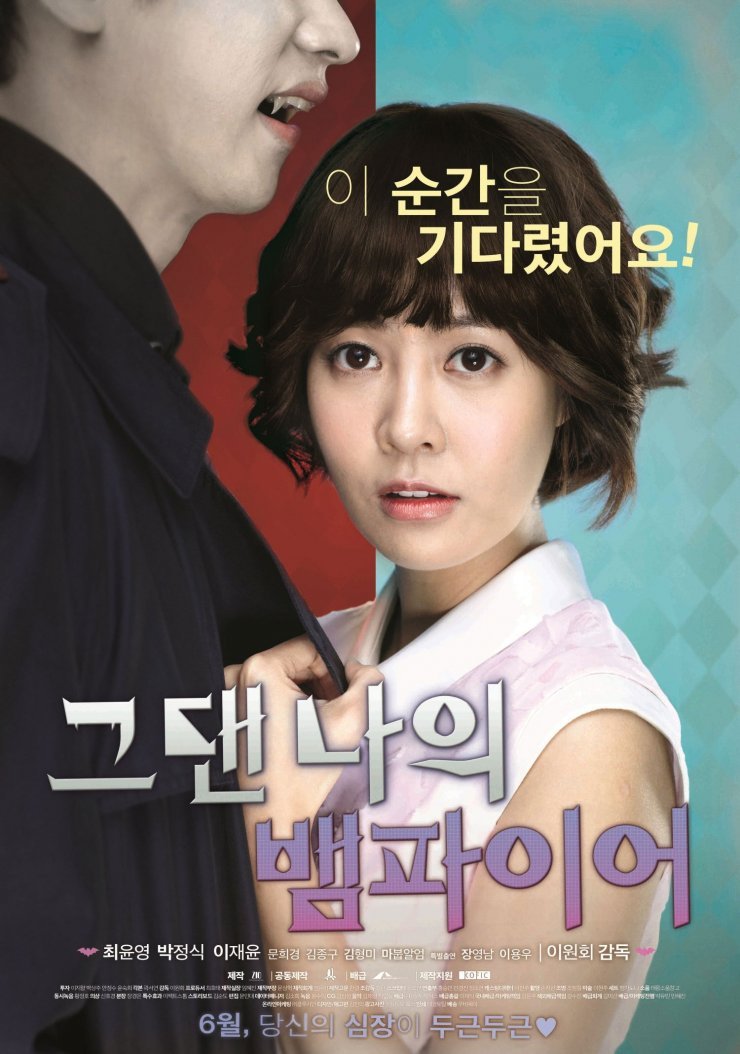
You Are My Vampire (그댄 나의 뱀파이어) – ★★☆☆☆

You Are My Vampire (그댄 나의 뱀파이어)

You Are My Vampire (그댄 나의 뱀파이어)

Struggling screenwriter Nam Gyu-jeong (Choi Yoon-yeong (최윤영) has multiple dilemmas to contend with. She has a huge crush on her best friend’s boyfriend, the local police officer; her divorced parents are both behaving mysteriously; her laptop has died and she cant afford to replace it; and a disquieting, black-clad new tenant has begun staying in her father’s building. As Gyu-jeong begins researching for her next project involving a vampiric protagonist, she becomes convinced that the enigmatic stranger known as Gang Nam-girl (Park Jeong-sik (박정식) is also a bloodsucker due to his aversion to sunlight and distaste for garlic…or he could be just plain weird. As Gyu-jeong seeks the truth about Nam-girl and the assortment of people in her life, the comical situations that arise help her to discover the path of love is often far from smooth.

Who is the mysterious new tenant?

Who is the mysterious new tenant?

You Are My Vampire (그댄 나의 뱀파이어) is a quirky romantic comedy that is unfortunately lacking in both areas. The comedic scenes that emerge throughout the course of the film are entertaining enough to be smile inducing – for example the mystery man’s name is Gang Nam-girl (Gangnam girl) – yet rarely offers more, while the burgeoning romance between Gyu-jeong and her ‘vampire’ is forced to the point of being contrived. The reason for this ultimately belongs to array of supporting characters who number far too many, and director Lee Won-hoi’s (이원회) desire to give each of them a narrative arc forces You Are My Vampire into a film comprised of a series of vignettes rather than a compelling whole with a strong emotional core. The rom-com does display hints of the madcap narrative devices that made How to Use Guys With Secret Tips such a thrill, but unfortunately they never extend into something provoking the same kind of enjoyment.

Gyu-jeong wears quirky clothes while selling side dishes to get Nam-girl's attention and discover his secrets

Gyu-jeong wears quirky clothes while selling side dishes to get Nam-girl’s attention and discover his secrets

While the comedy tends to prompt titters rather than laughs, You Are My Vampire also offers some stimulating social issues through the supporting cast. Gyu-jeong’s parents are divorced yet remain friends, and the jokes that arise between the three of them are refreshing compared to traditional Korean rom-com fare. Similarly Gyu-jeong’s crush on her best friend’s boyfriend and the resulting dilemmas are conveyed without the pretense and melodrama inherent in other stories, while Nam-girl’s sad history and the storyline involving Bangladeshi friend Mabub are welcome. However, Mabub is also the victim of a racially offensive joke regarding his armpit odor, which is uncalled for and very disappointing. As the comedy gently continues, You Are My Vampire falls into the trap that often blights Korean rom-coms by incorporating a heavy dose of melodrama to force narrative closure. It’s an unnecessary addition, but luckily director Lee quickly moves focus back to the central couple and their unconventional attraction to each other.

WIth all the mysteries going on, can Gyu-jeong and Nam-girl get it together?

WIth all the mysteries going on, can Gyu-jeong and Nam-girl get it together?

You Are My Vampire (그댄 나의 뱀파이어) attempts to capitalise on contemporary culture’s fascination with supernatural love stories, by offering a decidedly quirky rom-com between a struggling screenwriter and man who displays all the hallmarks of vampirism. Director Lee Won-hoi (이원회) employs quite gentle comedy throughout that provokes sniggers rather than laughs, while the over-abundant supporting cast force the film into a series of vignettes rather than a compelling whole. While the approach to social issues is refreshing, the contrivances and lack of strong emotional core make the rom-com a mildly entertaining experience.

★★☆☆☆

Festival News Jeonju International Film Festival (제15회 전주국제영화제) Korean Festivals 2014 Reviews
Sookhee (숙희)

Sookhee (숙희) – ★★☆☆☆

Sookhee (숙희)

Sookhee (숙희)

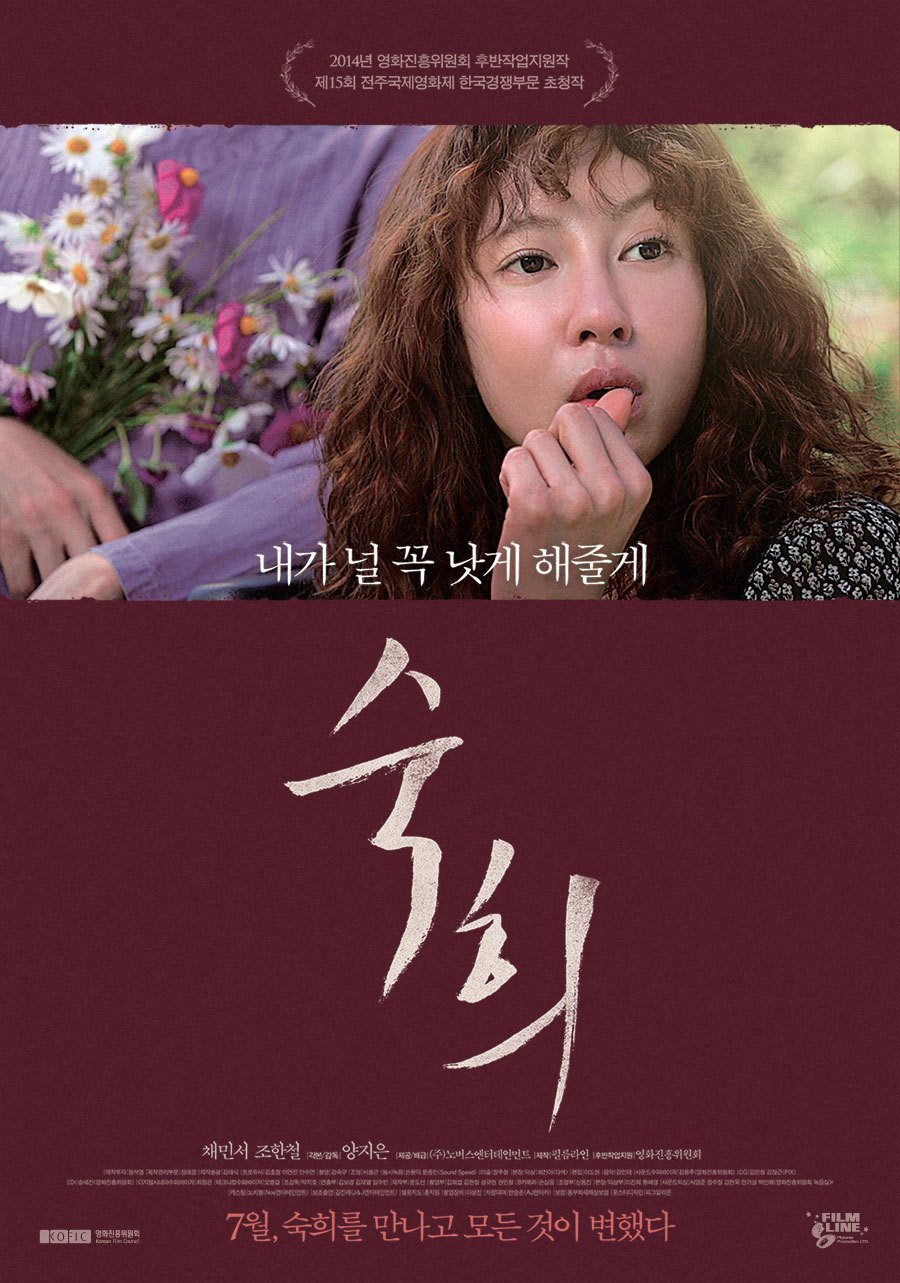
When highly-conservative philosophy professor Yoon (Jo Han-cheol (조한철) suffers a stroke due to overwork and stress, his wife does the best she can to nurse him back to health. Yet when she cannot cope any longer, she enlists the help of quirky caregiver Sookhee (Chae Min-seo (채민서), whose patients all seem to remarkably recover. Sookhee, however, is more than she seems and her techniques vary from kind and sweet to threatening and sexual.

Sookhee (숙희)

Sookhee is a free spirit

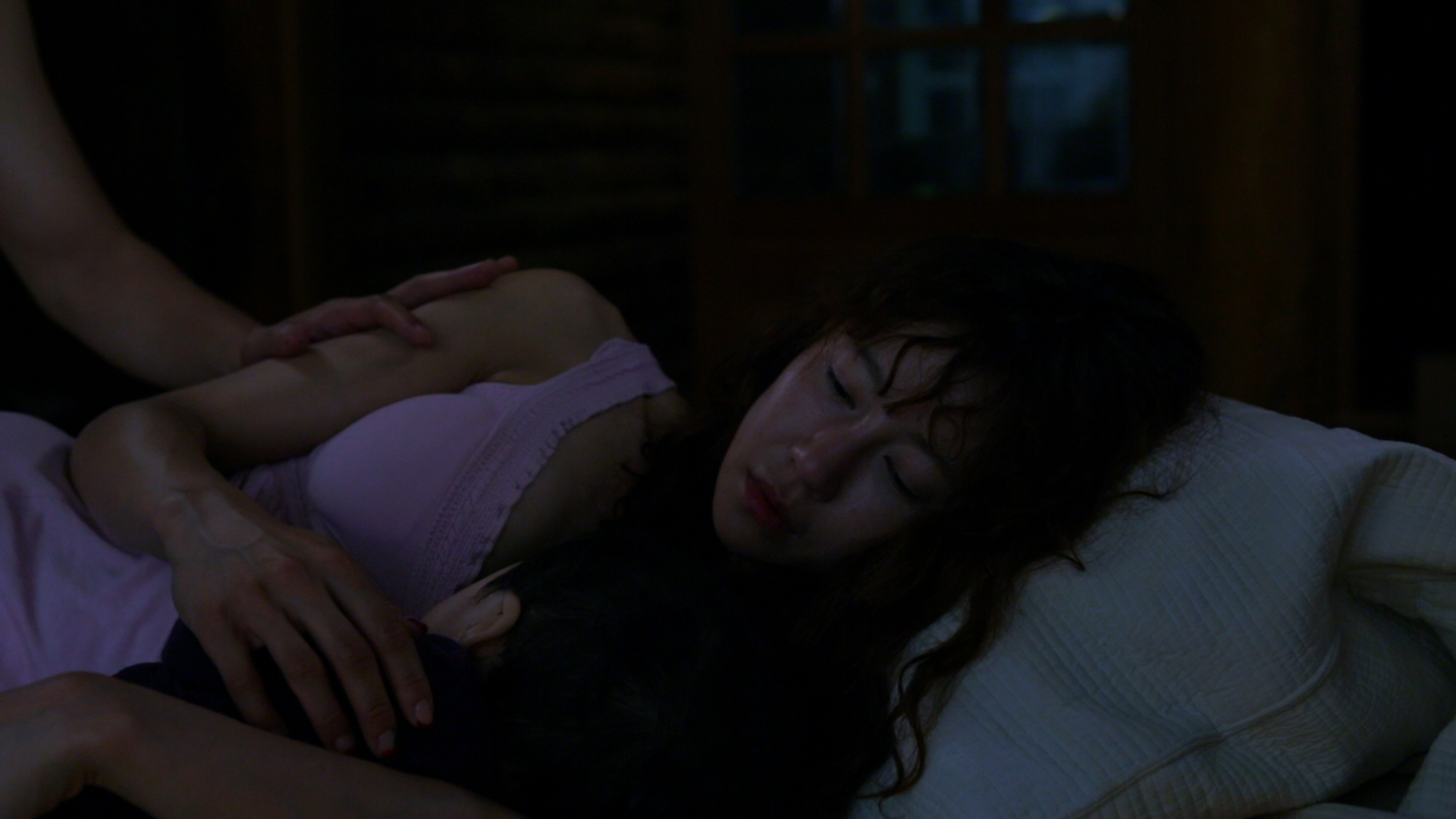
Imagine Mary Poppins as a sexually charged sociopath who take care of conservative, misogynistic stroke sufferers. That is quite possibly the most apt description of Sookhee (숙희), a bizarre film with a huge identity crisis and a large undercurrent of meanness. The mish-mash of an array of generic conventions, as well as Sookhee’s constantly schizophrenic characterisation, make the story an incredibly surreal experience. Writer/director Yang Ji-eun (양지은) doesn’t appear to be sure what kind of film she wants to helm, as the narrative – and characters – veer in all directions without really exploring any. Ironically this is both compelling as well as frustrating, as the odd machinations consistently surprise. Yet beneath all the bizarre goings-on is an ordinate amount of unwarranted, appalling misogyny. Masculine fantasies frequently arise and typically instigate violence. Throughout the film Sookhee is routinely beaten and sexually assaulted by the men in her life adding an acutely nasty dimension to an otherwise jovial film, which is all the more surprising given that director Yang is one of the few female filmmakers presenting her work at JIFF 2014. Sookhee perpetuates the archaic ideology that free-spirited women need to be tamed and dominated by violence and sex.

Sookhee is the victim of an inordinate amount of misogyny

Sookhee is the victim of an inordinate amount of misogyny

What director Yang does well lies in her use of colour. Scenes featuring Sookhee are beautifully vibrant and sumptuous, often featured in the countryside far from the realm of men, conveying her liberation from patriarchy alongside pagan, or wiccan, sensibilities. Professor Yoon, in contrast, is located within an absence of colour. The washed-out palette wonderfully conveys his conservatism and strict adherence to the rules of men, bolstered by the repetition of academic and religious iconography. As Sookhee enters Yoon’s world and ‘educates’ him through her odd mix of fear and sexual liberation, his world gradually becomes more colourful as he heals. Yet therein also lies problems, as Yoon’s trajectory is more of a vapid devolution than one of enlightenment. Director Yang is attempting to explore Oedipal issues and gender roles through Sookhee’s maternal and Yoon’s infantile roles, and by reversing old-fashioned patriarchal positions of power and sex. However the message is lost beneath the deluge of oddities and mean-spirited misogyny, alongside the unintentionally humourous overacting.

Sookhee's former patients seek to 'tame' her through sexual violence

Sookhee’s former patients seek to ‘tame’ her through sexual violence

Verdict:

Sookhee is a peculiar film about a free-spirited caregiver who helps stroke sufferers through a bizarre mix of fear and sex. The tone and themes within the surreal film spiral wildly throughout, creating a huge identity crisis from beginning to end while the undercurrent of needless misogyny casts a dark shadow over proceedings. Writer/director Yang Ji-eun does well in employing colour to convey the sensibilities of the two central protagonists, yet the messages regarding reversal of patriarchal relationship and sexual roles are subsumed beneath utter oddity and meanness.

★★☆☆☆

Festival News Jeonju International Film Festival (제15회 전주국제영화제) Korean Festivals 2014 Reviews
In an iconic scene, Sang-goo begins protesting in central Seoul

Another Promise (또 하나의 약속) – ★★★☆☆

Another Family (또 하나의 약속)

Another Promise (또 하나의 약속)

Another Promise (AKA Another Family) (또 하나의 약속) arrived in Korean cinemas in February on a wave of controversy. Based on the true story of a young woman who contracted leukemia while working at a Samsung semiconductor plant, and her father’s subsequent battle to bring the chaebol (conglomerate) to justice, the film was mired in difficulties before it even began. With production companies refusing to fund the film writer/director Kim Tae-yoon (김태윤) turned to crowdfunding, and the resulting flood of private donations helped Another Promise to become the first film in Korean cinematic history to be fully fund in this manner. Furthermore, popular actors including Park Cheol-min and Kim Gyoo-ri offered to appear in the film for free which helped to generate even greater public interest.

Premiering at the 2013 Busan International Film Festival to favourable reviews, Another Promise received global attention for challenging the most powerful company in Korea, prompting an article from The Guardian which went viral amongst Korean film enthusiasts. Later, when the film was finally granted a nationwide release, Another Promise was again the victim of controversy when it became widely reported that Megabox and Lotte Cinema, two of Korea’s biggest cinema chains, were accused of suppressing the number of screens on which the film was to be played. Despite huge public interest and advance ticket sales, The Hankyoreh reported that Megabox reduced the number of screens from 15 to 3 two days before release (which subsequently changed after public outcry), while Yonhap News stated Lotte Cinema allocated a measly 21 out of 99 theaters to showing the film and that most screenings occurred during early morning or late at night. Yet despite being being shown on a paltry 192 screens throughout February (in contrast, Miss Granny had 1024), Another Promise was the 8th biggest film of the month which is a remarkable achievement indeed. Yet controversy aside, is Another Promise any good?

Taxi driver Sang-goo teams with labor rights worker Nan-joo to take on the conglomerate

Taxi driver Sang-goo teams with labor rights worker Nan-joo to take on the conglomerate

Taxi driver Sang-goo (Park Cheol-min (박철민) is thrilled when his daughter Yoon-mi (Park Hee-jeong (박희정) is offered a job at the Jinsung semiconductor plant. As one of the leading companies in Korea, to be a worker at Jinsung is considered a great boon particularly for a humble family. Yet when Yoon-mi returns home months later extremely ill her worried family take her to hospital, where she is diagnosed with leukemia. As representatives from Jinsung arrive demanding paperwork to be signed and using money as bribes, Sang-goo is determined to discover the cause of his daughter’s disease. Teaming up with labor rights worker Nan-joo (Kim Gyoo-ri (김규리), the duo track down other sick workers and informants in a desperate attempt to finally bring the conglomerate to justice.

Another Promise is a film that very much wears its heart on its sleeve, which is both a blessing and a curse. As it is based on a true story, Another Promise is of course a highly emotional film that undoubtedly resonates strongly, particularly with Korean audiences. However director Kim’s decision to employ melodrama at almost every opportunity undermines the strength of the film’s message, which is a great shame. The most powerful scenes are also the most understated, in which the shocking abuses of power and the traumatized expressions of victims are allowed to speak for themselves, effectively conveying the full strength of the story. Yet far too often melodramatic devices are utilised, and over-simplified caricatures of ‘the perfect family’ and ‘the villain’ are expressed, which tends to make the film feel contrived while the direction and camerawork are competent yet akin to a TV film, also serving to weaken the importance of the story. That said, when scenes are done well they are utterly compelling and poignant, rarely failing to be tear-inducing.

In an iconic scene, Sang-goo begins protesting in central Seoul

In an iconic scene, Sang-goo begins protesting in central Seoul

Holding the film together is veteran actor Park Cheol-min, who arguably gives a career-best performance as the bereaved father. Park has a tendency to overact and has often been typecast in goofy supporting roles due to this, yet he carries Another Promise on his shoulders extremely well. He occasionally slips into his old habits early in the film yet he hits his stride shortly after, providing a remarkably restrained and emotionally charged performance. His speeches are particularly effective as he solemnly fights for justice, and Park’s sincerity continually forces the film to be compelling.

Unfortunately the same cannot be said for the supporting cast who are generally given quite meager roles. Kim Gyoo-ri is surprisingly given sparse screen time as labor rights worker Nan-joo, particularly given her status, although she competently fills the role with the little she’s been given. Other supporting actors fare less well as they tend to serve the purpose of siding with either party, with attempts to expand their backstories proving rather unengaging as there are so many of them it’s impossible to form emotional connections with them all.

Sang-goo gives compelling speeches about the importance of justice and accountability

Sang-goo gives compelling speeches about the importance of justice and accountability

Another Promise (AKA Another Family) (또 하나의 약속) is an important landmark in Korean cinematic history as the first fully crowdfunded film, and it’s clear writer/director Kim Tae-yoon had no choice but to do so given the subject matter. Based on the true story of a girl who contracted leukemia by working at a Samsung plant and her father’s fight for justice, the film has been mired in controversy from the beginning. The result is a highly emotionally charged drama that is often tear-inducing, yet the addition of melodramatic contrivances tends to undermine the film’s message. Yet thanks to a career best performance by Park Cheol-min, Another Promise is a consistently compelling film.

★★★☆☆

Reviews
Director Hong's father always seemed to be on a journey, even in death

My Father’s Emails (아버지의 이메일) – ★★★☆☆

My Father's Emails (아버지의 이메일)

My Father’s Emails (아버지의 이메일)

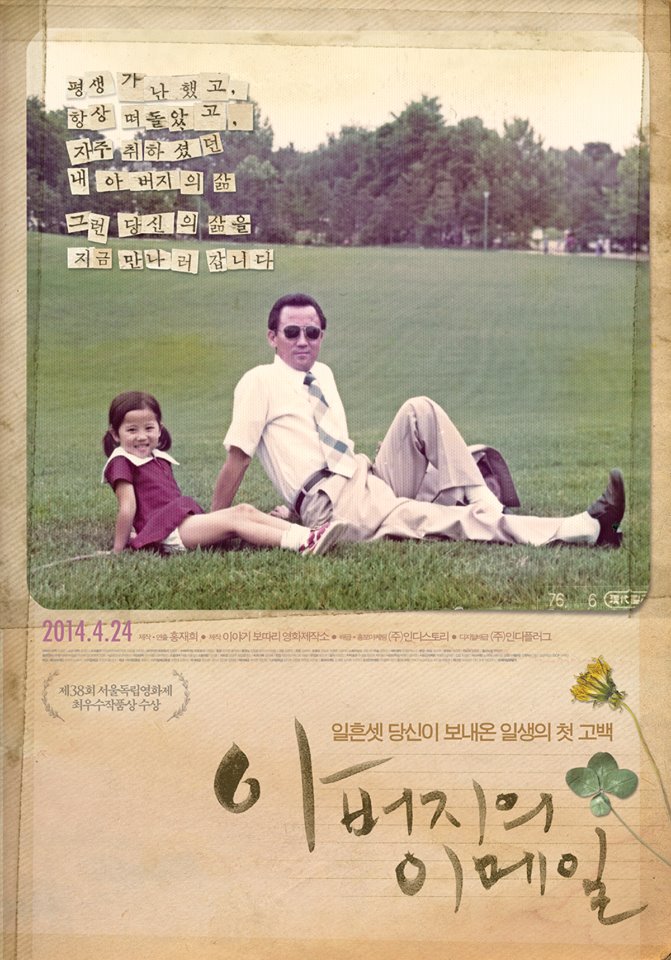
My Father’s Emails (아버지의 이메일) is a lovingly told documentary with an incredible premise. Following her estranged father’s death, director Hong Jae-hee (홍재희) finally decides to read the 43 emails he had sent shortly before he passed away. Initially director Hong had ignored the emails; after years experiencing her father’s alcoholism and domestic abuse, there was little reason to open them. Yet the emails were intriguing, not only as her father was a far cry from being technologically competent but also as she was the only family member to receive them. The contents of the emails were of enormous surprise for the director as her previously reclusive father had written an autobiography of sorts, articulating startling events that forged him into the man she knew.

Fascinated about the father she once despised, director Hong begins exploring his past and his decisions so inherently tied to Korean history. Yet in her quest to understand she is also forced to confront the family trauma that still proves extremely raw for her mother and siblings.

Director Hong's father often worked abroad in a bid to achieve his dreams

Director Hong’s father often worked abroad in a bid to achieve his dreams

One of the great strengths of My Father’s Emails lies in the way director Hong’s father made his life choices in conjunction with pivotal events in recent Korean history. In portraying his formative years and the national issues that influenced him, the documentary therefore becomes not only a personal and intimate portrait of a man struggling to find his way in the world but also takes on an historical significance. Hong combines her startling realisations from the emails about a man she barely knew with interviews of those close to him, old photographs, and occasional reconstructions, all of which bring her father’s journey vividly to life. His arduous migration from North Korea as a penniless teenager through to the successes and failures of his business ventures both domestic and abroad paint a fascinating portrait of the era, and the soul-destroying difficulties endured by those attempting to create a better life. Indeed, there is such a wealth of intriguing information regarding this period that the incredibly fast pace Hong employs to such scenes is puzzling and a tad frustrating. Events are rapidly introduced before moving on to the next, and a slower pace with greater depth would have made the connection with her father – and Korean history – much stronger.

Director Hong does however slow things down when exploring the family trauma left in her father’s wake. The frank interviews with her long-suffering mother as they discuss his alcoholism and domestic abuse is moving and intimate, while the anger displayed by Hong’s siblings clearly articulate the legacy he constructed due to his addiction. Yet what makes these scenes so interesting is that Hong continues to probe for answers as to the cause of her father’s depression and behaviour, refusing to simply judge and desperate to finally understand the man whom she had previously hated for most of her life. It’s a powerful message, and one that Hong captures with sincerity.

Director Hong's father always seemed to be on a journey, even in death

Director Hong’s father always seemed to be on a journey, even in death

My Father’s Emails (아버지의 이메일) is an intimate documentary with a fascinating premise. In exploring the 43 emails sent by her father after his death, director Hong Jae-hee (홍재희) attempts to understand her estranged parental figure. The film is a great examination not only of her father but of recent Korean history, to which his decisions, successes and failures were so inherently tied to, and which in turn formed the basis for tragic family trauma. While it has pacing issues and is somewhat of a documentary of two halves, My Father’s Emails is a moving and sincere account of Hong’s desire to better understand a man she barely knew.

★★★☆☆

Reviews
Yong-ju and Gi-woong contemplate their lives atop Night Flight

Night Flight (야간비행) – ★★★★☆

Night Flight (야간비행)

Night Flight (야간비행)

Premiering to high praise at the 2014 Berlinale, director Lee Song Hee-il’s (이송희일) insightful and thought-provoking drama Night Flight (야간비행) continues to build upon themes explored in his previous work. Homosexuality in contemporary Korea and the resultant alienation are joined by explorations of the country’s notoriously harsh education system as well as social injustice, making the coming-of-age film arguably the director’s most fully formed work to date. With Night Flight, director Lee Song is rapidly cementing his position as Korea’s most prominent and influential queer filmmaker.

Like most teenagers in Korea, high school students and best friends Yong-ju (Kwak Si-yang (곽시양) and Gi-taek (Choi Jun-ha (최준하)  struggle with an overwhelming amount of study and the pressure to attend a top university. Yet the duo’s lives are further complicated as Gi-taek is relentlessly bullied and beaten by the school’s ‘elite’ while Yong-ju, raised by his single-parent mother, is gay and unable to express his sexuality for fear of repercussions. Yong-ju has long harbored a crush on violent head-bully and low-level gangster Gi-woong (Lee Jae-joon (이재준) since middle school, who also attempts to cope with an extremely troubled life. When Yong-ju decides to make a pass at Go-woong, events are then set in motion that forces them all into a powerful confrontation.

Yong-ju harbors a secret crush on fellow student Gi-woong

Yong-ju harbors a secret crush on fellow student Gi-woong

Director Lee Song Hee-il’s films are always absorbing explorations of the alienation gay men experience within contemporary Korea, and Night Flight certainly doesn’t disappoint. Within the film director Lee Song has focused on an area he has previous only briefly touched upon in his short Suddenly, Last Summer – the fraught experiences of gay teenagers. Night Flight is made up of a collection of real life stories the director has acquired over a number of years from the media and word of mouth, and it’s to his credit that they are collated into a convincing, compelling whole. Yet what sets Night Flight apart from director Lee Song’s prior films is that while homosexuality is a central theme it is not the sole focus of the story. A great number of social issues that Korean teenagers experience, including the enormous pressures of the education system, single-parent families, the class divide, and social injustice all feature within the narrative and are insightfully explored throughout. By featuring issues found in other acclaimed teenage indie dramas such as Pluto and Bleak Night, director Lee Song naturalises homosexuality as another facet of identity that youths struggle with as opposed to a constant sense of ‘otherness’, which is a welcome change indeed.

Night Flight is also yet another showcase for director Lee Song’s incredible vision for landscapes and composition. The cinematography is quite striking throughout the film, with the decrepit and poverty stricken environments portrayed with a great sense of foreboding, of a society crumbling under its own archaic issues. The fences and bars that appear throughout the district, so often wonderfully foregrounded, imply the prison within which these long-suffering teens occupy and are unable to escape.

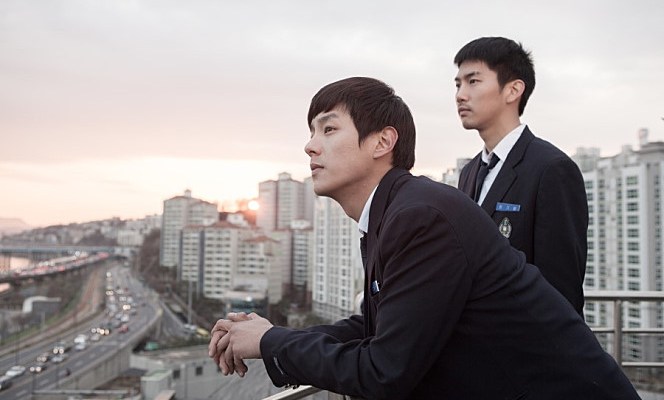
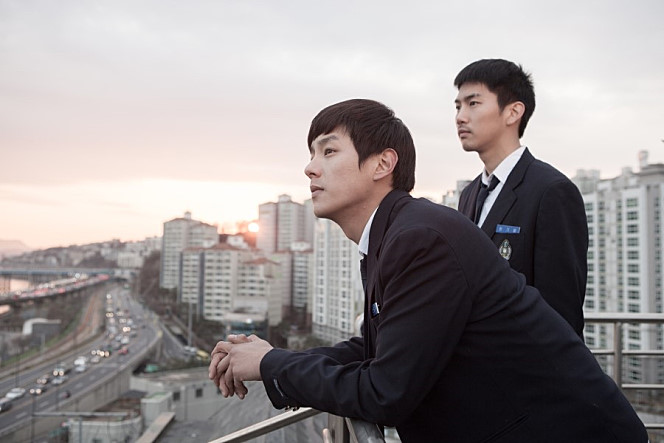
Yong-ju and Gi-woong contemplate their lives atop Night Flight

Yong-ju and Gi-woong contemplate their lives atop Night Flight

Yet the film is not all grim landscapes as director Lee Song allows his characters occasional reprieves in the form of glorious sunsets, particularly atop former gay hotspot bar ‘Night Flight.’ This private arena, situated at the top of a dilapidated building, not only provides a great metaphorical resonance of escapism from the confines of a rigid society but also allows the troubled teens freedom of expression, with the conversations containing penetrating insight into the issues confronting them.

Night Flight is also an interesting variation for director Lee Song as not all of the principal characters are gay. Central protagonist Yong-ju is the only distinct homosexual voice with the film, while his friend Gi-taek exposes the bullying within Korean culture and ambiguous love interest Gi-woong personifies social injustice. All the cast give competent performances in their roles, although their rather obvious older-than-high school ages tends to be a distraction. As the narrative caters for a variety of perceptions and experiences that effect Korean teenagers Night Flight eloquently fits within the canon of provocative films about Korean youth. While the story is a little over-ambitious in attempting to contain so many social issues, Night Flight is well constructed and many of the disparate problems that feature are seen through to their respective conclusions.

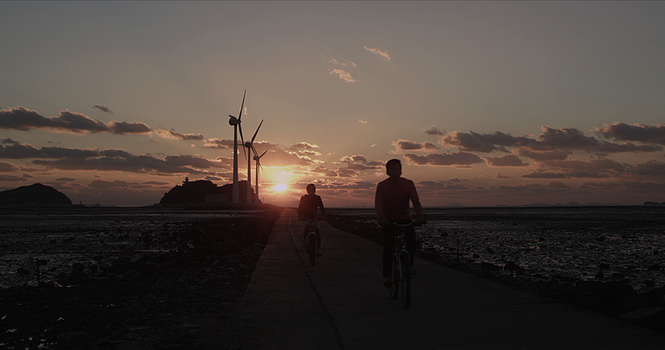
The troubled teenagers dream of escape from the confines of a crumbling society

The troubled teenagers dream of escape from the confines of a crumbling society

Night Flight is an insightful and provocative teenage drama by Korea’s most notable queer filmmaker, director Lee Song Hee-il. In exploring homosexual themes of alienation in conjunction with an array of other youth and social issues such as education and the class system, director Lee Song has crafted a powerful coming of age story of identity and the desire for escape. Night Flight is a welcome addition to not only queer but also youth film, and is arguably the director’s most fully formed film to date.

★★★★☆
Jeonju International Film Festival (제15회 전주국제영화제) Korean Festivals 2014 Reviews
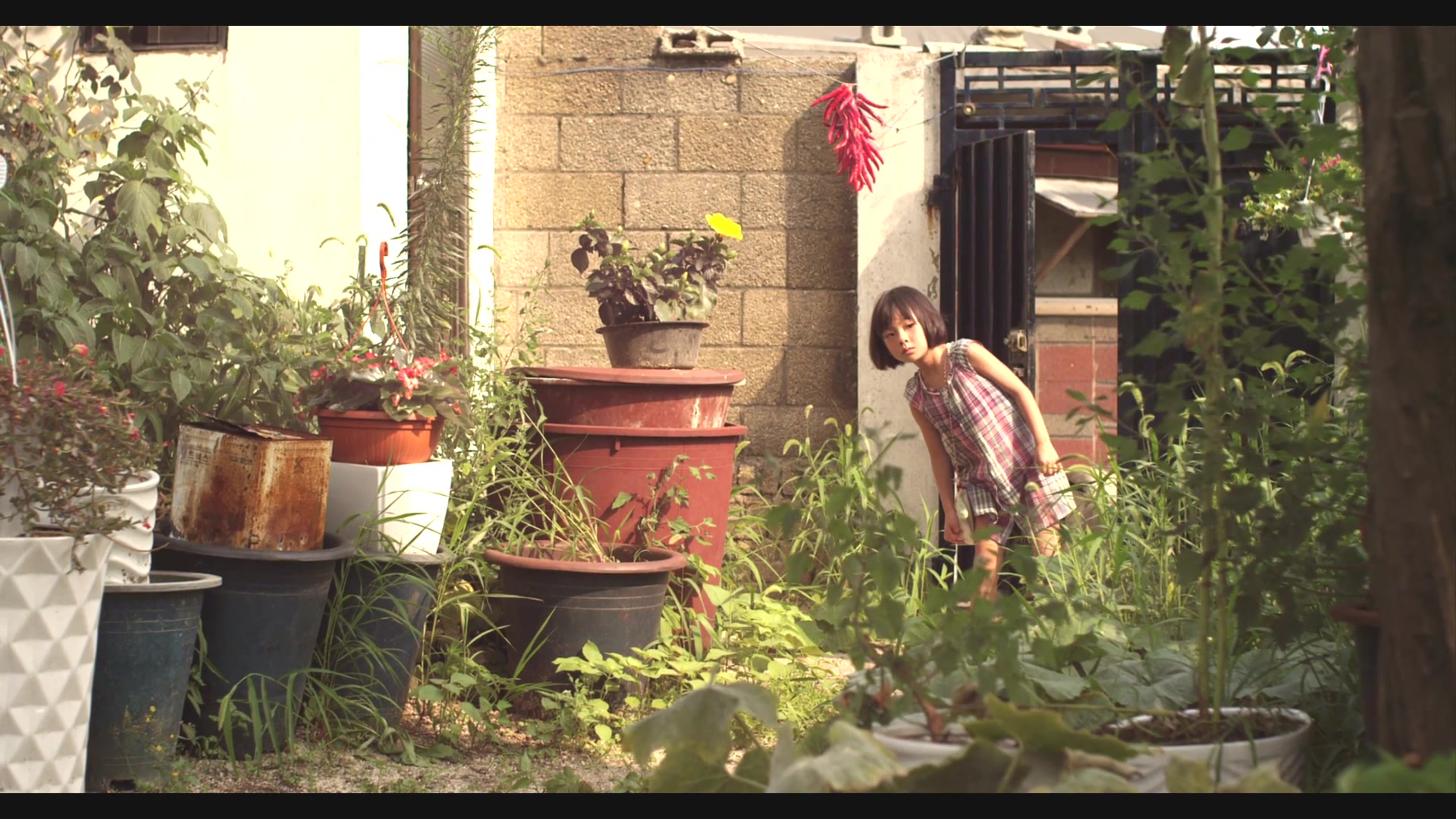
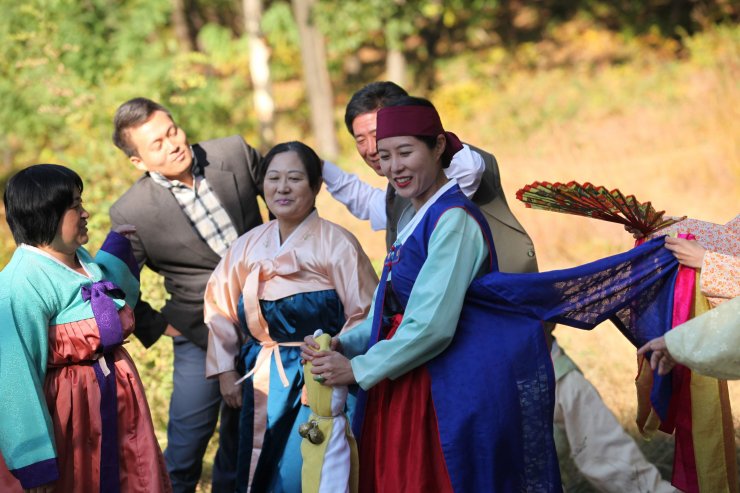
Bory's expedition takes her through new and exciting landscapes

Sprout (콩나물) – ★★★★☆
Sprout (콩나물)

Sprout (콩나물)

Wonderfully charismatic and beautifully told, writer/director Yoon Ga-eun’s (유가은) short film Sprout (콩나물) is a lovely tale of childhood innocence and discovery. The film has proven to be a hit on the festival circuit, receiving the Crystal Bear for Best Short Film in Berlinale’s Generation Kplus competition in 2014, following a premiere in Busan a year earlier.

As a family gathers to prepare for an ancestral rites ceremony, the women in the family work hard to make enough food for all the members attending. Yet when the mother of the household realises she forgot to buy beansprouts, she becomes worried that the family – particularly the nit-picking uncle – will judge her for not preparing for the ceremony correctly. Taking it upon herself to fix the situation, youngster Bory (Kim Soo-an (김수안) collects her savings and sets out for market alone, encountering a world of new discoveries and experiences in her quest for the all-important beansprouts.

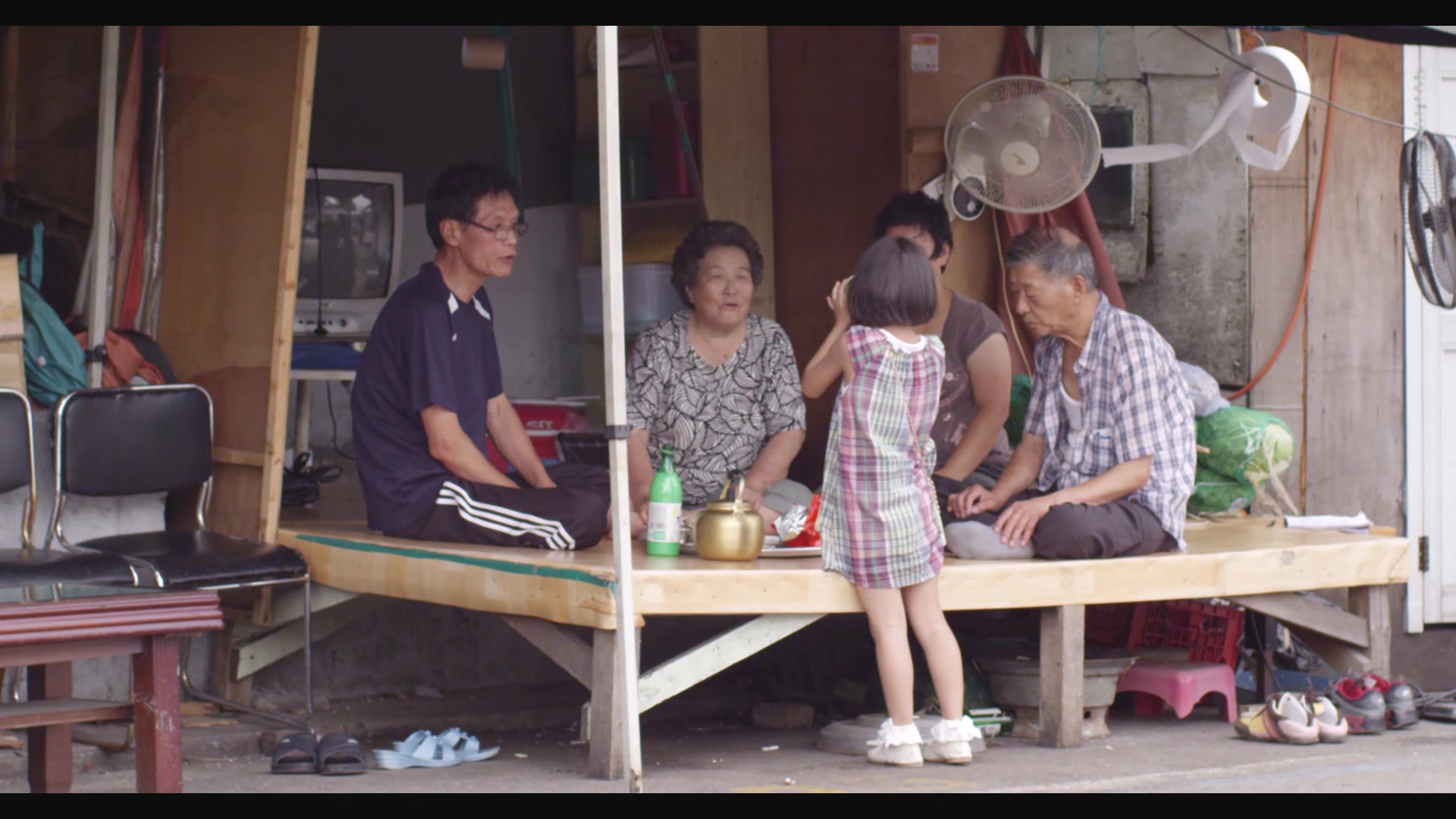
Sprout is a deceptively simple and delightful story, and one that is full of the kind of wonder only a child can experience. Director Yoon captures Bory’s tale and range of emotions masterfully as the youngster traverses the exciting-yet-scary landscape in her attempt to find beansprouts and end her mother’s suffering. In a sense the short film embodies the format of classic Greek myths with Bory as a young contemporary Ulysses on a crusade of her own, encountering challenges she must overcome to fulfill her expedition.

Bory meets a group of elderly residents that cause her to lose track of her quest

Bory meets a group of elderly residents that cause her to lose track of her quest

Moments when the tenacious youngster confronts obstacles in her path, meets strangers, and attempts to sneak past a frightening labrador contain a childlike epic sensibility and are constantly endearing and heartwarming, while Bory’s resourcefulness and determination never fail to inspire joy at witnessing her development.

Young actress Kim Soo-an is simply marvelous as Bory. It’s a tall order asking such a young child to carry an entire twenty minute film yet she does so with beguiling ease, performing an astonishing array of emotion during the short running time. As she encounters new experiences, confrontations and develops problem solving skills Kim Soo-an displays sincere curiosity and wonder throughout, conveying a charm beyond her years.

If criticism must be applied to Sprout, it is in the execution of the finale. After organically building Bory’s wonderful tale of exciting new experiences, director Yoon seems to be at a lose for how to end the story naturally. That is not to say the conclusion is bad as it still retains the charm embodied throughout the short film, yet it is an ending that would have benefited from an extra few minutes to conclude Bory’s story with more consistency.

Bory's expedition takes her through new and exciting landscapes

Bory’s expedition takes her through new and exciting landscapes

Sprout is a lovely and endearing tale of youthful innocence. Writer/director Yoon Ga-eun has crafted a very charming and deceptively simple story of a girl on a quest through her neighbourhood for beansprouts, with the new experiences she encounters constantly heartwarming. Young actress Kim Soo-an is marvelous as Bory, displaying sincerity throughout the twenty minutes running time with performance beyond her years, carrying the film with aplomb. In short, Sprout is a lovely, beautifully told story of discovery.

★★★★☆

Reviews
Young Kim Geum-hwa is visited by a plethora of gods on her path

Manshin: Ten Thousand Spirits (만신) – ★★★★☆

Manshin: Ten Thousand Spirits (만신)

Manshin: Ten Thousand Spirits (만신)

Manshin: Ten Thousand Spirits (만신) had the distinction of being the opening film for the 2013 DMZ Documentary Film Festival, and deservedly so. Director Park Chan-kyong’s (박찬경) film not only provides an autobiographical account of renowned shaman – and intangible cultural asset – Kim Keum-hwa, but also explores her life and times in conjunction with an incredibly tumultuous period of (recent) Korean history.

The result is a fascinating look at key components of Korean history and culture through the endurance of Kim Keum-hwa and her dedication to traditional shamanism. By delving into her past and reenacting key moments, issues ranging from the evolving state of feminism, the relationship between North and South Koreas, and the Park Chung-hee era all combine into a  portrait of a woman and a country who have held on to tradition despite the odds.

Kim Geum-hwa endured an awful childhood in North Korea before embracing shamanism

Kim Keum-hwa endured an awful childhood in North Korea before embracing shamanism

Director Park Chan-kyong has previously expressed his interest in shamanism through his excellent short film Night Fishing, yet with Manshin he examines the cultural form in a much more profound fashion. One of the great strengths of the film lies in not only exploring but reenacting Kim Keum-hwa’s life. Talented actresses Kim Sae-ron, Ryoo Hyeon-kyeong and Moon So-ri all depict the shaman at different stages of her development and portray the various trials she was forced to endure with sincerity and depth. These scenes, combined with Kim Keum-hwa’s interviews and quotes from her published work, make the autobiography a palpable and moving account of a woman who has endured much throughout her life. Her marriage at 14 years old in North Korea is a harrowing story of violence and fear, while her embrace of shamanism and emigration to the south years later is one of hope and sorrow; the persecution Kim experienced in her middle-ages despite her dedication to Korean culture adds even further tragedy. Each stage of Kim Keum-hwa’s life would be enough for a novel or film in itself, yet her perseverance through so many challenging events is constantly admirable, while the poignant performances of the three lead actresses, in conjunction with Kim’s interviews via voice-over, add incredible weight to the story.

Brilliantly, in depicting Kim Keum-hwa’s life Manshin also reveals Korea’s astonishing recent history. Director Park seamlessly aligns Kim’s efforts to remain alive and strong with that of the country and culture itself, as the shaman attempts to avoid the Japanese occupation in North Korea, her departure to the south following the outbreak of civil war, and dictator Park Chung-hee’s desire to erase anything considered old or antiquated in his quest to modernise the country. Director Park emphasises Kim’s struggles as national ones, trials dedicated to the preservation of cultural materials and practices despite the odds. As such the film never takes a stance on whether shamanism is real or otherwise, instead focusing on cultural value and national identity, as well as Kim’s empowering status as an intangible cultural asset.

Young Kim Geum-hwa is visited by a plethora of gods on her path

Young Kim Keum-hwa is visited by a plethora of gods on her path

Manshin is also a very attractive documentary. Director Park Chan-kyong certainly has a keen eye for composition, with shots throughout the reenactments of the shaman’s life often akin to paintings. Furthermore symbolism is also skillfully woven within such scenes, from the connotations of finding a shoe through to the appearance of the gods themselves, that add an understated beauty and mysticism. The use of light and colour are consistently appealing and capture the vibrancy of Korean shamanism with confidence, as well as conveying the different stages of Kim’s life, her emotions, and her otherworldly abilities. The animated sequences, which serve to explain philosophies behind shamanism, are exquisite and beautifully convey the uniqueness of Korean culture, and are a genuine delight whenever they appear.

However, Manshin is an extremely ambitious documentary, so much so that the overall film suffers for it. In attempting to contain so much about Kim Keum-hwa’s life, shamanism and Korean history, the film becomes a somewhat superficial exploration, exploring key moments yet tending to gloss over further details as well as occurrences in the intervals between. Manshin often loses focus due to this, and the structure of the film generally is rather loose requiring audiences to ‘stick with it’ for certain periods before getting back on track.

Despite such criticisms, Manshin is a very rewarding documentary, and one that serves to enlighten and entertain in a myriad of ways.

Kim Geum-hwa is persecuted by Protestants during the Park Chung-hee regime

Kim Keum-hwa is persecuted by Protestants during the Park Chung-hee regime

Manshin: Ten Thousand Spirits (만신) is a very enlightening documentary about Kim Keum-hwa, Korea’s premiere shaman. Director Park Chan-kyong beautifully captures, and reenacts with three of the country’s top actresses, the key events of her life from Kim’s youth in North Korea through to her contemporary life in the south. Masterfully, director Park also depicts Kim’s life as a shaman in conjunction with the development of Korea itself and the preservation of cultural identity. While the structure is uneven and the story tends to lose focus, Manshin is a rewarding and illuminating experience.

★★★★☆

Reviews
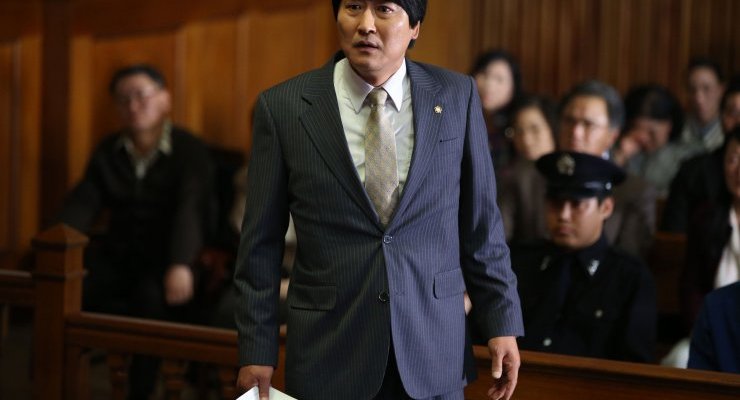
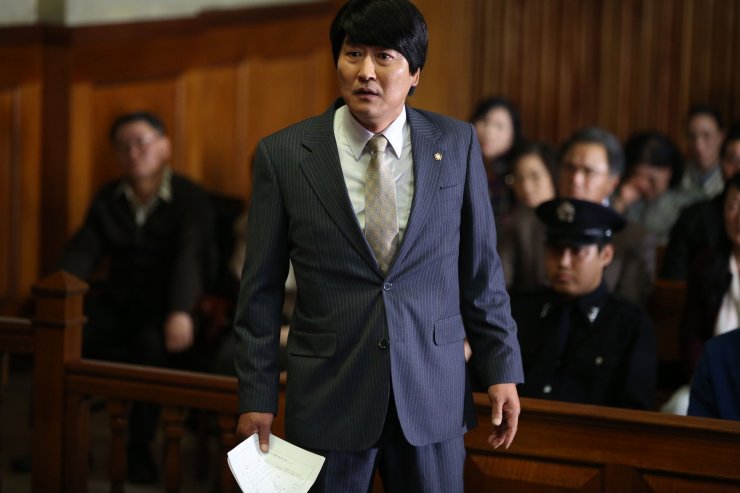
Woo-seok blasts Chun Doo-hwan's regime in an explosive court room battle

The Attorney (변호인) – ★★★★☆
The Attorney (변호인)

The Attorney (변호인)

Gathering over 11 million admissions during its cinematic run, director Yang Woo-seok’s (양우석) highly impressive courtroom drama The Attorney (변호인) has certainly struck a chord with Korean audiences. Inspired by the early years of former president Roh Moo-hyun, the film explores the anti-communist witch hunts and suppression of human rights that targeted students during dictator Chun Doo-hwan’s regime. The Attorney has clearly struck a nerve with film-goers, many of whom were alive – and victimized – during the persecutions, and with regular protests held regarding current President Park-hye’s administration the film is timely indeed.

The Attorney is an incredibly powerful film and a stunning debut for first-time writer/director Yang Woo-seok. The pacing and structure is wonderfully constructed as the underlying messages within are gradually introduced and explored through the central protagonists. The tendency to delve into melodrama is luckily side-stepped and the film is all the stronger for it, with actor Song Kang-ho providing a phenomenal performance that cannot fail to incite emotional resonance within audiences, Korean or otherwise.

Song Woo-seok is very successful is he embarks on his quest to be a top attorney

Song Woo-seok is very successful is he embarks on his quest to be a top attorney

During the early 1980s, attorney Song Woo-seok (Song Kang-ho (송강호) is continually ridiculed by his peers for only graduating high school, yet they are soon embarrassed when Song’s ambition and drive to succeed places him as one of the top lawyers in Busan. As his business is on the verge of expanding, a friend’s son is mysteriously kidnapped by the military authorities. Agreeing to take on the case at great personal risk to himself and his family, Song begins to investigate the human rights abuses perpetrated by Chun Doo-hwan’s regime, leading to an explosive courtroom battle.

The Attorney would be a great accomplishment for any filmmaker, yet as director Yang Woo-seok’s first film it is an incredible achievement. The skill with which he guides the story in no way conveys his novice status, as the pacing of the story and wonderfully fluid camerawork expertly absorbs the audience within the film. Furthermore director Yang’s subtle use of colours is continually highly effective, from the warm hues of the family homestead to the washed-out palette used for scenes of torture. The impressive technical prowess is bolstered by a very well written and extremely well paced script, one that subtly guides the audience through the issues of 1980s Korea (and more specifically, Busan) by way of the struggles of attorney Song Woo-seok. While the film is concerned with human rights abuses, such scenes are only introduced after considerable time has been spent constructing the protagonists, heightening the impact of events significantly. As such it is impossible not to invest in Song’s plight, and the approximately two hour running time simply flies by.

Woo-weok is shocked to discover Jin-woo has been tortured and vows to defend him

Woo-seok is shocked to discover Jin-woo has been tortured and vows to defend him

It is impossible to discuss The Attorney without mentioning Song Kang-ho’s electric performance. Song has a remarkable gift for making his characters likeable and relatable and as the titular lawyer, he consistently conveys a man of dignity who strives for better for himself and his family. Song infuses the role with morality and determination to succeed in conjunction with a comic humility that is ever-endearing, from the rags-to-riches story of his early years through to his successes as a top attorney in Busan. As such, his outrage at the incarceration and torture that transpires is truly palpable while his battle against the insurmountable odds is poignant and inspiring.

Song Kang-ho is also supported by a great cast including the ever-reliable Oh Dal-su – once again in a comic sidekick role – as well as Kim Yeong-ae as a humble restaurant owner. Kim’s performance in particular is incredibly moving following her son’s disappearance, restraining her desperation perfectly as to not step into the realm of melodrama. Kwak Do-won steps into his villainous role with great aplomb as the wonderfully vile as the chief anti-communist torturer. His arrogance and disdain for any who criticise Chun’s military regime makes him the perfect love-to-hate scoundrel, yet the basis on real life events grants a potency that cannot fail to instill anger.

While powerfully moving, The Attorney does have issues. Ironically while the film itself is based on Roh Moo-hyun’s life, the change of name for the lead role insinuates that censorship and freedom of expression are still under threat in contemporary Korea. The torture sequences, so expertly achieved in director Chung Ji-young’s National Security, don’t contain the same gravitas as to convey the horrors of Chun’s regime and what’s at stake in Song’s/Roh’s crusade against injustice. These are small points, yet ones that make  The Attorney just shy of greatness.

Woo-seok blasts Chun Doo-hwan's regime in an explosive court room battle

Woo-seok blasts Chun Doo-hwan’s regime in an explosive court room battle

Based on the early years of former president Roh Moo-hyun, The Attorney (변호인) is a powerful and utterly absorbing court room drama. Director Yang Woo-seok’s debut is wonderfully structured and character-centered, with the exploration of human rights abuses during the Chun Doo-hwan regime naturally emerging through the story that unfolds. Featuring a brilliant performance by Song Kang-ho as the titular lawyer, The Attorney is a timely and poignant film that cannot fail to incite emotional resonance.

★★★★☆

Reviews
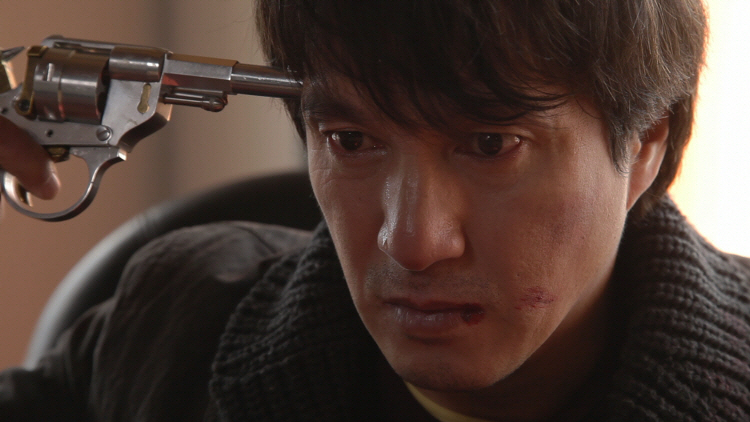
The hysterical mother severs her son's penis, sparking a chain of events

Moebius (뫼비우스) – ★★★☆☆

Moebius (뫼비우스)

Moebius (뫼비우스)

The controversy that continually surrounds director Kim Ki-duk (김기덕) ultimately stems from his consistent explorations into the nature of sexuality, and the misogynistic representations that arise through them. Director Kim is clearly aware how such explicit sexual debates generate audience interest, as with each subsequent film he seemingly seeks to outdo himself by exploring ever-darker – and for many, disturbing – areas of desire and pleasure.

Incest appears to be director Kim’s current interest as, following on from his acclaimed and award-winning Pieta, comes Moebius (뫼비우스). Featuring zero dialogue, the film is an extremely literal Freudian interpretation of sexuality within the family unit. The story is interesting but far from subtle as the Oedipus complex, female hysteria and phallus appropriation is viscerally reenacted. Ultimately Kim’s film is intriguing to watch, yet Moebius lacks the depth and finesse of his prior work.

Pushed to breaking point by her husband’s (Jo Jae-hyeon (조재현) infidelity, the mother (Lee Eun-woo (이은우) arms herself with a knife and attempts to sever his penis while he sleeps. Foiled in her attempt, the mother then decides to punish their son (Seo Yeong-joo (서영주) instead, cutting off the boy’s manhood. After the mother runs away in shame, the father and son attempt to rebuild their lives and learn to experience pleasure through pain. However when the mother returns, their lives become increasingly fraught.

The hysterical mother severs her son's penis, sparking a chain of events

The hysterical mother severs her son’s penis, sparking a chain of events

Director Kim has never been most subtle of filmmakers, yet his work often contains interesting symbolism that alludes to the depth of his characters and/or the socio-cultural issues he explores. With Moebius, however, such sensibilities take somewhat of a back seat as Freudian theories are quite literally recreated on screen. This is acutely ironic as Freud’s work is often rooted within symbolic moments of everyday life, notably in this case the Oedipus complex and castration anxiety, yet director Kim seems unconcerned with such motifs and instead directs the actors to perform the frameworks physically. The result is a mixture of intrigue and horror, as ‘the monstrous castrating mother’ fulfills the promise of her title, while the themes of incest associated with the Oedipus complex become increasingly explicit. It’s thoroughly interesting to see Freud’s theories play out, however the absurdity of it all can occasionally be cringe inducing, or worse, comical.

Father and son become close through sadism

Father and son become close through sadism

Roles with no dialogue are challenging at best, but with scenes such as the ones in Moebius it must undoubtedly be extremely arduous. Luckily all three principle actors perform convincingly. Lee Eun-woo is exceptional in her joint roles as an hysterical mother as well as a convenience store clerk. As the mother Lee Eun-woo conveys a powerful raw intensity that is simultaneously frightening yet attractive, while her vulnerability  and inner strength as the clerk is touching. Teenager Seo Yeong-joo also performs admirably as the son who experiences horrific trauma. At 15 years old the role is quite a shocking one given the explicit scenes in which he is required, yet he does very well particularly when conveying the pleasure and pain from sadist acts.

Phallic appropriation abounds as the Oedpius complex plays out

Phallic appropriation abounds as the Oedpius complex plays out

Moebius (뫼비우스) is yet another powerful and disturbing exploration of sexuality from director Kim Ki-duk. In quite literally – and explicitly – interpreting Freudian theories on screen, director Kim has crafted a very interesting film yet due to the far from unsubtle adaptation the absurdity of it all can often be cringeworthy and/or comical. Lee Eun-woo is undoubtedly the breakout star of the film as she performs with incredibly intensity throughout as the monstrous jealous mother. Moebius is not for the faint-hearted.

★★★☆☆

Reviews