For the March 2015 edition of Korean Cinema Today’s podcast series, I was very fortunate to be invited for a discussion about the Korean independent film industry by the lovely people over at KoBiz.
To listen to our conversation, in which we debate the strengths and frustrations within the indie scene as well as exciting new talent that has recently emerged, please see below.
Although working hard to achieve his dream of becoming a TV producer, Kang Ho-chan (Baek Jong-hwan (백종환) takes an intern position at a company to help alleviate his family’s difficult financial situation. With his retired father refusing to work and with mounting debts threatening to leave his family homeless, Ho-chan works diligently at the company quickly becoming well-liked, and it’s not long before he’s offered a full-time position at the government-run organisation. Struggling between choosing his dream or filial responsibility, Ho-chan makes the ultimate sacrifice yet is shocked to discover the position he was promised has been given to someone else.
Ho-chan joins the rat race, despite his dream of becoming a PD
10 Minutes (10분) is a fascinating exploration of the contemporary Korean workplace, highlighting many of the incredibly frustrating issues that employees are forced to endure in order to secure a stable livelihood. Capably helmed by director Lee Yong-seung who focuses on constructing realism with skill, it is screenwriter Kim Da-hyeon’s insightful script that is simply excellent in bringing office politics to life, drawing attention to problems both big and small in gradually building Ho-chan’s angst to a palpably tense crescendo.
While 10 Minutes begins rather slowly, the often ridiculous nature of company work is captured superbly ranging from the director’s displeasure at the quality of cakes (rather than the content of the presentation) and the conflicting tasks Ho-chan is required to undertake, through to more serious fare of lies and slander, denial of responsibility, and corruption. Yet Kim also impressively manages to balance such workplace ire with an examination of family poverty in Seoul, and the reliance on loans as a form of paradoxical debt relief. Just as tension in the office grows so to does it develop in the household, as the burden placed on Ho-chan’s shoulders as the eldest in the family to save them from destitution becomes intolerable. The narrative consistently and boldly challenges the problems young adults face as the product of patriarchal entitlement and, underscored with Ho-chan’s dilemma between following his dream or committing to the life of a salaryman, provocatively addresses the fundamental causes behind the disillusionment and frustration of contemporary youth. With 10 Minutes, Kim Da-hyeon emerges as an exciting new talent to watch.
Office politics become increasingly tense from issues both big and small
Such a well-balanced narrative would be of little consequence were it not ably performed, and in that sense 10 Minutes also does not disappoint. As Ho-chan, actor Baek Jong-hwan is particularly impressive. For much of the initial running time Beak’s stoicism belies his talent, yet as stress increasingly generates in both his professional and private life his silent internalised fury is captivating, as if a powder keg waiting to explode, and is genuinely suspenseful. Actress Lee Si-won is a joy to hate in her supporting role as Song Eun-hye, exacerbating Ho-chan’s anger with wry smiles and snide acts of kindness that are anything but. She wonderfully conveys a snarky superiority through gestures, tone and ‘aegyo’ (performance of cuteness) and, combined with her ability to manipulate the office, embodies many of things that makes Korean workplaces so difficult to navigate.
With 10 Minutes so focused on the problems created by patriarchy, it’s a great relief to say that the actors involved deftly rise to the occasion. As the director of the company Kim Jong-goo is delightfully cowardly, bowing to the whims of his superior and berating his subordinates even while aware of the truth, making his faux smiles and promises ever more frustrating. Yet it is Jeong Hee-tae as the head of the labor union who steals the show. Jeong’s turn as the friendly yet deceptive union leader is brilliant and a real highlight of the film, perfectly encapsulating the issues of entitlement and selfishness so often ascribed to middle aged men.
Ho-chan’s fury at his situation leads him down a lonely path
Verdict:
10 Minutes is an impressive indie film exploring the frustrations involved in the contemporary Korean workplace. Director Lee Yeong-song helms the events well, yet it is Kim Da-hyeon’s insightful script that steals the spotlight and presents her as a talent to watch. With penetrative awareness of office culture, family dynamics and disillusioned youth, 10 Minutes is a refreshingly frank and timely drama.
In 1953, Gongju City is in the process of rebuilding following the devastating war. Resting for lunch with his fellow workers, Sam-gwan (Ha Jeong-woo (하정우) is ridiculed for his status as a bachelor. Yet upon seeing beautiful Ok-ran (Ha Ji-won (하지원) he becomes instantly smitten and determined to marry her and, after acquiring money through selling his blood and striking a deal with her father, Sam-gwan and Ok-ran are wed. 11 years later, the couple live in relative harmony with their three sons, until a rumour spreads through the village that their eldest boy Il-rak (Nam Da-reum (남다름) actually belongs to Ok-ran’s ex-suitor. As the household is thrown into turmoil by the news, Sam-gwan again finds himself selling blood as the family are forced to redefine their relationships.
Sam-gwan falls for the most beautiful girl in the village, Ok-ran
Based on Yu Hua’s 1995 novel, Chronicle of a Blood Merchant is Ha Jeong-woo’s second attempt at writing and directing duties following Fasten Your Seatbelt and, while generally competently helmed and produced, the comedy-drama features truly abysmal and outrageous sexual politics, plot holes galore, and an intensely dislikable ‘hero’ in the form of Ha’s Sam-gwan.
The premise of Blood Merchant is centered around raising an illegitimate child, and the narrative consistently attempts and fails to generate comedy from the situation. After hearing the rumours regarding eldest son Il-rak’s parentage, Sam-gwan confronts his wife demanding answers and as Ok-ran reluctantly explains how an ex-suitor forced himself upon her, the film has the gall to focus on Sam-gwan’s suffering as a man who didn’t marry a virgin as well as raise a boy biologically not his own. The narrative intends to generate humour by inferring Sam-gwan is a victim of humiliation rather than focusing on Ok-ran’s suffering from the legacy of sexual assault, a strategy which is completely appalling particularly as a source of entertainment. The fact that Sam-gwan then spends the rest of the film punishing Ok-ran for being raped by sulking as well as virtually disowning Il-rak makes the character particularly despicable and impossible to empathise with. It’s a creative decision from which Blood Merchant never recovers and, following on from Sam-gwan’s almost literal ‘purchase’ of Ok-ran in the first act, the comedy-drama is anything but enlightened.
Sam-gwan and eldest boy Il-rak attempt to redefine their relationship
Things change in the finale however as Blood Merchant opts for the oft-used cliche of poor health in order to bring the family together once more. As both writer and director Ha works hard to generate sentiment though the use of melodramatic conventions which work well, yet as Sam-gwan has behaved so dreadfully leading up to the resolution it is especially difficult to invest in his journey, let alone consider him the hero and saviour of the family. Furthermore the gaps in logic are particularly puzzling, for if any man were to undertake the tasks Sam-gwan does, death would be an absolute certainty.
In terms of star power, both Ha Jeong-woo and Ha Ji-won perform capably. Unfortunately they lack any sort of onscreen chemistry and the narrative doesn’t really create opportunities for it to arise, yet individually they do well despite the lack of characterisation. Their presence in Blood Merchant should guarantee that the film will be a greater success than Fasten Your Seatbelt, though ironically the film isn’t really theirs but young actor Nam Da-reum’s. Nam is the heart and soul of the film and it’s his performance as eldest son Il-rak that makes Blood Merchant watchable and entertaining.
The sale of blood helps the family through tough times
Verdict:
Chronicle of a Blood Merchant is Ha Jeong-woo’s second foray as writer/director, and while he competently helms the comedy drama the shameful sexual politics within the film results in an intensely dislikable lead protagonist. It’s an issue from which the comedy-drama never recovers despite the inclusion of traditional melodramatic conventions in the final act, yet luckily the film is made watchable through the performance of young actor Nam Da-reum.
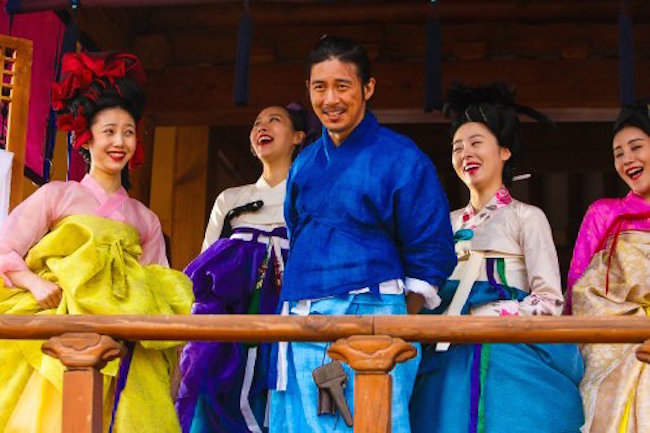
Three years have passed since the death of the king, and with the mourning period now officially over the new monarch (Yoo Yeon-seok (유연석) commissions a special new dragon robe from royal tailor Jo Dol-seok (Han Seok-Kyu (한석규). Having crafted royal attire for 30 years, commoner Dol-seok is on the verge of becoming a nobleman, the reward for a lifetime of service. Yet the abrupt arrival of new and highly sought after tailor Gong-jin (Ko Soo (고수), with his fancy contemporary designs and custom-made fittings, place Dol-seok’s position in jeopardy. Animosity between the two arises when the queen (Park Shin-hye (박신혜) announces her need for a tailor and Gong-jin is presented with the task, however the young upstarts disregard for the Confucian rules of the time may well spell trouble.
Dol-seok has crafted royal attire for 30 years and is finally on the verge of nobility
The Royal Tailor is a vibrant and unique addition to the Korean period drama canon, one that is consistently visually stimulating and bustling with ideas yet one which is also often directionless.
Director Lee Won-seok (이원석) and cinematographer Kim Ji-young deserve praise for crafting such a distinctive and striking film. The beautiful assortments of colour that permeate scenes featuring tailory are truly gorgeous, often combining with a keen sense of symmetry that makes The Royal Tailora real treat for the eyes. The variation of such impressive colours and designs applied to hanbok also make the drama a fitting tribute to the traditional attire, revering it both as iconic as well as a symbol of cultural elegance.
One of the great strengths of The Royal Tailor, and one that makes it so entertaining, is the progressive attitude laced throughout the narrative which is often expressed through hanbok itself. Through the distinctly Korean conflict between traditionalist Dol-seok and the actions of rebellious contemporary Gong-jin, the period tale seeks to poke fun at the Confucian ideals of the era, employing fashion and feminist issues to push the boundaries of oppression. Rather controversially for a film set in such an era, director Lee provocatively conveys that strict adherence to tradition halts development even at the most basic level – a scene in which actor Ma Dong-seok parades like a peacock in his latest hanbok while his sleeves are too long to pour and consume beverages is frankly hilarious – and conveys the playfully nature in which he mocks and scrutinises the rigidity of the time.
Through colourful stylish hanbok, rebellious tailor Gong-jin pushes Confucian boundaries
Director Lee infuses The Royal Tailor with an energetic flamboyance reminiscent of his excellent prior rom-com How To Use Guys With Secret Tips, yet perhaps due to Secret Tips‘ modest returns and/or the conventions of the period film, he appears to lack the confidence to fully commit to his whimsically comedic vision here. Instead he injects his unique flair through a handful of select scenes which are hit-and-miss, as the film flits between typical genre fare and more surrealist postmodern sensibilities, resulting in a film which has something of an identity crisis. This is a quite unfortunate as director Lee is one of the more unique talents to emerge from the industry in recent years, and seeing his aesthetics restrained is a real shame.
The drama also suffers in a narrative sense due to the lack of characterisation and the absence of a strong trajectory. The protagonists, and the story, tends to meander and while the situations and debates that arise are entertaining, the film feels directionless and in need of a more defined central plot. As such the actors are under-utilised, particularly Park Shin-hye who suffers the most in this regard as there is little for her to do other than appear sad and pretty.
Yet The Royal Tailor ends with a surprisingly potent finale, one which directly challenges the very concept of history and leaves a particularly lasting impression. In forcing audiences to question the very foundations of their national and cultural identity, director Lee makes a bold statement that the past and the truth are not always the same.
In the conflict between traditional and progressive, how is history created?
Verdict:
The Royal Tailor is a unique and vibrant period drama by director Lee Won-Seok who comedically uses the fashion of the era to mock and push the oppressive boundaries of Confucian norms. While the use of colour is a visual treat and the film is infused with a handful of wonderfully whimsical scenes, The Royal Tailor is often directionless due to issues with the narrative and characterisation. Yet the drama ends on a high note that examines the concept of history and as such The Royal Tailor leaves a lasting impression.
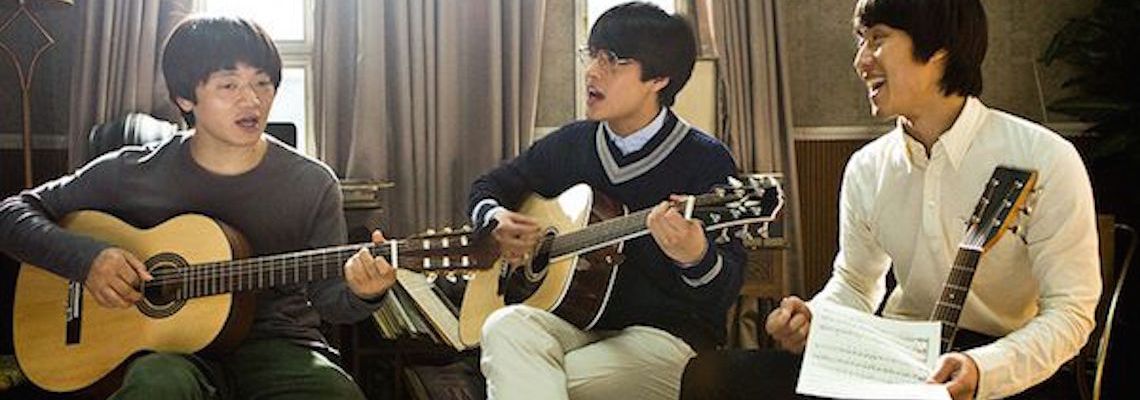
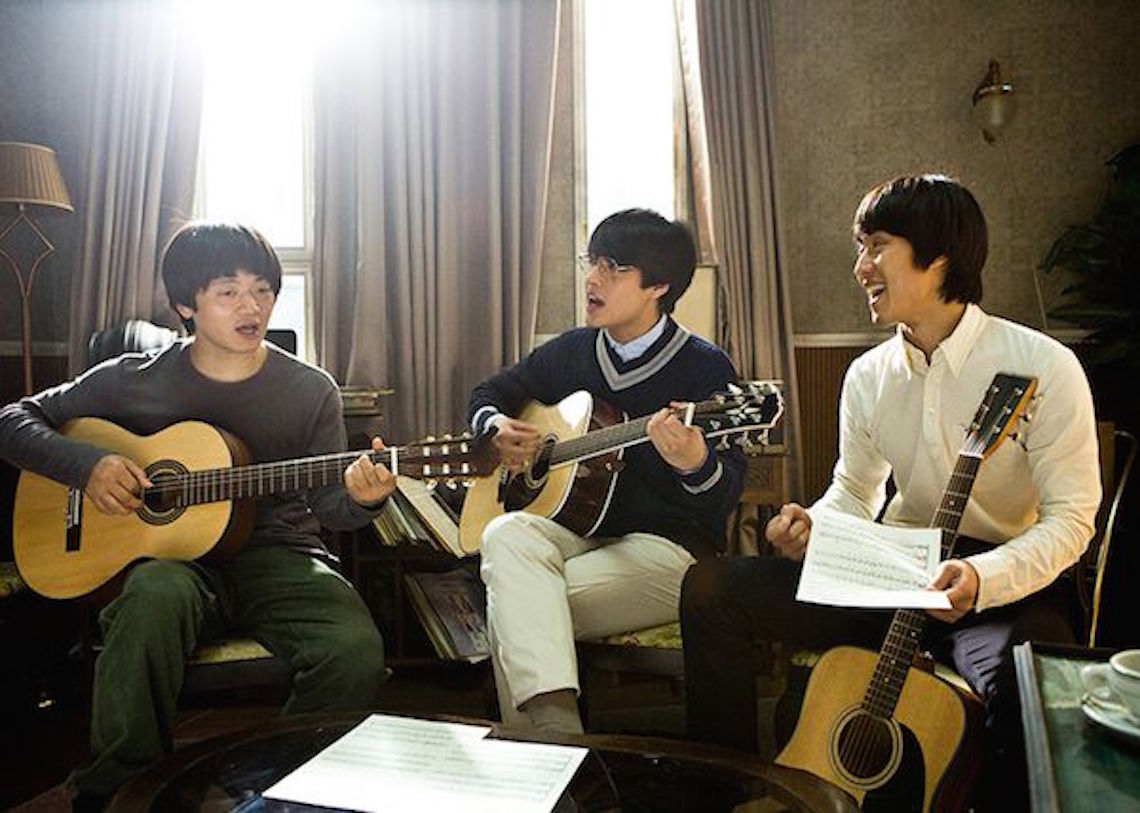
Twin Folio, the legendary ’60s duo that emerged from Seoul music cafe C’est Si Bon, is due to be the subject of a television show. Yet when music producer Lee Jang-hee, the man responsible for their creation, is quizzed about the rumour of an original third member, he begins to reminisce about the era. Back in the ’60s, C’est Si Bon was the hottest place in the city to listen to folk song competitions. With his silky voice Yun Hyeong-ju (Kang Ha-neul (강하늘) was the star of the cafe, until newcomer Song Chang-sik (Jo Bok-rae (조복래) instigates a rivalry. With their clashing egos a duo would be impossible, and as such Jang-hee (Jin Goo (진구) enlists talented country boy Oh Gun-tae (Jeong Woo (정우) to make a trio. Their inability to work together changes when beautiful aspiring actress Min Ja-yeong (Han Hyo-joo (한효주) enters the club, inspiring them to collaborate and become one of the most successful bands of the era.
The original trio learn to collaberate due to their muse Ja-yeong
C’est Si Bon is something of a love letter to the vibrant music scene of 1960s/70s Seoul, one that attempts to capture the spirit of the era through the story of the renowned cafe. Generally it succeeds, particularly in the opening act as there is much enjoyment to be had in witnessing the titular music arena being introduced, the band coming together and egos clashing. The C’est Si Bon cafe is a wonderfully charismatic and dynamic place due to some quite lovely set and costume design, helmed competently by director Kim Hyeon-Seok (김현석) who is likely hoping for the same success as his prior romantic endeavour Cyrano Agency.
Yet following an enjoyable 30 minutes, the film eschews the fun and vitality of the music scene to descend into a cliched romantic tale. As the members of the band all fall in love with Ja-yeong and attempt to out-perform each other to win her affection, the story moves away from the enjoyment of the band’s origins to become a standard rom-com. To be fair to Han Hyo-joo, she is absolutely stunning throughout and has rarely looked better, however due to the focus applied to her as the muse of so many admirers, C’est Si Bon consistently feels like a vanity project for the actress. Ironically however, as Ja-yeong tends to use and manipulate the men in her life as they constantly try to impress her, the result is an attractive but not a particularly likeable lead female protagonist which significantly lessens the romantic appeal.
Ja-yeong is the muse of seemingly everyone at music cafe C’est Si Bon
Recently in Korean cinema a greater number of films are being produced with older audiences in mind which is welcome news for diversity, and C’est Si Bon fits neatly within the paradigm. Yet the film also perpetuates the disturbing trend of romanticising Korea’s totalitarian past. Curfews, police brutality and authoritarianism, and even scenes of intimidation reminiscent of prelude to torture, feature within the narrative. However due to the romantic-comedy contrivances of the film such issues are presented as nostalgia, alarmingly either employed for humour or simply glossed over.
Things change from bad to worse for C’est Si Bon in the final act through the inclusion of scenes set in America, years after the rise and fall of the famous cafe. Apart from feeling acutely tacked on and frankly dull, the sequences are unintentionally, and quite literally, laughable. For instance, during highly emotional scenes between veteran actors Kim Hee-ae and Kim Yoon-seok are some incredibly poorly timed interludes by bad American actors that simply destroy all tension and instead generate laughter. As such, C’est Si Bon ends on a sour note, despite the initial enjoyment and promise displayed in the first act.
Years after the rise and fall of the cafe, Geun-tae performs in America
Verdict:
C’est Si Bon is a love letter to the vibrant music scene that existed in Korea in the 1960s, with a particularly enjoyable first act that introduces the styles and catchy music of the era, as well as the formation of the band Twin Folio. Yet director Kim Hyeon-seok’s film oddly eschews such promise by later descending into bland rom-com cliches and romanticising Korea’s totalitarian past, before ending with an unintentionally funny and quite poor finale.
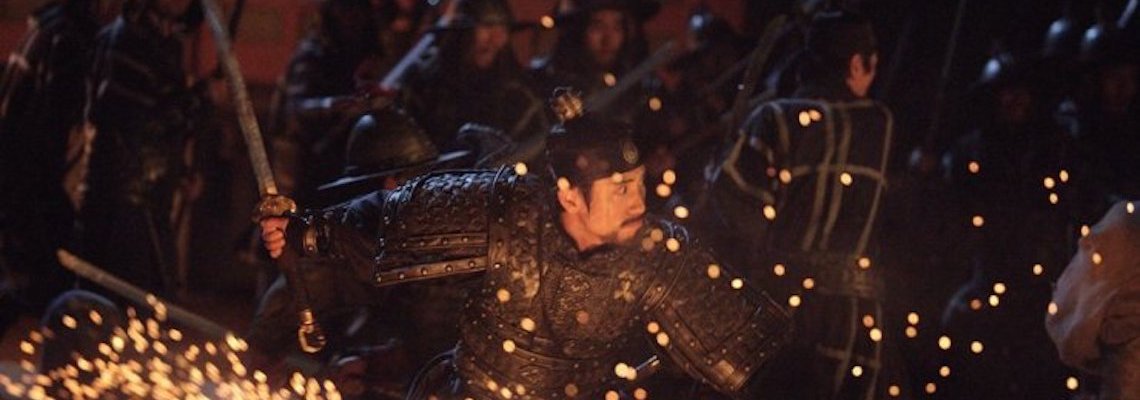
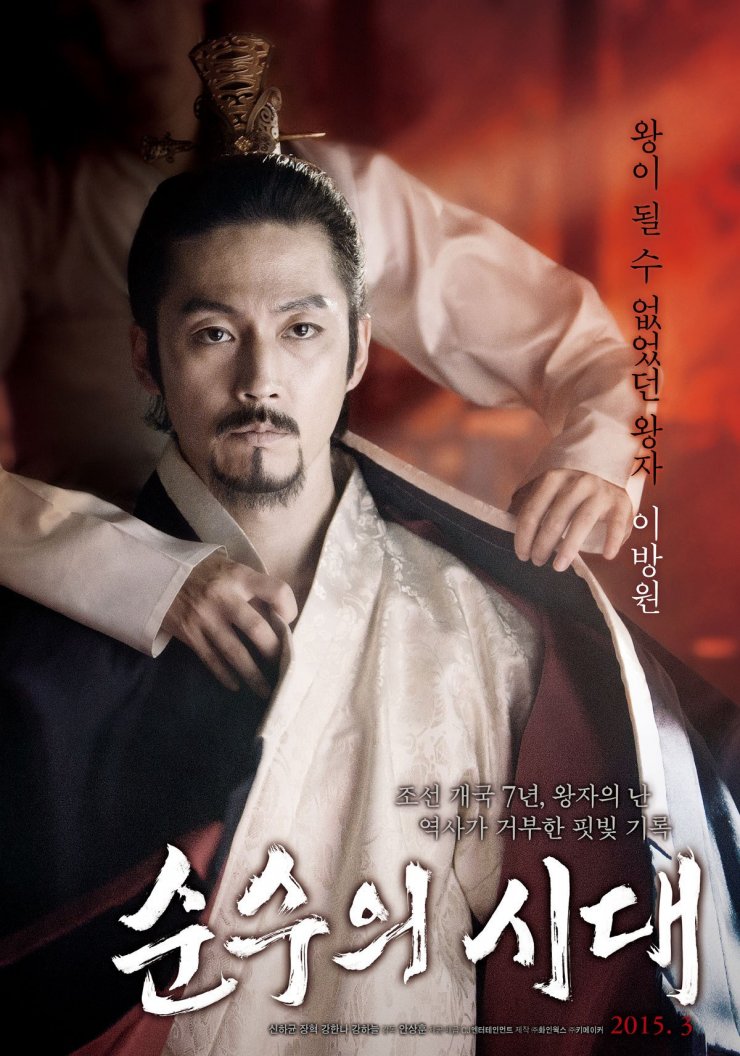
Empire of Lust (순수의 시대), the first big period epic of 2015, has unveiled a trailer featured English subtitles.
The tale takes place during 1938 as the kingdom of Koreyo gives way to the new era of Joseon, with the various royal, military and political factions all vying for power. With betrayals, revenge, and no small amount of lust all featuring, Empire of Lust looks set to be an intriguing addition to the Korean period drama canon.
Director Ahn Sang-Hoon (안상훈), who helmed thriller Blind back in 2011, appears to have evolved as a filmmaker judging by the stills released so far which is promising. Empire also features a stellar cast in the form of Shin Ha-Kyun (신하균) (Save the Green Planet), Jang Hyeok (장혁) (The Flu) and Kang Ha-neul (강하늘) (Mourning Grave) as the figures vying for power, while the female roles – and no doubt the objects of lust – are relative newcomers Kang Han-na (강한나) (No Tears For The Dead) and Sa Hee (사희) (Marbling).
Empire of Lust is due to be released in March. See below for the trailer and character posters.
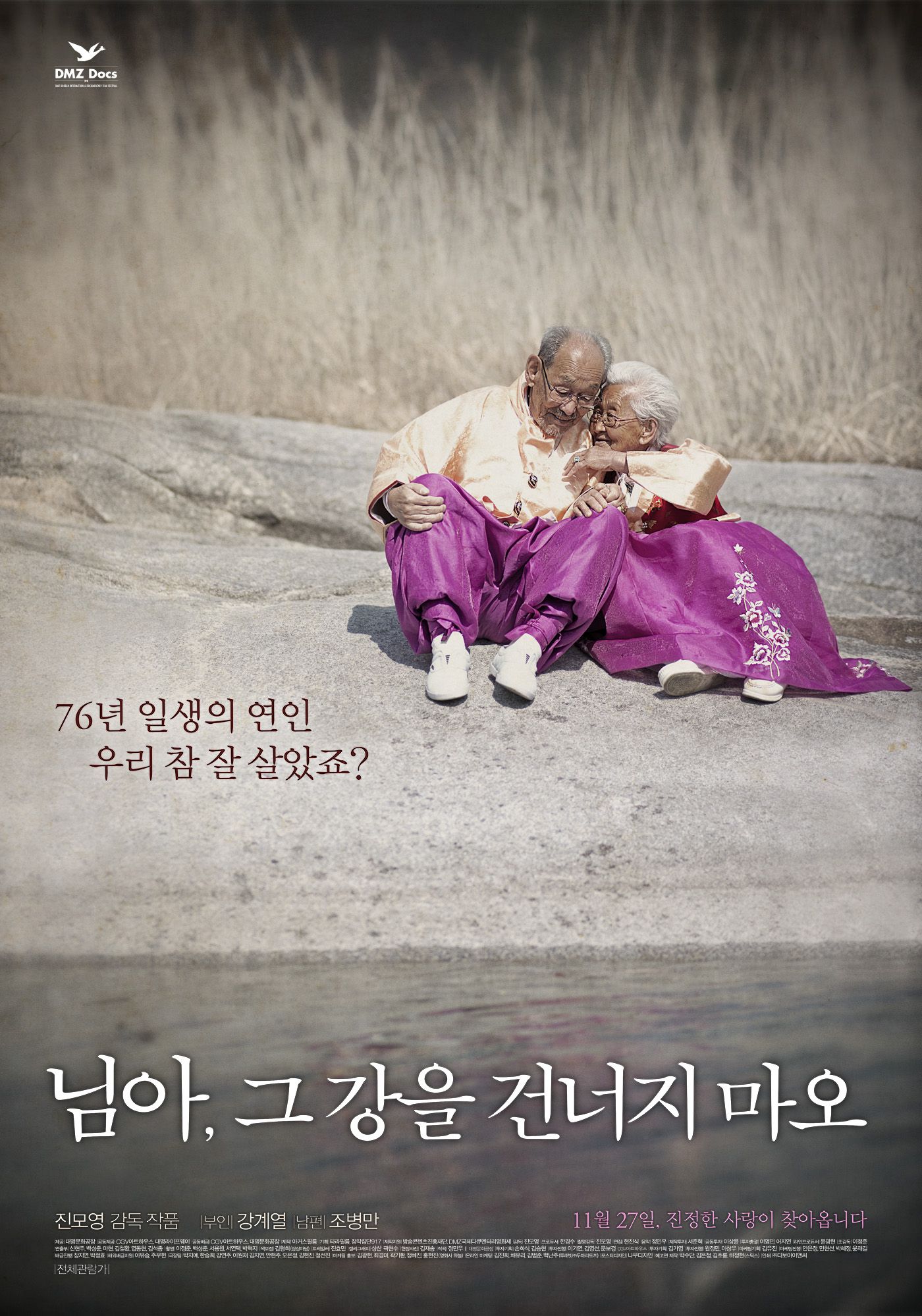
At the end of 2014, Korean cinema witnessed an astonishing feat – documentary My Love, Don’t Cross That River (님아, 그 강을 건너지 마오) shattered the record to become the most successful Korean independent film in history. The surprise came largely from the initial humble opening. Premiering at the DMZ Documentary Film Festival in September, the film was finally released on November 27th against Hollywood heavyweights Interstellar, The Hunger Games: Mocking Jay Part 1 and Fury on a paltry 186 screens. Yet the fervent positive word of mouth that quickly surrounded My Love generated interest on such a scale that the documentary acquired a place in the top ten for the entire winter period, culminating in an incredible haul of over 4.7 million admissions and 34.3 million won. Compared to previous record holder Old Partner’s 17.5 million won take, the magnitude of My Love’s success is impossible to ignore.
98 year old Byeong-man and 89 year old Gye-yeol are inseparable even after 76 years of marriage
My Love, Don’t Cross That River is an incredibly charismatic documentary by director Jin Mo-young (진모영), with it’s deceptively simple structure and strong emotional resonance clearly the reasoning behind how the film struck a chord with audiences during it’s impressive theatrical run. Yet while the documentary is sweet, poignant, and in many ways acutely romantic, My Love’s success is also somewhat puzzling.
My Love affectionately depicts the final years of the relationship between 98 year old Jo Byeong-nam and 89 year old Kang Gye-yeol who, after 76 years of marriage, still behave as newlyweds. When the couple go out, they always sport matching hanbok. When chores are undertaken, they jokingly play tricks on each other. When they settle down for the night, they fall asleep holding hands. The elderly couple are unspeakably endearing and are a real joy to watch as they cheerfully continue their countryside existence, despite the hardships old age brings. Their devotion is palpable, displayed through loving glances, body language and cute moments that consistently prove to be heartwarming. Combined with the photogenic backdrop of the picturesque countryside, My Love is visually as well as emotionally stimulating and is quite the moving tale.
The endearing couple play with flowers in Spring
Amongst such cheerful scenes however is the occasional sense of contrivance, which chiefly appears due to the camerawork. Byeong-man is a loveable rascal and likes to play tricks on his wife, yet as the camera quickly tracks around the couple to capture his pranks, as well as rather obvious editing cuts that capture that action from another angle, it feels as if the couple are being asked to perform for the camera which tends to undermine the purpose of the documentary. Luckily such moments aren’t frequent, and the film quickly corrects itself once the focus shifts back to more natural, authentic situations.
The simplicity of My Love is very appealing as the daily lives and the indomitable spirits of the elderly couple are documented, yet there is also a enormous amount of unexplored potential just begging to be uncovered, which unfortunately never achieves fruition. Aside from two wonderfully illuminating conversations in which Gye-yeol discusses how she and Byeong-man first met and married, as well as the amount of children they conceived, the film doesn’t really delve into their undoubtedly fascinating history to give audiences a sense of who they are. Hints to the tremendous amount of experience the couple have endured are alluded to at various junctures, however director Jin instead chooses to focus on the here and now which results in a romantic, poignant, emotionally resonating tale, albeit one that could have benefited from greater depth.
The indomitable spiritis of Byeong-man and Gye-yeol are heartwarming
Verdict:
My Love, Don’t Cross That River is a record-breaking triumph for the independent sector as the most successful non-commercial film in Korean cinema history. Director Jin Mo-young’s endearing documentary about the charismatic relationship of elderly couple Byeong-man and Gye-yeol is wonderfully heartwarming and romantic as they act like newlyweds despite their ages. However My Love‘s occasional contrivances and unexplored potential stop audiences from truly knowing the couple, resulting in a simple yet emotionally resonant tale.
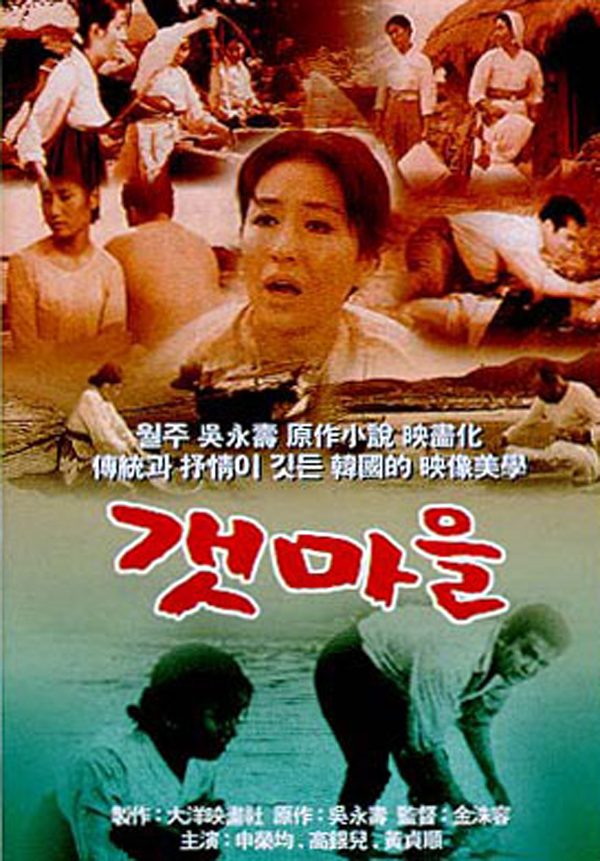
In a small and humble seashore village, the local fisherman gather together to prepare for a hard day’s work on the ocean waves. As their wives bid them farewell, a pregnant woman warns her husband of a terrible dream she had the previous night, yet her anxiety is heeded merely as superstition. Young bride Hae-soon (고은아), married for just 10 days, prays to the Dragon God of the sea to protect the fisherman from harm. However her piety goes unanswered as later that day a typhoon strikes, killing several of the men and making widows of many of the inhabitants of the village, Hae-soon included. While still in mourning, Hae-soon’s beauty catches the attention of nomad Sang-soo (신영균), whose lust for the young widow leads them both down a tragic path.
The wives anxiously await the return of the fishermen
The Seashore Village is an absolutely stunning classic melodrama by much-celebrated director Kim Soo-yong (김수용). Earning the Best Film accolade at the 1965 Daejong (Grand Bell) Awards, the film’s victory is far from surprising given the emotional story of familial duty and personal survival, alongside simply breathtaking cinematography that features throughout.
The Seashore Village is a staggering visual achievement, with shots that are routinely wonderfully composed. In highlighting the arduous hand-to-mouth daily struggles to survive and the humble yet cheerful lives of those living on the coastline in the 1960s, director Kim captures a world unto itself, particularly as those inland were dealing with the rapid issues of modernisation. The film functions as both compelling entertainment and history lesson, articulating a lifestyle far removed from expanding urbanisation and development, one in which prayers to Dragon Gods of the sea for protection are common and community spirit for working together to obtain food is prevalent. The aesthetics and compositions are consistently fascinating throughout, featuring traditional hanok homes and lifestyles, old boats and fishing methods, and renowned female divers all in conjunction with the glorious coastline. The Seashore Village is a genuine visual treat.
The cinematography is beautifully constructed and portrays a world unto itself
The story is one of director Kim’s first literary adaptations, an approach that would see him earn a highly respected reputation as the ‘master of literary films’, and is a probing examination of the roles of women, marriage, family, and society. The narrative itself is deceptively simplistic yet reveals much about such features through Hae-soon’s status as a young widow, and as a community set apart from the mainland. While Confucian ideals and familial piety are present they are not prevalent, as the seashore society is decidedly liberal for the era. The women in the village are mostly single widows having lost their husbands at sea, and their frank discussions about fulfilling their sexual desires and needs, as well as supporting themselves through diving for shellfish, is surprisingly progressive especially for ’60s Korea.
That said, The Seashore Village also frequently employs rape as a device for spurring on the narrative, with its recurrent use particularly upsetting. As a young widow and the most beautiful woman in the village, Hee-soon attracts the unwanted advances of drifter Sang-soo who simply will not accept rejection, with his repeated attempts to force himself upon her quite distressing. More troublesome however is that upon Sang-soo’s success, Hae-soon discovers an awakened, unbridled passion. Her beauty is typically the catalyst for further attempted rape and conflict throughout the film, and within such terrible events the brutish Sang-soo is characterised as a saviour and protector figure, yet given his history it is tough to take such a leap. It is for such reasons that, while The Seashore Village is a stunning example of classic Korean melodrama, the film doesn’t stand the test of time as much as its peers.
Drifter Sang-soo develops a dangerous attraction to the young and beautiiful Hae-soon
Verdict:
The Seashore Village is a beautifully composed and visually stunning classic melodrama by director Kim Soo-yong. The film is incredible in constructing a world away from the rapid modernity overtaking inner cities, capturing the traditional society’s humble, laborious, and surprisingly liberated community. While The Seashore Village also features some particularly progressive ideals concerning female independence and sexuality (considering the era), the narrative also unfortunately employs rape as a frequent device which is troublesome. A classic, though one that doesn’t stand the test of time as well as its peers.
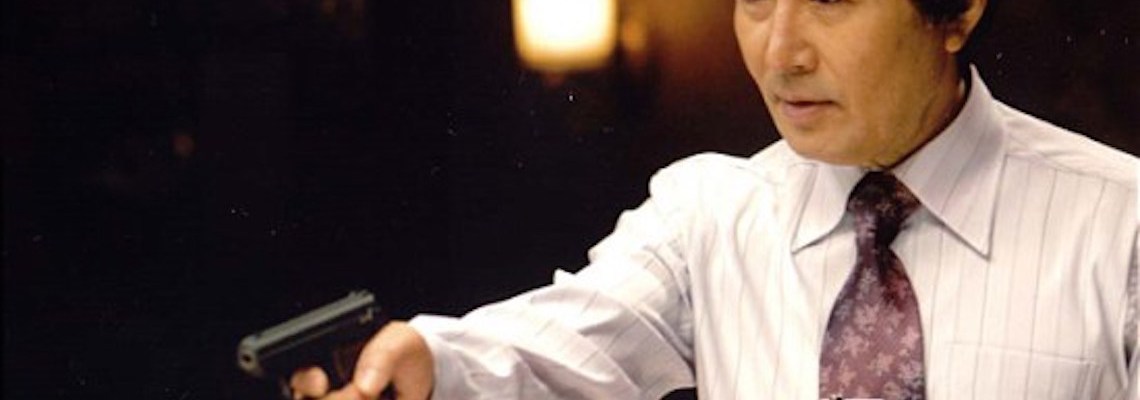
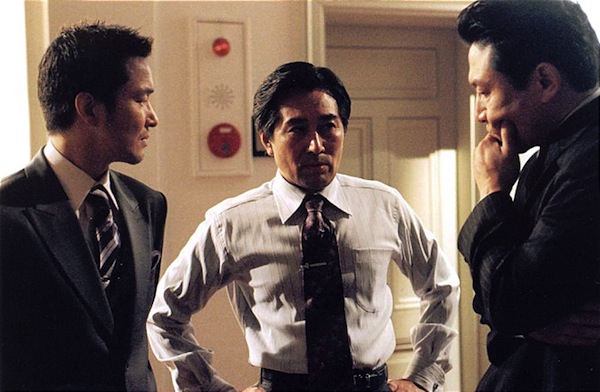
The date is October 26th, 1979 – the day of ‘strongman’ Park Chung-hee’s assassination. Following almost 18 years of brutal military rule and with a growing call for democracy by Korean citizens, Park, and those in his regime, are concerned. A dinner event is arranged in the Blue House for select chief members of staff including KCIA Director Kim Jae-kyu (Baek Yoon-Sik (백윤식). As alcohol flows and Japanese songs are sung, the talk of politics and conflict infuriates Jae-gyu. Briefly excusing himself from the event, Director Kim confers with Chief Agent Ju (Han Seok-gyu (한석규) and decide that tonight will be Park Chung-hee’s last. With a select group of KCIA agents at the ready, the stage is set for the assassination that will change the course of Korea forever.
KCIA Direcor Kim confers with his staff as they plan the assassination of Park Chun-hee
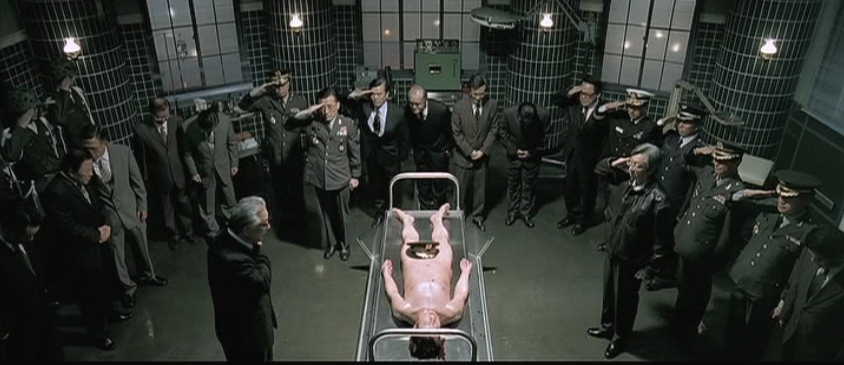
The President’s Last Bang is a brilliantly biting and incredibly funny political satire by director Im Sang-soo (임상수), who takes one of the darkest and most controversial periods of recent Korean history and crafts a highly provocative and compelling exploration of the assassination.
To this day Park Chung-hee remains a very divisive figure in Korean politics, and the film immediately generated a deluge of controversy upon release in 2005. Park Ji-man, the former leader’s son, ordered a law suit against the film that resulted in the removal of nearly 4 minutes of screen time, and was released nationally and internationally in this manner. The scenes featured real documentary footage of democracy protests and Park’s funeral which bookended the film, providing context for the events depicted. Their removal (and replacement with a blank black screen in protest) ultimately generate a less effective viewing experience. However the court’s decision was overturned in 2006 on the grounds of the rights to freedom of expression, although the production company was still ultimately punished for defamation against the late authoritarian ruler. While the verdict was a victory against censorship, the case also pointed to Park’s enduring legacy within the Korean political system through the power and influence wielded by his children – including his daughter, current President Park Geun-hye – an irony that was not lost on many political commentators.
Much of the controversy centres around the representation of the authoritarian ruler as a Japan-loving, democracy-hating, womanising, cowardly old man. Director Im Sang-soo solidified his reputation through exploring issues of amorality within the upper echelons of society, and with The President’s Last Bang he is absolutely superb in articulating such concerns through representing the corruption associated with the Park Chung-hee administration.
Kim Jae-gyu prepares to change the course of Korea forever
Through scenes depicting Park’s late night partying and penchant for young girls, his love of Japanese culture to the point of employing the language and songs (a real issue for many Koreans following years of Japanese occupation), and the startling justification of his regime through comparisons with Cambodia, Park is constructed as a reprehensible wretch and a fool. As such his assassination is represented as well-deserved, yet through the inclusion of satire it is also darkly hilarious.
Taking a cue from the multitude of conflicting statements regarding Kim Jae-gyu’s motivations and the event itself, the film effectively employs dark comedy to make scenes of death and mayhem incredibly funny. There is conflicting evidence to suggest Kim’s plan was either planned or spontaneous, which the film wonderfully spins into a comical farce as the members of the KCIA fumble and blunder their way through the assassination, as well as in their later attempts to conceal the truth. Actor Baek Yoon-Sik shines throughout such sequences as the KCIA director Kim Jae-gyu due to his deadpan expressions and comic timing, with events escalating so quickly beyond control that his transitions between agitation, stoicism and laissez-faire attitude frequently induce laughter.
Yet while the first half of the film is fuelled with energy, suspense and comedy as the impending assassination draws near, the film loses much of its zeal following Park’s death. The narrative shifts gear in bleaker territory as it accommodates the political ramifications of the event, while the subdued tone is also undoubtedly derived from audience awareness of what follows the investigation, though it’s to director Im’s credit that he still manages to effectively mine comedy from the fraught situation. The combination of real-life controversy and dark humour is not easy to amalgamate yet The President’s Last Bang succeeds superbly and makes for highly compelling viewing.
Dark comedy is employed to great effect throughout The President’s Last Bang
Verdict:
The President’s Last Bang is a brilliantly dark, highly controversial political satire depicting the assassination of military ‘strongman’ Park Chung-hee. Director Im Sang-soo is incredibly insightful and witty as he explores the amorality and corruption of Park and his administration, superbly employing laughter-inducing dark humour as events transpire. While the film loses some of its impetus in the second half, director Im has crafted a highly provocative and compelling exploration of one of the darkest periods in recent Korean history.
Following her husband’s untimely death, Seoulite Sin-ae (Jeon Do-yeon (전도연) decides to fulfill the late man’s greatest wish by relocating to his hometown of Miryang and raise their son Jun. Initially the countryside town seems an odd place, yet Sin-ae quickly settles in by making acquaintances with overly friendly mechanic Jong-chan (Song Kang-ho (송강호) and setting up a piano academy. The newly single-mum also reveals her intentions to develop an area of land to the residents, and begins scouting with assistance Jong-chan in tow. Yet when a further terrible tragedy occurs, Sin-ae’s very sanity is tested as she struggles to cope in the aftermath. As she turns to any available source to alleviate her trauma, Jong-chan continues to try and help.
Sin-ae and Jun relocate to Miryang and meet friendly mechanic Jong-chan
Secret Sunshine is an absolutely exceptional film and a true modern classic of Korean cinema.
Throughout his relatively small but undeniably brilliant filmography, director Lee Chang-dong (이창동) has keenly and insightfully explored a multitude of social discourses that afflict contemporary Korea. With Secret Sunshine the auteur examines the nature of grief and psychological instability following devastating trauma, as well as the ideology of small country towns alongside the devout embrace of religion. It’s extremely weighty material yet director Lee deftly constructs both the narrative and the visual aesthetic with such an assured poetic confidence that the themes combine seamlessly, as well as expressing a level of wisdom and awareness many other filmmakers can only dream of. The result is a drama that is a simultaneously beautiful and incredibly intense viewing experience, one which impresses and inspires on multiple levels with its insightful poignancy, while also exuding a power that resonates long after the credits roll.
The intensity and emotional magnitude of Secret Sunshine ironically lies in the subtle grace within which the story is told. The social-realism director Lee employs is as potent as ever, yet with Secret Sunshine he seems to remove any and all directorial flourishes. The approach is incredibly effective as the absence of dramatic devices allows the story to simply stand on its own merits and forces the audience to engage intellectually, emotionally, and morally with the topics being explored, as well as demand that they draw their own conclusions from the debates put forth. As such the film is a truly immersive experience that is ingenious in its simplicity yet phenomenally affecting.
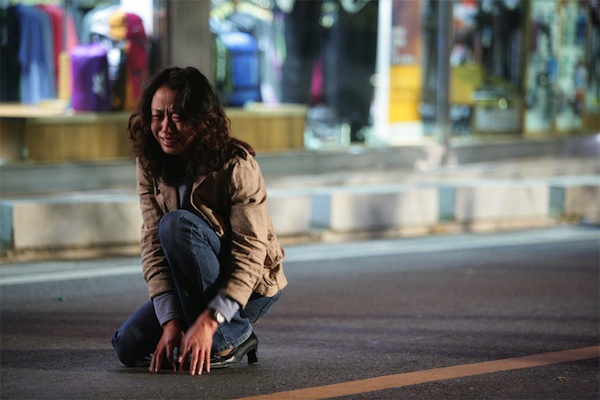
Following a tragic incident, Sin-ae spirals into grief and despair
Chiefly, the debates examined in Secret Sunshine are centered around the general negligence involved in suffering, and the role of religion in society. In taking a step away from employing potentially manipulative cinematic devices, director Lee quite naturally allows the issues to expose themselves for the ignorance and hypocrisy inherent within. The manner in which he does so is fascinating, as within the context of Shin-ae’s attempts to reconcile her grief he simply applies the logic of the ideology in question so that it ultimately ridicules itself. For example, Shin-ae’s internal conflict involving the notion of forgiveness is potently used to express the pretense involved in religion and in revealing the nature of grief, as well as articulating the narrow-minded sensibilities of the local community. The remarkable story itself holds the compulsion of debate, and director Lee is masterful in letting it speak volumes.
Yet Secret Sunshine would lack all conviction if not for the exquisite performance of Jeon Do-yeon. Jeon’s breathtaking, captivating turn as the grief-stricken mother earned her the Best Actress award at the Cannes Film Festival, cementing her position as one of the most highly regarded film talents in Korean cinematic history. It is difficult to overstate just how incredible the performance is, as Jeon’s uncanny ability to inhabit a role rather than act it reaches unbelievable levels of sincerity and poignancy, absolutely deserving every ounce of praise and acclaim. From the moment Secret Sunshine begins it gradually becomes clear that Jeon infuses the character of Sin-ae with psychological instability, with the manner in which she transitions into different realms of neuroses following a series of terrible events a masterclass in acting prowess. Jeon Do-yeon’s performance is so mesmerizing that co-star Song Kang-ho is largely overshadowed, although he also provides a highly compelling role as overly-kind yet somewhat unnerving mechanic Jong-chan.
Sin-ae’s fragile psychological disposition leads to looking for the secret in the sunshine
Verdict:
Secret Sunshine is a truly exceptional film and a genuine modern classic of Korean cinema. Auteur Lee Chang-dong is simply remarkable in crafting the insightful story of grief, removing directorial flourishes to allow the incredible story to present debates on its own merits and forcing audience engagement with difficult material. Featuring an exquisite performance by Jeon Do-yeon, who took the top prize at Cannes for her role, Secret Sunshine is a phenomenal drama that every film fan should see.






















 hangukyeonghwa.com