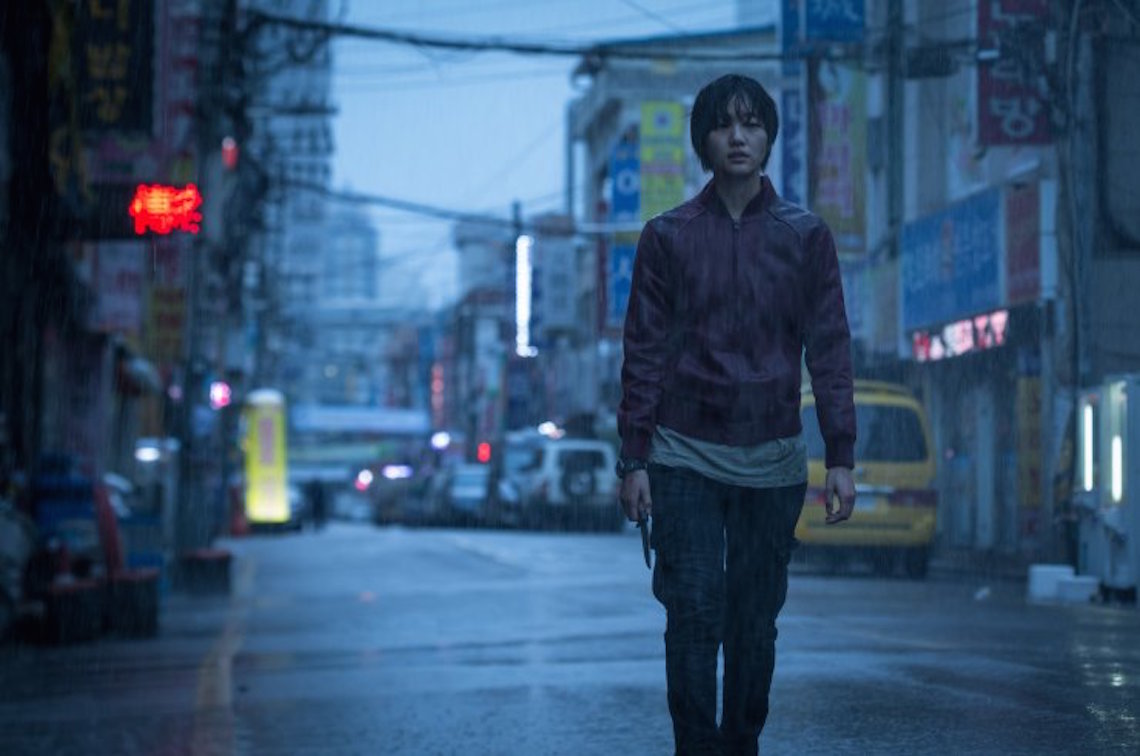
Possessed (불신지옥) – ★★★☆☆

Possessed (불신지옥)

Possessed (불신지옥)

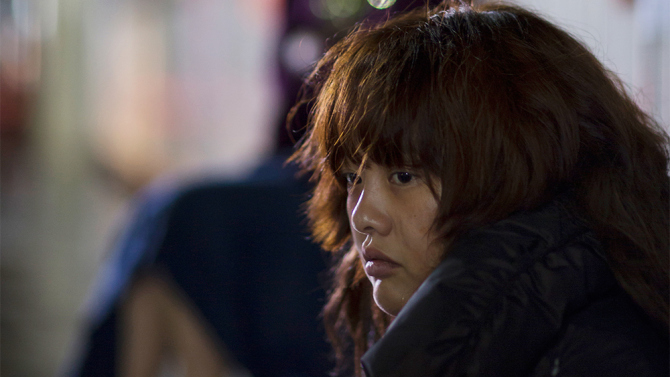
Living in Seoul is a tough existence for Hee-jin (Nam Sang-mi (남상미). Studying for exams during the day while moonlighting at night as a personal tutor and convenience store clerk, Hee-jin’s health is beginning to suffer from a combination of stress and exhaustion. Her usual routine is disturbed one night when younger sister So-jin (Sim Eun-kyeong (심은경) abruptly calls and leaves a mysterious message…however the next morning when Hee-jin’s mother (Kim Bo-yeon (김보연) informs her that So-jin is missing, she becomes worried and decides to return home to help with the search. Teaming with detective Tae-hwan (Ryoo Seung-ryong (류승룡), the duo begin to notice strange machinations and events occurring at the apartment complex, yet So-jin is still nowhere to be found.

Hee-jin feels something is terribly wrong in the apartment complex

Hee-jin feels something is terribly wrong in the apartment complex

An impressive addition to the K-horror canon, Possessed – as known as Living Death – is a pertinent example of eerily-effective and scarily-suspenseful storytelling on a tight budget. Director Lee Yong-joo’s debut is a potent mix of the horrors of religious fervour and taught claustrophobic locations that, while lacking in terms of character development and resolutions, is an accomplished chiller.

Proving that large budgets aren’t necessary to create unsettling tension and scares, director Lee instead relies on generating fear through the claustrophobic environs of a dilapidated apartment block to great effect throughout Possessed. The methods in which he produces moments of terror by exploiting the narrow confines of rooms and hallways, in conjunction with unnerving close-ups and chiaroscuro lighting, makes the film consistently disturbing and serves to make Hee-jin’s search for her missing sister all the more compelling. Thankfully, director Lee rarely employs cheap ‘jump’ scares to frighten his audience, generally taking his time to develop a sense of foreboding so that the sense of dread resonates throughout.

Hee-jin enlists the help of cynical detective Tae-hwan

Hee-jin enlists the help of cynical detective Tae-hwan

Possessed is also memorable for its chief source of horror – religious fervour. As Hee-ji and obstinate detective Tae-hwan begin to search for So-jin, they uncover an array of eccentric residents within the apartment complex each with their own odd peculiarities and ties to the missing girl. The narrative potently examines how folk who have endured difficulties turn to religious ideologies with frightening levels of enthusiasm, and the clues uncovered reveal a number of potential suspects in the case that adds greatly to the suspense.

Yet the horror film is not without issues, particularly in regards to character development and resolution which are generally lacking. This is acutely the case with Hee-jin who, aside from the fact her younger sister is missing, has very little of her life revealed. Hints are laced though the film that she has supernatural gifts although such themes frustratingly go unresolved. Actress Nam Sang-mi however gives a great performance in the role and generates enough likeable charm that it’s impossible not to invest in her story. Other resolutions, such as the apparent ‘possession,’ present certain motifs such as the elegant crane yet answers are in short supply, while the film ironically ultimately ties up all loose ends far too neatly in order to adhere to a generically satisfactory finale.
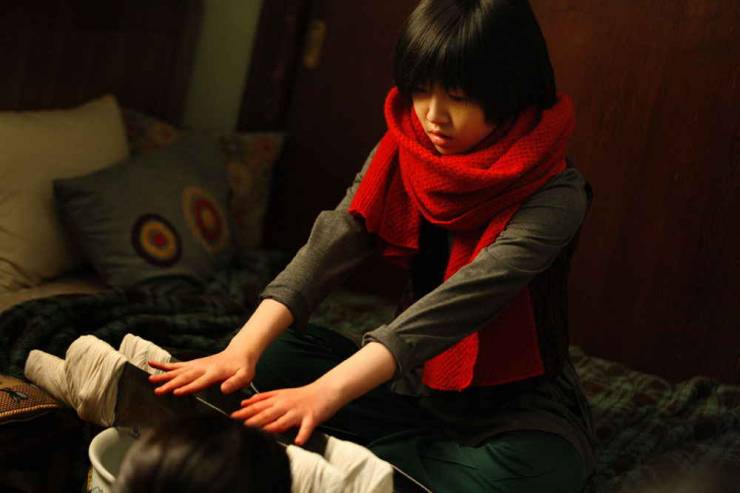
Flashbacks shed light on So-jin's mysterious disappearance

Flashbacks shed light on So-jin’s mysterious disappearance

Verdict:

Possessed is an impressive K-horror by debut director Lee Yong-joo, who uses his tight budget highly effectively to craft a suspense-filled tale of intrigue about a missing girl. Employing claustrophobic environs and a story that examines the frightening religious fervour within communities, Possessed is – lack of character development and resolutions notwithstanding – a chilling delight.

★★★☆☆

Reviews

BiFan 2015 – Korean Feature Films Part 2

BiFan 2015BiFan 2015 will run for 10 days from July 16th~26th, and the biggest genre film festival in Asia is bigger than ever.

To celebrate the upcoming extravaganza, here at Hanguk Yeonghwa we are profiling the Korean films due to screened.

In Part 1, we took a look at the K-films present for the closing ceremony as well as within the Bucheon Choice: FeatureWorld Fantastic Cinema, and The Masters categories, respectively.

Here in Part 2 the K-films selected for Vision Express, the rather wordy KAFA+ Next D – “3D, Once Again,” and K-Indie Genre Strikes! are profiled.

To see PART 1 of our BiFan profile, please click here.

Vision Express

Amor (그리울 련) – director Han Cheol-su (한철수)

Hee-yeon's terminal illness doesn't deter boyfriend Tae-woo

Hee-yeon’s terminal illness doesn’t deter Tae-woo

Drama Amor follows the story of terminally ill Hee-yeon who, due to her situation, tries to tell her zookeeper boyfriend Tae-woo to forget about her and move on with his life. Yet one day Tae-woo finds a mysterious woman in a bad situation in a zoo bathroom, and discovers she is related to Hee-yeon.

Antigone (안티고네) – directors Kang Eok-seok (강억석), Kim Sung-pum (김성범), Park Seo-yeon (박서연)

The story of King Yong is told

The story of King Yong is told

Three directors have collaborated together to bring the story of King Yong to the big screen. Judging from the stills that have been released, the period drama has a definite Dogme 95 vibe through the absence of set design. The film retells a classic Greek tragedy, which examines the lives of King Yong and his family as they attempt to flee to Japan.

Purpose of Reunion (동창회의 목적) – director Jeong Dae-man (정대만)

Dong-chul owns a charming bar

Dong-chul owns a charming bar

Director Jeong Dae-man’s entry seems to be one of the more traditional drama offerings that focuses on the complexity of modern relationships. The plot involves Dong-chul, who owns a quaint bar, and wants to hold a reunion. Yet one of his guests is attractive Yujin, and they begin a relationship…but what will his wife say?

Sunshine (선샤인) – director Park Jin-soon (박진순)

Sul-ji is an artistic North Korean exile

Sul-ji is an artistic North Korean exile

Sunshine appears to be the only feature film at BiFan 2015 to explore the division between North and South Korea. The film follows former propaganda designer Sul-ji, now a florist, who is asked to be the subject of a documentary for a down-on-his-luck producer…but what will this mean for her family still north of the border?

KAFA+ Next D – “3D, Once Again”

MAD SAD BAD (신촌좀비만화) – directors Ryoo Seung-wan (류승완), Han Ji-seung (한지승), Kim Tae-yong (김태용)

Ghost (유령)

Ghost (유령)

3D omnibus MAD SAD BAD opened the 2014 Jeonju Int. Film Festival, and features a variety of genres. The best is easily the supernatural drama Picnic by director Kim Tae-yong, while director Ryoo Seung-wan’s thriller Ghost – based on real events of teens who murder due to sns – is also good. Zombie comedy/horror I Saw You by director Han Ji-seung completes the omnibus.

K-Indie Genre Strikes!

12 Deep Red Nights (십이야: 깊고 붉은 열두 개의 밤 Chapter 1) – director Oh In-chun (오인천)

Four horror stories are told in the film

Four horror stories are told in the film

Director Oh In-chun, fresh from 2014 horror/romance Mourning Grave, returns with an omnibus of four chilling stories. Rather than separate tales, the events – titled Driver, PM 11:55, atmosFEAR and The Secret Night – are all interlinked. Director Oh’s film is also intended as the first part of a series of 12 horrors.

Mizo (미조) – director Nam Ki-woong (남기웅)

Mizo and Woo-sang have a violently sexual relatonship

Mizo and Woo-sang have a violently sexual relatonship

Mizo premiered at Jeonju Film Fest 2014. The film depicts the story of a girl left in the trash as a child, who later returns to the area as an adult and forms relationships with the corrupt people living there, preparing her revenge. Mizo is violent and overtly sexual, but then that should come as no surprise from the director of Teenage Hooker Became a Killing Machine.

My Secret Partner (완벽한 파트너) – director Park Heon-soo (박헌수)

Comedy and sex mix to fun effect

Comedy and sex mix to fun effect in this light-hearted take on modern relationships

Also known as Perfect Partner, this raunchy sex-comedy follows a screenwriter and a chef who, due to suffering from a severe lack of inspiration, embark on sexual relationships with their students to help unleash their passions. Yet the young objects of their lust have motivations of their own. Will the controversial relationships prove fruitful?

Ownerless Flower Uhwudong (어우동: 주인 없는 꽃) – director Lee Soo-sung (이수성)

An erotic love triangle features

An erotic love triangle features

Released in January 2015, Ownerless Flower Uhwudong is a rare independent period drama featuring plenty of lust and debauchery through the narrative, which centers on a twisted love triangle amongst the social elite. Director Lee Soo-sung is no stranger to raunchy material having helmed sex comedy Mango Tree in 2013, though his latest marks a big improvement.

Playboy Bong (아티스트 봉만대) – director Bong Man-dae (봉만대)

Tensions arise on the set of an erotic movie

Tensions arise on the set of an erotic movie

Another sexy-comedy to arrive at BiFan 2015 is Playboy Bong. The film explores a film crew that go to Bali to shoot an erotic movie, but the producers are underwhelmed with the early footage. To salvage the film, porn director Bong Man-dae is hired yet when he arrives and begins demanding more erotic scenes, his presence escalates the situation.

Rough Play (배우는 배우다) – director Shin Yeon-shick (신연식)

An actor traverses madness

An actor traverses madness

An unofficial sequel of sorts to Rough Cut, Rough Play premiered at Busan Film Fest in 2013. Written by Kim Ki-duk, the film explores the life of a struggling actor who finally becomes a star, yet as his power rises so does his arrogance, leading to an epic fall from grace. Ironically the film was responsible for catapulting idol star Lee Joon’s popularity, particularly for the inclusion of a bed scene.

The Stone (스톤) – director Cho Se-rae (조세래)

The gentlemen's game of baduk turns violent in the criminal underworld

The gentlemen’s game of baduk turns violent

The Stone combines the criminal underworld with the classic Asian game of baduk. A young genius baduk player uses his skills to hustle local small time gangsters, yet when his ability comes to the attention of a crime boss, the two strike up an unlikely friendship. Through their gentlemanly games, they begin to see the errors of their ways.

To see PART 1 of our BiFan profile, please click here.

For the full BiFan screening schedule, please follow the link here.

Bucheon International Fantastic Film Festival (제 19회 부천국제판타스틱영화제) Festival News Korean Film Festivals 2015

BiFan 2015 – Korean Feature Films Part 1

BiFan 2015From July 16th~26th, the Bucheon International Fantastic Film Festival (BiFan) will commence its 19th edition.

Asia’s biggest genre film extravaganza, BiFan (previously called PiFan) boasts a larger scale than ever before which is sure to please cineastes. Out of the 235 films due to be screened, 62 are world premieres while 61 will receive their Asian debut.

BiFan 2015 hosts an incredible range of programmes including staples such as Bucheon Choice and World Fantastic Cinema, in conjunction with more specialised categories that honour particular filmmakers and creative output as with I’m (not) Sono Sion, Mexican Genre Film Showcase, and Excellent Actor, Nice Guy Simon Yam.

Amongst all the international films to be screened, Korea will also make its presence known through a variety of genre offerings, as well as closing the festival as has occurred in previous years with The Terror Live and My Ordinary Love Story.

To see the Korean films being featured at BiFan, please see below.

For PART 2 of our BiFan profile, please click here.

Closing Film

The Chosen: Forbidden Cave (퇴마: 무녀굴) – director Kim Hui (김휘)

A psychologist must discover a secret to perform an exorcism

A psychologist must discover a secret to perform an exorcism

BiFan 2015 will close with a horror/thriller, based on Shin Jin-oh’s 201- novel ‘Moonyeogool.’ The film follows exorcist/psychologist Jin-myeong as he works on a case to free a client from a potentially dangerous spirit, yet to do so he must uncover a powerful secret. The Chosen is directed by Kim Hui, whose previous work includes Horror Stories 2 and Neighbours, and early buzz is particularly strong.

Bucheon Choice: Feature

Coin Locker Girl (차이나타운) – director Han Jun-hee (한준희)

The matriarch of a criminal empire has big plans

The matriarch of a criminal empire has big plans

Urban crime drama Coin Locker Girl was a surprise hit upon release in April, grossing over $10 million. The film is visually impressive and features a wonderfully transformative performance by Kim Hye-su, as she adopts the role of a crime boss matriarch who turns on an enforcer (Kim Go-eun), and as such finds itself in competition at BiFan. You can read the review here.

Tattooist (타투이스트) – director Lee Seo (이서)

Soo-na notices something strange about a client's tattoo

Soo-na notices something strange about a client’s tattoo

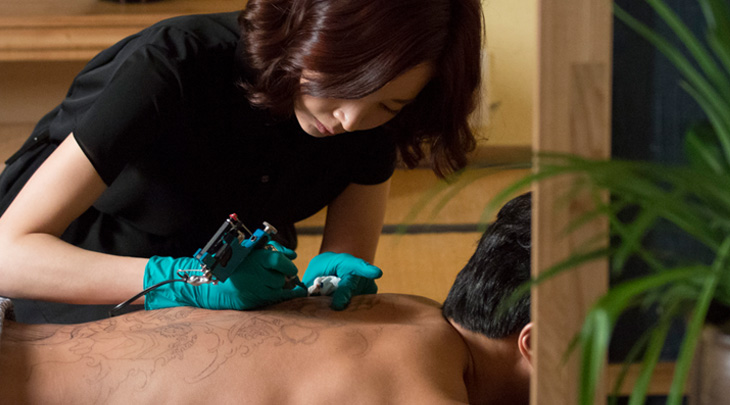
The second Korean film in competition is thriller Tattooist. Soo-na, a beautiful yet somewhat disturbed tattoo artist, is asked to design the mythical character Medusa on a new client’s back. Yet she begins to notice a correlation between the ink and a murder case involving young girls. Tattooist features renowned TV drama actors Yoon Jun-hee and Song Il-gook.

World Fantastic Cinema

Boy From Wonderland (앨리스: 원더랜드에서 온 소년) – director Huh Eun-hee (허은희)

Hye is haunted by nightmares and seeks the truth

Hye is haunted by nightmares and seeks the truth

Appearing to amalgamate fantasy, horror and thriller conventions, Boy From Wonderland depicts nightmare sufferer Hye-joong (Jung So-min) whose dreams have become so severe that they threaten her very life. To find the source of her terrors she travels to a lodge she visited 24 years prior and meets the mysterious Hwan (Hong Jong-hyun).

Malice (멜리스) – director Kim Yong-woon (김용운)

Ga-in's jealousy becomes out of control

Ga-in’s jealousy becomes out of control

Ripley’s Syndrome informs the central premise of director Kim Yong-woon’s thriller, as a young woman becomes obsessed with her best friend’s life and begins to try and assume her very identity, including seducing her husband and stealing her child. Malice stars glamorous actress Hong Soo-ah as the psychologically unstable Ga-in.

Super Origin (시발, 놈 – 인류의 시작) – director Baek Seung-gi (백승기)

Unique beings arise 40,000 years ago

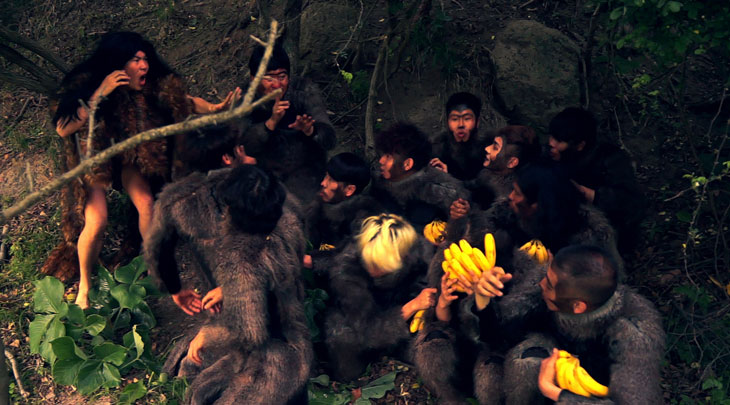
Unique beings arise 40,000 years ago

Director Baek Seung-gi made a name for himself with comedy-fantasy Super Virgin, and he returns with another quirky offering in the form of Super Origin. 40,000 years ago a light appeared in the sky and as a result strange beings appeared in the land, and start to form a civilisation, the likes of which has never been seen before.

The Masters

Angry Painter: Director’s Cut (성난 화가 디렉터스 컷) – director Jeon Kyu-hwan (전규환)

Passion, love and anger inform th epainter's world

Passion, love and anger inform the painter’s world

A co-production between Korea and Estonia, Angry Painter tells the tale of two men who operate as violent bounty hunters. When a US soldier kills one of the men and his girlfriend, the remaining partner goes on a violent rampage for justice that takes him into the heart of Europe. Starring Yun Jun-sang.

For PART 2 of our BiFan profile, please click here.

For the full BiFan screening schedule, please follow the link here.

Bucheon International Fantastic Film Festival (제 19회 부천국제판타스틱영화제) Festival News Korean Film Festivals 2015

Northern Limit Line (연평해전) – ★☆☆☆☆

Northern Limit Line (연평해전)

Northern Limit Line (연평해전)

Northern Limit Line is based on the true story of Second Battle of Yeonpyeong, a confrontation that occurred between North and South Korean forces on June 29th, 2002 in the disputed waters in the Yellow Sea.

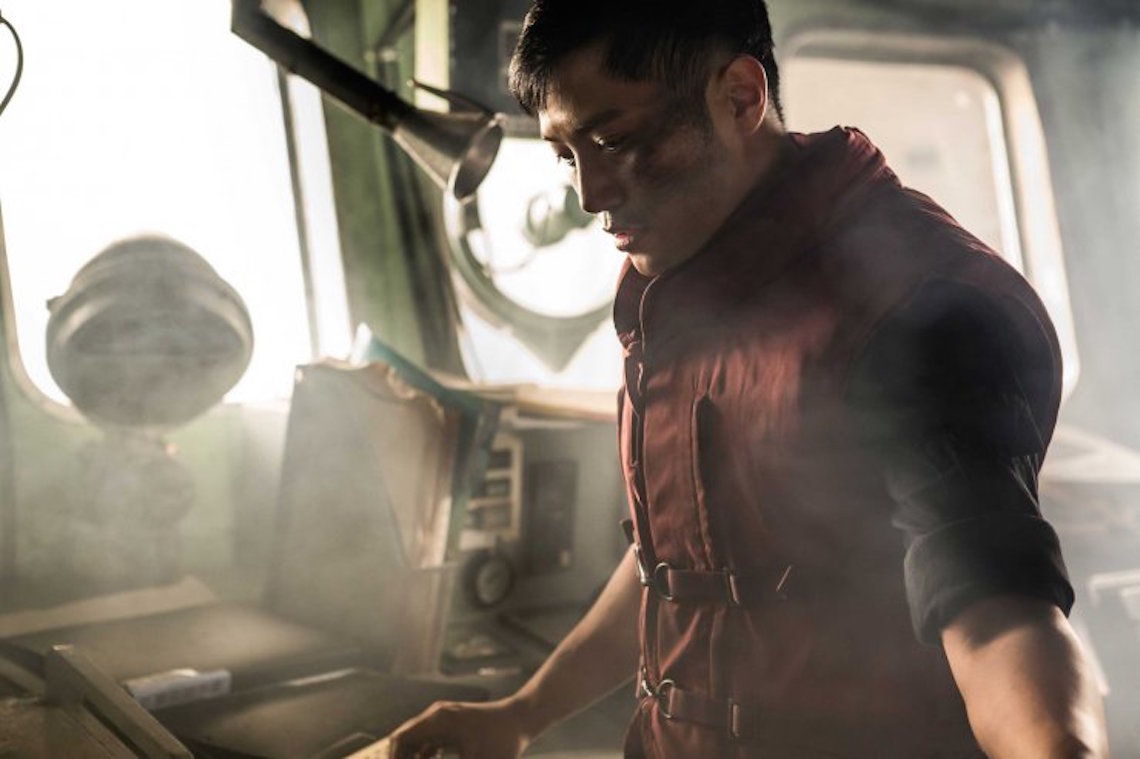
In June 2002, South Koreans are united in World Cup fervour as the national team progresses further and further towards the final. Yet while the general public are rejoicing at the sporting event, the navy continue to patrol the maritime border near Yeonpyeong Island. Despite a few incidents involving North Korean fishermen, Captain Yoon Yeong-ha’s (Kim Moo-yeol (김무열) crew, comprised of Sergeant Han Sang-gook (Jin Goo (진구) and newbie medic Corporal Park Dong-hyeok (Lee Hyun-woo (이현우) amongst others, are in high spirits – until a boat from the North engages them in a surprise, brutal assault.

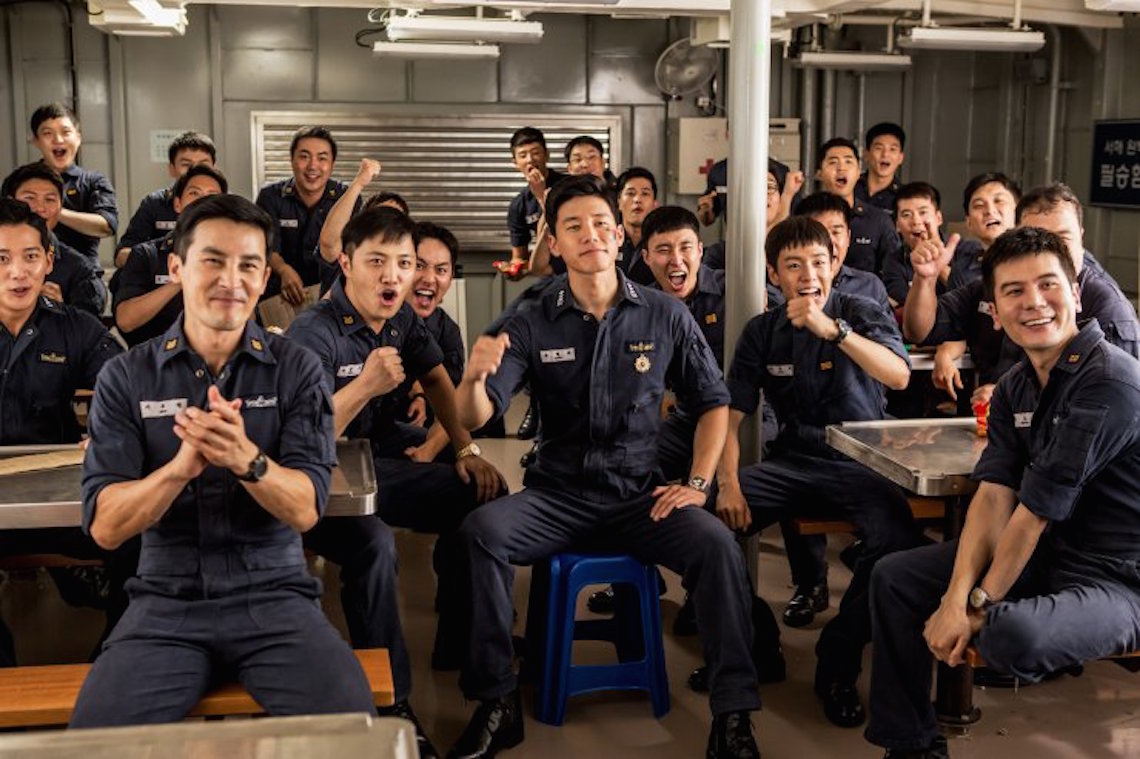
Camaraderie is strong as the crew celebrate South Korea's World Cup achievements

Camaraderie is strong as the crew celebrate South Korea’s World Cup achievements

An unadulterated exercise in propaganda, Northern Limit Line deserves recognition for its crowdfunded origins and helmer Kim Hak-soon’s dedication to bring it to the big screen, yet precious little else. Shoddily written, poorly directed, and featuring some of the worst editing in recent memory, the war thriller is a poor testament to those who lost their lives in the conflict, with the only saving grace arriving in the form of the emotionally charged documentary footage tacked on in the film’s dying moments. Conservative Koreans however are likely to find much to enjoy.

Northern Limit Line is clearly a passion project for writer/director Kim Hak-soon, who spent seven years developing the project as well as generating roughly a third of the $6 million budget through crowdfunding, an impressive feat to be sure. It’s bizarre then that during that time frame the script wasn’t cultivated into a coherent whole, one that details and examines the complex political situation of the era alongside a humanist angle facilitated by the inter-personal relationships between the crew. Instead, Kim has opted to remove any shred of context from the narrative, simplifying events to a base ‘good South Korean vs. evil North Korean’ rhetoric that embarrassingly evokes memories of ’80s cinema. The Northerners are consistently represented grimacing, scowling, or with facial scarring to emphasise their villainy, whilst their darkened uniforms and blackened boats signify their macabre intentions; the Southerns meanwhile typically joke and play pranks, are faithful to their loved ones, and live a generally idealistic life. Such visual cues, removed from political context and intricacies, results in Northern Limit Line conforming to a mere piece of propaganda, the likes of which were similarly present in 2014 box office hit The Admiral, and are becoming an increasingly disturbing cinematic trend.

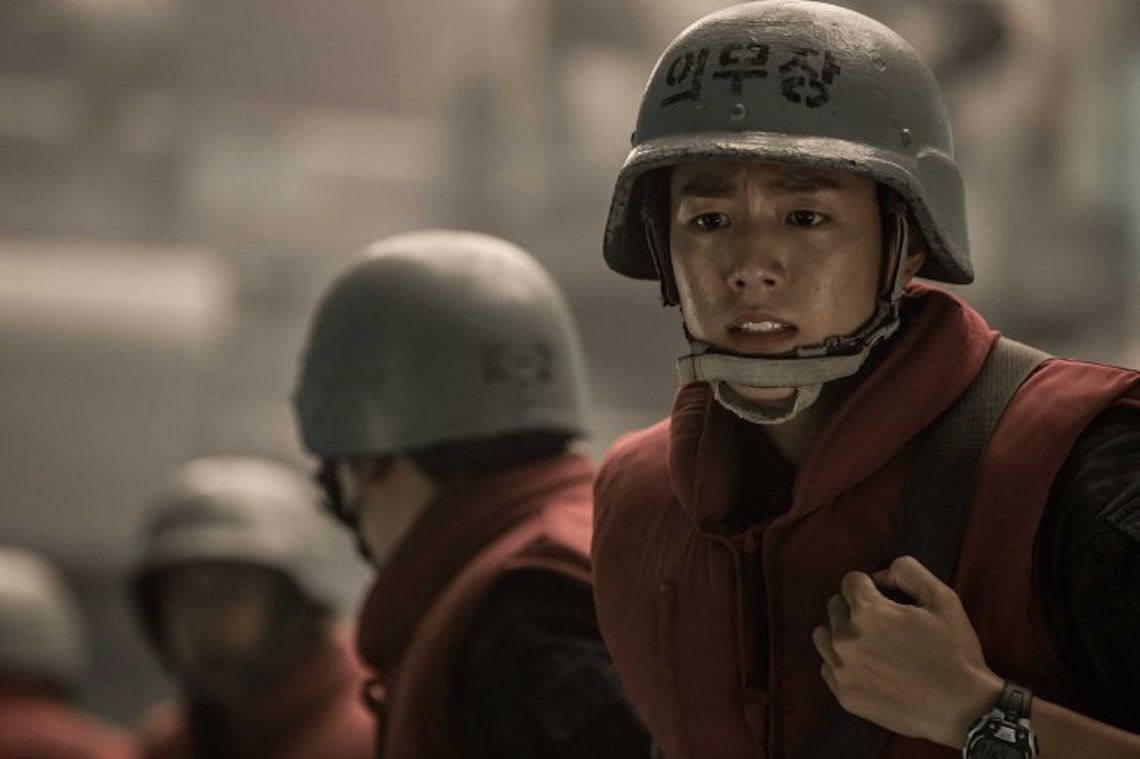
Medic Dong-hyeok prepares to battle the grimacing North Korean navy

Medic Dong-hyeok prepares to battle the grimacing North Korean navy

Scribe/helmer Kim has routinely stated that his desire to complete Northern Limit Line was due to lack of public awareness regarding the young men who lost their lives during the conflict. It’s a noble resolution, yet his endeavours ultimately fall short. Throughout the narrative the characterisation is more akin to a poor TV drama than film, as the lives of the officers are constructed employing melodramatic cliche after cliche specifically designed to force audiences to engage emotionally, yet the far-from-subtle manner utilised does just the opposite. Each member of the crew has threadbare development with resolutions consistently unanswered, however as they all feature occasional scenes caring for an impoverished loved one, audiences are expected to invest in their respective trajectories.

The myriad of superfluous protagonists compound this lack of engagement further, as random naval officers and civilians alike enter a scene, utter a few words of dialogue, and then exit without ever really stating their purpose. A female officer (performed by Cheon Min-hee (천민희) exemplifies this issue as she interacts with the central cast, yet adds no agency to the story other than to appear attractive.

The editing in Northern Limit Line is simply appalling. The film frequently jumps between the officers patrolling the Yellow Sea and the World Cup celebrations occurring in Seoul to confusing effect, and doesn’t have any baring on the story. If anything, director Kim seems to be implying that the Korean public are to blame for caring about a sporting event rather than the conflict that arises.

As Northern Limit Line enters the final act, the assault upon which the film is based arises. The battle is competently constructed and immersive, yet also overly long and disorientating due to the direction. Ironically it is after the battle scenes that the war film finds its saving grace – the real-life documentary footage of the fallen officers being laid to rest. It’s impossible not to be moved by such emotive scenes as the anguish expressed by bereaved families is palpable, while the interviews with survivors – which oddly appear during the end credits – are also deeply poignant tributes to their comrades.

The battle sequence reveals the horrors of warfare

The battle sequence reveals the horrors of warfare

Verdict:

Northern Limit Line is an unadulterated exercise in cinematic propaganda, one that construct a simplistic account of the terrible event by removing the complex political context of the era. Crudely written, poorly directed and horribly edited, the maritime war film’s only redeeming feature is the poignant real-life documentary footage that deeply touching. Northern Limit Line is one for hardcore nationalists only.

★☆☆☆☆

Reviews

The Treacherous (간신) – ★★☆☆☆

The Treacherous (간신)

The Treacherous (간신)

NB: This review is based on the European edit of The Treacherous.

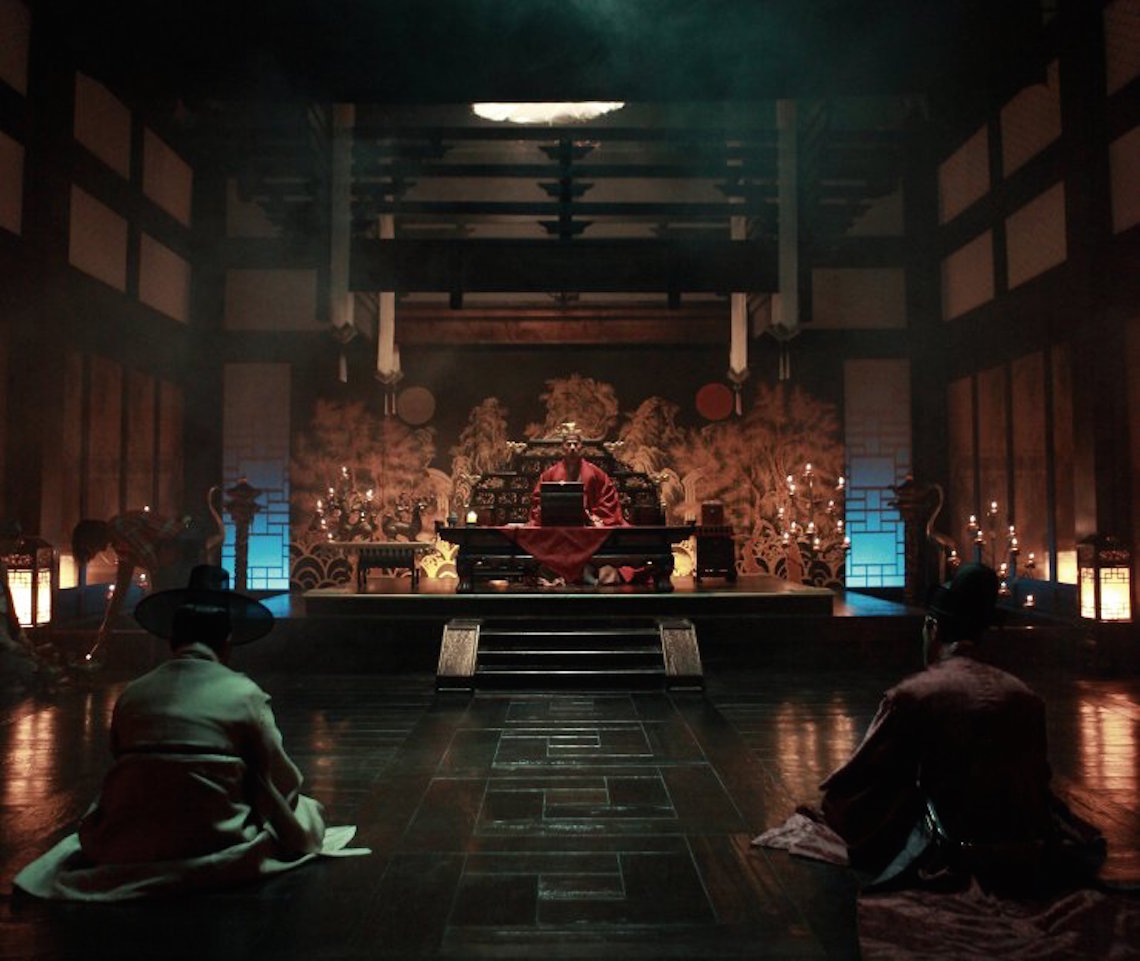
In 1505 AD, the tyrannical King Yeonsan (Kim Kang-woo (김강우) has insatiable sexual desires that, alongside his violent suppression of any who oppose him, makes him one of the most despised rulers in the history of Korea. His lust becomes so great that he orders advisors Im Soong-jae (Joo Ji-hoon (주지훈) and Lim Sa-hong (Cheon Ho-jin (천호진) to become ‘Beauty Scout Officers,’ and acquire 10,000 women from across the land for his pleasure. Yet King Yeonsan’s greed results in widespread anger across the peninsula, while the motivations of some of his new beauties, including peasant girl Dan-hee (Lim Ji-yeon (임지연), may seal his doom.

The insatiable king commands his advisors to bring him 10,000 women

The insatiable king commands his advisors to bring him 10,000 women

Based on the true story of abhorred King Yeonsan, The Treacherous is a beautifully composed and colourful period drama by director Min Gyoo-dong who generates an acute epic scale and flair to the proceedings. Yet the overly long film is marred by a thread-bare narrative and frightfully misogynistic sexual politics throughout that, in conjunction with distinctly OTT performances by the main cast, make the erotic piece little more than a visually attractive male fantasy.

Helmer/scribe Min Gyoo-dong has certainly exceeded himself in a cinematic sense, as The Treacherous represents his most visually competent work to date in an impressive filmography that contains All About My Wife and Memento Mori. The period drama consistently emphasises epic scale whether capturing the grandiose exterior locations or within the beautifully ornate rooms in the palace, displaying lavish production values in every frame. Combined with a glorious use of colour, the Joseon dynasty has rarely looked more elegant and wondrous.

Yet while director Min conveys the extravagance of the era with aplomb, the manner in which he portrays women is appalling. King Yeonsan is despised within the annals of history for his violent subjugation and womanising – he is especially noted for converting revered libraries into concubine abodes – however rather than convey the royal’s actions negatively, director Min glamourises them as male fantasy to the point of disbelief. Scenes involving his forcibly acquired 10,000 women being paraded, putting special powder into their vaginas to make them tighter, or bent over in a line and forced to endure different sized dildos before receiving a stamp on their rears, are presented as erotica and are thoroughly misogynistic in nature.

The acquired women are forced to endure sexual humiliation for the King's pleasure

The acquired women are forced to endure sexual humiliation for the King’s pleasure

Actress Lim Ji-yeon, fresh from winning a few Best New Actress awards in erotic drama Obsessed in 2014, is generally the focus of such fetishisation within The Treacherous. It’s curious that she has opted to appear in another film that requires much more exposure and sexual scenes as her latest project, but she acquits herself confidently and capably. Her unique form of ‘non-acting’ and the coldness she exudes however makes her character difficult to empathise with, yet luckily her motivations alongside the dire ways in which she is treated within the palace easily position her as the heroine of the film.

The narrative also attempts to posit royal advisor and beauty scout officer Im Soong-jae as a hero of sorts yet fails through the poorly constructed plot. Though he is very much the central protagonist of the film, Im is portrayed as a horribly selfish and ambitious individual from the very opening with his impetus to change based solely on his attraction to peasant girl Dan-hee. Actor Joo Ji-hoon does what he can with the role yet as there is precious little chemistry between him and Lim Ji-yeon, the advisor’s attempts to reform ultimately ring hollow.

The greatest problem however lies with Kim Kang-woo as King Yeonsan. Suffering psychological issues due to a disease brought on by his promiscuity, the King is undoubtedly a villainous figure yet Kim Kang-woo portrays the man as the Joker on acid, cackling throughout scenes while falling into hysterics in others, and forcing those around him to endure ridiculous tests of torment. It’s a frustrating approach and one that effects the entire film, and makes the overly long two hour running time even more arduous.

The King becomes palpably psychotic as he forces bizarre tests of endurance

The King becomes palpably psychotic as he forces bizarre tests of endurance

Verdict:

The Treacherous is a visually extravagant and epic period drama by helmer/scribe Min Gyoo-dong, with the Joseon dynasty rarely appearing more elegant and grandiose. However the misogyny laced throughout the weak and overly-long narrative is awful, presenting the violent sexual subjugation of 10,000 women as male fantasy masquerading as erotica. Combined with bland performances by the central cast, The Treacherous is an attractive yet frustrating effort.

★★☆☆☆

Reviews

Coin Locker Girl (차이나타운) – ★★★☆☆

Coin Locker Girl (차이나타운)

Coin Locker Girl (차이나타운)

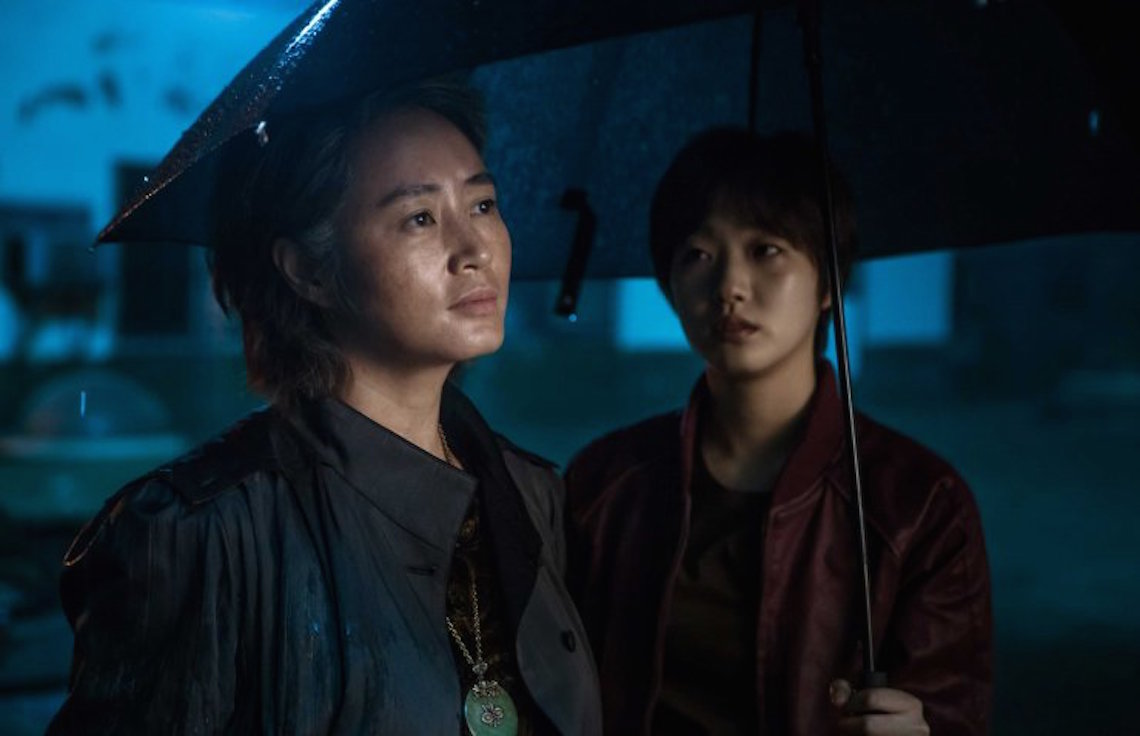
Abandoned by her biological mother in a coin locker in Seoul, a baby girl is discovered by a passing vagabond and brought up on the streets by the homeless community. Named ‘Il-yeong’ after the number ’10’ compartment in which she was discovered, the youngster shows remarkable resilience to her situation, a trait which proves useful when a corrupt cop abducts and sells her to a criminal organisation headed by sinister matriarch Mama (Kim Hye-soo (김혜수). Years later, Il-yeong (Kim Go-eun (김고은) has grown to become an enforcer and debt-collector for the organisation based in the seedy underbelly of Chinatown. Yet when Il-yeong is forced to collect a payment from kind-hearted Seok-hyeon she becomes conflicted, leading to a violently catastrophic showdown with those she has come to regard as family.

In Chinatown, Il-yeong collects debts for criminal matriach 'mom'

In Chinatown, Il-yeong collects debts for criminal matriarch ‘Mom’

Visually attractive and featuring a mesmerising performance by Kim Hye-soo, Coin Locker Girl – or the more pertinent Korean title Chinatown – is a narratively lacking yet impressive directorial debut by Han Jun-hee.

Director Han wonderfully employs colour to startling effect throughout the crime drama, utilising stunning shades of green in conveying the eerie, mysterious, and threatening world dominated by intense mob boss Mom, yet he also keeps the film grounded through the use of monotone shades of brown in conveying the drab existence his protagonists lead. In conjunction with skewed camera angles that generate surreal intensity, Coin Locker Girl is quite the stylised urban fable. The film is also a particularly refreshing break from the overabundance of testosterone in cinema, featuring two strong central females leads who are more than capable of emerging victorious over their male counterparts.

Where Coin Locker Girl falters however is primarily due to the weak narrative. While competent, and certainly a big step up from director Han’s writing duties on disappointing thriller Gifted Hands, the crime drama simply lacks the impetus required to make the events compelling. The film is often referred to as ‘A Bittersweet Life with women’ due to the very similar narrative structure, yet whereas director Kim Ji-woon spent time developing his central character’s foibles and making him someone audiences could emotionally invest in, the same cannot be said for Il-yeong’s trajectory due to a host of logic lapses and superfluous scenes involving underdeveloped supporting roles, a rival gang, as well as contrived motivations designed purely for plot progression. Il-yeong’s story, while interesting, doesn’t resonate as it should and as such ironically villainess Mama steals the limelight.

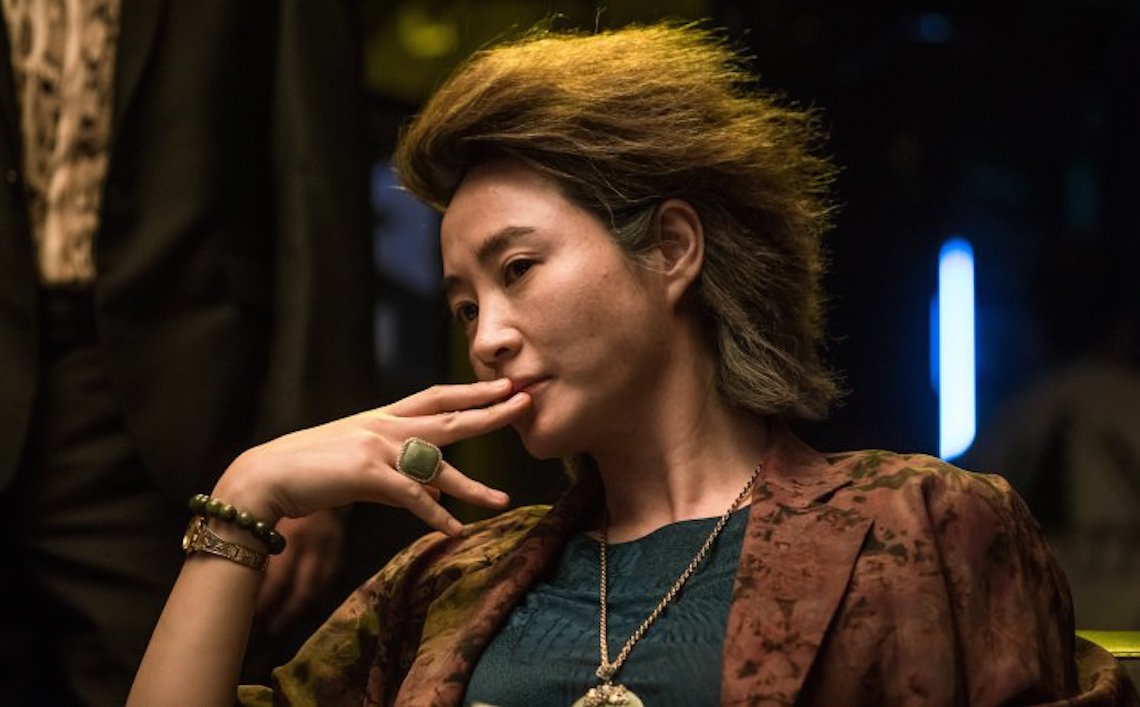
Mom is an intense, deadly force to be reckoned with

Mama is an intense, deadly force to be reckoned with

As underworld matriarch Mama, Kim Hye-soo is fascinating. Her transformative performance is easily a career highlight for the venerated actress, who exchanges the feminine glamour for which she is renown for a dowdy, masculine charisma with ease. Combined with her often disturbingly intense stares and danger-filled silences, Kim is wholly believable as a ruthless Chinatown kingpin. Every time Mama appears onscreen she dominates the proceedings, providing sorely needed suspense and compulsion to the narrative and is by far the most intriguing character within the film.

Kim Go-eun, however, has been completely miscast as gang enforcer/debt collector Il-yeong. While she is undoubtedly a charismatic actress, as exemplified in A Muse, Kim’s perfectly white and unblemished face in conjunction with her waif-like physique simply don’t convey the required gravitas the role requires and stands in stark contrast to the efforts employed by Kim Hye-soo. Though not a fault of her making, Kim Go-eun – as well as love interest Park Bo-geum – also falls victim to the oddities within the script and while she performs admirably, it’s difficult to emotionally invest in her journey.

Narrative peculiarities also particularly effect the supporting cast. Jo Bok-rae (C’est Si Bon) is criminally underused as corrupt cop Tak and he, along with the other male roles, seem to be present purely to engage in violent scenes that ironically tend to force Il-yeong to the sidelines. As adopted sister Song, Lee Soo-kyeong is present merely to be attractive although a scene in which she stabs herself in the arm with heroin, rather than injecting it into her veins, is quite laughable and destroys sympathy for the wayward antagonist. As the supporting roles are so underdeveloped, it is always a relief when Mama returns to the screen for she is the driving force behind Coin Locker Girl and the reason it’s an engaging viewing experience.

Il-yeong begins her quest for revenge

Il-yeong begins her quest for revenge

Verdict:

Coin Locker Girl is a visually impressive debut by writer/direcor Han Jun-jee, who employs striking colours and skewed camera angles to generate the intensity of the criminal underworld in Chinatown. Narratively however the crime drama is weak, yet the film is saved by a fascinatingly transformative performance by Kim Hye-soo who brings palpable gravitas to the role and provides the necessary compulsion to make Coin Locker Girl an entertaining effort.

★★★☆☆

Reviews

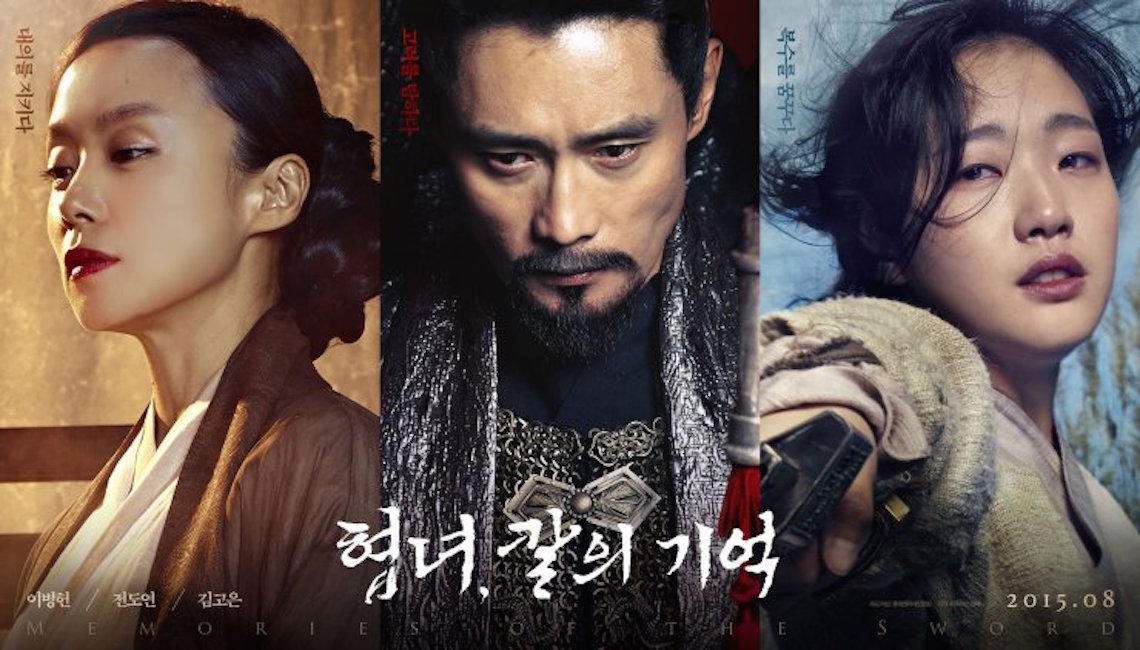
Lee Byung-hun’s Comeback ‘Memories of the Sword (협녀: 칼의 기억)’ Gets English Subtitled Trailer

Memories of the Sword (협녀: 칼의 기억)

Memories of the Sword (협녀: 칼의 기억)

Martial arts period drama Memories of the Sword has finally received a teaser trailer with English subtitles.

Originally set for release at the end of 2014, the film was reportedly delayed due to the blackmail scandal involving Lee Byung-hun, yet as the issue has now subsided an August 2015 date has been announced.

The swordplay epic follows the exploits of three warriors during the Goryeo dynasty who instigate an uprising, yet when their plan is finally set to achieve fruition master swordsman Deok-gi (Lee Byung-hun) betrays his comrades. To escape his wrath, Seol-rang (Jeon Do-yeon) flees with her young daughter to a place he can never find them. Eighteen years later, Deok-gi has positioned himself as a powerful ruler while Seol-rang – now blind – trains her daughter Seol-hee (Kim Go-eun) in ways of martial arts, preparing to exact her bloody revenge.

Directed and co-written by Park Heung-sik – who previously worked with Jeon Do-yeon on My Mother the Mermaid (2004) and I Wish I Had A Wife (2001) – Memories of the Sword will be a real test of the combined star power of three of Korea’s top tier actors, as well as a good indicator as to whether Korean cinema-goers have gotten over Lee’s transgressions.

MotS Kim Go-eun

MotS Kim Go-eun

MotS Lee Byeong-heon

MotS Lee Byeong-heon

MotS Jeon Do-yeon

MotS Jeon Do-yeon

Film News

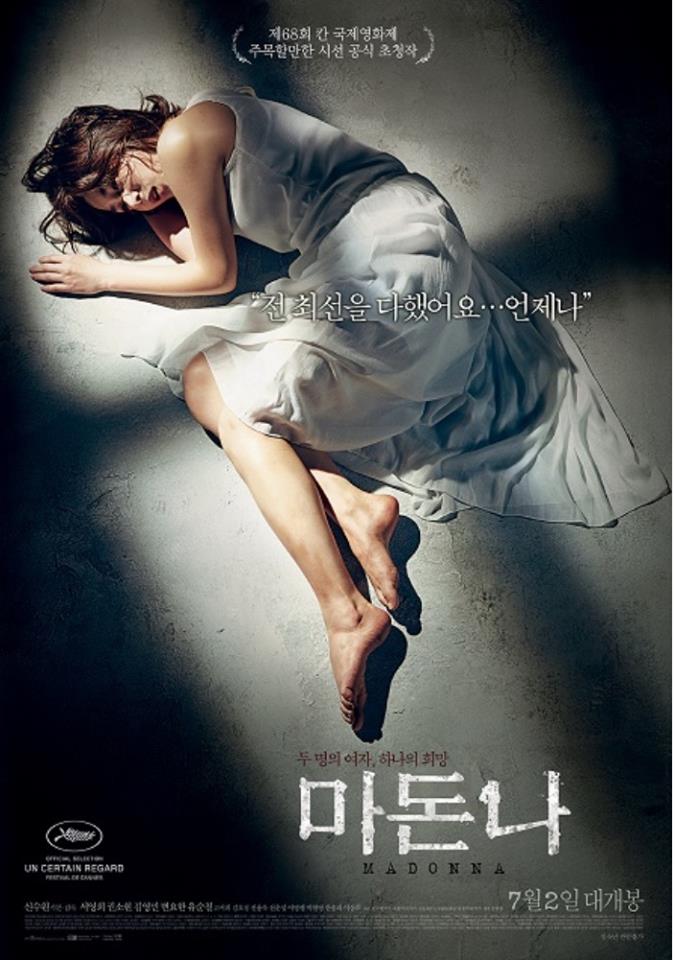
Madonna (마돈나) – ★★★☆☆

Madonna (마돈나)

Madonna (마돈나)

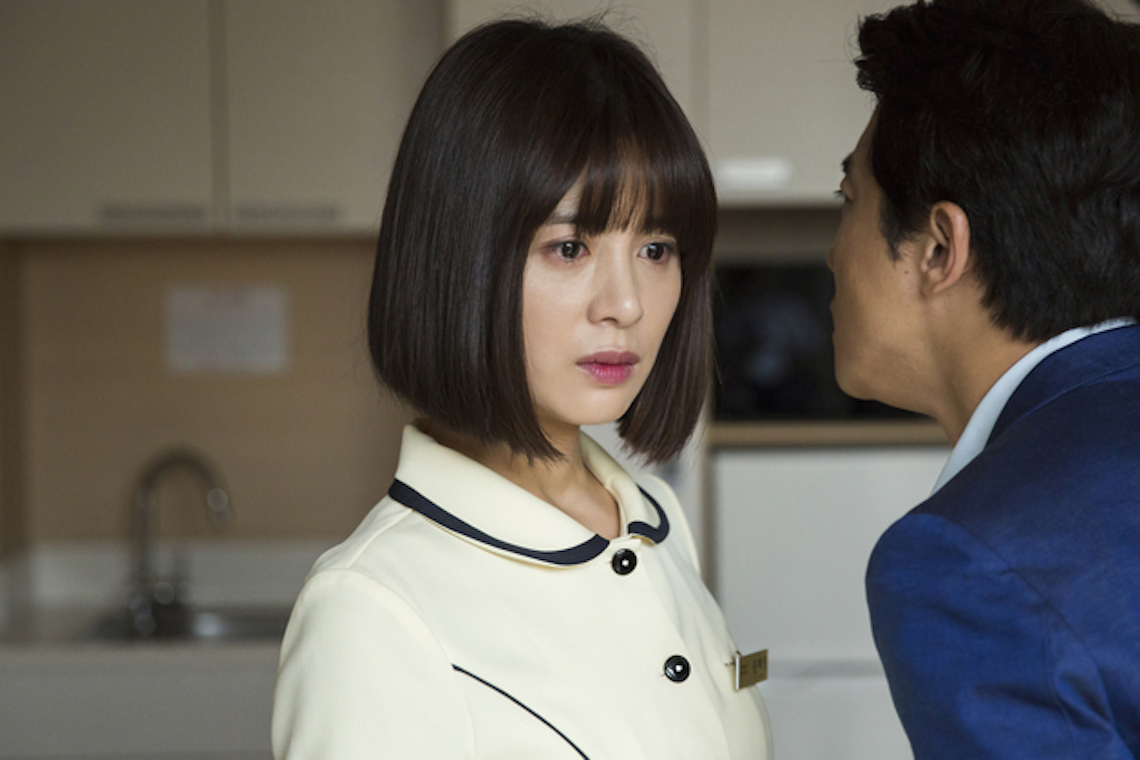
With debts mounting and depression looming, single thirty-something Hae-rim (Seo Yeong-hee (서영희) takes employment as a nurse on an exclusive VIP ward at a large hospital. Stunned by the difference in care the social-elite command, Hae-rim nevertheless works hard to provide treatment for her patient – an elderly and particularly wealthy mogul, whose son and heir Sang-woo (Kim Yeong-min (김영민) endeavours to keep alive whatever the cost. Following the tycoon’s latest heart transplant rejection time has seemingly run out, until the arrival of a comatose Jane Doe signals another possibility of prolonging his life. Yet upon Hae-rim’s discovery that the potential donor is pregnant, Sang-woo charges her with discovering the patient’s identity and obtaining permission from her next of kin, and in digging deeper into the life of Mi-na (Kwon So-hyeon (권소현) – nicknamed ‘Madonna’ – Hae-rim unearths some truly disturbing revelations.

Hae-rim is charged with locating Mi-na's next of kin

Hae-rim is charged with locating Mi-na’s next of kin

Featuring an equally impassioned sense of social injustice that made her prior film Pluto such a festival hit, writer/director Shin Su-won’s Madonna is a potent and unrelenting exploration of class inequality and misogyny in contemporary Korean society, one that potently generates debate on a great number of issues. The noir-esque drama also represents a clear technical evolution for Shin, as her collaboration with Yun Ji-woon’s on camera duties and Lee Shin-hye’s production design has yielded a noticeable level of visual finesse. Yet ultimately Madonna falls prey to overambition as the narrative attempts to include such a vast array of societal ills that the viewing experience becomes a punishing test of endurance, while structural imbalances in the final act tend to drain emotional resonance from the story. That said, Madonna is certainly one of the best Korean releases in the first half of 2015, and its premiere at Cannes was utterly deserved.

Director Shin displays incredible insight in regards to the culture of bullying within Korean culture, which she expresses through examining the rather vicious class system and associated sense of privilege, as well as the seemingly ingrained sexism and abuse that patriarchy knowingly perpetuates. The VIP wing beautifully captures such philosophies through portraying the excesses afforded to the rich clientele, with rooms adorned as if royalty were visiting yet are wonderfully cast in shadow to imply the secretive, macabre nature of the ward. The sense of entitlement expressed through the occupants articulate the amoral stance of the wealthy, with scenes featuring the chastisement of doctors akin to torture, the sexually predatory nature aimed at nurses, and one particularly effective confrontation, a discussion regarding obtaining organs via the Chinese black market. The hospital, as with the school in Pluto, is a location in which human rights abuses occur not only undisturbed, but are accepted.

As such, Hae-rim’s task in tracking Mi-na’s relatives becomes not merely an investigative case, but one that comes to embody an acute sense of social justice – for her, her unborn baby, and underprivileged women in general.

Hae-rim's investigation reveals a dark underbelly of abuse and misogyny

Hae-rim’s investigation reveals a dark underbelly of abuse and misogyny

With the advent of Hae-rim’s mission, the narrative switches from the tightly controlled and well paced clinic-centric drama to a non-linear one that examines the issues Hae-rim currently endures, alongside flashbacks that unveil the experiences that led to Mi-na’s hospitalisation. Initially the noir-esque device works wonderfully as it allows director Shin to explore an even greater array of societal abuse, victimisation and psychological trauma. As Hae-rim goes beyond her remit she discovers the horrifying tale of her ‘Madonna’ – of a woman abused at every level of society by those around her, with the cruelty she endures generating a more religious appropriation for her namesake as opposed to the pop idol.

Yet as the flashbacks detailing Mi-na’s past become increasingly longer, Hae-rim’s journey succumbs to a supporting role, and as a result the intrigue and tension initially constructed regarding the hospital and her position within it ultimately dissipates, as does the invest in her character. The different timelines also fail to generate an emotional connection between the two women given their very different trajectories. Director Shin seems to become aware of this and, quite jarringly, inserts a traumatic scene to create the required empathy yet due to the unbalanced structure of the final act, it doesn’t quite work as effectively as it could.

The consistent depiction of abuse towards Mi-na also becomes problematic as the film becomes akin to a gruelling test of endurance. The atrocities committed become ever more horrifying – and in one particular confrontation needlessly graphic – that lack the emotional and contextual gravitas as with, say, Han Gong-ju, resulting in provoking the debate of ‘just how far is too far’ in the depiction of sexual violence instead of the intended discourse of sexual assault on marginalised women.

In the role of Mi-na/Madonna however, newbie actress Kwon So-hyeon is terrific. She wholeheartedly commits to the role with impressive verve and courage with a performance that is likely to cement her as a presence in Korean indie cinema for years to come. Seo Yeong-hee meanwhile, who previously portrayed female abuse and cathartic revenge to stunning effect in Bedevilled, performs highly capably in what is ultimately an emotionally limited role. Her presence, while cold, is charismatic and her return as a powerful female lead is welcome indeed.

Mi-na's traumatic history of abuse is revealed through potent flashbacks

Mi-na’s traumatic history of abuse is revealed through potent flashbacks

Verdict:

Madonna is an impassioned story of social injustice and sexist abuse in contemporary Korean society by writer/director Shin Su-won. Displaying an evolved visual finesse and featuring a potent exploration of the cruel class system, the noir-esque drama is an unflinching take on societal ills. The film ultimately becomes a gruelling test of endurance and lacking in emotional resonance due to final act structural imbalances, yet despite this Madonna is certainly one of the best Korean films of 2015 so far.

★★★☆☆

Reviews

Fantasy-thriller The Piper receives an English subtitled trailer

The Piper (손님)

The Piper (손님)

The Piper (손님) – or more literally translated as The Guest – has received an English subtitled trailer ahead of its July 9th release date in Korea.

Loosely based on the classic tale of The Pied Piper of Hamelin, the fantasy-thriller is about a father and his sickly boy who, shortly after the Korean War, find themselves at a strange remote village in the mountains on their way to Seoul. Intending to stay there only for a day before moving on, the duo start to experience surreal events amongst the citizens that leads the father to pick up his mysterious pipe.

First time director Kim Kwang-tae takes the helm, although he has previously worked as an assistant director on erotic period drama Untold Scandal and romance flick Almost Love.

The Piper also features some of Korean cinema’s incredible acting talent. With Ryoo Seung-ryong (The Admiral) in the lead as the father and Lee Sung-min (Kundo: Age of the Rampant) as the village elder, the film also includes Chun Woo-hee (Han Gong-ju) and popular star Lee Joon (Rough Play), as well as child actor Goo Seung-hyeon (The Fatal Encounter).

Please see below for the English subbed trailer.

The Piper

Film News

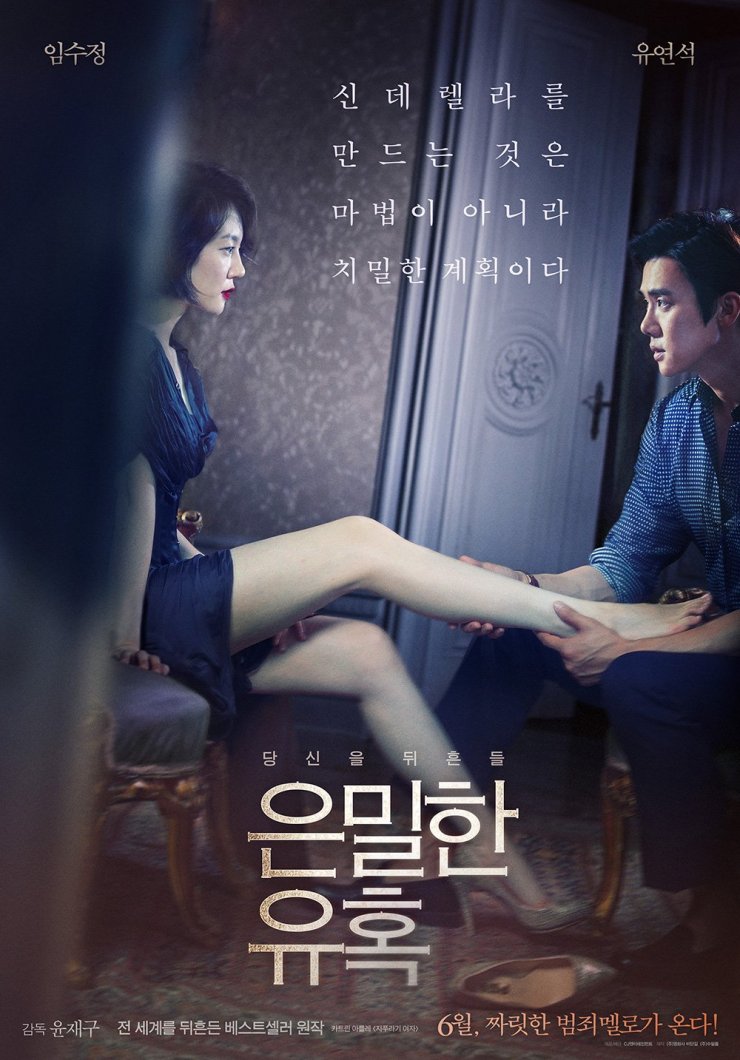
Perfect Proposal (은밀한 유혹) gets an English Subbed Trailer

Perfect Proposal (은밀한 유혹)

Perfect Proposal (은밀한 유혹)

Steamy thriller Perfect Proposal – or more literally translated as Secret Temptation – has received an English subtitled trailer ahead of its June 4th release date in Korea.

Based on French novel “La Femme de paille” (Woman of Straw) by Catherine Arley, the scandalous story depicts an ambitious young man (Yoo Yeon-seok (유연석) attempting to scheme a fortune from his sickly uncle (Lee Kyeong-yeong (이경영), enlisting the help of an attractive yet heavily-indebted woman (Im Soo-jeong (임수정) to do so. If she can marry the old man and manipulate him into changing his will so that she inherits his fortune, the pair will be rich forever more. Yet things don’t turn out as planned.

Director Yoon Jae-goo (윤재구), who previously helmed Secret (2009) and wrote Seven Days (2007), adapted the screenplay as well as taking the megaphone, and it will be interesting to see how he has interpreted such thrillingly seductive source material.

Perfect Proposal also signifies the return of actress Im Soo-jeong after a three year absence from the big screen, and playing a particularly different role from her last outing in Everything About My Wife.

For the English subbed trailer, please see below.

Film News