Sun-hwa may be trapped in her marriage, but her heart belongs to the invisible Tae-suk

3-Iron (빈집) – ★★★★☆

3-Iron (빈집)

3-Iron (빈집)

It’s a tragic fact that auteur Kim Ki-duk (김기덕) is not particularly revered in his home country. Despite his phenomenal success at international film festivals, and his arguably unparalleled contribution in heightening the awareness of Korean cinema, he is disliked regardless. Some claim Kim Ki-duk is perverse due to the appearance of sexual and violent scenes, while others applaud him for highlighting sensitive socio-cultural issues.

With 3-Iron (빈집), the infamous director eschews such overtly confrontational content and crafts a delicate, poignant romance story. Tae-suk (Jae Hee (재희) is a poor drifter who posts adverts over doors as a day job. At night, he returns to the area and breaks in to an abode that appears vacant. Rather than vandalise, Tae-suk merely requires a place to bathe and sleep, in return performing household chores for the unaware owner(s) as payment. After entering a luxurious house, Tae-suk continues his usual routine; that is until beaten housewife Sun-hwa (Lee Seung-yeon (이승연) catches him in the act. In the confrontations that follow, Tae-suk proves to Sun-hwa that he is a better man than her abusive husband (Kwon Hyeok-ho (권혁호), and the two run away together and form a relationship despite the odds.
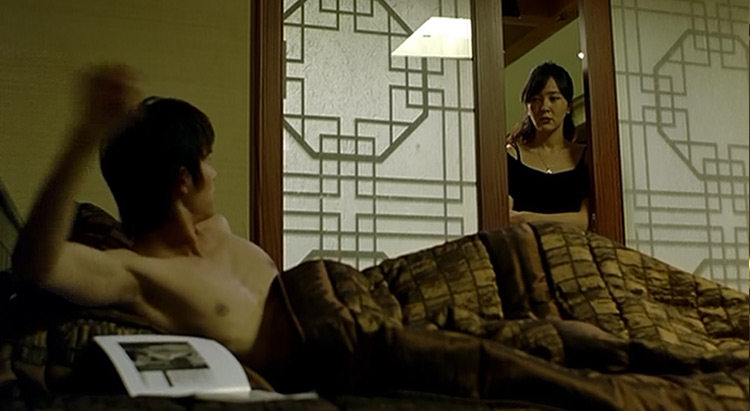
Drifter Tae-suk is caught by abused house-wife Sun-hwa

Drifter Tae-suk is caught by abused house-wife Sun-hwa

The touching relationship between Tae-suk and Sun-hwa develops organically and respectfully, bonding together as they move from one empty house to the next. Astonishingly, neither protagonist talks during the entire development of their relationship. Instead, subtle moments of kindness and intimacy become powerful symbols of love and respect, and allow their love to bloom in an innocent, almost naive style. The acting by both leads is incredible, conveying their evolving personalities through only facial expressions and gestures. Jae Hee is particularly impressive as his eyes convey a power and intensity that belie his gentle mannerisms. Kwon Hyeok-ho, as Sun-hwa’s villainous husband, is also terrific as his character turns from doting husband to abusive misogynist with ease. But by far the most poignant, even magical, performance is due to Lee Seung-yeon who transforms from a passive victim into a strong, vibrant woman as she discovers her identity.

Tae-suk's (태숙) time in prison equips him with a new skill - invisibility

Tae-suk’s time in prison equips him with a new skill – invisibility

As with all Kim Ki-duk’s films, the socio-cultural analogies are rife and highly critical. With 3-Iron such debates are gendered, as the auteur probes the nature of contemporary relationships. Sun-hwa is a former model, and photographs of her beautiful face and naked body adorn many of the homes that Tae-suk visits. Kim Ki-duk employs postmodernist themes in representing and deconstructing Sun-hwa, as she exists merely as an image of perfection which is continually contrasted with her bruised, older reflection whenever she looks in the mirror. Sun-hwa is first and foremost a trophy wife; she married a rich businessman, as is common in Korea for people of equal status and success to wed. But it was a marriage built on image – both personal and societal – and hides the dark truth of abusive patriarchy as Sun-hwa is beaten and told to ‘be still’ as she is sexually assaulted.

Tae-suk functions as the antithesis of such archaic patriarchal ideology. While he may be a criminal, he is constantly respectful and gentle not only to Sun-hwa but also within any home he visits. Despite his etiquette and chivalry, Tae-suk is routinely beaten and insulted by those threatened by him, and even accused of murder. With his innocence proven, a corrupt sadistic policeman (Joo Jin-mo, 주진모) continues to beat Tae-suk simply to provoke a reaction, which results in a jail term. The representation of prison in 3-Iron is horrendous and inhumane, yet during this time Tae-suk trains to be truly invisible. Tae-suk conveys the ethics of an older, more humble Korea; he is kind, gentle and understands the value of manual labour. He is the epitome of chivalry despite his lower economic status, highlighting the lack of ethics and principles in contemporary Korean men who appear only concerned with image, money and violence.

Sun-hwa may be trapped in her marriage, but her heart belongs to the invisible Tae-suk

Sun-hwa may be trapped in her marriage, but her heart belongs to the invisible Tae-suk

Verdict:

3-Iron is an incredibly romantic, even dream-like film with a highly critical core of contemporary Korean masculinity. The Korean title ‘빈집’ actually means ‘vacant house’, denoting both the abodes Tae-suk frequents as well as the vacuum of ethics within modern men. Director Kim Ki-duk has crafted his critique within a powerful and passionate, yet fragile and endearing romance that offers a unique and refreshing tale on the tenderness of love.

★★★★☆

Reviews
'The Bad' Park Chang-yi (박창이) leads bandits on a murderous chase

Superstar Lee Byeong-heon (이병헌) to star in period film, and receive presidential recognition

Renowned actor Lee Byeong-heon (이병헌) has announced his intention to star in a Korean adaptation of ‘The Prince and the Pauper.’

Superstar Lee Byeong-heon (이병현)

Superstar Lee Byeong-heon (이병현)

As reported by Korean Film Biz and Korea Joongang Daily, the incredibly popular star will play both the King of Joseon as well as a pauper who, after discovering they look alike, exchange places. This will be Lee Byeong-heon’s first foray into a period drama, and marks a departure from his usual action role as exemplified with A Bittersweet Life (달콤한 인생) and I Saw the Devil (악마를 보았다). It will be some time before production begins however, as Lee Byeong-heon is currently filming G.I. Joe 2: Retaliation in America before embarking on a tour of Japan.

Additionally, Old Boy scribe Hwang Jo-yoon (황조윤) will write the screenplay whilst Late Blossom (그대를 사랑합니다) director Choo Chang-min (추창민) will helm the production. According to Korean Film Biz, filming will begin early next year with a budget of $8 million/£5.1 million.

In another testament to the star’s influence, 10 Asia has reported (here) that Lee Byeon-heon is set to receive a presidential citation for his role in the development and expansion of Korean cinema. The accolade marks the recognition of the actor’s contributions, as he has starred in some of the most prominent films that have emerged from Korea during the past 10 years and has also appeared in Hollywood action films.


Celebrity News Film News
The inevitable stand-off provides catharsis

The Good, the Bad, the Weird (좋은 놈, 나쁜 놈, 이상한 놈) – ★★★★☆

The Good, the Bad, the Weird (좋은 놈, 나쁜 놈, 이상한 놈)

The Good, the Bad, the Weird (좋은 놈, 나쁜 놈, 이상한 놈)

The western genre is most obviously synonymous with America, and is arguably one of the few unique cultural products to emerge from the country. While Spanish westerns had existed prior, the notions of a ‘promised land’ of ‘New Eden’, the taming of the wilderness/frontier, and the conflict generated in the origins of a nation are all uniformly American in nature and allude to the difficulty of the era. The Searchers (1956) perhaps best exemplifies such ideological underpinnings, featuring western icon John Wayne as the tortured lead protagonist. Clint Eastwood’s career was forged through the genre and was capped by the magnificent Unforgiven (1992), which deconstructed the mythology surrounding the cowboy/outlaw and explored the inherent corruption of law officials.

Therefore, when superstar auteur Kim Ji-woon (김지운) announced his intentions to direct a Korean western, it was met with some trepidation; how could such an exclusively American genre be molded to suit Korean audiences and reflect Korean history and culture? The apprehension was unwarranted, as The Good, the Bad, the Weird  (좋은 놈, 나쁜 놈, 이상한 놈) not only addresses such concerns but extends beyond them, becoming a worthy addition to the genre in its own right.

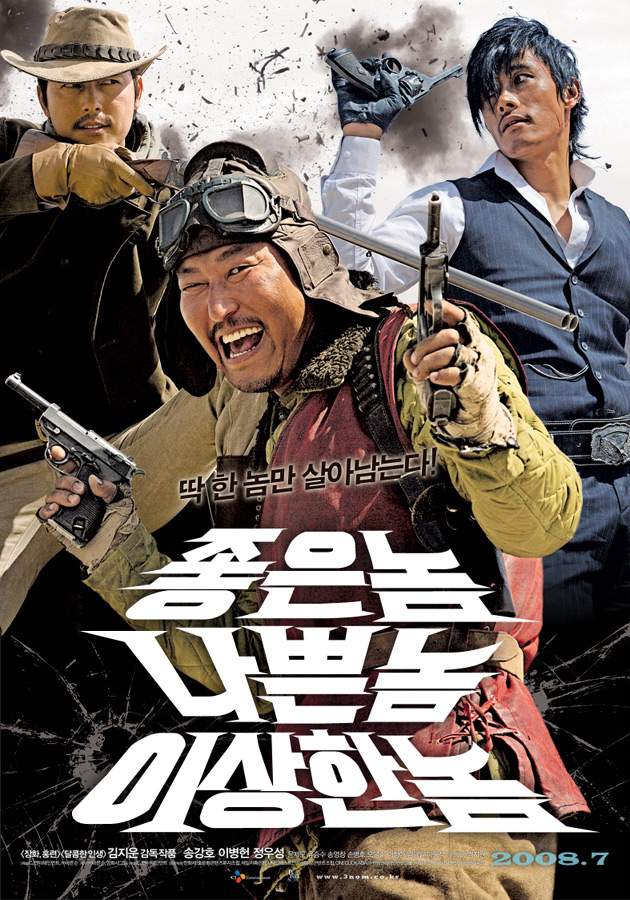
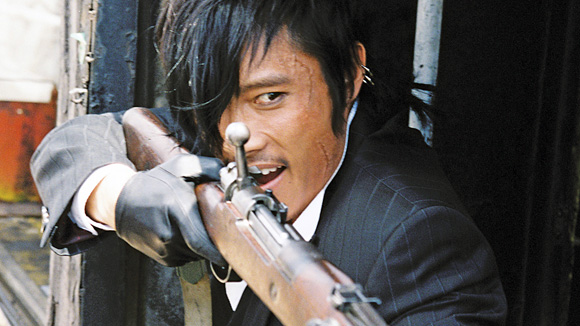
Set in the 1930s Manchurian desert, The Good, the Bad, the Weird portrays a land of lawlessness and violence. Korea is occupied under Japanese rule, and refugees flee north to escape persecution. However, the land is far from a safe haven as immigrants from all nations struggle to survive. Within this fray is ‘The Weird’ train robber Yoon Tae-goo (Song Kang-ho (송강호), who stumbles in and out of danger with an apparent nine lives. Performing his usual heist, Tae-goo unintentionally procures a treasure map rumoured to be the resting place of unimaginable wealth from the Qing Dynasty. However, ‘The Bad’ Park Chang-yi (Lee Byeong-Heon (이병헌) and his gang of bandits also desire the map, and give chase. Behind them is ‘The Good’ bounty hunter Park Do-won (Jeong Woo-seong (정우성), seeking to bring both men to justice.

'The Bad' Park Chang-yi (박창이) leads bandits on a murderous chase

‘The Bad’ Park Chang-yi (박창이) leads bandits on a murderous chase

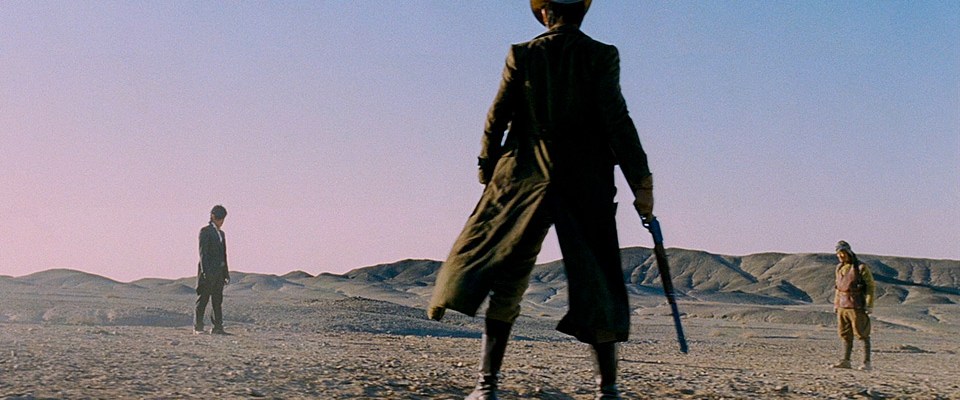
As the motives for chasing each other continually change, the emphasis is not on a gritty-realist portrayal but rather an action-orientated dark-humoured revisionist style. As with Sergio Leone’s The Good, the Bad and the Ugly (1966), each character has their own distinctive brand of death-dealing and mayhem such as Do-won’s long range rifle that blows miscreants through walls, Chang-yi’s knife wielding blood lust, or Tae-goo’s bizarre luck in dropping opponents. The light-hearted nature is Indiana Jones-esque as the film moves from one action set-piece spectacular to the next as bad guys and worse guys alike are blown to bits. As with all Kim Ji-woon’s films, the characters can be enjoyed on multiple levels. On the surface, they are fun and generic protagonists; on a more penetrative level they are allegories of Korea in-flux, the personification of national identity under Japanese occupation. They are fragments of a whole, each one without a country, each one on the run from a tortured past and chasing the other. The inevitable stand-off provides catharsis not only for audiences in need of resolution, but also for themselves as they simultaneously desire each other but want to be the last man standing and solidify their/Korea’s identity.

The inevitable stand-off provides catharsis

The inevitable stand-off provides catharsis

Director Kim Ji-woon is renowned for genre-play, taking pre-existing conventions and flipping them to create something vibrant and fresh. The Good, the Bad, the Weird  is no different as the gritty ol’ west is eschewed for fun and action set pieces which are shot in incredible fashion. The mise-en-scene is superb in every frame, with the consistent use of long takes adding considerable realism and enjoyment. Kim Ji-woon also employs the use of crash-zoom shots to great effect, but does so in his unique style that functions simultaneously as parody and pastiche of the genre. The multi-tiered action sequence in the Ghost Market is pure joy as Do-won flies on rooftops, Chang-yi cuts a swathe through other villains within buildings, and Tae-go simply tries to survive as he navigates the claustrophobic streets. Similarly the final chase sequence between the titular characters, marauding Manchurians and the Japanese army is exhilarating as the camera weaves between everyone involved while bullets fly and the body count rises.

Do-won ('The Good') pursues his targets

Do-won (‘The Good’) pursues his targets

Verdict:

The Good, the Bad, the Weird is a zany, fun-filled revisionist take on a traditionally American genre. Kim Ji-woon makes it a uniquely Korean production primed with historical and cultural anxieties. As the pace of the film is frantic to say the least, there is very little in the way of character development or dramatic, poignant scenes as to why the map (and the rush for the treasure) is so vital for all involved. Instead, The Good, the Bad, the Weird is an action-packed love letter to the genre, one that provides incredible enjoyment from start to finish.

★★★★☆

Reviews
Director Kim Jee-woon's exquisite use of colour enhances the tension

A Tale of Two Sisters (장화, 홍련) – ★★★★☆

A Tale of Two Sisters (장화, 홍련)

A Tale of Two Sisters (장화, 홍련)

It’s no secret that Western horror films tend to encapsulate social anxieties that must be stamped out by a conservative, traditional force. Such allegorical styles often fall into either socio-political anxieties, as with zombie films such as Romero’s catalogue of work including Dawn of the Dead (1978), or feminist/youth/sexual freedom in teen slasher films, such as the Halloween (1978-2009) series. Occasionally a psychoanalytic classic horror like Kubrick’s The Shining (1980) will be released to critical acclaim, yet after the furore has died down generic films depicting unrestrained teenage rebellion rise once more.

Asian horror films are markedly different. The allegorised social anxieties are more spiritual in nature and are often located within the homestead, exploring notions of family, technology, and ethical behaviour exemplified by films such as the Ring series (1998), Ju-on: The Grudge series (2003-2012), and The Eye series (2002). As with the West, attempts are made to control the disturbances yet they tend to be more patriarchal in nature, and the father/senior’s attempts at control often make the situation worse. Ultimately, the protagonist must unveil the mystery behind the source of horror, rather than suppress it. As such, Asian horror films are more inherently psychological in nature as they explore ‘the self’ in conjunction with spirituality whilst rejecting male chauvinism.

A Tale of Two Sisters not only exemplifies this trend, but is also an incredible and unique addition to the genre. Soo-mi (Im Soo-jeong (임수정) and younger sister Soo-yeon (Moon Geun-yeong (문근영) return to their family home in the country after a trip away. It’s not long before the sisters come into conflict with their new spiteful step-mother Eun-joo (Yeom Jeong-ah (염정아), while their stoic father Moo-hyeon (Kim Kap-soo (김갑수) looks on.

Soo-mi and Su-yeon can only rely on each other due to their dysfunctional family

Soo-mi (right) and Soo-yeon (left) can only rely on each other due to their dysfunctional family

Loosely based on a Joseon-era folktale, A Tale of Two Sisters is a chilling, atmospheric, and engaging film from start to finish. This is chiefly due to auteur Kim Ji-woon (김지운) who continually displays an incredible talent for playing with genre conventions and is masterful in creating suspense and terror. He integrates and evolves visual motifs seamlessly such as his exquisite use of colour to reflect whether a protagonist is safe or potentially in peril, such as the cool blue safety of the duvet covers, the eerie unsettling green of the furniture, and the horrific blood red decor in the dining room. Kim Ji-woon combines this eye for colour with a Kubrickian sense of symmetry (a la The Shining) and slow, long tracking shots through shadowy corridors and rooms that turns a peaceful family home into a labyrinthian horror. The motifs of flowers that beautifully adorn the wallpaper throughout the house initially, later become a tangled and sinister web of vines that threaten to engulf those who stand before it. Combined, the homestead is not only a source of horror but also alive and evolving as the sisters descend into the mystery.

Director Kim Jee-woon's exquisite use of colour enhances the tension

Director Kim Ji-woon’s exquisite use of colour enhances the tension

Soo-mi and Soo-yeon must not only contend with the ever-changing architecture, but also their vindictive step-mother. Visiting an old cabin in the neighbouring woods, Soo-mi finds old pictures and reveals that Eun-joo was previously her mother’s nurse. Enraged and paranoid, the sisters create further tension in their relationship with their ‘new mother’ as motives are questioned and clues are found. Compounding the tension further is the fact that all the protagonists begin to hear and see the supernatural, so that suspicion and mistrust are commonplace. The performances by all three actresses are engaging and compelling as each struggles with themselves and their environment, and expertly convey the tense, terrifying situations in which they find themselves.

Flower motifs and colours serve to heighten the suspense

Flower motifs and colours serve to heighten the suspense

Verdict:

A Tale of Two Sisters is an incredibly detailed and psychological horror that ranks among the upper echelons of the genre. Writer/director Kim Ji-woon plants enough red herrings and twists amongst his superb use of mise-en-scene that, from start to finish, makes the film an entrancing and enthralling viewing experience. If there are any criticisms to be highlighted, it would be that certain scenes of horror could perhaps be more inventive in their presentation, but this is a minor quibble. A Tale of Two Sisters is a fascinating journey of familial tension, teenage angst, and the supernatural and comes highly recommended.

★★★★☆


Reviews
Expressionist lighting conveys suspense in the basement internet cafe

The Hideout (소굴) – ★★★☆☆

The isolated internet cafe of Hideout (소굴)

The isolated internet cafe in          Hideout (소굴)

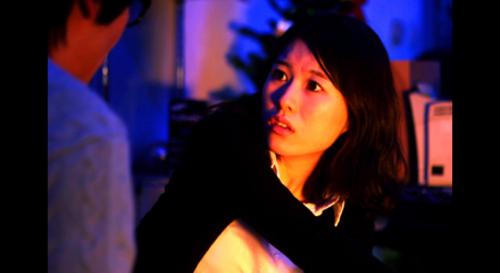
Driving alone through the countryside in winter, a journalist is in danger of missing a crucial deadline. Spying an isolated internet cafe (PC 방) on a rural road, the journalist pulls over and enters the basement domain where she can complete her assignment, but doesn’t realise the other occupants may have criminal agendas.

The journalist must defend herself

The journalist must defend herself

The Hideout (소굴) has a simple and generic, but interesting premise. Trapped in the basement of a remote internet cafe, the female journalist must use her ingenuity to overcome all obstacles and escape her basement prison. Her captors are ambiguous to say the least, and while they certainly qualify as unnerving miscreants, their true motives are never fully revealed. The Hideout is successful in conveying the fear of being a lone woman trapped in a situation she cannot escape, although the ambiguity of her ‘jailors’ are such that the journalist often appears paranoid and unstable.

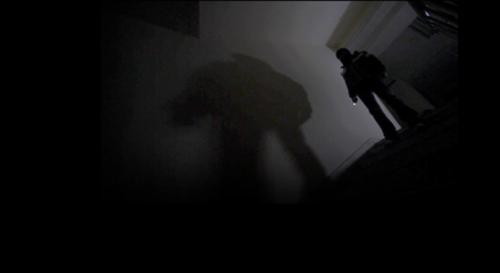
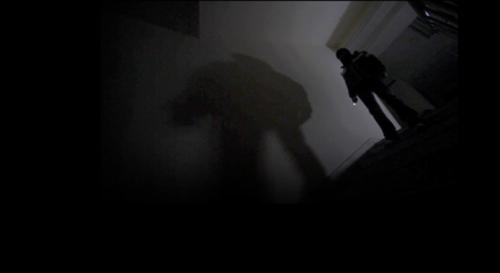
Expressionist lighting conveys suspense in the basement internet cafe

Expressionist lighting conveys suspense in the basement internet cafe

Director Lee Chang-hee (이창희) competently creates an eerie atmosphere in its 30 minute running time, however a narrative as simple as The Hideout requires a directorial flair to convey suspense and horror which is unfortunately lacking. There are sufficient obstacles in the path of the main protagonist as she attempts to flee, yet narrative devices such as a uncharged cell phone battery, power cuts and sharp instruments are hardly original. The Hideout is successful in representing a powerful female central character and her resourcefulness, and there are adequate moments of suspense and tension that make it compelling enough to be invested in the safety of the journalist, which is under constant threat. It may well be unoriginal, but The Hideout contains more tension and suspense than typical teen-slasher films.

★★★☆☆

Reviews
Negligence of Duty/Social Service Agent (복무태만) 2011

Negligence of Duty/Social Service Agent (복무태만) – ★★☆☆☆

The social service agent upsets the delivery man

The social service agent upsets the delivery man

Negligence of Duty/Social Service Agent (복무태만) is a short story about a man who has delayed his military service. At 32 years old he has left his duty rather late, and instead of real military training he is given the task of a social service agent at a care centre. The man has no direction, no ambition, and creates conflict in his life in order to make it interesting. Unfortunately, despite the best efforts of director Kim Tae-yong (김태영), it is not.

The ‘slacker’ sub-genre can be a humourous and/or insightful exploration of people without aspirations, such as the excellent Trainspotting (1996). Negligence of Duty/Social Service Agent however is lacking in every sense, as the main protagonist is utterly uncompelling. He is simply an irritation and his 26 minute narrative ‘journey’, which reveals how his arrogance destroys what little semblance of life he has obtained, is unimaginative and unconvincing.

The one moment of interest comes from an argument between the central protagonist and the delivery man, which is amusing to witness how lack of respect for age and one’s job can create conflict in contemporary Korea. Yet rather than continue to explore this area, Negligence of Duty/Social Service Agent opts instead to dismantle the social service agent’s ‘life.’ But as it’s a dull and uninteresting one that the audience are not invested in, the film ultimately fails in creating empathy.

★★☆☆☆

Reviews
City (도시)

City (도시) – ★★★☆☆


City

City (도시)

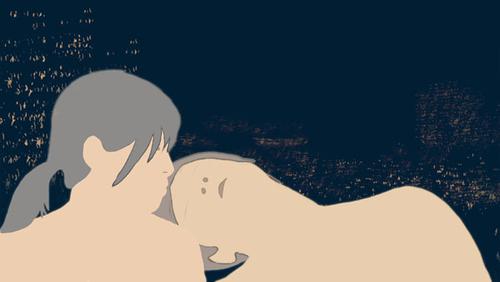
City (도시) posits an interesting question – what would life be like without boundaries? In this 7 minute animated short film, director Kim Young-geun (김영근) attempts to answer this conundrum by removing all traces of materialism including clothes, walls, buildings, subways and even the very floor itself. There is no narrative as such, merely viewing a day in which the animated characters continue their daily lives.

An average day without the boundaries of clothes

An average day without the boundaries of clothes

While this may initially seem akin to a peeping tom production, the animation is an interesting piece as it attempts to raise awareness of the proximity of those around each other once barriers have been removed. If the walls between apartments are gone, people would notice and be closer too their neighbours. If the floors and ceilings are gone, people would not feel alienated. This is especially the case as the City itself appears to be Seoul, a city in which millions of people inhabit but do not know each other.

Removing the boundaries of walls and streets, City conveys that everyone is interconnected

Removing the boundaries of walls and streets, City conveys that everyone is interconnected

As intriguing an idea as City is, it quickly becomes tiresome as there is no character that introduces audiences to this world, no narrative arc in which audiences can invest. The animation itself (which omits bodily attributes) is also unimpressive. Scenes such as taking the subway are interesting, yet the static omniscient camerawork does nothing to enrich the film. City is a nobel attempt at revealing and deconstructing the man-made barriers that halt people from becoming friends and communities, and inviting the audience to see ‘the real’ in the postmodern society we all inhabit. However, without any protagonist or narrative to guide audiences through this brave new world, City is rather flat.

★★★☆☆

Reviews
Promise (약숙)

Promise (약속) 2011 – ★★★★☆

Promise (약숙) explores the final moments of a difficult relationship

Promise (약속) explores the final moments of a difficult relationship

Promise (약속) is a short film that explores the final stages of a relationship between a husband and wife. However, their relationship is far from typical; the husband is comatose, and while his eyes may be open he has no physical functions whatsoever. His wife is also his carer, helping to wash, clean and dress her now incredibly sick partner. Promise is her story, played admirably by Kim Si-jeong (김시정), and her internal conflict between staying with the man she married or starting her life again.

The central protagonist takes care of her comatose husband

The central protagonist takes care of her comatose husband

Director Yang Hyeon-ah (양현아) consistently frames his protagonist as alone and under pressure, as she must not only endure her husband’s illness but also the tenuous relationship with her bitter mother-in-law and her new boyfriend’s desperate attempts to start afresh together. Despite everything, she intends to be a devoted wife until the divorce is legally declared. Kim Si-jeong performs the role incredibly well as she changes from stoic to desperate, prepared to do anything to force a response from her spouse before it’s too late. Initially she appears uncaring, but her performance hides the many layers of the character until the final stages.

The central protagonist is constantly framed as isolated and under pressure

The central protagonist is constantly framed as isolated and under pressure

Promise is a poignant and compelling tale about the difficulties of separation. Ironically, what is perhaps most frustrating about the short film is that it is a short film. The short running time halts the more penetrative feature film that Promise should be. The narrative is a touching humanist story, one that deserves a longer running time and more probing analysis into the difficulties of ending this type of relationship in modern Korea. In its 25 minutes, Promise unfortunately cannot fulfill its potential. However, it is a truly captivating story that explores an emotional conundrum with maturity and dignity, and signals that director Yang Hyun-ah and actress Kim Si-jeong are talents to watch.

★★★★☆

Reviews
Winter Woman (겨울여자, 1977)

Veteran actor Kim Chu-ryeon (김추련) found dead

The late Kim Chu-ryeon (김추련)

The late Kim Chu-ryeon (김추련)

Actor Kim Chu-ryeon (김추련), who starred in classic films including Lovers in the Rain (빗속의 연인들, 1976) and Winter Woman (겨울여자, 1977), was found dead in his apartment on Tuesday 8th November in an apparent suicide.

The Korea Times reported that Kim Chu-ryeon, 64, was found by the deacon of the church he frequented, as the deacon had received a worrying letter that morning and visited the actor’s home. The actor had been suffering from depression and had been living alone. A note was found at the scene that stated, “It was difficult to handle the loneliness and hardship. I feel sorry for my fans and family.”

Kim Chu-ryeon unfortunately joins the large number of Korean actors and actresses, such as Lee Eun-joo (이은주)and Choi Jin-sil (최진실), that have taken their own lives.  Our thoughts go out to all friends and family.

Winter Woman (겨울여자, 1977)

Winter Woman (겨울여자, 1977)

To watch the classic Winter Woman (겨울여자, 1977), on Video On Demand, please visit here.

Winter Woman (겨울여자, 1977)

Winter Woman (겨울여자, 1977)

Celebrity News
In-ho constantly breaks the rules, and requires punishment

Jang Geun-seok (장근석) defends emasculating role in You Pet (너는 펫)

Jang Geun-seok (장근석) defends his latest movie

Jang Geun-seok (장근석) defends his latest movie

The release of Jang Geun-seok (장근석) and Kim Ha-neul‘s (김하늘) new film You Pet/You’re My Pet (너는 펫) has prompted an outcry and a legal petition from a Korean men’s association. According to the Chosun Ilbo, the association filed the petition as they were offended by the emasculating role played by Jang Geun-seok as he takes on traditional female tasks and acts like a dog for his ‘master’, the intelligent and successful Kim Ha-neul. The men’s association stated that that the portrayal was, “an insult to men’s dignity as human beings.”

The enormously popular Hallyu star was quick to defend his role in the film, positing, “Why wouldn’t you be able to be like a pet if the woman is older, more capable, and the whole dinner menu changes when you please her?” He continued that men shouldn’t feel threatened or that their masculine pride has been damaged, as it’s not a charming quality.

While this news may seem lacking in controversy for ‘western’ audiences, it highlights a growing shift in the deconstruction of gender roles in conservative Korea. As a very patriarchal society, the release of You Pet/You’re My Pet would undoubtedly be deemed as antagonistic by those that consider gender roles to be ‘fixed’. It is wonderful to see that the younger generation of film stars and film makers are challenging such archaic sensibilities, particularly someone as popular as Jang Geun-seok, as while the film may be a romantic comedy it will also serve to raise awareness of gendered stereotyping and the limitations thereof.

UPDATE

The legal petition submitted by the men’s association was rejected by Seoul Central District Court. The injunction had attempted to ban the film completely, but was dismissed in open court. As is often the case, the petition has actually served to increase interest in You Pet/You’re My Pet (너는 펫), which Hancinema claims is riding high at the box office.

You Pet/You’re My Pet is currently in cinemas in Korea, and the trailer is below.

Celebrity News Film News