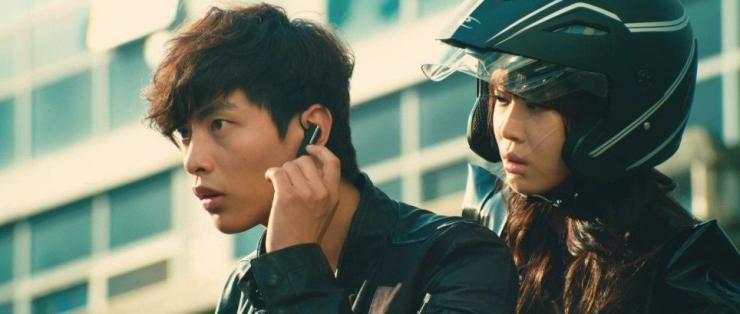
Gi-soo and Choon-sim are forced to work together or the helmet-bomb will detonate

Quick (퀵) – ★★☆☆☆

Quick (퀵)

Quick (퀵)

The action-comedy sub-genre can be a gleefully entertaining experience, eschewing the penetrative socio-cultural material conveyed through critically acclaimed work and focusing primarily on exhilarating stunts and battles, charismatic lead actors, and downright silly fun. The amazing Jackie Chan has built a career through action-comedies with his incredibly unique vision for fight sequences and stunt work that made insurance companies weak at the knees. Similarly, Jason Statham’s The Transporter and Crank genre vehicles helped cement his role as action hero, while The Fast and The Furious has such popularity with its fast cars and overt machismo that a seventh sequel is currently planned.

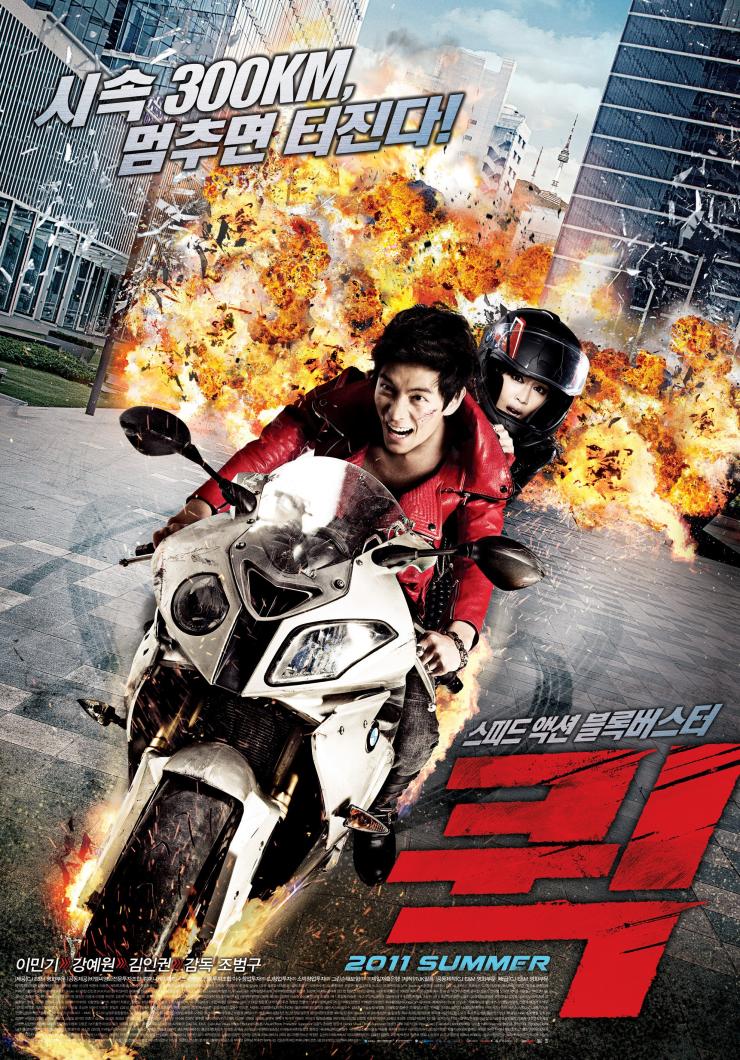
Quick (퀵) aims to emulate such successes, featuring racing motorcycles, rogue police officers, and a race against time to stop the Machiavellian ne’er-do-well from exploding yet another building. However, the striking lack of originality, lack of charismatic leads, and general lack of comedy make Quick a forgettable viewing experience.

Han Gi-soo (Lee Min-ki (이민기) is a legendary biker gang leader, always in trouble with the law yet despite this dates the studious Choon-sim (Kang Ye-won (강예원). Caught kissing another girl, Gi-soo simply rides away but is pursued by Choon-sim who demands answers for his betrayal. During the chaos, the bikers cause several traffic accidents resulting in the destruction of a number of cars and lives lost. A few years later, Gi-soo works as a bike courier renowned for delivering packages in ultra-fast time. One afternoon Gi-soo is instructed to transport a person to a studio, which turns out to be Choon-sim who has re-invented herself as Ah-rom (아롬), a member of a Kpop girl group. Yet when she puts on her helmet, a bomb is triggered and a mysterious voice on a cell phone claims he will detonate if Gi-soo refuses to deliver packages to various recipients. In addition, Gi-soo is also tagged with a bracelet linked to Choon-sim’s helmet – if they are more than 10 meters away from each other, the bomb will also detonate. Gi-soo and Choon-sim are forced to work together to deliver all the packages in time and escape with their lives, as well as discovering why they were chosen for the task.

Gi-soo and Choon-sim are forced to work together or the helmet-bomb will detonate

Gi-soo and Choon-sim are forced to work together or the helmet-bomb will detonate

Director Jo Beom-goo (조범구) competently constructs and frames the action, filming multiple car pile-ups and explosions with confidence. The motorcycle stunts, despite the suspension of disbelief required, are thrilling and entertaining to watch as Gi-soo and Choon-sim jump over ramps, rooftops, and even over streets into nearby buildings as they avoid the fleet of police officers hunting them down and the fiery infernos that are left in their wake. To this end the editing must also be acknowledged as the rapid style adds excitement and conveys the speed of the race-against-time scenario. The same cannot be said for Park Su-jin’s (박수진) script which is overly convoluted featuring corporate espionage, gang warfare, and an ineffective police force. Overburdened with so many narrative tangents, and so many protagonists inaugurated to achieve those ends, the core plot of Quick quickly becomes submerged which detracts from the enjoyment of the over-the-top action spectacles. Quick (퀵) also blatantly ‘borrows’ gimmicky ideas and themes from other films of the genre, most notably The Transporter and The Fast and The Furious franchises, in a less-than-subtle attempt to become Hollywood fare. The reason such devices worked in prior films was due to their originality and the charisma of the actors involved, who clearly understood the tongue-in-cheek nature of  their role. Quick unfortunately has neither.

Gi-soo and Choon-sim find themselves in an array of dangerous situations

Gi-soo and Choon-sim find themselves in an array of dangerous situations

While lead actor Lee Min-ki and actress Kang Ye-won are incredibly attractive, their performances leave little to be desired. The roles themselves are extremely limiting as they function as devices simply to move from one set piece to the next, but even so, Lee Min-ki is not convincing as an action star. His lack of physical prowess notwithstanding, the tough-guy street-savvy attitude and intimidating personality are noticeably absent with the singular – and unimpressive – fight scene doing very little to remedy the matter. Similarly Kang Ye-won’s role, in which she miraculously changes from teenage bookworm to Kpop superstar, is merely to complain, whine and scream throughout the narrative. But by far the most irritating protagonist is biker-turned-traffic cop Kim Myeong-sik, played by Kim In-kwon. While initially humourous, Myeong-sik quickly becomes aggravating due to recurring gags and his constant yelling for his unrequited love interest. It’s also puzzling as to why so many protagonists are deemed necessary, as the abundance of police officers, gangsters, and corrupt office workers severely impede the character development of the lead roles.

The couple must take to the pedestrian-filled streets to escape the police

The couple must take to the pedestrian-filled streets to escape the police

Verdict:

Quick is an enjoyable, albeit mediocre, action comedy. With some entertaining stunt work and fun set-pieces, Quick is a fast paced and – thanks to the lead actors – an attractive viewing experience. However the film is weighed down by excessive narrative tangents and protagonists, and the resulting lack of character development detracts from creating empathy with the leads and portraying the intensity of their situation. Despite these shortcomings, there are enough car and motorbike crashes, highway chases and explosions to keep fans of the genre happy.

★★☆☆☆
Reviews
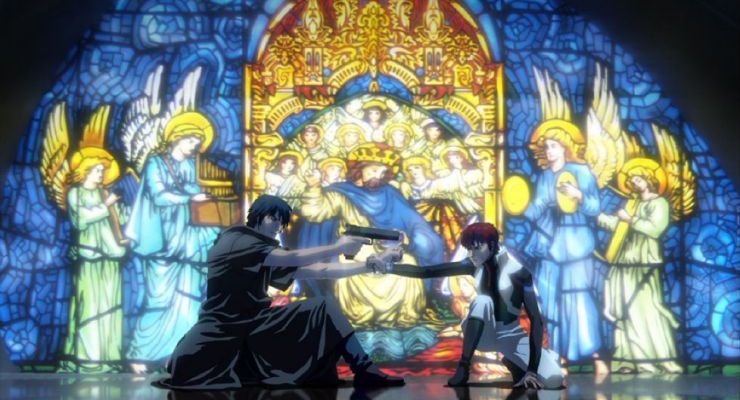
Digger 'terrorist' Shua is confronted by Jay, an Ecoban soldier

Wonderful Days (Sky Blue) (원더풀 데이즈) – ★★☆☆☆

Wonderful Days (원더풀 데이즈)

Wonderful Days (원더풀 데이즈)

Dystopian visions of the future offer a fantastical perspective from which to examine socio-cultural anxiety of the era. From Fritz Lang’s 1927 masterpiece Metropolis and Katsuhiro Otomo’s classic Akira (1988), to more contemporary fare such as The Day After Tomorrow (2004), District 9 (2009) and Star Trek (2009), the dystopian realm is a place to dissect humanity’s overly ambitious use of technology and the class divisions that were of such incredible concern for Karl Marx.

Wonderful Days (원더풀 데이즈) also addresses such themes within its science-fiction narrative, yet despite the sumptuous animation unfortunately offers precious little originality due to a woefully bland narrative.

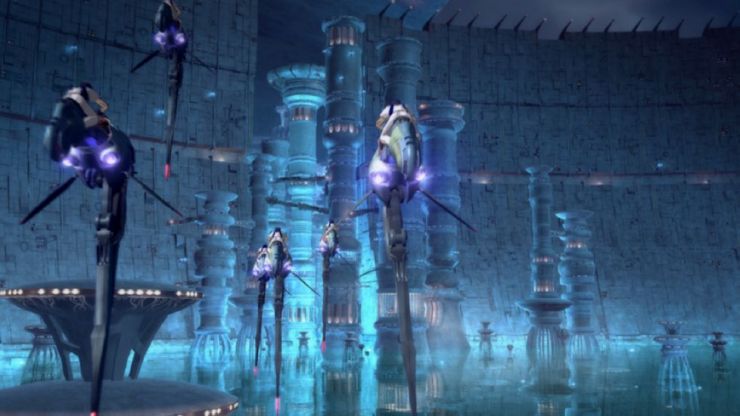
In the year 2142, humankind is almost extinct due to global warming and continuous acid rain storms that have fallen for 100 years. Foreseeing the impending catastrophe, scientists built a ‘living’ city called Ecoban for future generations to inhabit, yet after the events that reduced the population by billions the remaining survivors were denied sanctuary. Instead, the ‘Diggers’ were forced into the wasteland to mine for carbonite, the fuel source that Ecoban and its denizens rely upon. As the various revolutions come to nothing, a young man named Shua (수아) decides to sabotage Ecoban’s fuel tanks once and for all, but standing in his path are female soldier Jay (즈아) and her commander Cade (크아드).

The beautiful city of Ecoban, exclusive only to a small percentage of the population

The beautiful city of Ecoban, exclusive only to a small percentage of the population

Wonderful Days is visually impressive, employing 3D textures for landscapes and vehicles amalgamated with 2D animation for the protagonists that use them. Shortly after the opening scenes, the ‘terrorist’ Shua enters Ecoban through a mask dance festival in order to sabotage the generators within, leading to an action sequence that displays the keen prowess of the animators involved. However, such impressive visuals are one of the few scant positives in Wonderful Days as the narrative itself is incredibly dull and uninspired, with enormous plot holes that in certain instances render the events as ridiculous. At approximately 86 minutes long it is also frustratingly short as there is ample time to further explore the potential that Wonderful Days alludes to. The fundamental societal issues – the devastation of Earth and the class divide – are barely explored despite their importance within the narrative. Considering neighbouring Japan has produced arguably the seminal animated films relating to such anxieties in the form of Princess Mononoke (1997), Castle in the Sky (1986) and Akira to name a few, it’s all the more baffling that writer/director Kim Moon-saeng (김문생) didn’t seek inspiration for an alternative interpretation of a dystopian nightmare.

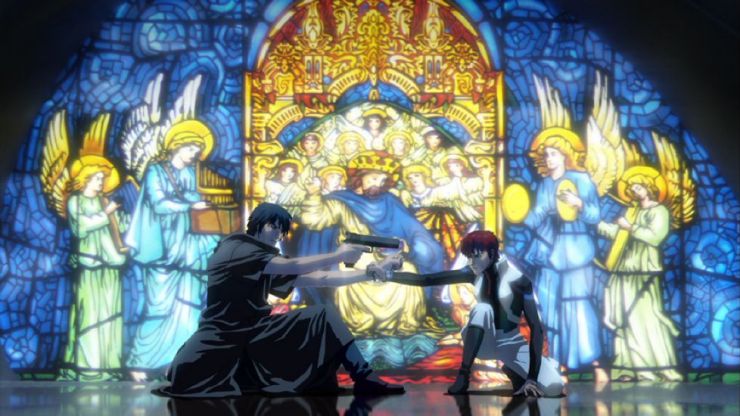
Digger 'terrorist' Shua is confronted by Jay, an Ecoban soldier

Digger ‘terrorist’ Shua is confronted by Jay, an Ecoban soldier

Instead, a rather bizarre and remotely explained romantic triangle tends to dominant the proceedings, as well as an array of 2 dimensional characters that flit in and out of the narrative that offer little other than irritation. The romance is incredibly contrived and forced as the center-point of the plot, attempting to be akin to Romeo and Juliet as lovers from different backgrounds, but it ultimately fails due to the lack of character depth and defining moments, as well as the staggering leap of disbelief required.

The class struggle is interesting as descension spreads and riots break out, but again the lack of exploration into the world inhabited by the Diggers fails to convey the intensity and anger felt by the underprivileged. The characters that feature within the wastelands occupied by the working classes are generic stereotypes that do nothing to portray or promote their cause as just, and are so unlikeable and downright stupid that it almost becomes difficult to distinguish which side should emerge victorious.

Shua must sabotage Ecoban if he is to save the Diggers

Shua must sabotage Ecoban if he is to save the Diggers

Verdict:

Despite the attractive visuals, Wonderful Days is a hollow film that is devoid of any depth. This is perplexing as there is a wealth of potential in the exploration of dystopian futures, technological abominations and class warfare, but in attempting to force a contrived romantic story as its center-piece Wonderful Days fails to entertain or enlighten.

★★☆☆☆
Reviews
Hae-gook must traverse a literal tunnel of deceit

Moss (이끼) – ★★★★☆

Moss (이끼)

Moss (이끼)

The corruption of the ruling elite is certainly nothing new in Korean cinema. After years of military dictatorships and scandalous corporate backhanders, it’s clearly understandable why such themes are continuously prevalent. However these narratives often approach from a reactionary perspective, highlighting the suffering of those victimized by injustices. Little explored are the foundations of a community, the roles and interplay of law, religion, power, crime and punishment in the creation of a society. Such Shakespearean motifs are traditionally reserved for period dramas, yet Kang Woo-seok’s (강우석) Moss (이끼) wonderfully examines the labyrinthine networks of power in a contemporary village in Gangwon province. Based on the incredibly popular internet comic, Moss is an exhilarating and fresh addition to the thriller genre.

While struggling against a law suit, Ryoo Hae-gook (Park Hae-il (박해일) receives news that his estranged father, Yoo Mok-hyeong (Heo Joon-ho (허준호), has died. Visiting the estate, Hae-gook is surprised to learn of his late father’s role as one of the elder statesmen of the village, yet merely wishes to resolve  any outstanding affairs and return to his life in Seoul. However Hae-gook’s curiosity is piqued when his father’s partner, the powerful village foreman Cheon Yong-deok (Jeong Jae-yeong (정재영) and his three right-hand men – Kim Deok-cheon (Yoo Hae-jin (유해진), Jeon Seok-man (Kim Sang-ho (김상호), and Ha Seong-gyoo (Kim Joon-bae (김준배) – continually attempt to persuade him to leave.  As Hae-gook digs deeper into the mystery of his father’s death and the strange behaviour of the residents, he must confront the disturbing truth about the village and its inhabitants.

The residents of the village are not all they seem

The residents of the village are not all they seem

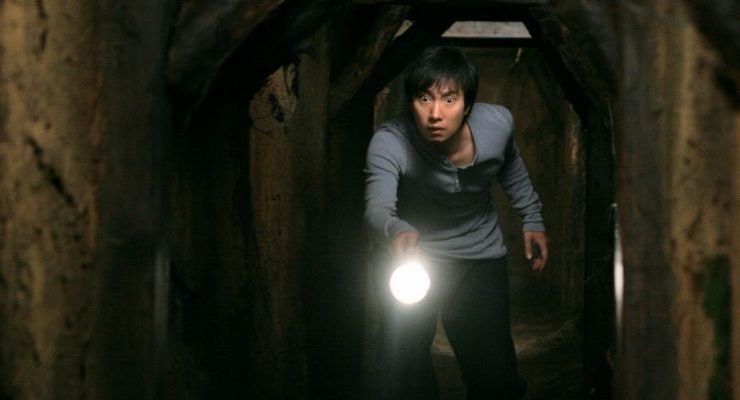
Screenwriter Jeong Ji-woo (정지우) has translated the web-comic to film with incredible skill, lacing each protagonist with depth and nuance – as well as fully realised character arcs – that makes each confrontation compelling viewing. This is remarkable as the 163 minute running time may seem excessive, but the narrative is so fueled with suspense and the protagonists so fascinating that the time is hardly noticeable. The plot is the epitome of labyrinthine, carefully taking time to construct the scenario through flashbacks and the creation (and breakdown) of relationships through subtle character defining events. Director Kang Woo-seok is impressive in visualizing such dense material, from the intimidating fortress overlooking the village to the claustrophobic subterranean tunnels. Praise should also be bestowed upon the set design, lighting and editing departments, who display ingenuity in creating the tension-filled world of Moss.

The actors are also wonderful in bringing the community of Moss alive. Park Hae-il is excellent as the idealistic Hae-gook who is continually involved in events beyond his understanding, while his nemeses – Yoo Hae-jin, Kim Sang-ho and Kim Joon-bae – are incredibly unnerving and intense in portraying the criminal classes/extensions of power. However, the most exceptional performance belongs to Jeong Jae-yeong, who is loud, violent and ambitious as a young man, but silently commands respect as an elder. The sheer intensity conveyed through his expressions is amazingly sinister, demanding obedience with merely a glance. The weakest link is Yoo Seon as store owner Lee Yeong-ji through no fault on her part, as her role is virtually forgotten until the third act when her presence is suddenly elevated into a lead protagonist.

Hae-gook must traverse a literal tunnel of deceit

Hae-gook must traverse a literal tunnel of deceit

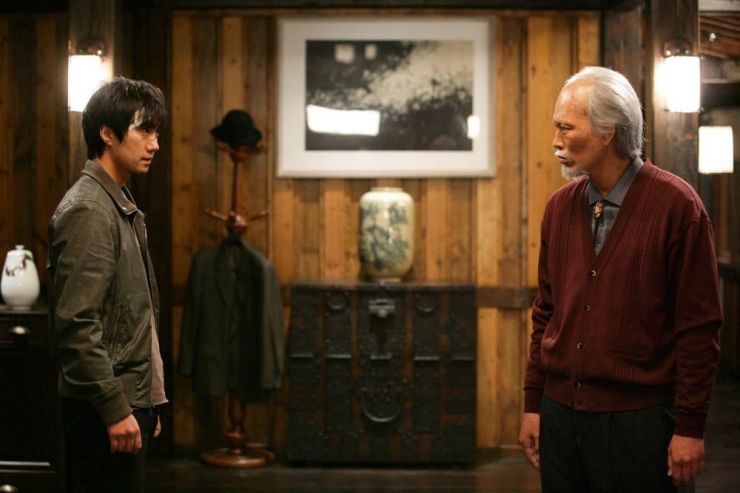
Thematically, Moss is also a triumph. The portrayal of corruption seemingly endemic with the ruling elite is hardly original, but Moss strives to explore all areas in the creation of a society, notably the role of religion. As such, the village in Moss acts as a microcosm for society, and how the younger generation must fight against the greed of their elders. Yong-deok, the village foreman, was a corrupt police officer in his youth but his ambition for power was continually unfulfilled. That is, until he met Mok-hyeong, a man with a violent past that had apparently found redemption through religion who was quickly amassing followers. The jealousy for power and influence ultimately fuels their relationship, yet both are keenly aware that alone they can achieve little. In joining forces to create a community both men have similar intentions but are ideologically opposed, as they wish to exert dominance over others but through different means. Each man is clearly representative of the ideological vie for power in society, and the process in which they become increasingly more corrupt is as organic as it is alarming. There is rather blatant bias however, as Mok-hyeong’s Christian ideology is constantly  represented as inherently ‘good’ which diminishes the exploration somewhat.

In discovering the sinister origins of the village, Hae-gook is representative of the younger generation that must reveal and persecute such greed. Hae-gook studies old books and documents, finds subterranean tunnels, and must even join forces with an enemy in the pursuit of his father’s murderer. As a young divorcee, Hae-gook embodies the change in society as the shift away from tradition becomes ever more apparent. His naivety and idealism is endearing but simultaneously foolhardy, as he continually fails to understand the larger events at hand.

The young and idealistic Hae-gook must face the old and corrupt Yong-deok

The young and idealistic Hae-gook must face the old and corrupt Yong-deok

Verdict:

Moss is a incredibly well executed thriller that delves into Shakespearean themes of the vie for power amongst the ruling classes. The interplay of different features of society, from religion to the criminal classes, constructs a dense tale of suspense that highlights the unfairness, and the generational differences, within a culture and emphasizes the importance of prosecuting the corrupt. The bias nature in representing Christianity, and the under-developed female role slightly detract from the viewing experience, but despite this Moss is a highly entertaining and compelling foray into corruption in contemporary Korea.

★★★★☆

Reviews
One by one, the group begin to display odd behaviour

White: The Melody of the Curse (화이트: 저주의 멜로디) – ★★☆☆☆

White: The Melody of the Curse (화이트: 저주의 멜로디)

White: The Melody of the Curse (화이트: 저주의 멜로디)

The glamourous world of Kpop has two faces. The glitz, lifestyle, fame and legions of fans displayed in front of the cameras has a much darker side once the cameras are switched off. The performers are forced to endure working long hours, as well as the spiteful behaviour of fellow singers ambitious to make it to the top, the constant need to reinvent through concepts to stay fresh and modern, and the ‘sex for sponsorship’ culture seemingly inherent in the industry, all of which constitute just a fraction of the intense pressure undertaken by those seeking celebrity status.

Such complex material is fertile ground for the creation of a tense psychological drama – or in the case of White: The Melody of the Curse (화이트: 저주의 멜로디), a horror. Yet rather than explore such ripe narrative devices in a detailed suspense-driven manner, screenwriters/directors Kim Gok (김곡) and Kim Sun (김선) opt for superficial, rapidly-edited scares that leave little lasting impression.

Appearing in multiple talent shows, ‘Pink Dolls’ continually fail to attract the media attention they crave in order to become the next big girl group sensation. As the slightly older leader of the group,  Eun-joo (Ham Eun-jeong (함은정) has difficulty controlling the spiteful and devious natures of other members Sin-ji (Maydoni (메이다니), Ah-rang (Choi Ah-ra (최아라) and Je-ni (Jin Se-yeon (진세연). Following their latest disastrous appearance, the group move into a new studio where Eun-joo discovers a 15 year old video tape labelled ‘white’ which contains a catchy song. With no owner, Pink Dolls steal the song and re-launch themselves on television, propelling them into stardom and becoming overnight sensations. Yet with their new-found celebrity status, the relationships between the group members become even more strained and are compounded further by the mysterious activity that seems to be occurring in their new studio.

The Pink Dolls consistently fail, until they appropriate an unclaimed song

The Pink Dolls consistently fail, until they appropriate an unclaimed song

Writers/directors Kim Gok and Kim Sun deserve credit for highlighting the plight of young artists struggling to achieve success as Kpop idols, despite their rather shallow attempts at representation. The underhanded tactics of the members of Pink Dolls is interesting as they attempt to sabotage each other by poisoning cosmetics and uploading pictures on the internet. However very little tension is generated through these narrative devices which is a missed opportunity, as the potential for suspense as well as social commentary is incredibly high. Additionally, an array of important headline issues faced by Kpop idols are included in the same fashion. The Pink Dolls plagiarize a song from a prior group, yet there are no legal ramifications; Eun-joo is coerced – by her (female) manager no less – into sexual intercourse for money/sponsorship, yet there is no exploration into the psychological fallout; the intense pressure on the members to appear in media productions is present, yet their exhaustion and stress are not. Rather, those who commit such amoral deeds are ‘punished’ by the spirit that haunts the studio, but without depth applied to such narrative devices the ghost is conveyed as malevolent instead of motivated. The ‘punishment’/horror also fails as the results are temporary. Foregoing suspense-driven intensity for rapidly-edited thrills, the scenes of horror – including hanging by the neck from microphone wire, falling head-first from a platform, and being crushed by camera equipment – all leave their victims alive which diffuses any sense of finality to the proceedings.

Tension escalates between the members as they vie to be lead singer

Tension escalates between the members as they vie to be lead singer

In terms of narrative ingenuity and cinematic techniques, White: The Melody of the Curse offers nothing new but is generally competently crafted. The performances however are incredibly over-exaggerated, especially by the members of the band. Only Ham Eun-jeong – from girl band T-ara – manages a more restrained style, but the lack of character depth gives her (and her compatriots) little room in which to display her acting prowess. Ham Eun-jeong’s character is aligned with the ghost as they both have experienced similar situations, but differences appear seemingly at the whim of moving the narrative forward. White: The Melody of the Curse also suffers from the cliche of portraying the entire history of the spirit during the finale, rather than organically including it throughout the film making the backstory feel forced and (almost) unnecessary.

One by one, the group begin to display odd behaviour

One by one, the group begin to display odd behaviour

Verdict:

White: The Melody of the Curse certainly deserves credit for attempting to emphasize some of the hardships endured by those in the world of celebrity. However, the superficial portrayal of such prime material, and the decision to employ quick thrills as opposed to suspense-fueled psychoanalytic horror, results in a shallow viewing experience.

★★☆☆☆
Reviews
Mi-ja searches for the inspiration to write her first poem

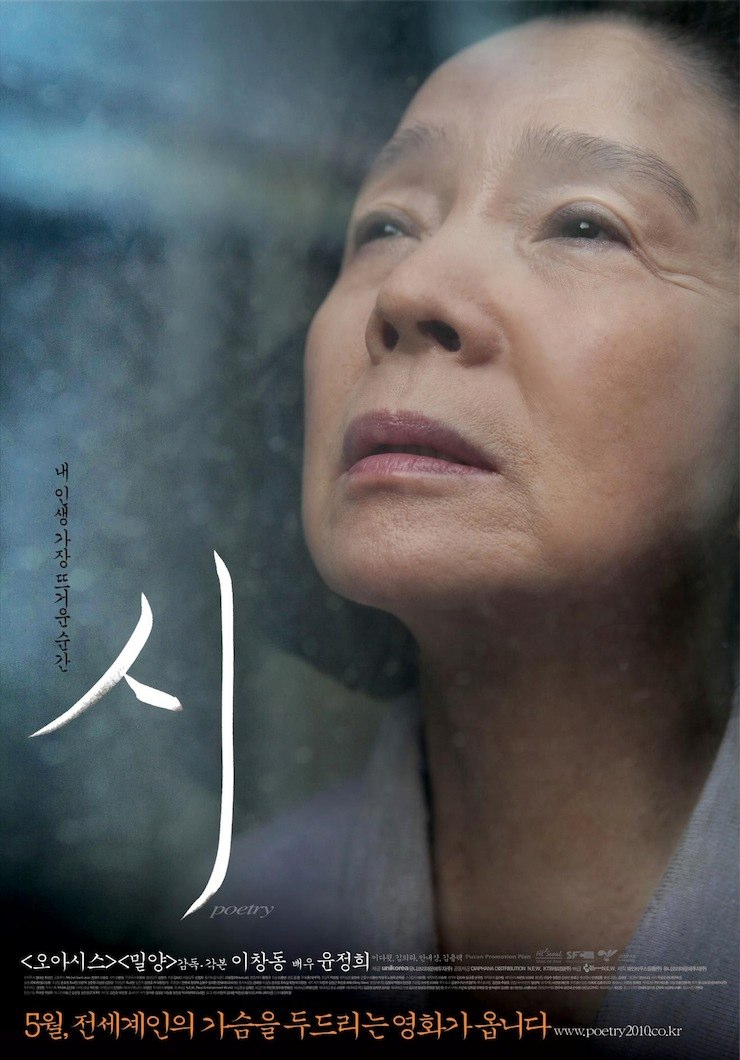
Poetry (시) – ★★★★★

Poetry (시)

Poetry (시)

The search for inspiration is one that all artists must undertake. Often the inspiration comes from a source of beauty or passion, yet in the ever-developing world such notions can become subsumed beneath the financially-driven cynical lifestyles that people seemingly strive to achieve. This quandary is a frustration for Yang Mi-ja (Yoon Jung-hee (윤정희) as she struggles to find illumination for her poetry class. As a grandmother searching for beauty, Yoon Jung-hee gives an astonishing critically acclaimed performance that earned the Best Actress award at The 2010 Daejong Film Awards and  The  37th Annual Los Angeles Film Critics Association. Her performance, as well as the wonderfully understated script and direction by auteur Lee Chang-dong, makes Poetry (시) one of the most delicately – even ‘poetically’ – constructed, character driven pieces of realist cinema of the year, and is an incredible achievement.

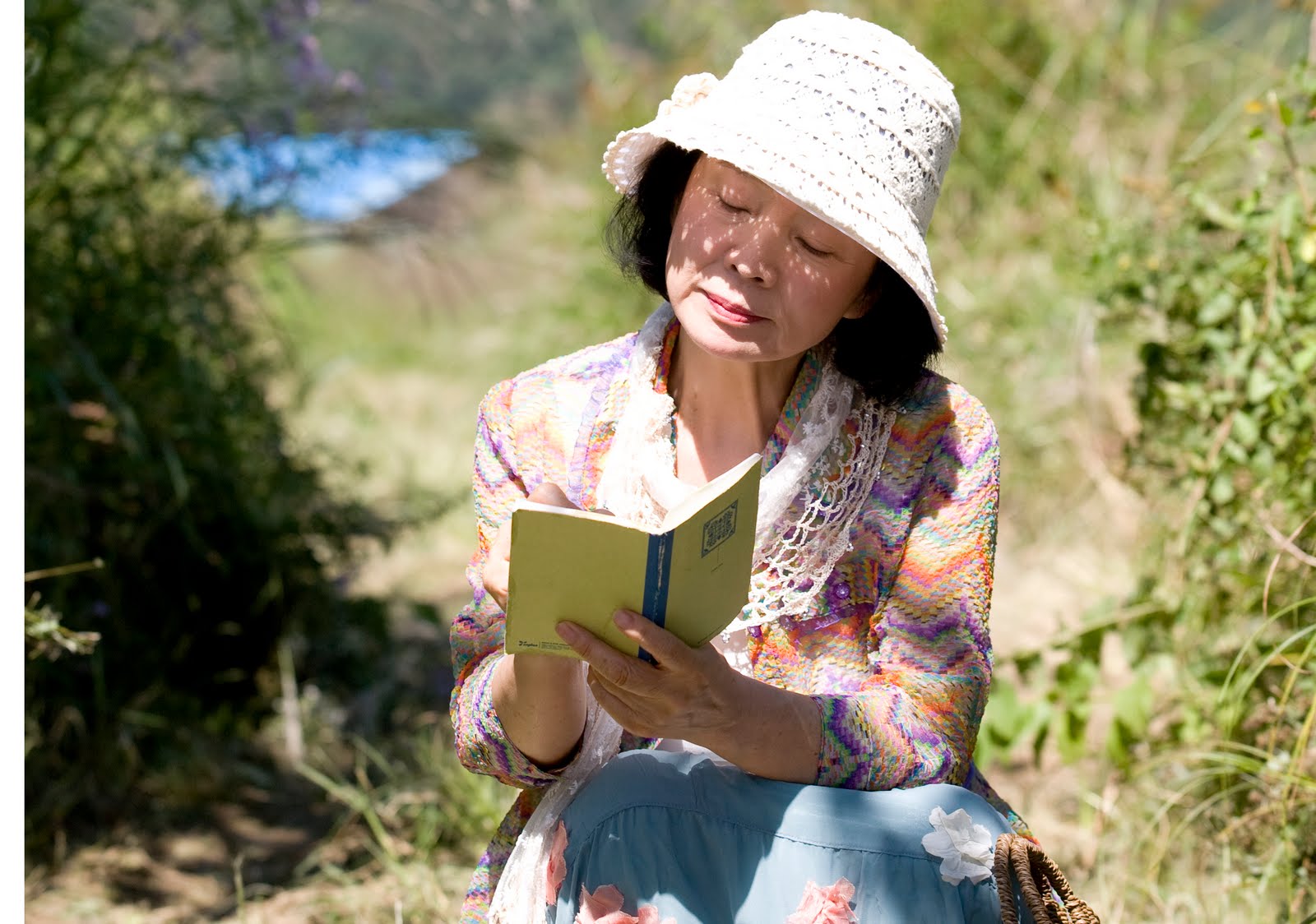
Poetry tells the story of Yang Mi-ja (Yoon Jung-hee (윤정희), a grandmother who scrapes by working as a part-time care worker and claiming social benefits. Mi-ja has a slightly eccentric and cheerful disposition, and has the ‘veins of a poet’ according to her daughter. Seeing an advert for a poetry class at her local cultural center, Mi-ja jumps at the chance to express herself through the art form. However, despite all her attempts, she is unable to begin writing. This is compounded further as Mi-ja visits the hospital and discovers she has Alzheimer’s disease. With dementia setting in, she finds that writing becomes even more frustrating as simple words begin to elude her. Furthermore, Mi-ja is the guardian of her grandson Jong Wook (Lee David (이다윗), who has little tolerance and even less respect for her. Upon discovering that Wook has been involved in a serious crime, Mi-ja must endeavour to resolve the conflicts within her life and unveil an inspirational beauty in order to write her first poem.

Mi-ja searches for the inspiration to write her first poem

Mi-ja searches for the inspiration to write her first poem

Poetry begins (and ends) with the gentle flowing of water, which is a perfect allegory of how the narrative is presented. The gentle ‘flow’ of the narrative is expertly conveyed by director Lee Chang-dong, who never emphasizes plot points but merely allows them to subtly enter the life of his central protagonist, such as when the body of a young girl is slowly and delicately washed ashore to become a defining event. The decision to use hand-held techniques, while adding to the realism, is also similar in nature to the movement of the water and on occasion appears voyeuristic, as if the camera itself is the spirit of the young girl watching Mi-ja. Through Mi-ja, Lee Chang-dong explores a variety of societal and cultural issues that enter her world, though never in a confrontational manner and all while she strives to find inspirational beauty. For example, at Mi-ja’s poetry class the students share their experiences of a moment of happiness. Each tale is simultaneously sorrowful and poignant, such as finding love in an extra-marital affair, highlighting the differences between social expectation and reality. For Mi-ja, her diagnosis as an Alzheimer’s patient is blunt and borders on rude, while it’s entirely possible the appointment was forgotten shortly after leaving the hospital. Mi-ja’s part-time job as a carer is also illuminating in portraying the plight of the disabled and lonely. But by far the most pressing concern for Lee Chang-dong is the nature of crime and punishment expressed through Mi-ja’s grandson.

Mi-ja's grandson Wook displays little remorse for his crime

Mi-ja’s grandson Wook displays little remorse for his crime

Wook – and his friends – have committed a crime, and as with the other events in Poetry, there is no revelation in regards to this new information. Instead, the father’s of all involved invite Mi-ja to meet for lunch in order to discuss a settlement so that charges are never filed against their children. Again, director Lee Chang-dong subtly enters this event within the narrative, but the nature of the crime is so serious, that the objective way in which the conversation transpires and lack of any emotional display emphasises the abhorrent and selfish nature of all involved. The notion of such settlement is common practice in Korean culture, and Lee Chang-dong expresses his disgust for it through Mi-ja as she silently stands and exits the room. Compounding the act further is that the young criminals have no remorse. Everyone continues as if nothing has happened. Mi-ja however is weighed down by the issue, internalizing her frustrations while continuing on her quest to understand beauty in a world she sees precious little of.

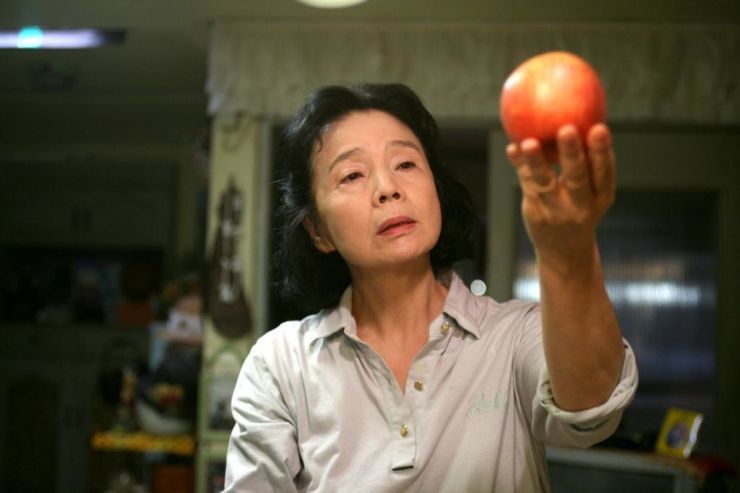
Mi-ja must understand the 'essence' of her subject

Mi-ja must understand the ‘essence’ of her subject

Yoon Jung-hee is truly wonderful as Mi-ja. She conveys the subtle elegance of a woman striving to achieve something noteworthy in her life, but being coerced into events beyond her control that halt her from doing so. Jung-hee’s strength, eccentricity, resilience and ambition are poignantly conveyed by the veteran actress who fully deserves her accolades. Mi-ja is a woman of modest means, yet is inspirational to those around her in attempting to articulate beauty within a poem. Her decisions that lead to the discovery of her subject are incredibly poignant, and her understanding of the beauty within inspires her to write a heart-wrenchingly beautiful and eloquent poem that lingers long after it has been recited.

Mi-ja is a courageous and resilient woman

Mi-ja is a courageous and resilient woman

Verdict:

Poetry is an incredible film. The script, the direction, and the acting come together perfectly to create a wonderfully subtle and elegant narrative about a woman on a search of discovery, yet the understated social commentary that is interwoven organically within it elevates the film even higher. Poetry is, without doubt, a must-see film.

★★★★★

Reviews
Soo-ha and Hong-yeong share a tender moment

The Harmonium in My Memory (내 마음의 풍금) – ★★★★☆

The Harmonium in My Memory (내 마음의 풍금)

The Harmonium in My Memory (내 마음의 풍금)

Nostalgia is a difficult balance to achieve in film. If done overly reverentially, it can easily fall into the realm of cliché and ‘camp’; if not revered enough, then the purpose of placing the narrative within the era is rendered obsolete. Romance fits much more neatly into nostalgic territory than other genres due to notion that the past was a time of innocence, enhancing the ‘purity’ of the love portrayed and removing the cynicism that comes with age. The Harmonium in My Memory (내 마음의 풍금) does all this and more, conveying a well-balanced nostalgic love story set in a post-war 1963 village that never becomes trite or sentimental.

Yun Hong-yeon (Jeon Do-yeon (전도연) has a difficult life in her rustic farming village in Gangwon province. With an absent father – as most men never returned from the war – Hong-yeon must help her mother raise three younger siblings. At 17 she is the eldest in her middle school class, and as the new term begins she and her classmates await the arrival of their new teacher, 21 year old recent graduate Kang Soo-ha (Lee Byeong-Heon (이병헌). Hong-yeon is instantly smitten and is desperate to get attention, yet Soo-ha begins to develop an infatuation with another teacher, the elegant  Yang Eun-hee (Lee Mi-yeon (이미연).

Hong-yeon meets Soo-ha on his first day, and instantly falls in love

Hong-yeon meets Soo-ha on his first day, and instantly falls in love

The decision to film The Harmonium in My Memory in film stock used in decades past is a masterstroke, adding authenticity to the nostalgic vision of first love through the grainy textures. Additionally, ‘내 마음의 풍금’ directly translates as ‘The Organ in my Heart’ and as such music from the era plays a pivotal role in articulating the love held within the protagonists, as well as signalizing exchanges of affection. Director Lee Yeong-jae (이영재) employs sumptuous use of mise-en-scene in portraying the rural lifestyle in the early ’60s, with a romantic verve that captures the innocence and fellowship of the community but never shying away from the difficulties. In fact, Lee Yeong-jae conveys nostalgic comedy within such hardships, such as Soo-ha telling his students to wash more than once a month, and Hong-yeon changing her siblings soiled clothes in class. Generally Lee Yeong-jae allows the combination of these elements to dictate and present the narrative, competently directing but never really conveying an authorial style.

Eun-hee captures Soo-ha's heart with music

Eun-hee captures Soo-ha’s heart with music

All of these cinematic features are amalgamated in order to portray the innocence and naivety of ‘first love’, and in that respect The Harmonium in My Memory succeeds incredibly well. The delicacy and poignancy of ‘first love’ is all the more endearing as for most of the narrative the love is unrequited. Hong-yeong loves Soo-ha, yet Soo-ha loves Eun-hee, and the ways in which they attempt to woe their targets is both touching and comedic. Hong-yeong in particular is very amusing as she works hard in class, presents anonymous gifts, and communicates with Soo-ha through the use of her daily journal which evolves into a diary/love letter. Her naivety is endearing such as when Hong-yeong writes spiteful remarks about teacher Eun-hee and her age, causing Soo-ha to become conflicted. Similarly, Soo-ha’s attempts for Eun-hee are also romantic and enchanting, using music to overcome the initial awkwardness between them and creating indecision for Eun-hee. The loves, and rejections, are subtly and organically portrayed by the excellent cast, especially Jeon Do-yeon who displays incredible talent conveying a shy but headstrong young woman in 1960s Korea. Lee Byeong-Heon is also wonderful in playing an emotionally charged young teacher desperate for love.

Soo-ha and Hong-yeong share a tender moment

Soo-ha and Hong-yeong share a tender moment

Verdict:

The Harmonium in My Memory is a wonderfully endearing romantic tale of the hurdles and triumphs of ‘first love.’ The nostalgia is perfectly balanced throughout and lends an incredible innocence and delicacy to the narrative through the subtle use of film stock, mise-en-scene, and music from the era. As nostalgia and innocence are so integral to the narrative, director Lee Yeong-jae does not provide an in-depth examination of relationships. Rather, he opts to convey the time of love before serious complexity enters, making The Harmonium in My Memory a light-hearted and touching love letter of the awkwardness, naivety and innocence of first love.

★★★★☆

Reviews
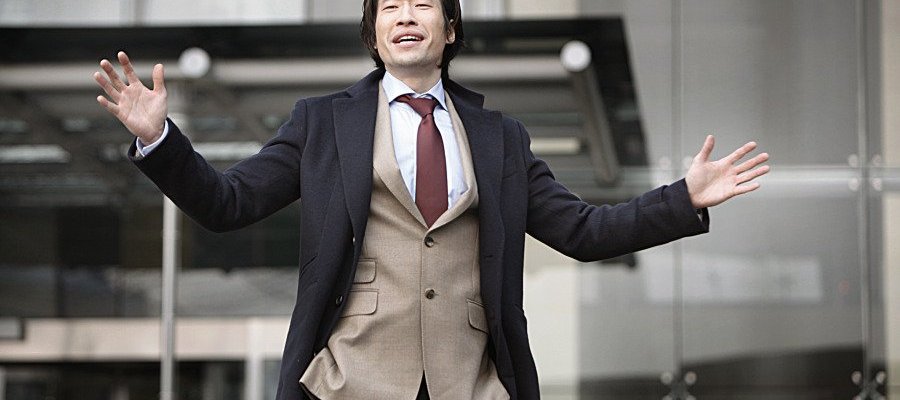
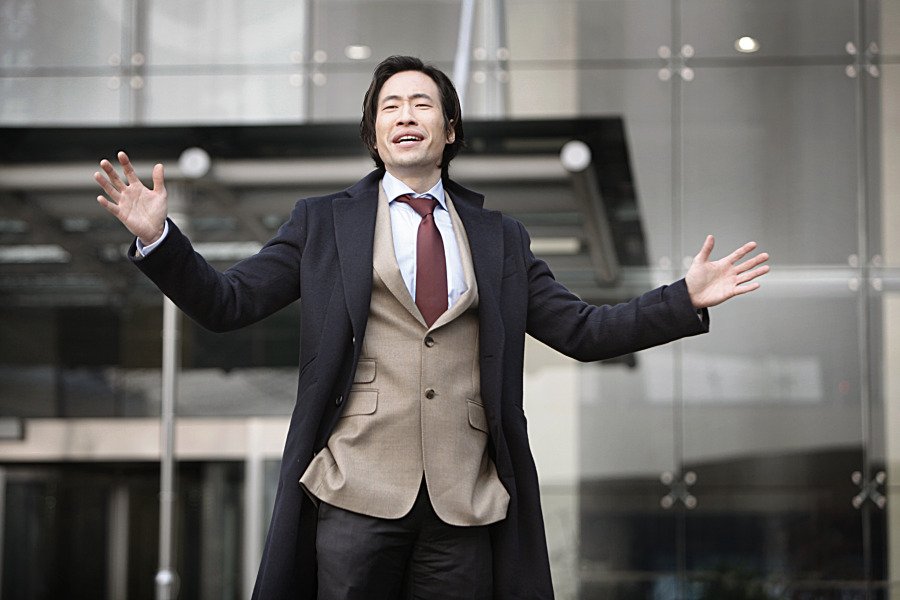
Byeong-woo's ambition makes him a hot property

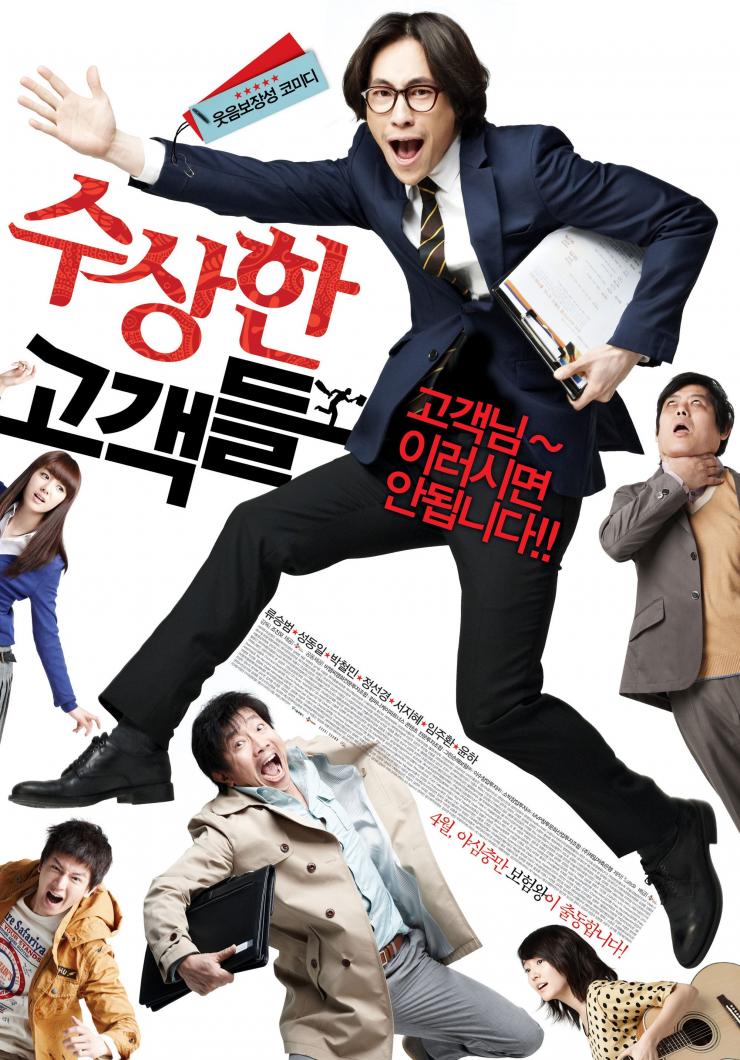
Suicide Forecast (수상한 고객들) – ★★★☆☆

Suicide Forecast (수상한 고객들)

Suicide Forecast (수상한 고객들)

South Korea has the unfortunate statistic of having the highest suicide rate among all 30 OECD countries. Over forty people a day take their own lives, and the reasons behind such tragedy are complex to say the least. As such, suicide often features within Korean films although it tends to occur organically in the narrative,  due to mistreatment or illness for example. Enter Suicide Forecast (수상한 고객들), a film that places the intentions of suicide as the central concept of the narrative. Bizarrely, Suicide Forecast promotes itself as a comedic exploration of the macabre subject matter, yet in reality it’s more of a dramatic foray. While examining the oft-ignored subject of suicide through film is to be commended, the rather superficial nature of the narrative renders Suicide Forecast somewhat impotent.

Bae Byeong-woo (Ryoo Seung-beom (류승범) is a retired professional baseball player, now working in the world of insurance. He is ambitious and driven, yet his constant desire for money upsets his girlfriend Lee Hye-in (Seo Ji-hye (서지혜) resulting in a break-up. Simultaneously, Byeong-woo is accused of helping a client commit suicide and fraudulently claim life insurance through exploiting a loophole in the contract. As he reminisces about his position in life, Byeong-woo recalls that two years prior he, in order to become the best salesperson, sold life insurance policies to four suicide survivors. According to the contract, should they die within two years of signing the contract they will receive nothing; but with the deadline approaching, Byeon-woo must try and convince the policy holders to switch to a retirement plan or else the company will lose a fortune. Yet upon meeting his clients – unemployed divorcee Oh Sang-yeol (Park Cheol-min (박철민), widowed mother-of-four Choi Bok-soon (Jeong Seon-kyeong (정선경), poverty stricken young musician Ahn So-yeon (안소연, Younha (윤하), and Tourette’s suffering beggar Kim Yeong-tak (Im Joo-hwan (임주환) – Byeong-woo’s selfish motivations begin to change.

Byeong-woo's ambition makes him a hot property

Byeong-woo’s ambition makes him a hot property

Suicide Forecast is similar in nature to the family-friendly films of Jim Carrey, such as as Liar Liar (1997) and Mr. Popper’s Penguins (2011). Ryoo Seung-beom is never as flamboyantly excessive as Carrey, but the generic career-man-learns-the-importance-of-compassion is present and as predictable as ever. Carrey however always brings charm and charisma to such roles conveying that his protagonists are never bad but misguided, features which Ryoo Seung-beom (류승범) is considerably lacking in Suicide Forecast to the point of being incredibly unlikeable. Byeong-woo may well be the top salesperson but his arrogant, selfish, inconsiderate and disrespectful manner are difficult to ignore. The premise is sound and has plenty of potential – that a man fixated by consumerism must seek out and stop those intent on suicide, learning something in the process – yet it takes a long long time before Byeong-woo’s character remotely alters due to the plodding second act. His clients are all interesting and compelling protagonists, each with their own hardships that are conveyed poignantly but never slip into sentimentalism. It’s a real shame that these characters were not developed further than the relatively superficial portrayal of their lives, as they are the foundation upon which the narrative is formed. While the subject matter may be somewhat macabre, the narrative consistently attempts to inject light-hearted comedy moments to halt the descent into bleak territory. The jokes generally succeed although they tend to highlight further character flaws in Byeong-woo, and as such the comedy is often flat.

Byeong-woo is shocked by his client's lifestyle

Byeong-woo is shocked by his client’s lifestyle

Suicide Forecast is competently directed throughout by Jo Jin-mo, particularly in the more dramatic sequences in the third act as time runs out. It is here that the acting capabilities of all the cast are displayed, especially Ryoo Seung-beom who conveys intensity as he struggles to reach his clients in time. The predictability, and the lack of character development (and thus empathy), does slightly undermine his performance however. Additionally, Byeong-woo’s instant transformation of character from shrewd insurance salesman to compassionate friend requires something of a leap in disbelief considering his earlier behaviour. Despite the cliches, the finale is touching with the moral message that – given a chance and encouragement – those suffering from the hardships of life can shine. It must also be noted however that the bizarre incorporation of Byeong-woo’s former career as a professional baseball player is forcibly shoehorned into the film, and serves to dramatically detract from the core plot.

Byeong-woo races against time to save his clients

Byeong-woo races against time to save his clients

Verdict:

For tackling such an important and delicate issue within Korean culture, Suicide Forecast must be commended. The potential of a comedy-drama exploring such themes is enormous, which perhaps explains why the narrative appears to be intimidated by the subject matter and the ‘comedy’ aspect tends to fail. The suicidal client’s are compelling despite their general lack of depth, and the predictable finale is still heart-warming. Suicide Forecast is an interesting take on a pertinent and often ill-judged element of society that, while cliched and predictable, offers a poignant reminder that greed and consumerism does not equate to happiness.

★★★☆☆

Reviews
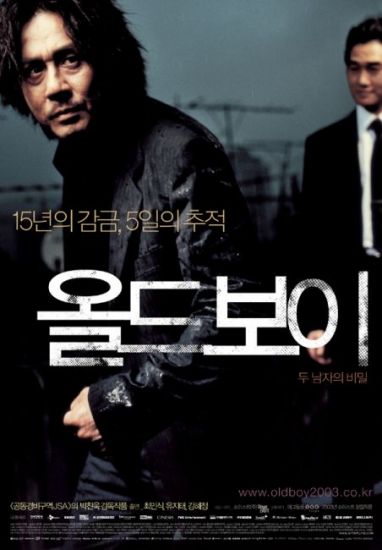
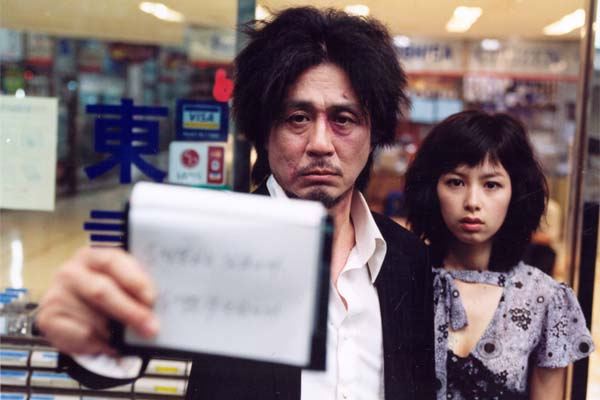
The dischevelled Dae-su is joined by Mi-do on his quest for revenge

Old Boy (올드보이) – ★★★★★

Old Boy (올드보이)

Old Boy (올드보이)

Old Boy (올드보이) has the double-edged distinction of being most international audience’s first introduction to Korean cinema, and ironically, their only frame of reference. Thus any film viewed after such an inauguration is compared with Park Chan-wook’s (박찬욱) seminal work regardless of genre, which is clearly an injustice to all involved. And yet, it is difficult to completely judge those who make the comparison, as Old Boy  is simply phenomenal.

As the extremely drunk Oh Dae-su (Choi Min-sik (최민식) is arrested one night in 1988, he little realises that his every action is being watched. Released from the police station and apologising for missing his daughter’s birthday, Dae-su is suddenly snatched from the street and wakes up in an apartment – where he will spend the next fifteen years in captivity. Without warning, Dae-su is released from his incarceration and must discover who imprisoned him, and more importantly, why. He is joined on his quest for revenge by Mi-do (Kang Hye-jeong (강혜정), a sushi waitress who takes pity on his plight. In following the trail of clues Dae-su finds his tormentor Woo-jin (Yoo Ji-tae (유지태) but the burning desire for answers stays his hand. As the mystery unravels, Dae-su is confronted by an awful truth, that will lead to a shocking final confrontation with his nemesis.

Dae-su is incarcerated for 15 years

Dae-su is incarcerated for 15 years

The centerpiece of Park Chan-wook’s vengeance trilogy (preceded by Sympathy for Mr. Vengeance (복수는 나의 것) and followed by Sympathy for Lady Vengeance (친절한 금자씨)Old Boy stands out as one of the most innovative and technically proficient thrillers of all time. If it was ever in doubt before, Old Boy cemented Park Chan-wook’s status as an auteur due to his incredible vision and flair for violent and macabre subject matter. His technical prowess appears effortless. Initially the hand-held documentary-esque drunken antics in a police station add realism as well as Dae-su’s appalling character traits. Yet this is seamlessly sutured with conventions ascribed to fantasy, thriller and action as Dae-su evolves during the course of the film. Shots, such as Dae-su emerging from a suitcase in a field – later revealed as a roof – continually astonish and excite. Tracking shots of action sequences are equally enthralling as Dae-su takes on an entire gang in the narrow confines of a corridor. The level of creative confidence also extends into the mise-en-scene, particularly in regards to colour and patterns. The striking reds hint at the danger to come, while the eerie purples (accompanied by the maze-like pattern formed of triangles) are the calling cards of the mastermind behind the events.

The dischevelled Dae-su is joined by Mi-do on his quest for revenge

The dischevelled Dae-su is joined by Mi-do on his quest for revenge

Praise must also be generously given to the narrative, co-written by Park Chan-wook and Hwang Jo-yoon. The central concept is reminiscent of The Prisoner (1967-68), yet from there the ideas generated are original, shocking and downright bizarre. Yet fundamentally, the emotional core of each protagonist is placed front and center giving exceptional substance to the stylised visuals. Each character is incredibly compelling, neither good nor bad but an amalgamation of a variety of neuroses. In presenting such complex character studies to the screen, all the actors deserve recognition. Chief among them is Choi Min-sik who gives a towering performance as Dae-su. His physical transformation is startling, not only in terms of his musculature but also his tired and dishevelled face that conveys the seriousness of his situation without uttering a word. His erratic behaviour is entrancing and performed with real conviction, from his television style speech patterns, his difficulty in entering the modern world and the frustration of unlocking memories within himself. Similarly Yoo Ji-tae is wonderfully sadistic as the antagonist of the film. Woo-jin’s arrogance and sheer audacity radiates with every movement, yet amazingly is far from villainous due to the incredible depth of character. His own torment, and the unbelievable lengths he goes to in displacing them, are profound and convincing despite the extremities that occur.

Woo-jin torments Dae-su with sadistic delight

Woo-jin torments Dae-su with sadistic delight

Verdict:

Old Boy is a monumental achievement not only for Korean cinema, but also in terms of international recognition. It’s little wonder why audiences use it as the frame of reference in comparing other films from Korea despite the unfairness of such comparisons. The innovative narrative and technical prowess, as well as the exemplary performances, serve to make Old Boy a timeless classic and an absolute must-see.

★★★★★

Reviews
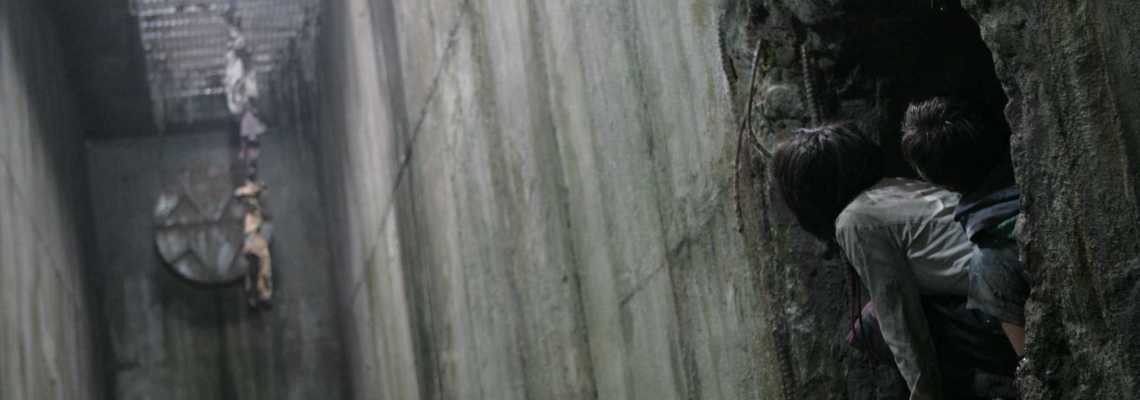
Bin is traumatized by the loss of his parents

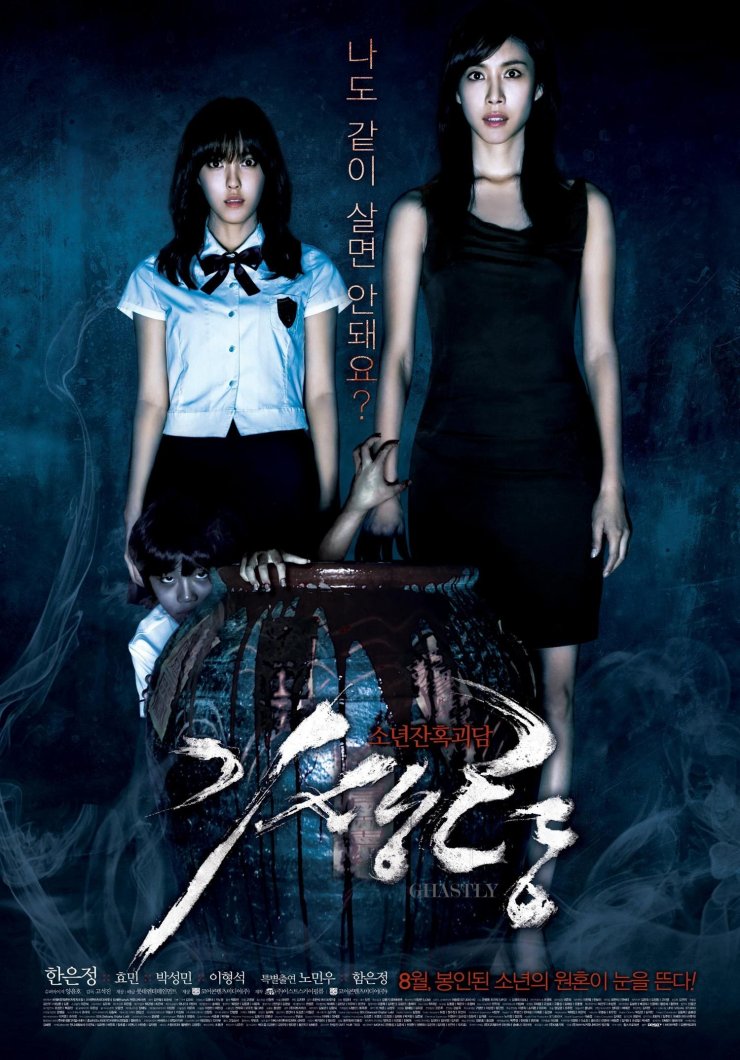
Ghastly (기생령) – ★☆☆☆☆

Ghastly (기생령)

Ghastly (기생령)

It’s a sad trait that in order for one lifestyle to become dominant, the previous one must be demonised. This is acutely the case with religion, as the new philosophy supplants older belief systems by aligning it with barbarism, superstition and the occult in order to acquire more followers. This material is explicitly expressed within horror films, including the incredible The Wicker Man (1973) which demonises paganism, while Poltergeist (1982) conveys the horrors of spiritualism, and even The Exorcist (1973) has its origins in middle eastern practices that must be ‘cured’ by Catholicism.

With Ghastly (기생령) the apparent origin of ‘evil’ is aligned with Korean Shamanism and the practices therein. Yet rather than explore the theology/practices and the tense conflict it creates within the family unit, Ghastly opts for shallow and superficial horror, and is a prime example of how not to construct a horror film featuring lazy filmmaking and a substandard narrative.

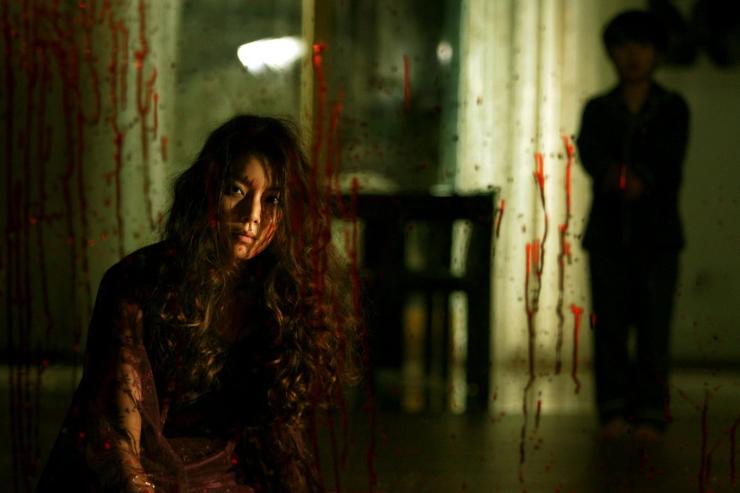
Ghastly begins with a gruesome opening scene depicting a married couple cutting off their feet and committing suicide in front of their young son Bin (Lee Hyeong-seok (이형석). With no-one to care for him, Bin’s uncle Jang-hwan (Park Seong-min (박성민) and his wife Sunny (Han Eun-jeong (한은정) are given custody, and move into Bin’s house due to financial difficulty. They are joined by Sunny’s younger sister Yoo-rin (Hyomin (효민), a high schooler who becomes increasingly jealous with the attention bestowed upon Bin. As time passes Sunny finds a Shamanist shrine in the garden shed, and Bin’s behaviour becomes increasingly violent, leading to a showdown to uncover the truth of what happened the fateful night of the Bin’s parent died.

Sunny feels uneasy in the new house

Sunny feels uneasy in the new house

Ghastly opens promisingly enough with a horrific scene of self-mutilation and torture and setting up mystery within the narrative. However the film quickly descends following this, with a by-the-numbers narrative rife with cliches and plot holes by Kim Yoo-ra (김유라), and bland and uninspired direction from Ko Seok-jin (고석진). One of the key elements in any horror film is that the threat of violence/horror must be ‘real’ and impact the protagonist(s) in some manner. Yet aside from the opening and closing scenes, the vast majority of horrific scenes take place within Sunny and Yoo-rin’s minds as nightmares. This completely undermines any tension and suspense generated, although the incorporation of bland generic devices does little to install terror initially anyway. Bin’s grandmother (Baek Soo-ryeon, 백수련) is also portrayed as a source of horror with a truly unenlightened representation, conveying her as a mentally ill and a mindlessly chanting shaman. This extends to the blatant misogyny within the film as only the women are ‘punished’ by receiving nightmares. In regards to Yoo-rin (played by K-pop idol Hyomin), the camera continually fetishises her with tracking shots across her body and the perverse gaze of her step-brother, who later slaps her in the face for verbalizing her displeasure at his glances. Her death is also the most horrific as she is virtually boiled alive (after a shower scene featuring several close-ups on her body) in the bathroom, seemingly ‘punishing’ her merely for being attractive.

Yoo-rin is constantly fetishised

Yoo-rin is constantly fetishised

Director Ko Seok-jin (고석진) is generally competent in conveying scenes of horror and drama, but does little to create suspense that lead to such confrontations. The use of close-ups on severed limbs, and the manner in which they are removed, is effectively filmed and the best example of horror within the film. Yet the protagonists are less than compelling due to their lack of character development. By far the most interesting is Sunny, who is portrayed as kind, thoughtful and only person who appears interested in solving the mystery of the murders. However there is very little mystery to be solved as it lacks depth and the clues are not sufficient enough to add intrigue. The only real major clue to be uncovered is the shaman shrine, yet the finale is predictable far before this event. The finale unfortunately also succumbs to generic conventions in that once the true source of horror is revealed, a flashback is inaugurated to reveal events prior but does little to enhance the narrative.

Bin is traumatized by the loss of his parents

Bin is traumatized by the loss of his parents

Verdict:

Aside from the opening scene and scant few additional sequences of horror, Ghastly is an uninspired and generic example of basic horror filmmaking.  The severe lack of character depth, and the absence of any substantial tangible threat due to its confinement within nightmares, vastly reduces the effectiveness of the danger that actually takes place. The level of misogyny is also appalling as the female protagonists are the cause of events, fetishised and beaten. There are far superior Korean horror films available.

★☆☆☆☆
Reviews
Hyeon-seo is taken to the monster's lair

The Host (괴물) – ★★★★★

The Host (괴물)

The Host (괴물)

The introduction of Godzilla in 1954 was a masterstroke. The monster directly tapped into the fears and anxieties of the Japanese populace following the American atomic bomb attacks on Hiroshima and Nagasaki, and the potential ramifications of the nuclear fallout. The popularity of the iconic character was instant, while the enduring legacy of Godzilla has remained due to the still underlying apprehension surrounding nuclear technology.

Ironically, a similar fate was to occur with neighbouring South Korea. In 2000, the American military dumped 20 gallons of formaldehyde into drains which flowed directly into the Han River, the source of drinking water for the entire population of Seoul. The enormity of the public outcry was such that the U.S. military gave it’s first public apology since the Korean War, yet it did little to assuage public opinion. Enter The Host (괴물), a film that – similar to Godzilla – uses the true story as a basis for a narrative which introduces a monster into the midst of Seoul, amalgamating the fears, angers and anxieties of the society into the monstrous beast. ‘괴물’ is translated as ‘monster’, the source of the horror. However, far more interesting (and multi-layered) is the English title ‘The Host’. ‘The Host’ refers to the Han River which harbours the monster, but is also symbolic of Korea for ‘hosting’ the U.S. military (arguably another source of ‘horror’ due to creating the monster and perceived imperialism). The multi-layered title is reflected within the narrative, and it is such complexity that makes The Host one of the best science-fiction films of all time.

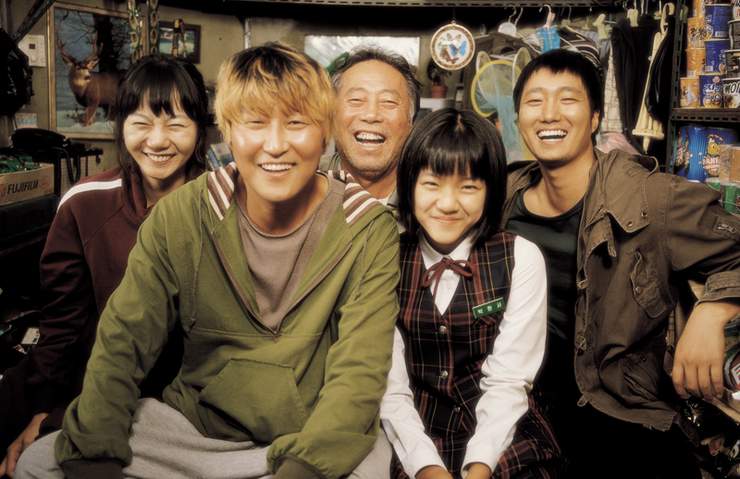
The 'average' Seoulite family

The ‘average’ Seoulite family

The Host depicts the dysfunctional Park family, who are more a collection of individuals due to their differing personalities and interests. The slacker of the family, Gang-du (Song Kang-ho (송강호) works at a convenience store with his diligent father Hee-bong (Byeon Hee-bong (변희봉) on the banks of the Han River. Living with them is Gang-du’s daughter Hyun-seo (Ko Ah-seong (고아성) a middle school student who dislikes her father’s laid-back attitude. One day whilst serving customers, a mutated amphibious fish monster emerges from the river wreaking havoc. Gang-du and an American soldier bravely try to stop the monster from eating people, but during the struggle the soldier is gravely injured as the monster tries to consume him. Wounded by Gang-du, the monster runs back to the safety of the Han River and snatches the unaware Hyun-seo on the way. With Hyun-seo believed dead, the Gang-du is joined by his salaryman brother Nam-il (Park Hae-il (박해일) and archer sister Nam-joo (Bae Doona (배두나) in mourning. However, the American soldier is reported in the media as having a new strain of disease due to contact with the monster, and the military immediately incarcerate and quarantine the entire Park family against their will. That night, Gang-du receives a phone call from Hyeon-seo who is trapped in the monster’s sewer lair, and as the military refuse to help, the Park family resolve to escape their imprisonment and find Hyeon-seo before it’s too late.

Gang-du and Hyeon-seo run from the monster

Gang-du and Hyeon-seo run from the monster

Director Bong Joon-ho (봉준호),  who also co-wrote the film with Ha Joon-won (하준원), Joo-byeol (주별) and Baek Cheol-hyeon (백철현), has crafted a magnificent and multi-layered film that examines an incredible array of socio-cultural anxieties within Korean society. The Park family are a microcosm for the disparate identities and labour forces within Korea. Grandfather Hee-bong represents the hard-working older generation; Gang-du exemplifies the manual labour force; Nam-il constitutes the university-students-turned-office workers; Nam-ju represents women in Korea, hesitant to display their power and talent; and Hyeon-seo embodies the innocence of the younger generations. As such the family unit is allegorical of Korea itself, emphasising that for the family/Korea to succeed in killing the monster and saving their daughter/youth, they must forgo their differences, come together and work as one. The ‘monster’ the family must defeat is somewhat ambiguous. The mutated animal is the most obvious example, yet the media is equally as monstrous in inspiring panic throughout the citizens of Seoul, reports which are ultimately lies. Behind those lies are the American government and military who use the panic to their advantage, expanding American influence/imperialism and releasing ‘Agent Yellow’ (a not-so-subtle reference to toxic Agent Orange) into the atmosphere, which does little except to add further poison to the atmosphere. Korean society is also interrogated by depicting bribery and the traitorous actions of office workers due to their escalating debt. Director Bong Joon-ho (봉준호) continually references the multitudinous ‘monsters’ the family confront through a variety of representational devices, serving to add astonishing political and socio-cultural depth within the narrative.

Hyeon-seo is taken to the monster's lair

Hyeon-seo is taken to the monster’s lair

The blending, and subversion, of genres is seamless. Most science-fiction films tend to refrain from fully revealing their antagonist until the final acts, surrounded by darkness to both convey suspense and hide the limitations of CGI. Not so in The Host, which has one of the most staggering introduction sequences ever constructed for a monster, all during the bright daylight hours. The rampage is truly astounding, and Bong Joon-ho employs a variety of techniques in capturing the the monster’s behaviour and the panic of the crowd. The actors are, as one would expect from such highly talented individuals, perfect in capturing the essence of their respective protagonists, conveying powerful performances that virtually command attention and empathy. With so many narrative devices included, it’s astonishing how each protagonist also manages to evolve throughout the film, leading to a socialist-esque finale in which they all overcome their flaws to fight as one with the proletariat landing the final blow.

Gang-du squares off against the monster

Gang-du squares off against the monster

Verdict:

The Host is an incredible film, and highlights the sheer talent and innovation of all involved. While it is unashamedly mainstream, the film never falls into cliche or parody as is often the case in the genre. Instead, The Host employs layers upon layers of political and socio-cultural subtext that adds phenomenal depth to an already highly entertaining premise, and cannot be recommended highly enough.

★★★★★

Reviews