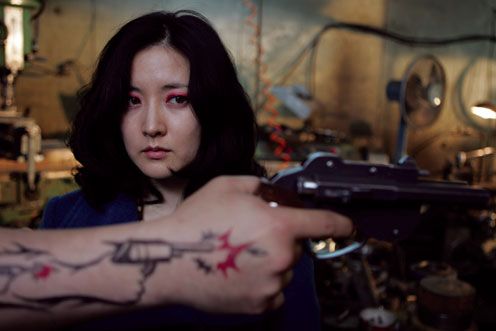
The pieces of Geum-ja's plan assemble with incredible imagery

Sympathy for Lady Vengeance (친절한 금자씨) – ★★★★★

Sympathy for Lady Vengeance (친절한 금자씨)

Sympathy for Lady Vengeance (친절한 금자씨)

Vengeance and violence are a seemingly masculine arena cinematically, with narratives propelled by testosterone-fueled actions by those who have suffered injustices. Such passionate reactionary violence is often ascribed to traditional patriarchal roles of ‘the father’ and ‘the lover’, identities which become destabilized through loss and demand retribution. Yet women, who have just as equal a stake in such gendered roles, are often marginalized.

With Sympathy for Lady Vengeance (친절한 금자씨) auteur Park Chan-wook (박찬욱) finishes his celebrated Vengeance trilogy in incredible style, featuring a woman as the central protagonist to create an altogether different approach to the concept of revenge. The result is a fascinating and riveting film that depicts a more calculating and intelligent form of vengeance than displayed by Dong-jin in Sympathy for Mr. Vengeance (복수는 나의 것) or Dae-su in Old Boy (올드보이), constructing a unique and magnificent character in the form of Lady Vengeance herself Geum-ja (Lee Young-ae (이영애).

20 year old Lee Geum-ja is arrested and sentenced for the kidnap and murder of a young boy, shocking the nation due to her tender age as well as for her unparalleled beauty. Yet unknown to the public is that while Geum-ja was an accomplice in the kidnapping, she was forced to take the blame for the murder otherwise her own daughter would be killed by the real criminal – Baek Han-sang (Choi Min-sik (최민식). During her 13 year jail term Geum-ja plots her revenge, forging connections with other prisoners and garnering a reputation for her unbelievable kindness achieved through acts of underhanded treachery. Finally released, Geum-ja begins her preparations in earnest and, joined by her estranged daughter Jenny (Kwon Ye-yeong (권예영), tracks down the man responsible for their separation in order to exact their vengeance.

Geum-ja has become cold and calculating during her incarceration

Geum-ja has become cold and calculating during her incarceration

Park Chan-wook displays a more artistic and surreal depiction of revenge in his third installment, producing stunning imagery of Geum-ja’s quest that emphasizes her beautiful image in conjunction with her lethal internal motivations. Crucially the director never shies away from employing such cinematic playfulness with feminist discourses, overtly conveying Geum-ja’s intelligence in regards to patriarchy and image. Once released from prison Geum-ja purposely applies red eyeshadow and dons dark and seductive clothing, consciously aware that her natural image promotes innocence and purity, features she does not want nor feels she deserves. As such she challenges cultural stereotypes of attraction, subverting patriarchal notions of ‘virginal beauty’ as Geum-ja’s intelligence and violent desires are foregrounded. She is an expert at manipulation in this regard earning the trust and respect of men and women through her subversion of image, allies whom she acknowledges with indifference once they are indebted as her single-minded lust for vengeance is absolute. In achieving revenge Geum-ja is keenly aware of the power necessary, and her methods lead to acquiring a ‘pretty double-phallus’ in the shape of an incredible firearm that is two guns merged into one handle. Park Chan-wook’s wonderful visual style continually yet subtly conveys his lead protagonist as a powerful, intelligent, and highly efficient woman making Geum-ja an acutely compelling character.

That is not to say Geum-ja is lacking in emotion – far from it. She is constantly aware of her role in the murder of a young boy, willing to do anything for forgiveness that can never come. The burden of guilt portrays Geum-ja is a tragically flawed character as she seeks to dehumanize herself and reject intimacy due to her self-hatred. The brilliantly comical reappearance of Geum-ja’s estranged daughter Jenny forms a wonderful partnership in which to explore their neuroses of guilt and abandonment, and the roles of parent and child.

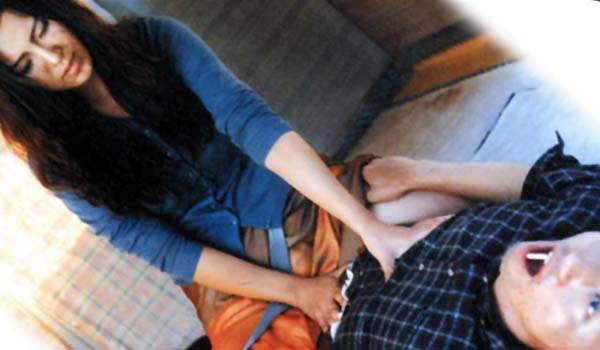
The pieces of Geum-ja's plan assemble with incredible imagery

The pieces of Geum-ja’s plan assemble with incredible imagery

The responsibilities of a parent toward their child are intriguingly explored throughout Sympathy for Lady Vengeance, as Park Chan-wook poses a supremely difficult question – what actions would a parent take if they confronted their child’s murderer? The director expertly conveys the poignant moral conundrum that brilliantly evolves Geum-ja’s personal desire for justice into a communal one, a desire for vengeance that is consciously wrong legally and morally, yet desired all the same. As has become a feature of his, Park Chan-wook depicts such incredibly serious subject matter with a sharply dark-humoured edge that makes the events that unfold all the more captivating, and thrilling, to experience. Despite simultaneously conveying the evolution of revenge as well as narratively veering in an alternate direction, the director never loses focus of Geum-ja’s role as strong methodical woman desperate for retribution and forgiveness, attributes she alone – despite (rejected) offers from patriarchy and religion – must achieve. As such, Geum-ja is one of the most enthralling and compelling representations of women to appear on celluloid.

Lee Young-ae is absolutely superb as Geum-ja, inhabiting the role so completely it is impossible to imagine another actress in her place. The extremely broad range of emotions that are required are wonderfully performed, from moments of quiet manipulation and rage-fueled violence, to tender moments of reconciliation and forgiveness, and fully deserves the various awards for Best Actress bestowed upon her. Choi Min-sik is given a marginal role as the malicious Baek Han-sang, yet during his short screen-time he conveys the depravity, and the sheer terror, required. Other supporting performances are generally fleeting, however it is highly enjoyable when cameo roles featuring actors from Sympathy for Mr. Vengeance and Old Boy appear.

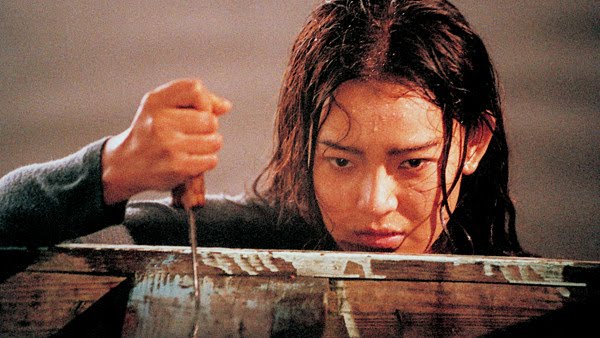
Geum-ja prepares to take her revenge

Geum-ja prepares to take her revenge

Verdict:

Sympathy for Lady Vengeance is an incredible final installment to the Vengeance trilogy, presenting an entirely different notion of revenge through one of the most compelling female protagonists in cinematic history. Park Chan-wook’s beautifully creative vision, as well as Lee Young-ae’s captivating performance, make Sympathy for Lady Vengeance an enthralling exploration of vengeance and feminism that demands repeated viewing.

★★★★★

Reviews
Bang-woo and Hyo-gwan attempts to crack the codes

Moby Dick (모비딕) – ★★★☆☆

Moby Dick (모비딕)

Moby Dick (모비딕)

Conspiracy theory films, and the inherent shadowy figures that operate within and/or behind the government, are a fun and exhilarating sub-genre that express audience distrust of institutions as well as emphasizing their impotency. They also have an uncanny knack for tapping into social anxieties. With the Bourne series (2002-2007) the post-9/11 ‘Patriot Act’ was vehemently scrutinized, as the shadow operatives abused the use of satellites and phones in targeting alleged terrorists. Similarly Enemy of the State (1998) portrayed senior members of the NSA murdering senators and civilians alike to expand their power base and withhold information.

Moby Dick (모비딕) is concerned with the conspiracy theories that plague the South Korean government, a premise with huge potential due to the often tumultuous relationship with the North. However, due to the bland and uneven narrative and direction, central protagonists that lack charisma or intelligence, and most importantly the distinct lack of threat posed by the shadow organisation, Moby Dick largely fails.

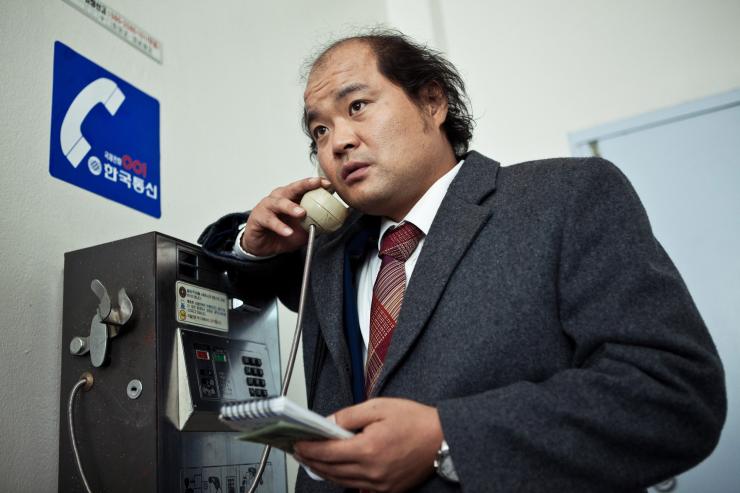
Lee Bang-woo  (Hwang Jeong-min (황정민) is a newspaper reporter constantly waiting for the next big scoop in order to become renowned. When a bridge explodes and the government quickly blames the incident on North Korean spies, Bang-woo decides to visit the scene and bribes his informant for extra details. Shortly thereafter Bang-woo is visited by his young friend Yoon Hyeok (Jin Goo (진구), on the run for desertion, carrying a bag full of official documents and disks. Examining the paraphernalia Bang-woo realises there’s much more to the explosion, and other mysterious events, then previously thought and puts together a team of reporters – polite rival Son Jin-gi  (Kim Sang-ho (김상호) and code cracker Seong Hyo-gwan  (Kim Min-hee (김민희) – to uncover the secrets of the shadow government organisation whose symbol is ‘Moby Dick’.

Bang-woo begins to understand that other forces are at work

Bang-woo begins to understand that other forces are at work

Moby Dick is directed by Park In-je (박인제) competently, and the potential of the notion of a shadow government has incredible potential for a thrilling, gritty tale of political espionage. However the  narrative is often in complete disarray and lacking in focus that any sense of compulsion, and worse still immediacy, are completely lost. The opening shot of Moby Dick is the televisual image displayed from a CCTV camera as a bridge explodes; this in itself forces audience detachment from the severity of the cataclysmic event as the impact and ramifications are unseen, and considering it is the catalyst for the entire film is a rather odd form of representation. What follows is a supremely dull first act as protagonists are introduced sporadically and lacking in motivation. Bang-woo is a woefully underdeveloped protagonist who routinely displays naivety and idiocy, and aside from curiosity and selfish desire has little motivation for investigating either the explosion or the conspiracy. He is utterly inept at investigation and continually places himself and his colleagues in danger needlessly, yet his impotency is dwarfed by the unbelievable inefficiency of the covert group signified by the white whale. The syndicate are effectively reduced to hired thugs rather than efficient spies, who even display street signs highlighting that they are in residence – in crowded public areas no-less. Supervising the group is a mysterious man in a suit who, bizarrely, sits at a desk in an empty room the size of an entire floor in a building. Such a cliche again adds nothing to the threat apparently posed by the covert operatives who consistently appear unsure of their next move, from the illogical indecision to not ‘eliminate’ the reporters to seemingly random discussions regarding exploding planes and nuclear armament.

Rival Jin-gi joins the team using his own informants

Rival Jin-gi joins the team using his own informants

In terms of character Moby Dick has a highly skilled assortment of actors that are unfortunately never given adequate screen-time or dramatic scenes in which to display their skill. Hwang Jeong-min is noteworthy in this respect as he has little opportunity to perform his talents, as Bang-woo is a shockingly ignorant protagonist who is also very rude and unlikeable. Quite how he isn’t killed by the organisation immediately after emerging as a threat requires genuine suspension of disbelief, although the incompetency of the covert operatives helps in this regard. Instead the violence seems reserved purely for Kim Sang-ho as Son Jin-gi who is beaten and tortured, which appears to be his only function in the narrative. Furthermore Kim Min-hee is incredibly underutilized as Hyo-gwan, conveniently appearing when the screenwriters are in need of someone or something to propel the stalled narrative forward. The same criticism also applies to Jin Goo as Yoon Hyeok who could have functioned as a Jason Bourne figure, yet after his initial purpose of providing classified documents he strangely fades into the background. All the actors do the best they can in such limiting roles, yet the absence of character development and the lack of cohesion between them is detrimental to them all.

Bang-woo and Hyo-gwan attempts to crack the codes

Bang-woo and Hyo-gwan attempts to crack the codes

Verdict:

Moby Dick is a squandered opportunity, with talented actors and a fantastic premise that are let down through a narrative that lacks direction and focus. While it is generally competently directed, there is unfortunately no escaping the narrative inconsistencies, absence of character development, or lack of threat posed by the shadow operatives, all of which require a real leap in the suspension of disbelief in order for Moby Dick to remain plausible – or, for that matter, enjoyable.

★★★☆☆

Reviews
The relationship between Hee-jin and Hyeon-sik becomes obsessive

The Isle (섬) – ★★★☆☆

The Isle (섬)

The Isle (섬)

Director Kim Ki-duk (김기덕) has, like Alfred Hitchcock before him, a reputation for misogyny and misogynistic violence. And, again as with Hitchcock, Kim Ki-duk locates such archaic principles within patriarchal figures and psychologically disturbed men, simultaneously presenting and critiquing the gender inequality within a socio-cultural context. For feminist film critics the submersion of violent sexism within such protagonists serves to absolve the directors of the ‘pleasures’ derived through representations of violence against women, displacing their desires and naturalising sex and violence as one and the same. Accusations such as these aimed at Kim Ki-duk are largely founded due to the release of The Isle (섬).

The Isle is an art house film that, due to the nature of violence, sex and animal cruelty within, has been the subject of controversy ever since its inception and the resultant vomiting and fainting of foreign critics. As such The Isle joined – or rather, was a founder of – the list of films unfortunately promoted as ‘extreme’ Asian filmmaking. For his part, Kim Ki-duk claimed that the film is simply another representation of his obsession with ‘han’ – the feeling of oppression, isolation, and injustice – and the love that can blossom under such circumstances.

Hee-jin (Seo Jeong (서정) is the patron of a fishing resort deep in the Korean countryside, owning several floating huts on a portion of a river. As a mute, she silently ferries customers from the shore to the huts and takes care of any requests ranging from snacks to coffee, and even sex. This service is also supplied by the ‘coffee girls’ from the local brothel whom she also reluctantly ferries, and Hee-jin’s life of servitude continues in this monotonous fashion. Her interest is piqued however when murderer-on-the-run Hyeon-sik (Kim Yoo-seok (김유석) arrives to rent a hut, in need of solitude to lay low while police officers attempt to track him down. Tormented by his past deeds Hyeon-sik attempts suicide yet is stopped by Hee-jin and the pair begin to develop a relationship, one that becomes incredibly intense and obsessive through the bizarre games they play, and actions from which threaten to engulf them both.

The cinematography in The Isle emulates traditional paintings

The cinematography in The Isle emulates traditional paintings

The Isle is best viewed as an art house film, as the symbolism and cinematography are sumptuous throughout. The composition of shots, particularly of the landscape, are quite beautiful and exemplify Kim Ki-duk’s former calling as an artist. The incredible scenery is matched by the isolation conveyed by the fishing huts and Hee-jin’s meagre existence, while the surreal other-worldly weather instills sadness and longing. Within this framework are Hee-jin and Hyeon-sik, two protagonists akin to wandering lost souls in the ethereal landscape that lack purpose or direction, giving the lake a purgatorial sensibility. As with other Kim Ki-duk protagonists, Hee-jin is mute and utilises her physicality to convey her psychological state which publicly tends to represent that of a stereotypical meek woman in patriarchal culture; she serves patrons snacks, coffee and sex without question, acting as ‘servant’ and ‘whore’, an apparent victim of the indomitable phallus. Yet Hee-jin’s genuine character is revealed when abused, as when her earnings from sleeping with a customer are thrown into the water, she calculatingly stabs him in the dark of the night with her own, arguably much more dangerous, penetrative device. Interestingly, Hee-jin’s employs her ‘detachable phallus’ in order to save Hyeon-sik as she startles him during a suicide attempt, an act he repays in making models from wire. The Isle is ultimately concerned with the articulation of archaic notions of gendered ‘power’, and a relationship that develops between a man and a woman in such an unequal vacuum; when Hee-jin expresses kindness and innocence Hyeon-sik responds through attempted rape.

The infamous fish hook scenes also exemplify gendered notions of power. Afraid of being arrested by police and with no other utensils available, Hyeon-sik swallows fishing hooks and pulls sharply. In doing so Hyeon-sik self-mutilates his orifice of power – his commanding, masculine voice, which ironically had been somewhat castrated by his (coded-feminine) sensitivity. Concurrently, when Hee-jin is threatened by Hyeon-sik’s departure, she places the hooks within her vagina and pulls sharply, self-mutilating her orifice of power – her ability to engage in sex, intimacy, or procreation. Both protagonists are subconsciously aware of their gendered abilities, and employ them for selfish results. The self-mutilation also allows for striking imagery as they are reeled in by the fishing rod, symbolically drawn to each other through pleasure and pain. Viewed in this symbolic art-house context, The Isle is an interesting exploration of the inequalities of gender in Korean society, and hardly necessitates the vomiting and fainting that so afflicted foreign critics.

The relationship between Hee-jin and Hyeon-sik becomes obsessive

The relationship between Hee-jin and Hyeon-sik becomes obsessive

In terms of performance The Isle conveys an array of emotional and neurotic states through the physicality of the actors, while verbal exchanges tend to be fraught with lies, pain and cursing. Seo Jeong is incredibly intense as Hee-jin, with facial expressions full of rage, jealousy, angst and heartache all portrayed with vehemence. However Hee-jin’s actions are often perplexing at times with motivations that are difficult to comprehend, which adds to the assumption that she may well be mentally ill or suffering from a prior trauma. Kim Yoo-seok as Hyeon-sik also exhibits such a difficulty in suspending disbelief, as he initially is kind and sweet-natured yet later becomes an abhorrent example of misogyny and chauvinism. Despite this, Kim Yoo-seok’s performance is competent in portraying the murderer whose morals dissipate. Both protagonists are flawed and psychologically unbalanced, yet still attempt to create the idealised perception of a couple in establishing a relationship and moving into a house (fishing hut) in the countryside.

The animal cruelty has been a source of controversy which are difficult to disagree with, yet such scenes are loaded with symbolism that convey the emotional distress of the protagonists. Frustrations are expressed through the chopping of live fish; the desire to change identity is conveyed through skinning a frog alive; and the reluctance to continue living the same existence is depicted through the stubbornness of a dog forcibly dragged onto a boat despite being petrified of water.

Hee-jin and Hyeon-sik's relationship has a sadomasochistic  edge

Hee-jin and Hyeon-sik’s relationship is both sadomasochistic and erotic

Verdict:

The Isle is an intense art-house film that explores – and graphically presents – misogynistic violence, sadomasochism, and animal cruelty in the foundation of a couple’s relationship where such savage acts and severe gender inequality is considered normal. The controversy it has courted is warranted, more so if not approached with symbolism in mind, yet despite this the social issues presented with stark realism by Kim Ki-duk are damning regarding patriarchy and the treatment of women and as such further instigates an important area of debate. The Isle will certainly not be to everyone’s taste, but if scrutinized for the artistic content and social debates within – rather than the fabricated notion of ‘extreme’ Asian filmmaking – The Isle offers a unique viewing experience.

★★★☆☆

Reviews
The weather mirrors the emotionally fraught couple

Come Rain Come Shine (사랑한다, 사랑하지 않는다) – ★★★★☆

Come Rain Come Shine (사랑한다, 사랑하지 않는다)

Come Rain Come Shine (사랑한다, 사랑하지 않는다)

The break-up of a relationship is an oft explored area in television, yet in film the realism of such events tends to be eschewed in favor of either a dramatic arena of affairs and/or substance abuse, or the catalyst for comical shenanigans in an attempt to cope with the loss. The financial motivations behind such decisions are understandable, given that their success is dependent on the detachment from reality and the predictable pleasures they provide. Yet, what of the relationships where the love and passion simply dissipate?

Come Rain Come Shine (사랑한다, 사랑하지 않는다), literally translated as ‘I Love You, I Don’t Love You’, is a mediation on the breakdown of a couple and is a slow, thought-provoking film that poignantly conveys the emotional turmoil they experience during their final day together. The film was (rather unfairly) criticised upon release for the slow paced narrative and the lack of events therein, yet in the attempt to convey realism director Lee Yoon-ki (이윤기) has produced a calm and moderated exploration that deviates from typical audience expectations.

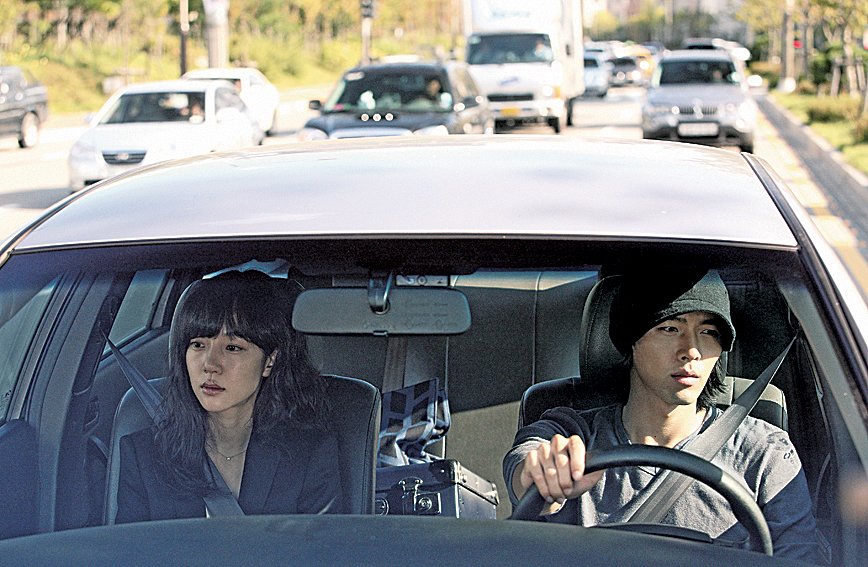
Driving his wife Yeong-shin (Im Soo-jeong (임수정) to Gimpo Airport, Ji-seok (Hyeon Bin (현빈) engages in small talk despite the strangely tense atmosphere between them. After the conversation runs dry, Yeong-shin announces that she is leaving him and will be shortly moving out of their home. Worse still is that she has been seeing another man, a fact she accuses Ji-seok of knowing but ignoring. Bizarrely, Ji-seok appears quiet but unfazed. Days later, Yeong-shin is packing her belongings at home while Ji-seok attempts to make the dissolution of their marriage easier by making coffee, preparing dinner, and helping with the packing. As they awkwardly converse and reminisce over items, Yeong-shin and Ji-seok discover the emotional distress and difficulty in the finality of their marriage.

Yeong-shin announces to Ji-seok that she will leave him

Yeong-shin announces she will leave Ji-seok

The themes of alienation and loneliness are conveyed by director Lee Yoon-ki (이윤기) with incredible sensitivity and confidence throughout Come Rain Come Shine, as he allows the tense atmosphere created by the mise-en-scene to portray the hardship the couple endure rather than relying on melodrama. This focus on realism is enhanced further by his continual use of long takes which makes the tension between the central protagonists palpable. The opening scene in which Ji-seok drives Yeong-shin to the airport is a long take approximately eight minutes in length, conveying the search for small talk and the awkward silences as features of their relationship which now lacks intimacy and spontaneity. The realism conveyed through the voyeuristic gaze makes for slightly uncomfortable viewing due to their lack of communication and the resulting tension, playing upon the audience’s expectations that a confrontation must occur to disrupt the calm yet strained atmosphere. However as the take is so long, Lee Yoon-ki lulls audience into a false sense of stability which then serves to enhance the shock of Yeong-shin’s announcement she will leave her husband for another man.

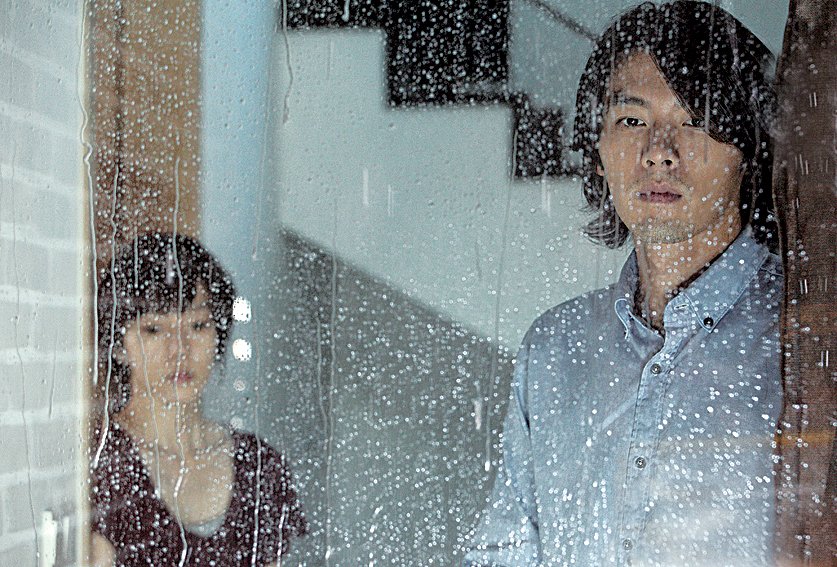
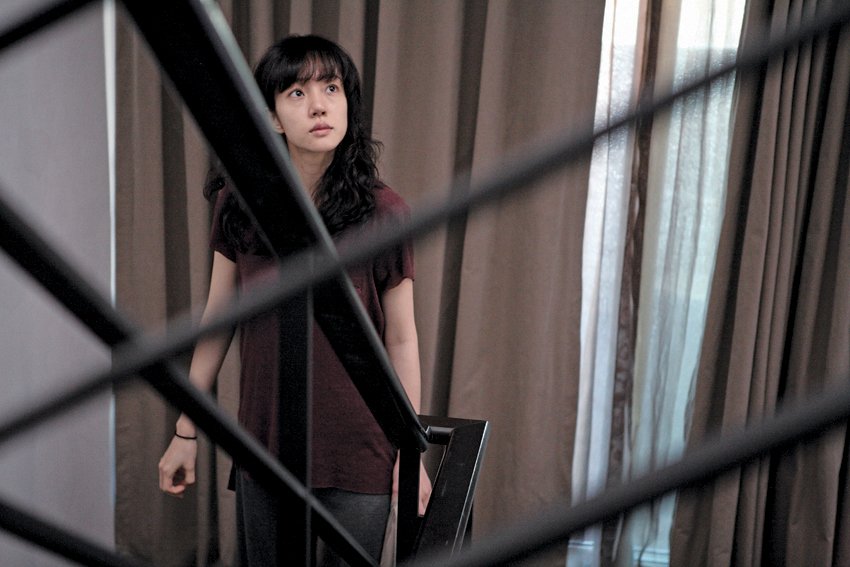
Later at the house, Yeong-shin packs her belongings ready to vacate and leave Ji-seok. The house itself is  an incredible element of the mise-en-scene due the various floors that are present, with Lee Yoon-ki utilizing it to convey how the couple are exist on different levels, drift apart, and come together. Each floor, and each room, is unique in portraying the internal conflict within both protagonists, such as Yeong-shin’s isolated higher-tiered office compared with the basement which contains memories over which they reminisce, functioning as the foundation for the house as well as their relationship. The lighting within the house is incredible as the muted tones and lack of colour drain the emotion and passion from the environment, painstakingly exemplifying the numbness within Ji-seok and Yeong-shin. In addition the torrential downpour of rain throughout conveys the sadness both within the protagonists and of the event itself, which ironically forces the couple to communicate and spend more time together as nature seemingly desires the pair try once more – a feature that Lee Yoon-ki respects audiences, whether optimistic or pessimistic, to decide for themselves.

The weather mirrors the emotionally fraught couple

The weather mirrors the emotionally fraught couple

The performances of Im Soo-jeong as Yeong-sin and Hyeon Bin as Ji-seok came under scrutiny upon the release of Come Rain Come Shine which, when taken into consideration that melodrama is enormous popular in Korea, is understandable yet unfair. Both high-profile actors are incredibly talented with a catalogue of successful films and dramas, yet Come Rain Come Shine is a drastic departure from the roles – and expectations – of their previous work. The subtlety contained within their facial expressions and mannerisms conveys the abundance of emotional turmoil contained within. Im Soo-jeong initially projects a cold and heartless persona, yet her desire for passion and love from her highly reserved husband and her reluctance to leave tenderly present themselves as the finality of their situation becomes more apparent. Hyeon Bin is also charismatic in his role as while his quiet and humble nature is continually present, the moments in which he is alone reveal the overwhelming sadness that threatens to engulf him. Despite this he feels incapable of changing the situation yet his chivalry and kindness indicate his desperation to resolve the conflict.

The multiple levels within the house are symbolic of the relationship

The multiple levels within the house are symbolic of the relationship

Verdict:

Come Rain Come Shine is a tender, thought-provoking, and sensitive portrayal of the final moments in the break-down of a marriage. Due to the slow-paced and meditative filmic style of director Lee Yoon-ki, the film will not satisfy audiences with expectations of melodrama and comedy, or an amalgamation thereof.  However, the realism conveyed through the masterful use of mise-en-scene and long takes, in conjunction with the subtle and highly poignant performances, make Come Rain Come Shine a powerful film about the tenderness of loss.

★★★★☆

Reviews
Searching for the killer leads all the detectives into a moral vacuum

Memories of Murder (살인의 추억) – ★★★★★

Memories of Murder (살인의 추억)

Memories of Murder (살인의 추억)

Truth is, as the saying goes, stranger than fiction. Perhaps the cliche is best served when applied to the criminal classes, as events that would seemingly belong in the pages of Sir Arthur Conan Doyle or the films of Martin Scorcese are violently brought into ‘the real’, adding an incomparable shock value with the knowledge that criminal empires were actually built, and that victims genuinely suffered. More specifically, the notion of the serial killer has endeared itself amongst fans of the crime genre for the thrilling cat-and-mouse games played by the detective and murderer, but more so in attempting to piece together the depraved psychosis of the unhinged individual before another innocent succumbs to such unbalanced desires.

Memories of Murder (살인의 추억), director Bong Joon-ho’s (봉준호) incredible second film, is based on the true story of Korea’s first known serial killer who raped and murdered ten women between 1986 and 1991 – a case that is still unresolved. Memories of Murder is one of the most successful and prolific films to emerge from Korea and rightfully so, with superb direction from one of the country’s leading auteurs and an exceptional performance from lead actor Song Kang-ho (송강호).

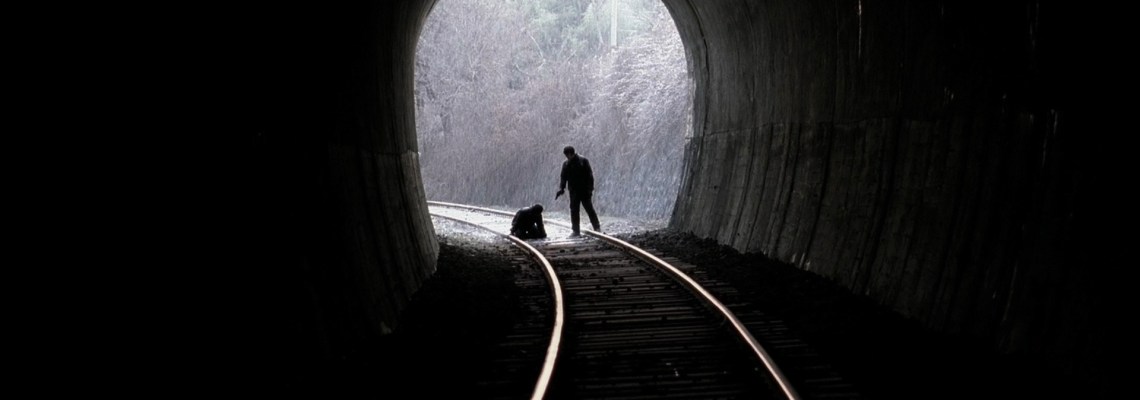
In a small rural town surrounded by farmland, the naked and bound body of a young woman is found in an irrigation tunnel. Detective Park Doo-man (Song Kang-ho) is called to the scene, but all traces of evidence have been destroyed by the locals. Shortly thereafter, the body of another young woman is found, raped and murdered in the same fashion. With no leads, Doo-man and his aggressive partner Detective Cho Yong-koo (Kim Roi-ha (김뢰하) are tasked with finding the culprit, beating and torturing any suspects who visually conform to their idea of a serial killer. Their theories and methods of interrogation are rejected by intellectual Seoulite Detective Seo Tae-Yoon (Kim Sang-kyeong (김상경) who joins the search, but as the three detectives squabble and desperately cling to the loosest of hunches, and with the government too busy quelling the various uprisings throughout the country, the number of murdered young women continues to rise.

Detective Park Doo-man discovers the first victim

Detective Park Doo-man discovers the first victim

There is a tendency with crime-thrillers to reveal the bloodied and mutilated corpses of the victims for shock value, a tendency from which Bong Joon-ho wisely refrains and instead allows the horrifying true story to be at the forefront of the film. His vision in presenting the narrative is enthralling as he simultaneously conveys beauty and the macabre seamlessly – when Detective Park Doo-man visits the broad, expansive golden farmland in the initial establishing shot, mere moments later he is confronted with a corpse in a darkened, claustrophobic tunnel. The interplay between such oppositions, which have marked Bong Joon-ho as an auteur, continually explore the duality of the situation as light conflicts with darkness, the truth struggles against the veneer, and the lines between morality and immorality are blurred. As such, Memories of Murder contains some incredibly dark humour, such as the ramifications in fabricating evidence and the bizarre perversity that is unlocked in certain members of the populace when news of the murders spreads, adding a comedic edge that stops the film from becoming bleak but also conveys the turmoil and frustrations in attempting to catch a serial killer.

In addition to his interest in duality, Bong Joon-ho’s recurrent social exploration is rather blatantly laid bare and few are portrayed positively. The military government is too busy extinguishing public protests to provide resources; the public are too ignorant to understand they are destroying evidence; media outlets compound the situation further; and men are chauvinistic and sexist. By far the most damning indictments are reserved for the police force, as corruption and violence are commonplace. Detectives Park Doo-man and Cho Yong-koo have received very little education and their logic-defying hunches are simultaneously comedic yet disturbing, as Doo-man rehearses confessional speeches with suspects after Yong-koo has tortured them into submission. Both men humiliate the police force and make them a national embarrassment with their actions, as Bong Joon-ho initially portrays them as simpletons in need of a scapegoat. Intellectual detective Seo Tae-yoon fairs much better having received an education and training in Seoul, yet even he succumbs to the moral abyss due to the frustration with his peers and the lack of resources at his disposal. Bong Joon-ho creates a powerfully damning portrait of the era, yet the dark humour and the often unbelievably surreal events that transpire make the protagonists somehow likable as they themselves are attempt to create order within a society in chaos.

The detectives target anyone who fits their idea of a serial killer

The detectives target anyone who fits their idea of a serial killer

Song Kang-ho, as Detective Park Doo-man, is superb and utterly deserving of his Grand Bell Best Actor Award for the role. Park Doo-man is a bullying fraudster, a corrupt tyrant, yet amazingly is a compelling and charismatic protagonist. His rudimentary upbringing and attitude convey him as an underdog who routinely makes mistakes, and as such resorts to fabricating evidence regardless. Yet when his actions bring the police into disrepute, Doo-man’s evolution is incredible as he begins to emulate Detective Seo-Tae-yoon and commit to serious police work, making Memories of Murder as much about his maturation as about finding the serial killer.

Detective Cho Yong-koo is ultimately a proletariat figure with a penchant for violence, and Kim Roi-ha performs the role well. Bong Joon-ho uses the protagonist of Yong-koo to express the base dissatisfaction with the institution, and as such is more akin to a criminal as he abuses suspects, drinks alcohol, fights with locals, and more importantly sexually assaults a girl in a karaoke room – right next to his oblivious fellow officers.

Kim Sang-kyeong also conveys a highly competent performance as pretentious Seoulite Detective Seo Tae-yoon. As his modern style of police work inspires Park Doo-man, the corruption conversely leads to the devolution of Tae-yoon as his frustrations engulf his sense of reason. Yet while Doo-man’s character arc is compelling, Tae-yoon’s is less so due to his reserved and conceited portrayal.

Searching for the killer leads all the detectives down a dark path

Searching for the killer leads all the detectives into a moral vacuum

Verdict:

Memories of Murder is a fantastic example of a crime-thriller that does not rely on gore in producing an enthralling film about serial murders. While artistic license has undoubtedly been applied in certain areas, the fact it is based on a real-life unresolved case provides authenticity and a mixture of genuine fascination and horror that such events could transpire in recent history. As such it justifiably deserves its status as being not only one of the most prolific films to originate from Korea, but also in cementing Bong Joon-ho’s reputation as a respected auteur, making Memories of Murder one of the most noteworthy examples of the genre.

★★★★★
Reviews
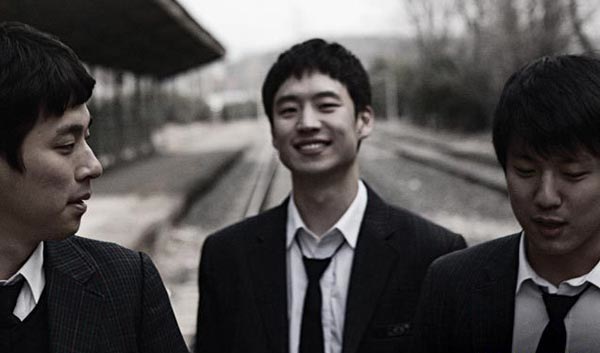
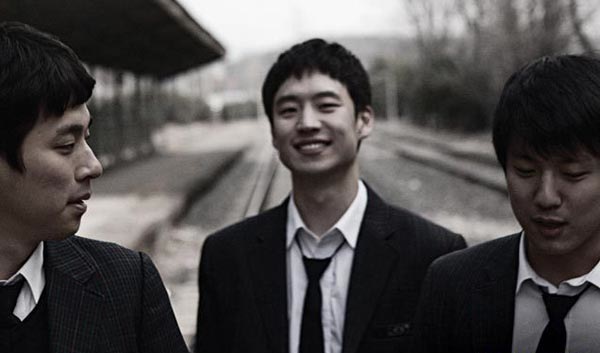
Hee-joon, Gi-tae, and Dong-yoon hang out at the abandoned rail track

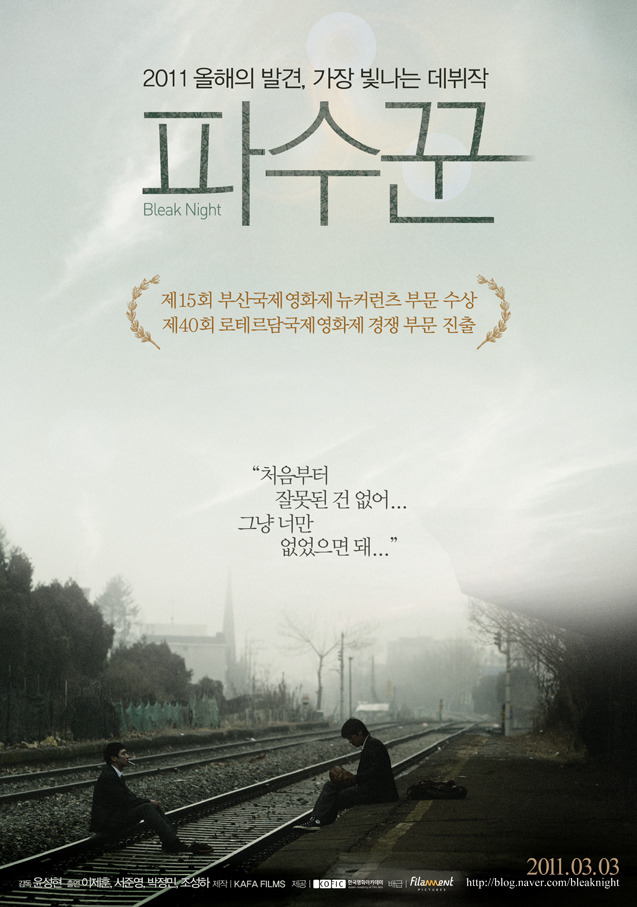
Bleak Night (파수꾼) – ★★★★★

Bleak Night (파수꾼)

Bleak Night (파수꾼)

The younger generations, and their lifestyles, are generally not represented well in cinema. For every La Haine (1995) is an American Pie franchise; for every Kidulthood (2006) a season of 90210. Actors in their 20s and 30s portraying the formative teenage years in the bourgeoisie do well financially, due in no small part through the over-emphasis of sex, alcohol, drugs, and more sex. Despite the blatant lack of realism, the anxieties that so concern the younger generations are routinely dismissed in favor of cinematic hedonism.

Not so in Bleak Night (파수꾼), which depicts the trials and tribulations of three high school friends in a raw, independent manner that highlights their tumultuous lifestyles, and is without a doubt one of the best films of 2011. Even more astounding is that the film is the directorial debut of Yoon Sung-hyun (윤성현), fresh from film school and with his keen eye for realism and drama is clearly a filmmaker to watch.

Gi-tae (Lee Je-hoon (이제훈), Dong-yoon (Seo Joon-yeong (서준영) and Hee-joon (Park Jeong-min (박정민) are inseparable friends; when not together in high school, they can be found playing baseball on the abandoned rail tracks nearby, joking, swearing and occasionally smoking. In an effort to pair each other with a girlfriend, they arrange a trip to Wolmido amusement park with three girls, yet Hee-joon’s crush is unrequited as she likes Gi-tae instead. This simple jealous misunderstanding becomes the catalyst for disharmony amongst the group, escalating into bullying, fighting and the disintegration of friendship.

Hee-joon, Gi-tae, and Dong-yoon hang out at the abandoned rail track

Hee-joon, Gi-tae, and Dong-yoon hang out at the abandoned rail track

Bleak Night is a staggering achievement from first-time writer/director Yoon Sung-hyun, who conveys his protagonists and their environment with visionary skill. As the title suggests, the film is indeed bleak not only in a narrative sense but also technically as filters block any colour from entering the lives of the characters. Combined with the visual repetition of the high-rise apartment blocks and abandoned rail station, the bland and drab surroundings are more akin to a dystopian landscape than contemporary Seoul, forming a prison from which there is seemingly no escape.  The only time colour enters the film is during the group date at Wolmido amusement park, when Hee-joon’s hopes are dashed and the catalytic event that engulfs the friendship originates; when colour and passion are allowed to enter their lives, conveys the director, is the time when their vulnerabilities are revealed. The protagonists raw and uncontrollable emotion is wonderfully articulated through the camerawork, with the non-static hand-held prowess and close-ups conveying the uncomfortably intense situations that arise.

Yoon Sung-hyun also deserves praise for his editing skills, which are reminiscent of auteur Christopher Nolan in taking a fairly uncomplicated narrative and creating a non-linear, compelling viewing experience. The time displacement, while initially somewhat jarring, is edited extraordinarily well and makes somewhat predictable scenes enthralling as audiences are forced to wait for the ramifications – or the prelude – of dramatic encounters. For example, the reason for Hee-joon’s lack of interest in playing games with the class is unknown, as is the over-zealous insistence of Gi-tae for him to join; yet through the carefully edited framework, the events originating Hee-joon’s reluctance are portrayed, while later still is the resultant battle he must fight due to his lack of co-operation. The edited sequences are structured as if they were memories, as the friends recount the events that alienated them from each other; just as their memories are fragmented and non-linear, so too are the events portrayed.

Bullying and fighting develop between the friends

Bullying and fighting develop between the friends

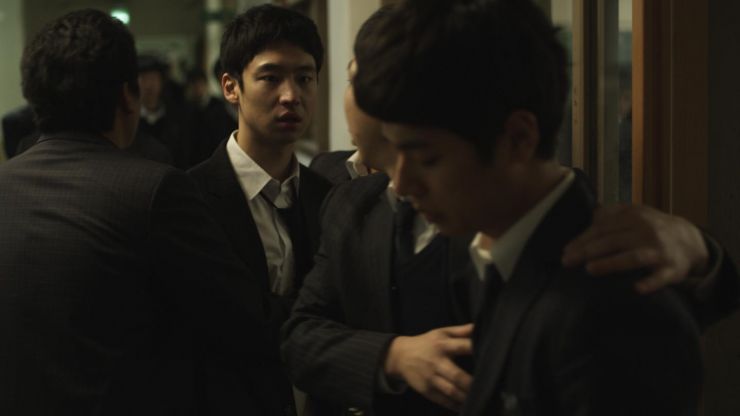
Lee Je-hoon won the 2011 32nd Blue Dragon Award for Best New Actor in his portrayal as Gi-tae, and it’s quite clear why. The young actor portrays the conflicted protagonist with incredible skill, with the ability to switch from happy and playful to intense and violent at will. His actions are motivated by his obsessive desire for attention and friendship, and his aggression when either fails is palpable. Lee Je-hoon’s eyes are perhaps his most his most vital asset, conveying sheer joy when playing games or sheer ferocity when being ignored. As Dong-yoon, Seo Joon-yeong was also nominated for the award of Best New Actor. Slightly relegated to the second and final acts, Seo Joon-yeong nevertheless gives a wonderful dramatic display as a student unable to halt the self-destruction of his friends. His turmoil when confronted with relationship problems with his friends and girlfriend are conveyed like a seasoned actor, forging empathy from audiences with his subtle and indecisive mannerisms. Park Jeong-min fairs less well, although that’s a rather unfair criticism given that his role is largely limited to the first act in which he must be aloof and ignorant as Hee-joon. Park Jeong-min expresses the immature jealousy of Hee-joon very well, refusing to acknowledge his emotions and instead projecting his anguish into pretentious defiance, furthering the ire of his counterparts.

Dong-yoon must attempt to explain the disintegration of the group

Dong-yoon must attempt to explain the disintegration of the group

Verdict:

Bleak Night would be considered an incredible achievement for a seasoned director, but for first-time writer/director/editor Yoon Sung-hyun it is a monumental and career forging film. His creative and technical prowess, combined with three young and talented actors, have earned Bleak Night the Best New Director and Best New Actor awards domestically, while the film has been invited to several high profile international festivals. Bleak Night is proof that an enormous budget and renowned stars are not necessary in creating a compelling and thought-provoking drama, and is highly, highly, recommended.

★★★★★
Reviews
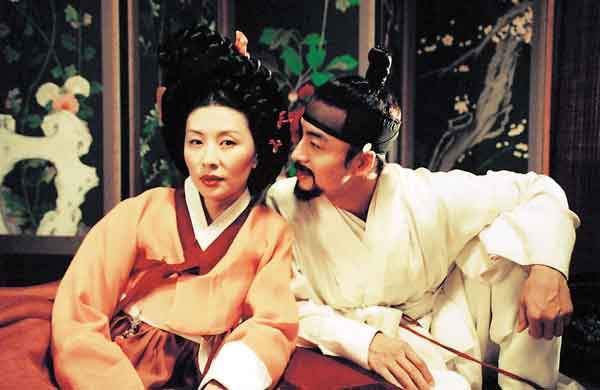
16 year old concubine So-ok must be impregnated for Sir Jo to win the gambit

Untold Scandal (스캔들 – 조선남녀상열지사) – ★★★★☆

Untold Scandal (스캔들 - 조선남녀상열지사)

Untold Scandal (스캔들 – 조선남녀상열지사)

The French classic Les Liaisons Dangereuses has been adapted for the screen several times, including the critically acclaimed Dangerous Liaisons (1988) which employed a traditionalist approach, as well as a successful contemporary teenage variation with Cruel Intentions (1999).

Untold Scandal relocates the infamous text to 18th century Korea during the Joseon Dynasty, an era of strict Confucianism and the emergence of then-illegal Catholicism, a time when men were allowed multiple wives and concubines and women had precious few rights. As such, the French literature so concerned with scandal is transplanted astonishingly well, and aside from rather uninspiring direction, is an entertaining tale in old Korea.

Sir Jo-won (Bae Yong-joon (배용준) is the most famous lothario in the land, a man of ill-repute who passes his days bedding the local women and painting images of his conquests. His cousin and rival Lady Jo (Lee Mi-sook (이미숙), is a manipulative and vindictive woman of aristocracy who, upon learning of her husband’s desire for 16 year old concubine So-ok (Lee So-yeon (이소연), forges a gambit with her sexually predatory cousin; take the virtue of the concubine and impregnate her, and in exchange Sir Jo-won can have the prize he’s always coveted – a night with Lady Jo. Should he fail however, Sir Jo must spend the rest of his days as a monk. Considering the bet to be unchallenging, Sir Jo raises the stakes by including bedding the most virtuous widow in the land, Lady Jung (Jeon Do-yeon (전도연), and sets out to fulfill the task and receive the conquest he has always desired.

Lady Jo and Sir Jo-won create the scandalous bet

Lady Jo and Sir Jo-won create the scandalous bet

18th century Korea is wonderfully realized in Untold Scandal, and the costume and set designers deserve praise for their painstaking attention to detail throughout the film. The costumes in particular form a major proponent of the mise-en-scene, as the style and colour schemes of the traditional hanboks worn are indicative of the personality of the wearer; the seductive yet dangerous reds worn by Lady Jo are in stark contrast to the calm and natural blues worn by Lady Jung, and as such protagonists convey a wealth of emotion and anticipation through their appearance alone. Director Lee J-yong captures the world of Untold Scandal competently and with sincerity, yet his style is often bland and uninspiring, framing the action as if it were on stage rather than celluloid. Furthermore, the director’s apparent preference for mid-shots tends to detract from establishing the beauty of the era with long-shots or, crucially, the intense seduction between the protagonists with close-ups. However, the performances of the cast more than redress these shortcomings as their provocative and flirtatious encounters with each other are palpable.

The narrative is, as expected from the source material, a captivating and enthralling tale and the inclusion of features inherently Korean serve to enhance the story in a varied and interesting fashion. The strict Confucian ideology of the era serves to make Sir Jo-won’s bet more difficult to achieve, as Lady Jung initially will only communicate through a proxy for fear of sullying her reputation as a virtuous woman. As was commonplace in the Joseon Dynasty, men were within their rights to have a wife as well as several concubines, roles which Lady Jo and So-ok embody quite naturally and serve to give an alternative perspective on their troublesome relationship. Rather than letters or a diary, Sir Jo-won paints his conquests in the style of Joseon painters adding authenticity as well as a unique spin on the evidence of his philandering. Combined, these organic features establish Untold Scandal as unmistakably Korean, with the contrasting approach conveying the seductions and betrayals as markedly different from other adaptations.

Sir Jo-won must seduce the most virtuous woman in the land, Lady Jung

Sir Jo-won must seduce the most virtuous woman in the land, Lady Jung

As is often the case, Jeon Do-yeon is incredible in her portrayal of Lady Jung and outshines the rest of the cast. Her performance evolves from icy to humble with deft skill, although the jump from humble to loving requires further suspension of disbelief. Such criticism is also applicable to Bae Yong-joon as Sir Jo-won, who is never convincing in his declarations of love for Lady Jung. As a casanova, Bae Yong-joon performs well despite lacking the charisma and subtlety expected of the role, raising doubts as to how he is able to seduce so many woman. For example the night in which he beds concubine So-ok is not achieved through mastery of seduction or language, but through force. The scene is conveyed as rape rather than alluring temptation, and undermines Sir Jo-won’s character enormously. Despite her limited role, Lee So-yeon (이소연) portrays the naivety of So-ok wonderfully, and it’s a shame more dramatic scenes, such as the ramifications of her actions, were not produced to convey the shattering of her innocence. So-ok’s mentor Lady Jo is captivatingly performed by Lee Mi-sook (이미숙), who seemingly seethes with vengeance and pride. Lee Mi-sook not only wonderfully conveys, but clearly also relishes, every ounce of tension, manipulation and seduction she creates in every scene. Her character is somewhat limited however in that there are scant few scenes of her actually displaying her enticing prowess, which serves to make her threatening demeanor slightly shallow.

16 year old concubine So-ok must be impregnated for Sir Jo to win the gambit

16 year old concubine So-ok must be impregnated for Sir Jo to win the gambit

Verdict:

Untold Scandal is a delightfully scandalous and entertaining film about seduction and betrayal in 18th century Korea, with beautiful costume design that adds elegance and authenticity to the mise-en-scene. The adaptation works incredibly well and offers an interestingly unique perspective on the source material. However the direction by Lee J-young is often bland and uninspiring due to a general lack of technical variation, failing to fully capitalise on the lustful charisma between the protagonists, which are joyous performances despite their occasional limitations. Untold Scandal is highly engaging and enjoyable, and a fascinating take on an old classic.

 ★★★★☆

Reviews
In-ho constantly breaks the rules, and requires punishment

You’re My Pet (너는 펫) – ★★☆☆☆

You're My Pet (너는 펫)

You’re My Pet (너는 펫)

The reversal of gender roles can prove to be a simultaneously comedic as well as enlightening viewing experience. For every humorous moment of mistaken identity, cross dressing and so forth, the gender inequalities within society are expressed and critiqued. From Kramer vs. Kramer to Devil Wears Prada, from Mrs. Doubtfire to Disney’s Tangled, each production highlights the ‘active’ and passive’ roles which men and women employ in articulating their (cultural) identities, identities which are comically subverted to reveal their fragile and ultimately hollow nature.

You’re My Pet (너는 펫), the latest adaptation from the manga series, also uses gender differences for comical effect, attracting controversy in the process as a men’s association filed a legal petition due to what they claim was an emasculating portrayal of men. Ironically this attracted an even greater audience, although it’s quite undeserved as You’re My Pet is unfortunately little more than a vacuous rom-com vehicle for stars Jang Geun-seok and Kim Ha-neul.

As a successful 30-something career woman, Ji Eun-i (Kim Ha-neul (김하늘) has a very comfortable life with her high-ranking job at a fashion magazine and spending time with close friends. Kang In-ho (Jang Geun-seok (장근석), on the other hand, is homeless and penniless despite his past fame as a ballet dancer. Their paths intertwine however when In-ho begs to live at his friend’s apartment – a friend who happens to live with his older sister Eun-i, who is less than pleased with the new arrangement. Eun-i’s displeasure grows further when her brother is forced to leave, meaning she and stranger In-ho must live together alone. The two strike a deal – Eun-i is the master while In-ho will take the role of a pet, who will be fed and taken care of in exchange for performing errands. As the two spend more time together they become closer, yet complicating matters is the arrival of Eun-i’s first love, Cha Woo-seong (Yoo Tae-joon (류태준).

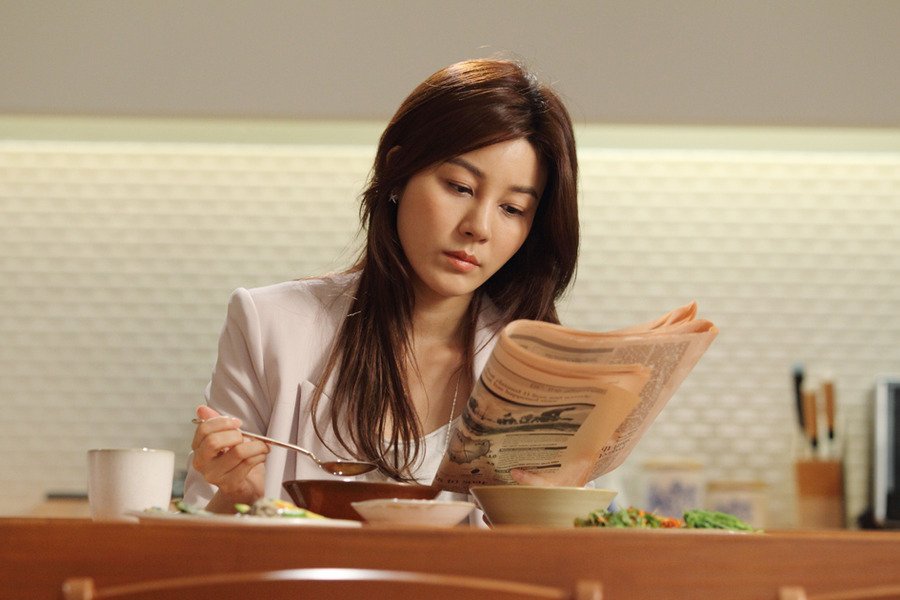
Eun-i is a successful and indepdendent 30-something woman

Eun-i is a successful and indepdendent 30-something woman

Kim Byeong-gon (김병곤) competently – although blandly – directs the film. Often You’re My Pet lacks the technical dynamics and polish of a feature film, instead displaying conventions more akin to televisual productions. While such faults are the responsibility of the director, he cannot be held accountable for the uninspiring and dull script that squandered the potential that appeared so promisingly in the synopsis. For example, the reversal of gendered roles should provide insight and amusement, but is largely the opposite. Eun-i is a successful woman, yet the film rarely focuses on her achievements preferring to highlight her unhappiness as a singleton and the constant frustrations she must endure in the workplace from her colleagues. Additionally, Eun-i is never conveyed as the ‘master’ in her relationship with In-ho, and is in fact more a maternal figure as she cooks him meals, washes his hair, and punishes him for naughty behaviour. The (forced) appearance of her first love Woo-seong does nothing to promote her independent status as she then ultimately becomes the prize in a love triangle.

Despite his poverty stricken status, In-ho’s representation fairs so much better that at time it becomes cringeworthy. Women continually comment about his handsome features and his prowess as a professional dancer. Ironically this is the only tangible result of the reversal of gender roles, as actor Jang Geun-seok is routinely discussed in terms of image, and as such You’re My Pet is reduced to a fairly average vehicle for the star’s promotion.

The relationship between Eun-i and In-ho, absurd origin notwithstanding, is occasionally quite endearing as the two struggle to live with each other and adhere to the rules of the arrangement. As such the relationship develops in an organic and natural fashion akin to newlyweds, yet due to the ‘master and pet’ dichotomy in which Eun-i ultimately becomes a maternal figure,  the ‘love’ feels somewhat implausible and forced in order for a romantic finale.

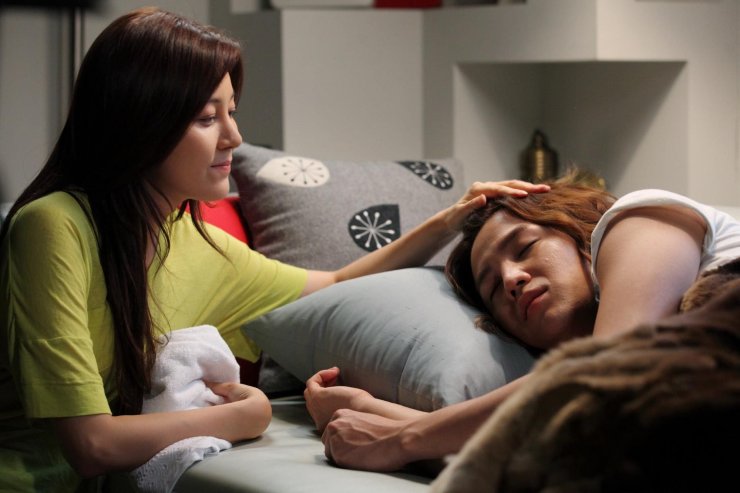
In-ho constantly breaks the rules, and requires punishment

In-ho constantly breaks the rules, and requires punishment

With regards to acting, both leads are rather average and have few scenes in which to display their craft. Kim Ha-neul gives the best performance by far, although she never fully conveys the decisive and no-nonsense sensibilities that a woman dedicated to her career would inhabit. Due to this she is routinely chastised by her subordinates (a feature seriously lacking in realism particularly in Korean culture) and allows In-ho’s immature behaviour with little protest. As for Jang Geun-seok, he conveys the ‘man-child’ characteristics of In-ho well yet lacks the charisma to make In-ho endearing, relying on his physical features to perform that function. In-ho is often irritating due to this as scenes in which he strives for attention, such as throwing tantrums and having his hair washed, are conveyed as the petty contrivances of a child rather than a charming-but-poor man attempting to woe his love interest.

Eun-i and In-ho become closer

Eun-i and In-ho become closer

Verdict:

You’re My Pet is unfortunately a rather shallow romantic-comedy, which fails at both being romantic or comedic. The premise is a fine one, although the potential is never fully realised as the archaic constructions of gender identity overwhelm it, as does Jang Geun-seok who uses the film as little more than a self-promoting device. Kim Ha-neul does add charm to You’re My Pet with her performance, but it is not enough to elevate the film above its mediocre status.

★★☆☆☆

Reviews
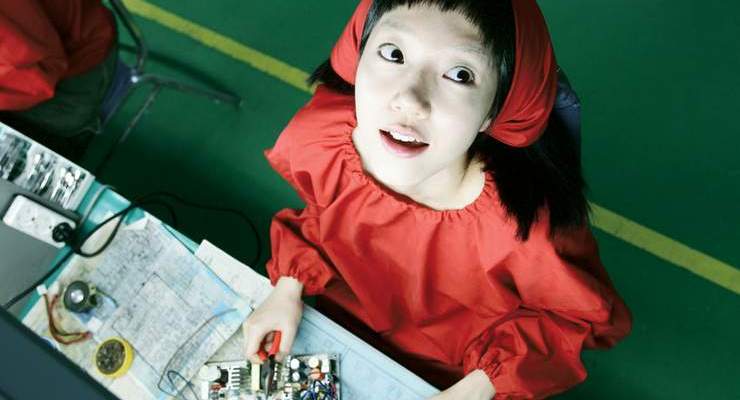
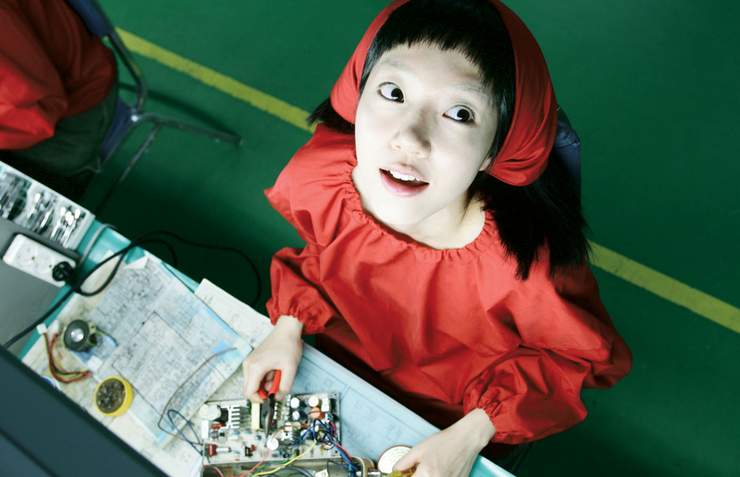
Young-goon works in a radio factory, hearing broadcasts about her cyborg nature

I’m a Cyborg, But That’s OK (싸이보그지만 괜찮아) – ★★★★☆

I'm a Cyborg, But That's OK (싸이보그지만 괜찮아)

I’m a Cyborg, But That’s OK (싸이보그지만 괜찮아)

I’m a Cyborg, But That’s OK (싸이보그지만 괜찮아) is perhaps best described as One Flew Over The Cuckoo’s Nest (1975) meets Amelie (2001) due to the whimsical portrayal of romance set within the confines of a mental institution. While these two features may initially seem an unnatural pairing, the abstract representation of the tenderness and innocence of love makes I’m a Cyborg an incredible inventive and poignant addition to the romance genre.

The film also marks a rather remarkable thematic departure for director Park Chan-wook (박찬욱) whose previous works have tended to focus on the nature of violence and revenge, yet his fundamental creative flair and ingenuity portray the magical nature of love of those with an alternative perception of reality.

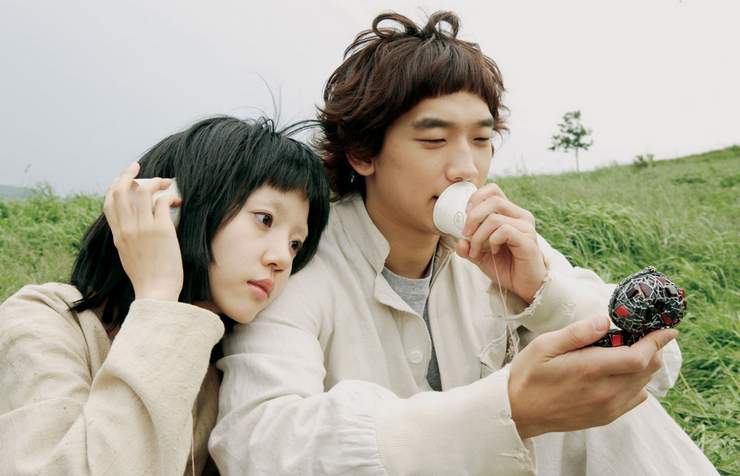
Cha Young-goon (Im Soo-jeong (임수정) believes herself to be a cyborg, so much so that she attempts to recharge herself at her factory workplace by slitting her wrist and inserting electronic wiring within the wound. Mistaken for a suicide attempt, Young-goon is taken to a mental institution to receive treatment and meets a variety of eclectic and comical characters including Park Il-soon (Jung Ji-hoon/Rain (정지훈/비). Il-soon believes he has the ability to steal personal attributes of his fellow patients, and his perceived lack of identity leads him to wear a rabbit mask before ultimately fading into nothingness. Upon learning of Il-soon’s abilities, Young-goon begs him to steal her ‘sympathy’ so that she can exact revenge on ‘the white coats’ who forcibly took her Grandmother away. Il-soon becomes fascinated with Young-goon and her psychoses, and the two form an unlikely bond that help each other more deeply than any psychiatrist could ever hope for.

Young-goon works in a radio factory, hearing broadcasts about her cyborg nature

Young-goon works in a radio factory, hearing broadcasts about her cyborg nature

I’m a Cyborg, But That’s OK is a wonderfully compelling romantic story with incredible visual flair from co-writer/director Park Chan-wook. The composition and colour within each frame is often majestic, such as the greens and reds within the radio factory in which Young-goon is employed that clearly contribute to her belief she’s a cyborg. Contrasted with the stark white within the institution and the ‘dome’ in which patients attempt to verbalise their symptoms, I’m a Cyborg continually conveys whimsy and poignancy in equal measure. This also applies to the character-driven script co-written with Jeong Seo-kyeong (정서경), which foregoes representing mentally ill patients as silly entertainment and instead endeavours to provide each character with history, depth, and empathy. This seemingly rare feature of cinema constructs an environment in which the central protagonists are not conveyed as beyond help, but as members of a social group in which their tragedy and comedy are shared with each other and forges relationships. Young-goon, for example, is from a family with a history of mental illness which included her Grandmother who believed she was a mouse and only ate radishes. When her Grandmother is forcibly sectioned, Young-goon desperately holds on to her memory by wearing her dentures and swearing revenge with her cyborg body. This mixture of empathy and comedy makes I’m a Cyborg one of the most unique, interesting and romantic character studies in many years.

Il-soon hides his identity with a rabbit mask, stealing personal attributes from patients

Il-soon hides his identity with a rabbit mask, stealing personal attributes from patients

At the heart of I’m a Cyborg is the relationships between Young-goon and Il-soon, and the development of their love is represented organically and with passion. Im Soo-jeong is convincing and sympathetic as girl-turned-cyborg Young-goon, conveying her detachment from reality with skill and conviction, and is by far the most engaging protagonist within the film. Similarly Jung Ji-hoon/Rain is charismatic as love interest Il-soon, and while he often does not convey his anti-social behaviour he still functions well as a charming rogue whose interest in Young-goon blossoms with time. The supporting characters also offer interesting interludes that add to the central concept, as Il-soon ‘steals’ personality traits that help bring him closer to Young-goon and provide him with an identity. However, neither leading actor is given a ‘defining moment’ in which their acting prowess can be revealed – such as can be found within One Flew Over the Cuckoo’s Nest, Girl, Interrupted and Amelie – which ultimately limits their performance and the character depth which is continually alluded to is never fully realised. As such, the gentle narrative flow is never disrupted to a degree whereby drama ensues and hurdles must be overcome, leaving I’m a Cyborg as a pleasantly mellow offering, without much conflict or resolution.

The unlikely duo form a romantic bond that helps overcome their psychoses

The unlikely duo form a romantic bond that helps overcome their psychoses

Verdict:

I’m a Cyborg, But That’s OK is a rare and unique treat, portraying mentally ill patients not as figures of ridicule but of poignancy, comedy, and of love. Director Park Chan-wook employs a whimsical and creative style that is engaging and entertaining, emphasizing his ability produce tender and heartfelt romance within the context of fantasy. While the narrative shies away from dramatic character defining events, the gently-paced and thoughtful character construction, accompanied with the surrealism of their perception of reality, is both charming and heartwarming.

★★★★☆

Reviews
Ha-cheon is a sultry, charismatic con-woman who easily manipulates men

Countdown (카운트다운) – ★★★☆☆

Countdown (카운트다운)

Countdown (카운트다운)

The partnership of Steven Soderbergh and George Clooney brought back the ‘cool’ of the con-man in their remake of the classic ratpack film Ocean’s Eleven (2001). With Soderbergh’s vision for capturing the flamboyance and decadence of Las Vegas and Clooney’s uncanny knack for emanating panache and suavity, the duo made the con-man someone to root for again as the intelligent, just-one-step-ahead, underdog. Yet the machismo comes with a tongue-in-cheek sensibility, as Clooney and his cohorts are constantly bamboozled by the feminine wiles of their love interests who are equally as intelligent, cunning, and charismatic. The chemistry between them, and the cat and mouse games they play, add to the appeal of the thrilling con-man lifestyle as to who will outsmart the other and emerge victorious, walking away with a small fortune.

Countdown (카운트다운) endeavours to re-create such chemistry, as two highly charismatic actors – Jeon Do-yeon (전도연) and Jeong Jae-yeong (정재영) – must compete against each other while attempting to outwit other con-artists in parting with their money. It’s a competent venture for the most part, although suffers from a lack of direction in the third act and the awful misogynistic representations throughout.

Tae Geon-ho (Jeong Jae-yeong) is a tough debt collector, a man not afraid of breaking a few bones in order to obtain the money owed. His self-destructive approach has made him the top collector, but upon discovering he has only a couple of weeks left to live due to liver cancer, Geon-ho quits and seeks out potential donors. As none exist, his only option is to find people who received transplants  from the organs of his deceased son. Only one of these can provide him with a new liver, the enigmatic con-woman Cha Ha-yeon (Jeon Do-yeon) who ripped off several high-profile gangsters before a betrayal landed her in jail. Shortly to be released, Ha-yeon makes Geon-ho a deal – help her to get revenge on those that framed her, and she’ll willingly undergo the procedure. With time counting down on Geon-ho’s life, he and his co-hort play cat-and-mouse games with each other and criminal organisations in the hope that, when everything is settled, Ha-yeon will have her revenge and Geon-ho will have a new liver.

Geon-ho is a tough debt collector, who failing liver means his life is in countdown

Geon-ho is a tough debt collector, who failing liver means his life is in countdown

Countdown incorporates an interesting mix of visual styles thanks to director Heo Jong-ho (허종호), who blends the dark tones of the criminal underworld with the bright lights of deceiving the rich with skill. In the former is Geon-ho, and the director portrays his world of shadows, violence, and debt collecting as a mixture of horror and action that threatens to engulf his central protagonist. In building the character of Geon-ho, Heo Jong-ho takes time to examine an alpha male with nothing to live for, a self-destructive selfish man, who bizarrely decides to fight for his life when faced with his own mortality. Jeong Jae-yeong portrays the stoic role well, delivering dialogue with intensity and menace while despising his place in the world. In later scenes, which take a more dramatic turn, Jeong Jae-yeong gives a stellar performance proving why he is currently one of the best actors in contemporary Korean cinema, with highly emotionally charged scenes that convey deep empathy and poignancy.

Contrasting completely with this world is Ha-cheon, as her frivolous life of consumerism and con-artistry  is depicted as luxurious, glamourous and fun. The wealthy lifestyle she targets/acquires is emphasised through the portrayal of boats, fancy restaurants, and designer clothes that reveal her incredible sex appeal and charisma. However, it is also offensively misogynistic as Ha-cheon is conveyed merely as a lying high-class prostitute rather than an intelligent and manipulative woman. References are continually made to her ‘technique’ of providing pleasure in the bedroom, and even undergoing vaginoplasty, in order to get what she wants – money and designer clothes. Ha-cheon’s history, as a mother who abandoned her daughter, serves to cement her role as a deceitful whore with no redeeming qualities, not so much femme fatale as femme devil. Furthermore, she always fails in her cons and needs rescuing by the alpha male partner she continually abandons, connoting a lack of intelligence, strength and functioning as a damsel in distress. Quite why an actress of Jeon Do-yeon’s outstanding calibre was selected for such a role is indeed puzzling, as the one-dimensional pro/antagonist offers her – and the representation of women in general – nothing of merit.

Ha-cheon is a sultry, charismatic con-woman who easily manipulates men

Ha-cheon is a sultry, charismatic con-woman who easily manipulates men

In terms of the narrative, which was co-written by director Heo Jong-ho and Lee Hyung-suk, Countdown is thrilling in the first and second acts, before becoming a mundane drama in the third. Korean cinema is wonderful for its innovative use of amalgamating genre techniques to create something original and/or veering into an unexpected territory. With Countdown this is something of a hinderance, as the initial premise is engaging and the mismatch of such distinct characters and the games they play is highly enjoyable. Particularly of note is a scene in a department store, where Ha-cheon outwits Geon-ho as well as a cadre of gangsters with style and elegance, escaping with a bag full of money…only to be captured by a different organization. The rapid editing and camera movement create a thrilling chase, and serve to heighten expectations for a similarly natured finale that never materializes. The true villain of the film, gangster boss Jo Myeong-seok (Lee Kyeong-yeong (이경영) is delightfully vindictive although it’s a long time before he is introduced into the narrative, which impedes the potency of the threat he presents. Despite this, on the few occasions Myeong-seok is portrayed, his violent and unforgiving style is gripping.

The final act however is disjointed in that, after the glamourous con-artistry and action scenes, kitchen sink melodrama is unnecessarily shoe-horned into the narrative. Ha-cheon’s 17 year old abandoned daughter Hyeon-ji (Lee Min-yeong (이민영) adds absolutely nothing to the proceedings except to give Geon-ho another female to save. Additionally, Geon-ho’s missing memory returns yet as his amnesia had not been a serious and impeding – or even recurring – feature, the impact is minimal despite the strong performance given by Jeong Jae-yeong.

Myeong-seok is the ruthless boss of a criminal empire

Myeong-seok is the ruthless boss of a criminal empire

Verdict:

As an attempt at creating romantic chemistry through deceitful but fun con-artistry, Countdown somewhat succeeds. As always, Jeon Do-yeon and Jeong Jae-yeong give wonderful performances, and director Heo Jong-ho conveys the two opposing worlds his protagonists inhabit with skill. However, the potency of Countdown is greatly reduced through the offensively misogynistic representation of its lead female, and with a final act that holds little relation with what came before. Despite this, Countdown is an enjoyable, albeit stunted, take on inept gangsters and the glamorous world of con-artists.

★★★☆☆

Reviews