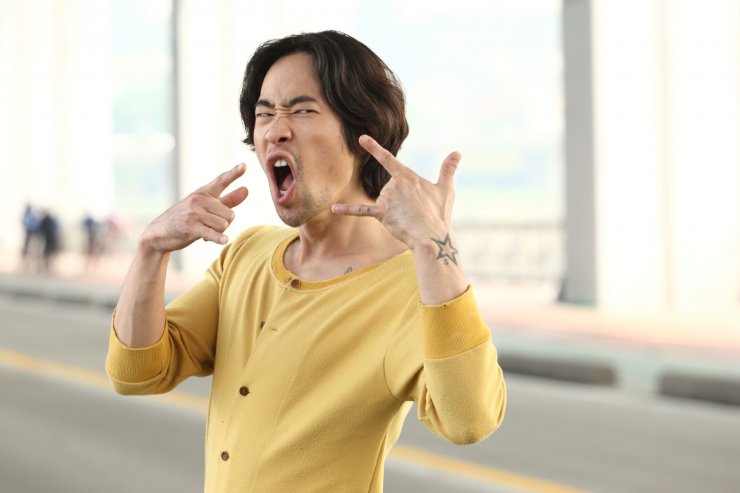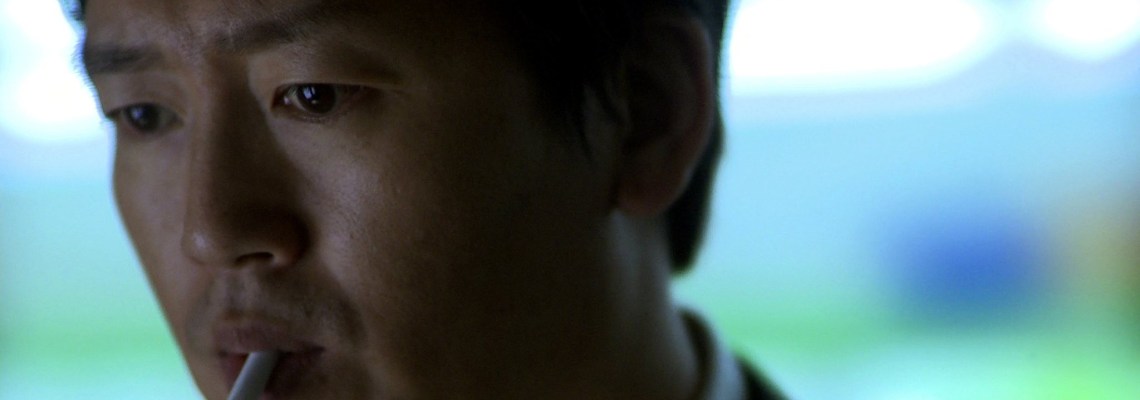

The amesiac man (Kim Jeong-tae (김정태) attempts to (re-)discover his identity

Remember O Goddess (나를 잊지 말아요) – ★★★★☆

Remember O Goddess (나를 잊지 말아요)

Remember O Goddess (나를 잊지 말아요)

One of the most fundamental ideological features of Korean cinema is alienation, yet the topic is almost always at the fringes of the narrative, accepted as a commonplace backdrop against which the protagonists reside. Oh Dae-su was sadistically kidnapped, imprisoned, and isolated for years in Seoul in Oldboy; Mr. Kim attempted suicide due to the stress of city life, and found a private paradise in Castaway on the Moon; and Yang Mi-ja expressed her loneliness and repressed passion through art in Poetry. Yet in each instance it was not their loneliness that drove the narrative forward, despite the central role in which it played in characterization.

In Remember O Goddess (나를 잊지 말아요) director Lee Yoon-jung explores the concept of alienation in conjunction with identity in contemporary Seoul, constructing a fascinating and enthralling psychological noir that exemplifies the incredible quality of Korean independent cinema. The delicately nuanced scenes, the intellectual-yet-comedic dissection of contemporary identity, as well as an arguably career-best performance by lead actor Kim Jeong-tae (김정태), combine to create a 25 minute short film that easily surpasses the majority of feature length productions.
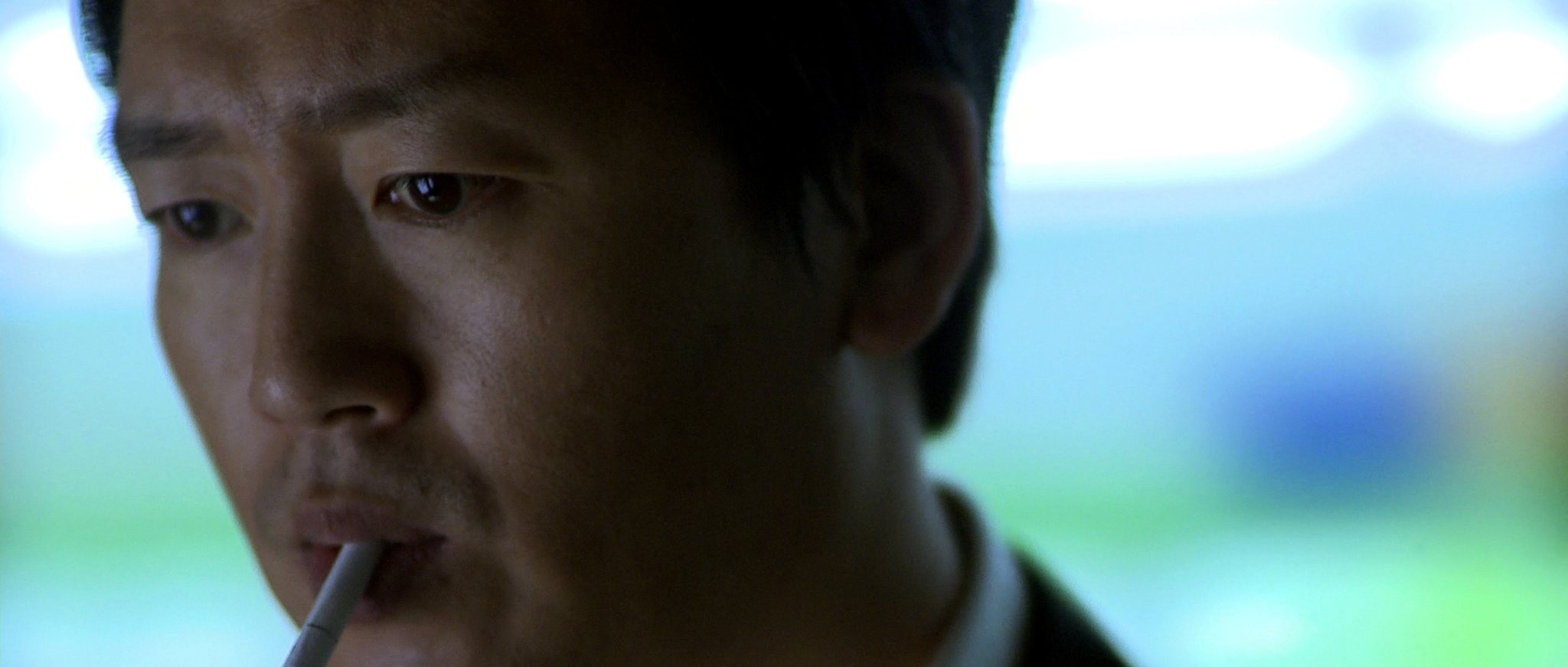
The amesiac man (Kim Jeong-tae (김정태) attempts to (re-)discover his identity

The amesiac man (Kim Jeong-tae (김정태) attempts to (re-)discover his identity

N.B. Before reading the review, you can watch the 25 minute short film at the official website here.

Remember O Goddess is a sophisticatedly crafted, character-driven study of a man searching for his identity. Rather than focus on bombastic or shocking scenes, director Lee Yoon-jung emphasizes the subtleties of the protagonists’ dilemma as he attempts to piece together his fractured self. The manner in which this occurs is part-satire and part-capitalist critique as the man scours his belongings for clues, investigating the most minor details in order to discover what kind of man he truly is. This leads to moments both comedic, as he attempts to (re)discover smoking, and poignant, as he silently stares at the vast and densely populated cityscape before him.

Relationships are also wonderfully deconstructed throughout the film, as the man desperately clings to any form of connection that his circumstances allow. Yet in doing so he highlights the artificiality of contemporary relationships, as well as the (im)personal barriers and the impatience of citizens. Such artifice is eloquently interrogated as those in the service industries are polite yet superficially so, rapidly displaying frustration at the man’s naivety and innocence. Director Lee Yoon-jung showcases her skill during such delicately nuanced scenes – including the relationship with the female store clerk, and a comedically tragic phone call – conveying a plethora of visual and narrative motifs and emotions that define the existence of a contemporary city lifestyle.
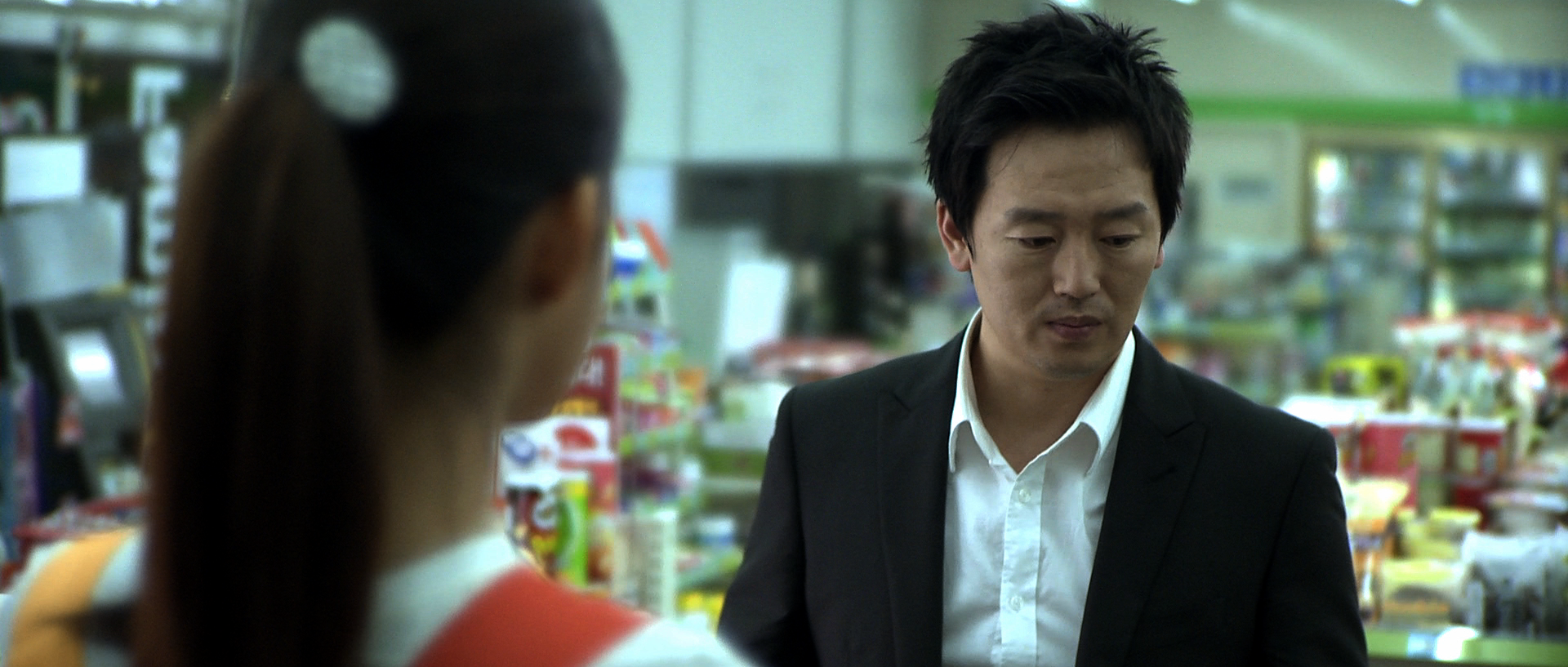
The man attempts to forge a relationship with a convenience store worker

The man attempts to forge a relationship with a convenience store worker

It is not an exaggeration to say that in his role as the amnesiac man, Kim Jeong-tae is absolutely sublime. His performance is staggering and conveys an actor fully dedicated to inhabiting the role, as his subtle mannerisms and awkwardness highlight the intense vulnerability of a man pushed to the brink of desperation. Whether the scene involves reporting himself as a missing person or merely attempting to acquire the date, Kim Jeong-tae simultaneously exhibits fragility, curiosity, loneliness and anguish seemingly effortlessly.

The man stares at the vast cityscape in which he inhabits

The man stares at the vast cityscape in which he inhabits

Despite such high-level praise, Remember O Goddess suffers from one minor issue. This is not related to any of the creative talents involved in producing the film; the reason is, rather superficially, due to the limiting running time. The film is clearly a prelude of a feature film, awash with potential that literally demands further exploration which a greater time limit would allow. As such the film functions as an introductory segment of a promising narrative, a declarative showcase of the talent the conglomeration of individuals are capable of.

This is where you can help. Director Lee Yoon-jung is seeking funding to produce the feature-length version of Remember O Goddess via kickstarter. Please visit the website here to read all the information and to donate to the project. The film is clearly well worth supporting and the cast and crew are fully committed to the production, with all money raised going into the production itself.

★★★★☆

Reviews
After a brief stint in Kpop, Jin-ah now hosts the failing radio show 'Wonderful Radio'

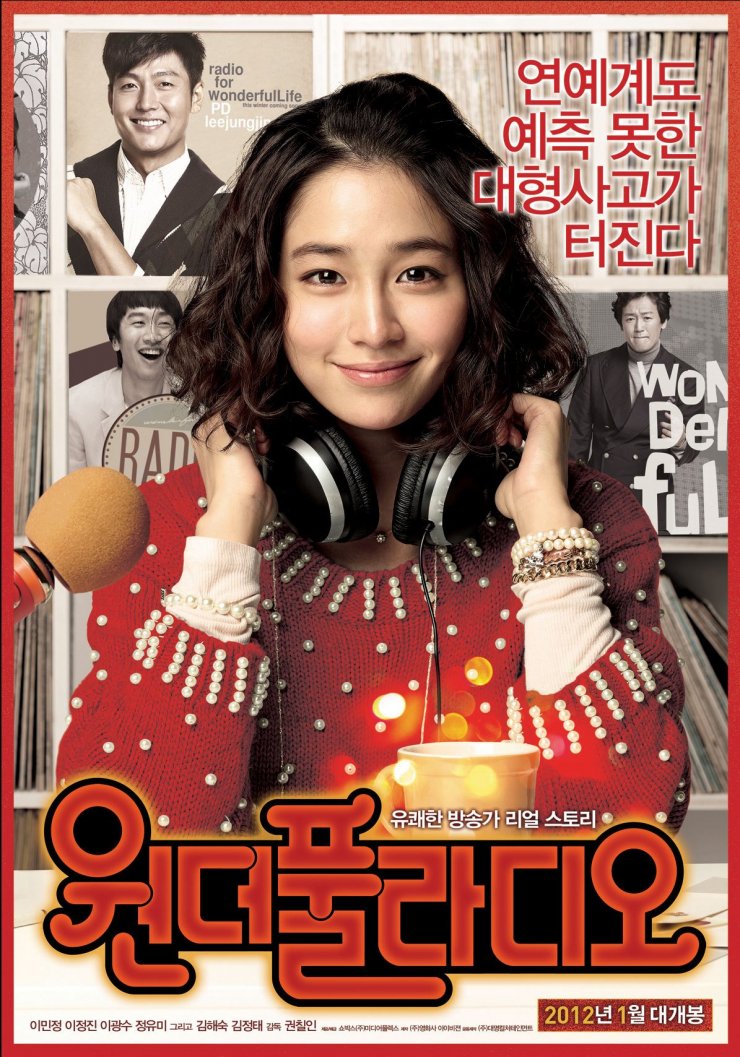
Wonderful Radio (Love On-Air) (원더풀 라디오) – ★★☆☆☆

Wonderful Radio (원더풀 라디오)

Wonderful Radio (원더풀 라디오)

The Korean fascination with K-pop celebrities and the ‘scandals’ that are seemingly inherent within the industry continually appear in a variety of cinematic forms. Comedy 200 Pounds Beauty explored the concept of beauty and image, while horror White: The Melody of the Curse focused on the rivalry between the members and the plagiarism that frequently occurs. Interestingly, with romantic-comedy Wonderful Radio (원더풀 라디오), maturity and life following celebrity status are examined.

Wonderful Radio joins You’re My Pet as the other big star-driven romantic comedy of 2011; and, as with You’re My Pet, offers little more than a vacuous narrative of two attractive yet contrasting people forging an improbable relationship. Save for an interesting but all-too-brief interrogation of the pretense inherent in K-pop, Wonderful Radio is a mildly entertaining yet instantly forgettable experience.

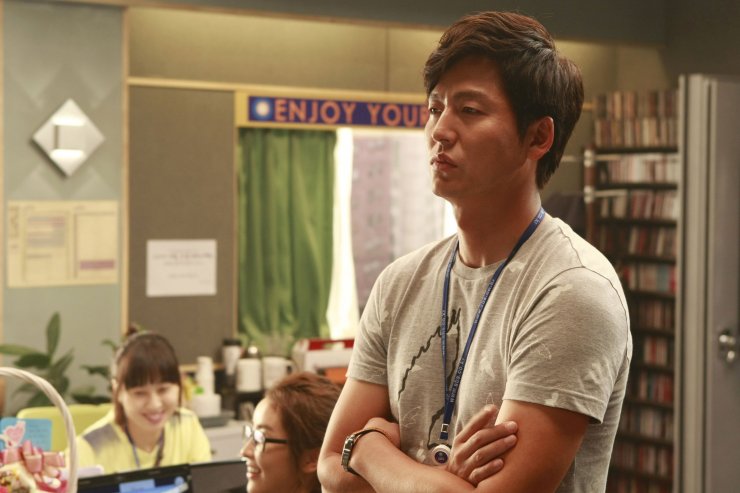
Jin-ah (Lee Min-jeong (이민정) is the radio DJ for the ailing ‘Wonderful Radio’ segment, a show that is hemorrhaging listeners chiefly through her selfish and rude behavior. Jin-ah desperately longs for her past career as a K-pop icon in girl group ‘Purple’, yet her attempts to rejoin the music industry are continually thwarted as younger stars rise in popularity. In a bid to finally axe the show and Jin-ah’s career, manager In-seok (Kim Jeong-tae (김정태) promotes the notoriously difficult producer Lee Jae-hyeok (Lee Jeong-jin (이정진) to helm the show. Yet against the odds, and despite their constant bickering, Jin-ah and Jae-hyeok may have found a way to save ‘Wonderful Radio’ as well as the start of a blossoming romance.

After a brief stint in Kpop, Jina now hosts the failing radio show 'Wonderful Radio'

After a brief stint in K-pop, Jin-ah now hosts the failing ‘Wonderful Radio’

The above comparison between Wonderful Radio and You’re My Pet may seem unfair, yet both films are intended as rather commercially driven efforts to promote the central performers through crowd pleasing romantic tales. Unfortunately for Wonderful Radio, Lee Min-jeong – though a fast rising star – and Lee Jeong-jin do not have the same star power or acting credentials as Kim Ha-neul and Jang Geun-seok, and as such the contrived narrative conveys an even more manufactured sensibility.

As is often noted in any basic film studies and screen-writing course, the opening five-to-ten minutes of any film are crucial in attracting and captivating audience attention; if successful, audiences can forge empathic bonds with the protagonists, with the intensity of the faux-relationship mesmerizing viewers into following the narrative through to its conclusion. Wonderful Radio does not adhere to such a train of thought. The opening act, while admittedly setting up the premise of Jin-ah and her declining show, is utterly directionless with the only driving force being Jin-ah’s intolerable behavior. While she is intended to be something of a ‘princess’ stereotype, full of arrogance and pride, Jin-ah is actually closer to being psychotic as exemplified by her recurring temper tantrums and childish fits. Such scenes may very well be for the sake of comedic entertainment, but when the protagonist becomes quiet and reflective scant moments later it is clear that characterization and narrative structure were something of an afterthought.

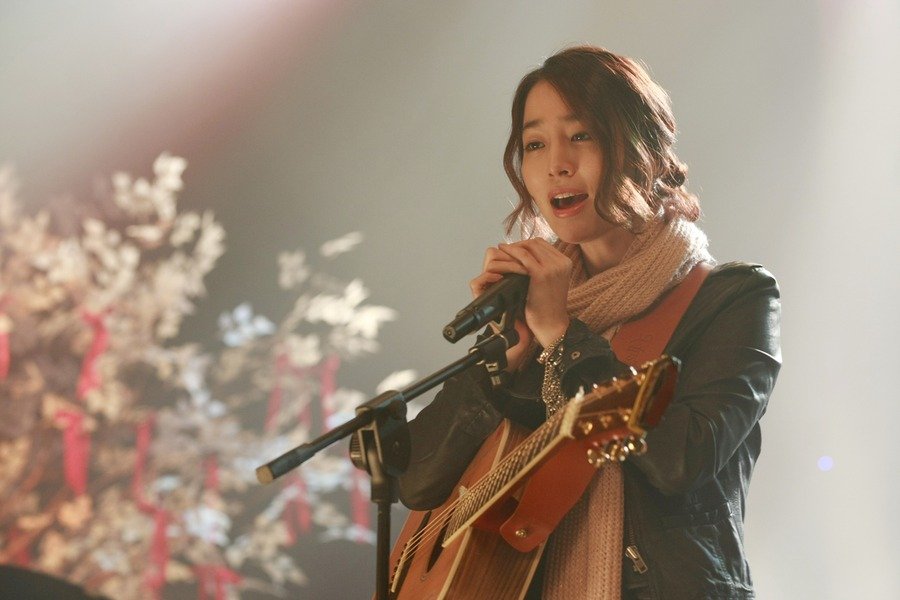
Luckily Wonderful Radio finds direction thanks to the timely intervention of a taxi driver – the ever-dependable Jeong Man-sik (정만식) – who adds much needed heart and emotion to the proceedings. With a core theme attached director Kwon Chil-in (권칠인) manages to explore, albeit briefly, the superficial facade of being a K-pop star and promotes ‘authentic’ music, including playing an instrument and removing cheorography, as superior due to the emotional content. While the intriguing topic has incredible potential, it is rapidly jettisoned in favor of returning to the unconvincing love developing between the mismatched lead actors.

Uncompromising new producer Jae-hyeok attempts to make Wonderful Radio a hit

Uncompromising new producer Jae-hyeok attempts to make Wonderful Radio a hit

With such a vapid narrative, the director wisely – or cynically – focuses vast attention on Lee Min-jeong’s undeniable beauty. Indeed, seemingly every few minutes the actress’ face is framed in close up with extreme soft focus, often appearing fragile and on the verge of tears. Lee Min-jeong’s charisma during such moments is palpable and distracting enough to forget the incredible shortcomings of the narrative for an instant, yet disapates almost immediately once her presence is absent. However it is mostly her image that causes such affliction as Lee Min-jeong’s performance is, for the first and second act at least, below par due to the odd behaviorial schizophrenia of her protagonist. The actress is much more comfortable in the final act when her character has calmed, and adequately portrays the character.

The rest of the cast are mostly in supporting roles, with even love interest Lee Jeong-jin as Jae-hyeok something of a secondary character who is woefully underdeveloped and under-represented. The supporting cast enter the narrative seeingly to add people to the scenes and offer very little aside from the occassional moment of comedy. Actor Lee Kwang Soo fares best in this regard as downtrodden Dae-geun, displaying his comedic sensibilities well despite the predicability.

Jina attempts to relaunch herself as a more 'authentic' musician - and human being

Jin-ah attempts to relaunch herself as a more ‘authentic’ musician – and human being

Verdict:

Wonderful Radio is very much a comercially-driven star vehicle for Lee Min-jeong, which would certainly be no bad thing were it not for the directionless, bland and predictable narrative, and the incredibly underdeveloped characterisation. The film does attempt to correct the issues with the introduction of emotional content and an interesting perspective on the world of K-pop, yet these measures are brought in far too late and appear all too briefly to make an impact. As such, Wonderful Radio is a lacklustre romantic-comedy that is instantly forgettable.

★★☆☆☆

Reviews
The amesiac man (Kim Jeong-tae (김정태) attempts to (re-)discover his identity

‘Remember O Goddess’ Campaign – Help an Independant Film Achieve Fruition

Remember O Goddess

Remember O Goddess

If you’ve ever wanted to be involved in Korean film production, or in independent film production in general, this is an opportunity you certainly won’t want to miss.

Remember O Goddess, an incredible noir 25 minute short film by director Yoon Jung Lee, is making waves and has been invited to several prominent festivals including the 2011 LA Asian Pacific Film Festival, in which it was a Finalist for the Golden Reel Jury Award for Short Film, in Los Angeles, USA; the 2011 Urban Suburban Film Festival, Philadelphia, USA; and the 2011 New York International Film Festival, NYC, USA amongst others.

In order to extend the film into a feature-length production, Yoon Jung Lee is seeking additional funding – which is where we can help.

To watch the 25 minute production, please visit the official Remember O Goddess site here.

Actor Kim Jeong-tae (김정태) takes the lead role as an amnesiac

Actor Kim Jeong-tae (김정태) takes the lead role as an amnesiac in a noirish world

By visiting this site at kickstarter, you can donate to help keep momentum on the project moving. You can also read the in-depth profile of all the talent involved, and the history of the production which highlights the incredible efforts of the team. Whether it’s $10 or $1,000, every little helps and will be appreciated. Depending on the level of your donation you could receive your name in the credits, a signed DVD and poster, or even a guided tour. Please see the website for more details, and let’s work together to help director Yoon Jung Lee and Remember O Goddess develop the potential so clearly displayed in the short film.

If you need more convincing, here’s a video from actor Jung Woo-sung (정우성), who worked with Yoon Jung Lee on The Good, The Bad, The Weird (좋은 놈, 나쁜 놈, 이상한 놈) with a message of his own.

Film News
Jin-oh's wacky antics continually entertain

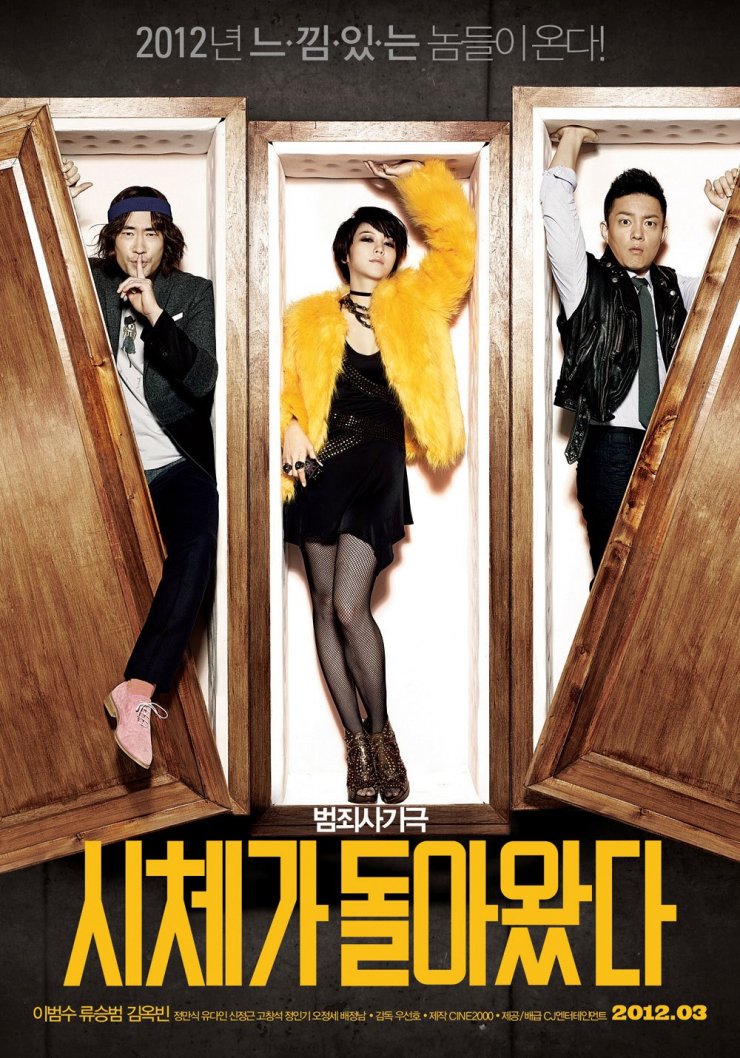
Over My Dead Body (시체가 돌아왔다) – ★★★☆☆

Over my Dead Body (시체가 돌아왔다)

Over My Dead Body (시체가 돌아왔다)

Korean cinema has something of a love affair with partnering a mad-cap group of disparate individuals, who are  given the unenviable task of bringing the corrupt elite to justice. The repetition of such a narrative framework is undoubtedly ideologically founded, yet the translation of the sense of ‘Han’ within the team dynamic is often hit-and-miss. For every The Host (괴물) is a Once Upon a Time (원스 어폰 어 타임); for every Take Off (국가대표) is a Sector 7 (7광구).

Writer/director Wu Seon-ho’s (우선호) foray into the arena is more comically-macabre in nature as an exploited group of individuals attempt to ransom a corpse. As such Over My Dead Body (시체가 돌아왔다)  provides a distinctly fresh approach to the concept yet never manages to fully capitialise on the premise, instead falling back on the tried-and-tested format – and cliches – of its forebearers. Luckily the addition of Ryoo Seung-beom (류승범), who is a charismatic delight throughout, singlehandedly elevates Over My Dead Body out of mediocrity.

Protesting against the unscrupulous CEO of a technology firm, engineer Baek Hyeon-cheol (Lee Beom-soo (이범수) and his mentor throw eggs and chant slogans in the belief that the specialist microchip they have developed is being sold abroad. They are indeed correct, as the CEO has been faking an illness and has implanted the microchip within himself in a bid to smuggle the technology into America for a large profit. Yet through their persistance Hyeon-cheol and his senior reveal the fraud to the country, and in retaliation the mentor is brutally inured. Swearing revenge for the crimes against her father, Han Dong-hwa (Kim Ok-bin (김옥빈) enlists the help of ever-reluctant Hyeon-cheol. However, with the shocking news of the CEO’s death the duo hatch a plan to steal the corpse and hold it to ransom – unwittingly stealing the microchip in the process. Yet when the corpse suddenly awakens to reveal conman Ahn Jin-oh (Ryoo Seung-beom (류승범), the trio must begrudgingly combine their skills in order to walk away with the money – and their lives.

Hyeon-cheol and Dong-hwa pledge to bring to corrupt to justice

Hyeon-cheol and Dong-hwa pledge to bring the corrupt to justice

Over My Dead Body begins in a fun but rather odd science-fiction fashion as Hyeon-cheol chases down a corrupt CEO who deals with advanced microchips and lasers. The premise of the film is then quickly set up, as Dong-hwa and Hyeon-cheol – who transforms from science-nerd to attractive middle-aged man in a matter of minutes – go about planning to steal the titular corpse. The duo’s theft is humorous and entertaining, as they fumble their way through security measures and unforeseen circumstances in a bid to complete their mission. The resulting getaway is also highly enjoyable, with Jin-oh’s awakening corpse routine a real highlight of the film.

It’s at this stage that Over My Dead Body seemingly runs out of ideas as a slew of underdeveloped characters are introduced that do little to continue the promising momentum of the first act. These stock characters are all stereotypical in nature, including the unintelligent gangster duo, bumbling National Intelligence Agency officers, and a host of security personal led by a nefarious kingpin. The narrative desperately attempts to juggle everyone and give them adequate relevance, but there are far too many and the story becomes bogged down as the central protagonists move from one set piece to the next. The decision to include such stereotypes also opens up a variety of cliched and predictable scenarios, some of which are humorous while others tend to fall flat, making the narrative lack compulsion with yet another case of mistaken identity and/or betrayal. By including so many narrative threads the central cast suffer from lack of development, particularly Kim Ok-bin (김옥빈) whose talents are vastly under-utilized as she exists merely as ‘the sexy punk girl/love interest.’

Luckily Over My Dead Body is consistently rejuvenated whenever Jin-oh (Ryoo Seung-beom (류승범) appears, as his mixture of whacky antics, deviousness and over-acting are highly comical and drag the narrative out of any slumps that occur. Thanks to his wise inclusion the film never sinks into blandness, and makes the narrative much more compelling to see through to its conclusion.

Joined by charismatic/psychotic con-man Jin-oh, the trio continue their quest

Joined by charismatic/psychotic con-man Jin-oh, the trio continue their quest

Lee Beom-soo is an interesting choice as science nerd Hyeon-cheol, and delivers a competent and likable performance. While he – as with his compatriots – suffers from lack of character development, Lee Beom-soo conducts himself as an intelligent ‘every-man’ well. The director’s decisions in regards to costume make it difficult to convey the character, as he strangely moves from geek to office worker to university student, a feature which is also reflected in his personality as it undergoes dramatic shifts from shy to intelligent to aggressive.

Kim Ok-bin is generally employed as a sexy love interest in playing Dong-hwa, and aside from inspiring the heist is incredibly undervalued. The actress plays the role of the strong, stubborn punk well yet there are few scenes in which her character is allowed to convey more, with her pink hair and cell phone charms the only indicators to greater depth. An effort is made to connect her with her sick father, yet such sparse time is dedicated it barely registers.

Ryoo Seung-beom is seemingly the only actor who understands the tongue-in-cheek farcical nature of the narrative, and over-acts in each scene with wonderful charisma. Yet throughout his performance he also keeps the audience guessing as to whether Jin-oh is a hyper-intelligent fraudster or genuinely mentally unstable, making him a comical and entertaining protagonist within each scene. Again, little depth is ascribed to Jin-oh yet his presence and hyperactivity circumvents criticism in this regard as the film is elevated largely due to him.

Jin-oh's wacky antics continually entertain

Jin-oh’s wacky antics continually entertain

Verdict:

Over My Dead Body offers an interesting and comically-macabre spin on the crime heist sub-genre, and often succeeds in being entertaining throughout due to the premise. Yet the film largely falls into cliche and predictability following the first act due to the reliance upon an array of stock characters and a lack of inventiveness.  However Ryoo Seung-beom’s presence consistently raises the film, and fans of the actor will not be disappointed as Over My Dead Body is an enjoyable film largely thanks to him.

★★★☆☆

Reviews
Hyeon-soon leads a humble, yet satisfactory lifestyle

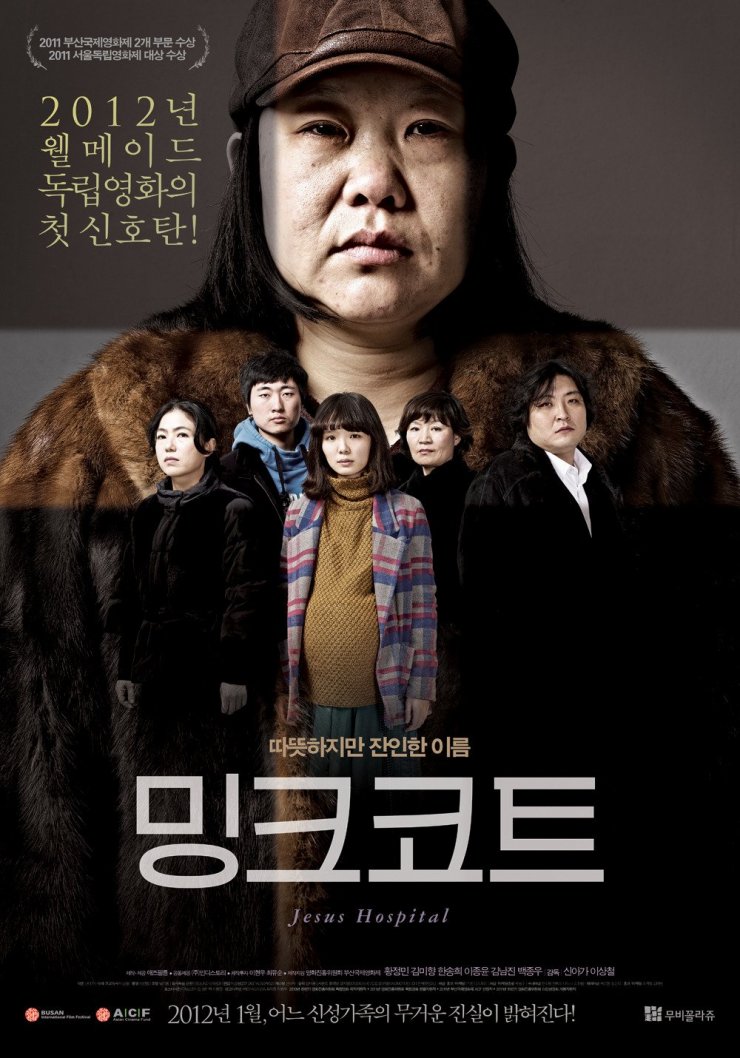
Jesus Hospital (밍크코트) – ★★★☆☆

Jesus Hospital (밍크코트)

Jesus Hospital (밍크코트)

Religiously-infused films often walk an incredibly precarious line; should the narrative either condone or condemn the ideology being portrayed, the risk of alienating – or worse, offending – factions of the audience is great. And yet seemingly any cinematic foray into the subject inescapably stokes controversy as the predicaments, decisions and actions taken through faith, whether situated within historical or contemporary contexts, generate enormous debate amongst the religious and non-religious alike.

With a title such as Jesus Hospital (밍크코트), audiences could understandably be forgiven for preconceiving that the film features overtly biased, pro-Christian debates. Yet Jesus Hospital does no such thing, instead focusing on a family tragedy while the emotionally fraught relatives struggle to make sense of their situations through their own interpretations of religious texts. The film is incredibly successful in portraying a balanced, mediative approach, and aside from a rather bland second act, is an interesting and thought provoking independent drama.

Despite her humble life, Hyeon-soon (Hwang Jeong-min (황정민) is relatively happy. However she hides a secret from the rest of her devoutly Christian family, as Hyeon-soon’s beliefs are more akin to the Old Testament and she frequently worships in such a manner. When her mother becomes gravely ill, Hyeon-soon and the rest of her estranged family must reach an agreement – should they end the life support keeping their mother alive, or wait in the hope that she will one day awaken? As each member of the family wrestles with the ethical dilemma and their religious beliefs, the introduction of Hyeon-soon’s pregnant daughter Soo-jin (수진) shakes the familial ties to their very foundations and forces them to acknowledge factors they have long sought to keep hidden.

Hyeon-soon leads a humble, yet satisfactory lifestyle

Hyeon-soon leads a humble, yet satisfactory lifestyle

The title Jesus Hospital is a bizarre, religiously-infused differentiation from the original ‘Mink Coat’, and is also something of a disservice as the film is much more concerned with familial relationships and ethical dilemmas than in foregrounding Christian ideology. Religious beliefs are however wonderfully interrogated throughout the domestic strife in Hyeon-soon’s family, as each member applies rhetoric to suit to their own desires yet appear wholly ignorant of their selective manipulation. Yet co-directors Lee Sang-cheol (이상철) and Shin A-ga (신아가) are incredibly balanced in their portrayal of Christian beliefs, neither reinforcing nor detracting from the ideology and instead allow each protagonist to convey their religious position throughout the drama. As such the narrative is – as with each protagonist’s relationship with the bible – open to ambiguity and interpretation, forming a mature and insightful foundation within which events transpire and decisions are made. Such a highly symbolic nature again emphasises the importance of the original title, as Mink Coat alludes to the themes expressed within the film with acute poignancy.

Jesus Hospital begins promisingly, as Hyeon-soon’s poverty-stricken life is revealed through a series of rapid extreme close-ups that starkly convey her hardships, from her aging skin through to the dilapated locations within which she monotonously delivers milk. Her dreary existence is wonderfully constructed and conveyed, as the directors have drained all colour from the mise-en-scene and emphasise Hyeon-soon’s boisterous character through confrontations with the public. Most notably, however are the conflicts with her family which are simultaneously humorous yet uncomfortably tense as the members trade quips with each other within seemingly intrusive camerawork. When Hyeon-soon’s mother is placed on life-support several months later, each family member’s Christian values – and deviation thereof – are employed to argue whether to end the life of the kind old woman, or to preserve it. With such an interesting premise it’s therefore surprising that the rest of the second act is a rather muted and bland affair, as the co-directors and the actors themselves fail to capitalize on the urgency of the situation, or the deviousness of those involved. Thankfully Jesus Hospital regains momentum with the introduction of Hyeon-soon’s estranged daughter Soo-jin, whose turn as a outspoken mediator makes the final act incredibly compelling.

The introduction of pregnant daughter Soo-jin increases the familial tension

The introduction of pregnant daughter Soo-jin increases the familial tension

As central protagonist Hyeon-soon (현순), Hwang Jeong-min (황정민) is wonderfully convincing as a poverty-stricken woman who dearly loves her mother and who seeks solace from her existence in Old Testament-esque worship. While her boisterous character is skillfully conveyed, her religious fortitude is often expressed through wide-eyed glares and wringing of hands which somewhat detracts from the zealous fundamentalism which is so often hinted. Nonetheless, Hwang Jeong-min portrays a fascinating character and continually alludes to the humor, loneliness, and anger of a woman striving to make sense of her life.

Despite her supporting role status, Han Song-hee (한송희) is incredibly compelling and likable as pregnant daughter Soo-jin (수진). Her ambivalence and indifference to family matters is performed convincingly, as is her radical change of stance upon learning the role of the mink coat within the family. It is largely due to her presence that the film recaptures the momentum contained within earlier scenes, and the actress brings a palpable sense of urgency and morality to the proceedings which had been absent.

The rest of the supporting cast all perform competently. In the role of Hyeon-soon’s older sister, Kim Mi-hyang (김미향), and of brother and sister-in-law Kim Nam-jin (김남진) and Baek Jong-woo (백종우), all three perform well as a devious trio each with their own agenda. However the actors generally fail to fully convey the complexity of their roles and the haste in which they wish action to be taken. Despite this, they perform well and their interactions with Hwang Jeong-min are humorously-uncomfortable highlights.

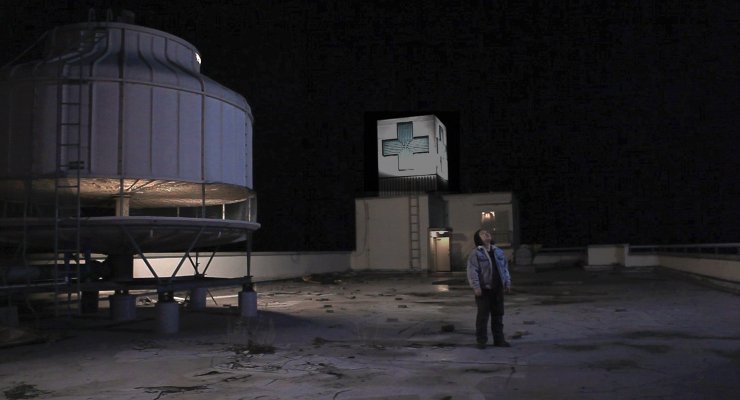
Hyeon-soon seeks advice from the heavens

Hyeon-soon seeks advice from the heavens

Verdict:

Misleading title notwithstanding, Jesus Hospital is an insightful and compelling independent drama that examines morality with a family during a period of crises. Writer Shin A-ga has constructed a well-balanced and incredibly mature exploration of the selective application of faith, which she skillfully co-directs with Lee Sang-cheol in conveying the complex relationships and ethical dilemmas. While duo somewhat fail to capitalize on the intriguing premise during the second act, Jesus Hospital is an engaging film and a significant contribution to Korean independent cinema.

★★★☆☆

Reviews
Wan-deuk is encouraged to take up kickboxing

Punch (완득이) – ★★★☆☆

Punch (완득이)

Punch (완득이)

The representation of those outside of ‘mainstream’ culture is often problematic within cinema. While their daily struggles against prejudice and other such conflicts are incredibly compelling, it is easy for protagonists to fall into the ‘pitiable’ category and thus undermine their accomplishments.

Punch (완득이) deftly sidesteps such narrative pitfalls with a wonderfully moving and charming story about those on the fringes of society, one that never patronizes those within and instead focuses on the three-dimensional features and ironies of their lives. In a culture – and national cinema – where physical appearance and financial stability are highly regarded, Punch is a refreshing and comical perspective on oft-ignored contemporary issues.

Wan-deuk (Yoo Ah-in (유아인) lives a troubled existence, failing at school and perpetually involved in fights. His father (Park Soo-young (박수영), a hunchback, is ridiculed for his appearance yet supports them as a dancer and entertainer with mentally ill ‘uncle’ Min-goo (Kim Yeong-jae (김영재). Yet the real bane of Wan-deuk’s life is his teacher Dong-joo (Kim Yoon-seok (김윤석), who takes an active interest in the young man and encourages him to stretch and develop in ways unwanted. But when Wan-deuk’s estranged Filipino mother (Jasmine Lee (이쟈스민) arrives requesting time together, the young man is forced to mature and understand the complexities of those closest to him.

Wan-deuk and his family live a meagre existence

Wan-deuk and his family live a meagre existence

Punch – an odd title considering the original is the lead protagonist’s name – succinctly and organically explores an array of societal issues without foregrounding any one in particular, nor ramming any ideological message into the audience. Instead, Punch eloquently depicts the story of a young man at the head of a makeshift and dysfunctional family, suffering from the idiosyncrasies of life on the poverty line with charismatic sincerity. Kim Dong-woo (김동우) has crafted a wonderfully character-driven script that makes it virtually impossible not to empathize with Wan-deuk and his coming-of-age story, which director Lee Han (이한) competently brings to life.

What makes Punch such an interesting and unique offering are the variety of characters within and the ways in which they strive to turn what mainstream society considers to be weaknesses into strengths. Wan-deuk is an incredibly conflicted young man; as a young boy he idolized his hunchback father for his dancing ability alongside his mentally ill ‘uncle’, tragically ignorant to the reality of the entertainment being provided. Without a mother figure in his life, Wan-deuk, his hero-turned-ridiculed father and his kind ‘uncle’ form a makeshift family, relying on the charity of others to live. Wan-deuk’s inner turmoil is wonderfully conveyed through his apathetic stance towards life, simultaneously a class clown and violently entering in fights even when outnumbered, making him likable and engaging. Wan-deuk’s teacher, Dong-joo, is a highly charismatic character with his own conflicts yet strives to find and encourage the potential within everyone around him, an unsung hero in a deprived community. Yet the characters only truly align with the introduction of Wan-deuk’s estranged mother, shocking him with her Filipino nationality and desire to reconnect. The cultural problem of importing wives from developing Asian countries has been slowly encroaching Korean national cinema for the past few years, yet none are as three-dimensional, nor approach the situation from the perspective of the women themselves, as within Punch. The focus on such disparate characters, and the humanity they exhibit and discover as they come together, is undoubtedly what makes the film is so entertaining and life-affirming.

Teacher Dong-joo seemingly enjoys making Wan-deuk's life more difficult

Teacher Dong-joo seemingly enjoys making Wan-deuk’s life more difficult

Yoo Ah-in gives a restrained performance as Wan-deuk, making the character likable with his irregular combination of dumb-struck apathy and belligerence. In lesser hands the role could have disintegrated into melodrama or portray his frustrations as disdainful, yet Yoo Ah-in balances the characterization well.

Yet by far the most engaging, comedic, and heart-warming protagonist is that of teacher Dong-joo, played by Kim Yoon-seok. The actor is wonderful in portraying the modest educator, doing so with sincerity, conviction, and with a great sense of comedic timing. His unorthodox style of teaching and encouraging students is humorous as well as unconventional, prompting his students to expand when others have given up. As such, Kim Yoon-seok forges his role into the soul of the film, with each layer of information revealed making him increasingly more charismatic and interesting.

If Dong-joo is the heart of the film then Wan-deuk’s mother, performed by Jasmine Lee, is the heart. Her introduction within the narrative is the catalyst for the disparate characters to bond together, and Jasmine Lee is excellent in conveying the sincerity of a mother wishing to reconnect with the son she abandoned. The actress performs the role with sincerity and integrity, forging sympathy with audiences yet never descends into pity, and her modesty and plight acutely reflects the difficulties faced by imported wives.

Wan-deuk is encouraged to take up kickboxing

Wan-deuk is encouraged to take up kickboxing

Verdict:

Punch is a charming and heart-warming film about those on outside of ‘mainstream’ society and culture, made compelling by the wonderful characterization within. While the film may not push boundaries, the character-driven script features such an array of protagonists, issues and comedic idiosyncrasies that Punch becomes unique in its alternative perspective on a familial drama, and is highly entertaining.

★★★☆☆

Reviews
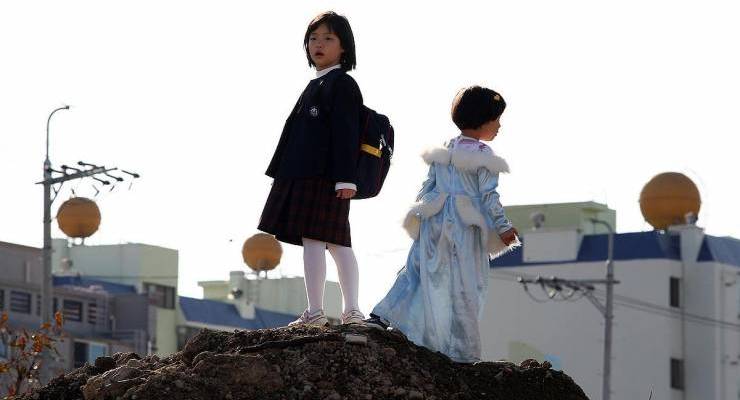
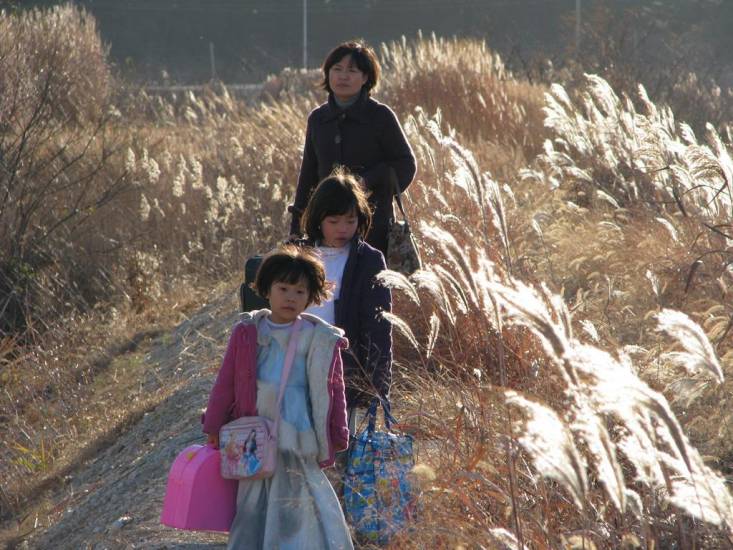
The girls await their mother atop the 'treeless mountain'

Treeless Mountain (나무없는 산) – ★★★★☆

Treeless Mountain (나무없는 산)

Treeless Mountain (나무없는 산)

The notion of family is incredibly important within all cultures, yet while ‘Western’ countries have dealt with the breakdown of the family unit for several generations it is only in the last decade that Korea has seen an enormous rise in the national divorce rate. Due to the highly competitive culture and emphasis on diligence and financial earnings, such divorces often result in the ignorance, or outright abandonment, of the children and their needs as parents strive in the workplace or seek pastures new.

Treeless Mountain (나무없는 산), the second feature written and directed by Kim So-yong (김소영), explores the lives of two such children with elegance, grace, and poignancy. The simplistic narrative allows the director to convey every emotional nuance from the young actresses, resulting in an outstandingly heartfelt drama of loss and the desire for kindness, the effects of which stay long after the closing credits.

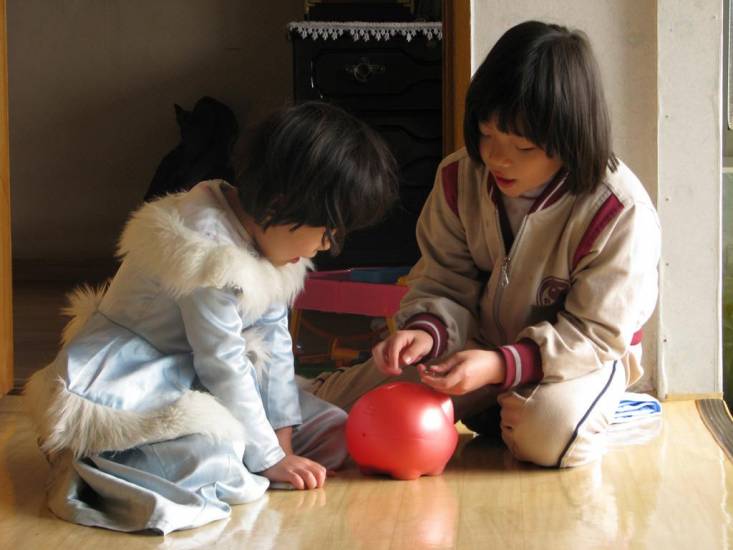
At seven years old, Jin (Kim Hee-yeon (김희연) is developing well at school and is beginning to display keen intelligence. Yet when school is finished, she must rush home to take care of her younger sister Bin (Kim Seong-hee (김성희) until their mother (Lee Soo-ah (이수아) returns from work. Struggling financially, their mother decides to leave Jin and Bin with their aunt (Kim Mi-hyang (김미향) while she looks for their father, promising to return when their piggy bank is full. Distraught, Jin and Bin set out to earn enough money to fill their piggy bank, and await the return of their family unit.

Jin and Bin work hard to fill their piggy bank

Jin and Bin work hard to fill their piggy bank

Writer/director Kim So-yong does a masterful job in conveying the unkind world inhabited by youngsters Jin and Bin. Jin in particular receives the most focus and is the heart of the film, old enough to understand that changes are occurring within her life yet too young to comprehend why. Jin’s intelligence in school, as well as her lack of self-confidence, are wonderfully conveyed only to be later poignantly contrasted with her parental role as caretaker of her younger sister Bin. Her resentment of the role is amazingly restrained, while her heartache as Bin receives more attention and affection from their mother is heartbreakingly sincere. Such subtle emotional responses are expertly captured by Kim So-yong, with her highly effective and consistent use of close-ups and extreme close-ups making for a simultaneously riveting and a borderline claustrophobic experience, forcing the audience to engage and empathize with the young girls. While Jin almost instinctively takes on the role of responsibility, Bin is excellent in attempting to ignore the sense of abandonment and pretend everything is fine, as exemplified by her princess dress which she constantly wears. She is delightfully optimistic and treats her mother’s abandonment as a quest or game, the completion of which involves filling a piggy bank full of coins by any means necessary. Jin and Bin’s childhood logic in fulfilling the task set by their mother is comical, endearing and tragic, making their plight ever more compelling.

As well as depicting the story of the two young girls, Treeless Mountain is a scathing account of the contemporary absence of parental responsibility. Jin and Bin’s father never appears within the film, and while their mother is caring she also treats Jin unfairly, as well as failing to return to her children as promised. While the situation is never made clear, the mother’s quest of finding the father of her children is her ultimate goal and decides to stay with him – the man who abandoned his family – rather than return to their children. Similarly, the aunt who takes responsibility for Jin and Bin during this time is woefully inept, using money to drink alcohol rather than on food for the hungry youngsters. It is only the mother of a disabled child and Jin and Bin’s grandmother who are portrayed as understanding the nature of parenting, clearly stating that parental responsibility is a specialist comprehension that is shockingly absent in contemporary society.

The girls await their mother atop the 'treeless mountain'

The girls await their mother atop the ‘treeless mountain’

Kim Hee-yeon is absolutely enthralling as Jin, giving an astonishing performance for such a young actress. She completely shines in every scene and conveys a startling array of emotional depth throughout the film. Her intelligence, shyness, and her desire to play and live the life of a child are wonderfully performed, yet the young actress really excels during more dramatic events that reveal her animosity and resentment towards her situation, lashing out at younger sister Bin in moments of frustration and later subtly expressing guilt through kindness. Throughout Treeless Mountain, Kim Hee-yeon performs with utmost sincerity.

As younger sister Bin, Kim Seong-hee is also wonderfully endearing. Her childish optimism and logic are a joy to watch, as is her boldness which helps her and her reluctant older sister during times of hardship. Her innocence and naivety are excellent counterparts to Jin’s growing awareness and cynicism, and the co-dependency they share in their relationship is elegantly symbiotic.

Jin and Bin are continually uprooted and made to feel like a burden

Jin and Bin are continually uprooted and made to feel like a burden

Verdict:

Writer/director Kim So-yong has crafted a beautifully poetic tale of the hardships of childhood in Treeless Mountain, with incredibly endearing performances by the two young leads that are conveyed with a startling level of sincerity. The film is one of the few to tackle the concept of the breakdown of the family unit from the perspective of the children, lambasting parents who renege on their responsibilities yet emphasizing the resilience and adaptability of the youngsters. Treeless Mountain is an elegantly poignant film about the desire for kindness in a cynical world, and is an absolute delight.

 ★★★★☆

Reviews
Detective Choi risks everything to keep the scandal secret

The Unjust (부당거래) – ★★★★☆

The Unjust (부당거래)

The Unjust (부당거래)

If there is one universal truth within Korean cinema, it is the representation of every level of the law enforcement infrastructure as incompetent, unprofessional, and corrupt. In certain cases, such as true-life thriller Memories of Murder (2003), the result can be an incredibly intense and fascinating character study; in other more generic offerings such as S.I.U. (2011) the incompetence of the force is frustratingly infuriating. Yet regardless of whether the central protagonist(s) are operating within law enforcement or without, the abuse of human rights, flagrant disregard for procedure and scandalous corruption are seemingly inherent to the respective institutions.

The Unjust (부당거래), director Ryoo Seung-wan‘s (류승완) eighth feature, continues such ideological distrust with the auteur’s trademark wit, ingenuity and postmodern sensibilities. With an incredible screenplay by Park Hoon-jeong (박훈정), The Unjust is a highly engaging and intense thriller featuring electric performances by the principal cast and arguably the highlight of Ryoo Seung-wan’s career thus far, winning ‘Best Film’ at 2011 The Blue Dragon Awards.

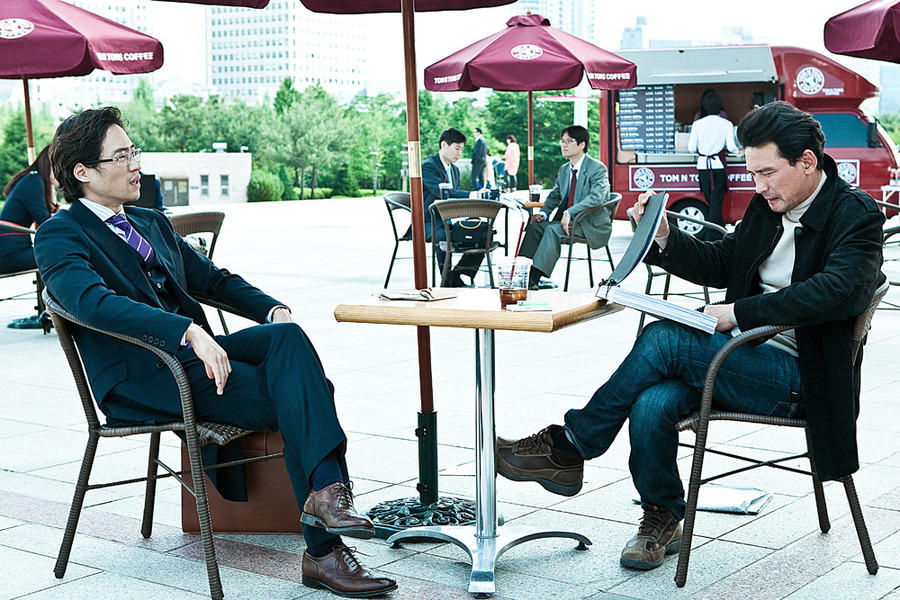
With intense mounting pressure from the media, citizens and politicians, the police are desperate to catch the perpetrator of the serial rape and murder of young girls in Seoul. Yet when the only major suspect is killed, the law enforcement are in dire need of someone to take the blame and to be held accountable. Director Kang (Cheon Ho-jin (천호진) believes he has the perfect officer to find such a scapegoat – Choi Cheol-gi  (Hwang Jeong-min (황정민), an incredibly efficient officer who is routinely passed over for promotion as he did not emerge through the academy. Employing the help of gangster Jang Seok-goo (Yoo Hae-jin (유해진), the pair find a viable replacement. Yet Jang’s corrupt business rival enlists the help of Prosecutor Joo-yang (Ryoo Seung-beom (류승범) to find something – anything – that will stop Jang and Choi and allow his business to prosper. As the fate of all three becomes increasingly intertwined, they delve deeper into a moral abyss from which they may never return.

Detective Choi (right) enlists the help of Jang to find a scapegoat

Detective Choi (right) enlists the help of Jang to find a scapegoat

The script by Park Hoon-jeong – which received the best screenplay award at The Blue Dragon Awards – wonderfully balances the array of characters and plot threads at an incredible pace, rarely slowing the momentum or intensity. From the second the film begins the speed at which the narrative is set-up and the players are introduced is spectacular, conveying the seriousness of the situation convincingly. Director Ryoo Seung-wan – who also received an award at The Blue Dragon Awards for best directing – brings the script to life with confidence and style, with camera movement and rapid editing raising the level of excitement to a staggering level. The partnership between both filmmakers is seemingly a perfect match as their respective styles compliment one another in tone, pace and content. The array of socio-cultural discourses and anxieties within The Unjust are vast, from minor subtle issues such as favoritism within the police department, public hysteria and presidential involvement, to more scandalous affairs including secret meetings with criminals, corruption, and personal promotion over public service.

The relationships between protagonists and the various underhanded methods employed to gain leverage are brilliantly portrayed and are highly engaging. In particular Detective Choi and Prosecutor Joo-yang are excellent character studies as well as serving as mirrors of each other, of which they are subconsciously aware as they attempt to prove their superiority through obtaining incriminating evidence. Their methods of corruption are wonderfully explored, with Detective Choi more violent, impoverished and urban while Prosecutor Joo-yang meets executives at fancy restaurants and is introduced to high-ranking officials through his father-in-law. Even the gangsters they deal with have differing social statuses, and as such The Unjust is also concerned with class divide and power, as well as the motivations and loop-holes that are exploited in corrupting those within.

Prosecutor Joo-yang and Detective Choi confront each other over their corrupt behaviour

Prosecutor Joo-yang and Detective Choi confront each other over their corrupt behaviour

Hwang Jeong-min gives a towering performance as Detective Choi Cheol-gi, with his absence from the ‘Best Actor’ category a bizarre oversight. The actor convincing conveys the underdog cop as a violent and diligent yet honest man, who is forced to sink ever-lower due to the request of his captain. His mere physical presence adds intensity to each scene with his height and mannerisms an intimidatingly powerful force. Hwang Jeong-min is so compelling as the violent corrupt cop that when he eventually breaks down it is something of a visceral shock, adding a dimension to his character that creates empathy despite his crimes.

Ryoo Seung-beom is also highly competent as Prosecutor Joo-yang, conveying weasely charm in abundance and is a delight to hate. The actor, nominated for his role, also adds a comedic sensibility to his role as he slithers from one lie to the next as he attempts to rectify his situation wth his superiors and corrupt colleagues. As a slight negative, Ryoo Seung-beom does have a tendency to shout his lines rather than act them which can be distracting.

As street gangster-turned-businessman Jang Seok-goo, actor Yoo Hae-jin is terrific. Also nominated for his supporting role, Yoo Hae-jin oozes criminality and effectively conveys his internal war with his urban thug mentality hiding beneath his fitted suits. The actor clearly relishes scenes in which he gains the upper-hand, smarmy and condescending with glee at the misfortune of his rivals and partners.

Detective Choi risks everything to keep the scandal secret

Detective Choi risks everything to keep the scandal secret

Verdict:

The Unjust is not simply another continuation of Korean cinema’s distrust of law enforcement agencies; it is an incredibly thrilling and compelling exploration of an array of socio-cultural discourses and anxieties, articulated with an intelligent script and visualised with a career-best by director Ryoo Seung-wan. The fast pace, confident stylisation and electric performances make The Unjust one of the best cop thrillers in recent years and a fantastic addition to the genre.

★★★★☆

Reviews
Ji-hye begins reading her mother's old love letters

The Classic (클래식) – ★★★☆☆
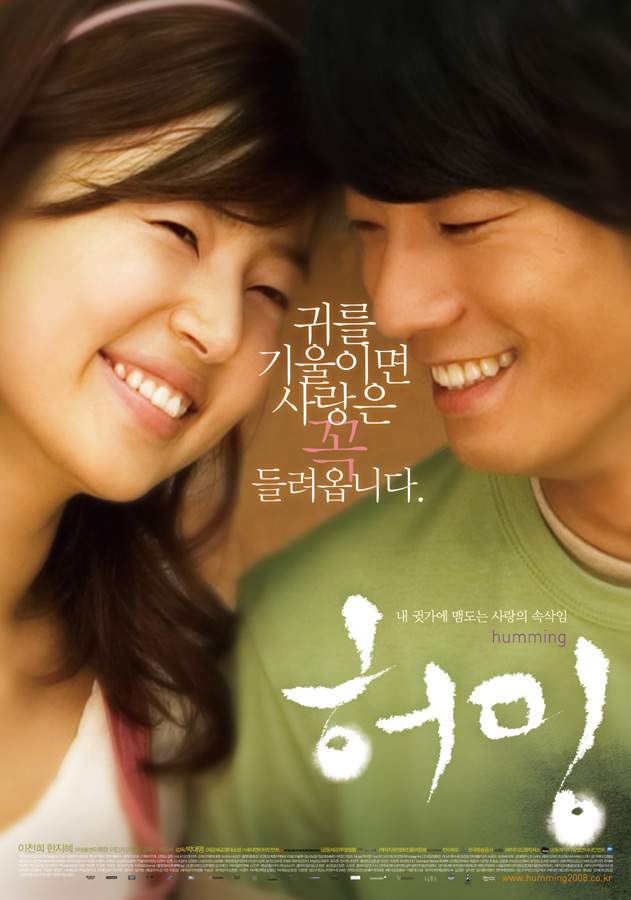
The Classic (클래식)

The Classic (클래식)

After the incredible success of his first feature My Sassy Girl in 2001 – which depicted a contemporary and quirky tale of love – director Kwak Jae-Yong (곽재용) turned his attention to more traditional romance with his follow-up The Classic (클래식). Featuring one of the queens of the genre in the form of Son Ye-jin (손예진), The Classic is exactly as the title suggests employing conventions ranging from Cyrano de Bergerac style love letters, dual romantic narrative between the present and the nostalgic past, social and parental oppression, and a love that destiny simply refuses to let go. As such The Classic is highly cliched yet also charming portrayal of classic love, often helping to glaze over the unbalanced narrative and occasional confusion of Son Ye-jin’s dual roles with romantic scenes that are ‘classic’ in nature.

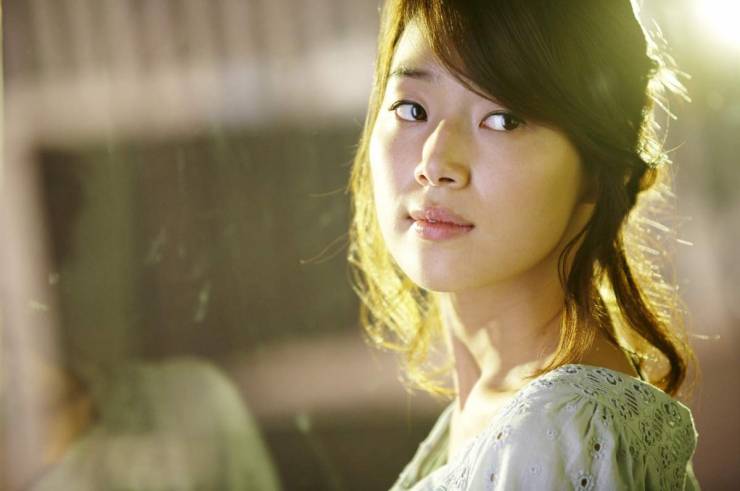
In the present, university student Ji-hye (Son Ye-jin) feels upset and lonely; she has been writing love letters to fellow student Sang-min (Jo In-Seong (조인성) at the request of her friend, yet in truth Ji-hye is also in love with the popular boy. To distract her from the sadness of her situation, Ji-hye begins reading a journal kept by her mother Joo-hee (also Son Ye-jin) about how her parents met, and soon discovers that she has a lot more in common with their story than she first realized. As the trails and tribulations of her parents classic love story unfolds, so to does Ji-hye struggle with her own relationship issues as she attempts to win over the man of her dreams.

Ji-hye begins reading her mother's old love letters

Ji-hye begins reading her mother’s old love letters

Writer/directed Kwak Jae-Yong does a great job in recreating classic scenes and sequences from romantic films, and his directorial style is highly competent throughout making for a melodramatic yet engaging experience. The premise of Ji-hye reading and learning about the love that developed between her parents and comparing it to her situation is cliched yet compelling. However the major problem with The Classic stems from the enormous imbalance between both protagonists, as Ji-hye’s contemporary story is relegated to the sidelines in favour of Joo-hee’s nostalgic tale. Such is the scale of the unevenness that it is entirely possible to forget the Ji-hye’s narrative even exists as the director focuses almost exclusively on nostalgic notions of love. This is compounded further as when the narrative does eventually venture into Ji-hye’s world she re-enacts incredibly similar situations to that experienced by her mother; Ji-hye seemingly does not learn from the journal entries to improve her own situation and as such her story is simultaneously undermined and dull. Confusion also arises with the very odd decision to cast Son Ye-jin in dual roles as mother and daughter, as the mise-en-scene and characterization are so similar it is often due to the presence of the supporting cast to confirm in what era the audience now reside. When focusing on Ji-hye’s contemporary romance it is difficult to empathise and become invested in her problematic love triangle, as the protagonists of the era are incredibly underdeveloped to the point of indifference.

Where The Classic does succeed is in the portrayal of Joo-hee’s romantic tale, featuring oppression from society and their parents, secret love letters, and battling with the guilt of deceiving a mutual friend. The struggles the couple face and overcome are engaging and poignant, just as their punishments and separations are moving. Through the nostalgic angle applied the cliches are less frustrating and more charismatic, with scenes such as catching fireflies and carrying Joo-hee due to a sprained ankle sweet-natured and innocent.

Joo-hee's story is a classic tale of romance

Joo-hee’s story is a classic tale of romance

While Son Ye-jin may very well be a romance queen, providing an exceptional performance as an Alzheimer’s sufferer in A Moment To RememberThe Classic highlights an inability to convey different characteristics in her dual roles as daughter Ji-hye and mother Joo-hee. As Son Ye-jin essentially performs the same character twice, it is incredibly difficult to distinguish which character she is performing adding confusion as to which era the audience are viewing. Frustrations aside, Son Ye-jin has her reputation for a reason and does convey innocence and heartache wonderfully and with sincerity, making Joo-hee a highly empathic and compelling character and Ji-hye – due to the lesser character development – enjoyable and interesting.

As Joo-hee’s love interest Joon-ha, Jo Seung-woo (조승우) is excellent and offers a wonderful role as both a nostalgic example of chivalry and a male counterpoint for Ji-hye, as both take on the Cyrano de Bergerac position of writing love letters for someone else. Jo Seung-woo portrays the love and desire for Joo-hee well, and more dramatic scenes with equal competence.

Ji-hye and Sang-min share a romantic moment in the rain

Ji-hye and Sang-min share a romantic moment in the rain

Verdict:

As an homage of sorts to traditional love stories, The Classic succeeds in employing an array of charming cliches that – due to the nostalgic perspective of Joo-hee’s story – are engaging and entertaining portrayals of old-school love. Yet the film stalls through the incredibly unbalanced narrative shift between the past and the present, reserving all empathy and interest in ‘the classic’ and effectively undermining Ji-hye’s contemporary story. As such The Classic is something of a mixed offering, yet it offers enough charisma to be an enjoyable tale of traditional love.

★★★☆☆

Reviews
Mi-yeon is loving and romantic, attributes not appreciated by her boyfriend

Humming (허밍) – ★★☆☆☆

Humming (허밍)

Humming (허밍)

Cinematic representations of the spirit, or soul, within the romance genre are often life-affirming portrayals of the power of love transcending the physical realm. As the titular phantom in Ghost (1990), Patrick Swayze won the hearts of audiences as a guardian spirit seemingly proving that if love is strong and true it is ‘taken with you’ into the afterlife. In Just Like Heaven (2005), Reese Witherspoon’s spirit left her comatose body and found romance with the man living in her house, emphasising the link between body and soul and the healing power of love.

Humming (허밍), which sees unappreciated comatose girlfriend Mi-yeon returning as a spirit, is director Park Dae-yeong’s attempt at capturing the magic and charm offered by such a premise. The result is an incredibly bland offering with awful dialogue and under-developed characterisation, which gradually gets better in building to a romantic climax.

Jun-seo (Lee Cheon-hee (이천희) is a hardworking scientist who dislikes sports and exercising. Despite this he is routinely dragged to events including diving and rock climbing by his long-term girlfriend Mi-yeon. Her zest for life and trying new things, as well as providing an abundance of affection and romance, makes Jun-seo the envy of other men yet he feels tired by the relationship and begins seeking a way out – namely the one year work placement which is located in the South Pole. Despite this Mi-yeon claims she will wait for him, but on the way to meet him she is the victim of a traffic accident and falls into a coma. Her spirit however continues to meet Jun-seo, and as he gathers his memories of their relationship he begins to remember the love that first brought them together.

Mi-yeon is loving and romantic, attributes not appreciated by her boyfriend

Mi-yeon is loving and romantic, attributes not appreciated by her boyfriend

Humming begins well, as Mi-yeon’s caring and affectionate personality is at odds with Jun-seo’s indifference and reluctance to try new things. Mi-yeon is clearly 100% committed to the relationship, providing incredibly charming and romantic scenes such as leaving a treasure hunt of love letters around Jun-seo’s apartment; Jun-seo, on the other hand, disregards them as an irritation and compounds his boredom with their partnership. Problems quickly rise however as these scenes extend for far too long and become tiresome, making Mi-yeon an almost tragic character due to her naivety while Jun-seo moves from a man tired of his relationship to being nasty and cowardly. As such, Mi-yeon’s accident – terribly filmed by director Park Dae-yeong – is a welcome change of pace rather than a dramatic and unsettling event. The premise of Mi-yeon’s spirit visiting her boyfriend is a wonderfully romantic concept, yet in truth this happens scarcely and does incredibly little to further the narrative. Instead, time is devoted to Jun-seo who, due to earlier scenes, is quite unlikeable and uncompelling as he pieces together memories of how their love initially developed. Again the potential is sound, yet rather than a series of short flashbacks intertwined with contemporary self-discovery, Park Dae-yeong opts to allow the nostalgic sequences to engulf the entire film and as such overshadow the events of the present. The precarious situation of comatose Mi-yeon is therefore undermined as the early stages of the relationship are portrayed, and despite the desperate attempts to convey the sincerity and purity of the blossoming romance they are unconvincing, dull and predictable. Humming is very much a bland, TV movie-style affair.

Jun-seo remembers the romantic moments from his and Mi-yeon's past

Jun-seo remembers the romantic moments from his and Mi-yeon’s past

In terms of performance Han Ji-hye is highly charismatic as love-struck Mi-yeon, lighting up the screen whenever she appears. However the actress is generally required to be happy, smiling and romantic and the underdevelopment is such that she is not stretched into any dramatic territory. The same cannot be said for Lee Cheon-hee who has several dramatic scenes, particularly as time begins to run out for the couple, and his performance is generally competent.

The main problem is the absence of character development. While the similarly themed but by no means perfect Just Like Heaven also featured the spirit of a comatose woman, it succeeded in portraying how the central couple evolved and developed together through both comedic and dramatic events. In Humming such sensibilities are noticeably absent and as such Jun-seo and Mi-yeon are not an engaging couple for audiences to root for.

Jun-seo and Mi-yeon attempt to reconnect

Jun-seo and Mi-yeon attempt to reconnect

Verdict:

Humming – an interesting title considering ‘humming’ never features – has a premise full of potential for romance through the spiritual connections and nostalgic notions of a love long forgotten. Yet the film never gets close to fulfilling such promise due to the unbalanced narrative structure and incredibly underdeveloped characters that ultimately make for a bland and predictable viewing experience. In the lead up to the cliched finaleHumming does become more engaging yet it is too little too late for what is essentially a TV film.

★★☆☆☆

Reviews