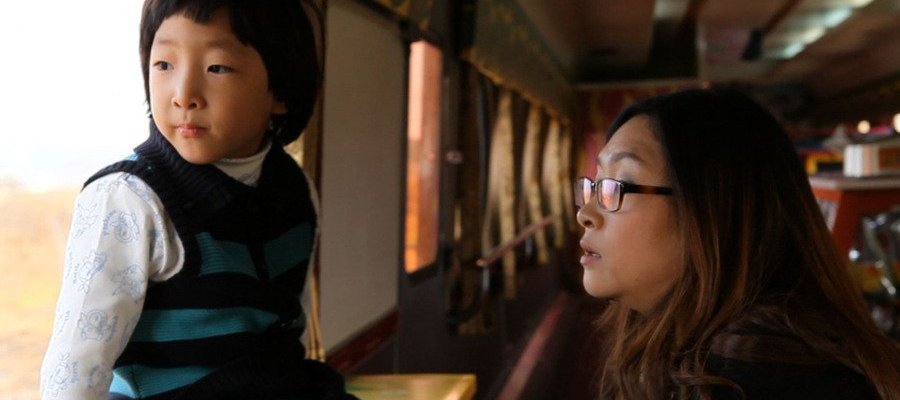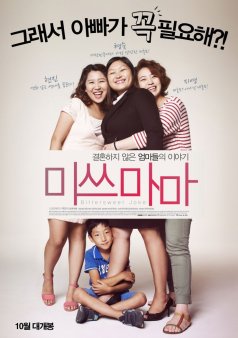
Jun-seo and Hyung-sook have an unspeakably strong bond as their overcome adversity

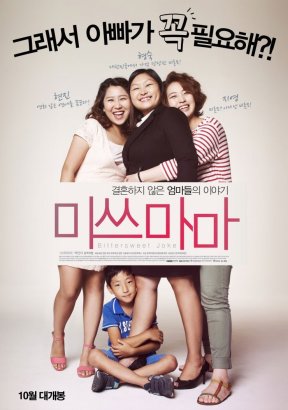
Bittersweet Joke (미쓰 마마) – ★★★★☆

Bittersweet Joke (미쓰 마마)

Bittersweet Joke (미쓰 마마)

The lives of single mothers are complex to say the least. In Korea, single mothers face more than the challenges of raising a child alone, potential paternity suits and holding down a job. Due to the incredibly conservative, and highly patriarchal culture, they must also contend with a society that continually treats them as ‘unethical’ and ‘fallen’ women. News agencies, for example, often blur faces and change voices when interviewing single mothers, the same measures applied when profiling criminals. The sad fact that many of the women ask for such identity protection highlights the prejudice that exists and the severe impact it has on their daily lives.

Director Paik Yeon-ah (백연아) addresses such discrimination in her documentary Bittersweet Joke. The directors intention is to convey a more developed perspective of the lives of single mothers – their happiness, their challenges, their strengths – and she wildly succeeds. Throughout the documentary director Paik Yeon-ah perfectly captures the positivity of her subjects, emphasising their hopes and dreams that co-exist with the role of mother. The subjects themselves are also incredible well chosen, simultaneously highly compelling and poignant. While deeper issues of accountability of absent fathers and social intolerance are unfortunately only briefly touched upon, Bittersweet Joke is a positively charged documentary that presents single mothers as highly capable women and is unfailing uplifting.

Single mothers discuss their hopes and raising children, and the difficult subject of men

Single mothers discuss their hopes and raising children, and the difficult subject of men

Bittersweet Joke moves between documenting the lives of two different single mothers, Hyun-jin and Hyung-sook, and discussions about the challenges that face them with other women, notably their friend Ji-young. This editing technique, as well as the directorial style displayed by Paik Yeon-ah, are exemplary in focusing on the issues affecting single mothers as they naturally enter their lives, as well as debating them in greater depth with friends in a similar position. For example, Hyun-jin desperately wants the father of her child to re-enter their lives yet is continually disappointed; this then moves on to a later discussion in a coffee shop where Hyun-jin and Ji-young dispute whether a man is necessary at all in child rearing. This method allows for brevity and lightheartedness, as while challenges appear poignantly they are often dealt with in a quick and humourous fashion, and discussed in hindsight with laughter. All the single mothers are represented in such a manner, as they overcome difficulties with sheer willpower and humour, finding comfort and solidarity in the sisterhood of other women in similar situations.

Director Paik Yeon-ah even explores the importance of language within Bittersweet Joke, as within Korean language ‘unwed mother’ and ‘single mother’ contain quite different connotations. ‘Unwed mother’ is an unflattering term that describes women who couldn’t get married, whereas ‘single mother’ connotes a woman who has chosen not to marry. Within Korean culture the institution of marriage is still highly regarded, and as such the term ‘unwed mother’ is much more commonly used within the media and society, regardless of the offensive meaning. Director Paik wisely uses her subjects to explore such cultural themes within their daily routines, as opposed to forcing the message, and allows the audience to witness the prejudice as it naturally unfolds in their lives. As such audience sympathy is strongly evoked as both mother and child are subjected to offenses they must routinely endure.

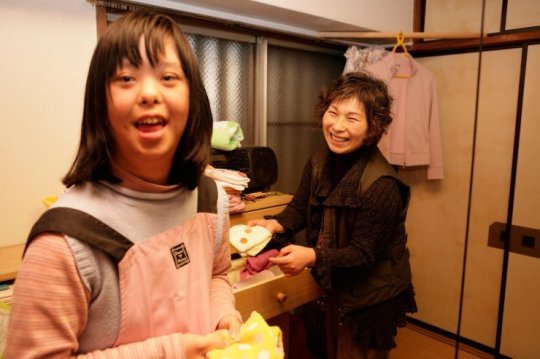
Jun-seo and Hyung-sook have an unspeakably strong bond as they overcome adversity

Jun-seo and Hyung-sook have an unspeakably strong bond as they overcome adversity

Bittersweet Joke would not be so interesting if not for the three women at the center of the film. All three are quite different in terms of personality, which makes how each situation is dealt with a fascinating character study in addition to conveying the lives of single mothers. This philosophy is also apparent in the debates that follow, as each mother approaches a challenge or future ambition from an alternative perspective, allowing for highly interesting discussions to occur.

Hyun-jin is a sweet natured romantic who wants the traditional notion of family for herself. She is prepared to forgive her ex-lover if he returns despite everything, and uses make-up and nice clothes to try and entice him back. Her daughter Tae-hee also exemplifies Hyun-jin’s desire for perfection, as her daughter’s name is the same as a beautiful actress. Meanwhile Hyung-sook is a strong-willed and active feminist, fighting for women’s rights and attempting to change cultural ignorance. Her intelligence has also produced cynicism, as while she fights for her son Jun-seo to have a relationship with his father she has generally given up on men. The contrast between such two different single mothers, and how they develop over the course of the documentary, is the genuine triumph of the film as the journey that each woman undertakes is compelling and nuanced. It’s also enjoyable to see Hyun-jin and Hyung-sook bounce ideas off of Ji-young and other friends, adding further perspectives to already complex areas. Yet often when such important features are introduced, due to director Paik’s need to keep light-hearted momentum, greater depth goes amiss as with the accountability of absent fathers. Otherwise, Bittersweet Joke is a wonderful exploration of the issues facing single mothers in contemporary Korea.

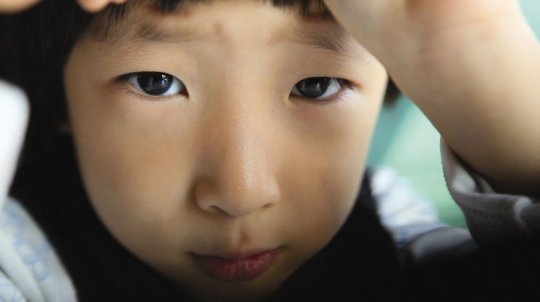
The prejudice children receive is also explored

The prejudice children receive is also explored

Verdict:

Bittersweet Joke is wonderful documentary about the challenges facing single mothers in Korea. Director Paik Yeon-ah has produced an informative and entertaining film, one with an important social message that is allowed to unfold naturally throughout the course of the mothers’ lives while also debating issues from alternative perspectives. The light-hearted momentum is enjoyable and, while greater depth would have been nice in certain areas, the compelling subjects and vitality in which the single mothers are presented is uplifting and life-affirming.

★★★★☆

Reviews
Soon-yeon looks after her sickly younger sibling

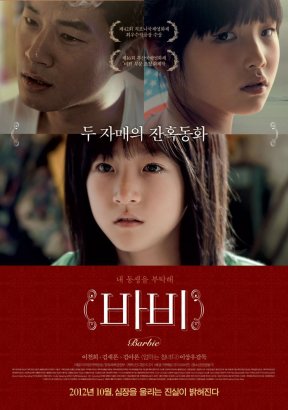
Barbie (바비) – ★★★★☆

Barbie (바비)

Barbie (바비)

Director Lee Sang-woo (이상우) has earned the moniker of the ‘ogre of independent cinema’, a title which he is interestingly in favor of. The titles in his filmography attest to his desire to explore controversial subjects, notably Mother is a Whore (엄마는 창녀다) (2009) and Father is a Dog (아버지는 개다) (2010), both of which scrutinize the Korean family unit. As such, the influential director’s films are fascinating insights into taboo subjects often ignored by mainstream cinema.

With Barbie, the topic of international adoption is broached yet throughout the narrative director Lee Sang-woo also examines the concept of the ‘American dream’, the materialism within Korean society, and the poverty and human rights abuses that impact those living on the fringes of contemporary society. The film is a fascinating perspective on such an array of controversial subjects and, while it does takes some time to establish the story, Barbie is an incredibly compelling and poignant production.

Soon-yeong  (Kim Sae-ron (김새론) and her sickly younger sister Soon-ja (Kim Ah-ron (김아론), live with their mentally ill father on the coast of Pohang city. Life is extremely difficult for the family, and while Soon-yeong diligently takes care of everyone her sister dreams of escape. Their uncle Mang-taek  (Lee Cheon-hee (이천희) exploits them all in running his coastal motel where drunks and vagrants frequent. Yet everything changes when Mang-taek’s associate, an American named Steve (Earl Jackson) arrives with his daughter Barbie (Cat Tebo) with an offer to take Soon-yeong back to the USA for ‘a better life’. With the family thrown into chaos, and Steve’s motivations becoming increasingly unclear, Soon-yeong and Soon-ja must make decisions that will change them forever.

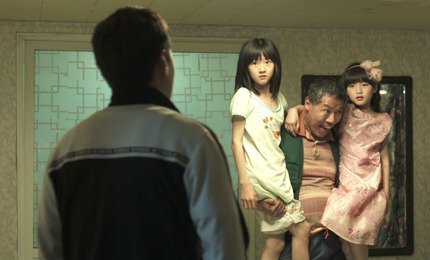
Soon-yeon, Soon-ja and their father have their lives turned upside down by Mang-taek

Soon-yeon, Soon-ja and their father have their lives turned upside down by Mang-taek

The world of Barbie  – the coastal area of Pohang City – is expertly constructed as a nihilistic purgatory by director Lee Sang-woo. The bleakness of the surroundings and the poverty that afflicts Soon-yeon’s family is palpable, while the vagrants and sexual predators that move in and out of their lives bring a genuine sense of danger to their well-being. The director constantly challenges the family with the society and culture that surrounds them, allowing for a slow-paced yet highly interesting examination of those struggling to survive in contemporary Korea. With no mother and a mentally ill father, it’s down to Soon-yeon to take on the roles of mother for her sibling Soon-ja, as well as wife and bread-winner as she sells home-made accessories and prepares meals. Yet the real tragedy lies in the fact her efforts are never appreciated, as her father cannot articulate his affection while Soon-ja has grown to despise the life into which she has been born, fantasizing of an escape of make-up and pretty dresses. Such protagonists are complex and acutely difficult to portray, yet the casting of real-life sisters Kim Sae-ron and Kim Ah-ron is an absolute masterstroke. The two young actresses are simply wonderful in conveying not only their poverty-stricken lifestyle, but also how it has forged them into very different beings. Kim Sae-ron, who has honed her talent through films such as The Man From Nowhere and Neighbors, is startlingly poignant throughout Barbie as her indomitable spirit overcomes the heartache before her. Yet younger sister Kim Ah-ron continually threatens to steal the show with her vehement bitterness towards those around her and the desperate attempts to make her fantasy of becoming a princess a reality. However, Soon-ja’s poor health always brings her back to the homestead and Soon-yeon’s care, adding further layers of nuance in exploring the family unit.

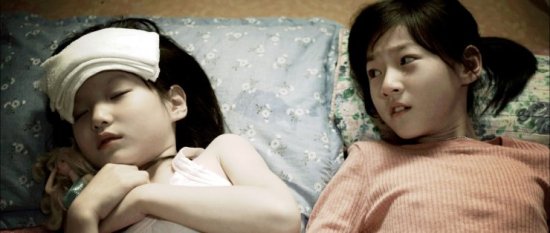
Soon-yeon looks after her sickly younger sibling

Soon-yeon looks after her sickly younger sibling

The notion of escape is ultimately provided by uncle Mang-taek, and his associate Steve. Mang-taek is a shockingly awful parental figure due to his abusive language and the manner in which he treats the young girls, bullying and insulting them to get what he wants. His awareness of their plight, and his refusal to share the burden, adds further animosity to his untrustworthy nature. His relationship with Steve is complex to say the least, with the two secretive men disliking and reviling yet needing one another, allegorizing the nature of Korean and American ties. While Mang-taek curses Steve with racial slurs and offenses under his breath, Steve openly displays his detest of Korea in a similarly offensive fashion, highlighting their mutual dislike and lack of cultural understanding yet are forced to work together. Furthermore, director Lee Sang-woo continually emphasises the wealth gap between them through contrasting the luxurious arenas in which Steve and daughter Barbie inhabit, with the extreme poverty occupied by Soon-yeon’s family. Hope appears, however, through the burgeoning friendship between Soon-yeon and Barbie. While they cannot communicate there is an unspoken mutual respect which the director uses to explore the generational ideological differences.

The crux of Barbie’s narrative is the adoption of Soon-yeong by Steve, yet her friendship with his daughter angers him to an unreasonable degree. The plot takes an incredibly long time to explore why this is the case, yet when it finally arrives the film shines as one of the most compelling and poignant pieces of independent cinema of 2012. The contrast between Soon-yeon, who wishes to stay, and Soon-ja, who wishes to go, is central in exploring the concept of the Korean family as well as the dream of America as a land of opportunity and escape. The bittersweet nature of both philosophies are wonderfully conveyed by director Lee Sang-woo, and his approach leaves a lasting and indelible impression.

Soon-ja dreams of America as an escape from poverty

Soon-ja dreams of America as an escape from poverty

Verdict:

Barbie is a highly compelling and poignant drama from director Lee Sang-woo that explores an incredible array of social issues within contemporary Korea. As with the director’s previous work the focus is squarely on interrogating the family unit, yet the inclusion of international adoption allows for an expansion in highlighting a variety of socio-cultural themes and issues. While it takes the film quite some time to get going, Barbie serves as a powerful reminder of the issues facing those in poverty and leaves an indelible impression.

★★★★☆

Reviews
My P.S. Partner (AKA Whatcha' Wearin'?) (나의 P.S. 파트너)

My P.S. Partner (AKA Whatcha Wearin’?) (나의 P.S. 파트너) – ★★★☆☆

My P.S. Partner (AKA Whatcha' Wearin'?) (나의 P.S. 파트너)

My P.S. Partner (AKA Whatcha’ Wearin’?) (나의 P.S. 파트너)

Mainstream Korean romantic comedies are, generally speaking, quite innocent. Shy glances caused from an accidental meeting? Check. The embarrassment caused from accidental skin-to-skin contact? Check. The man carrying his injured loved one to safety whilst crying? Check, check, check.

Not so with My P.S. Partner (나의 P.S. 파트너). The film attempts to take a more contemporary, and certainly more open, approach to the highly cliched genre. While the film is squarely light-entertainment, it is also a surprisingly charming rom-com. My P.S. Partner – or the frankly awful English title Whatcha Wearin’? – strives for quirky originality through the incorporation of sexual language and events, and while it never fully achieves such heights director Byun Sung-Hyun (변성현), who co-wrote the screenplay with Kim Min-soo (김민수), has crafted an enjoyable tale of love.

Depressed and lonely, musician Hyeon-seung (Ji Seong (지성) struggles to come to terms with his break-up with long-time girlfriend So-yeon (Shin So-yul (신소율). Her new rich, handsome boyfriend only compounds his melancholy further, while his friends do little to help. Yet one evening Hyeon-seung receives a surprise phone call from a woman who initiates exciting phone sex. However the call was actually a mistake, as the woman – underwear designer Yoon-jeong (Kim Ah-joong (김아중) – intended to call her boyfriend yet misdialed. Later contacting each other through drunken anger, Hyeon-seung and Yoon-jeong begin to build a relationship over the phone, one that has the potential to develop into something special.

Lonely and depressed, Hyeon-seung consols himself with alcohol

Lonely and depressed, Hyeon-seung consols himself with alcohol

From the outset, My P.S. Partner conveys the deep desire to be bold and contemporary as a group of friends frankly, and quite explicitly, discuss sex and relationships. The writers are clearly aware of the conventions of the genre, and make their best efforts to avoid the same pitfalls through utilising more ‘adult’ content to usher in a greater sense of realism. The approach simultaneously succeeds and fails, as while the sexual conversations are more grounded in reality than the uber-conservative innocence, the tongue-in-cheek nature and the ‘performance’ of sexual dialogue is farcical. It is, however, quite amusing and feels fresh as the friends bounce sexual jokes back and forth over drinks. Wisely after such a set-up, Hyeon-seung’s plight as a singleton is quickly established yet due to the jovial nature of the film, the depth and sincerity of his sorrow is generally undermined.

The rapid and comical pacing of the opening means that it doesn’t take long for the introduction of Yoon-jeong into the narrative which, luckily, doesn’t feel especially contrived. Her sex-call is one of the highlights of the film as Director Byun Sung-Hyun plays with the notions of sex and relationships in a postmodern fashion, with cut scenes emphasising that they are both seeking something other than what the promise of sexual fulfillment offers. This, in turn, gives heart to My P.S. Partner. Rather than boy-meets-girl, Hyeon-seung and Yoon-jeong are both in pain from relationships in different ways, which is neatly explored as a critique of contemporary relationships within Korea. Yoon-jeong desperately desires to marry a man she knows is wrong for her in order to have the fairy-tale ‘wedded bliss.’ Hyeon-seung, meanwhile, is every bit the insecure and sensitive modern man, who wishes to be with someone to assuage his loneliness. Such notions are also examined through the supporting cast, each with his/her own relationship woes that adds depth to an otherwise light-hearted rom-com.

Hyeon-seung and Yoon-jeong finally decide to meet

Hyeon-seung and Yoon-jeong finally decide to meet

Despite such a fun and fresh beginning, the cliches suddenly start to appear thick and fast. The narrative problems are clearly visible, as writers Byun Sung-Hyun and Kim Min-soo begin by attempting a more original and contemporary approach, before including a multitude of cliches in the second act, only to realise their mistake in the third and attempt to pull it back to the original vision. While this doesn’t necessarily make My P.S. Partner a bad film, it’s shame that the potential wasn’t carried through the entirety of the running time. Troubles arise mainly due to Hyeon-seung and Yoon-jeong deciding to meet so early, as the initial development of their relationship over the phone is conveyed through montage. In meeting, the impetus of their journey of self-discovery is somewhat diminished although there are several quite charming moments as the two become closer. Yet for every scene where the couple develop deeper emotions, such as through music, is a scene that rings hollow such as Hyeon-seung’s attempt at chivalry due to Yoon-jeong’s vicious former-colleague. However, the jovial nature of the film is infectious and even despite being aware of such conventional silliness, they cannot help but raise a smile.

A large amount of this is due to the charisma of the lead actors. As underwear designer Yoon-jeong, Kim Ah-joong is great. She exhibits the hopes and desires of the character with energetic enthusiasm, overacting which would usually be a criticism yet in this instance highlight the vulnerability of a woman lying to herself. When Yoon-jeong’s dreams are dashed, the hurt expressed by Kim Ah-jeong is keen, although the actress works hard to keep the atmosphere upbeat throughout and often succeeds. As lovelorn musician Hyeon-seung, Ji Seong is capable and endearing. While he doesn’t have the same emotional presence as his love-interest, the actor has good comic-timing and his development is enjoyable to watch. His performance of the ‘panty song’ in the highly cliched finale is highly entertaining, as well as the jokes that unfold in yet another comical critique of Korean culture.

Hyeon-seung sings the 'panty song' for a fun yet cliched finale

Hyeon-seung sings the ‘panty song’ for a fun yet cliched finale

Verdict:

My P.S. Partner is an entertaining and enjoyable romantic-comedy, one that employs the use of sexual language and jokes to offer a fresh approach to the genre. While it succeeds slightly more than it fails, the film is also quite charismatic due to lead actors Kim Ah-jeong and Ji Seong as the unhappy lovers. Director Byun Sung-Hyun has crafted a light-hearted tale of romance that is humorous as well as containing the odd critique of contemporary relationships in Korea, making My P.S. Partner a fun mix of the current and the cliche.

★★★☆☆

Reviews
Director Paik Yeon-ah (right) shares her thoughts with the Indieplus translator

Bittersweet Joke (미쓰 마마) screening and Q&A with Director Paik Yeon-ah (백연아) and star Hyung-sook (형숙)

Bittersweet Joke (미쓰 마마)

Bittersweet Joke (미쓰 마마)

At the Indieplus theater (인디플러스) in Gangnam, on the 18th of December, was a special screening of documentary film Bittersweet Joke (미쓰 마마). Following the screening was a Q&A session with director Paik Yeon-ah (백연아) and one of the stars of the documentary, Hyung-sook (형숙), who both graciously answered the queries from the audience.

Bittersweet Joke is a documentary concerned with portraying the lives of single mothers in Korea. Mainstream media tends to portray such women in an extremely negative fashion, with their faces blurred and voices altered, similar to criminals. Additionally, they often ignore the mother’s wishes regarding what is contained within the features, highlighting instead the extreme hardships of their existence. With Bittersweet Joke, director Paik Yeon-ah attempts to convey a more fully formed perspective of single mothers in Korea, conveying that they are capable, intelligent women simply trying to live their lives and raise their children to the best of their ability. The director also emphasizes the social prejudice that single mothers are forced to endure within Korean culture, as well as the innate lack of responsibility displayed by the fathers.

Bittersweet Joke – also known as Miss Mama – is an incredibly well-crafted and heart-warming documentary. The directing and editing are excellent, while the single mothers themselves are wonderful subjects through which to explore such an important social issue, conveying their joy and determination as well as their vulnerabilities and hopes for the future. The film was very well received by the audience, and following the end credits the Q&A session began.

The Indieplus translator kindly facilitated the discussion with director Paik Yeon-ah (백연아) and star Hyung-sook (형숙)

The Indieplus translator kindly facilitated the discussion with director Paik Yeon-ah (백연아) and star Hyung-sook (형숙)

The translator thanked everyone for braving the cold weather to come to the screening, and introduced both Director Paik Yeon-ah and Hyung-sook. Before questions were received, some information about the guests were provided. Bittersweet Joke (미쓰 마마) is the second feature from director Paik following Lineage Of The Voice (소리 아이) (2008) about two talented boys who perform traditional Korean music and opera.

Translator question: How did you (Director Paik and Hyung-sook) meet?

Director Paik: Thank you for coming to see the film on such a cold day. It was a great opportunity to meet Hyung-sook. That was really the start of the documentary. Although she sometimes she thinks she’s not sure if it’s good luck that we met, maybe it was bad luck in a sense because our relationship lasted so long and it was made into a documentary. But whether it is good or bad, making a documentary is like making a family in a sense, so I think we have become a certain kind of family during the process of making the documentary. And just like families our relationship is a tough and lasting one, I appreciate that. During the process of filming, I really enjoyed every minute of it. And the start of the documentary came to me quite naturally when I was finishing my first documentary Lineage Of The Voice (소리 아이). It was about two children, and after finishing this documentary I myself experienced pregnancy and had a child. And then I was more interested in making a documentary about children and I wanted to look into children’s upbringing and the relationship of family, focusing on children. So that was my interest, and I of course I was more and more interested about bring up a child being a mum myself. And then I found out about Hyung-sook, who is actually a rare person who is ready to speak about these issues, single mum issues, which is not really an open issue in Korea in 2010 when we first met. As my interest was focused on children, I wanted to look at different children in various conditions and environments so in that process we met. During that time not many people were willing to talk about single mum issues, not in mainstream media or any type of media, so she was the only one I found although I had to persuade her to make the film but she was willing to do it. Even after I got her agreement, here’s an association of single mom’s and they had to go through several meetings whether she should be in the movie or not, whether the film should be made or not. Because they have a history of people portraying single mum’s in a really negative way, so they had concerns. But she had decided to be in the film with me, and after these meetings we could finally start the film. And I think maybe she believed that this media, this documentary, would have a different kind of approach to this issue. That trust was between us, and that was probably the reason why she choose to do the film with me, I think. And that was the start of this documentary. That different approach was to portray them a little bit more like a comedy, and a bit more in a funny and enjoyable way. Not like a victim.

Hyung-sook: I made a very  brave decision to be in the film. I was the only one who didn’t want to use mosaic (which covers the identity). And I had seen many cases in the media in which single mums are depicted in a negative way here in Korea, and when I heard about this project from Yeon-ah I suspected the different approach and liked the approach of comic touches and the very enjoyable way of presenting. But also at the time I was running a little shop, but people got to know I am a single mum and because of that I had to close the shop. I couldn’t run it anymore because people were treating me as if I was a sick person, or as if I’m a bad person, and people that I knew such as family members, as soon as they found out that I am a single mum they assumed I would call them more (for help). It was a really stressful situation and I wasn’t ready to receive it. Having a child and raising it, why is it a problem to them? What’s wrong with that? I thought that by making this film maybe something could change. I expected a big change from making this film, but not yet. That’s how I started this project. And also another reason why I wanted to be in this project was because it was a rare project as the director told me it would have no altering, and I would be there with my own voice and my own face, which is not how the mainstream media usually depicts single mums. Most of them are not willing to speak out. But  this was different.

Director Paik: I think it’s a rare opportunity, and special too, to have a screening with an audience with different backgrounds because in some of your countries the situation is much better, and this is quite a Korean situation. Why is the single mum issue such a difficult issue? This is the reality we have. So I’m interested to listen to your responses as well. Please feel free to ask or share your comments.

Jun-seo and Hyung-sook within Bittersweet Joke (미쓰 마마)

Jun-seo and Hyung-sook within Bittersweet Joke (미쓰 마마)

Question: I was wondering if Hyung-sook has ever confronted any of her friends for treating her that way when they found out she was an unmarried single mum?

Hyung-sook: There are many cases where I had to confront other people about the fact that I am a single mother, and raising a child by myself. But there were cases where people would directly confront me about this issue. But this whole life is like fighting against the world, I think. Living as a single mum feels like that most of the time. At first, when I had Jun-seo (her son), I think until he was four years old I was really occupied with making my life, working and raising him, so I didn’t realise it that much. But after he got a little older and when I had to meet mothers in kindergarten, (I realised) it’s not just about me but it’s also about him. I’m a grown-up, so I can cry or forget about it or say something like “damn!” to make myself feel better. But for him it’s much more difficult, so that’s why he’s getting therapy and psychiatric help these days. So we are living through the situation together. It’s not just about one person, the whole life of a single mother is like that.

Question: Congratulations on such a great documentary. Really well made, wonderful subjects.  I’m the son of a single mum too and I could really feel (the message), and I really admire what you’re doing as a single mum as it must be incredibly hard. My former school was in the countryside area and a lot of my students had been abandoned by one or both of their parents and they had then gone on to make a new family so a lot of my kids were a bit troubled. But then I moved into the inner cities and that didn’t exist, it was all the ‘perfect’ family unit. The single parent children had been pushed to the fringes of society. With your documentary are you hoping to change attitudes? What would you like to see change in Korean society now?

Director Paik: Thank you first for your comments. First, maybe I should explain a little bit about the difference between English and Korean about (the term) ‘single mum’. In English we usually say ‘single mum’, but as you can see in the film it is actually translated as ‘unwed mother’. Which sort of reveals the prejudice against single mums already. I think there is this kind of tendency in our society to specify people like that so we’re not saying ‘single mum’ which can include several cases such as maybe the father died ahead of the mother, or divorced, or not married. ‘Single mum’ can be all these kinds of cases. But in Korean we usually call them ‘unwed mother’. So by specifying people in this manner, it seems to me like dividing people into ‘normal’ and ‘not normal’ in a sense. So by using the words ‘unwed mother’ it kind of reveals the idea that it’s not normal to be a mother when you’re not married. And that is based on the tendency that people are not accepting difference. We don’t have this tolerance, in a sense, and I think people are intolerant about this difference. So that’s why I think we should be able to accept and embrace these kinds of differences. That’s part of the reason why I made this film. And it’s also the goal of single mums. I think everyone of us can have a case where I myself can become an object of these kinds of prejudices. So I think it’s really important to be free of these kinds of prejudice for all people in society. And do to that, I think the idea that a family should consist of a father, mother and son and daughter makes a ‘normal’ family, that kind of idea should be avoided now I think, because we live in a much more complicated society. And I think through making this film I want to depict that kind of controversy in Korea that we have. The reality that we have.

Single mothers gather to discuss their experiences

Single mothers gather to discuss their experiences

Question: (N.B. This question could be interpreted as quite offensive towards single mothers, although it could perhaps be due to poor English language ability). I want to know more about Korean culture. I want to know why these kinds of accidents happen. Why are the father’s parents are not doing anything? Are the relatives not pushing them to avoid such bad cases? What about society? What about religion or culture? Does society show any pressure to avoid those kinds of things? Is Korean culture and society strong enough to prevent those things happening? There should be culture or ethics in society to prevent [this issue].

Director Paik: I don’t really understand what you mean by ‘accident’. Do you mean becoming a single mother is an accident?

(The question was then rephrased into a question about the father’s responsibility).

Hyung-sook: In general in Korea, I think the society is much more generous to men about being not responsible. In our culture we are much more generous to men even though they are not being responsible.  And so you can sue them, and get some money every month for the child and  try to make him responsible, but most of us already know that it’s no use. You can try, but a lot of us single mums know that it’s not really working. So I think we need stronger legal restrictions, on certain kinds of irresponsibility. We don’t have it yet. So I think like in other countries, it’s possible to have money transferred as soon as the [ex-partner] received his salary, if I can get that legally, or if we had that kind of system it would be much easier. But up until now, it’s not possible so that’s a tricky part. Also in our society, it’s more usual to have pre-marital sex. But having a child is a different issue. If you are pregnant and not married yet, young women are told they should get married with (the partner) and make a family. So having a child out of marriage is still very difficult here in Korea. Not many people welcome you. So a lot of young woman have to think that if they are pregnant they have to get married. That’s how it works. It’s a very tricky situation for them. If you have a child before or out of marriage it seems in this society that the prejudice is that it’s the woman’s fault and it’s unethical, in a sense. So that kind of atmosphere is pressure for women in Korean society. But nowadays times are changing, and a lot of women don’t really want to get married. To quote many women, marriage is not the ultimate goal at all. But [they are] responsible for their actions and when they have a child, that’s why so many women are becoming single mums in Korea. And I think there will be more and more, and I think it’ll be ok if single mums in this society can be included as a mum, as a woman, as a person who works for their livelihood. Just to be received like that would be ok. But up to now we still have to fight a lot of prejudice. If single mums can be embraced by society like that, like a person who’s working hard and having a child, having that kind of change is what we need. It’s necessary to bring up my child well, because all the pressure is going to the child as well. To conclude, the man is the problem! I’m really really curious to know the mental structure of a Korean man, and what’s wrong with them. I really think they need to be fixed. Totally. Seriously!

 – the question then continued – What about the child’s father’s parents?

Hyung-sook: Well I basically asked the father of my child he should be a father, and to do all the roles that a dad should do. Because it could really hurt my son, I think, because they have a relationship already. If he one day just disappeared, that will really hurt my son. So I asked him to keep that relationship of father and son, and do what he should do. It’s quite important I think, especially because he’s a son and he needs a dad, in a sense. I think it’s not just about money, it’s about bringing up a child together. Not living together, or getting married, but bringing up a child together. So we agreed to that. But at first the parents asked us to get married because we have a child, but because of our agreement they gave up. But they asked me a lot of things, for example please change his family name to the father’s family name. It’s usually the father’s side that you get the family name, even in Western society, and in Korea too. They asked that a lot, but I never said yes to that request. In the end, they told me that I am really something, and they are not asking that anymore. But the relationship is good now, not that bad, I think it’s quite good. The relationship between the parents [of the father] and my son is now quite ok, because he’s not just my son, he’s the son of his father as well. I totally accept that. I want him to have a father as well.
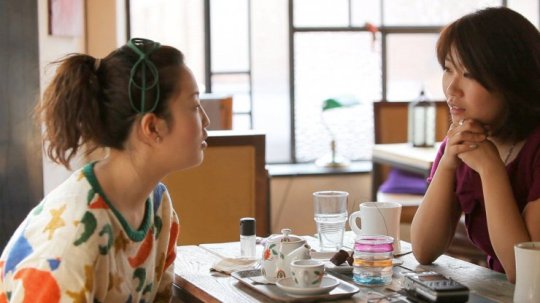
The subject of men is debated - are they needed?

The subject of men is debated – are they needed?

Question: I just wanted to say I really loved your movie. I think everyone should watch this movie. Personally, I’m from Canada and I have a very good friend that’s a single mother, so I know through being friend’s with her about her struggles. I think documentaries like this show single mothers as everyday people, and that they’re not abnormal. I also personally volunteered at an orphanage here in Korea and it’s really heart breaking that these children are abandoned by their mothers. So this movie really touched me because I think children should have at least one parent. I really think a lot has to be done about this situation. I just wanted to know, because I’m a teacher, what I can do to better this situation. How can teachers better support mothers and [their] children? It’s heart-breaking to know one of your students can be an outcast for having a single mum. As a teacher, how can we better support them?

Director Paik: As you can see in the film, when there was a campaign for adoption, and I think until about ten years ago that was the atmosphere of our society, to encourage adoption to solve the problem of orphans, to find them parents. But nowadays I think it is slowly changing, to give more support for single parents. Not for adoption, but to enlarge the support for the single parent. So that’s slightly changing. And to support the original family, because a lot of single parents give up – especially single mothers – give up their child because they don’t have the courage or because it is too difficult to live as a single mum. But now I think it is changing a little bit. Even the government policies are changing towards that kind of policy, like to support single parents financially and to have a different kind of atmosphere in society by supporting them. I hope it will change more in that direction. So if single mothers and single fathers get the support they need and get the support to bring up their child, that will change a lot of things including adoption and orphanage problems as well. I think the change is going in a quite positive direction these days. And the question you asked, because you are teacher, you feel more responsible about these children who are from single parents, and I think the situation that you mentioned is similar to what Jun-seo is going through now, so I’m sure that Hyung-sook has a lot of things to say about that.

Hyung-sook: I stopped working – I quit my job – to spend more time with Jun-seo. Before the film I wasn’t really shy to talk about these issues even in other media, but after this film was released, more and more people got to know about my situation and it was known more to the people at school. And Jun-seo got more and more questions about his mother and he told me that everybody is asking. His friends are eight years old and they don’t understand what ‘unwed mother’ even means, and what it really means to have a child outside of the marriage system. But they are asking him, almost everyday, “Is your mother an unwed mother?” They kept asking that so he got really stressed about it. That’s why he’s undergoing a very hard time these days. And I realised that he is talking less and less to me, and he doesn’t want to have a conversation with me, and he eats too much, and that’s how I found out that he’s having a very difficult time. I told Jun-seo, “Jun-seo, I am a single mum, I am an unwed mother, you know that.” And he told me that he knows, and it’s not the fact that they are asking him ‘do you have an unwed mother?’ that bothers him, it’s that they keep asking everyday. That’s what bothers him. It’s ok to ask him once, but they ask all the time and that’s really stressful. And it’s so stressful that my eight year old son told me that maybe it’s better to die than live. It’s such a huge stress to him. And I talked to Jun-seo’s teacher, and the teacher told me that [he/she] will definitely say something to the children. But that was it. So I was just thinking maybe there are not many things that a teacher can do, because I didn’t get a lot of help for that situation. So I can only hope that the world will changes a little bit faster, and to become a better world for my son to live as a single mother’s child. I really hope the changes are coming faster. One thing I can hope for is for a certain kind of education about the situation of single mums in Korea, that will probably improve the situation a little bit more. If we have these opportunities for education for the children, because they are too young usually [to understand], but also for parents and for teachers who possibly have prejudice about single mothers and their children. So I think it’s really important to have the opportunity to have that education about different types of families. There was one case where I met Jun-seo’s friend and I told him, when he asking me, “Are you an unwed mother?”, I answered, “Yes, I am.” But I told him that his mother and me are the same, that’s what I explained. But I cannot do that every time. And recently Jun-seo had a little bruise from the ice, which was thrown by one of his schoolmates because he kept asking Jun-seo, “Do you have an unwed mother?” And Jun-seo got angry and said stop that, and that’s when the boy threw the ice. I really broke my heart. That’s why I hope the world should change. And as for teachers, I think it would help to tell the single parent child that they are not different, and I know other school mates are telling [you things], but it’s no big deal. You’re just like them. And to be there for them in that kind of situation, and maybe hug him. Just let him [or her] know that they are not different. In other countries children can have quite open conversations about these kinds of issues, but here it’s still quite rare.

Director Paik Yeon-ah (right) shares her thoughts with the Indieplus translator

Director Paik Yeon-ah (right) shares her thoughts with the Indieplus translator

Director Paik’s closing comments: It was really precious time for me to have this kind of time with you. As a filmmaker who made this film, I feel more and more responsible, not only about this film but to make a better world in a sense, because that was part of the reason I made this film. So I’m not sure how much I can contribute to the change of this world, but I hope I can. To do that I’d like to try community screenings as well, after all the screenings are over in the theater, so we are trying to organise community screenings. We are also trying to do that in a co-operative program with the association for single mothers. It’s an educational program to go and meet people in person, and to educate about the situation of single mothers life and their rights. So we are going to do that with the association, and we are going to try and arrange more community screenings. And Hyung-sook mentioned about having educational programs for parents, teachers and grown-ups as well. It would be really great to have more and more opportunities to watch this film and discuss these issues about single parents. Especially to have that kind of opportunity with parents would be really great and maybe that will contribute a little bit for change. I think it’s necessary. I feel really obliged that I should do this more actively, I should do more as the person who made this film. The people who are in the film – including Hyung-sook – they [found] the courage to come out and speak in this film, so I feel more responsible, that I should make the most out of it, and to contribute more to the change.

Thank you to Indieplus for hosting the screening, and thank you to Director Paik Yeon-ah and Hyung-sook for generously giving their time and answers.

Directors Interviews/Q&As

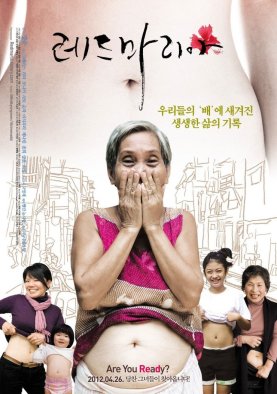
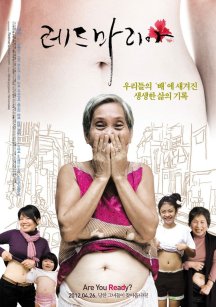
Red Maria (레드 마리아) – ★★★☆☆

Red Maria (레드 마리아)

Red Maria (레드 마리아)

The dilemmas facing women in South-East Asian countries are multitudinous. Despite the great variety of countries within the region, and regardless of the diverse cultures and heritage, each nation has one thing in common – the dominance of patriarchy. As such the role of women as wives, mothers and homemakers has been, and continues to be, difficult to shift even though increasing numbers of women have entered the workplace. Interestingly this in itself is problematic in defining the term ‘labor’ in regards to females. Traditionally the word refers to employment in exchange for money and/or trade goods, but as females occupy such diverse roles the definition is difficult to clarify.

Director Kyung Soon (경순) attempts to address the quandary through her documentary Red Maria (레드 마리아). During the course of the film, the director explores the concept of women’s labor within South Korea, Japan, and The Philippines documenting the lives of a number of females each with her own struggles. From unfairly dismissed employees and care workers, to women working in the sex trade and the homeless, director Kyung Soon seeks to convey that while each of the females within are not connected physically, the trials they endure and their strength of character unite them spiritually in the struggle against oppressive patriarchy. Such an objective is incredibly ambitious, and while this does allow for a highly interesting documentary the sheer number of participants makes the film overstretched and lacking an emotional core, while the editing and other post-production techniques also detract from the experience.

A care worker in Japan allows insight into her daily life

A care worker in Japan allows insight into her daily life

In attempting to convey the daily struggles of South-East Asian women, director Kyung Soon deserves praise indeed as it is rarely touched upon in mainstream cinema. The concept of women’s labor and it’s definition is certainly intriguing given the variety of cultures and statuses within the region. However, her desire to capture so much information is also her undoing as the documentary is, while very interesting, lacking in focus. The multitude of characters that inhabit the film also suffer the same fate as while each person is intriguing, they are given only brief segments of time before the audience is whisked off to another location and situation.

This particularly applies to the women from The Philippines. The Filipino women are far and away the greatest assets of Red Maria. Their stories are poignant and tender, and the sincerity of their emotions and their drive to continue on despite obstacles are the heart and soul of the film. The women profiled are those who have fallen outside the margins, those living in slums, working in the sex trade, and the elderly. Their stories are heart-breaking yet inspiring as they refuse to let the severity of their respective situations dampen their spirits. Scenes in which senior Filipino women describe the rape of an entire village decades before by Japanese soldiers cannot fail to shock, while the generations of women – within the same family – working in the sex trade is incredibly saddening. Likewise, the families living within the slums being forcefully evicted are compelling to say the least. Yet with each struggle there is hope due to the incredible resilience of the women involved, whether fighting for the truth and an apology, studying to change career, or even refusing to move, the Filipino women are inspiring in their strength and tenacity. These scenes also provide Red Maria with the greatest visuals throughout the film. Within the slums for example, a train passes mere inches from the abodes of those that reside there in comically stunning fashion. The senior women show the location of the mass rapes, a large red mansion in the country which is incredibly sinister and reminiscent of horror films. Their stories are the most compelling feature of Red Maria, and had director Kyung Soon continued to follow their development the documentary would be much stronger for it.

Senior Filippino women discuss past atrocities comitted by Japanese soldiers

Senior Filippino women discuss past atrocities comitted by Japanese soldiers

However, as South Korean and Japanese women are also profiled the tone of the documentary consistently changes and is quite jarring. Alternating between these locations also unfairly lessons the impact and seriousness of those in Korea and Japan. While women in The Philippines struggle to survive, the women from other countries are protesting against unfair dismissal, working as care workers or travel agents, or living in a tent in the woods. Their situations are interesting and important in emphasizing alternative forms of patriarchal oppression, but it is impossible not to compare and contrast with the more uncompromising situations faced by their counterparts.  It also doesn’t help that so little screen time is dedicated to them, nor that their innermost thoughts are not really revealed, making it difficult to empathize with the struggles they endure. There are also instances which beg for more insight that never appear, such as workers rights and governmental and police hostility towards demonstrators, the difficulties of living homeless, and being an immigrant bride. Such areas are never explored fully, to the detriment of empathizing with the plights the women face. Additionally some claims – such as South Korea not being ready to accept sex workers – are downright odd, considering the sheer number of Korean prostitutes that operate within the country.

Post-production is also an issue with Red Maria. Generally the editing is competent, yet there are several instances in which the documentary appears to be winding towards a finale only to pick up again and continue on. Scenes such as young Filipino women playing on the beach are inserted yet serve no purpose. The use of text highly detracts from the film as well, as the variety of different fonts, the occasional appearance of the director’s thoughts, and some flashy graphic work often serve to pull the audience out of the film. One of the interesting highlights of the film is the frequent recurrence of women’s stomachs which are symbolic of numerous attributes of the term ‘labor’, but oddly the text is never used to explain the director’s thoughts on this issue.

A recurring motif, a woman's stomach symbolises the diversity of the term 'labor'

A recurring motif, a woman’s stomach symbolises the diversity of the term ‘labor’

Verdict:

Red Maria is a highly interesting documentary, and director Kyung Soon deserves praise indeed for attempting to profile the subjugation of women under oppressive patriarchy in South-East Asia. Yet her desire to explore the concept of women’s labor proves to be far too broad in scope, resulting in a lack of character and debate development, as well as audience empathy. Yet it is the Filipino women who are the genuine highlight of the film, bringing incredible poignancy and inspiration to the discussion, and make Red Maria worth watching.

★★★☆☆

Reviews

Red Maria (레드 마리아) screening and Q&A with Director Kyung Soon (경순)

Red Maria (레드 마리아)The Women’s Global Solidarity Network hosted a special event on Saturday the 8th of December at the Columban Mission Center in Seoul – a screening of documentary Red Maria (레드 마리아), as well as a Q&A session with director Kyung Soon (경순).

Red Maria, for the uninitiated, is a documentary addressing the plight of ‘labor’ amongst a selection of women in Korea, Japan, and The Philippines. Director Kyung Soon highlights how while the women in each respective country lead quite radically different lives, they are all subject to the same restrictions imposed upon them by patriarchy. Within The Philippines, women who are involved in the sex trade, families living in the slums, and elderly women who came forward about the atrocities committed by Japanese soldiers, are interviewed. In Japan, homeless women, care-workers, and those unjustly fired are profiled. Within Korea, female protestors, immigrant wives, and sex workers lives are conveyed. Throughout the broad selection of female lives that are documented, director Kyung Soon establishes not only the incredibly difficult situations forced upon them by patriarchal culture, but also – and perhaps more importantly – how the women find the strength and courage to fight their battles and improve their lives.

Before the film began, the director told the audience she wanted to explore the idea of women’s labor and the labels ascribed to them, and asked those in attendance to consider these areas when watching. Interestingly, she also stated that Red Maria is not a typically ‘kind’ film in reference to the themes explored within and also the critiques of patriarchal culture.

Director Kyung Soon introduces 'Red Maria' (레드 마리아)

Director Kyung Soon introduces ‘Red Maria’ (레드 마리아)

The documentary was well received by the audience, and director Kyung Soon graciously answered questions from the audience following the screening. Her answers were very kindly translated by members of the Women’s Global Solidarity Network.

Question: Thank you for making such a moving film. What is the significance of the belly (a recurring motif within Red Maria)? Why not the hand, or something?

Director Kyung Soon: When I was young, I was actually very interested in bellies. In Korea, we have the public bath house culture, so when I was young there were not many separate shower rooms. We had a special day for going to the bath house, and when I went there I could see all the ranges of women in terms of age. From grandmothers to really young women, I could see them all naked. When I saw my grandmother’s and mother’s belly and body it was really fun for me to touch them because they were so soft and funny feeling. As I grow older, whenever I go to the public bath house and see young women’s bellies,  I feel very sad. When I was young bellies to me meant a warm place, but nowadays it’s like a shameful part of the body. So now you see in modern Korea, in terms of dieting, women are trying to get rid of their bellies. Even though it’s a part of their body, they actually try hard to get rid of it. So when I see that kind of culture, I feel very angry about it. I still enjoy going to the bath house, but now when I see women’s bellies I feel angry about them. In my opinion, the reason why a woman is a woman is because of her belly, and how a man becomes a man is because of the penis. But men don’t do anything else with their bellies, relatively speaking, compared to a woman. Actually I think a woman’s labor starts with their belly as it is connected to the uterus and vagina. For example when we have a period this is something we need to do, and also it’s a special thing to do, but actually no-one cares or talks about this as labor. Then having sex, and delivery babies and having abortions, these are all connected to the belly and women’s labor. But with this kind of labor women can’t get any benefits in terms of money. So of course people labor with their hands, but I think fundamentally we need to look at our bellies and what bellies actually mean for our lives and how they define labor.

Question: What was your reason for choosing those three countries in particular? What did you see as the underlying connection between Korea, Japan and The Philippines?

Director Kyung Soon: Before I made Red Maria my previous work was Shocking Family (쇼킹 패밀리). It was about criticizing the concept of the Korean family. So through this film I showed the women’s role within the family, within the patriarchal culture in Korea. And for that film I was invited to Japan a lot. Before that I didn’t have many chances to go to Japan, but because of this movie I was invited 7 or 6 times and through these kinds of events I met a lot of Japanese women. As I met a lot of Japanese women I was quite shocked to find the reality they faced in their own country. In Korea when we talk about the low birth rate, the Korean media always describes Japan as a very successful country that got over the low birth rate. But what I found out was that these Japanese women had the same problems that Korean women face. Also in Japan, even though it is a very wealthy country there is a really strong social order in Japan and that kind of culture makes women feel very suffocated. So when Japanese women go on strike or struggle in their work places or with their family they don’t have the spaces to make or build solidarity with other people. So when you see my film you can see Sato, the Japanese woman who was working hard, struggling and on strike by herself. What I actually saw in Japan was that they need some communication channels among people – among women – who are struggling. What I felt as I met these women, whether they live in wealthy countries or poor countries their problems are very similar and they share a lot of common things in terms of their struggles. Maybe there are some differences, for example if you are living in a wealthy country you might wear more expensive clothing, or eating better food, but  still I think the fundamental problems women share are very common. And the reason I chose the three countries are that you can see the poor countries and the wealthy countries at the same time based on the women’s labors. We can see their problems within the specific country’s cultural context, so that’s why I chose these three countries. And I also think women’s lives have not been dramatically changed except for the invention of the electronic cooker and washing machine. The reason that I chose The Philippines was because although there are a lot of migrant women who came to live in Korea, I actually found many of them were Filipino. So I didn’t really know much about The Philippines. But in 2007 I went to The Philippine and lived there for a year, and to learn their culture and study. From 2008 I started filming this film. And also when you are watching you can see these three countries share a similar history, for example how Korea was colonized and The Philippines was effected by the imperialism, and you can see the female victims of the war.

Director Kyung Soon answers questions from the audience

Director Kyung Soon answers questions from the audience

Question: First I’d like to thank you for the film, I really enjoyed it. One of things I found interesting was how it is difficult to gain self-realization through work. As a female laborer, I thought you showed the difficulties well how difficult it is to gain self-realization through labor. Because the work we can do, the work we want to do, is very limited. But at the same time, it might actually be a common problem for all the people who work in this world. So in that context, what do you think about this kind of problem?

Director Kyung Soon: As capitalism grows bigger and bigger, and the internet becomes really accessible don’t we share a lot of information together? But I think it’s very much marginalizing the actual problem. You can see all the incidents, events and access all the information easily. There are so many things of interest. Is this something you need to seriously consider or think about? For example, what does ‘liberal’ mean? What does the term mean to us? We rarely think about labor. When we look for the definition of ‘labor’ in the dictionary it is defined based on payment without really considering what labor really means. So when you think about labor in this way, you can look back and think about the labor that you were doing that didn’t involve getting paid. Then in this context, or this definition, we can’t enlarge the meaning of labor. So if labor is only based on payment, or the amount of payment, then if you earn a lot of money you might think that you reached the top of self-realization earlier than other people. But if you earn five grand a month or a grand a month, people still face the same difficulties. Because the person who earns five grand tries to pay off their mortgage debt, but the person who earns a grand a month have to pay their monthly bill for their house. So I actually think everyone is getting poorer in this society. I think we can’t just divide people like this. I think we are all connected. What I want to say is that self-realization can’t be measured based on the payment you receive from work. I think the answer that I want to show through the film is that we should make the world for the people who only earn a grand but that they are still able to gain their self-realization. The way each person lives seems very challenging within society but I think it’s a very fundamental question you need to ask yourselves. One thing that I want to add here is that in Korea we have a proverb that unemployed people can die due to overworking and stress, which means that even though they are unemployed they still have a lot of things to do. Which shows that being unemployed is only based on capitalism. So you don’t get any money, but you still do a lot of things. For example, people can volunteer. They don’t get paid to do that, but actually through volunteering they can gain self-realization. Therefore if we only look at labor in relation to payment or money, you can’t enlarge the meaning of the word ‘labor’ anymore. So this capitalist society drives the people not to ask this kind of question about labor, only to think about labor in relation to payment.

Thank you to Mik young Kim and the other members of the Women’s Global Solidarity Network for hosting the event, and to the Columban Mission Center for providing the venue.

Directors Interviews/Q&As

Bungee Jumping of Their Own (번지점프를 하다) – ★★★★☆

Bungee Jumping of Their Own (번지점프를 하다)

Bungee Jumping of Their Own (번지점프를 하다)

Romantic dramas are one of the most highly produced genres within the Korean entertainment industry, with the films and TV dramas continual hits throughout South-East Asian countries. As such, there is enormous pressure to provide audiences with the predictable pleasures offered by the generic conventions, but to also offer something different, something fresh, to keep the story engaging.

Bungee Jumping of Their Own (번지점프를 하다) is such a film. Directed by Kim Dae-seung (김대승), the first act is a rather bland and predictable effort yet truly shines during later scenes. This is due to not only the alternative approach in exploring traditional notions of romance, but also notably the manner in which homosexual relationships are explored – and judged – within Korean society. Despite the grammatically incorrect title, Bungee Jumping of Their Own is an original and fresh take on the genre, and leaves a lasting impression long after the credits roll.

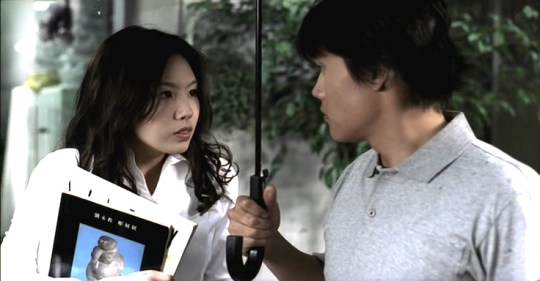
In a traditional tale of boy meets girl, university student Seo In-woo (Lee Byeong-Heon (이병헌) finds the girl of his dreams during a rainstorm. Luckily for him, In Tae-hee (Lee Eun-joo (이은주) also studies at the same institute and they develop a deep and lasting romance. However, In-woo’s mandatory two year military service approaches and on the day of his departure, Tae-hee doesn’t appear. Several years later In-woo, now married  and a father, is a teacher at a high school in Seoul. For a reason he can’t explain, he finds himself drawn to one of his male students Im Hyeon-bin (Yeo Hyeon-soo (여현수), and his repressed memories of his love with Tae-hee begin to unexpectedly resurface.

Tae-hee and In-woo meet during a rainstorm

Tae-hee and In-woo meet during a rainstorm

The opening of the film wonderfully captures the awkwardness of the first meeting between two lovers. Director Kim Dae-seung’s style, clearly influenced by his time as assistant director to Im Kwon-taek, shines through as the couple exchange nervous glances in the rain without daring to speak. In-woo’s longing to see Tae-hee again and to say something – anything – is palpable, and the intensity of his emotions are conveyed expertly through Lee Byeong-Heon’s performance. Unfortunately however, after such a compelling opening Bungee Jumping of Their Own takes a turn for the worse as the relationship between the central couple develops in a haphazard and erratic fashion, so much so that it undermines the romance altogether. Chiefly this is due to the lack of tender moments that bring Tae-hee and In-woo together naturally, as well as the editing which wildly jumps time frames to disorientating effect. In-woo is also much more of a stalker than a love-lorn young man, as he simply follows Tae-hee and waits in her classes despite studying a different subject. Therefore when the couple do finally come together it feels forced rather than passionate, although this trend does alter slightly as In-woo’s military service approaches.
Where Bungee Jumping of Their Own really comes into its own is when In-woo is an adult, teaching at a high school. Married and a father, In-woo is an excellent teacher who commands the respect of his students through mutual respect and trust. Interestingly the film shares focus between him and one his students, Hyeon-bin, who is in a similar situation with his girlfriend as Tae-hee and In-woo all those years ago. The relationship between teacher and student is developed well as both men become increasingly closer, sparking a host of rumours throughout the school as to the nature of their connection. The narrative therefore alters into an exploration of the acceptance – or more precisely, the lack of acceptance – of homosexuality. The name-calling, graffiti, and other homophobic devices employed by those within the school are genuinely unsettling, whilst at the center both In-woo and Hyeon-bin feel a mutual attraction that neither can fully explain or understand.

In-woo becomes a high school teacher in adulthood

In-woo becomes a high school teacher in adulthood

The manner in which In-woo attempts to address his desires for Hyeon-bin are a mixture of amusement, sadness and horror as he desperately seeks to assert his hetero-masculinity and retain his identity. Yet despite his efforts, In-woo’s longing for Hyeon-bin is sincere and poignant, and clearly uncontrollable. In each instance it is the incredible acting prowess of Lee Byeong-heon that conveys such potency as a man confused about his sexuality and the resurgence of past memories, with each gesture and action contributing in the conveyance of his adoration and reluctance. Indeed, one of the actor’s greatest assets is his eyes for when he looks at Hyeon-bin the pure sincerity of his love is keenly apparent, arguably much more so than during scenes with Tae-hee. While Yeo Hyeon-soo provides a competent performance as the student love interest, Bungee Jumping of Their Own is a testament to Lee Byeon-heon’s acting ability. As for Lee Eun-joo, the actress gives a radiant, almost otherworldly performance as Tae-hee. Such an approach could easily be conveyed as aloof arrogance but she grounds the shyness and reluctance of the character well and, combined with her staggering beauty, it is impossible not to be moved. The knowledge of Lee Eun-joo’s untimely death prior to watching the film also adds an air of tragedy to an already poignant romantic drama.

In-woo finds himself increasingly attracted to student Hyeon-bin

Hyeon-bin finds himself increasingly attracted to student Hyeon-bin

Verdict:

While the first act may be the stuff of traditional generic romantic dramas, Bungee Jumping of Their Own genuinely shines when it rejects such conventions and explores the notions of love through its alternative and quite original perspective. Director Kim Dae-seung conveys the majesty and romance of scenes as well as the difficulties of smaller more intimate moments, while Lee Byeong-heon is excellent as a sexually confused love-lore figure. Bungee Jumping of Their Own is an entertaining and thought-provoking film, one which will certainly reverberate with audiences long after the final credits roll.

★★★★☆

Reviews
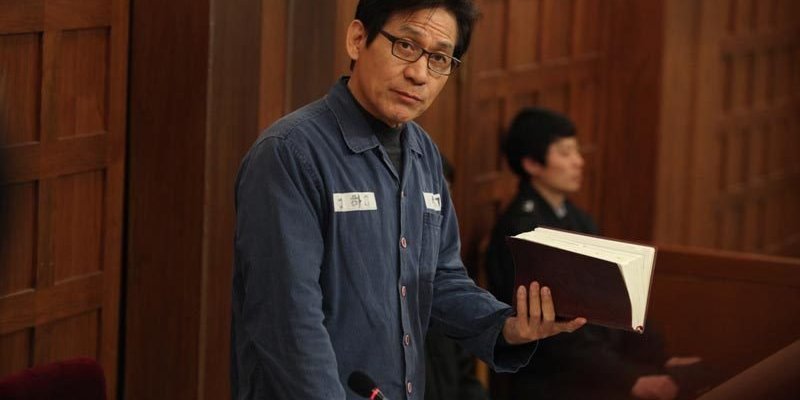
Professor Kim Gyeong-ho fights for the truth using the law, which is being abused

Unbowed (부러진 화살) – ★★★★☆

Unbowed (부러진 화살)

Unbowed (부러진 화살)

Courtroom dramas are not a staple of Korean cinema, which is somewhat surprising given the tumultuous relationship between the social elite and corruption. And yet, in the past two years two prominent films based on real events have emerged – Silenced (AKA The Crucible) (도가니), about the sexual abuse of deaf children, and Unbowed (부러진 화살). Politically-charged, socio-cultural critiques are a huge reason why Korean cinema attracted such attention during the late ’90s, and while contemporary output has been much more commercially driven, it appears the industry could be moving back to what made Korean cinema so initially unique. If this is indeed a movement, then Unbowed is certainly part of it.

Unbowed, by director Chung Ji-young (정지영) who returned to the helm after a thirteen year absence, is based on the true story of a professor whose trial for unfair dismissal was rejected. Upset with the verdict, the professor challenged one the judges outside his home with a crossbow. The story, understandably, made headlines; but as time passed it became clear that the story reported in the press and the truth were markedly different. Director Chung Ji-young – who also co-wrote the screenplay with Han Hyeon-geun (한현근) – presents the tale of Professor Kim Gyeong-ho (Ahn Seong-gi (안성기) and his defence lawyer Park Joon (Park Won-sang (박원상) with a highly effective stark social realist aesthetic, much like the very logical, no-frills protagonists themselves. The result is a courtroom drama where the facts speak louder than any directorial style, and the infuriation when clear violations of the law are committed are palpable. However, the focus and development of the central two protagonists is stunted due to far too many characters and secondary narrative elements inhabiting the story, forcing the impact of scenes, and the film overall, to become lessoned.

Professor Kim Kyeong-ho fights for the truth using the law, which is being abused

Professor Kim Gyeong-ho fights for the truth using the law, which is being abused

Interestingly, director Chung Ji-young opens Unbowed with the very event that made headlines as Professor Kim confronts the judge from his case with a crossbow. Yet rather than portray the entire confrontation from beginning to end, the professor’s subsequent incarceration is edited in as well as the journalism that appeared once the incident became public knowledge. While initially a tad frustrating, it becomes readily apparent that the filmmakers wish for the facts – rather than artistic license – to drive the narrative as well as the audience’s desire for more information. This is certainly a noble attempt, yet as the names of those involved as well as other features have been altered this is somewhat undermined. Luckily such a contradiction doesn’t detract from the overall narrative as from the outset the blatant disregard of the law by judges and lawmakers, the questionable evidence and Professor Kim’s charismatically stubborn refusal to submit continually shines through. Likewise the casting of Ahn Seong-gi as the professor is a masterstroke, who brings his incredible likability to the role yet also stretches himself into new territory conveying such a highly logical, intelligent, and occasionally cold protagonist with the utmost sincerity.

Unbowed largely succeeds due to the character of Professor Kim. Ahn Seong-gi portrays him as a humble yet highly intelligent man, a man of principals and ethics undaunted by the challenges before him. Scenes in the courtroom are wonderfully shocking and amusing as the Professor admonishes the judges for cutting him off during speeches, or for simply disregarding the law. An understanding of Korean culture, where seniority is incredibly important, makes such sequences all the more entertaining and are unfailing in creating a triumphant underdog narrative. Similarly the flashback scenes establishing the case, including the Professor’s time at university, prior court cases, and even family scenes, construct him as a genuinely likable and modest man, who simply wants nothing more than fairness for his students, his countrymen and women, and himself. However, the best examples of the courtroom  drama convey how the case fundamentally changes those involved and in this sense Unbowed stutters. From the outset Professor Kim is, despite his stubbornness, a great man which leaves little room for character development. There is only one instance where the film takes a decidedly dark tone for the protagonist, yet what occurs takes place off camera and the ramifications are only alluded to and not explored, which is a missed opportunity. Yet this lack of examination is also due to the great deal of focus bestowed upon defence lawyer Park Joon, who fights for the Professor’s freedom in his own unique manner.
Defence Lawyer Park Joon attempts to garner the support of the public using the media

Defence Lawyer Park Joon attempts to garner the support of the public using the media

Professor Kim’s relationship with defence lawyer Park Joon forms an integral part of the film and is executed well, with Park Won-sang highly competent in the role. The actors respond and play off of each other well, although they manage to form their alliance quite quickly and easily despite their protestations to the contrary. Oddly, the narrative often seems more concerned with Park Joon’s story as he must battle alcoholism, the bankruptcy of his company, the tug of war between his wife and an attractive journalist, and his disillusionment with the law due to a past mistake. If all this appears too much then you’d be correct, as there are so many narrative tangents that add precious little to the main arc that their inclusion is often quite redundant. It also comes at a price, as genuine character development is sacrificed in order to accommodate so many threads. The lawyer’s love interest, in the form of journalist Jang Eun-seo (played by Kim Ji-ho (김지호), is also critically underused as she offers little more than a female presence rather than a crucial figure in the development of the case. Additionally, Park Won-sang is unfortunately required to provide comedic relief, and despite these scenes acting as brief interludes they are generally a wholly unnecessary distraction from the Professor’s story. That said, as the trial begins to gather pace and focus is applied to the final verdict, Unbowed recaptures the verve and vitality that makes the story so compelling and enthralling.

The judges continually reject evidence and pleas that would clarify the truth

The judges continually reject evidence and pleas that would clarify the truth

Verdict:

Unbowed is a highly entertaining courtroom drama, filmed in a modest social realist aesthetic by director Chung Ji-young and featuring a charismatic and articulate performance by Ahn Seong-gi. Both of these features work wonderfully together in portraying the based-on-true-events narrative, adding realism, sincerity, and credibility to the plight of the Professor as well as highlighting corruption within the Korean legal system. While too many narrative threads involving defence lawyer Park Joon overburden the main arc, Unbowed is a great example of a Korean courtroom drama done right.

 ★★★★☆

Reviews
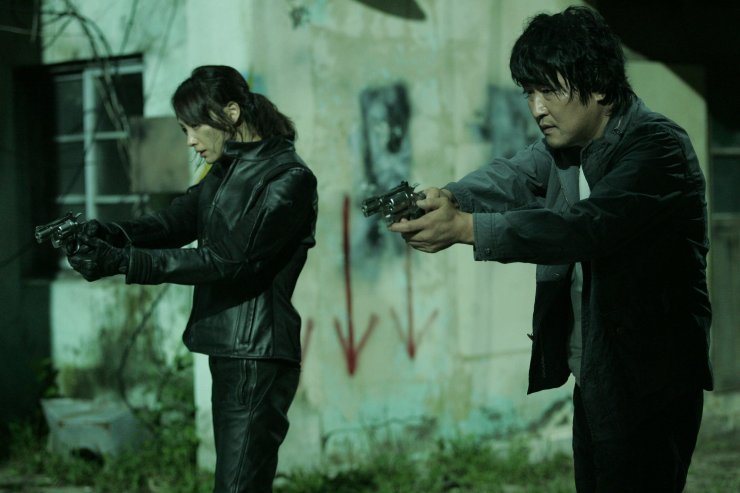
Eun-yeong and Sang-gil track down the perpetrator

Howling (하울링) – ★★★☆☆

Howling (하울링)

Howling (하울링)

Feminism and misogyny are problematic concepts in Korean cinema. While contemporary output is slowly starting to reflect the complex roles inhabited by women in Korean society, the male-dominated industry often submerges female narrative arcs within the central hero’s quest. As such, women’s issues tend to be explored through art-house and independent films such as the works of Lee Chang-dong, Im Sang-soo and Kim Ki-duk, yet these productions can also be problematic either for portraying women’s issues from a male perspective, or for their limited domestic release. When a mainstream film attempts such endeavors, as with rom-com You’re My Pet (너는 펫), the results can be quite extreme.

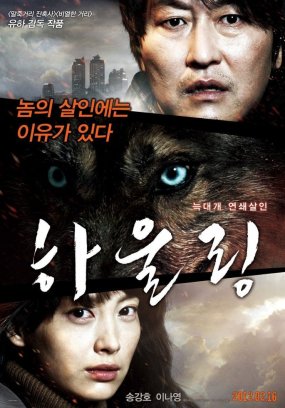
Howling (하울링), from director Yoo Ha (유하), is promoted as a taut thriller involving the curious mix of spontaneous combustion and a killer wolf in a spate of homicides. Yet it is surprisingly primarily an examination of the difficulties faced – and endured – by women in the workplace. Yoo Ha is clearly more invested in this theme than the various disparate narrative strands, strands which never convincingly coalesce into a satisfactory whole making Howling an interesting yet disappointing thriller.

Jo Sang-gil (Song Kang-ho (송강호) is called to the scene of a bizarre crime in which the victim seemingly died from spontaneous combustion. However, the presence of a wolf, stated from the testimony of a nearby drunkard, adds a complicated twist to the  homicide. Reluctant to take the case yet desperate for promotion, Sang-gil begins to investigate with rookie cop Cha Eun-yeong  (Lee Na-young (이나영), a partner he makes clear he neither wants or needs thus forging an antagonistic relationship. However, as savagely mauled bodies begin to appear, it becomes apparent this is no simple investigation and the hunt for the wolf is on. Sang-gil’s selfish motivations threaten to jeopardize the entire case while Eun-yeong’s by-the-book professionalism may well be the key to unlocking it. While Sang-gil attempts to overcome domestic issues and Eun-yeong the rampant misogyny within the police force, the two cops must set aside their differences to solve the mystery of the wolf murders.

Sang-gil and rookie Eun-yeong reluctantly investigate together

Sang-gil and rookie Eun-yeong reluctantly investigate together

Howling opens as thoroughly standard fare with an unexplained death with hints of foul play, the rugged results-at-any-cost cop put on the case, and his forced partnership with an idealistic rookie which creates tension. However the film begins to excel when such American TV cop drama tropes are eschewed, and greater focus is bestowed upon the central pair and how they are forged within the Korea cultural system. For Sang-gil, as a single father of two attempting – and failing – to provide and take care of his family, his flaws are readily apparent. Continually passed over for promotion and mocked by co-workers, Sang-gil works hard on the case yet selfishly keeps the vital information to himself in an effort to obtain praise, and advance in the force. While the tough cop is very much to blame for the debacles that ensue, director Yoo Ha conveys him as a sympathetic protagonist while portraying the real enemy as the ‘points system’ in place within the police force as a means for establishing assessment. However, Howling is in fact Eun-yeong’s story. As an intelligent, ambitious, and diligent woman Eun-yeong possesses all the skills necessary to become a high-ranking detective. Yet from the outset her male colleagues think quite differently, ordering her to clean and arrange files, make crude jokes about her sexuality and relationships with others, as well as making sexual advances. The sequences in which Eun-yeong is forced to endure such torments are simultaneously chilling and infuriating, as the director meticulously composes tense, powerful scenes that emphasize her secondary status. As such, Howling is an incredible exploration of the role of women in the workplace in contemporary Korea.

The wolf goes on the prowl on the streets of Seoul

The wolf goes on the prowl on the streets of Seoul

Yet as Eun-yeong’s trials take center stage within the narrative, the importance of the murders themselves dissipates. The homicides are generally quite farcical, from a bizarre instance of spontaneous combustion to the killer wolf stalking the streets of Seoul for victims. This is unfortunate as while these devices are somewhat trite the motivations behind the deaths are quite striking and provide another instance of keen social commentary. The importance of the examination is lost, or rather subsumed, beneath the various sub-plots and red-herrings intended to add mystery to the narrative, while the unbalanced focus bestowed upon the misogyny within the police force also detracts from any shocks. Interestingly, scenes in which Eun-yeong endures tirades of abuse carry much more potency and impetus than the murders, highlighting the director’s clear area of investment. Director Yo Ha has simply attempted to achieve too much within the running time, and as such each narrative strand suffers and doesn’t manage to coalesce or wrap up threads convincingly. Ultimately it is Eun-yeong’s story, rather than the killer wolf, that takes priority and Lee Na-young performs the role incredibly well simultaneously conveying tenacity and victimization with skill. Song Kang-ho, meanwhile, gives a solid rendition of a faulty cop yet he is never really stretched as in his prior films. As such, Howling is very much a thriller about the abuse of women in contemporary Korea first, and a murder mystery second.

Eun-yeong and Sang-gil track down the perpetrator

Eun-yeong and Sang-gil track down the perpetrator

Verdict:

Howling is an interesting thriller, one that attempts to blend an array of socio-cultural critiques alongside traditional cop fare with spontaneous combustion and a killer wolf thrown in for good measure. Director Yo Ha never manages to converge all the disparate threads into a satisfactory whole, but he excels in conveying the misogyny endured by women in contemporary Korea, with some riveting scenes and a great performance by Lee Na-young.

★★★☆☆

Reviews
Su-ni and Cheol-su become closer

A Werewolf Boy (늑대소년) – ★★★☆☆

A Werewolf Boy (늑대소년)

A Werewolf Boy (늑대소년)

Fairy tales, when filmed by a director of vision, can be astounding cinematic endeavours. The universe(s) constructed in depicting such fables highlight the stylization, compositional competence, and sense of colour and light of the person at the helm. Yet what truly makes a classic cinematic fairy tale is the morality tale within, the vital life lessons that occur in the evolution of a child into an adult. The shattering of innocence by the harsh outside world and the often problematic romance of the central heroine/hero add layers of tragedy that ground the fantastical narrative into relatable, almost nostalgic, material for audiences. Tim Burton’s Edward Scissorhands, for example, deftly combines the fantasy worlds, socio-cultural critique, and pure romance within his stunning directorial style, a feat which he has never managed to replicate.

A Werewolf Boy (늑대소년) has a lot in common with Edward Scissorhands thematically, but is it’s own unique entity due to the phenomenal visual style of writer/director Jo Sung-hee (조성희). His compositional style, choice of camera shots and angles, and keen eye for colour and lighting make A Werewolf Boy a truly gorgeous visual experience that wonderfully serves to emphasize the mixture of surrealism, horror and romance within the story. That said, the development of certain characters – notably the werewolf boy himself – as well as pacing issues and ambiguous resolution(s) detract from an otherwise sumptuously romantic fairy tale.

As an old woman living in America, Su-ni receives a phone call about the sale of a countryside house her family own. Returning to Korea and visiting the abode with her granddaughter, Su-ni begins to reminisce about the events that occurred there in her youth. The young Su-ni (Park Bo-yeong (박보영) and her family move to the country manner due to her ill health, yet the young girl is also suffering from depression. During unpacking, Su-ni discovers a feral boy, hungry and dirty and in need of care. While waiting for a suitable place to send him, the family take him in and name him Cheol-su (Song Joong-ki (송중기). Initially hesitant, Su-ni begins to train Cheol-su like a dog, bringing the pair closer together. Yet her growing affection for the werewolf boy is noticed by spoilt rich-kid Ji-tae  (Yoo Yeon-seok (유연석) who desires Su-ni for himself, and begins to plot his rival’s downfall.

The werewolf boy Cheol-su is found stalking the grounds

The werewolf boy Cheol-su is found stalking the grounds

As per fairy tale requirements, A Werewolf Boy is bookended by scenes featuring Su-ni as an old woman reminiscing about the past and caught in the moral dilemma of putting that time behind her. Director Jo Sung-hee presents these sequences with a stark realism, draining the colour from the landscape and effectively conveying the area as decrepit and lacking. The juxtaposition between the bookends and the central nostalgic tale is enormous, with the warm colourful hues wonderfully conveying the happiness and magic of Su-ni’s childhood. Indeed, even the colours of the decor and costumes worn by the protagonists reflect the romanticism of the time, while the wondrous use of light breaking through clouds, windows and doors is often beautiful to behold. Combined with the excellent composition and keen sense of space, as well as intriguing camera shots, A Werewolf Boy often appears as if from a painting or illustrated novel, and is quite breathtaking. Scenes such as Su-ni’s discovery of Cheol-su’s dark, shadowy cage is presented in eerie symmetry adding genuine thrills and horror, contrasted with the romantic hues of the children playing football on a hilltop during sunset. A Werewolf Boy is an incredible showcase of the director’s visual style.

The narrative is in-keeping with the visuals through the whimsical romantic tale between Su-ni and Cheol-su, developing their innocent love naturally through an assortment of comical and emotional scenes.  There are also elements of fun silliness to the proceedings with Cheol-su as a half-man/half-wolf which are a natural fit within the sub-genre, but may turn some audiences off. Yet this conveys the sense that the film doesn’t take itself too seriously, adding a light-hearted approach amongst the variety of fairy tale attributes it contains. The fanciful nature does mean however that the impact of social critiques of the ignorance towards war orphans and governmental responsibility are somewhat undermined for the sake of brevity, with the farcical nature of officials belying their statuses as the real monsters within society.

Su-ni and Cheol-su become closer

Su-ni and Cheol-su become closer

Yet the real ‘monster’ within A Werewolf Boy is spoilt wannabe tycoon Ji-tae, superbly performed by Yoo Yeon-seok. His interpretation of the villainy and arrogance of Ji-tae is incredibly compelling, while his dark clothes and over-zealous yuppie fashion style contribute greatly to the characterisation. Ji-tae’s lust for Su-ni and jealousy regarding Cheol-su forges the classic love triangle at the center of the narrative. Yet this area features one of the film’s biggest weaknesses, as while Su-ni and Ji-tae are developed well the same cannot be said for werewolf boy Cheol-su, perplexing given his status as the titular character. While Su-ni’s innocence and compassion – wonderfully conveyed by Park Bo-yeong – are tested and strengthened, and Ji-tae’s bitterness and resentment grow and fester, Cheol-su generally continues to growl and appear sorrowful. Song Joong-ki does well in expressing emotional distress without the aid of language, yet his role is highly limited within the narrative which is a source of frustration. This underdevelopment, which is also applicable to the (all-too-brief) government officials, results in a finale that is not as strong as it could have been in terms of both romanticism and symbolism. That said, it is during the resolution that Cheol-su finally takes center stage and attempts to fulfill his potential, yet the film is very much Su-ni’s and it is a delight to see a narrative structured around an interesting and fun female protagonist.

The villainous Ji-tae plots his rival's downfall

The villainous Ji-tae plots his rival’s downfall

Verdict:

A Werewolf Boy is a beautifully shot, visually stunning fairy tale and a genuine testament to writer/director Jo Sung-hee’s style. The use of colour, lighting and composition work harmoniously together in conveying a wondrous nostalgic tale of innocence and love, ably performed by the cast. While certain protagonists are a tad underdeveloped, A Werewolf Boy is an engaging, highly enjoyable and delightful fable.

★★★☆☆

Reviews