When violence enters her life, Tae-yeon takes up arms

Bloody Fight In Iron-Rock Valley (철암계곡의 혈투) – ★★★☆☆

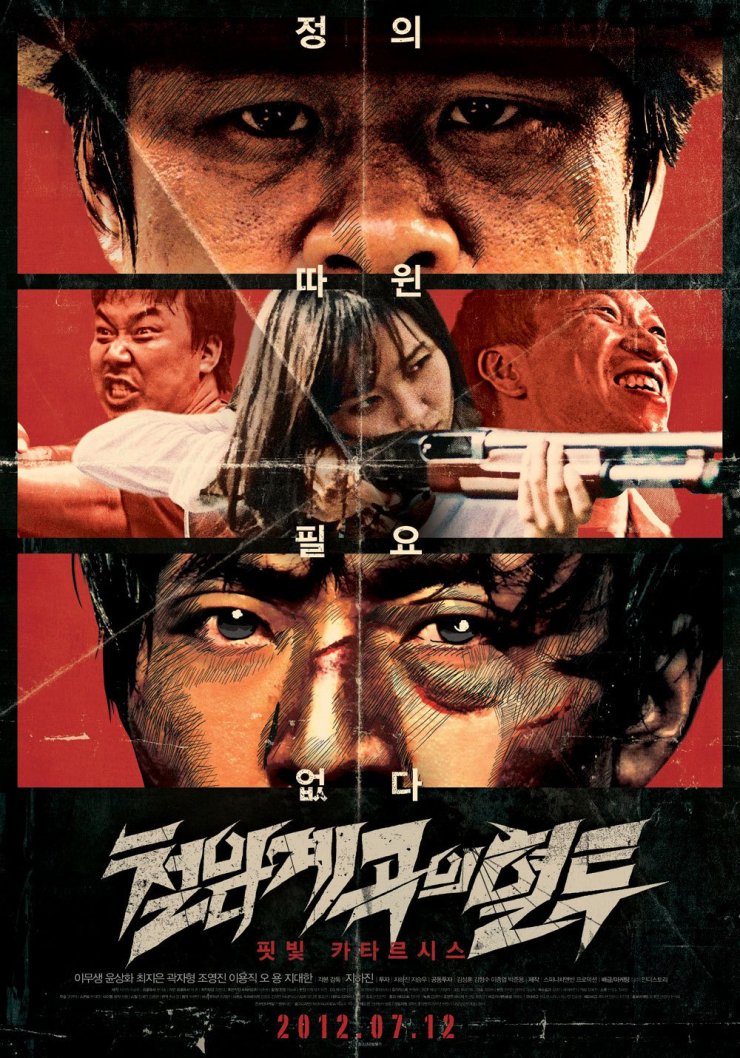
Bloody Fight in Iron-Rock Valley (철암계곡의 혈투)

Bloody Fight in Iron-Rock Valley (철암계곡의 혈투)

Premiering at the 2011 Puchon International Film Festival, director Ji Ha Jean’s (지하진) Bloody Fight in Iron-Rock Valley (철암계곡의 혈투) was particularly well received. Indeed, the low budget spaghetti western homage earned several awards during its run at PiFan including Best Korean Independent Film, European Fantastic Film Festival Asian Award as well as the Fujifilm Eterna Award.

It’s not hard to see why; the film is a genuine love letter to the classic westerns of Sergio Leone with the nameless outsider-redeemer hero, a town besieged by corruption, and a pretty prostitute with a heart of gold. The Morricone-esque soundtracks for the characters add even further reverence to the respectful homage, heightening the tension of the violent quest  immensely. While the budget limitations hinder the storytelling and certain areas require further development, Bloody Fight in Iron-Rock Valley is a thoroughly entertaining indie western.

Finally released from serving a 12 year prison sentence, the man with no name (Lee Moo-saeng, 이무생) begins his quest for revenge. After dispatching a police officer and a gangster in brutal fashion, the man travels to a sleepy backwater town in Gangwan-do in pursuit of his final targets – Ghostface (Yoon Sang-hwa (윤상화) and Axe (Kwak Ja-hyeong (곽자형). Yet upon his arrival the man discovers the town is plagued with corruption due to gambling dens presided over by a crippled boss, causing destitution in its wake. As the nameless man violently brings justice to the town, he encounters prostitute Tae-yeon (Choi Ji-eun (최지은) and wild man Pan-ho (Ji Dae-han (지대한), who join forces for a bloody showdown in iron-rock valley.

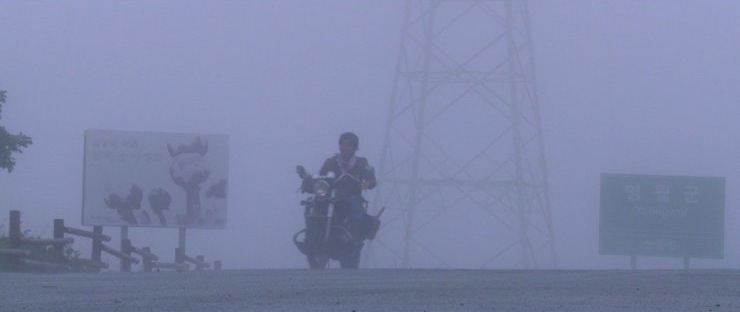
The man with no name rides into town

The man with no name rides into town

There is much to admire about Bloody Fight in Iron-Rock Valley. The film is a pure and sincere tribute to the western genre, and even film noir classics such as Chinatown, albeit with a Korean twist in the form of the violent revenge thriller. Writer/director Ji Ha Jean amalgamates the features of each incredibly well as the lone anti-hero pursues justice against the corrupt, eliminating them with appalling methods ranging from knives, beatings, and even flame throwers to the mouth. Yet Ji Ha Jeon never allows for the action to subsume the story, continually reinforcing the reasons for such violence through teasing flashback sequences and props a la Once Upon A Time In The West. The references to Leone’s westerns are hugely enjoyable, from the mysterious musical box that holds the key to the past, through to the nameless man dragged through the streets by his neck (via motorcycle), and identifying such sequences are a real thrill for fans of cinema. The villains, branded with pseudonyms rather than names, also hark back to the miscreants of the ol’ west as criminals that have ultimately been acquired by corporations intent on consolidating power.

In this respect Ji Ha Jeon also aligns the film with Korean cultural concerns. Just as the change from wilderness to civilization is a key theme in the western, the director relays this sensibility through Korea’s rapid urbanization. Such disparity is represented well, with wonderful cinematography of the natural misty landscapes from which the nameless man emerges, contrasted with the dilapidated houses and dark quarry pits of industry. The powerful corporation at the source of the transition, headed by a symbolically crippled boss, abuses the land, the community, and Korea’s religious and cultural heritage in the form of a Buddhist temple. The ongoing crimes of the syndicate pull other outsiders into the conflict, making for some engaging, and cathartic, violent confrontations.

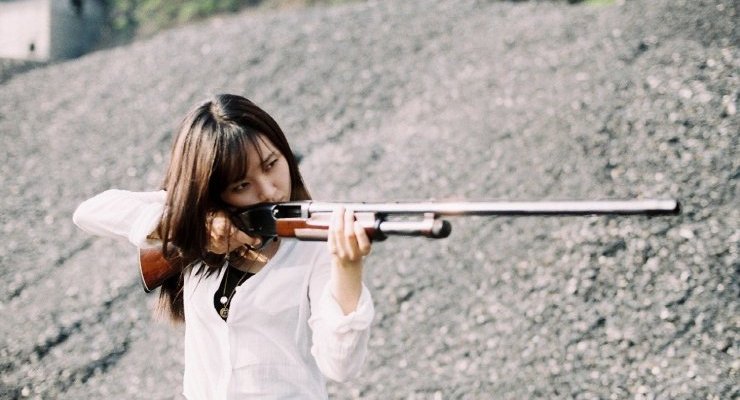
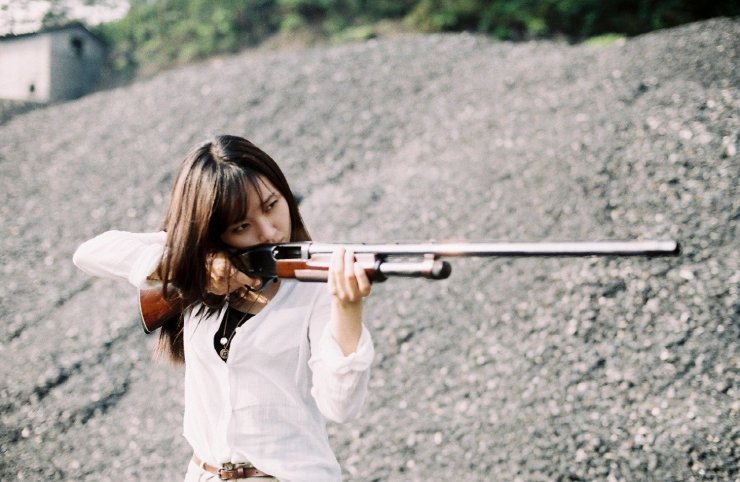
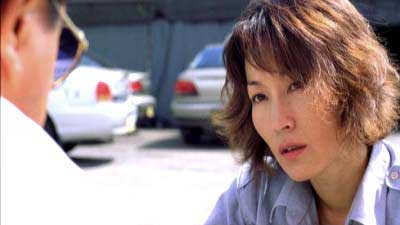
When violence enters her life, Tae-yeon takes up arms

When violence enters her life, Tae-yeon takes up arms

Yet aside from the genre pastiches and violence, the restrictions imposed by the shoe-string budget are quite clear. This is perhaps an unfair criticism as what director Ji Ha Jean has achieved with Bloody Fight in Iron-Rock Valley – which was filmed in a month – is remarkable, and the rough-around-the-edges sensibility actually adds a great deal of atmosphere to the film. However, the narrative is in general need of further development particularly in regards to villains and their machinations. Of all the bad guys, Ghostface stands out as the most ruthless and sinister, and his stoicism is competently performed by Yoon Sang-hwa. The other henchmen are merely stereotypical fodder for the nameless anti-hero to challenge and overcome, and in the case of the boss’ son, a general annoyance. The boss himself is woefully underwritten, and rather than a power hungry nefarious fascist he is something of a kindly old man which is frankly bizarre. The gravest underdevelopment however is reserved for the ultimate goal of achieving power in the area, a pivotal feature of the plot and of prior westerns, as the personal vendetta of the anti-hero becomes one that redeems the town. As this element of the narrative is rapidly passed by there is never the sense that the quest has saved a community, and is therefore lacking in compulsion.

Luckily however the finale of  Bloody Fight in Iron-Rock Valley features all the classic hallmarks of the western genre, and is downright disturbing as the tragedy of the man with no name is revealed. The confrontation between him and Ghostface in the quarry is full of tension, and is a fitting final tribute to the spaghetti westerns of yore.

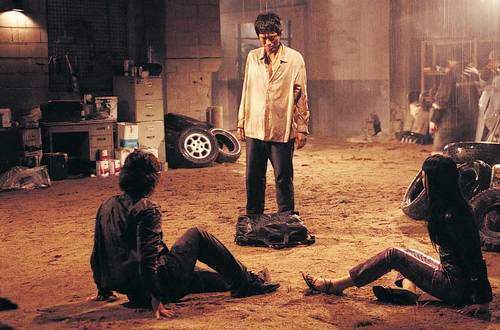
The man with no name confronts his nemesis

The man with no name confronts his nemesis

Verdict:

Bloody Fight in Iron-Rock Valley is a genuine love letter to the classic spaghetti westerns of Sergio Leone. Featuring classic features of the genre, including a nameless outsider-redeemer anti-hero complete with Morricone-inspired score, the independent film provides a huge service for fans of cinema. Director Ji Ha Jean also combines Korean anxieties surrounding the rapid urbanization, making it a distinctly Korean production. The low budget and underdeveloped script hamper the film, but Bloody Fight in Iron-Rock Valley is otherwise an enjoyable, and entertaining, take on the modern western.

★★★☆☆

Reviews
'J' stands victorious over a beaten Detective Choi

Confession of Murder (내가 살인범이다) – ★★★☆☆

Confession of Murder (내가 살인범이다)

Confession of Murder (내가 살인범이다)

Opening with a surprising and riveting action sequence, Confession of Murder (내가 살인범이다) begins in earnest as tough Detective Choi Hyung-gu (Jeong Jae-yeong, 정재영) and serial killer ‘J’ (Jung Hae-Kyun, 정해균) brutally assault each other. Writer/director Jeong Byeong-gil (정병길), who previously released Action Boys (우린 액션배우다) in 2008, captures the kinetic ferocity and its intensity with skill as the two men beat, throw and chase until exhaustion. And then the story begins, and suddenly everything becomes incredibly problematic.

Requiring huge leaps in logic for the narrative to remain conceivable, Confession of Murder is best enjoyed as an action movie rather than a thriller. The story is, quite frankly, ludicrous while the tone of the film continually shifts dramatically. The stunt team however have created some highly entertaining and adrenline fueled sequences that are engaging. Unfortunately the plot just doesn’t match the action, progressively becoming worse until a final act which manages to undermine everything about the film.

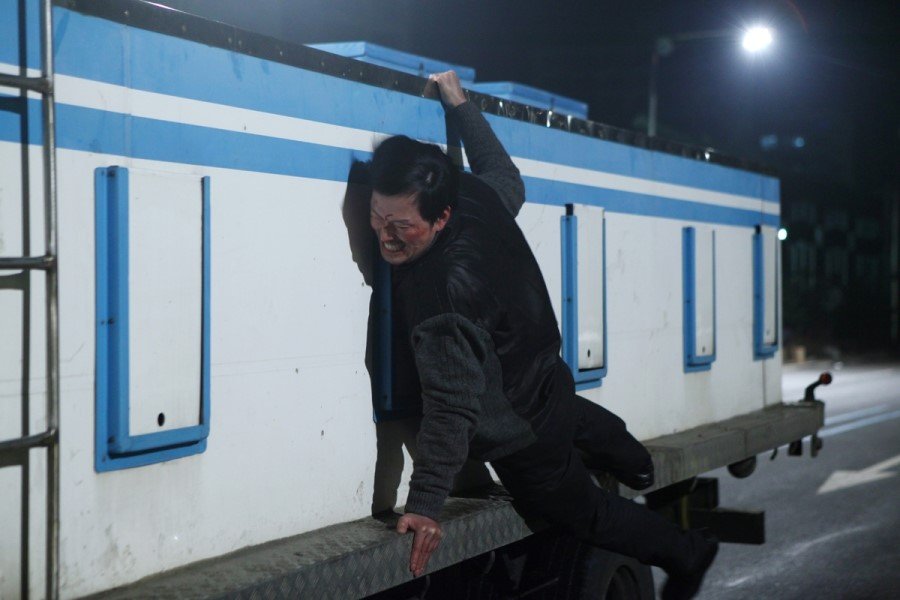
Drinking alone, Detective Choi Hyung-gu is suddenly attacked by ‘J’, a serial killer of 10 women he has been attempting to locate. After a brutal confrontation J stands victorious and, slashing the Detective’s face, runs into the night. Fifteen years later, after the statute of limitations has expired, the murderer appears on television promoting a book which details all of the killings. Calling himself Lee Du-seok (Park Si-hoo (박시후), his book ‘I Am A Murderer‘ becomes an instant best-seller, while his boyish good looks earn Du-seok hordes of fans. His popularity does not sit well with the relatives of the victims, however, and while they launch plans Detective Choi investigates the validity of Du-seok’s claims.

'J' stands victorious over a beaten Detective Choi

‘J’ stands victorious over a beaten Detective Choi

The stunt team behind Confession of Murder deserve considerable praise for their ingenuity and creativity. Their dynamic, and often quite aggressive, action sequences are the genuine highlight of the film and are thoroughly entertaining. The team also manage to shift the style of action in accordance with the narrative tone, as the sinister and ruthless opening stands in stark contrast to the mad-cap comedy of a later abduction sequence, which is quite a feat.

Yet such tonal changes are just one of the many problems that plague the story. Confession of Murder is never really sure what kind of film it wants to be, and by attempting to appease fans of several genres it manages to entertain but not satisfy any. The gritty urban landscapes of the opening are reminiscent of The Chaser, but are eschewed in favor of exploring the notion of celebrity, then later altered again into screwball comedy, before amalgamating them all. In attempting to juggle such disparate forms the depth required for each doesn’t materialise, and the narrative suffers for it. The release of Du-seok’s book ‘I Am A Murderer‘, and his subsequent rise to stardom due to his handsome appearance, provides the potential for biting social satire and criticism that is only ever hinted at. Similarly, the relatives of victims who transpire to capture and kill Du-seok for his crimes evokes themes from Sympathy for Lady Vengeance, but their pain is wholly undermined by their transformation into comical characters. The most glaring oversight is reserved for the manner in which the statute of limitations is explored. While certainly interesting for much of the running time – if disbelief can be suspended – it ultimately becomes quite farcical by the conclusion.

Appearing after the statute of limitations has expired, Lee Du-seok releases a book about the murders

Appearing after the statute of limitations has expired, Lee Du-seok releases a book about the murders

Despite such drawbacks, Confession of Murder is entertaining in places. The tension generated between Detective Choi and Du-seok is engaging and continually leaves audiences wondering which of the rivals will outsmart the other and emerge triumphant. As the hard-boiled detective, Jeong Jae-yeong delivers another highly competent performance albeit one that he has played several times before. The role never really stretches Jeong Jae-yeong, and as such he appears quite comfortable throughout rather than a desperate man. His counterpart, Park Si-hoo, is surprisingly effective as Du-seok. The actor has clearly been cast for his handsome features, yet he channels this into a smug arrogance convincingly well. The egotistical grin that adorns his face whenever confronting nemesis Detective Choi is wonderfully sleazy, ramping up the tension between them.

For any thriller to leave a lasting impression, however, a certain degree of psychology is required in understanding the motivations of those involved. Director Jeong Byeong-gil realises this far too late, and attempts to flesh out such a back story during the final twenty minutes. This is puzzling to the extreme, as had such scenes transpired during the first act as per tradition, Confession of Murder would have ultimately been a much more engaging film and given incredible impetus to Choi’s mission. Similarly, the murderer clearly sports a host of psychological issues which are barely acknowledged. Instead the finale hinges on masculine prowess, and the highly capable stunt team once again do not disappoint.

Detective Choi gives chase during a dramatic car chase

Detective Choi gives chase during a dramatic car chase

Verdict:

Confession of Murder is best enjoyed as an action film rather than a thriller due to the wonderfully orchestrated work by the stunt team. While exploring the statute of limitations and notion of celebrity has plenty of potential, writer/director Jeong Byeong-gil ultimately doesn’t assert the required depth – both in narrative and characterisation – due to his attempt to appease fans of multiple genres. An entertaining way to waste a couple of hours, Confession of Murder is a mediocre entry into the thriller canon best enjoyed by fans of the actors involved.

★★★☆☆

Reviews
Hyun lives a life of containment and isolation

Stateless Things (줄탁동시) – ★★★★☆

Stateless Things (줄탁동시)

Stateless Things (줄탁동시)

As an experimental queer art-house film, Stateless Things (줄탁동시) is a quite a rarity in Korean cinema. Director Kim Kyung-mook (김경묵) has crafted an incredibly unique production that explores the subjects of alienation and homosexuality within the metropolis of Seoul, employing a variety of cinematic techniques in emphasizing ostracization and identities in flux. Through the dual narratives that transpire, the protagonists are forcefully excluded from and contained within the confines of Seoul, allowing for an examination of the city not as a romanticized hub of commerce but as an overbearing arena where identity is subsumed. While the English title Stateless Things points to such themes, the Korean title offers more potent symbolism. ‘줄탁’ means pecking from inside and outside while ‘동시’ means at the same time, alluding to the relationship that exists between the ‘inner’ and ‘outer’ worlds, between senior and junior, and the realization of truth. While director Kim exhibits his fascinating trademark stylization throughout his frank exploration, he is also let down by his eccentricities that makes the story somewhat incoherent and certainly overly long.

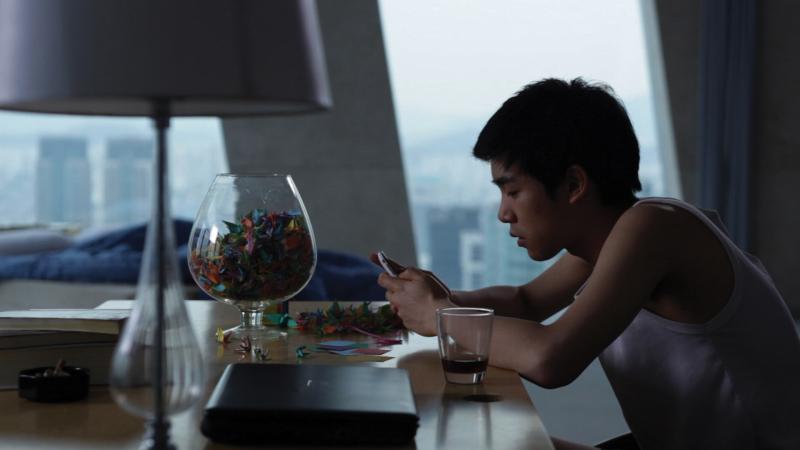
Working in a gas station and handing out pamphlets in his spare time, North Korean immigrant Joon (준) lives on the edge of poverty. His manager continually attempts to take advantage of him and co-worker Soon-hee (순희), who is continually sexually harassed by the owner. Having taken enough abuse, Joon and Soon-hee run away together to discover Seoul and a new life. Simultaneously, on the other side of Seoul, a  young gay man known as Hyun (현) is facing a different set of problems. Confined to a luxury apartment, the former gay prostitute is comfortable yet lonely and isolated, and at the beck and call of his older businessman boyfriend. As events transpire against them, Joon and Hyun must make a decision that will change them forever.

Joon and Soon-hee traverse the unwelcoming Seoul landscape

Joon and Soon-hee traverse the unwelcoming Seoul landscape

Stateless Things is very much a film of two halves, which director Kim uses to contrast themes of alienation exceptionally well. For the first half of the film the narrative focuses on Joon and his poverty-stricken life. As an immigrant in Seoul, Joon is located on the fringes of society and is barely negligible as he pumps gas for customers and distributes unwanted leaflets. His existence is continually represented in terms of exclusion, shunned from the world he is trying to be a part of. The second half of the film explores the life of gay prostitute Hyun, who is confined within the luxurious capitalist trappings of an apartment in a rich neighborhood. Hyun is repeatedly framed as a caged being, watching the world outside from his window and unable to join the masses below. In each case, the framing, tones and landscapes are employed brilliantly to convey the senses of alienation and lack of identity that perplex the central characters. Seoul, and the culture within, are always just out of reach for Joon and Hyun; they can observe, but are not embraced by it and as such their statuses as the ‘other’ are the source of the poignant drama.

Homosexuality is also represented in such a manner. Director Kim deserves credit for interrogating the secretive gay culture that exists in contemporary Seoul, as multiple perspectives of homosexuality are represented from affluent middle-aged men through to young gigolos. Throughout Stateless Things sex is a commodity, often victimizing those outside of mainstream culture and serving to further ostracize them. For many of these scenes a handheld camera is used, adding a documentary-esque realism – and terrible danger – to the proceedings that emphasizes their ‘forgotten’ status within society. Similarly the editing techniques employed enhance the atmosphere of loneliness as Joon is continually passing through his story, while Hyun travels back through time to realize how he came to be in such a predicament.

Hyun lives a life of containment and isolation

Hyun lives a life of containment and isolation

While most of director Kim’s technical flourishes serve the story well, there are moments when his experimental style detracts from the film. Chief among these is the character of Soon-hee. Throughout Joon’s story, director Kim works hard to convey Joon and Soon-hee’s delicate bond as outsiders in Seoul, hinting towards the possibility of a deepening relationship and helping each other overcome adversity. Yet Soon-hee is rather unceremoniously dropped from the film altogether, with only a few subtitles indicating what transpired between her and Joon. This, in turn, points to the larger issue that Stateless Things feels somewhat unfinished. This is ironic considering the roughly two hour running time, yet in addition to unresolved narrative bridges, certain scenes require serious editing. Notably, Joon walking down a street last for several minutes as does his and Soon-hee’s visits to tourist destinations, while Hyun’s appointment in a karoke bar lasts incredibly long.

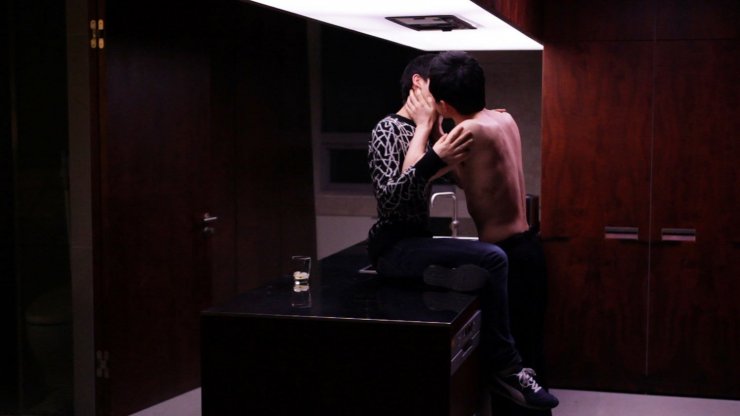
Yet despite these issues, director Kim enhances the story greatly in other areas with such creative touches. This is acutely the case in the finale when Joon and Hyun finally meet and commit to each other, whilst the sexual sequence between Hyun and his older boyfriend is beautifully shot in long take, conveying tender realism as the two begin to fall in love.

The sexual scenes are tender and shot with realism

The sexual scenes are tender and shot with realism

Verdict:

Stateless Things is a real rarity in Korean cinema. Bold and unflinching in the examination of homosexuality and alienation within contemporary Seoul, director Kim Kyung-mook has produced a heartfelt film full of his trademark technical flourishes. While they don’t always work and the film is overly long, Stateless Things is an intriguing experimental film that explores ostracization and gay culture in a manner which others can only dream of, making the drama a pivotal entry in the Korean queer cinema canon.

★★★★☆

Reviews
Stateless Things (줄탁동시)

Stateless Things (줄탁동시) screening and Q&A with director Kim Kyung-mook (김경묵)

Director Kim Kyung-mook at the Q&A

Director Kim Kyung-mook at the Q&A

A special screening of Stateless Things (줄탁동시), followed by a Q&A with director Kim Kyung-mook (김경묵), took place at Indieplus in Gangnam on the 15th of January. Stateless Things is quite a rarity within Korean cinematic culture as experimental queer art-house films are few and far between. The version shown was the two hour ‘uncut’ edition, featuring the sexual scenes that had to be edited in order for general release.

The film explores the concept of alienation within Korean – or, more specifically, Seoul – culture from the perspective of an illegal immigrant and a young gay man. While the immigrant, known as Joon, experiences alienation through exclusion, homosexual Hyun struggles against confinement. Director Kim Kyung-mook explores his protagonists employing various cinematic techniques, primarily non-linear editing and alternating cameras, for a highly unique production that prompted several questions from the audience.

Before the Q&A began, translator and independent film producer Hwang Hye-rim (황혜림) began with an introduction.

Producer Hwang Hye-rim: As it is quite a ‘different’ kind of film, even considering it is an independent film. It is unique, bold, shocking and too ‘obscene’ for some people. At first it was rated ‘R’, a restricted rating, which is like a XXX film in America. It means when you get this ‘R’ rating in Korea you can only screen the film in a certified cinema which is approved for screening ‘R’ rated movies. Which doesn’t exist in Korea at all. There is no cinema which is certified to show those kinds of films. It means if you get an ‘R’ rating, you can’t get it on the screen. So you have two choices. You can either delete or modify certain scenes and get an NC17 so it can be shown in cinemas, or you can have screenings only for specific kinds of events like festivals. That’s the fight that it had to go through to be in the cinema last March. It got NC17 after certain modifications. Not just because of the ratings, but you can also see it’s a very rare kind of film. So we can start with how he made the film, and how it started.

Stateless Things (줄탁동시)

Stateless Things (줄탁동시)

Director Kim Kyung-mook: My first film was called Faceless Things (얼굴 없는 것들) in 2005. This story (Stateless Things) evolved from one of the characters of my debut, which is a story of a young gay boy. From Faceless Things and from that boy character I tried to tell a story about this boy, what would happen to him when he goes out into the outside world, what kind of things would happen to him? That’s how I started to make the story. I wanted to make a coming-of-age story of this young gay boy, that’s how Stateless Things started. The English title is Stateless Things which is named in relation to Faceless Things, but the Korean title is quite different. The Korean title can be interpreted like a hen pecking inside and outside. I don’t know if you’ve read ‘Demian‘ by Hermann Hesse. It’s a story like a bird fighting its way out of an egg by pecking. ‘줄탁’ means pecking from inside and outside and ‘동시’ means at the same time. So it’s an idea of zen. Which means like if a chick is trying to come out from an egg it’s pecking from the inside, and the mother hen hears the sound of the pecking and pecks from the outside. So it’s normally used as an expression to show the relationship between a parent and child, or a teacher/mentor and student. That’s the process of giving birth to life, or realizing a truth. The Korean title has that meaning. But in this case it’s obviously the relationship between the two boys, one boy from inside, one boy from outside. So it’s like they are pecking the shell of an egg to come out to the outside world in a sense. As I mentioned about ‘Demian‘, in the film the expression was used to show the divided identity of this boy – these boys can be one boy or two boys – but he has two different kind of egos inside him. That’s why I used this title, to show that kind of idea.

Question: There’s a very strong feeling of alienation in the movie. And it seemed like a conflation between personal and social or national. Can you tell us anything about the influences that brought those two senses of alienation together?

Director Kim: Like most other directors this story also comes from my personal experience. So that was one of my influences. And it’s kind of related to my experience from when I came from Busan to Seoul. I moved to Seoul when I was about that age. And that’s why there’s a feeling of alienation, one of the main atmospheres you felt when watching this movie. I’ve heard a lot that the depiction of Seoul, or the scenes that have the landscape of Seoul, looks very different and strange. I’ve heard that a lot from Korean audiences. It’s probably because I felt like that when I first came to Seoul, like an alien or total stranger. So that’s how I looked at Seoul when I first came. Of course it has changed now as I have been living here for more than 10 years. So it’s not exactly the same, I don’t feel the same way I did before. But still it has a certain kind of strange look, Seoul has that kind of face when I look at it and that’s why it’s in the film. The feeling of space and moving, that’s how alienation becomes one of the main feelings in the film. That’s exactly the feeling I felt the most at that age when I came to Seoul. The alienation is about social alienation but it’s also the kind of feeling about being alienated from yourself, because you feel the chaos at that age. And you are often confused about who you really are, thinking about your identity and who you are and searching for yourself. So it was that kind of time for me. And that’s why they are feeling lonely as well, it’s not because they have no girlfriend or boyfriend, it’s because they have no answer to the question ‘Who are you?’ They are still searching for it. That was my experience around that age, and that’s how the story evolved from that experience.

Some of the gay sex scenes were deemed controversial

Some of the gay sex scenes were deemed controversial

Question: In the end credits, there were actors that played two characters. Was it because of lack of money or budget, or was it intentional?

Director Kim: Well it’s kind of intentional, it wasn’t because of lack of money. I wanted to give you the feeling of when you are seeing the same faces but in a different kind of feeling or story. So the first part of the film, and the second part, you see these people but they are not main characters. But you see the same faces in very different situations. For example you saw the women from the labour office, she was spanked in part 2 by the gay boy so it’s completely different kind of character played by one actor. That was my intention, to give this different kind of feeling from the same faces. There is other male character as well who played two roles, but it was cut out during the editing process. The film was already quite long enough so I had to remove it in editing.

Question: You showed a lot of different perspectives of having a gay lifestyle in Korea. A man with a double life who has a wife and a boyfriend, a young gay man who is trapped, another who is forced into homosexuality through poverty. But Korean movies are quite popular, the ones that have gay themes, like The King and The Clown and Bungee Jumping of Their Own. Why are movies with gay themes very popular, but it doesn’t translate into society? Why do you think that is?

Director Kim: I think one of the biggest reasons is the generation gap. I think the younger generation are much more open to gay culture and gay themes, or having gay friends. And the films you have mentioned are quite young at heart, in a sense, and there are a lot of dramas and soap operas and comic books which deals with gay issues very openly. A lot of young people are ready to embrace it, they don’t have any problems with that. But I think the older generation, maybe over 40s or 50s, they have lived a totally different life in a different era. So for them it’s still quite difficult to recognize this kind of culture or embrace it. That’s probably why. But they are the ones who still have the power, social status, and authority, to change things legally or politically. That’s why you cannot see as much difference in terms of law or social changes. But I think we have seen very big changes in recent years with young people and culture.

Joon and Soon-hee traverse the unwelcoming Seoul landscape

Joon and Soon-hee traverse the unwelcoming Seoul landscape

Question: I have two questions. The first is, how did you do the casting of the actors? How much was scripted, and how much did the actors do themselves? What was their feedback and input into the characters? And the second question is, I’m sure it’s probably often asked but why is the title so far into the film?

Director Kim: To answer the first question, except for some adult actors, most of the actors who played the main roles were first time actors. I found them through an audition. For most of them it was their first feature film experience. I was trying to find appropriate actors for the characters. Most of the scenes, especially the scenes with exposure, were written in the script already. So most of the actors who came to the audition said no to those scenes, it was too much for most of the actors who auditioned. So I had to find actors amongst those who wouldn’t say no to the script. I also tried to talk a lot with the actors, that’s how I work usually. I also tried to research a lot about North Korean defectors and gay people. I visited the gay clubs in Itaewon a lot. I also talked a lot to Korean-Chinese people with my actors. That’s how it happened. And the second question, about why the title came so late, I thought putting the title at the beginning of the film doesn’t really fit with this film. That’s what I thought. I didn’t want to start the film with a title. The question was then, where should I put it? I thought the scene when the two boys are meeting each other is kind of a beginning of the story for me, so I chose to put the title in front of that scene. But right before that scene, you remember the long sequence where Joon is walking down the street, it feels like an ending scene so I wanted to put a little bit of atmosphere of an opening scene as well. It looks like an ending, but it’s also a beginning at the same time. That’s the feeling I wanted to create. It’s like the end is the beginning is the end, in a sense. I thought that’s a better fit considering the whole rhythm of the film.

Question: When you started telling the story of the boy in the apartment, why did you decide to play with time? What was the symbolic reason for that?

Director Kim: Actually I tried to play with time throughout the film at first, but I thought maybe it would be easier if I reduced that a little to make it easier to understand the whole story, if I made it more chronological. So I reduced, or focused it more, on the apartment scenes. But as you can see in the opening scene when they are on the bike and running by the street, I also played with time a little bit there as well. The reason is that I was trying to show the story as if it is remembering something. It’s like telling a s tory about your past. The story is like the past of these two boys. And if you remember they are burning a diary at the end of the film, and I was trying to give this feeling, of getting rid of your past, and it’s time to move on to another future, in a sense. So that’s why the story is going backwards. Whenever you feel hard or difficult times in your life you go back to past memories. That’s why the movie has the structure of playing with time. It’s like telling a story by looking at the past and their memories. The structure, or frame, of memory was the main structure I was thinking of when I was making this film.

Hyun lives a life of containment and isolation

Hyun lives a life of containment and isolation

Question: I have noticed, in the past year especially, quite a lot of Korean films have dealt with issues that are usually very taboo to talk about in society. What I have noticed, which is quite exceptional, is that they have been dealt with full-on without any hidden facets, and very truthfully and realistically but at the same time very sensitively. What special attributes do Korean directors have that enables them to make films that are so frank and honest and extremely good? It’s very much appreciated.

Director Kim: Thank you! I’m not sure if I have the right answer but I’m going to try it anyway. I think maybe it’s because we had a history that changed very very quickly. Our society has gone through fast changes in the last few decades. So in the process a lot of things were suppressed and there was a lot of pressure in every aspect of society. Culturally, socially, politically. We went through this in a very short time compared to other societies in other continents. That’s probably why we end up having this power or strength against it, from that experience. I also feel the same way when I see some of the films from South-East Asian countries, and China. And I would like to say the same comment that you said about Korean films. In those countries, they are going through a change as well from a not very democratic society to a hopefully better society, so I think that kind of status of being more suppressed means you have more will and more energy to express. Resistance. You’re more willing to resist.

Question: It’s slightly related to structure. There were two scenes before Hyun and Joon meet that quite surprised me because they were unexpected scenes from each others lives. And they were both scenes of prostitution. The way that I picture it in my head is like kind of a yin and yang. It’s one persons story, but then there’s this punctuation of sex as a commodity in each of them. I think as far as I remember, those are the only two scenes in each others stories that appear. I was wondering about those scenes.

Director Kim: To me, as you said it can be like Yin and Yang, or like two different egos in one character. But for me these two boys were connected as one. Its like they’re behaving the same way, but have two different faces, for example. They are having paid sex, doing the same thing, but have different faces. For me those two scenes were related in that way. I wanted to create a feeling that they might be one person and not two. Also the scenes with the diary, some parts were shown in different parts of the movie. That was to give the feeling that they are from one diary, and that these boys are the same person. So the diary and the sex scene were devices for me to show that they are one. I also used several bridge sequences, like the video camera and hidden camera images, to show their mindscape being connected. It’s not consistent, but that’s how I wanted to show their minds were connected.

Director Kim addressed the audience in English, thanking them for attending

Director Kim addressed the audience in English, thanking them for attending

(Director Kim then spoke in English to address the audience) It’s a really rare chance to have a Q&A in English here. I haven’t actually had a chance to talk in English in a theater in Korea, so it was kind of surprising. I actually didn’t know that before coming here. I feel like I should of asked where you guys came from, but I missed it. Maybe after the Q&A I can maybe ask you, if you guys come to me.

Question: Are you making any new projects these days?

Director Kim: I’ve been working on a documentary for 2 years but I think I’m screwed! I’m not sure if I can go on. I’m just kidding. I’m still editing and I think I’ll be finishing the editing process by the end of this year. It’s about prostitution, women prostitutes. This time it’s about women, not men.

Sincere thanks to Director Kim yung-mook for graciously answering questions, and to Producer Hwang Hye-rim and Manager Kwon Mi-hui for translating and hosting the event.

Directors Interviews/Q&As
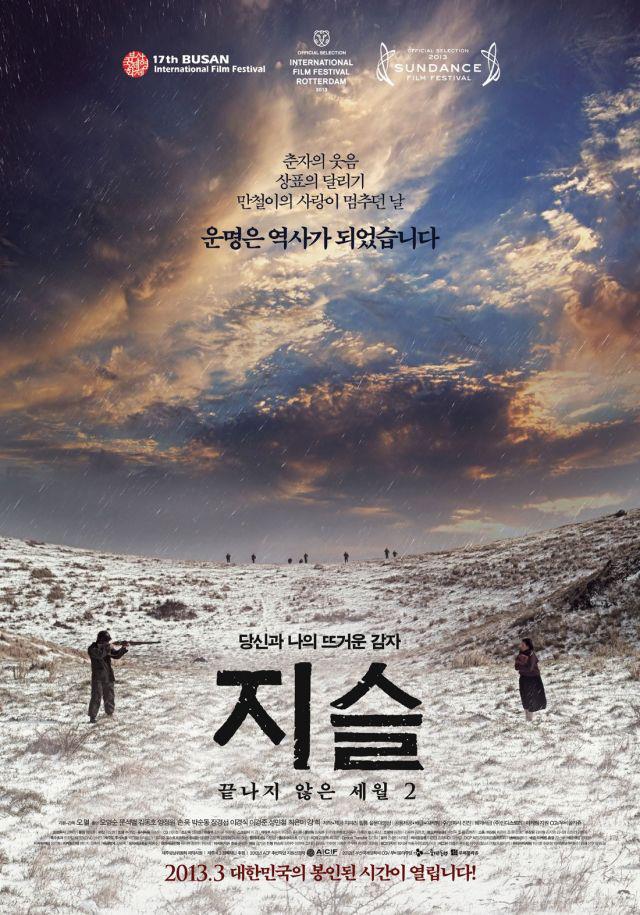
Jiseul (지슬)

Jiseul (지슬) – ★★★★★

Jiseul (지슬)

Jiseul (지슬)

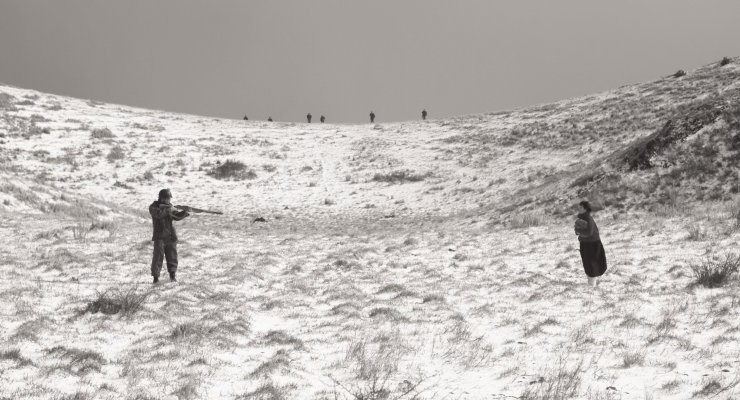
Director O Muel’s (오멸) Jiseul (지슬) quickly became known as one of the most interesting and exemplary screenings upon its debut at the 2012 Busan International Film Festival. The monochrome film depicts the little-known events of the 1948 Jeju Island Uprising – or rather, massacre – in which the Korean military brutally suppressed and killed up to a fifth of the entire population. For fifty years after, even mentioning what transpired was a crime punishable by torture and incarceration. Yet with his fourth feature director O Muel, a Jeju Islander himself, presents the atrocities that were committed with stark and uncompromising realism, simultaneously portraying the horrifying events alongside the indomitable spirit of the Jeju villagers. While Jiseul suffers due to lack of context and scope, the film is poignant and harrowing in its account of the tragedy, with the five awards won at BIFF, and an invitation to the 2013 Sundance Film Festival and International Film Festival Rotterdam, testament to its raw cinematic power.

Jiseul (지슬)

Jiseul (지슬)

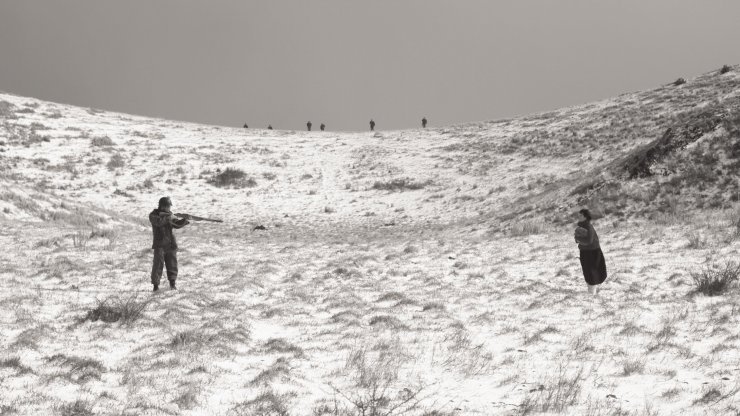
Throughout Jiseul director O Meul employs stunning directorial flair in capturing the range of experiences brought about by the Uprising. Of particular note are the astonishing long takes that are utterly absorbing, drawing the audience into such awful events as exploring a homestead following a raid, and an all-out assault on a village. In addition to the monochrome colours, such long takes are highly effective in conveying stark, chilling realism and as such are powerfully emotive. It’s impossible not to feel horror as farmers and the elderly are mercilessly stabbed and brutalized during such sequences. The incredible cinematography by Yang Jung-Hoon also adds potency as the snow covered landscapes and farming villages are attractive yet foreboding, and the tension as these arenas are traversed is often palpable.

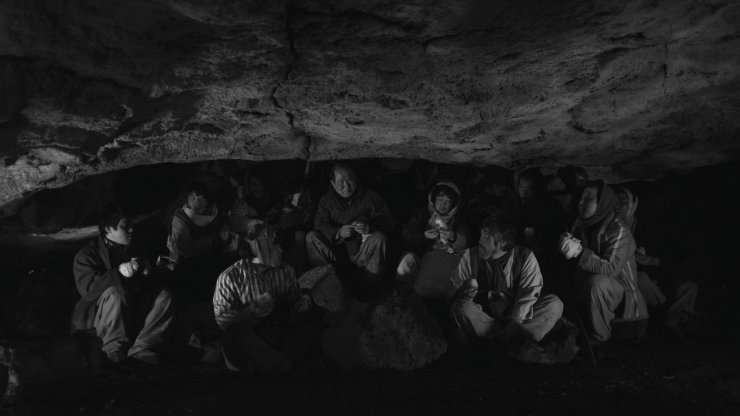
The residents of the town seek shelter and safety in a cave

The residents of the town seek shelter and safety in a cave

Yet the heart of Jiseul is undoubtedly the assortment of colourful characters that populate the film, particularly the Islanders who flee to the safety of the caves. O Muel displays his talents as a scriptwriter with their dialogue as the Islanders laugh, bicker, and discuss the farming lifestyle amongst themselves, all of which are highly amusing. While there are too many figures to delve into serious character development, the conversations are unfailing in creating empathy with their plight. Initially, due to the lack of context, it seems as if the Islanders are running from a threat that doesn’t exist. Yet as the narrative progresses, and the terrible physical and sexual assaults perpetrated by the soldiers are portrayed, the threat becomes ever more real. In Korean cinema such atrocities are most commonly aligned with an external threat – typically Japanese imperial forces – and O Muel deserves credit for challenging this ideological form and locating the threat internally. The director also wisely moves beyond mere stereotypes of evil in depicting factions of soldiers breaking away from the main Korean army, holding true to historical accounts.

It is in this historical regard that Jiseul suffers the most, as anyone unfamiliar with the Jeju Uprising will find precious little context given. Aside from a few sentences that bookend the film, it is difficult to achieve a sense of appreciation as to why the events are occurring, and what led to this point. Hints are occasionally given as to the wider conflict ongoing around the island, yet as there is little sense of scale it is difficult to determine. Yet in place of scale, Jiseul contains potent symbolism through the use of iconography and other facets of the mise-en-scene that not only convey the tragic loss of life, but also the attempts to conceal the truth. As such the power of the film lies in its intimate, raw visual aesthetics and makes Jiseul one of the most intriguing, and important, Korean films of 2012.

The monochrome palette and symbolism are highly effective

The monochrome palette and symbolism are highly effective

Verdict:

Jiseul is a powerful and harrowing account of the 1948 Jeju Uprising, with director O Muel’s monochrome palette and intense visual style adding incredible potency and realism to the true-life events. Accompanied by some wonderful cinematography by Yang Jung-Hoon, director O Muel deserves credit for challenging dominant ideology by not only attempting to create awareness of the massacre, but also for locating the source of horror internally with the Korean military. While the film suffers from lack of context for those ignorant of the Uprising, Jiseul is an exemplary independent production and one of the most important releases of 2012.

★★★★★

Reviews
REALIES Pictures (리얼라이즈 픽쳐스)

Interview with President Kim Ho-sung (김호성), CEO of REALIES Pictures

On Friday the 11th of January, President Kim Ho-sung (김호성), the CEO of REALIES Pictures, very kindly agreed to have an interview. The young production company has been behind some impressive hit films, including box office smash Masquerade (광해, 왕이 된 남자) and romantic comedy 200 Pounds Beauty (미녀는 괴로워). For a profile of the company, please click here.
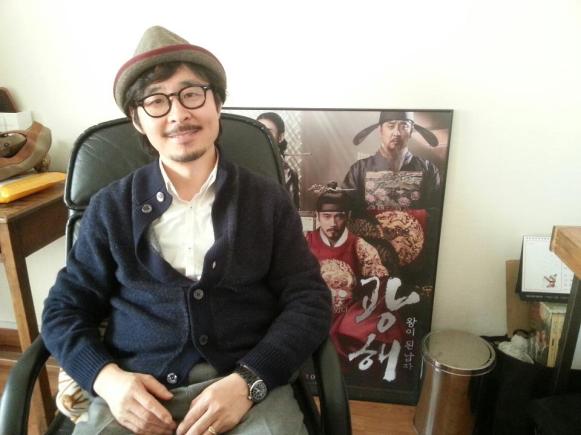
Ever gracious, President Kim Ho-sung gave a great deal of insight into REALIES Pictures

Ever gracious, President Kim Ho-sung gave a great deal of insight into REALIES Pictures

Question: 2012 was an incredible year for REALIES Pictures, with Masquerade (광해, 왕이 된 남자) performing exceptionally well. What were the highlights of the year for you?

President Kim: Well, so many things happened last year. We started production (on Masquerade) last February, and then we had almost five months of production, and then three months of post-production. Then we released the movie in the middle of September. We had success at the box office and we won a lot of awards at the Korean Film Academy, the Daejong Awards, but that doesn’t really matter to me. Actually the highlight was the production I guess. We had a really great time with the actors, and the crew, and the director, and all the staff we worked with. So that was my highlight. We really really had the same kind of feeling when we finished the shoot. We were satisfied with the scenes and we talked with the director, “this is good, this is bad,” then if we try one more time then that’s the whole production process. It’s really good. I have made 5 or 6 movies before and this was the first experience to have that kind of feeling in the production process. I can say this is my highlight of the year. Getting the awards and people watching the movie is the result, because of our highlight.

Question: What about the London Korean Film Festival? Masquerade finished the festival in quite spectacular fashion. What did you think about that?

 President Kim: Yeah we went there, we were invited as the closing movie of the film festival. We were surprised because so many people were there and they already knew about our movie. And another additional thing is that so many movie stars like Bruce Willis, Helen Mirren, John Malcovich and additionally the great producer Lorenzo di Bonaventura were there. They enjoyed the movie just like a normal audience, and they approached me and cheered me up saying, “you did a good job!” So I was so happy about that, so I had a lot of conversations with the ‘big cheese’. And fortunately di Bonaventura talked to me and said, if you have a good project we can work together sometime. So that’s my prize. So it was really good, we had a really good time with the director and actors. Byeong-heon Lee was there too, and Ryoo Seung-ryeong was there. And a Lady invited us to her house. Actually she was Lady Rothermere, the wife of Lord Rothermere, and we had a really good time at her house. Personally it was a really happy time. And at the same time, the audience really enjoyed the movie. And they understand Korean culture quite well. I was surprised because there were so many foreign members of the audience there. I expected about 90% of the audience to be Korean, or Japanese, but I think half of the audience were foreigners, so that was a shock to me.

One of the many Golden Bell (Daejong) awards for Masquerade

One of the many Golden Bell (Daejong) awards for Masquerade

Question: You mentioned the Daejong Awards. Masquerade was incredible, it had the distinction of winning 15 awards. Every category it was nominated for, it won. Congratulations. However, some critics felt this was controversial. What are your feelings about the ceremony?

President Kim: Yes, err, that’s not my problem. That’s the Daejong Award’s problem, because they changed their politics. Before, they gave their awards by if one movie has got a lot of awards, they only give half of them, and give the other half to another movie. Make them equal, kind of thing. The critics always said, “that’s not a true award.” If one good movie is there, then all the awards should be for them, just like the Academy Awards where some movies won 12 awards, there are so many movies like that. So they changed their selection process, and their committee people, and included normal people, and then they voted. They concealed it, and then at the last minute they opened it and gave the award. They changed it. And it all went to Masquerade, and we won 15 awards. So the critics changed to the opposite of last year, complaining “How can one movie get 15 awards?” So I don’t understand, they changed their policy but unfortunately for them we won everything and that was the problem. Critics are always critics. Something happens, and they always talk about it. So I don’t care about that. So I’m watching next year to see what happens, are they going to change their policy or keep doing it like this past year? But after that, there was another Korean awards ceremony, the Blue Dragon Awards, and we won only one because of the Daejong Awards. That’s ridiculous. Movies are movies. Just like the Golden Globes and the Academy Awards, if a movie is given a lot of wards in the Golden Globes then there’s a possibility it’ll get one in the Academy Awards. I don’t get it.

Question: I’d like to talk about your past, if that’s ok. You studied at Hanyang University. When you were studying there, where did you develop your passion for movies? How did you develop it?

President Kim: Actually it goes back to my middle school years. It’s kind of a personal secret, but I can tell it now. One day I found an envelope in my mother’s box. So I found it and opened it, and I read it, and it was from my father. It was from the time they were dating. It was a kind of movie review, not a love letter. My father saw a movie and got an impression and wrote a letter to my mom. It was The Sound of Music. There were 16 pages of letters. So he wrote the entire story from beginning to end. I read the letters and I realized I wanted to see the movie. It was around the end of the 1960s. And 15 years later I saw the movie, finally! When I read the letters, the young me wanted to see the movie, and then I guess from that moment in my mind, movies were there. In Korea, there is a very tough exam system for entering university. I wasn’t a very academic guy, just a normal guy, and my test results were not really good. There are a few schools I could get into and I went there fortunately. After that, the seed in my mind grew.

The offices of REALIES Pictures, located in Chungmuro

The offices of REALIES Pictures, located in Chungmuro

Question: So then you went to Hanyang University. Did you start script writing? Directing?

President Kim: No, I studied dramas and plays. I did all the crew jobs, floor director and that kind of thing. Finally in the last year of my school days I translated two scripts. One was Hedda Gabbler by Henrik Ibsen. It’s a feminist play. And the other was The Green Bay Tree. That’s a British play, it’s a gay drama. It was very radical compared to Korean culture. Gay stories were very rare. I was too advanced. So I translated two plays and I produced the plays and put them on stage. After that I quit that kind of thing because they weren’t successful. So I lost interest. So I moved into the advertising industry.

Question: How long did you work in advertising?

President Kim: More than 15 years.

Question: What experiences did you learn through advertising?

President Kim: Many. That’s where I learned the basic concepts as a producer from that period. Fortunately I joined a foreign advertising agency called McCann-Erickson. That was the first foreign advertising agency in Korea. That year, 1991, the Korean government opened the advertising market to foreign agencies, and that was the first foreign agency to come to Korea. Because I could speak a little English, I could fortunately join the company and I worked as a producer there for 6 years. I produced some really good and interesting productions and everybody was jealous of them, because my products were really good like Coca-cola, Levis, Nike and Nestle. There were so many good products that I produced TV commercials for because in Korea there was only one foreign agency, and all the good products came to that agency. We were the agents for all those companies. I handled all the good products, and did more than 20 commercials a year. That was good experience for me. I learned all the basic skills and concepts as a producer, it was so lucky for me.

Question: You produced so many advertisements over those years. How did you move from advertising into movies?

Siren (싸이렌), President Kim's first foray in film production

Siren (싸이렌), President Kim’s first foray in film production

President Kim: I really enjoyed my time, for 10 years, doing TV commercials. But then suddenly I felt sick and tired of it. Not because it was boring, but because they were not mine. I put in all my effort and worked really hard. My wife calls this the lost 10 years between a husband a wife. I always went home around 2 am, stuff like that. I devoted myself into that area. I went to the Cannes Advertising Festival and we won awards but I didn’t go up the stage – my client went up the stage. It wasn’t mine. It’s true, because all the advertisements were for the clients, it’s theirs. I was just a serviceman. So there was no credit. I’m not disappointed about getting awards, they’re nothing, just that it wasn’t mine. Yeah I can earn money for living, that’s ok. But I’m a creator, so I wanted to do something myself, something that’s mine and that I can put my name on. Because of that I changed my mind and produced a movie. Luckily at the time I had a good script, and I had an investor because I worked really hard as a TV commercial producer. Some people wanted a new approach with a TV commercial producer, with special effects and everything. That was lucky for me. So I produced one movie while I worked at Seon-woo Productions the biggest TV commercial company in Korea. So I actually begged the president to do this movie and he accepted it because I worked very hard, it was my reward. So I produced the movie Siren (싸이렌), it was my first movie. It was very lucky. But it ended up that we were ruined. I was ruined. It had a bad box office result. Because of that movie I learned so many things. It’s a totally different approach to TV commercials. TV commercials are like a 100 meter race, but movies are like a marathon. We need different muscles. I realized that. That was the first time I experienced failure in 15 years. After quitting the plays and working in advertising, developing myself to be successful, this was the first experience of failure in my life.

Question: Then after Siren did you decided to create REALIES Pictures?

President Kim: No, I went back to TV commercials. I built my own production company called Ink Spot. I worked with director Park Kwang-hyeon (박광현) who directed Welcome to Dongmakgol (웰컴 투 동막골). He was also a TV commercial producer for a foreign advertising agency. He had the same kind of mind as me, so I asked him to join me and we worked together and we built the company together. We did a lot of good commercials together. That was in 2002, 10 years ago. We did a really good TV commercial, we won so many awards. As we are both from advertising we understood each other – he wanted to direct a movie and I wanted to produce a movie. So we developed a lot of stories. One of them was Welcome to Dongmakgol. He picked up the story from a play. We developed the story together, then I rented director Park to producer Jang Jin (장진), who is like a genius, and it was successful. And then when director Park came back we tried to produce and direct another movie but things changed. He was a big director, I was just a TV commercial company president. The industry needs just directors, not producers like me because there are so many. So we separated. I was desperate at the time, so I really thought about what I was going to do next. I wasn’t interested in producing TV commercials anymore. I made a phone call to Mr. Won Dong-yeon (원동연) because I hired him as a producer of the movie Siren and after that failure he kept doing his movie business and made two movies, and I went back to TV commercials. 5 years later, in 2006, I called Mr. Won and told him what I wanted and he accepted me and said let’s do it together again. At the time he was developing the movie 200 Pound Beauty (미녀는 괴로워). So I joined that production.
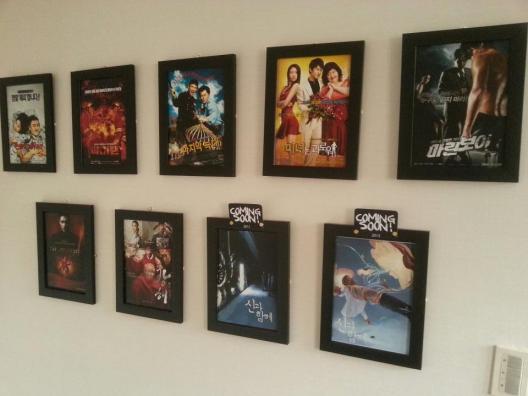
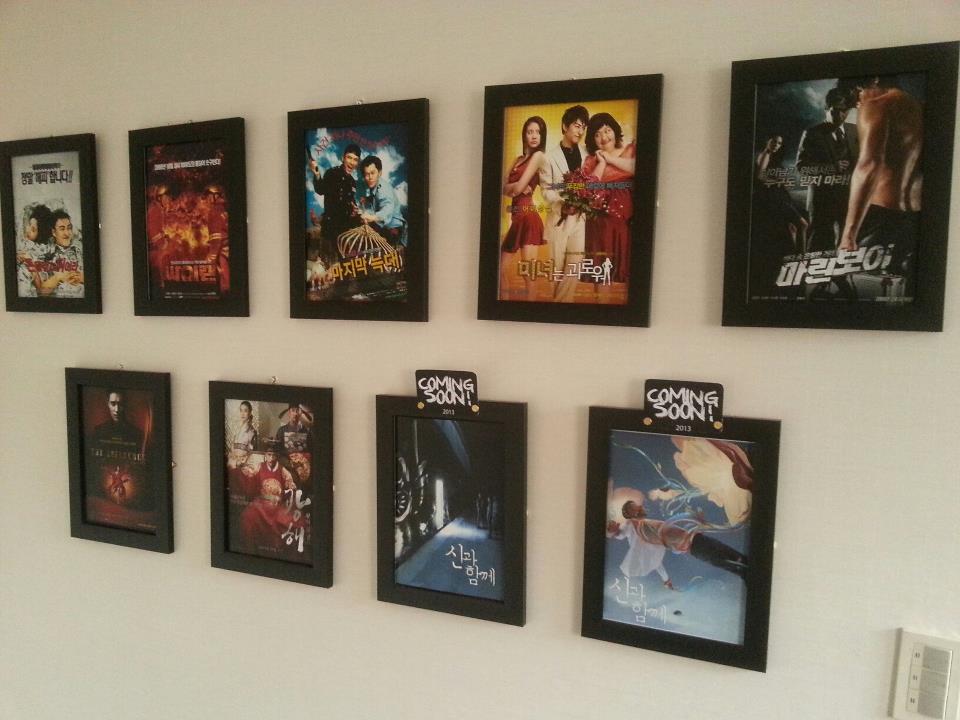
Posters of the films produced by REALIES Pictures adorn the walls

Posters of the films produced by REALIES Pictures adorn the walls

Question: So in 2006 you joined together and you created REALIES Pictures. Then 200 Pounds Beauty was released and it achieved almost 7 million admissions. How did such success affect the company? Did it give you any new experiences?

President Kim: Yes. Because we had a big failure 7 years before with Sirens, we both grew up and got a better understanding of the industry and stories, producers, directors, actors, everything. Mr. Won and I always tried to do better, to understand better. We tried really hard. When I did the first movie Siren, I didn’t understand people, it wasn’t my concern. Just as a producer I gave people money to do something, and they did it, that was the attitude. A TV commercial attitude. But I totally changed. I tried to understand my crew, I tried to understand my director. That was the huge differentiation between the two movies. I realized that making and producing a movie is not manufacturing something, it’s understanding people and the story. That is the first step in producing a movie.

Question: Did you always think 200 Pounds Beauty would be successful?

President Kim: No. No, because I had a kind of trauma with Sirens. I never removed that feeling from my heart. I was nervous. But I didn’t say to anyone about it, but we shared that kind of feeling together. We were very happy when we released the movie in theaters. When we waited outside the door of the theater we just found people were really happy when they were going out, so we were relieved. This is it, we did it! It’s kind of our habit now, we put a movie in the theater and then we wait outside the door, then look at the first expression of the audience. Then we can imagine, “yes, this is good” “this is bad.”

Question: In 2008 you released Marine Boy (마린보이), which was similar to a Hollywood blockbuster with a story involving drug trafficking and ambitious action sequences. Yet for some reason the film didn’t resonate strongly with audiences. Why do you think this was?

President Kim: I can say that it was too advanced, I guess. I think Marine Boy is a well made movie, the picture is good, everything is good, but story-wise it’s different from Korean movies. The Korean audience wants to have an emotional achievement when they watch a movie. This movie is so cool, like a Hollywood movie. So they were not moved. They were not touched. “It’s a cool movie, but I don’t like it” – that kind of attitude. I was too advanced. I wanted to make a Hollywood movie after 200 Pounds Beauty, so I learned another thing. Producing movies, I always learn something. A big success or big failure doesn’t matter, I always learn something.

The Influence (인플루언스)

The Influence (인플루언스)

Question: After that, in 2010, your next production was The Influence. The film is really interesting as it blends a variety of genres and is visually stunning. How did REALIES Pictures become involved in the project?

President Kim: I already mentioned about my resume, doing advertisements. I always did that kind of thing. I was sick and tired of making 15 second TV commercials, they always push that the product is really good with exaggerations and stuff like that. Throughout my years, my attitude for treating that kind of advertisement changed. In 2006 when I created Ink Spot, during that period my TV commercials totally changed. I put some story and emotional things into the commercial. Before that period I always tried to make them look good, just very visually good. I wondered how to touch the people, and I developed. I had an article from a magazine, and there’s a good reference to something BMW did called Hero. They hired 8 good directors and they made short stories, focused on BMW driving, it was really good. So I got a hint from that. I suggested it to an agency and a client. The product was Windsor Whiskey, a Scotch whisky from Diageo. It was really hard to put something like that in advertising because there are so many restrictions. All they can do is a billboard. They wanted to contact people from different areas and use the internet. So we made the product into a story. This is the first time we tried it, and we called it ‘branded entertainment.’ So we made 20 minutes – 4 stories – into a series, with director Lee Jae-gyoo (이재규). We worked together. And Lee Byeong-heon was there as a model for the commercial, and we used him holding a whiskey cup and he was very vivid and lively. From now, we produce a movie at the same time as doing branded entertainment. I planned and developed the iphone 4 film festival, that was the same level of branded entertainment. I suggested it to KT when the iphone 4 was newly launched in Korea so we had to make brand awareness. So I said let’s make a movie with iphone 4. I had a good director and cinematographer. We hired 5 directors and 5 cinematographers and they made 5 6 minute short films We put it in the Busan Film Festival. There’s a section for the iphone film festival. So that’s also branded entertainment, just a different form.
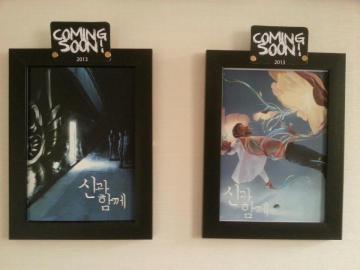
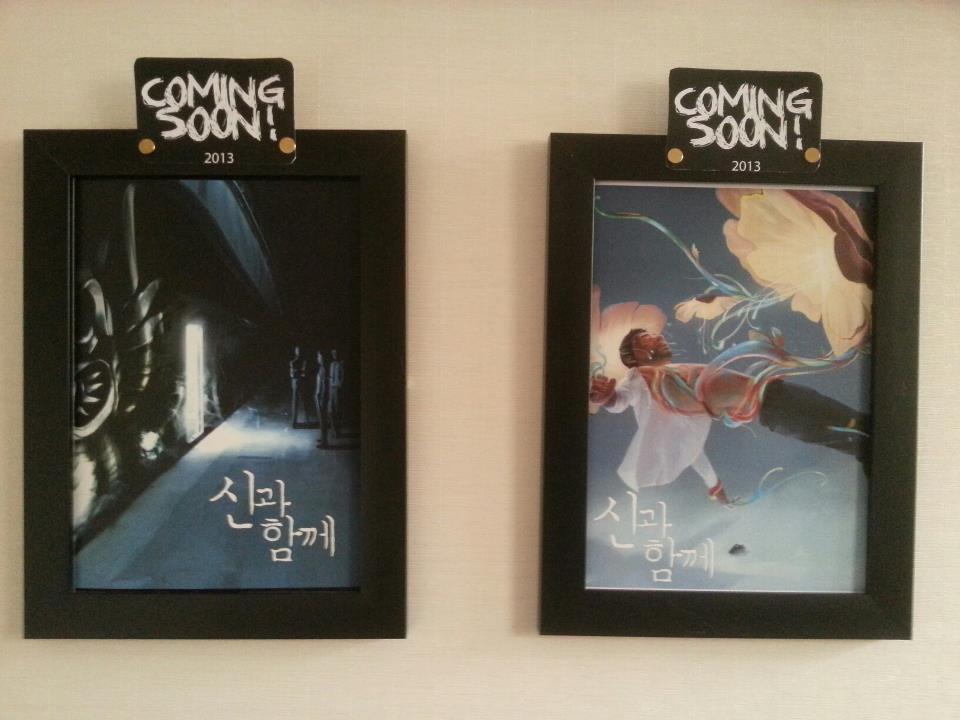
Along With The Gods: A Visit From A Stranger (신과함께: 낯선이의방문) is to be released in 2014

Along With The Gods: A Visit From A Stranger (신과함께: 낯선이의방문) is to be released in 2014

Question: Bringing us back to the present, your next production is going to be Along With the Gods: A Visit From A Stranger (신과함께: 낯선이의방문). Can you tell us about the movie?

President Kim: Yes, it’s a movie about the afterlife. I picked it up from the webtoon, it was a really big success 2 years ago. It has 3 different stories. There is Heaven and Hell, Earth, and mythology – 3 parts. So we contacted the writer and bought the copyright to make a movie. The reviews were really good, people really loved the story. The story is about a man after he died. Heaven and Hell are just like the normal world, there is a ‘Hellbucks’, just like Starbucks, there’s a coffee shop and a court. The man who died goes to the afterlife and he meets a guy who is holding a panel with his name on it. The man asks, “who are you?” and the reply is, “your lawyer.” That is the start of the movie. What? Is there a lawyer in Heaven? That concept is really cute and amazing, so I picked up the story. It’s the journey of a man who died, for 49 days. You know in Korea, in the traditional funeral ritual people always do 49 days of praying for the person who died. The relatives who live in the real world are praying for the dead person to go to a good place. That period of 49 days is the dead man’s journey, and his life is judged in all areas. Being a dad, stealing, violence, these things are judged from what he did in the real world. But he also has a lawyer, it’s a really interesting concept in the story. It’s going to be very fun.

Question: When will it be released?

President Kim: I guess we are aiming for a release around July 2014. It’s going to be a huge production.

I would like to sincerely thank President Kim for taking time out from his busy schedule to conduct the interview.

Interviews/Q&As Producers
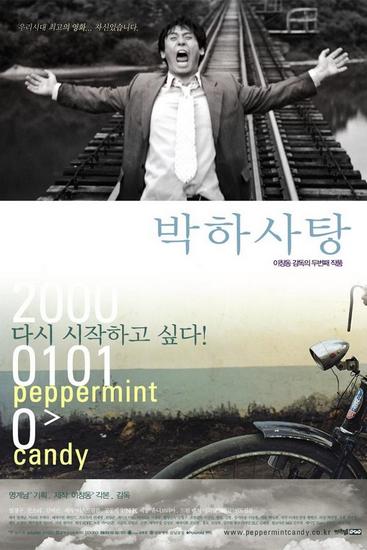
Kim Yeong-ho climbs atop the rail tracks, ready for death

Peppermint Candy (박하사탕) – ★★★★★

Peppermint Candy (박하사탕)

Peppermint Candy (박하사탕)

Peppermint Candy (박하사탕) is an exceptional piece of cinema. Opening the Busan International Film Festival in 1999, it must have been uncomfortably ironic for the audience that such a prestigious Asian festival would feature such a poetically raw dissemination of Korean culture. Directed by auteur Lee Chang-dong (이창동), the film critically examines a twenty year period of Korean history, revisiting pivotal moments through the main protagonist while also psychoanalytically deconstructing his – and by extension, Korean -masculinity. Peppermint Candy is a simply breathtaking exploration of how a person’s life is forged through culture and trauma and, featuring a staggering performance from Seol Kyeong-gu (설경구), is one of great examples of the vibrant socio-cultural power of Korean filmmaking.

In 1999, a man named Kim Yeong-ho (Seol Kyeong-gu) emerges by a riverside where a group of middle aged people are having a picnic. Interestingly, members of the group recognise Yeong-ho and invite him to join them but his erratic behaviour proves too much to bear. Leaving the picnic, Yeong-ho climbs onto train tracks with the intention of suicide, yet just before the train collides he screams, “I want to go back!” Suddenly Yeong-ho begins to revisit key moments from his life – and Korean history – that forged him into the person he has become, including meeting his estranged wife Yang Hong-ja (Kim Yeo-jin (김여진), his career as a police officer, and his first love Yoon Soon-im (Moon So-ri (문소리).

Kim Yeong-ho climbs atop the rail tracks, ready for death

Kim Yeong-ho climbs atop the rail tracks, ready for death

Director Lee Chang-dong has crafted an incredible journey through exploring the life of Yeong-ho, conveying his personal development as inherently tied to the development of Korea over a twenty year period. Initially, Yeong-ho is supremely dislikable and downright weird as he crashes the riverside picnic, behaving terribly towards people who are simply attempting to welcome him. Yet from the moment Yeon-ho steps onto the train tracks, it becomes clear there is a depth to his madness. Over the course of Peppermint Candy director Lee Chang-dong peels back layer upon layer of Yeong-ho’s psychosis in a highly poetic, subtle and symbolic manner, examining how a person’s innocence is twisted by culture and forces beyond control. The train track, for example, is much more than a place for suicide as it comes to represent his path of destiny. As the train moves back in time to revisit Yeong-ho’s past it becomes his timeline, stopping at pivotal moments until the symbolic sound of the train horn conveys that it is time to move on. As such the train and track are ethereal, spiritual beings within Peppermint Candy and are beautifully poignant narrative devices.

 As the train gently takes the audience deeper into Yeong-ho’s history, a great deal of empathy is aroused as his very character is stripped bare. From the initial quick judgement that Yeong-ho is an odd fool, each turning point in his life delicately alters the rash perception to the point where genuine sympathy is evoked from his personal tragedies. When his business suffers as a result of the Asian financial crisis, when his marriage begins to fall apart, when he loses his first love; all have penetrating emotional and psychological impact on Yeong-ho, and it is utterly enthralling to behold the events that molded him into his suicidal state. Director Lee Chang-dong also masterfully ties Yeong-ho’s increasingly fractured state as inherently Korean. As well as the aforementioned financial crisis, Yeong-ho’s career in the police force during the infamous brutality of the 1980s is portrayed, in addition to his role in the 1981 Gwangju Uprising (or rather, massacre).

Yeong-ho revisits his military past, in which he took part in the Gwangju massacre

Yeong-ho revisits his military past, in which he took part in the Gwangju massacre

In each instance, the director examines not only the manner in which Korean people were brutally oppressed during the era but also how men such as Yeong-ho, who is an analogy of all Korean men during this period, were fundamentally changed into abhorrent examples of humanity. Issues such as violence and patriarchal order are interrogated in compelling fashion and conveyed not as features of masculinity, but as cultural constructs that warp the innocence of young males.

Yeong-ho’s journey into the past is also enthralling due to the phenomenal performance of Seol Kyeong-gu. Throughout the entirety of Peppermint Candy the actor is superb in articulating the emotional and psychological state of Yeong-ho with incredible sincerity. From his unhinged suicidal behaviour through to his bitter and violent 30s, from his attempts to rebuild his life following military service through to his innocence as as student, Seol Kyeong-gu is simply amazing. His performance is keenly heartfelt at every stage of Yeong-ho’s life, so much so that his journey of self-discovery lingers long after the film has come to an end. His victories at the Grand Bell Awards and Blue Dragon Awards in 2000 attest to his prowess, and are completely deserved.

Yeong-ho and his first love Soon-im share a tender moment

Yeong-ho and his first love Soon-im share a tender moment

Verdict:

Peppermint Candy is undoubtedly one of the modern classics of Korean cinema, and is an exceptional entry by director Lee Chang-dong. The story is equal parts poetic and subtle as well as raw and compelling, as the emotional and psychological layers of main protagonist Yeong-ho are gradually peeled away. In doing so the director intricately examines the notions of contemporary Korean masculinity, yet it is made even more enthralling through the link with defining moments in Korean history. As such, Peppermint Candy is a journey both personal and national, and coupled with the phenomenal performance of Seol Kyeong-gu, is an absolute must-see.

★★★★★

Reviews
The students begin their road trip full of optimism

Sunshine Boys (1999, 면회) – ★★★☆☆

Sunshine Boys (1999, 면회)

Sunshine Boys (1999, 면회)

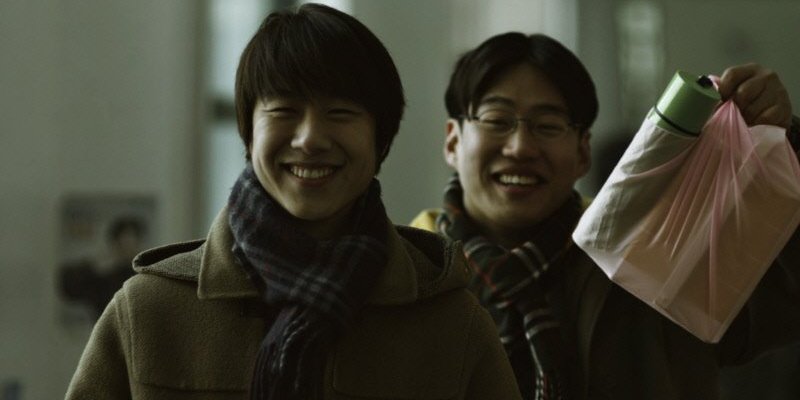
Debuting at the 2012 Busan International Film Festival, and invited to the 2013 Rotterdam International Film Festival for its international premiere, independent drama Sunshine Boys (1999, 면회) has already garnered noteworthy attention and acclaim. Helmed by director Kim Tae-gon (김태곤), the story follows Sang-won (Shim Hee-seop (심희섭) and Seung-joon (Ahn Jae-hong (안재홍) as they embark on a road trip to visit pal Min-wook (Kim Chang-hwan (김창환), who is currently serving  mandatory military service in Busan. As the three reunite for the first time since high school, they discover that events have changed them into quite different people than they remember. Learning about each other once more, the friends meet pretty tea house worker Mi-yeon (Kim Kkobbi (김꽃비) and the night unfolds in a different way than they planned.

The students begin their road trip full of optimism

The students begin their road trip full of optimism

Director Kim Tae-gon, who also co-wrote the screenplay with Jeon Go-woon, employs a social-realist aesthetic throughout the film that makes the encounters full of genuine tension and irony-fueled exchanges. The awkwardness between Sang-won and Seung-joon as they drive together is a mixture of comical and poignant as they attempt to rediscover each other, yet can only use their past as a basis. Similarly when Min-wook is reprimanded by a superior officer only slightly older than him, the results are uncomfortable yet humorous in the attempt to assert dominate masculinity amongst young men. Throughout, the director also employs filters that drain the color from the images, creating a bleak atmosphere that connotes the stage in which the threesome find themselves; victims of the Asian financial crisis of the late ’90s, all three friends are attempting to cope with their current situations that stand in stark contrast to the bright future promised from their days in high school.

Sang-won, Min-wook and Seung-joon learn about each other once again

Sang-won, Min-wook and Seung-joon learn about each other once again

As the emphasis is squarely placed on realism, it takes quite some time for the narrative to get moving, and for much of the opening Sunshine Boys is filled with awkward character moments rather than impetus. A catalyst does however arrive in the form of a letter from Min-wook’s girlfriend Esther stating her desire to break up, and who has charged Seung-joon with its delivery. Initially outraged, Sang-won and Seung-joon continually debate on whether they should hand over the letter and much of the story revolves around their indecision. Yet the film is very much Sang-won’s story as a shy and moderately gloomy university student who is forever changed by the events of the trip. The sullen young man hints at his problems without stating them outright, resulting in an often unemotional central protagonist but one that is easily relatable.

The real test for Sang-won arrives in the form of pretty tea house worker Mi-yeon, who invites him and his pals for a drink at her workplace. Director Kim Tae-gon does a great job of making the establishment foreboding with great use of lighting, isolating the tea house as disreputable, emphasizing the naivety of the young men who enter despite the warning signs. As they drink alcohol the protagonists loosen and they start to reveal more about their issues, granting greater insight into their insecurities and motivations. Yet it is Mi-yeon,wonderfully performed by Kim Kkobbi, that steals the limelight within Sunshine Boys as it is her character that provides compulsion for all involved with her suggestive smiles, probing questions and provocative body language. Mi-yeon is an intriguing character who is simultaneously innocent yet worldly-wise, attractive yet dangerous, and it is largely due to her that the film is so compelling.

The three friends meet pretty tea house worker Mi-yeon

The three friends meet pretty tea house worker Mi-yeon

Verdict:

Sunshine Boys is a highly interesting independent drama about three friends attempting to discover each other once again, after their lives have taken unexpected courses. Director Kim Tae-gon does a great job in featuring awkward, ironic moments in the lives of young men, which are granted extra potency with the application of social-realist aesthetics and drained color palette. The story does however take a very long time in establishing itself and as such the general sense of impetus suffers. Yet the wonderfully understated performance by Kim Kkobbi as Mi-yeon puts Sunshine Boys back on track, making the film an interesting journey of maturation.

★★★☆☆

Reviews
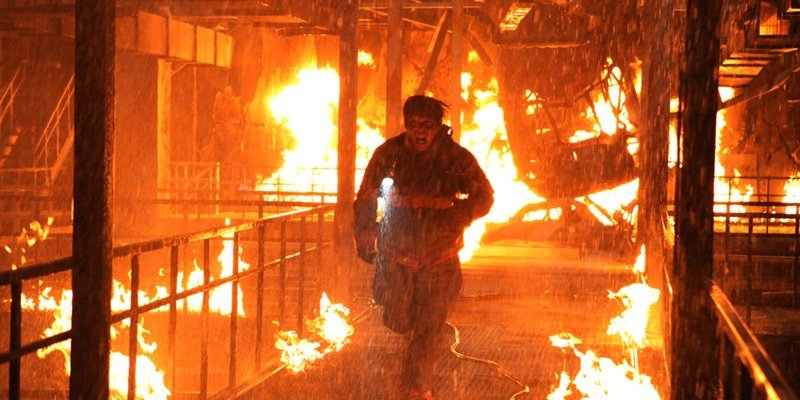
Firefighter captain Kang Yeong-gi races to battle the blaze

The Tower (타워) – ★★★☆☆

The Tower (타워)

The Tower (타워)

Director Kim Ji-hoon (김지훈) has a lot riding on disaster film The Tower (타워). His last film, sci-fi monster movie Sector 7, was reviled by critics and audiences alike and became one of the worst flops in Korean cinematic history (although it went on to secure the highest gross for a Korean film in neighbouring China). As such, questions involving his next project The Tower lingered. Had director Kim Ji-hoon managed to develop his visual aesthetics, and more complex characters and plots, into a more convincing, compelling film? The answer is, perhaps unsurprisingly, yes and no.

The Tower undoubtedly boasts some of the most impressive visual effects work ever produce within a Korean film, to the extent that it’s comparable with Hollywood productions. The sets and the stunt work are genuinely enthralling, combining to produce edge-of-the-seat sequences that are incredibly engaging and convey a palpable sense of realism and danger. That said, the movie only contains an emotional core due to the performance of Seol Kyeong-gu (설경구) as firefighter captain Kang Yeong-gi as the vast majority of protagonists are one-dimensional stereotypes, while the actors that portray them overact to an almost ludicrous degree.

It’s Christmas Eve in Seoul, and that means only one thing for the luxurious Sky Tower buildings – an exclusive Christmas party amongst the social elite of the country. Overseeing the operations are operations manager Lee Dae-ho (Kim Sang-kyeong (김상경), and the object of his affections catering manager Seo Yoon-hee (Son Ye-jin (손예진), who become closer as the deadline approaches. As the party grows nearer safety concerns begin to amount, yet are disregarded with plans forced through by the rich and powerful. When helicopters begin to circle the buildings creating a snow effect, the high winds force one of the choppers into a tower causing a fiery explosion and cutting off all exits for the patrons. Springing into action, firefighter Captain Kang Yeong-gi (Seol Kyeong-gu (설경구) leads his men, including joker Byeong-man (Kim In-kwon (김인권) and rookie Lee Seon-woo (Do Ji-han (도지한), into the building to hunt for survivors.

One of the towers is set ablaze from a heicopter crash

One of the towers is set ablaze from a helicopter crash

Taking huge reference from 1974’s The Towering Inferno as well as the 9/11 twin tower attacks, director Kim Ji-hoon’s The Tower is an exciting and exhilarating experience. Post-production on the disaster film has taken around two years to complete and it shows; the explosions, destruction, and stunts are convincing throughout as fires rage and people die in tragic and horrifying fashion. The film undoubtedly sets a new standard of quality in Korean cinema for special effects prowess, as helicopters collide, concrete fractures underfoot, and fire engulfs everything in its path. Interestingly, the cause of the disaster is akin to Titanic in that the sheer arrogance of those who dwell in Tower Sky, continually referring to their location as ‘heaven’ and close to God, are conveyed as the symbolic perpetrators of the destruction, adding something of a morality play to the devastation.

Yet the visual aesthetics are nothing without an emotional core, and in this respect The Tower somewhat succeeds. The introduction of the various protagonists working and dwelling within Tower Sky is a highly mixed affair, generally featuring stereotypes. Interesting members such as operations manager Lee Dae-ho and daughter Ha-na, and catering manager Lee Yoon-hee, are compelling but receive little character development due to unimportant tertiary characters entering the narrative that have no real impact. Also, the extreme overacting by most of the cast is an enormous irritation, notably Kim Seong-oh (김성오) as chef In-geon who is intended as comic relief but is infuriating throughout. The saving grace of The Tower comes in the form of firefighter Captain Kang Yeong-ri, who provides much needed heart and soul to the rescue attempt as he gallantly battles blazes, disintegrating floors, and corrupt officials in his single-minded quest to get the survivors to safety. Wonderfully performed by actor Seol Kyeong-gu, the captain’s mission is the driving force of the film and is genuinely enthralling to watch, with his sense of duty and responsibility simultaneously sincere and poignant.

Firefighter captain Kang Yeong-gi races to battle the blaze

Firefighter captain Kang Yeong-gi races to battle the blaze

Captain Kang Yeong-ri is also joined by the humorous Byeong-man and newbie Lee Seon-woo in the search for survivors. Byeong-man provides comic relief, generally in the form of silly frivolity, which is mildly amusing in breaking up serious scenes. Lee Seon-woo however is one of the more intriguing characters, as he undergoes a transformation from reluctant rookie to employing skills learnt from Captain Kang, and his development is highly enjoyable. The three fire fighters routinely feature in very impressive stunt work throughout the film, and their successes and failures do not fail to induce an adrenaline rush.

Operations manager Lee Dae-ho also partakes in stunts, as the ‘everyman’ forced to find courage to protect his makeshift family. Such scenes are also entertaining, although they often push the suspense of disbelief to its limits, yet are engaging nonetheless. Unfortunately due to the vast number of supporting roles, Lee Dae-ho’s burgeoning relationship with Seo Yoon-hee is largely overlooked, begging the question why such talented big name stars as Kim Sang-kyeong and Son Ye-jin receive so little screen time. However, despite being underdeveloped their relationship does provide impetus to certain scenes as well as some tender moments.

Those remaining desperately fight for survival

Those remaining desperately fight for survival

Verdict:

The Tower is an extremely visually impressive disaster film, and a return to form for director Kim Ji-hoon. The special effects and stunt work are some of the best ever produced within a Korean film, and certainly on par with Hollywood films of a similar ilk, conveying a genuine sense of danger throughout. That said, the vast number of stereotypical supporting roles bog the story down resulting in an overall lack of character development and audience investment. Lucky then that Seol Kyeong-gu enters the fray as Captain Kang Yeong-ri, who single-handedly lifts the film into a compelling and emotional story, making The Tower an enjoyable entry into the genre.

★★★☆☆

Reviews
Gyeong-sun and Su-jin attempt to flee from Dok-bul

No Blood No Tears (피도 눈물도 없이) – ★★★☆☆

No Blood No Tears (피도 눈물도 없이)

No Blood No Tears (피도 눈물도 없이)

It goes without saying that the films of Quentin Tarantino have left an indelible impression on the cinematic landscape. This is especially the case with Pulp Fiction, whereby the amalgamation of extreme violence, pop culture, and variety of narrative threads have invited a host of admirers and homages. Director Ryoo Seung-wan (류승완) fits both areas, consistently expressing similar themes throughout his body of work albeit with his own Korean flair. Indeed, his nickname as ‘the Korean Tarantino’ is not entirely undeserved.

No Blood No Tears (피도 눈물도 없이), director Ryoo Seung-wan’s second feature, has clearly taken gangster films such as Pulp Fiction and Snatch as huge sources of inspiration, featuring a multi-strand narrative with an assortment of colorful low lives and gangsters seeking the perfect score. Being a Korean production, there is also a great deal of Confucian ideals and martial arts added to the mix for good measure. It’s a largely enjoyable ensemble piece featuring some wonderful character actors, yet the disparate narratives never coalesce convincingly, in addition to the vast number of protagonists, tonal imbalances, and blatant misogyny that permeates throughout the story.

Gyung-sun (Lee Hye-yeong, 이혜영), a down-on-her-luck taxi driver, is continually harassed by loan sharks seeking debt collection and the police for her criminal past. While attempting to forge a life for herself despite awful passengers, her taxi is hit by Su-jin (Jeon Do-yeon, 전도연) who is on the run from her violent boyfriend Dok-bul (Jeong Jae-yeong, 정재영). A former boxing champion, Dok-bul works for the aging local kingpin KGB, or Kim Geun-bok (Sin Goo, 신구) whose power base is unchallengeable particularly while flanked by martial arts master the Silent Man (Jeong Doo-hong, 정두홍). Unknown to KGB however, is that everyone around him is conspiring to steal his fortune, even local karaoke worker Chae Min-su (Ryoo Seung-beom, 류승범).

Gyeong-sun has trouble with loan sharks and the police

Gyeong-sun has trouble with loan sharks and the police

One of the great strengths of No Blood No Tears is the gritty, violence-fueled world of Incheon inhabited by the array of gangsters and charlatans. The aesthetics employed by director Ryoo Seung-wan, such as the wonderful use of low key lighting, convey an urban landscape fraught with danger and violence, while the dilapidated arenas in which confrontations occur lends a disturbing sense of realism to the proceedings. Within this world are a vast number of protagonists, each with their own foibles and agendas, all connected with one another through various relationships and each strand unfolds in a thoroughly entertaining manner. As such comparisons with Pulp Fiction are inevitable, particularly as director Ryoo Seung-wan uses similar non-linear editing techniques in which to orchestrate events, although he later succumbs to traditional linear storytelling. Unfortunately however, with so many characters the director doesn’t manage to balance the vast number of plot threads and therefore underdevelopment of key personnel is a profound issue throughout the film. This is acutely the case with indebted taxi driver Gyeong-sun and wannabe pop starlet Su-jin, who are the masterminds behind the heist but are forced to the sidelines while focus is granted to the male roles. The intention is clearly a Thelma and Louise style narrative whereby two unlikely women join forces to take on a male-dominated world, yet as well as lack of development the film contains some frankly awful misogyny as Gyeong-sun and Su-jin are repeatedly beaten to an absurd degree by the men around them.

Stylised violence is one of director Ryoo Seung-wan’s greatest assets, and when not used to abuse the female characters, it is a genuine delight. Of particular note is the confrontation between retired boxer Dok-bul and the Silent Man, which features some lightning fast and bone crunching moves made all the more powerful through utilizing the gritty realism of Incheon’s underworld. The blood, sweat, and deft use of light and shadow are exhilarating to behold as the men fight for their lives – and their stake of the money – within the battleground of a dog fighting cage, and is a testament to the director’s skill and flair for action sequences.

KGB gives orders to Dok-bul, while flanked by the Silent Man

KGB gives orders to Dok-bul, while flanked by the Silent Man

The violence is also accompanied by a healthy dose of black comedy through humorous use of bad language and bizarre confrontations between the eccentric characters. While not as sophisticated as the films which inspired it, the comedy within No Blood No Tears is still highly enjoyable. A large amount of humor is left to the director’s brother, Ryoo Seung-beom, as dim-witted karaoke worker Chae Min-su. Unfortunately this tends to be slapstick in nature, although there are laugh-out-loud moments to be had. Most of the comedy appears through the double-crosses and surprise encounters as everyone attempts to outsmart each other and disappear with the money, and the quick pace as events unfold is entertaining. It is, however, difficult to be fully invested in the antics as Gyeong-sun and Su-jin tend to have little involvement in the robbery despite their central roles in the film, while villainous thug Dok-bul seems to emerge as an anti-hero of sorts, only for things to later reverse in an attempt to wrap all the narrative threads up nicely. As such, while certainly enjoyable, the finale is lacking in compulsion making the film somewhat hollow and bittersweet as the credits begin to role.

Gyeong-sun and Su-ji attempt to flee from Dok-bul

Gyeong-sun and Su-jin attempt to flee from Dok-bul

Verdict:

No Blood No Tears is a gritty, urban tale of gangsters and charlatans in a Korea-meets-Pulp Fiction style. Director Ryoo Seung-wan has crafted a world of danger and violence with expert use of lighting and environments, while his trademark of stylized action is exhilarating to behold. Yet the unbalanced narrative and lack of character development due to the enormous cast results in a lack of investment, particularly with the central female roles, who suffer from awful misogynistic abuse throughout the film. No Blood No Tears is ultimately an enjoyable, though uneven, gangster romp.

★★★☆☆

Reviews