Who is the mysterious new tenant?

You Are My Vampire (그댄 나의 뱀파이어) – ★★☆☆☆

You Are My Vampire (그댄 나의 뱀파이어)

You Are My Vampire (그댄 나의 뱀파이어)

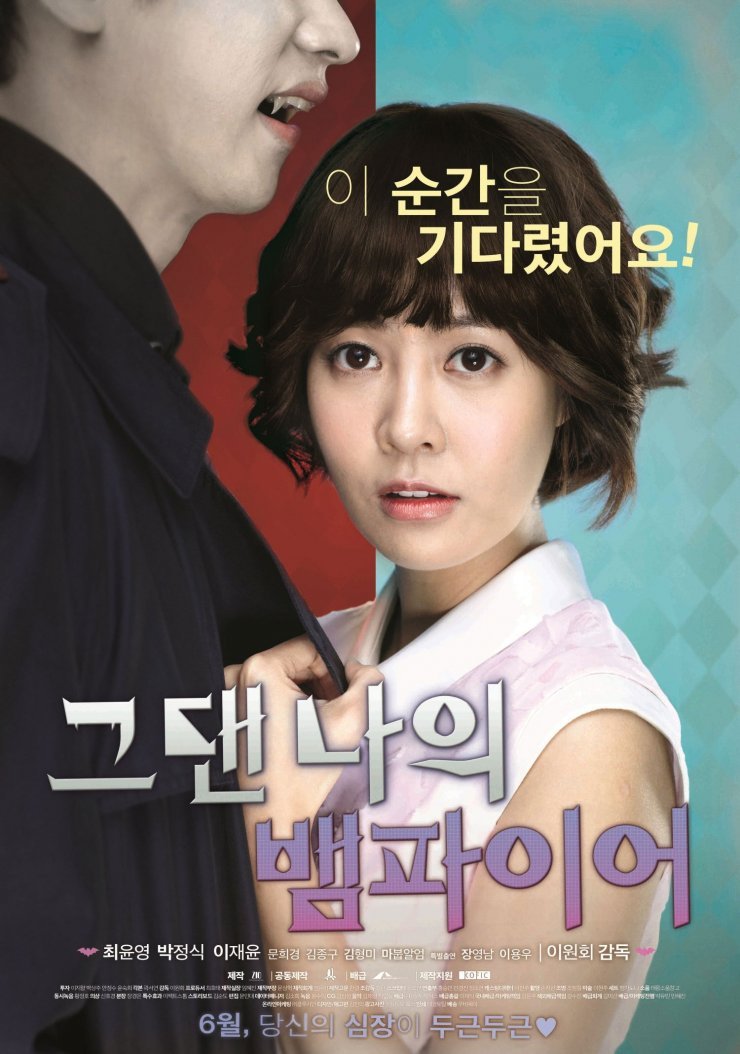
Struggling screenwriter Nam Gyu-jeong (Choi Yoon-yeong (최윤영) has multiple dilemmas to contend with. She has a huge crush on her best friend’s boyfriend, the local police officer; her divorced parents are both behaving mysteriously; her laptop has died and she cant afford to replace it; and a disquieting, black-clad new tenant has begun staying in her father’s building. As Gyu-jeong begins researching for her next project involving a vampiric protagonist, she becomes convinced that the enigmatic stranger known as Gang Nam-girl (Park Jeong-sik (박정식) is also a bloodsucker due to his aversion to sunlight and distaste for garlic…or he could be just plain weird. As Gyu-jeong seeks the truth about Nam-girl and the assortment of people in her life, the comical situations that arise help her to discover the path of love is often far from smooth.

Who is the mysterious new tenant?

Who is the mysterious new tenant?

You Are My Vampire (그댄 나의 뱀파이어) is a quirky romantic comedy that is unfortunately lacking in both areas. The comedic scenes that emerge throughout the course of the film are entertaining enough to be smile inducing – for example the mystery man’s name is Gang Nam-girl (Gangnam girl) – yet rarely offers more, while the burgeoning romance between Gyu-jeong and her ‘vampire’ is forced to the point of being contrived. The reason for this ultimately belongs to array of supporting characters who number far too many, and director Lee Won-hoi’s (이원회) desire to give each of them a narrative arc forces You Are My Vampire into a film comprised of a series of vignettes rather than a compelling whole with a strong emotional core. The rom-com does display hints of the madcap narrative devices that made How to Use Guys With Secret Tips such a thrill, but unfortunately they never extend into something provoking the same kind of enjoyment.

Gyu-jeong wears quirky clothes while selling side dishes to get Nam-girl's attention and discover his secrets

Gyu-jeong wears quirky clothes while selling side dishes to get Nam-girl’s attention and discover his secrets

While the comedy tends to prompt titters rather than laughs, You Are My Vampire also offers some stimulating social issues through the supporting cast. Gyu-jeong’s parents are divorced yet remain friends, and the jokes that arise between the three of them are refreshing compared to traditional Korean rom-com fare. Similarly Gyu-jeong’s crush on her best friend’s boyfriend and the resulting dilemmas are conveyed without the pretense and melodrama inherent in other stories, while Nam-girl’s sad history and the storyline involving Bangladeshi friend Mabub are welcome. However, Mabub is also the victim of a racially offensive joke regarding his armpit odor, which is uncalled for and very disappointing. As the comedy gently continues, You Are My Vampire falls into the trap that often blights Korean rom-coms by incorporating a heavy dose of melodrama to force narrative closure. It’s an unnecessary addition, but luckily director Lee quickly moves focus back to the central couple and their unconventional attraction to each other.

WIth all the mysteries going on, can Gyu-jeong and Nam-girl get it together?

WIth all the mysteries going on, can Gyu-jeong and Nam-girl get it together?

You Are My Vampire (그댄 나의 뱀파이어) attempts to capitalise on contemporary culture’s fascination with supernatural love stories, by offering a decidedly quirky rom-com between a struggling screenwriter and man who displays all the hallmarks of vampirism. Director Lee Won-hoi (이원회) employs quite gentle comedy throughout that provokes sniggers rather than laughs, while the over-abundant supporting cast force the film into a series of vignettes rather than a compelling whole. While the approach to social issues is refreshing, the contrivances and lack of strong emotional core make the rom-com a mildly entertaining experience.

★★☆☆☆

Festival News Jeonju International Film Festival (제15회 전주국제영화제) Korean Festivals 2014 Reviews
Sookhee (숙희)

Sookhee (숙희) – ★★☆☆☆

Sookhee (숙희)

Sookhee (숙희)

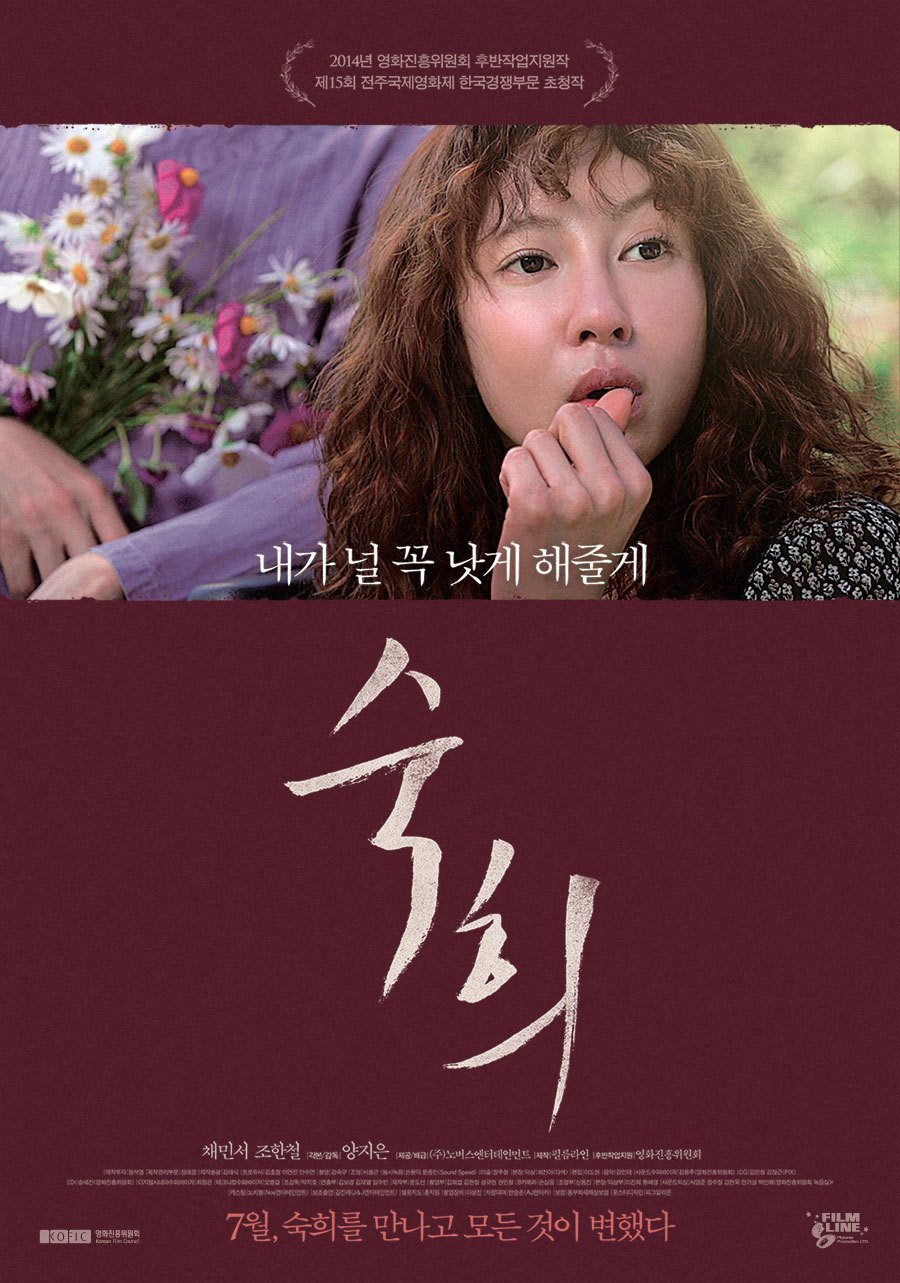
When highly-conservative philosophy professor Yoon (Jo Han-cheol (조한철) suffers a stroke due to overwork and stress, his wife does the best she can to nurse him back to health. Yet when she cannot cope any longer, she enlists the help of quirky caregiver Sookhee (Chae Min-seo (채민서), whose patients all seem to remarkably recover. Sookhee, however, is more than she seems and her techniques vary from kind and sweet to threatening and sexual.

Sookhee (숙희)

Sookhee is a free spirit

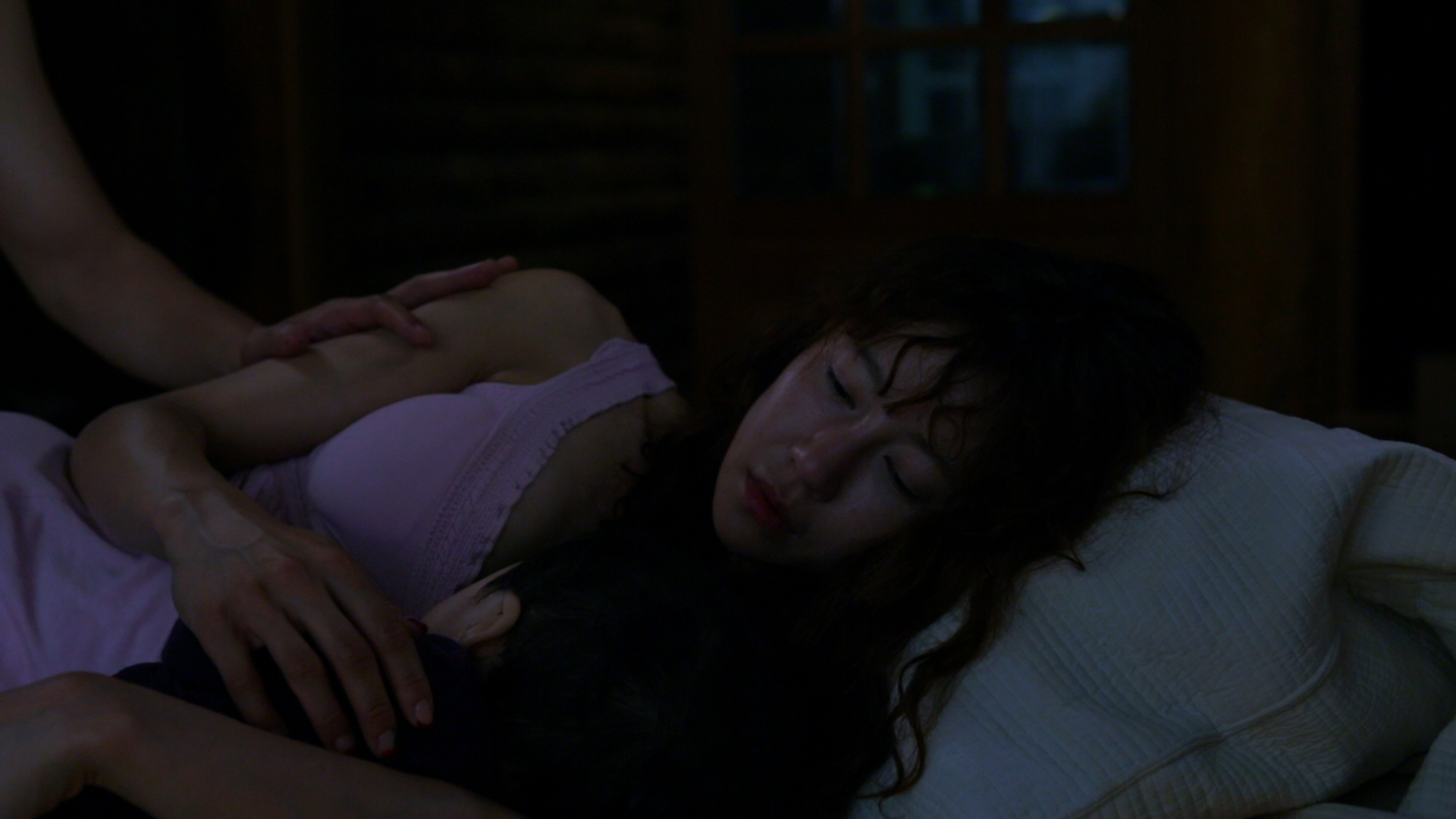
Imagine Mary Poppins as a sexually charged sociopath who take care of conservative, misogynistic stroke sufferers. That is quite possibly the most apt description of Sookhee (숙희), a bizarre film with a huge identity crisis and a large undercurrent of meanness. The mish-mash of an array of generic conventions, as well as Sookhee’s constantly schizophrenic characterisation, make the story an incredibly surreal experience. Writer/director Yang Ji-eun (양지은) doesn’t appear to be sure what kind of film she wants to helm, as the narrative – and characters – veer in all directions without really exploring any. Ironically this is both compelling as well as frustrating, as the odd machinations consistently surprise. Yet beneath all the bizarre goings-on is an ordinate amount of unwarranted, appalling misogyny. Masculine fantasies frequently arise and typically instigate violence. Throughout the film Sookhee is routinely beaten and sexually assaulted by the men in her life adding an acutely nasty dimension to an otherwise jovial film, which is all the more surprising given that director Yang is one of the few female filmmakers presenting her work at JIFF 2014. Sookhee perpetuates the archaic ideology that free-spirited women need to be tamed and dominated by violence and sex.

Sookhee is the victim of an inordinate amount of misogyny

Sookhee is the victim of an inordinate amount of misogyny

What director Yang does well lies in her use of colour. Scenes featuring Sookhee are beautifully vibrant and sumptuous, often featured in the countryside far from the realm of men, conveying her liberation from patriarchy alongside pagan, or wiccan, sensibilities. Professor Yoon, in contrast, is located within an absence of colour. The washed-out palette wonderfully conveys his conservatism and strict adherence to the rules of men, bolstered by the repetition of academic and religious iconography. As Sookhee enters Yoon’s world and ‘educates’ him through her odd mix of fear and sexual liberation, his world gradually becomes more colourful as he heals. Yet therein also lies problems, as Yoon’s trajectory is more of a vapid devolution than one of enlightenment. Director Yang is attempting to explore Oedipal issues and gender roles through Sookhee’s maternal and Yoon’s infantile roles, and by reversing old-fashioned patriarchal positions of power and sex. However the message is lost beneath the deluge of oddities and mean-spirited misogyny, alongside the unintentionally humourous overacting.

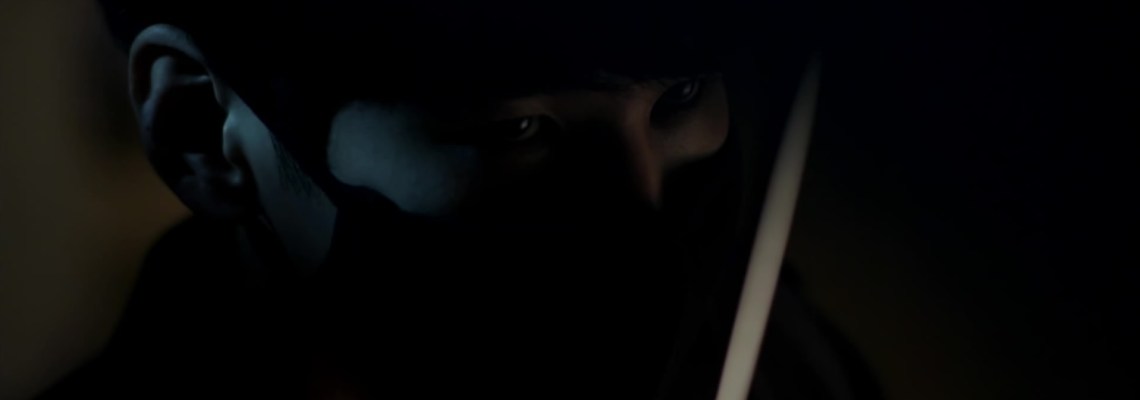
Sookhee's former patients seek to 'tame' her through sexual violence

Sookhee’s former patients seek to ‘tame’ her through sexual violence

Verdict:

Sookhee is a peculiar film about a free-spirited caregiver who helps stroke sufferers through a bizarre mix of fear and sex. The tone and themes within the surreal film spiral wildly throughout, creating a huge identity crisis from beginning to end while the undercurrent of needless misogyny casts a dark shadow over proceedings. Writer/director Yang Ji-eun does well in employing colour to convey the sensibilities of the two central protagonists, yet the messages regarding reversal of patriarchal relationship and sexual roles are subsumed beneath utter oddity and meanness.

★★☆☆☆

Festival News Jeonju International Film Festival (제15회 전주국제영화제) Korean Festivals 2014 Reviews