The hysterical mother severs her son's penis, sparking a chain of events

Moebius (뫼비우스) – ★★★☆☆

Moebius (뫼비우스)

Moebius (뫼비우스)

The controversy that continually surrounds director Kim Ki-duk (김기덕) ultimately stems from his consistent explorations into the nature of sexuality, and the misogynistic representations that arise through them. Director Kim is clearly aware how such explicit sexual debates generate audience interest, as with each subsequent film he seemingly seeks to outdo himself by exploring ever-darker – and for many, disturbing – areas of desire and pleasure.

Incest appears to be director Kim’s current interest as, following on from his acclaimed and award-winning Pieta, comes Moebius (뫼비우스). Featuring zero dialogue, the film is an extremely literal Freudian interpretation of sexuality within the family unit. The story is interesting but far from subtle as the Oedipus complex, female hysteria and phallus appropriation is viscerally reenacted. Ultimately Kim’s film is intriguing to watch, yet Moebius lacks the depth and finesse of his prior work.

Pushed to breaking point by her husband’s (Jo Jae-hyeon (조재현) infidelity, the mother (Lee Eun-woo (이은우) arms herself with a knife and attempts to sever his penis while he sleeps. Foiled in her attempt, the mother then decides to punish their son (Seo Yeong-joo (서영주) instead, cutting off the boy’s manhood. After the mother runs away in shame, the father and son attempt to rebuild their lives and learn to experience pleasure through pain. However when the mother returns, their lives become increasingly fraught.

The hysterical mother severs her son's penis, sparking a chain of events

The hysterical mother severs her son’s penis, sparking a chain of events

Director Kim has never been most subtle of filmmakers, yet his work often contains interesting symbolism that alludes to the depth of his characters and/or the socio-cultural issues he explores. With Moebius, however, such sensibilities take somewhat of a back seat as Freudian theories are quite literally recreated on screen. This is acutely ironic as Freud’s work is often rooted within symbolic moments of everyday life, notably in this case the Oedipus complex and castration anxiety, yet director Kim seems unconcerned with such motifs and instead directs the actors to perform the frameworks physically. The result is a mixture of intrigue and horror, as ‘the monstrous castrating mother’ fulfills the promise of her title, while the themes of incest associated with the Oedipus complex become increasingly explicit. It’s thoroughly interesting to see Freud’s theories play out, however the absurdity of it all can occasionally be cringe inducing, or worse, comical.

Father and son become close through sadism

Father and son become close through sadism

Roles with no dialogue are challenging at best, but with scenes such as the ones in Moebius it must undoubtedly be extremely arduous. Luckily all three principle actors perform convincingly. Lee Eun-woo is exceptional in her joint roles as an hysterical mother as well as a convenience store clerk. As the mother Lee Eun-woo conveys a powerful raw intensity that is simultaneously frightening yet attractive, while her vulnerability  and inner strength as the clerk is touching. Teenager Seo Yeong-joo also performs admirably as the son who experiences horrific trauma. At 15 years old the role is quite a shocking one given the explicit scenes in which he is required, yet he does very well particularly when conveying the pleasure and pain from sadist acts.
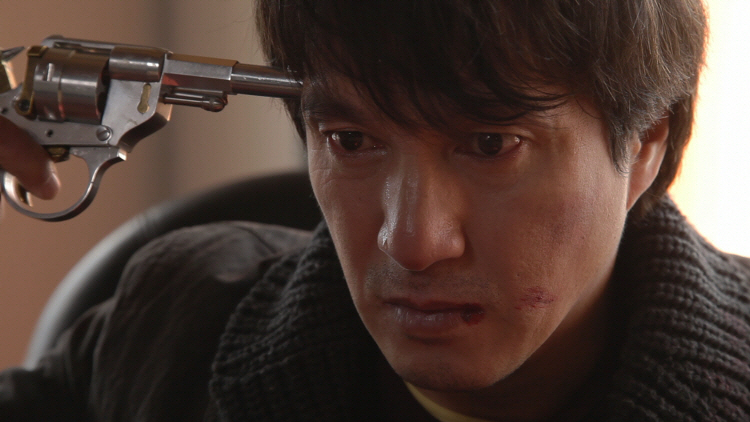
Phallic appropriation abounds as the Oedpius complex plays out

Phallic appropriation abounds as the Oedpius complex plays out

Moebius (뫼비우스) is yet another powerful and disturbing exploration of sexuality from director Kim Ki-duk. In quite literally – and explicitly – interpreting Freudian theories on screen, director Kim has crafted a very interesting film yet due to the far from unsubtle adaptation the absurdity of it all can often be cringeworthy and/or comical. Lee Eun-woo is undoubtedly the breakout star of the film as she performs with incredibly intensity throughout as the monstrous jealous mother. Moebius is not for the faint-hearted.

★★★☆☆
Reviews
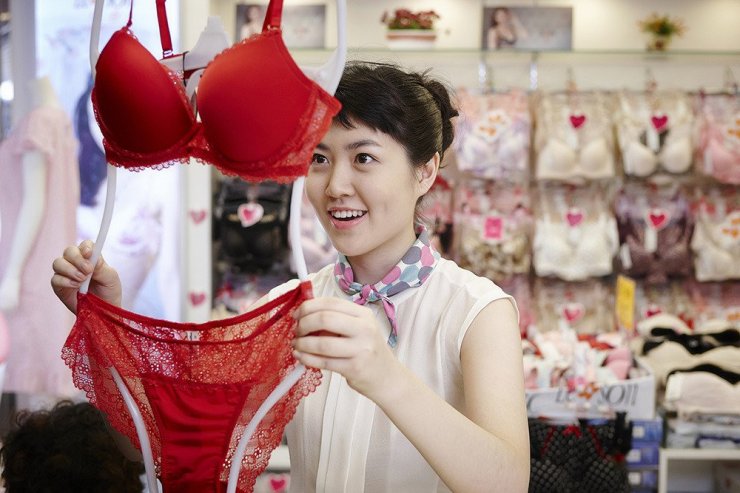
Mal-soon embraces her youth as Doo-ri, and lots of body comedy ensues

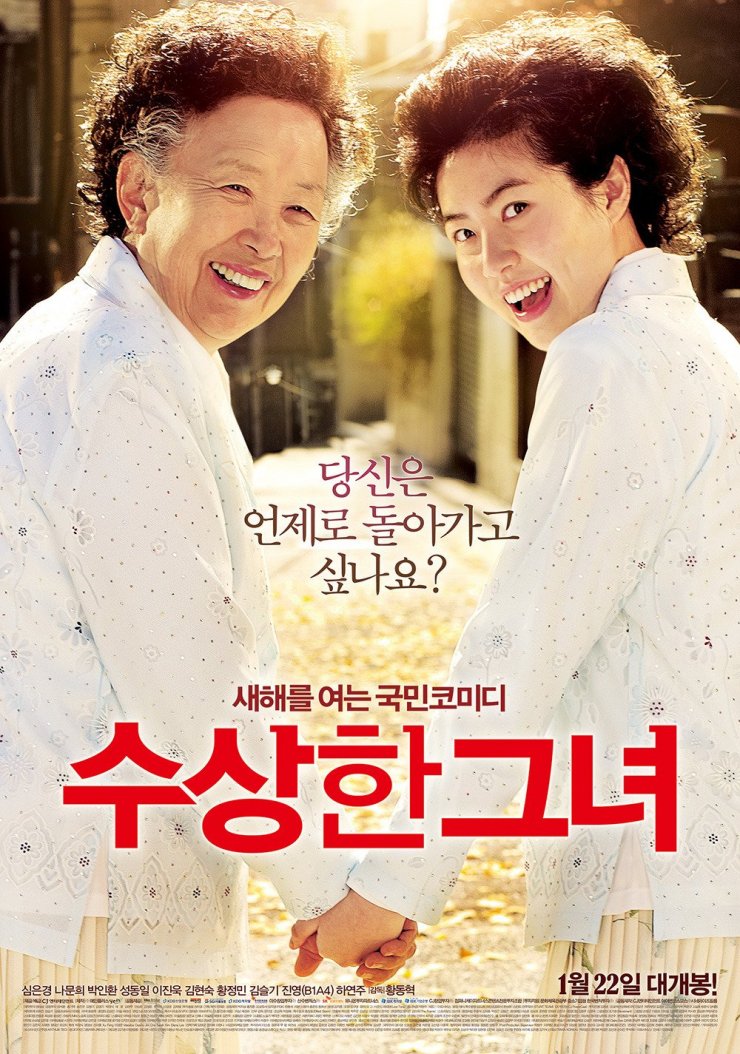
Miss Granny (수상한 그녀) – ★★★☆☆

Miss Granny (수상한 그녀)

Miss Granny (수상한 그녀)

With the Lunar New Year approaching, comedy Miss Granny (수상한 그녀) attempts to take advantage of the holiday season by poking fun at the modern Korean family unit. Occasionally uplifting and humourous  yet very much by the numbers, Miss Granny attempts to appeal to the broadest possible audience and as such combines a host of genres and cliches throughout its predictable narrative. Surprisingly however it all gels together quite well and, thanks largely to actress Sim Eun-kyeong, Miss Granny is light-hearted and mildly entertaining throughout.

Cantankerous granny Oh Mal-soon (Nah Moon-hee (나문희)) is an extremely stubborn and strong-willed old lady, still managing to get involved in fights despite her age. Yet the stress Mal-soon invokes upon her family puts her long-suffering daughter-in-law in hospital, and discussions arise as to whether a care home would be the best course of action. Depressed, Mal-soon visits a photography studio in an attempt to feel younger, but upon leaving the store she discovers she has miraculously de-aged. Taking on the new name of Oh Doo-ri (Sim Eun-kyeong (심은경)), Mal-soon runs away from home and begins to establish herself as a singer while her family and friends frantically search for the missing pensioner.

Strong-willed Mal-soon works in a coffee shop where she still gets in trouble

Strong-willed Mal-soon works in a coffee shop where she still gets in trouble

Miss Granny has been written very much for Korean audiences, and the comedy derives from sending up stereotypes associated with the elderly within the country. As the jokes are so culturally specific, Koreans (arguably together with Chinese and Japanese audiences) as well as those familiar with Korean culture will find the jokes quite amusing, but for others the humour could well be lost on them as Mal-soon blusters her way through a variety of comical situations.

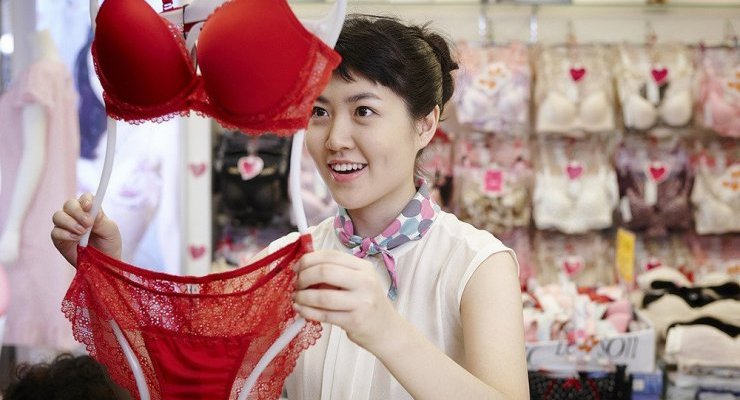
The strength of the film lies in the tongue-in-cheek fashion of poking fun of the elderly. Korean grandmothers are well-known for their incredibly strong characters and straight-talking approach and director Hwang Dong-hyeok (황동혁) does well in creating laughs without being detrimental towards his central characters. The real comedy comes after the transformation however, as the 20 year old Oh Doo-ri continues to use her dominating personality when, according to Korean culture, younger generations should be much more humble. Scenes in which Doo-ri scolds a mother for having poor breast milk and talks opening about sexual matters are entertaining as she boldly confronts modern life. As these examples indicate, Miss Granny fully embraces slapstick and body-comedy for laughs, and fans of this style will find much to enjoy.

Mal-soon embraces her youth as Doo-ri, and lots of body comedy ensues

Mal-soon embraces her youth as Doo-ri, and lots of body comedy ensues

 However, Miss Granny recycles everything audiences have seen dozens of times before. The film is incredibly similar to 200 Pounds Beauty – simply exchanging ‘obese’ with ‘elderly’ – with the cliches and predictability creating a simple and mild slice of entertainment. In doing so the story has mixed messages as it seeks to bypass elderly and female stereotypes yet wholly conforms to them, while the issues regarding what exactly is age-appropriate gets lost along the way. Furthermore, the use of the musical reality TV show as a way for the characters to achieve fame and find passion is ridiculously tiresome at this stage, and  doesn’t really add to the underlying theme as it did with 200 Pounds Beauty.

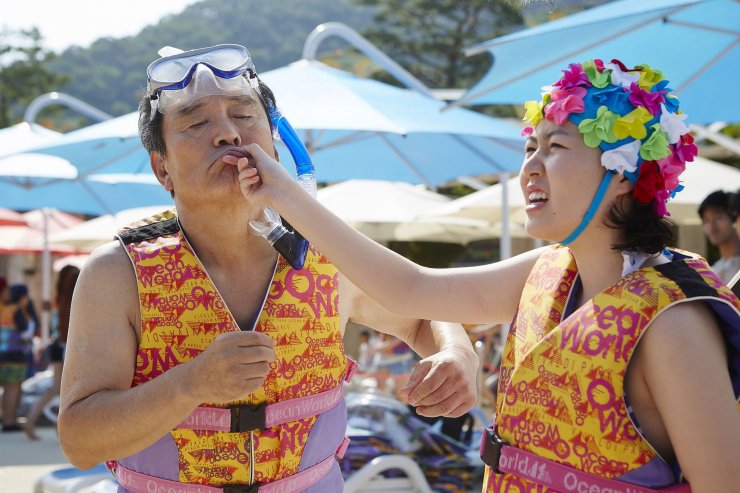
The attempt to keep the comedy rolling also highlights the haphazard structure within the film, as Miss Granny generally moves from set piece to set piece, most jarringly when everyone suddenly appears in a water park for no apparent reason. Indeed, so many set-pieces, locations and supporting characters are juggled to mine as much out of the fantastical situation that the running time reaches roughly two hours, which is far far too long. Ironically however the best laugh is saved until last, which film and TV fans will undoubtedly enjoy.

As is often the case with Korean comedies such as these, Miss Granny employs a healthy dose of melodrama in attempting to entice audiences of all ages. Interestingly it works quite well within the context of the story, as montages of Mal-soon’s extremely difficulty life conveys not only Korea’s troubled past but also explains why the elderly are often so cantankerous. These scenes are unfortunately fleeting but poignant while they last.

Set pieces, such as a visit to a water park, provide laughs

Set pieces, such as a visit to a water park, provide laughs

Miss Granny (수상한 그녀) is a light-hearted and mild family comedy, one which pokes fun at the elderly in Korea in a fun, tongue-in-cheek fashion. Ultimately enjoyment of the film will depend on audience knowledge and experience of the elderly in Korea, as the humour mainly derives from stereotypes, slapstick and body comedy. The story is incredibly cliched and predictable although it gels together well, while the additional melodrama is fleeting but poignant while it lasts. 

★★★☆☆

Reviews
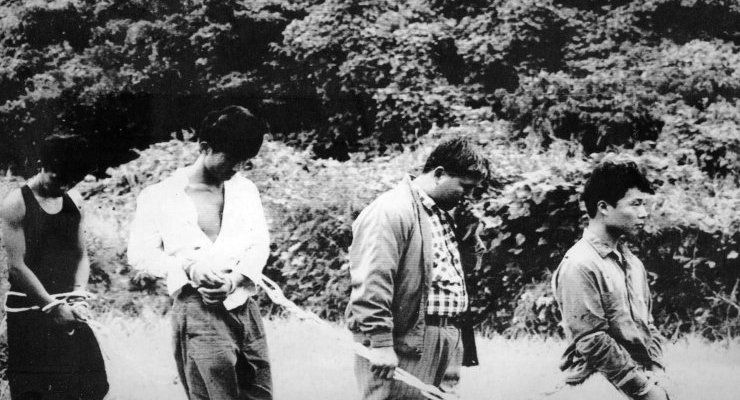
The Jijon-pa clan shcked the nation with their killing spree and lack of remorse

Non-Fiction Diary (논픽션 다이어리) – ★★★★☆

Non-Fiction Diary (논픽션 다이어리)

Non-Fiction Diary (논픽션 다이어리)

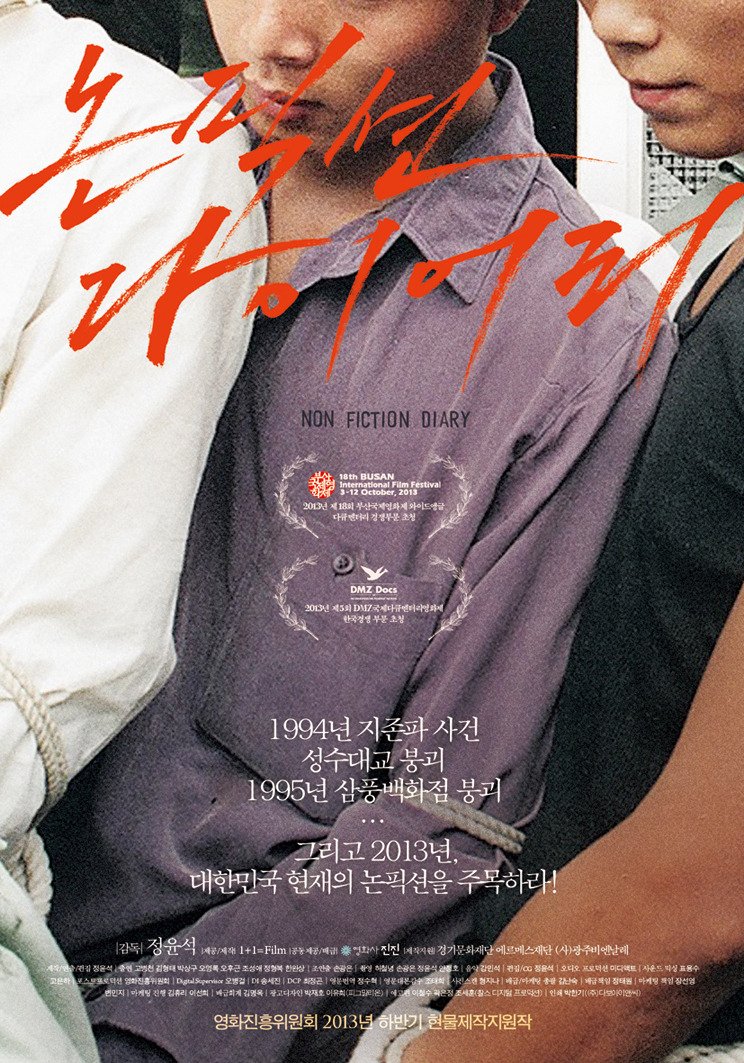
Director Jung Yoon-suk (정윤석) explores the terrible tragedies that occurred in Korea during the 1990s in his gripping and poignant documentary Non-Fiction Diary (논픽션 다이어리). Rather than a run-of-the-mill history film, director Jung has crafted an incredible exploration of the era that examines the role of crime and punishment in Korea, and the disturbing ironies that lie within.

His research takes the audience through some extremely controversial issues that range from the upper to the lower echelons of society, and it’s to Jung’s credit that he pulls no punches when exploring the roles of the politics, media and religion in doing so. In tying seemingly unrelated crimes together, Non-Fiction Diary is an insightful and inspiring documentary that alludes to the corruption in society without becoming a propaganda piece. As such the film is enlightening for both Korean and non-Korean audiences alike, and with receiving the Mecenat award at the Busan Film Festival and invitations to Berlinale amongst many others, Non-Fiction Diary is winning over audiences and critics with its powerful and provocative approach.

The Jijon-pa clan shcked the nation with their killing spree and lack of remorse

The Jijon-pa clan shcked the nation with their killing spree and lack of remorse

Non-Fiction Diary begins by exploring the case of the Jijon-pa clan in 1994, a group of countryside youths who were so frustrated and angry at Korea’s rapid embrace of neo-capitalism and the unbalanced affluence of citizens that they became serial killers. Their shocking crimes of kidnap, murder and cannibalism were compounded by their clear lack of remorse. The case itself initially appears relatively straightforward, yet director Jung instead chooses to focus on the national hysteria that gripped the nation. Simultaneously frightening, hilarious and absurd, the newsreels, talk shows and interviews that are compiled are incredibly revealing about 1990s Korean culture and the turbulent ideology of the era. Wisely steering clear of turning the documentary into a propaganda piece, the fascinating and provocative images and clips shown are genuine and convey the fear and paranoia towards young people at the time.

The real masterstroke of Non-Fiction Diary are the interviews with the police officers who worked on the case, as well as the prison warden who over-saw the clan’s incarceration. Their frank and honest discussions about the crime and resulting fallout are gripping throughout, adding an entirely new perspective on events that is continually illuminating. It is through them that the documentary takes an unexpected turn, one that moves from judgement into understanding, yet one with a solemn undercurrent with the knowledge that the clan face the death penalty. Exploring the death sentence also allows director Jung to delve into the role of religion, with the contradictions and hypocrisies providing even further depth to the investigation. The interviews are pivotal in grounding the events in reality and by conveying their conflicts – internal and otherwise – the film becomes ever-more insightful and compelling.

The collapse of the Sampoong Department Store highlighted corruption within the upper echelons of society

The collapse of the Sampoong Department Store highlighted corruption within the upper echelons of society

Non-Fiction Diary is also brilliant through examining other disastrous incidents of the era – the collapse of the Seongsu Bridge, and the devastation of the Sampoong Department Store collapse. The documentary takes a wonderfully activist stance in doing so, as after exploring the horrific events and the shocking loss of life, the issue of accountability again rises and makes a great counterpoint to the Jijon-pa clan’s punishment. In emphasising the contradictions, and outright corruption, within the law in regards to the rich and poor director Jung continually makes the case of the unfairness of society and the amorality that seemingly accompanied the embrace of capitalism, and the conclusions he reaches never stop being enlightening.

More controversially, perhaps, is the manner in which director Jung ties the events of the 1990s with the past and present. The decade saw the arrest of former presidents Chun Doo-hwan and Roh Tae-woo for their roles in the 1980 Gwangju Massacre, as well as key figures of the era involved in contemporary scandals. The manner in which such material is presented is consistently disquieting and infuriating, which ironically makes the documentary even more powerful.

Chun Doo-hwan (right) and Roh Tae-woo are arrested (and later pardoned) for their role in the Gwangju Massacre

Chun Doo-hwan (right) and Roh Tae-woo are arrested (and later pardoned) for their role in the Gwangju Massacre

Non-Fiction Diary (논픽션 다이어리) is a consistently provocative, insightful and gripping documentary. Director Jung Yoon-suk explores the role of crime and punishment in 1990s Korea with incredible vision, exploring the tumultuous events of the era through a great selection of TV footage and interviews that never stops being compelling. Yet the film’s real strength lies in the manner in which director Jung ties the events together and examines the disturbing ironies within, to produce a shocking yet enlightening dissection of Korean history.

★★★★☆

Reviews
The entry into the psychedelic classroom is a surrealist nightmare

Hanguk Yeonghwa’s Most Memorable Moments of 2013

Beware – spoilers ahead!

One of the great things about being a fan of Korean cinema is that the industry is continually inventive. Whether in mainstream or independent film, Korean filmmakers constantly generate shocks and thrills aplenty, featuring some truly memorable moments that resonate long after the final credits have rolled.

As the title of this feature implies, 2013 was no exception. Shocking scenes frequently appeared throughout a variety of genres, and here are Hanguk Yeonghwa’s most memorable – disturbing, shocking, or just plain awesome – moments of the year.

Final warning – spoilers ahead!

Azooma (공정사회) – Dental Revenge

Disillusioned with patriarchal institutions, the ajumma prepares for her own brand of justice

Disillusioned with patriarchal institutions, the ajumma prepares for her own brand of justice

There have been a number of films in recent years that have explored the serious crime – and soft punishment – of pedophilia in Korean society. Few however can attest to providing such violent revenge as indie thriller Azooma.  Rejected by police as well as the child’s playboy father, the ‘ajumma’ (azooma) enlists the help of local gangsters to abduct the criminal and tie the pervert into a dentist chair. Employing her skills as a dental nurse, the ajumma exacts her bloody and brutal – and incredibly cathartic – vengeance by drilling the teeth to the bone without anesthetic. Even better however is that the surgery belongs to the child’s absent father, allowing mother and daughter to walk away and learn to heal.

Han Gong-ju (한공주) – The Internet Video

Gong-ju's trauma apears on the internet for all to see

Gong-ju’s trauma apears on the internet for all to see

Heartbreaking and tragic, director Lee Su-jin’s break-out film centers on high school student Gong-ju who conceals an extremely traumatic event in her past. While hints continually suggest that she was sexually assaulted, the truth is even worse – she was gang raped by dozens of her peers. The depiction of the event is truly haunting. However, as the film reaches its climax, Gong-ju’s unaware friends finally learn the truth about her suffering as a video of the assault appears on the internet. Unable to move or speak, Gong-ju’s best friend can do nothing but watch in horror.

How to Use Guys with Secret Tips (남자사용설명서) – Dr. Swalski

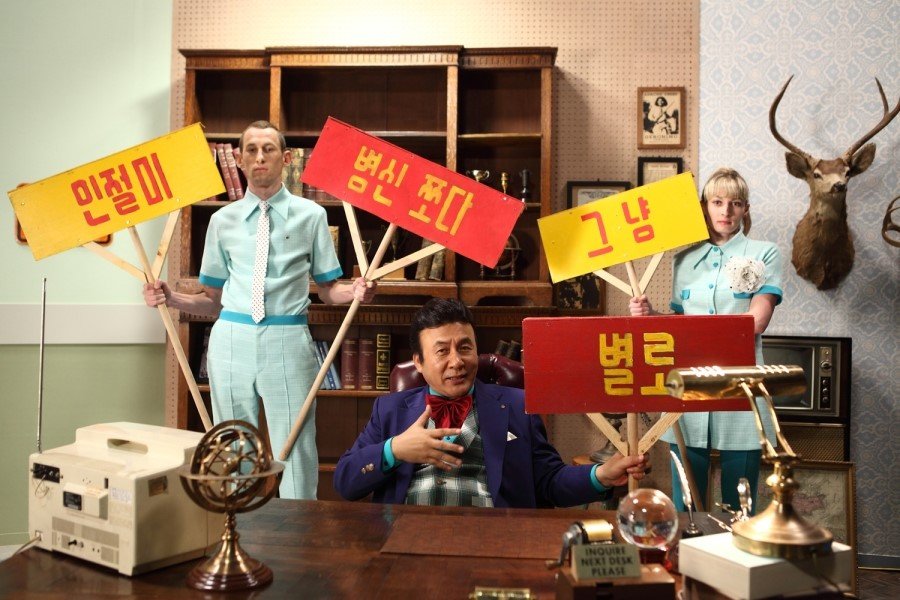
Colourful Dr. Swalski provides the tips Bo-na needs to move ahead, to great comedic effect

Colourful Dr. Swalski provides the tips Bo-na needs to move ahead, to great comedic effect

One of the most vibrant and enjoyable rom-coms in recent years, How to Use Guys with Secret Tips is brilliantly original largely due to one character – the mysterious Dr. Swalski. In his audacious 1970s apparel, the doctor brilliantly gives advice on how to manipulate men to naive assistant director Choi Bo-na with superb comic timing, even appearing within her life when things don’t quite work out the way they should. With wonderful tongue-in-cheek wit, Dr. Swalski is a fantastic creation from the mind of director Lee Won-seok.

Intruders (조난자들) – The North Korean Spy

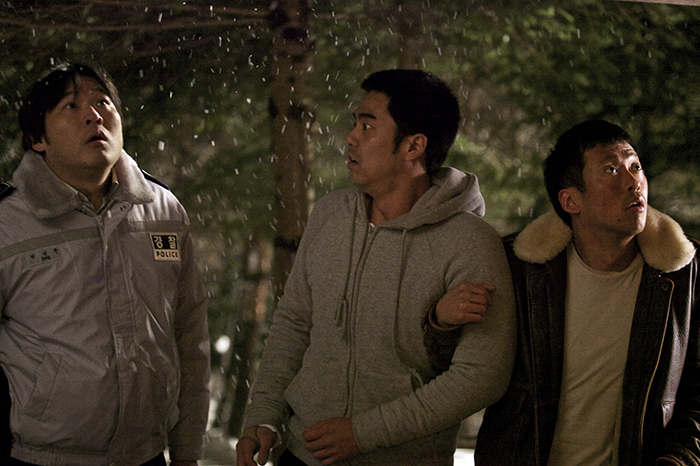
Suspicions rise but the culprit comes out of left field

Suspicions rise but the culprit comes out of left field

Director Noh Young-seok’s (노영석) film about a screenwriter seeking solitude in the mountains is a quirky story, with the slow build of suspense brilliantly executed as the murdered bodies begin piling up and suspicions rise. When the survivors find a hidden basement full of victims tensions reach fever-pitch – until a short North Korean spy jumps out of a closet. Simultaneously hilarious and shocking, the spy displays director Noh’s dark-comic sensibilities and adds a surprising element in an otherwise straightforward thriller.

New World (신세계) – Battle Royale

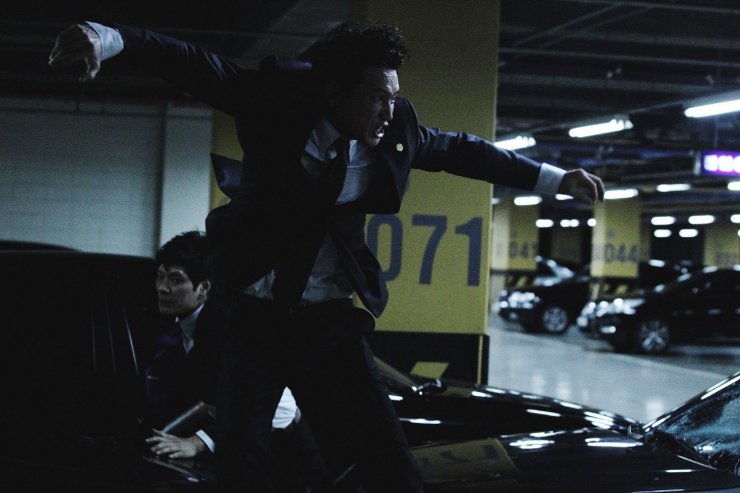
Jeong Cheong viciously battles his way through assassins

Jeong Cheong viciously battles his way through assassins

Through gangster epic New World, Chinese-Korean wiseguy Jeong Cheong – superbly portrayed by actor Hwang Jeong-min – is little more than a loser, a joker more interested in fake goods than in cementing his position within the crime syndicate. That is, until a rival seeks to take him out of the running permanently. Surrounded by assassins, Jeong Cheong displays stunning ferocity as he battles for his life pummeling his adversaries into submission, culminating in a brutal knife fight in an elevator. And in the end, only one man is left standing.

Pascha (파스카) – The Abortion

Ga-eul must learn to endure the pain of loss

Ga-eul must learn to endure the pain of loss

Busan Film Festival winner Pascha depicts the relationship between 40-something screenwriter Ga-eul and her 17 year old lover. The slow-moving indie drama presents their struggles to stay together, particularly after the news that Ga-eul is pregnant. Forced to have abortion by her family, the deeply depressed screenwriter undergoes the procedure. Yet as she leaves, something compels her to turn back and demand to see the remains. The controversial scene has divided critics, but the haunting image resonates long after the credits.

Snowpiercer (설국열차) – The Classroom

The entry into the psychedelic classroom is a surrealist nightmare

The entry into the psychedelic classroom is a surrealist nightmare

Director Bong Joon-ho’s epic sci-fi has several noteworthy moments, including the shattering of an iced-arm and discussing how babies taste, but the entry into the disturbingly bizarre school is so surreal it tops them all. After battling through dark and grimy carriages in an extremely bloody and violent revolution, the next door opens to reveal a disneyfied classroom on acid full of psychotic fervour. Alison Pill is phenomenal as the fanatical teacher, while the brainwashed students religiously chant the train driver’s name as if he is a deity. With exceptional work by production designer Ondrej Nekvasil, the classroom is a disturbing reminder of the power of bias education on impressionable minds.

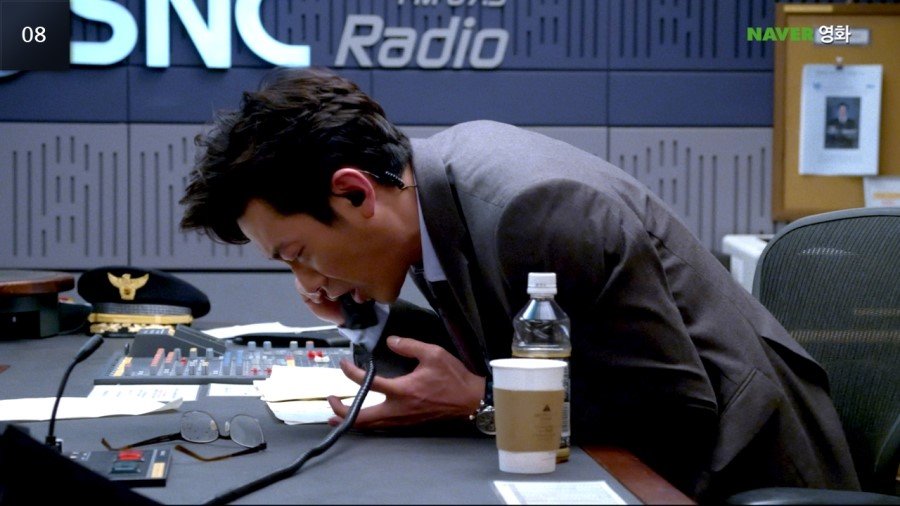
The Terror Live (더 테러 라이브) – The General 

The general's hat is all that remains as Yoon becomes frantic

The general’s hat is all that remains as Yoon becomes frantic

Newsroom drama The Terror Live was a big hit in Korea due to the open and frank exploration of corruption within the social elite, and the exploitation of workers. As reporter Yoon Yeong-hwa (expertly performed by Ha Jeong-woo) converses with the terrorist who destroyed a bridge live on air, a military general comes to the studio and joins the debate. The general rapidly makes the situation worse, goading the terrorist with lies and defamation building unbearable tension until a bomb in the general’s earpiece explodes splattering blood everywhere.  A shocking moment, yet also a victory for exploited workers.

Film News
Gong-ju's trauma apears on the internet for all to see

Han Gong-ju (한공주) – ★★★★★

Han Gong-ju (한공주)

Han Gong-ju (한공주)

Han Gong-ju (한공주) is undoubtedly the best Korean film of 2013. Bold, unflinching, insightful and powerful, director Lee Su-jin (이수진) has crafted an exceptional film about serious social issues that exist within contemporary Korea. What makes the film such an exemplary piece of cinema is the manner in which such issues are conveyed. Through the experiences of traumatised teenage protagonist Gong-ju, her world opens to reveal a broad array of socio-cultural problems ranging from absentee parents to corrupt institutions, from high school bullying to mid-life crises, as she simultaneously attempts to reconcile with her own tragic past. Employing an impassioned sense of social injustice in conjunction with a skillfully balanced narrative structure, director Lee Su-jin evokes the spirit of a raw Lee Chang-dong which is mighty praise indeed.

Gong-ju attempts to start her life over, yet keeps everyone at a distance

Gong-ju attempts to start her life over, yet keeps everyone at a distance

For reasons unknown, high school student Gong-ju is sent to a new school far from her hometown. The extremely quiet yet polite student is constantly treated as a burden by teachers, parents, as well as her new carer – her teacher’s lonely single mother. As Gong-ju attempts to rebuild her life in new surroundings by learning to swim and taking on a part-time job, new friends emerge and discover her beautifully melancholy singing ability. Yet in revealing her talent, Gong-ju’s horrifying past catches up to her with disastrous results.

Treated as little more than a burden, Gong-ju attempts to start her life anew

Treated as little more than a burden, Gong-ju attempts to start her life anew

Han Gong-ju is a rare gem and a stunning debut feature from director Lee, whose previous shorts Papa (2004) and Enemy’s Apple (2007) were both award recipients. The social issues that are explored throughout the film are not new in neither mainstream nor independent Korean cinema, but nonetheless are incredibly powerful and emotive due to the strength of the central protagonist alongside a gripping flashback structure. As the heart of the film, Gong-ju is a very complex character; melancholy yet passionate, distant yet likable, her tragic story is one of shocking trauma and inspirational strength. Indeed, it is Gong-ju’s courage that forces confrontation with further injustices – including a runaway mother and corrupt authority figures – that serve to make her an increasingly endearing and admirable young woman. Director Lee wisely employs editing to accentuate audience empathy, gradually revealing tidbits of information into Gong-ju’s elusive past until neither she, nor the audience, can hide from the truth any longer. In doing so director Lee not only conveys his skill as a storyteller, but also potently exposes the contentious role of parents in crime and punishment.

As Gong-ju, actress Cheon Woo-hee (천우희) gives an incredible performance. The role itself is subtle and nuanced, and she delivers wonderfully. Simultaneously innocent yet worldly-wise, Cheon Woo-hee conveys the agony of the troubled teenager mixed with a sense of hope and inner-strength that is staggering to behold. In lesser hands Gong-ju would be either cold and unlikable or overly pitiable, yet Cheon balances both realms effortlessly.

Gong-ju attempts to let people into her world, with disastrous results

Gong-ju attempts to let people into her world, with disastrous results

Verdict:

Undoubtedly the best Korean film of 2013, Han Gong-ju is a rare gem of independent cinema. Director Lee Su-jin has crafted an extraordinary tale of a girl struggling to reconcile with a traumatic past, who courageously confronts further social injustices in her attempt to do so. Beautifully performed by Cheon Woo-hee, the actress balances the inner strength and turmoil of the character to produce one of the most emotive and powerful cinematic experiences of the year. Bold, insightful and heart-wrenching, Han Gong-ju is the must-see film of the year.

★★★★★

Busan International Film Festival (제18회 부산국제영화제) Reviews