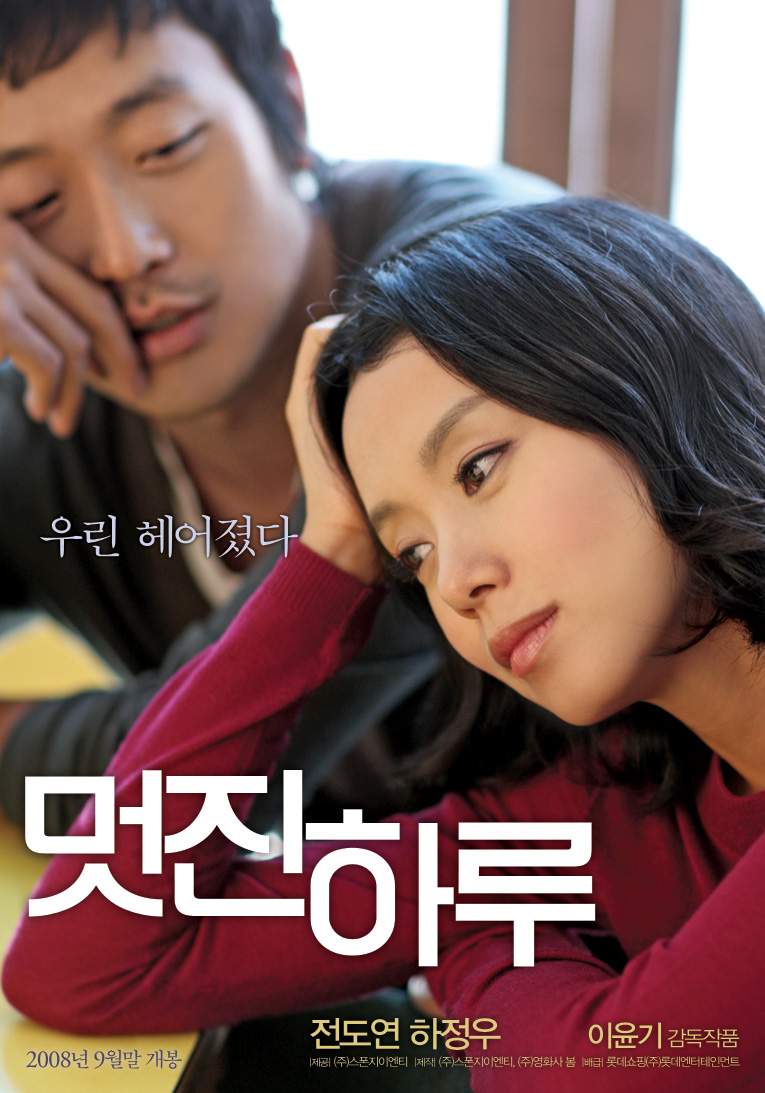
Hee-soo confronts ex-boyfriend Byeong-woo about his unpaid debt

My Dear Enemy (멋진 하루) – ★★★★☆

My Dear Enemy (멋진 하루)

My Dear Enemy (멋진 하루)

With his non-invasive, realism-infused vision, director Lee Yoon-ki’s (이윤기) films are wonderfully character driven as he explores the fragility and complexity of modern relationships. My Dear Enemy (멋진 하루) is very much set within such a framework, as the director subtly peels away the psychological and emotional layers of two ex-lovers who join forces for a day. With his palpable sensitivity and rejection of cliches, director Lee has crafted a poignant examination of the difficulties of early thirty-somethings in contemporary Korea, and their hopes and desires in forming lasting relationships. While the impetus wanes during the final third of the film, My Dear Enemy is an incredibly charming film bolstered by tender and captivating performances by Jeon Do-yeon and Ha Jeong-woo.

 Searching high and low in a betting office, Kim Hee-soo (Jeon Do-yeon (전도연) has almost given up hope of finding ex-boyfriend Jo Byeong-woon (Ha Jeong-woo (하정우). She doesn’t wish to reconcile, however; Hee-soo wants the large sum of money she lent Byeong-woo a year ago and is determined to retrieve it. Finally locating her happy-go-lucky ex, Byeong-woo claims he doesn’t have the money but, with some effort, he can repay her by the end of the day. Afraid he will disappear as before, Hee-soo chaperones Byeong-woo as he collects the money during the course of the day, and as time passes they begin to understand each other more deeply than they thought possible.

Hee-soo confronts ex-boyfriend Byeong-woo about his unpaid debt

Hee-soo confronts ex-boyfriend Byeong-woon about his unpaid debt

Right from the start, director Lee employs his trademark opening long take to absorb the audience into the narrative, following resolute Hee-soo as she traverses a squalid gambling den in search of Byeong-woon. The technique is highly effective in constructing realism as well as provoking curiosity, so that when conflict finally occurs it feels both natural and rewarding. The initial confrontation highlights how wonderfully characterized Hee-soo and Byeong-woon are, with her determination, cynicism and anal retentiveness in stark contrast to his easygoing, considerate, and positive attitude. The differences between them give rise to the question as to why they became a couple in the first place, yet once this minor detail is overlooked what follows are incredibly compelling interactions as the former lovers converse and quarrel, coming to understand each other more clearly than ever before. As Byeong-woon is penniless himself, both he and Hee-soo travel together as he attempts to borrow funds from friends and acquaintances, placing them in a variety of situations that force the duo to re-examine their ideologies and lives. Director Lee uses each opportunity to not only interrogate his protagonists but also contemporary Korean society, and how it has shaped an entire generation now in their thirties. Given the crux of the reunion is debt, financial issues abound in conjunction with marital pressures and gender roles, each explored from an alternative perspective as additional characters are introduced. The subtle sophistication of each encounter is a real delight.

Yet My Dear Enemy is also notable for the captivating performances of A-listers Jeon Do-yeon and Ha Jeong-woo. Director Lee’s distinctive sensitivity and compassion calls for a particular style and quality of acting, and the two gifted stars fulfill their roles with the utmost sincerity. Jeon Do-yeon is wonderfully cynical and stubborn as Hee-soo, exhibiting a frosty and distancing demeanor that initially makes her unlikeable. However through Byeong-woon’s positivity and kindness, as well as a re-examining  of priorities due to their shared experiences, the subtle changes that Hee-soo undergoes are deftly exuded by Jeon as she slowly softens into a more considerate person.

Hee-soo spends time with Byeong-woon's family, learning more about his past

Hee-soo spends time with Byeong-woon’s family, learning more about his past

Of the two, Ha Jeong-woo arguably has the more challenging role in portraying the down-on-his-luck yet affable Byeong-woon. His kindness and generosity convey a palpable positivity, yet it is his natural charisma that makes the character so lovable and draws people closer. The actor superbly sidesteps any potential ‘playboy’ implications by emphasising naivety as a trait which is often scorned by Hee-soo, indicating that while the former lovers are quite different their attributes actually help to make each other stronger.

While the performances and the evolving relationship are a joy to watch, the film begins to falter in the final third. Director Lee seems unsure of how to lead the protagonists through to some form of finale, and a series of missteps detract from the journey they’re on. Just as Hee-soo and Byeong-woon begin to learn from and understand one another, their development is suddenly cut short and while such scenes are occasionally romantic, they could have easily been condensed without interrupting the revelations they discover. Yet luckily the film manages to right itself during the final moments, allowing the couple to convey their fundamental changes while also not taking the easy way out. As such, My Dear Enemy a highly poignant and uplifting film, and in-keeping with the compassionate sensitivity for which director Lee is renowned.

Over the course of the day, Hee-soo's priotrities begin to change

Over the course of the day, Hee-soo’s priotrities begin to change

Verdict:

My Dear Enemy is a charming and moving slice of realism from director Lee Yoon-ki, whose trademark sensitivity and compassion are fully on display. Bolstered by wonderful performances from Jeon Do-yeon and Ha Jeong-woo, the film is a sophisticated yet subtle exploration of the thirty-something generation and their relationships, as well as an interrogation of the role of Korean culture in such matters. As such, the drama is mature and sincere throughout, displaying some the best Korean filmmaking talent at their most sensitive.

★★★★☆

Reviews
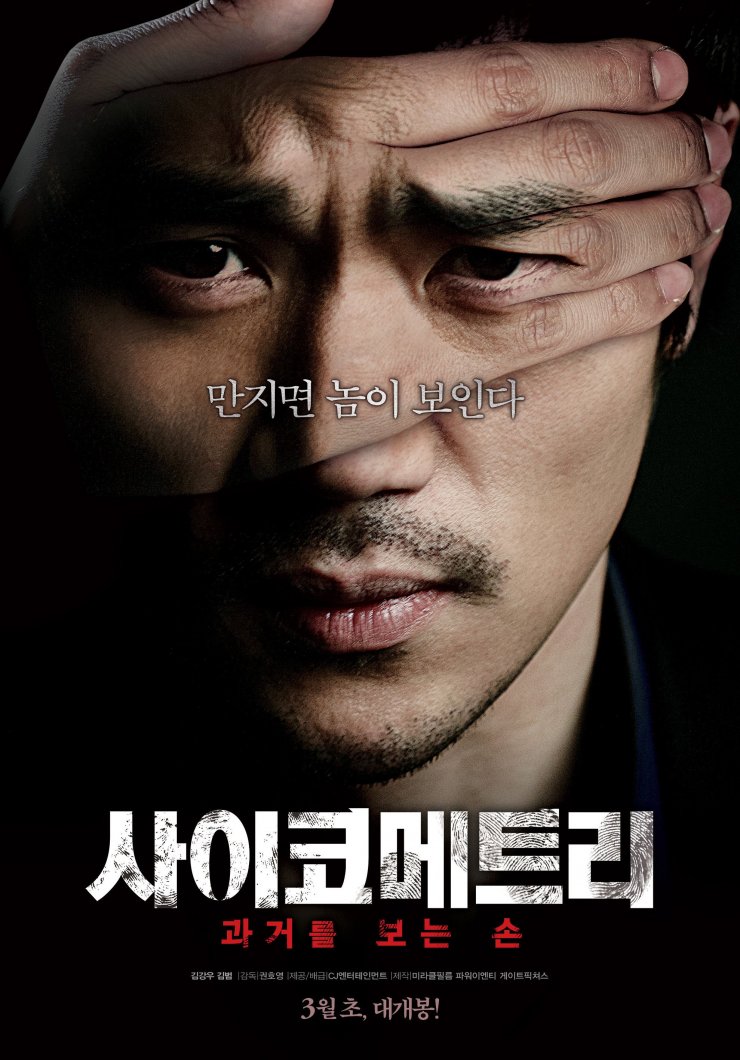
The detective discovers Joon's psychometry ability the hard way

The Gifted Hands (AKA Psychometry) (사이코메트리) – ★☆☆☆☆

The Gifted Hands (사이코메트리)

The Gifted Hands (사이코메트리)

When supernatural elements feature within a thriller film, the production can go one of two ways. The suspense generated from the unknown can heighten the intensity of the events that unfold, adding an original spin to the genre; or, on the other hand, the abilities and powers can appear as cheap gimmicks that add a decidedly silly dimension to the proceedings. The Gifted Hands – aka Psychometry (사이코메트리) – easily falls into the latter category, although between this, the horrendous script, and the appalling acting, it is difficult to know where exactly to fully place the blame for such a ridiculous, vacuous film. Director Kwon Ho-young (권호영) attempts to generate tension amongst his generally competent direction, but it’s not enough to save the frankly awful thriller from being instantly forgettable.

The joke of his precinct, detective Yang Choon-dong (Kim Kang-woo (김강우) regularly causes trouble for his superiors and rarely solves cases. His ineffective style has made him an outsider in the police force, so when a woman reports her daughter as kidnapped he takes the case while the others scoff. When the girl is later found murdered and a scapegoat is required, Choon-dong is blamed and suspended. Distraught, the detective happens upon some graffiti that accurately portrays events of the murder in a startling amount of detail. Tracking down the artist responsible, Choon-dong discovers that the young man named Joon (Kim Beom (김범) has the supernatural ability of psychometry, the power to see events through touch, and the duo set out to catch the murderer before he strikes again.

Detective Choon-dong happens upon artist Joon as he portrays events from the murder

Detective Choon-dong happens upon artist Joon as he portrays events from the murder

The Gifted Hands begins badly, only to become progressively worse. Ignoring the fundamental rule of the thriller genre in hooking the audience within the opening sequence, the scenes of Joon painting the location of the murder are dull yet are also a huge editing faux pas as the scene actually takes place a good twenty minutes later in the movie. Following the opening credits, the film’s ‘true’ beginning takes place during an over-zealous pyramid scheme in which detective Yang is a participant. Immediately the ineffective cop is portrayed as an utter idiot through these attempts at comedy which are not in the least bit funny, as Yang desperately tries to save his dignity and the reputation of the force from his blunder. The detective is clearly an underdog cliche evolving from bumbling fool to responsible cop, which in itself is no bad thing were it not for the awful acting by Kim Kang-woo. The actor performs the ineffective cop as a manic-depressive petulant child, flitting between whining like a teenager to bursts of violence. To be fair to Kim the script also calls for such absurdity in the attempt to provide multiple genres, clearly a cynical move to attract all but ultimately pleasing none, yet the actor certainly doesn’t help himself.

While detective Yang’s story is foregrounded, bizarrely Joon is sidelined. For a film containing supernatural features, Joon’s psychometry abilities appear more like an afterthought rather than the basis for the thriller, so much so that the protagonist infrequently appears throughout. Despite Joon’s cliched emo melancholy – black clothing, hoody, creative talent, misunderstood, etc etc – actor Kim Beom provides an adequate performance, although he is intended to look sullen and attractive for the most part. His psychometry ability is woefully under-utilized within the context of the narrative as well as inherently misunderstood by the writer. During the first of only two times in which Joon uses art to express his gift, it is explained that he was able to do so in such incredible detail, featuring moments from various points throughout the timeline of the murder, because he touched a pigeon who was passing overhead. Seriously.

The detective discovers Joon's psychometry ability the hard way

The detective discovers Joon’s psychometry ability the hard way

Such ridiculous logic continues to arise as the investigation for the killer, and a newly abducted victim, moves forward. For no reason other than detective Yang is in need of a car, he teams up with a petty criminal sidekick who informs the cop that as the first girl was found frozen before she was buried, the killer must be a single man. The reason? All single men freeze their trash before throwing it out. As the graffiti artist depicting the murder, Joon is of course the chief suspect, but as he doesn’t freeze his trash, he is immediately discounted as the criminal. Such instances are incredibly frustrating, as flimsy hunches are employed and conducted with no solid evidence or basis, making it a wonder how any crimes are solved within this particular district. Yet for all of detective Yang’s newfound verve for solving the case, the kidnapping is ironically dropped from the narrative in order to develop the ‘bromance’ between him and Joon – through more comedy and psychologically unbalanced violence. A brief respite appears in the form of potential love interest Seung-gi (승기, Esom (이솜), although as she appears twice and provides nothing of merit the character is wholly unnecessary.

For all of the silliness, director Kwon Ho-young does a competent job at the helm, and attempts to inject the film with tension and suspense whenever the script allows. He does well for the most part, that is until the asinine logic kicks in once more. Locating the murderer is well-staged while the mise-en-scene of the apartment is suitably morbid, yet the compulsion is completely lost when the psychopath begins monologuing about how he simply has no reason or motivation for what he does – only to later explain it anyway. The Gifted Hands is a great example of interesting concept, lazy execution.

Joon must put his abilities to good use to stop the murderer

Joon must put his abilities to good use to stop the murderer

Verdict:

The Gifted Hands spectacularly fails as a supernatural thriller. Featuring an awful script full of holes and bizarre logic, bad acting particularly from the (unintentionally) mentally unbalanced central protagonist, as well as wasting the potential of psychometry itself, the film really is a shambles. Director Kwon Ho-young performs competently at the helm, but it is not enough to save the vacuous thriller from being instantly forgettable.

★☆☆☆☆

Reviews
Going South (남쪽으로 간다)

Going South (남쪽으로 간다) – ★★★☆☆

Going South (남쪽으로 간다)

Going South (남쪽으로 간다)

In exploring the issues of homosexuality within the Korean military, director Lee Song Hee-il’s (이송희일) short film Going South (남쪽으로 간다) is a somewhat culturally sensitive affair on an oft-known, yet seldom discussed topic. Forming part of the director’s 2012 trilogy alongside White Night (백야) and Suddenly, Last Summer (지난여름, 갑자기)Going South also depicts the evolving relationship between two men over the course of several hours, in this instance as they travel through the countryside towards an army barracks. The returning soldier, Gi-tae (Kim Jae-heung (김재흥), is distraught as his lover Jun-yeong (Jeon Sin-hwan (전신환) has ended their relationship following the completion of his mandatory military service. The narrative explores their differing ideology regarding homosexuality within the trauma of separation, emphasizing key socio-cultural issues throughout. Yet the film also struggles with the debate and the increasingly tense relationship, sparingly introducing information about the couple resulting in a somewhat bland, yet very attractive film.

The most striking feature of Going South is undoubtedly the colour palette as director Leesong employs highly effective use of the natural green tones of the countryside. The director’s artistic sensibilities are acutely on display throughout as he captures the vibrant greens of the forests that serve as a backdrop for the protagonists, providing a palpable energy as Gi-tae and Jun-yeong fight and curse at each other during their break-up. Within this realm Gi-tae’s military uniform seamlessly merges with the surrounding environment while Jun-yeong’s city fashion is completely at odds, and director Leesong does well in employing costume to highlight the stark differences between the two protagonists. The contrast with the brown hues that enter the film are also profound, adding potent symbolism for the various stages of their rapidly deteriorating relationship.

Soldier Gi-tae's uniform blends with the green landscapes

Soldier Gi-tae’s uniform blends with the green landscapes

Central to the narrative is the issue of homosexuality within the military, which is wonderfully articulated through Gi-tae and Jun-yeong. For Gi-tae, being gay is part of his identity; for Jun-yeong, it is a phase that men go through during military service. As the two clash over their different ideological perspectives, letters that were exchanged between them when they served together are edited within the film, harking back to their history and the sweet exchanges that took place. Such title screens are quite distracting however, and serve to pull the audience out of the film due to their unnatural insertion. Despite this, Going South quickly becomes an examination of contemporary Korean masculinity, and the role of the military in defining sexuality.

Yet attractive visuals and central theme aside, Going South is a somewhat flat queer film. Much of the running time is preoccupied with driving through the countryside, with more information required to make the protagonists and their ‘journey’ more compelling. The narrative does pick up in the later stages to end on a high note, yet the actors aren’t really stretched into creating the required impetus for these scenes to truly generate the utmost poignancy.

As the relationship deteriorates, symbolic brown tones enter the frame

As the relationship deteriorates, symbolic brown tones enter the frame

Verdict:

Going South is a vibrant, attractive queer film examining homosexuality within the Korean military, and deserves praise merely for broaching the subject. Director Leesong Hee-il employs the colours of the countryside effectively, however the film is a rather flat offering due to the sparse information and lack of powerful performances. Yet Going South offers an interesting perspective in role of the military in defining contemporary Korean masculinity, and as such provides a fresh approach in the exploration of gay relationships.

★★★☆☆

Reviews
Suddenly, Last Summer (지난여름, 갑자기)

Suddenly, Last Summer (지난여름, 갑자기) – ★★★★☆

Suddenly, Last Summer (지난여름, 갑자기)

Suddenly, Last Summer (지난여름, 갑자기)

Suddenly, Last Summer (지난여름, 갑자기) is a wonderfully moving and understated short film, and certainly the best of director Lee Song Hee-il’s (이송희일) 2012 trilogy comprised of White Night (백야) and Going South (남쪽으로 간다). In each segment of the trilogy the theme of two men spending a prolonged period of time together in a day is explored, with Suddenly, Last Summer exploring this dynamic between thirty-something high school teacher Kyeong-hoon (경훈, Kim Yeong-jae (김영재) and student Sang-woo (상우, Han Joo-wan (한주완). Typically films that delve into such age and society-related relationships attempt to portray a morality tale of some sort, yet director Leesong eschews melodramatic cliches in order to convey a psychologically complex connection between the protagonists, emerging as a mature and thought-provoking examination on the subject.

Key to the potency of Suddenly, Last Summer is the manner in which director Leesong presents information about the relationship between Kyeong-hoon and Sang-woo, and how such revelations develop their connection. Initially Sang-woo, an attractive young gay student, appears to be infatuated with the teacher, stalking him and making unfair demands. Yet as they engage in various conversations throughout the day, moments from the past are subtly referenced adding layers upon layers of complexity to their relationship, discussing and debating prior actions that may or may not have contained deeper meanings and the inferences generated from them. Director Leesong refuses to either condone or condemn the protagonists, instead opting to examine their internal struggles between desires as gay men and societal responsibilities.

The psychological complexities of he relationship are subtly explored

The psychological complexities of the relationship are subtly explored

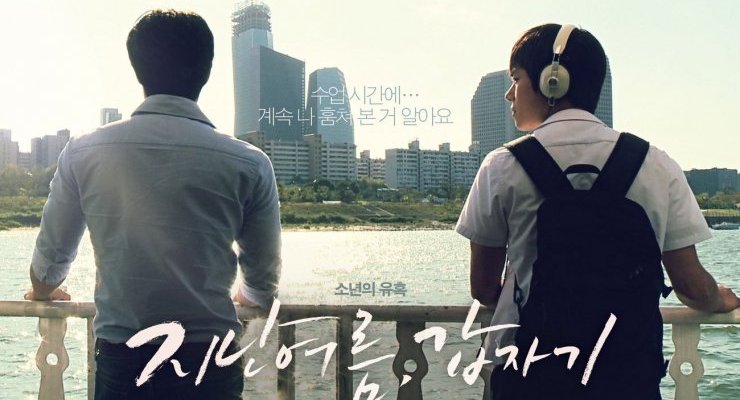
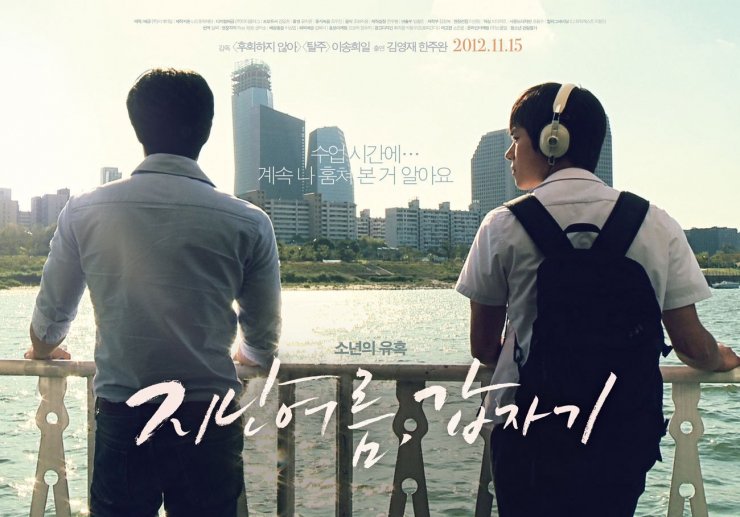
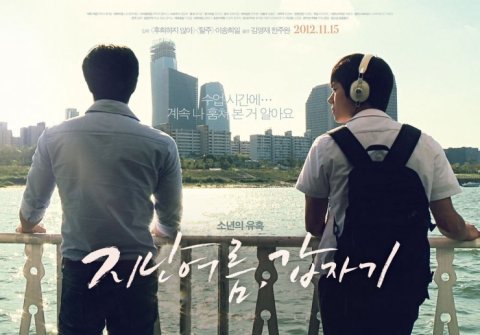
Director Leesong’s films always display a keen artistic sensibility, and with Suddenly, Last Summer this most notably appears through the repetition of water imagery. In taking a river cruise in the popular Yeouido area, Kyeong-hoon and Sang-woo open themselves to the tranquil beauty of the water, ebbing and flowing against a romantic-charged soundtrack. The blue tones of the Han River also work well in conjunction with the protagonists’ shirts. The pure white that envelops Sang-woo conveys his purity and innocence, his single-minded approach to life, yet Kyeong-hoon’s blue shirt connotes an older, more mature persona. The actors wonderfully articulate such sensibilities through their performances, with Kim Yeong-jae providing a highly effective and restrained performance as the morally-conflicted teacher, palpably displaying his discontent facially. Meanwhile Han Joo-wan connotes his youthful frustrations well, flitting between moments of maturity and adolescence in expressing his desires.

Despite their differing styles, both men clearly harbour a similar emotional discord which unites them, even though society states it is inappropriate. Their confusion is wonderfully articulated through the labyrinthine landscape of the apartment buildings, with the many twists and turns articulating their own psychological dilemmas. It is this moral and psychological complexity that makes Suddenly, Last Summer such a compelling film, and a welcome entry into Korean queer cinema.

Water imagery and colour play important roles in decoding the relationship

Water imagery and colour play important roles in decoding the relationship

Verdict:

Suddenly, Last Summer is a subtle and moving exploration of the relationship between a high school teacher and student. Director Leesong Hee-il delicately inserts information throughout that continually evolves the connection between them, challenging preconceptions while never adopting a moral position, and as such is the best film in the director’s 2012 trilogy.

★★★★☆

Reviews
Suddenly, Last Summer (지난여름, 갑자기)

Q&A with Director Leesong Hee-il (이송희일) – Part 2

Director Leesong Hee-il (이송희일)

Director Leesong Hee-il (이송희일)

To celebrate renowned queer director Lee Song Hee-il’s (이송희일) 2012 film trilogy, Indieplus cinema in Gangnam held a special screening and Q&A event on the 12th of March. In February, feature length film White Night (백야) was screened – the Q&A of which you can read here – while the March event featured a double-bill of short films Suddenly, Last Summer (지난여름, 갑자기) and Going South (남쪽으로 간다). All three films are connected thematically as each story depicts two gay characters and the events that transpire between them during the course of several hours.

Suddenly, Last Summer is concerned with a relationship between a thirty-something teacher and a high school student. The film is an intelligent and subtle exploration of psychology and morality, as both protagonist have desires yet are constrained by societal position. The performances are wonderfully restrained and poetic, making the film arguably the best of the trilogy.

Going South, meanwhile, explores homosexuality within the military. The short film employs nature and vibrant colours in conveying conflict between the two central characters, one who wishes to continue their relationship and the other who views homosexuality as merely a phase of military service.

Both short films have been well received – and notably invited to the 2013 BFI London Gay and Lesbian Film Festival – and following the screenings director Leesong fielded questions from the audience, kindly translated by independent producer Hwang Hye-rim (황혜림).

Going South (남쪽으로 간다)

Going South (남쪽으로 간다)

Question: Thank you, I really enjoyed both of the films. They are really touching and moving. With Going South, your sense of colour was really strong – the greens and the browns especially. Can you tell us what feelings you were trying to evoke? Why did you choose those two colours in particular?

Director Leesong: When I was thinking of these three films, colour was one of the things that I was really interested in. So I put a lot of focus on that and I tried to make certain differences between the three films in terms of colour. For example, White Night happens at night so I already had limitations, so I tried to put focus on the colour of the protagonists clothes in that film. And I used a 5D Mark II camera to try and make the lighting match and give focus. I tried to give the film a certain kind of colour and tone. And for Suddenly, Last Summer, water is one of the main images so I tried to show the clothes of the main protagonists like the teacher’s shirt or the white shirt of the school uniform which shows more clearly the differences between them. For Going South, the green colour is the most important colour in the film so I tried to find a location where I can show real green images like a lotus field and forest. I visited several forests to find the perfect green [for the film]. There wasn’t exactly a specific reason I chose green, but what I wanted was to go out of Seoul, out of the city and have distance from the city, to show the least [characteristics] of the city such as buildings. Therefore green became important. I shot this film in Yangsuri which is near Seoul, and is well-known by Seoulites, but I tried to shoot it as if it wasn’t Yangsuri, as if it was some other place. So I went deeper into Yangsuri, and tried to find different spots in the area so that it can look different from what people know. I tried quite hard to find these kind of locations and I really wanted to follow the psychological mindscape of the two protagonists, so that’s why I tried to focus more on their journey and their psychology, and to avoid a cityscape. I needed more [natural] landscape. Even the road when one protagonist kidnaps the other, that road is about 300 meters long and other than that it is surrounded by buildings. That specific spot was something I’ve had in my mind for 5 or 6 years and I was always going to use it in a movie one day, and I finally used it. I tried to remove other kinds of colour as I didn’t want to give you too many colourful images but to just focus on the two people, just the colour green and their emotional journey. If you can remember the character of Jun-young from the film, the man from the city who was discharged from military service, he’s wearing a white shirt so I didn’t want to mix too many more different colours. In the end, I only wanted their emotional development to be shown more than other features.
Suddenly, Last Summer (지난여름, 갑자기)

Suddenly, Last Summer (지난여름, 갑자기)

(The following question is quite offensive to the gay community, and is purely the opinion of the audience member. It in no way reflects the liberal attitude within Hanguk Yeonghwa).

Question: I think I can understand more about gay people through these films. I think gay issues are well received in American societies, for example, and economically and politically, and in the film market. But in Korean society, I think there is still, not taboo exactly, but more negative responses to gay issues than other societies. So I’d like to know what you are trying to say through your film to [Korean] society where more negative opinions exist. My second question is I’d say that it’s a personal choice, or sexual preference, if you are gay or not. But also there are worries that after two generations that if more and more people choose to be gay, although it’s personal preferences and choices, it’s probably possible that no-one would exist anymore. So some people consider being gay as a bad influence sometimes, so I’d like to know the director’s opinion on that.

Director Leesong: To answer your first question, there wasn’t a big or high intention. It’s just like if you are asking any non-gay filmmakers, or films with non-gay themes, you never ask them what their intentions were, what did they want to say to non-gay society. You don’t ask that, right? So I say, let’s be fair. But when you are facing a filmmaker who is making a film about sexual minorities then you always ask this kind of question, like what was your message to society. There wasn’t a big intention, just to make a film about love, where the main protagonists are sexual minorities. Let’s be fair, you wouldn’t ask that question to heterosexual filmmakers, so you shouldn’t ask me either. As for the second question, I don’t think it just applies to Korean society, it applies to most societies. Most gay people are raised by non-gay parents but they grew up as a gay person. Even if the parents are a gay couple, and they say to their children, “You should be gay”, they wouldn’t all be gay. If they want to love the other sex, then they will. I don’t think it’s a bad influence. As many of you know, the Mayor of Berlin is gay, and at the city hall there are rainbow flags but that doesn’t mean that Berlin is necessarily the only gay-friendly city. It’s embracing gay culture more, but that doesn’t mean everyone in Berlin is gay. I think that by having more sexual minorities speak out helps to develop a more democratic society, so therefore we need to hear more voices, minority groups should have more voices to make a real democracy possible, and make people embrace other people’s differences and opinions. In those terms I think that Korean society still has that kind of tedious democracy, we are still getting there, to have a more developed democracy.

Suddenly, Last Summer explores the relationship between a teacher and student

Suddenly, Last Summer explores the relationship between a teacher and student

Can we lighten up the atmosphere a little bit? Do you have any lighter questions? I think I will sink into a grave, the atmosphere feels like that.

Question: I’m really curious whether the actors in your films are really gay or not.

Director Leesong: What answer would you like?

Question: Just say it [the truth]!

Director Leesong: They are all not gay in real life. But I have to say I can’t really be happy to answer like that. It’s really hard to find anyone, actor or actress, who has freely come out of the closet and said that they are gay or lesbian. There are almost none who have been open about their sexual identities. So it’s not that I searched hard for non-gay actors, it’s the other way. It’s hard to think of anyone who is as beautiful as the actors who are in the films who are gay, that’s why we were laughing. But I should add that there are differences compared to ten years ago, there are younger generations who have more courage to come for an audition for my films, so that’s a big change.

Question: In Going South it was separated into ‘acts’ with the letters. I was wondering if that is more a stylistic or tonal choice, or did you choose that style for a structural choice in telling the story? Or to separate the different moods of each act?

Going South explores homosexual issues within the military

Going South explores homosexual issues within the military

Director Leesong: Well for Going South we shot for six days, so the whole production was like a short film. It was really difficult to show their past with images, it would have taken me a lot of time to show what they have been through together. So I wanted to show their past history together, not through images, but through their letters. I wanted to reveal their past history as the movie moved on and on, but I didn’t want them to talk about it, so the letters revealed their relationship. I don’t think it was necessarily to make an ‘act’. In Korea, serving in the army is compulsory, it’s an obligation. So if you are old enough, an a man, you must go to the army and serve for two years. It’s been like that for a long time. The things that were depicted in the film are happening quite often in the army, and that’s the basic idea. Nowadays I heard that they are doing several kinds of things such as planning sections differently to ‘prevent’ certain kinds of things – the exact expression is ‘anti-gay’ kinds of things. For example, before all the men used to sleep in one big room, but now they have sections so they are separated from each other. Because before they were all sleeping in the same section, and, well, a lot of things happened there. In those terms, this film Going South is quite a cliche. Whether they are gay or not, the army is a huge group of same sex people, and things happen. I just wanted to show the cliche that people know about, and make a story about it. I should tell a funny story because the atmosphere is so serious. I’m actually quite a funny guy! Having this kind of situation in Korea, and having gay men going to the army, creates two different responses. One is like a man sent to a place full of women, so a lot of gay men have a hard time because of the showers and life is difficult for them. But on the other hand there are gay men who are very happy to go to the army, they use the expression, “I’ll be among the flowers,” “I’m in a flower field.” After their army service they brag about things from the army like sex and lovers, stories they tell to their friends.

(Director Leesong then began to discuss about his next project).

Director Leesong: Night Flight‘ is inspired by a real story that happened about two years ago in a high school. There was a student who confessed his sexual identity to his teacher, which should be discrete. It was during a session with the teacher, and he was having a hard time telling him about what was going on in his mind. But the very next day the teacher broadcasted [the student’s sexuality] throughout the school during a broadcasting program. He just said the boy in class ‘B’, for example, is gay and you shouldn’t choose to be gay. It was a really violent response by a teacher, it shows the reality in Korean education, I think. I was thinking whether I should make a film about it or not, and then we had a person who was the education director for Seoul. Before his election we had an act about student rights which prohibited discrimination against students because of their sexuality and gender. But as soon as this new person got elected as the director of education, he said he was going to exclude and eliminate the article about prohibiting discrimination against gay people. That really pissed me off. It really shows the violent reality in Korean schools these days, Korean schools are showing the violence within Korean society. So I decided to make a film about it, dealing with school violence and also living as a gay [student].

Sincere thanks to director Leesong Hee-il for taking the time to answer the questions, to Producer Hwang for translating and to Manger Kwon Mi-hui and Indieplus Cinema for hosting the event.

Directors Interviews/Q&As
Tae-hee dreams of exploring the world beyond the trappings of her existence

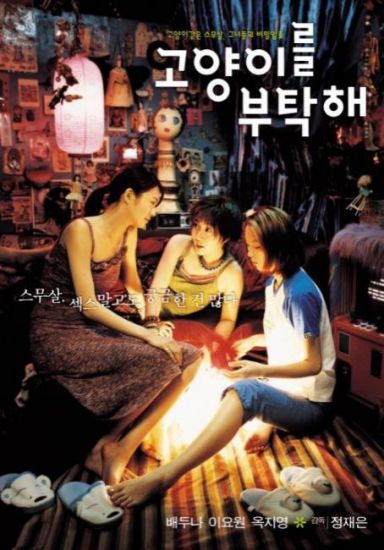
Take Care of My Cat (고양이를 부탁해) – ★★★★☆

Take Care of My Cat (고양이를 부탁해)

Take Care of My Cat (고양이를 부탁해)

The voices of young women are often ignored in mainstream cinema. Those that do appear tend to focus on frivolity, particularly consumerism where the characters purchase the latest fashions often in the attempt to catch the attention of a love interest. Such latent sexism is wonderfully rejected in director Jeong Jae-eun’s (정재은) indie drama Take Care of My Cat (고양이를 부탁해), a refreshing drama about five friends who increasingly grow apart after high school. The film had a very successful festival run following its debut at the 2001 Busan International Film Festival, appearing at Berlin and Rotterdam amongst others, and launched the careers of the principal cast, notably Bae Doo-na who went on to star in several high profile productions such as Sympathy for Mr. Vengeance and Hollywood movie Cloud Atlas.

Following graduation from high school, five friends from the port city of Incheon who were previously extremely close begin to drift apart. Shin Hae-joo (Lee Yo-won (이요원) lives in Seoul working hard to achieve a career, becoming driven by appearance and success. Yoo Tae-hee (Bae Doo-na (배두나) works for her father’s business for free, struggling to find her own identity and ambitions. Seo Ji-young (Ok Ji-yeong (옥지영) is an aspiring textile artist, yet her poverty-stricken lifestyle has left her with little prospects. Finally, twins On-jo (Lee Eun-Ju (이은주) and Bi-ryu (Lee Eun-Sil (이은실) simply attempt to get by, making cheap jewelry to be sold at market. As Tae-hee works hard to keep the bonds of friendship strong, events occur that profoundly change the young women and take them all in different directions resulting in the passing of a pet cat between them.

The friends reunite for Hae-joo's 20th birthday

The friends reunite for Hae-joo’s 20th birthday

Take Care of My Cat is an intelligent character-driven film, one that eschews the trappings of melodramatic story-lines so often ascribed to women’s roles in cinema. Director Jeong, who also takes writing duties, instead opts for more realism, conveying the struggles of young women fresh from high school, struggling to succeed in the highly competitive society. With each protagonist director Jeong highlights and interrogates particular features of Korean culture, balancing the social critique between them while simultaneously conveying how such forces shape them into different women. Hae-joo – wonderfully brought to life by actress Lee Yo-won – must contend with the extreme diligence of the employment sector in Seoul, constantly striving to be ‘better’ and prompting an arrogance and selfishness her friends are unaccustomed to. Meanwhile Tae-hee is forced to endure the misogyny within Korean culture as exemplified by her father who passes tips on how to be a ‘real man’ to his son. With Ji-young, her poverty forces limitations on her creativity and forces her outside the margins of society. In each case, director Jeong explores the notions of female identity and its construction with skill and insight, organically debating them within the narrative as the quintet of friends observe the change the personalities and the distance generated amongst them.

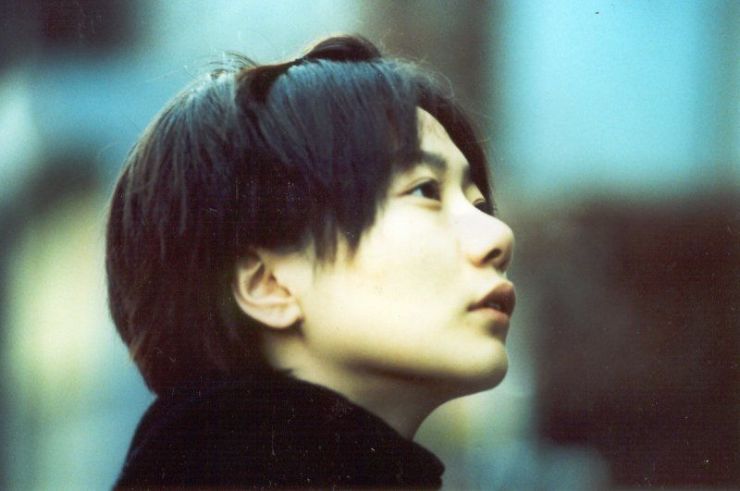
In this regard it is Tae-hee who, as the central figure who arranges meetings, becomes the heart of the film and the window through whom the audience identifies most. As Tae-hee attempts to bring the group closer it becomes clear she’s fighting an uphill battle, and her observances reflect the audience’s own. Bae Doona brings a wonderful and nature grace to the role, both endearing and sincere, conveying a young woman yearning for identity and ambition that always seem just out of reach. She is the person with whom young people can relate the most, someone who wants independence and individuality yet is trapped by the culture that surrounds her.

Tae-hee dreams of exploring the world beyond the trappings of her existence

Tae-hee dreams of exploring the world beyond the trappings of her existence

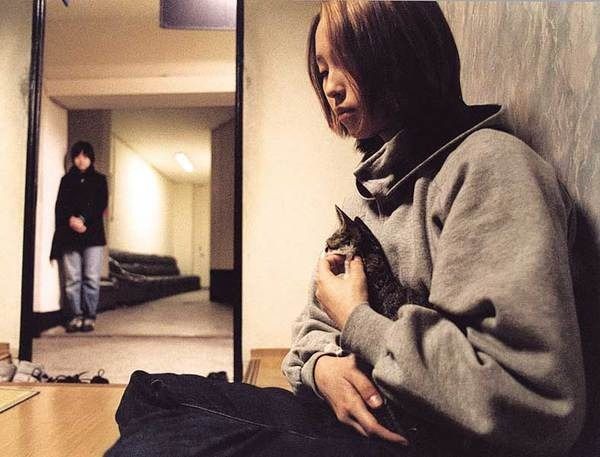
The titular cat also functions as pertinent and insightful metaphor for female identity. As director Jeong has often stated in interviews, cats are fussy and independent, don’t listen, and leave home whenever they wish. As the cat is passed between the friends it becomes symbolic in inspiring the owner to yearn for more, to become increasingly frustrated with her existence as it stands. As Koreans are traditionally uneasy with cats, the director seems to be suggesting that Korean culture struggles with the notion of female identity and independence. Director Jeong emphasises such traits through each of the protagonists, especially Tae-hee and Ji-young by exploring their unhappiness and desire for change. The narrative is quite unbalanced in regards to twins On-jo and Bi-ryu however, and their inclusion is underdeveloped and arguably unnecessary. They serve little function throughout, except to sell cheap home-made accessories to other women, again tying into the debate of physical attractiveness women are expected to partake in.

Yet Take Care of My Cat is not all deep metaphor and social debate, as the film makes effective use of lighting techniques, an otherworldly electronic soundtrack, and text messaging/typing graphics to give the film a distinctly ‘cool’ edge. These features combine incredibly well and lend the film something of a ‘cult’ vibe, and has clearly served as an inspiration to later films who have employed such techniques.

Ji-young's poverty-stricken life is difficult to endure

Ji-young’s poverty-stricken life is difficult to endure

Verdict:

Take Care of My Cat is a wonderfully charismatic film that provides young women with a voice that’s sorely lacking in contemporary cinema. By eschewing notions of consumerism and melodrama, writer/director Jeong Jae-eun instead focuses on female identity and its construction with skill and insight. Furthermore the electronic soundtrack, amongst other techniques, make it something of a cult film, as well as an intelligent, profound offering in the debate of womanhood in modern Korean society.

★★★★☆

Reviews
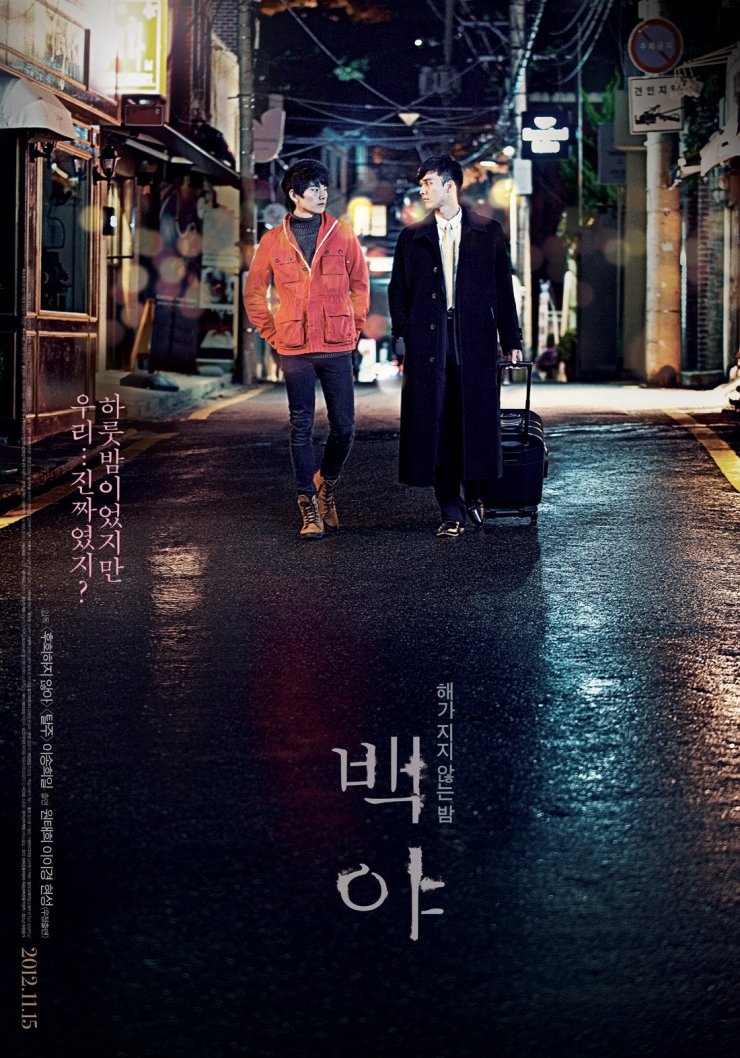
Courier Tae-jun sports an iconic orange jacket, revealing much about his character

White Night (백야) – ★★★★☆

White Night (백야)

White Night (백야)

Originally intended as part of a short film trilogy, Korea’s first openly gay director Lee Song Hee-il’s (이송희일) White Night (백야) evolved during the course of filming to become a short feature. Since its debut at the 2012 Jeonju International Film Festival, White Night has enjoyed a successful festival run resulting in a European premiere at the 2013 Berlin International Film Festival and featuring at the 2013 BFI London Lesbian and Gay Film Festival, respectively.

The film examines the single night in return of air steward Won-gyu, two years after a self-imposed exile following a homophobic assault. The altercation is based on a true event which occurred in Jongno, Seoul in 2011, and director Leesong explores the deep-rooted psychological trauma that continues to resonate long after the attack. Employing European aesthetics to do so, the director has crafted an attractive and interesting exploration, but one that ultimately fails to shake off its short story origins into something more.

(For the Q&A with director Leesong Hee-il regarding White Night, please follow this link.)

Returning to Seoul after an absence of two years, gay air steward Won-gyu (원규, Won Tae-hee (원태희) is distant and aloof. Rather than contact family, Won-gyu arranges to meet another man via the internet for a sexual encounter. Yet when courier Tae-jun (태준, Lee E-gyeong (이이경) arrives, Won-gyu’s barriers and distance prove too much to bear. For some inexplicable reason however Tae-jun can’t leave Won-gyu alone. As the night wears on, Won-gyu’s history as a victim of violence becomes clear and the twosome resolve to stay together until Won-gyu leaves the following morning.

Won-gyu is aloof and distant, expressing himself through subtle mannerisms

Won-gyu is aloof and distant, expressing himself through subtle mannerisms

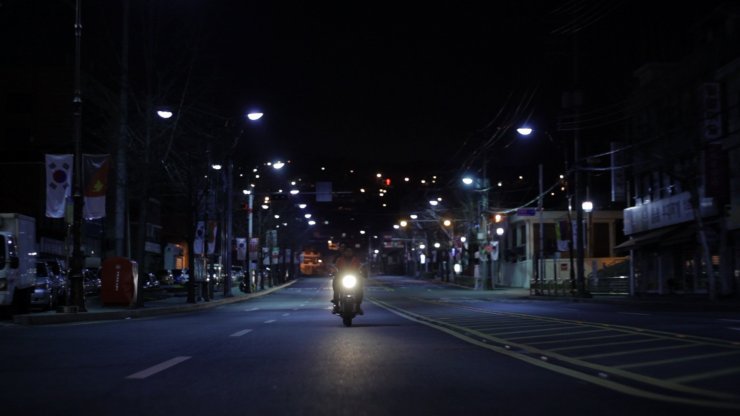
Director Leesong Hee-il is clearly influenced by European cinema, with such aesthetic sensibilities shining through in each frame. While the film compromises of mostly street scenes, White Night is very attractive throughout and features some lovely cinematography that gives each area different characteristics. Such artistry is also present within the protagonists themselves. Won-gyu, for instance, doesn’t give away any information about himself directly, yet through his mannerisms it is clear he contains hidden depths. As the character continually plays with items in his hands, chews gum, and stares longing when smoking, it is left to the audience to wonder about the internal conflict that drives him and the reason for his stoicism. These clues are intelligently and subtly referenced throughout the film, and it is acutely refreshing to witness psychological trauma presented in such a manner without characters screaming about their strife. While intriguing at first, the lack of information does however become frustrating as Won-gyu refuses to provide any, often only smoking and staring into the distance. As such director Leesong flirts dangerously close with the pretentiousness so often associated with European art-house fare, yet thankfully the inclusion of Tae-jun propels the narrative forward so that such instances don’t linger for too long.

Tae-jun is an extremely compelling and likable young gay man, one who evokes the iconic spirit of James Dean in Rebel Without A Cause with his orange jacket and motorcycle. He is the antithesis of Won-gyu, someone who is open and articulate and as such quickly becomes the heart of White Night. His desires for freedom and to be noticed are conveyed well through his apparel, and he additionally provides the more comedic moments in the brief and fleeting relationship with Won-gyu. Tae-jun is also unfailingly kind. Yet his kindness highlights one of the more odd features of the narrative, as despite the rather abusive treatment he suffers due to Won-gyu for some reason Tae-jun refuses to leave. The motivations for such behaviour are curiously absent, stretching believability as to why a character with Tae-jun’s integrity would endure such annoyances.

Courier Tae-jun sports an iconic orange jacket, revealing much about his character

Courier Tae-jun sports an iconic orange jacket, revealing much about his character

White Night really comes into its own when referencing the homophobic assault that transpired in 2011. The revelation of Won-gyu’s involvement is understated and sincere, as the impetus underpinning the character’s frosty demeanor are revealed. The discussions involving the ramifications of the event and the subsequent media coverage are poignant, exploring not only homophobia within society and the homestead but also the psychological anguish that such violence creates. Tying the narrative into a true-life situation is a masterstroke in emphasizing the difficulties of being a gay man in contemporary Korea, and director Leesong does well in presenting such a timely issue.

However following such an integral and compelling plot point, the film struggles to find direction and to move beyond its short film sensibilities. Won-gyu’s psychology is not delved into further aside from a rather brief encounter with the theme of revenge, and the protagonist continues to display a coldness that halts the development of the relationship between him and Tae-jun. Additionally the film feels rather padded out with more unnecessary street scenes – possibly in order to make it a feature length presentation – which quickly become rather dull. Furthermore the love sequence between the couple seems somewhat forced, while the framing and character actions are far from romantic. White Night is therefore quite a mixed offering from director Leesong, one that perhaps would have worked better in its original short form rather than the elongated, and rather underdeveloped, feature length version that exists.

The cinematography of the street scenes are attractive and symbolic

The cinematography of the street scenes are attractive and symbolic

Verdict:

White Night is an interesting and attractive queer film from prominent gay director Leesong Hee-il. The European aesthetics are combined well with the psychological trauma exhibited by the main character, itself derived from a real homophobic assault in 2011. Yet the film never fully goes beyond its short story origins, featuring repetitive scenes in conjunction with some underdeveloped narrative moments. Despite this White Night is a thought-provoking film about anguish, and one of the better queer features in recent memory.

★★★★☆

Reviews