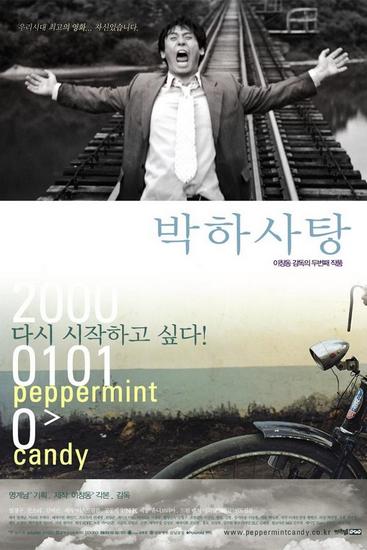
Kim Yeong-ho climbs atop the rail tracks, ready for death

Peppermint Candy (박하사탕) – ★★★★★

Peppermint Candy (박하사탕)

Peppermint Candy (박하사탕)

Peppermint Candy (박하사탕) is an exceptional piece of cinema. Opening the Busan International Film Festival in 1999, it must have been uncomfortably ironic for the audience that such a prestigious Asian festival would feature such a poetically raw dissemination of Korean culture. Directed by auteur Lee Chang-dong (이창동), the film critically examines a twenty year period of Korean history, revisiting pivotal moments through the main protagonist while also psychoanalytically deconstructing his – and by extension, Korean -masculinity. Peppermint Candy is a simply breathtaking exploration of how a person’s life is forged through culture and trauma and, featuring a staggering performance from Seol Kyeong-gu (설경구), is one of great examples of the vibrant socio-cultural power of Korean filmmaking.

In 1999, a man named Kim Yeong-ho (Seol Kyeong-gu) emerges by a riverside where a group of middle aged people are having a picnic. Interestingly, members of the group recognise Yeong-ho and invite him to join them but his erratic behaviour proves too much to bear. Leaving the picnic, Yeong-ho climbs onto train tracks with the intention of suicide, yet just before the train collides he screams, “I want to go back!” Suddenly Yeong-ho begins to revisit key moments from his life – and Korean history – that forged him into the person he has become, including meeting his estranged wife Yang Hong-ja (Kim Yeo-jin (김여진), his career as a police officer, and his first love Yoon Soon-im (Moon So-ri (문소리).

Kim Yeong-ho climbs atop the rail tracks, ready for death

Kim Yeong-ho climbs atop the rail tracks, ready for death

Director Lee Chang-dong has crafted an incredible journey through exploring the life of Yeong-ho, conveying his personal development as inherently tied to the development of Korea over a twenty year period. Initially, Yeong-ho is supremely dislikable and downright weird as he crashes the riverside picnic, behaving terribly towards people who are simply attempting to welcome him. Yet from the moment Yeon-ho steps onto the train tracks, it becomes clear there is a depth to his madness. Over the course of Peppermint Candy director Lee Chang-dong peels back layer upon layer of Yeong-ho’s psychosis in a highly poetic, subtle and symbolic manner, examining how a person’s innocence is twisted by culture and forces beyond control. The train track, for example, is much more than a place for suicide as it comes to represent his path of destiny. As the train moves back in time to revisit Yeong-ho’s past it becomes his timeline, stopping at pivotal moments until the symbolic sound of the train horn conveys that it is time to move on. As such the train and track are ethereal, spiritual beings within Peppermint Candy and are beautifully poignant narrative devices.

 As the train gently takes the audience deeper into Yeong-ho’s history, a great deal of empathy is aroused as his very character is stripped bare. From the initial quick judgement that Yeong-ho is an odd fool, each turning point in his life delicately alters the rash perception to the point where genuine sympathy is evoked from his personal tragedies. When his business suffers as a result of the Asian financial crisis, when his marriage begins to fall apart, when he loses his first love; all have penetrating emotional and psychological impact on Yeong-ho, and it is utterly enthralling to behold the events that molded him into his suicidal state. Director Lee Chang-dong also masterfully ties Yeong-ho’s increasingly fractured state as inherently Korean. As well as the aforementioned financial crisis, Yeong-ho’s career in the police force during the infamous brutality of the 1980s is portrayed, in addition to his role in the 1981 Gwangju Uprising (or rather, massacre).

Yeong-ho revisits his military past, in which he took part in the Gwangju massacre

Yeong-ho revisits his military past, in which he took part in the Gwangju massacre

In each instance, the director examines not only the manner in which Korean people were brutally oppressed during the era but also how men such as Yeong-ho, who is an analogy of all Korean men during this period, were fundamentally changed into abhorrent examples of humanity. Issues such as violence and patriarchal order are interrogated in compelling fashion and conveyed not as features of masculinity, but as cultural constructs that warp the innocence of young males.

Yeong-ho’s journey into the past is also enthralling due to the phenomenal performance of Seol Kyeong-gu. Throughout the entirety of Peppermint Candy the actor is superb in articulating the emotional and psychological state of Yeong-ho with incredible sincerity. From his unhinged suicidal behaviour through to his bitter and violent 30s, from his attempts to rebuild his life following military service through to his innocence as as student, Seol Kyeong-gu is simply amazing. His performance is keenly heartfelt at every stage of Yeong-ho’s life, so much so that his journey of self-discovery lingers long after the film has come to an end. His victories at the Grand Bell Awards and Blue Dragon Awards in 2000 attest to his prowess, and are completely deserved.

Yeong-ho and his first love Soon-im share a tender moment

Yeong-ho and his first love Soon-im share a tender moment

Verdict:

Peppermint Candy is undoubtedly one of the modern classics of Korean cinema, and is an exceptional entry by director Lee Chang-dong. The story is equal parts poetic and subtle as well as raw and compelling, as the emotional and psychological layers of main protagonist Yeong-ho are gradually peeled away. In doing so the director intricately examines the notions of contemporary Korean masculinity, yet it is made even more enthralling through the link with defining moments in Korean history. As such, Peppermint Candy is a journey both personal and national, and coupled with the phenomenal performance of Seol Kyeong-gu, is an absolute must-see.

★★★★★
Reviews
The students begin their road trip full of optimism

Sunshine Boys (1999, 면회) – ★★★☆☆

Sunshine Boys (1999, 면회)

Sunshine Boys (1999, 면회)

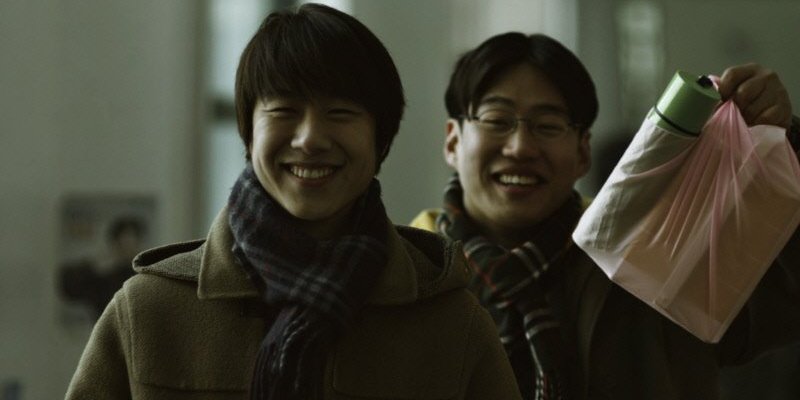
Debuting at the 2012 Busan International Film Festival, and invited to the 2013 Rotterdam International Film Festival for its international premiere, independent drama Sunshine Boys (1999, 면회) has already garnered noteworthy attention and acclaim. Helmed by director Kim Tae-gon (김태곤), the story follows Sang-won (Shim Hee-seop (심희섭) and Seung-joon (Ahn Jae-hong (안재홍) as they embark on a road trip to visit pal Min-wook (Kim Chang-hwan (김창환), who is currently serving  mandatory military service in Busan. As the three reunite for the first time since high school, they discover that events have changed them into quite different people than they remember. Learning about each other once more, the friends meet pretty tea house worker Mi-yeon (Kim Kkobbi (김꽃비) and the night unfolds in a different way than they planned.

The students begin their road trip full of optimism

The students begin their road trip full of optimism

Director Kim Tae-gon, who also co-wrote the screenplay with Jeon Go-woon, employs a social-realist aesthetic throughout the film that makes the encounters full of genuine tension and irony-fueled exchanges. The awkwardness between Sang-won and Seung-joon as they drive together is a mixture of comical and poignant as they attempt to rediscover each other, yet can only use their past as a basis. Similarly when Min-wook is reprimanded by a superior officer only slightly older than him, the results are uncomfortable yet humorous in the attempt to assert dominate masculinity amongst young men. Throughout, the director also employs filters that drain the color from the images, creating a bleak atmosphere that connotes the stage in which the threesome find themselves; victims of the Asian financial crisis of the late ’90s, all three friends are attempting to cope with their current situations that stand in stark contrast to the bright future promised from their days in high school.

Sang-won, Min-wook and Seung-joon learn about each other once again

Sang-won, Min-wook and Seung-joon learn about each other once again

As the emphasis is squarely placed on realism, it takes quite some time for the narrative to get moving, and for much of the opening Sunshine Boys is filled with awkward character moments rather than impetus. A catalyst does however arrive in the form of a letter from Min-wook’s girlfriend Esther stating her desire to break up, and who has charged Seung-joon with its delivery. Initially outraged, Sang-won and Seung-joon continually debate on whether they should hand over the letter and much of the story revolves around their indecision. Yet the film is very much Sang-won’s story as a shy and moderately gloomy university student who is forever changed by the events of the trip. The sullen young man hints at his problems without stating them outright, resulting in an often unemotional central protagonist but one that is easily relatable.

The real test for Sang-won arrives in the form of pretty tea house worker Mi-yeon, who invites him and his pals for a drink at her workplace. Director Kim Tae-gon does a great job of making the establishment foreboding with great use of lighting, isolating the tea house as disreputable, emphasizing the naivety of the young men who enter despite the warning signs. As they drink alcohol the protagonists loosen and they start to reveal more about their issues, granting greater insight into their insecurities and motivations. Yet it is Mi-yeon,wonderfully performed by Kim Kkobbi, that steals the limelight within Sunshine Boys as it is her character that provides compulsion for all involved with her suggestive smiles, probing questions and provocative body language. Mi-yeon is an intriguing character who is simultaneously innocent yet worldly-wise, attractive yet dangerous, and it is largely due to her that the film is so compelling.

The three friends meet pretty tea house worker Mi-yeon

The three friends meet pretty tea house worker Mi-yeon

Verdict:

Sunshine Boys is a highly interesting independent drama about three friends attempting to discover each other once again, after their lives have taken unexpected courses. Director Kim Tae-gon does a great job in featuring awkward, ironic moments in the lives of young men, which are granted extra potency with the application of social-realist aesthetics and drained color palette. The story does however take a very long time in establishing itself and as such the general sense of impetus suffers. Yet the wonderfully understated performance by Kim Kkobbi as Mi-yeon puts Sunshine Boys back on track, making the film an interesting journey of maturation.

★★★☆☆

Reviews
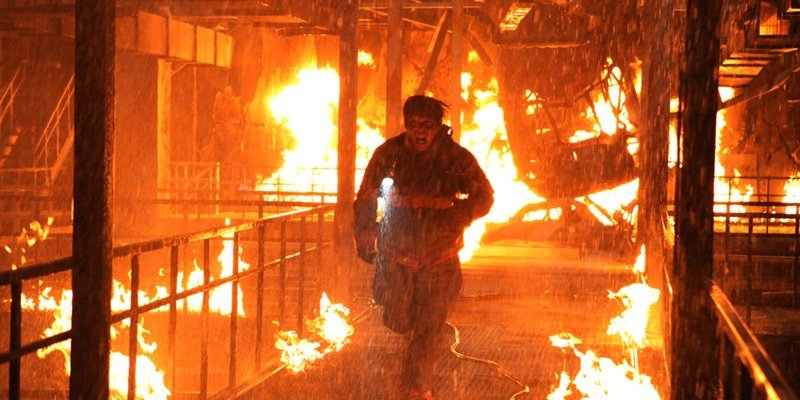
Firefighter captain Kang Yeong-gi races to battle the blaze

The Tower (타워) – ★★★☆☆

The Tower (타워)

The Tower (타워)

Director Kim Ji-hoon (김지훈) has a lot riding on disaster film The Tower (타워). His last film, sci-fi monster movie Sector 7, was reviled by critics and audiences alike and became one of the worst flops in Korean cinematic history (although it went on to secure the highest gross for a Korean film in neighbouring China). As such, questions involving his next project The Tower lingered. Had director Kim Ji-hoon managed to develop his visual aesthetics, and more complex characters and plots, into a more convincing, compelling film? The answer is, perhaps unsurprisingly, yes and no.

The Tower undoubtedly boasts some of the most impressive visual effects work ever produce within a Korean film, to the extent that it’s comparable with Hollywood productions. The sets and the stunt work are genuinely enthralling, combining to produce edge-of-the-seat sequences that are incredibly engaging and convey a palpable sense of realism and danger. That said, the movie only contains an emotional core due to the performance of Seol Kyeong-gu (설경구) as firefighter captain Kang Yeong-gi as the vast majority of protagonists are one-dimensional stereotypes, while the actors that portray them overact to an almost ludicrous degree.

It’s Christmas Eve in Seoul, and that means only one thing for the luxurious Sky Tower buildings – an exclusive Christmas party amongst the social elite of the country. Overseeing the operations are operations manager Lee Dae-ho (Kim Sang-kyeong (김상경), and the object of his affections catering manager Seo Yoon-hee (Son Ye-jin (손예진), who become closer as the deadline approaches. As the party grows nearer safety concerns begin to amount, yet are disregarded with plans forced through by the rich and powerful. When helicopters begin to circle the buildings creating a snow effect, the high winds force one of the choppers into a tower causing a fiery explosion and cutting off all exits for the patrons. Springing into action, firefighter Captain Kang Yeong-gi (Seol Kyeong-gu (설경구) leads his men, including joker Byeong-man (Kim In-kwon (김인권) and rookie Lee Seon-woo (Do Ji-han (도지한), into the building to hunt for survivors.

One of the towers is set ablaze from a heicopter crash

One of the towers is set ablaze from a helicopter crash

Taking huge reference from 1974’s The Towering Inferno as well as the 9/11 twin tower attacks, director Kim Ji-hoon’s The Tower is an exciting and exhilarating experience. Post-production on the disaster film has taken around two years to complete and it shows; the explosions, destruction, and stunts are convincing throughout as fires rage and people die in tragic and horrifying fashion. The film undoubtedly sets a new standard of quality in Korean cinema for special effects prowess, as helicopters collide, concrete fractures underfoot, and fire engulfs everything in its path. Interestingly, the cause of the disaster is akin to Titanic in that the sheer arrogance of those who dwell in Tower Sky, continually referring to their location as ‘heaven’ and close to God, are conveyed as the symbolic perpetrators of the destruction, adding something of a morality play to the devastation.

Yet the visual aesthetics are nothing without an emotional core, and in this respect The Tower somewhat succeeds. The introduction of the various protagonists working and dwelling within Tower Sky is a highly mixed affair, generally featuring stereotypes. Interesting members such as operations manager Lee Dae-ho and daughter Ha-na, and catering manager Lee Yoon-hee, are compelling but receive little character development due to unimportant tertiary characters entering the narrative that have no real impact. Also, the extreme overacting by most of the cast is an enormous irritation, notably Kim Seong-oh (김성오) as chef In-geon who is intended as comic relief but is infuriating throughout. The saving grace of The Tower comes in the form of firefighter Captain Kang Yeong-ri, who provides much needed heart and soul to the rescue attempt as he gallantly battles blazes, disintegrating floors, and corrupt officials in his single-minded quest to get the survivors to safety. Wonderfully performed by actor Seol Kyeong-gu, the captain’s mission is the driving force of the film and is genuinely enthralling to watch, with his sense of duty and responsibility simultaneously sincere and poignant.

Firefighter captain Kang Yeong-gi races to battle the blaze

Firefighter captain Kang Yeong-gi races to battle the blaze

Captain Kang Yeong-ri is also joined by the humorous Byeong-man and newbie Lee Seon-woo in the search for survivors. Byeong-man provides comic relief, generally in the form of silly frivolity, which is mildly amusing in breaking up serious scenes. Lee Seon-woo however is one of the more intriguing characters, as he undergoes a transformation from reluctant rookie to employing skills learnt from Captain Kang, and his development is highly enjoyable. The three fire fighters routinely feature in very impressive stunt work throughout the film, and their successes and failures do not fail to induce an adrenaline rush.

Operations manager Lee Dae-ho also partakes in stunts, as the ‘everyman’ forced to find courage to protect his makeshift family. Such scenes are also entertaining, although they often push the suspense of disbelief to its limits, yet are engaging nonetheless. Unfortunately due to the vast number of supporting roles, Lee Dae-ho’s burgeoning relationship with Seo Yoon-hee is largely overlooked, begging the question why such talented big name stars as Kim Sang-kyeong and Son Ye-jin receive so little screen time. However, despite being underdeveloped their relationship does provide impetus to certain scenes as well as some tender moments.

Those remaining desperately fight for survival

Those remaining desperately fight for survival

Verdict:

The Tower is an extremely visually impressive disaster film, and a return to form for director Kim Ji-hoon. The special effects and stunt work are some of the best ever produced within a Korean film, and certainly on par with Hollywood films of a similar ilk, conveying a genuine sense of danger throughout. That said, the vast number of stereotypical supporting roles bog the story down resulting in an overall lack of character development and audience investment. Lucky then that Seol Kyeong-gu enters the fray as Captain Kang Yeong-ri, who single-handedly lifts the film into a compelling and emotional story, making The Tower an enjoyable entry into the genre.

★★★☆☆

Reviews
Gyeong-sun and Su-jin attempt to flee from Dok-bul

No Blood No Tears (피도 눈물도 없이) – ★★★☆☆

No Blood No Tears (피도 눈물도 없이)

No Blood No Tears (피도 눈물도 없이)

It goes without saying that the films of Quentin Tarantino have left an indelible impression on the cinematic landscape. This is especially the case with Pulp Fiction, whereby the amalgamation of extreme violence, pop culture, and variety of narrative threads have invited a host of admirers and homages. Director Ryoo Seung-wan (류승완) fits both areas, consistently expressing similar themes throughout his body of work albeit with his own Korean flair. Indeed, his nickname as ‘the Korean Tarantino’ is not entirely undeserved.

No Blood No Tears (피도 눈물도 없이), director Ryoo Seung-wan’s second feature, has clearly taken gangster films such as Pulp Fiction and Snatch as huge sources of inspiration, featuring a multi-strand narrative with an assortment of colorful low lives and gangsters seeking the perfect score. Being a Korean production, there is also a great deal of Confucian ideals and martial arts added to the mix for good measure. It’s a largely enjoyable ensemble piece featuring some wonderful character actors, yet the disparate narratives never coalesce convincingly, in addition to the vast number of protagonists, tonal imbalances, and blatant misogyny that permeates throughout the story.

Gyung-sun (Lee Hye-yeong, 이혜영), a down-on-her-luck taxi driver, is continually harassed by loan sharks seeking debt collection and the police for her criminal past. While attempting to forge a life for herself despite awful passengers, her taxi is hit by Su-jin (Jeon Do-yeon, 전도연) who is on the run from her violent boyfriend Dok-bul (Jeong Jae-yeong, 정재영). A former boxing champion, Dok-bul works for the aging local kingpin KGB, or Kim Geun-bok (Sin Goo, 신구) whose power base is unchallengeable particularly while flanked by martial arts master the Silent Man (Jeong Doo-hong, 정두홍). Unknown to KGB however, is that everyone around him is conspiring to steal his fortune, even local karaoke worker Chae Min-su (Ryoo Seung-beom, 류승범).

Gyeong-sun has trouble with loan sharks and the police

Gyeong-sun has trouble with loan sharks and the police

One of the great strengths of No Blood No Tears is the gritty, violence-fueled world of Incheon inhabited by the array of gangsters and charlatans. The aesthetics employed by director Ryoo Seung-wan, such as the wonderful use of low key lighting, convey an urban landscape fraught with danger and violence, while the dilapidated arenas in which confrontations occur lends a disturbing sense of realism to the proceedings. Within this world are a vast number of protagonists, each with their own foibles and agendas, all connected with one another through various relationships and each strand unfolds in a thoroughly entertaining manner. As such comparisons with Pulp Fiction are inevitable, particularly as director Ryoo Seung-wan uses similar non-linear editing techniques in which to orchestrate events, although he later succumbs to traditional linear storytelling. Unfortunately however, with so many characters the director doesn’t manage to balance the vast number of plot threads and therefore underdevelopment of key personnel is a profound issue throughout the film. This is acutely the case with indebted taxi driver Gyeong-sun and wannabe pop starlet Su-jin, who are the masterminds behind the heist but are forced to the sidelines while focus is granted to the male roles. The intention is clearly a Thelma and Louise style narrative whereby two unlikely women join forces to take on a male-dominated world, yet as well as lack of development the film contains some frankly awful misogyny as Gyeong-sun and Su-jin are repeatedly beaten to an absurd degree by the men around them.

Stylised violence is one of director Ryoo Seung-wan’s greatest assets, and when not used to abuse the female characters, it is a genuine delight. Of particular note is the confrontation between retired boxer Dok-bul and the Silent Man, which features some lightning fast and bone crunching moves made all the more powerful through utilizing the gritty realism of Incheon’s underworld. The blood, sweat, and deft use of light and shadow are exhilarating to behold as the men fight for their lives – and their stake of the money – within the battleground of a dog fighting cage, and is a testament to the director’s skill and flair for action sequences.

KGB gives orders to Dok-bul, while flanked by the Silent Man

KGB gives orders to Dok-bul, while flanked by the Silent Man

The violence is also accompanied by a healthy dose of black comedy through humorous use of bad language and bizarre confrontations between the eccentric characters. While not as sophisticated as the films which inspired it, the comedy within No Blood No Tears is still highly enjoyable. A large amount of humor is left to the director’s brother, Ryoo Seung-beom, as dim-witted karaoke worker Chae Min-su. Unfortunately this tends to be slapstick in nature, although there are laugh-out-loud moments to be had. Most of the comedy appears through the double-crosses and surprise encounters as everyone attempts to outsmart each other and disappear with the money, and the quick pace as events unfold is entertaining. It is, however, difficult to be fully invested in the antics as Gyeong-sun and Su-jin tend to have little involvement in the robbery despite their central roles in the film, while villainous thug Dok-bul seems to emerge as an anti-hero of sorts, only for things to later reverse in an attempt to wrap all the narrative threads up nicely. As such, while certainly enjoyable, the finale is lacking in compulsion making the film somewhat hollow and bittersweet as the credits begin to role.

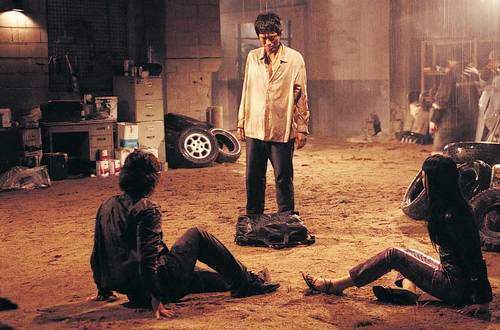
Gyeong-sun and Su-ji attempt to flee from Dok-bul

Gyeong-sun and Su-jin attempt to flee from Dok-bul

Verdict:

No Blood No Tears is a gritty, urban tale of gangsters and charlatans in a Korea-meets-Pulp Fiction style. Director Ryoo Seung-wan has crafted a world of danger and violence with expert use of lighting and environments, while his trademark of stylized action is exhilarating to behold. Yet the unbalanced narrative and lack of character development due to the enormous cast results in a lack of investment, particularly with the central female roles, who suffer from awful misogynistic abuse throughout the film. No Blood No Tears is ultimately an enjoyable, though uneven, gangster romp.

★★★☆☆

Reviews