Camaraderie initially proves difficult

As One (코리아) – ★★☆☆☆

As One (코리아)

As One (코리아)

The divide across the Korean peninsula has provided history with some of the most fascinating and horrifying accounts of human endeavour. Both the North and the South have flip-flopped between moments of sheer brutality against each other yet have also achieved poignant moments of recompense. While terrorist attacks and threats grab headlines, the strong underlying sense of nationality and ‘brother/sisterhood’ has spurred other stories of joint enterprise, family reunification and co-op sporting events that are smaller and more intimate in nature, hinting at the potential future for a united people; they are, after all, Korean.

One such tale of triumph over (ideological) adversity was obtained during the 1991 International Table Tennis Championships in Chiba City, Japan, where South Korean and North Korean table tennis players partnered to compete against the rest of the world. Brought to celluloid by director Moon Hyeon-seong (문현성), As One (코리아) flirts dangerously close with being an average TV movie for the majority of its’ running time yet manages to become an engaging and effective sports drama in the final act.

Facing off in the semi-finals during the 1990 Asian games, South Korean table tennis player Hyeon Jeong-hwa (Ha Ji-won 하지원) confronts her Northern rival Lee Boon-hee (Bae Doona 배두나), both determined to win not only for themselves but for the pride of their respective countries. Narrowly defeating her opponent, Jeong-hwa moves on to the finals but is bested by the Chinese champion (Kim Jae-hwa (김재화), nicknamed ‘The Great Wall’. As the teams prepare themselves for the 1991 Championships in Chiba City, the governments of the North and South make a surprising statement – they will combine their athletes to create a ‘Unified Korea’ team. Forced to play alongside each other, Jeong-hwa and Boon-hee must train to overcome the ideological differences between them and defeat their Chinese rivals once and for all.

The champions from the North and South unwillingly join forces

The champions from the North and South unwillingly join forces

Contemporary Korean films have a reputation for being remarkably even-handed in their representation of Northern protagonists, and As One is no exception. In fact, it’s largely thanks to the balanced approach and ideological banter that the film continues to be compelling during the incredibly lackluster first and second acts. For every quip about human rights comes a retort regarding misogyny; for every representation of stoic obedience is a portrayal of thoughtless misbehaviour. Interestingly it is the Northern athletes, led by Boon-hee, who are the most sympathetic and accommodating protagonists, while those from the South are often rude, aggressive and stubborn, as exemplified by Jeong-hwa. Such a concoction of characters offer predictable pleasures, but are entertaining nonetheless.

However the contrivances of the narrative appear all too frequently and reduce the athletes into one-dimensional caricatures often found in Korean TV dramas – yet without the possibility for development – with only Jeong-hwa and Boon-hee narrowly escaping. A true story such as this means the finale is inevitably predictable, yet the decision to include a supporting cast of stereotypes with stereotypical scenarios is perplexing and detracts from the overall enjoyment. Also halting the engagement of the audience is the soundtrack, which rarely naturally enters the film. With the exception of the final act, the music is continually a distraction and is often disjointed from prior scenes.

Luckily As One manages to redeem itself during the last moments as the final matches of the tournament are thrilling. Director Moon Hyeon-seong (문현성) makes wonderful use of editing and slow-motion techniques to deliver exciting and suspense-filled moments that are riveting and adrenaline-inducing. Strangely he constructs the penultimate match as more thrilling than the final itself, with Yoo Sun-bok’s (Han Ye-ri (한예리) underdog tale an incredibly compelling part of the film, yet also employs enough different filmic techniques to make the final a powerfully emotive viewing experience. The trials faced during the final also allows for the introduction of melodrama which is wonderfully capitalized on as the two teams are forced to part ways. It is here that the acting prowess of the two talented lead actresses finally appears as their parting is both poignantly sincere and heart-wrenching, exhibiting a quality that is a testament to how important the event was for all involved.

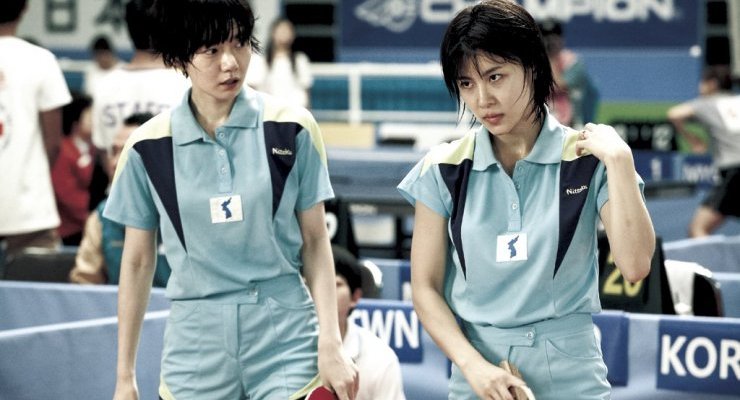
Camaraderie initially proves difficult

Camaraderie initially proves difficult

Much has been reported regarding Ha Ji-won’s table tennis training by the very champion she portrays, and how her skill level potentially rivals world class athletes. Sadly, due to the rapid editing and stylization, the actress’ skill level does not fully translate into film. That said, Ha Ji-won’s passionate, determined and stubborn performance is articulated well throughout As One with her reluctance to accept her long-term rivals as partners convincing. The characterization often gives her little room to manoeuvre, however during the final act Ha Ji-won is utterly enthralling as she bids farewell to her close friend as her evolving level of grief portrays incredible emotional turmoil.

Bae Doo-na shares a similar fate as Boon-hee, who gives a more stoic-yet-understanding performance and as such is the more endearing protagonist. Her weight loss, in attempting to portray the same physique as the real Boon-hee, is quite a shocking visual as her thin frame conveys a frailty and tenderness not ascribed to others. Bae Doo-na’s physical dedication also adds potency to the trials she endures throughout the narrative, while her level-headed and thoughtful acting style present a mature and contemplative counter to Ha Ji-won. Due to Bae Doo-na’s performance the final parting conveys penetrating sincerity, making it virtually impossible not to be moved emotionally.

Out of all the supporting cast only one actress rises above the stereotypical roles bestowed upon them – Han Ye-ri. Her turn as anxious novice Yoo Sun-bok is entertaining and poignant, particularly during the penultimate game. Unfortunately her tale is somewhat faded into the backgrounded as team dynamics and political tension receive focus, yet Han Ye-ri gives a highly capable performance as the underdog achiever.

Jeong-hwa and Boon-hee achieve the unthinkable on and off the court

Jeong-hwa and Boon-hee achieve the unthinkable on and off the court

Verdict:

Thanks to the true story on which it’s based, As One has plenty of potential for an incredible sports drama yet only manages to partially capitalise on the events that unfolded. While the ideological differences are balanced and entertaining, and the final matches are thrilling and exciting, the choice to fill the narrative with one-dimensional stereotypes and scenarios is detrimental to the film overall. That said, the strength of what transpired is moving and will undoubtedly remind audiences of the power of sports in uniting disparate people, and will certainly hold particular resonance for those of Korean descent.

★★☆☆☆

Reviews
The students of No Use High relish in their sexual promiscuity and non-traditional education

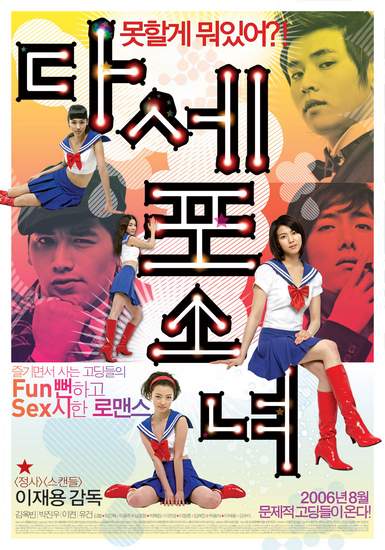
Dasepo Naughty Girls (다세포 소녀) – ★★☆☆☆

Dasepo Naughty Girls (다세포 소녀)

Dasepo Naughty Girls (다세포 소녀)

The opportunity to talk in terms of queer theory, ‘camp’, and ‘otherness’ in mainstream Korean cinema is quite rare. While Korean ideology continually changes at an incredible rate, the conservative Confucian ethics still hold immense influence over the attitudes towards the roles of men, women, and sexual relations. Yet cinema is arguably the best medium in which to explore such counter-cultural themes given the creative freedom of expression inherent to the industry, perhaps more so than the structurally rigid television dramas and K-pop. Enter Dasepo Naughty Girls (다세포 소녀).

Based on the highly popular web-comic, Dasepo Naughty Girls explores the lives of the students at Useless High School (or No Use High), a school where sexual promiscuity is encouraged and the curriculum is anything but traditional. Director Lee J-young (이재용) wisely exploits the opportunity to employ original and creative vision to a narrative that includes protagonists of every sexual persuasion and circumstance. The result is incredibly mixed, as the directorial flair is certainly unique and celebratory, yet is aligned with an awfully vapid and directionless narrative that not only forces the LGBT and transvestite characters into figures of ridicule, but also pushes the boundaries of perversity as certain scenarios are clearly middle-aged male fantasies.

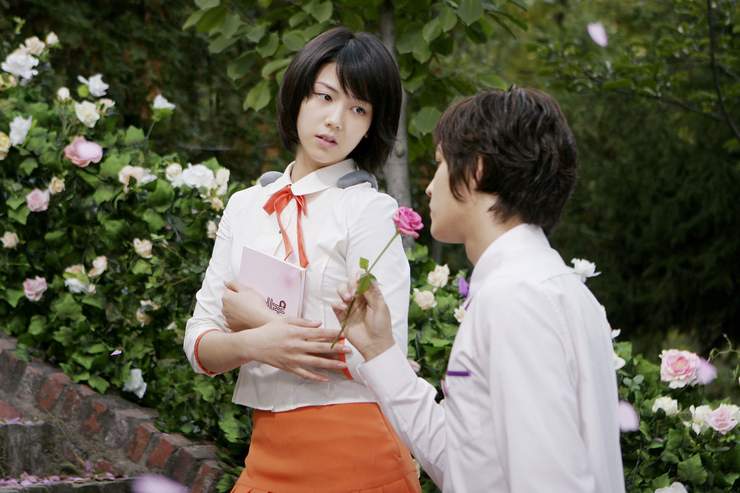
The students at No Use High live rather disparate lives. ‘Poor Girl’ (Kim Ok-bin (김옥빈) lives an extremely humble life due to poverty, literally carrying its’ personification on her back. ‘Rich Boy’ Anthony (Park Jin-woo (박진우) has found love, yet is confused as she is a pre-op transgendered person interestingly named ‘Two Eyes’. Her brother, ‘Cyclops’ (Lee Kyeon (이켠), suffers as the loneliest and only virginal member of the school. As the students’ lives are interwoven, each one must face personal trials to overcome before the final day of graduation. Yet their greatest obstacle is posed by the evil and mysterious principle, who has the power to change bold, individualistic female students into brainwashed geeks. The students must work together to defeat the evil menace in order to continue their lifestyles and graduate unscathed.

The students of No Use High relish in their sexual promiscuity and non-traditional education

The students of No Use High relish in their sexual promiscuity and non-traditional education

Stylistically, Dasepo Naughty Girls is an enjoyable treat with a vibrant colour palette and quirky musical offerings. The opening sees a group of K-pop stylized girls in pink dancing through the school, which is not only fun but sets up the offbeat nature of the film well. Similarly the introduction of musical numbers within the film is entertaining and unique as Korean norae-bang (singing room) culture is wonderfully injected to provide comedy.

Yet aside from a few initial titters, Dasepo Naughty Girls is surprisingly very light on comedy as the scenes intended to provide laughs often result in either immature body jokes or are offensive. While it’s wonderful to see LGBT and transvestite characters receiving screen-time that is more celebratory than depressive, they are quickly ridiculed by a narrative that is desperately attempting to be fun and hip while disguising archaic ideological judgement. For example, ‘Rich Boy’ Anthony’s infatuation with transgendered ‘Double Eyes’ begins humorously during a bathroom error, yet a pornographic video reduces her to a mere body prop from which the character never recovers. ‘Poor Girl’s’ servicing of ‘clients’ also begins well, yet upon meeting transvestite ‘Big Razor Sis’ the duo compete for feminine superiority and acceptance through performance that clearly had only one winner from the start. Racism also appears in the form of an absentee English teacher who not only has sexual liaisons with students but has also infected them with an STD. In these and other scenes it is never the denizens of No Use High that pass judgement but rather the narrative that frequently posits such figures in society as shocking ‘deviants’ to be laughed at and from which comedy can be derived.

Yet ironically the most bizarre – and frankly perverse – plot involves the respected figure of the principal. The mystery involves female students who were previously sexually adventurous, but after visiting the principal’s office become studious nerds with little interest in boys. To achieve this, the principal takes a glob of green material (presumably jade) from his mouth and, using his finger, inserts it into the students’ vagina, for which they are thankful and grateful. As prior to such scenes the principal and his methods were barely a blip on the narrative radar, this tangent conveys not only a ‘tacked on’ sensibility but also a middle-aged male fantasy of intimacy with sexually willing high school girls. The resulting battle, which sees students wafting their genital ‘power’ at the source of the disturbance, is a surreal scenario that seemingly attempts to circumvent prior scenes through oddity, and additionally offers precious little closure on the array of narrative threads that lead to such a juncture.

'Poor Girl' meets a transvestite client for teenage frolics

‘Poor Girl’ meets a transvestite client for teenage frolics

It is particularly difficult to discuss Dasepo Naughty Girls in terms of acting, as the film is intended to be an over-acted and surrealist take on high school life. The extremely limiting screen-time bestowed upon most of the protagonists also hinders proceedings as most characters barely reappear after their initial introduction.

Amongst the handful of characters that recur, it is  ‘Poor Girl’ who appears the most and as such carries Dasepo Naughty Girls on her shoulders. This is actually in the films’ favor as the actress is incredibly talented, managing to find the ambiguous fine line between tongue-in-cheek humour, offbeat comedy, and genuine acting. Kim Ok-bin gives the film much needed focus and grounding as well as a heart and soul, and her presence is sorely missed when other protagonists are followed. Her scenes with ‘Big Razor Sis’ are in stark contrast to the poverty inherent in her private life, yet the actress is convincing in each and every scenario.

'Poor Girl's' love for 'Rich Boy' Anthony is continually unrequited

‘Poor Girl’s’ love for ‘Rich Boy’ Anthony is continually unrequited

Verdict:

Dasepo Naughty Girls is stylized entertainment, one that uses imaginative colour and camera techniques to provide fun and quirky originality within a national cinema that tends to focus on more standardized storytelling. Yet the stylization cannot hide the vacuous nature of the narrative which simultaneously celebrates and derides the protagonists within, and which also fails to merge the various threads into a coherent whole.

★★☆☆☆

Reviews
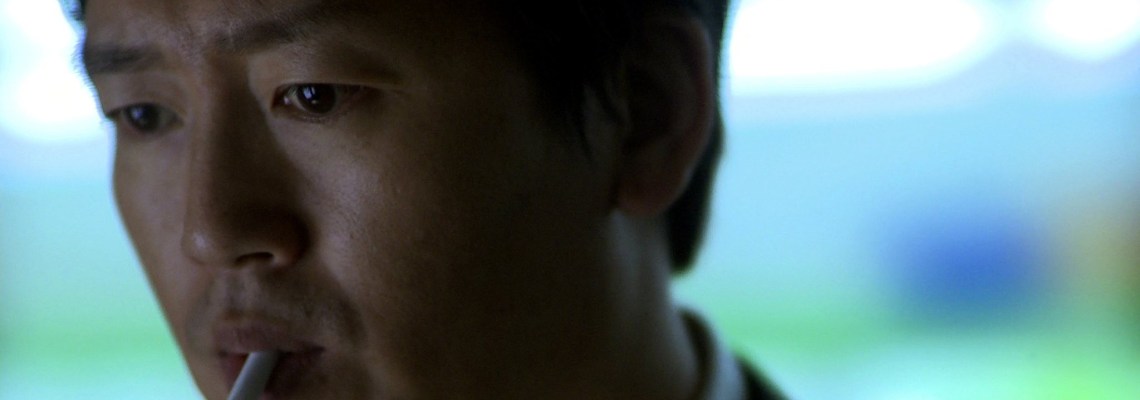
The amesiac man (Kim Jeong-tae (김정태) attempts to (re-)discover his identity

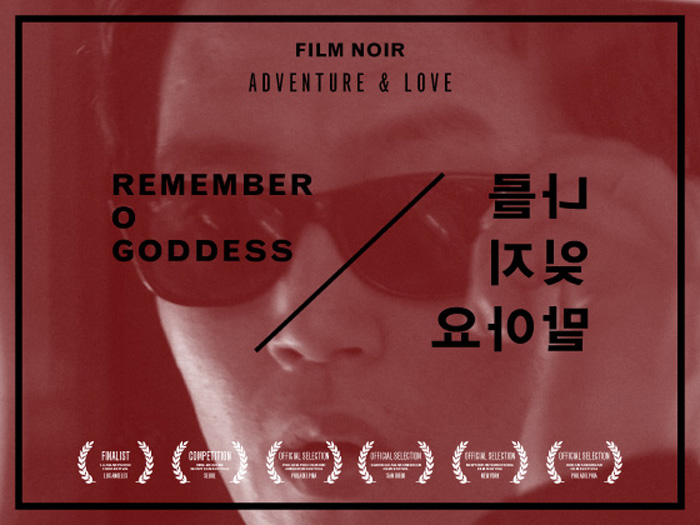
Remember O Goddess (나를 잊지 말아요) – ★★★★☆

Remember O Goddess (나를 잊지 말아요)

Remember O Goddess (나를 잊지 말아요)

One of the most fundamental ideological features of Korean cinema is alienation, yet the topic is almost always at the fringes of the narrative, accepted as a commonplace backdrop against which the protagonists reside. Oh Dae-su was sadistically kidnapped, imprisoned, and isolated for years in Seoul in Oldboy; Mr. Kim attempted suicide due to the stress of city life, and found a private paradise in Castaway on the Moon; and Yang Mi-ja expressed her loneliness and repressed passion through art in Poetry. Yet in each instance it was not their loneliness that drove the narrative forward, despite the central role in which it played in characterization.

In Remember O Goddess (나를 잊지 말아요) director Lee Yoon-jung explores the concept of alienation in conjunction with identity in contemporary Seoul, constructing a fascinating and enthralling psychological noir that exemplifies the incredible quality of Korean independent cinema. The delicately nuanced scenes, the intellectual-yet-comedic dissection of contemporary identity, as well as an arguably career-best performance by lead actor Kim Jeong-tae (김정태), combine to create a 25 minute short film that easily surpasses the majority of feature length productions.

The amesiac man (Kim Jeong-tae (김정태) attempts to (re-)discover his identity

The amesiac man (Kim Jeong-tae (김정태) attempts to (re-)discover his identity

N.B. Before reading the review, you can watch the 25 minute short film at the official website here.

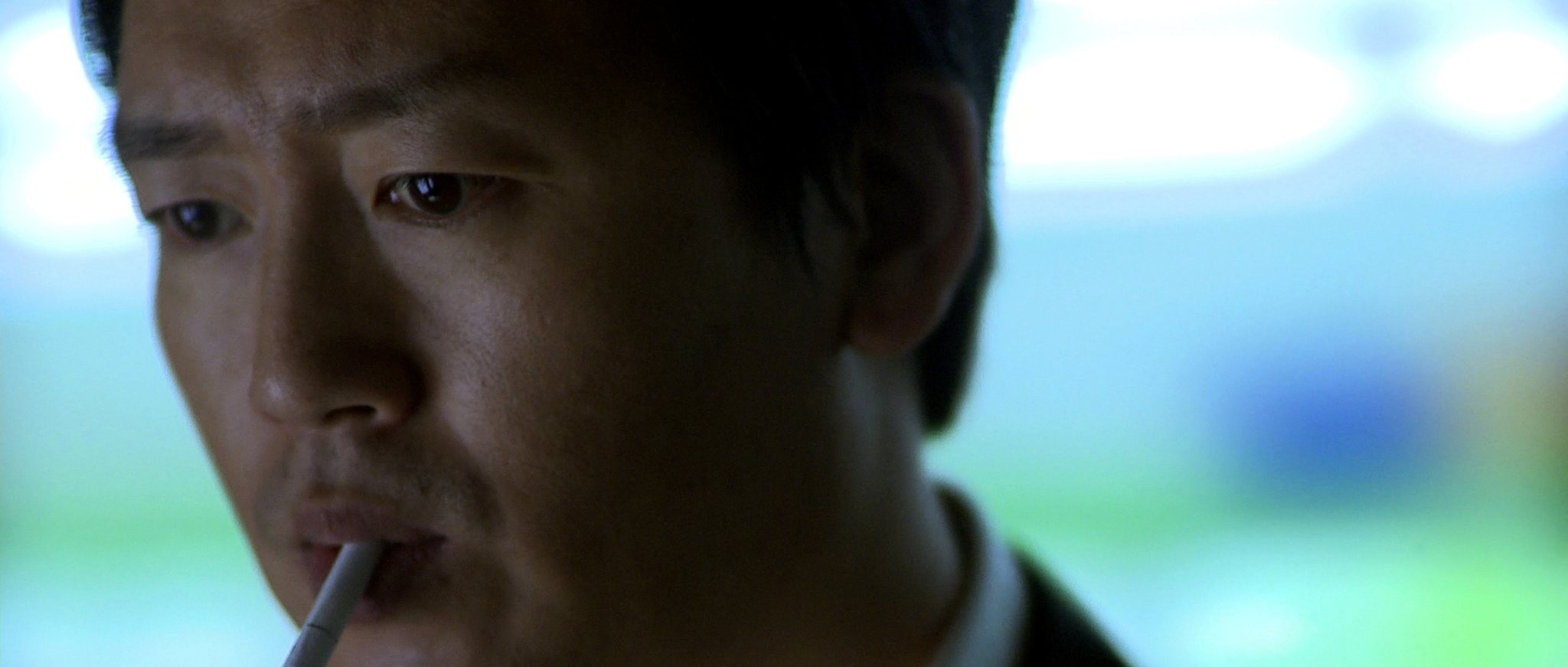
Remember O Goddess is a sophisticatedly crafted, character-driven study of a man searching for his identity. Rather than focus on bombastic or shocking scenes, director Lee Yoon-jung emphasizes the subtleties of the protagonists’ dilemma as he attempts to piece together his fractured self. The manner in which this occurs is part-satire and part-capitalist critique as the man scours his belongings for clues, investigating the most minor details in order to discover what kind of man he truly is. This leads to moments both comedic, as he attempts to (re)discover smoking, and poignant, as he silently stares at the vast and densely populated cityscape before him.

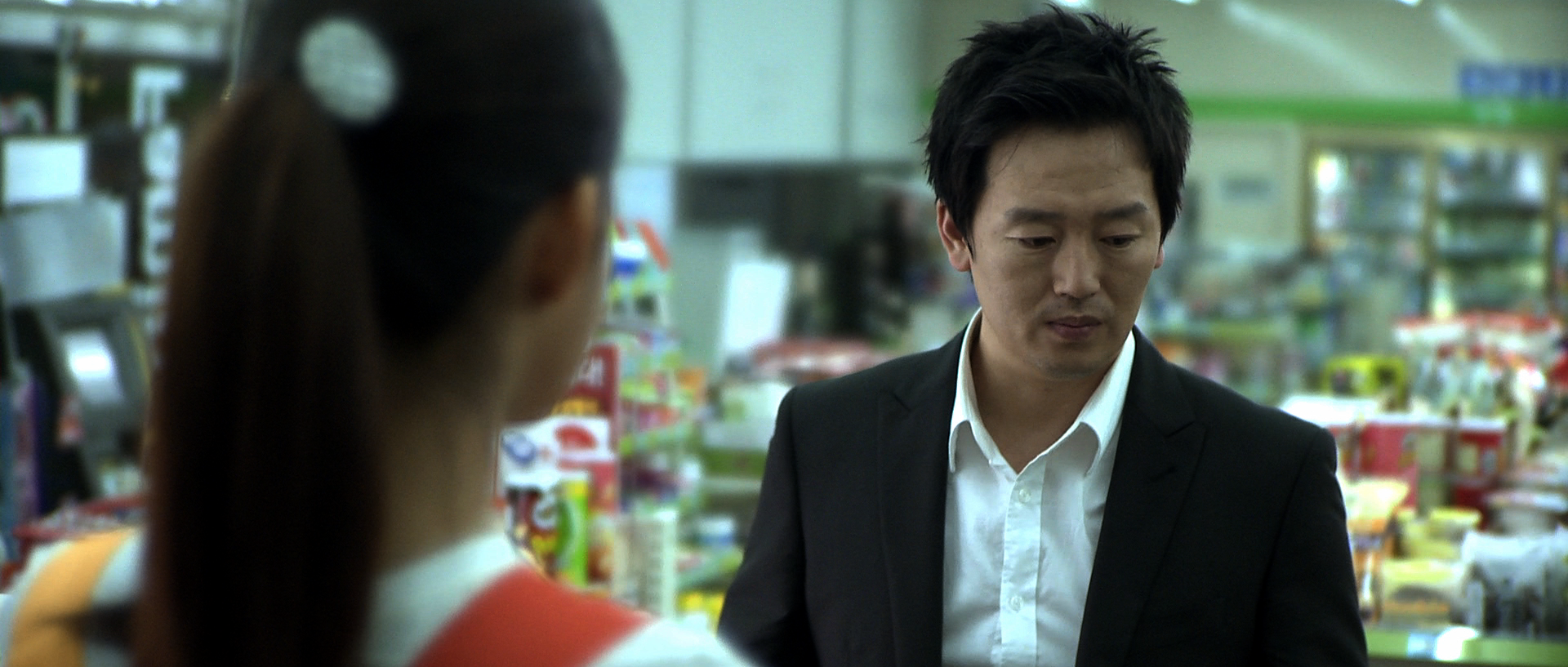
Relationships are also wonderfully deconstructed throughout the film, as the man desperately clings to any form of connection that his circumstances allow. Yet in doing so he highlights the artificiality of contemporary relationships, as well as the (im)personal barriers and the impatience of citizens. Such artifice is eloquently interrogated as those in the service industries are polite yet superficially so, rapidly displaying frustration at the man’s naivety and innocence. Director Lee Yoon-jung showcases her skill during such delicately nuanced scenes – including the relationship with the female store clerk, and a comedically tragic phone call – conveying a plethora of visual and narrative motifs and emotions that define the existence of a contemporary city lifestyle.

The man attempts to forge a relationship with a convenience store worker

The man attempts to forge a relationship with a convenience store worker

It is not an exaggeration to say that in his role as the amnesiac man, Kim Jeong-tae is absolutely sublime. His performance is staggering and conveys an actor fully dedicated to inhabiting the role, as his subtle mannerisms and awkwardness highlight the intense vulnerability of a man pushed to the brink of desperation. Whether the scene involves reporting himself as a missing person or merely attempting to acquire the date, Kim Jeong-tae simultaneously exhibits fragility, curiosity, loneliness and anguish seemingly effortlessly.

The man stares at the vast cityscape in which he inhabits

The man stares at the vast cityscape in which he inhabits

Despite such high-level praise, Remember O Goddess suffers from one minor issue. This is not related to any of the creative talents involved in producing the film; the reason is, rather superficially, due to the limiting running time. The film is clearly a prelude of a feature film, awash with potential that literally demands further exploration which a greater time limit would allow. As such the film functions as an introductory segment of a promising narrative, a declarative showcase of the talent the conglomeration of individuals are capable of.

This is where you can help. Director Lee Yoon-jung is seeking funding to produce the feature-length version of Remember O Goddess via kickstarter. Please visit the website here to read all the information and to donate to the project. The film is clearly well worth supporting and the cast and crew are fully committed to the production, with all money raised going into the production itself.

★★★★☆

Reviews
After a brief stint in Kpop, Jin-ah now hosts the failing radio show 'Wonderful Radio'

Wonderful Radio (Love On-Air) (원더풀 라디오) – ★★☆☆☆

Wonderful Radio (원더풀 라디오)

Wonderful Radio (원더풀 라디오)

The Korean fascination with K-pop celebrities and the ‘scandals’ that are seemingly inherent within the industry continually appear in a variety of cinematic forms. Comedy 200 Pounds Beauty explored the concept of beauty and image, while horror White: The Melody of the Curse focused on the rivalry between the members and the plagiarism that frequently occurs. Interestingly, with romantic-comedy Wonderful Radio (원더풀 라디오), maturity and life following celebrity status are examined.

Wonderful Radio joins You’re My Pet as the other big star-driven romantic comedy of 2011; and, as with You’re My Pet, offers little more than a vacuous narrative of two attractive yet contrasting people forging an improbable relationship. Save for an interesting but all-too-brief interrogation of the pretense inherent in K-pop, Wonderful Radio is a mildly entertaining yet instantly forgettable experience.

Jin-ah (Lee Min-jeong (이민정) is the radio DJ for the ailing ‘Wonderful Radio’ segment, a show that is hemorrhaging listeners chiefly through her selfish and rude behavior. Jin-ah desperately longs for her past career as a K-pop icon in girl group ‘Purple’, yet her attempts to rejoin the music industry are continually thwarted as younger stars rise in popularity. In a bid to finally axe the show and Jin-ah’s career, manager In-seok (Kim Jeong-tae (김정태) promotes the notoriously difficult producer Lee Jae-hyeok (Lee Jeong-jin (이정진) to helm the show. Yet against the odds, and despite their constant bickering, Jin-ah and Jae-hyeok may have found a way to save ‘Wonderful Radio’ as well as the start of a blossoming romance.

After a brief stint in Kpop, Jina now hosts the failing radio show 'Wonderful Radio'

After a brief stint in K-pop, Jin-ah now hosts the failing ‘Wonderful Radio’

The above comparison between Wonderful Radio and You’re My Pet may seem unfair, yet both films are intended as rather commercially driven efforts to promote the central performers through crowd pleasing romantic tales. Unfortunately for Wonderful Radio, Lee Min-jeong – though a fast rising star – and Lee Jeong-jin do not have the same star power or acting credentials as Kim Ha-neul and Jang Geun-seok, and as such the contrived narrative conveys an even more manufactured sensibility.

As is often noted in any basic film studies and screen-writing course, the opening five-to-ten minutes of any film are crucial in attracting and captivating audience attention; if successful, audiences can forge empathic bonds with the protagonists, with the intensity of the faux-relationship mesmerizing viewers into following the narrative through to its conclusion. Wonderful Radio does not adhere to such a train of thought. The opening act, while admittedly setting up the premise of Jin-ah and her declining show, is utterly directionless with the only driving force being Jin-ah’s intolerable behavior. While she is intended to be something of a ‘princess’ stereotype, full of arrogance and pride, Jin-ah is actually closer to being psychotic as exemplified by her recurring temper tantrums and childish fits. Such scenes may very well be for the sake of comedic entertainment, but when the protagonist becomes quiet and reflective scant moments later it is clear that characterization and narrative structure were something of an afterthought.

Luckily Wonderful Radio finds direction thanks to the timely intervention of a taxi driver – the ever-dependable Jeong Man-sik (정만식) – who adds much needed heart and emotion to the proceedings. With a core theme attached director Kwon Chil-in (권칠인) manages to explore, albeit briefly, the superficial facade of being a K-pop star and promotes ‘authentic’ music, including playing an instrument and removing cheorography, as superior due to the emotional content. While the intriguing topic has incredible potential, it is rapidly jettisoned in favor of returning to the unconvincing love developing between the mismatched lead actors.

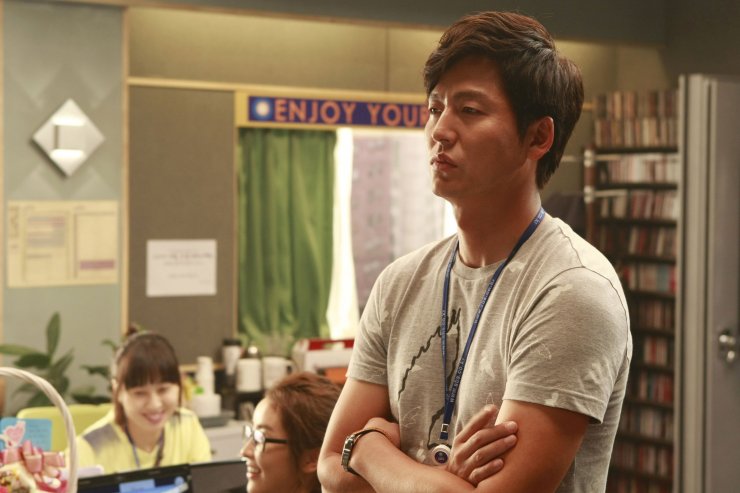
Uncompromising new producer Jae-hyeok attempts to make Wonderful Radio a hit

Uncompromising new producer Jae-hyeok attempts to make Wonderful Radio a hit

With such a vapid narrative, the director wisely – or cynically – focuses vast attention on Lee Min-jeong’s undeniable beauty. Indeed, seemingly every few minutes the actress’ face is framed in close up with extreme soft focus, often appearing fragile and on the verge of tears. Lee Min-jeong’s charisma during such moments is palpable and distracting enough to forget the incredible shortcomings of the narrative for an instant, yet disapates almost immediately once her presence is absent. However it is mostly her image that causes such affliction as Lee Min-jeong’s performance is, for the first and second act at least, below par due to the odd behaviorial schizophrenia of her protagonist. The actress is much more comfortable in the final act when her character has calmed, and adequately portrays the character.

The rest of the cast are mostly in supporting roles, with even love interest Lee Jeong-jin as Jae-hyeok something of a secondary character who is woefully underdeveloped and under-represented. The supporting cast enter the narrative seeingly to add people to the scenes and offer very little aside from the occassional moment of comedy. Actor Lee Kwang Soo fares best in this regard as downtrodden Dae-geun, displaying his comedic sensibilities well despite the predicability.

Jina attempts to relaunch herself as a more 'authentic' musician - and human being

Jin-ah attempts to relaunch herself as a more ‘authentic’ musician – and human being

Verdict:

Wonderful Radio is very much a comercially-driven star vehicle for Lee Min-jeong, which would certainly be no bad thing were it not for the directionless, bland and predictable narrative, and the incredibly underdeveloped characterisation. The film does attempt to correct the issues with the introduction of emotional content and an interesting perspective on the world of K-pop, yet these measures are brought in far too late and appear all too briefly to make an impact. As such, Wonderful Radio is a lacklustre romantic-comedy that is instantly forgettable.

★★☆☆☆

Reviews