If you’ve ever wanted to be involved in Korean film production, or in independent film production in general, this is an opportunity you certainly won’t want to miss.
Remember O Goddess, an incredible noir 25 minute short film by director Yoon Jung Lee, is making waves and has been invited to several prominent festivals including the 2011 LA Asian Pacific Film Festival, in which it was a Finalist for the Golden Reel Jury Award for Short Film, in Los Angeles, USA; the 2011 Urban Suburban Film Festival, Philadelphia, USA; and the 2011 New York International Film Festival, NYC, USA amongst others.
In order to extend the film into a feature-length production, Yoon Jung Lee is seeking additional funding – which is where we can help.
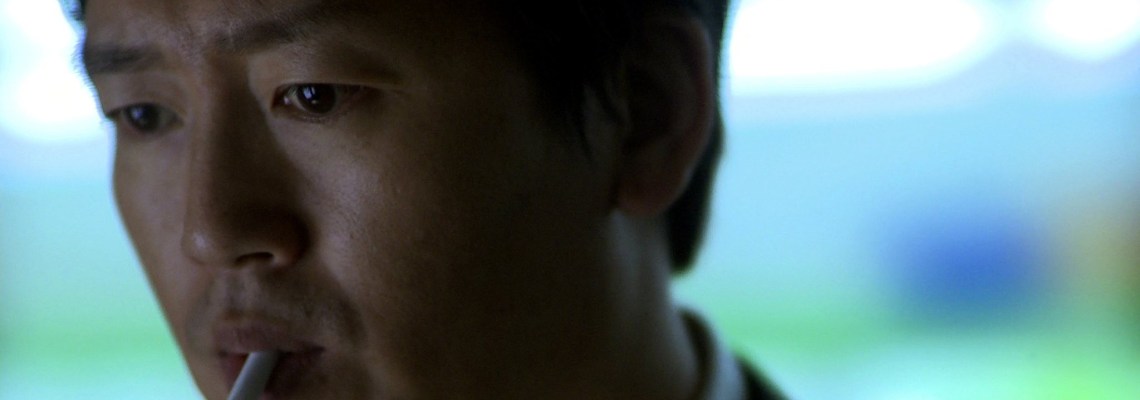
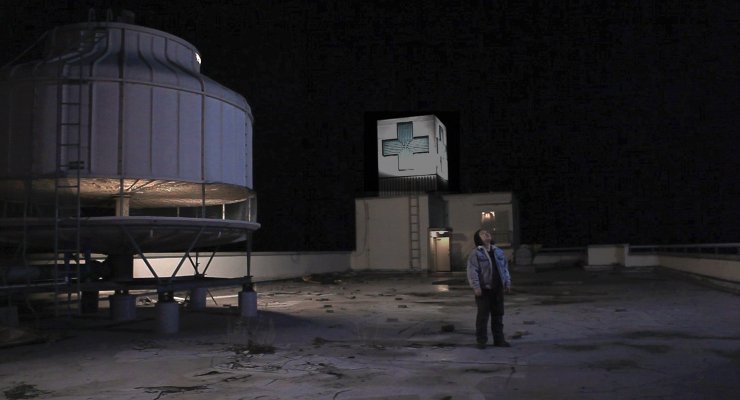
Actor Kim Jeong-tae (김정태) takes the lead role as an amnesiac in a noirish world
By visiting this site at kickstarter, you can donate to help keep momentum on the project moving. You can also read the in-depth profile of all the talent involved, and the history of the production which highlights the incredible efforts of the team. Whether it’s $10 or $1,000, every little helps and will be appreciated. Depending on the level of your donation you could receive your name in the credits, a signed DVD and poster, or even a guided tour. Please see the website for more details, and let’s work together to help director Yoon Jung Lee and Remember O Goddess develop the potential so clearly displayed in the short film.
Korean cinema has something of a love affair with partnering a mad-cap group of disparate individuals, who are given the unenviable task of bringing the corrupt elite to justice. The repetition of such a narrative framework is undoubtedly ideologically founded, yet the translation of the sense of ‘Han’ within the team dynamic is often hit-and-miss. For every The Host (괴물) is a Once Upon a Time (원스 어폰 어 타임); for every Take Off (국가대표) is a Sector 7 (7광구).
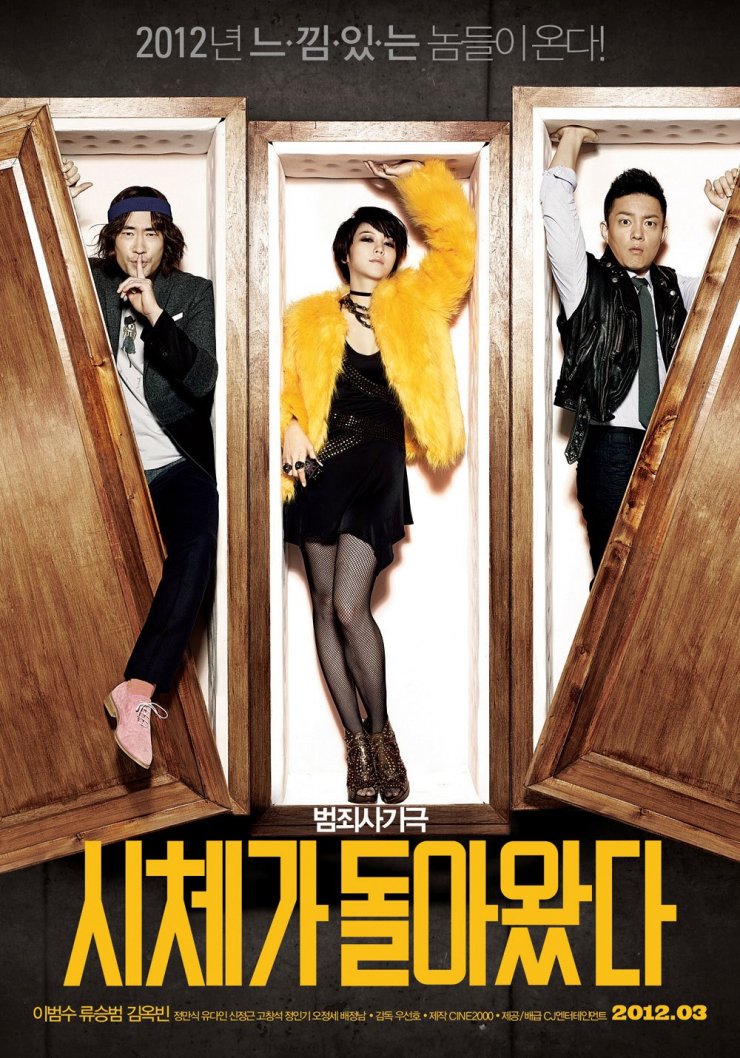
Writer/director Wu Seon-ho’s (우선호) foray into the arena is more comically-macabre in nature as an exploited group of individuals attempt to ransom a corpse. As such Over My Dead Body (시체가 돌아왔다) provides a distinctly fresh approach to the concept yet never manages to fully capitialise on the premise, instead falling back on the tried-and-tested format – and cliches – of its forebearers. Luckily the addition of Ryoo Seung-beom (류승범), who is a charismatic delight throughout, singlehandedly elevates Over My Dead Body out of mediocrity.
Protesting against the unscrupulous CEO of a technology firm, engineer Baek Hyeon-cheol (Lee Beom-soo (이범수) and his mentor throw eggs and chant slogans in the belief that the specialist microchip they have developed is being sold abroad. They are indeed correct, as the CEO has been faking an illness and has implanted the microchip within himself in a bid to smuggle the technology into America for a large profit. Yet through their persistance Hyeon-cheol and his senior reveal the fraud to the country, and in retaliation the mentor is brutally inured. Swearing revenge for the crimes against her father, Han Dong-hwa (Kim Ok-bin (김옥빈) enlists the help of ever-reluctant Hyeon-cheol. However, with the shocking news of the CEO’s death the duo hatch a plan to steal the corpse and hold it to ransom – unwittingly stealing the microchip in the process. Yet when the corpse suddenly awakens to reveal conman Ahn Jin-oh (Ryoo Seung-beom (류승범), the trio must begrudgingly combine their skills in order to walk away with the money – and their lives.
Hyeon-cheol and Dong-hwa pledge to bring the corrupt to justice
Over My Dead Body begins in a fun but rather odd science-fiction fashion as Hyeon-cheol chases down a corrupt CEO who deals with advanced microchips and lasers. The premise of the film is then quickly set up, as Dong-hwa and Hyeon-cheol – who transforms from science-nerd to attractive middle-aged man in a matter of minutes – go about planning to steal the titular corpse. The duo’s theft is humorous and entertaining, as they fumble their way through security measures and unforeseen circumstances in a bid to complete their mission. The resulting getaway is also highly enjoyable, with Jin-oh’s awakening corpse routine a real highlight of the film.
It’s at this stage that Over My Dead Body seemingly runs out of ideas as a slew of underdeveloped characters are introduced that do little to continue the promising momentum of the first act. These stock characters are all stereotypical in nature, including the unintelligent gangster duo, bumbling National Intelligence Agency officers, and a host of security personal led by a nefarious kingpin. The narrative desperately attempts to juggle everyone and give them adequate relevance, but there are far too many and the story becomes bogged down as the central protagonists move from one set piece to the next. The decision to include such stereotypes also opens up a variety of cliched and predictable scenarios, some of which are humorous while others tend to fall flat, making the narrative lack compulsion with yet another case of mistaken identity and/or betrayal. By including so many narrative threads the central cast suffer from lack of development, particularly Kim Ok-bin (김옥빈) whose talents are vastly under-utilized as she exists merely as ‘the sexy punk girl/love interest.’
Luckily Over My Dead Body is consistently rejuvenated whenever Jin-oh (Ryoo Seung-beom (류승범) appears, as his mixture of whacky antics, deviousness and over-acting are highly comical and drag the narrative out of any slumps that occur. Thanks to his wise inclusion the film never sinks into blandness, and makes the narrative much more compelling to see through to its conclusion.
Joined by charismatic/psychotic con-man Jin-oh, the trio continue their quest
Lee Beom-soo is an interesting choice as science nerd Hyeon-cheol, and delivers a competent and likable performance. While he – as with his compatriots – suffers from lack of character development, Lee Beom-soo conducts himself as an intelligent ‘every-man’ well. The director’s decisions in regards to costume make it difficult to convey the character, as he strangely moves from geek to office worker to university student, a feature which is also reflected in his personality as it undergoes dramatic shifts from shy to intelligent to aggressive.
Kim Ok-bin is generally employed as a sexy love interest in playing Dong-hwa, and aside from inspiring the heist is incredibly undervalued. The actress plays the role of the strong, stubborn punk well yet there are few scenes in which her character is allowed to convey more, with her pink hair and cell phone charms the only indicators to greater depth. An effort is made to connect her with her sick father, yet such sparse time is dedicated it barely registers.
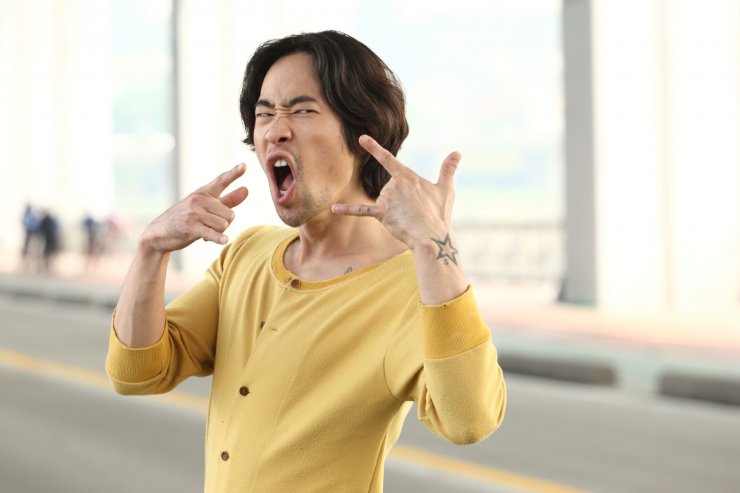
Ryoo Seung-beom is seemingly the only actor who understands the tongue-in-cheek farcical nature of the narrative, and over-acts in each scene with wonderful charisma. Yet throughout his performance he also keeps the audience guessing as to whether Jin-oh is a hyper-intelligent fraudster or genuinely mentally unstable, making him a comical and entertaining protagonist within each scene. Again, little depth is ascribed to Jin-oh yet his presence and hyperactivity circumvents criticism in this regard as the film is elevated largely due to him.
Jin-oh’s wacky antics continually entertain
Verdict:
Over My Dead Body offers an interesting and comically-macabre spin on the crime heist sub-genre, and often succeeds in being entertaining throughout due to the premise. Yet the film largely falls into cliche and predictability following the first act due to the reliance upon an array of stock characters and a lack of inventiveness. However Ryoo Seung-beom’s presence consistently raises the film, and fans of the actor will not be disappointed as Over My Dead Body is an enjoyable film largely thanks to him.
Religiously-infused films often walk an incredibly precarious line; should the narrative either condone or condemn the ideology being portrayed, the risk of alienating – or worse, offending – factions of the audience is great. And yet seemingly any cinematic foray into the subject inescapably stokes controversy as the predicaments, decisions and actions taken through faith, whether situated within historical or contemporary contexts, generate enormous debate amongst the religious and non-religious alike.
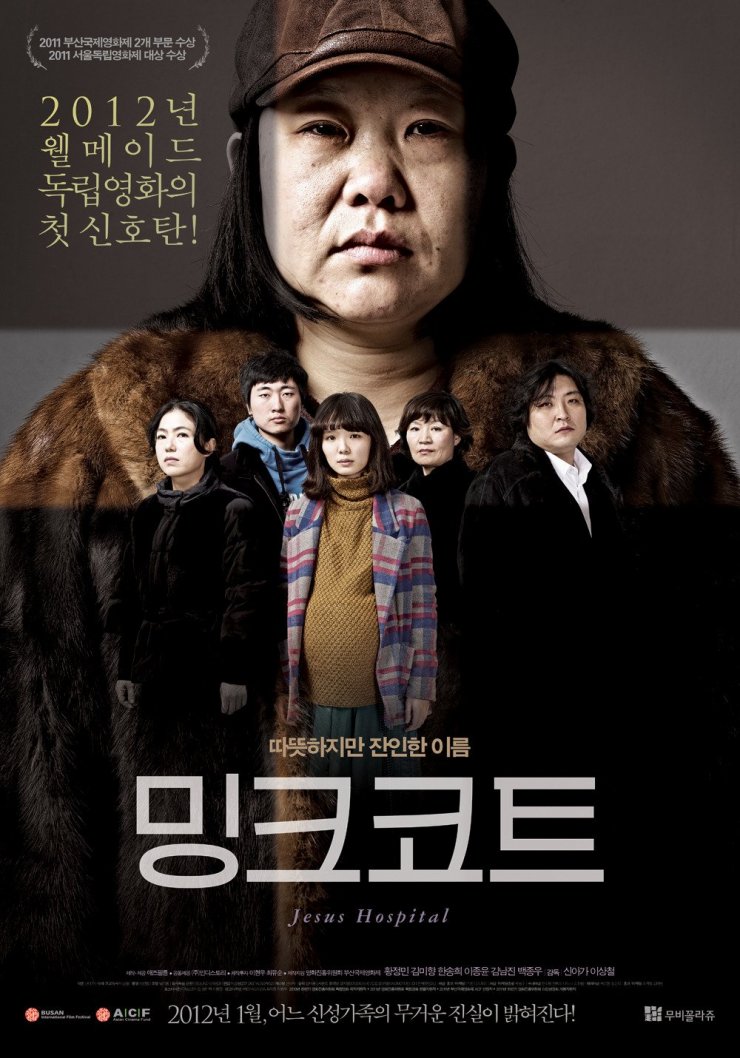
With a title such as Jesus Hospital (밍크코트), audiences could understandably be forgiven for preconceiving that the film features overtly biased, pro-Christian debates. Yet Jesus Hospital does no such thing, instead focusing on a family tragedy while the emotionally fraught relatives struggle to make sense of their situations through their own interpretations of religious texts. The film is incredibly successful in portraying a balanced, mediative approach, and aside from a rather bland second act, is an interesting and thought provoking independent drama.
Despite her humble life, Hyeon-soon (Hwang Jeong-min (황정민) is relatively happy. However she hides a secret from the rest of her devoutly Christian family, as Hyeon-soon’s beliefs are more akin to the Old Testament and she frequently worships in such a manner. When her mother becomes gravely ill, Hyeon-soon and the rest of her estranged family must reach an agreement – should they end the life support keeping their mother alive, or wait in the hope that she will one day awaken? As each member of the family wrestles with the ethical dilemma and their religious beliefs, the introduction of Hyeon-soon’s pregnant daughter Soo-jin (수진) shakes the familial ties to their very foundations and forces them to acknowledge factors they have long sought to keep hidden.
Hyeon-soon leads a humble, yet satisfactory lifestyle
The title Jesus Hospital isa bizarre, religiously-infused differentiation from the original ‘Mink Coat’, and is also something of a disservice as the film is much more concerned with familial relationships and ethical dilemmas than in foregrounding Christian ideology. Religious beliefs are however wonderfully interrogated throughout the domestic strife in Hyeon-soon’s family, as each member applies rhetoric to suit to their own desires yet appear wholly ignorant of their selective manipulation. Yet co-directors Lee Sang-cheol (이상철) and Shin A-ga (신아가) are incredibly balanced in their portrayal of Christian beliefs, neither reinforcing nor detracting from the ideology and instead allow each protagonist to convey their religious position throughout the drama. As such the narrative is – as with each protagonist’s relationship with the bible – open to ambiguity and interpretation, forming a mature and insightful foundation within which events transpire and decisions are made. Such a highly symbolic nature again emphasises the importance of the original title, as Mink Coat alludes to the themes expressed within the film with acute poignancy.
Jesus Hospital begins promisingly, as Hyeon-soon’s poverty-stricken life is revealed through a series of rapid extreme close-ups that starkly convey her hardships, from her aging skin through to the dilapated locations within which she monotonously delivers milk. Her dreary existence is wonderfully constructed and conveyed, as the directors have drained all colour from the mise-en-scene and emphasise Hyeon-soon’s boisterous character through confrontations with the public. Most notably, however are the conflicts with her family which are simultaneously humorous yet uncomfortably tense as the members trade quips with each other within seemingly intrusive camerawork. When Hyeon-soon’s mother is placed on life-support several months later, each family member’s Christian values – and deviation thereof – are employed to argue whether to end the life of the kind old woman, or to preserve it. With such an interesting premise it’s therefore surprising that the rest of the second act is a rather muted and bland affair, as the co-directors and the actors themselves fail to capitalize on the urgency of the situation, or the deviousness of those involved. Thankfully Jesus Hospital regains momentum with the introduction of Hyeon-soon’s estranged daughter Soo-jin, whose turn as a outspoken mediator makes the final act incredibly compelling.
The introduction of pregnant daughter Soo-jin increases the familial tension
As central protagonist Hyeon-soon (현순), Hwang Jeong-min (황정민) is wonderfully convincing as a poverty-stricken woman who dearly loves her mother and who seeks solace from her existence in Old Testament-esque worship. While her boisterous character is skillfully conveyed, her religious fortitude is often expressed through wide-eyed glares and wringing of hands which somewhat detracts from the zealous fundamentalism which is so often hinted. Nonetheless, Hwang Jeong-min portrays a fascinating character and continually alludes to the humor, loneliness, and anger of a woman striving to make sense of her life.
Despite her supporting role status, Han Song-hee (한송희) is incredibly compelling and likable as pregnant daughter Soo-jin (수진). Her ambivalence and indifference to family matters is performed convincingly, as is her radical change of stance upon learning the role of the mink coat within the family. It is largely due to her presence that the film recaptures the momentum contained within earlier scenes, and the actress brings a palpable sense of urgency and morality to the proceedings which had been absent.
The rest of the supporting cast all perform competently. In the role of Hyeon-soon’s older sister, Kim Mi-hyang (김미향), and of brother and sister-in-law Kim Nam-jin (김남진) and Baek Jong-woo (백종우), all three perform well as a devious trio each with their own agenda. However the actors generally fail to fully convey the complexity of their roles and the haste in which they wish action to be taken. Despite this, they perform well and their interactions with Hwang Jeong-min are humorously-uncomfortable highlights.
Hyeon-soon seeks advice from the heavens
Verdict:
Misleading title notwithstanding, Jesus Hospital is an insightful and compelling independent drama that examines morality with a family during a period of crises. Writer Shin A-ga has constructed a well-balanced and incredibly mature exploration of the selective application of faith, which she skillfully co-directs with Lee Sang-cheol in conveying the complex relationships and ethical dilemmas. While duo somewhat fail to capitalize on the intriguing premise during the second act, Jesus Hospital is an engaging film and a significant contribution to Korean independent cinema.








 hangukyeonghwa.com