Seong-beom races to save the day for a conventional stand-off

SIU – Special Investigations Unit (특수본) – ★★★☆☆

SIU - Special Investigations Unit (특수본)

SIU – Special Investigations Unit (특수본)

Andrew Lau and Alan Mak’s Infernal Affairs (2002) – later remade as Martin Scorcese’s The Departed (2006) – perfectly captured the thrilling paranoia of tracking down an elusive mole within an organisation. The suspension generated during the life-and-death scenarios is enthralling, with layers of mystery and character depth probing the morality of the actions of all involved.

SIU – Special Investigations Unit (특수본), while competent, has none of the above. In adhering to stereotypes and generic conventions the film is somewhat of a mediocre offering, featuring a solid-yet-cliched narrative with an interesting social message at its core – one which is unfortunately brushed aside by the testosterone-fueled antics within.

Cop Kim Seong-beom (Eom Tae-woong (엄태웅) leads a team of officers in protecting the streets of Seoul. The work is hard and the hours are long. When a fellow officer is found dead under suspicious circumstances, it sends a shockwave through the department and a special team is created to investigate. Joined by F.B.I trained Kim Ho-ryong (Joo Won (주원), the unlikely duo must team-up to discover the mystery surrounding the ongoing murders within the department, taking them from the lowliest drug dealers to members of government.

Seong-beom leads his team wih over-zealous testosterone-fueled actions

Seong-beom leads his team wih over-zealous testosterone-fueled actions

SIU – Special Investigations Unit starts well enough; officer Seong-beom is joined by Jeong Yeong-soon (Lee Tae-im (이태임) in apprehending a criminal, initially bungling the stake-out but catching the crook through comedic good fortune, while the following tonal-change of the murder of a cop sets up the premise well. Yet herein also lies the problem with SIU – Special Investigations Unit, as the police force and the officers within it are constantly portrayed as moronic petulant fools, undermining their task of finding the mole through acts of immature stupidity. While such features are important in the excellent Memories of Murder (2003) in highlighting the lack of education and support in a real-life case, SIU – Special Investigations Unit has no such mission. Instead, officers routinely make the case more difficult through infighting, committing human rights abuses, and withholding information in order to receive credit. Chief among the perpetrators is lead protagonist Seong-beum who is incredibly hostile, bullying, and arrogant and as such is extremely unlikeable. His dislike of young upstart Ho-ryung is understandable, but his actions are intolerable as he forces his protege into violent circumstances. Ho-ryung is much more likable, although his appearance which includes fitted suits, boy-band good-looks and a quiff that would make Elvis blush seem unnatural to the environments in which he is situated. Both protagonists fair better than singular female officer Yeong-soon who, aside from a close-up of her breasts, is rarely a presence both on-screen or within the narrative.

F.B.I trained Ho-ryong adds intelligence as well as incredible hair

F.B.I trained Ho-ryong adds intelligence as well as incredible hair

Where director Hwang Byeong-gook (황병국) succeeds however is in the creation of suspense. Action scenes in which criminals are pursued, car chases occur, and gunfights rage are competently filmed and quite thrilling, particularly a sequence which involves a forklift truck descending a parking lot ramp against the police. The narrative also includes sufficient red herrings for the audience for the audience to wonder who the mole is, although in truth the answer is rather predictable. The core social problem within SIU – Special Investigations Unit is highly compelling, as residents are forced into taking loans with interests so high they are impossible to repay with their businesses and land seized, a gritty urban take on themes within Chinatown (1974). Unfortunately such an interesting social discourse is so subsumed amongst the displays of masculinity and cliched conventions that it fails to make a substantial impact.

As Seong-beom, actor Eom Tae-woong performs the role well and is convincing as the overly-proud, feisty and immature detective. Although the character is something of an irritation, Eom Tae-woong conveys the physicality of the role with gusto while his facial expressions convey his emotional state, particularly his internal-conflict, with conviction. Joo Won (주원) as F.B.I trained criminal profiler Ho-ryong, is adequate by comparison as stoicism is continually conveyed even during more emotionally provocative scenes. However, the development of the relationship between them is compelling and organic, as mutual dislike evolves into allies then brothers.

Seong-beom races to save the day for a conventional stand-off

Seong-beom races to save the day for a conventional stand-off

Verdict:

A solid example of the cop thriller, SIU – Special Investigations Unit is nonetheless hampered by the strict adherence to generic conventions and contrived storytelling. While action sequences are well executed and sufficient red herrings are thrown into the mix, the representation of an incompetent police force and the lack of emphasis bestowed upon the social message means that SIU – Special Investigations Unit never rises above adequate.

★★★☆☆

Reviews
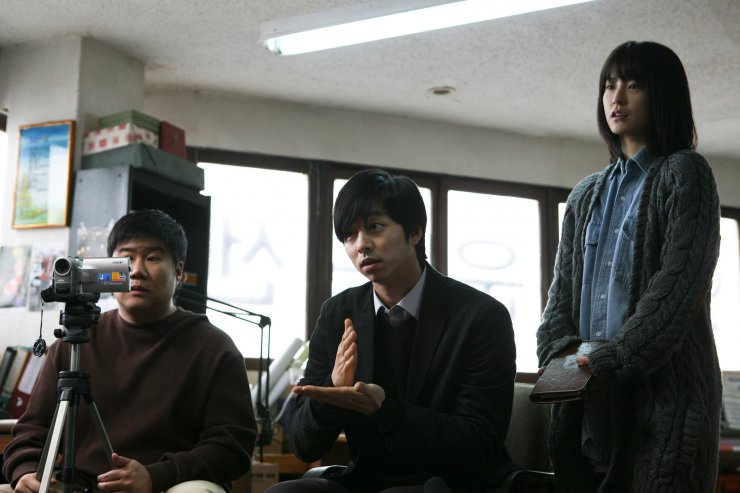
Teacher In-ho attempts to communicate through sign and art

Silenced (The Crucible) (도가니) – ★★★☆☆

Silenced (The Crucible) (도가니)

Silenced (The Crucible) (도가니)

It is incredibly rare for a film to have such potency that the national fervor generated changes law. Silenced (The Crucible) (도가니), based on the true story of the sexual abuses of hearing impaired children in 2000, sparked outrage upon release not only for the subject matter but also for the extremely lenient punishments dealt to the offenders, as well as the corruption seemingly inherent within the judiciary system.

While critics bemoaned the public furor as hypocrisy, due to the indifference displayed to the television programme and book produced years prior on the subject, politicians were keen to introduce legislation which was shockingly absent to protect children from sexual predators – and raise their own political profile in the process.

As such, Silenced is an incredibly powerful film conveying an array of social discourses. Helmed by highly competent director Hwang Dong-hyeok (황동혁), Silenced is a tense and gripping drama during the discovery of the abuses and impending trial, yet loses momentum in the inevitable court hearing.

Art teacher and sign language practitioner Kang In-ho (Gong Yoo (공유) endures several hardships in life. His wife has died; his daughter is very sick; and finding employment is extremely difficult. Through the recommendation of his professor, In-ho is accepted as a teacher at Inhwa school for the hearing impaired in Gwangju. Yet upon arrival in the foggy village, he is involved in a car accident with social worker Seo Yoo-jin (Jeong Yu-mi (정유미), exchanging insurance details. Settling in at the school, In-ho finds the behaviour of the students strange; they are quiet and nervous, often sporting bruises and cuts, and are reluctant to communicate. Worse still, he hears screams at night and witnesses the beatings and water torture used against the students. Learning of the sexual abuses In-ho casts aside his career and gathers the abused children, working together with Yoo-jin to launch a legal campaign against the injustice caused by the perpetrators – including the headmaster.

Teacher In-ho attempts to communicate through sign and art

Teacher In-ho attempts to communicate through sign and art

Due to the subject nature of the film, Silenced cannot help but be an incredibly emotive viewing experience. Director Hwang Dong-hyeok deserves credit for employing a variety of methods in conveying the horror of child abuse, from the cries of deaf children echoing in darkened corridors, long takes of appalling physical violence, to Kubrickian-esque shots of stairwells  that descend into horror. The use of sign language is also well utilised as the children are forced to reenact events rather than speak of them, adding a chilling dimension to the abuse. Hwang Dong-hyeok is keenly aware of the necessity to shock, and his decision to depict controversial scenes including a teacher washing young boys in a bath and the headmaster undressing himself and young girls against their will, add a level of repulsion that is difficult to describe. While certain critics have questioned the extent to which such scenes should exist, there is no denying the shocking reconstruction of events forces audiences from apathy and indifference. The suspense and tension are wonderfully created within the school, almost making the building a sinister character in itself.

Yet Silenced tends to stall outside of the environment, with the impending court case and the hearing itself competent but relatively low-key. This generally due to focusing on protagonists other than the children, and in doing so the narrative loses traction and immediacy. However such tangents do allow for additional social commentary, focusing on the corruption of virtually every professional involved in the case as a microcosm for the Korean justice system. Christians are also held accountable within the film for vehemently supporting the child abusers and bribing officials, as well as spitting at and intimidating those pressing charges. Silenced reasserts itself when focusing on the testimonies of the children, who bravely give evidence against the perpetrators despite the pressure against them. In doing so the film finds its emotional core, making the final decision bestowed by the presiding judge all the more heartfelt.

In-ho and social worker Yoo-jin document the abuse for television

In-ho and social worker Yoo-jin document the abuse for television

As the heart and soul of Silenced, child actors Kim Hyeon-soo (김현수), Jeong In-seo (정인서) and Baek Seung-hwan (백승환) as protagonists Kim Yeon-doo (김연두), Jin Yoo-ri (진유리) and Jeon Min-soo (전민수) respectively, are exceptional. Their performances are incredibly powerful and compelling, all three utterly convincing as victims of abuse desperate for justice and affection. Kim Hyeon-soo is wonderful as Yeon-doo, particularly during the court room scenes as she describes her abuse and outsmarts the adults in the room. Jeong In-seo is also compelling as Yoo-ri, the youngest victim, ably shifting between acute nervousness when describing the assaults and moments of sheer joy when shown affection. As the only male victim, Baek Seung-hwan is shockingly convincing as Min-soo, displaying an intensity in his performance that belies his age. Whether suffering various abuses, recapturing his childhood or breaking down through stress, Baek Seung-hwan conveys gripping poignacy and emotional distress.

The same cannot be applied to lead actor Gong Yoo as teacher In-ho. His performance is generally bland and stoic even in the face of horrific scenes of violence, more of a phantom than a troubled man confronted with child abuse. In fairness to the actor, the character is rather underdeveloped with select few scenes informing his history or relationships, resulting in a lack of empathy. The few occasions in which In-ho’s character is conveyed is usually through beratement by his mother, more of an annoyance than informative. Absence of development is also applicable to social worker Yoo-jin, played by Jeong Yu-mi. Initially quite unlikeable, Yoo-jin becomes much more compelling than her male counterpart due to the range of emotions conveyed through Jeong Yu-mi’s performance. As devices through which the abused children seek justice the central roles of In-ho and Yoo-jin require substantiality as they function as the conduits for the audience. Yet as it stands, they fall rather flat.

Yeon-do and the other children face grueling questions in court

Yeon-do and the other children face grueling questions in court

Verdict:

Silenced is an incredibly powerful film that expresses the horrors of child abuse and conveys the corruption of members of Korean society with skill. The resulting public outrage is wholly understandable as the stark brutality of the events are performed with exceptional child actors and the injustice against such innocence is impossible to remain detached from. While the film loses momentum and its emotional core when outside the school and away from the victims, Silenced  is a challenging film and – even if merely to have an opinion – required viewing.

★★★☆☆

Reviews
The cliches within Always (오직 그대만) are abundant yet entertaining

Always (오직 그대만) – ★★★☆☆

Always (오직 그대만)

Always (오직 그대만)

Always (오직 그대만) had the honour of opening the 2011 Busan Film Festival in the exclusive new cinema center. Directed by auteur  Song Il-gon (송일곤) and featuring heavyweight stars So Ji-sub (소지섭) and Han Hyo-joo (한효주), the event made an indelible statement of the ‘Koreaness’ of the festival.

While the choice may have had nationalistic sentiment, opening with Always was a surprising decision as the film is a showcase of mediocrity. The over-abundance of cliches may very well be intentional, but the lack of narrative depth and character development make Always a shamelessly commercial affair that while competent offers little originality.

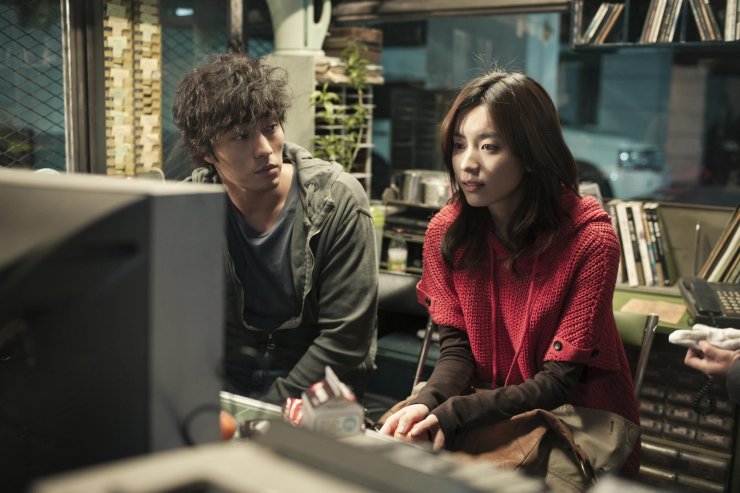
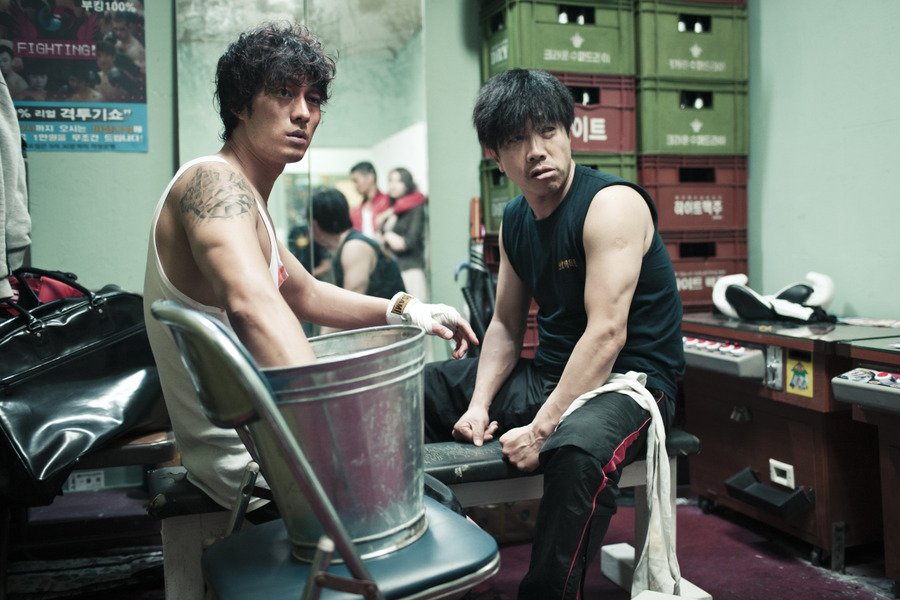
Cheol-min (So Ji-sub) is a former Mixed Martial Artist champion who turned his back on the sport. Now scraping a living by delivering water and manning a parking lot booth, Cheol-min has emotionally severed ties with the rest of humanity. That is, until visually impaired Jeong-hwa (Han Hyo-joo) enters his booth to ‘watch’ a tv drama, under the impression that the former old employee was still in residence. Undeterred by the change, Jeong-hwa continues to ‘watch’ the drama with Cheol-min, becoming a regular rendezvous as he describes scenes for her enjoyment. As their relationship develops and Cheol-min’s icy exterior thaws, Jeong-hwa’s eyesight deteriorates further. Desperate for money to pay for an expensive operation for the woman who has restored his humanity, Cheol-min must come to terms with his past and enter the fighting arena once more.

Cheol-min regularly meets visually impaired Jeong-hwa to 'watch' tv dramas

Cheol-min regularly meets visually impaired Jeong-hwa to ‘watch’ tv dramas

Fans of the romance genre will undoubtedly be delighted with Always, as it conforms to all traditional conventions that categorize cinematic depictions of love and relationships. The film ticks all the boxes that are inherent to the genre – a couple meeting by chance; destiny intervening to push the couple together; a rugged, masculine male without emotion; a kind-hearted yet impaired beauty; lovers forced apart through unforeseen circumstances; climactically reuniting in a natural locale. Director Song Il-gon has incorporated every cliche at his disposal in creating a romantic love story.

However those very features are ultimately the film’s undoing as Always is very standard fare, never transcending or evolving traditional characters or narrative events to make the film unique or, at the very least, better than the myriad of similarly cliched romance films. Fans of auteur Song Il-gon have been quick to point out the intention of the abundance of cliches, producing an unabashedly commercial effort as his critically acclaimed filmography tends to be financially unsuccessful. If this rather cynical perspective has merit, then the director has succeed in his experiment as Always generated sales of over 1 million tickets and extended his fan base by targeting a slightly different demographic. Continuing such negative logic, perhaps the intention of the film is an indictment of audience’s sense of entertainment – predictable pleasures over artistic merit.

Regardless of supposed intentions, the cliches make for a satisfactory experience but by their very definition are overused and emphasise the contrived nature of the narrative. The romance between the leads – connoted as destined – requires several suspensions of disbelief. Otherwise, why a beautiful visually impaired woman would continue to enjoy a drama with a stranger in a parking lot booth is somewhat baffling. The regurgitation of cliches also exposes the film to inherent sexism as the rugged Cheol-min asserts his masculinity through removing Jeong-hwa’s independence. He provides money, takes care of his impaired lover, and performs DIY; she on the other-hand teaches him the value of emotions. In an incredibly bizarre and misogynistic scene in which Cheol-min rescues Jeong-hwa from rape by her manager, she chastises him for his involvement as she could lose her telemarketing job, forcing Cheol-min to become a care-taker and accept Jeong-hwa as his responsibility.

Cheol-min must accept his past and enter the ring once more

Cheol-min must accept his past and enter the ring once more

The combined star power of So Ji-sub and Han Hyo-joo certainly added to the expectation and commercial success of Always, and both perform competently in their roles. Due to the contrived nature of the narrative however, limitations are heavily imposed and often they are featured merely to appear attractive, or attractive-yet-sad.

So Ji-sub’s role is odd as retired Mixed Martial Artist Cheol-min, as the sport is only sporadically alluded to in the first two acts yet becomes of vital importance in the third. The profession notwithstanding, So Ji-sub is never fully convincing as a champion as the absence of focus and dedication, as well as his ill-matched musculature and prowess, combine to detrimental effect. Yet in conveying thawing stoic masculinity So Ji-sub excels, and is compelling as a former villain attempting to change his future through love.

Similarly, Han Hyo-joo is exemplary in such dramatic scenes conveying sincerity and romance in the majority of scenes. The sweet and positive nature of her character are constantly emphasized, making Jeong-hwa a highly likable protagonist. Where Han Hyo-joo stalls is in the performance of visual impairment. The year’s other big film concerning the disability, Blind, featured actress Kim Ha-neul conveying a competent performance through the daily struggles she endured and overcame; Han Hyo-joo is much weaker in this regard, seemingly traversing mountainous terrain with ease yet unable to unblock a drain situated next to her.

The cliches within Always (오직 그대만) are abundant yet timeless

The cliches within Always (오직 그대만) are abundant yet entertaining

Verdict:

As an addition to the romance genre, Always is an enjoyable and competent film that contains all the conventions inherent to the category. While fans of traditional romance may rejoice, the lack of cliche transcendence conveys the narrative and protagonists as highly contrived and unoriginal for audiences desiring a fresh interpretation. Intentional or otherwise, Always is, in its entirety, a entertaining cliche.

★★★☆☆

Reviews
Jenny becomes an idol, yet her identity is in crisis

200 Pounds Beauty (미녀는 괴로워) – ★★★☆☆

200 Pounds Beauty (미녀는 괴로워)

200 Pounds Beauty (미녀는 괴로워)

Cosmetic surgery is a booming industry worldwide, yet arguably more so in Korea where even middle and high school students return from vacation with bigger eyes and ‘western’ style noses. The obsession with appearance and rising number of surgeries, partly inspired by the influx of celebrities who have undertaken procedures, has alarmed various social groups for many years yet demand has always outstripped criticism by a large (profit) margin.

200 Pounds Beauty (미녀는 괴로워), or translated as ‘Being Beautiful is Agonizing’, is a romantic-comedy based on the huge social debate surrounding cosmetic surgery that attempts to explore opposing sides of the argument. It frequently succeeds and is often quite charming, yet it does so in a superficial capacity while the narrative is ultimately undermined as the film’s mixed message not only condones surgery – it encourages it.

Kang Han-na (Kim Ah-joong (김아중) is an incredibly obese and kind hearted woman, with a superb singing voice. Due to her appearance she sings popular K-pop songs for hit star Ammy (Seo Yoon (서윤) under the stage, while the untalented-yet-pretty performer mimes and dances. The injustice of it all does not escape Han-na yet she accepts that her voice bring s happiness to others through singing and also in her part-time job where she moonlights as a phone-sex worker. Her talent as a singer also brings her closer to her unrequited love, music producer Han Sang-joon (Joo Jin-mo (주진모) who has genuine affection for Han-na. However, upon secretly hearing of Sang-joon’s disgust at her appearance she resolves to have cosmetic surgery on her entire body and reemerge as a beautiful girl to win his heart once and for all.

Han-na's obese physique belies her talent as a gifted singer

Han-na’s obese physique belies her talent as a gifted singer

200 Pounds Beauty is competently directed by Kim Yong-hwa (김용화), who understands the nature of physical comedy well. The jokes created at the expense of Han-na’s weight, such as rebounding off of walls and falling through the floor, are contrasted with moments of innocence and naivety that strike a highly empathic chord with the character. The director also deserves credit for continuing such devices when Han-na transforms into Jenny, as Kim Yong-hwa refrains from fetishising her new body with the camera and instead consistently emphasizes the awkward physical comedy she perpetuates. In doing so Han-na/Jenny becomes even more sympathetic as her innocent identity is still intact. The source of comedy is also contrasted between Han-na and Jenny well, as Han-na’s obesity is often comical but the root of bullying while Jenny’s awkwardness is fun yet her beauty highlights the funny superficiality of others. When Han-na is invited to a birthday party she is mocked for wearing a tight gown; when Jenny is the cause of a car crash the men instantly forgive her due to her appearance. As such the social commentary within 200 Pounds Beauty is concerned with the superficial preconceptions that exist within culture and undermines them through conveying how hollow such concepts – and especially men and the entertainment industry – are.

Yet just as Arial in Disney’s The Little Mermaid (1989) changed her body and identity to find her prince, so too does Han-na in obtaining hers. Despite the existence of social critique within the narrative it is often rather shallow in the effort to be light-hearted entertainment. Jenny’s rejection of her father and best friend, her obese best friend’s suicide attempt, and even the surgical process itself are all present yet conveyed without the requisite detail that would portray Han-na’s journey as a poignant trajectory of self-discovery as well as a comedic one. Sang-joon’s attempt to touch Jenny in her surgically enhanced areas is also amusing, yet despite her own reference to herself as a product there are few scenes exploring how Jenny is used as ‘image’ by her love interest. Combined with the prosperous K-pop career and winning Sang-joon’s heart that Jenny receives in undergoing treatment, 200 Pounds Beauty ultimately conveys that cosmetic surgery is the way to a successful and love-filled life, wholly undermining prior scenes of Han-na’s torment by bullies and the superficiality of culture and the media.

Han-na - now Jenny - confronts Sang-joon and emerges with a singing career

Han-na – now Jenny – confronts Sang-joon and emerges with a singing career

For her performance as Han-na/Jenny, actress Kim Ah-joong won the Best Actress award at the 2007 Grand Bell Awards. Kim Ah-joong’s performance is good, emphasising the awkward physicality of her character with skill with a sense of comedic timing. However she is consistently on the verge of tears almost regardless of the scenario, functioning as an innocent and tearful ‘image’ of traditional femininity that further serves to encourage cosmetic surgery. Her acting is often childlike despite scenes which offer a chance at a more nuanced performance. Despite this Kim Ah-joong is by far the most engaging and talented performer throughout 200 Pounds Beauty, and the film is difficult to imagine without her as the main protagonist.

The other actors fare much worse, particularly Joo Jin-mo as love interest Sang-joon. He is lacking in charisma throughout, and the absence of chemistry between him and Kim Ah-joong is solely his responsibility and is highly noticeable. This is in part due to the lack of development of the character as there are an abundance of minor roles, yet there are several opportunities where the actor could convey his emotions. As it is, his performance conveys he is unworthy of Han-na’s love and portrays the romance between them as contrived.

Jenny becomes an idol, yet her identity is in crisis

Jenny becomes an idol, yet her identity is in crisis

Verdict:

200 Pounds Beauty is a comedic and humorous film that attempts to explore both sides of Korea’s obsession with cosmetic surgery, a highly ignored cultural trend – cinematically at least – with a highly competent performance by Kim Ah-joong. While the film does depict a variety of social discourses surrounding the cultural phenomenon, such scenes are often superficial and are undermined to such a degree that 200 Pounds Beauty ultimately reinforces – even encourages – cosmetic surgery as the key to a successful and happy life. Mixed messages notwithstanding, 200 Pounds Beauty is a fun, if rather shallow, comedy about the beauty that lies within.

★★★☆☆

Reviews
Pil-yong's interest in hanji leads to a world he never knew existed

Hanji (달빛 길어올리기) – ★★★☆☆

Hanji (달빛 길어올리기)

Hanji (달빛 길어올리기)

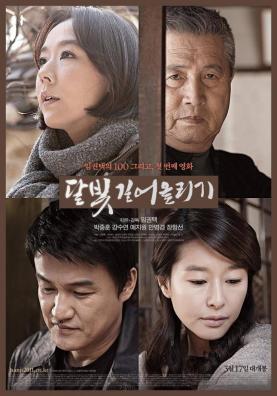
Director Im Kwon-taek (임권택) continues his love affair with Korean culture in Hanji (달빛 길어올리기), a film about the traditional art of paper-making. While such a premise may initially make audiences baulk, the auteur’s love and admiration of the tradition shines through every scene, crafting a poetic narrative about a cultural trait on the brink of extinction.

Hanji tells the story of Pil-yong (Park Joong-hoon (박중훈), a civil servant appointed to a committee charged with the restoration of the only surviving record of the Jeonju Annals. Knowing little of the practice, Pil-yong researches the art with diligence and becomes increasingly passionate about the project. His dedication is in part due to guilt as his actions caused his wife Hyo-kyeong (Ye Ji-won (예지원) to suffer a stroke three years prior, while he had also belittled her former occupation as a paper-maker and never understood the sorrow of her inability to find her hometown. Yet just the project begins, the government withdraws funding and the restoration is placed in jeopardy. Reluctantly teaming with documentary filmmaker Ji-won (Kang Soo-yeon (강수연), Pil-yong battles to save the hanji industry and restore the Jeonju Annuls while proving his worth as a husband.

Pil-yong's interest in hanji leads to a world he never knew existed

Pil-yong’s interest in hanji leads to a world he never knew existed

Hanji is very wisely positioned from Pil-yong’s perspective, a man ignorant of the history and cultural importance of the tradition which allows the audience to learn about the craft through his research and discussions with expert paper-makers on the practice. However this also leads the film to convey documentary-esque sensibilities, a feature of which director Im Kwon-taek is keenly aware and subverts through his ironic inclusion of a documentary team following the restoration project. While their addition does somewhat diffuse the educational dimension, Hanji often straddles the line between film and documentary and occasionally conveys a mild ‘preachy’ tone which is initially interesting, but becomes tiresome in the later stages. However it is Pil-yong’s desire to prove himself, discover his wife’s passion and locate her hometown that compels the narrative forward during such moments, as his responsibility for Ji-won’s illness – and desire to cure her – drives him deeper into the history of hanji, Jeonju, and Korea itself.

The heart of Hanji is the relationship between Pil-yong and Ji-won, which is allegorical of Korean history by reenacting the story of hanji through the trials of a failing marriage. As a descendant of the most famous hanji artist in Korea, Ji-won is hanji personified, while her husband symbolises an artist/author. When Pil-yong’s affair with another woman years prior is discovered, Ji-won suffers a stroke and becomes immobile and depressed, barely able to speak. This reflects the abandonment of hanji by artists, who opted to use paper less difficult to manufacture as it required less work and was more comfortable – a description Pil-yong applies to his infidelity. Yet through his journey, Pil-yong discovers that hanji – like his wife – may well require hard work but the quality of it lasts for at least a thousand years, and doesn’t deteriorate as with lesser equivalents. As a renowned professor describes, hanji is ‘honest’ paper as it reveals the skill of the artist whereas other paper conceals it, leaving a record of which that lasts beyond the grave. In fighting to restore the hanji industry and the Jeonju Annuls at great personal sacrifice, Pil-yong learns the value of identity, culture, history, and marriage.

Ji-won's search for her hometown is allegorical of searching for Korean identity and history

Ji-won’s search for her hometown is symbolic of searching for Korean identity and tradition

In terms of performance, Kang Soo-yeon shines as long-suffering Ji-won, conveying an incredible physical presence through her illness. Her depression and inability to communicate are also highly impressive, particularly her evolution as she struggles to gain greater strength. Park Joong-hoon is competent as Pil-yong, conveying his fascination with hanji and his frustration with the lack of support well. In fairness, there are few scenes that actually challenge the actor as Pil-yong is generally the focal point for Im Kwon-taek’s journey through the history of the craft. That said, the marital dispute and Ji-won’s illness notwithstanding, there is an absence of chemistry between the two central protagonists that is acutely apparent, and while Ji-won’s physical evolution is conveyed the same does not apply to their relationship which is devoid of affection. As such, Pil-yong’s obsession with the history of hanji and restoring his wife’s health is conveyed more as acknowledging his responsibility than reinforcing love between them.

Im Kwon-taek does attempt to rectify this through his masterfully poetic final scenes, in which he emphasizes the importance of Buddhist philosophy and nature, particularly the moon, as integral to the hanji crafting process. It is incredibly romantic as Korea itself is is conveyed as the missing piece of the production puzzle, one that when fully appreciated allows artists to create, the sick to heal, and estranged partners to reunite.

The secrets of hanji lies with Buddhist monks and nature

The secrets of hanji lie with Buddhist monks and nature

Verdict:

Hanji is a film based on a genuine love of Korean culture and tradition by auteur Im Kwon-taek. While at times the film can convey a rather educational, documentary tone the film emphasizes the importance of remembering and supporting cultural traditions as they are inherently tied to notions of identity. Hanji is poetic and philosophical, conveying that diligence and perseverance are highly rewarding experiences and serves as a love letter to a dying cultural tradition.

★★★☆☆

Reviews
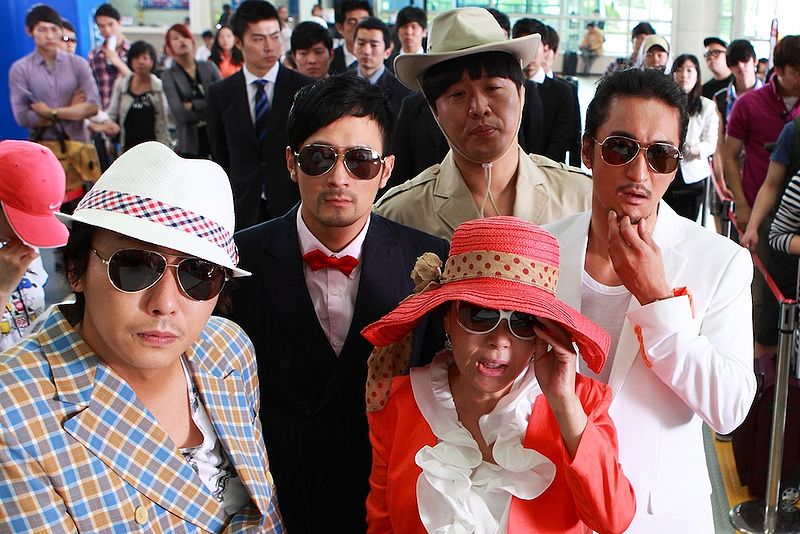
The unstoppable family prepare for their trip to Japan

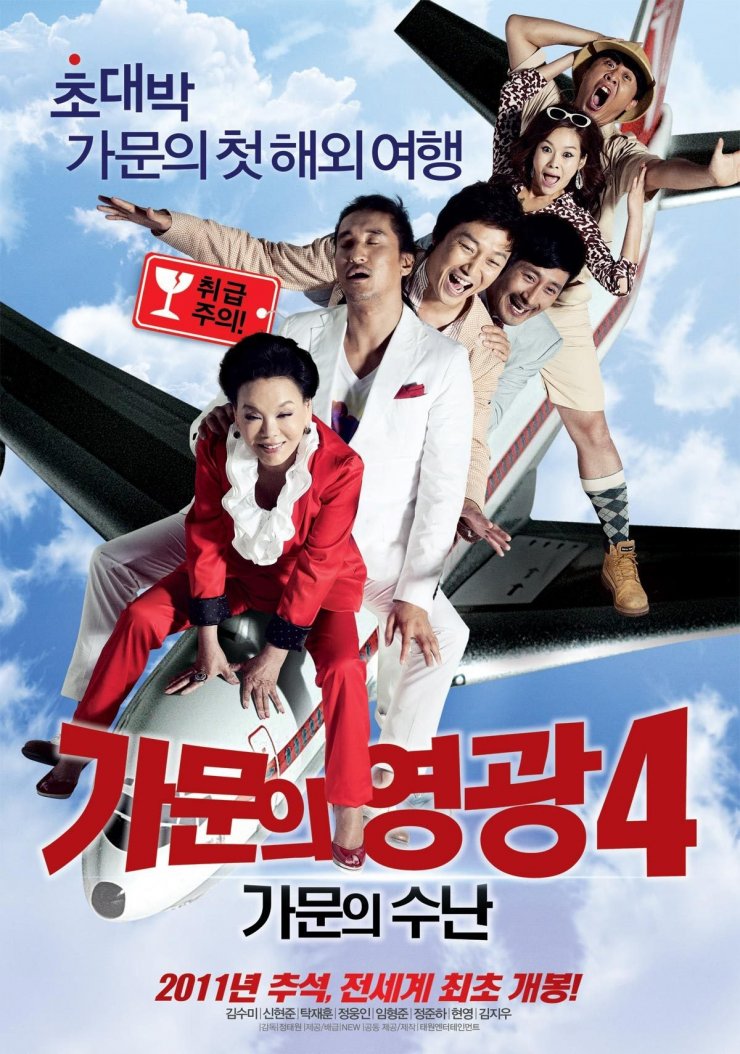
Marrying the Mafia IV: Family Ordeal (가문의 영광 4: 가문의 수난) – ★☆☆☆☆

Marrying the Mafia IV - Family Ordeal (가문의 영광 4 - 가문의 수난)

Marrying the Mafia IV: Family Ordeal (가문의 영광 4: 가문의 수난)

Family vacations are ripe arenas for comedy treatment, with the stress and clash of disparate personalities providing relatable scenarios for audiences. The frantic dash for the airport and abandonment of Kevin in Home Alone (1990), family feuds surfacing in The Great Outdoors (1998), and even bumping into an ex and their new lover in Forgetting Sarah Marshall (2008), are all seemingly part-and-parcel of the vacation experience.

In Marrying the Mafia IV: Family Ordeal (가문의 영광 4: 가문의 수난) – AKA The Unstoppable Family – a family of gangsters-turned-business moguls finally have the embargo on their visas lifted and opt for a trip to neighbouring Japan. What ensues is one of the worst films to emerge in recent memory, an unwatchable, vapid, and offensive piece of celluloid that is a contender for the title of worst sequel in cinematic history.

President Hong (Kim Soo-mi (김수미) is not only the matriarch of the family but also CEO of the highly successful family business – selling kimchi. Yet her empire comes under threat when companies within Japan begin producing their own sweeter version, ‘kimuchi’, reducing President Hong’s profit levels. On discovering the news that the embargo on her visa, obtained during her former days as a gangster, has been lifted she arranges for a family vacation to Fukuoka with her three sons; effeminate Jang In-jae (Shin Hyeon-joon (신현준); casanova Jang Seok-jae (Tak Jae-hoon (탁재훈); and wannabe gangster Jang Kyeong-jae (Lim Hyeong-joon (임형준). Also in tow is buffoonish dog’s body Jong Myeon (Jeong Joon-ha (정준하), helping to carry luggage. Yet upon arrival in Fukuoka the family are caught in a botched bank heist with In-jae’s former girlfriend Hyun-young (Hyeon Yeong (현영), and fearing incarceration due to miscommunication, flee the scene. The family must endeavour to return to Korea, yet without money it will be quite a challenge.

The unstoppable family prepare for their trip to Japan

The unstoppable family prepare for their trip to Japan

When the best gag in a comedy film is an unattractive man passing wind, something is incredibly wrong. Yet that’s exactly what occurs within Marrying the Mafia IV: Family Ordeal, where attempts at humour are so acutely lame they barely register. Each protagonist is a ridiculous stereotype, so absurd and unfunny that they are impossible to laugh at. As such Marrying the Mafia IV: Family Ordeal is a highly offensive film in that the screenwriter and actors must surely believe the audience are fools in thinking such crass and banal jokes will actually work. The humour is so woefully juvenile that scenes depicting women drinking foot-cleansing water and a man farting to kill fish are actually intended to inspire laughter.

While stereotypes can often be mined for jokes, each member of the family may as well be the same person as only their costumes reflect the intended caricature. They are all void of personality and have zero redeeming features resulting in the absence of empathy, ultimately forcing their ‘struggle’ to survive in Fukuoka wholly redundant. The set-pieces that make their situation worse are ludicrous at best, as when a mentally ill man who apparently has the ability to speak the languages of the world allows the family to ride his bus – which he by canny coincidence is driving through the countryside at night – later becomes berserk and scares them. Offense is not reserved for the mentally ill however, as the misogyny within is utterly appalling. Aside from elderly matriarch President Hong, only two young female protagonists are present and are constantly sexualised as the camera traverses their legs and bodies. The worst is applied to Hong-young who is forced to dress as a schoolgirl and dance to Kpop, rip her dress to make a mini-skirt which the male protagonists look up at every opportunity, and also adorn the highly-sexualised attire of a man’s shirt with hot pants and high heels. She also sucks the cork out of a wine bottle – twice.

The family are bizarrely trapped on a mountain

The family are bizarrely trapped on a mountain

The acting is nothing short of horrendous by all involved. While the protagonists are intended to be lacking in intelligence, the over-acting by the cast is intolerable. None of the actors make their character endearing, interesting or entertaining.

Begging is required to obtain money for noodles

Begging is required to obtain money for noodles

Verdict:

Marrying the Mafia IV: Family Ordeal is without a doubt one of the worst films to emerge from Korea in recent times, a comedy that fails in every degree through the juvenile and absurd sensibilities within. It is offensive in the pursuit of cheap laughs, but the worst offense is ultimately bestowed upon audiences who are presumed to find the film funny. It isn’t. Avoid.

★☆☆☆☆

Reviews