
Here you will find reviews of Korean drama films. Please click on the picture or title, and you will be taken to the review.
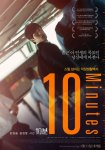
10 Minutes (10분)
“10 Minutes is an impressive indie film exploring the frustrations involved in the contemporary Korean workplace. Director Lee Yeong-song helms the events well, yet it is Kim Da-hyeon’s insightful script that steals the spotlight and presents her as a talent to watch. With penetrative awareness of office culture and family dynamics, 10 Minutes is a refreshingly frank drama.”

Alice in Earnestland (성실한 나라의 앨리스)
Alice in Earnestland (성실한 나라의 앨리스) – ★★☆☆☆
“Alice in Earnestland begins as a quirky and surreal dark comedy by director Ahn Gooc-jin, who initially infuses the film with an infectious vibrancy before the narrative tone spirals into darker, more macabre territory. Yet actress Lee Jung-hyun’s charismatic performance as optimistic heroine Soo-nam is delightful, and is enough to keep audiences engaged until the credits roll.”

Another Family (또 하나의 약속)
Another Promise (Another Family) (또 하나의 약속) – ★★★☆☆
“Another Promise is an important landmark in Korean cinematic history as the first fully crowdfunded film, based on the true story of a girl who contracted leukemia by working at a Samsung plant. The result is an emotionally charged drama, yet the addition of melodramatic contrivances tends to undermine the film’s message.”

The Attorney (변호인)
“Based on the early years of former president Roh Moo-hyun, The Attorney is a powerful and utterly absorbing court room drama. Director Yang Woo-seok’s debut is wonderfully structured and character-centered, with the exploration of human rights abuses during the Chun Doo-hwan regime naturally emerging through the story that unfolds.”

The Avian Kind (조류 인간)
The Avian Kind (조류 인간) – ★★★★☆
“The Avian Kind is a beautifully realised existentialist road film, and due to the art-house aesthetics within the film is likely to polarize audiences. Director Shin Youn-shik has crafted a compelling tale of a man searching for his long lost wife, featuring stunning cinematography of Korea’s natural countryside alongside a melodic score. An enchanting experience.”

Bad Guy (나쁜 남자)
“As is to be expected with auteur Kim Ki-duk, Bad Guy contains an explosive and controversial mix of social, gendered and sexual relationships. His artistic merits are not as pronounced as with his other works, yet the challenging narrative explores the issues of the red-light district well. Bad Guy is a simultaneously fascinating and appalling viewing experience.”

Barbie (바비)
“Barbie is a highly compelling and poignant drama from director Lee Sang-woo that explores an incredible array of social issues with a focus squarely on interrogating the family unit, yet the inclusion of international adoption allows for an expansion in highlighting a variety of socio-cultural themes and issues.”

Bleak Night (파수꾼)
“Bleak Night would be considered an incredible achievement for a seasoned director, but for first-time writer/director/editor Yoon Sung-hyun it’s a monumental and career forging film. His creative and technical prowess, combined with three talented young actors, have earned Bleak Night notable accolades and is proof that an enormous budget and stars are not necessary.”
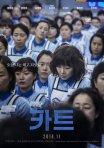
Cart (카트)
“Cart is a moving, provocative glimpse at class, gender warfare and social injustice in modern Korea. In depicting the unfair working conditions and the strong women attempting to stave off poverty, director Boo Ji-young has crafted an empowering social rights drama, one that examines the status of human rights and feminist issues with insight and sincerity.”

Chronicle of a Blood Merchant (허삼관)
Chronicle of a Blood Merchant (허삼관) – ★★☆☆☆
“Chronicle of a Blood Merchant is Ha Jeong-woo’s second foray as writer/director, and while he competently helms the comedy drama the shameful sexual politics within the film results in an intensely dislikable lead protagonist. It’s an issue from which the comedy-drama never recovers despite the inclusion of traditional melodramatic conventions in the final act.”

The Coachman (마부)
“The Coachman is undoubtedly one of the great cinematic achievements in Korean film. With his insightful and provocative exploration of the economic hardships facing Korean families in the 1960s, director Kang Dae-jin has created a stunning masterpiece that unequivocally stands the test of time. The Coachman features charm attributable to the spirit of the people of Korea.”

Come Rain Come Shine (사랑한다, 사랑하지 않는다)
Come Rain Come Shine (사랑한다, 사랑하지 않는다) – ★★★★☆
“Come Rain Come Shine is a tender, thought-provoking, and sensitive portrayal of the final moments in the break-down of a marriage. Due to the slow-paced and meditative filmic style of director Lee Yoon-ki, the film will not satisfy audiences with expectations of traditional melodrama. The masterful use of mise-en-scene, long takes, and subtly poignant performances make it a powerful film about the tenderness of loss.”

Dance Town (댄스타운)
“Dance Town is a bleak and disturbing character study by director Jeon Kyu-hwan, one that reveals city life as cruel and barbaric. The film is politically charged as Jung-rim’s life in Pyongyang is represented as far better than the supposedly ‘great’ life offered by the capitalist South. Dance Town is so raw that the film will stay with audiences long after the finale.”
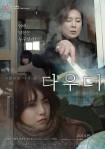
Daughter (다우더)
“Daughter is an impressive, emotionally charged drama by writer/director/actress Koo Hye-seon. Director Koo explores physical, psychological and emotional trauma from multiple angles with poignant sincerity, as well as examining the love/hate relationship with strict, overbearing mothers. Daughter is a powerful tribute to victims of abuse.”
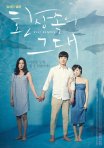
Dear Dolphin (환상속의 그대)
Dear Dolphin (환상속의 그대) – ★★★☆☆
“Dear Dolphin is a very attractive film that deals with the issues of love, loss, and grief. Director Kang Jina explores such weighty topics well by constructing the fragility of each protagonist according to their psychology. With beautiful sequences involving water symbolism, Dear Dolphin is a thought-provoking film on the nature of life, death, and spirituality.”
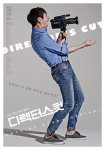
Director’s CUT (디렉터스 컷)
Director’s CUT (디렉터스 컷) – ★★☆☆☆
“Director’s CUT is an interesting drama exploring the difficulties of working as an independent filmmaker. The sense of realism and industry issues explored by writer/director Park Joon-bum form the core strength of the film, yet it is greatly impaired by an unlikable central protagonist.”

End of Winter (철원기행)
“End of Winter is a technically impressive film by director Kim Dae-hwan, whose prowess in regards to mise-en-scene and cinematography evokes potent realism and sincerity. Yet the focus on such cinematic realism, while interesting, results in a family drama that is quite a laborious viewing experience due to the particularly slow pacing of the narrative.”

A Girl at My Door (도희야)
A Girl at My Door (도희야) – ★★★★☆
“A Girl at My Door is a phenomenal debut by director July Jung, who examines issues of discrimination in contemporary Korea through a small countryside town. Featuring beautiful cinematography and an intelligent, irony-laced script, A Girl at My Door also boasts two exceptional performances from Bae Doo-na and rising star Kim Sae-ron.”
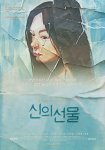
Godsend (신의 선물)
“Godsend is a compelling attempt at a contemporary nativity story of sorts, directed by Kim Ki-duk protege, Moon Si-hyun. Exploring the issues of pregnancy and surrogacy, the film shines when depicting the burgeoning relationship between the two central female protagonists.”

Gyeongju (경주)
“Gyeongju is a poetic, introspective exploration of history, identity and relationships by director Zhang Lu. The film is very much artistically focused, and as such it benefits from wonderfully composed shots and framing devices that subtly convey a wealth of meaning. Yet at 2 hours and 20 minutes Gyeongju is also overly long and feels particularly laborious.”

Han Gong-ju (한공주)
“Han Gong-ju is a rare gem of independent cinema. Director Lee Su-jin has crafted an extraordinary tale of a girl struggling to reconcile with a traumatic past, who courageously confronts further social injustices in her attempt to do so. Featuring a beautiful performance by Cheon Woo-hee, the film is bold, insightful and heart-wrenching. Han Gong-ju is a must-see film.”

Hanaan (하나안)
“Hanaan deserves credit for exploring the oft-ignored plight of Korean immigrants abroad. Director Pak Ruslan employs effective use of purgatorial landscapes to emphasize inner turmoil. However, the story is hampered by a rather unoriginal premise making the Korean-Uzbek co-production an intriguing, but lacking, crime drama.”
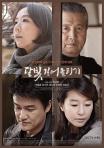
Hanji (달빛 길어올리기)
“Hanji is a film based on a genuine love of Korean culture and tradition by auteur Im Kwon-taek. While at times the film can convey a rather educational, documentary tone the film emphasizes the importance of remembering and supporting cultural traditions. Hanji is poetic and philosophical, and serves as a love letter to a dying cultural tradition.”
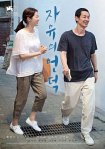
Hill of Freedom (자유의 언덕)
Hill of Freedom (자유의 언덕) – ★★★☆☆
“Hill of Freedom is return to male-centered narratives for writer/director Hong Sang-soo. All the staple features of director Hong’s films are apparent throughout the film and there is much to be enjoyed through the charming narrative style and camera techniques. Hill of Freedom is an enjoyable addition to director Hong’s body of work.”

The Housemaid (하녀) 1960
“The Housemaid is a landmark piece of filmmaking, one that captures the considerable array of socio-cultural anxieties of the era through the protagonists and mise-en-scene with incredible sophistication. The narrative is timeless and enthralling in depicting the breakdown of family through betrayal. The Housemaid is a true classic.”
 hangukyeonghwa.com